






Across dynasties, Sichuan has consistently held a vital strategic position. During the Three Kingdoms period (3rd century CE), Liu Bei chose Sichuan as his base to establish the Shu Han state, making Chengdu his capital. Zhuge Liang, the brilliant strategist, left a profound mark with his masterful strategies, associating his name with numerous landmarks across Sichuan. Subsequently, through the Sui, Tang, Song, Yuan, Ming, and Qing dynasties, Sichuan remained an important economic and cultural center—a bridge linking the Central Plains with southwestern ethnic minorities. Chronicles record the vicissitudes of this land: from prosperous eras to turbulent wars, from intense cultural exchange to massive migrations reshaping the demographic landscape. Yet through all adversities, Sichuan resiliently preserved its identity, forging a monumental heritage treasury preserved within ancient alleys, sacred temples, and oral tales passed down across generations. It serves not merely as a geographical map, but as a mirror reflecting China’s millennial history—a living epic chronicling the formation and evolution of an intensely epic region.
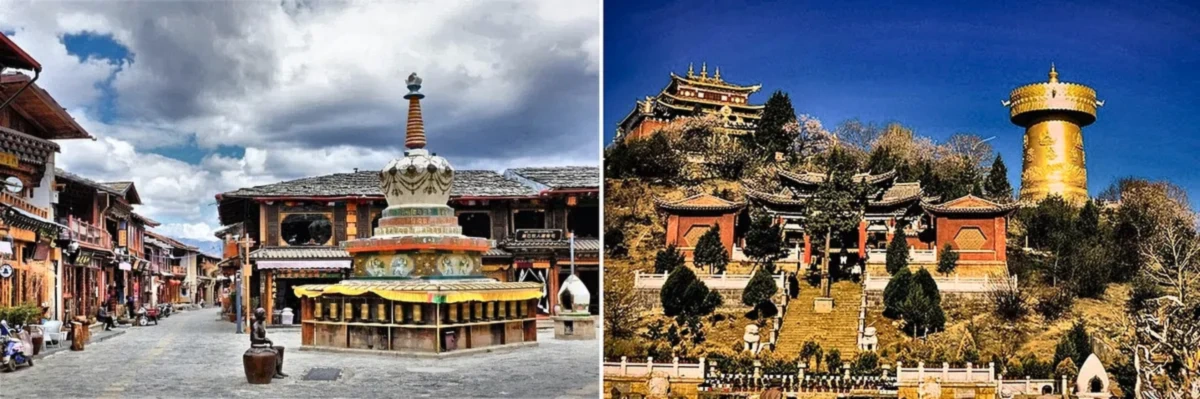
From a geomantic perspective, Sichuan is a land converging spiritual breath. The basin is encircled by the “four dragons”—four major mountain ranges, most notably Mount Emei, one of China’s Four Sacred Buddhist Mountains, regarded as the dragon’s head where spiritual energy concentrates. The dense river network acts as lifelines carrying vitality and prosperity. This terrain created a picturesque landscape where nature bestowed magnificent masterpieces, while humanity crafted unique architectural and cultural works in harmony with nature. Ancient Qiang ethnic villages perched precariously on mountain slopes, with dark gray stone homes blending into deep green ancient forests, stand as proof of the enduring bond between humanity and the environment. Sichuan’s indigenous customs are remarkably diverse, reflecting a mixture of Han, Tibetan, Qiang, Yi, and Miao ethnic groups. Vibrant traditional dances, rain-praying and harvest festivals, and ancestor and earth-spirit worship rituals maintained across generations compose a colorful cultural tapestry. Here, every brick, every stone slab, and every mountain trail conceals a story and a soul, waiting for exploring footsteps to recount their long journey.
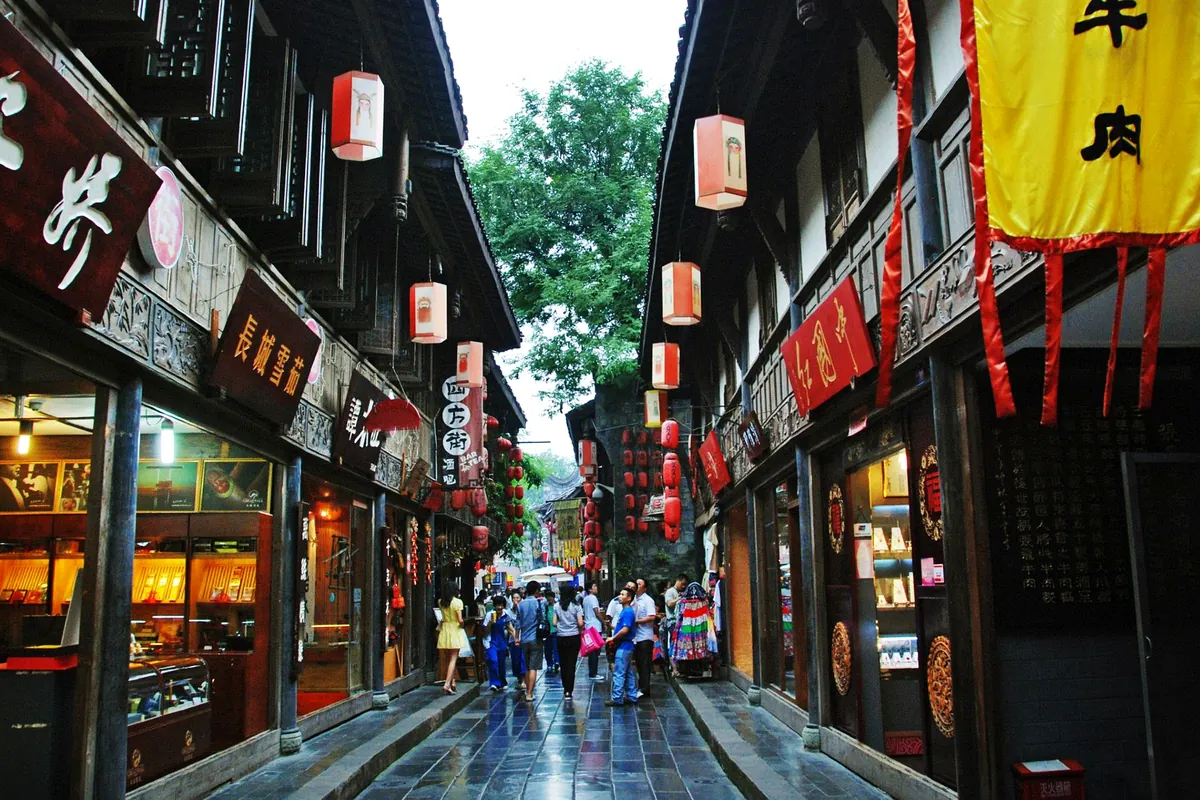
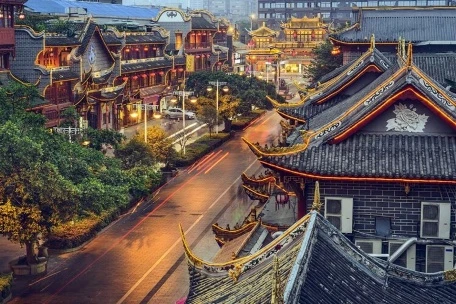
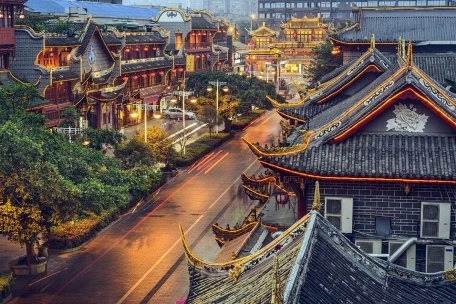
Stepping into Sichuan’s architectural space, travelers wander into a living museum. In downtown Chengdu, Jinli Street and Kuanzhai Alley (Wide and Narrow Alleys) represent quintessential heritage. Jinli, boasting a history exceeding 1,800 years, was reconstructed in Qing Dynasty architectural style, carrying antique, elegant charm. Upturned roof eaves, bluestone-paved alleys, and high-hanging red lanterns establish a romantic, nostalgic atmosphere. Here, visitors can savor traditional street snacks, watch shadow puppetry shows or magical Sichuan Face-Changing (Bian Lian) opera, or simply surrender to bustling crowds to feel the local cultural rhythm. Kuanzhai Alley, also known as “Wide and Narrow Alleys,” comprises three parallel alleys (Kuan Alley – Wide, Zhai Alley – Narrow, and Jing Alley – Quiet) featuring characteristic Qing-dynasty architecture. It is a delicate fusion of tradition and modernity, featuring antique tea houses, upscale restaurants, handicraft boutiques, and stylish bars. Every nook and cranny of Kuanzhai Alley recounts stories of cultural exchange, portraying a Chengdu that is simultaneously solemn and ancient, yet dynamic and modern. These are cleverly preserved and promoted heritage spaces where visitors not only admire but live within historical ambiance.
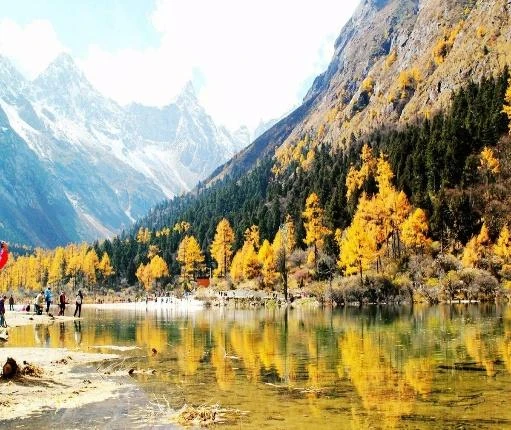
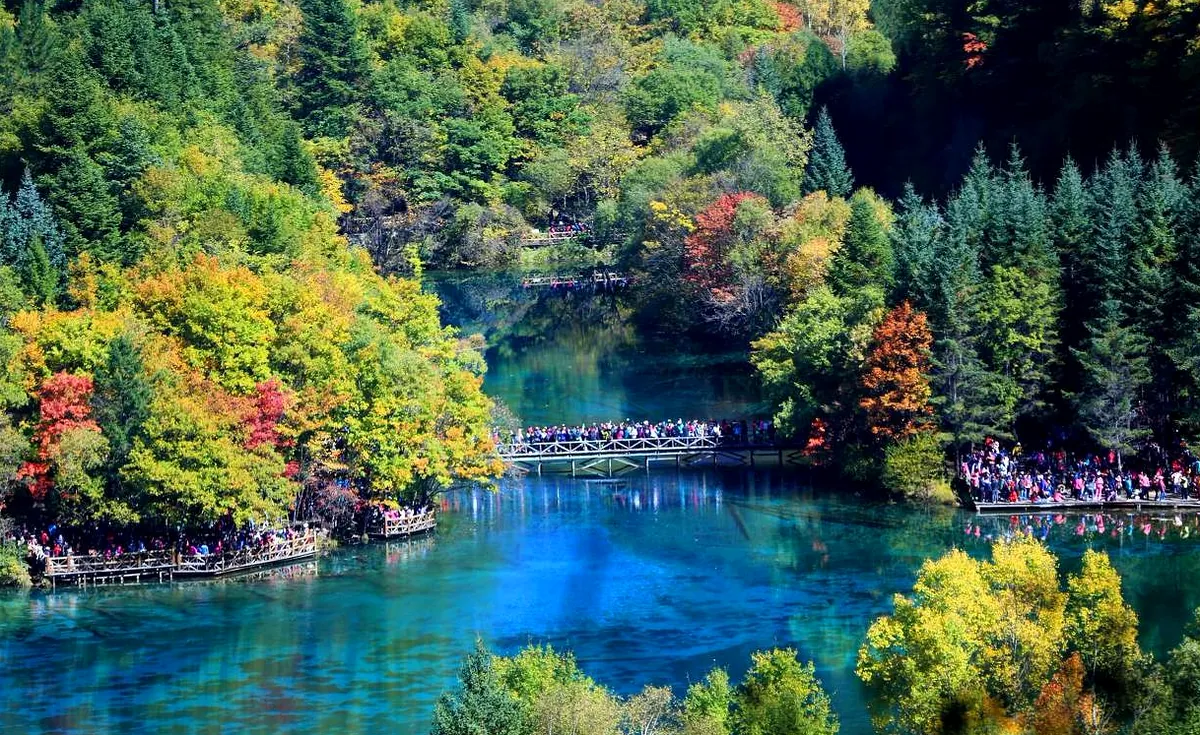
Sichuan proudly houses numerous UNESCO World Heritage and Natural Heritage Sites, attesting to the region’s extraordinary value. Its scenic system is arguably “unrivaled under heaven,” with each site possessing distinct beauty captivating every visitor. Begin with Jiuzhaigou, the fairytale valley dubbed “surpassing scenic wonder.” Deep within the Minshan Mountains of the Qinghai-Tibet Plateau, Jiuzhaigou is a geological marvel featuring hundreds of magical lakes, waterfalls, and streams shifting in color from turquoise and azure to emerald across seasons and sunlight. Waters are so transparent the lakebed is visible, reflecting snow-capped ranges, primeval forests, and blue skies. Five Flower Lake shimmering in five magical colors, Panda Lake, Sleeping Dragon Lake, majestic Pearl Shoal Waterfall, or vast Long Lake—each name evokes unique beauty and fairy-tale stories. Jiuzhaigou’s ecosystem is exceptionally rich, serving as home to rare flora and fauna, including giant pandas and golden snub-nosed monkeys. Jiuzhaigou’s beauty lies not only in landscapes but in serenity and peace, delivering an otherworldly release from worldly concerns like a real-life dream.
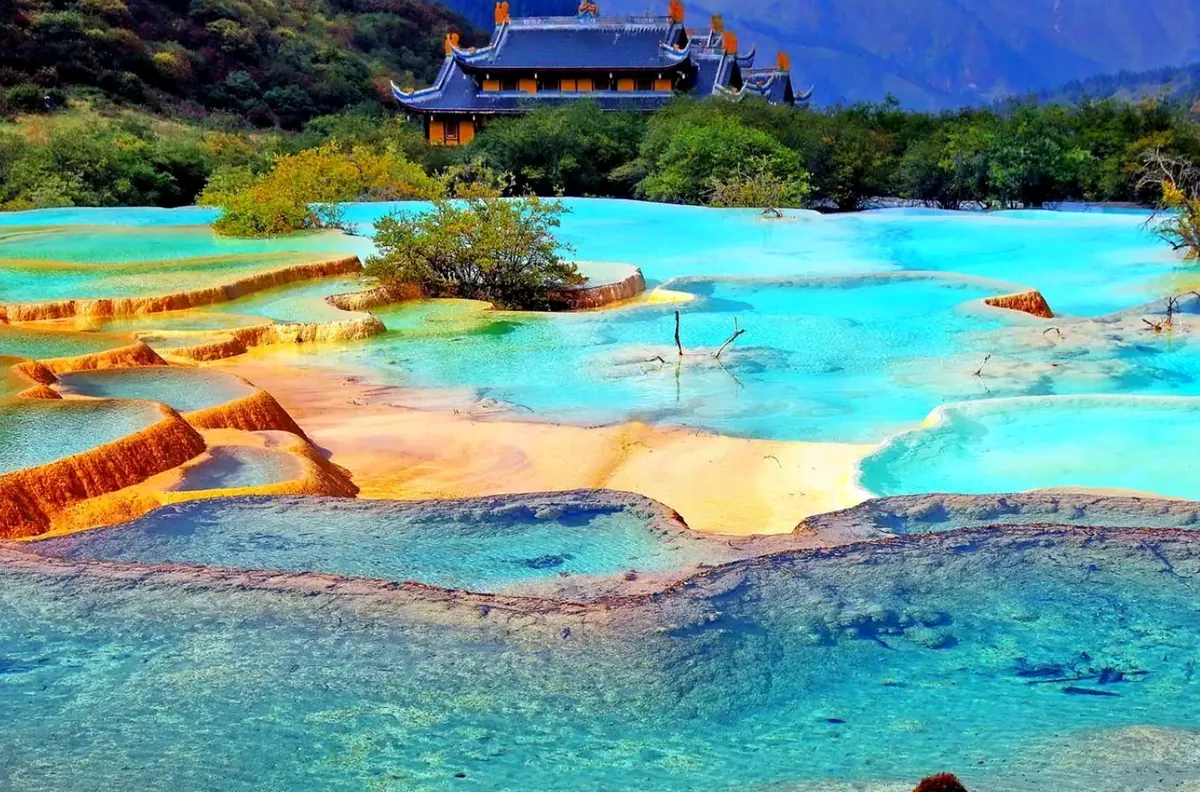
Adjacent to Jiuzhaigou lies Huanglong, another natural masterpiece of Sichuan recognized as a UNESCO Natural Heritage Site. Huanglong is renowned for golden-hued calcium carbonate terraced pools stretching kilometers along mountain slopes, forming the image of a giant golden dragon winding through deep green forests. Small pools formed across these terraces, shifting in color from jade green and emerald to amber under sunlight, create a living natural masterpiece. Huanglong’s Five-Color Lake is an exceptional highlight concentrating the most brilliantly colored pools like natural gems. Exploring Huanglong typically involves an interesting light trek through primeval forests, crystal streams, and breathtaking viewpoints. Both Jiuzhaigou and Huanglong stand as living testaments to nature’s boundless creativity, offering places where people find peace and contemplate ultimate beauty.
Stepping away from majestic natural beauty, we return to the charming urban rhythm of Chengdu, where the national mascot, the Giant Panda, is cherished and protected. The Chengdu Research Base of Giant Panda Breeding is among the world’s largest and most successful panda conservation centers. It functions not merely as a zoo, but as an advanced scientific facility where researchers diligently protect and breed this adorable animal. Visitors can witness playful panda cubs, leisurely adult pandas munching bamboo, and mischievous red pandas. Visiting this base brings joy while delivering a profound lesson on biodiversity conservation and human responsibility toward nature. This is an unmissable destination, especially for families with young children, to explore and fall in love with China’s iconic animal.
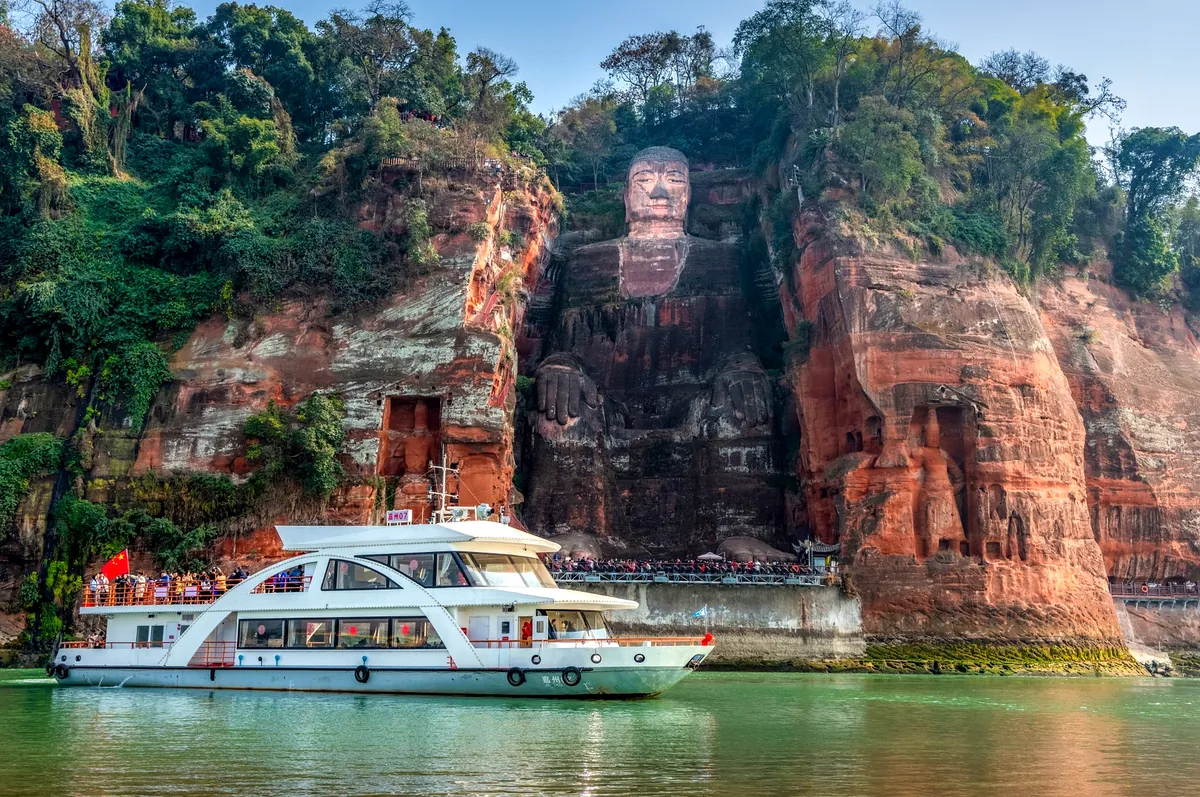
Continuing the journey south in Sichuan, we arrive at two other famous UNESCO World Heritage Sites: the Leshan Giant Buddha and Mount Emei. The Leshan Giant Buddha is the world’s largest cliff-carved Maitreya Buddha statue, standing 71 meters tall with ears measuring 7 meters and toes 1.6 meters long. Commissioned in the 8th century during the Tang Dynasty, it took nearly 90 years to complete. With benevolent eyes gazing down at the confluence of three rivers—the Min River, Qingyi River, and Dadu River—the Leshan Giant Buddha is not only an architectural marvel but a symbol of faith and perseverance. Legend holds that carving the statue aimed to calm turbulent waters, ensuring safe passage for boats. Viewed from above or upward from a boat, the Leshan Giant Buddha exudes solemn serenity, filling visitors with awe and admiration. At the Buddha’s feet lies Leshan Giant Buddha Park, housing numerous ancient temples and historically valuable grotto caves.
Not far from the Leshan Giant Buddha, Mount Emei towers majestically, regarded as one of China’s Four Sacred Buddhist Mountains. Reaching a maximum elevation of 3,099 meters above sea level, Mount Emei carries majestic, spiritual beauty shrouded in year-round mists like a mystical realm. The mountain houses hundreds of ancient temples and monasteries, notably Wannian Temple with its 7.3-meter-tall bronze statue of Samantabhadra Bodhisattva riding a white elephant, and especially the Golden Summit at 3,077 meters, featuring Huazang Temple and a magnificent four-faced golden Samantabhadra statue. From the Golden Summit, travelers admire breathtaking sea-of-clouds scenery, especially at sunrise or sunset when rolling clouds drift below, creating an illusory setting. Mount Emei is not merely a Buddhist center but an ecological reserve featuring diverse flora and wildlife, including famous Emei monkeys accustomed to visitors. Conquering Mount Emei is a spiritual pilgrimage—an experience blending with nature and seeking inner purity.
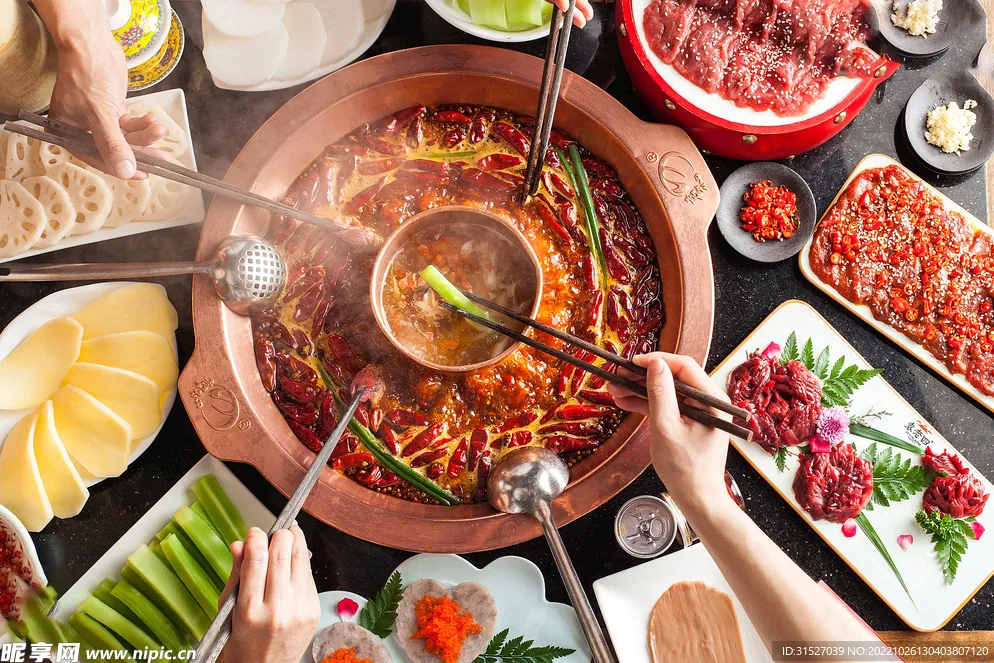
And of course, omitting Sichuan’s unique culinary culture—a quintessence spreading worldwide—would be a major oversight. Sichuan cuisine is renowned for its characteristic “mala” (麻辣) flavor: numbing (ma) from Sichuan peppercorns and spicy (la) from chilis. This is not merely a combination of two tastes, but an art of balancing flavors, creating balance and explosion in every dish. From rustic street snacks to elaborate court banquets, Sichuan cuisine consistently conquers diners’ palates. Sichuan Hotpot is an icon, featuring a fiery broth brimming with spices and dried chilis inviting diners to submerge countless fresh ingredients together. Tender, flavorful Mapo Tofu, fragrant Kung Pao Chicken, or Shredded Pork with Garlic Sauce are unmissable names. Beyond spicy and numbing tastes, Sichuan cuisine abounds with other flavors like sweet-and-sour, savory, and aromatic, demonstrating diversity and complexity in preparation techniques. The region is equally famous for tea culture and teahouse traditions. In Chengdu, ancient teahouses serve as meeting spots where locals converse, read newspapers, play mahjong, or simply sip hot tea in peaceful ambiance. Sichuan tea appreciation is not just tea brewing art but a lifestyle—a philosophy of slowness and peace, a culture well worth experiencing and joining.
Sichuan’s modern transport infrastructure has facilitated easy and efficient exploration for travelers. Chengdu Shuangliu International Airport (CTU) and Chengdu Tianfu International Airport (TFU) serve as two main aviation gateways, connecting Chengdu with major global and regional cities. From Vietnam, travelers easily find direct or connecting flights to Chengdu, opening gateways to the “Kingdom of Abundance.” The thriving high-speed rail (CRH) network connects Chengdu with Chongqing, Kunming, and numerous other cities, making inter-destination travel fast and convenient. For example, high-speed rail from Chengdu to Leshan takes roughly an hour, helping travelers easily combine visiting the Leshan Giant Buddha and Mount Emei in one itinerary. For more distant destinations like Jiuzhaigou and Huanglong, high-quality tourist buses and private tours organized by VDS Travel ensure comfortable and safe travel across majestic mountain passes. Heavy investment in transport infrastructure reflects Sichuan’s strategic vision for tourism development, bringing remote lands closer to visitors.
Sichuan is beautiful across all four seasons, each wearing a distinct cloak. The golden time to visit Sichuan depends on personal preferences and specific destinations. Spring (March–May) brings bright yellow rapeseed fields and pleasant climate, ideal for exploring Chengdu and surrounding regions. Summer (June–August) is cooler in high-mountain regions like Jiuzhaigou and Huanglong as greenery flourishes and waterfalls gush, making it the perfect summer escape. However, this is also domestic peak tourism season, requiring early booking. Autumn (September–November) is regarded as the finest season to visit Sichuan, especially Jiuzhaigou and Huanglong, when foliage turns brilliant yellow and red, creating a breathtaking landscape. Brisk, clean autumn weather is well-suited for outdoor activities. Winter (December–February) brings snowscapes to Jiuzhaigou and Mount Emei, turning them into fairy-tale worlds. Despite freezing temperatures, Jiuzhaigou’s quiet winter beauty featuring frozen lakes and snow-dusted forests holds unique appeal with fewer crowds. VDS Travel consistently advises clients on the best travel timing for optimal experiences suiting personal preferences.
To ensure Vietnamese travelers’ exploration of Sichuan runs smoothly and memorably, thorough preparation is essential. China tourist visa documentation for Vietnamese citizens must be processed through the Chinese Embassy or Consulates in Vietnam. VDS Travel, with years of experience, assists clients wholeheartedly with documentation and visa application procedures to ensure the smoothest process. Regarding currency, while the Yuan is official currency, electronic payment systems like Alipay and WeChat Pay have become so pervasive they nearly replace cash in China. Travelers should set up these apps and link them to international bank cards or credit cards for spending convenience. Using eSIM roaming is a smart choice to maintain stable internet connectivity and save costs compared to physical SIM cards or traditional roaming. VDS Travel can advise on eSIM packages matching your needs.
Attire matching Sichuan’s diverse terrain and climate requires attention. For high-mountain regions like Jiuzhaigou, Huanglong, and Mount Emei, travelers should prepare warm clothing, waterproof and windproof jackets, woolen hats, gloves, scarves, and comfortable walking shoes with good traction. Even in summer, mountain temperatures can turn chilly early in the morning and evening. In Chengdu and cities, comfortable, polite attire is suitable. Don’t forget personal medications, sunscreen, sunglasses, and a good camera to capture wonderful moments. Notably, travelers must mind health when ascending plateaus like Jiuzhaigou and Huanglong, where altitude can trigger altitude sickness symptoms. Move slowly, stay hydrated, and consult a doctor if you have medical histories. VDS Travel’s dedicated companionship shows not only through detailed planning and accurate information, but through 24/7 support, ready to answer questions and handle contingencies, ensuring travelers a safe, comfortable, and memorable trip. We are confident that with deep expertise and professional service, VDS Travel will serve as your ideal companion, helping you touch Sichuan’s profound heritage beauty and etch unforgettable memories into your life journey.
