





Journeying back in time to ancient Guangzhou, we encounter the image of a powerful Nanyue Kingdom, established by Zhao Tuo in the 2nd century BCE. This was the capital of a dynasty that once ruled a vast territory encompassing parts of present-day northern Vietnam. Its strategic location turned Guangzhou into a vital seaport very early on, serving as the departure point of the legendary Maritime Silk Road linking China with distant civilizations such as India, Persia, and Rome. Precious Eastern goods like silk, ceramics, and tea were shipped outward, while spices, ivories, and fragrances from the West arrived aboard merchant vessels, creating an unprecedented, bustling cultural and economic exchange. Across the Tang, Song, Ming, and Qing dynasties, Guangzhou consistently maintained its role as a paramount international trade gateway—China’s “open world.” Chronicles record that during the Tang Dynasty, Guangzhou had already grown into a major port city with a substantial foreign merchant community, testament to its openness and prosperity. By the Qing Dynasty, when isolationist policies were enacted, Guangzhou was among the rare ports permitted to trade with the West, sustaining the vital link between China and the outside world. It also witnessed pivotal historical milestones such as the 19th-century Opium Wars and the 1911 Xinhai Revolution that overthrew the imperial system and birthed the Republic of China, spearheaded by Sun Yat-sen—a proud son of Guangdong. Following the “Reform and Opening-Up” late in the 20th century, Guangzhou surged forward once again to become China’s economic locomotive, a modern international metropolis while faithfully preserving its precious heritage values.
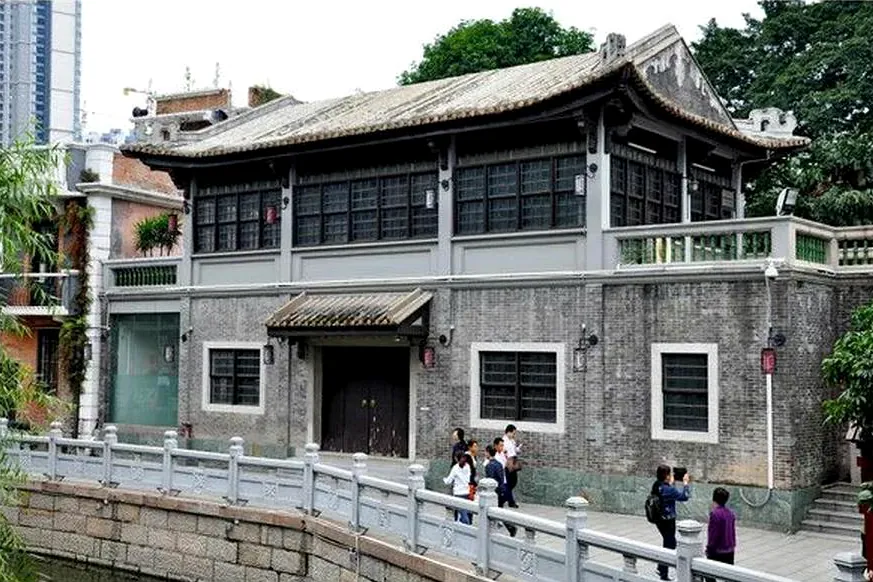
Drawing from that historical and geographical foundation, Guangzhou emerges with a remarkably diverse architectural landscape—a harmonious and sometimes contrasting blend between the antique charm of ancient towns and the dynamism of a premier modern metropolis. Strolling down its streets, visitors easily spot the imprints of traditional Lingnan architecture featuring Xiguan historic houses with upturned eaves, green brick walls, exquisite wood carvings, and intimate courtyard gardens hidden within, creating a tranquil living space close to nature. Ancient temples such as the Chen Clan Ancestral Hall—a folk architectural art museum of Guangdong—and the 1,700-year-old Bright Filial Piety Temple (Guangxiao Temple) stand as living testaments to the ingenuity of ancient artisans and the deep spiritual faith of local people. Notably, Guangzhou also preserves a unique slice of Western architectural heritage, most prominently on Shamian Island, which once served as British and French concessions. Buildings in the Baroque, Neoclassical, Gothic Revival, and Art Nouveau styles have been preserved almost intact, creating an antique European enclave in the heart of Asia. Although Guangzhou lacks an individually inscribed UNESCO World Heritage Site within its downtown area, its role along the Maritime Silk Road has been recognized by UNESCO as part of a transnational serial property, attesting to the city’s historical significance in bridging civilizations. Local customs in Guangzhou retain distinct impressions of Cantonese culture, highlighted by Cantonese Opera with its soaring melodies, gorgeous costumes, and refined performance techniques, traditionally performed in heritage theaters or during community gatherings. The summer Dragon Boat Festival is a vibrant event where gorgeously decorated dragon boats race along the Pearl River, showcasing local unity and unyielding will. Daily life in Guangzhou is further colored by the custom of “Yum Cha” (morning tea)—an essential social ritual where people gather around steaming pots of tea and delicious Dim Sum, not merely to enjoy cuisine but to converse, chat, and bond with loved ones.
Now, we will together explore peerless scenic wonders and iconic landmarks that have established Guangzhou’s renown on the global tourism map, where historical beauty converges seamlessly with breathtaking modernity. One cannot fail to mention the Canton Tower, a contemporary architectural icon rising proudly beside the Pearl River. Standing at an impressive height of 600 meters, Canton Tower is not only the world’s third-tallest structure but is also celebrated for its unique “slim waist” design inspired by a woman’s graceful silhouette. At night, the tower glows with a multi-colored LED system, staging a breathtaking, continuously shifting light dance that turns it into a magnificent lighthouse illuminating the entire city. Visitors can ride high-speed elevators to observation decks at 450 meters or even 488 meters to admire panoramic views of Guangzhou glittering beneath night lights, or test their daring on the “Bubble Tram” revolving around the tower’s peak, offering an unlimited 360-degree perspective. From above, the Pearl River snakes like a silver ribbon embracing glittering bridges and skyscrapers, composing Asia’s premier modern urban vista.
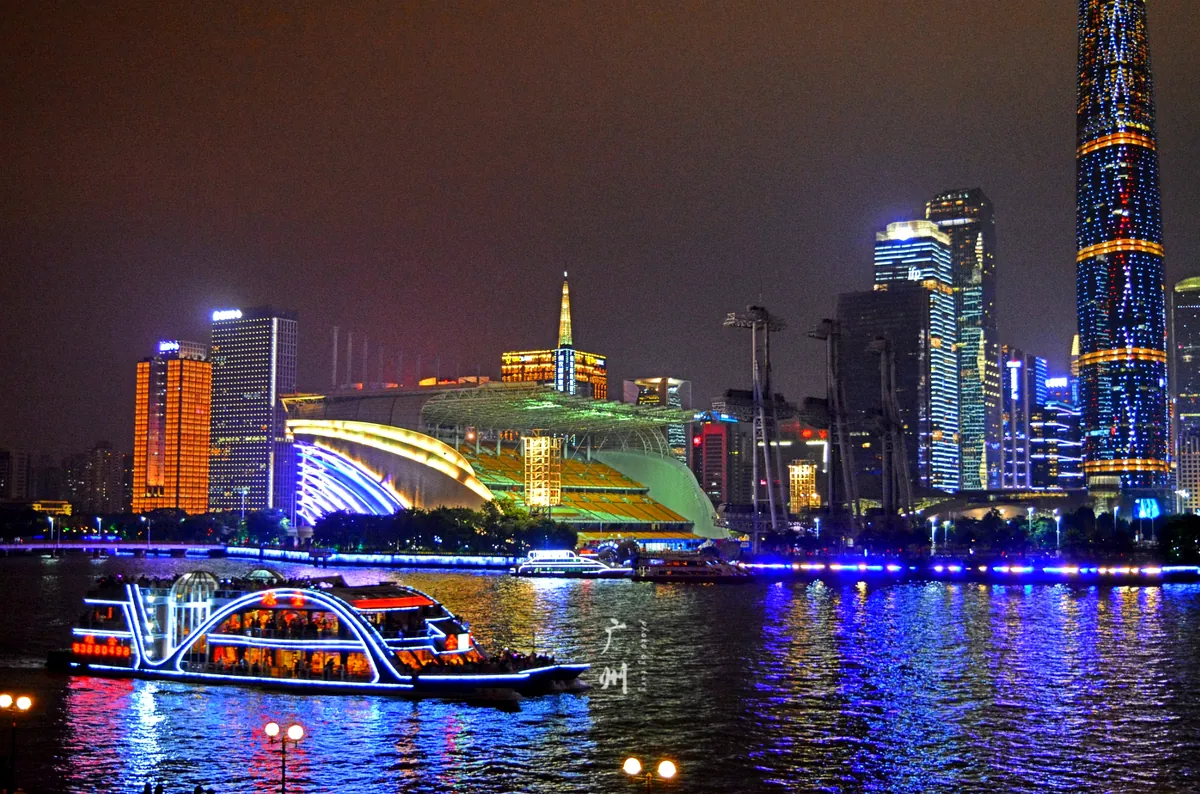
To fully experience Guangzhou’s dazzling nocturnal splendor, nothing surpasses a night cruise along the Pearl River. This is an unmissable experience as visitors glide gently across the water, admiring illuminated riverbanks. Bridges such as Litchi Bay Bridge and Haizhu Bridge are gorgeously adorned, while skyscrapers in the Zhujiang New Town central financial district emerge like colossal lighting artworks. Particularly when the cruise passes Canton Tower, guests enjoy a close-up glimpse of the tower’s magical beauty as neighboring buildings unite in a synchronized light dance that transforms the Pearl River into a wondrous performance stage. This scenery not only showcases Guangzhou’s wealth and modernity but also testifies to the city’s astonishing strides in recent decades, evolving from an ancient commercial hub into a dynamic international metropolis.
Stepping away from the awe of modern architecture, we enter an entirely different world on Shamian Island. This place resembles a gemstone detached from urban bustle, carrying antique French architectural styles and a uniquely tranquil atmosphere. Formerly British and French concessions in the 19th century, Shamian preserves over 150 historic European-style buildings spanning Gothic, Neoclassical, Baroque, and Art Nouveau movements. Strolling down tree-lined shaded avenues, visitors encounter luxurious villas, historic churches (such as Our Lady of Lourdes Catholic Church and Shamian Protestant Church), former consulates, and charming pocket parks. Every street corner on Shamian Island forms a picturesque frame, perfect for photography enthusiasts seeking a nostalgic, romantic retreat. It is an ideal spot to savor morning coffee, read beneath leafy canopies, or simply stroll, feeling cool breezes and listening to birdsong as though wandering into a European city.
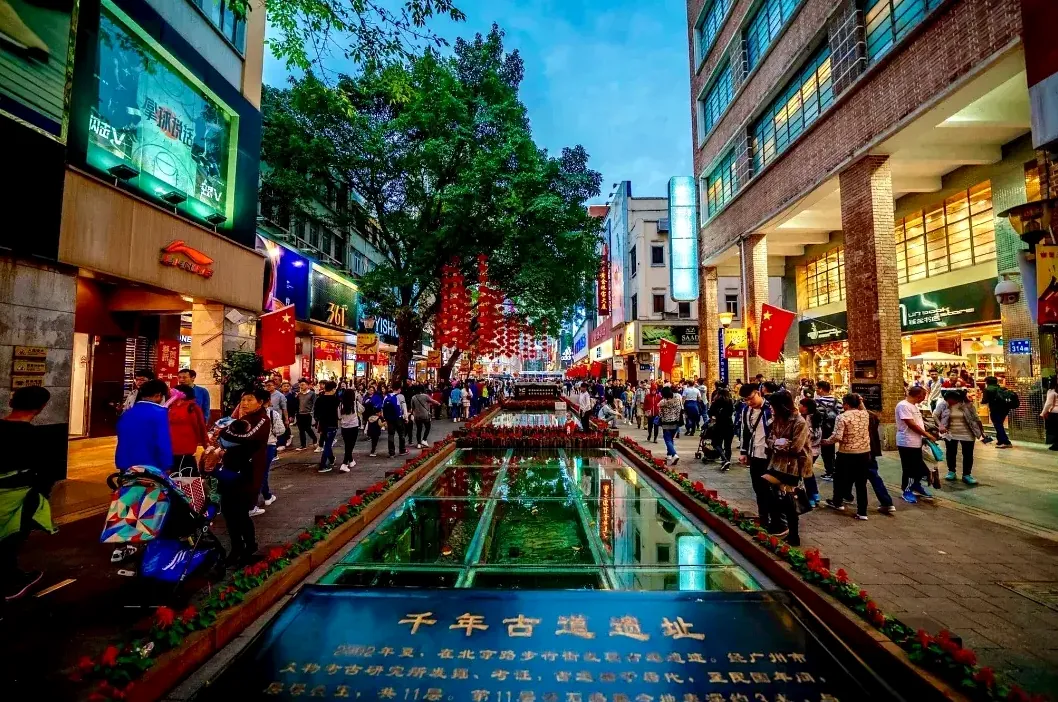
Continuing our heritage journey, we set foot on Beijing Road Pedestrian Street—a thoroughfare brimming with retail and culinary activity while doubling as a living archaeological museum directly beneath the pavement. Most striking and astonishing about Beijing Road are ancient street foundation layers paved during the Song, Yuan, Ming, Qing, and even Nanyue dynasties, displayed transparently beneath thick protective glass. Walking along the street, visitors clearly spot ancient bricks and millennium-old historical traces right beneath their feet, attesting to Guangzhou’s enduring survival and continuous evolution. Beijing Road is not only a bustling commercial hub featuring fashion boutiques and modern shopping malls but also a gathering place for restaurants serving traditional Cantonese culinary excellence. Here, you feel the fast-paced daily rhythm yet remain deeply immersed in the historical pulse of Guangzhou’s people, where past and present harmonize flawlessly.
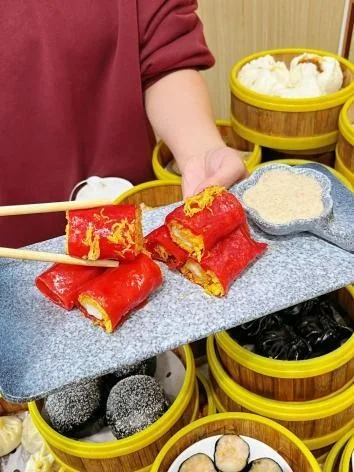
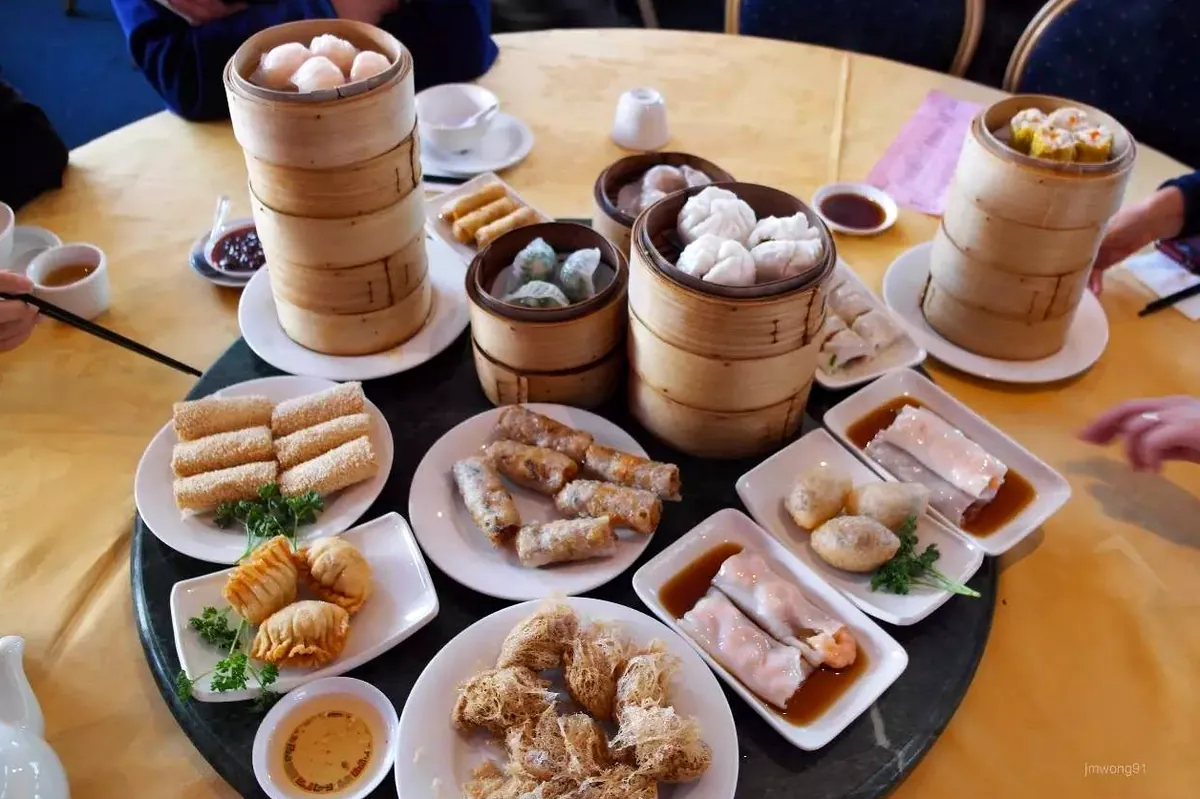
Mentioning Guangzhou without highlighting Cantonese culinary excellence is a glaring omission. Cantonese cuisine is regarded as one of China’s eight major culinary traditions, renowned worldwide for its refinement, emphasis on fresh ingredients, and meticulous preparation techniques. Among them, Yum Cha morning tea and Dim Sum constitute an essential culinary ritual when visiting Guangzhou. Yum Cha literally means “drinking tea,” yet in practice it is accompanied by a diverse, rich array of Dim Sum. These include translucent shrimp dumplings (har gow) with gossamer-thin wrappers cradling fresh, juicy shrimp; golden, fragrant pork siu mai; soft char siu pork buns (char siu bao) packed with rich savory filling; and delicate steamed rice noodle rolls (cheung fun). Every Dim Sum dish is a miniature work of art, meticulously crafted, demanding the skill and experience of master chefs. Morning tea is not merely a meal but a culture—a space for families and friends to gather, converse, and savor peaceful moments beside a hot pot of tea. Travelers should seek out long-standing traditional restaurants like Tao Tao Ju or Guangzhou Restaurant to experience authentic Dim Sum flavors while immersing in the bustling morning tea atmosphere of Guangzhou.
Cantonese culinary culture extends far beyond Dim Sum into a rich world of unique flavors and regional culinary highlights forged across a millennia-long history. Cantonese culinary philosophy consistently elevates the natural freshness of ingredients, light preparation to preserve original flavors, and the balance of Yin and Yang in dishes. Guangzhou residents are famous for the saying “eat in Guangzhou,” implying that nowhere else in the world matches the diversity and refinement of cuisine here. Alongside Dim Sum, visitors must sample other classic dishes: Cantonese Roasted Chicken with shatteringly crisp skin and succulent meat; fragrant Cantonese Roast Duck; or especially Suckling Pig Roast with a glossy, crunchy skin like caramel. Cantonese stews and soups are also immensely famous, prepared from precious, nourishing ingredients such as shark fin soup, abalone soup, or cooling herbal broths to nourish health. Fresh seafood is another major strength of Cantonese cuisine, featuring seafood restaurants where diners choose live specimens prepared to individual preference. Tea appreciation customs in Guangzhou extend beyond morning Yum Cha into daily life, from refined afternoon tea to formal guest receptions, each tea carrying unique significance and flavor. Grand banquets, particularly wedding receptions, often span hours featuring dozens of elaborately served dishes, each conveying auspicious wishes and hospitality. Experiencing cuisine in Guangzhou is not merely eating, but a cultural exploration journey—a way to deeply understand the people and history of this land.
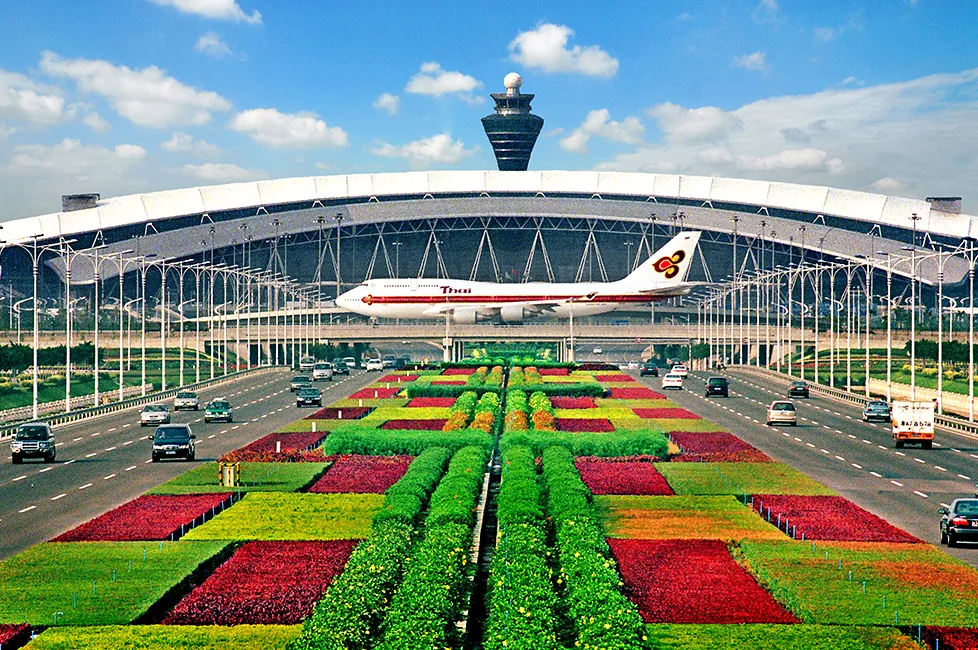
As one of China’s most dynamically developing cities, Guangzhou possesses modern, synchronized transport infrastructure, making travel to and from the city exceptionally convenient. Guangzhou Baiyun International Airport (CAN) is among the world’s busiest airports, serving as southern China’s main aviation gateway, welcoming millions of tourists and business travelers annually. From Vietnam, travelers easily find direct flights to Guangzhou from Hanoi or Ho Chi Minh City via various airlines. Furthermore, Guangzhou is a crucial high-speed rail (CRH) hub connecting the city with other major Chinese urban centers like Beijing, Shanghai, Shenzhen, and Hong Kong. Travelers can experience the modernity and speed of high-speed trains to explore neighboring regions. Urban public transit is equally advanced, featuring an extensive subway network, buses, and efficient taxis that make inner-city transit easy and economical. The golden time for visiting Guangzhou is generally spring (March to May) and autumn (September to November). During these months, weather is cool, pleasant, and dry, ideal for outdoor sightseeing and city exploration. Spring brings budding foliage and blooming flowers everywhere, true to the name “City of Flowers.” Autumn brings fresh, cool air, especially in October and November when the Canton Fair—one of the world’s largest trade fairs—takes place, drawing immense crowds of international tourists and business executives. Summer (June to August) in Guangzhou is quite hot and humid, occasionally bringing heavy rain or typhoons, while winter (December to February) features mild weather that is not overly cold, suitable for those who do not mind a slight chill. Regardless of the season, Guangzhou always holds unique charms and experiences to welcome travelers.
To ensure Vietnamese travelers’ exploration of Guangzhou is seamless and complete, VDS Travel offers several useful pocket field tips. First and foremost is visa requirements. Most Vietnamese citizens must obtain a Chinese visa prior to entry. You should prepare complete documentation and submit it early to the Chinese Embassy or Consulates in Vietnam to avoid unexpected issues. Regarding currency, the Chinese Yuan (CNY) is the primary unit. However, China is a pioneer in mobile payments. Applications like Alipay and WeChat Pay have almost entirely replaced cash and credit cards across all transactions, from restaurants and convenience stores to traditional markets. Travelers should install and register accounts on these apps, linking them to international credit cards or exchanging Yuan into e-wallets for spending convenience. This may require some prior preparation. Regarding communications, using an eSIM or travel SIM is a smart choice to maintain stable internet connectivity for mapping, information lookup, and easy contact. Check phone compatibility before purchasing an eSIM. Regarding attire, depending on the travel season, prepare appropriate clothing. In spring and autumn, pack light jackets and thin sweaters. In summer, airy, absorbent clothing is optimal. In winter, warm coats and scarves are necessary. Always bring comfortable walking shoes as you will do considerable walking. Additionally, note local etiquette: Guangzhou people are typically straightforward yet friendly, highly valuing meals and tea ceremonies. Basic conversational knowledge of Cantonese or Mandarin is helpful, though English is spoken in major tourist areas. Always maintain respect for local culture and remain open to novel experiences.
With profound heritage exploration and complete comforts, VDS Travel proudly stands as your reliable companion. We are committed to delivering meticulously designed Guangzhou tours that not only take you to iconic destinations but also unveil stories hidden within monuments, dishes, and local daily life. From assisting with complex visa procedures, arranging modern transport, and comfortable accommodation to providing professional tour guides deeply knowledgeable in Guangzhou’s culture and history, VDS Travel consistently places your satisfaction and memorable experiences above all else. We believe every journey is not merely physical travel but a voyage of the soul, an opportunity to broaden horizons and enrich personal understanding. Let VDS Travel give wings to your dream of exploring Guangzhou, turning every moment in this magnificent city into an unforgettable memory—a heritage travel memoir etched forever in your heart.
