





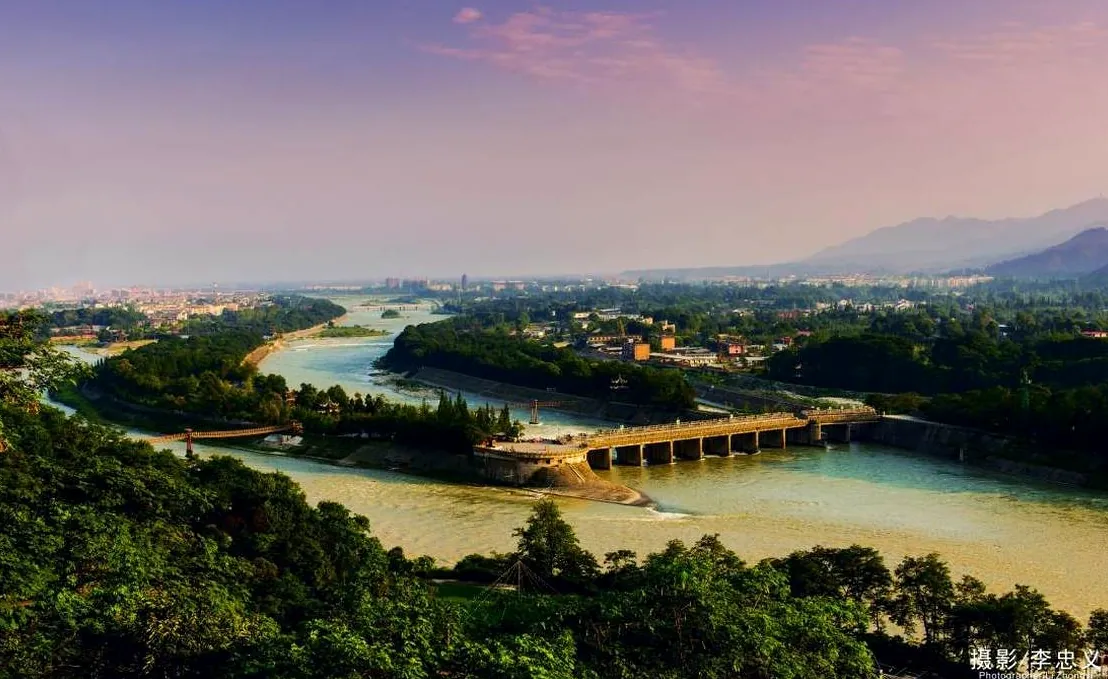
Looking down from above, the grand engineering marvel unfolds like a breathtaking, majestic natural scene at the boundary between nature and human design. The turquoise Min River rolls and winds through the deep valley, embracing the sprawling, bustling ancient city along both banks. Millennium-old rhythms of life are connected by magnificent overpass bridges, from large multi-arch bridges standing stoutly across the rushing water to graceful suspension bridges hovering precariously near the water’s edge. Surrounding the riverbed is lush, boundless vegetation, blending with the hazy, rolling mountains on the horizon, quietly welcoming the soft purple-pink twilight lingering on the water’s surface.
It is precisely the philosophy of “acting in accordance with the Dao of nature,” following the momentum of water to guide and divide floods rather than using coercive force, that has allowed Dujiangyan to endure eternally through countless vicissitudes while maintaining perfect irrigation functionality. The pinnacle of this ancient wisdom was honored by UNESCO as a World Cultural Heritage site alongside the Mount Qingcheng Taoist sanctuary complex, before being recognized by the International Commission on Irrigation and Drainage as a World Irrigation Heritage Structure. From a flood-prone lowland in the past, the regulated flow of Dujiangyan completely transformed the Chengdu Plain into “the Land of Abundance“—a fertile heavenly granary, a prosperous rice bowl, and one of the most bountiful silk cradles, nurturing the brilliant Ba-Shu civilization for over twenty-two centuries.
Situated at one of the most critical strategic bottlenecks in Southwest China, Dujiangyan is naturally endowed with a special geomorphological structure rarely seen in world hydrology. This place is a sudden and fierce transition point, where the roaring Min River, after cutting vertically through the towering snowy ranges along the eastern edge of the Qinghai-Tibet Plateau, suddenly pours out onto the gentle alluvial plains of the Sichuan basin. In terms of natural geomorphology, the eastern bank of the project relies firmly on the sheer cliffs of Mount Yulei, forming a sturdy fortress wall to block fierce floods and becoming an ideal geological anchor for the ancients to chisel through solid rock and open the Baobao Channel (Bottle-Neck Channel). Meanwhile, the western bank broadens into a gentle plain leading straight down to the fertile lower reaches of Chengdu, forming a magnificent trough-like terrain embracing the water flow.
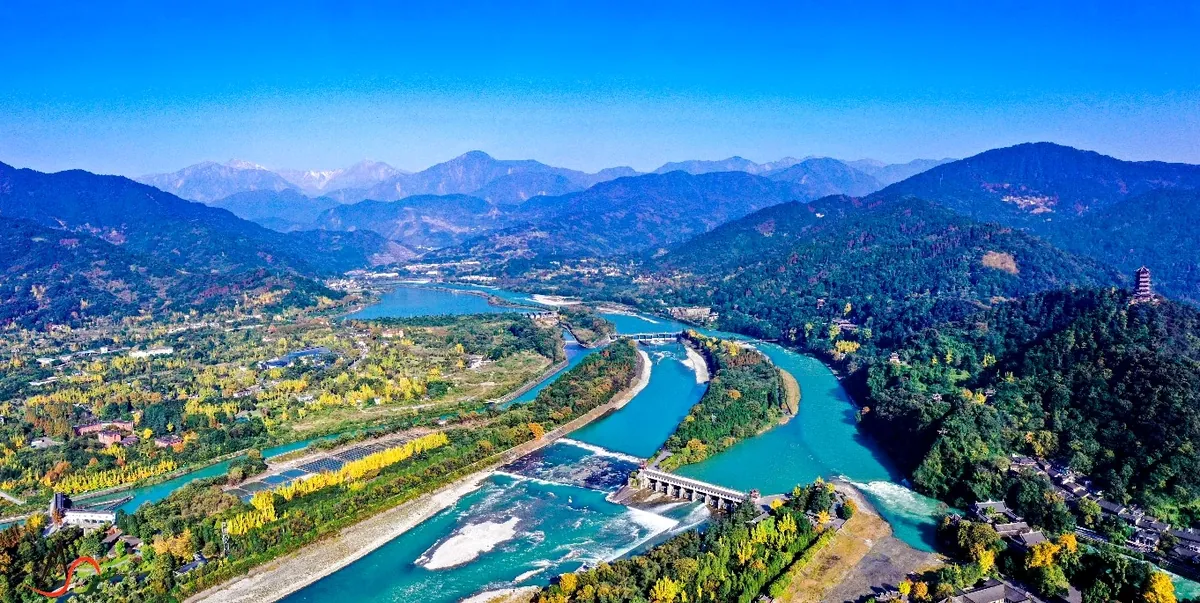
The absolute brilliance in Dujiangyan’s terrain planning lies in following the natural slope gradually descending from the northwest to the southeast. By observing the laws of gravity and flow dynamics, our predecessors skillfully shaped a flawless self-flowing diversion network without consuming any artificial mechanical traction power. The water is guided and wound gracefully according to the natural inclination of the valley, creating the classic Feng Shui configuration of “Mountains encircling, waters embracing”—where mountains shelter and block fierce waves, while winding rivers wrap around and preserve vital energy. This terrain layout not only completely resolves the millennia-old flash flood hazard of the violent Min River but also transforms Sichuan into an endlessly fertile “Land of Abundance.”
Enveloping this magnificent hydraulic project is the humid subtropical microclimate characteristic of the Sichuan basin, where wisps of mist linger year-round on the boundless slopes. The dense evergreen vegetation of the Taoist sanctuary of Mount Qingcheng and the boundless ancient pine forests on the Yulei Range reflect upon the crystalline blue source waters—which originate from the permanent ice and snow packs on the freezing plateau. The cool, damp air combined with the chilly vapor rising from the riverbed creates an ethereal veil of mist and smoke, turning the entire landscape of both banks into a vivid ink-wash painting, where the breath of majestic mountains and rivers blends with human genius.
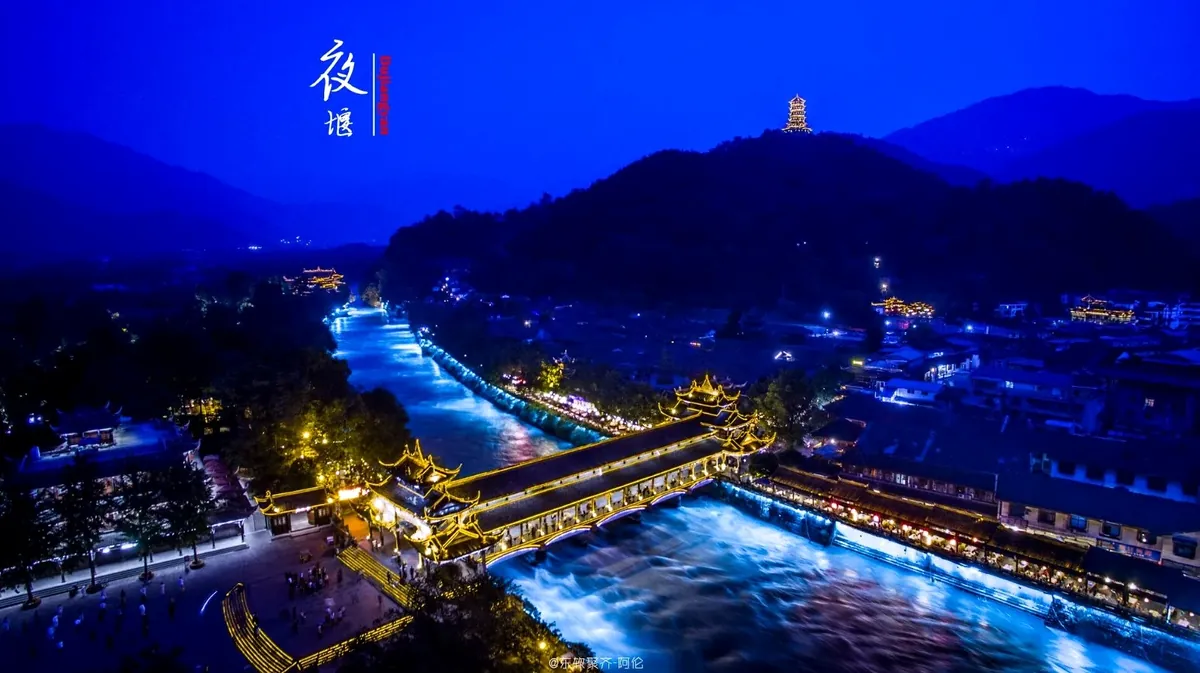
As night falls, the picturesque landscape of Dujiangyan takes on an indescribably magnificent appearance amidst the poetic ambiance of a “Night Banquet.” The central focal point of the space is the ancient covered corridor bridge, glowing brilliantly in magnificent golden lights, proudly spanning across the roaring, white-water-churning currents of the Minjiang River. In the distance, atop a peak shrouded in the night mist, an imposing ancient temple is brightly illuminated like a spiritual lighthouse among the clouds. Along both banks, traditional multi-tiered pavilions with upturned eaves and trees strung with shimmering lights cast their reflections upon the water, weaving a magical night scene that is both grandly ancient and vibrant with contemporary vitality.
The contrast yet unity between the profound tranquility of Mount Yulei’s forests and the relentless, powerful movement of the water is the most brilliant expression of the philosophy of “acting in accordance with nature.” Untamed nature was never subdued or torn apart by crude construction; on the contrary, every bend and rock formation was respected and transformed into an organic part of the architectural whole. Thanks to this unique topography and terrain planning that follows nature, Dujiangyan is not only the pinnacle of ancient hydraulic engineering but also an invaluable landscape heritage where spiritual energy and earthly essence have converged enduringly for millennia.
The genius that gives Dujiangyan its eternal value lies in its nature-aligned irrigation philosophy, completely rejecting the construction of traditional dams in order to respect the natural flow of water. Spanning over two millennia, the overall spatial structure here continues to operate resiliently based on the harmonious coordination of the three key components making up the “Three Major Projects” scheme. Each sub-district not only acts as a precise mechanical part in a gigantic hydrological regulation machine, but also reflects the ancients’ mastery of topographical observation, hydraulics, and their profound understanding of the Minjiang River’s temperament.
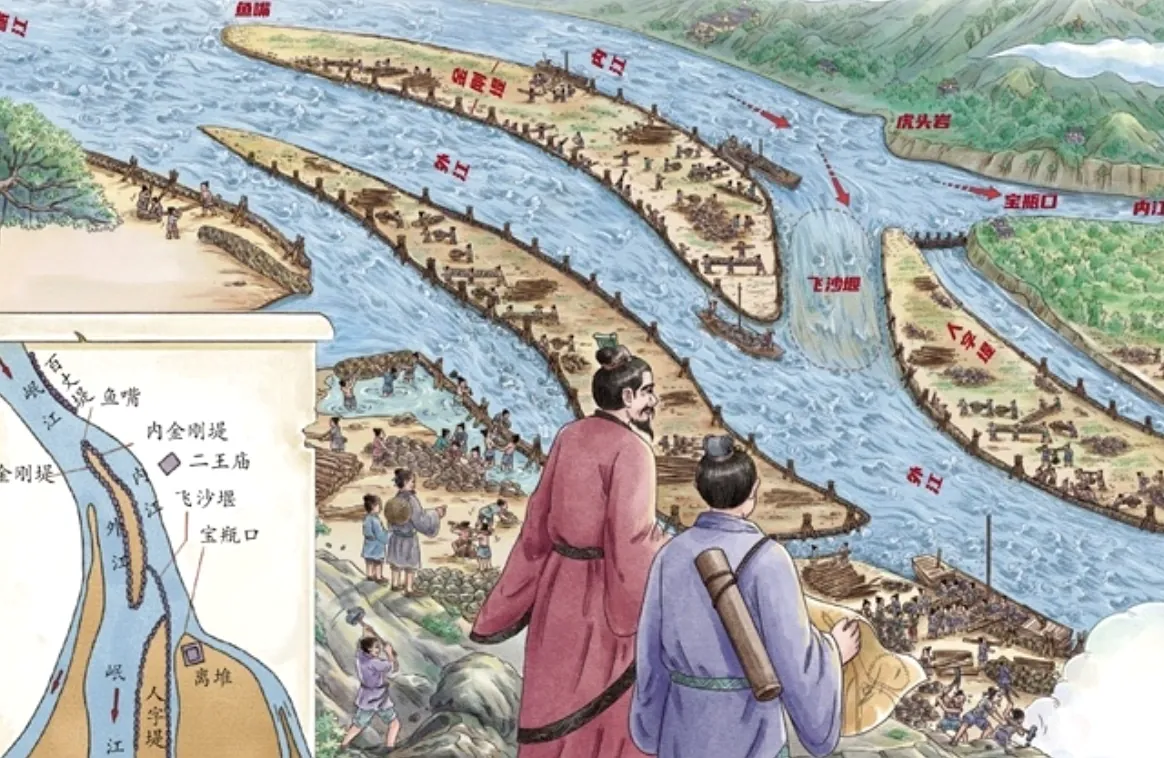
The primary focus of the system is the Yuzui (Fish Mouth) dividing dike, an elongated rhombus-shaped embankment resembling a fish’s snout parting the waves, tasked with splitting the Minjiang River into the Outer and Inner Rivers. Here, the “Four-Six Water Division” rule is brilliantly materialized: during the dry season, the natural riverbed depth directs 60% of the water flow into the Inner River to supply the plains for irrigation, while the remaining 40% flows through the Outer River; conversely, when the flood season arrives, the rising water level reverses this, sending 60% of the volume into the wide Outer River for flood discharge, keeping a safe 40% for the Inner River. Downstream lies the Feisha Yan (Flying Sand Weir) spillway, standing only two meters tall yet fully utilizing the centrifugal force generated by the S-curve of the current. Based on the “Eighty-Twenty Silt Division” principle, the swirling undertow forcefully ejects about 80% to 90% of the silt, sand, and gravel from the riverbed over the spillway threshold back into the Outer River, spectrally purifying the water to completely prevent sedimentation. The final crucial point is Baopingkou (Bottle-Neck Channel), a gorge only about twenty meters wide cut through the Yulei Mountain ridge. To carve through the mountain without explosives, ancient engineers used fire-setting to crack the rock, followed by quenching with vinegar and cold water, creating a natural throttle valve that regulates the volume of water flowing into Chengdu to remain at an absolute stable level.
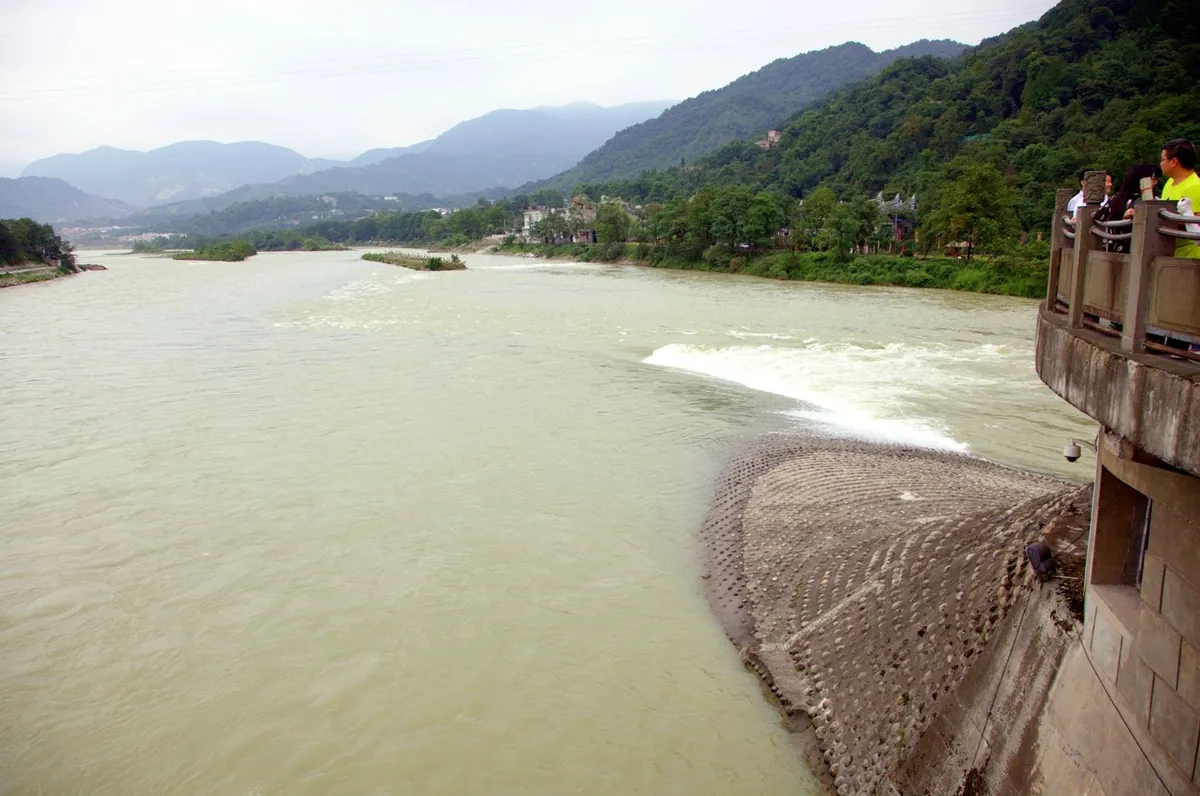
Enveloping this hydraulic wonder is a solemn spiritual and cultural space, where ancient architectural complexes nestle tiered along the steep mountain terrain. Erwang Temple stands majestic on the cliffs of Mount Yulei, showcasing sturdy mortise-and-tenon wooden structures beneath towering ancient trees, preserving inside eight classic golden characters: “Keep the riverbed deep, keep the dikes low”—the guiding principle allowing for deep channel dredging and low spillway maintenance. Standing on Lidui promontory, Fulong Temple majestically guards the dragon vein, currently preserving the stone statue of Li Bing carved during the Eastern Han Dynasty with a uniquely serene demeanor. Connecting the two banks of the swirling waterways is the Anlan Suspension Bridge, stretching over 320 meters—a bridge of gratitude once woven from bamboo and rattan and now reinforced with sturdy steel cables, marking the profound gratitude of the people of Shu dedicated to the great master engineer.
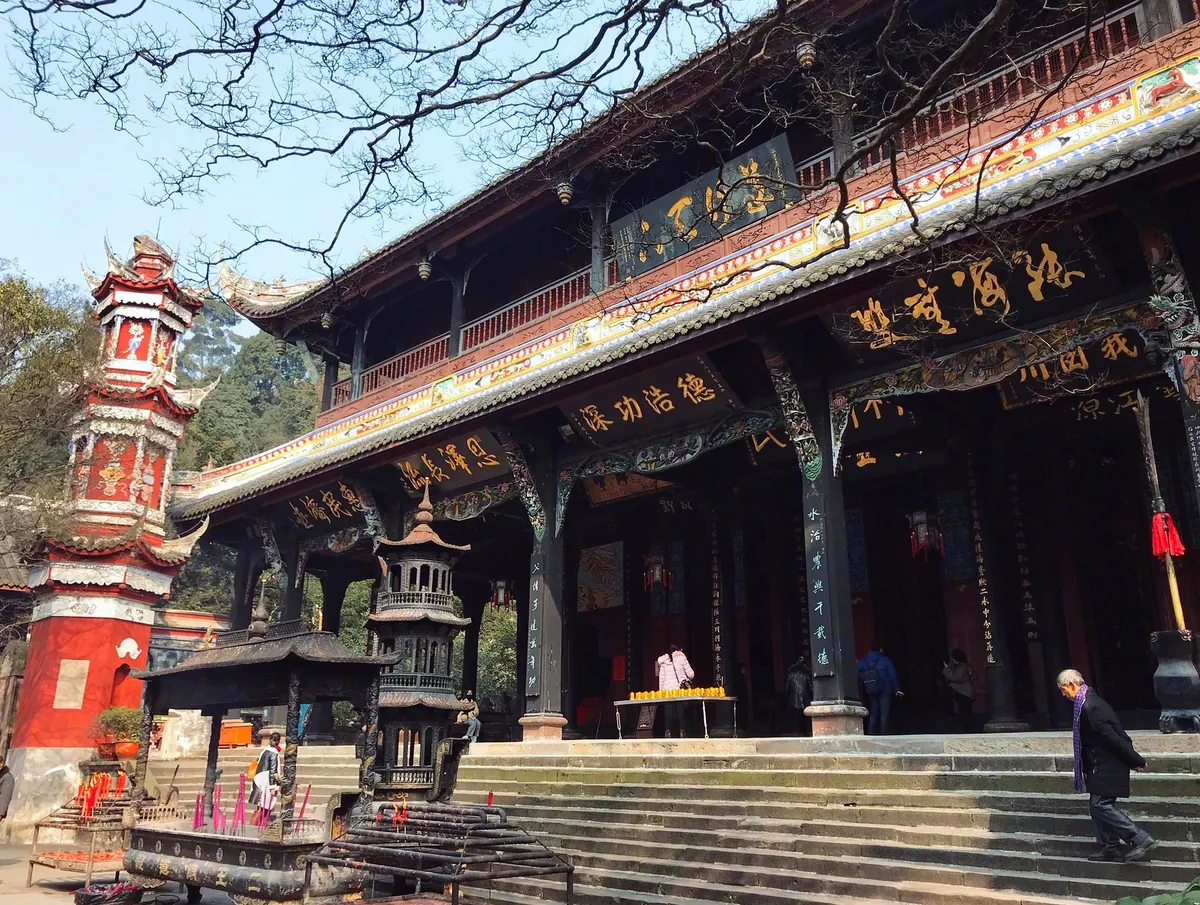
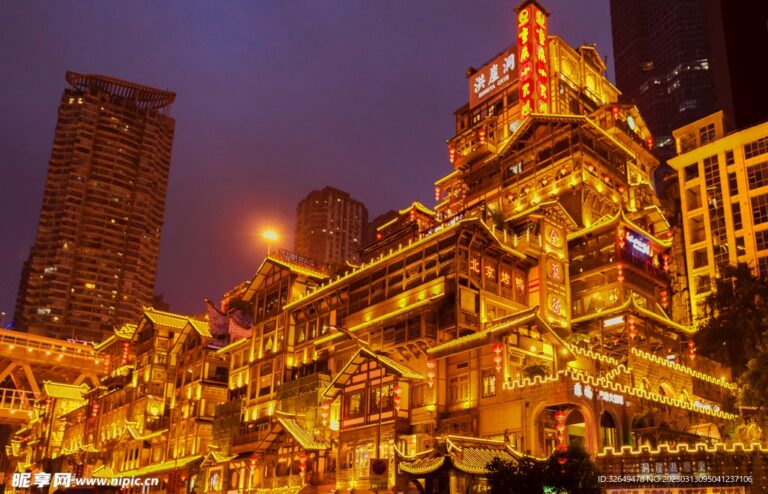
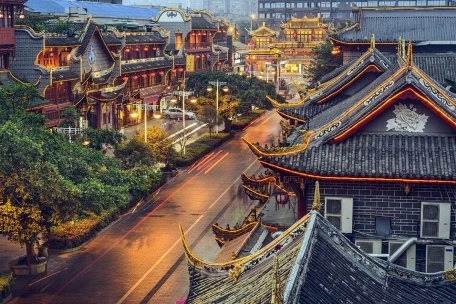
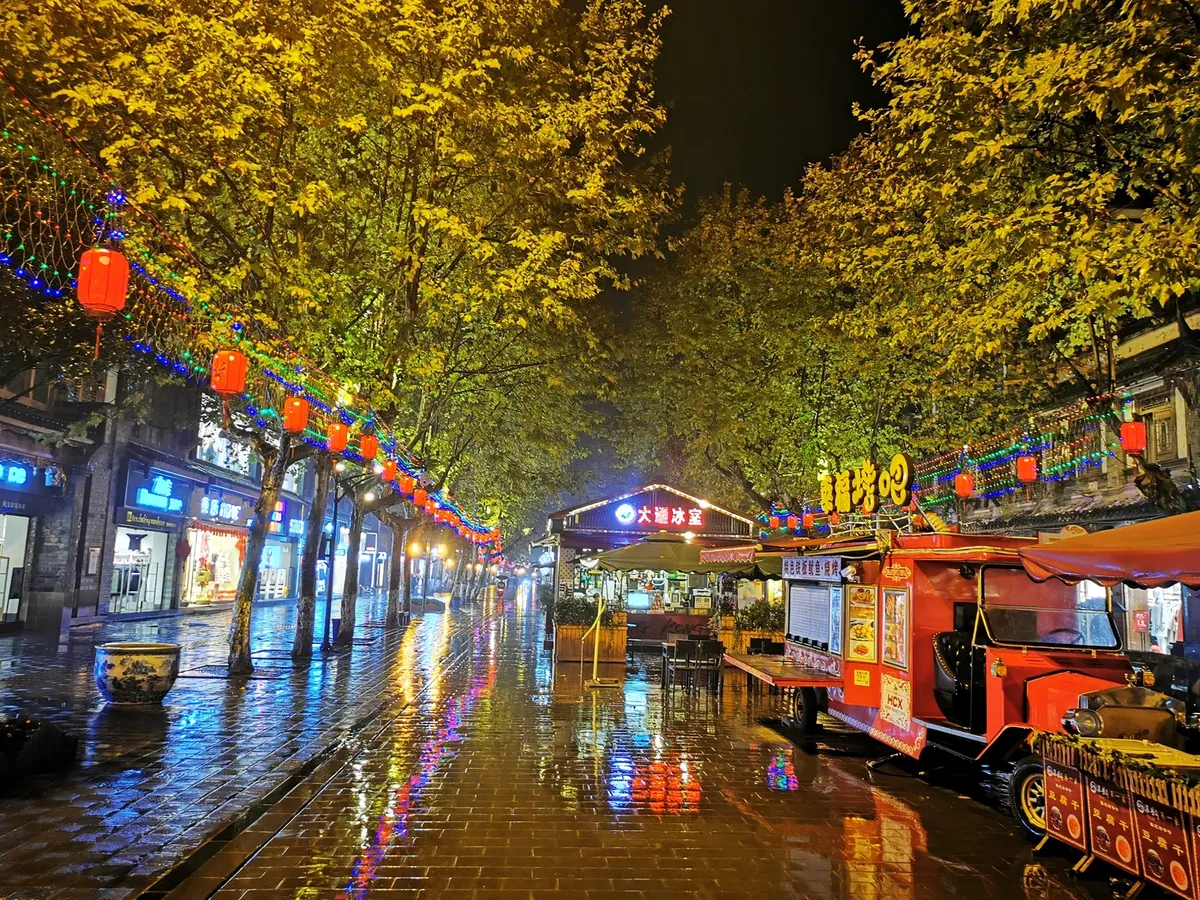
Leaving behind the epic scale of millennia-old water conservancy projects, the nightlife in the ancient town of Dujiangyan takes on a uniquely serene and glamorous charm as night falls. Beneath the freshly cleared rain, the glossy stone-paved pedestrian street reflects vibrant ribbons of light from rows of bright red lanterns, strung fairy lights, and colorful neon signs of roadside shops. Intertwined green and yellow tree foliage is illuminated shimmeringly, casting shadows over a vintage red mobile food cart tucked away by the curb, right next to a brightly lit storefront named “大疆冰室” (Dajiang Ice House), creating a commercial ambiance deeply imbued with local flavor, both cozy and cinematic.
The harmonious intertwining of everlasting water management solutions and a vibrant social cultural ecosystem elevates Dujiangyan far beyond the boundaries of a mere hydraulic engineering marvel. It stands as a vivid testament to masterclass planning philosophy, where human ingenuity does not conquer but rather harmonizes with nature, generating sustainable prosperity for the Western Sichuan land through countless historical ups and downs.
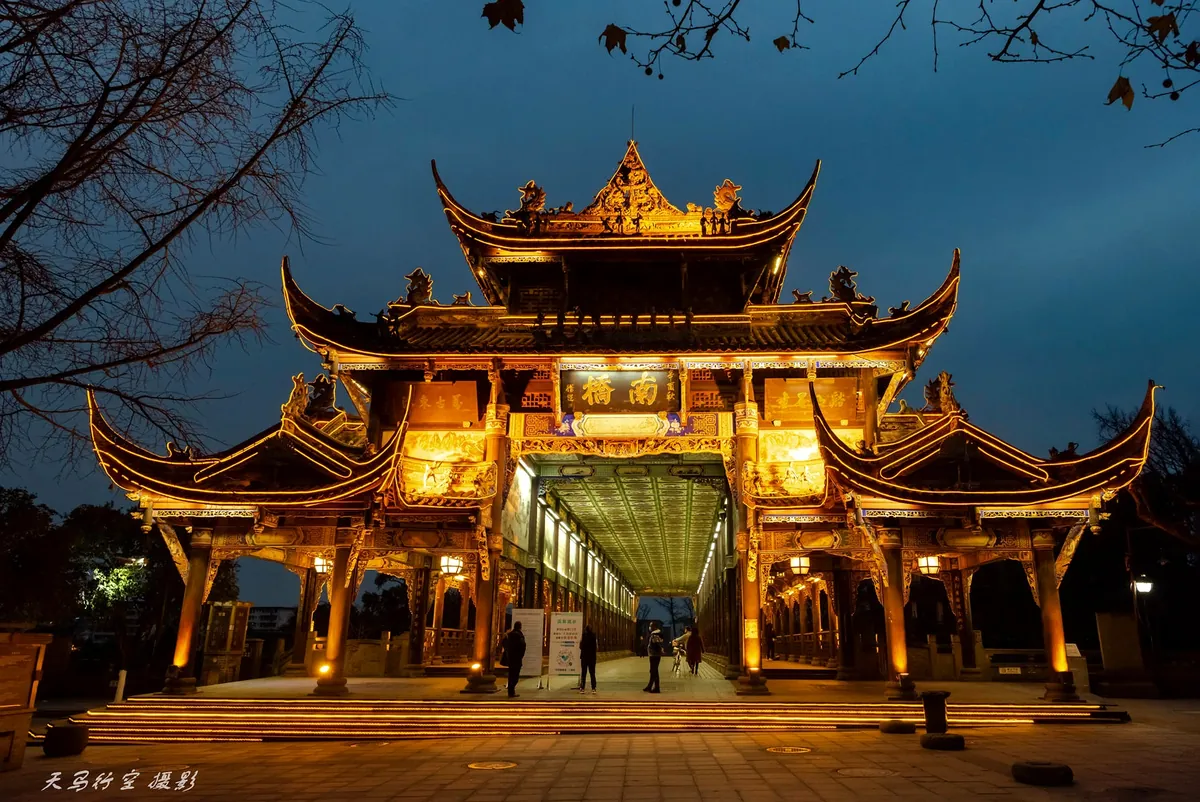
As dusk gradually fades behind the ridges of Mount Qingcheng, Dujiangyan sheds its solemn mantle as an ancient mega-hydraulic project to don the brilliant, enchanting persona of a city that never sleeps. The focal point drawing every traveler’s footsteps as night falls is none other than Nansiao Bridge (South Bridge), the renowned wooden bridge spanning the surging currents of the Inner River, standing proudly right before the gate of Guanxian Ancient Town. Steeped in Ming and Qing dynasty architectural styles, Nansiao resembles a magnificent floating corridor featuring curved vaulted roofs, intricately carved purlins depicting soaring dragons and dancing phoenixes, and lavish gilded vermilion paint. When hundreds of traditional lanterns are simultaneously lit, casting golden reflections onto the rippling water surface, the bridge emerges like a majestic aquatic palace on earth.
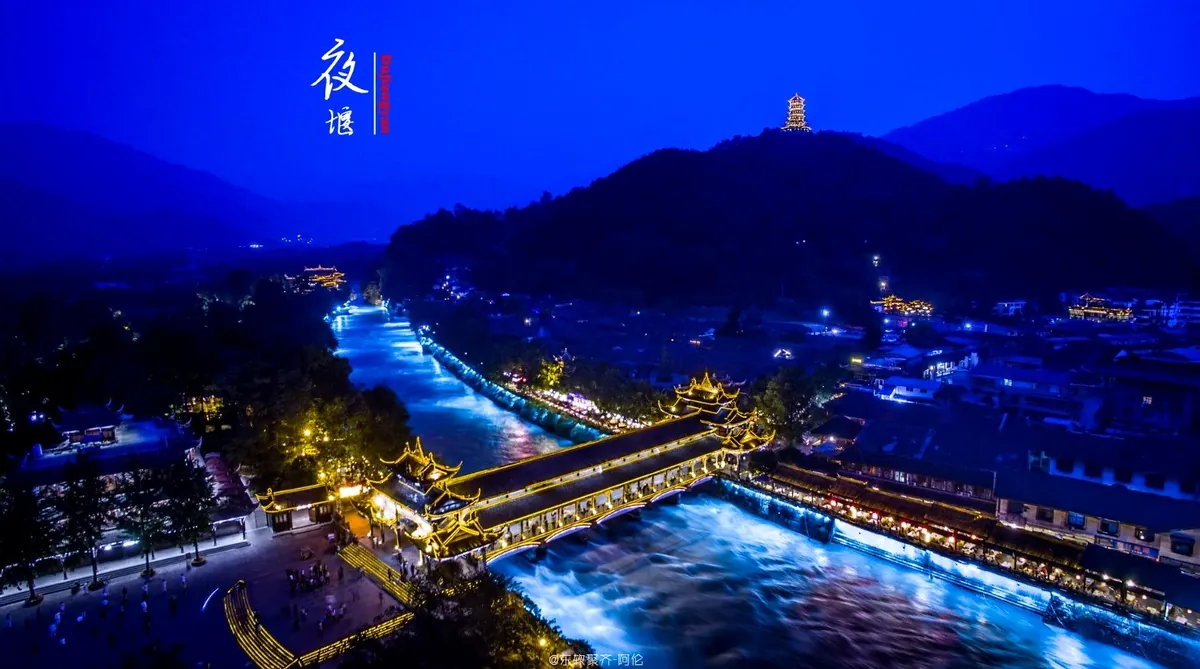
The one-of-a-kind highlight that creates the mystical visual trademark of Dujiangyan’s night is a lighting masterpiece known as Lan Guang Lei, or the “Blue Tear” at the foot of South Bridge. Beneath the ancient bridge’s arches, a high-powered lighting system featuring pure blue wavelength strips is delicately positioned, shining directly onto the roaring, white-capped waves. The rushing river water crashing violently against the stone pillars and churning up white foam is instantly refracted into a surreal turquoise luminescent ribbon, surging forward like a torrential stream of bioluminescent lava from a dreamscape. The striking contrast between the cold blue light of the violent underground waterfall and the warm gold of the ancient-style pavilion row above creates a breathtaking visual masterpiece that captivates any traveler who sets foot here.
The heartbeat of the ancient riverside town becomes even more lively during the golden hours between 7:30 PM and 10:30 PM every evening. Across the stone-paved alleys of Guanxian Ancient Town, crowds dressed in graceful Hanfu robes stroll leisurely, intermingling with the sounds of the guzheng (zither) and bamboo flute drifting from folk music performances echoing from shop porches. Along both banks of the Inner River, teahouses imbued with Taoist flavors arrange rustic bamboo tables and chairs right by the water’s edge, where locals and literati savor cups of pure Biluochun tea while listening to the millennia-old murmurs of the river telling tales of ancient pioneering days.
Amidst the chilly weather by the waterfront at night, nothing beats gathering around a steaming Yuanyang hot pot (Mandarin duck hot pot) divided into two compartments, symbolizing the yin-yang balance of local culinary philosophy. The fiery red spicy compartment bubbles intensely, brimming with pungent Sichuan dried chilies, numbing peppercorns, and a glossy layer of oil that stimulates the appetite to the utmost degree, standing in stark contrast to the light yellow broth compartment simmered from sweet bone stock with a delicate herbal aroma. Surrounding the banquet table are plates of fresh meatballs shaped into neat rounds, meticulously arranged alongside rustic bamboo chopsticks and refreshing beverages, ready to transport diners into a rich culinary adventure of earthly delicacies.
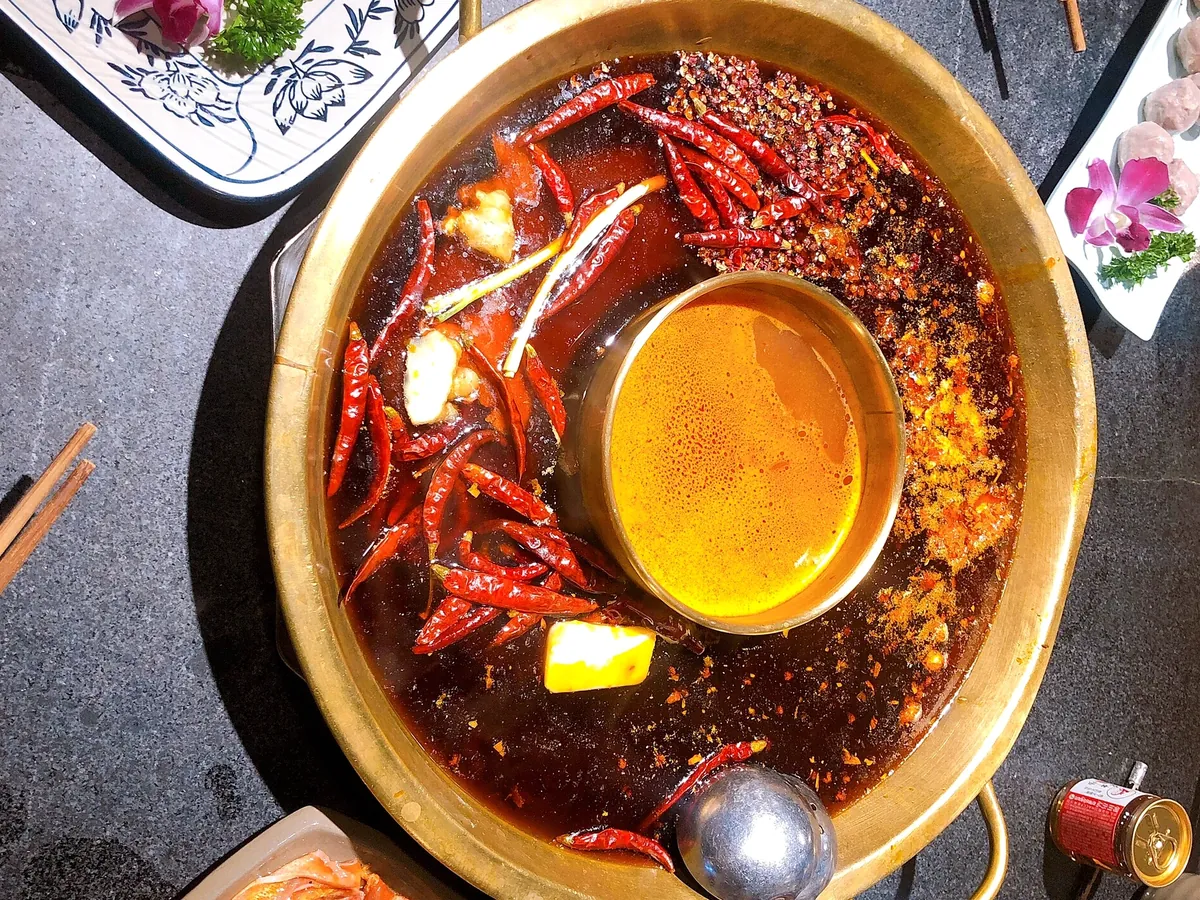
The harmonious blend of the tongue-numbing spiciness characteristic of Sichuan and the cool river breeze blowing through the willow trees creates an unforgettable flavor for the night in Dujiangyan. Besides the famous hot pot meals, the alleys of the ancient town also captivate travelers with countless traditional street snacks such as crispy grilled stinky tofu, fragrant glutinous osmanthus cakes, or skewers of grilled meat dusted with tingling chili powder. In a space filled with rich, spicy aromas, lantern lights reflecting off the blue water, and lively laughter echoing through the streets, the nightlife at this legendary water conservancy project reaches absolute sublimation, concluding a day of exploration with the most brilliant and warm memories.
Dujiangyan cuisine is like an epic chronicle that fully reflects the abundance that the ancient irrigation system and the sacred Mount Qingcheng have generously bestowed upon western Sichuan for millennia. Unlike the fiery spiciness typical of the Chengdu basin, the local flavor here is a delicate blend of pure cold-water aquatic resources from the upper Minjiang River, the longevity and health preservation philosophy of Taoism, and the rustic lifestyle passed down through generations along the banks of Guanxian Ancient Town. Within this multi-layered culinary space, the ice-cold melted snow water flowing from the Tibetan Plateau deep into the riverbed creates an invaluable ingredient: cold-water fish with extraordinarily firm meat, naturally sweet fat, and absolutely no muddy fishy odor.
Speaking of Dujiangyan’s river delicacies, Youmei Tofu Fish reigns supreme in the hearts of gourmet food lovers. Fresh cold-water fish just caught from the Minjiang River are skillfully sautéed with silky-smooth local soft tofu, blending into a vibrant red broth rich in the wild pepper and famous Hanyuan Sichuan peppercorns. The crisp, tingling spiciness does not overpower the deep sweetness of the fish; instead, it enhances the rich, nutty flavor of each piece of tofu infused with natural herbs. Additionally, rustic preparations like cold-water fish steamed with citron or simmered with highland green peppers are equally compelling variations, retaining the original crisp sweetness of produce nurtured by an unrelenting, thousand-year flow.
Venturing back towards the serene foothills of Mount Qingcheng, diners step into a realm of serene Taoist health-preserving cuisine, where the philosophy of "the unity of man and nature" is skillfully translated into each nourishing clay pot dish. Mount Qingcheng Ginkgo Stewed Chicken has long been a symbol of longevity cuisine, associated with millennium-old ginkgo trees standing majestically beside ancient Taoist temples. Ginkgo nuts harvested from the deep forest, shelled and debittered, are slow-cooked for six hours in clay pots with free-range hill chickens or stream-foraged ducks. The clear broth turns an amber hue, emitting a gentle, soothing aroma. Each sip of the broth carries a profound, sweet depth that wonderfully nourishes the lungs, clears heat, and replenishes vital energy and blood.
The mountain Taoist banquet becomes even more complete when dotted with thinly sliced Lão Lạp Nhục (cured pork), gleaming with a deep red color and translucent jade-like fat. Free-range black pork is marinated with wild peppercorn salt, undergoing a slow-smoking process over cypress branches and rice husks in the attic kitchen for months, absorbing a pine wood aroma and an irresistible rich flavor. To balance the five flavors, the locals of Qingcheng often sip it with Dongtian Niuzi Wine, a traditional Taoist elixir meticulously fermented from glutinous rice wine brewed with steppe fresh milk and secret medicinal fruit juices, creating a milky-white, opaque brew that is sweet, smooth, and tinged with a pure intoxication.
Leaving the deep mountains and stepping into the bluestone-paved alleys of Guanxian Ancient Town, the street food scene unfolds vibrantly with family-run establishments boasting over eight decades of history. Zhao Mai Noodles, nestled modestly by the ancient street, is always bustling with passersby thanks to its famous spicy noodles, where each hand-rolled, chewy noodle bathes in a secret sauce made of homemade chili oil, minced garlic, and fragrant roasted sesame seeds. Nearby, crispy golden-brown Qingchong Tofu stuffed with pungent green onions and hot, crispy Guojia Tongqiao Pancakes (buckwheat flatbreads wrapped with pan-seared scallions) sizzling on a cast-iron skillet always hold travelers back as dusk falls.
Dujiangyan’s culinary art preserves a tranquil flavor profile through slow tea-tasting sessions by ancient teahouses right at the edge of the roaring Minjiang River. Savoring a cup of Zhuye Qing (Bamboo Leaf Green tea), emerald-green like the young leaves of Mount Emei, or taking a sip of Qingcheng Taoist Tea imbued with the scent of early morning dew on misty mountain slopes, one seems to feel the entire essence of the land of Shu dissolving smoothly into every drop of pure spring water from this eternal heritage land.
The journey to access the Dujiangyan irrigation masterpiece from the center of Chengdu today is extremely convenient thanks to a modern transportation network directly connecting to the former Guanxian area. The Chengdu-Guanxian Intercity Railway (成灌铁路) departing from Xipu West Station takes travelers smoothly through the fertile plains in just 19 to 30 minutes straight to Lidui Park Underground Station (离堆公园站). With train fares ranging from 10 to 15 yuan, upon stepping out of the underground station lobby, visitors only need to walk about 500 meters under shady plane trees to reach the South Gate of the relic site. For tour groups choosing specialized tourist buses running along the wide Chengdu-Guanxian Expressway, the travel time only takes about 45 to 60 minutes, opening up an opportunity to admire the rich landscape of the Sichuan basin gradually transitioning into rolling high mountains that mark the beginning of the majestic Tibetan Plateau.
Unlocking the full depth of a two-thousand-year-old engineering marvel requires a scientifically calculated walking route to avoid physical exhaustion from battling roaring, swift currents. The ideal itinerary is a one-way tour starting from the South Gate (Lidui Park Main Gate), leisurely strolling through the millennia-old pine and cypress gardens before entering the historic Fulong Temple to view the Eastern Han Dynasty stone statue of Li Bing. From here, visitors follow the rocky shore to Baopingkou (Bottle-Neck Channel) to witness the thousand-year-old jade throat cutting through rock to guide water, walk across the miraculous Feishayan Spillover Embankment for flood discharge, and reach the Fish Mouth (Yuzui) dividing dike—where the winds and waves split the Inner and Outer Rivers. After crossing the swaying Anlan Suspension Bridge bouncing above churning waves, the route guides travelers up moss-covered steps to the sacred Erwang Temple and takes in panoramic views of the massive water conservancy structure from the towering Tanyan Pavilion. Concluding the journey by exiting through the North Gate or leisurely heading toward Nanqiao Bridge spanning the turquoise waters allows you to completely avoid backtracking, which is both exhausting and disrupts the flow of historical immersion.
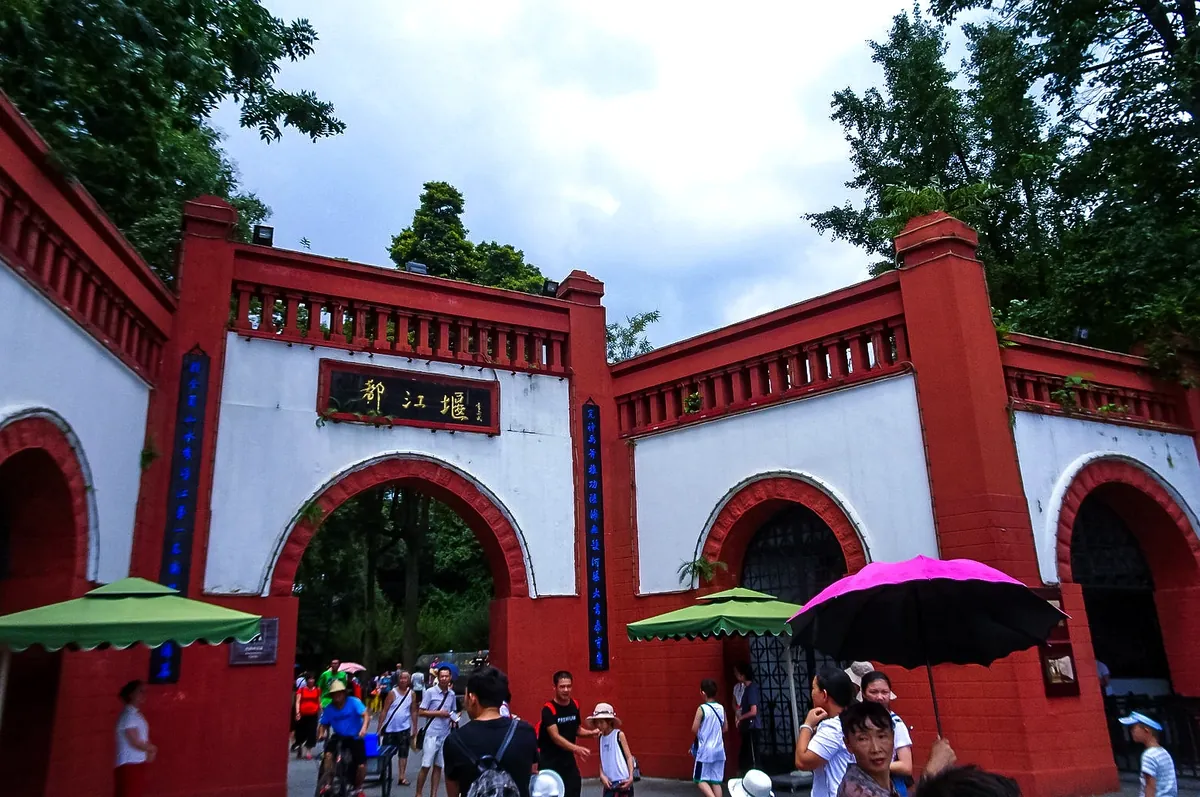
The two golden hours to experience Dujiangyan are from 08:00 to 11:30 in the morning when the early morning mist from the Longmen Mountains lingers on the water, creating an ethereal ink-wash painting effect, or from 14:00 to 18:30 in the afternoon when the setting sun gilds every ripple and rock. In the late afternoon, the journey can seamlessly extend into the night view of Nanqiao Bridge, where hundreds of lanterns cast magical turquoise lights onto the raging torrents, often dubbed the “blue tears” in the heart of the bustling ancient town. A crucial practical tip is that visitors should prepare or request the use of Whisper Guide wireless tour guide devices. The thunderous roar of tens of thousands of cubic meters of water rushing through Baopingkou and the Feishayan embankment can completely drown out regular sounds; specialized headphones ensure that every historical tale and anecdote about Li Bing and his son tunneling through the mountains is delivered clearly, sharply, and completely.
To enjoy a culturally pure and civilized trip, travelers must stay alert against cheap tour traps that frequently insert promotional stops for Tibetan traditional medicine, Sichuan jade, or low-grade silver jewelry around the outskirts of Dujiangyan. Signing or choosing a standard “No-Shopping” travel contract pursuant to Article 35 of the Tourism Law of China is the strongest shield, helping you steer clear of forced sales and fully preserve the 3.5 to 4 hours dedicated solely to exploring the heritage core. Savoring a bowl of spicy Dandan noodles or sipping a cup of Mengding green tea by the river after a stroll serves as the perfect punctuation mark to close an academically enriching journey. To avoid complex logistics while deeply understanding every layer of Shu’s river culture, history lovers can entrust their journey to the Chengdu – Jiuzhaigou – Mt. Siguniang – Dujiangyan 6D5N Tour, where the ancient source of miracles is fully and profoundly recreated.
