



Even so, the fate of the young capital was far from smooth and had to be forged through the brutal upheavals of the times. On August 24, 1814, during the War of 1812, the flames of war dealt a devastating blow to the fledgling symbols of the republic. British Royal forces under the command of Major General Robert Ross and Admiral George Cockburn swept into the city, setting fire to and gutting the interiors of the Capitol, the Library of Congress, and the White House. Amid the towering chaos, First Lady Dolley Madison braved danger to rescue the large portrait of George Washington painted by Gilbert Stuart before fleeing the residence. A fierce storm accompanied by a bizarre tornado struck the very next day and extinguished the blaze, leaving behind stark, scorched walls. Through major reconstruction led by James Hoban and architect Benjamin Henry Latrobe, a thick coat of white paint was applied to cover the pitch-black soot marks, forever etching the name “White House” into the historical consciousness of America.
Entering the post-Civil War era, Washington D.C. went through a period of chaotic growth when railroad tracks cut across the central plaza and polluted marshes threatened public space. Only in 1901 did the Senate Park Commission under Senator James McMillan—bringing together celebrated planning masters such as Daniel Burnham, Charles McKim, landscape architect Frederick Law Olmsted Jr., and sculptor Augustus Saint-Gaudens—initiate the McMillan Plan. This grand master plan revived and elevated L’Enfant’s original design in keeping with the City Beautiful Movement. The central axis of the National Mall was cleared and transformed into an expansive landscaped park stretching from the foot of the Capitol, past the soaring Washington Monument, and extending toward the banks of the Potomac River. At this westernmost terminus, the majestic Abraham Lincoln Memorial, evoking the Greek Parthenon, was set in motion, carving into space an enduring symbol of the president who preserved national unity and emancipated millions of enslaved people, closing more than a century of vicissitudes to define the lasting visage of a global capital of power.
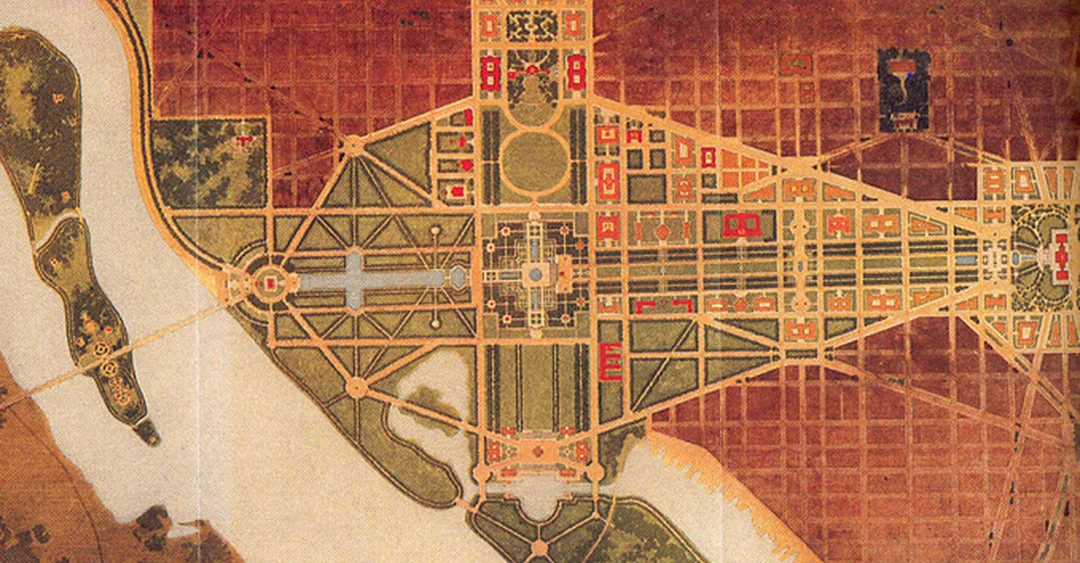
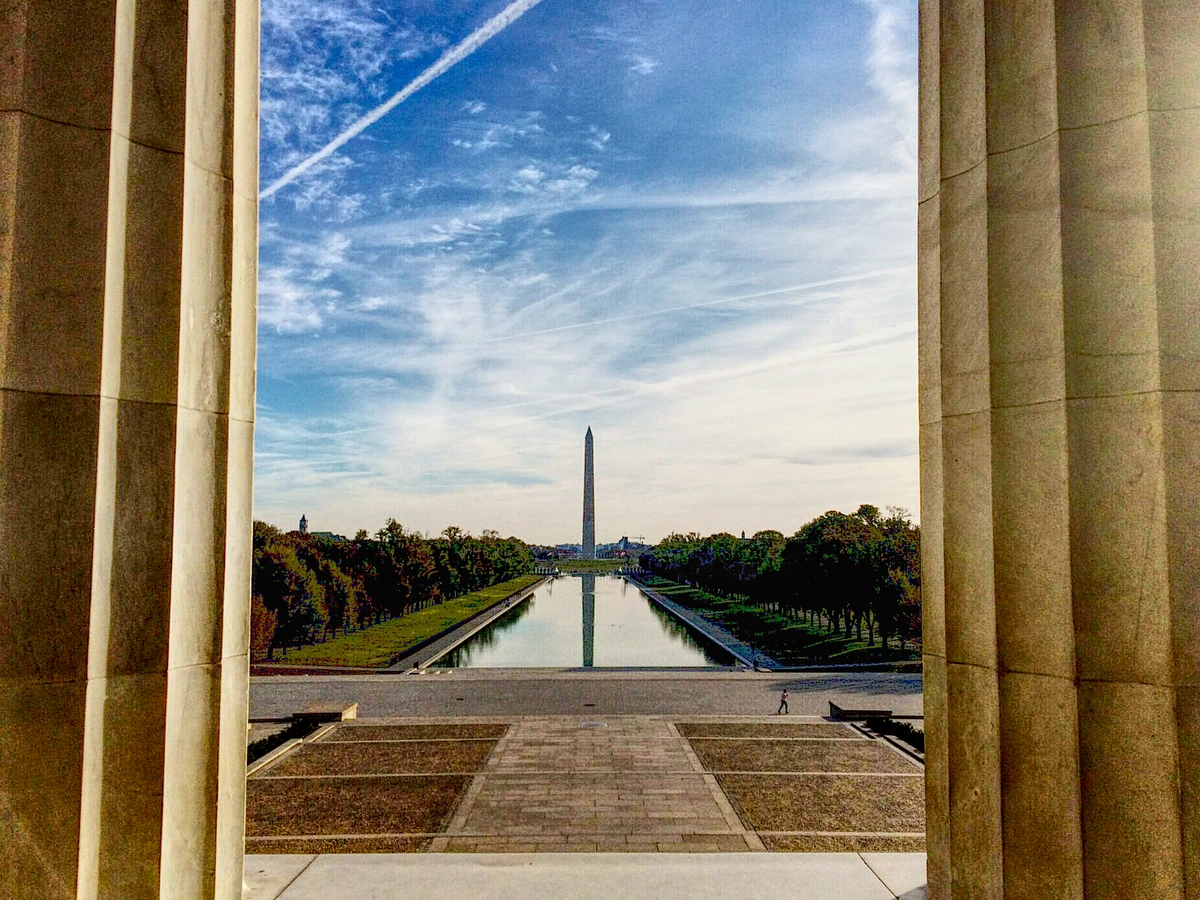
Viewed from the lens of eighteenth-century Western military geography and urban planning philosophy, Washington D.C. was built upon a remarkably disciplined geometric spatial order. When French engineer Pierre Charles L’Enfant drafted the first layout map of the capital in 1791, and later as the McMillan Commission refined it in the early twentieth century, the entire heart of the federal seat was shaped into a colossal cruciform axis of absolute symbolic weight. The East–West axis stretches continuously from Capitol Hill—where the imposing Capitol stands for supreme legislative power—across the lush expanse of the National Mall, reaching the towering Washington Monument and ending at the water’s edge where the Abraham Lincoln Memorial makes a striking presence. Intersecting this axis is the North–South line connecting the White House on the north, passing through the intersection point at the granite obelisk, and aiming straight down to the water’s edge of the Tidal Basin where the Thomas Jefferson Memorial is reflected. This exact geometric convergence not only expresses the doctrine of separation of powers materialized into landscape architecture, but also creates a sweeping visual field that draws currents of prosperity and authority from every direction toward the core of power.
Few realize that beneath the flat, monumental surface of today’s national park once lay an untamed tidal marsh on the right bank of the Potomac River, frequently submerged by storm surges and severely polluted by the stagnant flow of the old Tiber Creek. To turn that alum-rich, mosquito-ridden wetland into the foundation of a splendid metropolis, engineers of the U.S. Army Corps of Engineers under Major General Peter Conover Hains carried out one of the most complex hydraulic and geotechnical megaprojects in North American history in the late nineteenth century. The Tidal Basin system, spanning more than 107 acres, was painstakingly excavated as a mechanical heart regulating hydrology across the entire area. The structure operates entirely on the natural momentum of the tides: one-way wooden flap gates open automatically when the tide rises on the Potomac River to admit millions of cubic meters of fresh water into the basin, and shut tight as the tide begins to ebb. This massive impounded volume is then released forcefully through another set of control gates into the Washington Channel, generating a high-pressure flushing current that scours away sediment, safeguards navigation channels, and permanently eliminates flood risk for the plain built up with monumental civic structures.
Washington D.C.’s urban ecosystem reached a landscape crescendo thanks to a historic diplomatic gesture in 1912. At that time, Tokyo Mayor Yukio Ozaki, on behalf of the people of Japan, gifted the U.S. capital more than 3,000 cherry trees across several varieties to strengthen bilateral ties. Among them, the Yoshino cherry, scientifically named Prunus × yedoensis, made up the overwhelming majority with its pure pale-pink hue, alongside a smaller share of weeping and double-blossom Akebono and Kwanzan varieties. Grafted and carefully tended in alluvial soil following Potomac dredging projects, the Yoshino groves around the Tidal Basin and along East Potomac Park grew into a remarkable biological belt. Every spring, when peak bloom arrives in unison, interlocking canopies form a drifting band of powder pink reflected shimmering on the still water, softening the solemnity and stillness of the surrounding Colorado white marble and Neoclassical granite.
The subtle contrast between the emerald lawns of the National Mall, the calm waters of the Reflecting Pool, and the cool shade of mature cherry trees creates a signature urban landscape found nowhere else. Here, the boundary between solemn political space and the everyday life of capital residents dissolves completely. After hours of strolling past the grand structure of the Capitol or the quiet gravitas inside President Lincoln’s marble statue, visitors can discover the rich local culinary flavors of the Chesapeake Bay region right in neighboring dining districts. Pan-seared Maryland crab cakes made from fresh blue crab meat bound with breadcrumbs and traditional seasonings, or a rich, velvety bowl of clam chowder, serve as the ideal culinary piece, preserving the savory coastal flavor of the plains in the experience of this East Coast city.
The dignified spirit of Neoclassicism pervades the central planning of Washington D.C., where formal language is distilled from the aesthetic revivals of ancient Greece and Rome. Choosing this architectural style was not merely about creating visual masterpieces; it also carried a deeper philosophy about the permanence of the republic and enduring democratic values. Along the National Mall axis, three icons of American political power and civic spirit rise like epics carved into space from stone blocks, metal, and light, expressing the pinnacle of construction engineering and some of the grandest urban planning thought in the West.
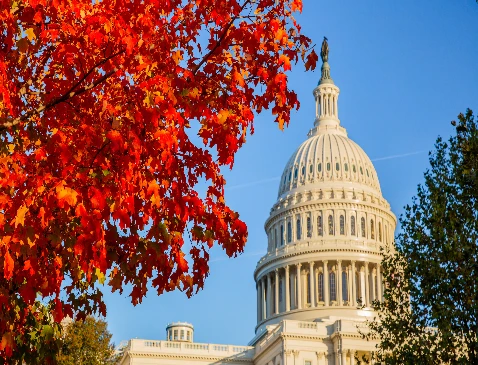
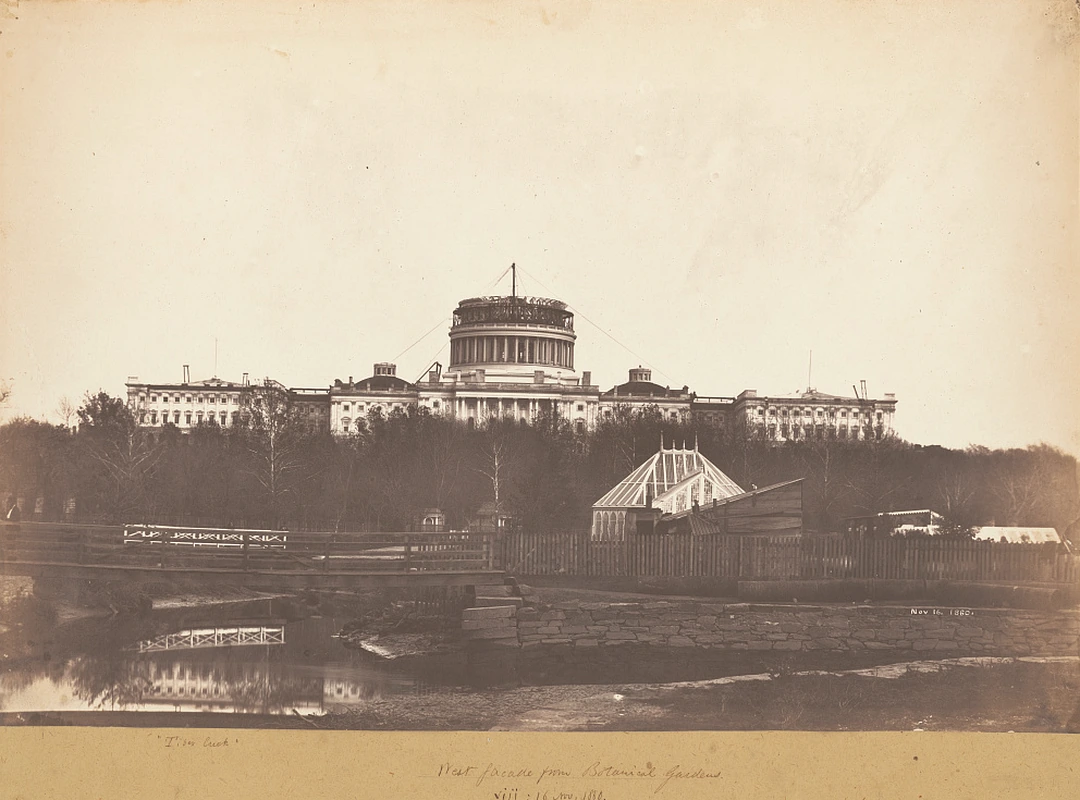
Commanding the geographic and power convergence of the city, the Capitol displays extraordinary scale through its magnificent double-shell dome constructed entirely of cast iron weighing up to 8.9 million pounds—equivalent to more than four thousand metric tons of metal. Designed by architect Thomas U. Walter in the mid-nineteenth century, this mechanical feat replaced the original copper-clad wooden dome that was no longer proportional to the expansion of the two congressional wings. The cast-iron truss system was engineered to expand and contract flexibly across the four-season thermal cycle, supporting the crown where the bronze Statue of Freedom stands tall against the sky. Stepping beneath the Rotunda, the vast circular chamber nearly fifty-five meters high opens a surreal spatial dimension, where the canopy is adorned with Italian artist Constantino Brumidi’s fresco masterpiece The Apotheosis of Washington, creating a dramatic visual perspective amid imposing Corinthian columns.
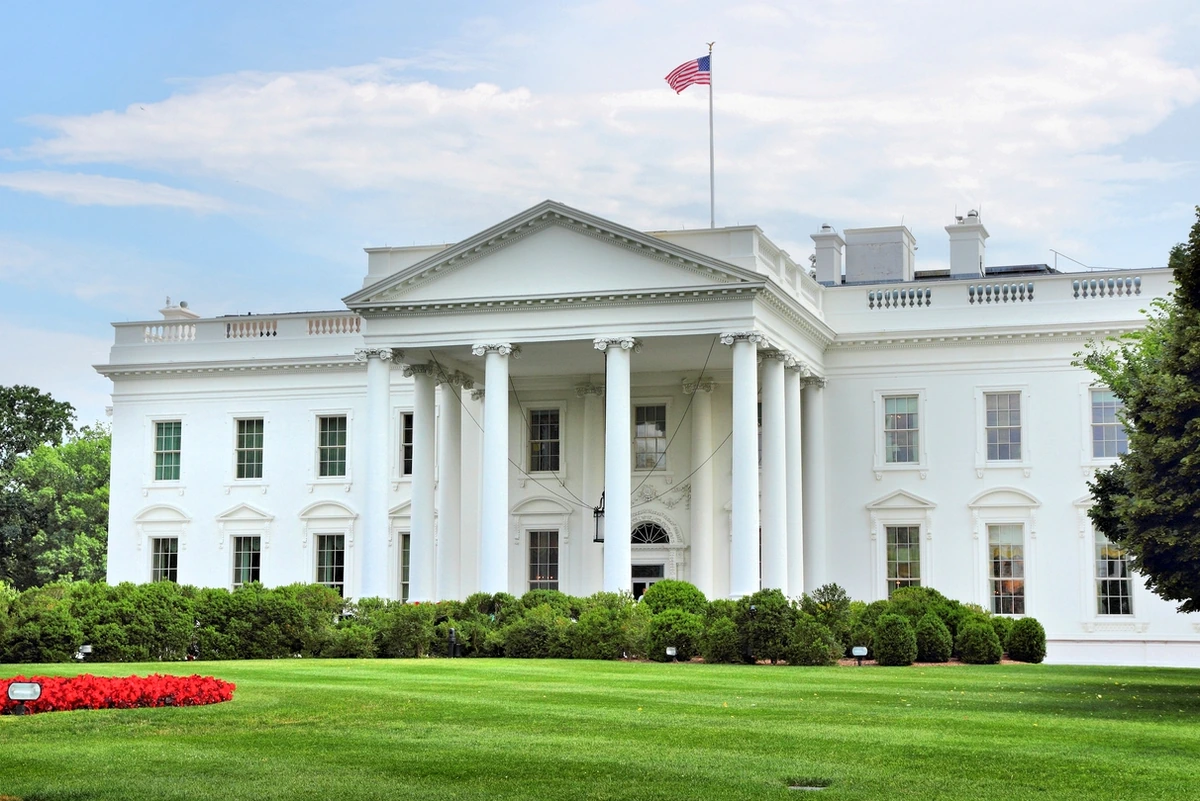
Not far away, the White House exudes the refined, measured grace of an Irish Palladian villa, brought to life by the skill of architect James Hoban. The heart of American executive power was built primarily of Aquia Creek sandstone quarried along the Potomac River in Virginia. Because this stone is porous and prone to moisture absorption and weathering, early builders had to coat its surface with a white lime wash for protection, inadvertently shaping the residence’s iconic appearance. Behind the historic sandstone facade lies an engineering feat of twentieth-century reconstruction. During the major renovation under President Harry S. Truman from the late 1940s to the early 1950s, the decaying wooden interior framing was completely stripped out. Engineers dismantled historic interior trim piece by piece, excavated deeper basement levels, and inserted a massive, independent load-bearing steel frame inside the building, creating a “steel box within stone walls” of unmatched strength while preserving its graceful exterior intact.
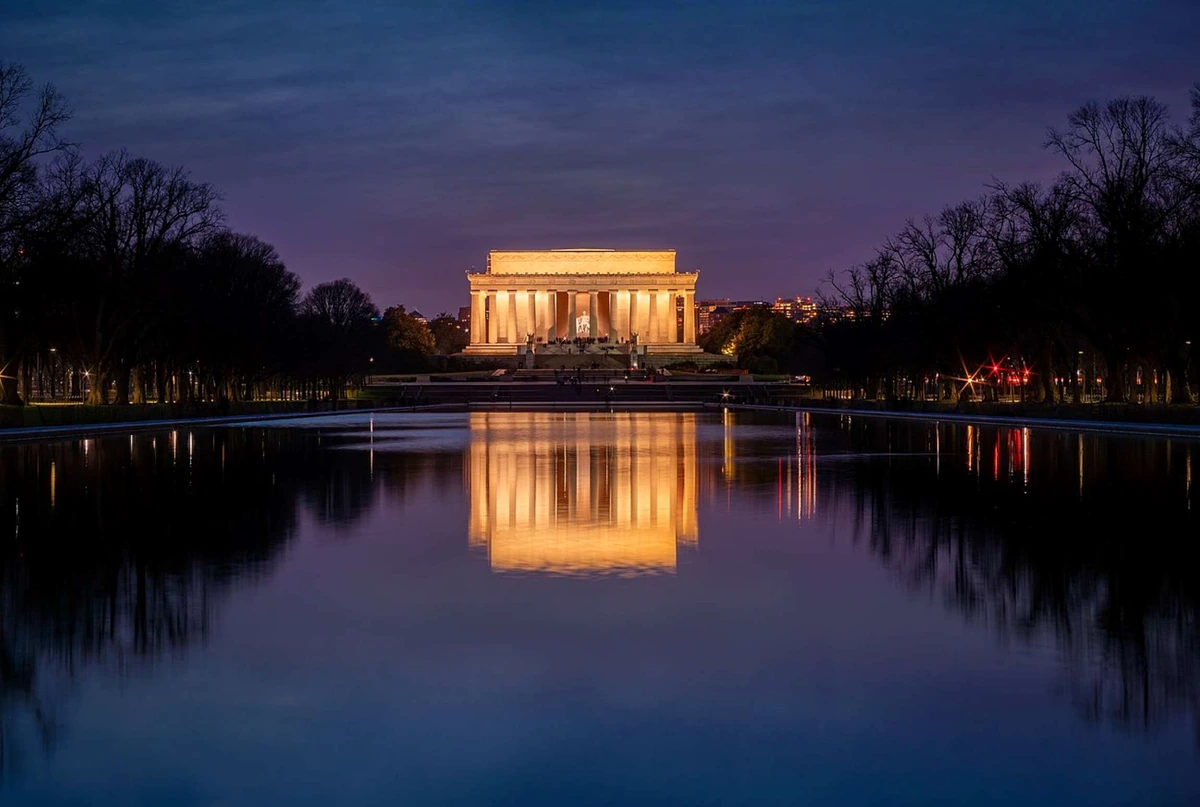
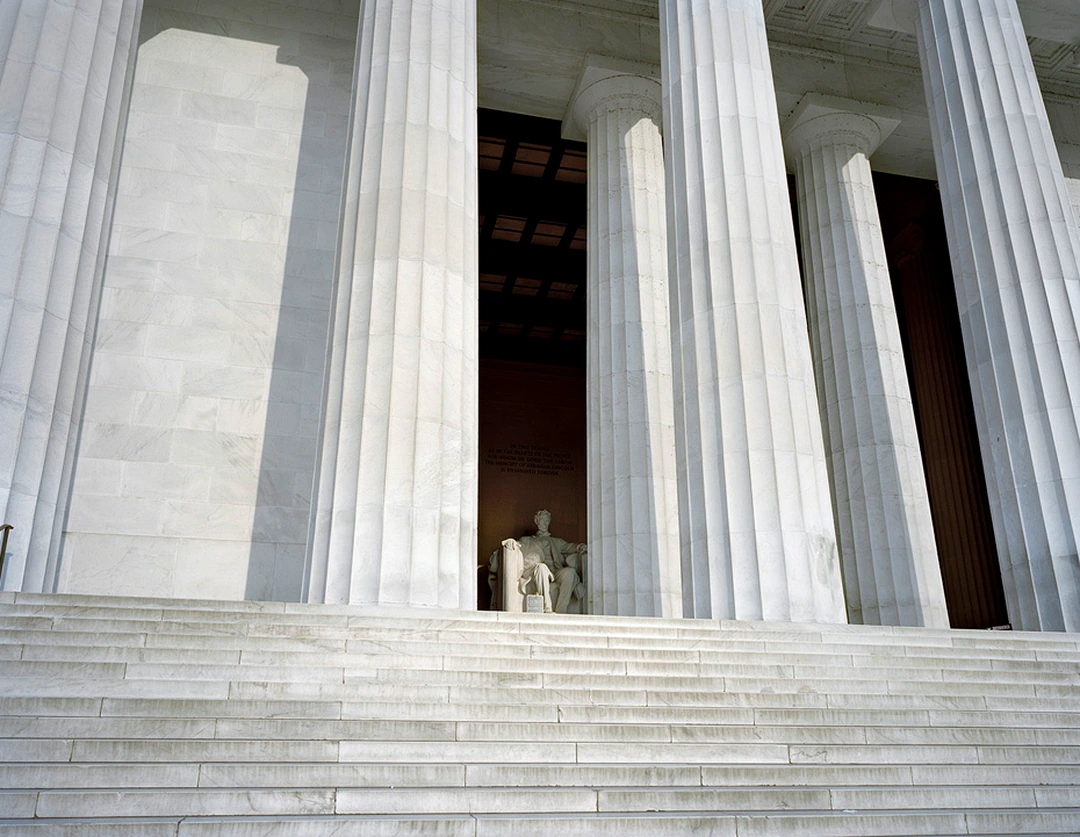
At the western end of the axis, the Abraham Lincoln Memorial is the ultimate culmination of the classical Greek Doric order, recalling the majestic silhouette of the Parthenon atop the Acropolis in Athens. The monument is ringed by thirty-six columns of Colorado Yule white marble subtly angled inward according to Greek optical perspective rules, symbolizing the thirty-six states in the Union at the time of the sixteenth president’s death. Because it sits on primeval marshy alluvium beside the Potomac River, engineers at the time had to construct a massive concrete pier foundation plunging forty-four feet—more than thirteen meters—through mud and sand directly into bedrock. This sturdy engineering base bears tens of thousands of tons of temple weight, centered on the contemplative seated statue of President Abraham Lincoln skillfully assembled from twenty-eight blocks of Georgia white marble weighing one hundred and seventy-five tons in total. Every fold of the drapery and every vein on the hands resting on the armrests, sculpted by Daniel Chester French, achieves anatomical precision and profound tragic dignity.
As dusk settles over the Potomac and afterglow fades behind the trees along Constitution Avenue, the National Mall undergoes a dramatic transformation. Daytime administrative bustle and throngs of visitors give way to an unseen live performance of light and shadow, where stone statues and classical colonnades voice their own quiet narrative. Without flashy stage effects or amplified sound, the layout envisioned by architect Pierre Charles L’Enfant in the late eighteenth century turns this more-than-two-mile park strip into a grand open-air amphitheater. Nighttime in Washington D.C. therefore moves not to the hurried beat of commercial metropolises, but settles into a deep space of contemplation, where founding history is illuminated by optical beams calibrated to exact Kelvin temperatures.
The art of lighting across this monument complex is a precise orchestration of traditional high-pressure sodium spectra and next-generation recessed LED fixtures. Rather than washing every surface evenly, lighting engineers use layered shadow techniques to highlight carved details. At the Capitol, the nearly four-thousand-ton cast-iron dome completed during Abraham Lincoln’s presidency glows like a beacon of the republic against the dark night sky. Warm white light with a high color-rendering index sweeps across the fluting of Corinthian columns, bringing out the Statue of Freedom atop the crown. To the west, the White House rests quietly in discreet, measured illumination, where Aquia Creek sandstone walls are subtly edged with light to maintain strict security while preserving the refined dignity of one of the Western world’s foremost seats of power.
The peak of the nighttime visual experience belongs to the space around the Abraham Lincoln Memorial and the Reflecting Pool. Stretching more than six hundred meters, the water lies as still as a giant liquid mirror, capturing the shimmering reflection of the more-than-169-meter Washington Monument rising skyward. Inside the Greek Parthenon-style sanctuary, the nearly six-meter-tall Georgia white marble statue of the sixteenth president—carved by the Piccirilli brothers from Daniel Chester French’s design—is lit by indirect photometric lighting. Warm light cast from above reveals the furrowed lines of thought on the brow and the sinewed hands gripping the chair, creating a solemn atmosphere that prompts anyone climbing the thirty-six Colorado Yule granite steps to lower their voice to a whisper.
A distinctive feature of this architectural complex is its round-the-clock open access, allowing visitors to immerse themselves in heritage culture at any hour. Late at night, as cool breezes from Chesapeake Bay sweep back up the Potomac, the National Mall becomes a haven for photographers seeking long exposures and travelers craving inner quietude. Far removed from the lively jazz clubs of U Street’s storied past or the cobblestone, lantern-lit lanes of historic Georgetown, the core of the American capital by night is a work of still light artistry, where every stone and shadow carries the weight of time and enduring historical events.
Hidden behind imposing marble masses and laws that shaped world destiny, Washington D.C. holds a deep culinary undercurrent forged by its distinctive geography along the Potomac River and a rich multicultural history. The flavor map of this federal territory is shaped first and foremost by the Mid-Atlantic coastal ecosystem, where fertile Chesapeake Bay yields renowned delicacies such as Maryland blue crab and Chesapeake Bay oysters. Blue crabs are steamed whole over rustic wooden racks, generously dusted with local savory-spicy seasoning blends of wild celery, cayenne, and bay leaf, producing sweet, rich flavor and firm meat that is hard to mistake. Alongside them, plump Chesapeake oysters—brimming with tidal salinity mingled with freshwater from tributaries—whether enjoyed raw with mignonette or lightly grilled with garlic butter, evoke an era of frontier settlement by Indigenous inhabitants and eighteenth-century maritime traders.
If seafood represents the bounty of coastal bay waters, the half-smoke at Ben’s Chili Bowl is the proud anthem of the capital’s street-food culture. Tucked peacefully along U Street since opening in 1958 by Ben and Virginia Ali, Ben’s Chili Bowl has turned the half-smoke into an unmistakable emblem of local identity. Unlike ordinary quick-cooked sausages, a half-smoke combines coarsely ground beef and pork in a balanced ratio, seasoned with zesty spices and slow-smoked over natural wood to preserve a crisp, aromatic casing. Sear-grilled on cast iron and tucked into a soft, warm bun, it is smothered in a signature spicy chili sauce and topped with diced onions and yellow mustard, delivering a burst of richness, smokiness, and lingering warmth across the palate.
The value of Ben’s Chili Bowl goes beyond a family recipe; it is also a living historical witness to the civil rights movement in Washington D.C. During the mid-twentieth century, when U Street was hailed as an artistic capital of the African American community, it was a familiar gathering spot for music legends such as Duke Ellington, Miles Davis, and Nat King Cole, as well as distinguished social activists. Even amid turbulent upheaval following the assassination of civil rights leader Martin Luther King Jr., this diner with its red leather booths and laminate tables stayed resiliently open as a beacon of racial harmony and community solidarity. World leaders visiting the capital have likewise sought out this street corner for a humble half-smoke, as a gesture honoring local cultural depth.
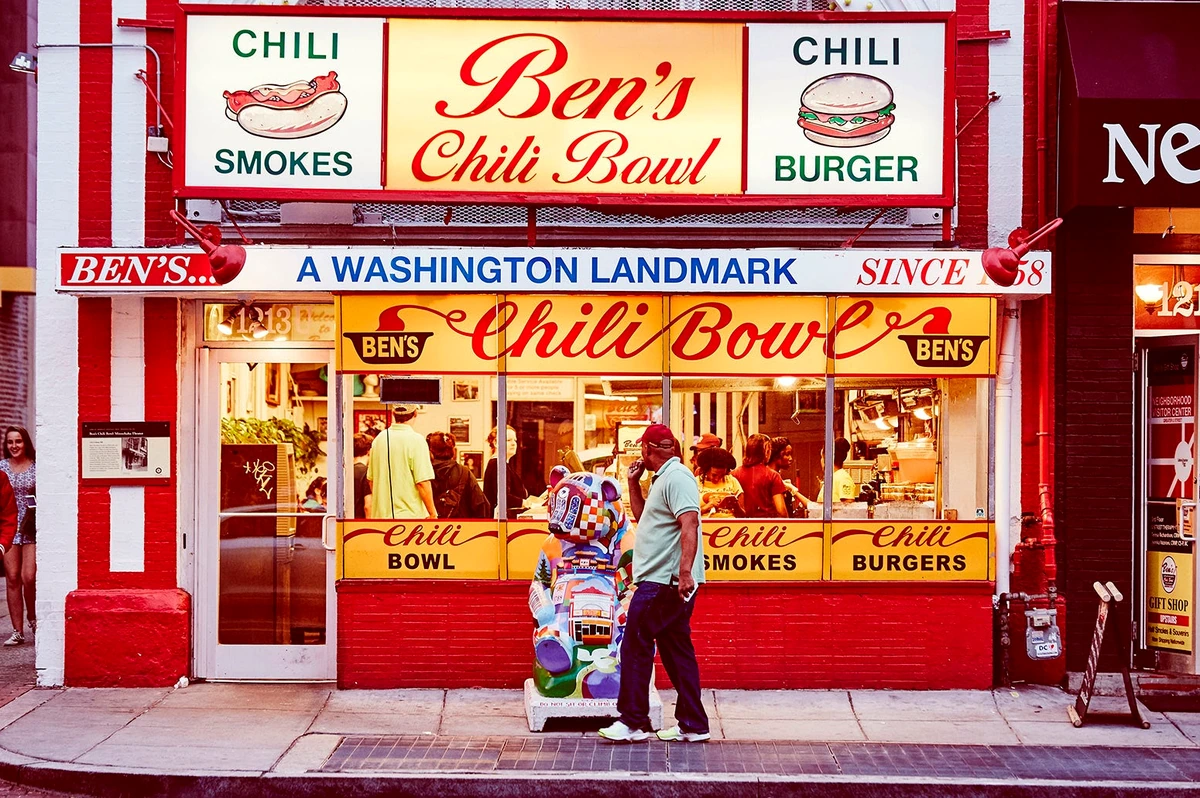
Alongside rustic local heritage, waves of immigration from around the globe have turned nearby neighborhoods like Adams Morgan and U Street into vibrant international culinary labyrinths. The long-standing presence of the diplomatic corps and immigrant communities has given rise to one of the largest hubs of Ethiopian cuisine outside Africa. Diners can easily encounter platters of spongy fermented injera spread with fiery, fragrant berbere-spiced doro wat stews, eaten by hand in keeping with traditional communal fellowship. Intermingled with them are family-run spots serving classic Salvadoran pupusas, Central American noodle shops, and European-style bistros tucked beneath historic red-brick rowhouses. The interplay of generous Chesapeake waterways, the smoky civil rights legacy of the half-smoke, and global culinary craft paints a layered gastronomic portrait reflecting the true soul of a capital city grand in appearance yet deeply mindful of its roots.
Unlike tourist cities hemmed in by commercial ticket booths, the entire National Mall complex operates as an open sanctuary welcoming visitors 24 hours a day, 7 days a week under the stewardship of the U.S. National Park Service. Whether in the quiet of late night or the mist of early dawn, travelers can freely walk the marble steps of the Abraham Lincoln Memorial or pause before the black granite wall of the Vietnam Veterans Memorial. Stepping inside the two supreme symbols of American executive and legislative authority, however, requires careful and respectful advance planning. For the Capitol, visitors should book guided tours ahead through the online public service portal Recreation.gov to obtain timed passes at the Capitol Visitor Center, which is open Monday through Saturday. Meanwhile, entering the East Wing of the White House is a more demanding mini-diplomatic process: U.S. citizens must submit requests through a member of Congress’s office at least three weeks to three months prior to departure, while international visitors must coordinate through diplomatic protocol channels at their embassy.
Public transit is the key to solving getting around a tightly planned metropolis like Washington D.C., where finding personal parking near federal buildings is nearly impossible. The urban subway network of the Washington Metropolitan Area Transit Authority, known as WMATA Metrorail, is systematically laid out with the Blue, Orange, and Silver lines running beneath the administrative core. With a SmarTrip card, visitors can easily set out from across town and arrive at key stations such as Smithsonian right in the middle of the Mall, Federal Triangle near Pennsylvania Avenue, or Capitol South to head straight to the south side of the Capitol building. Keep in mind that the distance from the Capitol’s front plaza to the base of the Lincoln Memorial exceeds three and a half kilometers across broad flat ground, so sturdy walking shoes paired with budget-friendly DC Circulator buses or Capitol Bikeshare bikes are the smartest way to conserve energy.
Financially, the U.S. capital is one of the rare destinations offering top-tier cultural value with actual admission costs near zero. All federal historic sites, outdoor memorials, and seventeen renowned museums of the Smithsonian Institution around the central park offer completely free admission. Basic trip expenses center mainly on essential living costs such as Metrorail fares—which vary by peak hours and distance traveled—and light lunches at museum cafes or food trucks along cross streets. This allows travelers to devote their budget to enjoying refined Mid-Atlantic coastal dining in historic Georgetown or fresh seafood along The Wharf waterfront after a full day of exploring.
The most prized moment to take in the full soul of the American capital is the magical “Golden Hour,” the brief window just before sunset over the Potomac River. As late afternoon light gilds the thirty-six Doric columns of the Lincoln Memorial, the structure’s shadow lengthens across the still Reflecting Pool, creating a dramatic contrast with the pointed tip of the Washington Monument rising into a crimson-lit sky. Choosing late afternoon not only helps visitors avoid the summer heat—characteristic of a humid subtropical climate shaped by its former marshland setting—but also coincides with architectural lighting coming alive, turning cool granite into imposing monuments against the night. Within that hallowed setting, a respectful demeanor, quiet footsteps, and hushed voices offer the deepest tribute any traveler can pay to the stirring chapters that shaped Western democracy.
To savor every historic moment without worrying about strict security procedures or complex multi-state logistics, travelers can choose to join a curated all-inclusive East–West U.S. tour package, where every stop is thoughtfully arranged to connect with the authentic cultural depth of the Stars and Stripes.
