Going back in time to the deep layers of the past, the land encompassing the Huanglong Scenic Area and the wonder of the Five-Color Pond is not merely a masterpiece bestowed by nature upon the Sichuan plateau, but also a dense cultural-historical space preserving footsteps of reclamation and the convergence of civilizations from ancient times. Modern archaeological studies have indicated that the historical origins of this region trace back to the late Neolithic period, when the earliest primitive communities began rooting themselves and adapting to the harsh yet magnificent climatic conditions of the treacherous mountainous terrain. Over millennia, this region gradually transformed from pristine indigenous settlements into a sacred space where religious and administrative values began establishing firmly under prosperous central feudal dynasties.
A crucial turning point in Huanglong’s historical trajectory was tied to the Tang Dynasty (618–907), when the central imperial court vigorously advanced its border-expansion strategy, broadening its sphere of influence and incessantly contesting control over the strategic Songzhou (松州 – Songpan) region against formidable neighboring Tubo forces. It was precisely amidst this turbulent backdrop of border disputes and exchanges that mountain-opening and temple-founding activities began emerging, transforming majestic limestone mountain ranges into sacred sanctuaries sheltering soldiers and merchants. Local historical records and toponymic legends continue to pass down the event where Princess Wencheng once paused here during her arduous yet grand journey advancing into Tibet to marry Songtsen Gampo. This historical imprint carried profound political significance while acting as a powerful catalyst promoting long-term cultural and economic exchange between the two great Han and Tibetan civilizations right in the heart of the windswept plateau.
Time continued rolling onward, ushering this land into the Ming Dynasty (1368–1644)—an era witnessing the zenith of religious architectural creation and spiritual architecture construction within the Huanglong region. During the Zhengde era (1506–1521), following Daoist legends surrounding the figure of the Huanglong True Man who once came here to practice and attain enlightenment, the large-scale Huanglong temple complex was officially initiated, methodically categorized into Front Temple, Middle Temple, and Rear Temple following mountain contours winding like flying dragons and dancing phoenixes. What makes this heritage’s encyclopedic value is the synthesis of the “Three Teachings are One Origin” ideology, wherein Confucianism, Buddhism, and Daoism do not exclude one another but harmonize and lean upon the tranquil spaces of primeval forests and stalactite water sources.
Spanning across the Ming and Qing Dynasties down to the Republic of China era, Huanglong’s cultural space continued acquiring rich sedimentary layers via priceless stelae inscriptions carved across cliff faces. These inscriptions not only recorded the formation and restoration history of ancient temples but also served as living witnesses to the bustling commercial network of the legendary Tea-Horse Road—where pack-animal caravans heavily laden with goods traversed high mountain passes and deep gorges to connect trade between Sichuan, Gansu, and Tibet. Hand in hand with such bustling commerce were strict customary village compacts carved into stone, manifesting indigenous ethnic communities’ awareness of protecting sacred forests, holy mountains, preserving ecosystems and water sources since antiquity. All those temporal vicissitudes, border conflicts, cultural exchanges, and codes of conduct toward nature melted into one another, constituting a thick historical baseline elevating the eternal beauty of the Huanglong scenic cluster and the Five-Color Pond down to the present day.
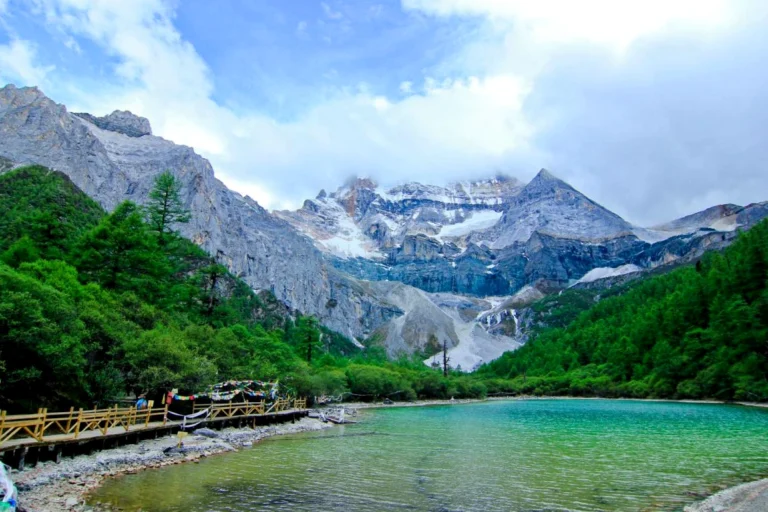
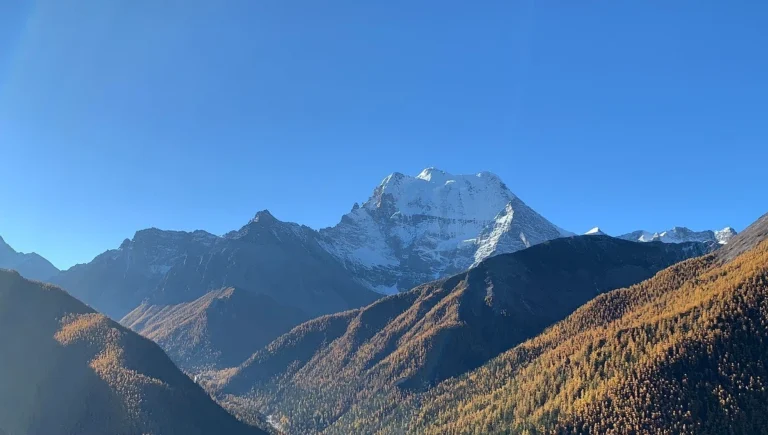
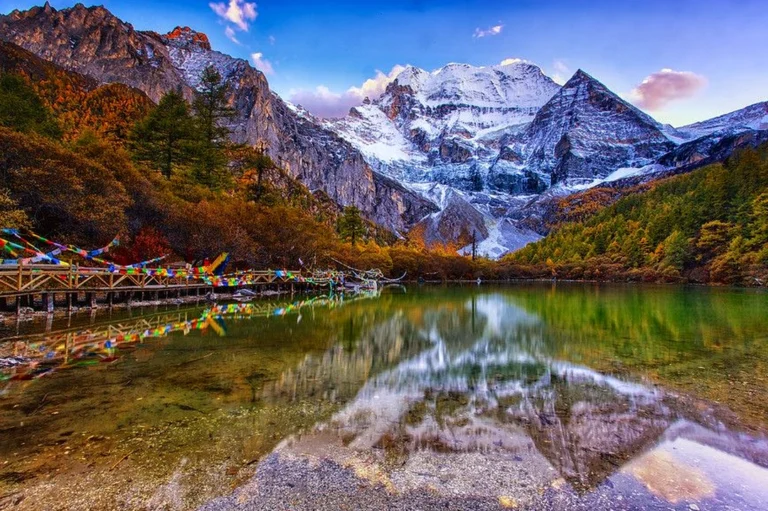
Concealed upon the eastern edge of the majestic Qinghai-Tibet Plateau, south of the imposing Minshan mountain range, the Huanglong Scenic Area emerges as a timeless geological masterpiece where earth and heaven converge the most powerful primitive energies of the Asian continent. Presiding at the upper source and casting reflections over this entire sacred space is Snow Treasure Peak (Tuebaoding), soaring 5.588 meters and snow-capped year-round, establishing an ultimate Feng Shui site layout according to traditional Eastern philosophy: firmly backing towering great mountains while facing eternal water currents. This site layout embodying backing mountains and facing water carries not only spiritual symbolic value but serves as the hinge shaping an extraordinarily unique ecological spatial structure, where the principle of harmony between humanity and nature is clearly delineated across every rock grain, water stream, and beating pulse of pristine natural ecosystems.
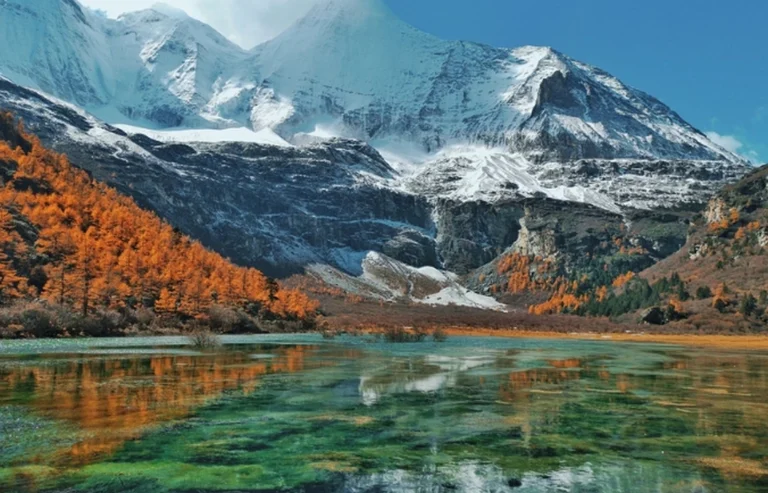
Spanning across an extremely harsh and spectacular altitudinal amplitude—surging from its lowest point at 1,700 meters to peak heights reaching 3,888 meters above sea level—Huanglong possesses an exceptionally rich stratified ecosystem, serving as a common home for Earth’s rarest wildlife species such as giant pandas and Sichuan snub-nosed monkeys, alongside vegetation shifting fluidly from shaded primeval spruce forests to windswept alpine cold zones. The center of that grandiose geomorphological spectacle is a unique calc-sinter canyon stretching up to 3.6 km, where miraculous geological creation processes operated incessantly across tens of millennia. The mechanism forming this wonder is a sequence of astonishingly sophisticated natural reactions: pristine melting glacier streams from Snow Treasure Peak filtering subterraneously through geological strata, dissolving limestone and dolomite dating back to the ancient Triassic period.
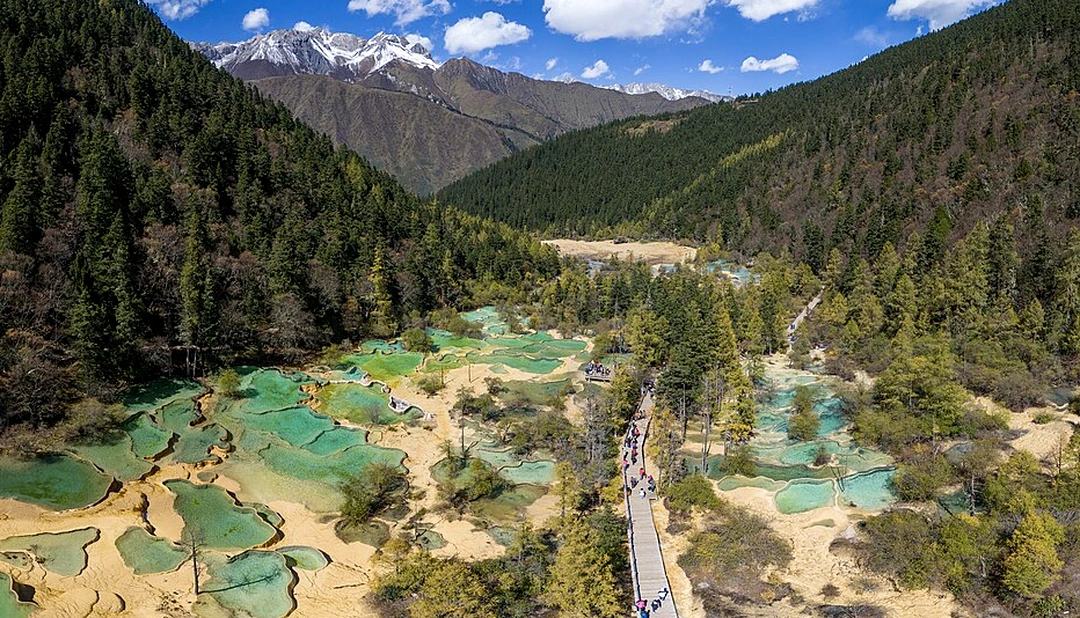
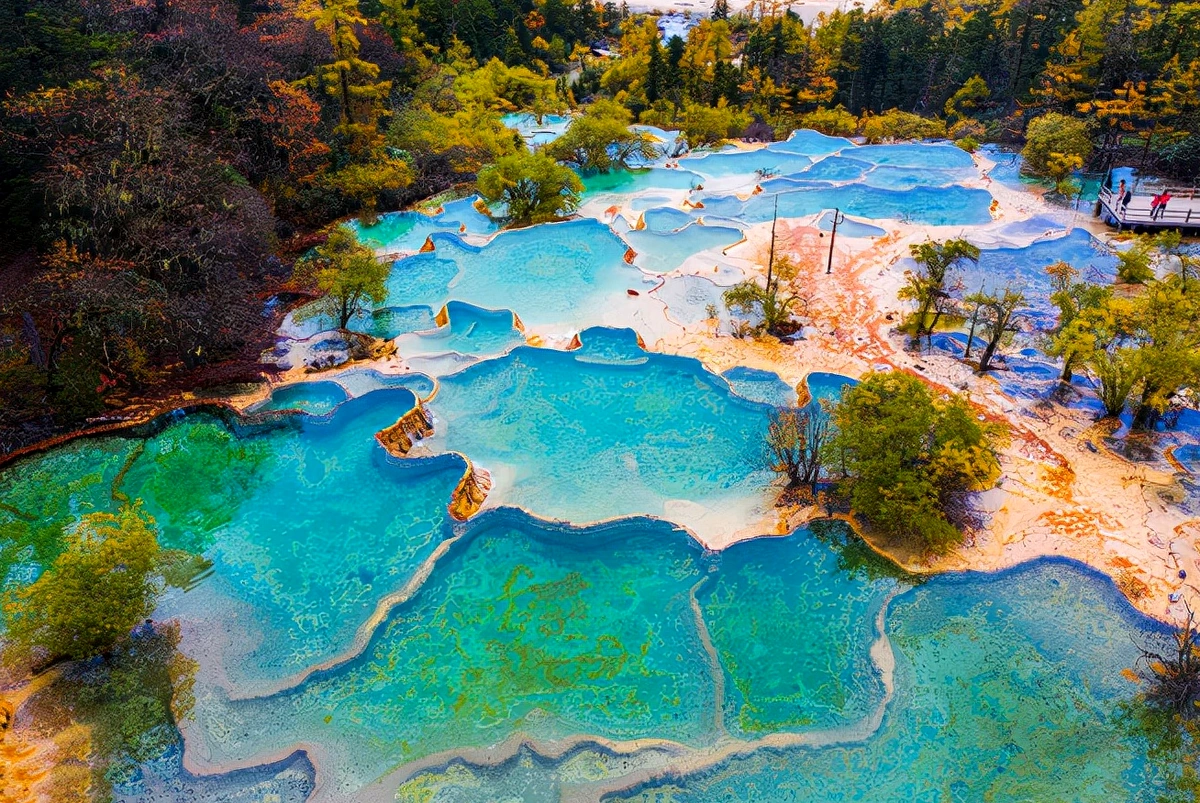
When mineral-rich waters well upward and surface under the interactive impacts of ambient temperature, pressure, and photosynthetic activities of endemic algae species, large-scale calcium carbonate precipitation occurred, building up shimmering colored travertine limestone terraces, tiered calc-sinter waterfall systems, and strings of magnificent five-color pools. Preeminent among them is the Five-Color Pond, where thousands of large and small lakes tier upon one another like gold-plated and silver-plated dragon scales, reflecting myriad hues of blue, golden radiance, and jade beneath sunlight thanks to bottom sediment variations and rich aquatic flora. This natural topographical layout obeys strict natural disciplinary orders, transforming Huanglong into a living geological museum where creation artistry harmonizes completely with the eternal Feng Shui flow of heaven and earth across southwestern China.
Going back in time to the valley summit of the Huanglong Scenic Area, where drifting clouds mingle with magical multi-colored water hues, we encounter an artificial wonder bearing profound spiritual imprints and indigenous architectural philosophy: the Huanglong temple complex. Amidst the pristine, majestic natural panorama of the Sichuan plateau, this work stands erect as proof of ancient people’s talent, persistence, and broad vision in conquering and harmonizing with harsh nature. Beyond serving merely as a religious establishment, this architectural complex serves as a living museum of traditional carpentry art, featuring delicate syntheses between Tibetan and Han cultures across carved details and spatial structures imbued with nostalgic spirits alongside absolute reverence toward deities and heaven and earth.
Regarding spatial structure and practical scale, this architectural complex spans thousands of square meters, planned along a solemn, coherent longitudinal axis clinging closely to steep mountain slope topography. The entire work is constituted by representative components including the Rear Temple, Middle Temple, Front Temple, and the Jieyin Bridge laden with legendary symbolic meaning. Among them, the Rear Temple serves as the most sacred center of the entire complex, architecturally designed following traditional three-bay courtyard layouts—cozy yet solemn. This is the sacred space housing statues of the Huanglong True Man—the legendary figure tied to mountain-opening and rock-clearing myths of this land. Along spatial sequences transitioning from the Front Temple through the Middle Temple into the Rear Temple, travelers wander into reverse-temporal spiritual journeys wherein each step perceives smooth shifts between worldly spaces and secluded sacred realms.
What establishes the encyclopedic value and uniqueness of the Huanglong temple architecture is supreme crafting artistry, cleverly combining Tibetan and Han traditional wooden structural systems known as Chuandou (pillar-and-tie) and Tailiang (post-and-beam). Facing unpredictable natural changes, particularly harsh cold alpine climates featuring freezing winters, massive thermal amplitudes, alongside persistent tectonic fault earthquakes, ancient craftsmen applied exceedingly intelligent, sturdy engineering solutions. Building base walls were constructed entirely via dry-stone masonry without mortar, enabling self-weight stone blocks to lean snugly against one another, delivering natural elasticity against seismic tremors while effectively blocking moisture invasion from mountain earth.
Atop those sturdy stone foundations stand load-bearing framework systems erected from rare timber species like alpine fir and spruce—trees growing under severe conditions yielding extremely dense, resilient grain with superb weather resistance. Wooden structural components link entirely via traditional mortise-and-tenon joinery without iron nails, enabling entire structures to expand and contract flexibly with weather shifts without cracking or misalignment. Tibetan-Han cultural synthesis manifests clearly via exquisitely carved wooden decorative details meticulous down to individual threads across tie-beams, floral arches, horizontal boards, and couplets. Auspicious eight-treasure motifs expressing wishes for good fortune and smooth endeavors; noble lotus blossoms symbolizing Buddhist philosophical enlightenment; or vivid carvings depicting squirrels eating grapes—symbols of reproduction, prosperity, and bumper harvests—are all fully entrusted with artisans’ devotion.
Surviving historical vicissitudes and temporal harshness, the Huanglong temple complex at the valley summit stands erect, becoming a flawless fragment honoring the grandiose beauty of the Five-Color Pond specifically and the entire Huanglong Scenic Area generally. The flawless fusion of artificial architectural art and breathtaking natural landscapes transforms this venue into a human cultural masterpiece, testifying to boundless human creativity before boundless nature.
When night falls, shrouding the majestic limestone travertine tiers of the Huanglong Scenic Area, an entirely distinct spatial order establishes to protect the ecological red lines of the World Natural Heritage absolutely. Unlike mass tourism destinations frequently abusing artificial lighting to prolong commercialization hours, Huanglong valley’s core zone and fragile Five-Color Pond system say “no” to all nocturnal lighting systems. This steadfastness stems not merely from principles of respecting nature, protecting wild giant panda habitats alongside micro-algae and rock moss ecosystems sensitive to optical pollution, but manifests the sustainable development philosophy of high-end ecotourism. Nonetheless, primitive valley tranquility does not equate to dull nightlife, for indigenous cultures and arts have been artfully planned to relocate to peripheral areas, where historical spaces and modern technologies merge into spectacular visual experiences.
The epicenter of nocturnal cultural life here converges brilliantly at Songpan Ancient City, once a vital transit hub along the legendary Tea-Horse Road. Here, travelers step across temporal prisms to return to the past via grand live-action shows vividly recreating heroic historical pages of borderland regions. The “Songpan Past Events” live-action epic opens before viewers’ eyes bustling scenes of merchant caravans riding horseback, luring bells echoing from millennia past alongside stories of cultural and economic exchange between Tibetans and central plain imperial courts. Notably, historical imprints regarding Princess Wencheng’s arduous yet majestic journey advancing into Tibet are delicately depicted via live-action performance arts combining low-carbon ecological projection technology, delivering deep emotional resonance before missions of peace and ethnic cohesion.
To faithfully recreate those historic anniversary events without damaging natural landscapes, directors and lighting engineers intensively applied cutting-edge 3D holographic projection arts. Centuries-old ancient city walls in Songpan transformed into colossal screens painting epic stories via illusory light, where images of Princess Wencheng, retinues, border-guarding battles, or seasonal shifts emerge lifelike without consuming fossil fuels or generating polluting emissions. Fusing multi-dimensional surround sound, environmentally friendly optical lighting effects, and indigenous artists’ expressive acting established supreme art-appreciation spaces bearing contemporary breath alongside profound Tibetan-Qiang cultural identities. Huanglong’s peripheral nightlife thus represents continuations of Tea-Horse Road legends and forceful assertions of responsible tourism cultures wherein humanity honors heritage via civilized lighting and reverence for nature.
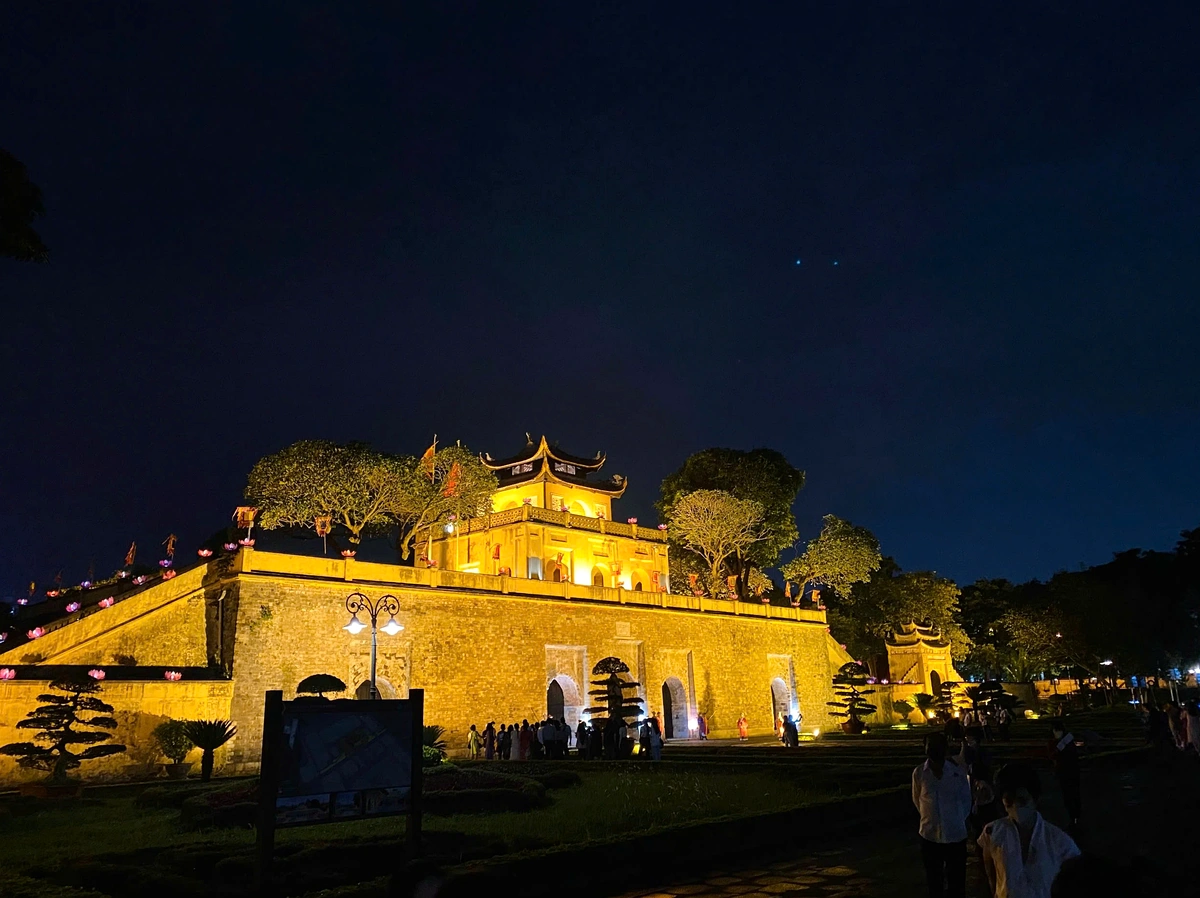
Following hours immersed in dreamlike fairyland realms of multi-colored lakes and winding limestone reefs across the Huanglong Scenic Area, the Songpan-Sichuan plateau continues impressing via rich gastronomic maps steeped in local identity. Amidst magnificent, harsh natural environments at altitudes exceeding three thousand meters, culinary cultures here represent brilliant, refined fusions among Han, Tibetan, Hui, and Qiang ethnic communities. Every dish exceeds physical replenishment after long travel stages, serving as crystallization of generational survival knowledge, blending terroir, climate, and indigenous beliefs, delivering profound, unforgettable gustatory impressions.
Initiating the region’s renowned cuisine is Songpan wild yak meat, a cold highland symbol. Strictly selected from robust wild yak herds roaming freely across frost-shrouded meadows above 3,500 meters, yak meat grains feature low fat, rich protein content, and abundant energy to combat biting cold. Locals prepare yak meat following two primary styles: mild simmering with pristine spring water plus select Chinese medicinal herbs to preserve original natural sweetness, or charcoal grilling seasoned skillfully with wild peppers foraged directly from mountain slopes. Savoring charred grilled beef yields lingering aromas of wild peppers blending with rich, savory, chewy-crisp juiciness spreading across palates, awakening senses amidst mountain clouds and winds.
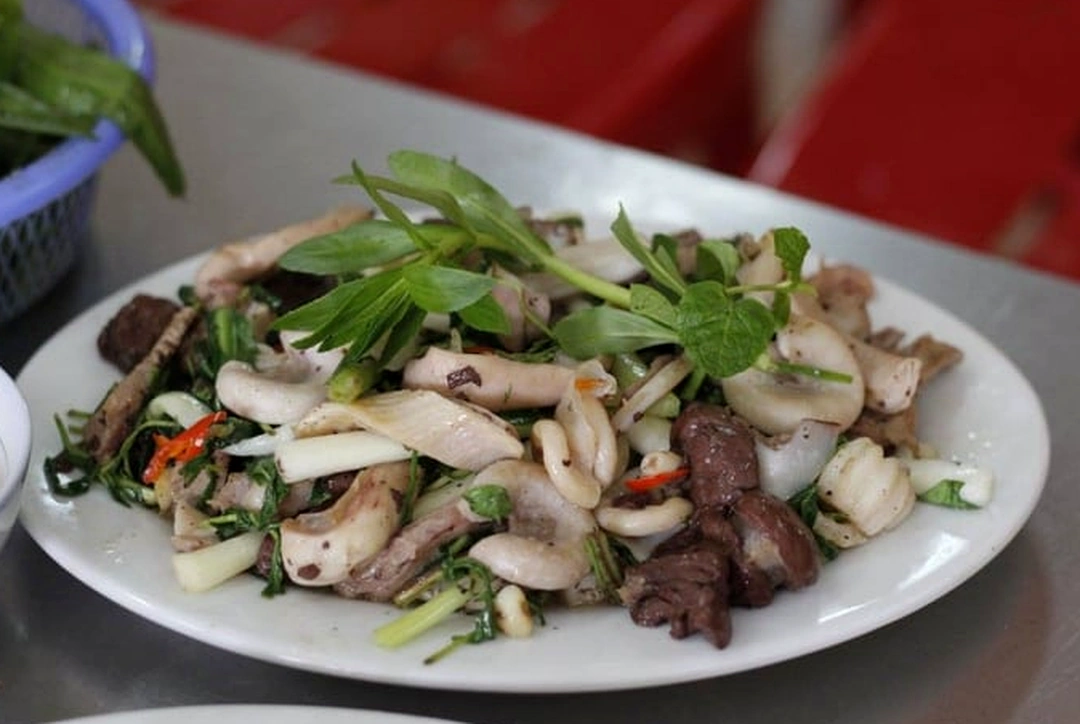
Alongside bold yak meat flavors, traditional Tibetan cuisine offers travelers exceedingly authentic and refined Tibetan hand-held mutton. Freshest mutton cuts are selected, boiled tender with minimalist white salt to preserve natural clean mutton sweetness without complex spice overpowering. This dish achieves peak authenticity when consumed alongside tsampa—fragrant roasted barley flour—and sipped with rich, warming yak butter tea. Butter tea serves as familiar thirst-quenching beverages and natural “medicines” helping bodies rapidly regenerate energy, warm blood vessels, and effectively combat altitude sickness symptoms while traversing windswept borderland trails.
Gustatory journeys across Huanglong remain incomplete without therapeutic natural delicacies, preeminently snow-pear soup braised with Sichuan fritillary (xuanbeimu). Amidst cold, harsh highland climates, this precious soup is a miraculous savior for travelers’ respiratory systems. Fusing juicy, cooling local snow pears with fritillary—rare medicinal herbs growing wild on high mountain ranges—simmered many hours yields smooth, gentle sweet soups. Warm spoonfuls sliding down throats deliver lung-nourishing, cough-relieving, throat-soothing benefits, banishing fatigue and restoring travelers’ refreshed, lighthearted states for conquering upcoming spectacular trails.
Beyond that, the region’s heirloom culinary maps conceal myriad unique delicacies like fiery highland spirits warming hearts against frost, or wild potato pork featuring high-medicinal-value wild highland potatoes rich in nutty earthiness. Dining experiences at Huanglong thus transcend ordinary eating; they represent cultural rituals, silent yet profound dialogues with nature and indigenous locals. Seated beside flickering hearth fires in nomadic tents or local restaurants, savoring elite products inherited across centuries, travelers perceive warmth radiating from blood vessels while comprehending stubborn highland cultural heartbeats amidst towering white clouds and magnificent forests.
Concluding encyclopedic explorations of Huanglong’s earthly paradise, transitions toward field guides and practical tourism instruction serve as universal keys helping travelers prepare thoroughly for peak expeditions. To actualize dreams of viewing Buddha-descended realms, grasping operational hours and ticketing rules is priority number one. The scenic area administration clearly demarcates peak seasons spanning April 1st to November 15th annually and low seasons starting November 16th to March 31st. Crucially, travelers must note that during harsh winter months spanning December to February, due to heavy snow and maintenance for sensitive calcium sediment systems, the scenic area may temporarily close to preserve pristine fragile ecosystems. Furthermore, strict management rules enforce advance online real-name booking systems via official channels, completely prohibiting on-site walk-up ticket purchases during peak seasons, requiring travelers to plan proactively well in advance.
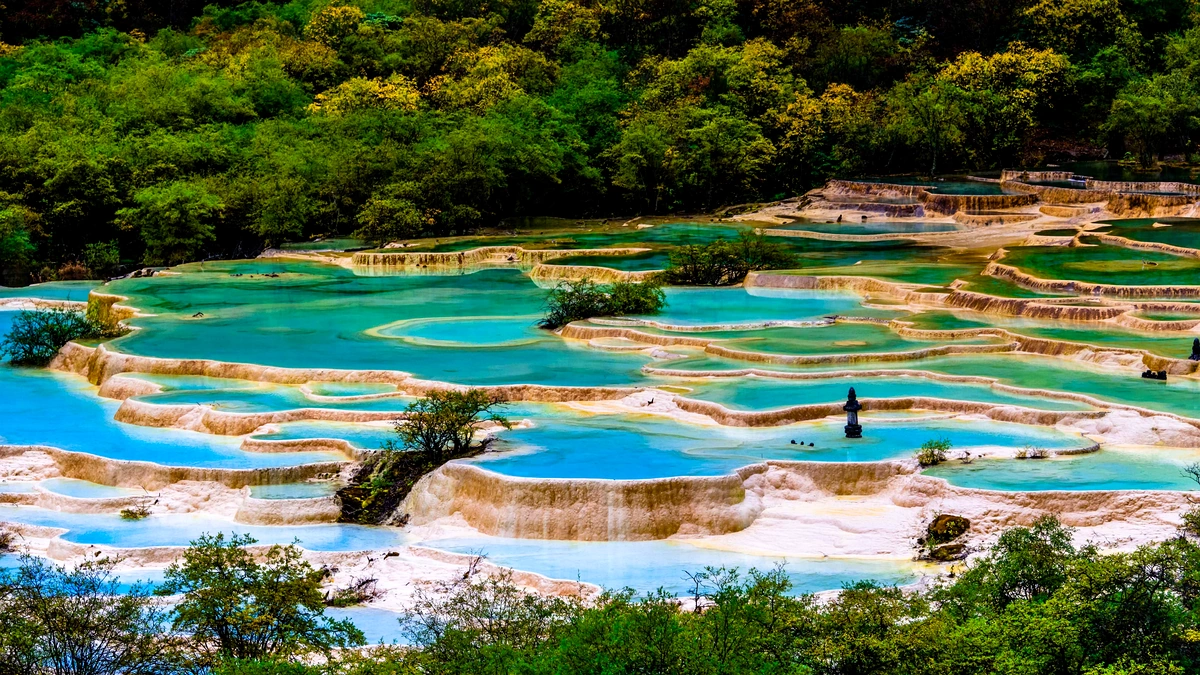
Approaching the golden dragon valley requires scientific calculations regarding transit methods to optimize time and stamina across treacherous mountainous terrain. Initial air transit stops for time-saving travelers comprise Jiuzhaigou Huanglong Airport, situated at a lofty 3,448 meters above sea level, from which travelers continue via private chartered cars or dedicated shuttle buses traversing spectacular winding mountain pass roads. Upon reaching scenic gates, selecting optimal sightseeing tactics dictates complete trip experiences. Practical advice from veteran travel experts suggests utilizing cable car systems ascending directly near summits, then leisurely walking through shaded primeval forests roughly one kilometer to reach the magical Five-Color Pond. After admiring grandiose natural scenery, travelers descend valleys along wooden boardwalks hugging mountain slopes, passing magnificent scenic spots including Trung Diễm Tri, Toa Lược Hứng Thượng Trì, and Nghênh Tân Cải Trì, preserving stamina and preventing sudden fatigue.
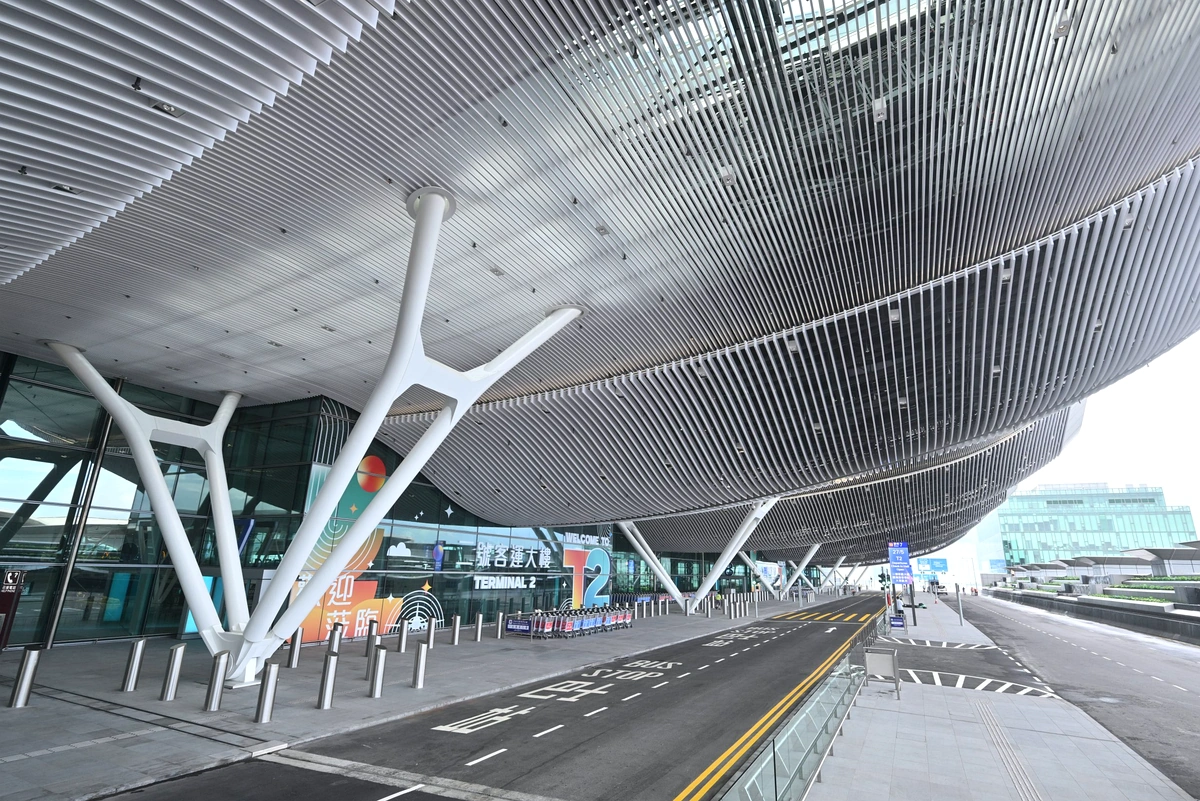
Health and personal safety remain core priorities when conquering China’s highest scenic sites, where peak tour routes touch nearly 3,900 meters above sea level. Altitude sickness from lower atmospheric pressure and sparse oxygen can strike unexpectedly; hence, cardinal rules forbid running, heavy exertion, and mandate proactive consumption of traditional herbal medicines like Rhodiola rosea (Hongjingtian) weeks prior alongside carrying personal oxygen canisters. Regarding attire, onion-style dressing with multiple thin windproof, waterproof layers paired with thick thermal jackets guarantees easy adjustments against erratic thermal shifts between blazing daylight sun and biting shade cold. Moreover, non-slip hiking boots remain indispensable across mossy damp wooden stairs, coupled with strict indigenous culture respect rules: no trampling, direct touching, or littering, preserving pristine calcium stone terrace systems for posterity. To actualize these wonderful experiences safely and completely, travelers can explore further details via all-inclusive tour packages customized and optimized for every natural cultural discovery journey.