




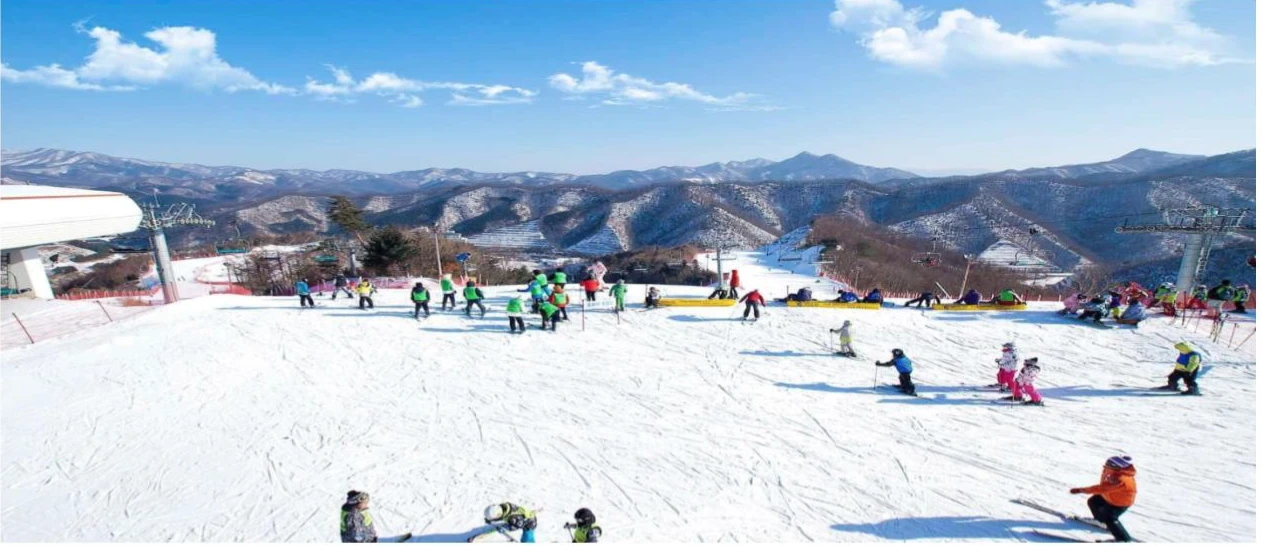


Our journey begins in ancient times, long before Harbin became a bustling metropolis, when it was merely a pristine wilderness along the upper reaches of the Songhua River, witnessing countless migrations of nomadic tribes. Harbin’s landscape possesses a majestic yet harsh beauty, situated in the southern part of Heilongjiang province on the banks of the Songhua River—a major tributary of the Amur River, which serves as a natural border between China and Russia. This land features a humid continental climate with extremely long, cold winters and short, cool summers. Geography has shaped the city’s character and feng shui: a land full of challenges yet rich in resources, serving as an important strategic gateway. Since ancient times, this has been home to nomadic tribes such as the Sushen, Balhae, and Jurchen—peoples who laid the foundation for the Jin dynasty and later the Manchus, rulers of the illustrious Qing dynasty. With its special geographical location, Harbin has always acted as a crossroads between cultures, between northern powers and the Central Plains, a turbulent frontier land that consequently possesses an extremely rich historical heritage. For thousands of years, its rivers and forests have witnessed the rise and fall of dynasties, territorial wars, and intense cultural exchanges. The Songhua River is not only the lifeblood of this land but also a vital trade route, connecting Harbin with more distant regions in the east and west, creating an unmistakable “frontier” identity.
The modern chronicle of Harbin truly began in the late 19th century, when the Russian Empire started building the Chinese Eastern Railway (CER), part of the legendary Trans-Siberian railway. In 1898, Harbin was chosen as the operational center and main railway hub, marking a grand historical turning point. From a tiny fishing village, Harbin suddenly transformed into a vibrant international city, attracting tens of thousands of Russians, Jews, Poles, Lithuanians, and other European nationalities to live and work. This turned it into one of the most multi-ethnic cities in Asia, where cultures blended to create a unique architectural landscape found nowhere else in China. Baroque, Byzantine, Art Nouveau, and neoclassical buildings sprouted side by side, turning Harbin into a living “architectural museum,” eloquent proof of the profound influence of European culture on Asian soil. Russian Orthodox churches with characteristic onion domes, bustling commercial streets lined with European-style shops and cafes—all combined to create a romantic and antique urban space. During this period, Harbin also became an important political center for Russian émigrés following the Bolshevik Revolution and a destination for many Jewish communities seeking a new life after persecutions in Europe. This blending did not stop at architecture but permeated the lifestyle, cuisine, and customs of the local people. By the 1930s, Harbin experienced another turbulent historical period under Japanese occupation, becoming part of Manchukuo—a puppet state established by Japan. Although this era brought much suffering, it also contributed to the development of Harbin’s industry and urban infrastructure, shaping part of the city’s modern appearance. After World War II, Harbin returned to China, undergoing strong periods of development and transformation to become an important heavy industrial center of the country while preserving and promoting its unique cultural heritage values. Today, Harbin prides itself on a modern city that still retains the breathing space of the past, an unmissable destination for anyone wishing to explore the marvelous intersection of cultures. From ancient ruins that have become mere legends to the architectural imprints of Russia and Japan, everything tells the story of a city constantly striving forward, a quintessential heritage amidst the freezing winter sky. Exploring Harbin is exploring a piece of world history, a symphony of civilizations where every note echoes forever.
Harbin’s ancient town architectural space is a giant outdoor museum, an invaluable cultural heritage that, although not yet officially recognized by UNESCO as a World Heritage Site, fully deserves this title in terms of its historical and artistic value. The city is often likened to the “Oriental Moscow” or “Oriental Paris” not only for its romantic beauty but also due to the dense presence of classic European-style architecture. Stepping into Harbin, visitors are immediately captivated by the cobblestone streets, buildings with magnificent Baroque, Art Nouveau, Neoclassical facades, and especially the distinctive Byzantine architecture of Russian Orthodoxy. The turquoise, bright red, or golden onion domes, the intricate decorative details on red brick walls, and the arched windows all combine to create a diverse and remarkably impressive architectural masterpiece that is nearly impossible to find anywhere else in China. This is the result of the early 20th century when Harbin served as the hub of the Trans-Siberian Railway, attracting a large influx of architects, engineers, and craftsmen from across Europe. They brought along the quintessential architecture and construction techniques of the Old Continent, bestowing upon Harbin a unique appearance that blends the grandeur of Russian architecture with the sophistication of French, German, and Jewish styles. These buildings are not merely architectural structures but also historical witnesses, recounting the vibrant life of the international community that once resided here—their luxurious shops, cozy cafes, opera houses, and nightclubs where music and laughter once echoed. Today, many of these structures have been converted into museums, art galleries, hotels, or restaurants, yet they still retain their original beauty and historical value, creating an ancient town space that is both solemn and magnificent.
Aside from its architecture, the local customs and traditions in Harbin also reflect this unique cultural intersection. The people of Harbin, shaped by the harsh climate of Northeast China, have developed a resilient, warm, and highly hospitable way of life. Traditional Chinese tea culture is still maintained, yet it is influenced by European coffee and wine cultures. Traditional Chinese festivals like the Lunar New Year and Qingming Festival are celebrated grandly, while the imprints of Russian culture are simultaneously present in cuisine, dances, and folk music. One of the most prominent and unique customs of Harbin is how it welcomes the winter. Instead of merely enduring the cold, the locals have transformed winter into a festival of life. From talented ice sculptors to ordinary citizens strolling on the frozen Songhua River, everyone demonstrates an optimistic spirit and an incredible ability to adapt to nature. The ice and snow sculpture festivals are not just entertainment events but an integral part of the local cultural identity, where humans defy the cold to create beauty. Furthermore, a strong sense of community thrives in Harbin. Amidst the harsh climate, mutual assistance, and family and friend reunions have become indispensable parts of life. Heartfelt meals, cozy conversations by the fireplace, or gatherings to make dumplings (jiaozi) are all customs that showcase the unity and hospitality of the Northeastern people. Visiting Harbin, travelers not only admire the architectural beauty but also feel the pulse of a diverse culture where the past and present blend seamlessly, creating an unforgettable travel experience.
The peerless system of scenic spots in Harbin is truly the soul of the city, attracting millions of visitors each year, especially during winter. Among them, four prominent landmarks stand out, each carrying its own beauty and unique story, contributing to a distinctive and unmistakable Harbin.
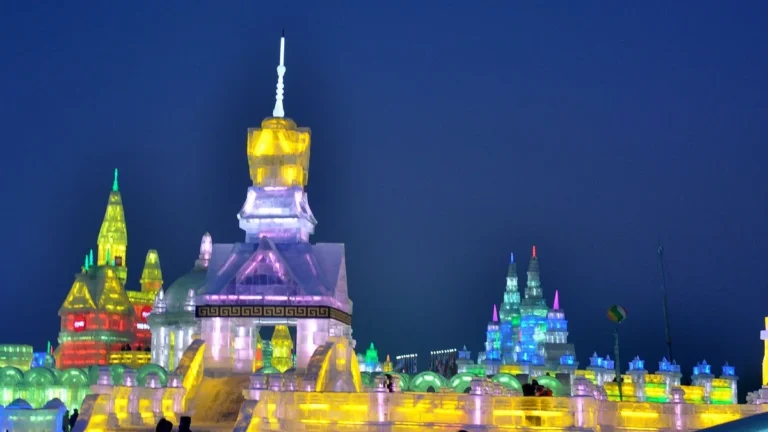
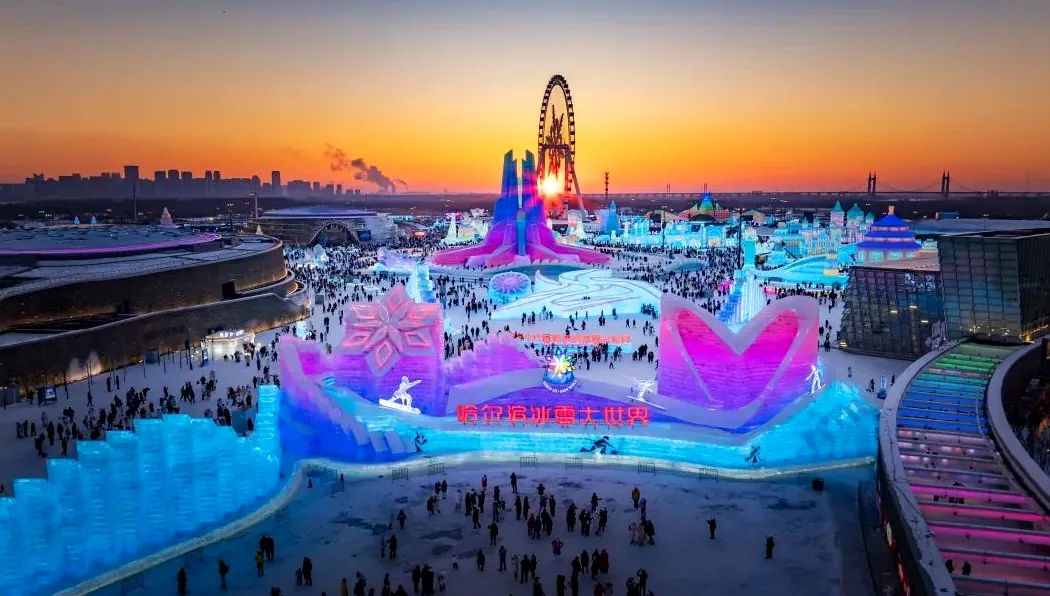
First and foremost is the Harbin Ice and Snow World, the greatest winter wonder on the planet where fairy tale dreams come to life. This is not merely a festival, but a gigantic ice and snow city built annually from hundreds of thousands of cubic meters of ice harvested directly from the Songhua River and tens of thousands of cubic meters of snow. The inception of the Ice and Snow World traces back to small-scale ice lantern fairs in the 1960s, which gradually evolved into a large-scale event, officially becoming an ice and snow theme park in 1999. Every year, thousands of skilled artisans and workers labor tirelessly for weeks in biting cold to craft massive, intricate, and astonishingly magnificent ice architectural wonders. From towering ice castles with sophisticated fairy-tale palace designs and ice monuments shaped like legendary figures, to hundreds of meters of ice and snow slides, the Ice and Snow World is a masterpiece of creativity and diligent labor. What sets the Harbin Ice and Snow World apart and elevates its status is its advanced lighting technology. Millions of multi-colored LED lights are cleverly embedded inside and outside the ice blocks, transforming the entire park into a dazzling dance of light when night falls. The transparent ice blocks suddenly become shimmering, magical, and constantly changing colors, creating an overwhelming spectacle that enchants every sense. Visitors can walk through ice-lined paths, explore ice mazes, go figure skating, participate in snow games, or simply admire the magical beauty of ice sculptures illuminated by lights. The feeling of standing in a space entirely created from ice and snow, bathed in mystical lighting, is an unforgettable experience that awakens the inner child in everyone and makes you believe you have truly wandered into a real wonderland.
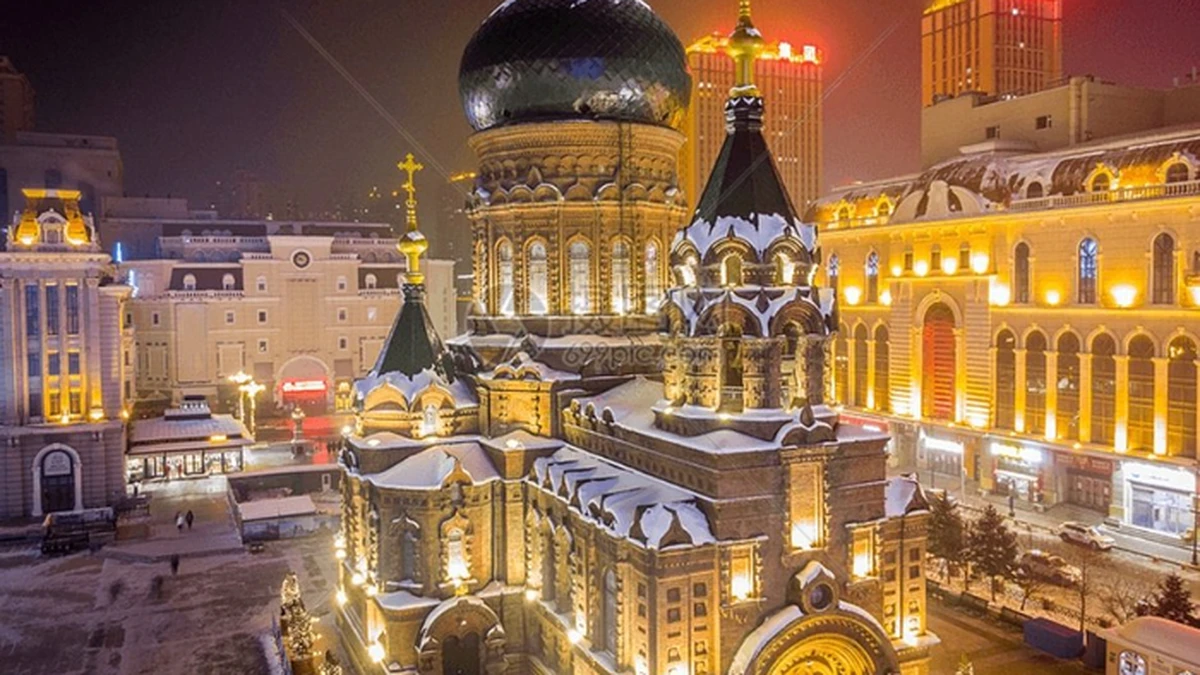
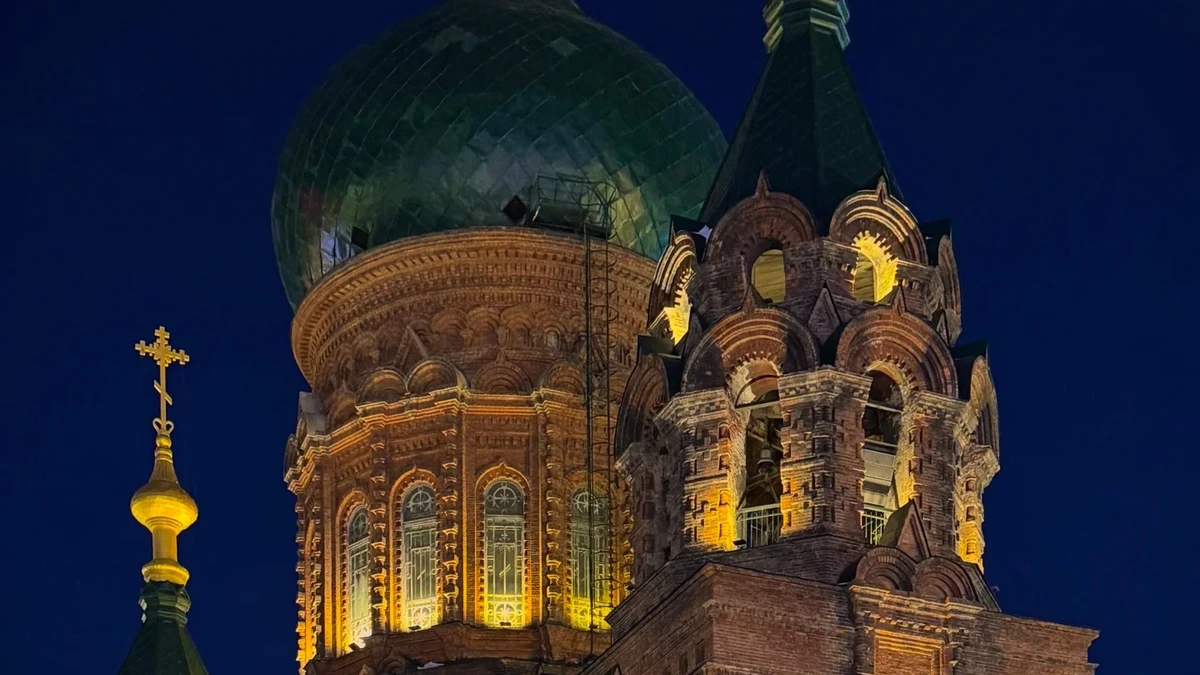
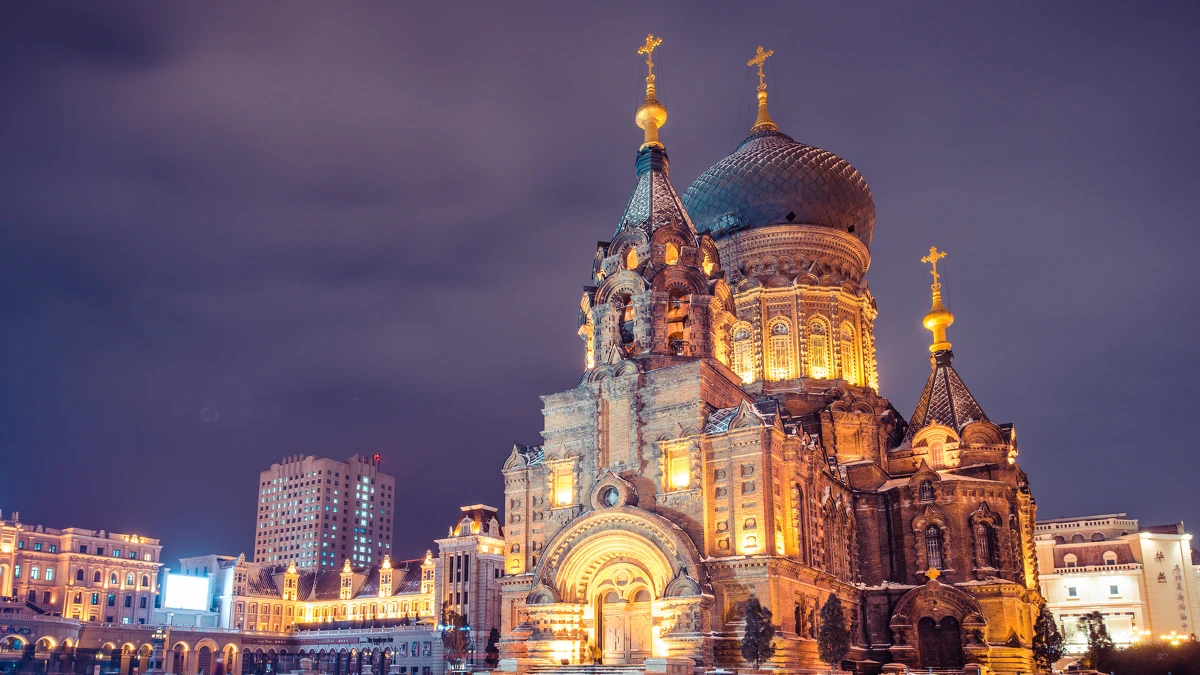
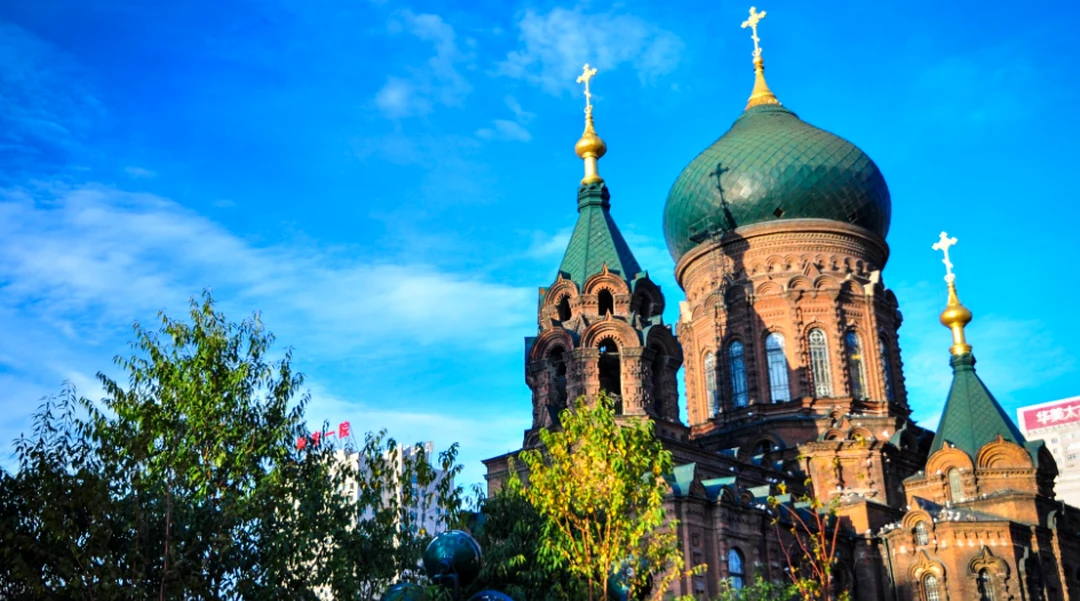
Next is Saint Sophia Cathedral, an architectural icon inseparable from the image of Harbin, standing majestically in the heart of the city with its signature Byzantine onion-shaped domes. First built in 1907 out of wood by the Russian military to serve the local Russian Orthodox community, it was later rebuilt in grander brick and stone in 1912 and completed its expansion in 1932. Saint Sophia Cathedral is one of the largest Eastern Orthodox architectural structures in the Far East. With its dark red brick walls, four turquoise domes, and towering central onion-shaped dome, Saint Sophia Cathedral exudes an ancient, solemn, and incredibly striking beauty. The intricate decorative details, arched windows, and small surrounding spires create a harmonious and highly artistic overall ensemble. The interior of the cathedral was once a sacred place of prayer, featuring intricate murals and religious icons, but after many historical upheavals, it has now been converted into the Harbin Architectural Art Museum, displaying the city’s unique history and architecture. Though no longer a place of worship, Saint Sophia Cathedral remains Harbin’s architectural heart and cultural soul, drawing visitors to admire its historical beauty and capture stunning photographs, especially when snow blankets the domes and spires, creating a picture-postcard scene.
No mention of Harbin is complete without Zhongyang Street (Central Street), a pedestrian avenue stretching over 1.4 km that serves as the commercial and cultural heart of Harbin, heavily infused with European Baroque and Art Nouveau styles. Built in 1898, this street was originally reserved for Russians and other European residents, with its pavement paved with millions of imported granite stones, creating an ancient and enduring beauty that stands the test of time. Stepping onto Zhongyang Street feels like wandering into a corner of Europe in the heart of Asia. Flanking both sides of the street are historic buildings with unique architecture, ranging from magnificent Baroque facades featuring elaborate ornamentation and sturdy pillars, to soft, fluid Art Nouveau details. Every building is a work of art, narrating a chapter of the city’s developmental history. Zhongyang Street is not only a place to admire architecture but also a bustling shopping hub with countless stores selling souvenirs, fashion, handicrafts, and notably, famous Russian bakeries, restaurants serving Russian and Northeast Chinese cuisine. In the evening, the street becomes even more dazzling under romantic lights, featuring street performers, cozy cafes, and a lively, vibrant atmosphere. Whether blanketed in winter snow or lush and green in summer, Zhongyang Street always holds a unique charm, making it an ideal spot for strolling, shopping, dining, and experiencing Harbin’s unique cultural rhythm of life.
Last, but certainly not least, is the frozen Songhua River. The Songhua River is the lifeblood of Harbin, and in winter, it transforms into a gigantic ice and snow playground, a magical winter wonderland unlike anywhere else. From late November through March of the following year, plunging temperatures cause this vast river to freeze completely, with ice thickness reaching up to a meter, capable of supporting the weight of people and vehicles. At this time, the Songhua River is not merely a scenic spot but the epicenter of winter recreational activities. Visitors can indulge in ice skating, skiing, riding dog-sleds or horse-drawn sleighs, playing ice hockey, or even kite-snowboarding across the ice. Those seeking more tranquility can try ice fishing, experiencing a traditional local custom. Along the riverbanks lies Sun Island Scenic Area, which regularly hosts the Harbin International Snow Sculpture Art Festival, featuring massive, intricate snow sculptures that rival the ice sculptures. The frozen Songhua River is not just a recreational area but also the primary source of ice for the Harbin Ice and Snow World, serving as the birthplace of magnificent ice art masterpieces. Witnessing the sunset over the frozen Songhua River, as lights begin to illuminate distant ice sculptures to create an intensely mystical and romantic setting, is an unforgettable experience. The interaction between humans and harsh nature creates a vivid tableau, where the river is not just a geographical entity but an indispensable part of Harbin’s spiritual and cultural life.
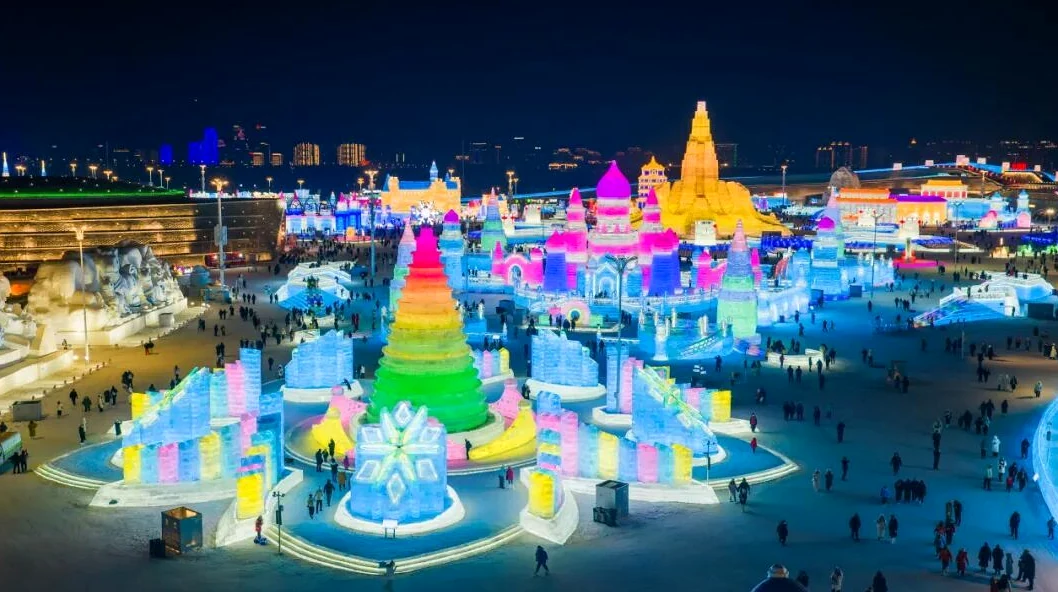
Combining all four landmarks—the splendid Ice and Snow World, the solemn Saint Sophia Cathedral, the antique Zhongyang Street, and the majestic Songhua River—Harbin truly delivers a unique heritage travel experience where natural beauty blends seamlessly with architectural wonders and human creativity, creating an unforgettable destination in every traveler’s heart. It is a flawless synthesis of history, culture, and nature, inviting visitors to explore and experience it firsthand.
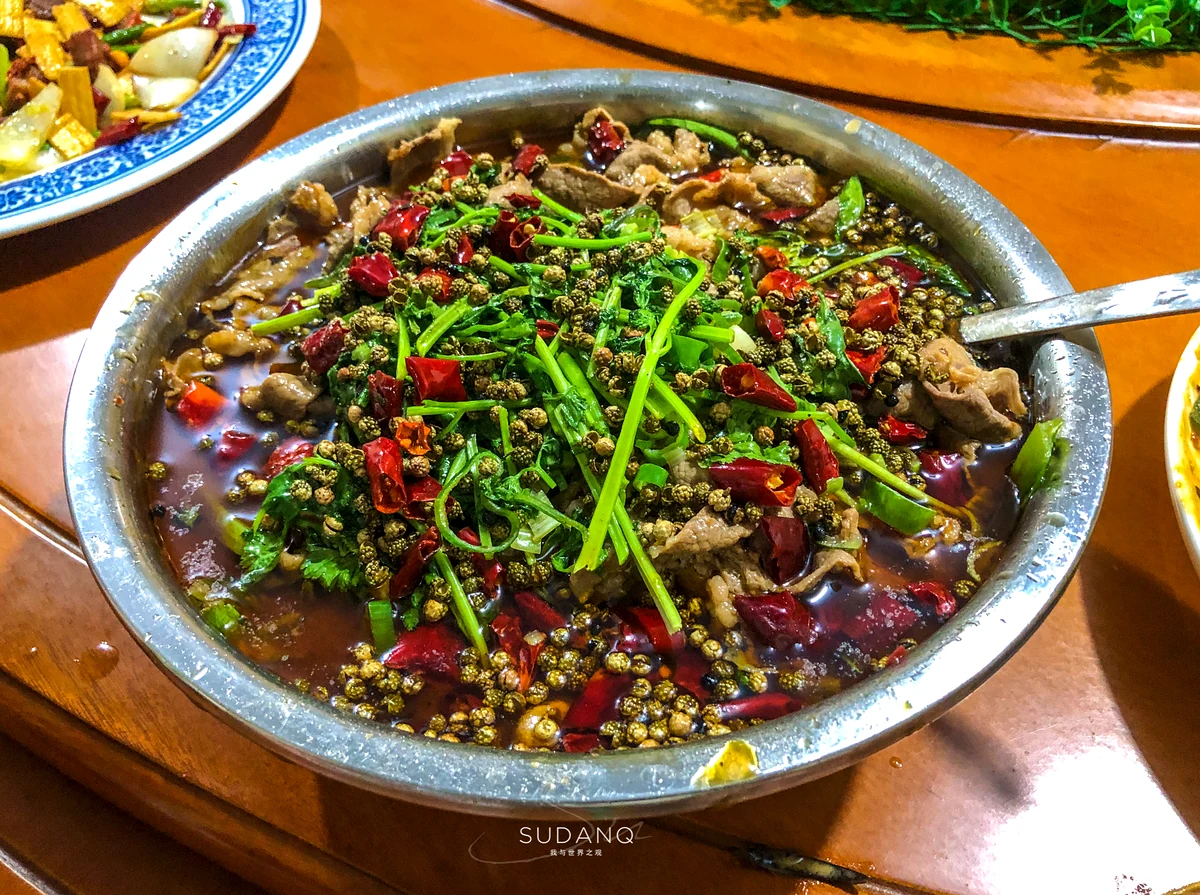
Harbin’s culinary culture is a colorful tapestry that clearly reflects the city’s unique cultural crossover. It not only inherits the essence of Northeast Chinese cuisine (Dongbei cuisine) but also absorbs and adapts numerous dishes from Russia and other European nations, creating a distinct, sophisticated, and deeply enticing flavor profile. Northeast Chinese cuisine is traditionally renowned for its richness, bold flavors, and hearty dishes suited to the year-round cold climate. Dishes are typically prepared using pork, beef, chicken, and local vegetables, utilizing diverse cooking methods ranging from stewing and stir-frying to deep-frying and steaming. The primary goal of northeastern cuisine is to provide energy and warmth to the body, which is why dishes are typically high in calories, robust in flavor, and served in large portions, reflecting the generosity of the local people.
One of the must-try specialties when visiting Harbin is Guobaorou (锅包肉) – crispy sweet and sour pork. This is an iconic dish of the Northeast region, featuring thinly sliced pork coated in batter, deep-fried until ultra-crispy, and then quickly stir-fried with a sweet and sour sauce made from vinegar, sugar, and garlic. The crispiness of the pork, the harmonious blend of sweet and sour flavors, and the distinctive aroma make Guobaorou a favorite among all travelers. Another very popular dish is Di San Xian (地三鲜), which roughly translates to “Three treasures from the earth,” consisting of potatoes, green bell peppers, and eggplants stir-fried together. Although it is a vegetarian dish, Di San Xian is remarkably rich, savory, and flavorful, usually served with hot rice. Stewed dishes also hold an important place in Northeastern cuisine, typically represented by Dongbei Dun Cai (东北炖菜) – assorted stews such as pork and potato vermicelli stew or chicken and mushroom stew. These dishes are usually cooked in large earthenware pots or iron woks, simmered for hours so that the meat becomes tender and absorbs the rich flavors, providing a warm and comforting feeling during cold winter days.
The influence of Russian culture is clearly reflected in many signature dishes in Harbin. Travelers can easily find shops selling Daliba bread (大列巴) – a large, dense, and fragrant Russian-style round loaf. Hongchang sausage (红肠) – Harbin red sausage, is also a famous product, prepared according to a Russian recipe with a distinct flavor that differs from regular sausages. In addition, Kvass (格瓦斯) – a fermented beverage made from dark rye bread, is also very popular and serves as a unique, refreshing drink deeply imbued with Russian flavor. Russian restaurants in Harbin also serve traditional dishes such as borscht (beet soup), Olivier salad, or Russian-style grilled meats, offering a diverse and international culinary experience.
Beyond main dishes, Harbin’s street food and snacks are equally rich and varied. In winter, travelers can enjoy steaming hot skewers, grilled corn, or fragrant roasted sweet potatoes, helping to ward off the cold. Small roadside eateries also serve Rouduo (肉多) – a type of pan-fried dumpling stuffed with meat or vegetables, or Jianbing Guozi (煎饼果子) – a savory crepe with eggs and special fillings, which are favorite breakfasts or light snacks among locals. The tea culture in Harbin, although not as elaborate and formal as in Southern China, remains an integral part of daily communication and lifestyle. Locals often drink tea to warm their bodies, especially during winter. European-style tea houses and cafes are also very popular, serving as gathering places for people to meet, chat, and relax. Banquets in Harbin typically feature family or friend reunions, with an abundance of lavishly displayed dishes that reflect the warmth and hospitality of the host. On special occasions, making dumplings (jiaozi) together as a family is a profound traditional custom symbolizing reunion and good fortune. Every dish and culinary custom in Harbin tells a story and offers a cultural experience that travelers simply cannot miss when visiting this icy yet warm-hearted city.
Harbin’s modern transportation infrastructure has transformed the city into an easily accessible and connected destination, as well as a crucial gateway to Northeast China. Traveling to and from Harbin has become extremely convenient, catering to both domestic and international tourists. Harbin Taiping International Airport (HRB) is the largest and busiest airport in the Northeast region, serving as a vital aviation hub. The airport features direct flights to almost all major Chinese cities such as Beijing, Shanghai, Guangzhou, and Chengdu, as well as international flights to Seoul, Tokyo, Vladivostok, and several other destinations. Modern facilities and convenient services at the airport ensure a smooth and comfortable journey for travelers.
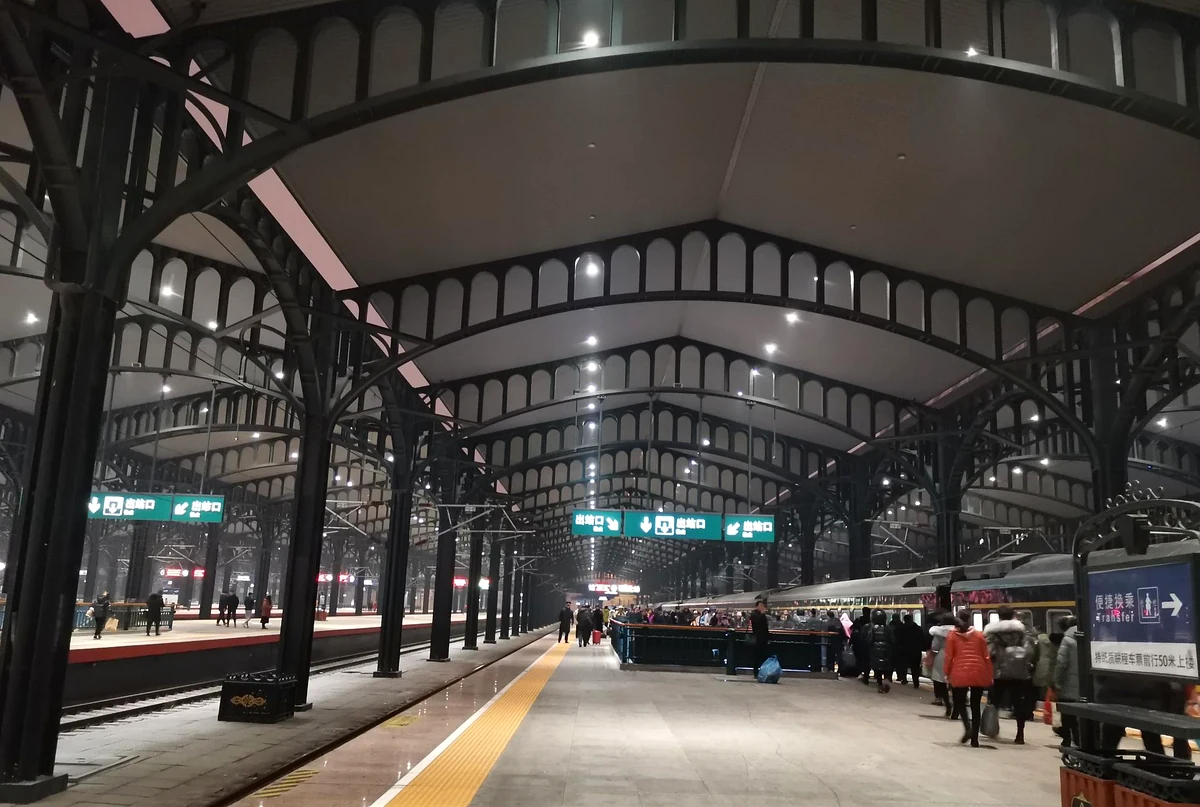
Alongside aviation, the CRH (China Railway High-speed) network has revolutionized travel to Harbin. With a well-developed high-speed rail network, travelers can easily travel from major cities like Beijing in just about 6-8 hours, or from Shenyang and Dalian in even shorter times. Modern, fast, and comfortable CRH trains not only save time but also offer the opportunity to admire the stunning rural landscapes of the Northeast. Harbin Railway Station is one of the largest and oldest railway stations in China, having been renovated and expanded to handle massive passenger volumes. Additionally, Harbin holds a strategic location near the border crossings with Russia; while not a primary direct tourist border crossing for international travelers, this underscores its historical role as a hub for cross-border trade and cultural exchange.
The golden time to travel to Harbin depends on personal preferences and the experiences travelers seek, as the city exhibits a distinct charm across different seasons. Each season possesses unique attractions, creating four contrasting pictures of Harbin.
Winter (from December to February of the following year) is undoubtedly the golden and most famous time to visit Harbin. This is the season of ice and snow, vibrant festivals, and unforgettable experiences. Temperatures can plummet to -20°C or even -30°C, but this biting cold is precisely what creates Harbin’s magical beauty. Travelers will immerse themselves in the magnificent Harbin Ice and Snow World, admire the International Ice and Snow Sculpture Festival on Sun Island, engage in fun activities on the frozen Songhua River such as ice skating and sledding, or enjoy winter sports at nearby ski resorts. The festive atmosphere, glowing lights, and ethereal beauty of ice and snow transform Harbin into a true wonderland. This is a must-visit season for anyone looking to experience a complete and colorful winter.
As the ice melts and the weather gradually warms up, spring (from March to May) brings a peaceful and fresh Harbin. Temperatures are more pleasant, trees begin to bud, and the first flowers start to bloom. This is the ideal time to explore the city’s European architecture without being hindered by the freezing cold, stroll along Zhongyang Pedestrian Street, visit Saint Sophia Cathedral, or relax in the lush green parks. Spring sees fewer tourists compared to winter, offering a more relaxed and intimate experience with local life. Visitors can feel nature transforming and enjoy the quiet beauty of the city.
In contrast to the icy landscape, summer (from June to August) turns Harbin into an ideal “summer resort” with a cool and fresh climate, far away from the scorching heat of other Chinese cities. Average temperatures hover around 20-25°C, making it perfect for outdoor activities. Visitors can take boat cruises on the Songhua River, explore amusement parks, botanical gardens, or enjoy open-air concerts and cultural events. Sun Island in summer is filled with greenery and flowers, making it a great place for walks or picnics. Outdoor cafes and restaurants bustle with life, offering a vibrant and relaxing atmosphere. Summer is also a wonderful time to admire the city’s architecture under the sunlight, with its striking red-brick walls and turquoise domes standing out against the clear blue sky.
Finally, autumn (from September to November) is a season of golden hues and vibrant reds, as changing leaves create stunning landscapes. The air is fresh, crisp, and dry, making it ideal for exploring scenic spots and going on walking tours. This is a great time for photography, tasting autumn specialties, and soaking in the romantic beauty of Harbin before the freezing winter sets in. Autumn brings tranquility and poetic charm, attracting travelers who want to escape peak-season crowds and enjoy the fresh air of Northeast China.
Harbin Cathedral proudly raises its glittering Byzantine dome against the white snowy night
In short, with its modern infrastructure and ever-changing beauty across the four seasons, Harbin is always ready to welcome travelers to explore and experience it. Whether you love the dazzling snow and ice festival, the lush green beauty of summer, or the romance of spring and autumn, Harbin has it all, promising unforgettable memories on your heritage journey.
To ensure that Vietnamese travelers have a smooth and complete trip to Harbin, packing a pocket field guide is essential. As a VDS Travel expert, I would like to share these useful tips to guarantee you a memorable journey in the “ice city”.
Visa Procedures: Currently, Vietnamese citizens still need to apply for a visa to enter China. The visa process may require time and necessary documents such as an invitation letter, confirmed flight bookings, hotel reservations, a detailed travel itinerary, and proof of financial capacity. VDS Travel always recommends that you start your visa application process at least 1-2 months before your intended departure date to ensure sufficient processing time and avoid unnecessary hassles. Common types of tourist visas include single-entry, double-entry, or multiple-entry visas, depending on your travel needs. Do not hesitate to contact VDS Travel for detailed consultation and support with the visa process.
Currency and Payments: China is an almost cashless society, especially in major cities like Harbin. Mobile payment apps like Alipay and WeChat Pay are the primary payment methods, widely used everywhere from convenience stores and upscale restaurants to small street food stalls. To use these apps, you need a Chinese phone number and must link it to an international credit or debit card. VDS Travel advises you to install and set up these apps before your trip or seek assistance from your tour guide upon arrival. However, carrying a little cash (Chinese Yuan – CNY) is still very useful for emergencies or when shopping at small traditional markets that do not accept digital payments.
Mobile Connectivity: To stay connected and access the internet throughout your trip, you can consider using an eSIM or buying a physical SIM card at the airport or local telecom stores. An eSIM is the most convenient option, allowing you to activate your data plan instantly without swapping physical SIM cards. International service providers usually offer eSIM packages for China. For a physical SIM card, you will need to register using your passport. Note that some international apps and websites (such as Facebook, Google, Instagram) are blocked in China, so you may need to use a VPN (Virtual Private Network) if you need access. However, domestic apps like WeChat, Baidu Maps, and Didi Chuxing (ride-hailing) work extremely well.
Clothing for Winter in Harbin: This is a crucial factor for a winter trip to Harbin, where temperatures can drop extremely low. The “layering” principle is key.
1. Base Layer: Choose thermal underwear made from merino wool or synthetic materials, which help wick away sweat and keep your body warm.
2. Mid-Layer: A fleece sweater or lightweight down jacket for insulation. Wear 1-2 layers depending on how cold it is.
3. Outer Layer: A thick, windproof, and waterproof down jacket is a must-have. Make sure the jacket has a hood to protect your head.
4. Pants: Thermal leggings inside and thick, waterproof outer pants (ski pants or fleece-lined cargo pants).
5. Footwear: Choose waterproof snow boots with a warm lining and non-slip soles. Make sure the boots are spacious enough to accommodate thick socks.
6. Accessories: A warm scarf, a wool earflap hat, waterproof gloves (touchscreen-compatible ones are recommended), thick wool socks, or thermal socks.
7. Skin Protection: Moisturizer and lip balm are essential to protect your skin from dryness and chapping caused by the cold wind.
8. Personal Warmers: Hand warmers and foot warmers are fantastic lifesavers for your hands and feet on extremely cold days.
The companionship of VDS Travel: As a heritage research expert and trusted companion, VDS Travel is committed to providing you with a Harbin travel experience that is not only safe and convenient, but also profound and inspiring. We take pride in our extensive experience in organizing cultural heritage tours, with meticulously designed itineraries that allow you to explore historical corners, admire magnificent architectural wonders, and immerse yourself in the unique customs of the city. From visa consultation and payment assistance to comfortable accommodations, modern transportation, and a team of professional guides with deep knowledge of local culture, VDS Travel handles every detail so you can simply enjoy your journey to the fullest. We do not just take you to famous landmarks; we also tell you the stories hidden behind every brick, every statue, and every custom, helping you truly understand and fall in love with Harbin. Let VDS Travel turn your trip to Harbin into an unforgettable memory, a true journey of heritage discovery where ice, snow, and history blend to create magical moments.
