Set in the heart of Harbin—a city once called the “St. Petersburg of the East”—Saint Sophia Cathedral stands as a quiet yet stately witness to dramatic shifts across Northeast China’s history for over a century. The origins of this Orthodox landmark tie to the Russian Empire’s eastward expansion in the late Qing era. Following the 1896 Sino-Russian secret treaty, building the China Eastern Railway (KVZhD) turned a peaceful fishing settlement along the Songhua River into a busy Eurasian crossroads. The arrival of tens of thousands of Russian workers, engineers, soldiers, and residents called for a spiritual space large enough to ease longing for home amid freezing northern winters.
In March 1907, the cathedral’s history began when the 4th Infantry Division of the Tsarist army erected a temporary timber church. Though modest at first, it carried deep symbolic meaning for soldiers far from home. The name “Saint Sophia”—meaning “Holy Wisdom” in Orthodox tradition—evoked the famed Hagia Sophia of Constantinople as well as historic churches of the same name in Kyiv and Novgorod. It offered spiritual comfort for Russian residents while marking the lasting imprint of Slavic culture in Heilongjiang.
Recognizing that the timber church could no longer meet the needs of a growing Russian community, a major reconstruction and expansion project got underway in the 1920s. Led by architect Mikhail Orestovich Zhdanov with architect Kiselev, and backed by energetic support and funding from Russian residents in Harbin, masonry construction began in 1923. After nearly a decade of stone and brick work, on November 25, 1932, the cathedral was completed and consecrated—standing as a Neo-Byzantine architectural landmark in the city.
Yet Saint Sophia Cathedral’s story remained closely tied to turbulent chapters in Harbin’s past. Through the Manchukuo period under Japanese control and the departure or emigration of many Russian residents in the 1950s, the building saw its original worship role fade. During the Cultural Revolution, it suffered heavy damage: crosses were removed from the domes, interior fittings were harmed, and the space was repurposed for storage and commercial/industrial uses, leaving the once-proud green onion dome quiet for decades.
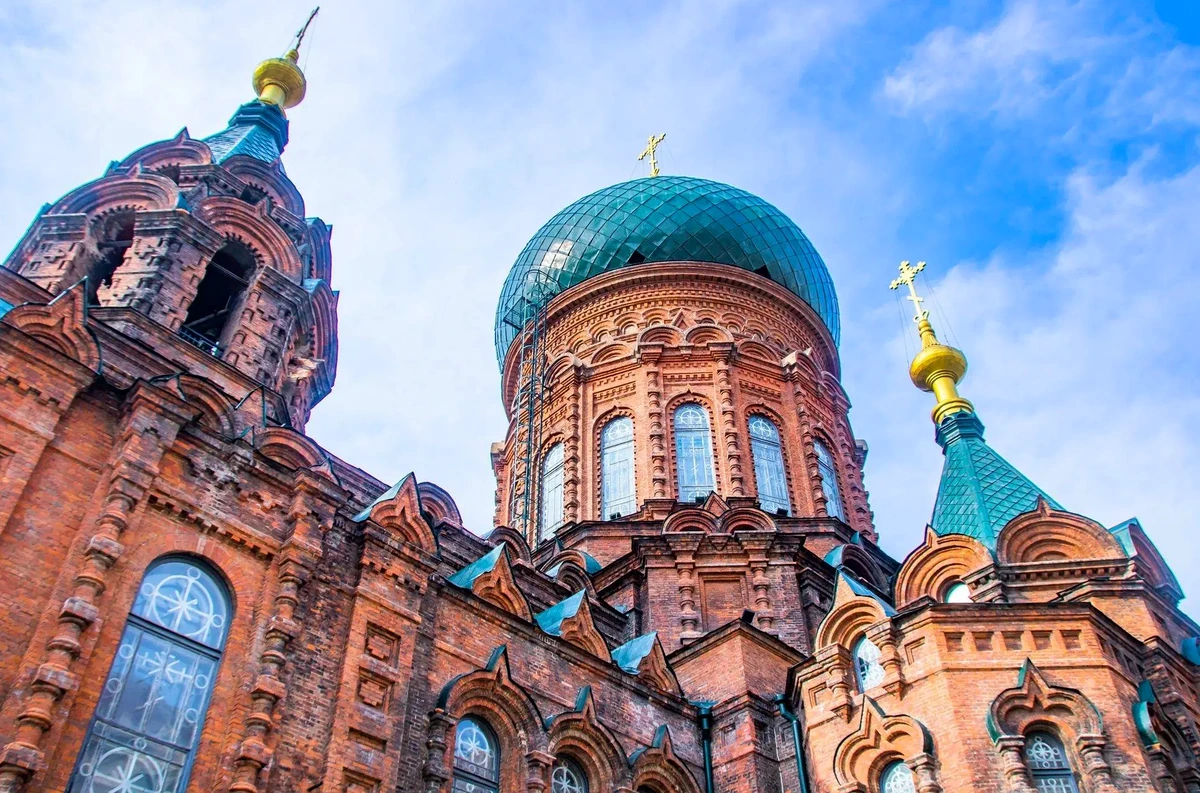
In 1996–1997, given its undeniable historical and artistic value, Harbin city authorities redeveloped the surrounding square, cleared encroachments, and restored the exterior architecture, reopening it as the Harbin Architectural Art Museum. In 2006, Saint Sophia Cathedral was designated a Major Historical and Cultural Site Protected at the National Level (Batch VI) in China—affirming its standing as an enduring heritage landmark where complex history meets lasting cultural craft.
Geographically and in traditional landscape terms, Harbin lies on fertile alluvial plains in the southeastern part of the Songnen Plain, where the Songhua River flows northeastward. Rather than sitting low on flood-prone ground, Saint Sophia Cathedral occupies higher ground near the junction of Nangang and Daoli districts. Sitting nearly 20 meters above typical Songhua River levels helped keep the structure safe from spring ice-melt floods while giving it a clear vantage point over surrounding streets and river scenery.
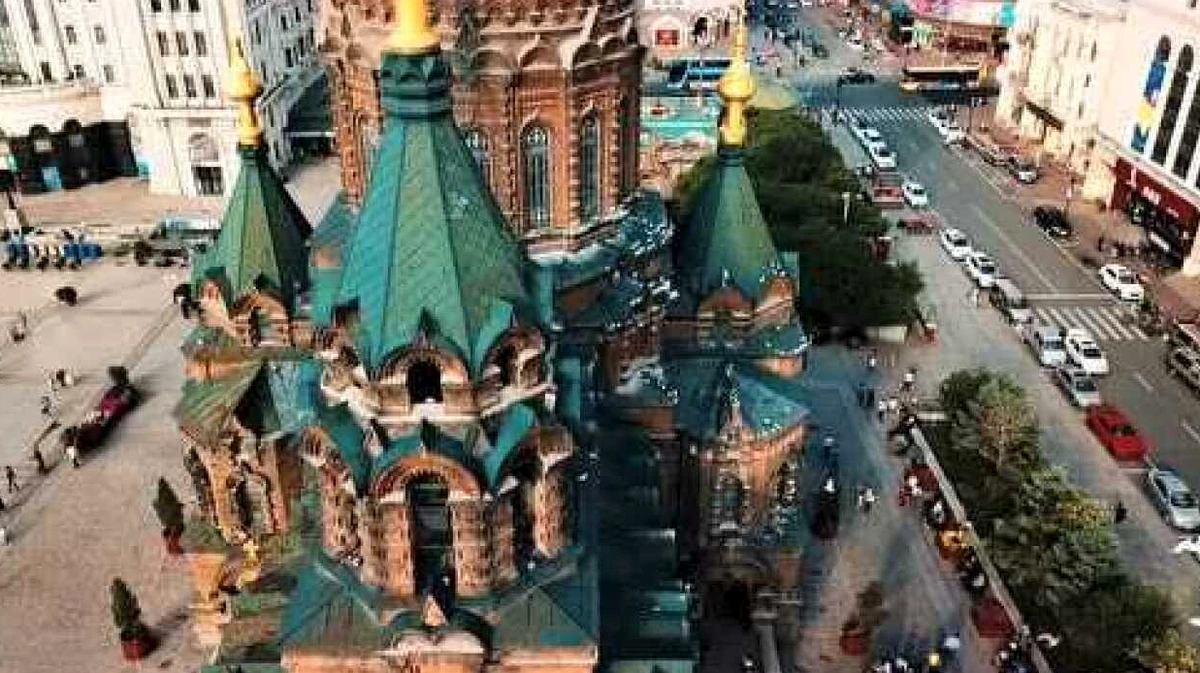
Compared with traditional Eastern feng shui ideas of gathering energy on level plains, the cathedral sits at a focal point of radial streets laid out by early planners. When Russian planners mapped out Harbin’s street grid with European radial avenues converging on a central point, the cathedral stood at the hub—creating a distinctive urban focal point that blends European street geometry with a prominent landmark presence.
Beyond site placement, construction and climate adaptation here reflect practical engineering for far-northern winters. In northeastern China, where winter lasts long and temperatures frequently drop below -30°C with strong winds, thick masonry walls—exceeding one meter in places—act as a thermal buffer, helping block biting cold and retain interior warmth during cold months.
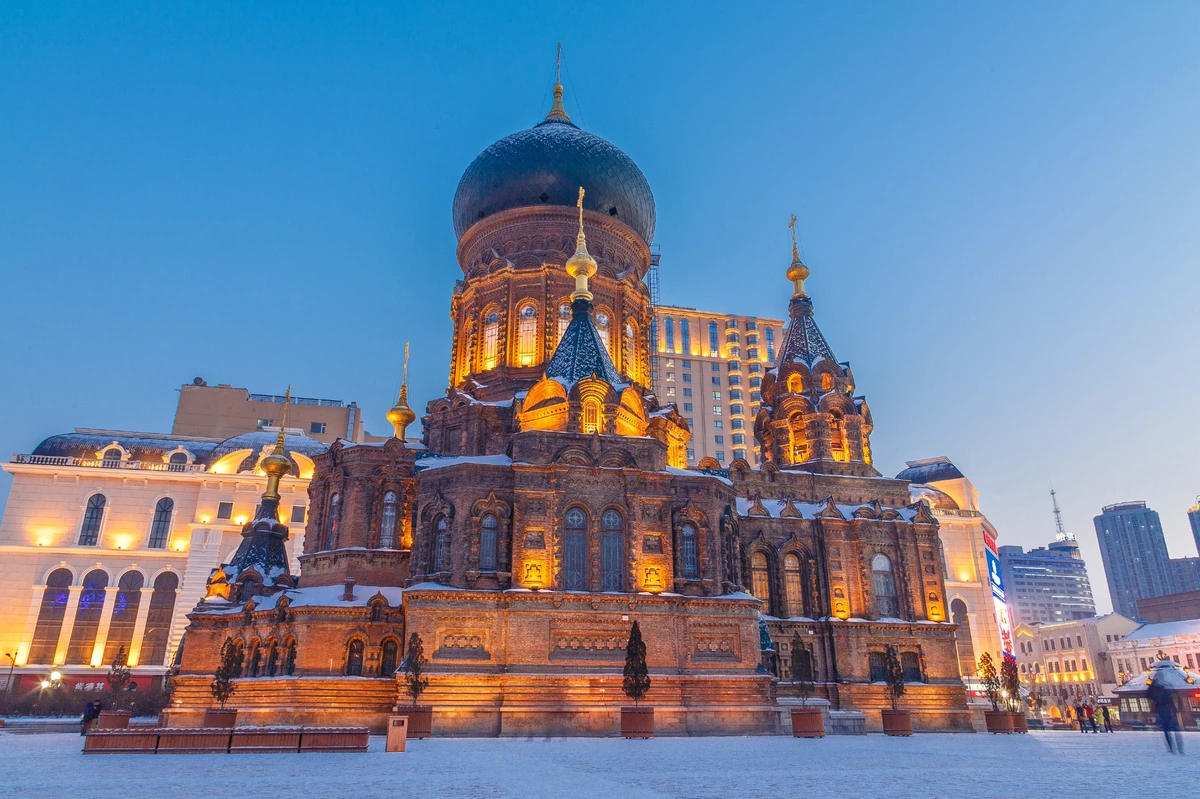
A defining visual trait is the onion-dome styling rooted in Russian Orthodox and Byzantine traditions. Symbolically, the bulbous dome suggests a rising candle flame pointing heavenward; mechanically, its steep curved profile helps shed snow rather than letting heavy loads accumulate during winter snowstorms. Together, dark red brick walls, green-toned domes, and winter snow create a striking seasonal contrast in the northern frost.
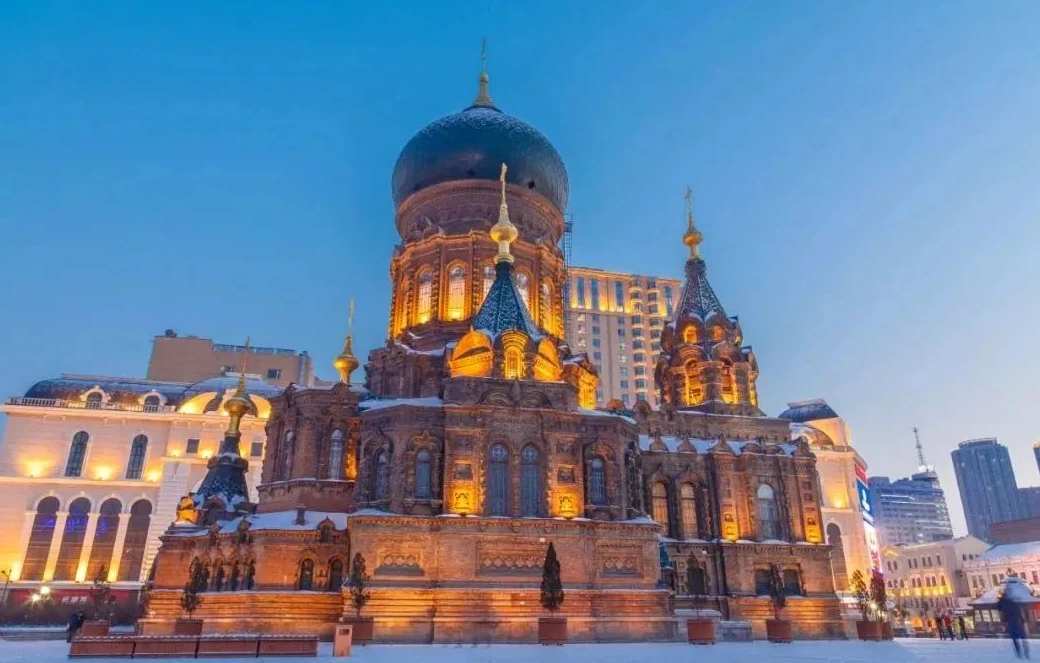
Viewing Saint Sophia Cathedral (*Ha’erbin Sheng Suofeiya Jiaotang*) reveals an Orthodox layout structured around a classic Latin-cross plan. The facade faces west while the sanctuary/altar end faces east toward morning light—a traditional orientation in church design. Set on a site with a footprint/area around 721 square meters (building area around 742 square meters) and rising to a total height of 53.35 meters, the spacious hall can hold up to roughly 2,000 people, creating an expansive, solemn interior.
Beneath its grand exterior lies sturdy masonry and structural support suited to harsh northeastern winters. Thick load-bearing walls built from local red sandstone/clay brick work together with structural beams and timber roof framing to carry the weight of the central dome, pairing brick texture with durable structural framing.
The visual centerpiece of this Byzantine-inspired building is the prominent central onion dome—roughly 10 meters across and rising about 18 meters high—finished in green sheet metal and topped with an Orthodox cross. Nearby, the entrance bell tower features a steep tent-style roof in classic Russian styling, balancing the rounded central dome with an upright vertical profile.
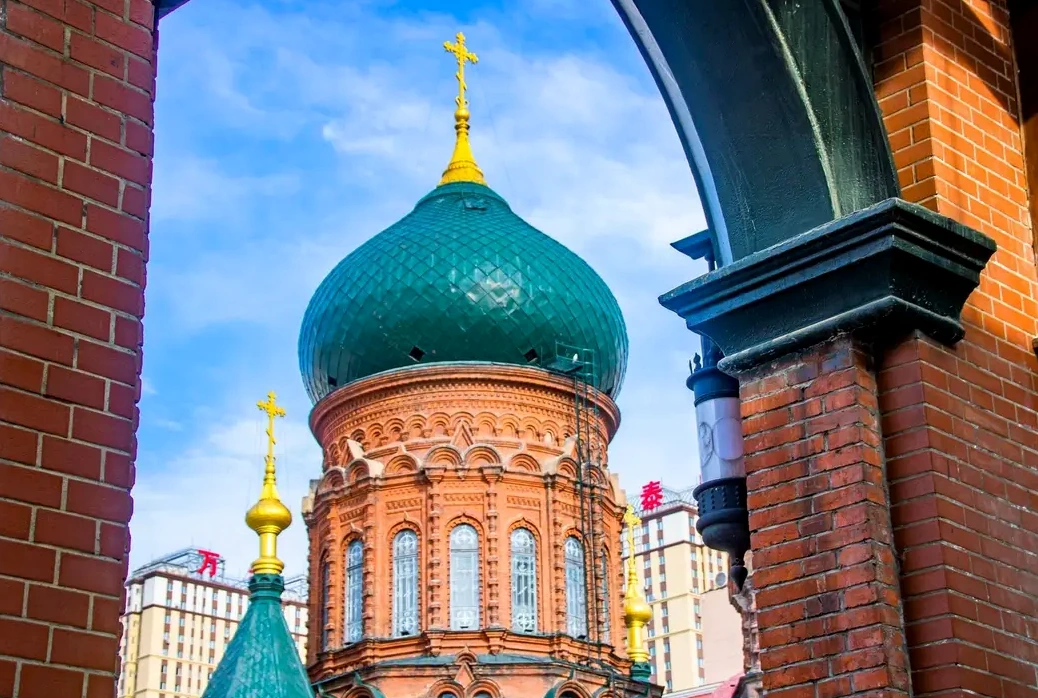
Exterior decoration translates Russian folk and Baroque-inspired motifs into brickwork. Facades feature blind arches and semicircular arches, patterned brick courses, sawtooth trim, and curved window frames. Around the drum beneath the main dome, paired arched windows let natural daylight filter down into the interior hall.
As dusk settles over Harbin—known as China’s “Ice City”—Saint Sophia Cathedral takes on a warm evening glow. Thoughtfully angled warm LED lights trace the onion domes and highlight the textured red-brick walls, bridging historic architecture with modern city life.
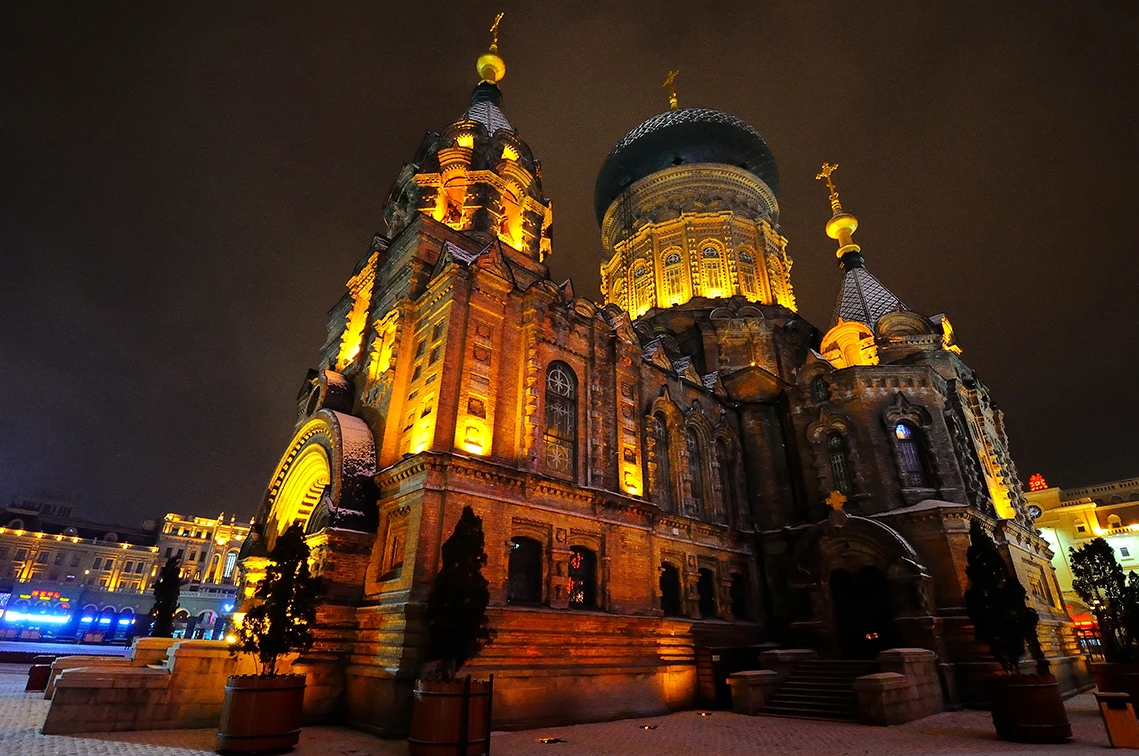
The open square around the cathedral comes alive in the evening. Paved walkways, European-style streetlamps, and water features set the stage for casual strolls, local cultural displays, and accordion music or folk dances in milder seasons—creating a lively yet welcoming square in northern China.
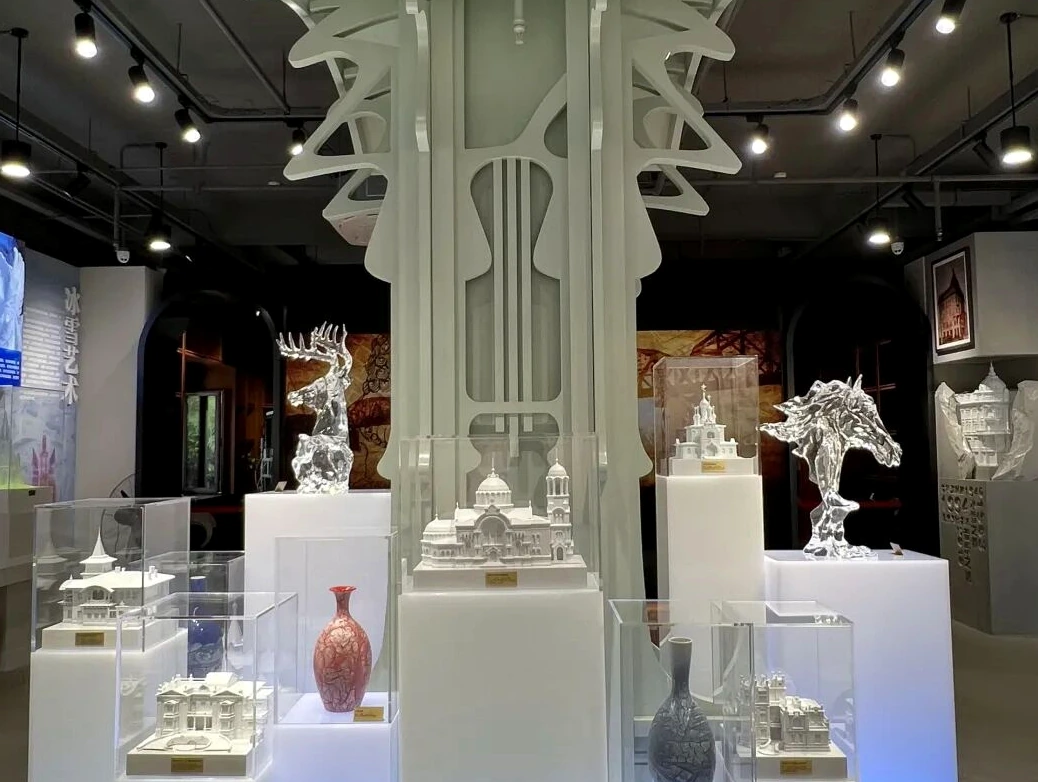
Stepping inside, the former church now houses the Harbin Architectural Art Museum, preserving urban history. Displays include historical photographs showing Harbin’s growth from a riverside settlement along the Songhua River into a bustling trading hub, alongside projection displays that bring historic ceiling and wall artwork back into view.
Audio in the hall adds to the atmosphere as choral recordings echo gently within the vaulted space. Pairing architectural heritage with modern museum displays turns the interior into a thoughtful cultural stop that connects Harbin’s past with visitors today.
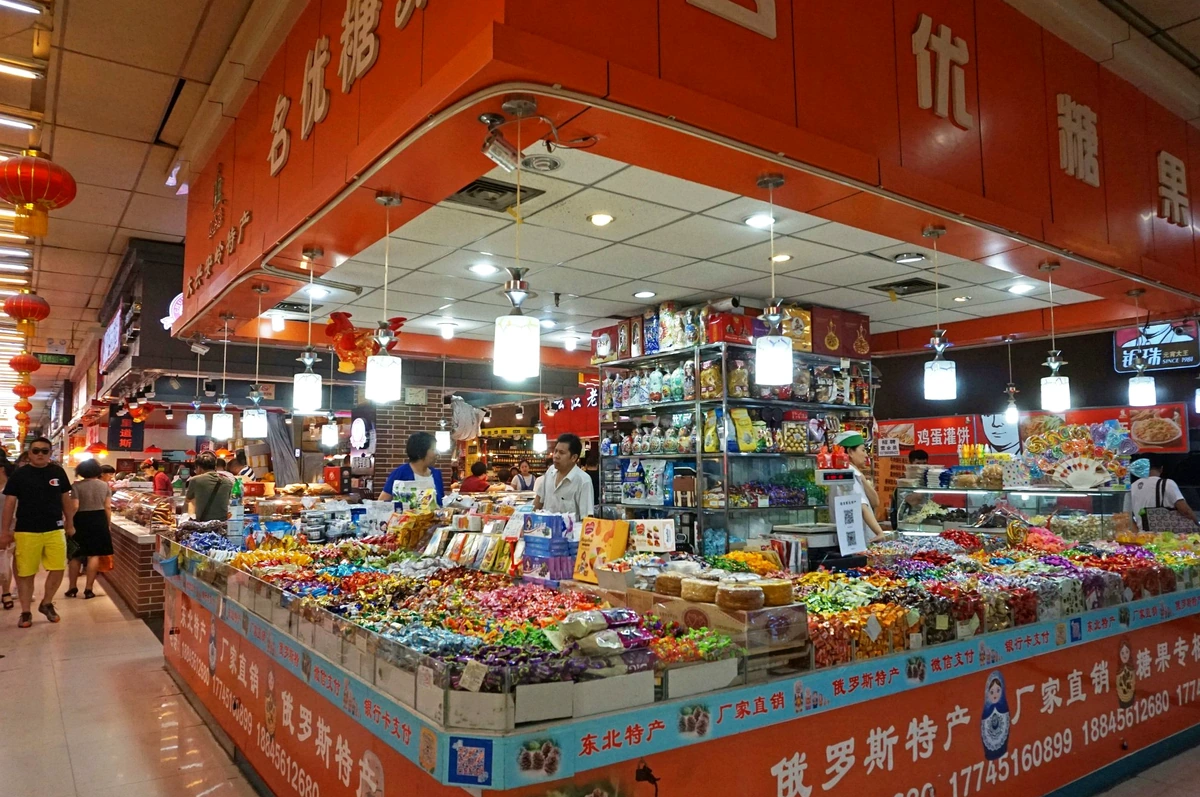
Beyond architecture, the area around Saint Sophia Cathedral—stretching toward Central Avenue (Zhongyang Dajie) and nearby Daoli markets—offers a distinctive food scene shaped by Russian-influenced flavors and northeastern Chinese cooking traditions (*Chuang Guandong* migrations). Each dish reflects decades of cultural blending in the city.
Near the cathedral, visitors often try Madieer ice cream—a long-standing local favorite founded in 1906—known for its rich, creamy dairy texture and sweet balance even in cold weather. Harbin red sausage (*hongchang*) is another staple, combining garlic and spice seasoning with smoky wood-fired flavor and a snappy casing.
Large *Lieba* (Dalieba) loaves are another hallmark of Russian-Chinese food history in Harbin. Baked in traditional ovens using sourdough/fermented starters, these large, hearty loaves feature a crisp, browned crust and a dense, mildly tangy interior that long sustained families through harsh northern winters.

In the evening, restaurants around the district serve hearty Russian-inspired classics—such as pot-baked beef stew under a golden pastry crust, warm bowls of borscht (beet soup) often finished with sour cream, and roasted fish or caviar dishes—offering comforting warmth on chilly nights.
Exploring food around Saint Sophia Cathedral connects visitors with Harbin’s layered identity, from bustling neighborhood markets to classic dining rooms along Central Avenue.
For planning a visit to Saint Sophia Cathedral (*Ha’erbin Sheng Suofeiya Jiaotang*), the Harbin Architectural Art Museum inside generally opens daily from 08:30 AM to 05:00 PM (with ticket sales and entry typically ending around 04:30 PM), while the outer square remains open around the clock. Interior exhibition tickets are modest (around 20 RMB), and booking ahead online or via the official WeChat mini-program with valid ID/passport details helps save time during busy winter snow-festival or summer travel seasons.
Getting there is convenient via Harbin’s transit network. From Harbin Taiping International Airport, airport shuttle buses run toward the Daoli area. By metro, take Metro Line 2 to Central Avenue Station (Zhongyang Dajie) and walk roughly 500 meters to the cathedral, or use Metro Line 3 via Youyi Road Station followed by a short walk or taxi ride.
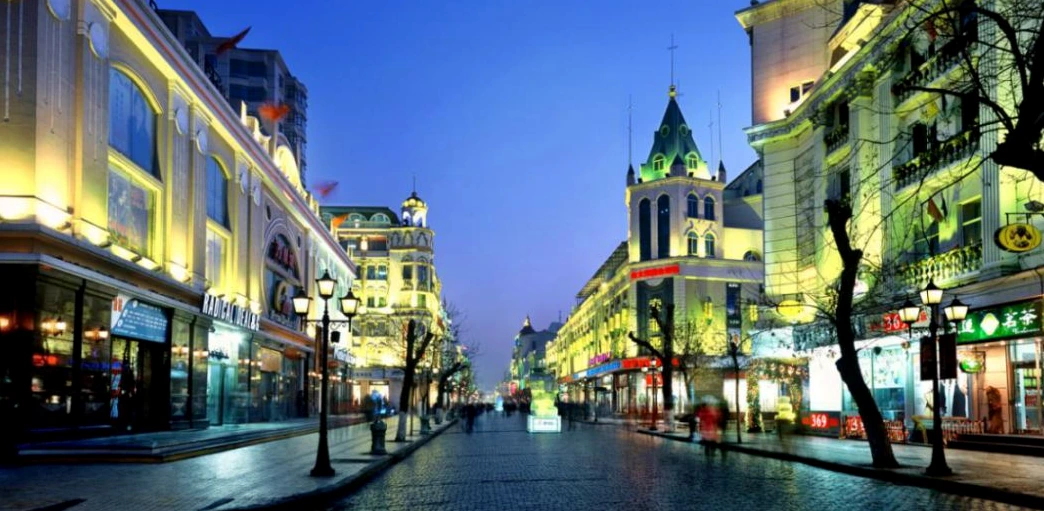
A pleasant routine starts in the morning along Central Avenue (Zhongyang Dajie) to admire historic facades before walking to Saint Sophia Square, where pigeons often gather near the brick domes. Visit the interior museum during daytime hours, then stay into dusk as evening lights illuminate the cathedral—typically lit into the evening (around 09:30 PM)—and explore nearby Daoli markets or eateries for local snacks and hearty meals.
Between November and February, Harbin winters can plunge well below -25°C, making warm layered clothing essential alongside indoor heating that keeps halls warm. Pack a windproof down/insulated coat, thermal base layers, fleece, insulated non-slip snow boots, a warm ear-covering hat, and touchscreen gloves. Inside the exhibition space, avoid using camera or phone flash to help protect artworks and historic displays. To explore Harbin alongside nearby winter highlights, you can check out the 7-day 6-night Harbin – Yabuli – Snow Town tour package.