




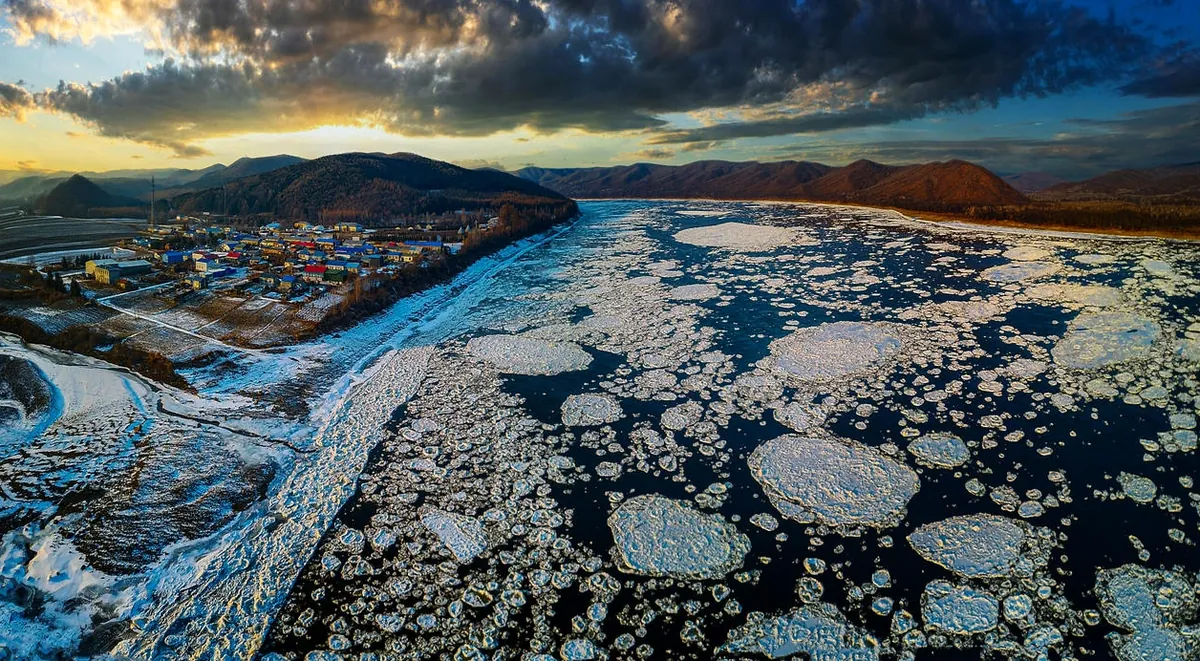
The landscape of this region underwent a dramatic transformation into modernity in the late 19th century, closely linked to the monumental project of the Chinese Eastern Railway. Following the Li-Lobanov Secret Treaty signed in 1896, Tsarist Russia secured the rights to construct the railway artery connecting Chita to the port of Vladivostok. In 1898, Polish railway engineer Adam Shidlovsky planted the first geodetic survey marker on the banks of the Songhua River, officially turning a primitive Manchu fishing village named Harbin into an urban center planned along a standard Western radial spiderweb model. Following the upheaval of the Russian October Revolution, a wave of White Russian refugees comprising over 100,000 intellectuals, aristocrats, and artists chose this place as their second home. The city flashed brilliantly into a “Paris of the East” or “Moscow of the Far East”, converging up to 33 diplomatic consular offices, 19 multilingual newspaper editorial boards, and the first chamber symphony orchestra on Chinese soil, creating a unique Eurasian cultural symphony.
Nevertheless, the first half of the 20th century also bore deep and painful war scars when the Japanese Kwantung Army occupied Heilongjiang after the Mukden Incident in 1931. The entire region was annexed into the puppet state of Manchukuo under the nominal rule of the abdicated Emperor Puyi. That dark period was tied to the earthly hell in Pingfang District, where General Shiro Ishii established the infamous Unit 731 to conduct inhumane biological weapon and disease experiments on living prisoners known as Maruta. Overcoming the epic trials of the era, this frozen land has step by step rebuilt and risen strongly. The majestic Flood Control Monument erected on the banks of the Songhua since 1958 has etched the indomitable spirit of the townspeople, paving the way for the renowned Ice Lantern Festival at Zhaolin Park, which originated in 1963, culminating in the glorious milestone of becoming an international-class winter sports capital.
According to traditional geomancy and ecological planning principles, Heilongjiang possesses the supreme terrain of being “embraced by mountains and surrounded by waters,” shaping a formidable natural fortress at the northeastern frontier. This land is fully enclosed by a vast network of great rivers, notably the surging Heilongjiang, which forms a natural border with the Russian Far East, combined with the Songhua River, which serves as the lifeblood nourishing the entire fertile delta. The solid defensive terrain is further anchored by the great arcs of two sacred mountain ranges: the Greater Khingan and Lesser Khingan Mountains. Miles upon miles of primeval pine forests and temperate vegetation here not only create a gigantic ecological shield blocking wind and sand, but also forge a concentrated atmospheric depression, circulating the pure spiritual energy of the northern cosmos.
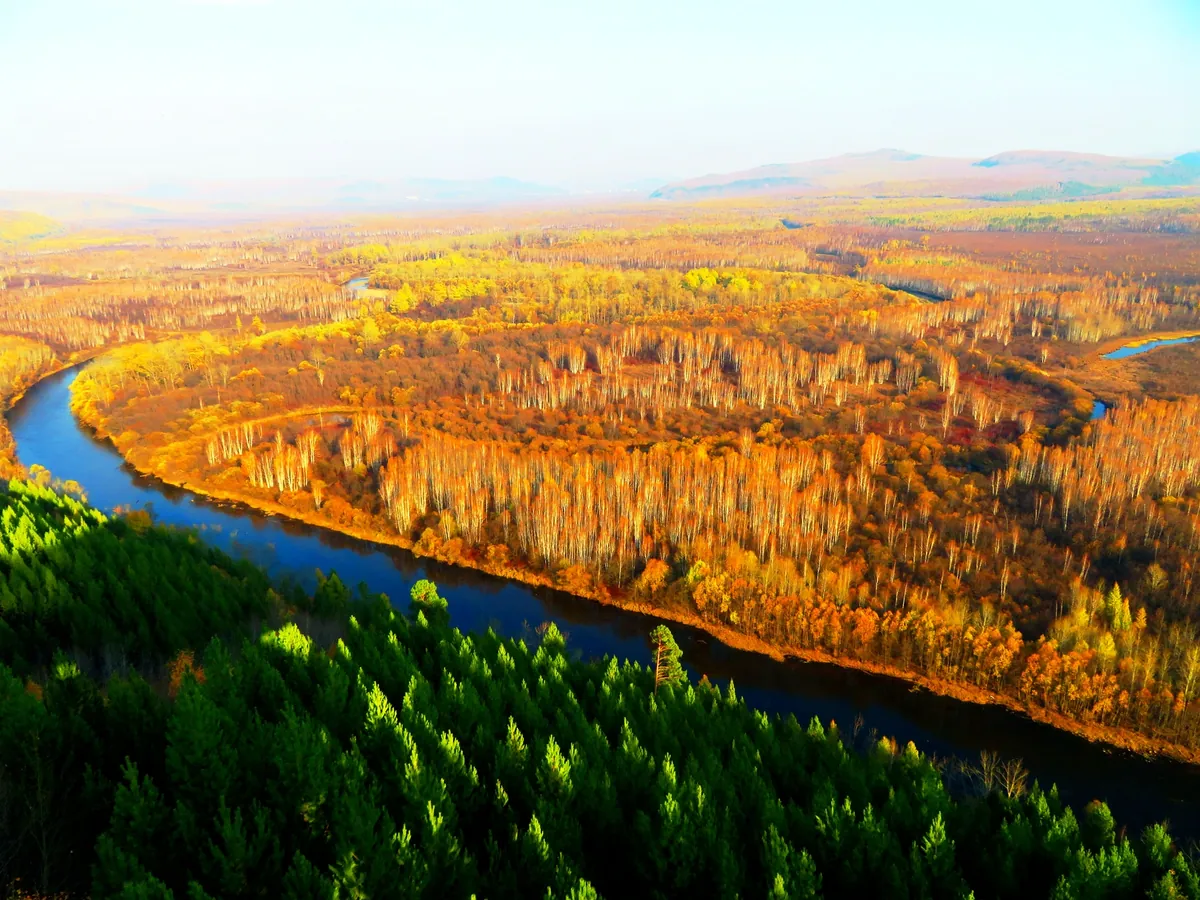
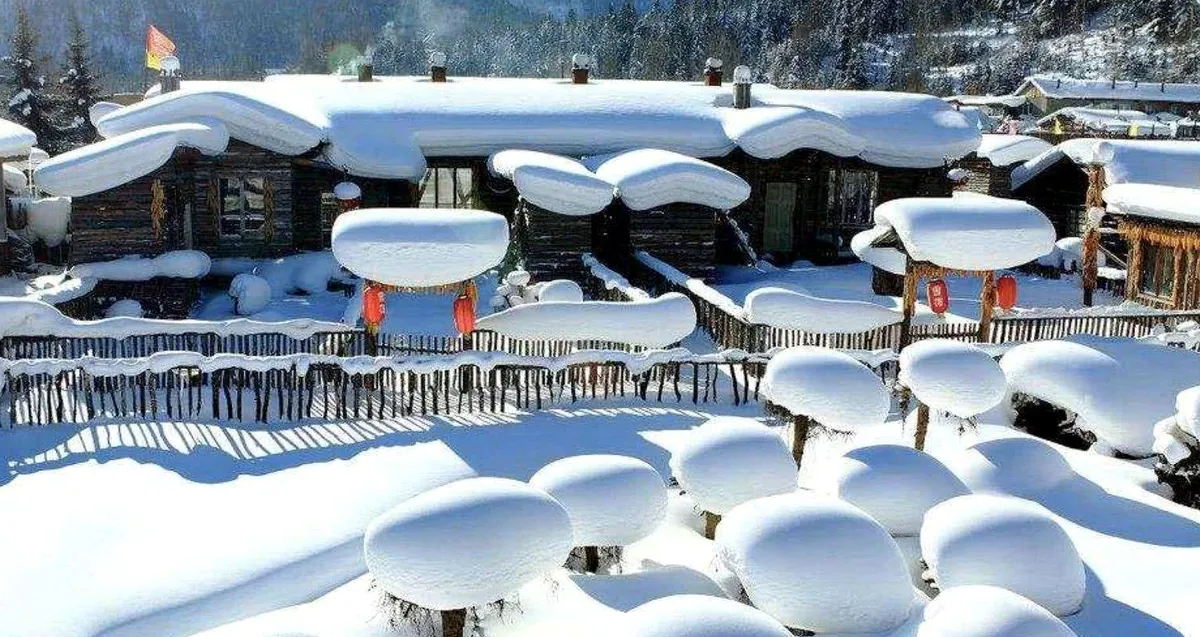
Venturing deeper into the northernmost part of the territory, Mohe is located at the rigorous coordinates of 53°33′ North latitude, embracing two destinations: Arctic Village and Beihong Village. This is where travelers can witness the magical Aurora Borealis weaving mystical ribbons across the deep night sky, while enduring bone-chilling cold as the thermometer bottoms out at minus 50 degrees Celsius. The wonder of the local microclimate is further concentrated at the Songfeng Scenic Farm, often identified as Xuexiang (Snow Town) in the Mudanjiang area. Thanks to its position right on the slopes of the Zhangguangcai Mountains, where moisture-laden air currents from the Sea of Japan collide directly with dry, freezing cold currents from the Siberian plateau, the powdery snow falling here reaches record depths of one to two meters. Snow softly blankets wooden thatched roofs, naturally molding itself into one-of-a-kind “snow mushrooms” and “snow waves” found nowhere else in the world.
The province’s hydrological system also bears historical significance with Jingbo Lake, one of the largest volcanic lava-damed freshwater lakes on a mountain in China. When winter arrives, the lake’s surface transforms into a solid, meter-thick jade ice sheet, vividly maintaining the traditional ritual of winter fish-spearing—an ancient fishing custom passed down for thousands of years since the Jurchen tribes pitched their tents in the snow. Alongside the mystical beauty of the icy winter, when the weather cycle shifts to summer, the area quickly transforms into a “summer resort capital” thanks to ideal temperatures fluctuating between 22 and 25 degrees Celsius, opening up deep forest bathing spaces and pristine ecological relaxation amid the untouched wilderness.
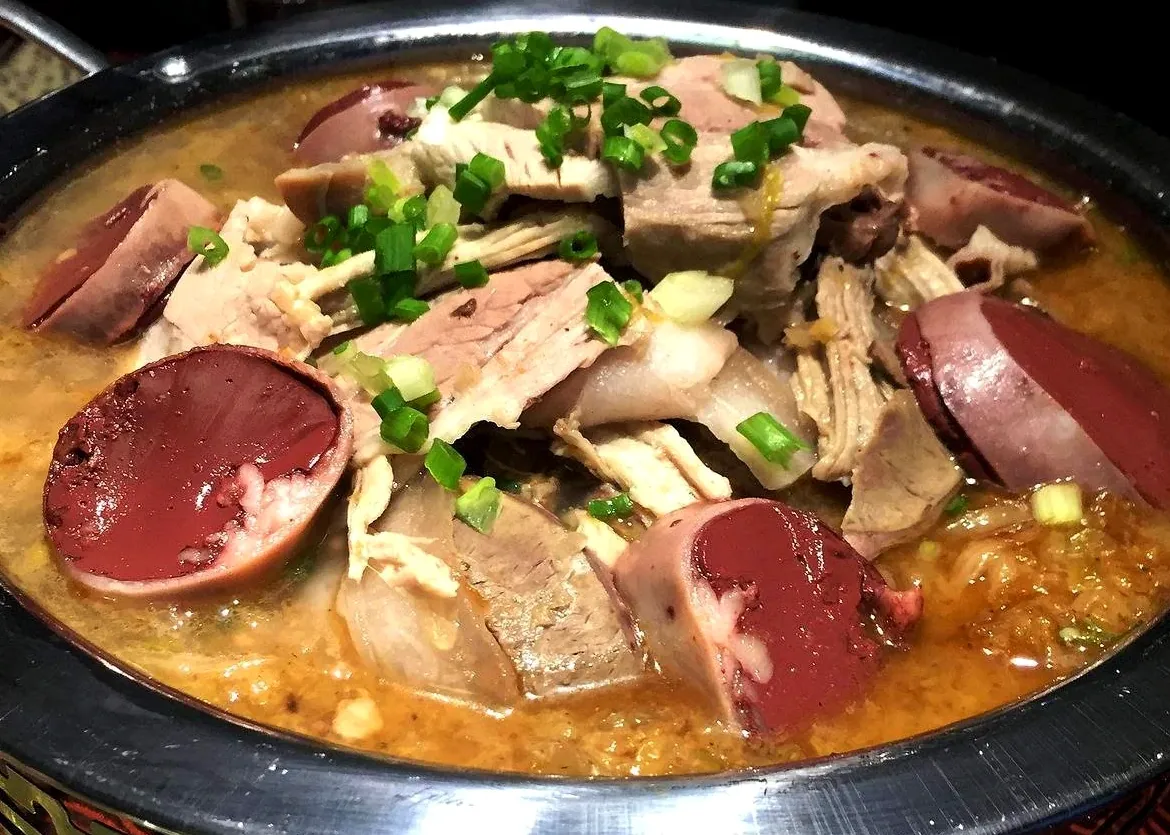
Contrasting with the freezing temperatures of the frontier winter, the folk art of warming culinary traditions has become the lifeblood nurturing the vitality of the local people through generations. A prime example amidst the snow and ice is the steaming bowl of blood sausage and meat stew bubbling in a thick metal pot. Slices of meat are cut to just the right thickness, harmoniously combined with characteristic dark red slices of boiled congealed blood, dotted with finely chopped fresh green onions submerged in a clear, light-brown broth. The dish is infused with the rich, sweet flavor of bone marrow and the warming intensity of spices, serving as an instant physical restorative after hours of enduring the howling winter wind and snow outdoors.
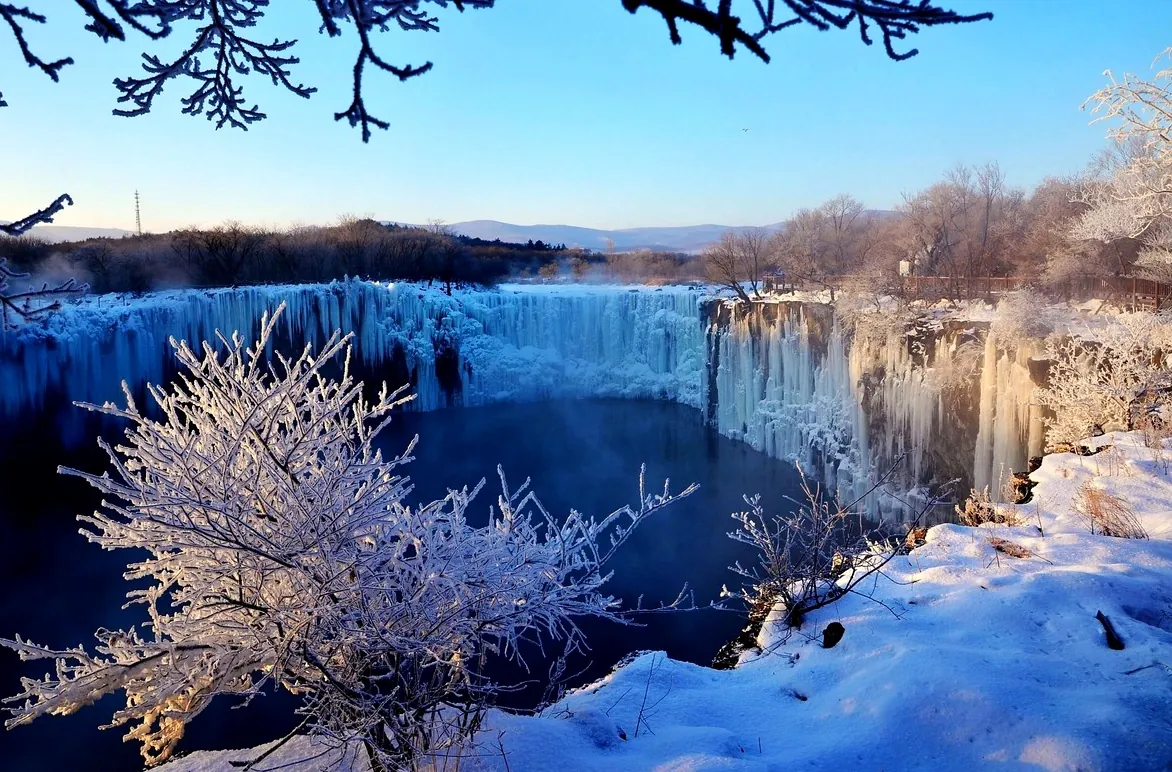
The magnificent interplay between snow-capped mountain ranges, rushing glacial rivers, and the depth of survival culture in the forests portrays a unique geomantic portrait for Heilongjiang. Possessing both the fierce grandeur of the wild northern frontier and the softness of ancient valleys, this pioneering land retains its unchanging essence, becoming a rare natural masterpiece in the heart of the East Asian mainland.
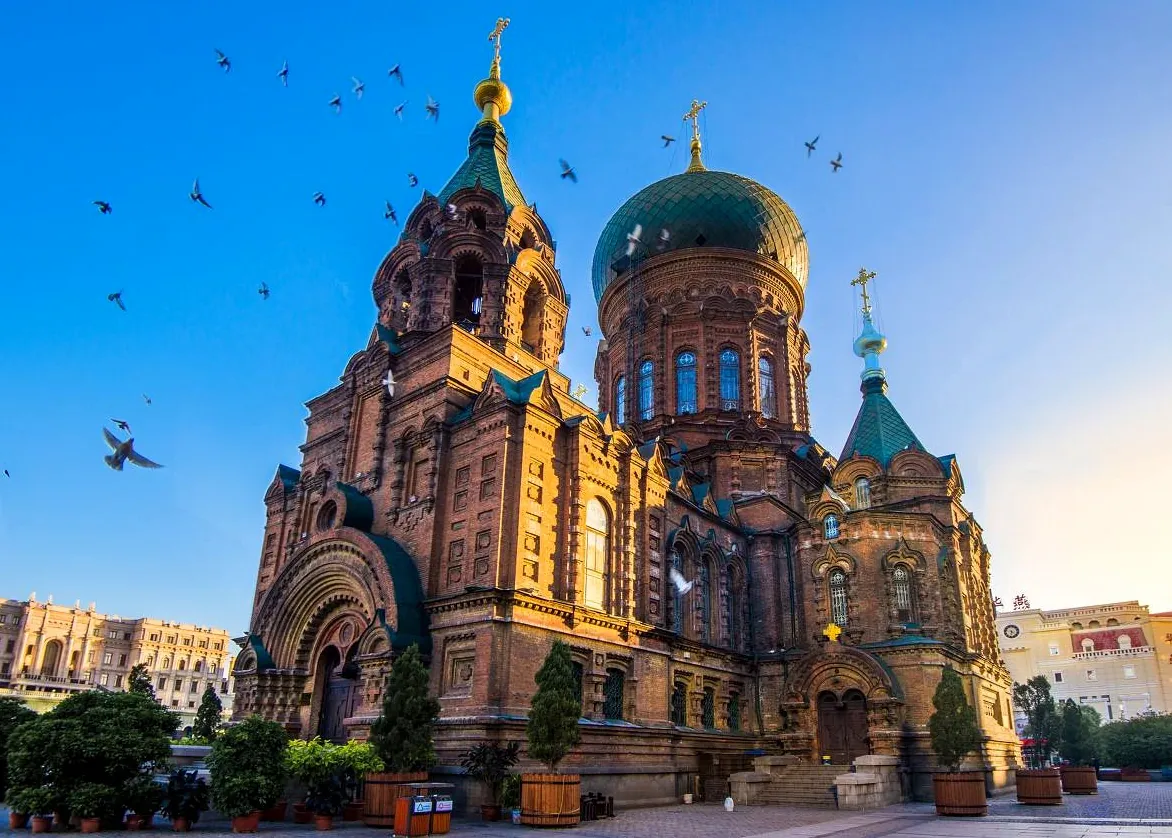
Heilongjiang’s spatial heritage reflects a unique fusion of Imperial Russian architectural techniques, traditional Chinese aesthetic thinking, and global-scale contemporary architectural waves. The enduring symbol of the golden age of the Chinese Eastern Railway is the imposing Saint Sophia Cathedral in the center of Harbin. Originally built of wood in 1907 to serve the 4th East Siberian Rifle Regiment, the church underwent a nine-year major restoration to complete its solid brick-and-stone version on November 25, 1932. The structure rises 53.25 meters high on a footprint of 721 square meters, capable of accommodating more than 2,000 worshippers at the same time. This masterpiece of classic Neo-Byzantine style visually captivates with its massive dark blue onion-shaped dome, surrounded by ancient Russian-style tented spires and specialized cold-resistant red brick cladding, currently serving as the Harbin Architecture Museum preserving a century of urban memories.
Continuing this historical rhythm is Zhongyang Avenue, a backbone landscape axis planned since 1898 with a length of 1,450 meters and a width of 21.34 meters. In 1924, this entire pedestrian street was paved with squarely cut granite blocks resembling French loaves, creating a glossy and time-defying road surface. The avenue is like a large-scale open-air architectural museum, converging 71 well-preserved heritage buildings representing four main Western architectural schools: Eclecticism, Art Nouveau, ornate Baroque, and rigorous Neoclassicism, fully showcasing the prosperous appearance of an international metropolis once known as the Oriental Moscow.
If Zhongyang Avenue is deeply imbued with European nuances, the Daowai district gave birth to a uniquely localized architectural school named Chinese Baroque. This is the largest preserved architectural complex combining Baroque and Chinese styles nationwide, formed by the wave of Chinese diaspora merchants during the great “Chuang Guandong” migration. The most valuable aspect of this space lies in the “Western outside, Eastern inside” technique: the front facade accurately mimics Western Baroque-style orders, curved balconies, and embossed patterns, but the decorative details are replaced by traditional East Asian auspicious symbols such as pomegranates symbolizing many children and blessings, prosperous peonies, auspicious creatures like dragons, phoenixes, and qilin stepping on clouds, or bats holding ancient coins. Stepping through the arched gate, the inner core opens up to a traditional two-story wooden courtyard structure (Siheyuan), associated with the extended family lifestyle and the “front shop, back workshop” business model of early twentieth-century merchants.
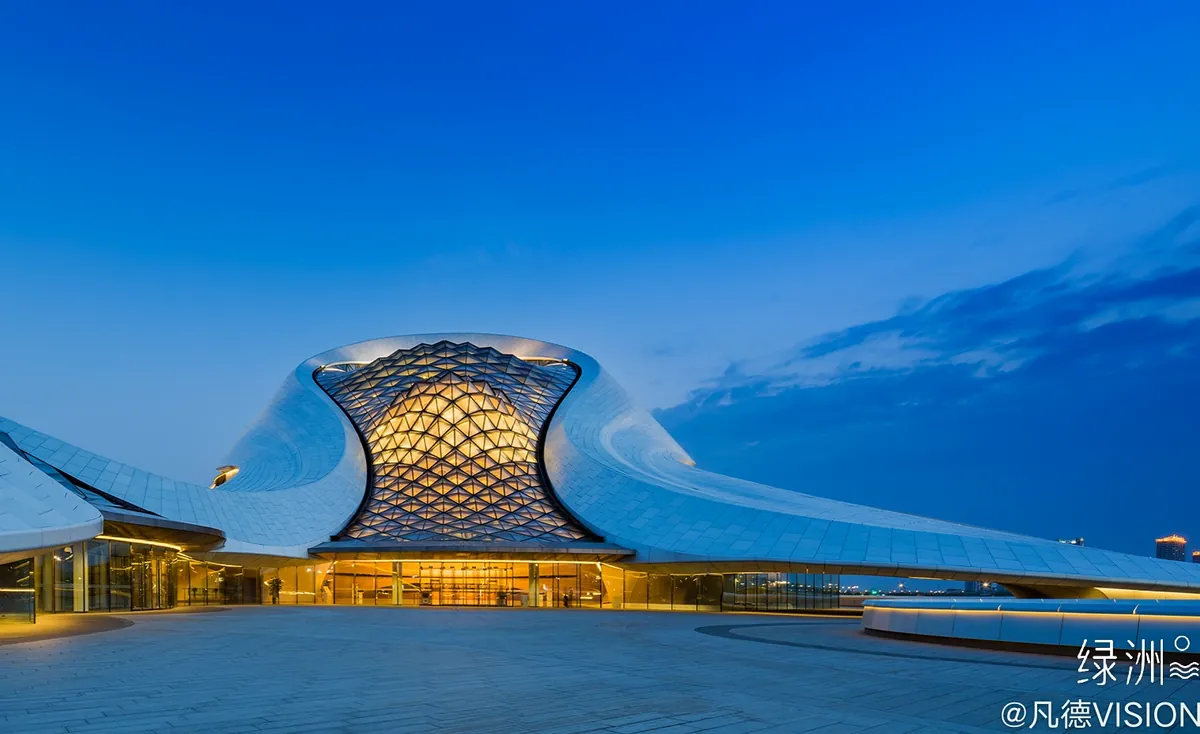
This historical inheritance continues spectacularly into the new century with the Harbin Grand Theater, created by architect Ma Yansong and the design studio MAD Architects, a masterpiece honored by the architecture portal ArchDaily as the world’s best cultural building. Impressively present amidst the wetlands of the Songhua River, the theater features futuristic sculptural masses with smooth curved lines resembling snow dunes whipped up by northern gales. The outer skin uses thousands of pure white aluminum panels reflecting the light of ice and snow, while the interior structure uses entirely hand-curved Manchurian ash wood, delivering a cozy auditorium experience meeting strict international acoustic standards.
Operating alongside these architectural masterpieces is a massive technical infrastructure network designed to conquer some of the harshest natural conditions on Earth. A strategic highlight is the Heilongjiang Bridge spanning the Amur River, connecting the city of Heihe with Blagoveshchensk in the Russian Federation. Spanning 1,284 meters with a total investment of 2.47 billion yuan, it wide-opens the cross-border economic corridor. In the sky, Harbin Taiping International Airport features a standard 3,200-meter runway, serving as a key aviation hub for Northeast Asia. On the ground, technological railway marvels are embodied by the CR400BF-GZ “Fuxing” high-speed train series specifically engineered for extreme polar cold, capable of operating stably at temperatures as low as minus 40 degrees Celsius. This network shortens the travel time from the capital Beijing to Harbin to just 4 hours and 45 minutes, while providing a lightning-fast connection from downtown Harbin to the Yabuli National Ski Resort in a mere 1 hour and 12 minutes, shaping one of the world’s leading spatial axes for ice-and-snow tourism and economic development.
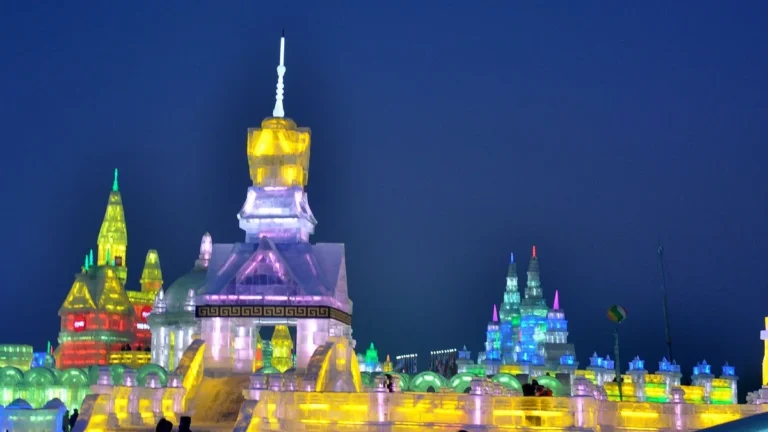
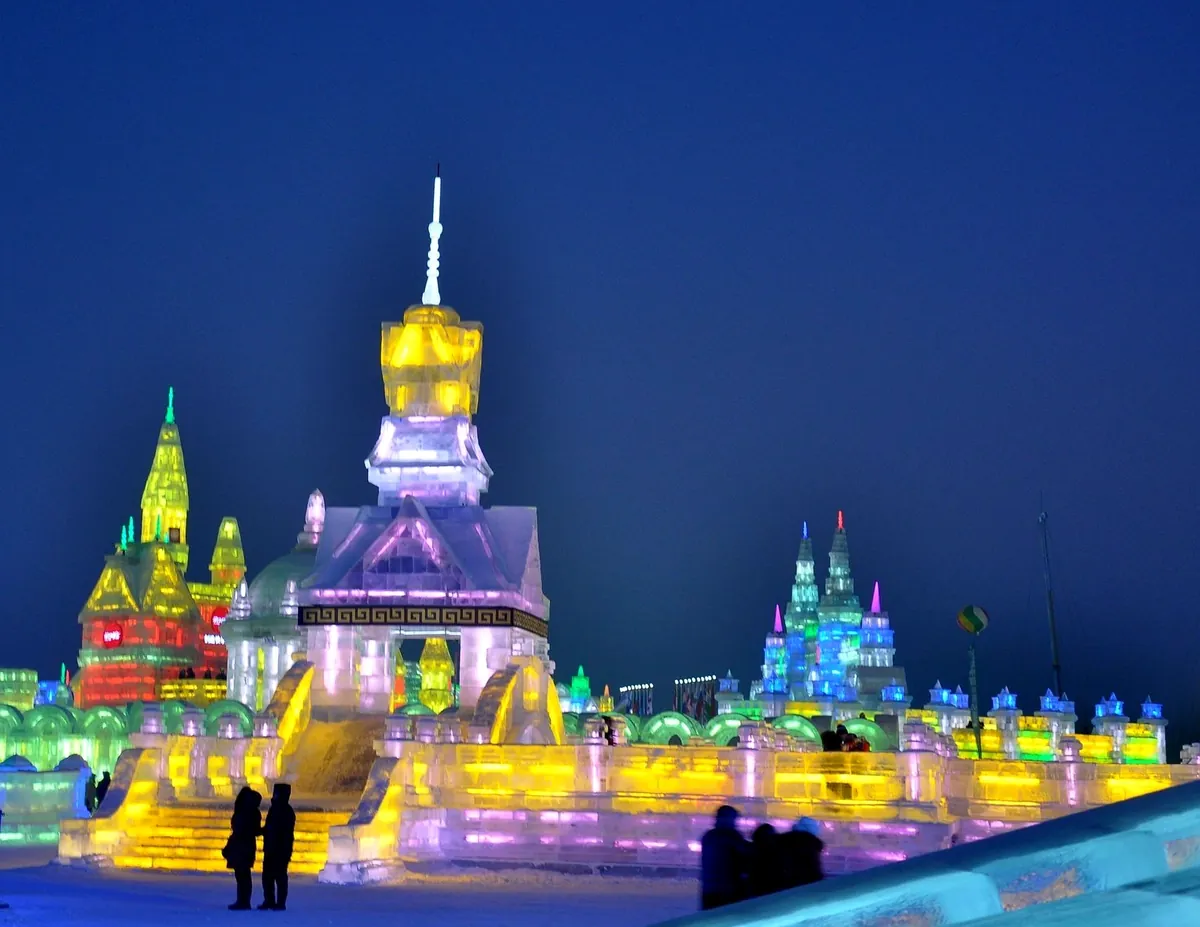
As the northern twilight fades and the freezing night blankets Heilongjiang, this realm does not drift into a dormant winter sleep; instead, it awakens into a dazzling and breathtaking optical ballet. At the heart of the snow-country’s nocturnal economy is the Harbin Ice and Snow World, the planet’s grandest architectural sculpture complex carved entirely from ice. All the massive structures—from castles and temples to viewing towers—are crafted from pure natural ice blocks harvested directly from the perennially frozen Songhua River. Through the skillful hands of artisans and digitally programmed multi-colored LED systems, millions of beams of light pierce through the thick layers of ice, transforming the entire exhibition area into a shimmering crystal city straight out of a fairy tale. Cheerful cheers echoing from hundreds-of-meters-long high-speed ice slides winding around the bases of ice-sculpted towers dispel the piercing cold, opening up an endless festival amid deep sub-zero temperatures.
Urban lighting techniques in the capital city of Harbin also reach the pinnacle of visual art through the hospitable “pampering guests” philosophy of the Northeast people. A prime example of nocturnal heritage beauty is Saint Sophia Cathedral Square, where the early 20th-century Neo-Byzantine red-brick architecture is bathed in the warm glow of high-powered floodlights. Against the clear night sky, drones hoist hot air balloons and a giant “artificial moon” hovering right above the iconic onion dome, creating a surreal photographic composition that captivates tens of thousands of travelers from afar. Along the embankment, the Flood Control Memorial Tower, erected in 1958, stands proudly on the banks of the Songhua River, highlighted by modern contour lighting technology that casts its proud reflection onto the vast, sparkling expanse of ice illuminated by festive lantern strips.
The vibrant nightlife of the northern metropolis radiates strongly along Central Street (Zhongyang Pedestrian Street), a 1,450-meter-long granite-paved avenue showcasing Baroque and Renaissance architecture. Under the soft golden glow of classical European-style streetlamps, rows of intricate ice carvings are arranged along both sides of the street, combined with street bands performing haunting chamber melodies amid the chilly mist. Despite the freezing weather, the joy of savoring creamy Modern ice cream bars crafted from an authentic early 20th-century Jewish recipe has become a unique tasting custom, demonstrating the unhurried and generous lifestyle of this land. Blending into this rhythm, the Harbin Beer Festival and International Light Exhibition illuminate the night with over a hundred large-scale thematic lantern clusters and nearly a thousand sophisticated landscape lights, creating a brilliant sea of light on the northern bank of the historic river.
Leaving the prosperous metropolis to venture deep into the boundless primeval forests, Snow Town Night (Xuexiang) transports visitors into a rustic and tranquil fairy-tale painting. Nestled against the Zhangguangcai Mountains, this village features thick, naturally accumulated snow blanketing wooden rooftops to form gigantic snow-mushroom shapes, floating softly beneath a chilly mist of minus twenty-five degrees Celsius. As the evening sun completely fades, thousands of traditional red lanterns hanging under the eaves simultaneously burst into light, emitting a warm halo that contrasts sharply with the pristine, suspended white of the snow. Evening kitchen smoke weaves through the stove corners, blending with the red lantern glow reflecting onto the snow mushrooms, opening up a visual sequence deeply imbued with traditional Northeastern flavor, where the art of light and natural wonders merge into one.
Heilongjiang’s culinary culture represents a unique gastronomic chapter in Northeast Asia, where the philosophy of survival in harsh frost blends seamlessly with Manchu imperial delicacies and old-world Eastern European heritage. Designated as Longjiang Cuisine, this culinary school not only impresses with its generous, robust portions but also holds deep memories through high-heat cooking methods and enduring oak-wood smoking arts perfected over time.
The defining hallmark of the region’s famous fusion cuisine began with Guobaorou (锅包肉), a culinary masterpiece created by chef Zheng Xingwen in 1907 at the Daodaofu in Qiqihar, Heilongjiang. To suit the palates of Russian diplomatic officials at the time, the imperial chef transformed the traditional sweet and sour pork dish into a sensory work of art: premium pork tenderloin slices are thinly cut, evenly coated in top-grade potato starch, and dropped into bubbling hot oil to be double-fried. Once completed, the golden-brown meat pieces are quickly tossed in a glossy sauce made from granulated sugar, pure white vinegar, spicy ginger, and crushed garlic. This creates a shatteringly crisp crust that makes a crunching sound at the touch of chopsticks, concealing tender, sweet meat inside alongside an unforgettable, refreshing sweet-and-sour aftertaste.
Entering the frigid winter, the soul of Heilongjiang’s street food and village cuisine comes together fully in the ritual of Dongbei Tieguodun (东北铁锅炖), or traditional iron-pot stew. Originating from the communal hearth customs of ancient nomadic tribes, the dish uses hand-cast iron woks with a wide diameter of 60 to 80 centimeters, set embedded in the middle of a large dining table. Most famous is the Grand Russian Iron Pot Stew, a renowned goose stew with an estimated consumption of nearly two million plump geese every freezing winter. The goose meat is stir-fried until firm with cardamom, star anise, and cinnamon, then simmered for hours alongside wild mushrooms from the Greater Khingan Mountains, freshly caught carp from the Songhua River beneath thick layers of ice, and long, thick, chewy sweet potato vermicelli. Indispensable touches around the blazing rim of the pan are fresh cornmeal dough portions that the chef swiftly presses and glaches on (tie yumi bing – 贴玉米饼); the rising meat stew steam cooks the bread portion on top, while the side pressed against the iron rim browns and becomes crispy, spreading a rustic, rich grain aroma throughout the cozy space.
The Russian imprint is sharply and enduringly present in urban life through the imagery of Harbin Red Sausage (哈尔滨红肠). Originating from the Lithuanian sausage processing recipe of the famous Churin food factory dating back to 1909, the dish requires a strict selection process among fresh lean pork, diced fat, and finely crushed aromatic garlic, blended according to a heritage recipe. Each link of sausage is slowly smoked over solid maple or oak firewood for hours, donning the characteristic wrinkled, dark reddish-brown skin steeped in natural wood smoke flavors. Running parallel to this is Dalieba Bread (大列巴), a phonetic translation of the Russian word “Khleb,” with a gigantic size ranging from 1.5 to 2.5 kg per loaf. Fully fermented with natural fresh hops and baked in a traditional wood-fired oven, the rounded loaf possesses a sturdy, crispy crust enclosing a light, airy crumb with a subtle tangy note, serving as a precious emergency ration that can be preserved for a full month amid sub-zero temperatures.
The culinary culture of the snow country holds a special appeal due to the fascinating contrast between the bone-chilling cold and rich flavors. Under temperatures of minus 20 degrees Celsius on the granite-paved Central Avenue, the sight of people leisurely enjoying Modern Ice Cream (马迭尔冰棍) sold openly from simple styrofoam boxes has become a poetic symbol. Born in 1906 at the famous Modern Hotel by merchant Joseph Kaspé, the pure ice cream without emulsifiers retains its rich, creamy smoothness from fresh milk and premium egg yolks. When night falls, the cultural harmony continues at a Russian dining table with a steaming bowl of bright red beetroot soup (Borsch – 苏波汤) drizzled with sour cream, a fragrant plate of baked sea bass in cream sauce, or the sizzling charcoal grill pan featuring thinly sliced fresh beef marinated in the legendary five-spice blend of Qiqihar, creating a culinary picture that is both unique and complete for the far north.
The journey deep into the extreme cold of Heilongjiang requires thorough preparation in survival equipment, where winter temperature amplitudes frequently reach between minus twenty and minus forty degrees Celsius. To cope with the biting northern cold, the golden rule applied by professional explorers is the three-layer protection clothing system. The innermost base layer must be high-tech thermal underwear lines with extremely fast moisture-wicking capabilities; visitors must absolutely not use clothing made from pure cotton, because the sweat-retention characteristic of cotton fibers will quickly freeze in the bitter cold and lead to life-threatening hypothermia. The middle layer plays the role of creating warmth-trapping air pockets, ideally thick fleece, natural cashmere wool, or ultra-light down jackets. The outermost layer requires absolute windproofing and waterproof features like Gore-Tex fabric membranes, combined with heavy-duty down jackets with a fill power index of eight hundred or higher, fur hats covering the ears, and snow goggles against ultraviolet rays reflected from the ice base. For the feet, a pair of specialized shearling-lined snow boots with rubber tread depths of at least five millimeters or fitted with steel cleats is a mandatory condition to eliminate slipping risks before the invisible black ice covering the road surface.
Besides the human factor, digital electronic devices also face severe trials from the icy environment. Lithium-ion batteries often experience a reduction of up to eighty percent in actual performance when operating in environments below minus twenty degrees Celsius, leading to instant shutdown phenomena; the optimal solution is to stick chemical heat packs directly to the phone case and always keep the camera stored inside the chest layer of clothing to utilize body heat. In particular, the thermal shock phenomenon when moving from an outdoor environment of minus thirty degrees Celsius to heated rooms of positive twenty degrees Celsius will cause extremely strong moisture condensation inside electronic microcircuits and expensive optical lenses. To prevent short-circuiting or lens mold, visitors need to place all equipment in airtight plastic bags before entering the warm room, patiently waiting thirty to forty-five minutes for the equipment to reach a natural temperature equilibrium state before starting to unpack and use.
Regarding the transport network and administrative procedures, the modern transportation infrastructure of the Northeast has bridged the travel distance between major cultural centers. The Fuxing Beijing-Harbin high-speed railway with a commercial operating speed of three hundred and fifty kilometers per hour takes only four hours and forty-five minutes to connect the capital Beijing with Harbin, while the Harbin-Mudanjiang branch brings winter sports lovers to the famous Yabuli ski resort in just one hour and twelve minutes. At Harbin Taiping International Airport, the one-hundred-and-forty-four-hour visa-free transit policy for citizens of fifty-four countries opens a convenient door for international visitors to combine short layovers. Moreover, from the Suifenhe border railway station, visitors can also extend their trans-Asian journey to the port city of Vladivostok in the Russian Far East through the international intermodal railway system that has operated for many decades.
Besides the magnificent beauty of its natural landscapes, the winter tourism market in the far north also hides numerous pitfalls that travelers must remain very cautious about. Unusually cheap tour offers are often traps luring visitors into isolated rooms for hours, where intense psychological manipulation tactics are deployed to force the purchase of Jilin ginseng, high-mountain velvet antlers, heat-treated amber, or artificial Russian jade at prices inflated by ten to twenty times, accompanied by out-of-contract service surcharges reaching thousands of RMB. To tighten tourism discipline, local authorities have established strict price caps in key tourist hubs such as China Snow Town, with penalties ranging from 50,000 to 200,000 RMB for commercial fraud. At the same time, the tourist rights protection mechanism through the 12345 hotline—pledging resolution within 30 minutes and a “compensate first, investigate later” policy—has become an effective legal shield. The ultimate advice for those longing to touch the white snow of Heilongjiang is to choose standardized, pure-sightseeing itineraries with no shopping stops, clear written contracts, and coverage by snow and ice insurance packages incorporating emergency medical rescue clauses. Placing your trust in a standardized, transparent all-inclusive tour program is the ultimate key to making your expedition to the northern border an utterly perfect and peaceful winter wonderland memory.
