













Within the millennial chronicle of Northeast China, China Snow Town represents a modern chapter deeply rooted in ancient frontier heritage. In antiquity, Heilongjiang was home to hardy northern peoples such as the Mohe and Buyeo tribes, whose descendants established the Bohai Kingdom, the Jurchen Jin dynasty, and later the Manchu Qing dynasty. Living in close communion with primeval forests through hunting, foraging, and forestry, these communities forged a resilient winter survival culture. Originating as a state forestry logging camp in the 1950s, China Snow Town stands as a living tribute to human perseverance against extreme cold: rough-handed lumberjacks built humble timber cottages deep in the virgin woods that gradually evolved into the enchanting snow village admired today. When traditional logging gave way to sustainable ecotourism in the early twenty-first century, Snow Town’s hidden magic awakened, transforming a quiet forestry outpost into one of Asia’s most celebrated winter destinations.
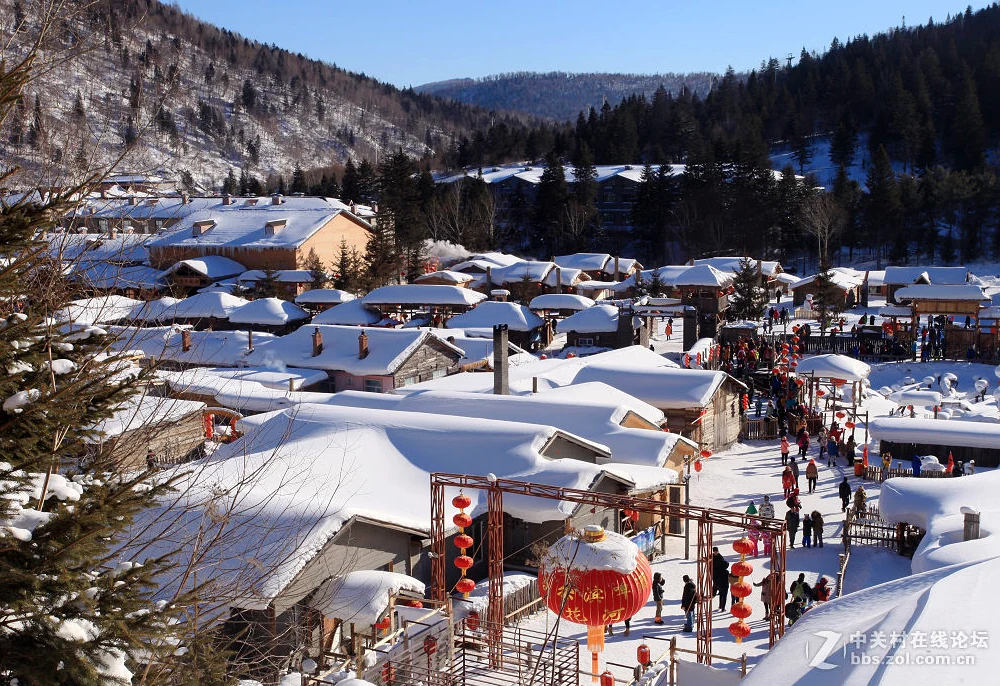
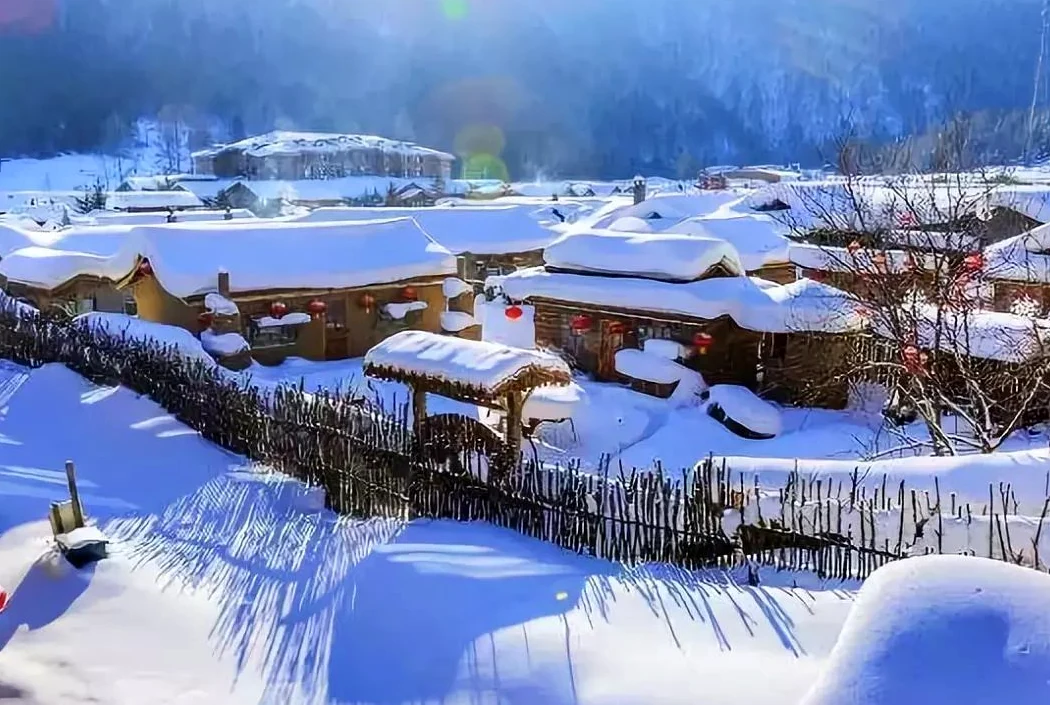
Architecture in China Snow Town is a captivating collaboration between human craftsmanship and nature’s endless artistry. Rather than monumental stone palaces, the village enchants visitors with rustic Northeast Chinese timber cabins topped with gently pitched roofs. Here, abundant powdery snowfall combined with steady mountain winds and gravity molds thick snow accumulations—without melting—into rounded, pillowy overhangs layered like giant mushrooms, snow-white mochi cakes, or billowing swirls of cotton candy. We call these natural, thick layered snow-mushroom roofs straight out of a Grimm’s fairytale, evoking storybook Nordic winter scenes where no two snow caps look alike. Meanwhile, warm smoke rising from indoor brick stove chimneys gently melts edges of roof snow that refreeze into sparkling icicle crowns, adding finishing touches to an idyllic winter tableau.
Local customs and daily traditions form an equally vital dimension of Snow Town’s heritage. Shaped across generations by harsh winters and generous forest bounty, residents uphold warm, unpretentious traditions celebrating community solidarity and respect for nature. Family meals gathered around glowing hearths, tales of deep forest expeditions, and traditional northeastern folk songs echoing through crisp winter nights weave a genuine, welcoming atmosphere. Travelers immediately feel local warmth when invited to share piping-hot home cooking or hear stories of old forestry days, while seasonal ice-and-snow festivities featuring folk games, cultural performances, and dazzling fireworks bring vibrant joy to the subzero night.
Sightseeing across China Snow Town unites raw natural splendor with thoughtful visitor experiences. At the center of every gaze are the natural, thick layered snow-mushroom roofs straight out of a Grimm’s fairytale—transforming continuously from early dawn, when first sunbeams glint across crystalline snowdrifts, through rosy twilight into nightfall, when glowing red lanterns turn every snow-laden cabin into a luminous work of art. Strolling down snowy lanes, feeling powdery snow as soft as cotton in your palms, and breathing crisp, pine-scented air awaken every sense.
Once night falls, Snow Charm Street (Xueyun Dajie) becomes the radiant beating heart of China Snow Town. Lined on both sides with classic timber houses festooned with thousands of glowing red lanterns, the avenue glows with warm amber and crimson reflections dancing across pure white snow. Cozy souvenir boutiques, steaming snack stalls, and welcoming wooden homestays radiate warmth and light along the promenade—inviting visitors to sample sizzling street treats, browse local handicrafts, and soak up the festive energy of laughter, grilled aromas, and lantern glow against the crisp winter chill.
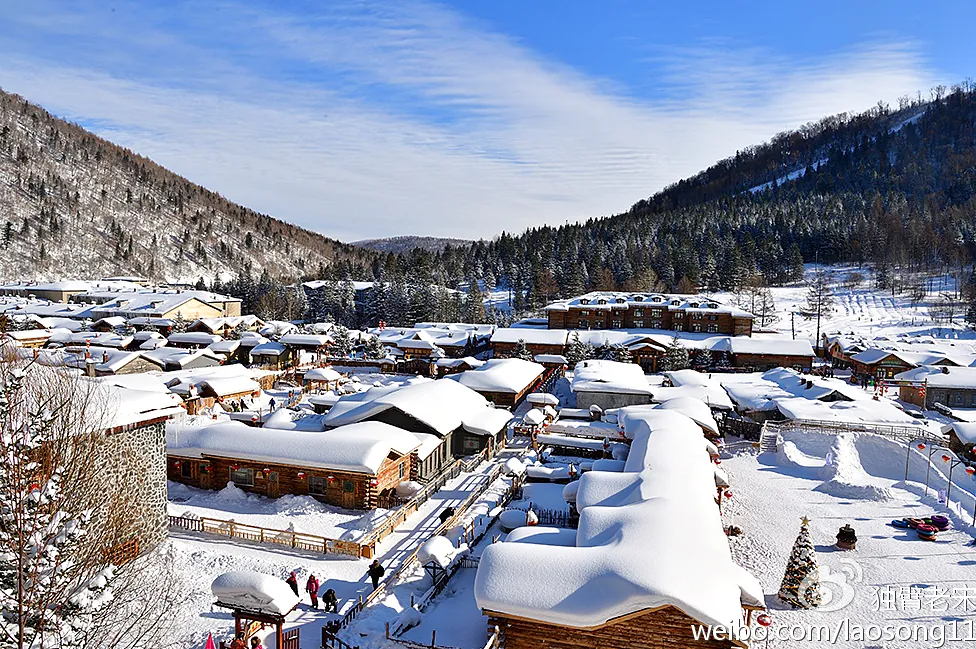
Another unmissable highlight is the Bangchui Mountain Wooden Plank Scenic Walkway. Built from sturdy timber planks winding gracefully along the slopes of Bangchui Mountain, this elevated boardwalk rewards visitors with sweeping bird’s-eye panoramas over the entire snow-mushroom village, winding white lanes, and silver-frosted pine forests. Especially magical at sunrise and sunset when shifting light paints the valley in pastel gold and rose, walking this woodland trail offers a deeply restorative immersion into winter wilderness.
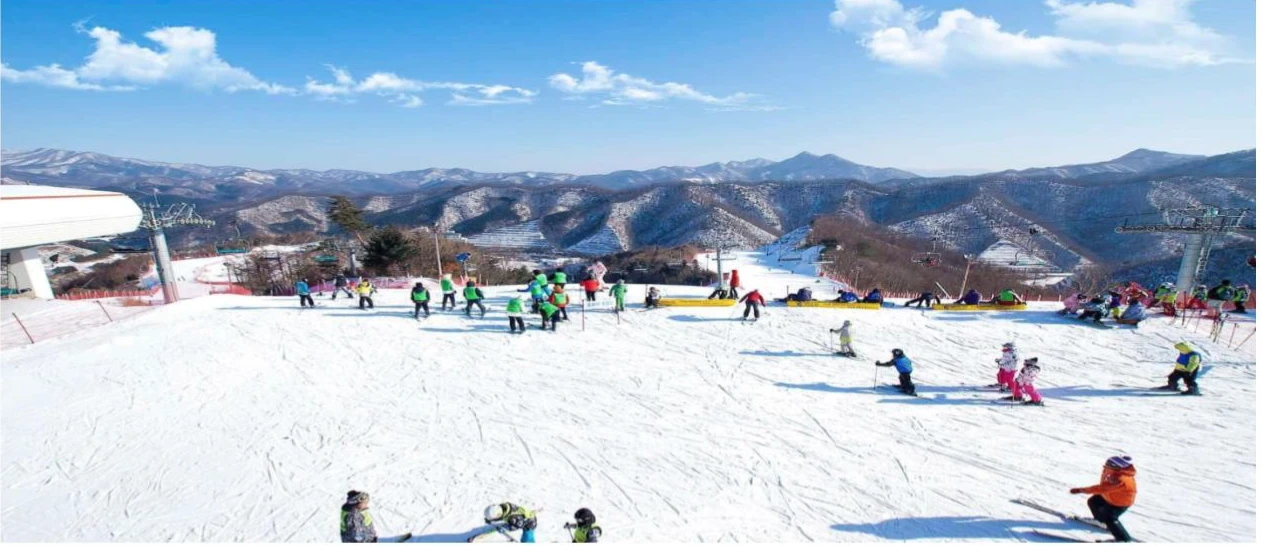
For adventurous spirits seeking unforgettable winter thrills, China Snow Town also offers ski slopes and the iconic “Splashing Boiling Water into Instant Ice” experience (泼水成冰 – Pōshuǐ chéng bīng). While the local ski runs are compact rather than massive resort complexes, their gentle-to-moderate slopes provide exhilarating fun for beginners and families alike. Yet the signature ritual synonymous with Snow Town is Poshui Chengbing: when temperatures plunge below -20°C, flinging a ladle of boiling water in a wide arc overhead causes droplets to freeze instantaneously in midair into sparkling ice crystals and billowing white vapor—forming a dramatic frozen halo prized by photographers worldwide. Visitors can also enjoy dog sledding, snowmobiles, guided snow trekking, and snow tubing for endless winter fun across all ages.
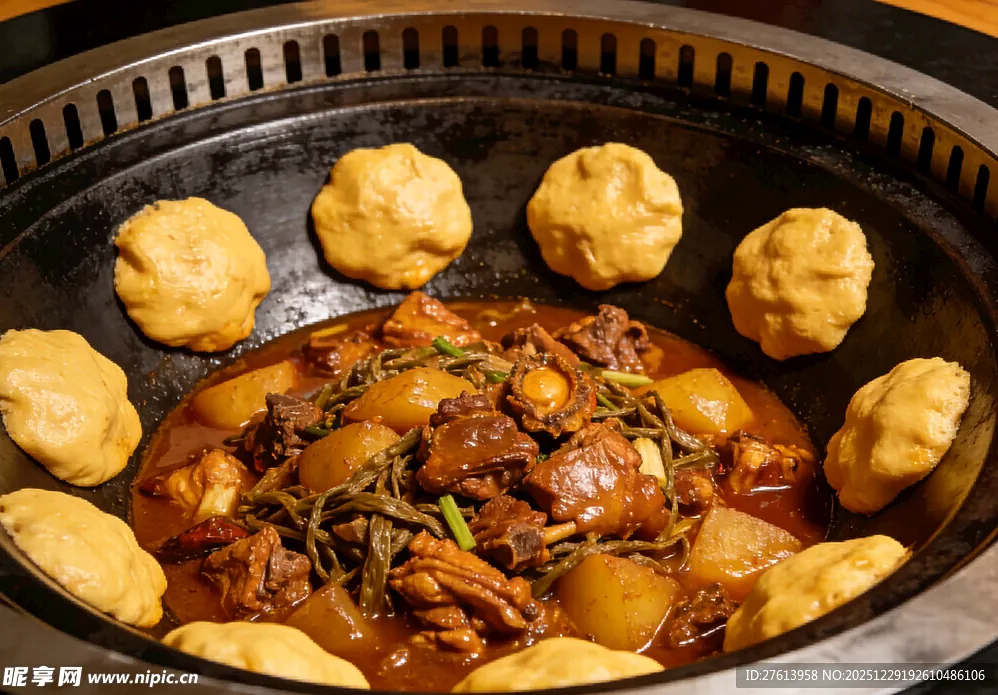
Culinary culture in China Snow Town is an indispensable chapter of its heritage, showcasing hearty Northeast Chinese (Dongbei) flavors crafted to nourish and warm the body through extreme winter cold. Foremost among beloved classics is Braised Chicken with Wild Hazel Mushrooms (小鸡炖蘑菇 – Xiǎo jī dùn mógu), simmering tender free-range chicken with fragrant wild forest mushrooms and sweet chestnuts in clay pots for deep, comforting warmth. Equally iconic is Guo Bao Rou (锅包肉)—crispy double-fried pork tenderloin glazed in a bright, tangy-sweet amber sauce—alongside crock-fermented pickled napa cabbage (Suancai – 酸菜), an essential winter staple simmered with pork belly or folded into savory dumplings to balance rich meals and supply vital winter nutrients.
Regional culinary ingenuity shines through time-honored preservation methods suited to subzero climates, including natural outdoor freezing and pickling. Hearty dishes starring potatoes, cabbage, tofu, and wild forest mushrooms anchor local menus alongside steaming baskets of fluffy Baozi buns and pan-fried Jiaozi dumplings stuffed with pork and pickled cabbage. To ward off the biting cold, locals pair meals with warming sweet glutinous rice wine (米酒 – Mǐjiǔ) or robust northeastern grain spirits, while snowy streets tempt passersby with roasted sweet potatoes, steaming boiled sweet corn, and glossy candied hawthorn skewers (Tanghulu – 糖葫芦) whose sugar shells snap like glass in the freezing air.
While elaborate southern-style gongfu tea ceremonies are less common in Northeast China, communal feasting and shared hospitality take center stage. Winter meals bring family and friends together around bubbling hot pots (火锅 – Huǒguō) simmering right at the table, where thinly sliced meats, seafood, tofu, and crisp vegetables cook in aromatic broth amid lively conversation and warm toasts—turning every meal into a heartfelt celebration of northeastern warmth.
Modern transportation infrastructure has opened the gateway to China Snow Town, making this enchanted winter sanctuary far more accessible while preserving its wild charm. Most international and domestic travelers fly into Harbin Taiping International Airport (HRB), the primary aviation gateway to Heilongjiang Province. From Harbin, dedicated tourist shuttle buses offer the most popular direct connection to China Snow Town in roughly five to six hours, while private charter vehicles provide added flexibility and comfort for families and small groups. Travelers wishing to experience China’s high-speed rail network can also ride CRH bullet trains from Harbin to nearby Hailin or Mudanjiang before transferring by bus or taxi into the mountains.
The golden season to visit China Snow Town is unequivocally winter, stretching from late November through early March, when deep blankets of powdery snow transform the village into a true winter wonderland. December and January bring the deepest snowpack and peak winter festivities, with temperatures regularly dipping below -20°C and occasionally reaching -40°C—conditions demanding serious cold-weather gear yet ideal for crystal-clear snow mushrooms and instant-ice photography. While spring brings quiet snowmelt and budding greenery, summer offers cool forest hiking, and autumn paints birch and maple forests in gold, winter remains irreplaceable for experiencing Snow Town’s true fairytale soul.
To help Vietnamese travelers enjoy a smooth, worry-free trip to China Snow Town, VDS Travel shares essential practical preparation tips. First, secure your Chinese tourist visa well ahead of departure—requiring a passport valid for at least six months, application form, ID photos, itinerary, and financial proof—with full application support available from our VDS Travel team for China travel.
Second, regarding currency and payments: China operates almost entirely on cashless mobile wallets led by Alipay and WeChat Pay. Install and verify both apps prior to departure and link an international Visa or Mastercard so you can pay effortlessly for meals, shops, and transport, while carrying a modest reserve of RMB cash for rare cash-only situations.
Third, for mobile connectivity and internet: purchasing a high-speed travel eSIM before departure ensures instant data upon arrival for maps and translation apps. Because international services such as Google, Facebook, Instagram, and WhatsApp are restricted in mainland China, install and test a reliable VPN beforehand if you need access.
Fourth, proper cold-weather clothing built around smart layering is critical for subzero comfort:
First, a thermal base layer made of moisture-wicking merino wool or high-performance synthetic fabric to keep skin dry and warm.
Second, an insulating mid-layer such as a thick wool sweater, heavy fleece jacket, or lightweight down liner.
Third, a windproof, waterproof, heavily insulated outer shell—ideally a thick down expedition parka or ski jacket with a fur-trimmed hood.
Fourth, bottoms combining thermal base leggings underneath windproof, water-resistant snow or ski pants.
Fifth, footwear consisting of high-top waterproof snow boots with thermal fleece linings and deep non-slip rubber treads.
Sixth, essential accessories including an ear-covering knit beanie, thick scarf, waterproof insulated gloves, UV-blocking sunglasses to prevent snow glare, and a fleece balaclava face mask—plus rich moisturizer and lip balm to protect skin from dry freezing winds.
Finally, traveling with VDS Travel brings peace of mind and authentic cultural depth to every mile of your journey. Drawing on deep expertise in Chinese history, culture, and regional geography, our team handles meticulous planning, visa support, flights, curated lodging, knowledgeable local guides, and authentic northeastern dining—ensuring your adventure in China Snow Town becomes an unforgettable winter fairytale filled with warmth and wonder.
