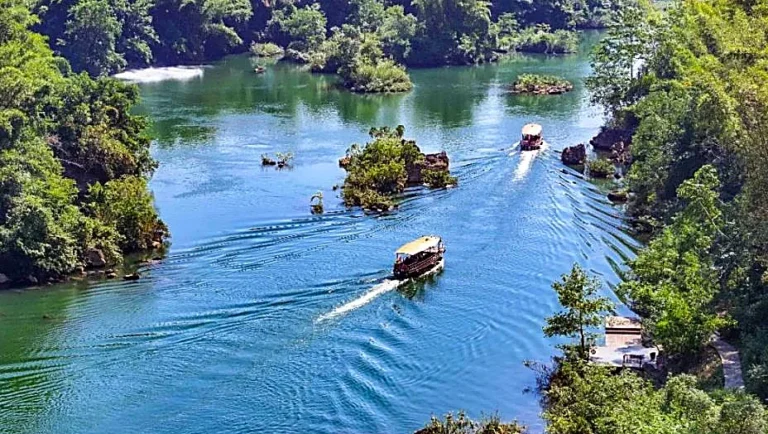
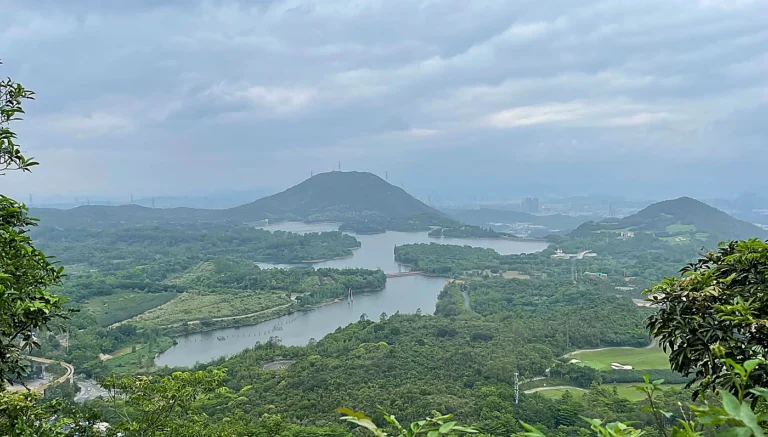
Resting quietly along a bend of the Pearl River flowing through Lingnan, Shamian Island (沙面岛) has long stood as a singular witness to the dramatic tides of southern Chinese history. In ancient Song and Ming chronicles, this natural alluvial sandbank bore poetic names such as Shicui Zhou (“Emerald-Gathering Isle”) and Zhongliusha (“Midstream Sand”). Since antiquity, it served as a vital trading anchorage where merchant vessels braving the seas from the South Seas and the West put ashore at Nanhai to present tribute and trade silk and porcelain with Guangdong merchants.
The fateful turning point that completely transformed the island’s appearance and territorial status arrived during the Qing Dynasty in the ninth year of the Xianfeng reign (1859). After British and French forces captured Guangzhou amid the flames of the Second Opium War, the weakened Qing court was forced into concessions and bore the cost of turning this sandbank into a segregated foreign concession. For military and diplomatic control, Western engineers directed large-scale excavation to cut the artificial Shaji Canal (沙基涌), permanently separating the sandbank from the northern bank of the Pearl River in central Guangzhou. From that moment on, Shamian became a man-made island encircled on all sides by rushing water. That same year (1859), sturdy old stone embankments and stone landing wharves were built along the island’s rim, establishing solid hydraulic foundations that survive today as original Qing-era stone waterworks heritage.
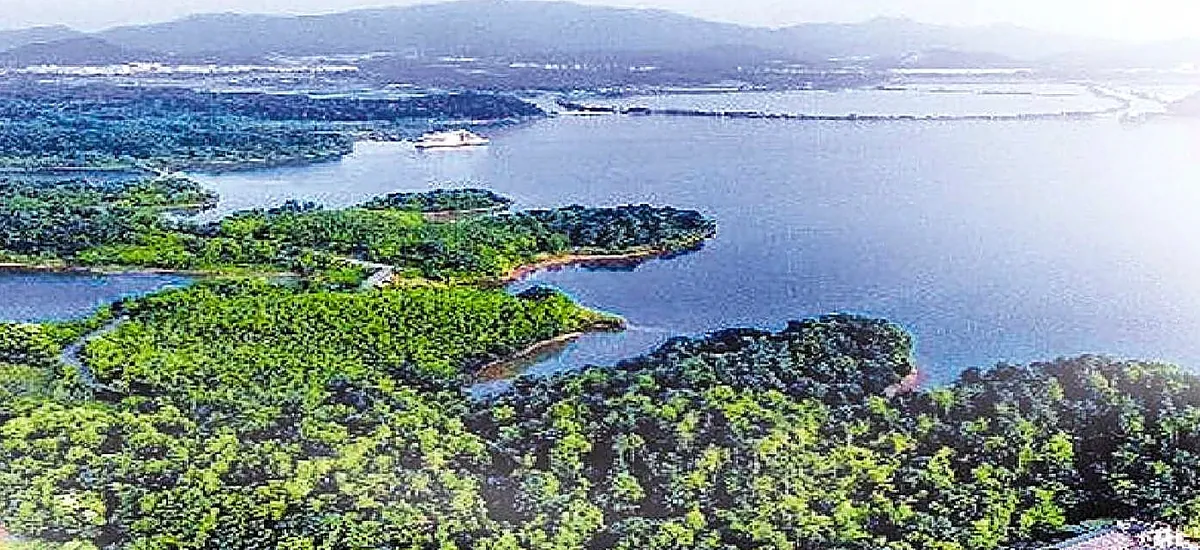
By 1861, the Qing court and the two Western powers formally signed the “Shamian Concession Agreement,” legitimizing the division of the roughly 0.3-square-kilometer island into two separate administrative zones. Under that unequal boundary settlement, the British Empire took four-fifths (4/5) of the island stretching westward, while the French Empire held the remaining one-fifth (1/5) at the far east. This demarcation shaped the island’s grid layout and street network while turning Shamian into an extraterritorial enclave beyond local law and governance—opening a wide gateway for Western capital to penetrate deep into South China’s economic lifelines.
Over subsequent decades, Shamian rapidly transformed into one of the mainland coast’s busiest diplomatic and financial nerve centers. More than ten countries—including Britain, France, the United States, Germany, and Japan—established consulates, trading houses, bill-issuing banks, customs offices, and solemn churches. Emblematic of this capital wave was the imposing building of British trading firm Butterfield & Swire (太古洋行大楼), completed in 1881 in classic colonial style. The presence of foreign institutions turned the island into a historical stage marked by grand modern architecture yet also etched with the painful memories of a semi-colonial, semi-feudal era. Its shady tree lines experienced deep political upheaval, notably the resistance movement culminating in the bloody Shaji Massacre along the canal bank, now immortalized in the name of June 23rd Road (Liu’er’san Avenue) spanning beside the bridge to the island.
Positioned at the southern gateway of Liwan District within historic Xiguan, Shamian Island appears like an elongated oval jade gem aligned east–west across roughly 0.3 square kilometers. Through traditional geography and Lingnan geomancy, this alluvial land occupies a prime feng shui coordinate right in the middle of the Pearl River. The island’s southern side looks directly out over the broad waters of White Swan Pool—where three major waterways converge as southern and western river branches join the main Pearl River channel. In local geomantic belief, this “three-river confluence” is a dragon vein gathering commercial fortune and prosperous trade opportunities. Militarily and maritimenavigationally, Shamian stood like a sturdy geomantic warship guarding the vital throat controlling sea lanes from the South China Sea deep into Guangzhou’s commercial port.
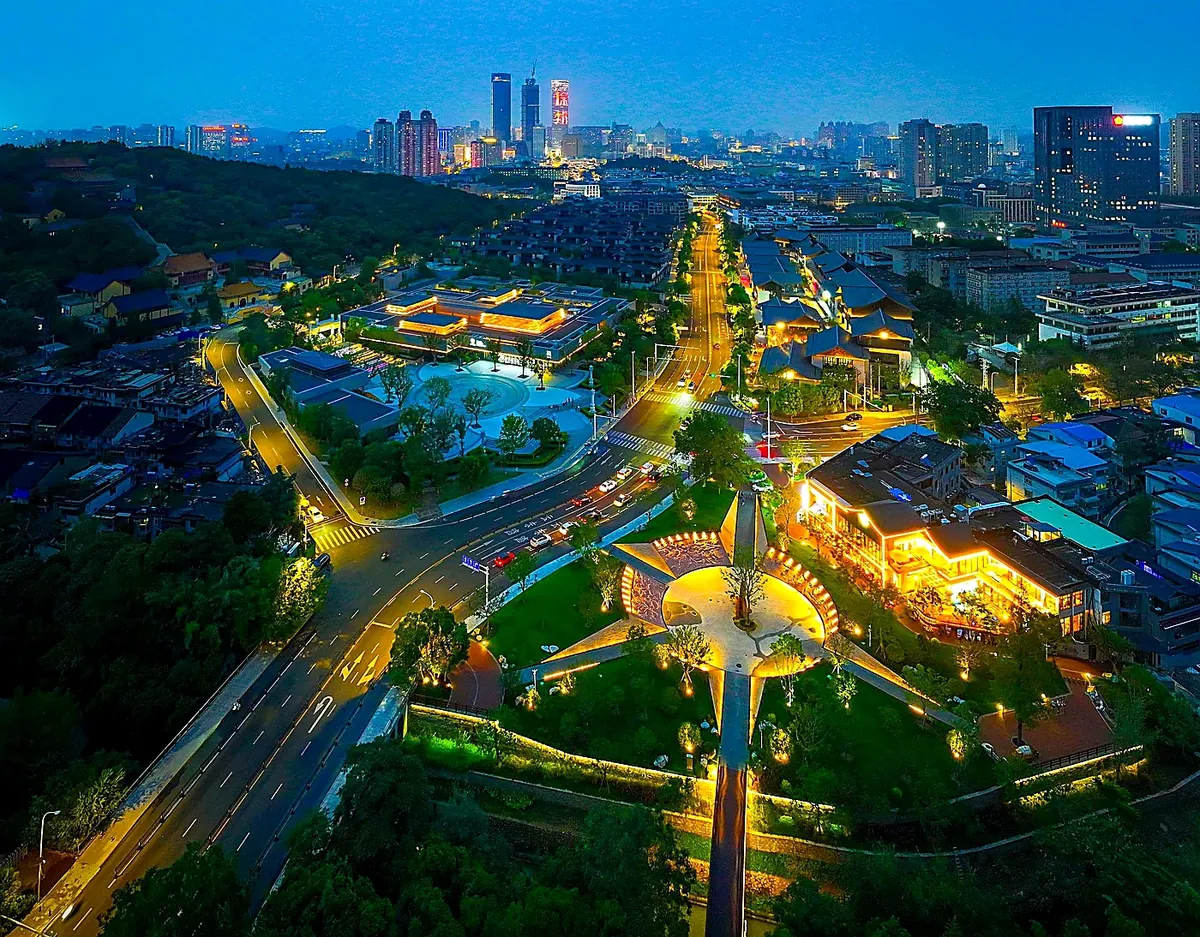
Shamian’s topography exemplifies deliberate human modification of natural scenery without severing its terrestrial flow. Originating as a riverside alluvial bar, the entire tract was turned into a standalone island by excavating Shaji Canal along its northern edge. That artificial waterway separated the precinct from bustling June 23rd Road in the inner city while completing a defensive moat. Around the perimeter, finely dressed granite embankments act as a firm seawall against erosion from spring tides and swift currents at the three-river confluence. Level ground sloping gently toward the water at a balanced grade gives Shamian effective natural drainage, keeping the precinct dry and serene in a humid subtropical coastal setting.
Matching this water-gathering site is a layered canopy of mature trees creating a cool year-round microclimate characteristic of the humid Lingnan delta. Along riverside walkways and inner lanes, centuries-old banyan trees drape aerial roots like jade curtains that soften intense southern sunlight. Intermingled with them, towering camphor trees cast cool shade and release fresh aromatic oils that purify the air and dispel mugginess. Natural landscaping on Shamian reflects cross-cultural blending as open park layouts, green lawns, and Western-style flowerbeds integrate smoothly into a traditional riverfront setting. Rustic stone embankments, lapping waves of White Swan Pool, and lush tree canopies turn the island into a rare semi-aquatic ecological ensemble where natural vitality endures through soil and root.
Stepping onto Shamian Island is crossing a clear threshold between Guangzhou’s bustling megacity pulse and a tranquil heritage enclave where architecture stands as an enduring witness to history. Shamian today preserves over one hundred intact modern Western buildings, recognized as a Major Historical and Cultural Site Protected at the National Level and representing the largest, most complete collection of Western classical architecture remaining in Lingnan’s capital city. Laid out on a crisp grid plan, its spatial network reflects nineteenth-century colonial urban design—pairing orderly avenues shaded by old trees with imposing, monumental buildings.
What gives Shamian Island extraordinary academic and aesthetic value is its rich convergence of classic European architectural movements. Rather than reflecting a single style, the island blends Neo-Baroque with dramatic curves, Neoclassicism governed by strict symmetry, Romanesque solemnity, and Neo-Gothic verticality. Most prominent of all is Eclecticism, which flourished in the late nineteenth century as Western architects freely combined classical Greek and Roman column orders with contemporary structural techniques to create facades that were dignified and ornate yet adaptable to commercial and diplomatic functions.
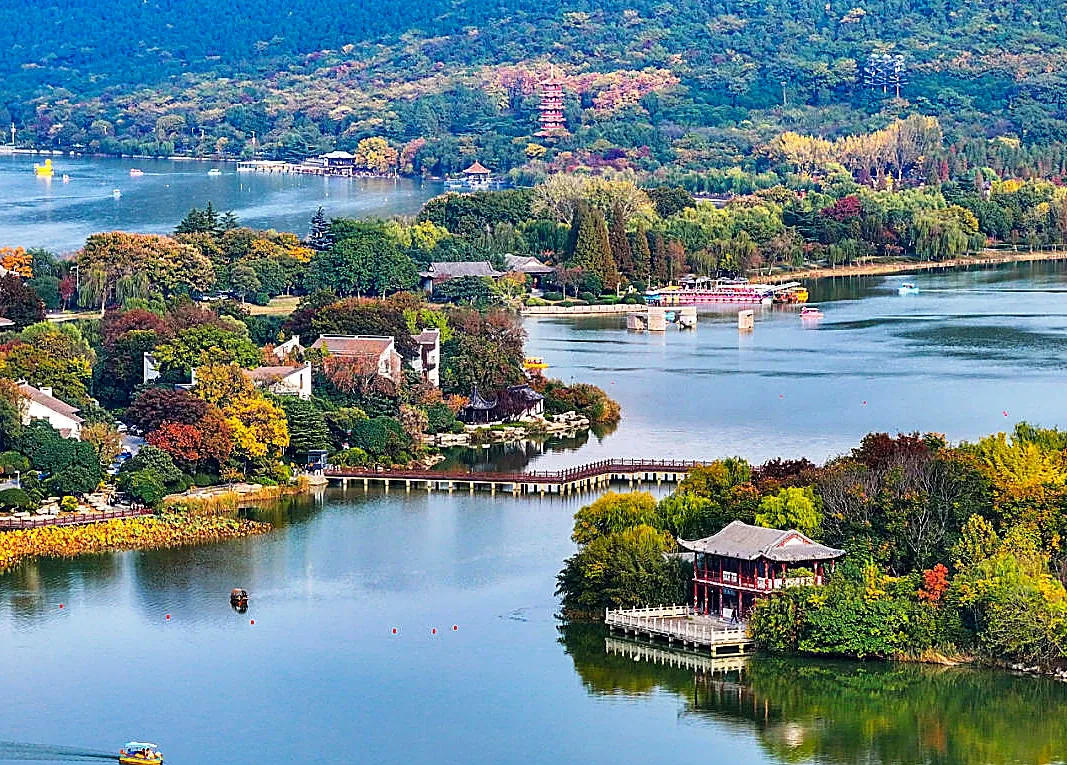
The golden era of this period is vividly visible across iconic surviving buildings. The Butterfield & Swire Building rises with imposing mass, symbolizing vital maritime trade networks along the Pearl River basin. Not far away, the former French branch of the Banque de l’Indochine projects the authority of an international financial institution with grand columns and crisp moldings. Alongside commercial landmarks, sacred spaces take distinct form in Our Lady of Lourdes Chapel—with its slender bell tower and atmospheric Neo-Gothic stained glass—balancing harmoniously against the solemn, unadorned dignity of Shamian Christian Church with its timber trusses and quiet Romanesque arches.
Examining localized building techniques on Shamian, researchers note clever microclimatic adaptation between Western architecture and Lingnan’s subtropical monsoon environment. Most buildings use solid handmade red brick or thick faux-stone plaster walls paired with graceful Mansard roofs that shed rain swiftly. Most distinctive is the extensive use of Victorian colonial arched verandas. Wide colonnades running along facades act as a thermal buffer blocking harsh sun and driving rain while catching river breezes, and pair with intricate wrought-iron balconies to weave a graceful, refined aesthetic.
In physical scale, each historic building on Shamian often occupies thousands of square meters, leaving generous setbacks with courtyards shaded by sycamore and camphor trees. Rather than freezing heritage in a static state, local authorities are pursuing adaptive reuse paired with cultural revitalization. Former banks, trading houses, and consular residences are restored down to granite walls, brass railings, and original timber floors, then repurposed as contemporary art spaces, thematic museums, and upscale cultural tea rooms—sustainably preserving the soul of a one-of-a-kind open-air architectural museum.
As twilight settles over the river junction where the Pearl River meets the deep waters of White Swan Pool, Shamian Island begins shedding its quiet daytime demeanor to don an enchanting nocturnal look. Unlike noisy mechanical laser shows atop skyscrapers in newer districts, lighting on this historic concession island honors heritage authenticity. Warm golden lights illuminate along the old granite embankment framing the White Swan Pool walkway. Gentle golden beams trace graceful moldings, colonnades with Doric and Ionic columns, and pointed steeples of nineteenth-century Western buildings, bringing out mottled brick and stone patinated by time.
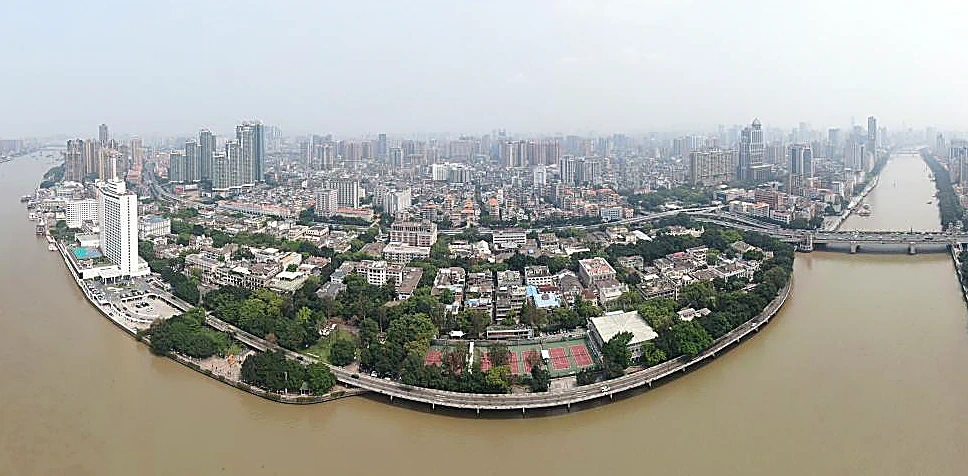
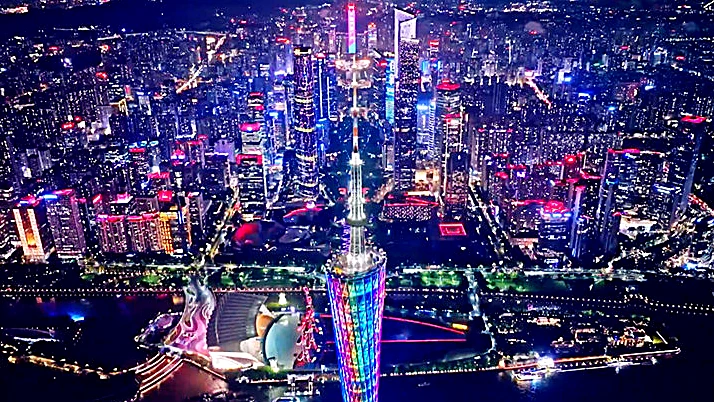
The riverfront at Shamian feels like an expansive, open-ended stage opening a magical dialogue of space and time across both banks of the Pearl River. Right before walkers, a quiet Shamian reflects Renaissance and Neoclassical villas across rippling water, while the opposite bank displays Guangzhou’s bright modern skyline with colorful neon signs shimmering in contemporary hues. Historic White Swan Pool—once a bustling trade throat for the Qing-era Thirteen Hongs—becomes a vast mirror gathering city lights. Breezes off the southern river stir lanterns aboard slow-moving night cruise boats, weaving sparkling trails between nostalgic gold and modern shimmer.
Nightlife on Shamian Island does not follow the rush of bustling street night markets or intense commercial malls. Instead, it preserves a refined, secluded, and unhurried rhythm rare inside a major metropolis. Beneath canopies of century-old banyans arching over stone-paved avenues, former colonial villas have been transformed into artistic cafés, classic European-style wine bars, and romantic riverfront viewpoints. The scent of freshly ground coffee and soft classic jazz drifting through olive-green teak shutters—mingling with briny mist from the Pearl River—gives strollers the feeling of wandering a corner along Paris’s Seine or a calm Mediterranean quay.
Strolling along the riverside promenade late at night, visitors sense Lingnan’s dual spirit of old-capital poise and everyday warmth. Soft laughter from local evening walkers blends with oars or distant ship horns out in the channel. Shamian at night is a peaceful interlude—a poetic natural light show woven from century-old architecture, rising river breezes, and storied White Swan Pool—leaving a lasting impression on anyone seeking understated elegance in Guangzhou.
Far more than an open-air architectural museum preserving colonial traces, Shamian Island in Cantonese everyday life is a singular culinary haven embodying the philosophy of “Eat in Guangzhou, savor its finest flavors in Xiguan.” Sitting right beside historic Xiguan—cradle of old Lingnan merchant culture—Shamian also served as a first gateway for Western culinary influences entering southern China, crystallizing a rich blend of classical Cantonese fare, Western touches, and generational street snacks.
Local dining often begins with “tan zao cha” (morning tea), a habit woven into city life for centuries. Set inside a historic Western-style villa beneath old banyan trees, celebrated Tao Ran Xuan stands out as an exemplar of refined dim sum. Beneath high Neoclassical arches, diners explore exquisite dim sum such as crystal-clear shrimp dumplings (shuijing xiajiao) with delicate pleats wrapping sweet, crisp ocean shrimp; or Black Gold Molten Custard Buns (heijin liushabao) with jet-black bamboo-charcoal wrappers and gold accents that release rich, molten salted-egg-yolk filling when split open. Alongside them, crimson-hued red-rice-roll shrimp crepes with a crisp fried layer, steamed chicken feet in fermented black-bean sauce, and tender braised honeycomb tripe anchor a classic Old Canton morning.
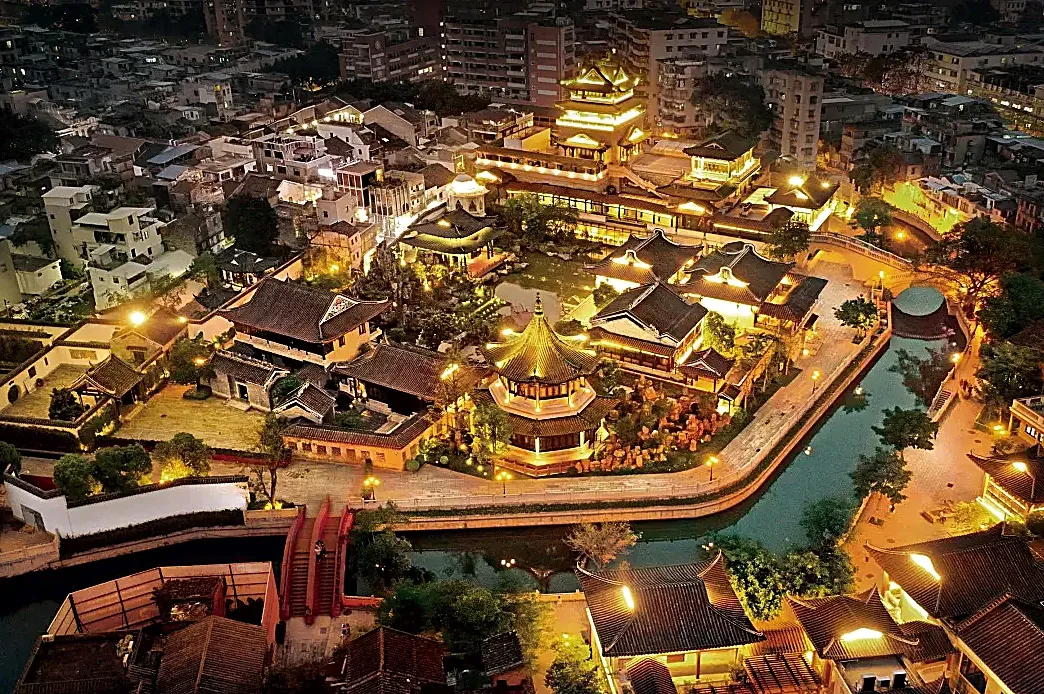
Leaving tranquil teahouses behind, the flavor journey rises to classic Cantonese heights at Qiao Mei Shi Jia’s Shamian flagship. Renowned across Guangdong and Hong Kong, this culinary landmark shines with secret-recipe crispy-skin squab—young pigeon roasted with precise flame control for a glass-crisp skin over juicy, herb-fragrant meat. Beside it sits glossy amber-skinned roast goose with rich goose fat pairing with sweet-tart plum sauce, showcasing generational Lingnan roasting mastery.
Shamian’s food scene also connects organically to Xiguan’s canal network through hearty riverfront classics. Xiguan Liwan boat congee—originating from punted boats selling congee on Pearl River waters—features silky rice porridge topped with shredded dried squid, puffed pork skin, quick-poached snakehead fish slices, and crunchy roasted peanuts, finished with crispy youtiao dough sticks. Near alleys leading to piers, longtime shops keep pots of fresh-cooked congee bubbling alongside steamed rice rolls with pork intestine and beef brisket drenched in rich savory sauce.
This green island’s culinary map rounds out with a romantic Western touch at Huoche Tou French Western Restaurant, where a vintage colonial-era railcar setting brings Parisian charm into southern China. From refined morning tea and classic roast meats to continental red wine, Shamian preserves Cantonese culinary soul: proud of local terroir while open to global craft.
Planned as an open-air architectural museum in a bustling city, Shamian Island remains open free of charge twenty-four hours a day for unhurried strolling. Even so, individual heritage venues follow distinct schedules. Most art galleries, historical exhibitions, and repurposed former consulates open from roughly 9:00 AM to 6:00 PM, while Neoclassical cafés, British-style afternoon tea rooms, and riverside Cantonese restaurants stay lit late into the night. The finest hours to experience the island’s quiet charm are early morning—when first sunlight filters through century-old banyans onto moss-touched paving—or late dusk when Victorian streetlamps glow and warm Ionic and Corinthian columns.
Guangzhou’s well-developed public transit makes reaching the island easy. The fastest, most economical option is the subway: take Metro Line 1 or Line 6 to Huangsha Station, exit via Exit F, and stroll across the pedestrian footbridge over Shaji Canal in about five minutes onto peaceful Shamian. For travelers drawn to nostalgic romance, the Pearl River offers a poetic water-bus approach. Arriving via Xidi Pier or Huangsha Pier lets visitors view historic buildings reflected on shimmering water, echoing early Western merchants and envoys approaching the concession by boat.
Crossing the bridges from bustling mainland streets, urban noise seems to soften into ecological calm. Because historic lanes and rare trees are strictly preserved, motorized vehicle access on the island is tightly restricted. Parking is limited to a few underground and centralized lots with relatively high rates, making green exploration on foot or by bicycle along tree-lined roads the top choice. A practical tip for visitors is to decline offers from makeshift electric carts or overpriced sightseeing rides near bridge approaches on weekends or holidays—strolling on your own lets you savor wrought-iron balcony details or hear bells from Our Lady of Lourdes Chapel at your own pace.
Exploring Shamian becomes even richer when linked with concentrated Lingnan cultural heritage in neighboring Xiguan. After soaking in Western-style charm beside the Pearl River, walk a few hundred meters to Yongqing Fang for graceful gray-tiled homes, visit Cantonese Opera Art Museum beside calm water, and admire masterly woodcarving and reliefs at Chen Clan Ancestral Hall. This seamless East–West cultural sequence is a highlight featured on a 4-Day 3-Night Guangzhou–Shenzhen Tour, offering deeper insight into a city that honors its roots while embracing global exchange.