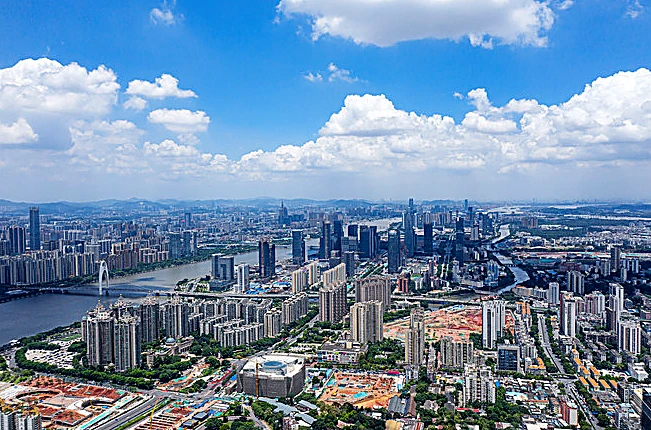
Viewed from the Pearl River, which has deposited fertile silt across the Lingnan plain for millennia, the city of Guangzhou harbors deep layers of history and dynamic transformation. Reaching back to the era when Qin Shi Huang pacified the Baiyue regions, this land was known as Panyu, serving as the capital of the Nanyue Kingdom under Zhao Tuo before emerging as one of the originating seaports of the illustrious Maritime Silk Road during the Tang, Song, Ming, and Qing dynasties. For centuries, this “City of Flowers” and “City of Rams” acted as China’s sole maritime trading gateway with the Western world through the celebrated Thirteen Factories system. Yet as Guangzhou stepped onto the threshold of global integration, its moss-draped heritage called for a bold contemporary voice to affirm its stature as a rapidly evolving international metropolis.
The historic turning point arrived in the first decade of the twenty-first century when Guangzhou won the bid to host the 16th Asian Games (ASIAD 16). Far more than a continental sporting festival, the event became a strategic catalyst for municipal leaders to reimagine the city’s urban silhouette. A visionary master plan was approved: Guangzhou needed an architectural icon rising on the southern bank of the Pearl River to counterbalance the new Tianhe central axis and Flower City Square. In September 2004, an international architectural design competition was officially launched, attracting the world’s brightest architectural minds to redefine the Lingnan skyline.
Amid a field of muscular, angular, rigid proposals mimicking conventional masculine expressions of skyscraper power, a visionary entry codenamed “Supermodel”—conceived by architects Mark Hemel and Barbara Kuit of Dutch firm Information Based Architecture (IBA) in collaboration with legendary British structural engineers Arup—sparked a design revolution. Inspired by the graceful, slender poise of a woman’s waist, the design won over the discerning jury. Rather than erecting a heavy monolithic shaft, Mark Hemel proposed an open, twisting hyperboloid lattice structure that transforms the tower into a flowing silk ribbon soaring skyward—celebrating Eastern grace realized through cutting-edge Western mathematics and structural engineering.
On November 25, 2005, the official groundbreaking ceremony for Canton Tower took place in Haizhu District, inaugurating a demanding nearly five-year construction odyssey. Thousands of engineers and builders tackled unprecedented technical challenges to bend massive steel tubes into its signature “slender waist,” narrowing to a diameter of just 30 meters at its tightest point. In September 2009, the structure topped out to international acclaim at 600 meters, claiming the title of the world’s tallest television tower at the time. On September 30, 2010, Canton Tower officially opened to the public just in time to illuminate the opening ceremonies of the 16th Asian Games—evolving beyond a broadcast spire into a beacon of a new era carrying Guangzhou’s millennial maritime spirit into the modern world.
Standing majestically at the crossroads between a millennial past and a visionary future, Canton Tower commands the strategic intersection of Xinqiao Road and Yiyuan Road in Haizhu District, Guangdong Province. Geomancers and Lingnan landscape scholars have long regarded this site as a prime focal point along the southern bank of the Pearl River. Before emptying into the sea, the mother river curves gracefully through the heart of the city, forming a wealth-gathering waterway that nourishes the fertile Pearl River Delta plain. Geomorphologically, the tower rises like a giant calligraphy brush anchored in auspicious earth, drawing continuous vital energy from the broad river in a contemporary reinterpretation of the classical “backed by mountains, facing water” philosophy.
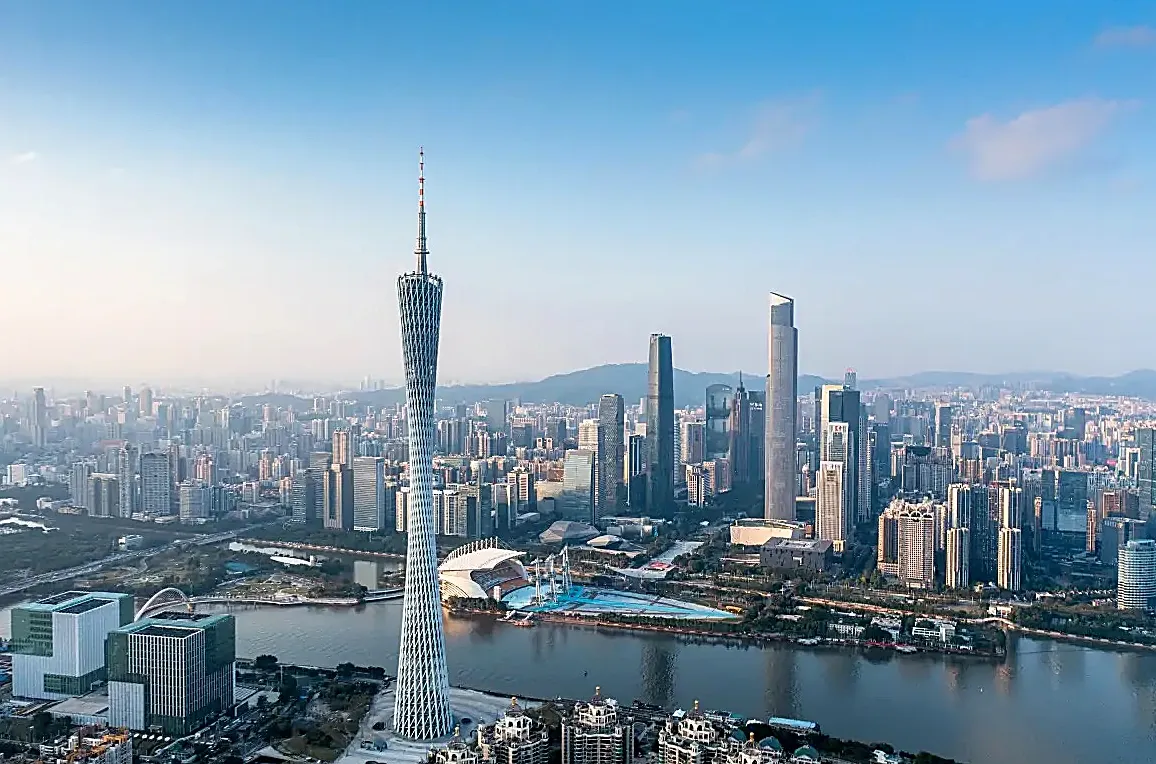
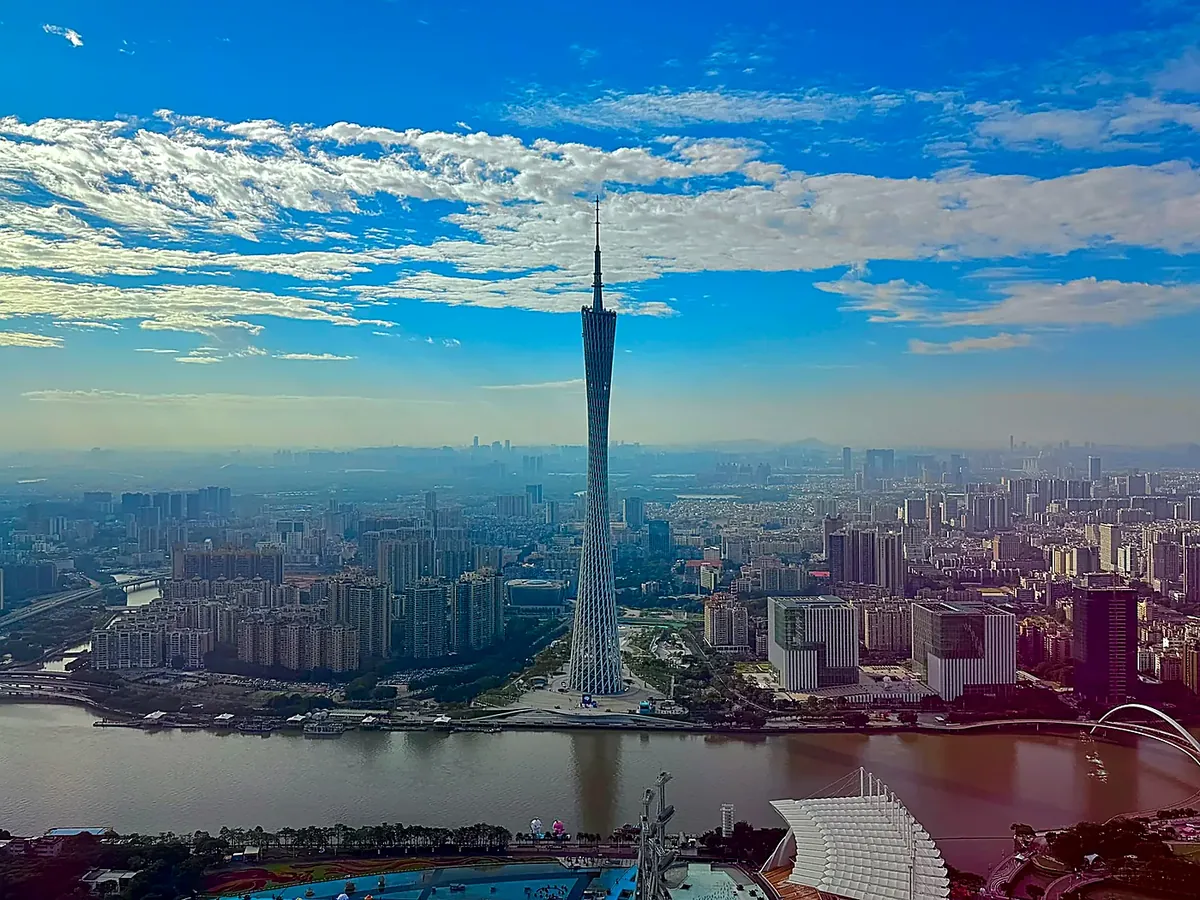
Within Guangzhou’s century-defining master plan, the tower anchors the city’s New Central Axis—a modern ceremonial corridor extending cleanly across multiple urban zones. Positioned on the south bank, it stands in direct dialogue with the thriving Zhujiang New Town financial district on the north bank. Separating the two shores lies Haixinsha Island, a natural river islet poised in midstream like a flagship vessel ready to unfurl its sails toward the South China Sea—the very venue that hosted the dazzling opening ceremony of the 16th Asian Games. Together, the calm waters of the Pearl River, the emerald greenery of Haixinsha Ecological Park, and the twisting silhouette of the tower compose a three-tiered mountain-and-water harmony at once stately and vibrant.
The site also embodies a subtle interplay of natural and human elements grounded in Yin-Yang harmony. The winding Pearl River represents fluid, nourishing Yin water energy embracing Haizhu District and evoking centuries of Maritime Silk Road prosperity. Rising above it, the soaring steel tower embodies resolute Yang metal energy reaching skyward, creating an auspicious cycle where Metal generates Water. Natural cooling breezes sweeping inland from the Lingdingyang estuary along the river meet the tower first and circulate smoothly across the southern bank—moderating the microclimate of a district once renowned for lush riverside orchards.
Scenery surrounding the tower shifts dramatically throughout the day in harmony with the Haizhu peninsula. At dawn, pale river mist rises gently from the water, wrapping the base of the tower in an ethereal veil amid the city core. At sunset, crimson twilight paints the Pearl River and reflects across tens of thousands of tempered glass panels, visually uniting southern earth with infinite sky—making this landmark an enduring symbol of prosperity in the heart of Lingnan.
Rising proudly beside the rolling Pearl River, Canton Tower (广州塔) stands as a monument of steel and light that has permanently redefined the skyline of Guangdong’s capital. Reaching a total height of 600 meters—comprising a 450-meter main tower body topped by a 150-meter telecommunications spire—and encompassing approximately 114,054 square meters of gross floor area, the tower far transcends a conventional broadcast mast or observation deck. It is a contemporary architectural marvel uniting analytical geometry, ultra-precision steel fabrication, and soaring spatial aesthetics.
The defining visual signature of the tower is its graceful “slender waist”—affectionately nicknamed Xiao Man Yao (小蛮腰) by locals in poetic reference to a classic Tang-dynasty verse celebrating a maiden’s lithe figure. Geometrically, this masterpiece is generated by an asymmetrical rotating hyperboloid structure formed by twisting two elliptical planes—one at the base and one at the top—in opposite directions. As straight structural columns spiral upward along the vertical axis, they pinch inward to create a captivating narrow waist at 180 meters above ground before flaring gracefully outward again toward the crown, dissolving the visual weight of tens of thousands of tons of steel into a twisting ribbon suspended in the southern sky.
Beneath its delicate, ribbon-like elegance lies a tour de force of structural engineering designed to withstand severe tropical typhoons sweeping inland from the South China Sea. Primary structural support relies on an exterior steel diagrid lattice assembled with millimeter precision at every node. Massive inclined steel columns, rings, and diagonal braces interlock into a rigid open mesh encircling an interior reinforced-concrete core. This open, aerodynamically optimized geometry allows fierce typhoon winds to pass smoothly through the lattice without triggering dangerous vortex-induced resonance, dramatically reducing wind loads and channeling bending stresses safely down into deep subterranean foundations.
Across more than one hundred thousand square meters of floor area unfolds an intricate multi-level vertical program organized into distinct zones by elevation. The expansive podium and underground concourses house an urban heritage museum, international conference facilities, and visitor amenities. Ascending higher, the twisting frame opens up to showcase horizontal sky-tram sightseeing pods, fine-dining revolving restaurants with panoramic vistas, and an open-air rooftop observation deck—creating a continuous vertical journey uniting cutting-edge engineering with Guangzhou’s storied past.
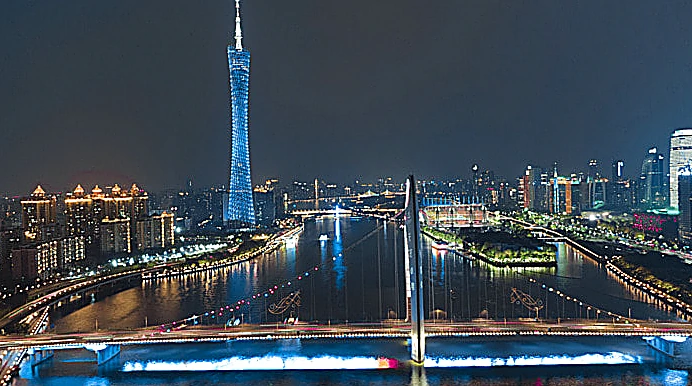
As sunset fades behind the distant Baiyun Hills and night settles over the Pearl River Delta, Canton Tower sheds the cool majesty of bare steel to don a dazzling gown of digital light. Beloved as Xiao Man Yao, the tower displays its graceful curves through one of the world’s most sophisticated architectural LED lighting systems. Hundreds of thousands of individually programmable multi-color LED nodes mounted along the exterior hyperboloid diagrid transform the 600-meter spire into a giant vertical light canvas—shifting smoothly from serene aquamarine to brilliant crimson and shimmering across the Pearl River below.
The crowning nocturnal highlight is the 488-meter Outdoor Observation Deck, certified by Guinness World Records as the world’s highest open-air observation platform. Stepping out into the brisk high-altitude breeze feels like standing on the threshold between reality and dream, with Guangdong’s futuristic capital glittering below like a terrestrial Milky Way. From this vantage point, the Zhujiang New Town axis unfolds with architectural icons including Zaha Hadid’s Guangzhou Opera House and the soaring IFC West Tower framing southern China’s most dazzling skyline. Extending the magic, revolving sky restaurants on Floors 105 and 106 offer gourmet dining among the clouds—rotating smoothly 360 degrees every ninety minutes so diners savor continuously shifting midnight panoramas alongside refined French cuisine and Cantonese delicacies.
Returning from the clouds to river level, futuristic urban energy continues along Haixin Bridge—the world’s longest curved-beam cable-stayed pedestrian bridge spanning the Pearl River to link the tower plaza directly with Haixinsha Island and Flower City Square. Inspired by the graceful curves of a traditional Lingnan guqin zither and dragon-boat oars, Haixin Bridge serves not merely as a river crossing but as the most romantic open-air viewing gallery for admiring Canton Tower up close. After dark, strolling along its teak-wood deck leads past interactive light installations and glowing river cruise boats gliding across the water, immersing visitors in the vibrant contemporary culture of millennial Guangzhou.
An old Chinese saying famously declares, “Be born in Suzhou or Hangzhou, but eat in Guangzhou”—paying ultimate tribute to Lingnan’s celebrated Cantonese culinary artistry. Rising on the southern bank of the Pearl River in Haizhu District, Canton Tower serves not only as an icon of modern architecture, but also as an anchor placing travelers right inside one of the world’s greatest gastronomic capitals. Beneath the soaring steel lattice, bustling city streets give way to fragrant tea salons and billowing steam from hand-woven bamboo baskets, where every dish embodies the Cantonese philosophy of respecting natural flavors through meticulous technique.
An authentic culinary day begins with traditional morning tea service, locally known as Yum Cha. In Cantonese culture, morning tea and dim sum represent far more than breakfast—they form a cherished social ritual captured in the tradition of “one pot, two pieces,” pairing fine Liu Bao or Pu-erh tea with two exquisite dim sum delicacies. Across time-honored tea houses in Haizhu District and historic Liwan—including century-old institutions such as Lianxianglou (founded in 1889 during the Qing dynasty) and famed garden restaurant Panxi—master chefs uphold classical craft. Crystal shrimp dumplings (har gow) demand translucent wheat-starch wrappers rolled paper-thin to reveal rosy prawns inside without tearing, pleated neatly with eleven to thirteen uniform folds. Beside them sit golden crab-roe siu mai blending hand-minced pork, diced fatback, and shiitake mushrooms crowned with rich fresh crab roe bursting with oceanic sweetness.
Moving beyond delicate dim sum, the culinary map around the tower leads to the pinnacle of Cantonese roasting: legendary crisp-skinned roast goose. Plump Qingyuan geese are stuffed with a fragrant blend of more than twenty herbs, Shaoxing wine, and maltose, air-dried for hours, and roasted over lychee-wood charcoal in brick ovens. The result is gleaming amber skin as crisp as fine porcelain encasing succulent, richly flavored meat—paired with tart plum sauce that balances richness to perfection.
The Pearl River’s maritime heritage shines equally brightly in classic Boat Congee (Tingzai Congee). Originating among the Tanka boat-dwelling communities of old Lizhiwan, this velvety rice porridge is simmered until silky smooth and loaded with fresh grass carp fillets, crisp pickled pork skin, shredded dried squid, roasted salted peanuts, and sliced golden fried dough sticks—each steaming spoonful celebrating pure, comforting freshness.
Lingnan’s culinary tour concludes with soothing traditional desserts, led by Ginger Milk Curd originating in ancient Shawan Village. High-fat water buffalo milk heated to a precise 70–80°C is poured briskly into fresh, fiery aged ginger juice; within three minutes, natural ginger enzymes coagulate the milk into a warm, pudding-like custard that comforts from the inside out. Paired with fragrant stone-ground black sesame soup, Guangzhou cuisine at the foot of Canton Tower nourishes both palate and soul with a thousand years of southern heritage.
To capture the magical transition of the Pearl River skyline from daylight to dusk, the golden window to begin your Canton Tower visit is between 4:30 PM and 5:00 PM. At this enchanting hour, setting sunbeams wash across the southern bank, gilding the twisting steel lattice of Xiao Man Yao in warm amber and orange before nightfall. From upper observation decks, visitors witness the dramatic shift from serene sunset to glittering metropolis—and at precisely 7:00 PM each evening, the entire spire ignites in a synchronized LED and laser light symphony reflected across the river below.
Because the tower rises hundreds of meters into open sky, microclimate conditions on rooftop observation decks differ noticeably from ground level. Open-air upper levels are typically 2°C to 4°C cooler than the base plaza, accompanied by brisk winds sweeping inland from the Lingding estuary. Packing a light windbreaker or scarf ensures comfort throughout your visit, while keeping smartphones and cameras secured with neck or wrist straps prevents accidental drops in gusty conditions near glass parapets.
Public transit access to Canton Tower is remarkably modern and convenient. The easiest approach is via the Guangzhou Metro network, connecting smoothly to Line 8 or the APM Line to alight directly at Canton Tower Station (广州塔站) right beneath the base plaza, where clear bilingual Chinese–English signage guides visitors up to the ticketing concourse. To save time and avoid peak holiday queues, booking e-tickets in advance through official WeChat mini-programs or a reputable travel operator—and having your digital QR pass ready for automated turnstiles—is highly recommended.
As a major national landmark, Canton Tower enforces strict airport-style security screening at all entrances. International visitors must carry their original valid passport for identity verification at the gate. All bags pass through X-ray scanners, and flammable items, lighters, metal blades, large containers of liquids, and drones are strictly prohibited inside the tower. Following security guidelines ensures smooth entry and a safe, pleasant visit alongside tens of thousands of daily guests.
When planning your visit, seasoned travelers stay alert against cut-rate street-corner tour offers that slash sightseeing time to herd guests into mandatory shopping stops for overpriced jade, silk, or herbal products. Choosing a transparent, strictly “No Shopping” itinerary guarantees unhurried time to soak in Lingnan culture, savor authentic Cantonese cuisine, and admire sweeping skyline views from the top of the city. For a seamless, stress-free journey covering visa arrangements, upscale accommodations, and curated sightseeing, consider booking an all-inclusive Guangzhou tour package designed to maximize every moment.