


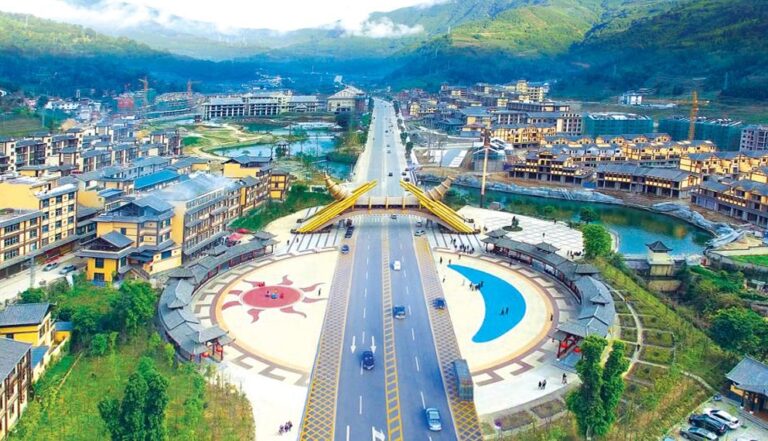
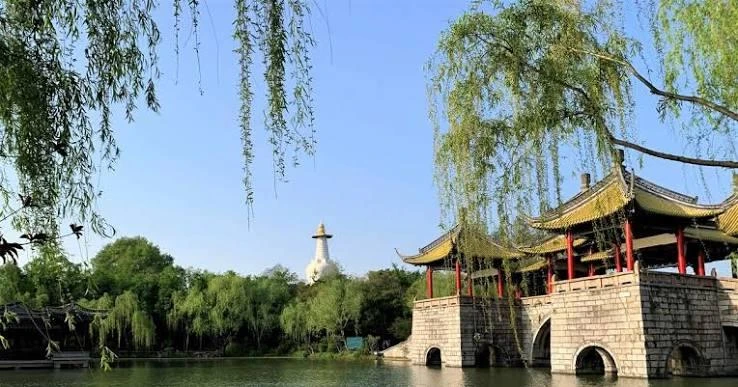
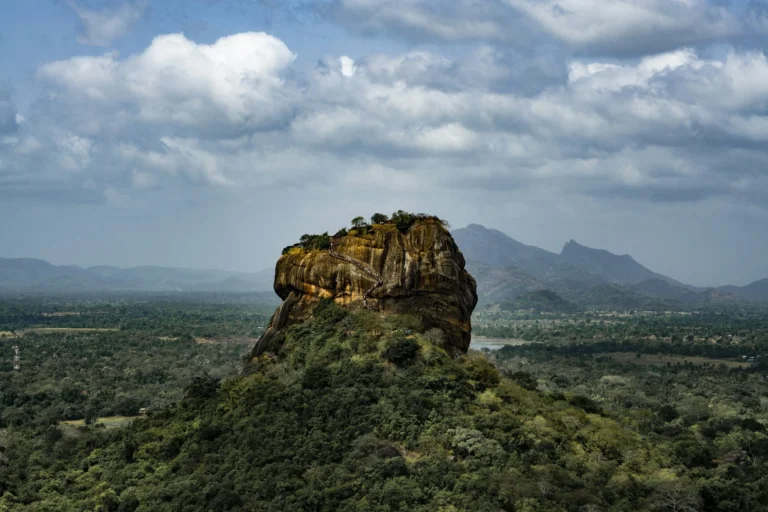
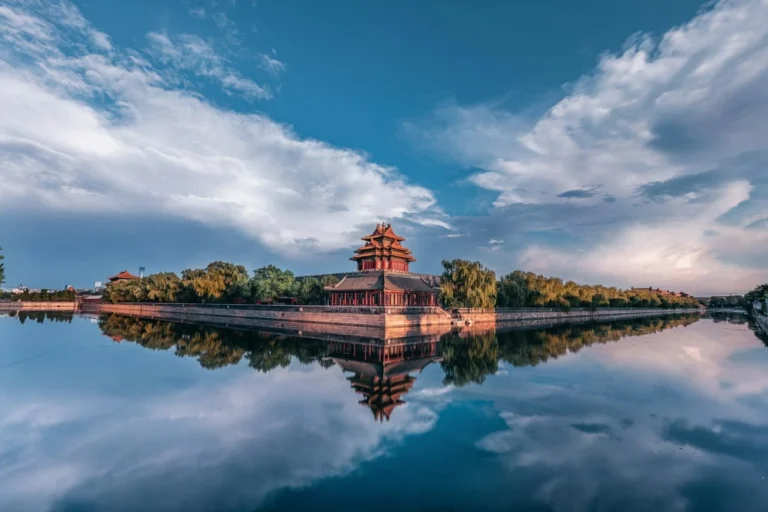
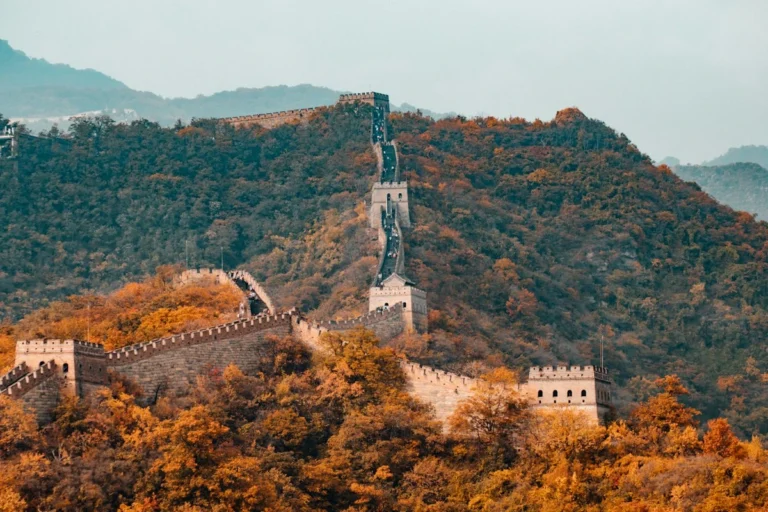


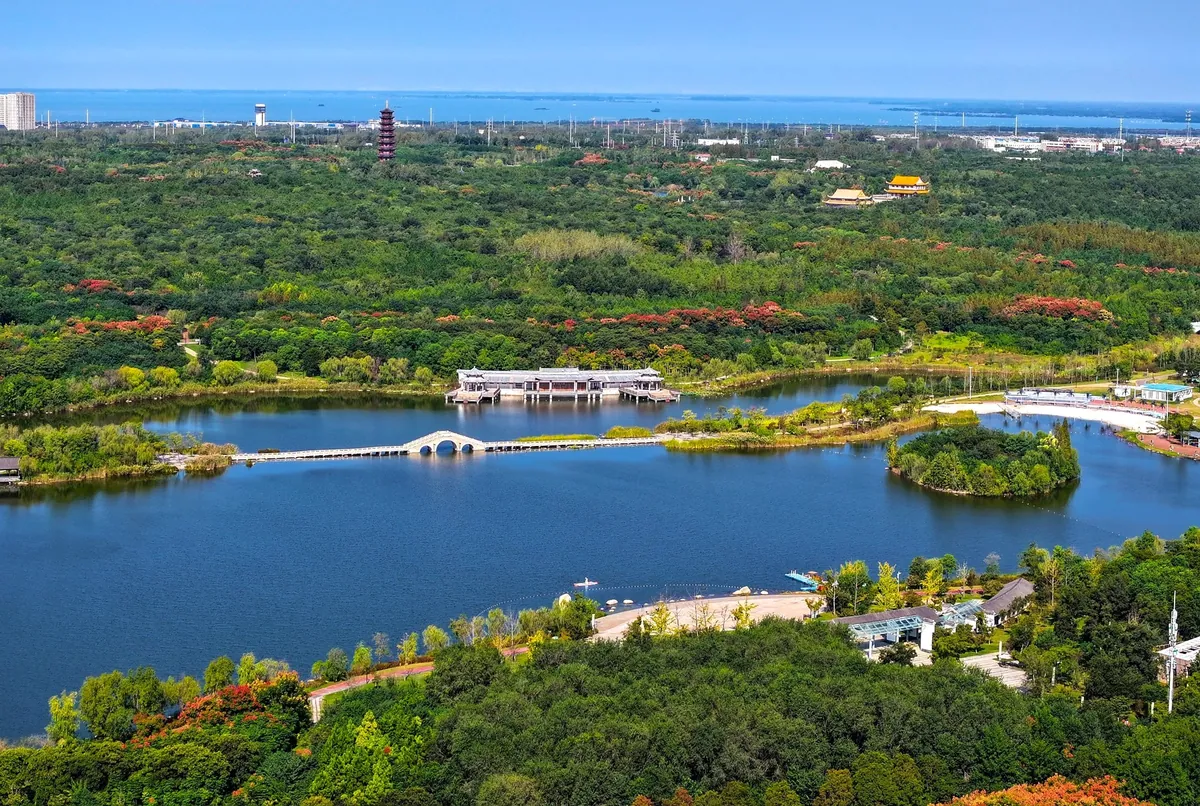
The golden imprints of these prosperous imperial eras seem to remain perfectly preserved within the contemporary Jiangnan landscape. Viewed from above, the entire scenic area unfolds like an expansive landscape painting, with tranquil lakes reflecting a jade-green hue, gracefully connected by elegant arched stone bridges spanning the water. Hidden among lush green foliage and vibrant orange-red leaves is a solemn complex of traditional architecture, highlighted by a proud, multi-storied pagoda and rows of palace halls with yellow glazed tiles shimmering in the daylight. In the distance, the vast lake surface merges with the expansive horizon, creating a sublime harmony between imperial solemnity and the silent breath of nature.
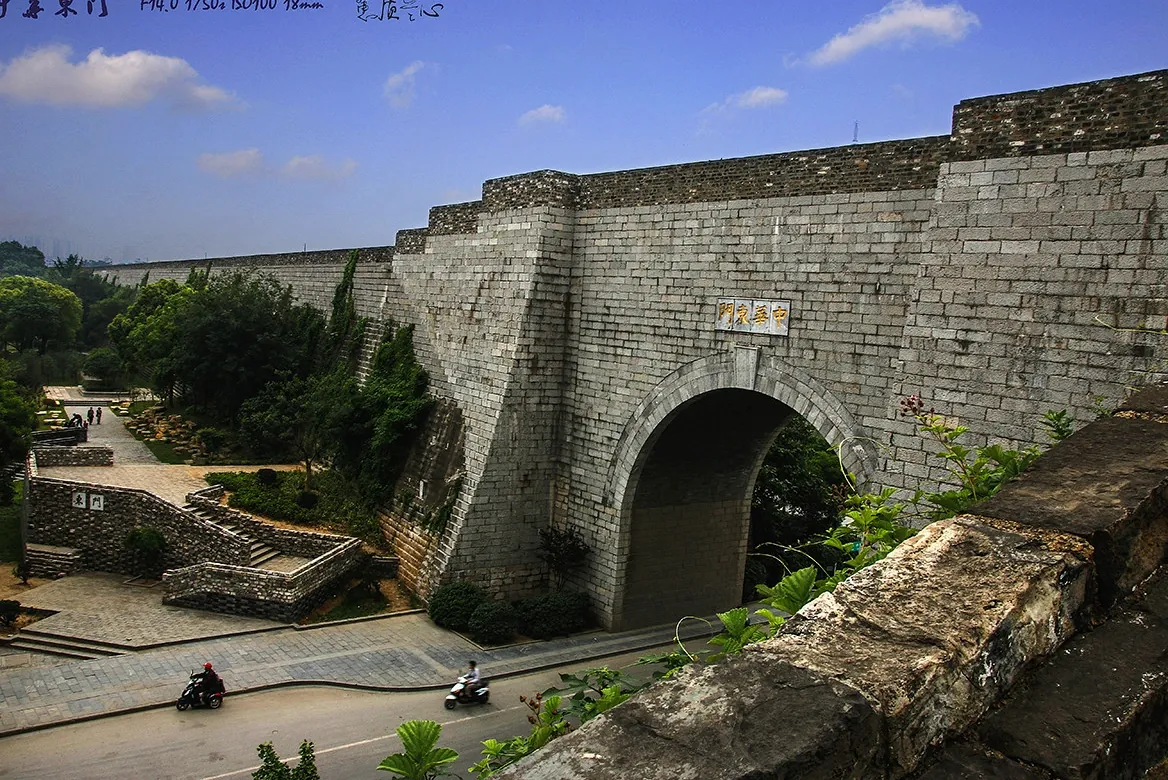
Entering the 14th century, in 1368 (the first year of the Hongwu era), Ming Taizu Zhu Yuanzhang ascended the throne, established the Ming Dynasty, chose Yingtian Prefecture as the national capital, and constructed the massive Ming City Wall – one of the most formidable defensive fortifications to protect the imperial seat. Although Ming Chengzu Zhu Di moved the capital to Beijing in 1421, Nanjing retained its status as the “Secondary Capital” (Liudu) with a complete Six Ministries apparatus guarding the South. Through the upheavals of the modern era, Jiangsu became a stage for many pivotal turning points: the Treaty of Nanjing signed in 1842 aboard the HMS Cornwallis of the British Royal Navy; the 1853–1864 period when Hong Xiuquan chose this site to establish Tianjing, the capital of the Taiping Heavenly Kingdom; and the historic moment in 1912 when Sun Yat-sen was sworn in as the Provisional President. During the Republican era’s “Nanjing Decade” (1927–1937), the modern Capital Plan transformed this land into a model center, before it endured the tragic massacre of December 13, 1937, carving into history a poignant monument to the resilient spirit of this legendary land.
Located entirely in the fertile lower reaches of the Yangtze River and holding a central position in the Yangtze Delta, the terrain of Jiangsu has been praised since ancient times as the most auspicious land in the Jiangnan region. The convergence of the surging great river and the fertile delta lakes creates a topography that is both expansive and secluded in terms of Feng Shui. When admiring the rugged mountains and rivers of ancient Jinling (now Nanjing), Prime Minister Zhuge Liang once exclaimed in timeless praise: “Zhongshan coils like a dragon, and the Stone Terrace crouches like a tiger” (钟山龙蟠,石头虎踞) – likening the winding Zhongshan Mountain to a coiled dragon, and the towering Stone Terrace range by the water to a majestic crouching tiger. This “coiled dragon and crouching tiger” terrain provided the land with a sturdy natural screen, gathering the imperial energy of heaven and earth, and becoming the foundation for the capitals of countless illustrious dynasties in Chinese history.
A prime example of the art of Feng Shui interwoven with the landscape of Jiangsu is the Ming Xiaoling Mausoleum of Ming Taizu Zhu Yuanzhang. Benefiting from the “front-cushioned, back-supported” position and the exemplary philosophy of gathering wind and energy, the mausoleum rests firmly against the majestic Purple Mountain (Zijin Shan), facing directly toward the gentle, winding Qinhuai River to receive an abundant flow of water energy. The sacrificial space and royal tombs do not strictly adhere to a rigid axis but wind rhythmically along the gentle hills, borrowing pine forests, streams, and granite veins as a lasting protective layer. The network of Yangtze River distributaries and canals continues to serve as a formidable water moat, both regulating the flow to irrigate the imperial landscape and providing peaceful protection for this eternal resting place.
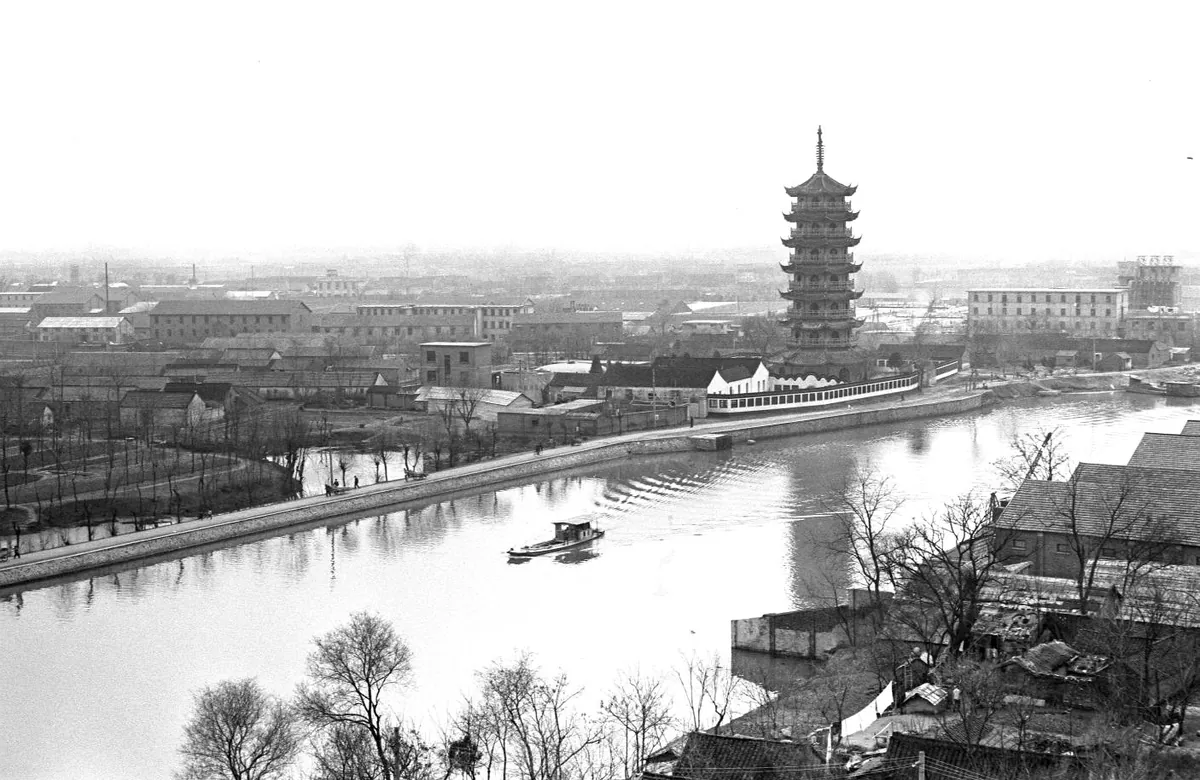
Beyond its natural terrain, the Grand Canal (Beijing-Hangzhou) has also profoundly restructured the feng shui and landscape of the entire Jiangsu region. Stretching 690 km across the province, this magnificent ancient waterway has connected a string of renowned urban gems, including Huai’an, Yangzhou, Zhenjiang, Changzhou, Wuxi, and Suzhou. The connection between the Huai River basin and the vast Yangtze River not only secured the vital transport artery that sustained the northern capitals but also transformed the entire delta into a dense matrix of waterways. These ceaselessly flowing water veins have accumulated vital energy, turning alluvial plains into bustling cities where garden architecture and commercial life flourish from the life-giving waters.
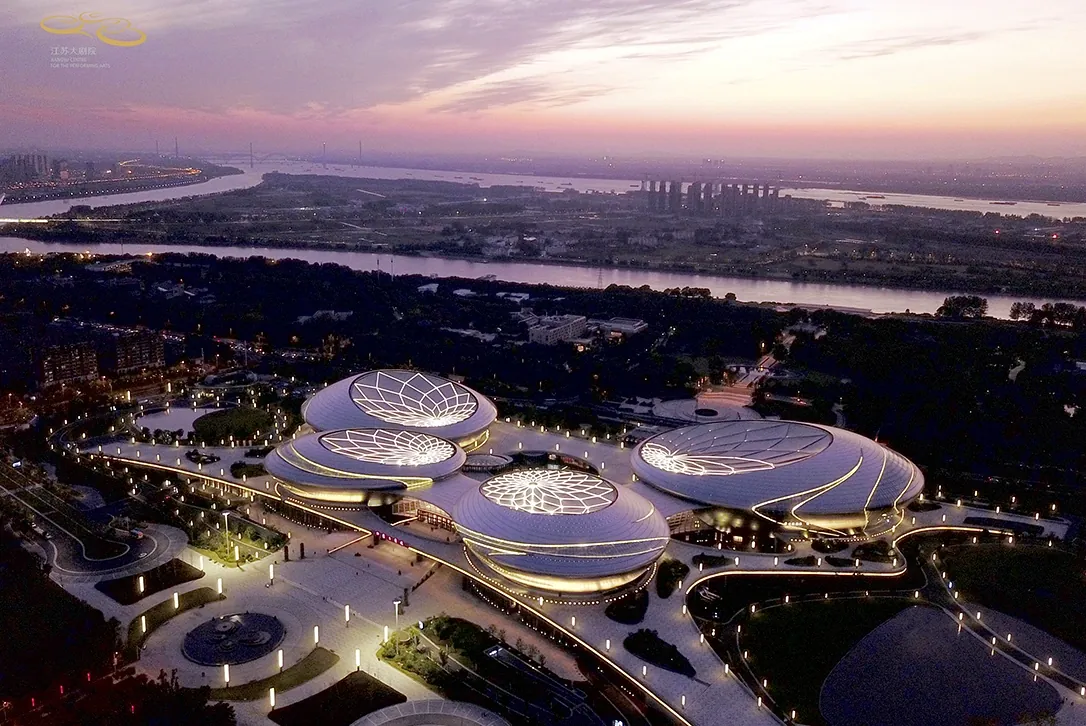
The continuation of the feng shui philosophy of relying on water is fully reflected in the modern appearance of the Jiangsu Center for the Performing Arts. Viewed from above at sunset, the architectural complex glows brilliantly with structures shaped like giant lotus petals blooming by the river, reflecting shimmering light onto the calm water surface. In the distance, the modern urban skyline blends softly with the eternal flow, creating an impressive visual dialogue between elegant Southern cultural identity and a vibrant contemporary pulse.
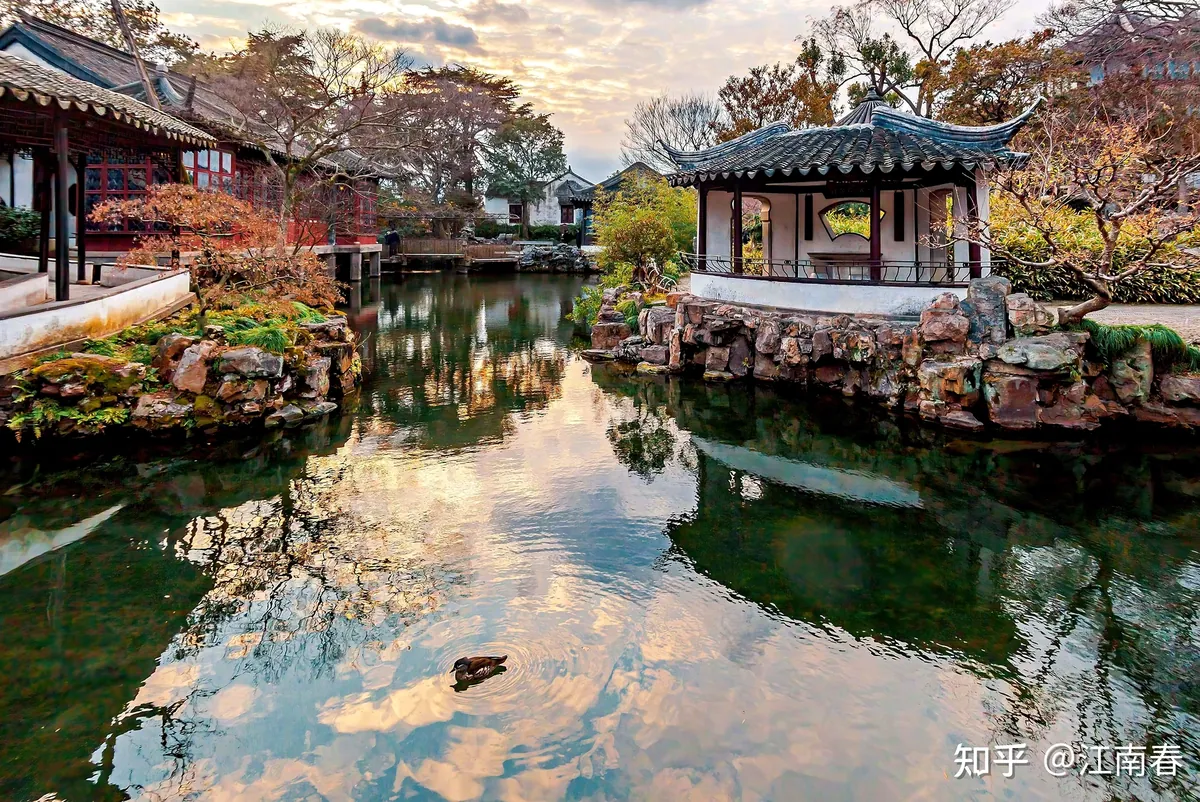
The landscape of Jiangsu is further perfected by the calm waters of the vast Taihu Lake and the system of lagoons and coastal alluvial flats, earning it the world-famous title of “Land of Fish and Rice.” The ancients here followed nature, building dikes to prevent saltwater intrusion and digging canals to divert water, transforming once-submerged lowlands into a fertile granary and a sanctuary for poets and scholars. The perfect harmony between the solemnity of the Purple Mountain and the graceful flow of the river and lake network has sculpted a Jiangsu of spiritual and human excellence, where the earth and water blend to nurture an enduring life force.
The mark of imperial power in Jiangsu is most majestically carved through the Ming City Wall of ancient Jinling. Initiated under the reign of the Ming Emperor Zhu Yuanzhang and completed in 1393 after 28 years of construction, this is the longest brick city wall in the world, with an original circumference of 35.3 km. Each fired brick is inscribed with the name of the worker and the supervising official, creating a sturdy fortress that winds along the natural hilly terrain rather than following a traditional square structure. Not far from the wall, the Ming Xiaoling Mausoleum, a UNESCO World Heritage site, further testifies to the peak feng shui wisdom of the Ming Dynasty. The 2,400-meter-long Sacred Way leading to the tomb is guarded by massive monolithic stone mythical creatures such as kneeling elephants, camels, war horses, and qilin, symbolizing eternal majesty amidst the serene space of Purple Mountain.
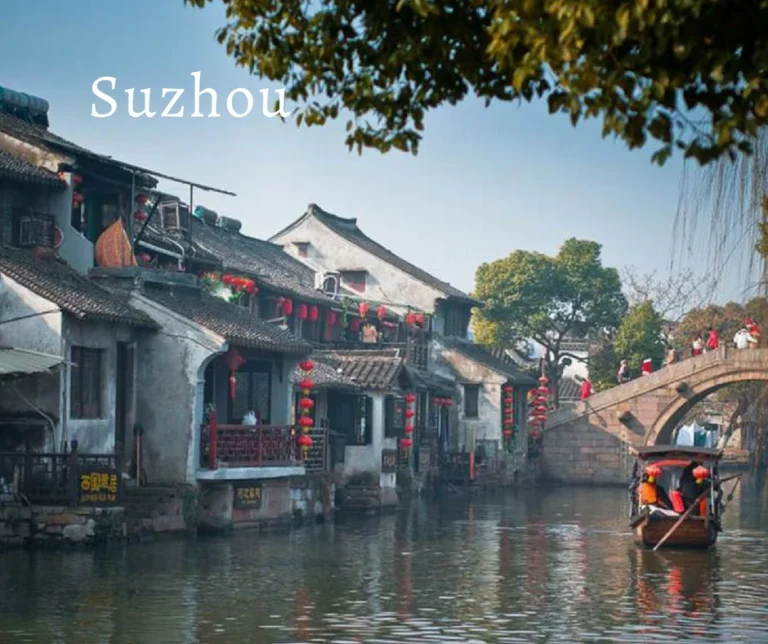
In contrast to the solemn imperial aura of Nanjing, the land of Suzhou defines the pinnacle of space through its famous classical Jiangnan gardens. Masterpieces like the Humble Administrator’s Garden or the Lingering Garden realize the aesthetic philosophy of “Created by human hands, yet appearing as if opened by heaven.” The art of arrangement here reaches absolute sophistication through the technique of stacking porous Taihu rocks, combined with the art of water management that curves to expand the illusion of space. Intricately carved lattice windows are cleverly placed on white walls, turning every step of the visitor into a journey of discovery, where nature is framed like a magnificent, living landscape that transforms with every passing moment.
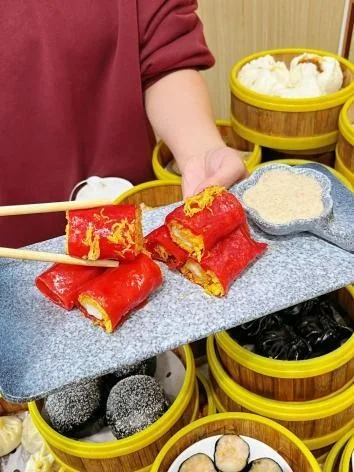
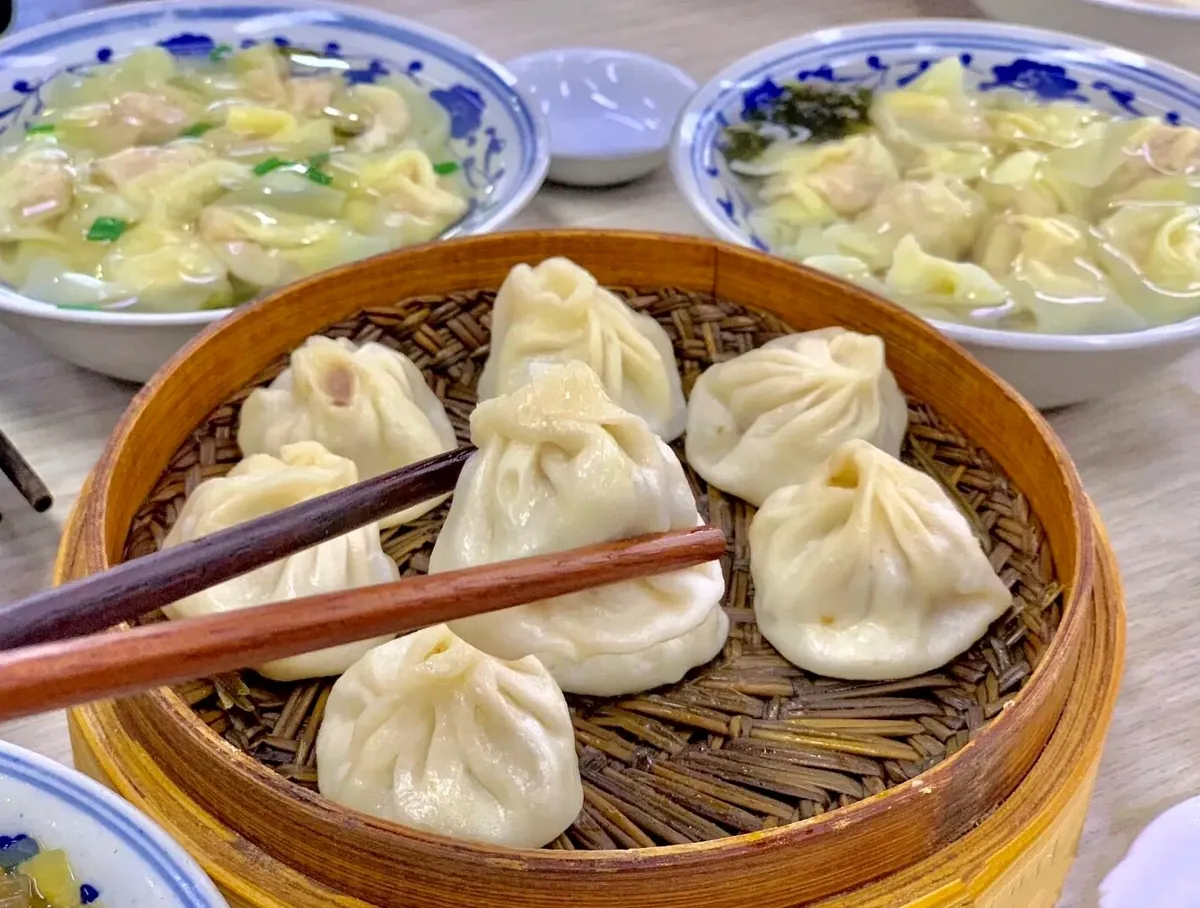
The elegance of Jiangnan garden architecture finds a strange resonance with the local tea and culinary culture. A rustic bamboo steamer releases clouds of steam, neatly arranging soup dumplings (xiaolongbao) with skins as thin as silk, plump and revealing the shimmering broth inside. Chopsticks gently lift a dumpling heavy with essence, placed next to two bowls of clear wonton soup scented with scallions and a hint of sesame oil. Experiencing hot dim sum in an ancient teahouse is not merely a light meal, but a ritual of slow living, filled with the refined flavor of life in the river towns.
The evolution of urban spatial structures continues to leave a profound mark on the complex of 285 historic Republic-era villas along the Summer Palace Avenue. This is a magnificent testament to the early 20th-century East-West cultural fusion, where majestic Western Doric and Ionic columns harmonize with tranquil grey-brick walls and gently sloping glazed tile roofs deeply characteristic of traditional Han Chinese style. This historical interlacing is further continued through the Chaotian Palace complex, a classic Ming-Qing official architectural masterpiece that preserves a strictly symmetrical layout, granite terrace shrines, and gracefully upturned eaves, exuding the disciplined spirit of the Eastern feudal administration.
Running parallel to this millennium-old heritage, Jiangsu’s modern infrastructure has expanded with transport projects of a futuristic scale. Nanjing South Railway Station, with a total floor area of up to 458,000 square meters and 28 continuously operating tracks, stands towering like a vital dispatch hub connecting the entire Yangtze River Delta high-speed rail network. Alongside this, the Nanjing Lukou International Airport, meeting the highest 4F-class technical standards, serves as a strategic aviation gateway welcoming long-haul wide-body aircraft. The seamless connection from the bricks of Zhu Yuanzhang’s ancient city wall to these century-spanning transport mega-projects affirms the exceptional scale of practical investment and the limitless spatial vision of the entire province.
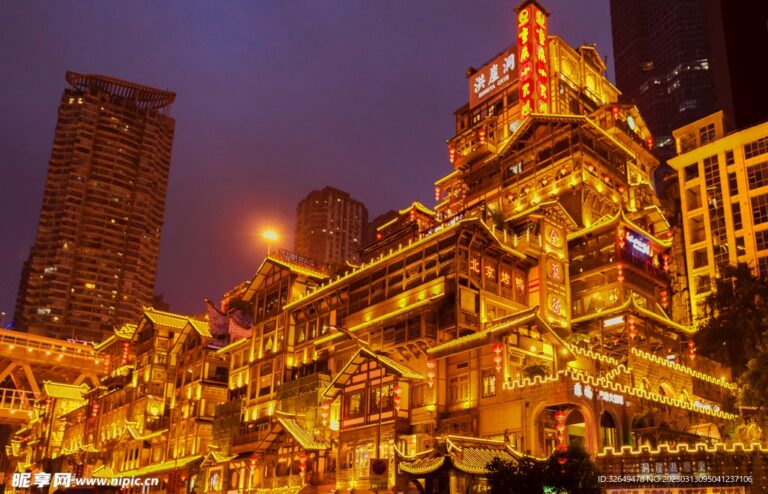
As the sunset gradually fades over the prosperous Jiangnan land, Jiangsu does not sink into slumber; rather, it sheds its daytime solemnity to don a dazzling evening robe woven from light, music, and millennia of cultural strata. The heartbeat of Nanjing’s nightlife converges completely along the winding Qinhuai River, embracing the Confucius Temple complex. Once depicted by the poet Du Mu in his immortal verse from the poem “Night on the Qinhuai River”: “Mist wraps the cold water, moon wraps the sand, mooring at night on the Qinhuai near wine houses,” this waterway transforms at night into a brilliant Milky Way adorned with thousands of lotus-shaped lanterns and high-hanging red silk lanterns along the upturned eaves of the Ming and Qing dynasty pavilions. The hazy, mist-veiled water shimmers with the reflections of the Qizhou Pavilion and Lingxing Gate, leading travelers into a glamorous, mesmerizing world that once captivated countless romantic scholars of the Southern Dynasties.
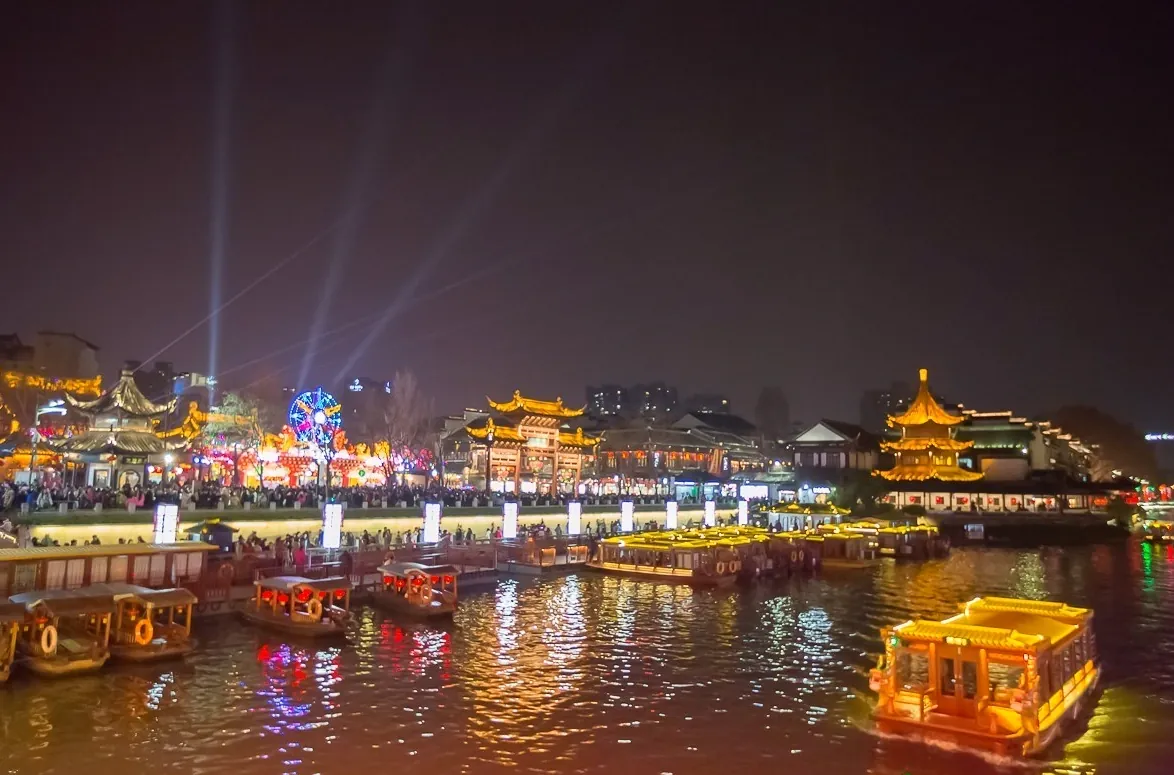
The alluring and profound beauty of the southern night is clearly revealed along the Qinhuai River, where dragon boats glide through a flowing live-action art performance. As the gold-plated boat glides smoothly past ancient stone walls and the Miyuxiang Pavilion ruins—which once witnessed the tragic love story of the famous courtesan Li Xiangjun and the scholar Hou Fangyu—the original melodies of Kunqu Opera suddenly resound from a waterfront teahouse. This intangible cultural heritage of humanity is brought to life by artists through every graceful gesture, emotional gaze, and clear, melodious voice. Classic excerpts from Kong Shangren’s “The Peach Blossom Fan” or Tang Xianzu’s “The Peony Pavilion” blend with the sound of bamboo flutes and rustic pipa lutes, creating a deep cultural association where the boundaries between reality and dream, between a golden past and the present, momentarily dissolve upon each gentle ripple.
Stepping away from the elegant boats of literati, Jiangsu’s nightlife bursts into vibrant, bustling life at the Shiziqiao pedestrian street and night food market (狮子桥). The towering archway leads footsteps into a paradise of colors and flavors deeply imbued with traditional Nanjing style, where eateries stay open all night and steam rises thickly from multi-tiered bamboo steamers. Visitors can easily find time-honored culinary delicacies such as Nanjing salted duck with its crispy, crunchy skin, duck blood vermicelli soup rich with bone broth simmered overnight, osmanthus-scented tofu pudding, or crispy pan-fried buns filled with rich, savory soup. The rhythmic clatter of cleavers, bustling calls of vendors, and bright neon signs create a vivid urban tapestry, faithfully reflecting the generous, hospitable character of the people along the lower reaches of the Yangtze River.
Alongside the nostalgic riverside charm, contemporary light art in Jiangsu reaches visual heights at the Xuanwu Lake landscape axis and the Ming dynasty city wall system. The solid stone and fired-brick fortifications initiated by Ming Emperor Zhu Yuanzhang in the 14th century are illuminated by elaborately programmed artistic lighting, highlighting individual bricks carved with the names of ancient craftsmen in the quiet night. Standing atop the ancient watchtower and looking out over the mirror-flat surface of Xuanwu Lake, travelers can admire the magnificent interplay of two spatial extremes: on one side, a solemn ancient city holding the stillness of the feudal era, and on the other, the silhouettes of modern Nanjing skyscrapers with glowing LED strips curving proudly against the Far Eastern night sky.
Jiangsu’s culinary map is dominated by Huaiyang cuisine, one of China’s top four most prestigious culinary schools, where the philosophy of cooking reveres delicate natural flavors and showcases knife skills brought to absolute perfection. This fertile alluvial plain nestled between the Yangtze and Huai rivers does not favor pungent, fiery spices or heavy greasiness, but instead focuses wholeheartedly on awakening the pure flavors of natural produce. Every slice precise to the millimeter, and every slow-cooking temperature carefully calculated over centuries, transforms humble rustic and river ingredients into elegant symphonies of flavor, fully reflecting the refined character of southern coastal scholars.
When mentioning the symbol of the ancient capital of Nanjing, gourmets always reserve the most revered spot for Nanjing Salted Duck, a delicacy with a history spanning over a millennium. This renowned specialty demands a rigorous preparation process, starting with dry salt massaging to allow the spices to deeply penetrate every muscle fiber, followed by steeping in a lightly fragrant osmanthus-infused brine, before being slow-poached in broth maintained at a stable temperature of 85°C to 90°C. This technique gives the duck skin a pristine white color, crisp yet tender texture, while the meat retains its natural juiciness and subtle aroma. To fully savor this traditional flavor, travelers often seek out veteran brands like Han Fuxing, operating since 1866, or the famous restaurant inside the Jinling Hotel. Alongside the elegance of the salted duck, Nanjing’s daily rhythm is encapsulated in a steaming bowl of Duck Blood vermicelli soup. The broth is simmered from duck bones for eight consecutive hours, blending harmoniously with smooth, silky blocks of duck blood, thinly sliced chewy gizzards and giblets, and translucent, springy sweet potato vermicelli, creating an unforgettable street food experience at the Huiwei Ah Xue Fenpi chain as well as the bustling Swallow Bridge (SuziQiao) night market.
The superb knife skills of the Huaiyang culinary school shine most brilliantly through dishes like Lion’s Head Meatballs and Shredded Tofu Soup (Gan Si). Under the deft hands of artisans at Lion’s Head Restaurant in Nanjing or Fuchuan Teahouse in Yangzhou, this delicate meatball is meticulously crafted from pork belly hand-cut into small dice at a ratio of six parts lean to four parts fat—using minced meat is strictly forbidden to avoid destroying the natural texture. Simmered gently for four hours in a clay pot, the meatball absorbs the rich essence of the stock, reaching a state where it melts instantly on the tip of the tongue like a wispy cloud. Meanwhile, the Da Zhu Gan Si dish elevates knife work to an absolute art form. At the renowned Lüxiekeju restaurant by the Confucius Temple, a master chef expertly splits each piece of dried tofu into thirty translucent layers before swiftly slicing them into tens of thousands of threads as fine as silk. These delicate tofu threads are then simmered with a rich, aged chicken broth and shredded Jinhua ham, absorbing the rich bone marrow flavor and the pure golden hue of an imperial delicacy.
The aquatic culinary landscape of Jiangsu’s water country becomes even more magnificent during the autumn hairy crab harvesting season, highlighted by Crab Roe Soup Dumplings and Yangcheng Lake hairy crabs. At Yin Shi Xie Zhi Tang Bao, these petite dumplings are steamed to perfection with a paper-thin wrapper resembling cicada wings, enclosing a rich, fatty filling of Taihu Lake hairy crab roe immersed in piping hot soup. Diners must skillfully use a straw inserted through the wrapper to slowly enjoy the fragrant, richly sweet soup before tasting the savory crab filling. When the autumn breezes begin to blow, savoring a steamed Yangcheng Lake hairy crab with its golden, gooey, rich roe, dipped in a little aromatic ginger-scented vinegar, represents the pinnacle of Jiangsu’s family-recipe culinary art, leaving an enduring yearning in the hearts of distant travelers.
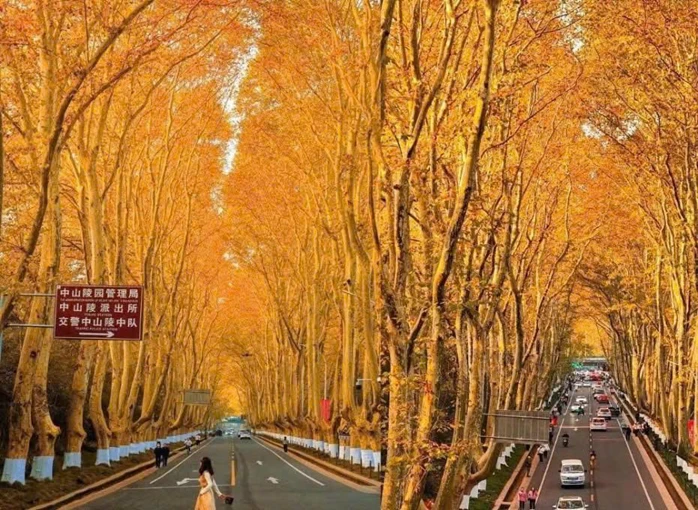
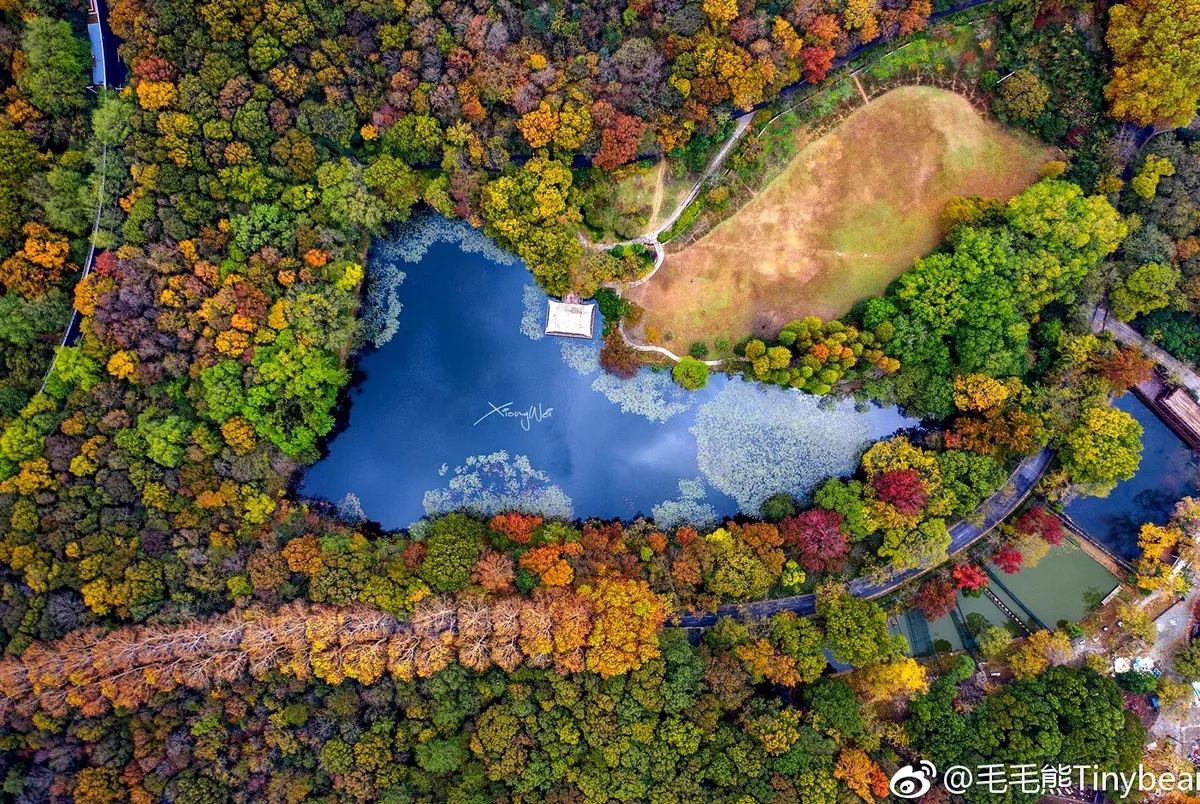
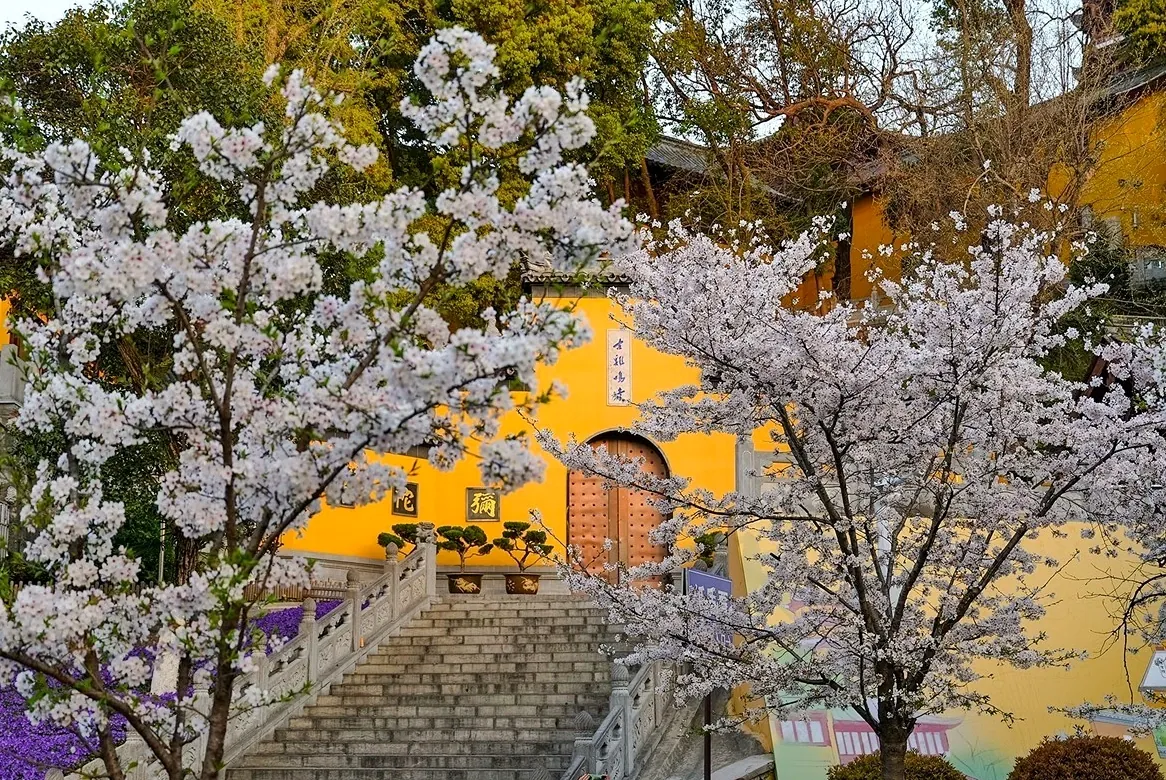
Jiangsu dons a distinct shade with each changing season, requiring travelers to understand nature’s cyclical rhythm to choose the ideal time for departure. Spring weather from March to May is when all things awaken, immersing visitors in the ethereal scenery of thousands of cherry blossoms blooming in full splendor along the winding dikes around the ancient Genguiming Temple, while also marking the harvesting season for the renowned Biluochun tea on the slopes of Dongting Mountain by the breezy shores of Lake Tai. Autumn, lasting from September to November, is considered the most glorious time of the year when the ancient sycamore trees enveloping the Meiling Palace turn a brilliant golden hue resembling a string of amber-rimmed jades when viewed from above, and it is also when Jiangnan cuisine reaches its peak flavor with the famous Yangcheng Lake hairy crab, celebrated for its richness and firm, roe-filled meat. As winter sets in, the northern chill blankets the canal banks, creating a relaxing experience at the open-air hot springs of Tangshan in the outskirts of Nanjing, a place that once served as the imperial retreat for emperors a millennium ago.
Regarding technical infrastructure and transit operations, Jiangsu boasts a seamless regional connectivity network located on the backbone of the Beijing-Shanghai high-speed railway axis connecting Beijing and Shanghai. High-speed trains operating at speeds of 350 km/h shorten the journey from Nanjing South Station to Shanghai to just 67 minutes, and connect directly to the capital Beijing in a mere 3 hours and 15 minutes. However, the massive scale of construction featuring multi-tier passenger arrival structures at central stations requires travelers to arrive at the security checkpoint at least 45 minutes prior to departure. It is essential to keep in mind the host country’s strict railway safety regulations, which strictly prohibit carrying metal compressed aerosol cans with a capacity exceeding 100ml, including popular items such as hairspray, facial mist, or spray-on sunscreen.
To optimize the on-site experience at key cultural heritage sites, mastering tourism management regulations is a prerequisite. National-level heritage complexes such as the Ming Xiaoling Mausoleum – the final resting place of Emperor Zhu Yuanzhang, the majestic Sun Yat-sen Mausoleum on Purple Mountain, and the Nanjing Presidential Palace all implement a real-name verification mechanism using the original passport numbers of individual international tourists. Because visitor numbers are strictly capped to preserve the monuments, registration lists must be synchronized onto the system at least 7 days prior to departure. A lack of information or delayed time-slot registration will deprive visitors of the opportunity to directly access these invaluable heritages right at the electronic gates.
Furthermore, identifying and resolutely eradicating “cheap tours” or “zero-dollar tours” is an immutable principle for those seeking genuine cultural value. These unusually discounted journeys are actually commercial traps luring participants into a network of designated shopping stops, where artificial Taihu Lake pearls, Yixing purple clay teapots mass-produced with industrial molds instead of raw mineral clay, heavily overpriced Suzhou silk, or floating memory foam mattresses are marketed using sophisticated psychological tactics. Even more alarming is the “pulse-taking and prescription” scam at fake traditional medicine facilities masquerading as ancient research institutes, where profit-seeking actors are ready to sell overpriced herbal formulas with commissions for brokers reaching 50% to 70%.
Steadfastly choosing the pure “No-Shopping” travel standard is the strongest guarantee for travelers to maintain the true dignity of their journey of historical learning and contemplation. When the mind is completely liberated from the annoyance of forced shopping pressure, every step on the mossy stone slabs of the Jiangnan region truly becomes a passionate intellectual rendezvous. To fully appreciate the depth of this picturesque local culture through a meticulously curated and purified itinerary, travelers can explore the professional arrangement options from the Shanghai – Nanjing – Yangzhou – Wuzhen – Hangzhou 6D5N Tour.
