Yangzhou’s historical journey dates back to 486 BC, during the ninth year of King Jing of Zhou in the Spring and Autumn period. To serve his ambition of hegemony in the North, King Fuchai of Wu mobilized labor to excavate the Han Canal, connecting the rolling Yangtze River with the Huai River basin, while building the sturdy Hanhang City wall along the waterway. This laid a solid foundation for over two and a half millennia of urban evolution. Entering the Western Han dynasty, this land was known as Guangling, chosen as the capital for Liu Bi, the Prince of Wu. By holding a monopoly on copper coin-casting technology and taking advantage of abundant sea salt resources along the coast, Guangling accumulated massive wealth, ushering in the first golden age in the city’s history.
By the Sui dynasty, Yangzhou’s destiny was closely intertwined with Emperor Yang of Sui (Yang Guang) and his Daye era. The emperor ordered the excavation of the Tongji Canal and the Jiangnan River, integrating the grand network of the Grand Canal, and transformed the region into the lavish Jiangdong temporary palace—where his dragon boats sailed and which was considered the de facto third capital of the empire. However, extreme splendor also marked the beginning of a tragic end when general Yuwen Huaji launched a coup, usurped the throne, and assassinated Emperor Yang right at the Jiangdong palace in 618. During the prosperous Tang dynasty, this place rose to become one of the busiest economic, commercial, and financial powerhouses in the realm, famously praised in the proverb “First Yangzhou, Second Yizhou” to assert a status surpassing even Yizhou. This international trading port once bustled with Persian and Arab merchant ships along the Maritime Silk Road, despite experiencing the tragic memories of the Tian Chengong rebellion in 760, which massacred thousands of West Asian expatriates. That opulent beauty crystallized into the immortal poetry of Li Bai with his farewell piece “Mist and flowers in the third month, heading down to Yangzhou,” or Du Mu’s nostalgia for a decade of wandering in Jiangnan through “A decade-long dream of Yangzhou.” This place also marked the footsteps of Master Jianzhen from Daming Temple, who persevered in crossing the eastern sea to spread Buddhism to Japan, alongside the residence of the Silla scholar Ch’oe Ch’i-wŏn and the Muslim missionary Pu Hading.
Through the Song and Yuan dynasties, the elegant literati charm of the land grew even more pronounced when the great literary master Ouyang Xiu had the Pingshan Hall built to admire the rivers and mountains of Jiangnan, before the Western traveler Marco Polo was commissioned by Kublai Khan to serve as the city’s administrator for three solid years from 1282 to 1287.
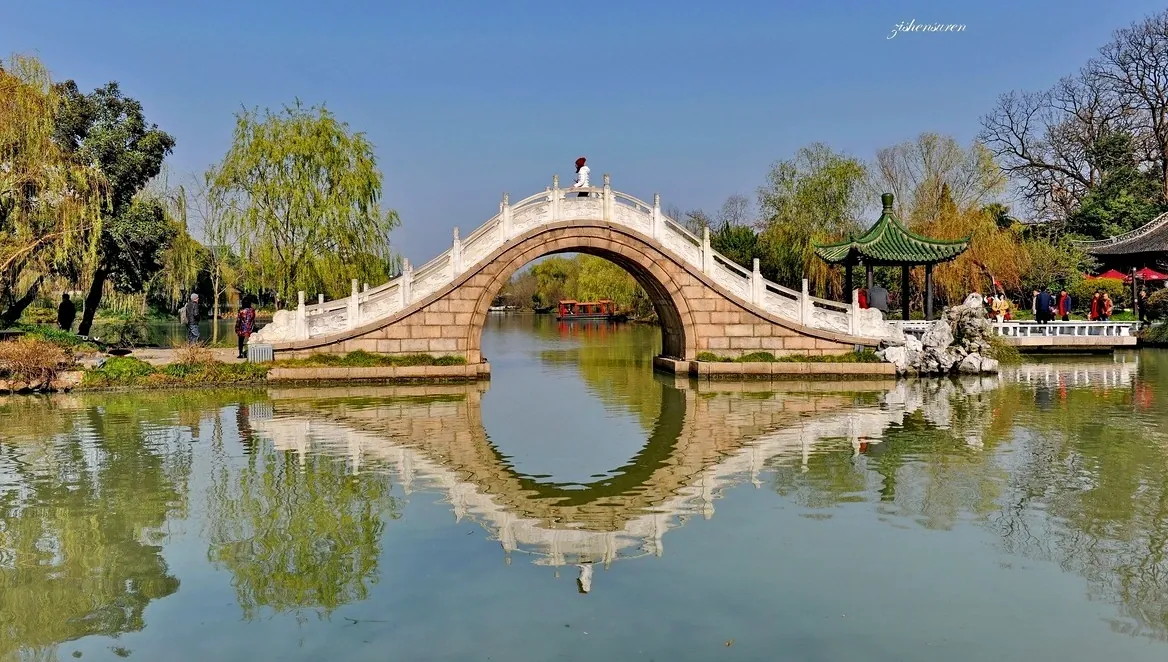
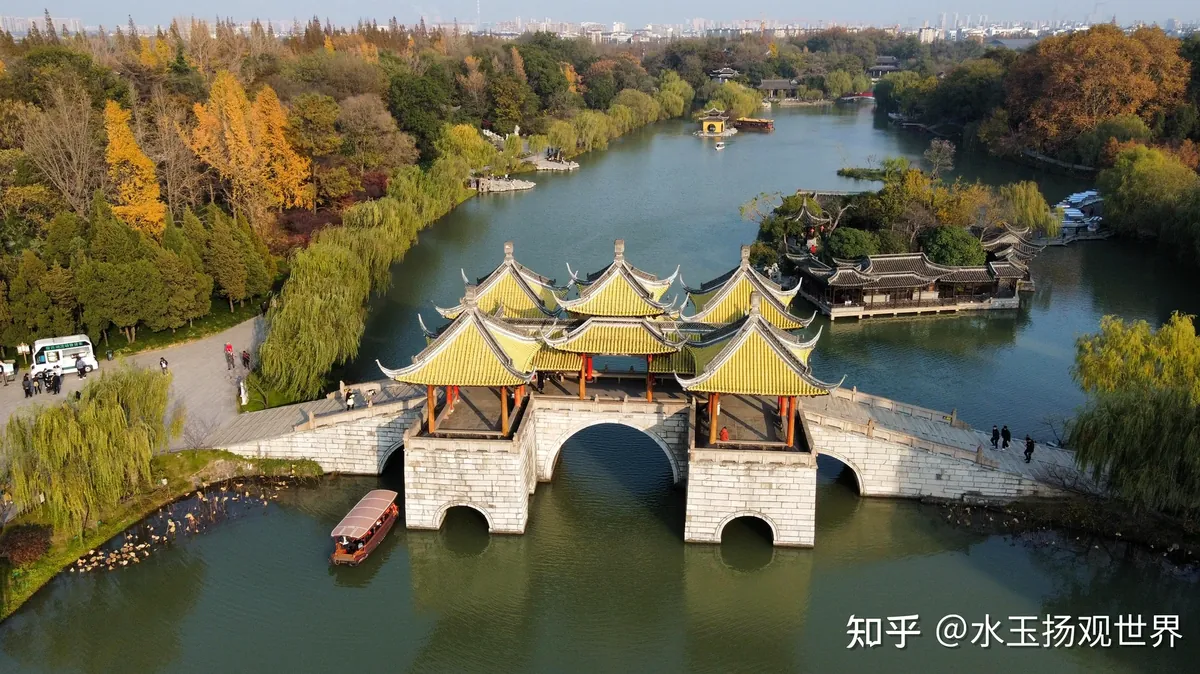
The harmonious beauty between the flowing past and the millennium-old ecological breath of Yangzhou is fully encapsulated in the serene scenery of its classical gardens. Standing out in the space is a gracefully curved stone bridge spanning the tranquil blue water, reflecting an elegant arch dotted with pristine white stone balustrades. Along the banks, ancient weeping willow branches sway gently, blending with the shade of green trees, while the glazed tile roofs of an ancient octagonal pavilion showcase the distinct imprint of ancient imperial architecture. A few travelers stroll peacefully on the bridge, gazing at a dugout wooden boat slowly plying its oars beneath the arched opening, painting a vivid ink-wash landscape of a Jiangnan waterfront.
Transitioning from the Ming to the Qing dynasty, Yangzhou’s history was stained with tragedy in 1645 when Minister of War Shi Kefa fought to the death to defend the city against the Eight Banner army, leading to the bloody “Ten Days of Yangzhou” massacre where over 800,000 commoners perished under the swords of Prince Dodo. Nevertheless, the resilient vitality of a premier trading hub helped the region experience a spectacular revival under Emperors Kangxi and Qianlong. Chosen as the seat of the Lianghuai Salt Administration Commissioner, the city controlled over forty percent of the total salt production and strategic tax revenue of the entire Manchu dynasty. The massive capital of the wealthy salt merchants originally from Huizhou created magnificent gardens, while generously patronizing the unconventional Yangzhou Bizarre school of painting and funding family opera troupes that gathered in the capital to celebrate Emperor Qianlong’s 80th birthday, laying the groundwork for the birth of classical Peking Opera for posterity.
Located at the golden coordinates of 32°23′ N and 119°25′ E, Yangzhou occupies an extraordinary geopolitical and hydrological position right in the lower basin of the Yangtze River delta. It is the fateful intersection between the thousands-of-miles-long rolling Yangtze River and the vital commercial artery of the Grand Canal connecting the North and South. Nestled within the fertile alluvial depression of the Jiang Huai plain, the city’s terrain is as flat as a smooth ribbon stretching out, where water and land have intertwined over thousands of years of reclamation, accumulating an ecological space of supreme magnificence and vitality in the Jiangnan realm.
Under the lens of traditional geomancy (feng shui), Yangzhou possesses the renowned terrain of “Gathering Water and Accumulating Wealth,” a rarity in the world. The southern part of the city rests firmly against the vast main river, the northern part opens its arms to embrace abundant nourishment from the Huai River, while the inner city is nurtured by an intricate network of canals originating from the ancient Han Canal dating back to the Spring and Autumn period. This multi-layered encircling water structure not only acts as natural moats protecting the city but also forms a giant reservoir holding tremendous auspicious energy. The convergence of waterways has transformed Yangzhou into a bustling transit port, a gathering place for busy trading vessels and docks, and a national salt warehouse center holding the economic lifeline of all northern feudal dynasties.
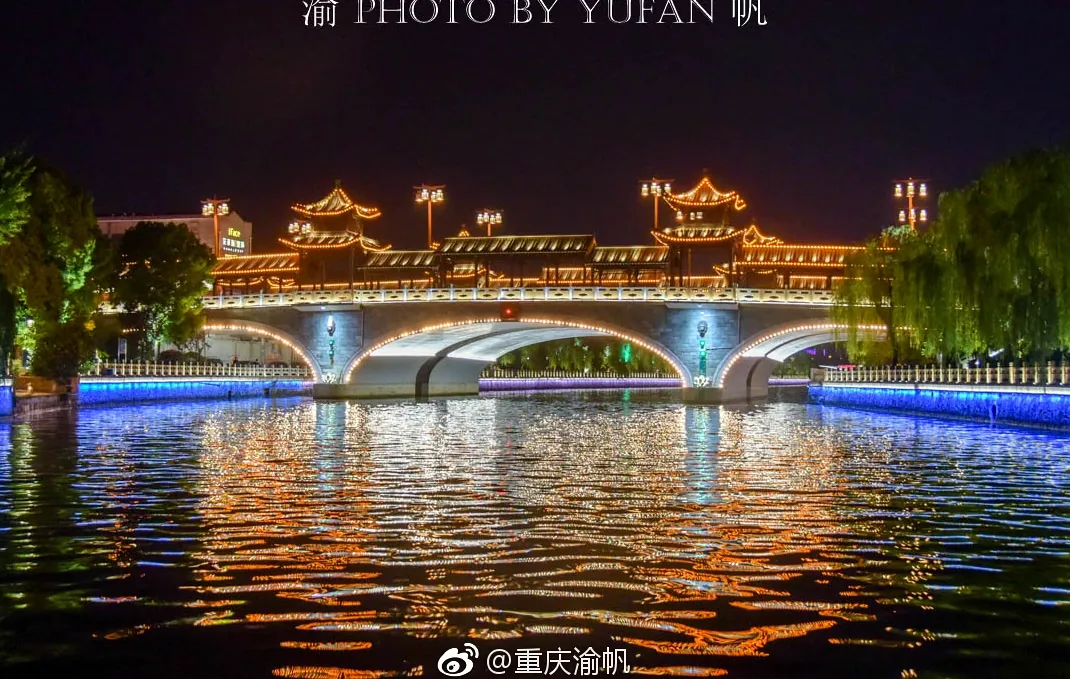
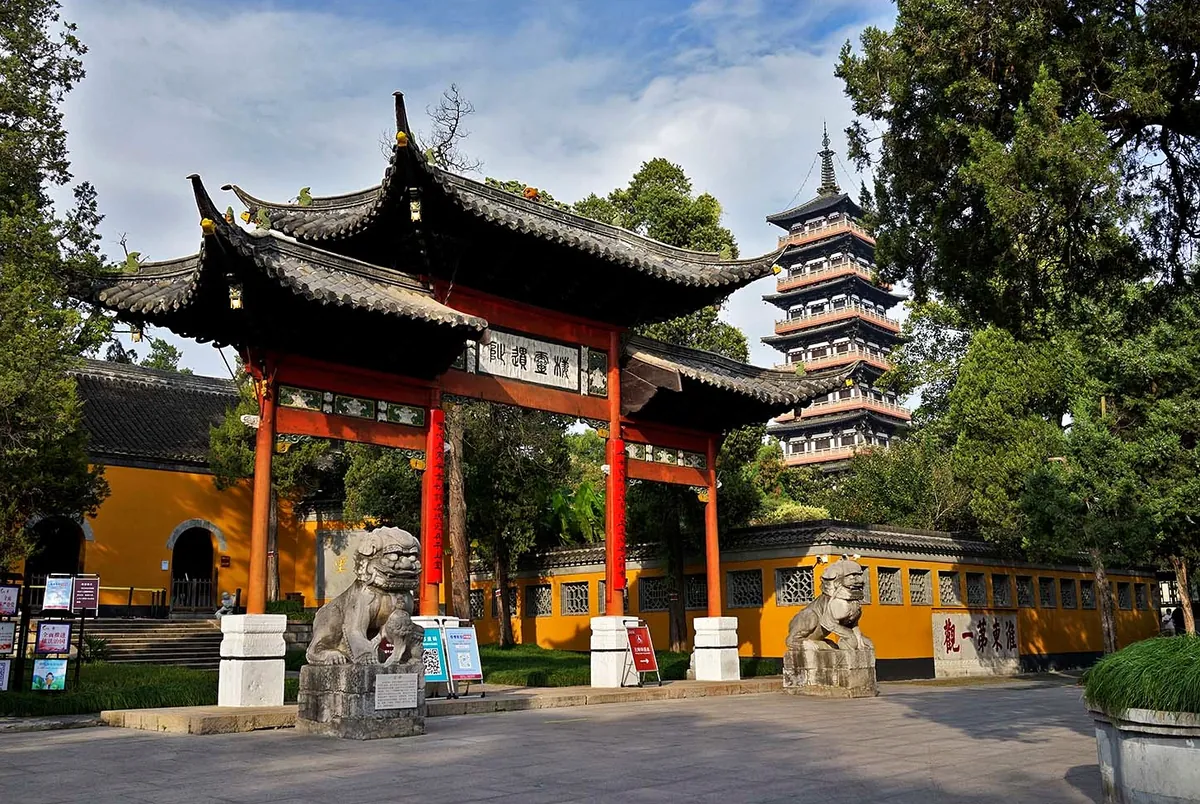
The topographical layout of Yangzhou achieves a perfect balance of yin and yang thanks to the gently rising Shugang hillocks in the northwest. Amidst a vast, yin-dominant alluvial plain of waterways, the Shugang ridge—alongside the ancient and majestic Daming Temple—serves as a strong, yang-oriented feng shui anchor, creating a thousand-year “town-guarding” posture that safeguards the peace of the entire city. The transitional terrain from the hills to the calm water surface provided ancient landscape masters with the foundation to skillfully harmonize natural and artificial elements, opening up graceful spatial axes extending toward tributary lakes and ponds.
The scenic core of this glamorous land is perfectly crystallized at the Slender West Lake (Shou Xi Hu), which meanders softly through the heart of the heritage city. Unlike the vast, boundless expanse of Hangzhou’s West Lake, the Slender West Lake features a slender, elongated form stretching 4.3 kilometers with a water surface area of over 100 hectares, resembling a jade-green ribbon woven through the metropolis. Along both banks, weeping willows sway gracefully, blending with brilliant peach blossoms every spring and casting their reflections on the crystal-clear water, evoking endless poetic inspiration and earning the land its title as the “Moon City”—a poetic city of moonlight.
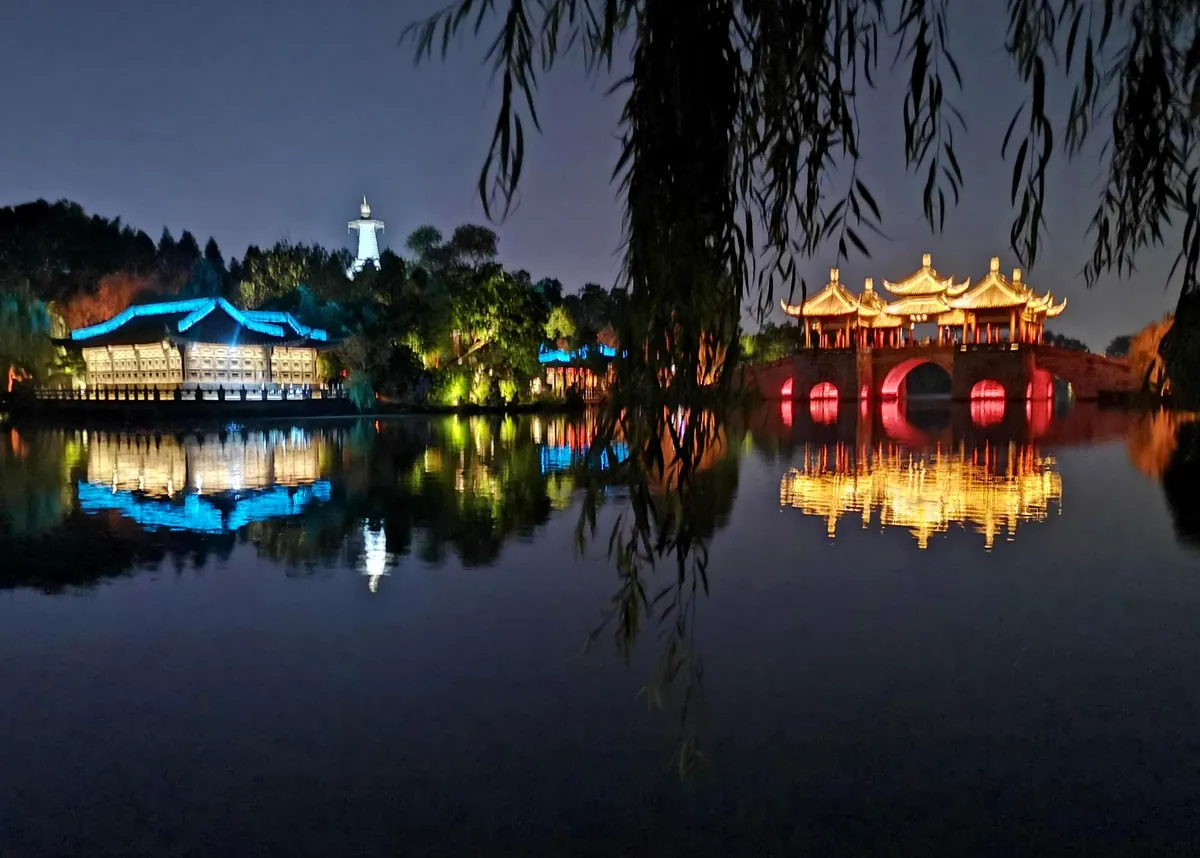
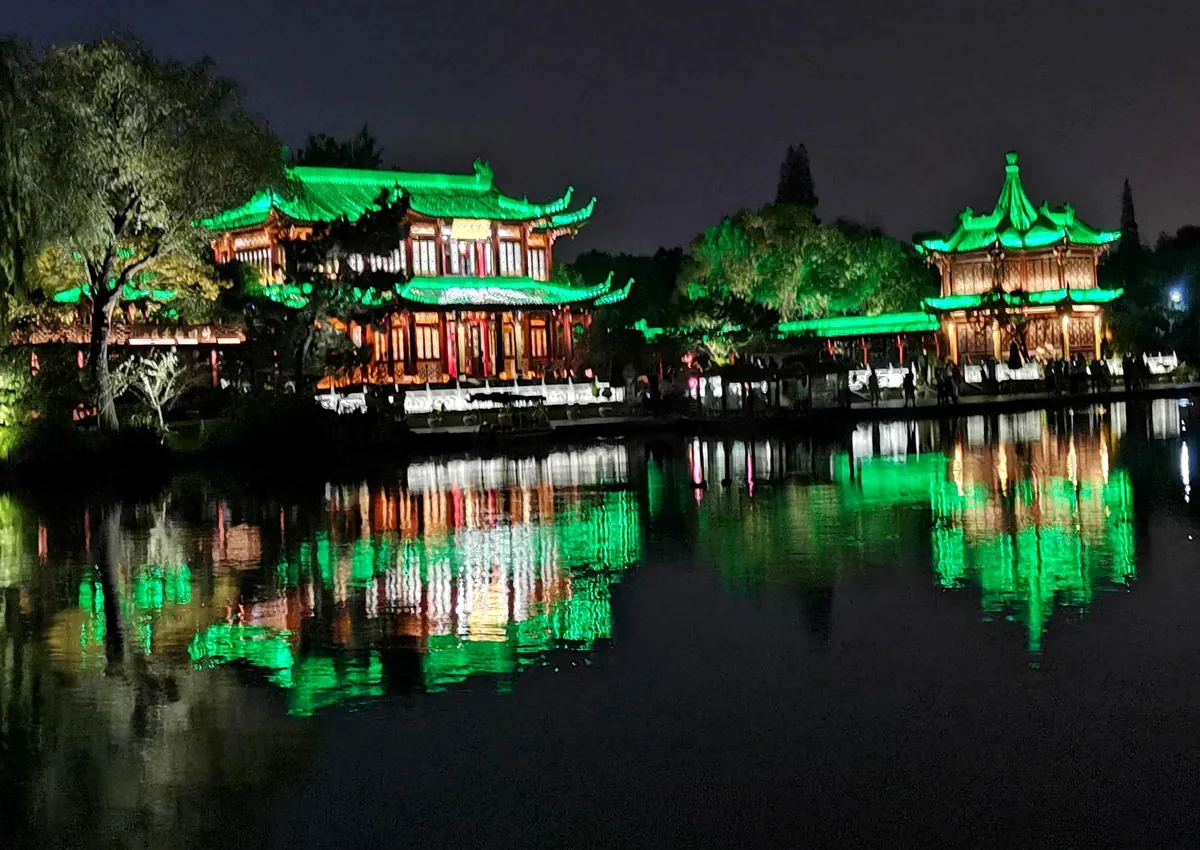
When night falls, the scenery around the lake bursts into a shimmering glow through a symphony of light and magnificent traditional architecture. Majestic pavilions with upturned eaves glow in an enchanting turquoise hue, proudly rising before a towering white pagoda carved gracefully against the deep night sky. On the opposite side, an ancient stone bridge adorned with gracefully curved pavilion roofs, dyed in warm amber-yellow and cinnabar red, brilliantly reflects shimmering bands of color onto the mirror-like water. From the upper right corner of the frame, a soft willow branch hangs down gracefully, casting its reflection on the lake, adding a touch of elegant nostalgia and completing the one-of-a-kind picturesque landscape of this earthly paradise.
This ingenious water-surface planning, closely tied to pavilions and towers, demonstrates the profound ancient philosophy of the “unity of heaven and man” in this region. Water is not merely a natural scenery element; it has become the regulating soul of the microclimate, creating a cool and pleasant atmosphere year-round for the ancient urban area. The harmonious interaction between natural rivers, the irrigation canal system, and human master planning has sculpted a Yangzhou that is both magnificent and misty, fully preserving the aristocratic essence of one of East Asian history’s most iconic waterside cities.
Examining Yangzhou’s architectural appearance is like stepping into a unique artistic dialogue known as “Northern Vigor and Southern Grace” (北雄南秀). Unlike the pure, humble elegance of Suzhou gardens or the majestic, standardized nature of northern palaces, Yangzhou’s private gardens are the crystallization of the immense wealth of salt merchants. Under the creative hands of master landscapers, the residences here showcase a grand, expansive aesthetic while fully retaining the sophistication, poetry, and grace of Jiangnan’s water landscapes.
A prime example of the pinnacle of rockery artistry is Ge Garden (个园), established in 1818 by the wealthy salt merchant Huang Zhiqun. The heart of the garden is the “Four Seasons Rockery” arrangement, which simulates the cycle of spring, summer, autumn, and winter through four meticulously crafted natural stone materials. Spring begins with slender bamboo-shoot-like stones nestled among lush bamboo groves; summer transitions through porous, undulating Taihu stones near the water surface; autumn turns contemplative with the rugged, deep red hues of Huangshi (Yellow Stones); and winter lingers beneath pristine white Xueci (Snow Stones) that reflect a chilly glow. This feng shui layout transitioning through the four seasons not only expresses the philosophy of harmony with nature but also serves as a blessing for the family’s everlasting prosperity.
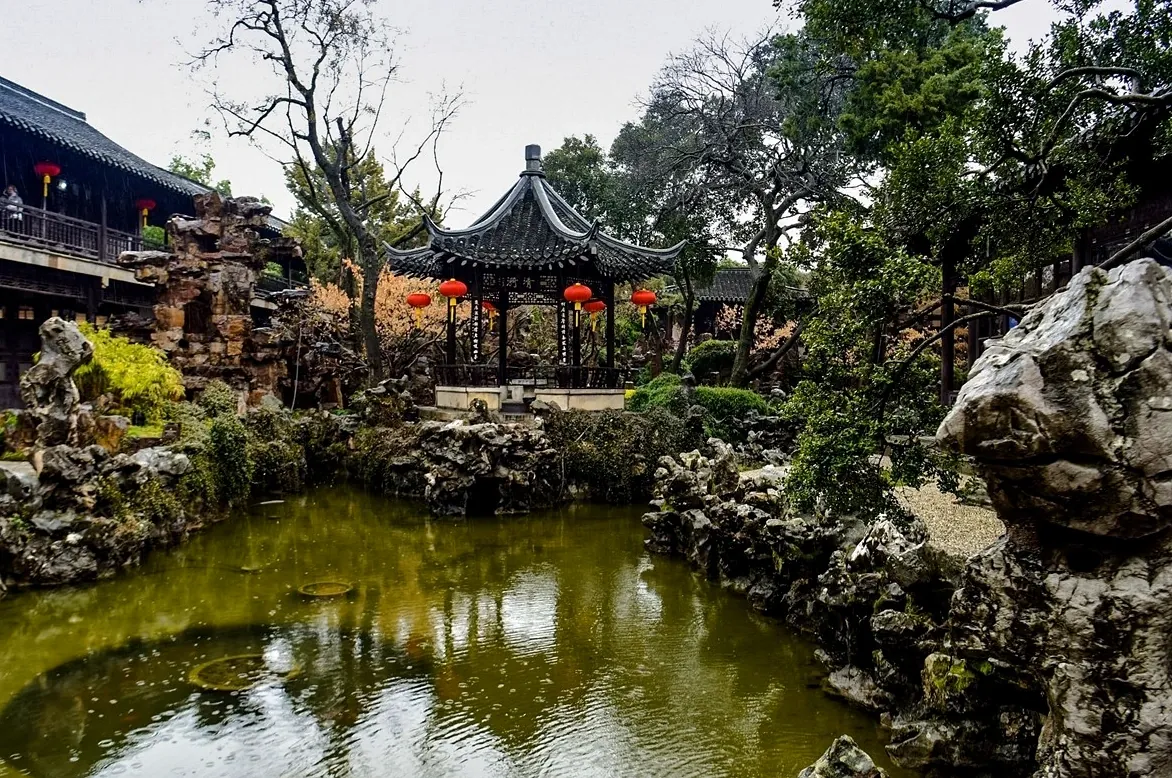
In contrast to the meditative, stony tranquility of Ge Garden, He Garden (何园 – also known as Jixiao Mountain Lodge), built by official He Zhizhi in 1883, represents a bold spatial innovation of the late Qing dynasty. The architectural highlight that shook the garden design world is the “First Double-Decked Corridor” (Đệ nhất Phúc đạo Hồi lang) — a two-tiered elevated corridor system stretching over 1,500 meters that rhythmically winds and connects the entire residence. From this corridor, homeowners can gaze out at the Water-Heart Pavilion (Thủy Tâm Đình), an aquatic pavilion floating in the middle of a lake that serves as a stage for traditional opera performances. Notably, He Garden’s architecture also showcases a subtle fusion of Western aesthetics through stained glass windows imported from France and handmade cast-iron fireplaces nestled within the traditional mansion.
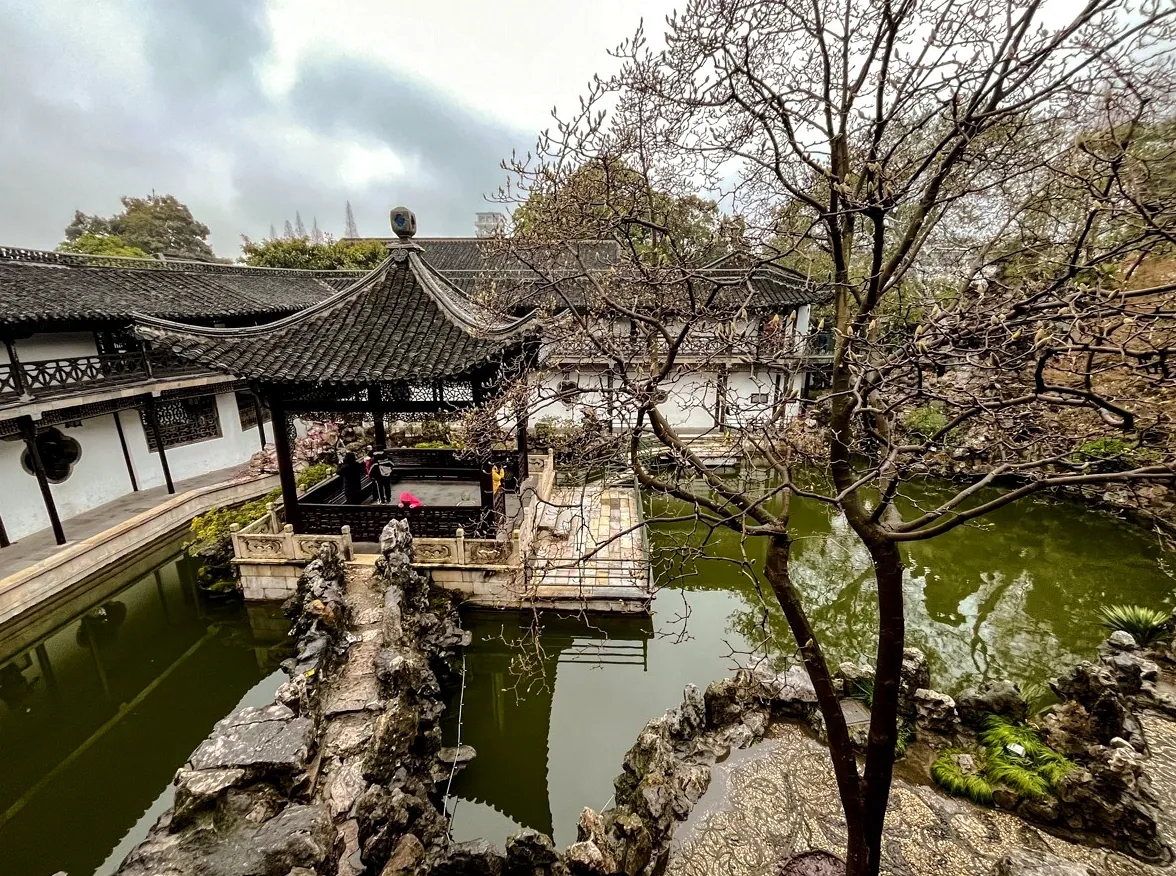
Moving beyond the enclosed gardens, Yangzhou’s open landscape design reaches its magnificent pinnacle at the Slender West Lake scenic area. Standing out amidst the winding waters is the Five-Pavilion Bridge (Wu Ting Qiao), a masterpiece built in 1757 during the Qianlong Emperor’s reign to welcome his southern imperial tours. The structure is an ingenious combination of a sturdy southern stone arch bridge supporting five pavilions topped with yellow glazed tiles, bearing the distinctive mark of northern imperial architecture. The fifteen arch openings are calculated with precise optics so that every Mid-Autumn full moon night, every stone arch reflects a shimmering moon on the water’s surface. Not far away, the Twenty-Four Bridge stretches out with an exact length of 24 meters, a width of 2.4 meters, and 24 graceful white marble balustrades, seamlessly connecting the poetic space with Pingshan Hall atop Shugang Hill—where the renowned scholar Ouyang Xiu once built an open structure at the Daming Temple, capturing the entire distant panoramic view of the Jiangnam mountain ranges.
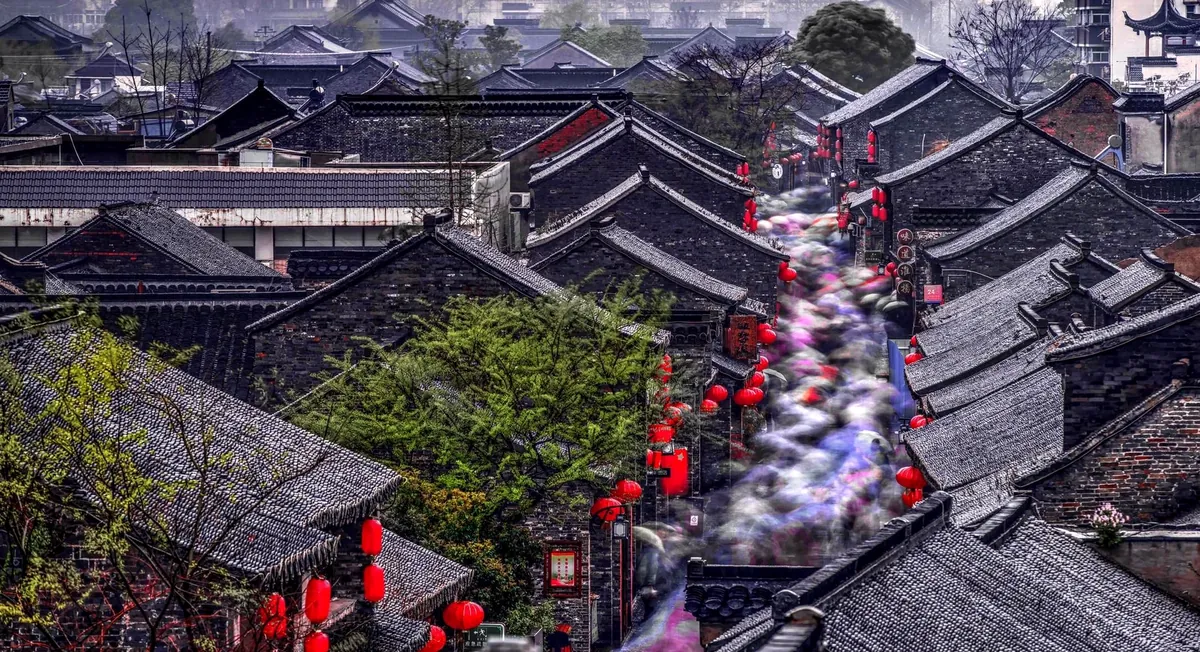
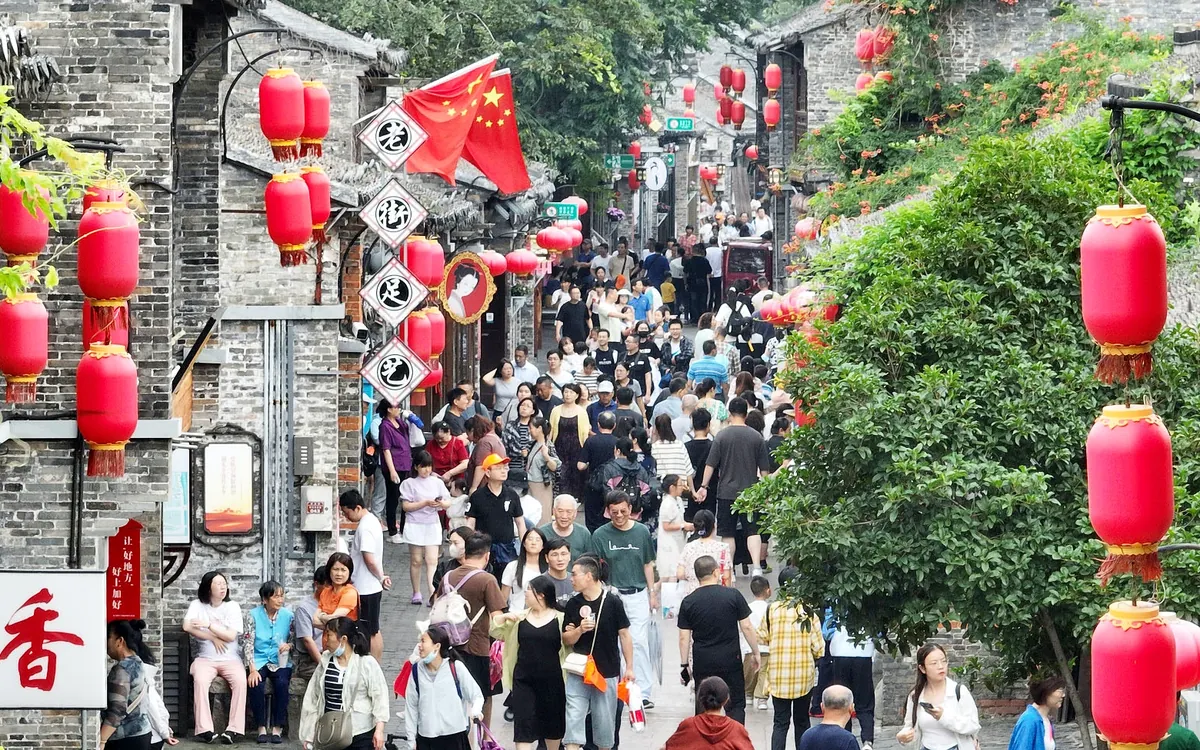
The soul of Yangzhou’s architectural canvas is not only captured in its regal villas but also vividly displayed along its tranquil ancient streets. Traditional houses nestle closely along narrow alleys, highlighted by moss-covered dark grey tiles and weathered bare brick walls. Along the historic street, rows of vibrant red lanterns cast a warm glow onto the stone-paved road, where modern life blends into a nostalgic atmosphere through the blurred motion of strolling pedestrians. Lush green trees stretch upward between the ancient buildings, creating a perfectly balanced accent between millennium-long stillness and endless urban vitality.
The resonance between grand garden layouts and a network of ancient alleys has shaped a unique spatial language native to Yangzhou. It represents an ingenious transformation between practical residential utility and the haughty aesthetic philosophy of wealthy salt merchants, leaving posterity with an architectural heritage complex that is both magnificent in construction scale and meticulous down to every single stone, asserting a peak position in the annals of Eastern architectural culture.
As dusk gradually falls upon the mossy tiled roofs of this fairyland in Jiangnam, Yangzhou sheds its elegant daytime shyness to don the dazzling attire of a uniquely vibrant night economy. Locals pass down a common proverb: "Zao shang pi bao shui, wan shang shui bao pi" (早上皮包水,晚上水包皮), meaning that in the morning, skin wraps around water through a cup of green tea and a plate of steaming dim sum, while in the evening, water wraps around skin in mineral soaking tubs and traditional bathhouses. The habit of soaking in warm herbal water to wash away the dust of the world is not merely a daily routine, but has been elevated into an elegant wellness philosophy dating back to the Song and Ming dynasties. Closely tied to this lifestyle is the art of "Yangzhou Xiujiao" (扬州修脚)—the craft of foot care, nail trimming, and therapeutic massage recognized as a National Intangible Cultural Heritage. Under the skillful hands of masters holding age-old secrets, every stroke of the slender steel blades moves softly like carving on jade, relieving all the fatigue of a journey and bringing the traveler’s body and mind to absolute tranquility.
Leaving the quiet tea rooms, the crowd flows toward the over-one-kilometer-long Dongguan Street (东关街), the arterial trade route spanning from the Tang and Song dynasties that still retains its vibrant pulse. The smooth green flagstone path, polished by the footsteps of travelers, glows brightly beneath thousands of hanging red silk lanterns, reflecting the flowing Hanfu robes of scholars strolling through the magical night. This place gathers hundreds of the capital’s renowned artisan workshops, from sparkling, skillfully carved Yangzhou jade workshops and intricately carved lacquerware shops passed down through the ups and downs of times, to traditional costume institutes and long-standing tea houses. The fragrant smoke from traditional meatball stews and the refreshing sweetness of mugwort candy blend with warm peddling cries echoing late into the third watch of the night, painting a portrait of a prosperous urban life akin to a thousand-year-old night economy that never sleeps.
Beyond the bustling city streets, the waters of the Grand Canal and Slender West Lake open up a more serene artistic space. Departing from the ancient Nanmen Wharf, a dragon boat adorned with imperial motifs takes travelers drifting along historic canal sections excavated during the reign of Emperor Yang of Sui. Along both banks, artistic lighting illuminates the solemn beauty of ancient city walls and willow branches trailing gracefully over the water. Right inside the cabin, the faint scent of agarwood blends with the crisp melodies of Jiangnan Guqin, the fluid tunes of Kunqu opera, or the heroic and tragic excerpts of Peking Opera, authentically recreating the extravagant lifestyles of the legendary salt merchants during the Southern Tours of Emperors Kangxi and Qianlong.
The pinnacle of visual and poetic resonance is the magnificent live-action light projection show on the waters of Slender West Lake once night completely falls. Inspired by the immortal verse “The twenty-four bridges shine brightly under the moon” by poet Du Mu or the legend of “Night lanterns on the bridge” from the prosperous Tang Dynasty, the lake surface is magically transformed using advanced 3D mapping technology combined with laser water screens. Around the Five-Pavilion Bridge and Twenty-Four Bridge scenic cluster, the full moon casts its reflection into the misty haze, blending with images of soaring dragons, dancing phoenixes, and shimmering waves. Modern lighting does not shatter the ancient serenity; instead, it awakens the soul of this thousand-year-old poetic land, turning Yangzhou’s night into an enchanting dreamscape lingering deeply in every visitor’s heart.
Located at the prosperous intersection of the Jianghuai plain, Huaiyang cuisine has shaped one of China’s Four Great Culinary Schools through an elegant aesthetic philosophy and the highest standards of culinary craftsmanship. Rather than relying on pungent spices to mask the essence of ingredients, Huaiyang culinary masters adhere strictly to the principle of rejecting artificial showmanship to preserve the pure, natural freshness of seasonal local produce. The pinnacle of this culinary school is fully embodied in knife-work, where the chef’s blade is not merely a tool but a brush sculpting culinary wonders, reflecting the sophisticated luxury of Yangzhou’s salt merchants during their golden age.
The thousand-year leisurely lifestyle of the locals is encapsulated in an ancient proverb about their daily indulgence: “skin wrapped in water in the morning, water wrapped in skin at night,” referring to enjoying morning tea and dim sum followed by evening relaxation at public bathhouses. This elegant morning tea culture is most vividly displayed at the legendary Three Great Teahouses. Yechun Teahouse, founded in 1877 and nestled gracefully beside the ancient Hangou Canal, is famed for its delicate noodles; while Fuchun Teahouse, established in 1885, is the birthplace of the renowned Three-Deed Baozi, which together with Dexunchun form the tripod of morning tea culture. Sitting by the intricately carved window overlooking the azure waters, diners leisurely sip a cup of unique Kuiling tea, an exquisite blend of the refreshing bitterness of Longjing tea, the rich color of black tea, and the gentle fragrance of Zhoushan chrysanthemums. Accompanied by the tea are Three-Deed Baozi blending tender spring chicken, fatty pork belly, and crisp young bamboo shoots; translucent Jade Shaomai showcasing the jade-green colors of fresh greens; and Thousand-Layer Oil Pastry featuring sixty-four paper-thin layers of dough stacked together to create a cloud-like fluffiness.
The miraculous knife skills of Yangzhou masters shine brightest in two exquisitely delicate soups: Dried Tofu Filaments (Da Zhu Gan Si) and Wansi Tofu. For Da Zhu Gan Si, traditional dried tofu is expertly sliced paper-thin and finely shredded into thousands of evenly uniform, soft filaments, then simmered in concentrated free-range chicken broth, garnished with famous Jinhua ham and river shrimp so that each tofu strand absorbs layers of rich, sweet flavors. Even more intricate is Wansi Tofu, originating from the Qianlong era, which requires chefs to submerge a block of soft, delicate young tofu in clear water and execute extraordinary knife techniques to separate the block into thousands of hair-thin strands without breaking a single one, floating gently in crystal-clear chicken soup like a tangible masterpiece of natural scenery.
A journey to savor Yangzhou’s delicacies would be incomplete without the Lion’s Head Meatball (Shi Zi Tou) and the classic standard Yangzhou Fried Rice. The Lion’s Head meatball strictly avoids industrial machine-minced meat, requiring the chef to manually hand-dice pork belly into tiny cubes to perfectly preserve the structural bond between fat and lean tissues. Each large meatball is steamed and simmered for four hours with tender baby bok choy, and upon serving, a gentle touch of a spoon melts the meatball into a sweet, nourishing nectar on the tip of the tongue. Meanwhile, the globally acclaimed local fried rice demands the rigorous “gold encloses silver” technique, where each firm grain of rice is stir-fried over high heat until completely coated in a layer of golden egg, harmoniously blended with nine premium ingredients including peeled fresh shrimp, diced Jinhua ham, dried scallops, crunchy sea cucumber, shiitake mushrooms, bamboo shoots, green peas, and rich salted egg yolks.
Encompassing this entire renowned culinary heritage are imperial and aristocratic banquets, epitomized by the Dream of the Red Chamber Banquet—inspired by Cao Xueqin’s masterpieces—and the lavish Salt Merchant Banquets of the eighteenth century. Every dish in these feasts does not merely satisfy the palate but represents a harmonious blend of formative art, yin-yang philosophy, and classical poetry. Savoring Huaiyang cuisine amidst the serene ambiance of Yangzhou is the ultimate encounter with a culinary civilization distilled through hundreds of years of metropolitan prosperity.
Travelers from all corners of the world heading to Yangzhou often recall Li Bai’s immortal verse: “In the misty, flowery month of March, I go down to Yangzhou.” The weather from April to early May, corresponding to the third lunar month in the ancient poem, is the most beautiful time of the year for a visit. During this period, temperatures are mild, ranging from 16°C to 24°C, while weeping willows and blooming peach blossoms along the banks of the Grand Canal create a dreamlike landscape reminiscent of a traditional ink wash painting. Beyond the misty spring, the crisp autumn season from October to November offers a unique experience with dry, clear skies and the peak harvest season for the region’s famous, succulent hairy crabs.
Modern transportation infrastructure has made accessing this heritage land a seamless and precise journey. The city is served by the Yangzhou Taizhou International Airport, a 4E-class facility handling domestic and regional flights. However, for international travelers arriving from afar, the most optimal and popular route is to fly into Nanjing Lukou International Airport, located approximately 120 km away, or Shanghai Pudong International Airport, 280 km away, and continue via the state-of-the-art high-speed rail network. A breakthrough in regional infrastructure is the Yangzhou East Railway Station, which connects to the Lianzhen high-speed line, crossing the magnificent Wufengshan Bridge. From this station, high-speed trains can whisk travelers to the ancient capital of Nanjing in just 42 minutes, the glamorous city of Shanghai in 1 hour and 40 minutes, Hangzhou in 2 hours and 10 minutes, and the capital, Beijing, in a smooth 4 hours and 15 minutes.
Regarding immigration procedures, the Yangtze River Delta region currently offers a 144-hour visa-free transit policy for citizens of 54 eligible countries, covering the Shanghai–Jiangsu–Zhejiang area. This allows for flexible stays when entering through international ports of entry before exploring the Yangzhou region. For Vietnamese travelers, the most common and convenient method is to apply for a group tourist visa (Group L) or an e-visa. Yangzhou itineraries are typically featured as a highlight of the classic 6-day, 5-night East China tour, which seamlessly connects the cultural gems of Shanghai – Suzhou – Wuxi – Zhenjiang – Yangzhou – Nanjing.
To fully protect the integrity of your journey, travelers should be vigilant and avoid “Zero-Dollar Tours.” These suspiciously low-priced programs often trap groups for 90 to 150 minutes at shopping venues disguised as cultural sites, such as “Yangzhou Jade Museums,” silk workshops, or fraudulent traditional medicine centers. The direct consequence is that time spent at the national landmark Slender West Lake is drastically cut to under 45 minutes, depriving you of the serene atmosphere and the chance to experience the elegant “skin-wrapped-in-water” (pi bao shui) morning tea ritual. Researchers and savvy travelers always recommend choosing “Pure Play / No Shopping” tours to ensure your right to a genuine cultural experience is respected.
When enjoying traditional morning tea at historic establishments like Fuchun Teahouse or Yechun Teahouse, travelers should arrive early to get a queue number between 06:30 and 07:00 AM, as these venues are often overcrowded with diners seeking tea and the famous three-filling steamed buns; arriving late on weekends can result in wait times of 2 to 3 hours. Mastering the operating hours of historical sites is also key: Slender West Lake is open during the day from 06:00 to 17:30, and also offers night cruises to view the shimmering lake from 18:30 to 21:30; meanwhile, the two famous salt merchant garden estates, Ge Garden and He Garden, welcome visitors from 07:30 to 17:15 daily.
The combination of a thousand-year-old slow pace of life and modern, civilized infrastructure creates a rare charm for this ancient city along the Grand Canal. To realize your dream of a refined Jiangnan getaway without worrying about language barriers, travel logistics, or complex administrative procedures, consider entrusting your vacation to a professional all-inclusive tour package to fully savor every moment of the rich history found here.