







Not merely a battlefield of conflicts, the Western Regions was also a glorious cradle of Buddhist scholarship with the appearance of the holy monk Kumarajiva, born in the ancient state of Kucha (now Kuqa) – one of the renowned Four Great Translators who laid the foundation for translating Buddhist scriptures into Chinese. Entering the prosperous Tang dynasty, in 640 under the fourteenth Zhenguan reign of Emperor Taizong, the court issued an edict to establish the Anxi Protectorate, creating the famous “Four Garrisons of Anxi” comprising Kucha, Khotan, Kashgar, and Suyab, which sheltered the Gandhara-influenced Buddhist art to flourish brilliantly in the Kizil cave system. However, the current of history shifted after the fierce Battle of Talas in 751 between General Gao Xianzhi and the army of the Abbasid Caliphate, an event that not only spread Chinese papermaking technology to the West but also laid the first stone for the Islamization process of the Tarim Basin.
From the 10th to the 12th century, the Qara Khanid Khanate rose to become the dominant force in the western regions. The milestone of 934, when Sultan Satuq Bughra Khan converted to Islam, transformed the oasis city of Kashgar into a prominent Islamic scholarly center of all Central Asia, producing immortal works such as the moral epic “Kutadgu Bilig” (Wisdom of Glory) by the poet Yusuf Balasaguni and the monumental linguistic dictionary “Dīwān Lughāt al-Turk” by the scholar Mahmud al-Kashgari.
By the mid-18th century, Emperor Qianlong of the Qing dynasty, after pacifying the Dzungar Khanate and quelling the Rebellion of the Greater and Lesser Khojas (1755–1759), issued an imperial edict renaming this land “Xinjiang” with the profound meaning “Old territory newly returned” – the ancient land that has now come back. Through the violent upheavals of “The Great Game” between the British and Russian empires, culminating in the Yakub Beg rebellion (1865–1877), the veteran general Zuo Zongtang carried his coffin on the western expedition along with the strategy of “slow advance and steady combat” to reconquer the entire frontier. In 1884, in the tenth Guangxu year, the Qing dynasty abolished the military governorship of Ili to officially establish Xinjiang Province, setting its capital at Dihua (now Urumqi), before stepping into the modern page of history with the establishment of the Xinjiang Uygur Autonomous Region on October 1, 1955.
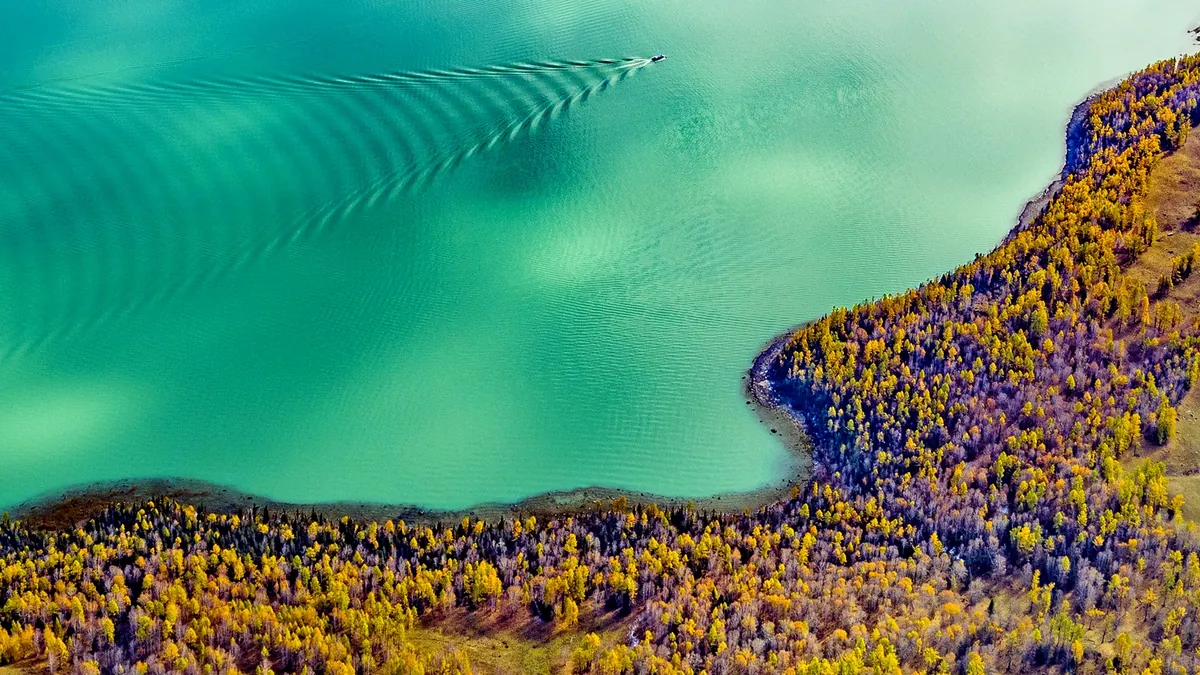
Amidst the myriad upheavals of history and current affairs, Xinjiang’s nature still preserves for this land a pure and ethereal beauty reminiscent of a celestial realm. Gazing at the panoramic view from above, the lake’s surface appears calm with a strikingly vibrant jade-green hue, where a small boat glides gently, parting the water to create elegant white trails of foam that ripple across the crystal-clear mirror. Enveloping this picturesque lake are vast, dense forests, with tier upon tier of trees donning their autumn attire in shades of glowing gold interwoven with passionate orange hues, painting an endless epic of the Western Regions’ earth and sky.
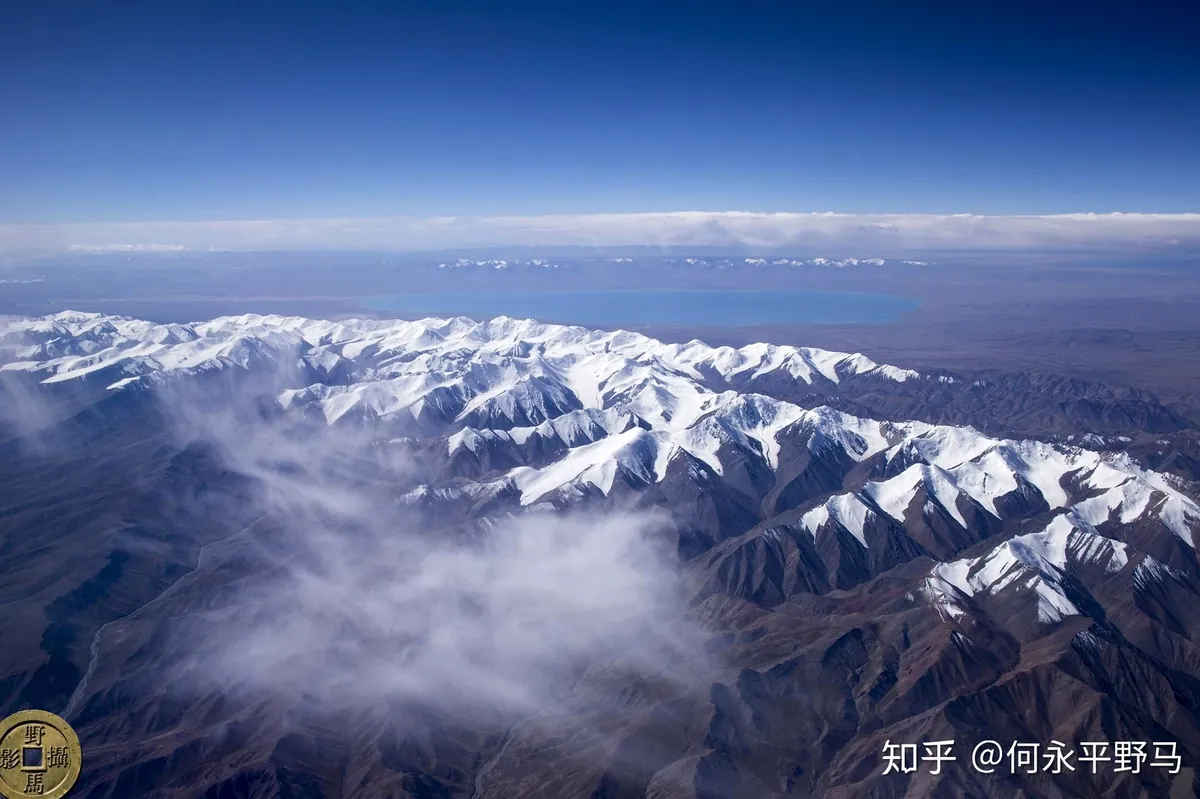
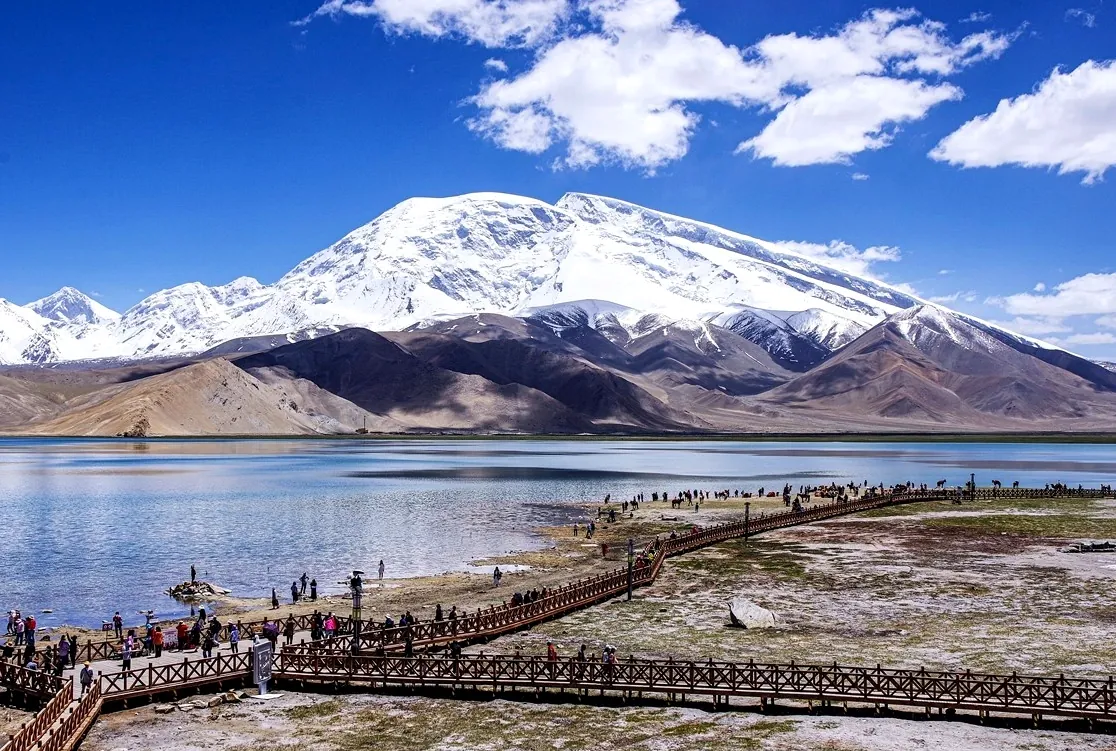
Regarding natural geomancy and geomorphology, Xinjiang possesses a spatial structure unique on the Earth’s surface, summarized by ancients into the schema “Three mountains enclosing two basins” (三山夹两盆). Three gigantic mountain ranges resembling pillars holding up the sky run parallel in a west-east direction, cradling two vast lowland basins. At the northernmost tip stands the majestic Altai range, a realm of boundless Taiga forests and fine powdery snow; to the south lies the boundless, sacred Kunlun range along with the starting point of the Pamir Plateau, known as the “Roof of the World,” where the towering Muztagh Ata peak reaches an altitude of 7,546 meters. Crossing the middle of the territory like an immortal dragon spine is the undulating Tianshan range, acting as a natural rampart dividing Xinjiang into two completely distinct ecological and cultural worlds: Northern Xinjiang, open-minded with a nomadic lifestyle among vast grasslands, and Southern Xinjiang, contemplative with prosperous oases trailing along the fiery yellow sand strips of the Taklamakan Desert in the Tarim Basin, perfectly balancing the Dzungarian Basin in the north.
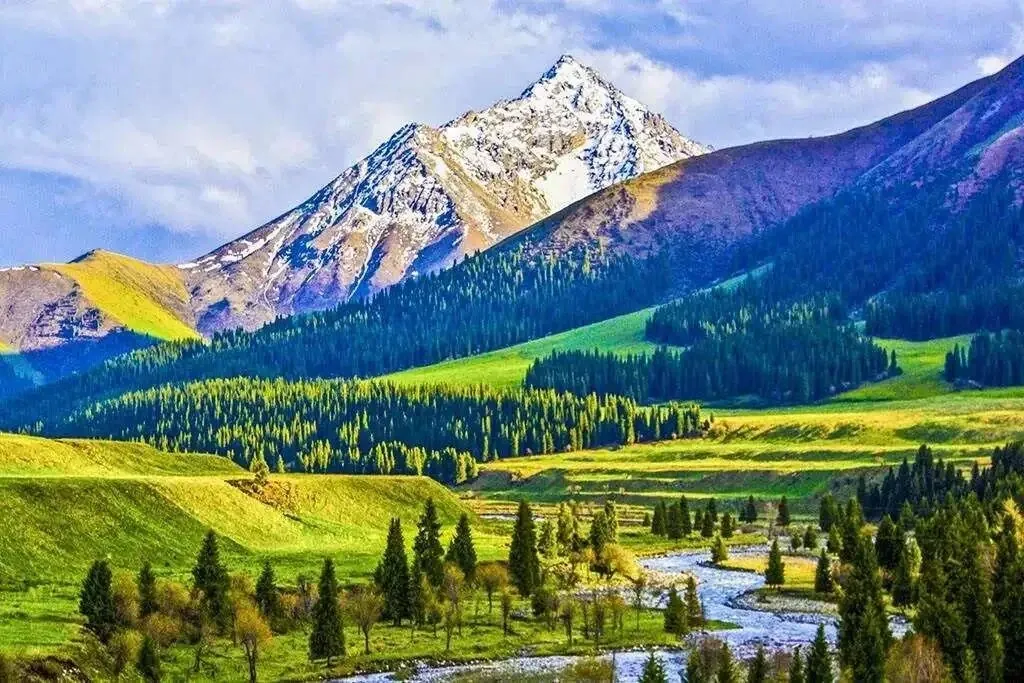
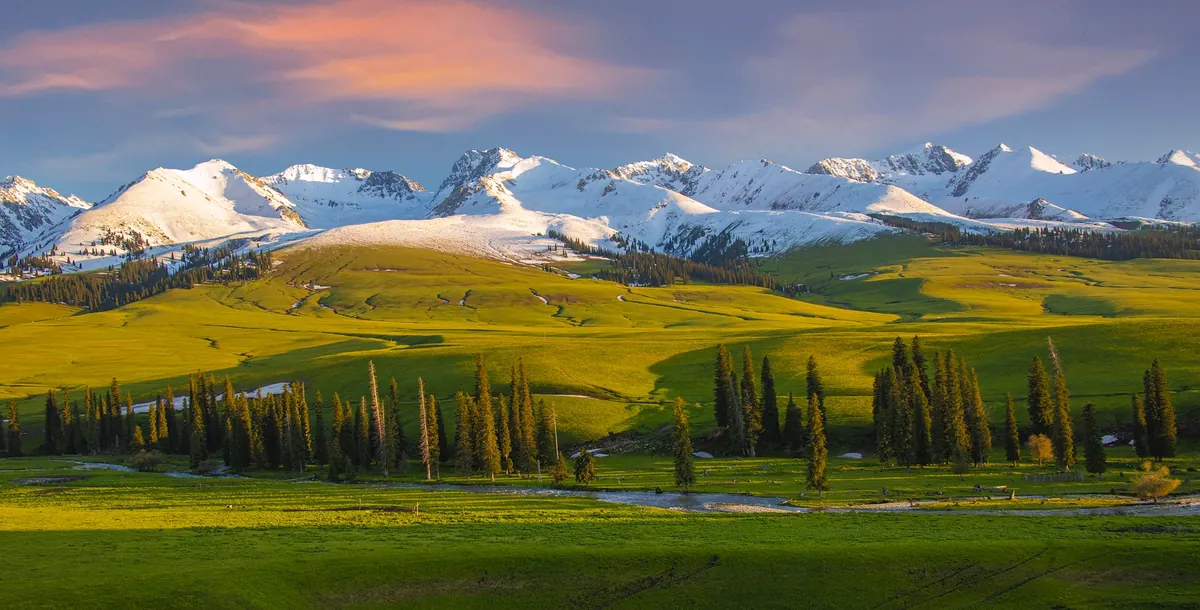
This magnificent geomorphic tapestry is most vividly revealed along the transitional valley slopes of the Tianshan mountain range, where raw wilderness reaches a degree of perfection and surreal beauty. The traveler’s gaze opens up to an expansive vista of endless snow-capped peaks rising proudly against the distant horizon. Right beneath this eternal layer of ice and snow lie undulating emerald-green hills that stretch seamlessly into vast, boundless grasslands. In the foreground, a gentle river meanders around towering coniferous trees, casting their crystal-clear reflections under a twilight sky softened by hazy sunset hues. Streaks of pastel pink clouds interwoven with serene azure tones transform the entire scene into a tranquil, otherworldly masterpiece of nature.
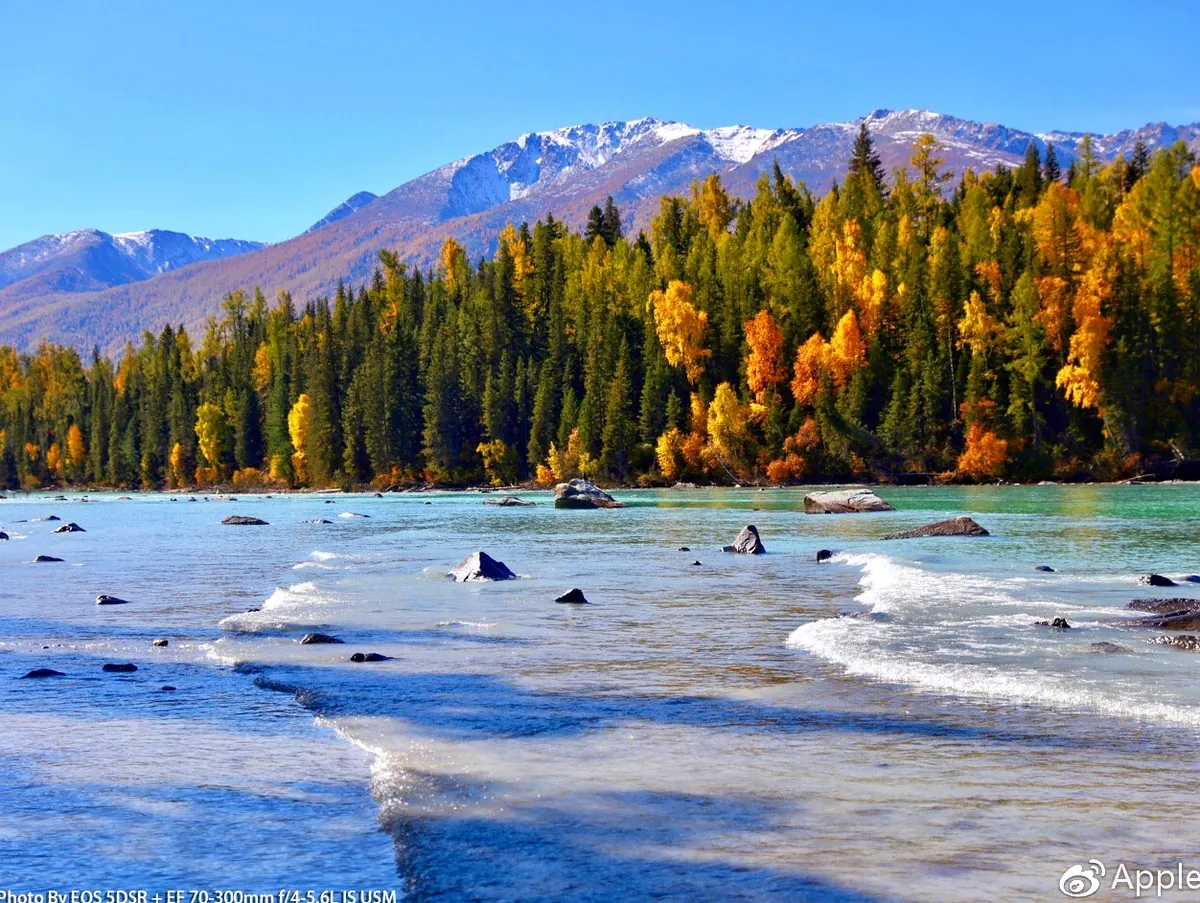
Venturing deeper into Northern Xinjiang at the foot of the Altai range, the natural landscape unveils an ethereal charm through the Kanas River valley and the ancient village of Hemu hidden amidst a fairytale setting. The magical waters of Kanas shift in color from jade green to deep sapphire with each melting ice season, weaving through Siberian deciduous pine forests and golden birch woods in autumn. Not far away, perched on the northern slopes of Tianshan at an altitude of over 2,000 meters, the tranquil Sayram Lake holds the final teardrop of moisture carried by distant Atlantic air currents. The glassy surface of the lake acts like a giant turquoise mirror, perfectly capturing the reflections of eternal snow peaks and herds of steppe horses grazing peacefully along the shore.
This epic topography continues to unfold southward across the high-altitude plateaus of Nalati and Bayanbulak, where the Kaidu River flows softly across the grassland, forming nine winding bends that refract the image of nine fiery suns during mystical twilight hours. Following the legendary Pamir Highway G314 toward the Western frontier, travelers are once again awestruck by White Sand Mountain, where pristine white sand dunes contrast sharply with the deep blue waters of Karakul Lake at the foot of eternal glacier peaks. This topographical epic draws to a dramatic close in the Turpan Depression, a basin lying 154 meters below sea level, where extreme aridity and scorching heat stand in total contrast to thousands of years of ice and snow, completing a powerful and dynamic masterpiece of Xinjiang’s creation.
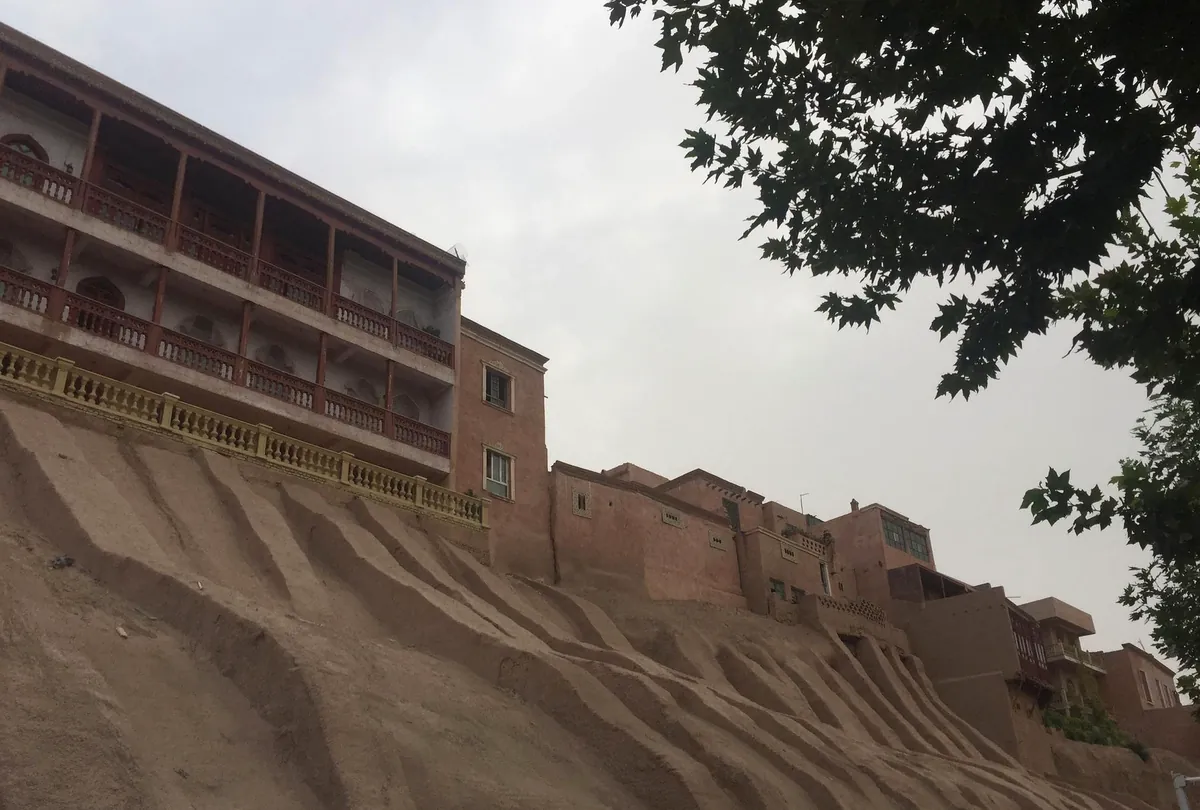
Spanning over two millennia of development along the edge of the Taklamakan Desert, the Ancient City of Kashgar stands proudly as a living museum of spatial creation by ancient oasis dwellers. The entire complex is the world’s largest earthen labyrinth, constructed using traditional Pisé techniques combining compacted clay, dry straw, and desert branches, supported by pillar and beam systems of desert poplar wood intricately carved with geometric patterns. The most unique feature in the local urban planning here lies in the hidden navigation code beneath the feet: alleys paved with bricks in a herringbone pattern indicate through-routes connecting neighborhoods, while single rows of horizontally laid bricks signal dead ends, preserving a quiet and private space for local families.
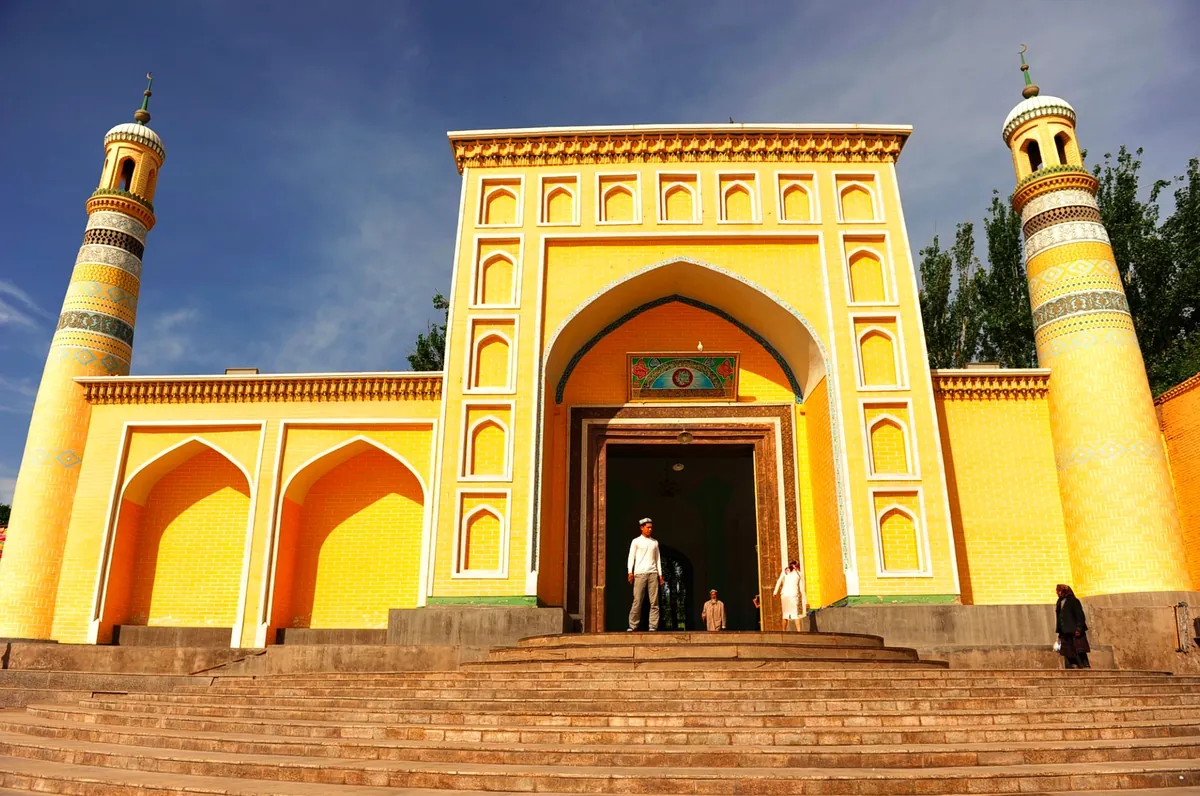
Standing majestically amidst the oasis is an architectural masterpiece cloaked in a vibrant golden hue under the desert sun, exuding a majestic and serene ambiance. The center of the structure opens with a soaring, large arched gateway deeply infused with Central Asian style, balanced symmetrically by two slender minarets reaching straight up into the azure sky. Broad stone steps extending across the front courtyard guide visitors and worshippers into the sanctuary, where small figures walk slowly by, evoking a profound, contemplative depth amidst millennia-old heritage.
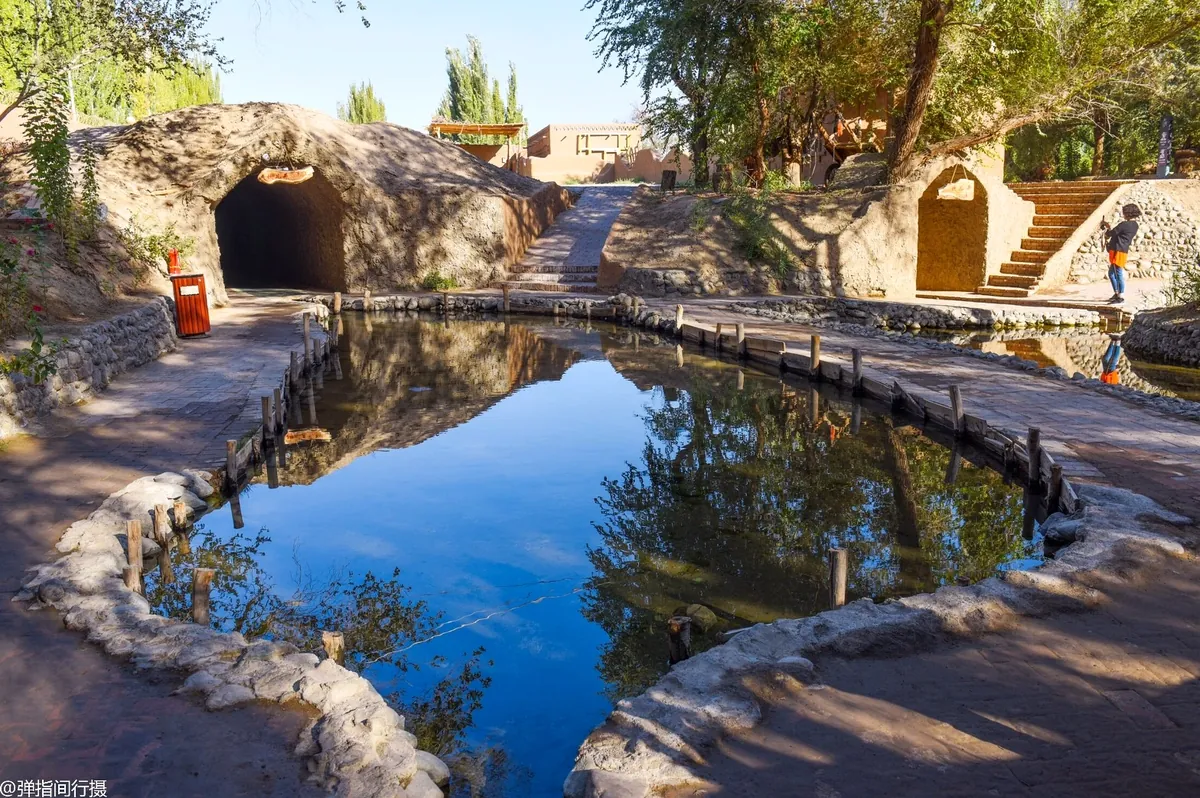
If Kashgar represents the art of earthly dominance, the Karez underground irrigation system in the Turpan oasis stands as a testament to the ingenuity of conquering the underground, honored as one of China’s three great ancient engineering feats. To prevent fierce water evaporation in the Flaming Mountain basin, ancient people dug thousands of straight vertical wells connected to the Amqu underground channel system, plunging 10 to 50 meters deep into the earth to channel pure melted snow from the Tianshan mountain range to irrigate vast vineyards. Rooted in this philosophy of relying on the desert’s underground, in the mid-twentieth century, the Xinjiang Production and Construction Corps gave birth to the unique Diwozi (subterranean dwellings) architecture. These semi-subterranean homes dug deep into loess soil protected people from force-twelve sandstorms and temperature fluctuations of up to forty degrees between day and night.
Heading north toward the frontier, Hemu ancient village of the Tuva people in Kanas expresses the pinnacle of rustic cold-region wooden culture. Traditional wooden houses are built entirely from solid Larch logs, precisely joined using mortise and tenon techniques without using a single iron nail. The steep A-shaped roofs allow two to three meters of heavy snow to slide off in winter, while all gaps between the logs are tightly packed with dried forest moss, keeping the interior cozy even when the thermometer plunges to minus forty degrees Celsius. The architectural diversity of this land is further adorned by the Hami King’s Mansion, where Han imperial architecture and Manchu multi-story pavilions blend seamlessly with Islamic domes and Mongolian steppe-carved motifs.
Stepping into the modern era, Xinjiang has broken through to become the epicenter of modern infrastructure miracles. The aviation network boasts up to 25 commercially operated airports, the most among China’s provinces and regions, connecting everything from the 4F-standard Urumqi Diwopu hub to the Tashkurgan plateau airport perched at an altitude of 3,258 meters. The 1,776 km Lanzhou-Xinjiang high-speed railway network cuts through desert gale corridors, running parallel to the world’s first desert railway loop spanning 2,712 km—which overcomes shifting sandstorms thanks to the Hotan-Ruoqiang railway featuring 53.5 km of viaducts crossing sand dunes. Alongside these, vital arteries such as the G217 Duku Highway traversing the majestic Tianshan range, the G314 Karakoram Highway, and the S21 Desert Expressway have transformed once-remote lands into Asia’s premier epic touring routes.
As dusk falls over the remote oasis, Xinjiang does not fall asleep but awakens into a mesmerizing realm of sound and light, where thousands of years of cultural strata blend with the contemporary heartbeat. The most sacred pillar of the steppe and desert soul is the “Twelve Muqam,” a massive encyclopedic collection of classical Uyghur music and folk poetry, refined and perfected by master artisans in 1533 during the Yarkent Khanate. In the quiet of the night, the resonant strings of the Rawap, the deep reverberation of the Tambur plucked lute, and the ethereal bow of the Satir echo, intertwining with ancient chanting melodies to transport the listener’s consciousness through the shifting fortunes of the Silk Road.
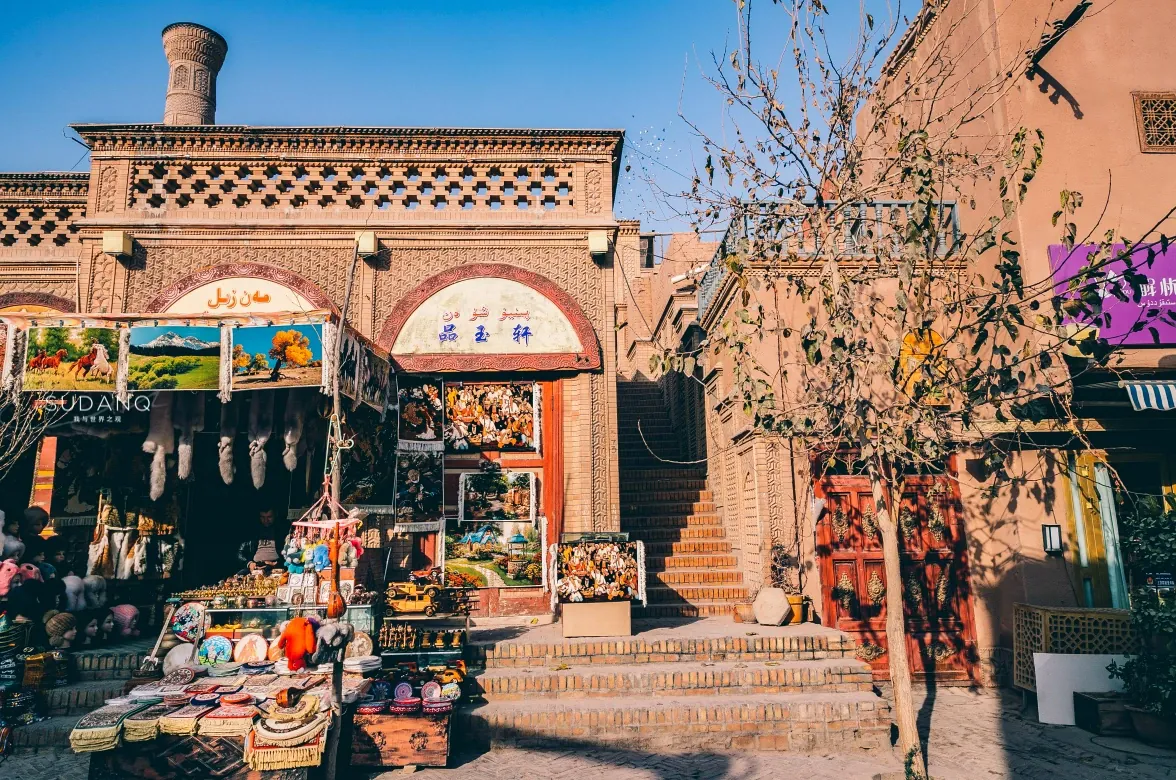
That ancient breath is vividly present in every ancient alleyway bearing the distinct architectural imprint of Central Asia, where sturdy red-brick houses stand out with curved archways and intricately decorated minarets reaching proudly toward the sky. Along stone-paved paths winding through uneven steps, the bustling market street welcomes visitors from afar with countless vibrant handicraft stalls, selling elaborately patterned woven carpets, warm fur garments, and hand-chased copperware. Beside the bare, contemplative winter trees, traditional commercial life continues its steady cycle, perfectly reflecting enduring prosperity and timeless classical charm across the centuries.
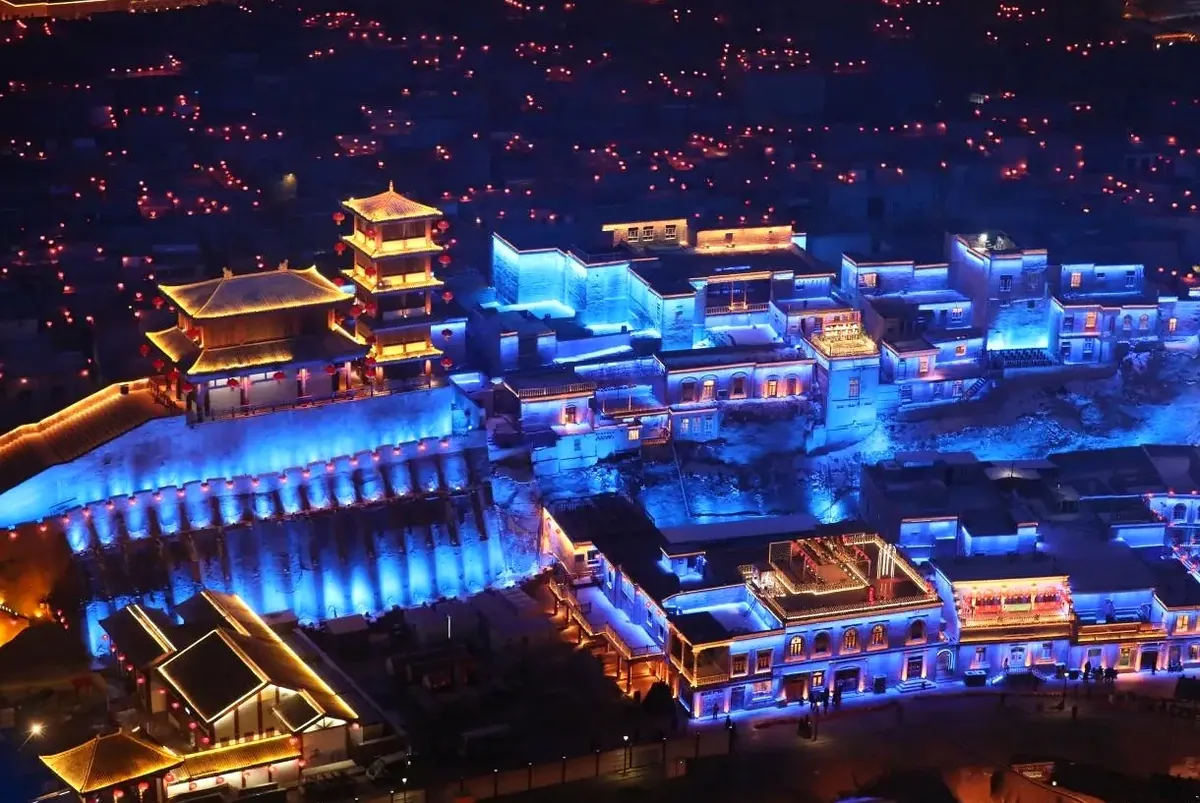
The enduring vitality of Southern Xinjiang reaches its visual pinnacle when advanced 3D mapping projection technology blankets the towering, thousand-year-old rammed-earth walls of Kashgar Old Town, recreating the historical glory that once dazzled global audiences during the prestigious Spring Festival Gala. Once the artistic lights settle, real-life vitality bursts into vivid color at the Kashgar Old Town Night Market and the Urumqi Night Market. Under warm yellow string lights weaving across the pathways, rising charcoal smoke blends with the rich aroma of cumin and black pepper on golden skewers of lamb, harmonizing with the lively beats of the Dap drum and the resonant strains of the Dutar echoing through every alley, creating a vibrant, all-night celebration.
Heading back to the vast grasslands near the giant wind turbines in Dabancheng, the campfire night is filled with romantic poetry through the immortal melodies of the folk song “Girl of Dabancheng”, painstakingly collected and popularized by musician Wang Luo bin. Following the wind up to the pristine Northern Xinjiang, in the pristine valleys of Kanas and the ancient wooden village of Hemu, the crystal-clear night sky free of light pollution unveils a brilliant Milky Way resembling a diamond carpet stretching across eternity. Around the crackling campfire that dispels the alpine chill, travelers join in the graceful Shaman dance and listen to the soulful tunes of the horse-head fiddle (Morinhur) played by the Kazakh and Tuva people, closing the magical night canvas with the most primitive and magnificent emotions of the frontier.
Straddling the crossroads of the legendary Silk Road, Xinjiang cuisine is a wild yet profound symphony between the pastoral grazing habits of nomadic grassland tribes and the sophisticated culinary arts of prosperous oases. Governed by a harsh continental climate and mineral-rich soils, the cuisine here honors the authenticity of each cut of meat, combined with pungent herbs such as Sichuan peppercorns, Zira (cumin) seeds, and spicy dried chili peppers. From the steaming iron woks alongside dusty roadsides to cozy heirloom banquet tables in silky flower gardens, every local dish tells a vivid epic of survival, generous hospitality, and the thousands-year-old flow of East-West cultural exchange.
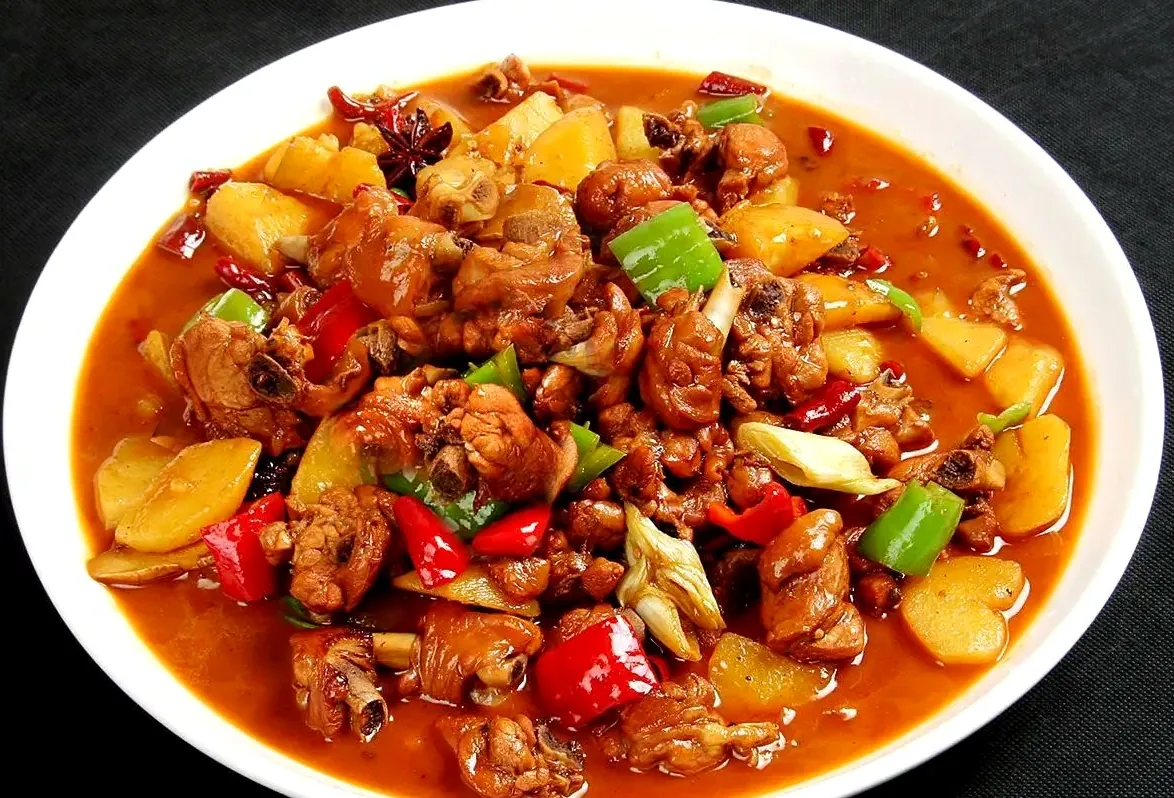
Placed right in the center of the dining table is a large plate of the famous Big Plate Chicken (Dapanji), standing out with its warm colors and mesmerizingly thick, rich texture. The thickly chopped chicken pieces are simmered until tender, glistening with a caramel-brown hue from caramelized sugar, immersed in a spicy sauce laden with Tacheng dried chilis and sliced green horn peppers. Interspersed among the firm meat fibers are soft, floury chunks of yellow potatoes that have fully absorbed the essence of fragrant peppercorns and savory chicken fat. The piled-high plate gives off steaming plumes and the characteristic pungent aroma of Western Regions herbal spices, thoroughly stimulating both sight and smell, and leaving a profound impression of local culinary excellence.
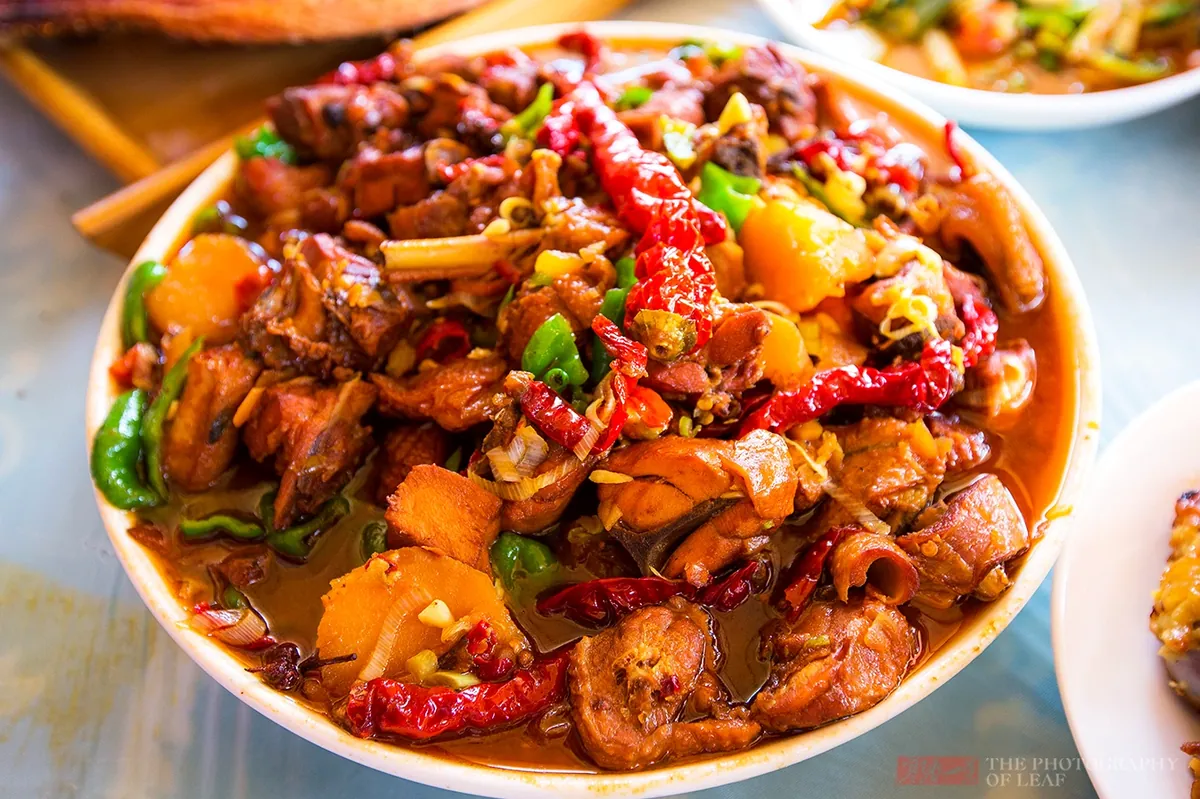
Originating from Shawan town along the vital G312 national highway, Shawan Dapanji was originally born to warm up long-haul truck drivers braving the desert winds and cold. The core soul of the dish lies in the ingenious resonance between the tongue-numbing spiciness of Tacheng chilis, the tingling numbness of Sichuan peppercorns, and the intoxicating yeast of Wusu beer—the legendary brew known as the “life-taking drink” of the Western Regions. As the plate of chicken gradually empties, wide, snow-white, hand-pulled Belt Noodles (Daizi mian) with a chewy yet soft texture are tossed into the dish to soak up every drop of the thick, spicy, and savory red sauce, creating an unforgettable and robust aftertaste.
Going hand in hand with the famous braised chicken, the festive meals of the locals are never complete without Western Regions Pilaf (Polo / Shouzhua Fan). In huge iron woks set up in courtyard yards, pieces of young lamb sizzle and release savory fat, blending with the uniquely sweet Huangshi yellow carrots native to the Tarim Basin, sautéed onions, and glistening long grains of rice. The warm fragrance of Zira cumin seeds intertwined with the gentle sweetness of raisins scattered on top creates a cohesive dish of fluffy, separate grains that are aromatic and rich without being greasy. At the corner of a breezy open-air market, Red Willow Branch Mutton Skewers (Hongliu Kaorou) showcase another peak of street food. When the desert red willow branches come into contact with glowing charcoal, they release natural aromatic sap that eliminates the gamey smell of fresh lamb while infusing a delicate woody flavor into every succulent lean meat fiber; simply sprinkling a little coarse salt, chili powder, and cumin is enough to awaken all senses.
The rhythm of life and soul of the oasis dwellers are also encapsulated in the immortal proverb: “Better to go three days without meat than a single day without Nang”—meaning you can skip meat for three days, but not Nang bread for a single day. Kneaded from fermented wheat flour and baked directly against the walls of clay ovens heated over 300°C, rose Nang, sesame Nang, or scallion Nang boast extremely low moisture content, allowing them to be stored from one to six months without molding, which once served as a life-ensuring dry ration for camel-riding merchant caravans. Traveling further up to Northern Xinjiang, the culinary flavors shift to a rustic nomadic style with charcoal-grilled pike by Lake Kanas, bowls of rich and salty milk tea, and sips of pungent, fermented mare’s milk wine (Airag); while the ancient villages of Southern Xinjiang captivate faraway guests with chewy Lagman pulled noodles, eggs buried and baked in hot desert sands, and charcoal-roasted squab at market corners.
Concluding the culinary map of the Western Regions is a world of pure sweetness accumulated from the harsh temperature fluctuations between day and night. Crunchy and delightfully sweet Hami melons, seedless green Sultana grapes naturally air-dried in terracotta ventilation towers in Turpan, chewy Ruoqiang red dates, and Aksu sugar-cored apples with crystalline ice-like hearts have become magnificent gifts of nature, leaving a refreshing and sweet aftertaste across endless white sands.
This vast land of over 1.66 million square kilometers in the far west undergoes spectacular seasonal transformations throughout the year. The golden season in Xinjiang is brief, lasting from mid-September to early October. This is when the primeval Taiga birch forests around Lake Kanas dress in brilliant gold, ancient Populus euphratica trees on the edge of the Taklamakan Desert cast magnificent reflections under the sunset, and sweet Hami melons reach their peak harvest. Entering summer from June to August, the legendary Duku Highway G217 cutting through the Tianshan mountain range reopens to traffic as the mountain passes are cleared of thick snow and ice. It showcases the full spectrum of all four seasons—spring, summer, autumn, and winter—within a single day’s journey, accompanied by the boundless purple of the Yili lavender valley and the serene, jade-tinted waters of Sayram Lake. When winter reigns from November to the following March, the Altay Mountains and the ancient village of Hemu transform into a powdery snowscape, featuring natural slopes ideal for professional skiing.
For Vietnamese travelers, conquering this rugged frontier region is subject to extremely strict security and visa regulations. Current rules do not apply the 144-hour transit visa-free policy or provide landing visas for journeys deep into the interior. Therefore, travelers are strictly required to apply for an L-category sticker visa in advance, supported by rigorous flight itineraries and hotel booking confirmations. In particular, to enter the Taxkorgan Tajik Autonomous County, admire the reflection of Mount Muztagh Ata in Karakul Lake, or reach the Khunjerab Pass near the border of Pakistan and Tajikistan, a Border Defense Permit is an indispensable document. Independent travelers cannot obtain this travel permit on the spot by themselves; instead, they must go through a designated tour operator to submit a guarantee to the local public security bureau 7 to 14 days before departure. Throughout transportation arteries such as the G217 and G314 national highways or the metro system in the capital Urumqi, dense security checkpoints require original passport scans and biometric recognition, where all filming and photography are strictly prohibited. In addition, foreigners are only permitted to stay at hotels licensed to host foreign guests according to an approved list.
The border tourism market previously harbored numerous sophisticated commercial traps targeting travelers’ affinity for specialty souvenirs. The most common trick was the sale of counterfeit Hotan jade made from chemically pressed stone powder or worthless quartz, with initial prices quoted as high as 50,000 Yuan before dropping drastically to 2,000 Yuan to lure buyers. Similarly, at Tianshan herbal medicine stalls, many small merchants deliberately blurred the unit conversion from liang to gram when selling Snow Lotuses or Cordyceps, inflating the actual cost tenfold. To protect the rights of travelers, the autonomous region’s government has implemented an advance-compensation mechanism connected via the 12345 hotline, allowing visitors to file complaints with photo evidence of invoices and receive a full refund within 24 to 48 hours if fraud is detected. To completely eliminate the aforementioned risks, modern service selection standards prioritize the Pure Sightseeing tour model, firmly adhering to the three-no criteria: no forced shopping stops, no hidden surcharges, and no physical exhaustion from pointless empty driving legs.
In addition to procedural and service factors, physical adaptability is the key determinant of success for a journey across the arid plateaus. With air humidity frequently dropping below 20%, the body is prone to chapping and cellular dehydration, requiring continuous electrolyte replenishment, intensive moisturizers, and broad-spectrum SPF50+ sunscreen to combat harsh ultraviolet indices. As vehicles climb the Pamir Plateau at altitudes ranging from 3,200 to 4,700 meters above sea level, acute mountain sickness can escalate if travelers take hot baths for too long during their first night resting in Taxkorgan. Preparing a mini high-pressure oxygen canister along with courses of Rhodiola Rosea herbal supplements or the altitude acclimatization medication Acetazolamide will help keep breathing steady. To fully relieve complex logistical pressures and peaceably enjoy every magical moment along the legendary Silk Road, travelers can consider entrusting their journey to the all-inclusive tour program meticulously designed, where all security and geographical barriers are comprehensively managed.
