


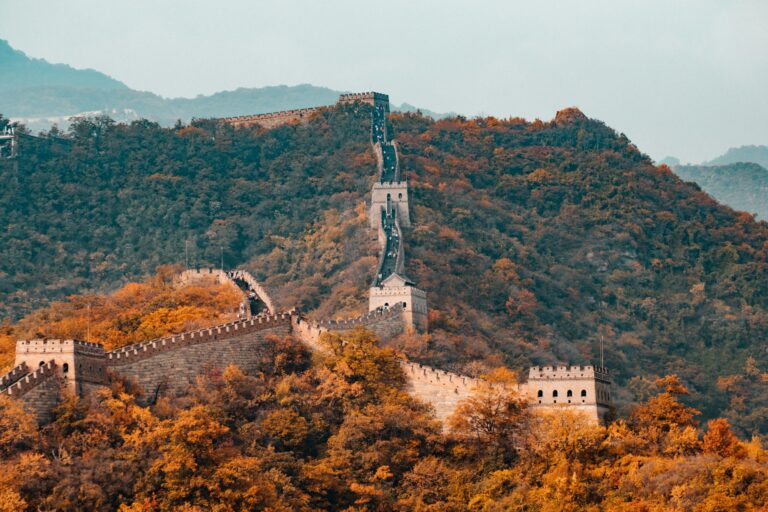



The process of annexation and the consolidation of supreme central power took place most fiercely during the Ming and Qing dynasties. In 1413, the 11th year of the Yongle era, Emperor Yongle Zhu Di, taking advantage of a power struggle between the Tuzhou and Sunan chieftains, ordered the abolition of native officials and officially established the “Guizhou Provincial Administration Commission,” shaping Guizhou into the 13th province of the Great Ming. Nearly two centuries later, in 1600 (the 28th year of the Wanli era), the large-scale rebellion of Bazhou chieftain Yang Yinglong triggered one of the fiercest military campaigns. Viceroy Li Hualong led an army of 200,000 to besiege the strategic Bailongdun military stronghold on top of the rugged mountain for 114 days and nights, permanently ending 725 years of hereditary separatist rule by the illustrious Yang family. By the sixth year of the Yongzheng era (1728) under the Qing Dynasty, Yun-Gui Viceroy Eertai thoroughly implemented the “Gaitu Guiliu” policy (replacing native chieftains with appointed officials), eliminating the hereditary privileges of the local chieftains to place officials appointed directly by the court in charge. To counter the resilient resistance movements of the Miao people, the Qing Dynasty constructed a system of fortified military outposts called the Miao Border Walls, also metaphorically referred to as the Southern Great Wall.
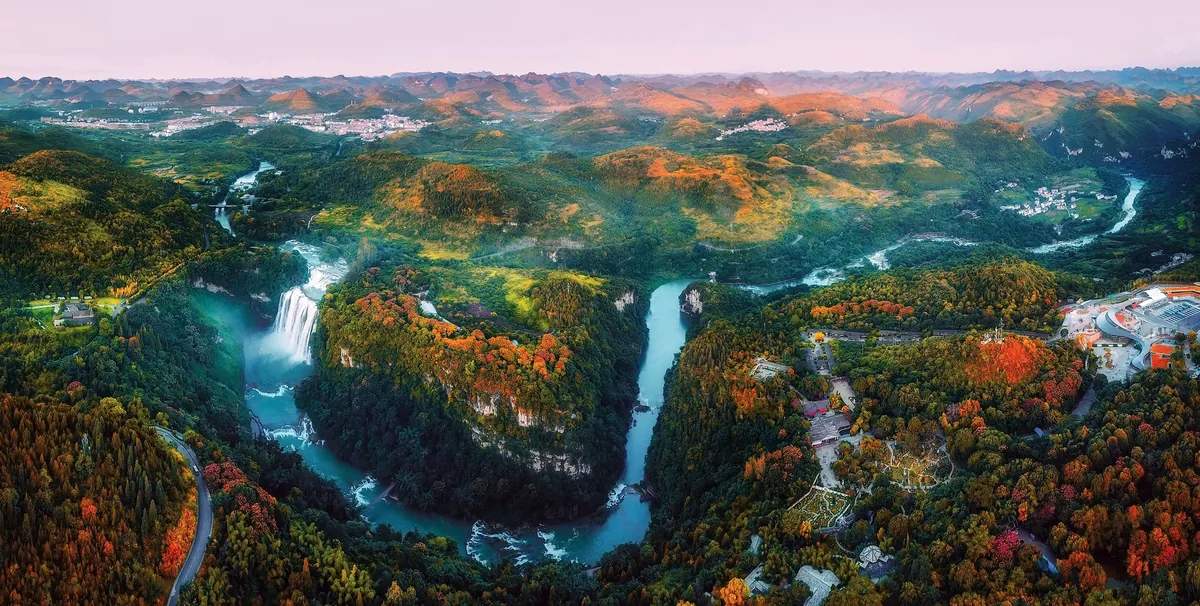
Viewed from the sky, Guizhou’s landscape emerges as a masterpiece of natural creation, with rolling, overlapping karst mountain ranges embracing deep valleys. Interspersed between the boundless dark green of primeval forests and the vibrant red-orange hues under daylight are magnificent waterfalls pouring white torrents from sheer cliffs down to winding, gentle rivers. Nestled against the watersides and rugged mountain slopes, resort architectural complexes and tourism infrastructure are delicately planned, intertwining harmoniously with peaceful local residential clusters in the distance, creating a picturesque landscape painting that retains its solemnity and pristine nature through the vicissitudes of time.
Entering the modern era, this rugged mountainous land was once again chosen as the stage for events that shifted the course of history. Amidst the arduous journey of the Long March, from January 15 to January 17, 1935, the Zunyi Conference was urgently convened in an ancient two-story building in the heart of Guizhou. At this life-or-death, turning-point conference, the erroneous military command of Bo Gu and Comintern military advisor Otto Braun (Li De) was dismissed, thereby establishing Mao Zedong’s supreme military leadership over the Red Army. This pivotal historical event not only saved the military campaign from the abyss of destruction but also propelled Guizhou into modern history as a “Red Holy Land,” marking decisions that shaped the political landscape of an entire era.
Situated at the intersection of Southwest China’s highlands, Guizhou possesses extremely rugged geological terrain, with up to 92.5% of its natural area consisting of mountains and rolling limestone karst plateaus. Since ancient times, folklore has summarized the geography and local climate here through a famous proverb: “Land has not three feet of flat ground, sky has not three days of clear weather, and people have not three cents of silver,” meaning the land lacks flat ground, the weather is rarely clear for three consecutive days, and people struggle to save even a few coins. Nevertheless, this heavily fragmented terrain combined with a humid subtropical monsoon climate blesses this land with an extremely pleasant microclimate in summer. With an average temperature of only around 22.3°C, Guizhou has affirmed its famous resort brand “Cool Guiyang,” turning this place into a refreshing escape from the heat amidst endless clouds and mountains.
Spectacularly present amidst the vast expanse of Guizhou’s mountains and forests is a panoramic view of a gigantic waterfall cascading torrents from lush, sheer cliffs. The roaring, gushing water creates white foam and thick, drifting mist throughout the deep valley below. Flanking both sides of the waterfall are overlapping mountains draped in the dense green robes of primeval vegetation. Along the right mountainside, a softly winding trail marks the footsteps of travelers eagerly admiring the wonder, above which lies a clear, high sky with serene, floating white clouds drifting gently by.
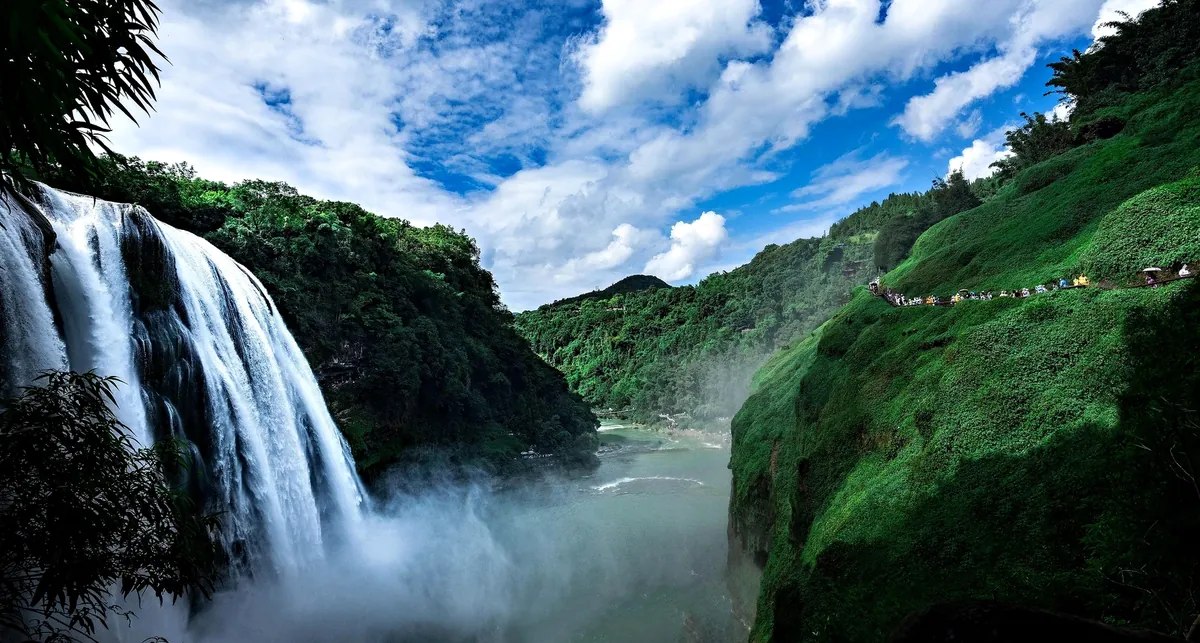
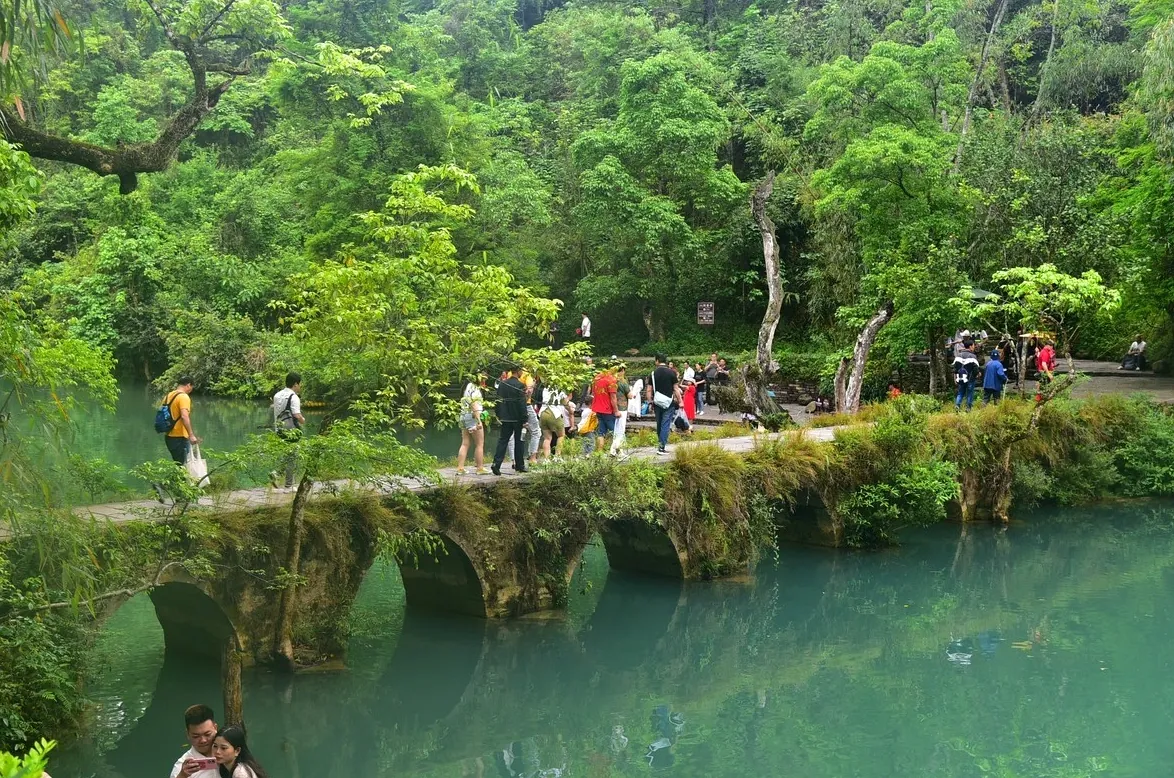
The most renowned aquatic landmark in this locality is the Huangguoshu Waterfall, situated on the Baishui River and honored as the largest grand waterfall in Asia, with a height of 77.8 meters and a width stretching up to 101 meters. What makes this scenic spot extraordinary is the existence of the Water-Curtain Cave (Shuilian Cave), stretching hundreds of meters and hidden right behind the roaring curtain of water, allowing visitors to fully experience the vibration of the waterfall from within the granite heart of the earth. Not far away, the Libo Xiaoqikong Karst World Biosphere Reserve opens up an entirely pristine world with a unique limestone forest ecosystem. This place charms travelers with its crystal-clear jade waters, the murmuring 68-tier waterfall cascading across natural steps, and the moss-covered, seven-arch ancient stone bridge built in the 15th year of Daoguang’s reign (1835) under the Qing Dynasty, reflecting its tranquil silhouette through nearly two centuries of ups and downs.
The Guizhou Karst landscape system also reaches an aesthetic pinnacle thanks to the magnificent Wanfenghlin (Forest of Ten Thousand Peaks), which gathers one of the densest and most distinct concentrations of natural Karst cones on the planet. These limestone cones surround a peaceful valley, lying adjacent to the deeply sunken Maling River Canyon—hailed as the earth’s most beautiful scar, featuring magical geological fractures covered in moss and countless waterfalls as thin as silk ribbons. Standing out prominently amidst this sacred land is the holy Mount Fanjingshan, a UNESCO World Nature Heritage site preserving a millennium-old spiritual symbol. The Red Clouds Golden Summit (Hongyun Jinding) reaches straight up into the sky at an altitude of 2,336 meters like a giant finger pointing to the heavens, reigning in absolute isolation amidst the swirling primeval sea of clouds, creating an otherworldly realm rarely seen in the mortal world.
Faced with a rugged terrain that once seemed to seal off all trade routes, the people of Guizhou have created extraordinary engineering miracles to transform this land into the “World’s Bridge Museum.” With nearly 30,000 modern bridges spanning deep gorges and profound rivers, this mountainous province proudly boasts nearly half of the world’s 100 highest bridges. Notable examples include the Beipanjiang Bridge, with a vertical clearance of 565 meters from the bridge deck to the valley floor, the Balinghe Bridge standing 370 meters high and serving as the world’s highest commercial bungee jumping spot, and the astonishing Huajiang Grand Canyon Bridge, reaching a breathtaking height of 625 meters. These massive structures not only shatter the old curse of mountainous poverty but also turn transportation infrastructure into man-made masterpieces that blend perfectly into the vast, breathtaking natural scenery of heaven and earth.
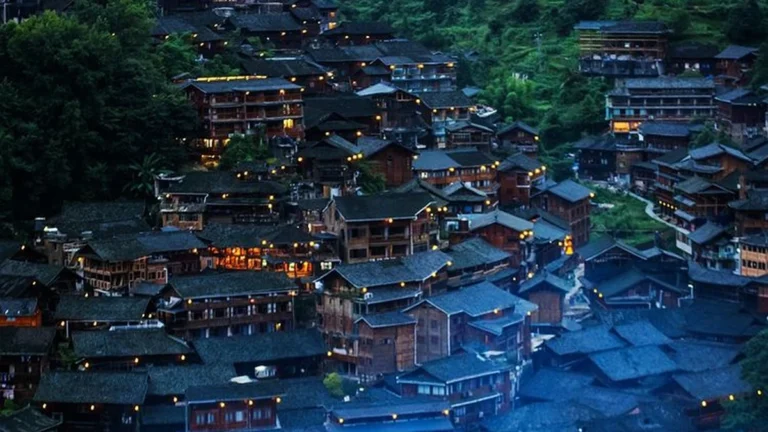
Perched precariously among treacherous limestone valleys, the spatial planning and residential architecture in Guizhou stand as an exceptional testament to the philosophy of living in harmony with nature rather than conquering the terrain. The most iconic representation of this craft is the Diaojiaolou (stilt houses) of the Miao ethnic group, erected vertically on mountain slopes with gradients ranging from 45° to 70°. Avoiding any leveling of mountains or cutting of hills, talented carpenters used a system of varying-length fir wood pillars that lean securely against natural rock ledges, interlocking with mortise and tenon joints completely free of metal nails. A standard Diaojiaolou clearly divides three functional levels: the ground floor, exposed to the damp earth, is reserved for firewood storage and livestock pens; the second floor is the heartbeat of the home, featuring a hearth fire that burns red all year round without ever going out, the master bedroom, and a curved corridor known as the “Beauty’s Lean”—where women embroider by the pine shadows; while the third attic level, the highest and most well-ventilated, is carefully preserved to store glutinous rice, corn kernels, hand-embroidered costumes, and generations of inherited silver jewelry.
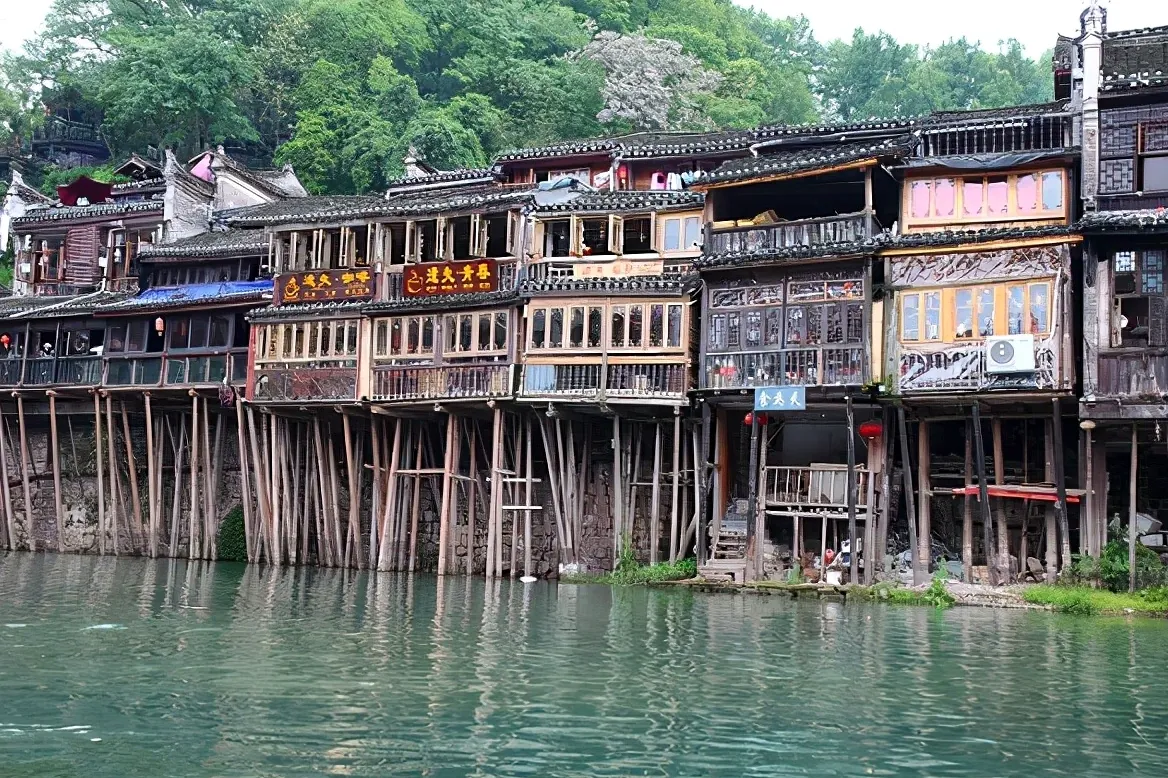
The sophistication of traditional woodworking continues to flourish through the Drum Towers (Gulou) and Wind-Rain Bridges (Fengyuqiao) of the Dong ethnic minority. Serving as the soul of the villages, the Drum Towers soar with 7 to 15 tiers of overlapping tile roofs, mimicking the posture of ancient millennia-old pine trees sheltering the community. This massive load-bearing structure is precisely joined together by tens of thousands of ancient fir wood mortise and tenon joints, entirely without a single iron nail, creating a perfect natural acoustic space for village elders to discuss community regulations and teach the melodies of the Dong Grand Song, an Intangible Cultural Heritage. Connecting the pathways in and out of the village are the towering Wind-Rain Bridges spanning rushing stream gorges. Harmoniously integrating pedestrian walkways, shelters against rain and storms, and multi-tiered lookout towers, the bridge not only connects transportation but also acts as a spiritual fortress, sealing off vital energies and preventing wealth from being washed away from the village by flowing waters.
In contrast to the elegance of deep-forest wooden architecture is the rugged, austere resilience of the Tunpu architectural complex in Anshun—a historical relic likened to a living fossil of the Ming Dynasty in the heart of the plateau. Formed from the military migration wave known as “Conquering the South from the North” under the reign of the Hongwu Emperor Zhu Yuanzhang in 1381, every cluster of houses, defensive fortification, watchtower, and city wall here was carved and fitted with mortise joints from thick bluestone slabs. The window systems are minimized to resemble sturdy loopholes, ready to transition from daily living to defensive combat in a split second. Inside these solemn stone fortresses, the descendants of the expeditionary soldiers persistently safeguard their ancient lifestyle, wearing original Fengyang-style Han Chinese attire and preserving the heroic wooden-mask theatrical art of Dixi (Ground Opera) imbued with the flavor of bygone eras.
}
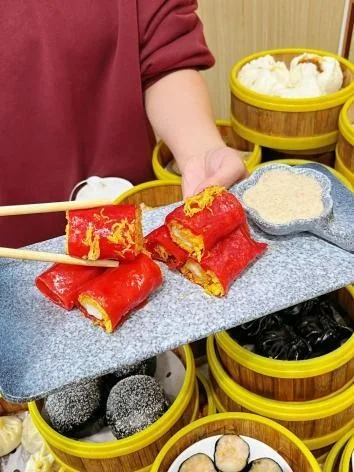
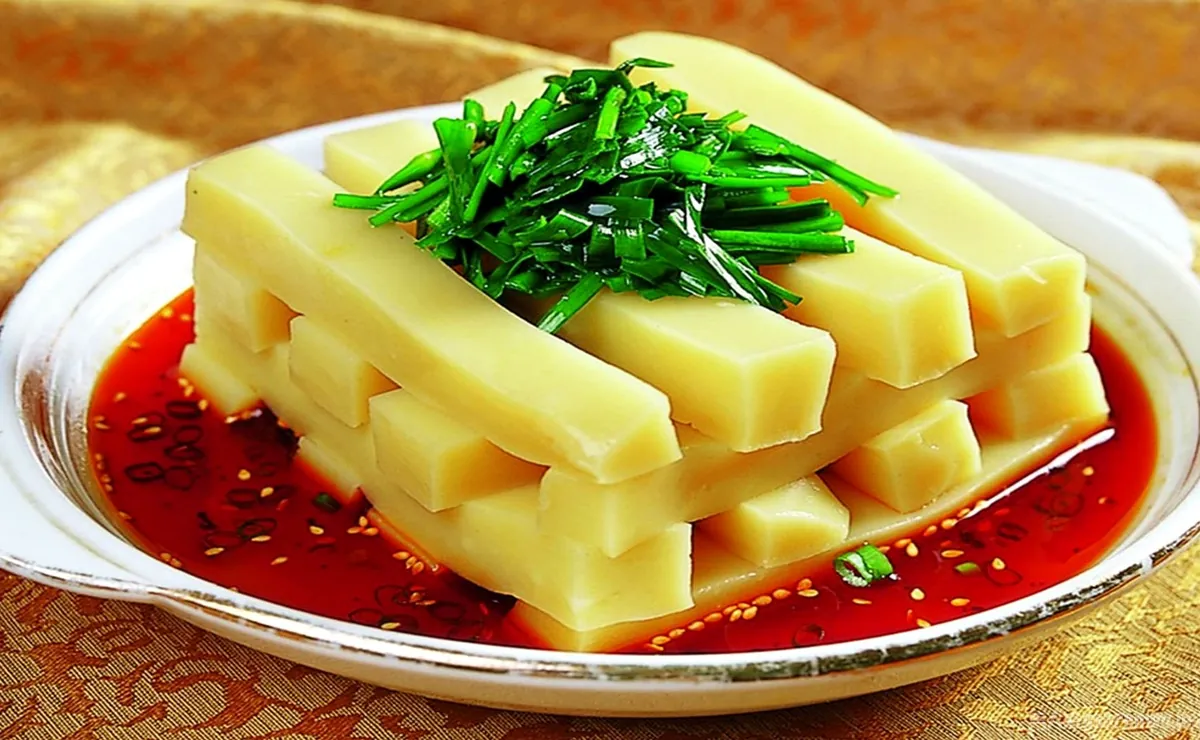
The lifestyle deeply tied to the mountains and forests, combined with the year-round humid and cold highland climate, has shaped a uniquely distinctive culinary culture where warmth and spiciness are essential sources of energy. Temptingly presented on travelers’ tables is elaborately crafted traditional tofu, cut into smooth, light-yellow rectangular pieces neatly stacked in pure white porcelain bowls. The entire portion of tofu is submerged in a vibrant red chili oil broth, sparkling with aromatic roasted sesame seeds and tongue-numbing dried chili flakes, garnished with a layer of vibrant green chopped scallions that create a perfect balance of flavors, awakening all senses after traversing mountain passes and streams.
The interweaving of magnificent architectural works leaning against cliff sides, ancient stone fortresses stained with the fires of past wars, and the rich lifestyles of various ethnic groups have transformed this land into a living outdoor anthropological museum. Every bluestone slab, every mortise-and-tenon fir beam, or every daily activity around the hearth reflects the enduring vitality and extraordinary resilience of humankind against the harshness of the rugged wilderness.
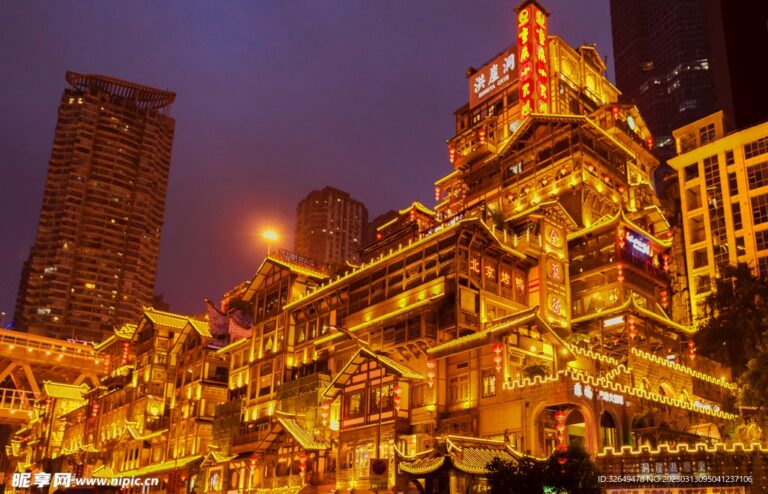
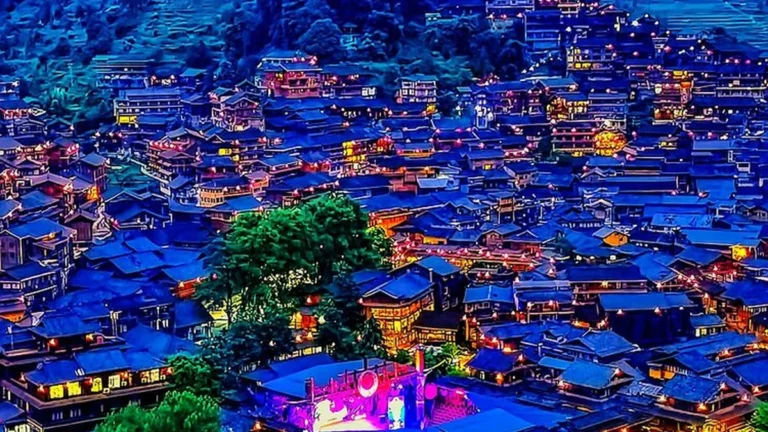
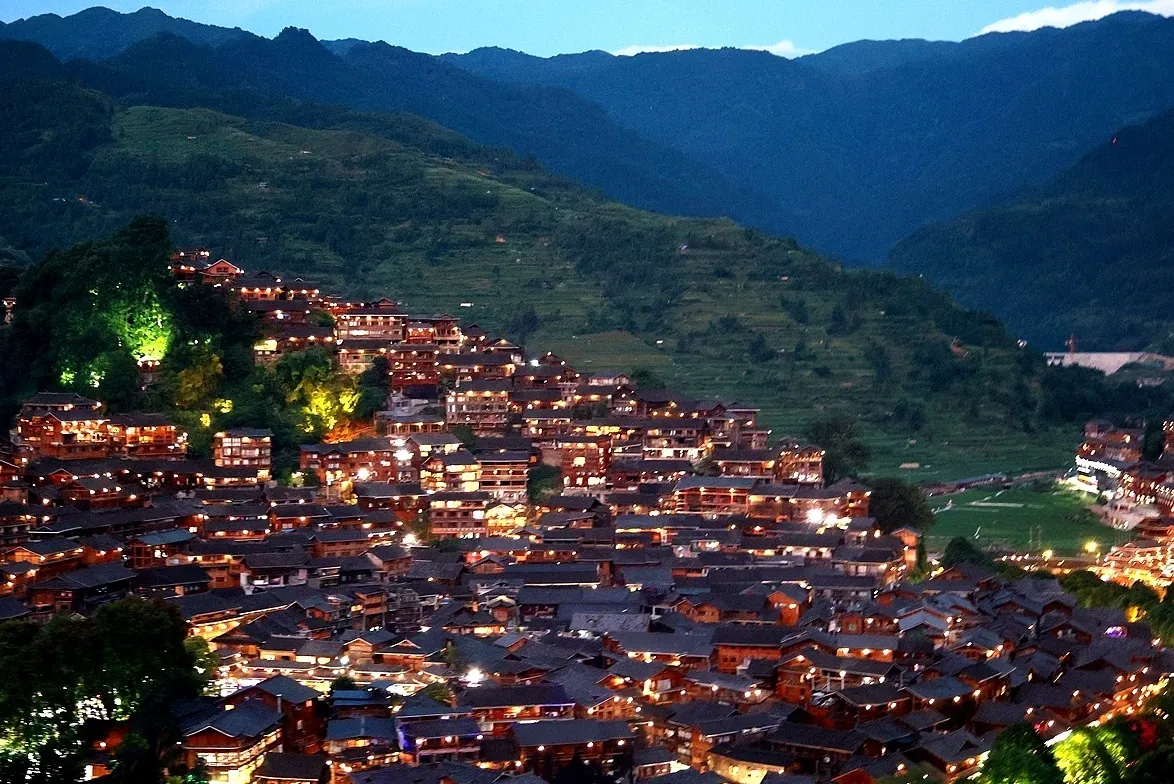
As the sunset gradually fades behind rolling limestone mountains, Guizhou sheds its rustic daytime attire to don a magnificent imperial robe woven from lighting artistry and the breath of community life. The pinnacle of nighttime visual aesthetics belongs to Xijiang Qianhu Miao Village, home to the world’s largest Miao residential community. Sprawling across two steep, bow-shaped mountain slopes, over 1,200 ancient fir-wood Diaojiaolou stilt houses simultaneously light up tens of thousands of warm yellow lanterns as darkness falls over the valley. Standing from the viewing platform at the top of the hillside and looking down, the entire mountain village resembles a magnificent Milky Way fallen gently into the mortal realm, with tiers of architecture overlapping and undulating along the natural contours. This dazzling warm light casts reflections on the tranquil Bailong River, gleaming across the arched roofs of the Wind and Rain Bridges, where Miao maidens in exquisite silver-embroidered attire sing romantic ballad melodies echoing through the highland night.
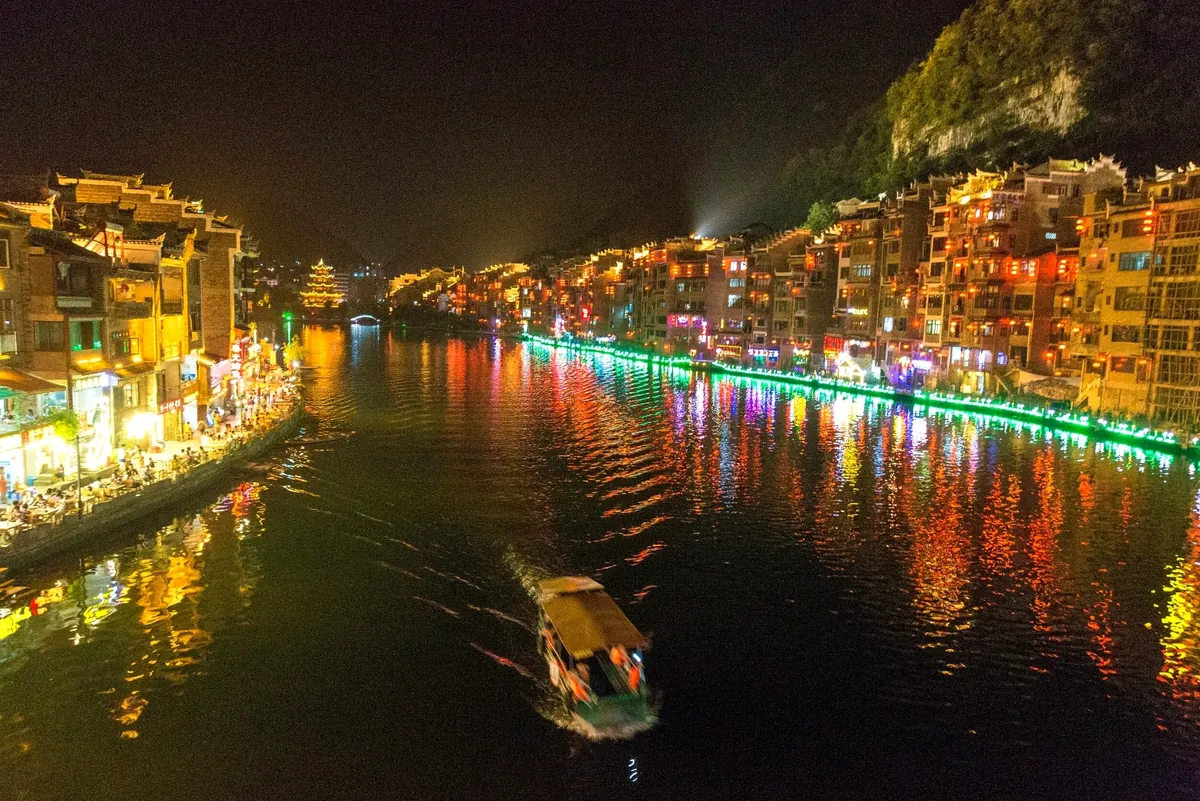
Leaving the Miao village, the nighttime landscape of Guizhou shifts into a more contemplative, ancient dimension at the ancient town of Zhenyuan nestled along the Wuyang River. This thousand-year-old historic town is laid out in a unique Bagua (Eight Trigrams) pattern, embracing the gentle, jade-green curves of the water. At night, traditional red lanterns are lit along ancient stone docks, merchant streets rich in Ming and Dynasty architectural styles, and winding, deep bluestone-paved alleys. The most powerful visual highlight is the ancient seven-span Zhusheng Stone Bridge, where the Wangjiang Pavilion rises proudly in the dark, casting a shimmering golden light onto the river surface. The interweaving of the subdued red lights of the ancient town and the hazy mist rising from the water creates a breathtakingly vivid natural scenery, reviving memories of a bustling water transport hub on the southern Silk Road of the past.
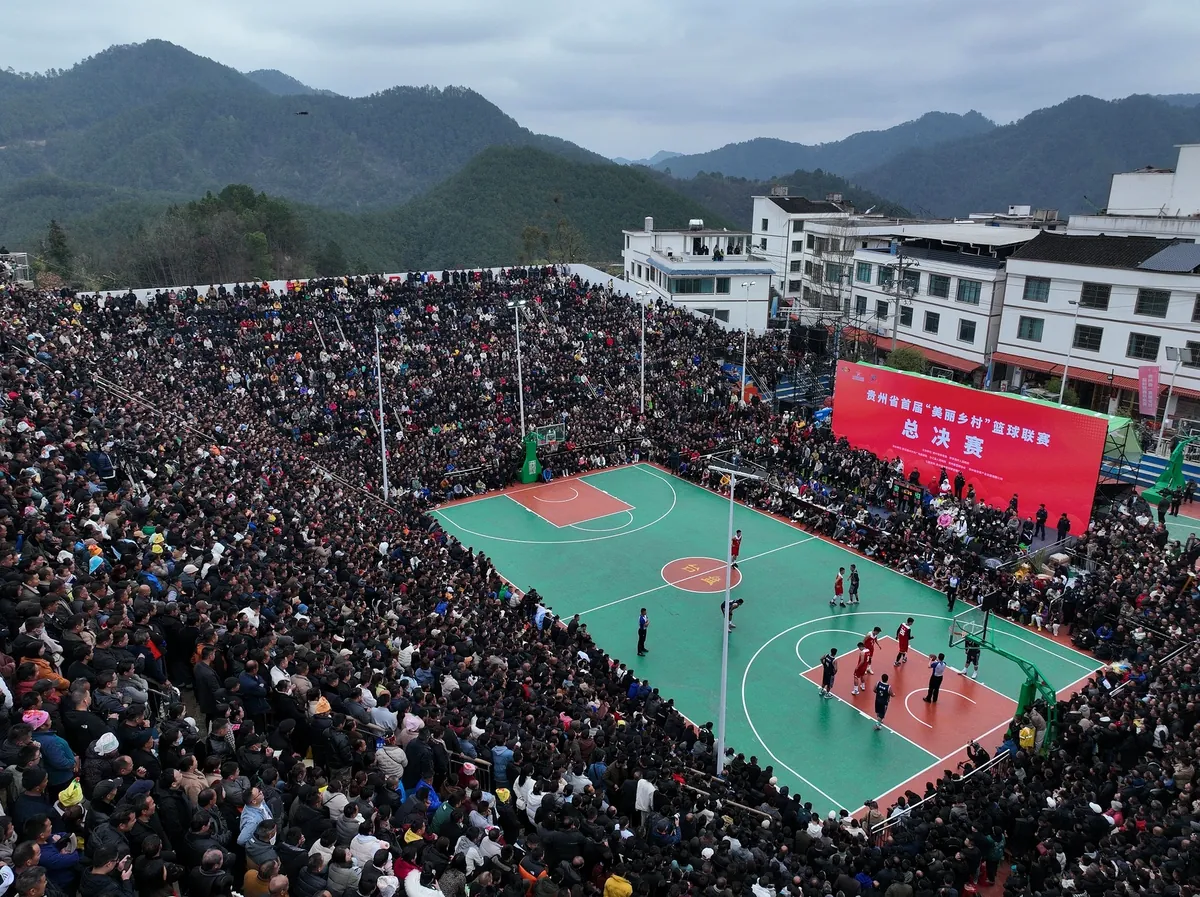
Going beyond the artistry of static light arrangement, Guizhou’s nightlife bursts with the raw energy of folk sports arenas, exemplified by the ‘Village BA’ basketball phenomenon in Taijiang County and the ‘Village Super League’ soccer tournament in Rongjiang County. As dusk yields to the brilliant high-pressure floodlights surrounding the stadium bowl, hundreds of thousands of locals and visitors from all directions flood in to fill every open-air grandstand. These are not merely competitive matches but actual cultural galas stretching through the night. Halftime breaks transform into grand live-action stages featuring dazzling brocade costume parades by Dong and Miao maidens, the rhythmic beat of bronze drums blending with the resonant melodies of Lusheng pipes that compel synchronized group dance steps. Surrounding the bustling arena are rows of night markets filled with the fragrant smoke of mountain cuisine, where the pungent and sour flavors of Kaili sour fish soup, the nutty sweetness of five-color sticky rice, and spicy grilled meats treat the festival-enthralled crowds.
Night art in Guizhou thus transcends the limitations of conventional mechanical projection technology. It is a sublime harmony between pristine stilt house architecture, the thousand-year flow of waterways, and the unyielding communal passion of the indigenous ethnic groups. Every golden light lit in Xijiang, every red lantern casting its glow over Zhenyuan, or the roaring cheers echoing under the stadium lights in Rongjiang are all flawless pieces that carve out the soul of Guizhou’s evening banquet, where humanity and the vast forests merge into one in an endless epic of light.
If the Sichuan basin captivates diners with the numbing, fiery spice of Mala peppercorns, and Hunan is renowned for its pungent, blazing Xiangla heat, the soul of Guizhou’s cuisine is fully defined by its profound Suanla (sour-spicy) philosophy. Nestled amidst rugged, overlapping mountains and a year-round humid climate, the indigenous people since ancient times have distilled their survival instincts into an immortal proverb: "Tam thiên bất cật toan, sát bộ đả thảng thảng" – meaning three days without a sour taste, and your steps will sway and stagger. The sourness here does not come from industrial vinegar, but is crystallized from hundreds of years of natural fermentation arts practiced by the Miao and Dong ethnic groups, opening up a culinary map that is both wild and scholarly, fully awakening every sense of the discerning gourmet.
The pinnacle of Guizhou’s culinary heritage is Suan Tang Yu, the famous sour fish soup originating from Southeast Qiandong. The soul of the dish lies in the Suan Tang broth, meticulously fermented in traditional wooden jars and divided into two styles: Hong Suan (Red Sour), brewed from wild tomatoes fermented to a vibrant, refreshing tartness, or Bai Suan (White Sour), distilled from pure fermented glutinous rice bran water. When the broth boils fiercely on the stove, the chef drops in fresh slices of paddy field carp just caught from the foot of the terraced fields, and sprinkles in an irreplaceable secret spice: Mộc Khương Tử seeds, known as wild litsea cubeba. The magical, cooling essential oil aroma blending wild lemongrass and refreshing mint of Mộc Khương Tử mingles with the sweet-and-sour tartness of the broth, creating a multi-layered flavor profile that both neutralizes the fishy odor and warms the meridians amidst the misty mountains.
Stepping into the urban rhythm of Guiyang, diners will be overwhelmed by the elegant and interactive nature of Si Wa Wa, also known as silk doll spring rolls. Delicate, cicada-wing-thin rice paper wrappers are skillfully used to wrap 12 to 15 types of fresh, crisp roots and vegetables neatly arranged on a round tray, ranging from crunchy tender bamboo shoots, black fungus, seaweed, and cucumber to shredded radishes. The soul and flavor test of the dish is Zhe Er Gen, or freshly minced houttuynia cordata – a distinctive endemic herb carrying the earthy, pungent spice typical of the Southwest. The dainty little roll resembles a newborn baby swaddled in cloth, drenched in a sour-spicy dipping sauce prepared from traditional ash-roasted chilies, creating a symphony that is crispy, light, and bursting with rustic flavors.
The boldness of Guizhou’s culinary arts is further affirmed by the famous Guiyang La Zi Ji, which is completely different from Chongqing’s crispy dried chili stir-fried chicken version. Firm free-range chicken is chopped into bite-sized square pieces and stir-fried to a thick, glossy coat using Ciba Chili sauce. To create this sauce, local artisans select fully ripened red horn peppers, boil them until soft, and pound them with garlic cloves and fresh ginger in a stone mortar until they achieve a smooth, cohesive consistency like ciba rice cake. Each succulent piece of chicken absorbs the alluring, fiery spice, served alongside a piping hot bowl of Huaxi Beef Noodles featuring chewy round rice noodles immersed in a rich bone marrow broth simmered with cardamom, star anise, and local pickled mustard greens, offering absolute satisfaction for souls deeply in love with spicy cuisine.
Concluding the culinary journey in the highlands is the supreme pride of national treasure status: Guizhou Maotai Liquor, the national spirit originating from Maotai town in Renhuai city, nestled alongside the legendary Chishui River. The river, carrying an ancient mineral-rich red sediment, combines with the wind-sheltered basin terrain to create a microclimate with a unique fermenting microbiome found nowhere else on the planet. The finest representative of this Jiangxiang style strictly adheres to the lunar yin-yang cycle: a one-year production cycle, two applications of local round-red sorghum grains, nine distillations in copper pots, eight anaerobic fermentations, and seven meticulous extractions of the base liquor. Afterward, the liquor is sealed and aged in ceramic urns for at least five years to settle impurities, distilling every shimmering drop of essence whose yeast aroma lingers long after the jade cup has been emptied.
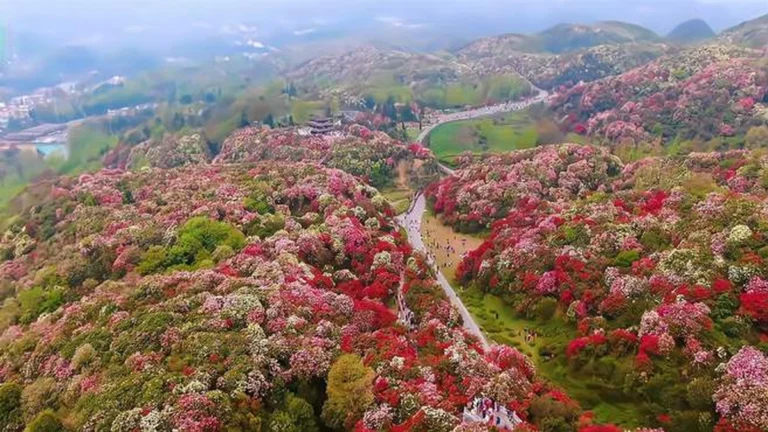
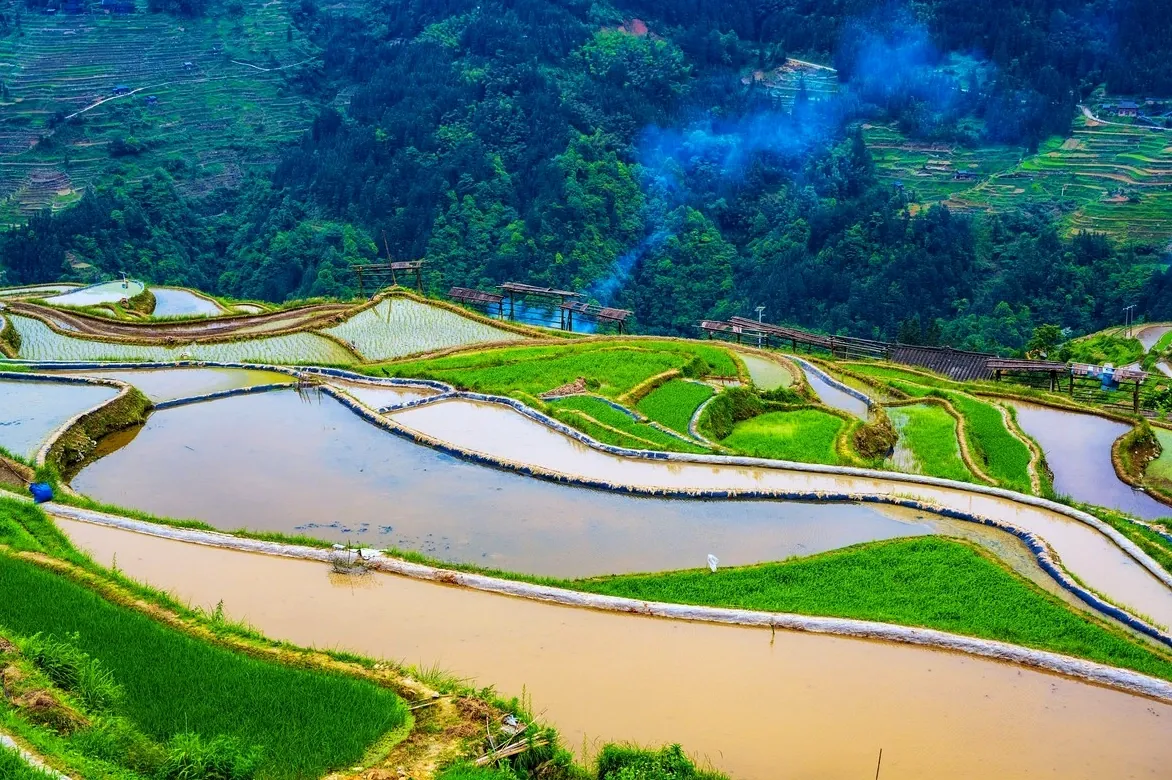
The Guizhou karst plateau is tied to profound transitions according to natural rhythms as well as strict topographical characteristics. The climate here is distinctly divided into four seasons, opening up completely different landscape slices. Spring from April to May is when azaleas burst into brilliant bloom across Baili and the Jiabang terraced fields enter the water-pouring season, sparkling like mirrors of the sky, offering a mild atmosphere with moderate tourist crowds. Moving into summer from June to August, Guizhou maintains a cool temperature ranging only between 22 and 25 degrees Celsius, which is also when the water flow at Huangguoshu Waterfall and Lesser Seven Holes reaches its most magnificent peak. However, this is also the local peak season, with localized crowding frequently occurring in the Xijiang Miao Village, accommodations typically fully booked about 45 days in advance, and service prices potentially rising by 30% to 50%. Autumn from September to November brings the plateau into its most impressive phase for scenery and photography, as the golden ripe rice colors embrace the Jiabang valley and the maple forests of Fanjing Mountain turn vibrant shades under a crystal-clear sky. Conversely, winter from December to February of the following year drops temperatures down to 2 to 8 degrees Celsius, shrouding Fanjing Mountain in mysterious ice and snow; although service costs hit rock bottom, steep mountain passes are prone to freezing and becoming slippery, requiring thorough preparation with specialized thermal clothing.
The undulating karst topography with steep stone steps poses significant physical and health safety challenges. A day of sightseeing at the Seven-Arched Bridge in Libo requires travelers to walk an average of more than 12,000 steps around canyons and stream beds, while conquering the Golden Summit of Mount Fanjing forces visitors to climb over 2,000 steep stone steps after leaving the cable car. At an altitude of 2,336 meters above sea level, the air is relatively thin; those with a history of severe knee osteoarthritis or cardiovascular disease should carefully consider and prepare a portable mini oxygen cylinder to prevent altitude sickness. Culturally and culinarily, Guizhou cuisine is famous for its spicy and sour flavors and the almost absolute presence of houttuynia cordata roots, commonly known as Zhexinger (折耳根). With its distinct pungent and fishy odor that international tourists often find challenging, travelers should instruct the kitchen with the local phrase “Bu fang Zhexinger” (不放折耳根) to ensure a complete and enjoyable meal. In addition, complying with the electronic ID ticketing system linked to passport numbers is mandatory at 100% of World Heritage sites such as Huangguoshu and Mount Fanjing; visitors must enter strictly according to the pre-registered time slot, as the control system will automatically cancel tickets if they exceed the specified time.
Beyond the terrain factors, identifying and avoiding commercial shopping traps is a vital survival skill to protect your travel experience. In commercialized tourist villages, Miao silver (苗银) is often promoted as a pure heirloom treasure, but in reality, most of it is a white-plated copper-nickel alloy with a handicraft value of only about 5 to 8 Chinese Yuan per gram. However, designated sellers often swap concepts to pass it off as 999 pure silver, driving the price up to 28 to 40 Chinese Yuan per gram—many times higher than its true value. The trick of offering free Traditional Chinese Medicine pulse diagnosis, then exaggerating bodily deficiencies to coerce tourists into buying pseudo-ginseng, young ginseng, or overpriced Duyun Maojian tea worth tens of millions of VND, is another trap travelers must watch out for. Similarly, in small towns near the Chishui River, many stalls sell cheap handmade wine jugs for a few hundred Yuan labeled with “the same water source as Moutai” to deceive trust, while the prestigious Feitian Moutai (53% ABV) always has an official listed price ranging from 2,700 to 3,200 Chinese Yuan per bottle. In the event of a commercial dispute, travelers can readily seek legal protection through the Guizhou government hotline 12345 to apply the “Compensation First, Processing Later” mechanism (先行赔付).
To ensure absolute peace of mind and steer clear of all commercial hassles, choosing high-quality pure sightseeing itineraries with a commitment to zero forced shopping is always the ultimate optimal solution. To thoroughly prepare for an expedition to the pristine Southwestern highlands, travelers can explore further standardized operational information via our all-inclusive tour package expertly designed and optimized for every on-the-ground experience.
