







The chronicles of Fenghuang Ancient Town begin with primordial traces of ancient civilization, traceable back to the Neolithic period. However, the distinct development of an organized settlement began during the Spring and Autumn and Warring States periods (8th to 3rd century BCE), when this region belonged to the powerful Chu State. Under Qin and Han rule, this land remained relatively pristine, serving as a dwelling place primarily for ethnic minorities, including ancestors of today’s Miao and Tujia peoples. By the Tang Dynasty (7th–10th centuries), Fenghuang was known as “Dongxi” (洞溪), functioning as part of the border defense system and gradually forming early settlements. However, it was not until the Ming (14th–17th centuries) and Qing (17th–20th centuries) dynasties that Fenghuang truly became a vital administrative and military center, marked by the construction of walls, city gates, and other fortified structures to resist Miao uprisings and protect the borders. The name “Fenghuang” is believed to derive from an ancient legend recounting two phoenixes flying over this land, captivated by the scenery and unable to tear themselves away, symbolizing the breathtaking beauty and prosperity promised here. This era witnessed powerful cultural exchange as Han migrants arrived, bringing new architectures, customs, and knowledge that blended with the indigenous culture of the Miao and Tujia peoples, creating the unique identity we admire today. Following the founding of the People’s Republic of China, Fenghuang Ancient Town retained its immense historical and cultural value, becoming a symbol of heritage preservation that attracts scholars and travelers worldwide. Efforts to preserve architectural and cultural heritage have helped this ancient town stand firm against time, continuing to tell the story of a glorious past and a mesmerizing present.
The architectural space of the ancient town in Fenghuang is a harmonious synthesis of human craftsmanship and natural beauty, a living testament to traditional building art and a lifestyle close to nature shared by local residents. Architectural structures were primarily built during the Ming and Qing dynasties, carrying a classic style featuring a delicate combination of wood, stone, and brick tiles. What makes Fenghuang special is not merely the beauty of individual houses, but the unity of the whole, where every small alley, stone bridge, and pavilion contributes to a poetic panoramic picture. Bluestone-paved pathways, polished bright by centuries of footsteps, wind like soft silk ribbons leading travelers through a labyrinth of time. Every street corner and mossy wall conceals a story, a mark of the past, making one feel lost in another world far removed from the noise and hustle of modern life. Ancient houses with upturned roof eaves, exquisitely carved wooden doors, and ornate wooden balconies reflect the talent and perseverance of generations of artisans. Many houses feature intimate interior courtyards planted with flowers and ornamental plants, creating a tranquil living space that mirrors the philosophy of harmony with nature embraced by ancient Chinese people.
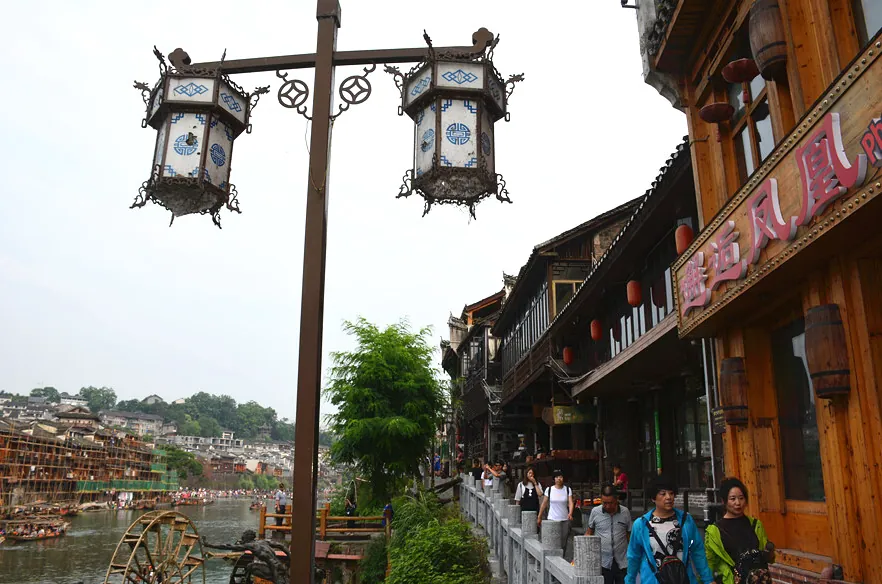
The cultural heritage of Fenghuang Ancient Town lies not only in bricks and tiles but lives vibrantly within the customs, festivals, and lifestyle of the indigenous community. Although Fenghuang Ancient Town has not yet been officially recognized by UNESCO as a World Heritage Site, it is consistently ranked among potential candidates and frequently compared with other renowned heritages thanks to its exceptional historical, architectural, and cultural value. Its heritage value is affirmed through the nearly intact preservation of ancient architecture, natural landscapes, and traditional cultures of the Miao and Tujia peoples. The culture of the Miao and Tujia is the soul of Fenghuang, lending the area an unmisunderstandable identity. The Miao are renowned for brilliant traditional costumes embroidered and adorned with exquisite handmade silver, displaying the pinnacle of folk art. Dances, folk songs, and traditional festivals such as the “Ganqiu” Festival (赶秋节 – Autumn Festival) or the “Zouyue” Festival (走月 – Moon Stroll Festival) are not merely entertainment activities but ways for generations to pass down cultural, spiritual, and historical values of their ethnicity. The Tujia people, with distinct customs, also contribute to the town’s cultural diversity. Unique Diaojiaolou stilted houses stand as an architectural symbol of both ethnicities, demonstrating ingenuity in adapting to local terrain and the natural environment. The blend of Han, Miao, and Tujia cultures has forged a colorful, rich, and vibrant cultural picture, making Fenghuang Ancient Town far more than a tourist destination—it is a tremendously valuable center for folklore research.
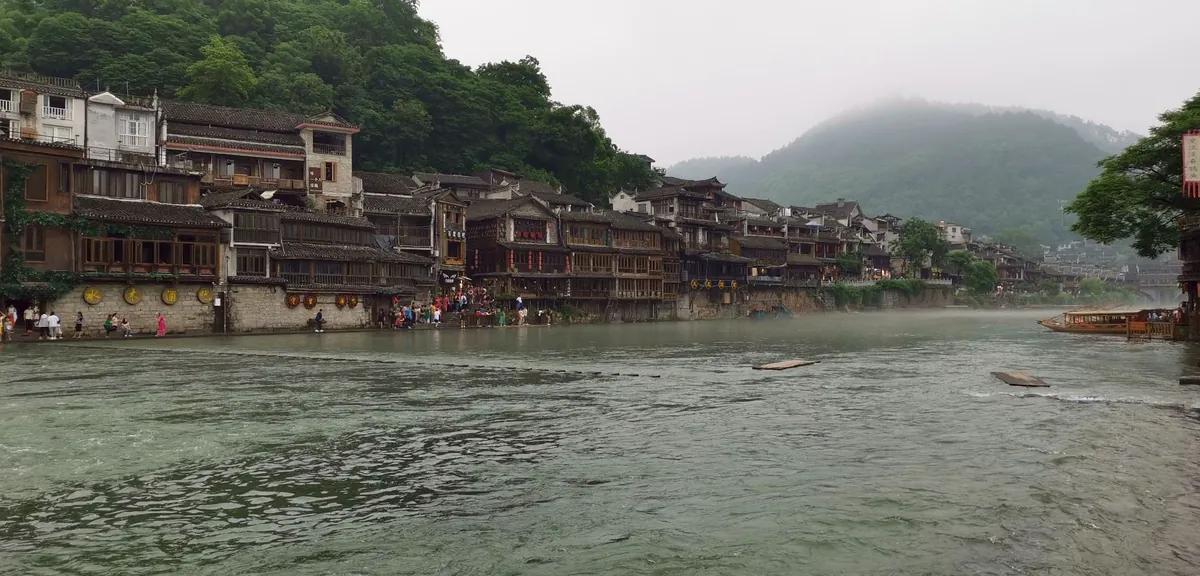
The peerless scenic wonders of Fenghuang Ancient Town center around a primary axis: the legendary Tuojiang River, where every beauty and every story begins and ends. The Tuojiang River is not merely a river, but the heart and soul of the ancient town. It winds past rocky rapids, threads through ancient stilted houses, and faithfully reflects moss-grown roofs and glowing red lanterns. Travelers can experience drifting on small wooden boats, gliding gently over turquoise waters, admiring the peaceful lives of residents on both banks. Along the riverbank, women washing clothes beside stone bridges, playful children, and splashing oars compose a peaceful rural symphony. Someone once said that is the sound of time passing. In the evening, when thousands of lanterns are lit, Tuojiang transforms into a sparkling Milky Way reflecting magical light, creating a wondrous scenery more magical than dreams. The river is not only a water source but an endless inspiration for poetry, painting, and photography.
Located along the banks of the Tuojiang River are thousands-of-years-old Diaojiaolou Stilted Houses belonging to the Miao and Tujia peoples, an unqiue architectural symbol of the Xiangxi region. These houses are built entirely of sturdy wood, with stilts planted deep into the riverbed or leaning against stone slopes, creating a striking and precarious scene. The Diaojiaolou structure is not only aesthetically unique but also demonstrates local ingenuity in adapting to riverine terrain and protecting homes from floods. The lower floor is typically open or used for storing boats and belongings, while the upper floor serves as the main living space, designed to catch breezes, natural light, and magnificent views of the river. Ancient ironwood beams, exquisite carved patterns on balconies, and dangling red lanterns compose an architectural picture that is both pristine and refined. Visiting Diaojiaolou, travelers not only admire external beauty but can step inside to learn about the lifestyle, culture, and stories of generations who once lived here, feeling the breath of a distant past.
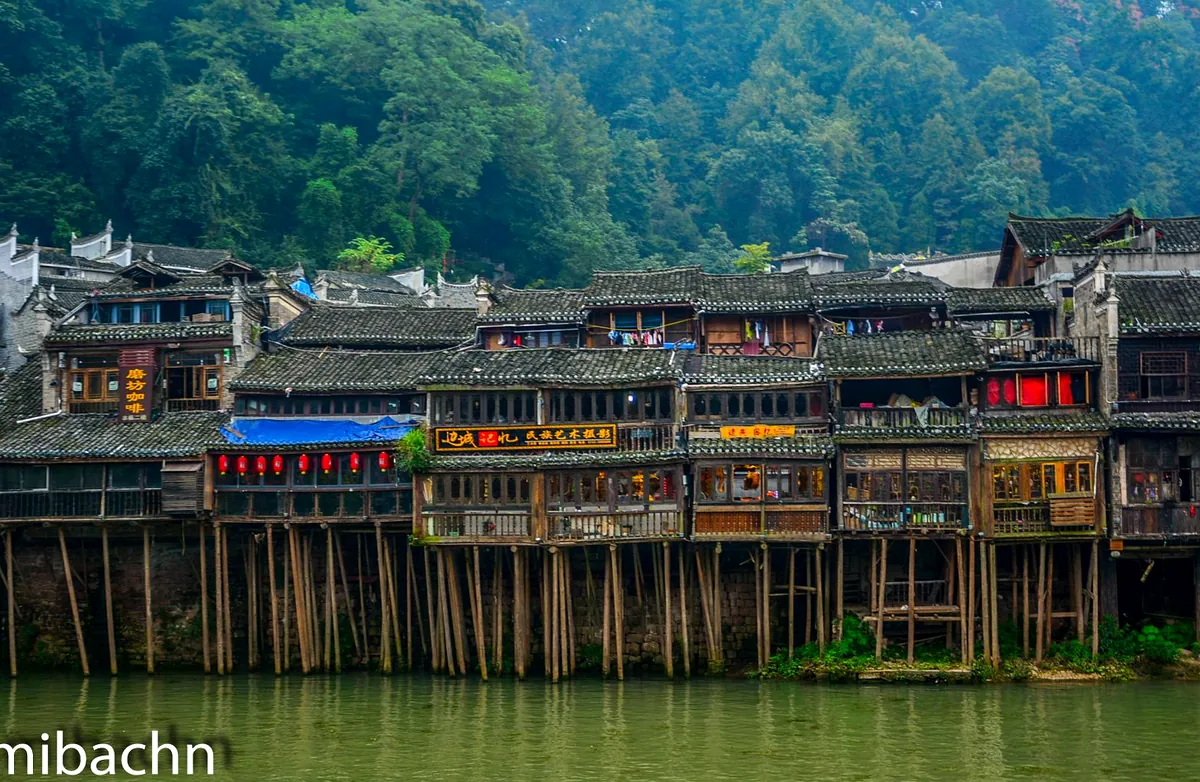
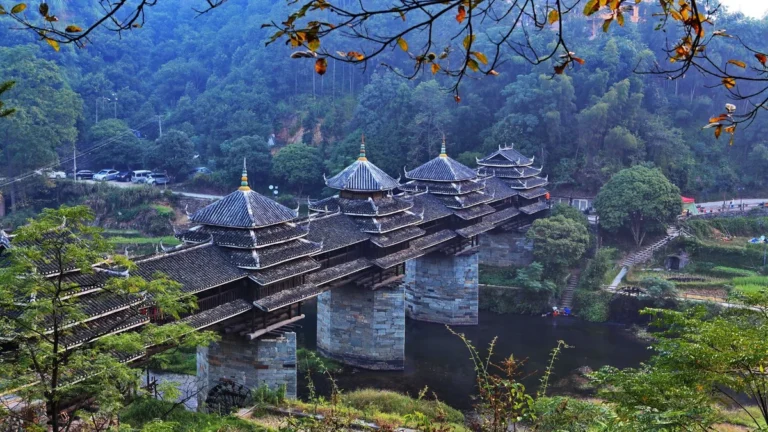
The third architectural highlight not to be missed is the Hongqiao Wind and Rain Bridge (Hồng Kiều Phong Vũ), a classic architectural masterpiece spanning Tuojiang, often likened to a “covered bridge” or “bridge pavilion.” This bridge is not simply a walkway but a multi-functional structure serving as a bridge, rain shelter, market, and a dating spot for locals. Featuring antique architecture with double-eaved curved roofs built from wood and stone, Hongqiao bears the strong bridge-pavilion style of ancient China. The lower floor features bustling shops selling local specialties and souvenirs, from Miao handmade silver to embroidered textiles and local cuisine. The upper floor is a breezy corridor where visitors can take in panoramic views of Tuojiang, the Diaojiaolou stilted houses, and the town’s bustle. Standing on Hongqiao on a rainy afternoon, listening to raindrops patter against curved tiled roofs and watching the river flow sluggishly, travelers experience an unusual serenity as if time truly stood still.
Another highlight, simple yet equally charming, is the Jumping Rock Bridge (Cầu Đá Nhảy). This is not a grandiose bridge but square stone blocks arranged in a horizontal row connecting the two banks of Tuojiang. Since ancient times, this has been the main pedestrian walkway across the river for residents carrying loads of goods and vegetables or simply commuting between neighborhoods. The Jumping Rock Bridge carries a rustic beauty close to nature, symbolizing people’s persistence and attachment to the river. Stepping across individual stone blocks, feeling the vibration of water below and listening to gurgling streams is a unique experience bringing one close to local life. It is also one of the best photo spots where travelers can capture peaceful moments of the ancient town with stilted houses and the calm river as a backdrop.
The literary soul of Fenghuang Ancient Town is woven by the Former Residence of Writer Shen Congwen (Cố cư nhà văn Thẩm Tùng Văn). Shen Congwen (1902–1988) is among modern Chinese literature’s greatest writers, and his hometown of Fenghuang became an endless inspiration for his works. His novel “Border Town” (Biên Thành), featuring innocent Tui Cui and pure youthful love along Tuojiang, propelled Fenghuang Ancient Town into a globally renowned literary landmark. His former residence sits in a small alley, an ancient house bearing local architecture with green brick walls and classic tiled roofs. Inside, everyday items, photographs, and manuscripts of the writer are carefully displayed, helping visitors picture his life and career. Visiting Shen Congwen’s former residence is not simply a trip to learn about a cultural celebrity but a journey to deeply feel the soul of Fenghuang, where natural beauty and rustic human affection nurtured a great talent.
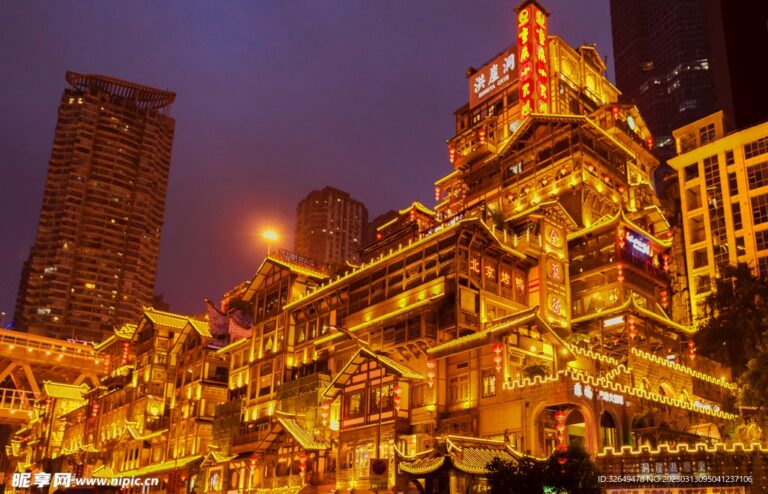
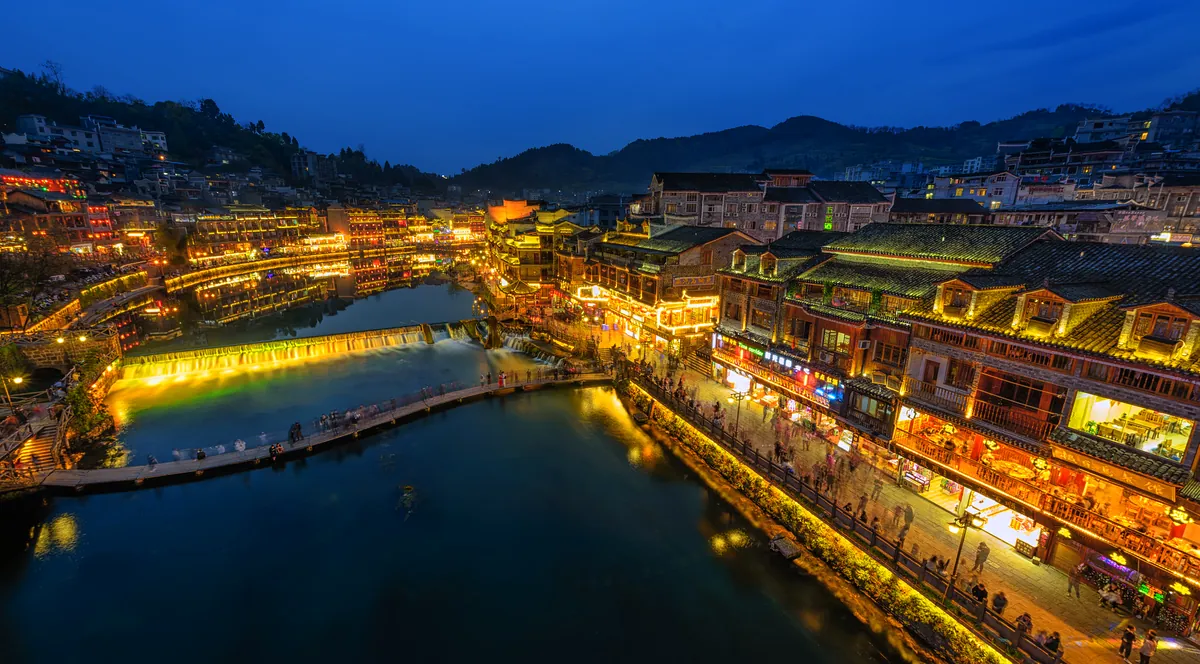
And when night falls, Fenghuang Ancient Town undergoes a complete metamorphosis, transforming into a magical space during the Brilliant Night Light Festival. This is an unmissable experience as the ancient town dons a gorgeous cloak woven from thousands of red lanterns, colorful LEDs, and light reflections from Tuojiang. Stilted houses, Hongqiao Bridge, and distant mountains are all illuminated, composing a sparkling, magical panorama breathtaking to behold. Travelers can take a night boat on Tuojiang, admire ancient houses sparkling on the water, listen to ancient Miao folk melodies, or simply stroll along brilliantly lit streets. Fenghuang at night is not merely a feast of light but a feast of the senses, where street-food aromas mingle with music, laughter, and the breath of an ancient town coming back to life wondrously. This is when Fenghuang Ancient Town showcases its most romantic and charming beauty, leaving an unforgettable impression in every traveler’s heart.
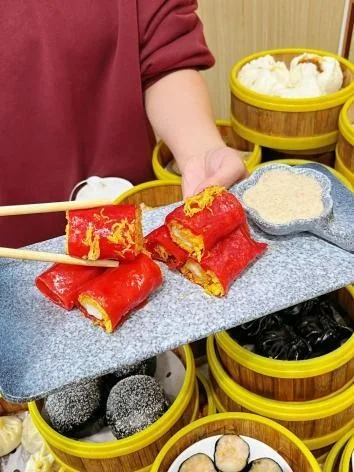
The unique culinary culture of Fenghuang Ancient Town is an inseparable part of exploring heritage here, bringing distinctive regional flavors characteristic of Xiangxi. Hunan cuisine in general and Fenghuang in particular are renowned for spicy, bold flavors using plenty of chili, garlic, ginger, and natural spices. Each dish is not only a combination of ingredients but a story about life, people, and the distinct cultural traits of the Miao and Tujia peoples. Arriving in Fenghuang, visitors must try dishes establishing this land’s renown. Miao Rice Noodles (苗家酸汤粉 – Miansuan Fen) is a celebrated specialty featuring chewy rice noodles cooked in characteristic Miao sour-and-spicy broth, served with minced meat, tofu, and herbs. The clean sourness, pungent spice, and delicate aroma of the broth awaken all senses. Fenghuang Smoked Sausage (腊肉 – Làròu) is also immensely famous, made from fresh pork, seasoned, and smoked over wood fires, creating a distinct, rich, and aromatic flavor. When eaten, sausage is sliced thin, stir-fried with vegetables, or served with hot rice. Glutinous Rice Cakes (糯米粑 – Nuòmǐ bā) featuring various fillings, from sweet red bean paste to savory minced meat, are favorite snacks displaying local ingenuity in processing glutinous rice dishes. Notably, visitors cannot miss Tuojiang Grilled Fish (沱江烤鱼 – Tuójiāng kǎoyú), fresh fish caught from Tuojiang River, richly seasoned and grilled over charcoal. The skin is crispy, the meat sweet and tender, infused with herb aromas, creating an unforgettable culinary experience. Beyond main dishes, Fenghuang offers countless appealing street foods like stinky tofu, grilled skewers, scallion pancakes, and traditional candies. Every street corner and alleyway might be where you find a novel flavor and an interesting culinary story.
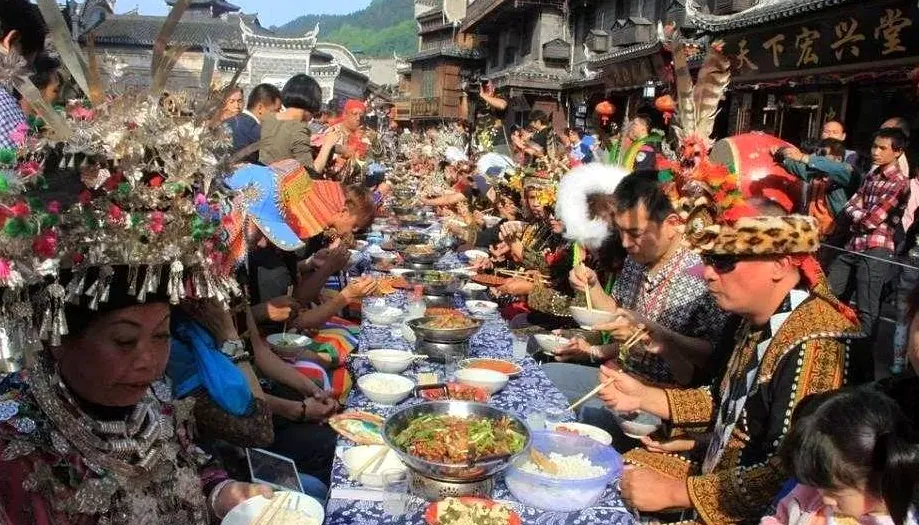
Alongside culinary culture, tea appreciation customs and banquets are also an important part of local residents’ cultural life. Tea is not only a beverage but a symbol of hospitality and refined lifestyle. Travelers can visit ancient teahouses, sit by windows overlooking Tuojiang, and savor cups of aromatic local green tea. Fenghuang residents frequently invite guests to enjoy tea as a way to show respect and hospitality. Local teas are typically high-mountain green teas carrying clean refreshing notes, sometimes blended with flowers like chrysanthemum or jasmine to enhance aroma. Traditional Miao and Tujia banquets are typically organized during festivals, weddings, or when welcoming esteemed guests. During these feasts, delicious food is accompanied by characteristic rituals, dances, folk songs, and traditional rice wine customs. This is an opportunity for travelers to immerse in the festive atmosphere, learn more about local culture and people, and fully savor culinary quintessence within an identity-rich space.
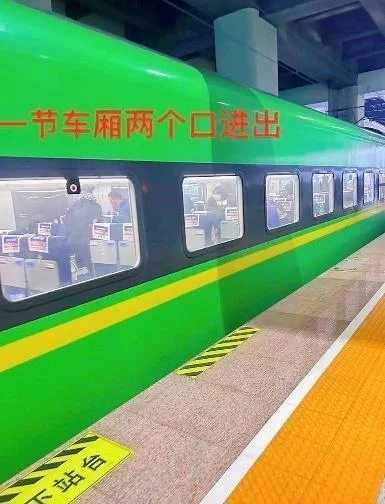
The journey to Fenghuang Ancient Town has today become vastly more convenient thanks to the exceptional development of modern transport infrastructure. Instead of exhausting long-distance bus rides as before, travelers can choose multiple fast and convenient transport methods. The CRH high-speed rail system (China Railway High-speed) has connected Fenghuang with other major Chinese cities. Travelers can take high-speed trains to Fenghuang Gucheng Station, located about 10-15 km from the ancient town center. From the railway station, public buses or taxis take visitors directly into the ancient town area. For international travelers, air travel is also quite popular. The nearest airports to Fenghuang are Tongren Fenghuang Airport (TEN), about 35 km from the ancient town, or Zhangjiajie Hehua International Airport (DYG), about 200 km away. From these airports, visitors can take shuttle buses or rent cars to reach Fenghuang. Improved transport infrastructure has made Fenghuang Ancient Town more accessible than ever, opening its gates to welcome millions of tourists annually.
The four-season golden travel time at Fenghuang Ancient Town delivers distinct experiences, with each season holding its own unique beauty. Spring (March–May) is when Fenghuang bursts with vitality, trees sprout new foliage, and peach and rapeseed blossoms bloom across hillsides, creating a fresh and vibrant panorama. Weather is mild and pleasant, highly suitable for walking to explore the ancient town and surrounding areas. Summer (June–August) brings a lush, verdant Fenghuang. The turquoise Tuojiang River and sudden summer showers add romance to the ancient town. However, this is also peak tourism season; weather can be hot and humid with large crowds. Travelers should prepare airy clothing and book accommodation in advance. Autumn (September–November) is considered the finest season to visit Fenghuang Ancient Town. Weather is dry and brisk, skies are crystal blue, and particularly the golden and red foliage surrounding the ancient town creates an exceptionally impressive landscape. This is the ideal time for photography and savoring the miraculous beauty of Fenghuang. Winter (December–February) brings a serene, contemplative Fenghuang occasionally blanketed in pristine white snow. Snow falling on mossy tile roofs and antique bridges creates an illusory beauty akin to an ink-wash painting. However, weather will be very cold, and some activities may be restricted. Travelers should prepare warm clothing and enjoy the rare peace of the ancient town during this season.
To ensure the trip to Fenghuang Ancient Town for Vietnamese travelers becomes complete and obstacle-free, VDS Travel offers a pocket field guide with essential information. Regarding visas, Vietnamese citizens must apply for a China tourist visa prior to departure. This process typically takes about 5-7 working days and requires documents such as passports, ID photos, invitation letters (if any), and travel itineraries. VDS Travel is always ready to assist you in preparing documentation and visa application procedures to ensure the smoothest process possible. Regarding currency, China is a leader in cashless payments. The two most popular apps are Alipay (支付宝) and WeChat Pay (微信支付). Most stores, restaurants, and hotels from large to small accept payments via these two apps. Travelers should install and register accounts before the trip, linking them to international bank cards for transaction convenience. Bringing a small amount of Chinese Yuan cash for minor expenses or places rejecting electronic payment is also a good idea. Regarding internet connectivity, using an eSIM is an optimal solution for Vietnamese travelers. eSIMs help you maintain high-speed mobile network connectivity without swapping physical SIMs, very convenient for map lookup, translation, or communication. VDS Travel can advise on eSIM packages matching your needs. Additionally, you can buy physical SIMs from Chinese carriers at airports or convenience stores, though note that registration procedures can be slightly complex.
Regarding attire, Fenghuang Ancient Town features distinct four-season climates; therefore, travelers should prepare clothing appropriate to travel timing. In spring and autumn, pack light jackets, sweaters, or thermal wear. In summer, airy clothing, sunscreen, and hats are necessary. In winter, thick coats, gloves, wool hats, and scarves are indispensable. Most importantly, bring comfortable walking shoes since you will walk extensively across ancient stone-paved streets. Prepare an umbrella or small raincoat since Fenghuang weather can bring sudden rain showers. To ensure the safest and most comfortable trip, always carry basic medicines such as cold medicine, stomachache medicine, band-aids, and insect repellent. With the companionship of VDS Travel, you will experience a trip to Fenghuang Ancient Town that is not merely tourism but a genuine heritage exploration journey. We provide specially designed tour packages including airfare, comfortable accommodation, modern transport, and experienced tour guides deeply knowledgeable in local history and culture. VDS Travel is committed to delivering unique experiences exceeding expectations, helping you immerse in the ancient, magical space of Fenghuang, uncover stories hidden within every house and street, and fully savor the heritage beauty of legendary Xiangxi.
