Beneath the morning mist drifting over a bend of the Han River in Noryangjin-dong, Dongjak-gu, Noryangjin Fisheries Market in Seoul stands as a living chronicle of modern Korean history. Tracing its origins back to the start, the predecessor to the Korean Peninsula’s busiest marine protein trading hub was Uihwando Fish Market, established in 1927 during Japanese colonial rule. In its earliest days, the waterfront market relied primarily on natural river transport, with simple sailboats carrying catches from the Yellow Sea up the Han River toward the southern bank to supply fresh food for city residents.
In 1932, driven by the urgent need to expand supply chains via mechanized transport, the fish market relocated entirely to the area near Yongsan Station, then the primary rail hub of Gyeongseong. At this new geographical hub, shipments of fish and shellfish from distant coastal ports like Busan, Mokpo, and Incheon began arriving on overnight trains. When the Korean War broke out from 1950 to 1953, reducing Seoul to ruins and plunging the country into severe famine and extreme food shortages, the Yongsan fish market stood firm as a vital nutritional lifeline—steadily distributing dried fish and salted seafood baskets to help millions of city dwellers endure the postwar darkness.
Entering the era of economic recovery alongside the “Miracle on the Han River,” rapid urbanization soon overwhelmed the cramped quarters around Yongsan Station. In 1971, municipal authorities carried out a major relocation, moving the seafood trade back across the river to the southern bank in Noryangjin-dong under the official name Seoul Fishery Wholesale Market. That move marked a turning point, transforming a riverside plot into a premier nationwide seafood distribution center. By 2002, market management entered a new chapter when operations were placed under Suhyup—the National Federation of Fisheries Cooperatives. Standardized as Noryangjin Fisheries Wholesale Market, the facility became the coordinating heart handling nearly half of all seafood consumed across the greater Seoul metropolitan area.
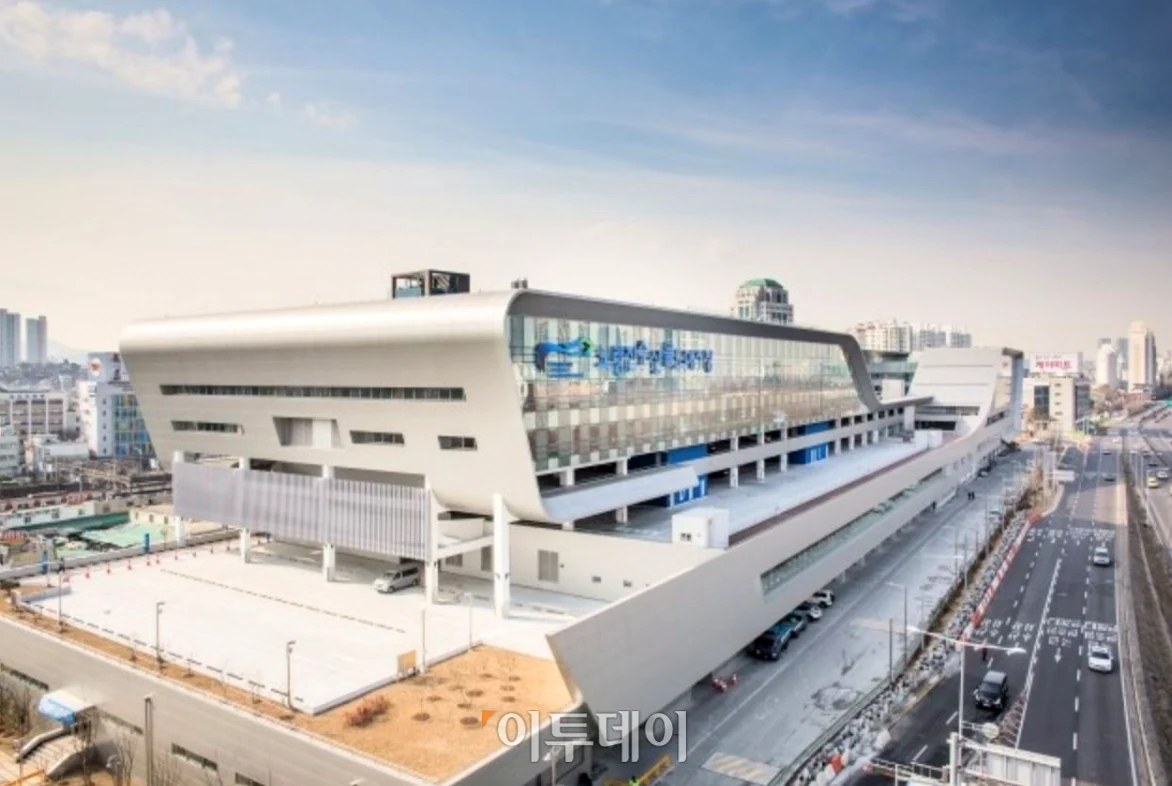
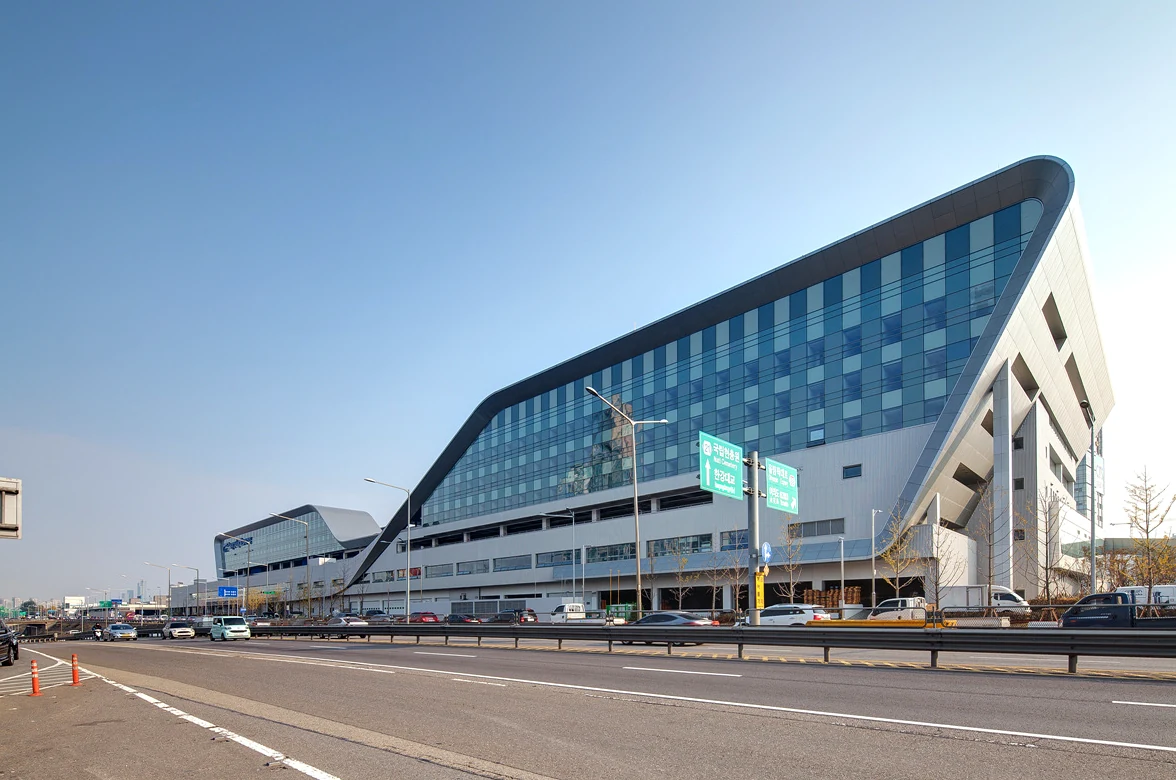
Time brought another dramatic shift in March 2016, when a modern eight-story complex opened right beside the traditional waterfront market. The imposing new building integrates a central temperature-controlled clean seawater system, state-of-the-art electronic auction floors, and an enclosed dining zone, raising hygiene and sanitation standards to a new level. The interplay between sleek modern facilities and nostalgic rows of older concrete stalls creates a distinctive dual structure across two market eras, where the hard-won memories of longtime vendors blend seamlessly with the vibrant pulse of a global metropolis.
From the perspective of geomancy and urban planning history, Noryangjin Fisheries Market sits in Noryangjin-dong, Dongjak-gu, occupying a rare prime spot along the southern bank of the Han River. The name Noryangjin comes from the Hanja “Noryangjin” (露梁津), meaning “white mist ferry,” an important river-and-land trade route since the Joseon dynasty linking historic Hanyang with the southern provinces. Positioned with hills of Dongjak at its back and the broad river in front, the ancient ferry landing once served as a transit point for grain, salt, and royal seafood tribute. In the modern era, that riverfront setting has evolved into an irreplaceable economic and cultural link uniting thousand-year-old natural waters with Seoul’s nonstop commercial energy.
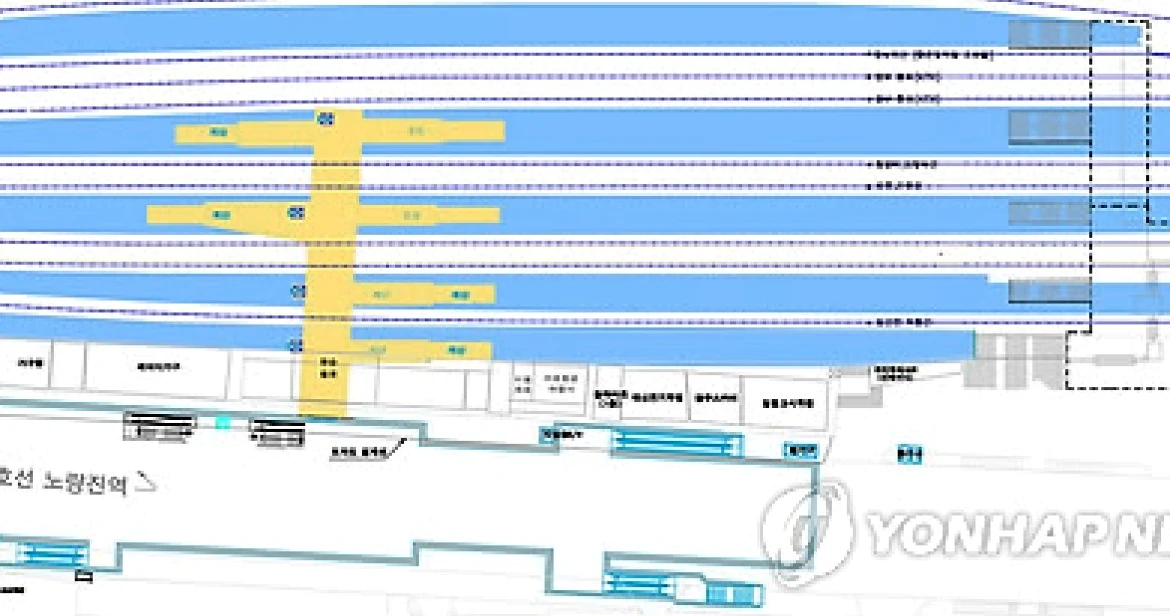
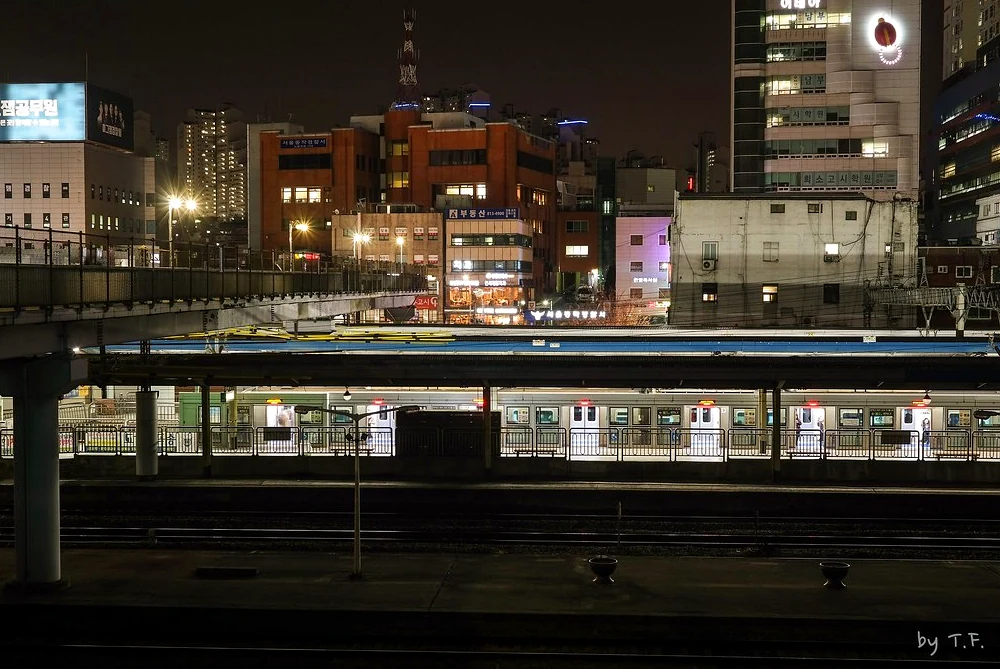
Noryangjin’s edge is reinforced by one of Asia’s best-planned public transit networks, cementing its gateway role in city development. The market links directly to Noryangjin Station via an elevated walkway connecting Exits 1 and 2, at the intersection of two key lines: Seoul Subway Line 1—the city’s oldest rail line steeped in history—and Line 9, a modern express line running straight from Gimpo International Airport through the Yeouido financial district into upscale Gangnam. Paired with more than 15 city bus routes operating through the night, Noryangjin sits squarely within the Golden Tourist Corridor, letting travelers reach major shopping and entertainment hubs like Hongdae, Myeongdong, or the illuminated southern Han River bank in just 10 to 15 minutes.
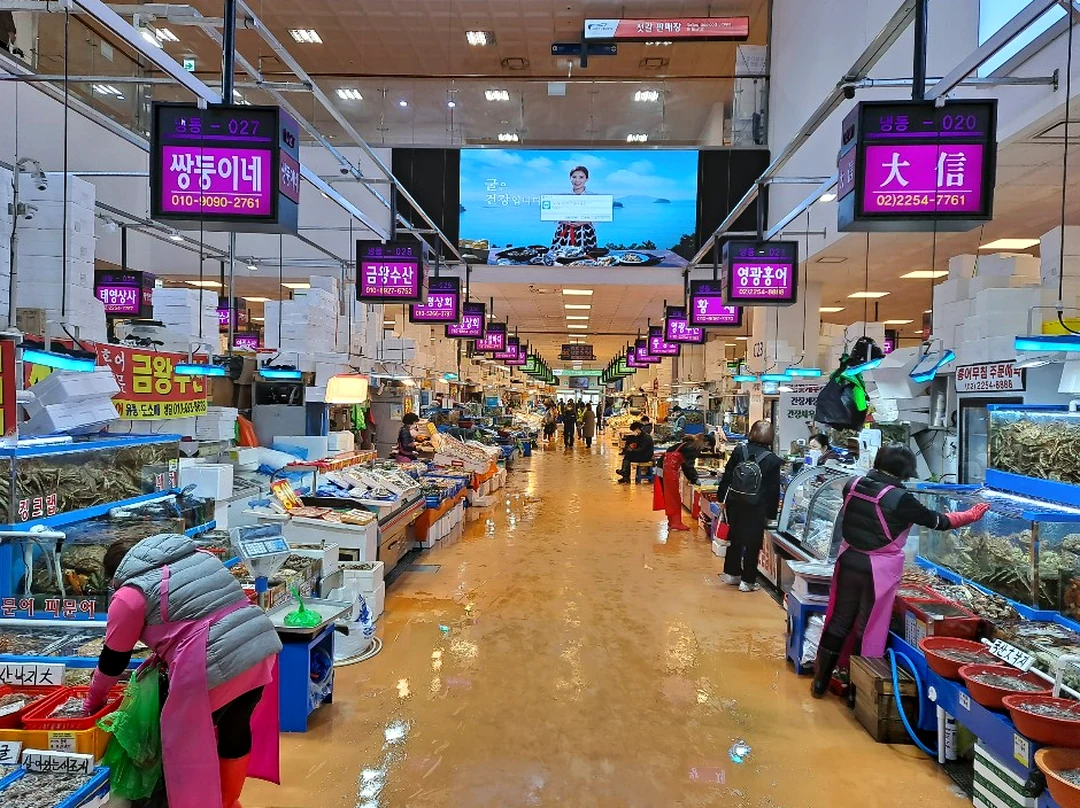
In infrastructure layout and technical operations, the revamped Noryangjin market is a showcase of traditional market modernization across underground and above-ground levels. At its core is a central sterile seawater distribution system governed by underground temperature sensors, pumping natural seawater at exact salinity levels to thousands of tempered-glass tanks across the stalls. Strict quarantine and temperature controls keep top-grade marine life in peak condition—from giant king crab from the icy Sea of Okhotsk and eastern snow crab to flatfish (kwang-eo), sea bream, geoduck, and live san-nakji octopus. Cool, briny sea air mixed with standardized anti-glare LED lighting creates a scene that feels as orderly as a marine biology lab yet as lively as everyday street life.
The spatial design separates functions clearly across floors, guiding visitors through shifting visual and culinary moods. The ground level opens into a vibrant miniature ocean of hundreds of live seafood stalls with non-slip stone floors washed continuously by smart drainage to eliminate the heavy, stagnant fishy odor common in older fish markets. The second floor houses chojang-jip—family-run restaurants that cook what you just bought downstairs, whether steamed simply, stir-fried spicy, or simmered into a pungent maeun-tang spicy fish stew. Above all, the rooftop terrace acts as a sweeping lookout over the Han River reflecting Yeouido’s financial towers and the iconic 63 Building, framing a striking contrast between culinary heritage and the lights of a city that never sleeps.
Leaving behind the damp, cramped feel of earlier riverfront markets, the modern Noryangjin fisheries complex rises like a futuristic mini-port in central Seoul. The building blends high-level industrial architecture with marine service planning across eight above-ground floors and two solid technical basement levels. Its exterior echoes breaking waves, pairing structural steel with salt-resistant tempered glass curtain walls to underscore its strategic role distributing seafood across the metropolitan region.
The operational heart of the complex lies two levels down in basements B1 and B2, housing strict international-grade cold-chain logistics. This underground zone operates as a self-contained hub with deep-freeze storage, cold-chain truck bays, and large-scale prep and packing facilities. A standout technical feature is its biological wastewater treatment plant and multi-stage recirculating seawater filtration system: high-pressure filtration and advanced ozone deodorization treat thousands of cubic meters of tank water daily, stripping out strong fishy odors and preventing organic pollution before discharge into city drains.
Heading up to the first floor, visitors are immediately struck by the bustling stage of live marine life, where wholesale and retail trade runs around the clock. Laid out in an organized grid of hundreds of independent stalls, the floor features multi-tiered aerated glass tanks divided into specialized zones: crustacean sections brimming with giant Okhotsk king crab, glossy snow crab, and roe-rich blue swimming crab; marine fish sections showcasing Jeju flatfish, red sea bream, and sea bass churning white foam; and mollusk sections drawing eyes with baskets of famous Wando abalone, spiky sea cucumber, deep-sea whelks, and wriggling live octopus. Textured non-slip floor tiles and sub-floor drainage channels beneath every stall keep the trading floor surprisingly dry, clean, and modern.
The second floor reveals a distinct slice of local food culture through its cluster of on-site cooking restaurants, commonly known as sikdang. Designed with an open layout and airy atrium voids looking down onto the busy market floor below, this level puts the craft of turning raw catch into a meal front and center: diners pick live seafood downstairs and bring it straight up for chefs to cook to order. High-pressure steamers locking in the clean sweetness of king crab meat, quick knife work slicing salmon or flatfish into gossamer hoe sashimi, and cast-iron pots bubbling with fiery red maeuntang spiced with pepper and gochugaru chili powder come together in a multi-sensory feast.
Floors three through eight house administrative operations and smart support facilities. Here sit the central headquarters of the National Federation of Fisheries Cooperatives (Suhyup), alongside molecular biology food safety testing labs, seafood market research centers, and international trade promotion offices. To ease street congestion from tens of thousands of daily visitors, the upper levels also integrate automated elevated parking connected directly to ring roads and subway networks via dedicated skybridges—completing a self-contained, convenient architectural design built to last.
When night falls and Seoul’s rush-hour pace slows, Noryangjin Fisheries Market comes alive on a completely different rhythm, acting like a giant 24-hour live stage. The spacious hall of the new market feels like an indoor harbor framed in contemporary architecture, where day and night blur amid the hum of carts, the tap of mallets on foam crates, and the briny scent of ocean catches rushed in from Sokcho, Pohang, or Jeju Island.
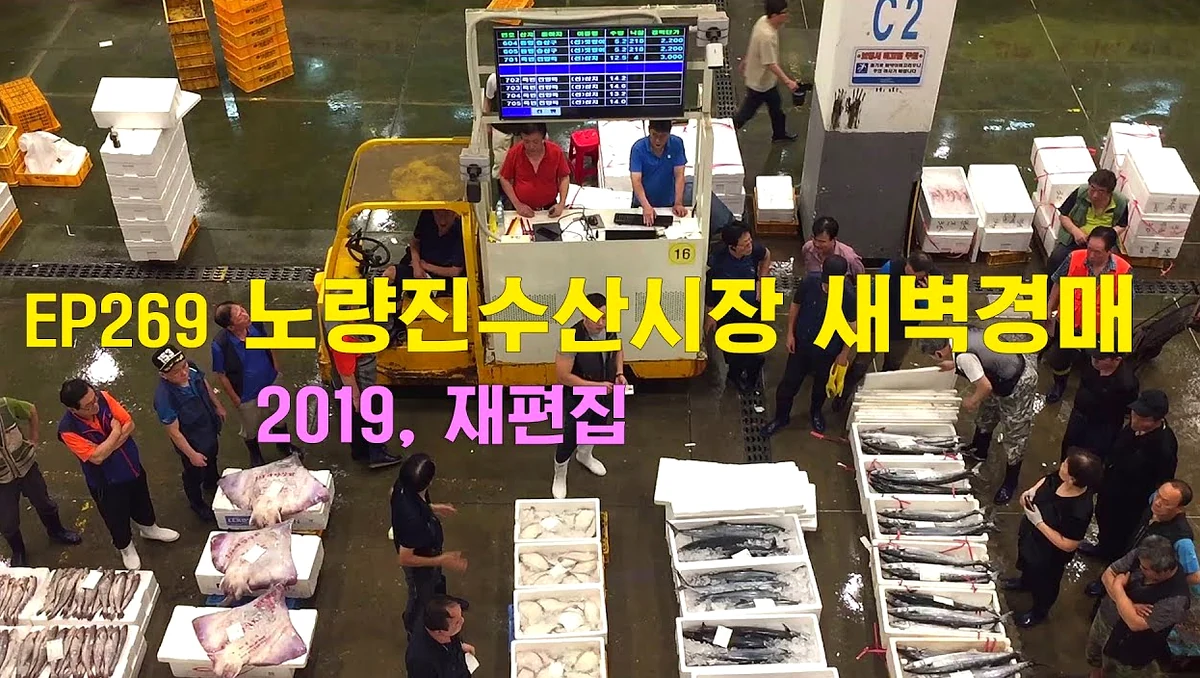
The most dramatic moment of Noryangjin’s night shift is the wholesale auction between roughly 1:00 a.m. and 4:00 a.m. Beneath bright lights catching silver fish scales, veteran auctioneers chant in a driving cadence—almost like a traditional refrain paired with rapid hand signals. Hundreds of buyers gather around ice-packed wooden crates of northern king crab, Yeongdeok snow crab, rockfish, and shimmering fresh squid. Split-second winning bids create a tense, precise atmosphere where the value of ocean harvests is settled through decades-old trading customs.
Lighting at Noryangjin works like a captivating visual storyteller. Unlike the rundown feel of the old market, today’s modern complex uses tempered glass to draw in daylight and glows at night with electronic LED boards. Real-time price shifts flicker in cool blue light and reflect off damp, glossy concrete floors, weaving streaks of light between bright red lobster, dark Wando abalone shells, and golden-orange crab carapaces bubbling in pressurized tanks.
Up the escalators on the second floor lies a quieter, more refined setting for late-night dining. Tucked along the southern bank of the Han River, the dining rooms feature floor-to-ceiling windows looking out over the river and the winding Olympic Expressway. From here, diners can watch the wholesale floor below while taking in subway trains crossing the Han River rail bridge and tail-light trails stretching like glowing ribbons across night-time Seoul.
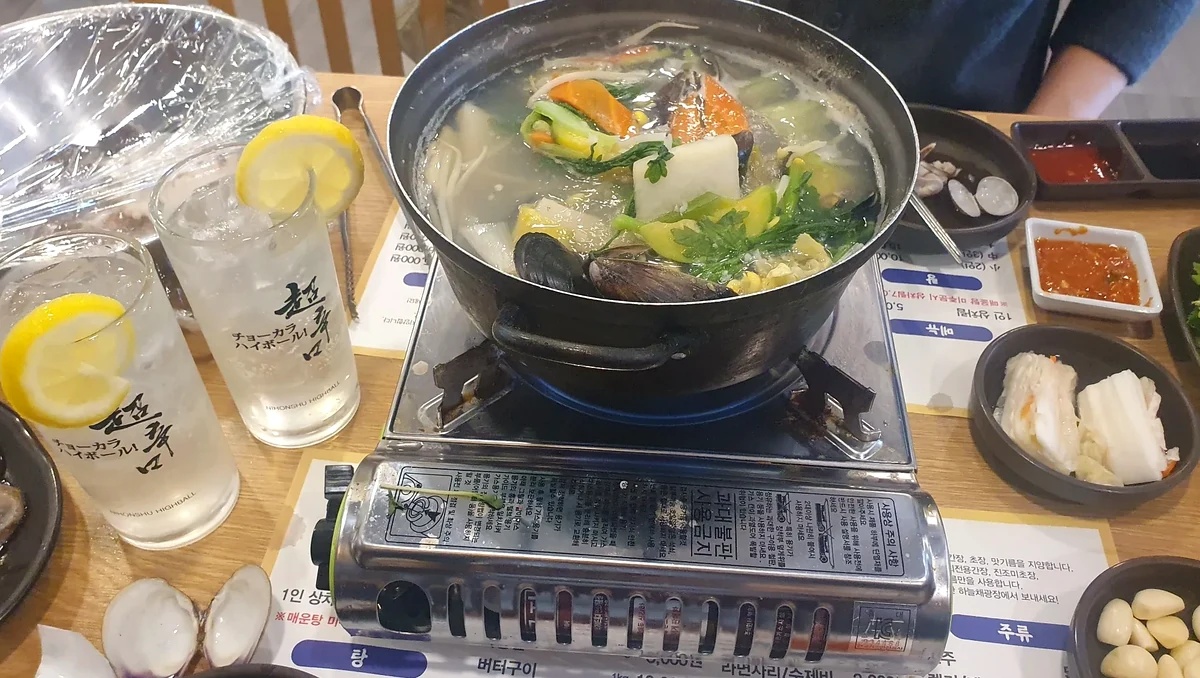
In that warm setting, late-night dining unfolds over steaming plates of steamed king crab, pots of spicy maeuntang bubbling over portable burners, and clear glasses of soju. Warm light from stylized lanterns inside mingles with the deep river hues outside the glass, creating a layered visual and culinary experience. It is more than a late supper—it is a moment of connecting with the spirit of round-the-clock Seoul, where raw ocean vitality meets modern big-city energy.
A visit to Noryangjin feels complete once you step into a chojangjip—the traditional prep-and-dine eateries on the upper levels where the line between a wholesale market and a dinner feast disappears. After picking live seafood from oxygenated tanks downstairs, buyers hand their catch over to seasoned cooks. Using brisk heat and recipes passed down through generations, they turn ocean fare into a memorable meal that keeps local freshness intact while reflecting the culinary philosophy of South Korea.
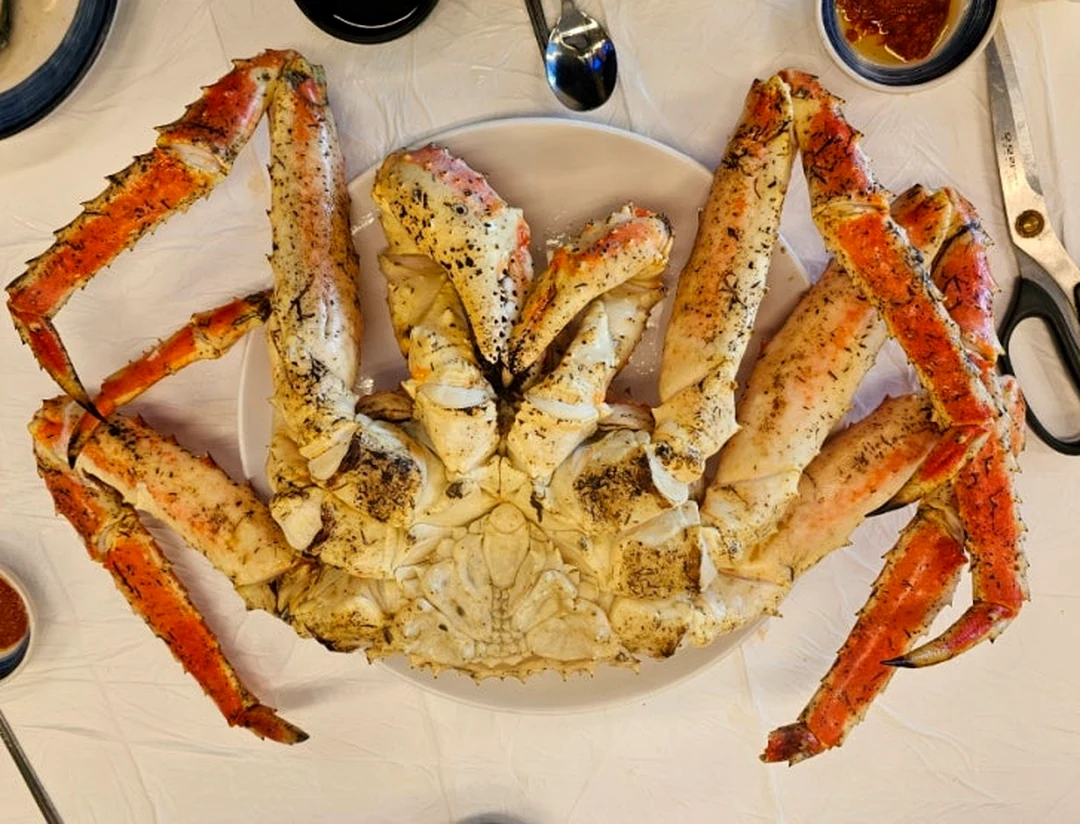
The undisputed star on a Noryangjin table is steamed king crab. Giant spiky shells glowing bright red come out of steaming steel baskets trailing wisps of steam, then are skillfully cracked and portioned right at the table. Firm, juicy, snow-white meat carries the clean sweetness of cold deep waters, needing little more than a light dip to shine. As the crab platter empties, a classic finish arrives with bokkeumbap—crab-roe fried rice. Rich, creamy roe gathered from the shell goes back into the kitchen and is quickly stir-fried in a hot cast-iron pan with fluffy white rice, crisp shredded gim seaweed, scallions, and a few drops of fragrant cold-pressed sesame oil, then packed neatly back into the craggy crab shell for a balanced mix of richness, aroma, and lasting savory depth.
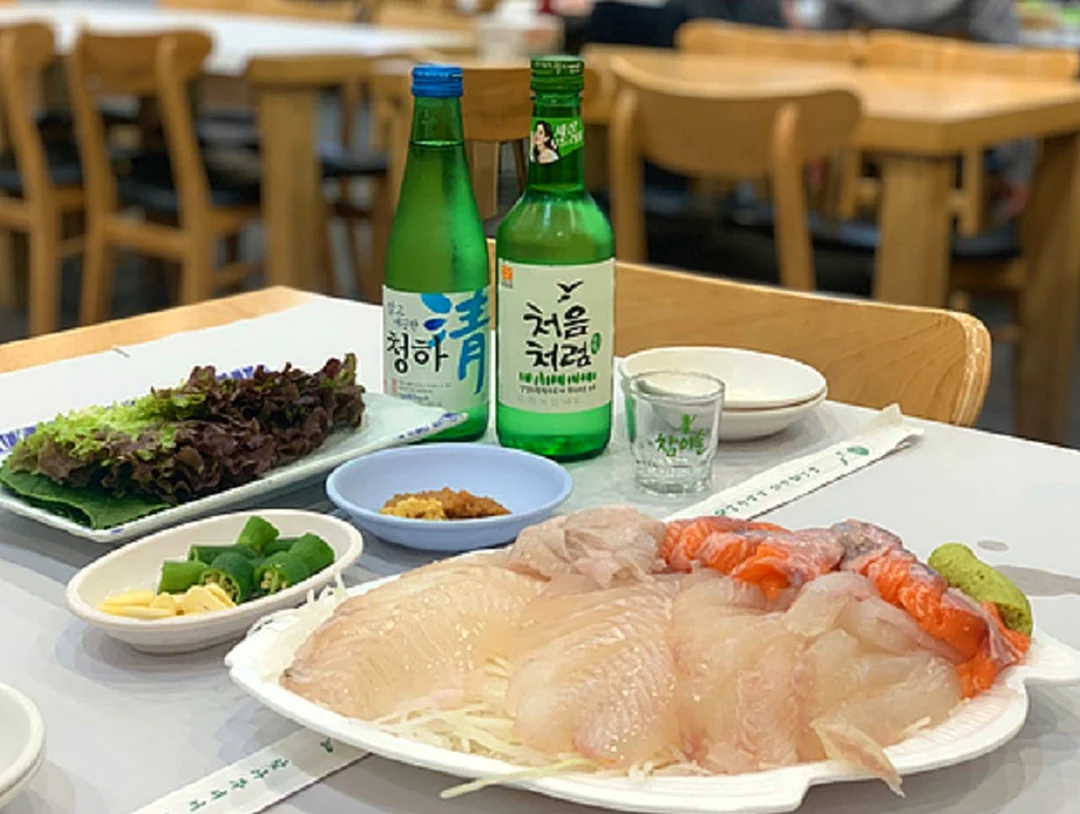
Alongside king crab’s centerpiece appeal, Noryangjin draws food lovers with its raw seafood craft. Crisp, thick-cut slices of fresh gwang-eo (flatfish) and yeon-eo (salmon) show off a springy bite and clean sweetness, often wrapped in kkaennip (perilla leaf) with a slice of raw garlic and dipped in tangy-spicy chogochujang. Live chopped sannakji octopus remains a bold test for adventurous eaters: wriggling pieces tossed with pure sesame oil and toasted sesame seeds create a lively, suctioning sensation on the palate alongside a crisp crunch and natural ocean sweetness.
The seafood spread continues with treats like garlic-butter grilled lobster, thinly sliced crisp-sweet raw abalone, and rich, custard-like golden sea urchin (uni). To wrap up a hearty meal, few things beat gathering around a bubbling pot of spicy maeuntang. Fish heads and bones simmer with white radish, bean sprouts, gochugaru chili powder, and fresh crown daisy greens into a fiery red broth that cuts right through chilly sea breezes. Sipping hot broth, picking sweet meat off the bones, and clinking a chilled glass of traditional soju captures the generous, down-to-earth warmth of Seoul’s night market culture.
Right along the historic southern bank of the Han River, Noryangjin Fisheries Market is easy to reach via Seoul’s public transit system. Take Subway Line 1 or Line 9 to Noryangjin Station, follow Exit 1 or Exit 2, and cross the sturdy pedestrian skybridge straight into the bright, round-the-clock market building. While wholesale auctions peak in the early hours from roughly 1:00 a.m. to 3:00 a.m., retail stalls stay open nearly continuously—though late afternoon through late evening is often the easiest time to browse at a relaxed pace once the day’s catch is in and upstairs kitchens are firing up.
Dining at Noryangjin works best as a smooth four-step routine. Start by strolling the first-floor aisles to check going prices and inspect the tanks; looking for stalls bustling with locals is a reliable cue when choosing between spiky king crab, slender snow crab, live abalone, or wriggling sannakji. Second comes transparent weighing: although most vendors use calibrated digital scales, savvy locals still ask the seller to tear or snip a corner of the plastic bag before weighing so excess tank water drains off and you pay for true seafood weight.
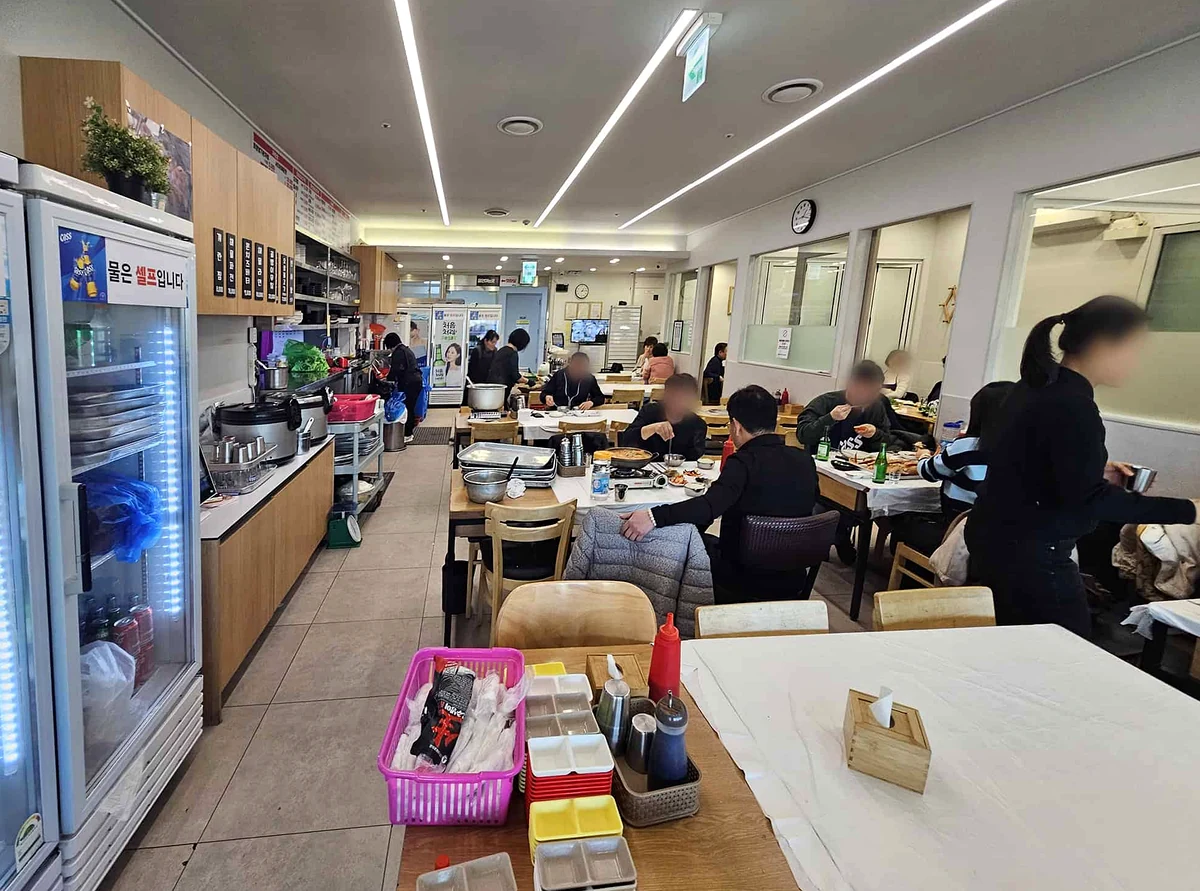
Once you have picked your catch downstairs, step three takes you up to the second floor where dozens of prep restaurants are ready to cook. Here, chojangjip pricing is clearly separated: diners pay a basic table/setting fee (chojang-jip fee) typically around 5,000 to 6,000 won per person covering seating, lettuce/leaf wraps, ssamjang, garlic and chili, and light banchan side dishes, while cooking charges are billed separately by weight and preparation style—steaming king crab to preserve its natural sweetness, slicing fish into crisp hoe sashimi, and simmering heads and bones into gochugaru-spiced maeuntang. Confirming prep styles and rates upfront keeps the meal relaxed with no surprises.
Step four—and the highlight of the night—is gathering around the table to crack meaty crab legs, dip into rich crab roe, and share a crisp glass of soju amid lively conversation from travelers near and far. More than just a seafood market, Noryangjin offers an authentic slice of the energetic, generous rhythm of Seoul across generations. For a smooth trip to South Korea without language hurdles or unexpected cost worries at busy stops, booking a well-organized package tour is an easy way to focus on enjoying the local food scene.