Tracing back through the golden pages of the Joseon dynasty’s history, Changdeokgung Palace emerges not only as a supreme masterpiece of wooden architecture but also as a silent witness to over six centuries of ups and downs in the land of the Morning Calm. Originating from the transition period of the kingdom in the early 15th century, when King Taejo Yi Seong-gye decisively ended the Goryeo dynasty to establish a new reign in 1392, setting the capital in Hanyang (now Seoul) in 1394, and ordering the construction of the main Gyeongbokgung Palace the very next year. However, royal history is always intertwined with turbulent political crossroads; by 1400, when the strategic monarch Taejong (Yi Bang-won) officially ascended the throne, the haunting political anxieties surrounding the bloody events within the deep confines of Gyeongbokgung compelled him to seek out a new seat of power. Consequently, in 1405, he issued a royal decree to initiate the construction of a secondary royal palace situated in the eastern part of the capital, utilizing the foundations of an older detached palace—marking the birth of Changdeokgung.
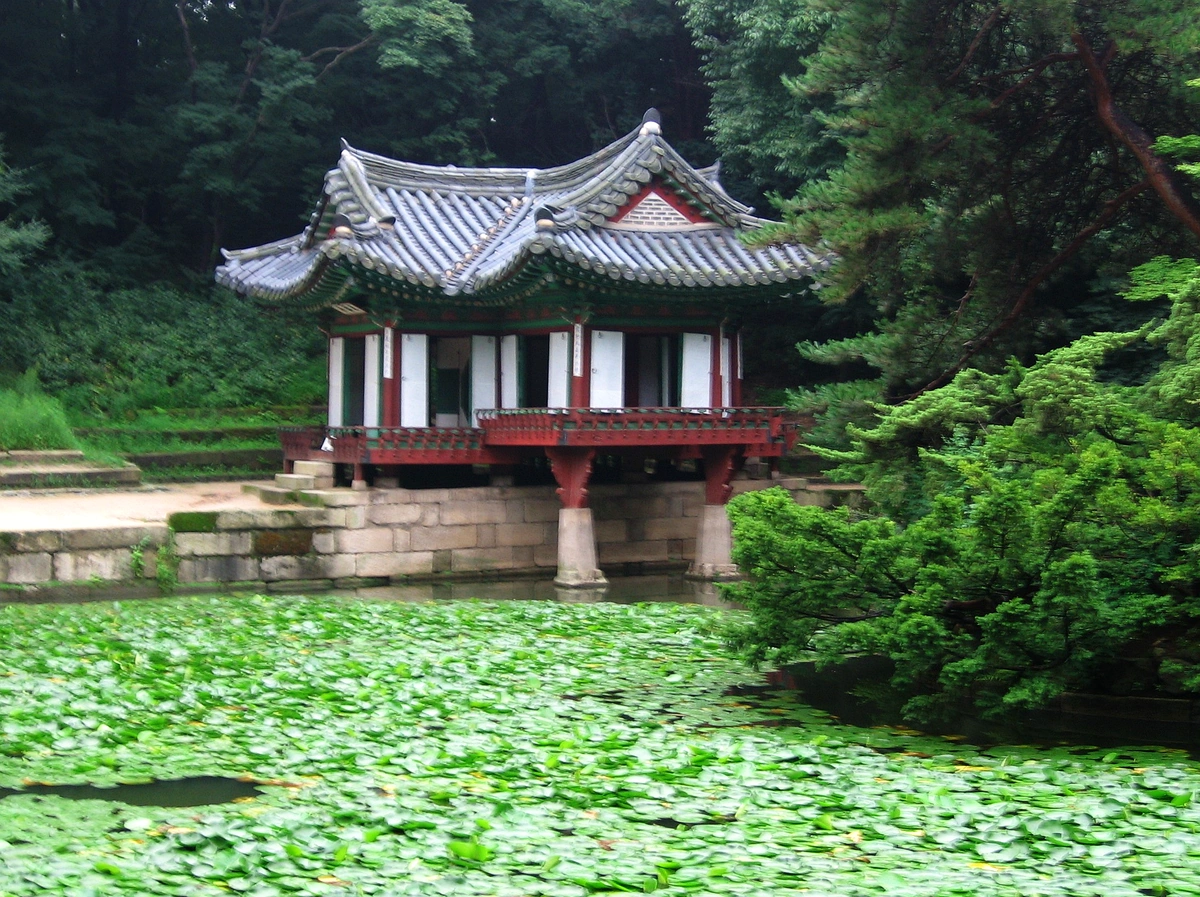
In stark contrast to the rigid, solemn planning mindset that strictly adhered to central axis symmetry seen in Chinese palaces or the main Gyeongbokgung Palace, Joseon’s chief architects poured their hearts into achieving absolute harmony with the spirit of the native landscape. Changdeokgung was designed to follow the natural terrain of Mount Ungbong and the underground springs flowing from the Bukaksan range, curving softly along the contours of hills, streams, and lush green valleys. This absolute respect for the pristine ecosystem transformed the site into a living architectural entity where humanity and nature blend as one, allowing Changdeokgung to eventually rise as the principal palace actually used for the longest duration by successive Joseon monarchs throughout the dynasty’s history.
Yet the flow of history has never been a smooth path. The greatest calamity struck in the late 16th century, when the Korean Peninsula was engulfed in the flames of the Imjin War (Japanese invasions of Korea) lasting from 1592 to 1598, unleashed by the Japanese warlord Toyotomi Hideyoshi. The entire magnificent wooden architectural complex of Changdeokgung was completely reduced to ashes by the fires of war, turning into desolate ruins. Amidst this chaotic and declining era, King Gwanghaegun in 1610 made a historically visionary strategic decision: prioritizing the reconstruction of Changdeokgung above all other structures. This decision not only carried the significance of restoring a royal living space but also served as an act of profound political symbolism, marking the milestone of re-establishing national order and the authority of the Joseon court post-war. From that moment on, for the next two and a half centuries—stretching all the way until King Gojong reconstructed Gyeongbokgung Palace in 1867—Changdeokgung uniquely held the position of the absolute center of royal power, the venue where state affairs and national destinies were deliberated, and the keeper of deep inner court secrets.
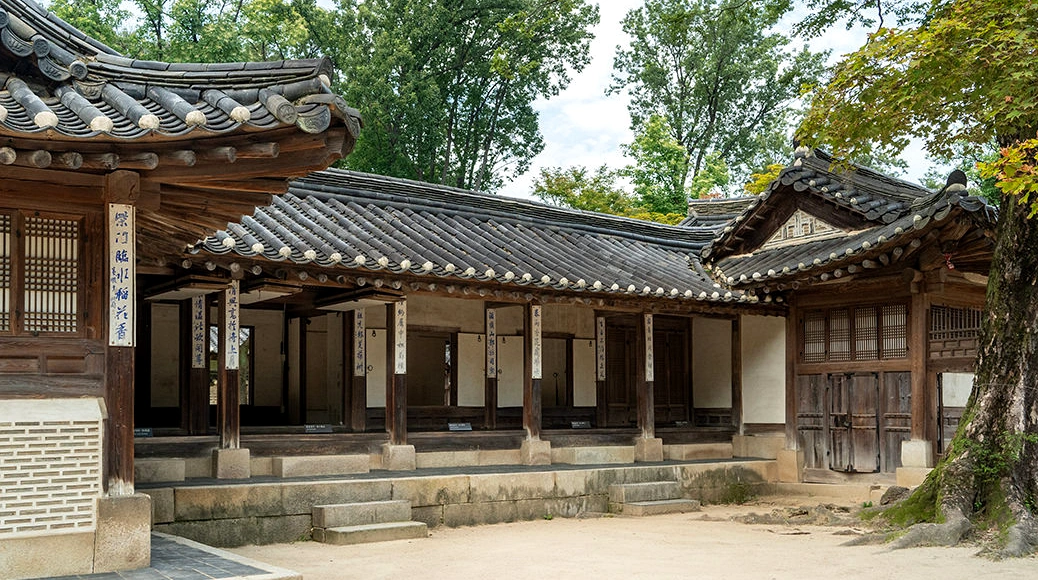
The name “Changdeok” itself embodies a profound and humanitarian ruling philosophy, quoted directly from the Classic of Poetry (Shi Jing), Lesser Elegantia section, poem “Ji Sui” with the verse “May the noble man live ten thousand years, receiving boundless blessings,” while delicately combining with the concept of the “flourishing of morality.” The entire historical progression, court protocols, and architectural standards of this place have been meticulously and thoroughly recorded through some of the most precious historical sources, such as the Annals of the Joseon Dynasty (Joseon Wangjo Sillok), the National Code (Gyeongguk Daejeon), and the protocols of the Office of Construction (Yeonggeon Dogam Uigwe). The cultural and artistic imprints of the later dynasty are still perfectly preserved through exquisite brushstrokes, horizontal boards, antithetical couplets, and stele inscriptions penned by renowned masters of the time, typically exemplified by the royal calligraphy on the nameplate of Injeongjeon Hall, Juhamnu Pavilion, the Fish-Water Gate, and Aeryeongjeong Pavilion. All of these have enriched a dense cultural layer, turning Changdeokgung into a living museum of the profound civilization and authority of a dynasty that endured many historical storms.
Through the lens of East Asian architectural cultural history, the location selection and master planning of Changdeokgung Palace are praised by scholars and geomancy experts as the ultimate pinnacle of ecological architectural art and traditional geomantic theory on the Korean Peninsula. Unlike Gyeongbokgung—its twin brother bearing the authoritative aura of a flat ocean planned on an open plain following the rigid chessboard model of ancient Chang’an—Changdeokgung chose a distinct path, one that is flexible and harmonizes remarkably with nature. Looking back to the early Joseon period, the royal architects wisely maximized the rugged yet auspicious terrain at the foot of Mount Bukaksan, specifically hugging the southeastern slope of Eungbongsan peak to erect a palace complex leaning against the mountains, with its front greeting the winding flow of the Cheonggyecheon stream system heading south-southwest. This layout perfectly and completely fulfills the golden principle in Eastern geomancy (Pungsu-jiri): “resting against the shade and embracing the sun, backing the mountains and facing the waters,” creating a converging magnetic field of vital energy that both shelters against cold winter northern winds and welcomes refreshing breezes blowing from the valleys.
The technical processes and architectural mindset behind Changdeokgung demonstrate an absolute respect for the pristine nature of the ecosystem, avoiding the traditional imperial practice of leveling the terrain. Instead of filling valleys and flattening hills, Joseon-era master builders fully applied the philosophy of "adapting to nature" (thuận thiên ứng địa), allowing the natural topography to guide the design lines. As a result, the palace halls, winding long corridors, and moss-covered courtyards do not follow a rigid straight axis. Instead, they hug the undulating elevations of the hills, intertwining and overlapping to create an exceptionally vibrant spatial rhythm. Narrow paths and mossy natural stone steps guide visitors through hidden turns, revealing unexpected vistas rather than exposing the grand scale all at once. Thanks to this planning philosophy, more than two-thirds of the palace’s total area has preserved its original secondary forest vegetation, babbling streams flowing through rock crevices, and natural underground springs, transforming this site into a living museum of sustainable landscape architecture.
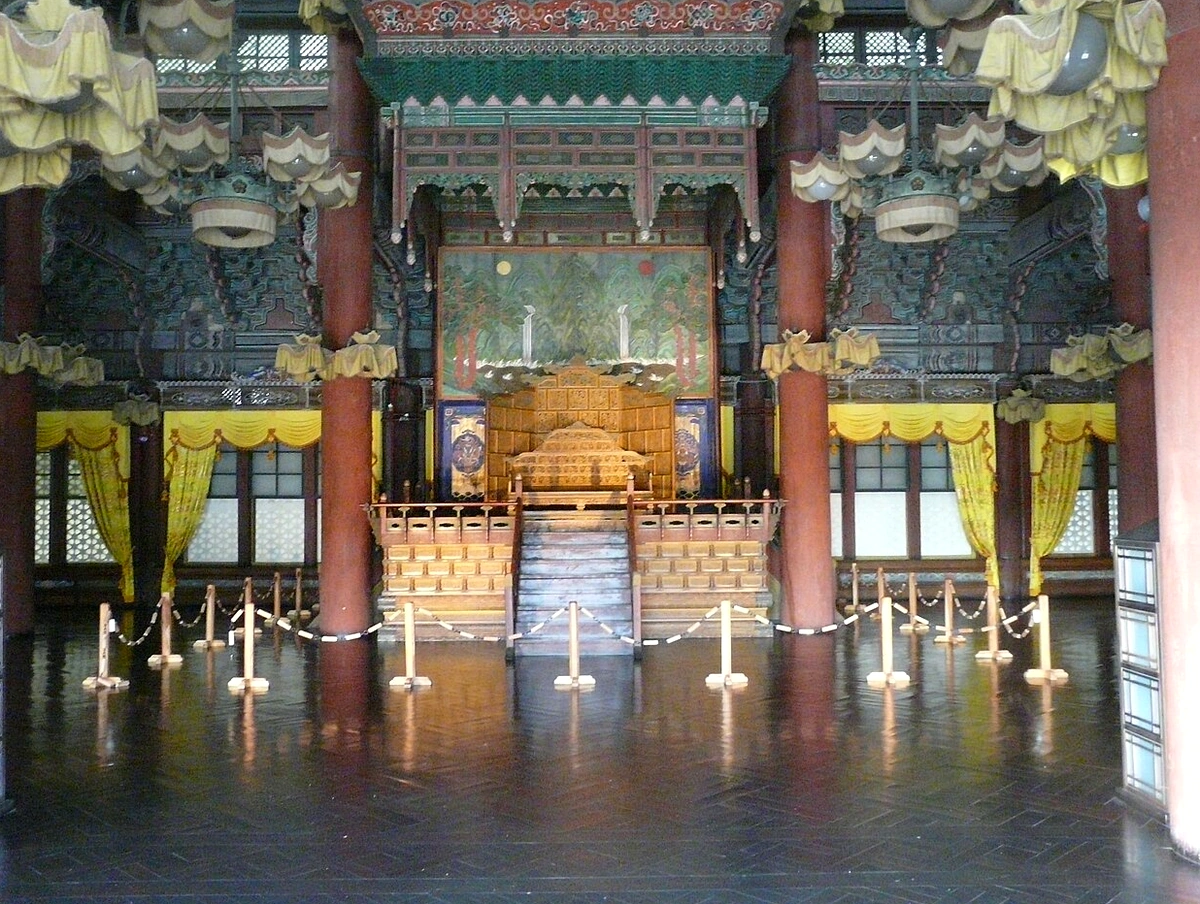
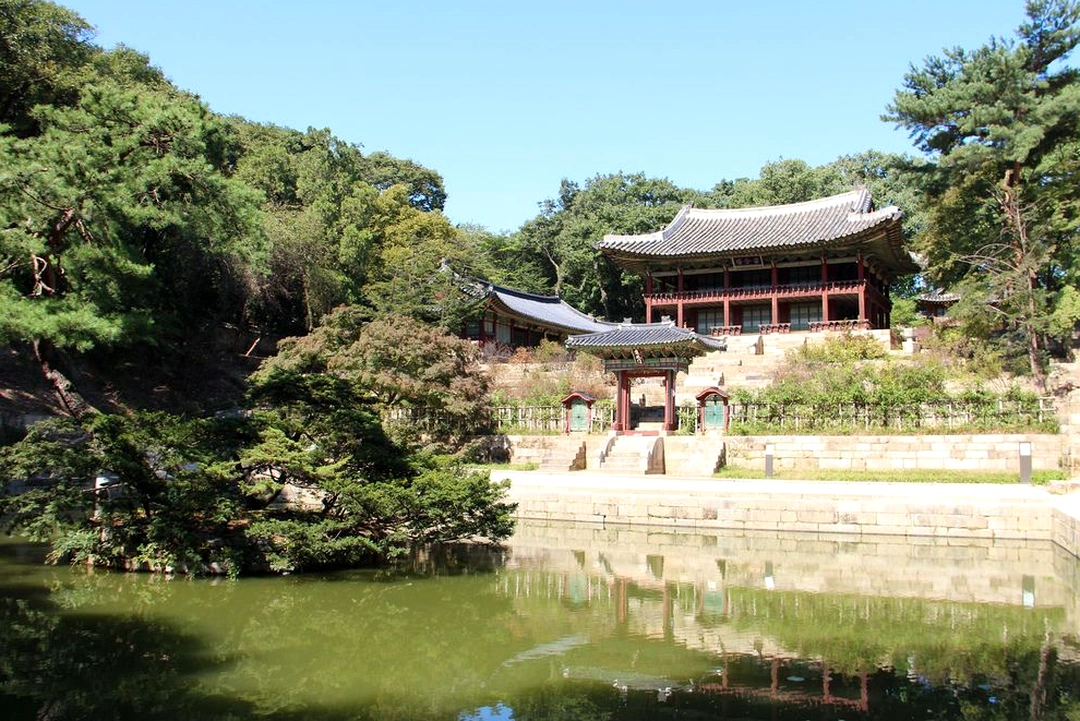
Regarding its macro-spatial organization, the entire Changdeokgung complex is divided into two major functional systems that are closely intertwined yet functionally distinct. The first system comprises the outer court and inner quarters, often regarded as the political face of the court. This includes the front administrative area featuring the majestic Injeongjeon Hall and the subdued Seonjeongjeon Hall—where court sessions were held, major affairs of state were discussed, and foreign envoys were received—as well as the adjacent inner quarters behind it, consisting of Daejojeon Hall and Huijeongdang Hall, which served the daily lives of the emperor and empress. The second system, and also the regal masterpiece occupying the majority of the space, is the Rear Garden (Huwon)—also known as the Forbidden Garden or Biwon—which claims nearly two-thirds of the palace’s total area. Nestled among rugged mountain valleys, Huwon is a seamless blend of modest pavilions and towers with the pristine natural landscape of streams, ponds, and patches of primeval forest. Here, the Confucian political philosophy of ruling the state alongside the duty of self-cultivation is paired and harmonized with the Daoist concept of carefree wandering and living in harmony with nature. Every corner of Buyongji Pond, every moon-viewing pavilion, and every stone bridge spanning crystal-clear waters conveys a profound message about the eternal symbiotic relationship among humanity, architecture, and the natural world.
Stepping into the inner precincts of Changdeokgung Palace, or Changdeokgung, the faraway traveler is instantly overwhelmed by a pure wooden architectural masterpiece deeply imbued with feng shui and Joseon aesthetic philosophies, with the total area stretching across approximately 430,000 square meters including the mysterious Huwon area. From a cultural-historical research perspective, the surviving architectural structures here are the most typical representatives of late Joseon-era royal craftsmanship. The load-bearing structural system of all the main halls was erected using traditional East Asian interlocking joinery methods, representing a sophisticated combination of the grand bracket-set style (抬樑式) and the pillar-and-beam style (穿斗式). Master craftsmen did not use a single iron nail; instead, every single beam, pillar, and tie was carved, shaped, and tightly fitted together through intricate wood joints that have stood the firm test of centuries of weathering.
Looking upward, the palace roofs are shaped predominantly into two styles: the double-eave hip-and-gable roof (known to the Joseon people as the Batak roof – 八作屋頂) and the gable roof (懸山頂), supported by increasingly complex, magnificent, and wing-like bracket clusters (斗栱) that reach out toward the eaves, characteristic of the master artisans of that era. The distinct feature that breathes life into Changdeokgung’s architectural appearance is the vibrant Dancheong (丹青) decorative art applied to every intersection of pillars and beams. Utilizing natural minerals with five basic colors—blue, red, yellow, white, and black—court artisans infused every grain of wood with patterns that both symbolize the universe and act as a natural protective armor safeguarding the wood from weather damage, insects, and mold.
Venturing deep into the main axis of the inner palace, where core structures embodying royal authority and administrative function stand prominently, Injeongjeon Hall (Hall of Benevolent Government) emerges imposingly as a symbol of absolute majesty. This was the venue for grand national ceremonies and coronation rites of Joseon monarchs. Viewed from the outside, the hall resembles a two-story structure, but inside, it is actually a single-story open space with a soaring ceiling, creating an awe-inspiring sensation for anyone who steps inside. The front courtyard is solemnly arranged with rows of stone rank markers aligned for civil and military officials. Interestingly, during the modern era, the interior of Injeongjeon Hall underwent renovations influenced by East-West cultural exchanges, when the traditional wooden floor was replaced and a sparkling glass chandelier was hung from the center of the ceiling, blending Eastern antiquity with Western luxury.
Leaving the main hall to visit the daily governance area, Seonjeongjeon Hall (Hall of Enlightened Government) stands out uniquely within the entire architectural complex. This is the only surviving hall in the palace featuring blue-glazed tile roofing—an extremely expensive and elaborate imperial tile-firing technique that creates a stark color contrast compared to the surrounding traditional gray tile roofs. Transitioning to the royal family’s private living quarters are the Heejeongdang (Hall of Bright Rule) and Daejojeon (Hall of Great Creation) architectural clusters, which served as the bedchambers of the king and queen. Notably, Daejojeon Hall utilizes a remarkably unique construction technique featuring a ridge-less roof (無脊頂), an architectural style deeply rooted in feng shui philosophy, symbolizing the belief that two true dragons vying for power cannot coexist within the royal palace.
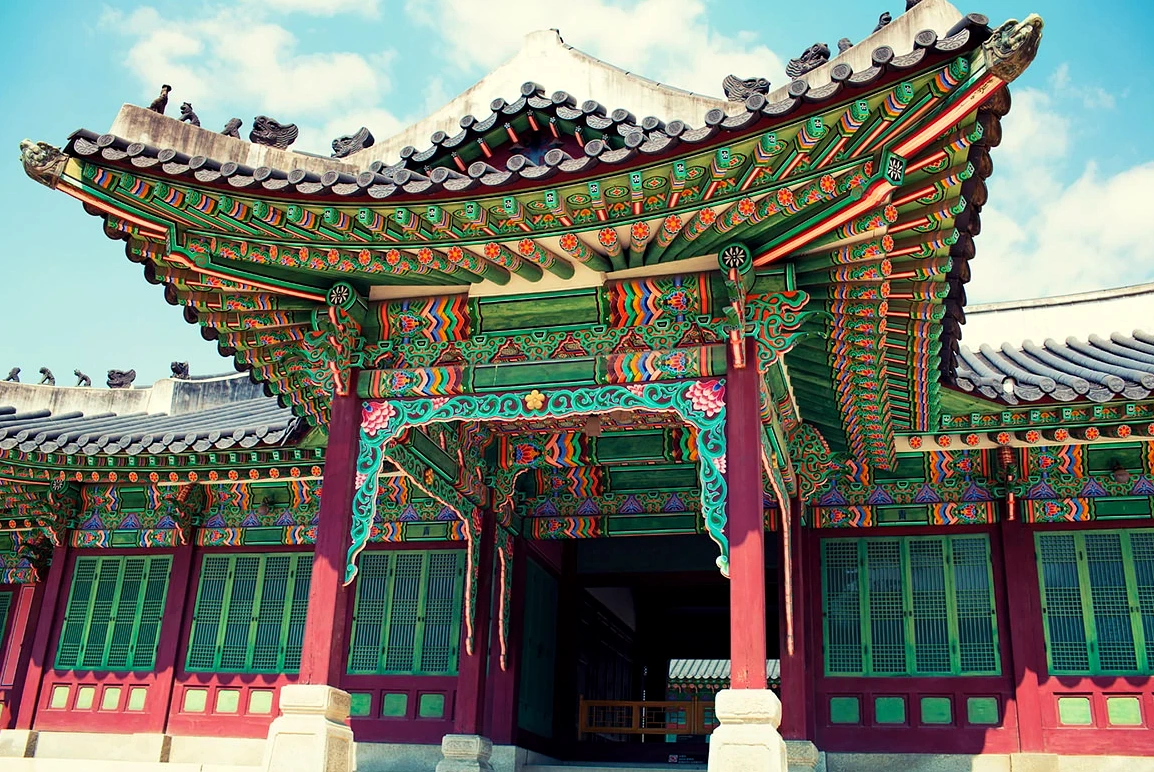
Concluding the structural space of Changdeokgung in the eastern area of the palace is Nakseonjae, an architectural complex with an elegant, refined look, completely separated from the grandeur of the main hall areas. Built without the use of colorful Dancheong art, Nakseonjae retains the rustic colors of natural wood along with meticulously hand-carved folding screens, standing as a testament to the pinnacle of woodworking art and the sophisticated aesthetic mindset of the Joseon royalty in creating a serene space for meditation, reading, and nostalgia. All the structures from the grand hall to the sleeping quarters, from the azure tiled roofs to the nail-free carved lines, weave together an encyclopedic tapestry of Korean royal wooden architecture, where human essence and nature blend into one.
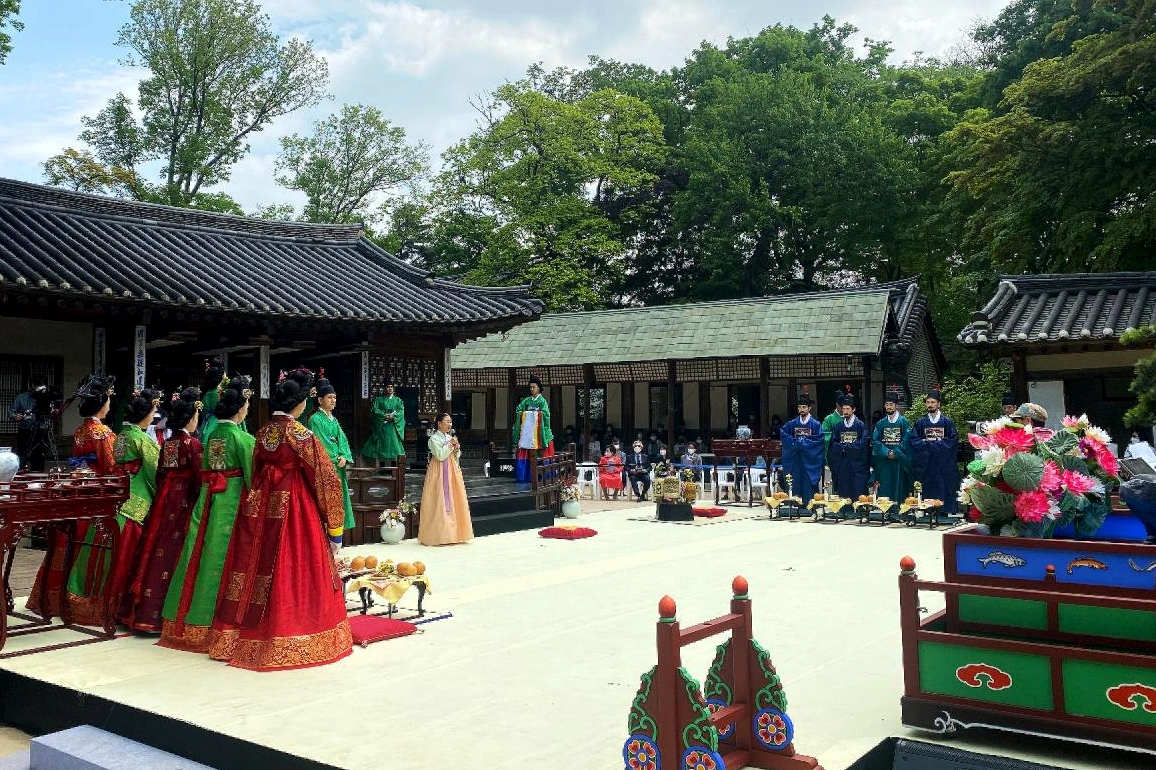
As night falls, shedding the imposing attire of daytime court politics, Changdeokgung Palace enters a completely different dimension, where the past and present harmonize through top-tier live-action performances and light art programs. The Korea Heritage Service, in collaboration with the Korea Heritage Agency, has set a new standard for sustainable heritage tourism exploitation through the series of programs “Changdeokgung Moonlight Tour”. This is not merely an ordinary night sightseeing tour, but a pilgrimage back in time, allowing contemporary travelers to touch the profound rhythm of life of the Joseon dynasty. The sophistication in its organization lies not in the dazzling ostentation of modern technology, but in the absolute respect for the heritage, nurtured from the traditional East Asian aesthetic philosophy known as “In Praise of Shadows” – celebrating the beauty of darkness and intentionally artistic obscurity.
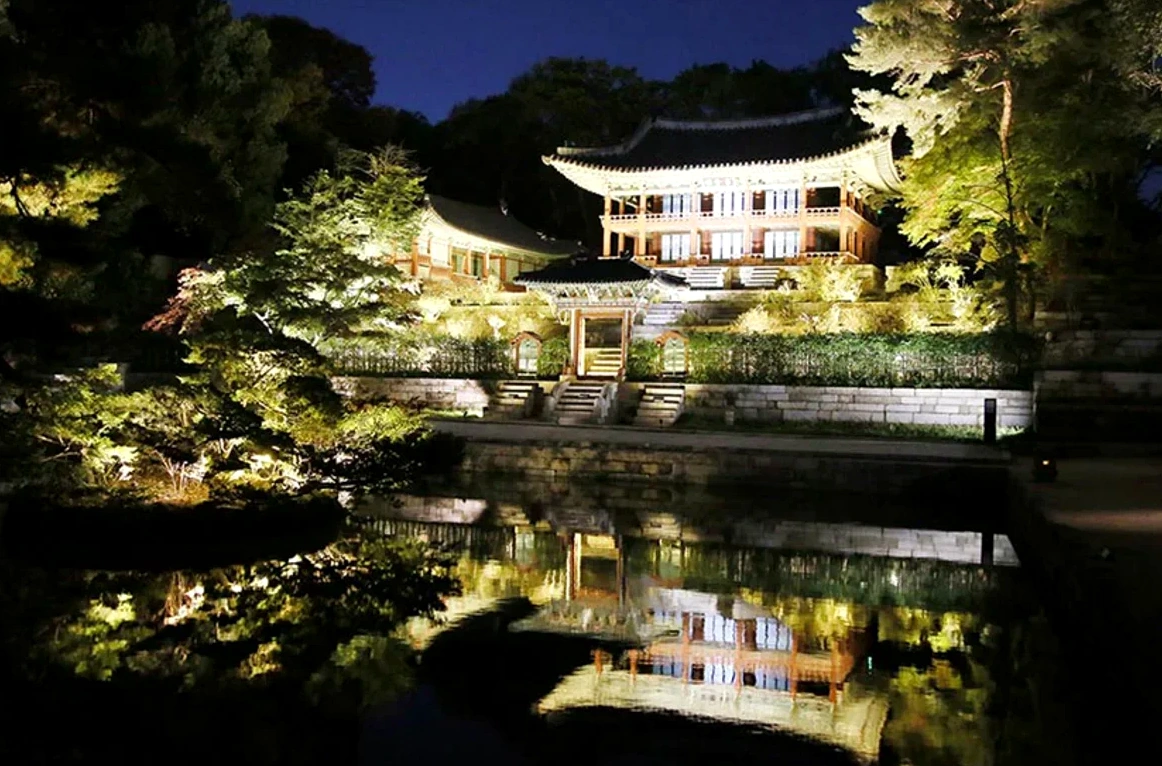
The most admirable highlight in this nocturnal space is the meticulously designed lighting system, using minimal direct light to allow darkness to honor the architecture. Lighting engineers have skillfully arranged low-glare inground LED lights alongside hidden lighting systems, dyeing a warm golden hue onto every curved line of the yin-yang tiled roofs, the complex bracket structures, and the majestic silhouettes of centuries-old trees reaching out within the backyard grounds. Under the guidance of guides in traditional attire, gently cradling royal lanterns emitting a soft golden glow, the tour group leisurely passes through Geumhomun Gate, proceeds into Injeongjeon Main Hall, and deep into the tranquil space of the Secret Garden. The dim, flickering light reflects against the rock faces, the lake surface, and the endless long corridors, perfectly recreating the stillness, solemnity, and profound mystery of a royal palace sinking into slumber.
The night life here is further breathed to life by delicately intertwined live-action artistic performances along the travel route, typically stopping at iconic spaces such as the Kyujanggak pavilion or the Jondeokjeong pavilion. Amidst the silence of the night, the sounds of the ajaeng and bamboo flutes from the royal orchestra resonate, recreating ensemble pieces and ancestral ritual music that once echoed during grand royal ceremonies. Blending with those elegant sounds are the graceful royal fan dance and the fierce yet equally powerful sword dance under the dim moonlight, vividly recreating the rich spiritual and cultural life of the ancient dynasty. This live-action performance art is not staged on a lofty platform, but takes place right amidst the ancient architectural space, blurring the distance between modern viewers and the royal artisans of the past century, turning dry history into a breathing, vibrant entity.
Concluding the journey immersed in the light, music, and magical atmosphere of Changdeokgung at night, travelers get to experience royal culinary culture deeply imbued with traditional Korean medicine. In specially prepared reception areas, visitors enjoy royal herbal teas (Hanyabang) paired with delicate refreshments and traditional pastries reserved exclusively for kings and royalty during night tea parties. The perfect combination of sight from artistic lighting, hearing from royal music, taste from royal cuisine, and touch from stepping on ancient stone steps creates a comprehensive cultural experience. The program is not simply a night tourism product, but a method of preserving and promoting living heritage values, where history does not rest quietly in archaeological books but truly breathes, vibrates, and inspires today’s generation.
Stepping away from the majestic and tranquil maple canopies of the Huwon backyard, the ancient rhythm of life in the capital of the land of kimchi gently slows down as it brings travelers to the royal culinary space surrounding the Changdeokgung complex. The area surrounding the palace, from the sloping tiled alleys of Bukchon hanok village to the maze of traditional tea houses in Ikseon-dong and Samcheong-dong, still preserves intact the most exquisite culinary secrets once served to the kings of the Joseon dynasty. More than just enjoying a meal, the culinary cultural experience journey here is a silent yet profound dialogue with philosophy, traditional medicine, and court aesthetics that have been passed down through generations of families.
The pinnacle of Joseon royal culinary art is fully embodied in Sinseollo, also known as the fairy hot pot—a rustic yet elaborate work of art that graced the most important court banquets. At the center of the banquet table sits a specially crafted bronze pot with a central chimney, where glowing charcoal embers quietly keep the delicate broth at the perfect temperature. Surrounding the chimney are dozens of meticulously arranged ingredients, including thinly sliced beef, meatballs, golden egg-battered fried fish, shiitake mushrooms, wood ear mushrooms, along with the red and white accents of pine nuts, walnuts, and ginkgo nuts. This dish not only captivates diners with the natural, sweet flavors of a broth simmered from bones and vegetables, but it is also a vivid embodiment of Confucianism’s philosophy of the five interacting elements, where the colors and properties of the ingredients blend harmoniously to nourish both body and soul.
Alongside the rich flavors of the fairy hot pot, the royal banquet table is further adorned with Gujijeolpan, a dish symbolizing the fulfillment and sophistication of ancient Korean culinary culture. Presented on an octagonal lacquer tray neatly divided into nine compartments, Gujijeolpan catches the eye with the harmonious color combination of eight premium ingredients, including shredded beef, deep-sea seafood, tender shiitake mushrooms, delicately sliced thin egg pancakes, and crisp fresh carrots and cucumbers. Placed in the center compartment are thin wheat flour pancakes, serving as a soft bridge for diners to wrap all eight flavors of nature into a single bite. The combination of the sweet meat, crisp and refreshing vegetables, and the chewy, fragrant pancake wrapper creates an unforgettable aftertaste, clearly reflecting the ancients’ utmost respect for the abundance and harmony of nature.
Concluding the sensory exploration around the land surrounding Changdeokgung Palace, the culture of royal tea tasting and pastry appreciation—regarded as a miniature meditative ritual for ancient aristocrats—is an unmissable experience. Amidst the tranquil atmosphere of traditional teahouses hidden behind red brick walls, visitors can taste Yakgwa, traditional honey cookies with a crumbly texture rich in the aromas of sesame oil and ginger, and Dasik, pastries pressed from grain flour and pollen, intricately molded with patterns like miniature bas-reliefs. Savoring each delicately sweet pastry alongside a cup of Omija-cha (magnolia berry tea), which encompasses five flavors—sour, spicy, sweet, bitter, and salty—diners feel the slow breath of time more deeply, where a glorious past and a serene present merge under the shade of mossy tiled roofs.
Wrapping up this journey through the twists and turns along the borders of the Joseon dynasty’s history, preparing a thorough guidebook for exploring Changdeokgung Palace and the mysterious Huwon Secret Garden is the ultimate key for travelers to touch the deepest layers of Seoul’s most authentic culture. Likened to an architectural masterpiece that perfectly blends nature and human creation, this UNESCO World Heritage site does not welcome superficial footsteps or unplanned, spontaneous visits. Careful preparation, from booking tickets and planning itineraries to thoroughly understanding royal court etiquette, will turn every traveler’s trip into a genuine dialogue with the past, where every single brick, patch of grass, and stream carries the spirit of centuries of rise and fall.
The first and most important step in this travel guide is securing reservations, as Changdeokgung clearly distinguishes between its two visiting areas. While main hall areas such as the throne hall and royal quarters allow visitors the flexibility to purchase tickets directly at the counter or book online in advance, the Huwon Secret Garden enforces a strict control policy through a comprehensive advance registration system. Because daily walk-in tickets at the gate are extremely limited, cultural researchers and veteran travel journalists always advise travelers to book early via the palace’s official electronic portal. Furthermore, to protect the fragile ecosystem and the pristine value of the landscape, all tours of the Secret Garden must be conducted in groups led by official guides in languages including English, Chinese, Japanese, and Korean; wandering off independently or freely roaming without supervision is strictly prohibited. Please note that this historical site is permanently closed every Monday for conservation work.
Regarding transportation connectivity, Seoul’s modern urban infrastructure makes accessing this historical site remarkably convenient and hassle-free. Travelers can choose to ride the city’s popular subway system—specifically Line 3—and get off at Anguk Station, then take a leisurely five-minute stroll through streets imbued with traditional charm to reach Donhwamun, the majestic and oldest surviving main gate of the entire complex. Additionally, the dense urban bus network with multiple routes passing through the downtown area offers an economical travel option, providing a vivid perspective on the harmonious blend of antiquity and modernity in the South Korean capital. Once through Donhwamun Gate, a standard archaeological route unfolds before the eyes, guiding visitors through Injeongmun Gate to the magnificent Injeongjeon throne hall, continuing on to Seonjeongjeon, the Huijeongdang and Daejojyeon complex, visiting the quiet corner of Leseonjae before venturing deep into the majestic labyrinth of the Secret Garden, which includes Buyongji Pond, Juhamnu Pavilion, Aeryeongjeong Pavilion, Jondeokjeong Pavilion, and the Yeongyeongdang residence, which strongly reflects aristocratic folk architecture.
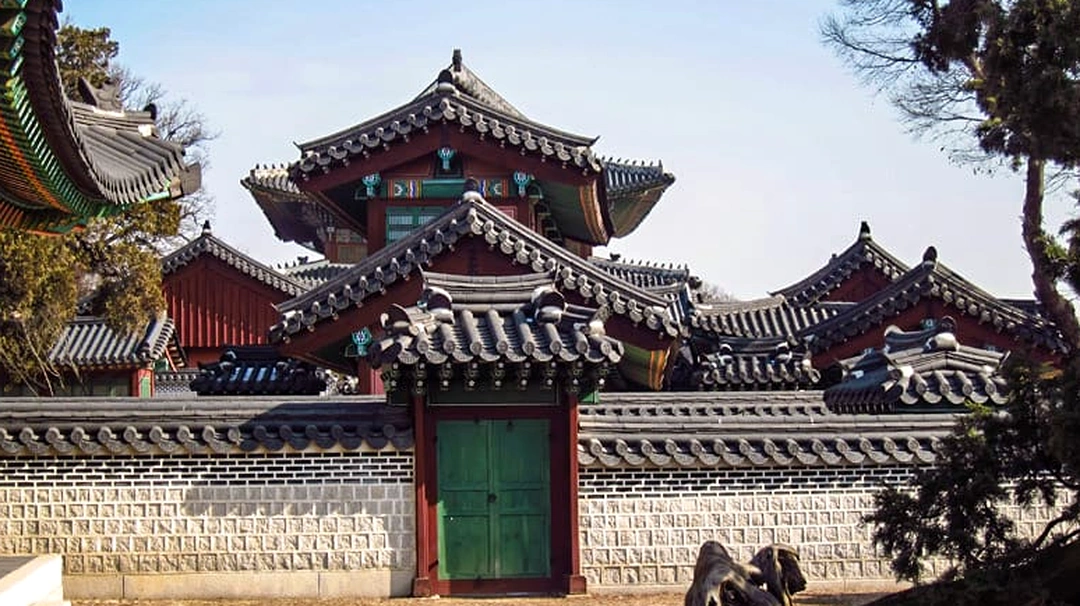
Conquering the Secret Garden requires good stamina and careful preparation of attire, as its terrain features a network of steep stone steps and winding trails weaving through pristine hillsides and valleys. A thorough exploration of this royal garden typically lasts from an hour and a half to two hours of continuous walking, making comfortable sneakers with flat soles, good cushioning, and strong grip an absolute prerequisite to protect your feet. Alongside physical readiness, a strong sense of respect for cultural heritage through strict behavioral rules is a measure of every international traveler’s civility. According to the management board’s regulations, bringing food, drinks, and sugary beverages into the entire Secret Garden area is strictly prohibited to prevent attracting insects that could damage the ancient flora, and smoking is banned in all forms. Inside the palace interior exhibition spaces, using flash photography is strictly forbidden to protect the gilded lacquer and antique textiles from the effects of heat and light. A small yet incredibly useful tip for those looking to optimize their costs is to wear a traditional Hanbok when purchasing your ticket; the policy of free admission for those wearing Hanbok not only helps travelers save on their budget but also creates magnificent commemorative photos that blend seamlessly into the ancient royal atmosphere. For a smooth, thorough trip without the worry of complicated ticket booking procedures or travel itineraries, travelers can check out our all-inclusive tour packages to fully enjoy every memorable moment at this world cultural heritage site.