Standing solitary amid the turquoise waters where the Korea Strait meets the Yellow Sea, Jeju Island has cradled an independent historical trajectory distinct from the Korean mainland since dawn of time. During the prehistoric era and the Three Kingdoms period on the peninsula, the island existed as an autonomous ancient kingdom known as Tamra, establishing its own institutions and maintaining flexible tributary relations with Central Plains dynasties such as the Sui and Tang while preserving deft diplomatic ties with neighboring Baekje and Silla. Its isolated oceanic setting forged a resilient spirit among the people of Tamra, deeply rooted in maritime culture and creation legends of the three demigod founders who emerged from the Tamseonghyeol caves.
The first major administrative turning point arrived in 938, when the King of Tamra formally submitted to the Goryeo Dynasty. By 1105, under King Sukjong of Goryeo, the island’s autonomy came to a complete close as the territory was officially absorbed into central administration and renamed Jeju—a poetic appellation meaning “the province across the great sea.” From that moment onward, this volcanic island served not merely as an administrative jurisdiction, but as the kingdom’s outermost defensive frontier, witnessing fierce upheaval during the Mongol invasions when the Sambyeolcho resistance forces chose Jeju as their final stronghold.
Entering the Joseon Dynasty (1392–1910), vast geographic distance and treacherous surrounding seas turned Jeju into one of the harshest places of exile for political prisoners, disgraced loyalist officials, and eminent scholars. Yet within this windswept isolation of black basalt stone, exiled literati sowed the seeds of Confucian learning across local island life, leaving behind enduring cultural legacies such as the celebrated Chusa calligraphy school founded by great scholar Kim Jeong-hui. In those centuries, the island simultaneously bore the homesick sorrow of banished intellectuals and stood witness to the quiet perseverance and hardship of coastal fisherfolk wresting a living from the sea day after day.
The 20th century etched deep historical wounds across this basalt land through turbulent global upheavals. Under Japanese colonial rule (1910–1945), Jeju was fortified into a strategic military outpost for the Pacific War, leaving behind hundreds of coastal bunker caves and military airfields. That pain plunged into tragedy with the Jeju April 3 Incident (4.3 Uprising) in 1948, a dark chapter that claimed tens of thousands of lives amid postwar ideological conflict. Rising with steadfast resolve from the ashes, the island steadily rebuilt itself, culminating on July 1, 2006, with its official designation as Jeju Special Self-Governing Province—ushering in a modern renaissance of economic, ecological, and cultural autonomy.
No portrait of Jeju’s spiritual character would be complete without Kim Man-deok (1739–1812), an extraordinary heroine in island history. Born into humble circumstances and relegated to the status of a gisaeng, she defied rigid social prejudices to become a brilliant merchant controlling vital maritime trade across the island. When catastrophic drought and typhoons struck in 1794, plunging Jeju’s population into devastating famine, Kim Man-deok displayed boundless compassion by liquidating her entire life’s fortune to purchase hundreds of boatloads of grain from the mainland, saving countless lives. News of her selfless generosity moved the royal court; King Jeongjo of Joseon lifted travel restrictions to summon her to the capital of Hanyang and bestowed high noble honors upon her, immortalizing her name as a timeless symbol of sacrifice, philanthropy, and self-reliant island grit.
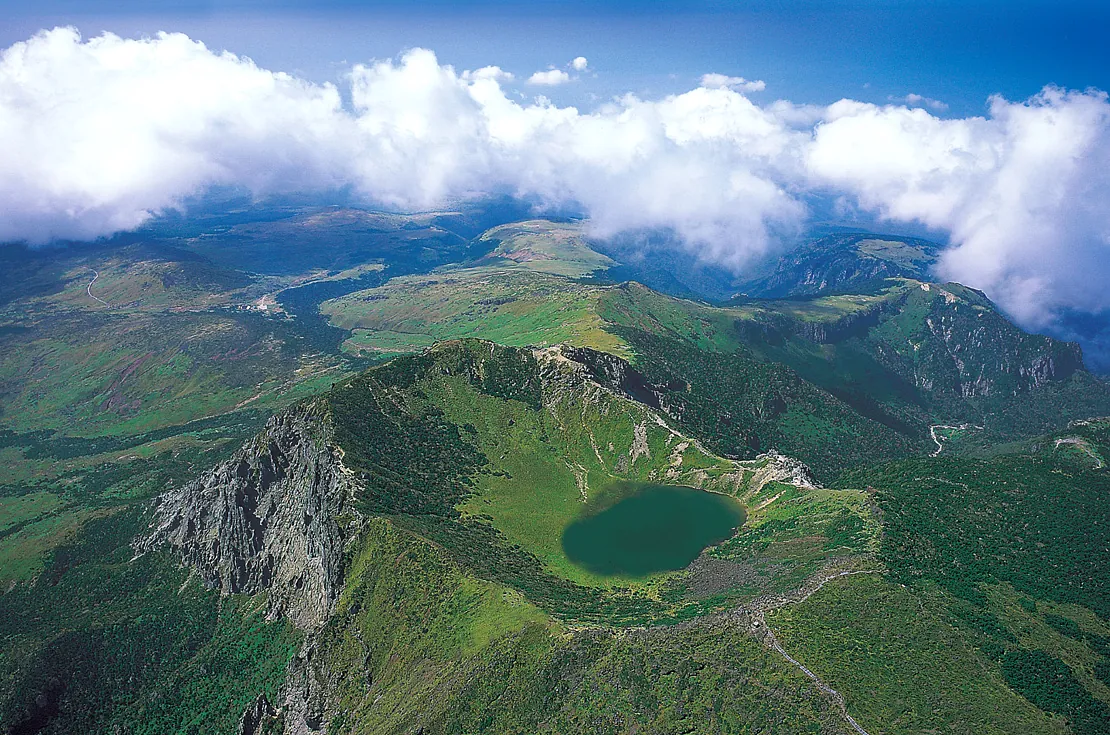
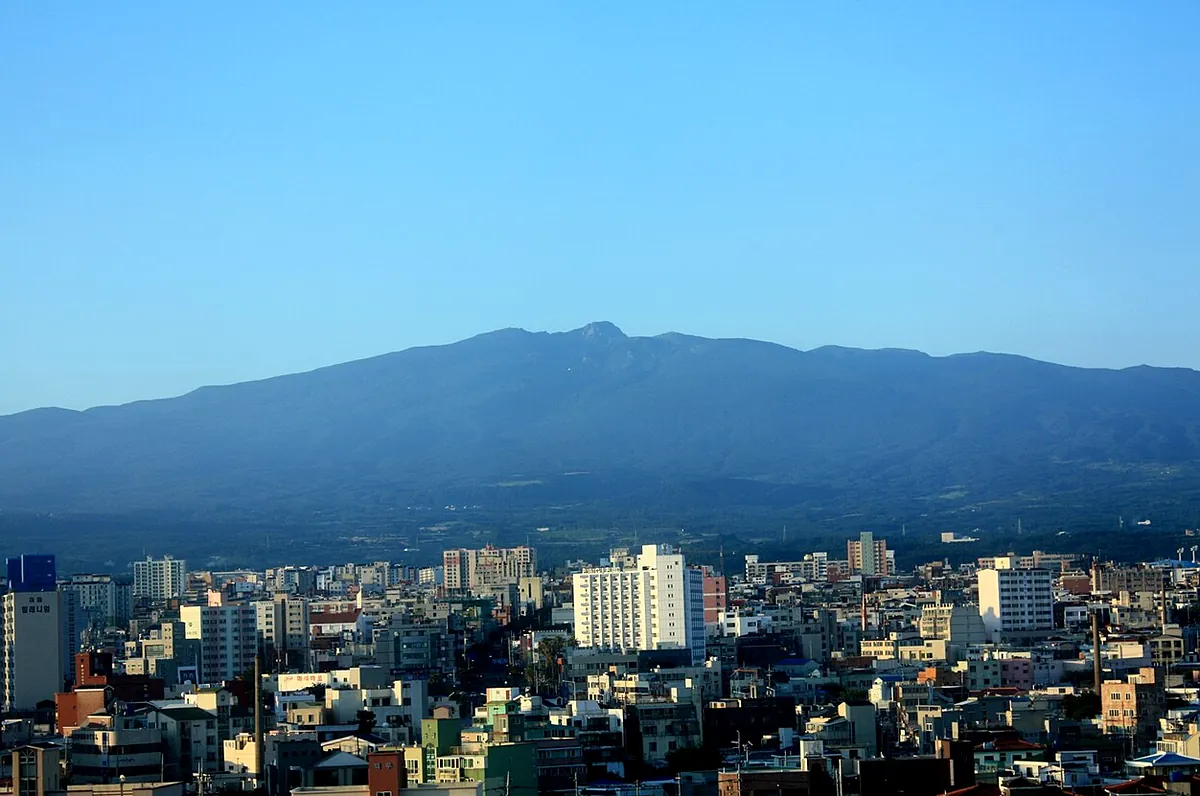
Forged by violent eruptions of basaltic lava millions of years ago from the depths of the ocean, Jeju rises like a primeval land endowed with a shield-volcano geological structure unique in Northeast Asia. Anchoring the entire geomantic spine of the island is sacred Hallasan, soaring 1,950 meters above sea level to create a harmonious triad where clouds, ocean currents, and earth energies converge. From this ancient volcanic cone, cooling lava flows sloped gently toward the sea in all four directions, dividing the island into rich microclimates and distinct landscapes. Linking north and south directly across the island’s heart are two celebrated scenic arteries: the 5.16 Road and the 1100 Altitude Road. Winding along the 1100 Highland reveals an extraordinary vertical tapestry of flora—from temperate foothill forests to rare subalpine vegetation clinging tenaciously to volcanic boulders, bursting each autumn into fiery crimson maples beneath drifting clouds enveloping the summit crater.
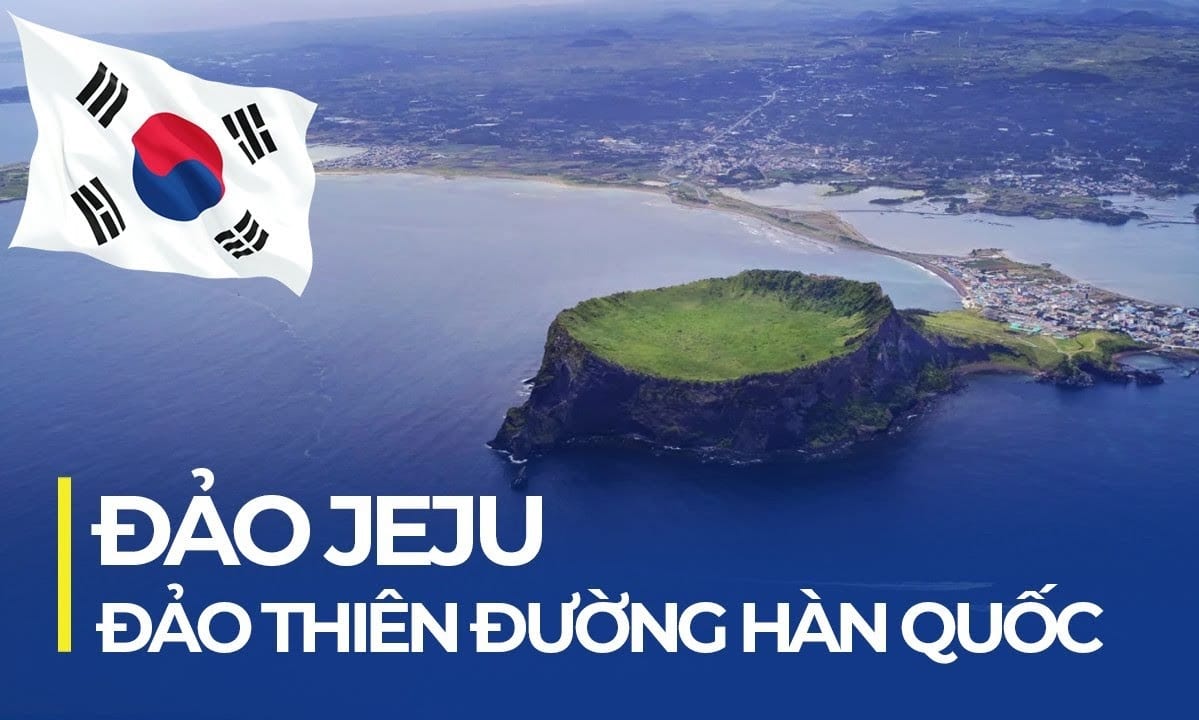
Turning toward the western coast, the terrain shifts dramatically where ancient lava flows poured straight into the ocean, sculpting the famed Aewol Coastal Road with stark, jet-black basalt cliffs. The mysterious obsidian hue of volcanic rock stretches beside sapphire waves in striking visual contrast, cradling unspoiled fishing villages that still preserve traditional rhythms dating back to the island’s earliest settlements. Here, porous, mineral-rich volcanic stones not only break fierce sea gales, but were also stacked by ancestors into moss-covered dry-stone walls (batdam) to shield farmland from salt spray—reflecting an ingenious philosophy of living in harmony with harsh volcanic nature.
In contrast to the rugged wildness of the west, the gentle southern coast spanning Seogwipo and the Jungmun Resort Complex gathers the finest expressions of warm subtropical geomorphology. Through relentless erosion by freshwater springs flowing down from volcanic heights meeting surging ocean tides, nature sculpted the three-tiered Cheonjeyeon Waterfall plunging through deep gorges framed by lush evergreen foliage. Along the Seogwipo shoreline stands the monumental Jusangjeolli Cliff, where tens of thousands of hexagonal basalt columns rise side by side as if measured and chiseled by divine hands, alongside the solitary sea stack Oedolgae standing defiant amid crashing whitecaps and tied to poignant legends from the Mongol occupation. Together, cascading mountain waters and sheer basalt cliffs transform the south coast into a priceless open-air geological museum.
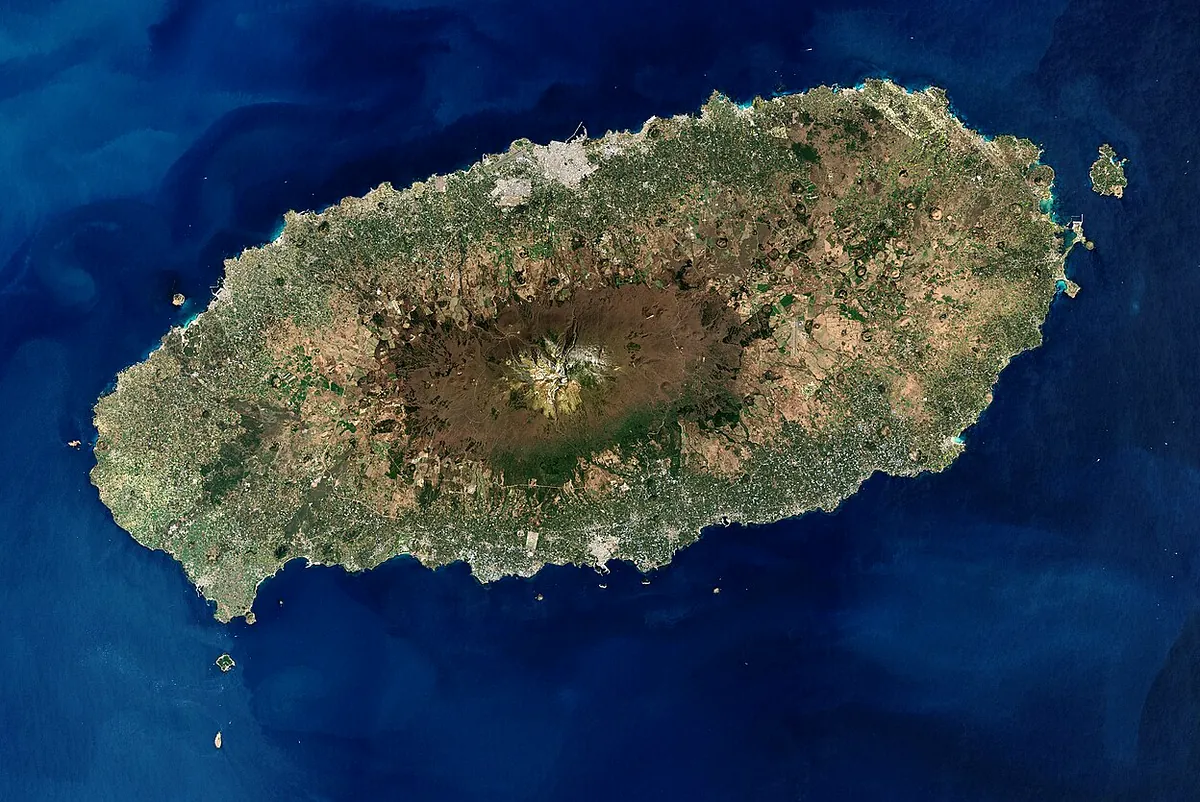
Encircling this entire diverse geography is the Jeju Olle Trail—a coastal walking network stretching more than 425 kilometers across 27 signature routes. Originally referring in the Jeju dialect to the narrow winding lane connecting a home’s gate to the main road, the word “Olle” has become an emblem uniting the island’s natural and cultural heritage. Following gravel paths past brilliant yellow canola fields, along wave-battered black cliffs, and through shaded woodland trails, Jeju Olle is far more than an ecotourism project—it is a living pilgrimage path that invites travelers to experience the true soul of an island born of fire and enduring in the open sea.
Deeply rooted in a philosophy of coexistence with tempestuous island elements, Jeju’s traditional architecture takes shape as a harmonious dialogue between volcanic basalt and centuries of indigenous ingenuity. At the heart of traditional domestic architecture stands the humble thatched-roof cottage (chogajip), whose walls are built from porous basalt stones stacked entirely through dry-stone masonry without a single drop of mortar. Though seemingly loose, this construction follows precise aerodynamic principles—allowing howling sea winds to pass through microscopic crevices rather than building up destructive pressure against the walls. Crowning the home is a thick roof thatched with native naebi grass and lashed down by a tight lattice of twisted straw ropes woven like fish scales, preventing violent tropical typhoons sweeping across the Korea Strait from tearing the roof away.
In spatial layout, the threshold between public lane and private homestead is defined by the winding stone olre alley, acting as a natural windbreak that dissipates harsh gusts while preserving vital energy within the compound. At the end of the lane, islanders placed no locked gates; instead, two notched stone pillars held three horizontal wooden poles known as jeongnang (bangsaet). This simple semiotic system reflected the honesty and remarkable safety of island life: all three poles lowered to the ground meant the host was home and welcoming guests; one pole raised signaled the owner was working nearby in the fields; two poles up indicated absence for the day; and all three poles resting across the pillars informed passersby that the family had embarked on a long voyage away. Spiritual guardianship was completed by Dol Harubang statues carved from dense volcanic lava. With bulging round eyes, broad imposing noses, serene enigmatic smiles, and hands resting staggered over their bellies, these beloved “stone grandfathers” served both as fertility symbols and protective guardians at the gates of old county fortresses.
In vivid contrast to ancient moss-grown stone walls, modern infrastructure development on Jeju represents a bold, forward-looking transformation. Isolated offshore without a subsea high-speed rail link to the mainland, Jeju International Airport (CJU) serves as the island’s vital lifeline—consistently ranking among the busiest domestic air routes on Earth alongside high-speed ferry services from Mokpo and Busan. Rather than unchecked concrete sprawl, public investment champions Jeju’s ambitious Carbon Free Island initiative, integrating village-wide EV charging networks, offshore wind farms along the western coast, and smart solar grids. The coexistence of thousand-year-old storm-proof chogajip cottages alongside pioneering renewable energy makes Jeju a global model of architecture rooted in heritage while reaching toward the future.
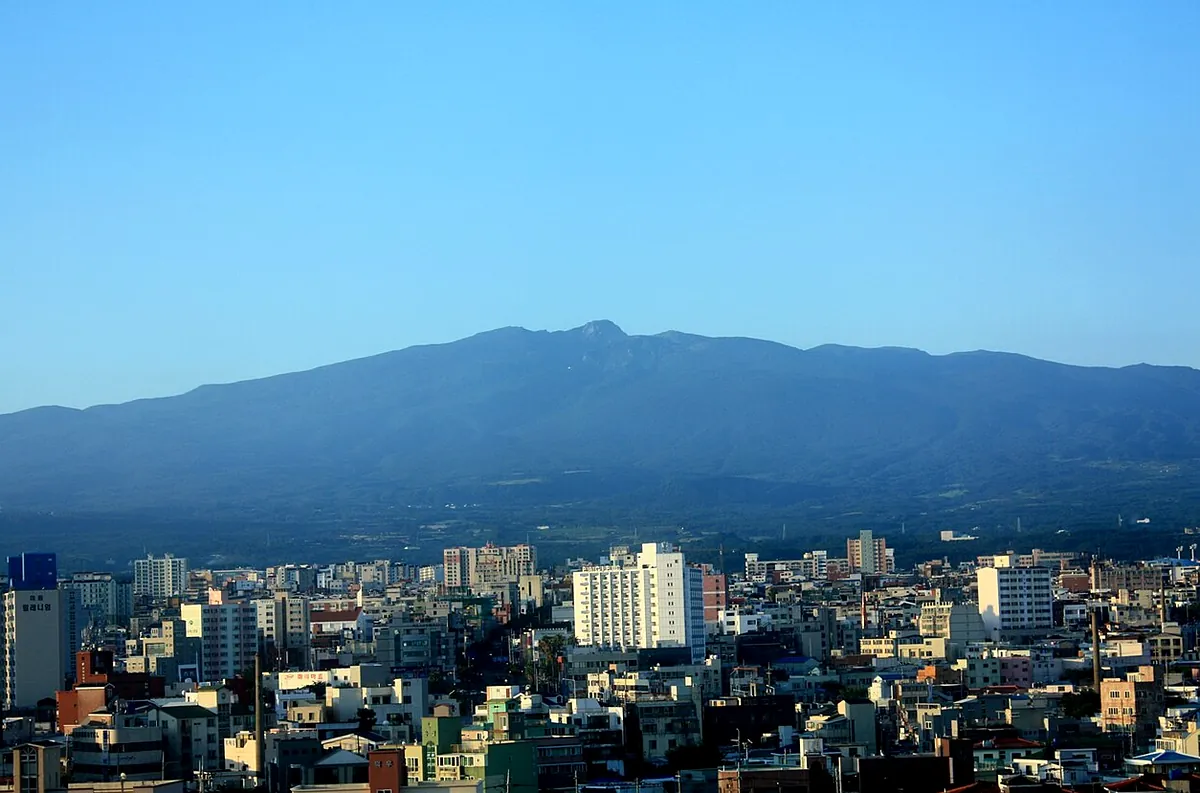
As fiery crimson twilight dips below the western horizon, the pearl island of Jeju steps into an entirely different dimension where millennia-old volcanic stone blends with contemporary visual art and vibrant island nightlife. The evening journey often begins along the Aewol coast—poetically named for moonlight reflecting over mugwort fields. Along the shoreline trail, sleek cafes and lounges featuring floor-to-ceiling tempered glass ignite in warm amber light. Their glow spills through clear panes directly onto rugged, wave-carved black basalt rocks, creating a striking aesthetic contrast between refined modernity and timeless wild nature. The rhythm of breaking waves merges with soft acoustic melodies, offering a serene yet captivating overture before the island awakens into a symphony of light.
Leaving the windswept coast behind, travelers enter a realm of cutting-edge visual art where multimedia projection stages some of East Asia’s most mesmerizing immersive exhibitions. Tucked near the foothills of majestic Hallasan, large-scale digital art sanctuaries such as Arte Museum—reborn from a former 4,600-square-meter electronics factory—and Bunker de Lumières, a fortified subterranean concrete military communications bunker, have been transformed into cathedrals of light and sound. Through infinity-mirror reflections and advanced projection mapping, classic masterpieces by Gustav Klimt and Vincent van Gogh alongside crashing waves and cascading waterfalls seem to defy physics, flowing seamlessly across raw stone walls. Within the hushed underground dark, shadow acts as a velvet canvas magnifying millions of shimmering pixels into a surreal dreamscape.
Contrasting with the meditative quiet of digital art galleries is the earthy, bustling energy erupting inside traditional night markets—foremost among them Dongmun Market, established in 1945 following Korea’s liberation. When the clock strikes 6:00 PM, Gate 8’s night food alley transforms into a sensory feast brimming with flame and aroma. Beneath bright lights, skilled local vendors wield blue-flame blowtorches to sear thick cuts of Jeju Heukdwaeji (black pork)—the island’s prized heritage breed renowned for crisp, sweet marbling. The lively sizzle of spicy skewered meats, live abalone seared in garlic butter, fiery stir-fried octopus, and the bright citrus fragrance of freshly pressed Hallabong tangerine juice fill the night air. Melodic calls in the distinctive Jeju-eo dialect mingle with cheerful laughter, painting a vivid portrait of coastal generosity and hospitality.
A Jeju night reaches its grand finale at upscale coastal resorts in Jungmun or the vibrant heart of New Jeju City. At architectural landmarks such as The Shilla Jeju perched above gentle sea cliffs or the 38-story Jeju Dream Tower, nightlife takes on an air of refined luxury. Soaking in the warm waters of a heated outdoor infinity pool under crisp evening air while gazing out toward the horizon reveals a uniquely magical sight: fishing lanterns across the sea. Hundreds of night squid-fishing boats string bright lamps across the waves like a floating Milky Way on the Pacific Ocean. Their shimmering glow merges with city lights reflected across the bay, bringing an enchanting island night to a close amid an endless harmony of nature, culture, and light.
Distinct from the elaborate marinades and intense spiciness favored on the Korean mainland, the culinary culture of this volcanic island grew out of rugged natural scarcity and the elemental lifestyle of ancient Tamra inhabitants. Surrounded on all sides by open ocean and stark black basalt fields, authentic Jeju cuisine celebrates the pure, unadulterated freshness of marine harvests alongside time-honored preparation methods that preserve natural nutrition.
Topping the list of Jeju’s classic delicacies is the island’s famed native black pork, known as Heuk Dwae-ji. Raised free-range on gentle slopes around the base of Hallasan, this purebred black pig drinks mineral-rich volcanic water and breathes crisp, salt-laced sea air. As a result, its deep-red meat boasts dense lean muscle laced with pearly marbling that cooks up remarkably springy and crisp without ever feeling heavy or greasy. Thick steaks sizzle directly over glowing hardwood charcoal to lock in natural juices before being dipped into Meljeot—a pungent, savory fermented anchovy sauce bubbling right on the grill grate with raw garlic and fiery bird’s-eye chilies, delivering an unforgettable burst of wild island flavor.
Moving from inland pastures toward crashing waves brings travelers to the pinnacle of ocean bounty: a steaming pot of Haemul Jeongol (Jeju seafood hotpot). This celebratory dish honors the skill and courage of the Haenyeo—Jeju’s legendary female free-divers who have harvested the seabed without breathing apparatus for centuries. Overflowing like a miniature marine museum, the wide cast-iron pot brims with live wriggling abalone, meaty sea crabs, whole curled octopus, translucent squid, and plump clams and scallops. Simmered in a clean, delicate broth of white radish, kelp, and mild chili powder, the natural sweetness of fresh seafood melds effortlessly into the pure, briny essence of the southern sea. Equally beloved is Godeungeo Gui (salt-grilled mackerel), showcasing plump mackerel caught in cold southern waters, grilled until its skin blisters golden with sea-salt crystals while its rich, oily flesh pairs irresistibly with steamed rice.
While Heuk Dwae-ji represents warm hospitality offered to guests from afar, Momguk soup serves as a sacred spiritual bond woven into Jeju’s most important family weddings, funerals, and ancestral rites. Traditionally, whenever a village slaughtered a pig for ceremonial offerings or wedding banquets, all bones and offal were simmered overnight into a rich, milky, velvety stock. Cooks then added a native sargassum seaweed harvested from coastal reefs—called “Mom” in the Jeju dialect—along with buckwheat flour to thicken the broth. Each piping-hot bowl of Momguk balances earthy marrow richness with the mineral-laden, ocean-deep aroma of wild seaweed, evoking the mutual solidarity of an island community that relied on one another to endure centuries of isolation and scarcity.
Hallabong tangerines are the sweet fruit of Jeju’s mineral-rich volcanic ash soil and abundant southern sunshine. Easily recognized by a distinctive protruding top bump resembling snow-capped Hallasan, this thick-skinned citrus conceals plump, glistening segments bursting with rich sweetness, bright acidity, and fragrant essential oils. Biting into a juicy wedge of Hallabong after a hearty charcoal barbecue captures the vibrant, unpretentious, and proud spirit of Jeju’s land and people.
Set apart in the waters south of the Korean Peninsula, Jeju Special Self-Governing Province enjoys a unique administrative status within South Korea. To support its role as an international resort destination, local authorities grant visa-free stays of up to 30 days for citizens of most countries and territories, provided travelers enter directly through Jeju International Airport or Jeju International Port without transiting through mainland hubs such as Seoul or Busan. Even with open visa-free entry, carrying complete travel documentation—including return flight tickets, confirmed hotel reservations, and a clear itinerary—is essential for smooth immigration clearance.
Spanning more than 1,800 square kilometers around sacred Hallasan, the island’s transportation network has its own distinctive character. Due to complex volcanic geology, Jeju has no subway or high-speed rail lines. Public transit centers on a well-organized color-coded bus network: red express buses linking the airport to all four corners of the island, blue trunk buses running along the coastal Iljuro highways, and green branch buses reaching inland foothill villages. However, bus frequencies to remote scenic spots can be sparse. Consequently, travelers who value privacy and schedule flexibility often rent a car (with an International Driving Permit under the 1949 Geneva Convention) or hire a private car with a local driver-guide intimately familiar with every coastal bend and scenic trail.
In years past, surges in mass tourism occasionally gave rise to ultra-low-cost package tours that steered visitors through closed-door shopping stops with high-pressure sales tactics for overpriced red pine needle oil, lingzhi mushrooms, or cosmetics. Committed to safeguarding sustainable tourism, the Korea Tourism Organization and Jeju authorities have enforced strict regulatory inspections, cracking down on substandard operators and championing pure, zero-pressure travel. Discerning travelers are always advised to choose transparent tour operators that dedicate full itinerary hours to natural wonders and authentic cultural heritage.
In terms of public safety, Jeju consistently ranks among the safest destinations in East Asia, with street crime virtually nonexistent. Nevertheless, an essential practical precaution stems from the island’s traditional nickname, Samdado—”the Land of Three Abundances”: stones, wind, and women. Ocean winds sweeping across black basalt headlands can shift abruptly from bright sunshine to chilly coastal mist, especially near dusk. Hikers traversing coastal Olle trails or exploring deep lava tubes should wear sturdy, high-traction footwear, pack a warm windproof jacket, and never climb onto wet wave-lashed rocks after dark. To soak in Jeju’s untamed beauty without worrying about logistics or language barriers, joining a thoughtfully organized all-inclusive tour package offers the ideal key to an inspiring and completely worry-free island adventure.