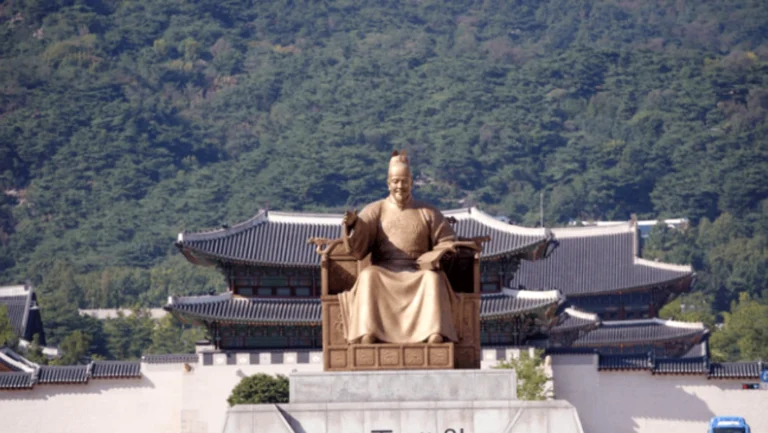
Tracing back through time to find the roots of the Songwol-dong Fairy Tale Village in Incheon—historically recorded in Chinese characters as 仁川松月洞童话村 and in its native Korean name as 송월동 동화마을—we encounter a dynamic stratigraphic canvas of the Korean Peninsula. The name Songwol-dong, which literally means “Pine Tree and Moonlight” (Pine forest and moonlight), dates back to the glorious Joseon Dynasty. According to ancient records and local geographies of the Incheon region, during those years, this was an elevated area renowned for its rugged yet picturesque terrain, where dense pine forests towered against the sea breeze, creating a magnificent landscape when the bright full moon reflected upon the dark green pine needles. Local residents at the time lived in the peaceful tranquility of a pure coastal farming village, immersing themselves in pristine nature and the slow-paced, traditional lifestyle of the kingdom.
However, the flow of history took a dramatic turn in 1883, when Incheon Port was officially opened for trade with the outside world. This port opening transformed Songwol-dong from a quiet rural retreat into a strategic area, witnessing waves of Western and Japanese influence flooding onto the peninsula. During the colonial period lasting from 1910 to 1945, the area surrounding Songwol-dong was rapidly zoned and transformed into a foreign concession district featuring upper-class residential housing designed in distinct Japanese architectural styles. Simple yet exquisite wooden villas and narrow alleys winding along hillside slopes began to emerge, turning the area into a residence for wealthy foreign officials and merchants. This cultural sediment of intersecting Joseon tradition and Eastern colonialism took root in every inch of soil here, creating a hybridized yet uniquely distinctive urban spatial morphology.
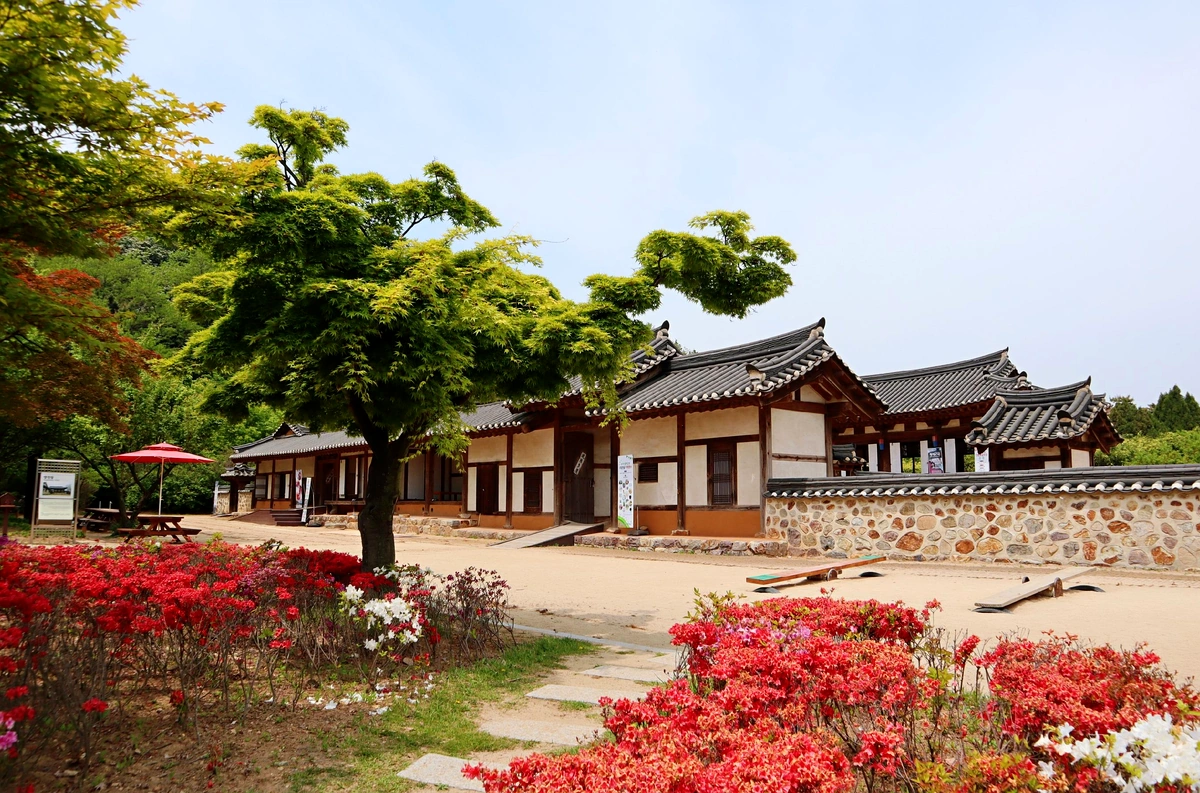
The vicissitudes of the times continued to deal heavy blows to this land as the post-war era and the Korean War broke out. In those fiery years, Songwol-dong became a haven for thousands of refugees fleeing war from the North, seeking temporary shelter amidst the devastation. When peace was restored, instead of recovering and developing, the area fell into a severe economic recession and prolonged urban vacancy throughout the 1970s and 1980s. As South Korea’s economy shifted strongly toward Seoul and major industrial centers, young people abandoned their hometowns, leaving Songwol-dong with rotting traditional houses, deserted alleys, and poverty, gradually turning it into a forgotten urban slum right in the heart of a rapidly modernizing port city.

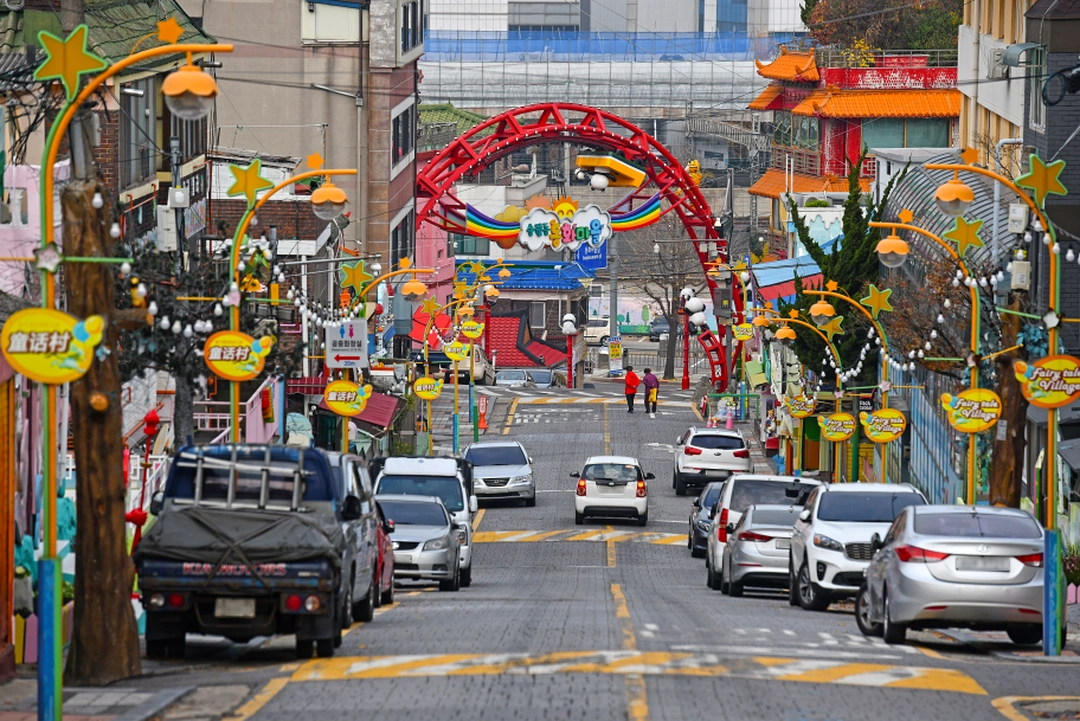
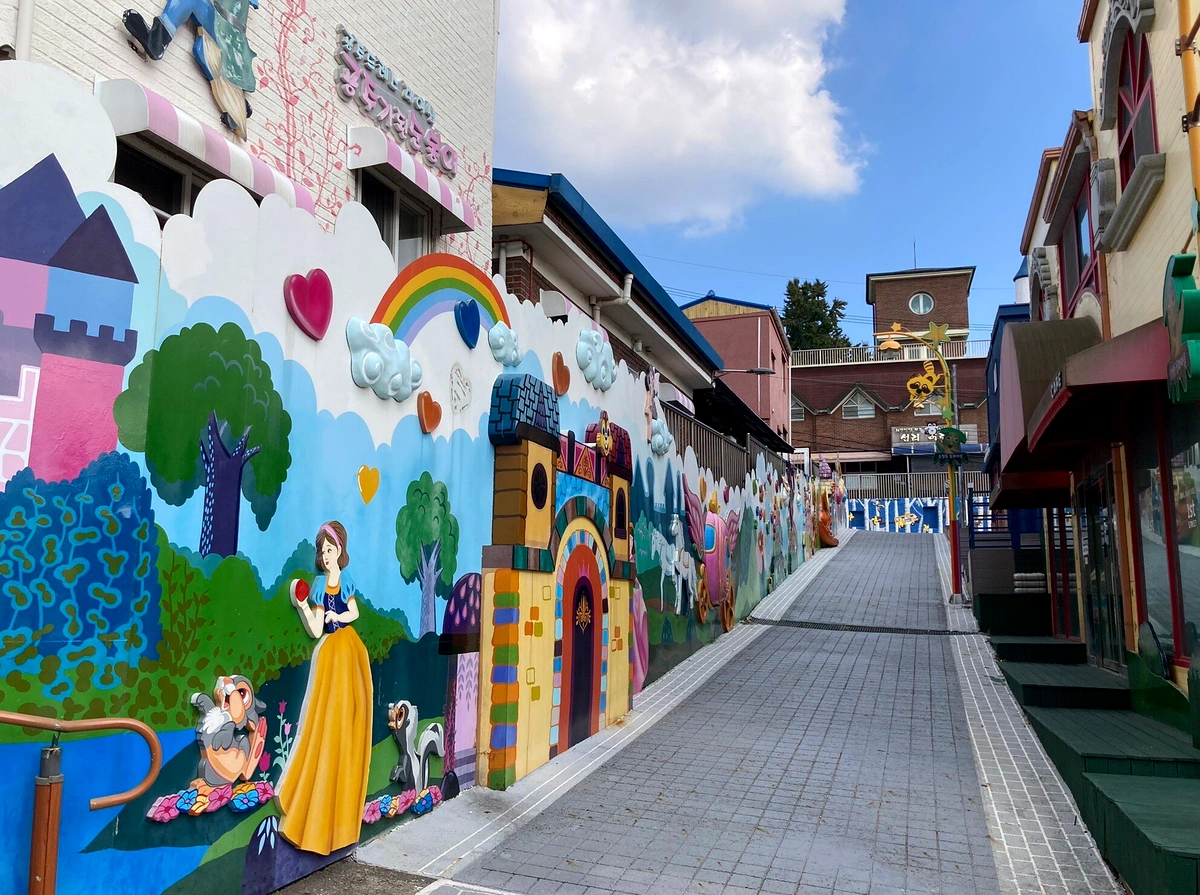
The decline seemed to mark the end for a historically rich land, until the turning point of 2013 when the Incheon Jung-gu district government decided to intervene through the “Songwol-dong Fairy Tale Village Creation Plan.” Instead of choosing the demolition or large-scale clearance solutions typical of traditional urban planning mindsets, managers and architects applied an extremely sophisticated “micro-intervention” model combined with community color aesthetics to regenerate every street corner. Peeling walls and old wooden houses from the colonial era were clad in the vibrant coats of classic global fairy tales. Every window frame and mossy step was sculpted and transformed into the world of Snow White, Peter Pan, or Alice’s Wonderland. This bold combination of quiet antiquity and contemporary art not only rescued a dying neighborhood over time but also turned Songwol-dong into a living symbol of urban tourism culture revival in the land of kimchi.
Situated in the elevated terrain of Jung-gu district within the expansive city of Incheon, the Songwol-dong Fairy Tale Village emerges as a unique spatial entity where traditional feng shui topography deeply intersects with the modern urban rhythm. From the perspective of human geographers, this area possesses a symbolic landscape as it leans securely against Freedom Park—an extended branch of the sacred Eungbong Mountain range—and directs its full view toward the domestic harbor area of the Yellow Sea, also known as the West Sea. According to Eastern geomantic philosophy, this backing-mountain and facing-water configuration signifies gathering energy and welcoming vital breath cascading from great mountain ranges while absorbing the expansive energy of the ocean. Although this natural structure has experienced many changes over time, severed by the concrete blocks of modern urbanism and large-scale reclamation projects, the soul of the original topography remains clearly visible in every steep street corner, creating a distinct spatial depth.
Examining the microclimate more closely, the direct adjacency to the Yellow Sea has endowed Songwol-dong with severe yet poetic weather characteristics. During freezing winter months, the Northwesterly monsoon winds sweeping from the Eurasian continent across cold waters whip through the village’s steep and winding alleys, creating the “Canyon effect.” These powerful winds cause the actual perceived temperature here to be significantly lower than surrounding flat areas, intensifying the piercing cold typical of the northern Korean Peninsula. Compensating for this harshness, summer brings cooling breezes wafting in from the west, carrying refreshing air and dispelling the sweltering heat of the crowded city.
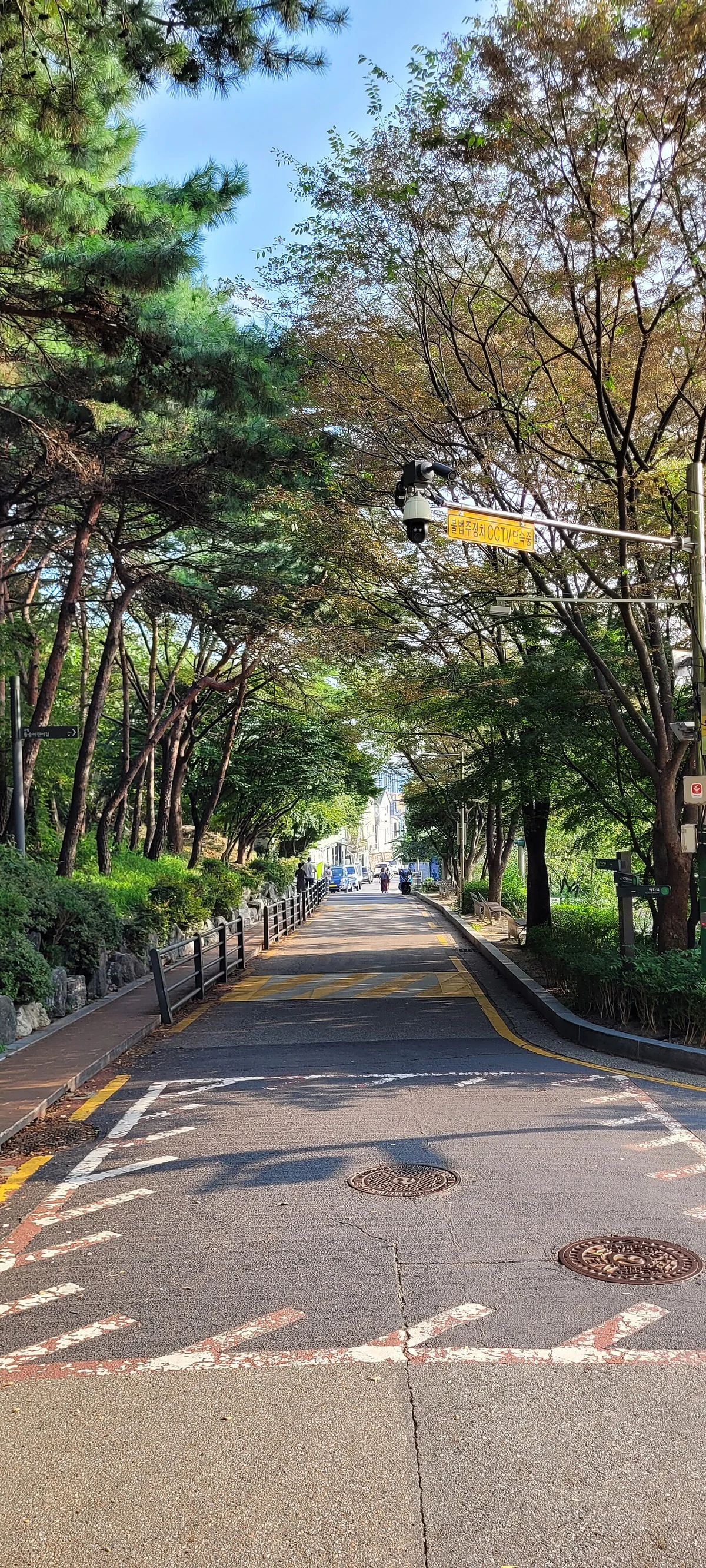
In terms of contemporary urban planning, the Songwol-dong Fairy Tale Village does not exist as an isolated, closed-off island, but is shaped as an embedded urban organism deeply rooted in the surrounding cityscape. It lies directly adjacent to the historic Incheon Chinatown and the Freedom Park cultural heritage zone, forming a continuous sequence of experiences connecting past and present. Landscape planning here skillfully maximizes steep pathways and radial staircases, acting as natural conduits guiding visitors out of the noisy, bustling commercial space and straight into the world of imagination and fairy tales. This spatial transition unfolds smoothly, turning every step up a slope into a visual journey where old walls are transformed by mural art and relief sculptures, blending traditional topography with modern urban aesthetic thinking.
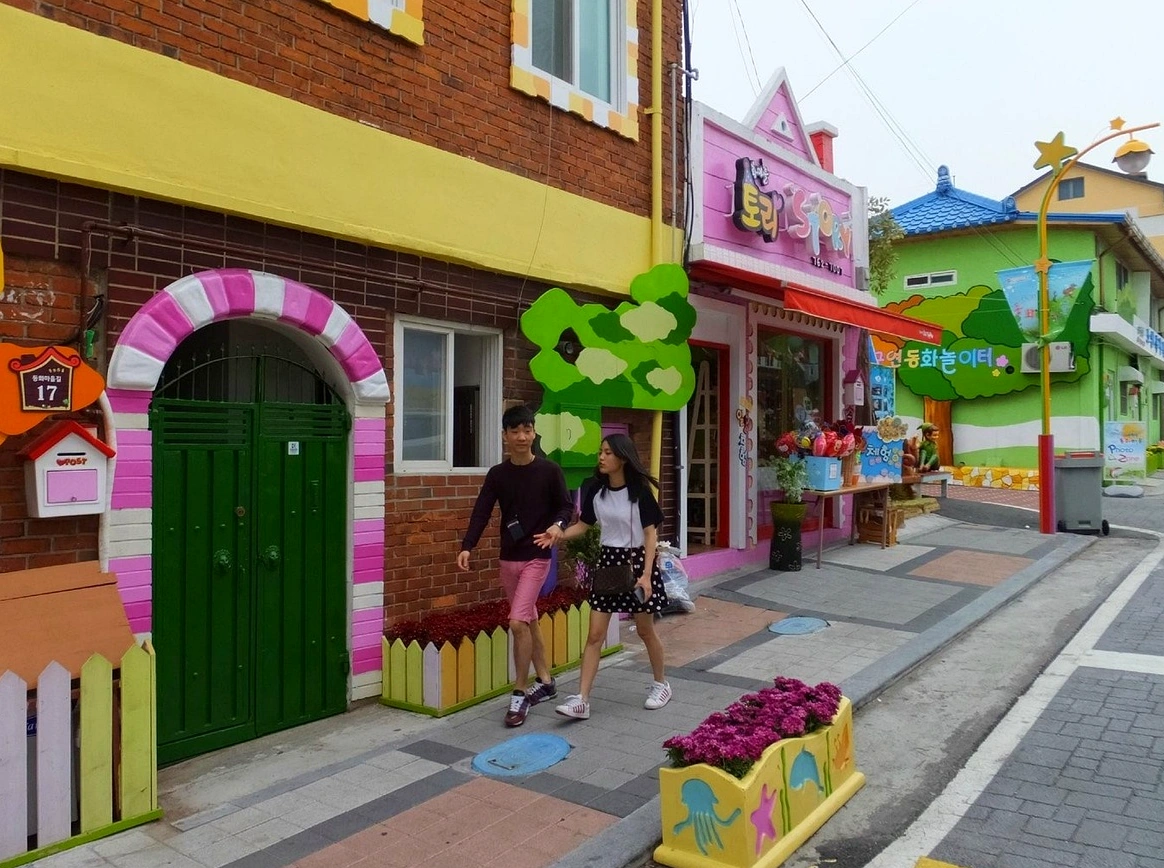
Arriving at the Songwol-dong Fairy Tale Village in Incheon, from the viewpoint of a cultural history and urban studies researcher, the most striking impression does not lie in the flashiness of new structures rising from vacant lots, but is hidden within an extremely clever regeneration philosophy called Facade Retrofitting. Rather than demolishing and rebuilding to completely erase past traces—a common pitfall in the turbulent urbanization of major Asian cities—Incheon’s authorities and community chose a much more humane and sustainable path. The foundational structure of this area comprises mossy red brick load-bearing walls and raw reinforced concrete frames, testifying to an urban development phase stretching from the 1930s to the 1970s. When waves of migration emptied the village in search of modern livelihoods, Songwol-dong sank into ruin, its severely degraded old houses seemingly awaiting demolition. Yet thanks to a spectacular turnaround through architectural art, this clutter of old brick and stone was clothed in a new coat without harming the original architectural soul, turning the area into a vibrant outdoor museum.
To realize the vision of turning lifeless concrete blocks into a complete fairy tale space, architects and urban sculpture artisans applied advanced material renovation technologies, notably three-dimensional sculpture molding using glass fiber reinforced plastic (FRP) combined with specialized carved cement mortar, known professionally as Carved Concrete. This combination allows the creation of timeless classic fairy tale characters such as Little Red Riding Hood, Alice in Wonderland, or the Wizard of Oz with exquisite, lifelike detail, anchored securely and solidly onto ancient red brick walls from the colonial and post-war eras. Surface treatment requires absolute meticulousness so sculptural blocks do not detach from the architectural whole, but instead become an organic part bonded tightly to plaster and raw brick. Meanwhile, wall coatings play a decisive role in maintaining structural longevity against Incheon’s harsh coastal climate, utilizing high-weather-resistant inorganic mineral paints combined with specialized UV-resistant acrylic coatings, helping maintain vibrant, fresh colors over the years without fading or peeling under wind, rain, and scorching sun.
Stepping deeper into the overall spatial structure, the craftsmanship and actual scale of the Songwol-dong Fairy Tale Village extend beyond mere murals into multi-dimensional interactions between people and urban architecture. Emblematic of this spatial philosophy is the Oz Staircase, where designers cleverly turned a steep, monotonous, and hazardous fire escape—once a dread for local residents—into a unique visual art piece, with steps decorated as giant piano keys or mimicking the legendary yellow brick road of Western literature. Every step tourists take climbing the slope is not just physical movement, but a journey into a dream realm where the cramped public space of an old neighborhood is thoroughly optimized to awaken all senses. Alongside this is the Whale Tunnel, also known as the Ocean World, a renovation solution for a massive reinforced concrete retaining wall that once created a suffocating, heavy feeling along walkways, completely transformed by large-scale 3D murals generating optical illusions that make viewers feel immersed in deep blue oceans with marine life swimming right beside house walls.
Viewed through the lens of contemporary urban planning, Songwol-dong’s success lies not in massive scale, but in spatial renovation depth and respect for architectural historical layers beneath fairy tale exteriors. Harmonizing mid-20th-century brick-and-concrete structures with the modern molding language of FRP composite materials and inorganic paints has created a unique architectural entity where past and present, reality and dream, blend smoothly without a flaw. This is truly an exemplary case study in urban regeneration, proving that nostalgic values can be rescued and elevated through supreme creative thinking, turning seemingly forgotten streets into a living cultural wonder captivating millions of travelers visiting the land of kimchi.
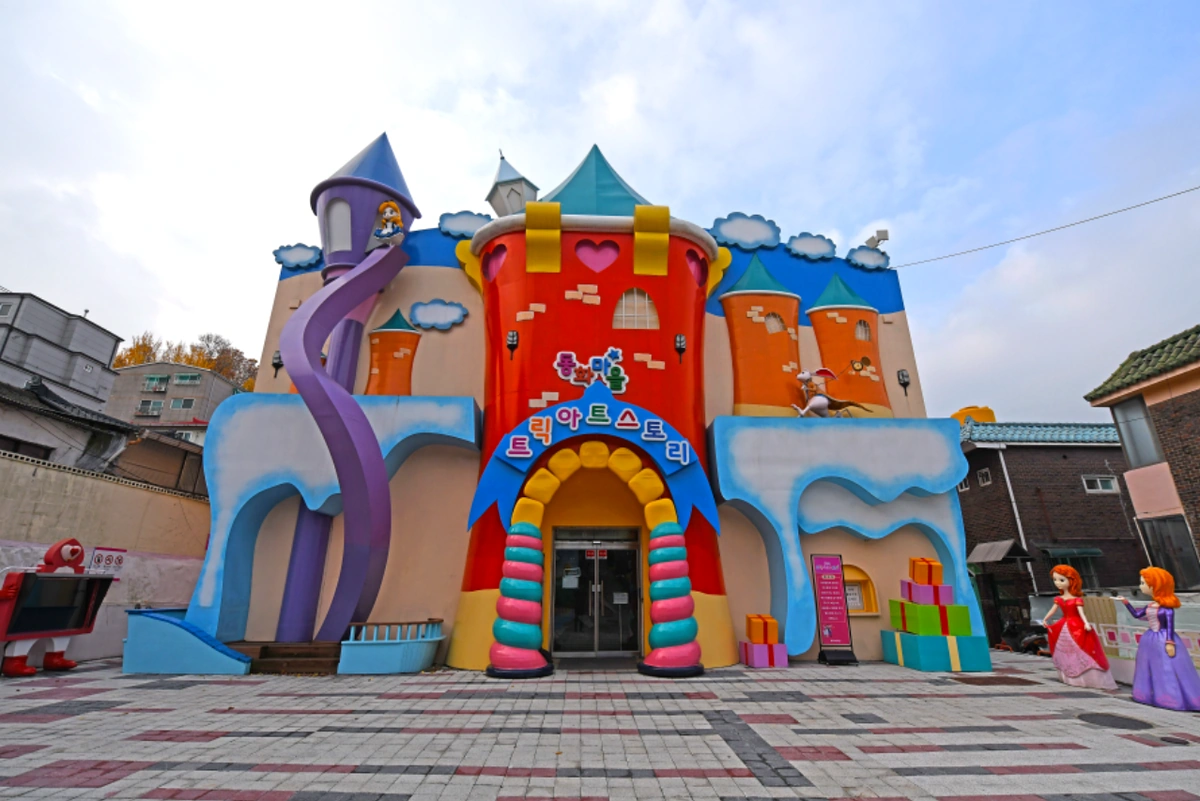
When night falls, draping sunset silk ribbons that dye the Incheon bay red and returning the space to a quiet hush, the Songwol-dong Fairy Tale Village (仁川松月洞童话村) does not sink into deep slumber like ordinary residential areas. Instead, it enters a brand-new, vibrant, magical, and cinematic chapter thanks to the Nightscape Lighting Project decisively implemented by the Incheon Jung-gu district government. This project was originally born as a strategic solution to thoroughly resolve security blind spots and visitor decline after sunset, but through the talented hands of lighting engineers and urban planners, it rose into a grand public art piece. Lighting here is not merely cold public streetlamps, but is meticulously calculated down to the millimeter with 3000K color temperature LED strips, delivering warm, gentle light cleverly hidden beneath ancient eaves and close to ground level to outline roof contours, creating a dreamlike spatial depth that guides visitors into an enchanting sleepwalk.
Alongside this quiet ambient lighting, Projection Mapping—the most advanced interactive lighting technology today—has been boldly applied by local authorities in central plazas and expansive building facades. Thanks to this technology, static daytime reliefs magically “come alive” at night as classic world fairy tales and Eastern legends flow across plaster surfaces, interacting directly with every footstep and breath of observers. This role-playing experience completely blurs the boundary between observer and character, turning every traveler into a living part of the storyline. Nighttime artistic spaces in Songwol-dong do not stand independently but lie within a cultural ecosystem closely linked to neighboring Chinatown and the Incheon Open Port Historical District. The intersection of late-19th-century treaty port heritage architecture with modern digital lighting has created a peerless night tourism experience in the land of kimchi.
The nightlife here becomes even more swirling and bustling during festival seasons, when large-scale community cultural events are held throughout the year. Notable examples include the vibrant Incheon Flower Blossom Festival and the Open Port Night Festival, which draw tens of thousands of art and nostalgia lovers. Amidst art-drenched illumination, street performances unfold continuously, highlighted by a grand Cosplay Parade where hundreds of artists and residents don elaborate costumes of fairy tale characters, walking among buildings sparkling with light. Children’s laughter blends with applause for magical street magic shows and elaborate outdoor children’s plays. All intertwine to create a harmony of light, sound, and emotion, affirming the enduring vitality of an un sleeping cultural space in the heart of Incheon’s traditional port city.
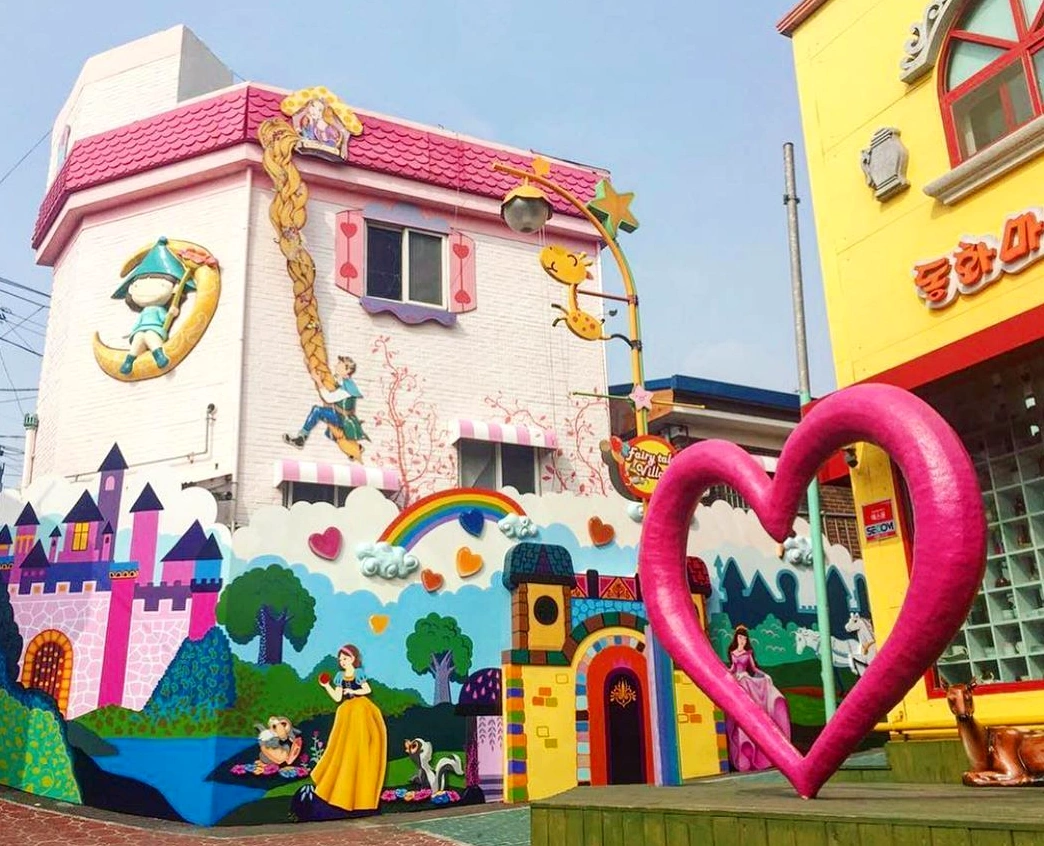
Exploring Songwol-dong Incheon would not be considered complete without missing the native food map—where renowned flavors and ancestral experiential culture burst forth simultaneously, reflecting the melting pot of a centuries-old port migration furnace. Located right on the border of the old Chinatown, local culinary culture divides into two parallel yet wonderfully harmonized streams: one is the century-old open port historical heritage steeped in port commercial memories, and the other comprises creative, fairy-tale-themed snacks serving visitors.
Tracing back to bustling trade of the late 19th and early 20th centuries, when wave after wave of migrants from Shandong Province, China flocked to Incheon via the seaport gateway, they brought hometown nostalgia and exquisite manual culinary arts, inadvertently giving birth to a legendary Korean food legend right on this soil. Located right next to the Songwol-dong fairy tale village is the birthplace of classic Korean black bean paste noodles (Jajangmyeon) around 1840 to 1905 at legendary eateries like Gonghwachun and Yeon-gyeong Restaurant. Not stopping at traditional brown-glossy rich black bean noodles, the area is also nationally famous for White Jajangmyeon, utilizing special salted seafood sauce to entirely replace the familiar sweet bean sauce, delivering a refined flavor imbued with ocean saltiness and culinary ingenuity among early Chinese chef generations settling in the Port Land.

Alongside steaming historical noodles, the transitional area between Chinatown and the Songwol-dong fairy tale village retains diners with multi-generational traditional pastry shops. This includes the irresistible aroma of nostalgia-imbued mooncakes, crispy fortune cookies hiding peaceful wishes within, or most notably traditional coal-oven baked hollow pastries (Gonggalppang) with crispy, hollow shells exuding malty and sesame aromas roasted over manual coal ovens. Each pastry coming out of the oven is not just a rustic snack but living proof of artisanal baking passed down through generations, preserving the core soul of migrant workers since reclamation days.
Stepping away from the nostalgic space of century-old heritage to immerse in the mural-bright alleys of Songwol-dong, the culinary picture immediately shifts to a modern, sweet acoustic and visual experiential tone via fairy-tale-themed snack systems. Under street artisans’ talented hands, handmade ice creams are meticulously shaped into familiar cartoon characters like Snow White, dwarves, or storybook princesses, making every diner regardless of age gasp in delight. Right beside them are giant cotton candies in brilliant colors shaped into blooming flowers or whimsical animals towering over head height, turning every street corner into a lively street food performance stage.
One cannot forget traditional sugar pancakes (Hotteok)—a national winter snack innovatively renewed here by combining gooey cheese or cold fresh cream, creating an explosive temperature and flavor contrast in the very first bite. Golden crispy fried pancake crusts encase melting brown sugar fillings mixed with nutty seeds and savory melted cheese, captivating any culinary travel lover. Savoring a hot hotteok amidst fairy-tale surroundings while tasting salty notes of historic white jajangmyeon steps away lets visitors fully grasp the pulsating intersection between past and present, rustic port culture and childhood dreams at timeless Songwol-dong.
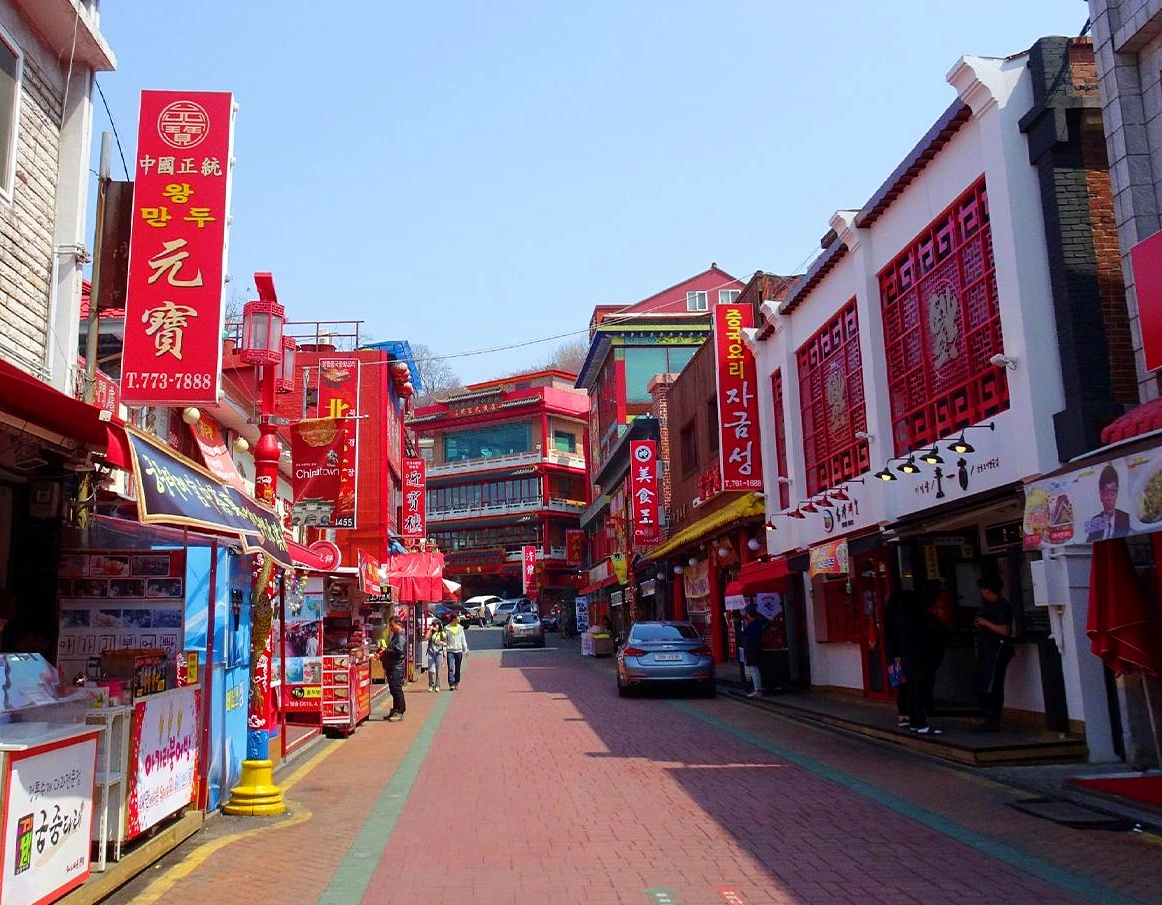
Stepping into the dreamy realm of the land of kimchi requires every traveler to prepare thorough on-site knowledge for a complete and sophisticated cultural experience. The Songwol-dong Fairy Tale Village in Incheon opens freely year-round to welcome art lovers without charging admission fees or requiring complex advance bookings, offering maximum flexibility for independent exploration. Amidst colorful alleys, charming souvenir shops and fairy-tale-themed cafes operate briskly from 10:00 AM to 7:00 PM, serving unique crafts or warm beverages infused with Korean flavors. To reach this space via public transit, visitors can take Seoul Subway Line 1 or the modern Suin-Bundang Line, traveling straight to Incheon Station and exiting via Exit 1. Stepping out of the station gates, just cross the large road and Chinatown’s majestic welcome gate appears, opening a leisurely 5 to 10-minute uphill walk into the fairy-tale world. For those driving private cars, satellite navigation systems guide drivers precisely to the public parking lot of the Songwol-dong fairy tale village, though old architectural street layouts are narrow and prone to severe congestion on weekends and major holidays.
Choosing the timing to set foot in this space dictates full aesthetic appreciation of each artistic street corner. According to veteran explorers and professional photographers, the golden window to visit runs from 9:30 AM to 11:30 AM, when soft morning light illuminates antique mural-covered walls, creating perfect lighting effects while avoiding massive tourist crowds. Alongside timing, preparing clothing and following fieldwork etiquette are keys to demonstrating civilized tourism culture. Due to the village’s terrain sitting on high slopes with continuous winding stone steps, travelers should avoid high heels or thin, slippery flat shoes to protect their feet during movement. Furthermore, remember that Songwol-dong is not merely an outdoor art exhibition but an actual residential area inhabited across generations by elderly locals. Therefore, every traveler entering this space must maintain general order, refrain from intruding on private family spaces, and avoid filming or photographing locals’ private lives. To make exploring these unique cultural values smooth, safe, and emotional without logistics worries, details are available in the all-inclusive tour program for flawless preparation ahead of your upcoming journey.