Tracing the sedimented history of Central Europe, the Old Town of Brno, Czech Republic, unfolds like a monumental chronicle, fully preserving the vicissitudes of a power center that once shaped the entire visage of the Moravia region. As early as the 5th and 6th centuries, the earliest Slavic footprints left their mark on this land, choosing it as a settlement amidst pristine nature. Little could one expect that the proud name Brno originates from a humble root in the Old Slavic language, *brn*, which describes a swampy and muddy terrain in primeval times. Through the ceaseless flow of time, this seemingly rugged topography became the launching pad for one of the region’s most fortified and prosperous urban centers.
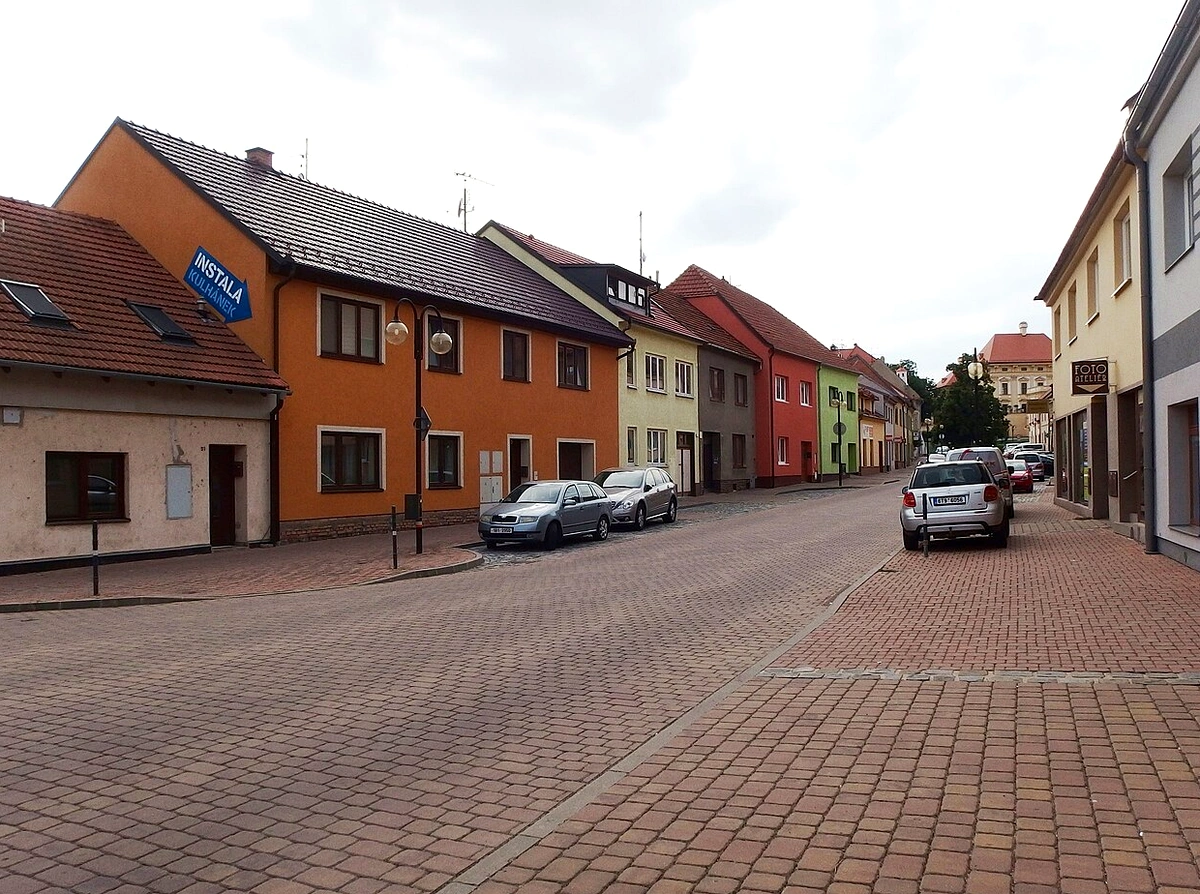
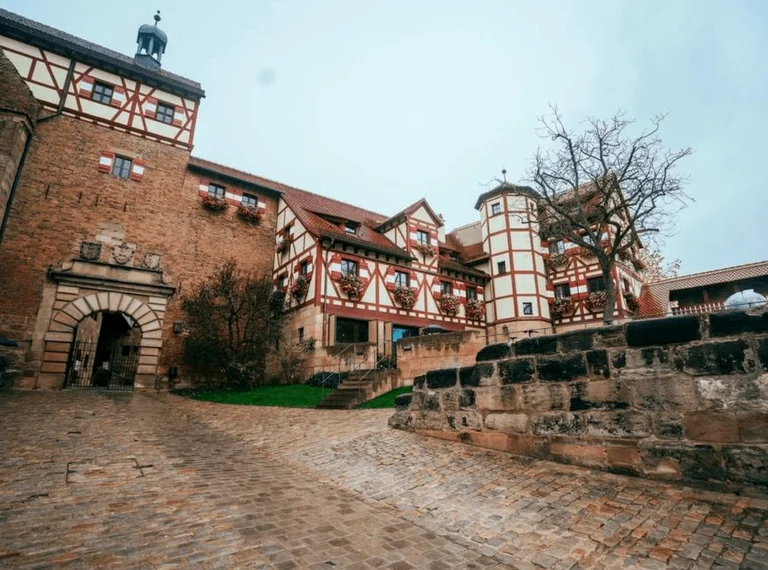
The first major historical turning point arrived in 1243 when the wise monarch Wenceslaus I officially issued a decree granting Royal City status to Brno, laying the first bricks for a solid administrative and legal structure. This momentous historical original document, titled *Privilegium civitatis Brunensis*, is still carefully cherished and kept in the city archives as an invaluable treasure, bearing witness to a proud royal origin. Entering the 14th century, under the glamorous reign of Emperor Charles IV and his younger brother John Henry, Brno entered a brilliant era of prosperity. The majestic Špilberk Castle—an architectural work with profound military history content—was expanded in scale, becoming an impregnable fortress protecting the entire realm of Moravia against all the storms of time.
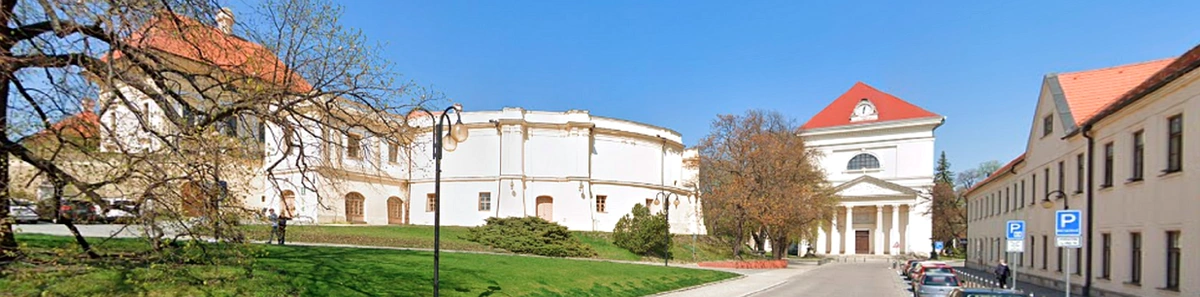
The spiritual strength and resilient will of the people of Brno were tested most fiercely during the historical event of 1645. Amidst the devastating war blanketing Europe, under the brilliant leadership of General Jean-Louis Raduit de Souches, this small yet valiant city proudly resisted the grand siege of the powerful Swedish army. This resounding victory not only protected the territory intact but also earned Brno its highest honor: becoming the sole capital of the Moravia region, cementing its unshakable political standing within the heart of the Empire.
However, the current of history is inherently intertwined between haloed light and melancholic shadows. In the 18th and 19th centuries, under shifting times, the once-glorious Špilberk fortress was converted into the “darkest prison in Europe,” holding the most dangerous political prisoners of the Habsburg Empire. This contrast endows Brno with a special cultural depth—where the magnificent beauty of royal architecture always parallels the tragic-heroic legends of the yearning for freedom.
By the late 19th and into the 20th century, Brno underwent a spectacular metamorphosis, shedding its feudal coat to rise into a major industrial powerhouse, celebrated with the flattering title “the Manchester of Austria” thanks to the explosive boom of the textile industry. Economic wealth laid the groundwork for the blossoming of art and architecture, exemplified by the masterpiece Villa Tugendhat completed in 1930—an icon of modern world architecture honored by UNESCO as a human heritage site. From a Slavic swampland of yesteryear, Brno wrote its enduring story through the sweat, intellect, and character of the Moravian people.
Stepping into the borders of Brno Old Town (布尔诺)—the historical heart of the legendary Moravian land—the most sensitive traveler immediately recognizes the magnificent layout of nature. Completely distinct from the flashy, flat beauty of neighboring European cities, Brno hides itself in a feng shui terrain of masterly military and geographical strategy. In terms of natural tectonics, this city sits at an extremely unique intersection, precisely the smooth transitional zone between the rugged Bohemia-Moravia plateau to the west and the vast, warm Pannonian basin to the south. The meeting of these two topographical extremes not only shapes the region’s distinctive climate but also creates a vibrant living space where the highland wilderness breath blends with the expansive plain breeze.
From the perspective of ancient topographical planning and hydrology, Brno’s natural structure is a defensive masterpiece conceived over centuries. The city is embraced and protected by the currents of two major rivers: the Svitava and the Svratka. These two streams wind through valleys and converge right at the southern gateway of the metropolis. The interlacing of the dual water veins not only nourishes fertile soil for the surrounding valleys but also draws a robust natural moat system characteristic of the medieval era. Thanks to this surrounding river setup, Brno possessed convenient waterway trade routes hundreds of years ago while erecting a solid water fortress wall, forcing any foreign invader eyeing Moravia to back down.
Inside the protective embrace of the two rivers, the topographical landscape of Brno’s historic center continues to make a strong impression with its flawless dual-basin structure. Rising in the heart of the city are two strategic hills guarding the western and eastern poles, acting as inseparable pieces in the feudal urban planning scheme. To the west of the city stands the majestic presence of Špilberk Hill—featuring the impressive namesake fortress that once terrified generations of political prisoners in Central European history. This hill occupies the highest position, controlling all western approaches, turning it into an impregnable observation deck and defensive stronghold. Symmetrically opposing Špilberk across the central valley axis is Petrov Hill to the east, marked by the powerful rise of twin towers bearing late Gothic and Neo-Gothic imprints from the Cathedral of Saints Peter and Paul. The parallel of Špilberk and Petrov creates a unique dual-polarity terrain: one representing military might and the violent power of the dynasty, and the other symbolizing spiritual authority and the enduring faith of the Catholic Church.
From that natural dual-basin terrain, medieval planners and architects applied a scientific and sophisticated urban spatial shaping process. They thoroughly utilized the natural slope of the hillsides to design a fan-shaped radiating road system seamlessly connecting from the heights of fortresses and churches down to the trading port and central market below. The construction engineering process here required precise calculations of geological structure, as the limestone ridge and shale layers of the two hills demanded extremely elaborate stone revetment and foundation reinforcement techniques. Sturdy fortress walls made of granite and fired brick were erected connecting Špilberk and Petrov, transforming the entire central area into a giant fortress capable of complete isolation in wartime while maximizing economic trade routes in peacetime.
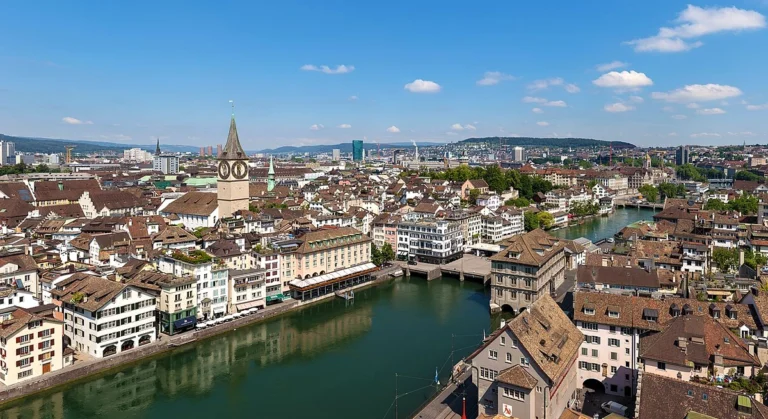
The distinctive landscape of Brno Old Town thus carries a somber, solemn yet magnificent beauty. The space here does not unfold monotonously; rather, it features the continuous undulating pattern of mossy red tile roofs layered according to the hillside slopes, interspersed with bell towers piercing straight into the characteristically gray Central European sky. Winding cobblestone alleys follow natural contour lines of the terrain, leading travelers through ancient squares, Renaissance and Baroque mansions hidden in the shade of ancient trees. The fusion of rugged feng shui terrain, intelligent water management and construction engineering processes, and an urban landscape deeply marked by time gives Brno a unique identity entirely distinct from the rest of the Old Continent.
Stepping into Brno (布尔诺) is like flipping through pages of a living encyclopedia of Central European architectural history, where artistic schools from medieval, baroque to modern times converse harmoniously and improvisationally. The urban space of this city is not choked by homogenized industrial development; instead, it fully preserves the spatial structure of a traditional Moravian power center. Wandering through winding cobblestone streets, travelers immediately notice how master architects over centuries cleverly combined local building materials to forge an urban visage that is solemn and somber yet holds delightful visual surprises.
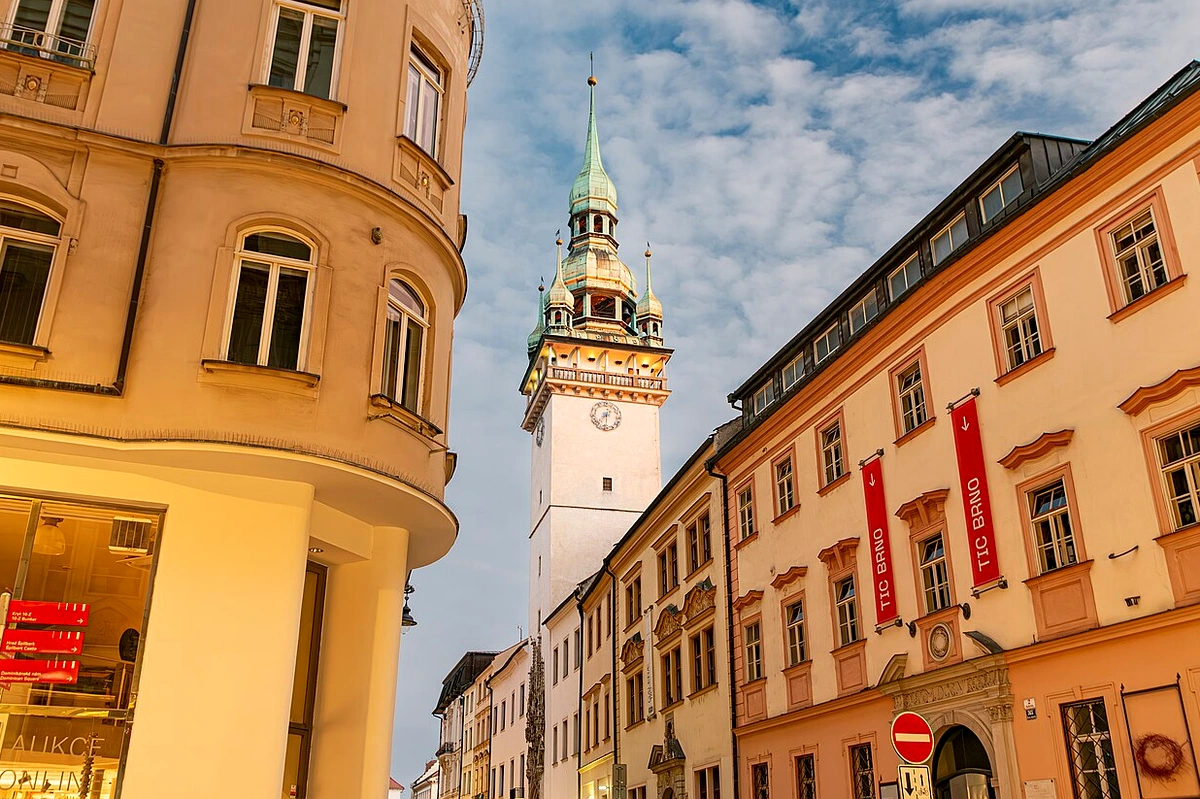
Typical of early architectural quintessence is the central area with sturdy brick wall structures combined with sandstone—a durable load-bearing material bringing Brno’s characteristic warm tones. Prominent amidst this space is the Old Town Hall, a masterpiece of folk architecture combined with late Gothic style, preserving the genius of architect Anton Pilgram from 1511. The unmissable visual highlight here is the main gate tower with its curious curvature—an intentional artistic detail carved by Pilgram to challenge rigid geometric standards of the time, testifying to the freedom of creative thought among Renaissance artisans in Moravia.
Viewed from any street corner in Brno, the city’s skyline is dominated by the majestic Petrov Hill, nestled peacefully between the Cathedral of Saints Peter and Paul. This religious structure bears an impressive 19th-century Neo-Gothic appearance with two spires piercing the sky like proud spears guarding the peace of the city below. It attracts not only cathedral architecture lovers but is also tied to a thrilling historical legend etched into folklore: the legend of ringing the bell early at 11:00 AM. According to the old tale, during the Swedish army siege in the Thirty Years’ War, when the enemy declared they would retreat if they could not capture the city before the noon bell rang, the people of Brno cleverly rang the bell an hour early at 11:00, thereby saving the city and becoming an immortal pride in local wit whenever Petrov Hill is mentioned.
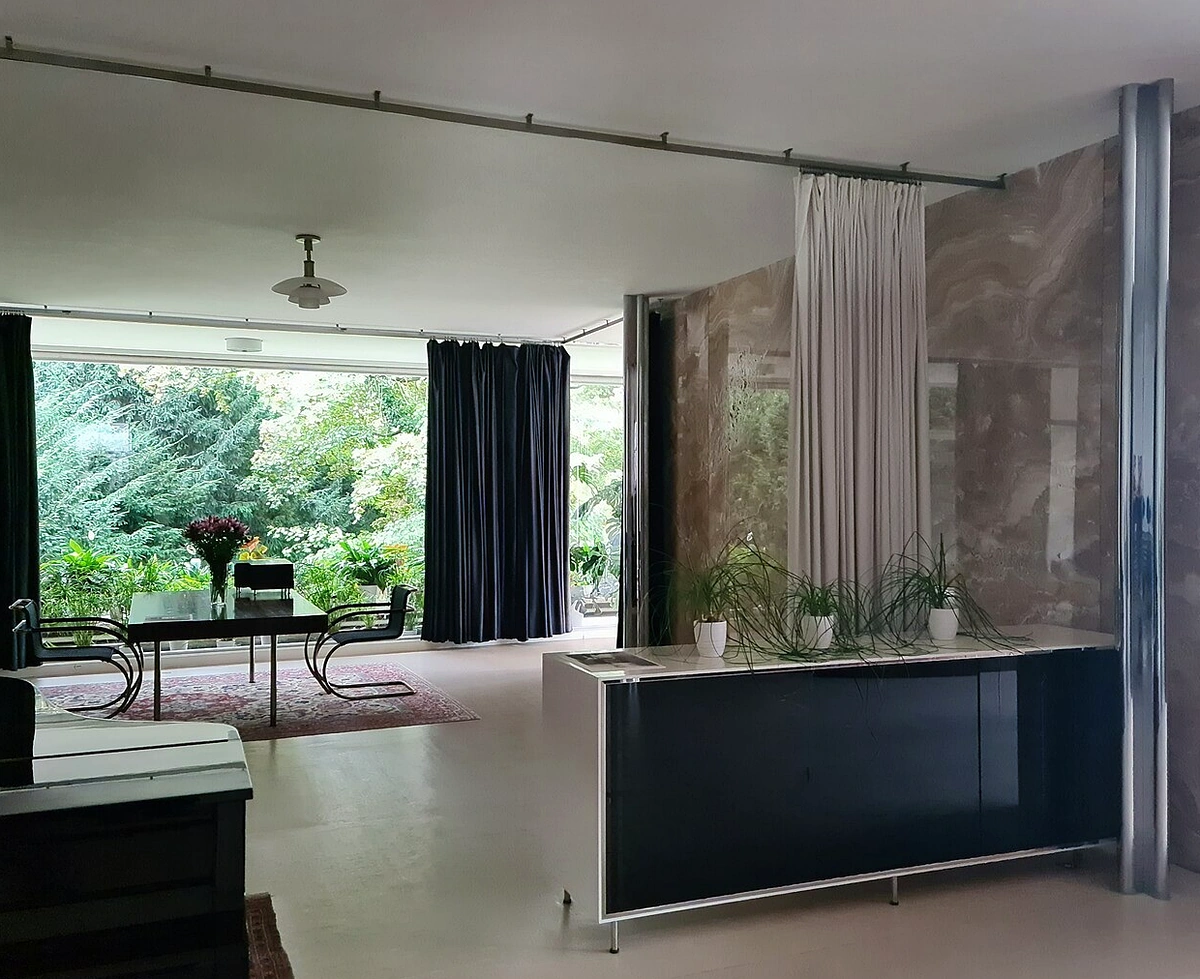
Transcending the limits of ancient space, Brno also compelled the global architectural community to tip their hats in admiration by owning one of the greatest icons of 20th-century modernism: Villa Tugendhat. Designed and built by legendary architect Ludwig Mies van der Rohe between 1928 and 1930 at the commission of couple Fritz and Greta Tugendhat, this work is the perfect embodiment of minimalist architectural philosophy and the “less is more” ideal. Mies van der Rohe breakthroughly restructured traditional space by using a load-bearing steel frame system combined with bright chrome-plated cross-shaped steel columns, completely freeing exterior walls to create a fluid, seamless living space flooded with natural light.
The scale and interior craftsmanship inside Villa Tugendhat reach rare exquisite perfection. The architect not only designed the building shell but personally shaped every interior detail, from classic bentwood chairs to partition walls made of rare Macassar ebony. The most breathtaking highlight in the living room is the semi-transparent partition wall crafted from Italian yellow onyx, a semi-precious stone capable of magical color-shifting according to sunset sunlight angles, transitioning from amber yellow to brilliant pink. The fusion of early modern high-tech craftsmanship with expensive natural materials turned Villa Tugendhat into a human architectural heritage, completing the encyclopedic picture of construction art in Brno Old Town.
When night falls over the Moravian land, Brno Old Town (布尔诺) does not slip into quiet slumber; instead, it dons a magical velvet cloak, interlacing modern tech lighting with millennia of historical sediment. Nighttime lighting here is exquisitely planned by urban architects, turning every street corner and hill into a stunning visual art stage. Reigning atop the high hill, Špilberk Castle—the fortress that once terrified enemies during medieval defense campaigns—is illuminated by high-intensity floodlights, creating solemn, sharp geometric lines standing out against the pitch-black night sky. Warm golden light from the fortresses honors the mixed Gothic and Baroque architecture while recalling a heroic era of sieges where the resilience of Brno’s people was tested through the smoke of war.
Leaving the solemn space of Špilberk, traveler footsteps step into the heart of the city to immerse in the sparkling ambiance of historical squares. At Svoboda Square and Zelný trh (Cabbage Square), lighting art achieves exquisite perfection. In-ground LED lights are cleverly arranged along cobblestone pathways, casting light upward against mossy walls of old aristocratic mansions, while antique-style street lamps emit soft golden light, fully recreating 19th-century atmosphere. This space frequently echoes with melodic tunes from street artists, blending with lively laughter at sidewalk cafes, creating a nightlife rhythm that is both ancient and youthfully dynamic for a leading academic and cultural center of the Czech Republic.
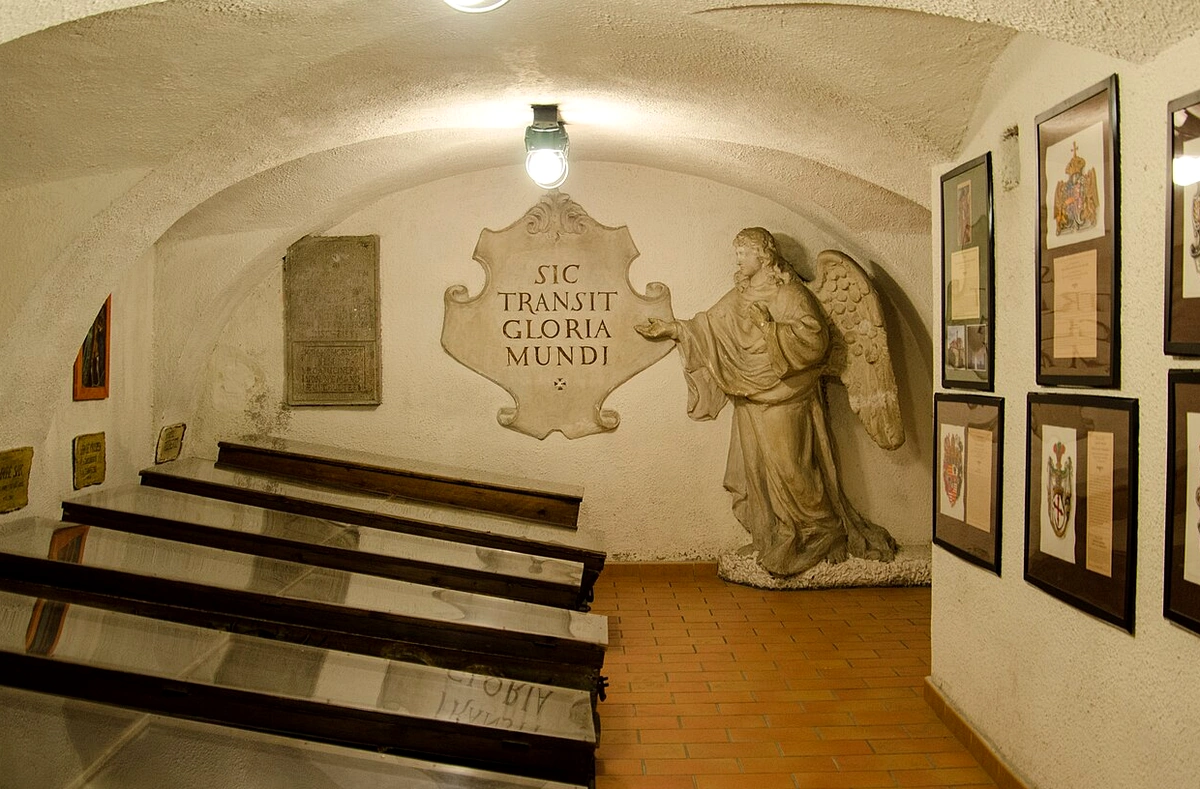
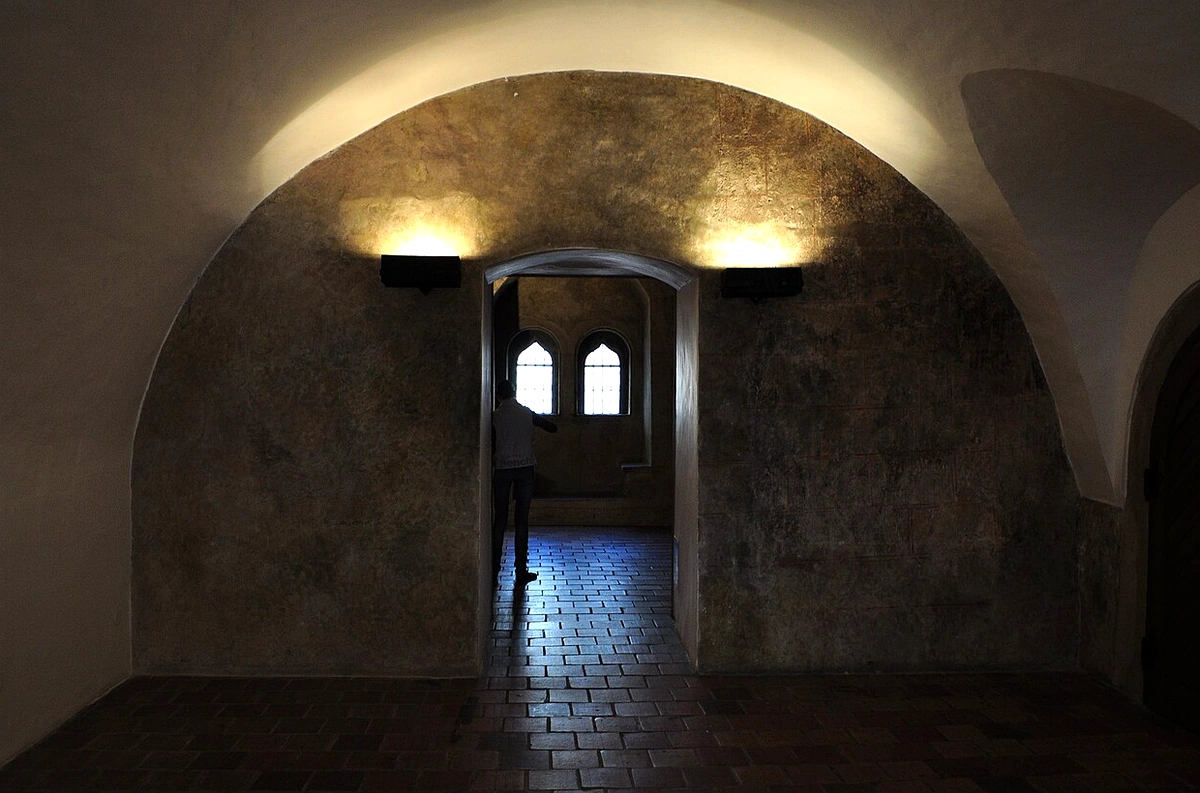
Yet, Brno’s most wondrous nighttime feature lies deep underground—concealing an enchanting, haunting underworld. A labyrinth of medieval wine cellars, ancient ice storage vaults, and notably the Capuchin Crypt open up unforgettable experiences. Under flickering, mystical candlelight, this place frequently hosts role-playing historical performances, taking viewers back in time. Stories of Moravian monks, knights, and merchants are vividly recreated through live-action performance arts, where the boundary between reality and history seems erased in the quiet space, broken only by the whispering night wind winding through cold stone vaults.
Every autumn, Brno’s nightlife becomes even more vibrant and bustling with the Burčák wine harvest festival. Squares and wine cellars overflow with the rich aroma of un-distilled special fermented grape wine. The festival is an authentic folk culture show where visitors enjoy court fencing duels recalling Bohemian knightly valor, admire long-standing traditional puppet shows operated by talented artisans, and immerse themselves in cheerful Moravian folk songs beside warm wine jars.
Amidst opulent Central Europe, where long-standing cultural currents intersect, Brno’s cuisine emerges as a multi-colored symphony, crystallized from Bohemian heritage, Austrian refinement, and a touch of Hungarian boldness. Over centuries of cultivation amid shifting times, local cuisine is not merely ingredient fusion but a story of identity, cultural assimilation, and the art of preserving ancestral recipes across generations. Exploring local culture through taste buds in this ancient city leads people from one surprise to another, where each dish carries its own historical soul.
Mentioning famous flavors making Brno’s brand, one cannot overlook the classic Moravian smoked pork, familiarly known as *Moravský vrabec s knedlíky*. This dish combines marinated pork roasted or baked until the outer skin is crispy while the inner meat remains tender and juicy. The core soul of the dish lies in the mandatory side of traditional sliced dumplings and mildly sour pickled cabbage. The rich fattiness of pork blends with the tangy sourness of pickled cabbage and the chewy fragrance of dumplings, creating astonishing palate balance that warms hearts on chilly Central European days. Additionally, Brno’s culinary culture proudly preserves beef tartar (*Tatarský biftek*), a masterpiece demanding absolute precision from ingredient selection to seasoning art. To fully enjoy the authentic, fresh flavors of this dish, gourmets often head to U Starého Jakuba, a long-standing culinary address hidden in ancient alleys. Here, top-grade fresh beef is manually minced, cleverly mixed with fresh egg yolks, onions, mustard, and signature spices, served with crispy garlic-rubbed toast, offering an elevated, deeply traditional culinary experience.
Beyond rich flavored dishes, drink culture in Brno holds many exciting things waiting for travelers to explore. Every autumn, specifically around September and October annually, streets buzz with the flavor of Burčák—a freshly fermented grape juice with light alcohol content, retaining sweet freshness from grapes just harvested on South Moravian hillsides. Savoring a chilled glass of Burčák in grape-harvesting weather is a ritualistic cultural experience for locals. Accompanying this seasonal drink is the proud local beer stream named Starobrno, a long-standing brand officially born in 1872. Spanning over a century and a half of development, the Starobrno brewery has become flesh and blood in civic life, where golden beer mugs with smooth white foam are always ready in traditional beer halls citywide.
Traditional culinary experiences in Brno thus lie not only in tasting food but in how people cherish heritage. From family-run restaurants spanning generations to ancient wine cellars, every meal in this old town is a serene moment to feel the slow, deep rhythm of life, where past and present merge through unforgettable rich flavors.
Exploring ancient Brno requires thorough preparation of practical information. The starting point for learning about this centuries-old city is transportation. Because Brno possesses a strategic location at Central European crossroads, travelers usually choose to land at Vienna International Airport in neighboring Austria or Prague’s capital airport in the Czech Republic. From these two major traffic gateways, modern railway systems featuring lines like RegioJet or České dráhy connect directly to Brno hl.n. main station, facilitating travel and observation of Central European rural landscapes along the way.
Once arriving in the historical capital of Moravia, urban transit becomes convenient thanks to a synchronized public transport network operated by IDS JMK. Characteristic red tram cars wind through every old street corner, seamlessly connecting Gothic, Renaissance, and functionalist architectural works. However, a small yet crucial tip for travelers is to prepare dedicated walking shoes with good anti-slip soles. Most of Brno’s historic center is paved with original medieval cobblestones. While bringing incomparable nostalgic and romantic beauty, these slabs are quite slippery, especially during wet weather or cold winters.
A decisive note for anyone yearning to admire world modern architectural masterpieces is the mandatory booking rule for Villa Tugendhat—a UNESCO-recognized world heritage site. Because visitor demand always exceeds conservation capacity, management enforces a mandatory rule requiring visitors to book tickets three to six months in advance via the official online system. There are no on-site or last-minute ticket sales, requiring early planning in your travel schedule. Conversely, for military and historical sightseeing spots like scarred Špilberk Castle—once holding notorious figures in Austro-Hungarian imperial history—doors are wide open Monday through Sunday, with fixed hours from 09:00 AM to 17:00 PM for visitors to freely explore dungeons and the city museum.
Regarding finances and spending throughout the journey, the official currency circulated here is the Czech Koruna (CZK). Although some small traditional shops or hidden alley cafes still favor cash for small transactions, electronic payment systems via international cards and mobile payments are now extremely popular at almost every restaurant, hotel, attraction, and public transit in Brno. The intersection of traditional beauty and modern convenience will surely grant you a complete, safe, and emotional travel experience. For deeper insights and to materialize your plans exploring this poetic Central European land, check out detailed itineraries at the Germany – Austria – Hungary – Czech Republic 9D8N tour.