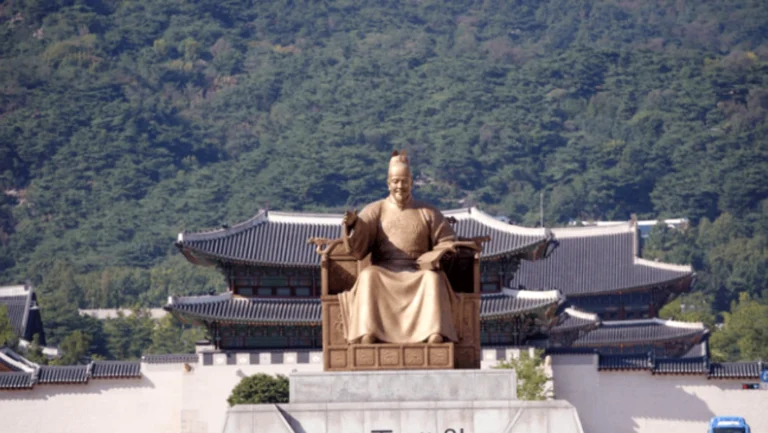
Stepping back through the stream of time into the sedimented memories of South Korea’s southern port city, Busan Tower stands atop Yongdusan Mountain—reverently referred to by locals using its Sino-Korean name, meaning “Dragon Head Mountain”—within today’s bustling Jung-gu district. Since its earliest beginnings, when this city was merely winding seaside fishing villages following the rhythm of Pacific ocean currents, this mountain possessed a magnificent topographic structure, likened to the form of a dragon stretching out toward the vast sea. Old historical records also refer to the mountain as “Songhyeon-san,” a sacred spiritual domain bound to the vicissitudes of the times, witnessing everything from the fluctuating trade sessions of feudal dynasties to the fiery battles of the 20th century.
Passing through the historical pages of the Joseon Dynasty, this sacred sanctuary once established Choeryang Waegwan, a special trading post serving as a vital commercial bridge between the dynasty and the Japanese people. Yet the destiny of this land was never serene, as the currents of history tossed it through the painful Japanese colonial period from 1910 to 1945. The area once bore an imposed foreign silhouette when the Busan Jinja shrine was erected as a symbol of assimilation. It was not until the dawn of independence broke that the outbreak of the Korean War simultaneously drove tens of thousands of displaced refugees here to seek sanctuary, turning the mountain slopes into impoverished shantytowns before a horrific fire completely consumed the area in 1954, leaving behind a blank space of ashes atop the mountain.
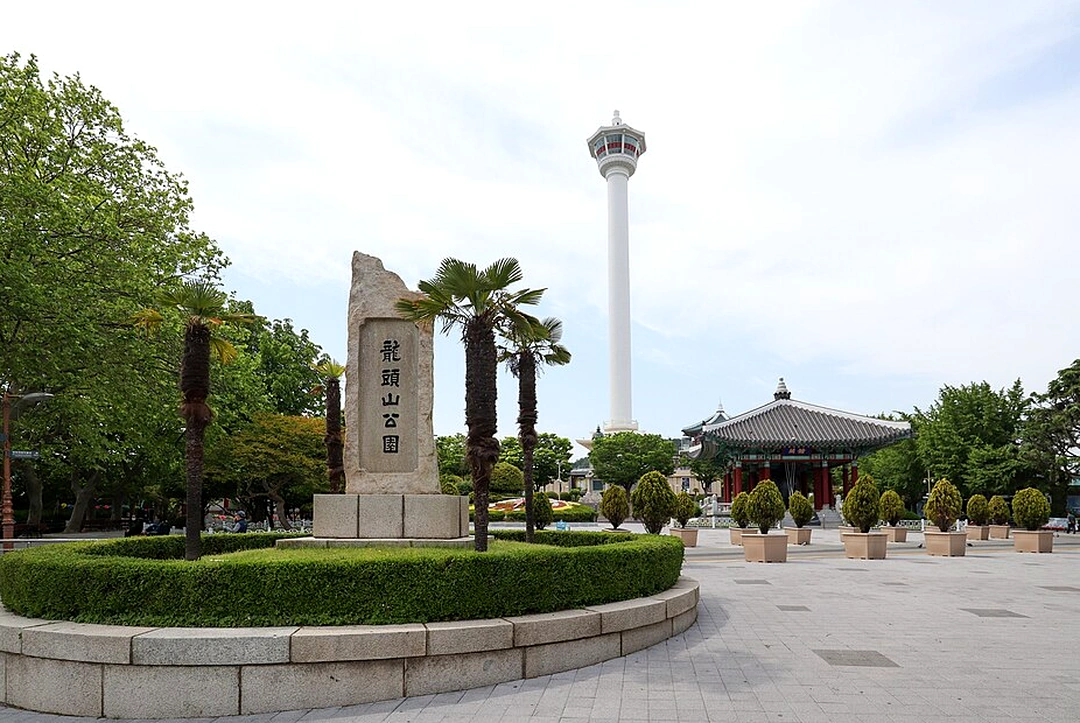
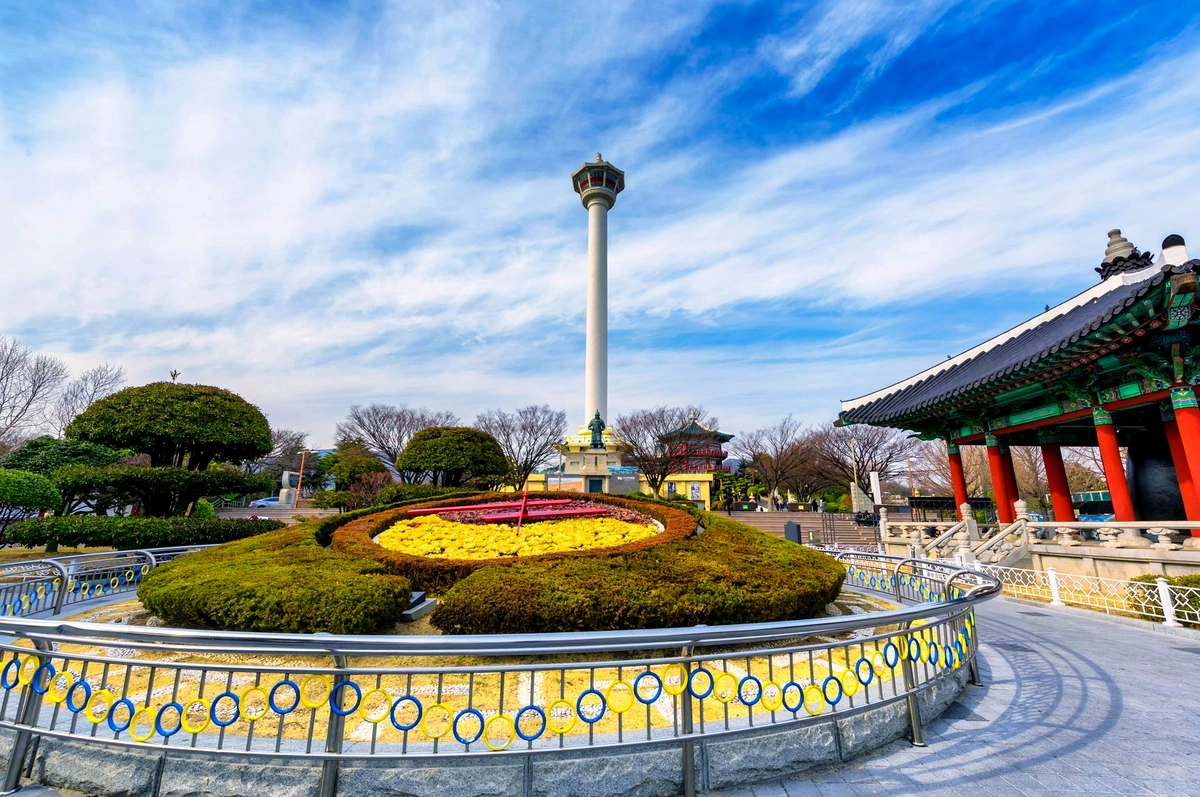
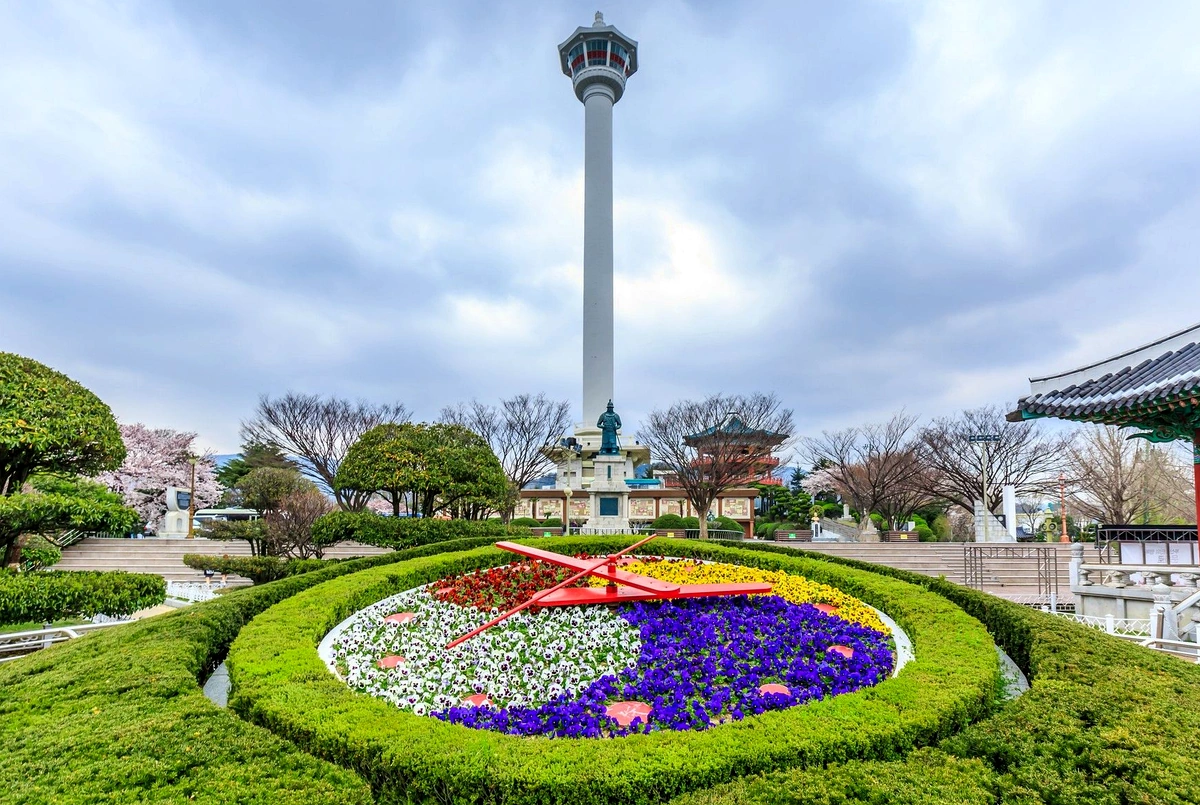
From the ashes of war and the devastation of the era, the aspirations of the Busan people to rise up surged forward powerfully. The Busan Tower construction project was officially initiated in October 1973, and shortly thereafter on November 21, 1973, the city’s first modern observation tower stood tall, becoming a new symbol of pride and urban renaissance. Not stopping at a purely architectural structure, the park space surrounding the tower is also an open-air museum of memories, preserving the majestic statue of Admiral Yi Sun-sin erected in 1956 to honor the legendary naval commander who defended the peninsula, an intricate floral clock installed in 1973, and countless ancient inscriptions bearing the profound imprints of time from the former Joseon Dynasty.
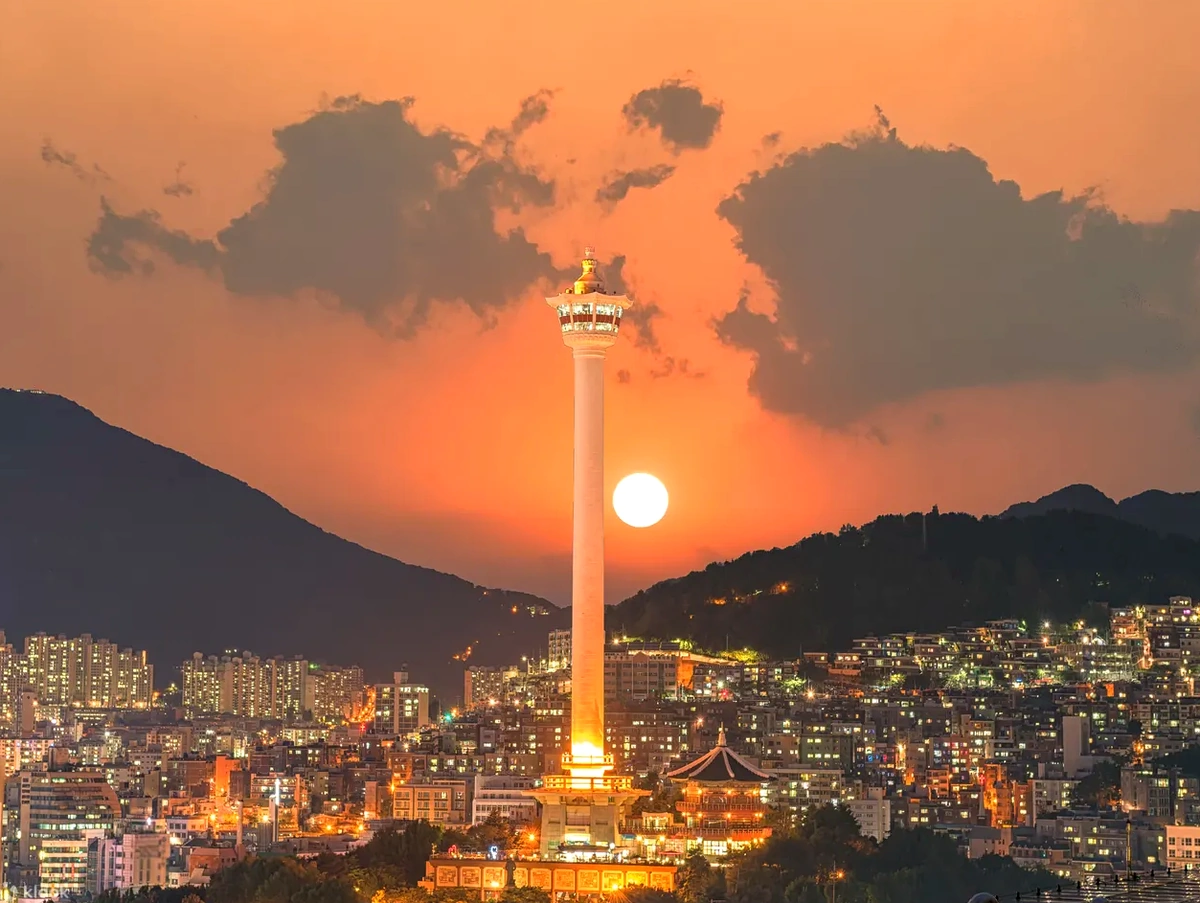
Through many historical periods of changing fortunes, by 2021 this historical symbol stepped forward into a new chapter when it was comprehensively upgraded with an advanced artistic lighting system combined with a modern digital experiential space. The exquisite intersection between a heroic past and future technology has transformed the tower and Yongdusan Park not merely into a historical witness of a period drenched in blood and tears, but also into an enduring cultural rendezvous beating with the contemporary pulse of the port city of Busan—where every inch of land and every stone slab quietly whispers to posterity about the resilience of a nation that has never yielded to adversity.
Under the lens of traditional East Asian geomancy and geography, the towering and majestic tower rising in the heart of the port city named Dragon Head possesses an immensely auspicious layout, fully converging the classic principles of protective geomancy and spatial planning. In terms of natural terrain, this mountain is actually the southern extension of major mountain ranges such as Gudeok-san and Eomgwang-san, plunging straight from the mainland into the Korea Strait with a fierce configuration, resembling a dragon lowering its head to drink water. This topography creates a flawless “leaning against mountains while facing the water, gathering vital energy to generate wealth” whole, where the front prospect and rear backing are arranged by nature’s wondrous sculpting hands. In front of the hill, Busan Bay expands vastly to serve as a large natural open hall, where vital energy and aquatic energy converge and circulate from both the East Sea and the South Sea—symbolizing smooth financial fortune, bustling commercial cash flows, and eternal prosperity for a port region that ranks among the busiest in the land of kimchi. Opposite this headland, Yeongdo Island rises firmly to act as a solid protective screen, shielding against ocean storms and trapping favorable energy streams so they do not dissipate into the open sea. The perfect harmony between rugged mountains and the boundless ocean not only carries profound spiritual value regarding geomancy, but throughout history, this topographic structure also transformed Dragon Head into a vital strategic observation post, allowing complete control over the vital maritime shipping lanes entering and exiting the gateway of Busan. Through all the ups and downs of time, that military position has transformed into an iconic cultural space where modern people return to behold the bustling heartbeat of the marine city from an elevated, serene, and deeply Zen-imbued coordinate.
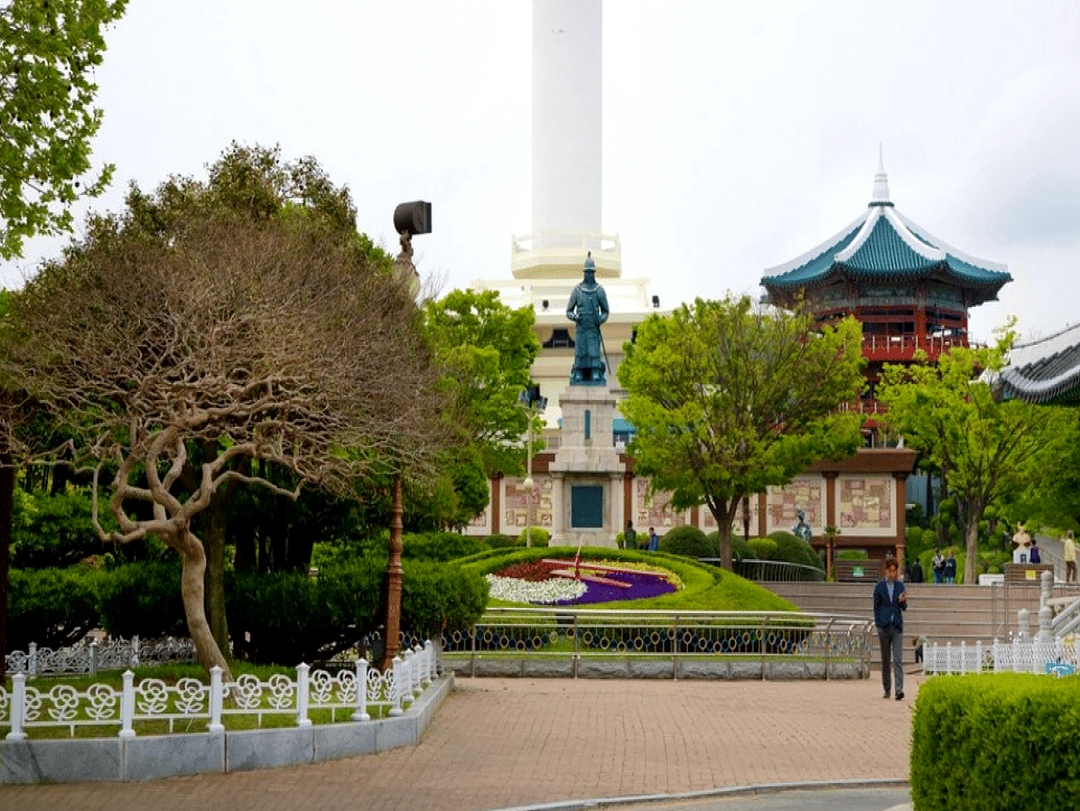
Besides its geomantic and strategic value, the spatial planning of the park area surrounding the base of the tower is also a masterpiece of urban ecology, calculated with extreme scientific precision to harmonize reinforced concrete with natural greenery. Spreading across a total planned area of approximately sixty-nine thousand square meters, the space here is designed as a miniature primeval forest in the heart of the urban center, highlighted by the characteristic flora of the marine temperate zone including dense black pine forests reaching their branches to catch sea breezes, clusters of deep red camellia flowers blooming every winter, and a year-round evergreen vegetation system. This rich ecosystem not only softens the sharp appearance of man-made architectural works but also plays a vital role as a “green cooling island” in the heart of the coastal metropolis, functioning to regulate microclimates, purify the air, and mitigate the urban heat island effect. The landscape planning process here strictly adheres to the principle of respecting the natural terrain, avoiding leveling or destroying the original sloping hill structure, and instead following the existing lay of the land to open winding trails, mossy stone steps, and breezy resting courtyards. Thus, when stepping into this space, visitors will perceive a distinct transformation in the atmosphere: from the sweltering noise of the modern city, they suddenly plunge into tranquility, leaving only the whispering sound of pine winds blowing from offshore and the earthy scent of nature blending within every foliage canopy. The subtle combination of ecological landscape planning, geomantic terrain containing Eastern philosophy, and the strategic vision of urban infrastructure has turned this place into a vivid natural museum, bearing witness to the sustainable planning vision of designers across generations.
Stepping into the sacred space of Yongdusan Park, where the iconic tower rises majestically into the sky of the port city, Busan Tower emerges as an engineering marvel harmoniously combining modern spirit with the traditional soul of the Korean Peninsula. With an impressive height reaching the 120-meter mark, this structure is not merely a landscape accent but also a masterpiece of contemporary construction, shaped by thorough and refined spatial planning thinking. From its foundations to its apex, the main load-bearing structure of the tower is built from high-grade reinforced concrete—a material with absolute durability, carefully calculated to stand proudly against violent storms and powerful shear winds blowing directly from the harsh Korea Strait. This sturdiness lies hidden beneath an artistic exterior steeped in historical resonance, creating a symbol that is both majestic and steadfast against nature while bearing the tender beauty of classical Eastern architectural art.
The first stopping point that captures the gaze of cultural researchers when approaching the structure is the top of the tower—where the observation deck makes an impressive presence, designed with two exceptionally unique spatial levels. Here, architects have cleverly integrated curved eaves lines and traditional bracket systems, modeled after the golden-age wooden architectural prototype of the Silla period, directly recalling immortal aesthetic values once preserved at the renowned Bulguksa Temple. The intersection between modern concrete casting technology and ancient formative language has created a powerful visual imprint, honoring national pride and the millennia-old cultural depth of the Korean people right in the heart of the bustling port metropolis. This space is not purely a viewing deck but also a spatial art gallery, where past and present blend into one through carved details and dome structures imbued with the imprints of time.
The interior space of Busan Tower is scientifically and intelligently vertically stratified, offering multi-dimensional experiences for anyone who sets foot there. The basement and ground levels are planned into a comprehensive cultural and entertainment complex, including a spacious ticketing lobby, a digital art exhibition room named Black Box featuring a breathtaking multimedia projection system, exquisite souvenir shops selling local handicrafts, and cozy, artistic cultural cafes. From here, visitors step into a modern high-speed elevator system equipped with unique panoramic ceiling projection technology, recreating the movements of outer space or the vibrant colors of the Busan night sky throughout the soaring upward journey. In the blink of an eye, the elevator carries everyone past the 120-meter height to step onto the observation decks on the first and second floors.
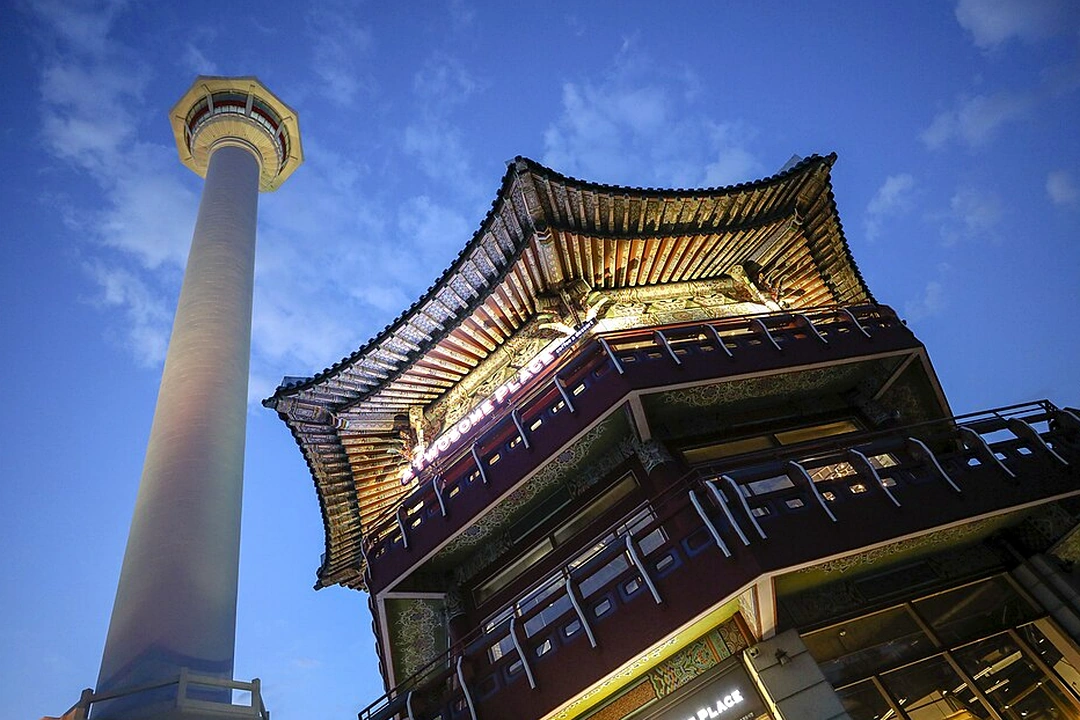
Standing from the ideal altitude of the observation deck, the entire panoramic picture of the international port city of Busan unfolds before the eyes with breathtaking and vivid beauty down to every detail. Gazing into the distance, visitors can take in the bustling scene of docks crowded with ships coming and going, where busy trade connects Korea with the rest of the world. Right below is the historic Yeongdo Bridge proudly spanning the water, recalling the city’s ups and downs during times of war and national recovery. A bit further away, the vibrant rooftops of Gamcheon Culture Village layer upon one another like a giant installation art piece amidst the mountain valley. All of these spatial fragments—from the sturdy reinforced concrete structure resisting storms, the eaves lines modeled after ancient Silla architecture, down to the modern vertical stratification system and expansive views from the tower peak—together weave an enduring architectural symbol where history and present intersect brilliantly along the shores of the Pacific Ocean.
When night falls and the hectic pace of South Korea’s second-largest port city gradually fades into a magical veil of mist, Busan Tower—nestled peacefully atop Yongdusan Park—metamorphoses to step into an enchanting artistic space where light, sound, and legends merge into a grand visual extravaganza. The nighttime lighting system and advanced visual art are not merely a decorative solution but have become a strategic highlight in the city’s urban tourism redevelopment vision. Walking past the historical stone steps leading up the hilltop, visitors feel as though they are stepping into another dimension, where the boundary between reality and dream realm seems erased by top-tier projection mapping technology deployed continuously from the indoor lobby to the entire tower shell structure.
The cold reinforced concrete walls of this iconic architecture suddenly transform into giant screens, coming alive every second thanks to projection themes tailored specifically by season and local cultural currents. On some nights, the space recreates magnificent legends of the sea, where deities silently protect fishermen through violent storms, or immerses viewers in a sea of pink-blooming cherry blossoms when spring arrives, before transitioning to the quiet, pure beauty of deep red camellias in winter. In particular, digital artistic fireworks displays built using projection techniques not only brighten the corner of Busan’s sky but also bring a sense of wonder and joy to anyone standing beneath the tower to admire them. The charm of this light show lies in the fact that it does not stand alone but always engages in rhythmic dialogue with the outdoor LED floodlighting system—light that can flexibly change colors in tune with the heartbeat of major cultural events such as the prestigious Busan International Film Festival or the colorful, glowing Christmas Tree Festival—all blending perfectly with the sparkling band of light cast from the distant Busan port pier, creating a breathtaking, grand contemporary natural landscape.
Not stopping at breathtaking visual spectacles, the space surrounding the base of the tower is also a cultural and emotional rendezvous bearing deep humanistic significance. Right along the romantic walking path beneath the ancient tree canopies of Yongdusan Park, the famous Love Locks wall welcomes couples from all over the world to entrust their eternal vows via tens of thousands of colorful padlocks, turning the area into a miniature museum of memories for timeless love. Next to it, the solemn, ancient prayer bell tolls resonant rings on special transition occasions, carrying hopes for peace, prosperity, and happiness for the people of the port region. Nightlife here thus becomes more multi-dimensional than ever, possessing both the quiet, sacred aura of a spiritual space and the liberal, lively character of modern street culture.
When rustic acoustic melodies rise from busking performances at the foot of the tower, the space suddenly becomes intimately warm and unusual. Talented young artists bring delicate crossover performances blending traditional music originating from intangible heritage with the youthful rhythms of contemporary Korean culture, attracting numerous tourists and locals to stop and listen, dancing together in the chilly sea breeze. Intertwined among these art appreciation spaces are bustling cultural markets selling unique handicrafts and characteristic local cuisine, completing the panoramic picture of a Busan Tower that holds not only long-standing architectural history but also acts as the vibrant, dynamic, and artistic heart of urban nightlife in South Korea.
Stepping away from the mossy stone steps of Yongdusan Park—where Busan Tower stands proudly, protecting the heartbeat of the port city—visitors are immediately swept into an entirely different dimension of local life, where rustic flavors and heirloom culinary traditions blend with the smoke and fire of the historic Gwangbok-dong, Nampo-dong, and Gukje markets. The space beneath the tower is not merely a sightseeing coordinate, but a living museum of Busan’s popular culinary culture, where each dish carries the fluctuating stories of time, passed down through generations from the harsh wartime era to today’s modern age.
Opening this culinary experience is the traditional pork offal and meat soup, called Dwaeji-gukbap by locals—a culinary heritage deeply marked by wartime survival. Born during the turbulent years of the Korean War when refugees flooded into Busan, this dish became precious energy warming millions of impoverished laborer souls. The cooking process of Dwaeji-gukbap requires absolute meticulousness and patience from the chef as pork bones must be simmered until tender for many hours until the broth turns a milky white, thick consistency, emitting a rich and savory aroma without being greasy. When enjoying it, diners add a dash of salty salted shrimp, finely chopped fresh chives, and signature spicy chili paste into the piping hot bowl of broth to balance the flavor, helping restore vitality and chase away the biting cold of sea winds blowing directly onto the peninsula.

Leaving behind the warm soup restaurants, visitors’ steps are reeled back by the fragrant aroma emanating from roadside carts serving Busan fish cake, or Busan Eomuk—one of this coastal city’s proudest culinary symbols. Completely different from ordinary fish cakes, authentic Busan Eomuk is a heritage combining long-standing seafood harvesting techniques with refined processing art, using pure fresh meat from high-elasticity white fish such as Alaska pollock and cod. After deboning, the fish meat is kneaded thoroughly with heirloom spices, shaped into various designs, and then deep-fried until golden or boiled in a broth simmered from white radish and kombu kelp. When biting into a firm, chewy piece of fish cake while sipping a mouthful of piping hot broth sweet with the pure taste of the ocean, diners feel the full essence of the sea condensed within every simple morsel of food.
The culinary journey beneath the shadow of Busan Tower cannot be considered complete without the nostalgic taste of Bibim Dangmyeon (spicy mixed glass noodles), a dish bearing the strong working-class style of the port district’s poor from past decades. The dish looks simple at first glance with sweet potato glass noodles boiled just right to maintain their translucent chewiness, mixed evenly with crunchy pickled radish, fresh green chives, fragrant sesame oil, and accented with a bright red chili sauce carrying a bold sweet-and-sour taste. All ingredients are skillfully tossed in a large bowl, creating a symphony of colors and flavors that stimulate all senses, serving as a testament to the enduring vitality and boundless creativity of Busan people in transforming the most basic ingredients into a culinary masterpiece passed down through generations.
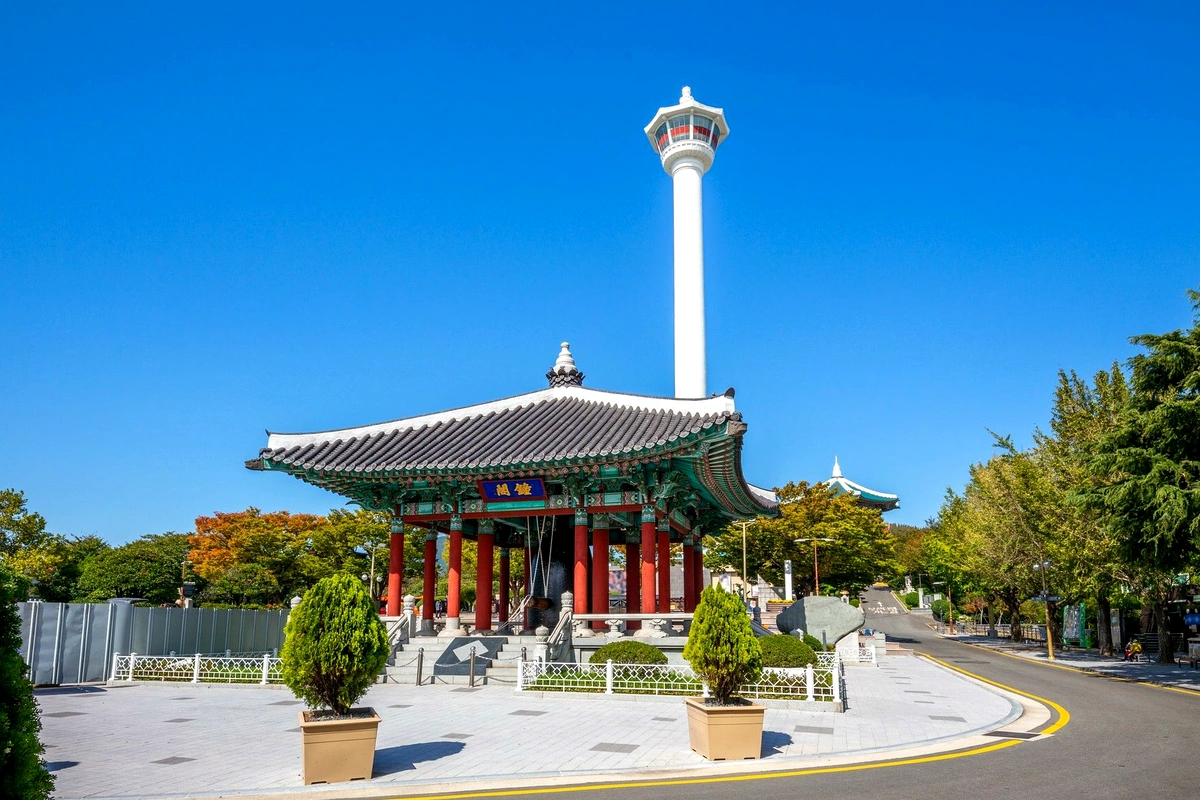
Concluding the historical cultural space and majestic symbol of the southern port city of South Korea, intellectual travelers and culture researchers will approach the most practical field guides to complete their experience here. To leisurely admire the panoramic view of the bustling metropolis from above without any time pressure, knowing the exact operating schedule is essential. Specifically, the high-rise observation deck of the tower opens to welcome visitors from 10:00 AM and maintains continuous operation until 22:00 PM daily, with the ticket counter only admitting visitors up to 30 minutes before closing time to ensure optimal visiting duration for each batch of guests. Meanwhile, the lush green Yongdusan Park space at the base of the tower opens freely 24/7, allowing the public and those who love the quiet space of nature to stroll at any time of day to breathe in the fresh air carrying the distinctive scent of the sea.
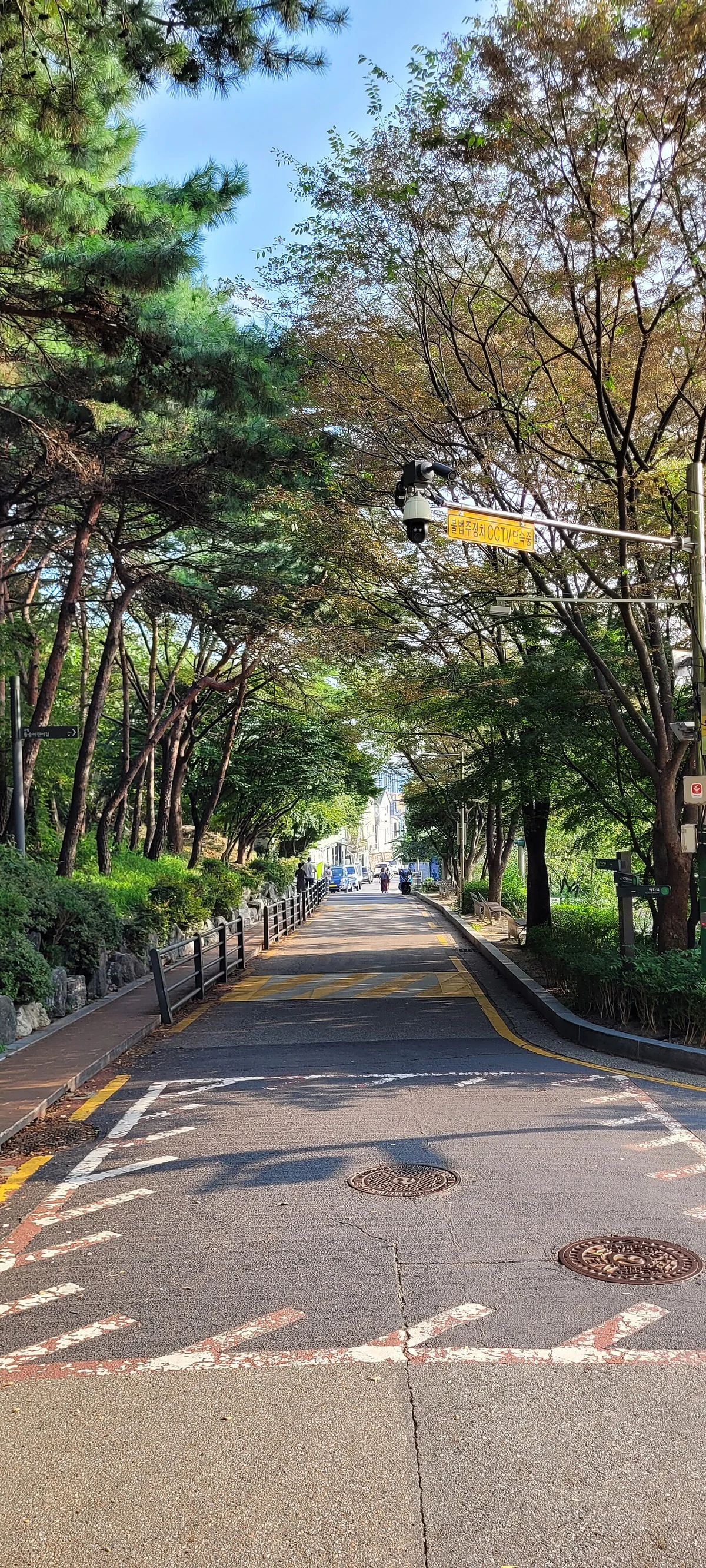
The journey to approach this historic tower also requires a thorough understanding of Busan’s modern public transportation system, where the intersection of past and present is connected by smart urban underground veins. The most optimal and convenient travel method for all visitors is utilizing Busan Subway Line 1, traveling to Nampo-dong Station and exiting via Exit 1 or Exit 7. From the station exit, travelers simply need to stroll for about 5 minutes through bustling streets bearing the distinctive colors of the port city to step foot into the mountain base area. However, a crucially important geographical note that tour guides and veteran explorers often pass on is that the path up the mountain is quite steep, so utilizing the outdoor escalator system at the mountain base will save considerable energy, while on the way down visitors can leisurely walk through gentle sloping paths canopied by green foliage to observe the daily life of local residents.
Financial preparation and sightseeing ticket purchase methods also need careful advance calculation so the trip goes smoothly while maximizing wait-time savings. Visitors can completely choose to buy tickets directly at the counter at the base of the tower or proactively book tickets in advance through popular online booking platforms or KKday to receive preferential prices along with attractive combo packages. Furthermore, preparing clothing suitable for harsh high-altitude weather conditions is an unmissable insider tip for anyone wanting to fully enjoy the beauty of Busan Tower. Because the observation deck is located at a high altitude with strong winds blowing year-round, visitors dropping by in autumn and winter must equip themselves with thick windbreakers to keep their bodies warm. In addition, because the tower terrain rises proudly above high hills with many ancient stone steps, wearing anti-slip grip sneakers is an absolute safety rule—high heels should never be worn to avoid unfortunate accidents caused by slipping. Finally, when entering the sacred space of historical heritage sites and prayer spaces, maintaining general order, respecting the quiet atmosphere, and honoring local culture is the finest civilized visiting card of every international traveler coming to this heritage land. To ensure your journey conquering the Busan symbol and exploring the culture of the land of kimchi unfolds perfectly without worrying about organizational details, you can check out the details at the all-inclusive tour program to enjoy your trip fully and with top-tier class.