





The golden age of Wudang Mountain erupted brilliantly at the beginning of the Ming dynasty following the fierce Jingnan campaign. To consolidate the sacred legitimacy of the throne seized from his nephew, Ming Emperor Yongle, Zhu Di, proclaimed himself the earthly incarnation of Zhenwu Dadi (the True Warrior Great Emperor), the supreme deity guarding the North. In the tenth year of Yongle, the emperor mobilized over three hundred thousand laborers, soldiers, and master artisans under the overall command of Marquis Zhang Xin and Vice Minister Guo Hong, dedicating full effort to construction for twelve consecutive years. The strategic vision of “Building the Forbidden City in the North, Restoring Mount Taihe in the South” gave birth to a breathtaking grand architectural complex covering a construction area exceeding 1.6 million square meters, gathering a massive collection of palaces, Daoist temples, thirty-six hermitages, seventy-two rock shrines, and thirty-nine winding stone bridges spanning deep ravines.
Alongside this monumental construction project of historic proportions, Emperor Yongle also dispatched the official Hu Ying far and wide to search for Grandmaster Zhang Sanfeng, the legendary Daoist figure who founded the renowned Wudang Internal Martial Arts and Tai Chi, perfectly merging the philosophy of yielding and firmness into practical martial arts. By the reign of Emperor Shizong of Ming during the Jiajing era, the sacred mountain’s status reached its absolute peak when the emperor bestowed the title “Zhishi Xuanyue” (governing the mysterious music of the world), honoring the mountain above even the traditional Five Sacred Mountains. Through all the vicissitudes of time, in December 1994, the Ancient Building Complex in the Wudang Mountains was officially recognized by UNESCO as a World Cultural Heritage site, serving as proof of an invaluable open-air architectural museum.
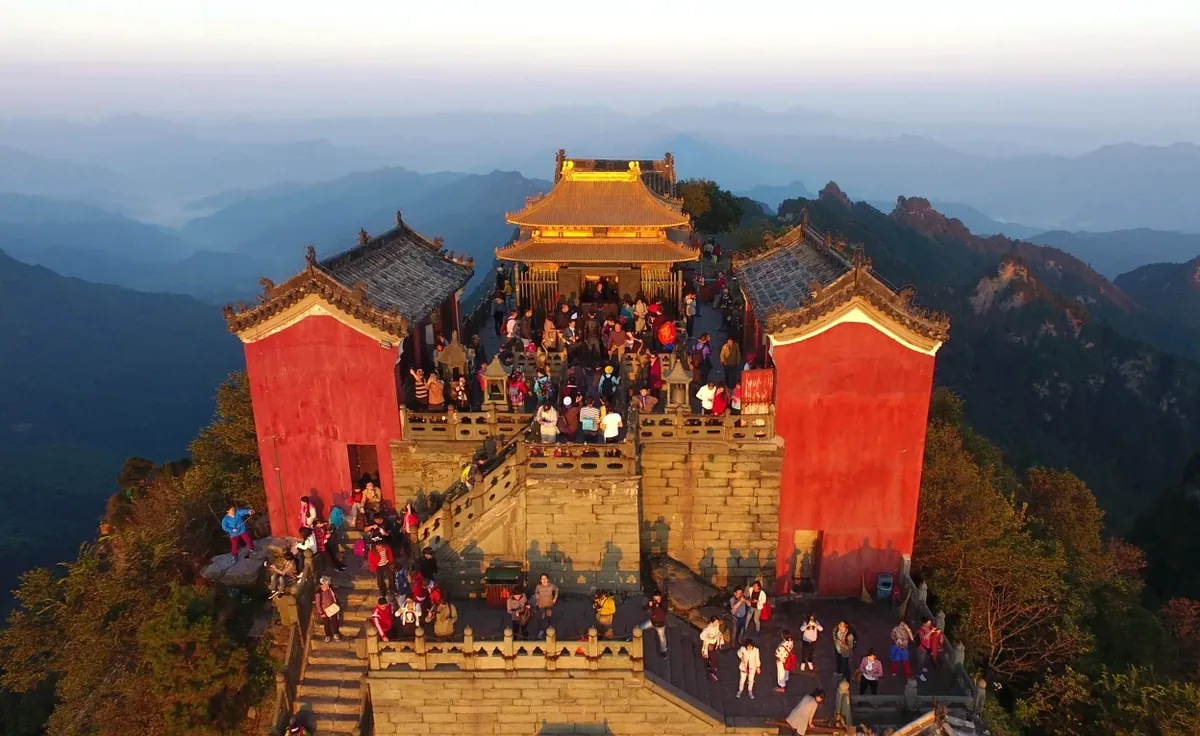
Existing vividly amidst emerald green mountains and clear waters, the entire ancient architectural complex appears with majestic crimson-painted walls and elegant blue-tiled roofs, seeming to cling precariously to the sheer cliffs of the rugged mountain slopes. Each ancient shrine, temple, and hall is skillfully connected through a system of sturdy stone walls and steep, winding stairways that gracefully follow the natural terrain. Amidst the serene space enveloped by boundless greenery, groups of travelers leisurely stroll and sightsee, creating a vivid highlight that brings this thousand-year-old heritage to life within a magnificent landscape.
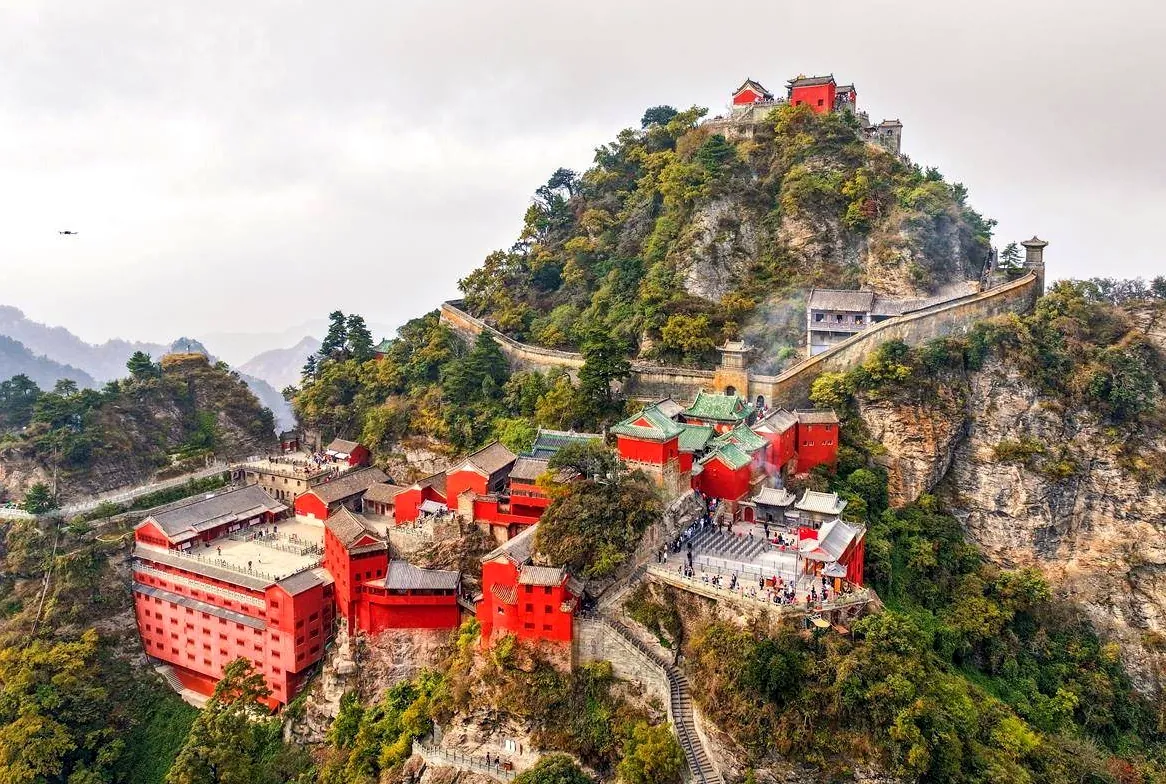
Looking back at the entire historical progression spanning thousands of years, the enduring vitality of this sacred land does not merely lie in its magnificent construction scale or the favor bestowed by feudal dynasties. It is the absolute harmony between Daoist non-action (wuwei) philosophy and supreme architectural artistry, where human hands lean upon the ruggedness of nature to carve out a space dedicated to the Dao that endures alongside heaven and earth, forever preserving the story of power transitions and the aspiration to reach the eternal realm.
Located in the city of Shiyan in northwestern Hubei province, the Wudang range occupies an exceptionally special geo-strategic and feng shui position, situated at the crucial junction between the majestic Daba Mountain range and the low-lying transition strip of the Nanyang-Han River basin. The northern part of the entire landscape is shielded and nourished by the eternally flowing Han River and the vast waters of the Danjiangkou Reservoir, creating the quintessential “sitting against the mountain and overlooking the water” terrain in Daoist landscape theory. The entanglement of humid air currents from the lake and rivers, upon crashing against the towering limestone wall, has transformed this place into a gathering point of wind and energy, where the divine breath of heaven and earth endlessly concentrates to nourish a transcendent sacred land for immortals.
The towering peak of Wudang is revered by Daoists as Tianzhu Peak (Heavenly Pillar Peak) at an altitude of 1,612 meters above sea level, standing majestic like a giant pillar supporting the sky, true to its glorious title “A single pillar props up the sky.” Surrounding this main peak is a cluster of seventy-two smaller peaks gently leaning toward the center, their forms undulating like thousands of subjects bowing toward the supreme emperor upon his throne, creating a wondrous geomorphological phenomenon known as “The Seventy-Two Peaks Paying Homage to the Great Peak.” The terrain here is infinitely rugged with deep abysses and sheer cliff faces stretching for miles, where massive rocks reach straight into the sky like unsheathed swords, simultaneously blocking out the noise of the mortal world and creating a sturdy natural defense structure for the Daoist hermitages nestled against the cliffs.
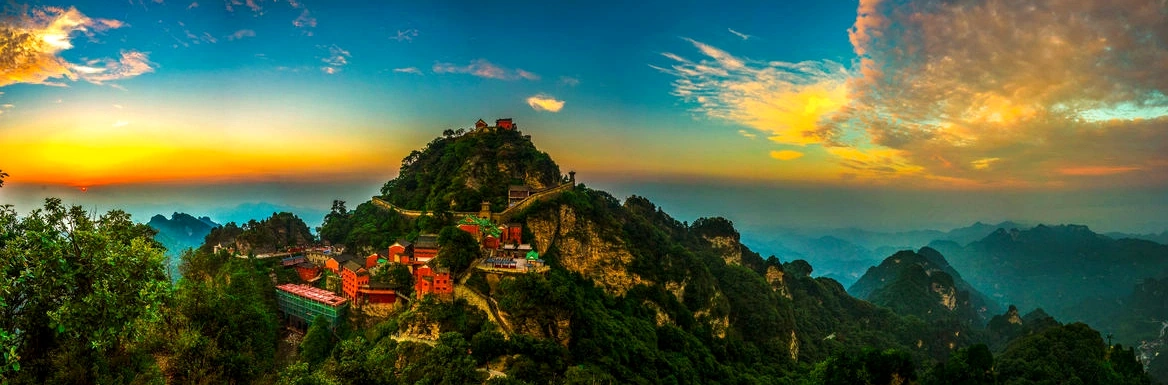
Gazing down from above, the ancient architectural complex with its dark red tiles interspersed with solemn dark roof tiles makes a striking impression, proudly perched atop the lush green mountain ridge. Each upturned roof corner and winding rampart tracing the rugged rock edges creates an organic connection between human craftsmanship and the contours of nature. In the distance, countless folds of the Daba Mountains roll on continuously, faintly shimmering beneath a magical bluish mist, outlining an otherworldly meditative space where tranquility and majesty merge into a complete whole.
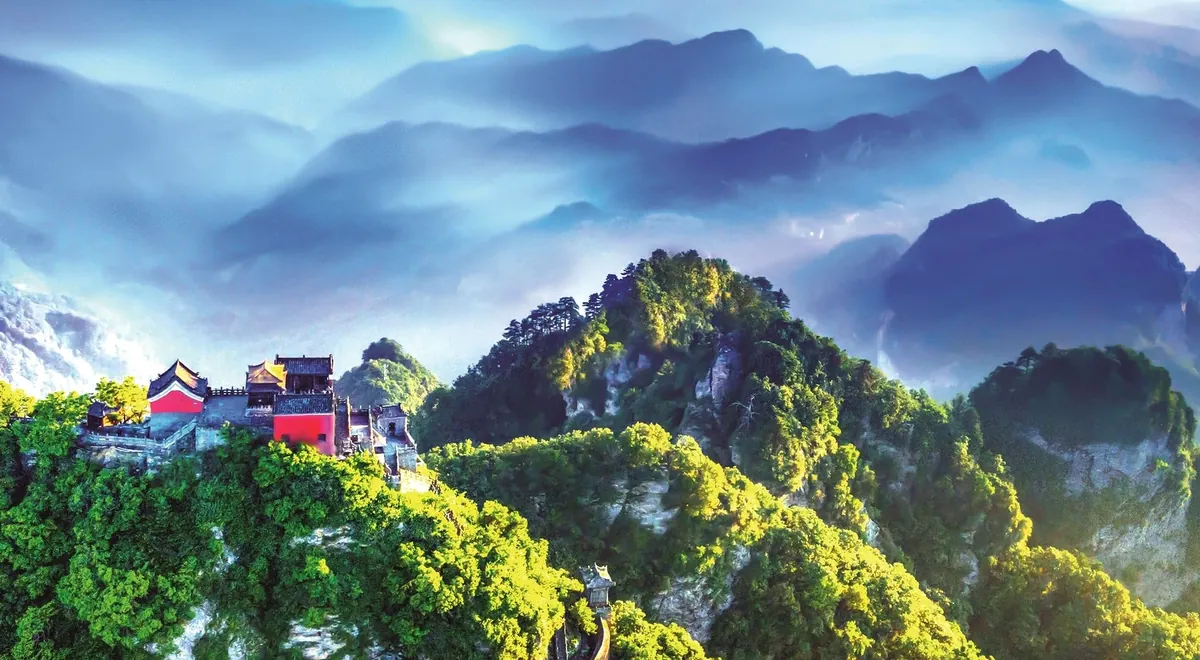
The natural ecosystem here is preserved almost intact thanks to the high-mountain subtropical microclimate with its abundant humidity. Deep beneath the sharp, weathered limestone rocks lies the serene Purple Cloud Valley, where murmuring streams wind through dense primeval forests covering countless rare medicinal herbs that have long inspired the health preservation and alchemy recipes of Wudang Taoist priests. The temperature difference between day and night, combined with the deep valleys, continuously creates the spectacular Sea of Clouds phenomenon. Rolling, billowing seas of clouds drift year-round, swallowing up precarious hermitages and transforming the peaks projecting above the silver mist into jade islands amid a mystical void.
The moment Wudang’s natural scenery reaches the pinnacle of its ethereal beauty is when autumn arrives. Amidst the somber green of the vast primeval forests, millennia-old ginkgo trees nestled peacefully near the Fuhu Temple and Zixiao Palace complex simultaneously shed their leaves, weaving vibrant golden carpets that cover the ancient stone courtyards and mossy temple roofs. The blazing golden hue of the ancient trees contrasts with the dark tiles and drifting wisps of incense smoke, not only softening the rugged terrain of the mountain region but also completing a picturesque landscape painting that symbolizes the absolute harmony between natural laws and unchanging human philosophy.
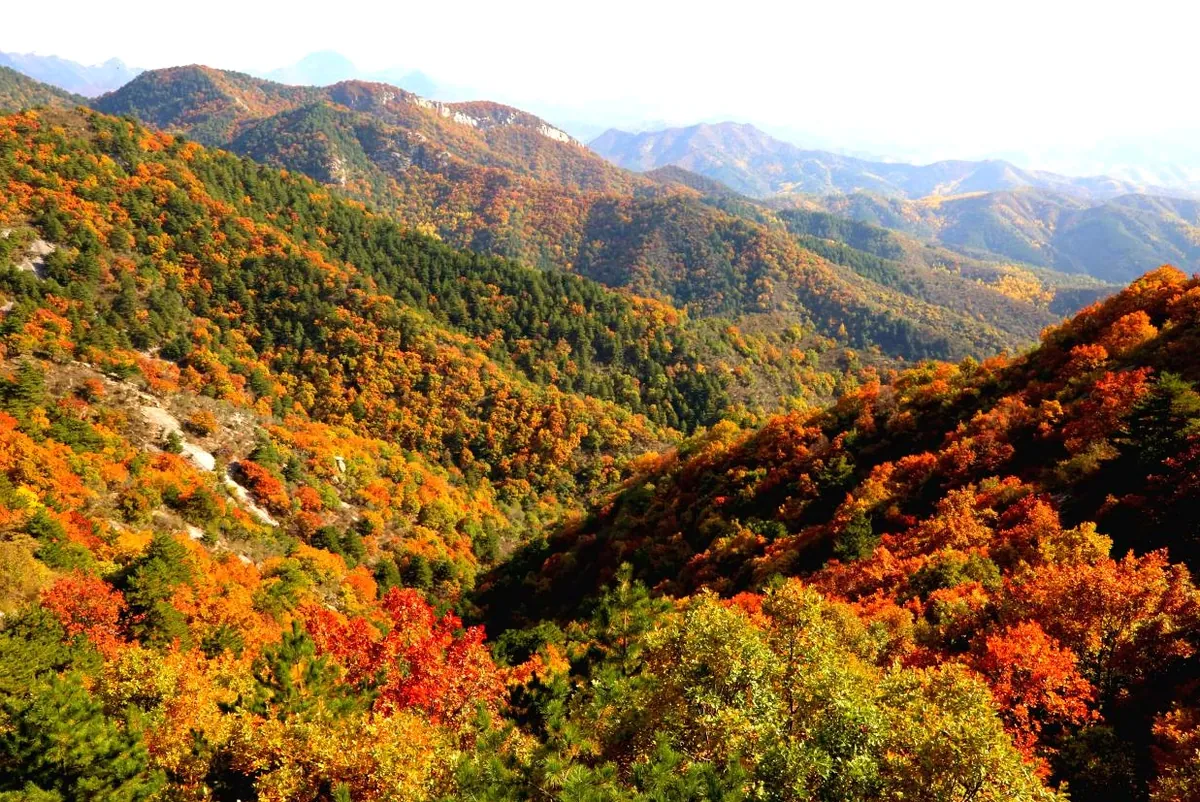
Through the master planning of imperial feng shui masters and court artisans across the Yuan, Ming, and Qing dynasties, the architectural complex on the Wudang Mountains transformed the profound philosophy of “Dao follows nature” into one of the most magnificent architectural symphonies in the East. Rather than flattening the landscape for artificial expansion, every single palace, Taoist temple, stone bridge, and defensive wall was meticulously crafted to conform to the steep, treacherous terrain, creating a flawless blend of rigorous imperial authority and ethereal, otherworldly charm in the sacred mountains of Hubei.
The pinnacle of grandeur and Taoist metallurgical engineering converges completely at the Golden Hall, standing proudly atop the Tianzhu Peak at an elevation of 1,612 meters above sea level within the Taihe Palace complex. Commenced in the 14th year of Yongle (1416) during the reign of the Yongle Emperor, this structure holds the record as China’s largest gilded bronze architecture, with an estimated weight of up to 90 tons. What astonishes researchers of ancient architecture is that the entire shrine was exquisitely cast from hundreds of bronze mortise-and-tenon components that fit together with absolute precision without using a single iron nail, its exterior plated with dazzling pure gold that defies millennia of storms. For over six hundred years, the Golden Hall has also passed down two mysterious physical-metallurgical phenomena: the “Sea Horse Spitting Fog” sign, where the mythical beast statue on the roof exhales white smoke to signal an approaching storm, and the “Thunder and Fire Refining the Hall” phenomenon, where lightning strikes the bronze hall without damaging the structure, instead sweeping away soot and leaving the pure gold layer even more brilliantly radiant after the storm.
Tracing the winding stone path further down, the South Cliff Palace (Nanyan Palace) unveils a breathtaking hanging architectural marvel as the entire stone shrine clings tightly to the sheer Chaoshao cliffside as if sprouting from the depths of the abyss. This place etches deep human obsession and ultimate reverence through the “Dragon Head Incense” structure—an exquisitely carved incense burner on the spines of two stone dragons stretching 2.9 meters out into mid-air, with a stone surface width of merely 30 centimeters. For centuries, thousands of devotees risked their lives, kneeling and crawling across the razor-thin line between life and death over a bottomless abyss just to offer a stick of incense and pray for divine protection. This extreme danger was so tragic that in the 12th year of Kangxi (1673), the Qing Emperor himself issued an imperial decree strictly banning the reckless act of burning incense there and erected a warning stone tablet to put an end to tragic falls into the unfathomable abyss.
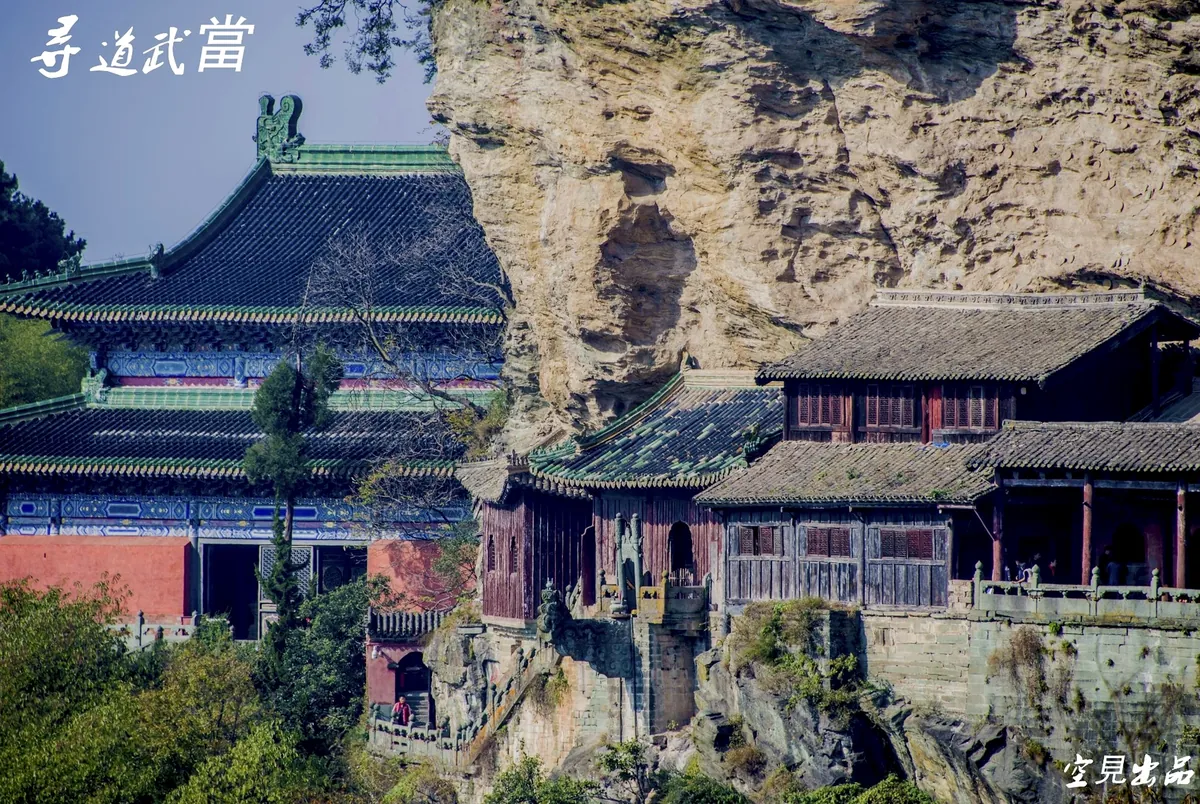
If Nanyan Palace is a symbol of perilous terrain, Zixiao Palace—also known as the Purple Heaven Palace—stands as the magnificent embodiment of royal court standards meticulously preserved through the vicissitudes of time. Quietly nestled at the foot of the mountain, this massive Ming-dynasty timber complex is arranged in strict accordance with classic symmetrical axes, highlighted by its stunning peacock-blue glazed tile roofs—a color symbolizing the supreme Taoist heavens. Beneath the eaves, multi-tiered structural brackets (dougong) are intricately connected, not only distributing weight ingeniously but also showcasing fluid carvings that shelter the main hall, which houses an exquisite, solid-cast bronze statue of Zhenwu Emperor dating back to the Ming dynasty.
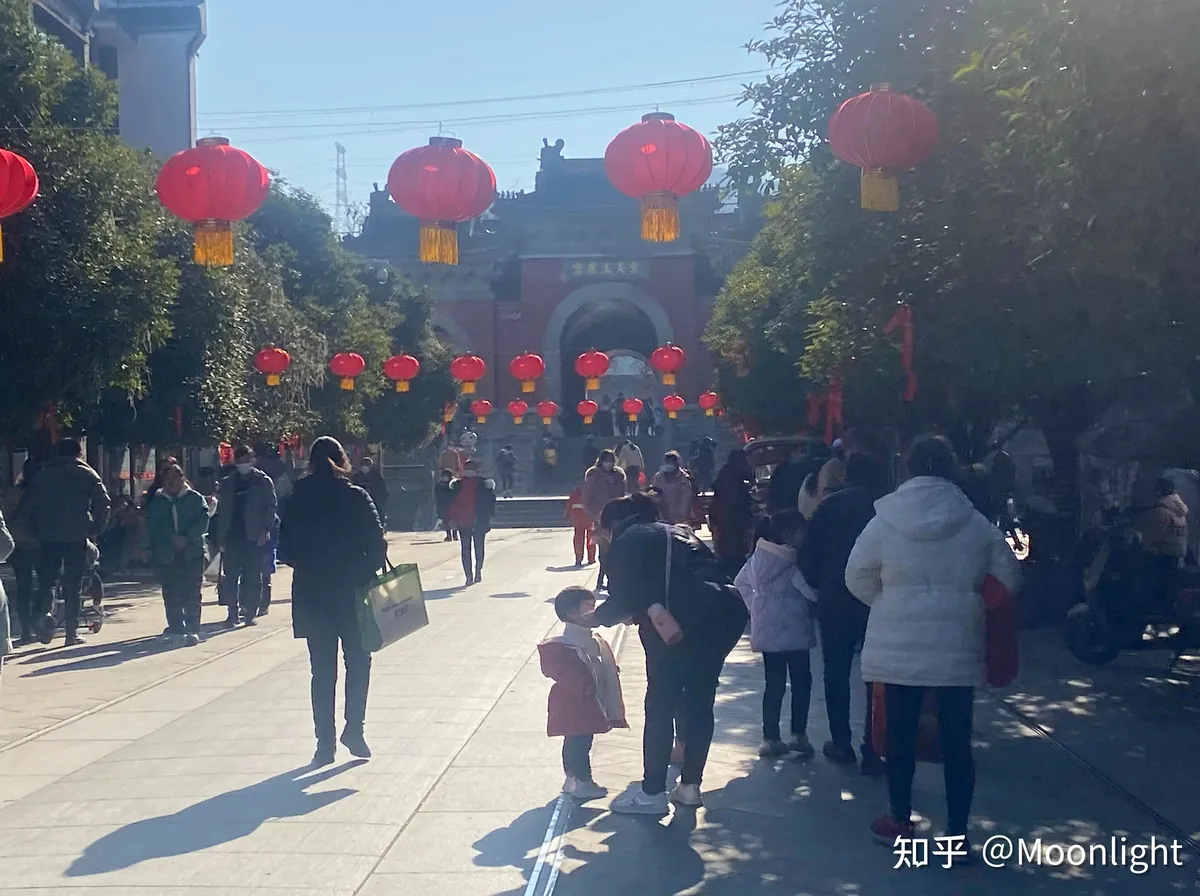
The sacred space of this Taoist sanctuary is not only hidden high up in the peaks but also vividly present right along the pilgrimage routes. Under a clear, sun-drenched sky, a wide pathway leads toward a majestic traditional Chinese archway imbued with classical oriental architectural marks. A multitude of vibrant red lanterns adorned with golden tassels are brightly strung together, fluttering gently in the morning breeze to create a festive atmosphere that is both solemn and warm. Groups of travelers stroll leisurely, adults affectionately holding children by the hand, while sunlight casts long, peaceful shadows on the ground, painting a harmonious rhythm of life between the mortal realm and a fairyland.
The perfect combination of magnificent court construction techniques, supreme metal-casting arts, and absolute respect for nature has sculpted an unrivaled open-air architectural museum in this mortal world. Each wooden mortise-and-tenon block atop the Heavenly Pillar Peak or every precipitous turn along the Red Cliff (Zhushao) is an enduring testament to the aspiration of achieving harmony between humanity and the universe, transforming Hubei into an eternal rendezvous for souls seeking the depth of Eastern culture.
As the twilight gradually fades behind the rolling seventy-two peaks of the Wudang Mountains, the solemn atmosphere of Hubei’s premier Taoist sanctuary begins to enter a magical transitional ritual between the sun and the moon. Completely distinct from the bustling, neon-lit commercialized pace of modern tourist cities, nightfall over the sacred Wudang Mountains preserves the absolute tranquility and purity of a millennium-old Taoist realm. A micro-artistic lighting system is delicately arranged, winding along the upturned eaves covered with turquoise glazed tiles at Zixiao Palace and enveloping the towering, gilded bronze architecture of the Golden Hall exquisitely built atop the Heavenly Pillar Peak at an altitude of 1,612 meters. Amidst rolling wisps of mist drifting from deep valleys, the gentle light casts upward onto the Ming-dynasty dragon-and-phoenix carved roof ridges, creating a visual effect like a celestial palace hovering above a boundless sea of clouds, completely isolated from the turbulent secular world.
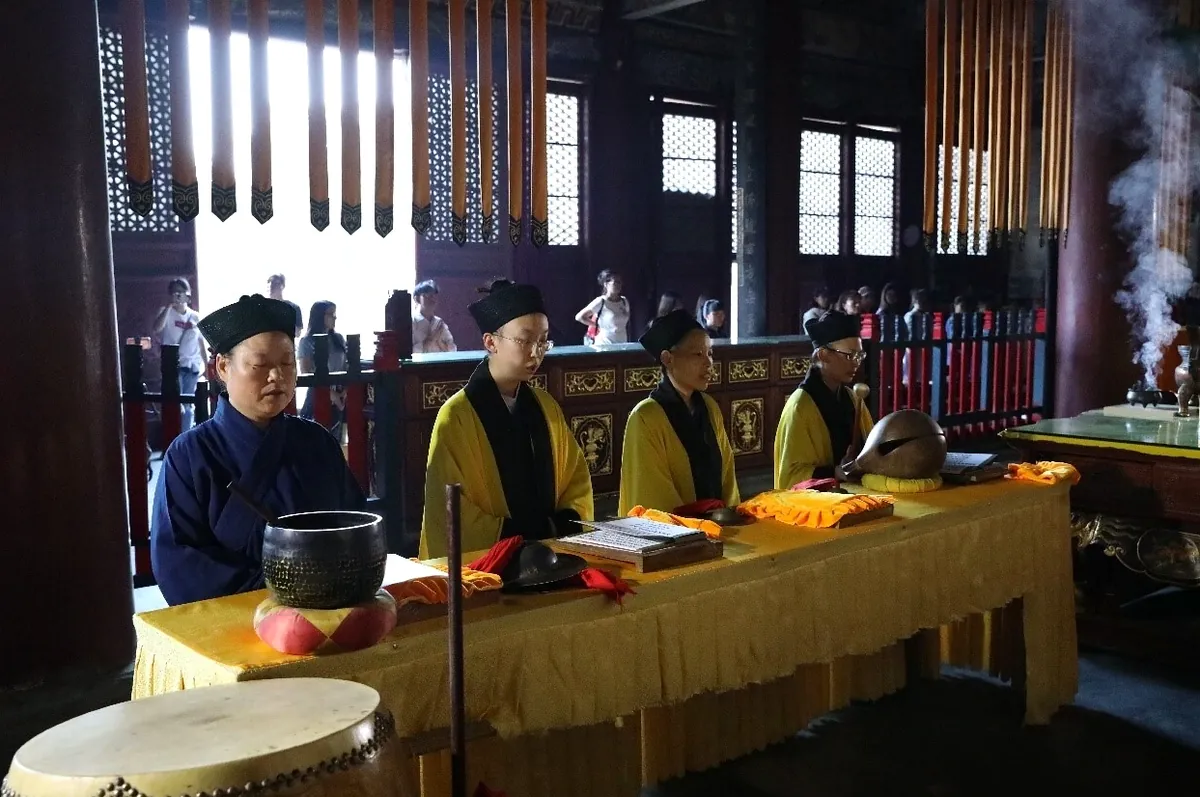
Strolling along the precipitous stone paths leading to the Nanyan Palace complex or the quiet Qiongtai Valley, travelers are immersed in the pristine monastic rhythm of life practiced by the Xuanwu-sect Taoists. Nights in Wudang lack the noise of engines or bustling city streets; instead, there is only the distant, resonant sound of the Netherworld bell echoing across steep cliffs, blending with the morning and evening chanting from the solemn Taoist temples. At boutique homestays tucked away on the mountain slopes, a health-cultivating lifestyle deeply rooted in Taoist philosophy unfolds: visitors converse on profound mysteries with senior masters, sip Wudang Taoist tea handcrafted from ancient tea leaves nourished by mountain mist, and listen to the crisp melodies of the guzheng (zither) under a bright moon illuminating thousands of pine trees. This is the moment when Lao-Zhuang’s philosophy of “letting nature take its course” is no longer just text on paper, but vividly manifests through every serene breath of all things amidst the crisp, cool night.
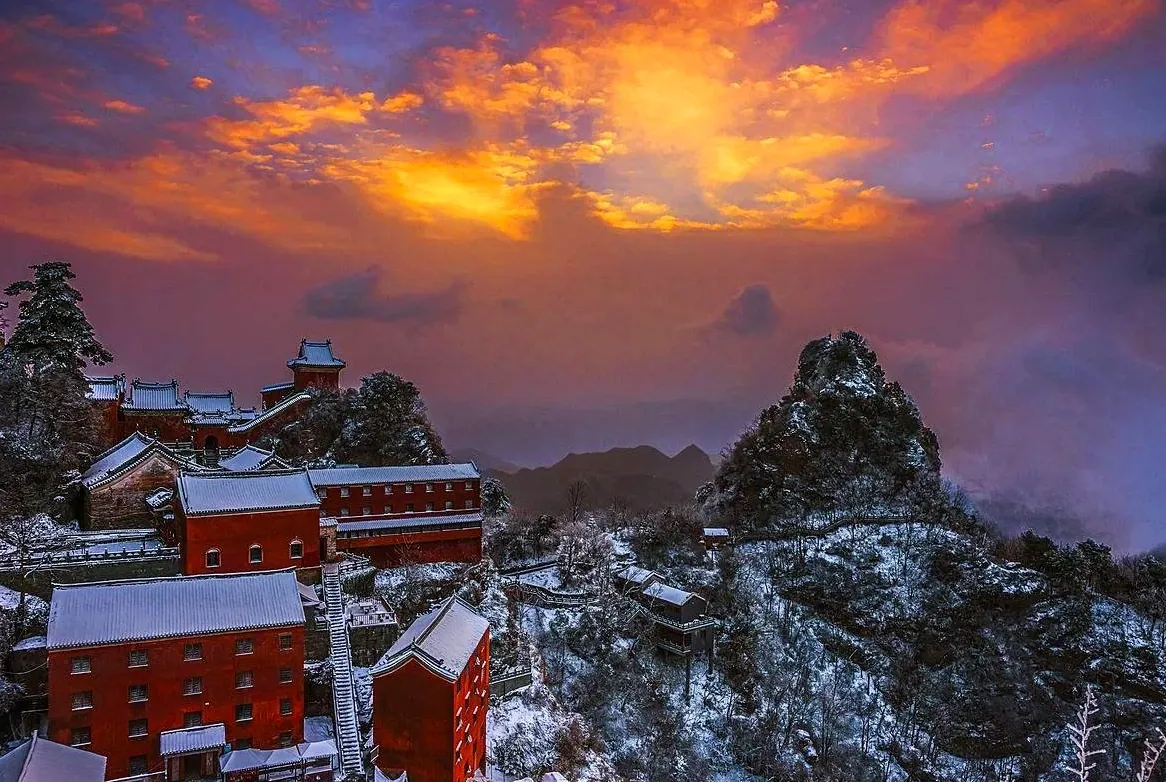
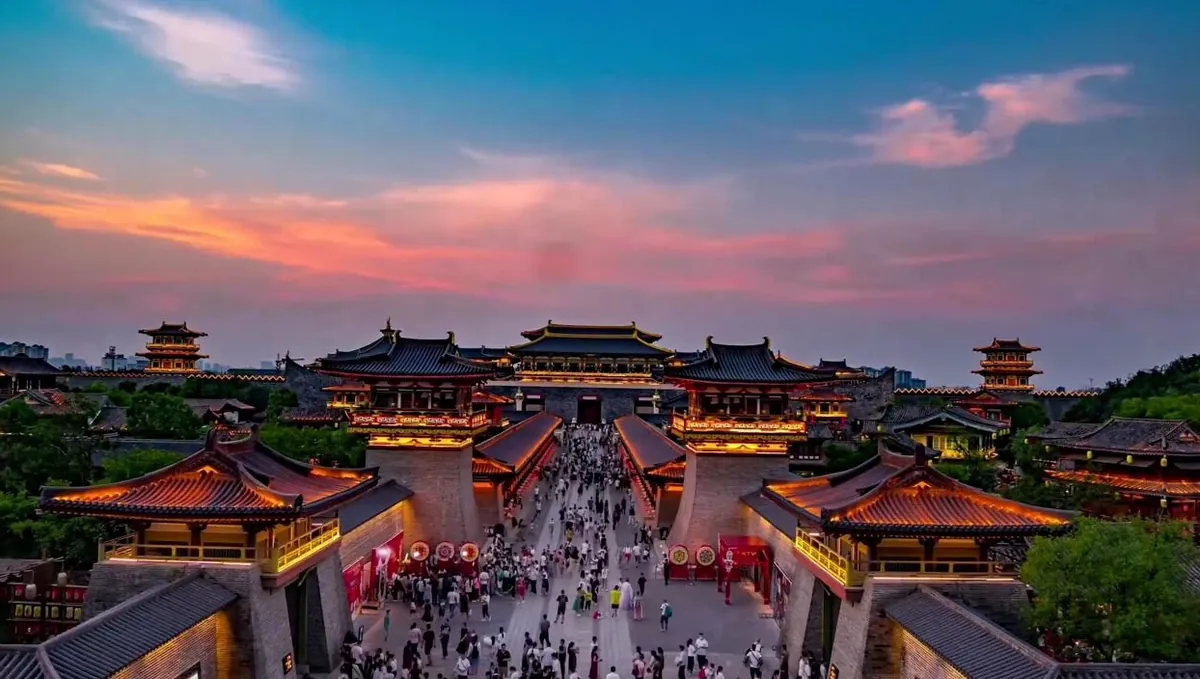
If Wudang’s night is a profound, meditative silence of the mind, then just a short drive away along the Han River, the ancient city of Xiangyang awakens into a contrasting, magnificent visual art sequence. At the Xiangyang Tang City Studio—one of the region’s largest scale Tang-dynasty reconstructed historical architectural complexes—night is when a grand light spectacle and the live-action show “Prosperous Tang Dynasty” officially begin. Thousands of floating lanterns and red silk lanterns simultaneously illuminate the streets of Zhuque, East Market, West Market, and the aquatic pavilion ecosystem along Jianti Lake. The sophisticated combination of modern 3D mapping projection technology blanketing the massive stone fortress walls and hydraulically controlled fountain systems creates an illusory space, erasing the lens of a millennium of historical transformations.
On the magnificent expanse of the water stage, the live-action show brings together hundreds of professional dancers in gorgeous costumes of the Kaiyuan and Tianbao eras, vividly recreating the brilliant life of the imperial capital with the graceful Rainbow Skirt Feather Dance, the resounding battle drums echoing across the borders, and majestic dragon boats parting the waters to welcome envoys from all nations. The seamless blend of cutting-edge lighting art and the heroic, unrestrained spirit of Tang poetry transports viewers into the legendary, sleepless city of Chang’an. The harmonious contrast between the tranquil, ethereal seclusion of Wudang Mountain and the prosperous, bustling panorama of Xiangyang portrays a multi-dimensional nocturnal space that reflects Hubei’s cultural landscape: both profoundly serene, magnificently lavish, and overflowing with vitality.
The culinary tapestry of Jingchu, also known as E cuisine, has been renowned across the realm of Huaxia since ancient times for its magical fusion of the fertile alluvial richness of the Yangtze River basin and the boundless, mystical aura of the Wudang ranges. Across the historic soil of Hubei, culinary traditions flow through two brilliant, parallel streams: on one side is the pure, ascetic Daoist wellness cuisine of the sacred mountains, and on the other is the vibrant, earthy street food imbued with the warmth of human life, creating a tasting journey that is both otherworldly and deeply soulful.
Reigning supreme at the pinnacle of mountain flavors is Daoist Vegetarian Banquet (Dao Jia Zhai Xi), considered the ultimate expression of pure Daoist wellness gastronomy. Adhering strictly to the philosophy of harmony with nature and the laws balancing Yin and Yang and the Five Elements, the Daoist adepts of Wudang strictly forbid the five pungent spices, extracting flavors solely from the purest gifts of the deep forests. Rare monkey head mushrooms, wild pine mushrooms, snow fungus, wild yams, and crisp, sweet bamboo shoots are masterfully combined with handmade tofu crafted from pure spring water. Under the skilled hands of the temple chefs, these humble ingredients are transformed into culinary masterpieces steeped in Daoist legend, such as "One Qi Transforms the Three Pure Ones," featuring a carefree, delicate flavor; the "Tai Chi Tofu Sprout," creating a mystical black-and-white Tai Chi duality that is smooth enough to melt instantly on the tongue; and the "Zhang Sanfeng Eight-Treasure Vegetarian Dish," rich and settling with the vital energy of heaven and earth, leaving diners feeling cleansed of all worldly trivialities.
Leaving behind the tranquil temples, the rustic flavors of Shiyan and the Danjiang valley invite travelers to experience humble yet irresistibly charming local specialties. Right at the foot of the mountain, the vast waters of the Danjiangkou Reservoir yield snow-white Qiaozui fish with delicate, naturally sweet flesh that simply needs to be steamed with a few strands of fresh ginger and scallions to conquer even the most discerning gourmands. On warm, sunny days strolling along steep slopes, a bowl of emerald fairy leaf jelly—made from hand-rubbed fairy leaves mixed with straw ash water—instantly dispels the summer heat with its mild bitterness, lingering sweet aftertaste, and deep, soul-refreshing coolness. When dusk brings a chilly mist over the ancient town, a steaming bowl of Sanhe Yunyang soup revives the spirit with a masterful combination of thinly sliced beef, fresh dumplings, and chewy sweet potato vermicelli in a bone broth infused with a warming, tangy-spicy chili vinegar. A mountain feast is only truly complete when enjoyed with a sip of Jianjia Tea, a tea made from tender buds harvested by Daoist priests on sheer cliffs and pan-fired by hand in iron woks, exuding an aroma imbued with the scent of morning dew and mountain hearthsmoke.
Flowing down to the fertile delta, the lower reaches of the Jingchu waterways welcome travelers with a bustling rhythm of life and the culture of "Guozao," the legendary breakfast tradition featuring hundreds of savory delicacies. The soul of Wuhan’s morning is encapsulated in a bowl of Hot Dry Noodles (Reganmian), where golden noodles are coated in a rich, nutty sesame paste (zhimajiang), garnished with crunchy pickled radishes and fragrant, mildly spicy chili oil. Right beside a giant, sizzling iron pan, Sanxian Doupi mesmerizes food lovers with a golden, crispy skin of mung bean and egg batter enveloping a chewy, fragrant sticky rice filling stuffed with savory fresh bamboo shoots, shiitake mushrooms, and diced meat. As night falls, a family gathering cannot be complete without an earthenware pot of Honghu Lotus Root and Pork Rib Soup, simmered slowly for hours until the starchy lotus root pieces release a gentle sweetness that blends seamlessly into a delicate, pinkish bone marrow broth. The Jingchu culinary journey concludes with the fiery, numb-spicy flavors of the famous Chu He Ya (Black Duck), a delicacy stewed for hours in dozens of traditional herbs that is both spicy-sweet and profoundly lingering, leaving anyone who tastes it endlessly captivated.
The journey to the sacred Wudang Mountain begins from major cities in Vietnam via direct flights to Wuhan Tianhe International Airport (WUH), or through an international high-speed rail journey departing from Nanning to Wuhan, taking about eleven hours. From Hankou High-Speed Railway Station in downtown Wuhan, the vital Hankou–Shiyan HSR line, operating at designed speeds of up to 350 km/h, whisks passengers across the fertile Jingchu plains, arriving at Wudangshan West Station or Shiyan East Station in just 1 hour 50 minutes to 2 hours 15 minutes. This modern transportation infrastructure completely eliminates the hardships of ancient mountain journeys, making a pilgrimage to the sacred mountains more convenient and leisurely than ever before.
Upon arriving at the scenic area’s gate, visitors will use an integrated admission ticket system costing approximately 264 RMB per person, which includes entry and tickets for the eco-friendly shuttle buses operating continuously along the winding mountain passes. To conquer the towering Tianzhu Peak without exhausting your physical strength on tens of thousands of steep stone steps across precipitous cliffs, taking the cable car from Qionglai Valley straight to Taihe Palace—with round-trip tickets ranging from 150 to 170 RMB—is the key transportation option, especially suitable for families traveling with elderly people or young children.
The natural rhythm of this sacred mountain range reaches its absolute peak during two distinct seasonal transition periods of the year. Spring, from April to May, ushers in the grand festival of the True Warrior Emperor Temple on the 3rd day of the 3rd lunar month, a time when ancient Taoist ceremonial music echoes through the cloud layers alongside the solemn incense-offering rituals of pilgrims gathering from all directions. Conversely, autumn from October to November blesses this ancient space with the magnificent golden hues of ancient ginkgo trees along the red walls of Zixiao Palace, casting reflections upon the rolling sea of clouds swirling around the sharp peaks, painting a mystical scenery akin to a fairyland.
Due to the sudden elevation gain, temperatures in the Golden Summit area are typically 6 to 10 degrees Celsius lower than at the foot of the mountain, accompanied by strong winds howling through the ravines. This requires pilgrims to equip themselves with windproof, thermal jackets and specialized outdoor shoes with high grip to avoid slipping on centuries-old moss. Alongside physical preparation, visitors must also remain vigilant against sophisticated commercial traps, typically the “free medical pulse-checking” trick used to pressure buyers into purchasing premature panax notoginseng or unknown lingzhi mushrooms under the guise of “Wudang Herbal Materials,” traps selling “feng shui jade to assist fellow provincials,” or invitations to donate “spiritual lamp oil” at private shrines outside the regulated management plan. In any questionable situation, travelers should proactively scan the QR codes posted at service points to connect directly with the Tourism Police force under the Hubei Province 5A Scenic Area Management Board for prompt legal protection.
To fully experience the cultural depth without worrying about issues arising along the way, choosing an itinerary standardized around the criterion of zero forced-shopping points is always the most perfect solution. Visitors can extend their excursion of magnificent landscapes with the Three Gorges – Yichang – Fenghuang Ancient Town – Qixingshan 5D4N tour to immerse themselves in the breathtaking and majestic natural scenery of the legendary Chu-Shu land.
