Quietly stretching across a gentle hillside overlooking the serene Punakha River valley, Chimi Lhakhang (Sino-Vietnamese nomenclature: 切米拉康) is far more than an ancient temple in the Punakha region of the Kingdom of Bhutan—it is a sacred sanctuary where orthodox Tantric Buddhism and centuries-old folk traditions merge into one. Within the broader spiritual tapestry of the Drukpa Kagyu lineage and Bhutanese religious life, this historic monastery holds an extraordinarily distinct place. The site was originally surveyed, chosen, and consecrated in 1499—the Earth Sheep year in the Tibetan calendar—by one of the most celebrated saints in Bhutanese history: the “Divine Madman” Drukpa Kunley (1455–1529). The temple’s founding is rooted in a legendary spiritual confrontation in which this eccentric master wielded supreme wisdom and yogic power to subdue malevolent demons terrorizing the valley at the time.
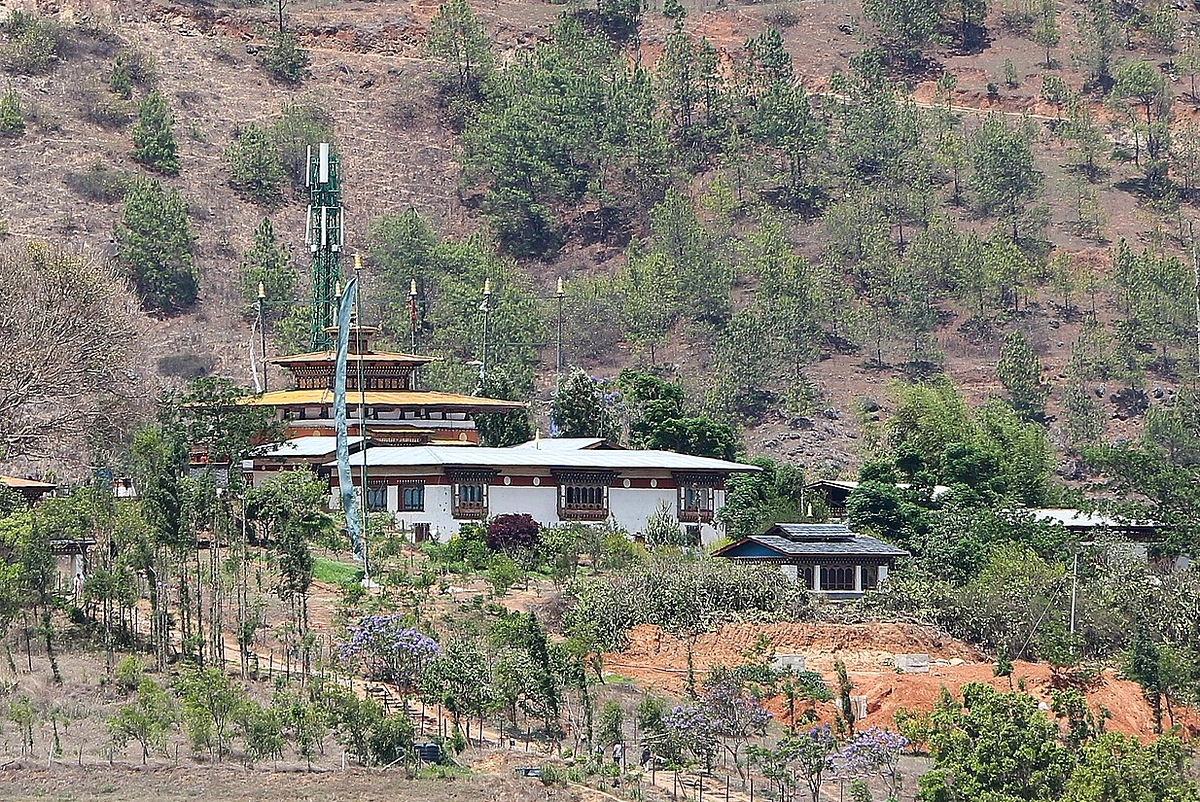
According to historical chronicles and oral traditions passed down across generations, the name “Chimi” in Dzongkha translates literally to “no dogs,” stemming directly from the legend of Drukpa Kunley vanquishing and subduing a fierce demon hound on this very hillock. Unlike Bhutan’s colossal dzongs—which served dual roles as administrative fortresses and monastic centers—Chimi Lhakhang fulfills a more intimate, purely spiritual mission. Notably, the temple structure venerated by pilgrims and visitors today is not the modest original sanctuary built by Drukpa Kunley, but the result of a major sixteenth-century expansion. In 1563, Drukpa Kunley’s cousin and spiritual heir—Bhutan’s fourteenth Je Khenpo (Chief Abbot), Ngawang Chhogyel—officially commissioned the construction of the main hall to honor the Divine Madman’s legacy while establishing a solemn sanctuary to house sacred relics and ritual treasures.
Through centuries of political and religious change in Bhutan’s history, Chimi Lhakhang has stood steadfast, bearing witness to the rise and fall of dynasties and shifting spiritual currents across the valley. The temple’s enduring vitality resides not only in its traditional rammed-earth walls gleaming white beneath the Himalayan sky, but also in a priceless archive of historical documents safeguarded within its inner sanctum. These include ancient manuscripts inscribed on sheepskin and traditional handmade paper of the Drukpa Kagyu lineage chronicling the lives and vows of lineage masters, stone-carved records honoring early patrons, boundary markers defining monastic landholdings, and royal decrees governing the hereditary succession and stewardship of the temple. Together, these relics attest to Chimi Lhakhang’s enduring role as a self-governing cultural, spiritual, and legal center in the heart of the storied Punakha valley.
Exploring the spiritual heritage of the Kingdom of Bhutan is incomplete without understanding the feng shui configuration and landscape planning behind Chimi Lhakhang Temple, a masterpiece of sacred architecture commanding the Punakha valley. Viewed through the lens of traditional East Asian geomancy and Vajrayana Buddhism, the temple’s placement was no random choice by ancient masters, but a carefully read geological and spiritual blueprint achieving seamless harmony between human design and nature. Rising prominently atop a rounded hillock in the western portion of the Punakha valley, the sanctuary forms a striking focal point amidst sweeping Himalayan forests and terraced fields.
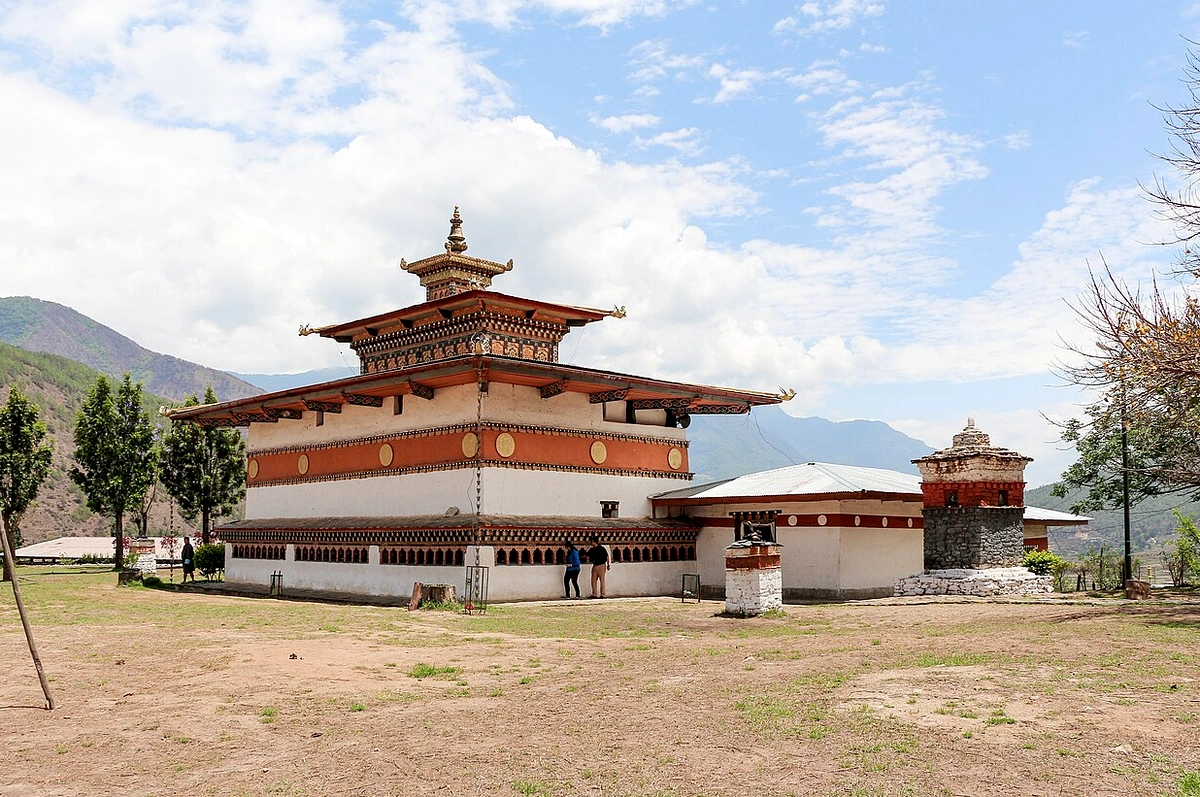
On a macro geomantic scale, Chimi Lhakhang occupies an exceptionally auspicious site conforming to classical principles of topography and geomancy (*kan-yu-xue*). Behind the temple rises a majestic spur of the Himalayan range, its towering peaks forming a protective backdrop symbolizing the steadfast Black Tortoise that shelters and gathers vital energy for the entire complex. Directly in front, looking out from the hilltop, visitors are greeted by sweeping views of the fertile alluvial basin shaped by the Pho Chhu and Mo Chhu rivers. This natural geography creates two highly prized formations in classical feng shui: the “jade belt embracing the waist” (*Ngọc đới hoàn yêu*) and “waters converging at heaven’s heart” (*Thủy tụ thiên tâm*), where earth and sky unite to generate abundance, enduring harmony, and spiritual sanctuary for all who make the pilgrimage.
At the micro-topographical level, the rounded mound on which the temple stands carries profound mystical significance in Bhutanese Buddhist tradition. According to sacred texts and Tantric lore passed down through generations, masters perceive this jewel-like hillock as resembling the reclining body of a woman—symbolizing the Great Earth Mother or the sacred form of powerful Dakinis. The temple itself is positioned atop the mound at the exact point corresponding to the heart or reproductive chakra of this cosmic form. This remarkable convergence of natural topography and sacred intent transforms Chimi Lhakhang into a potent spiritual nexus where the primal energies of life, fertility, and compassion are amplified, drawing tens of thousands of devotees from across Bhutan and around the world to pray for blessings, peace, and children.
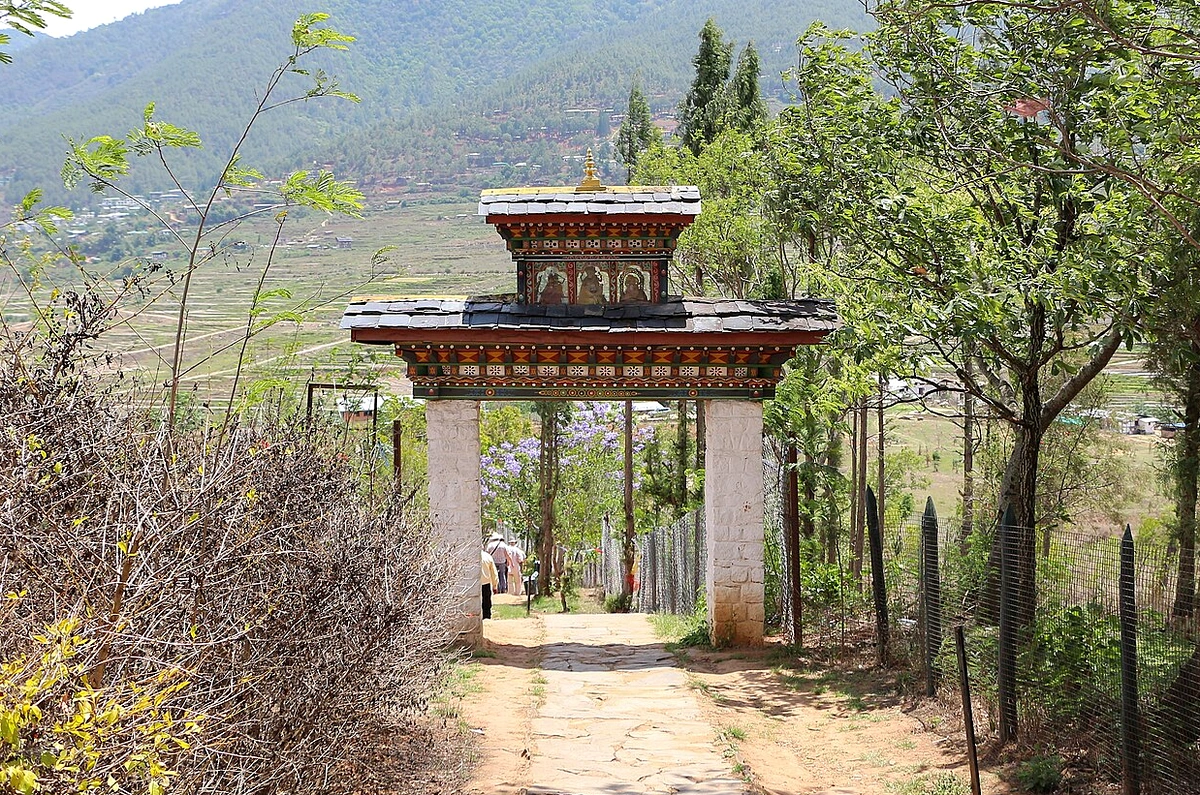
The landscape planning and building techniques at Chimi Lhakhang likewise reflect the deep reverence for nature inherent in traditional Bhutanese architecture. Rather than leveling or scarring the hillside, the complex follows the natural contours of the terrain, leaving the surrounding ecosystem intact. Ancient stone pathways wind gently through emerald terraced rice paddies, stands of mature pine, and clusters of traditional stone-and-timber farmhouses—creating a living ink-wash landscape where sacred space and everyday rural life flow together in quiet philosophical harmony.
Set amidst the lush Punakha valley, Chimi Lhakhang stands not only as one of the most revered sanctuaries in the Land of the Thunder Dragon, but also as a striking architectural work steeped in Tibetan Tantric Buddhism. Unlike Bhutan’s sprawling fortress-monasteries (*dzongs*) that stretch across mountain ridges, this temple occupies a compact, intimate, yet remarkably sturdy footprint. Its layout follows the classical three-story Tibetan monastic model with a square floor plan, evoking resilient defensive architecture in which spirit and matter unite seamlessly against the dramatic Himalayan backdrop.
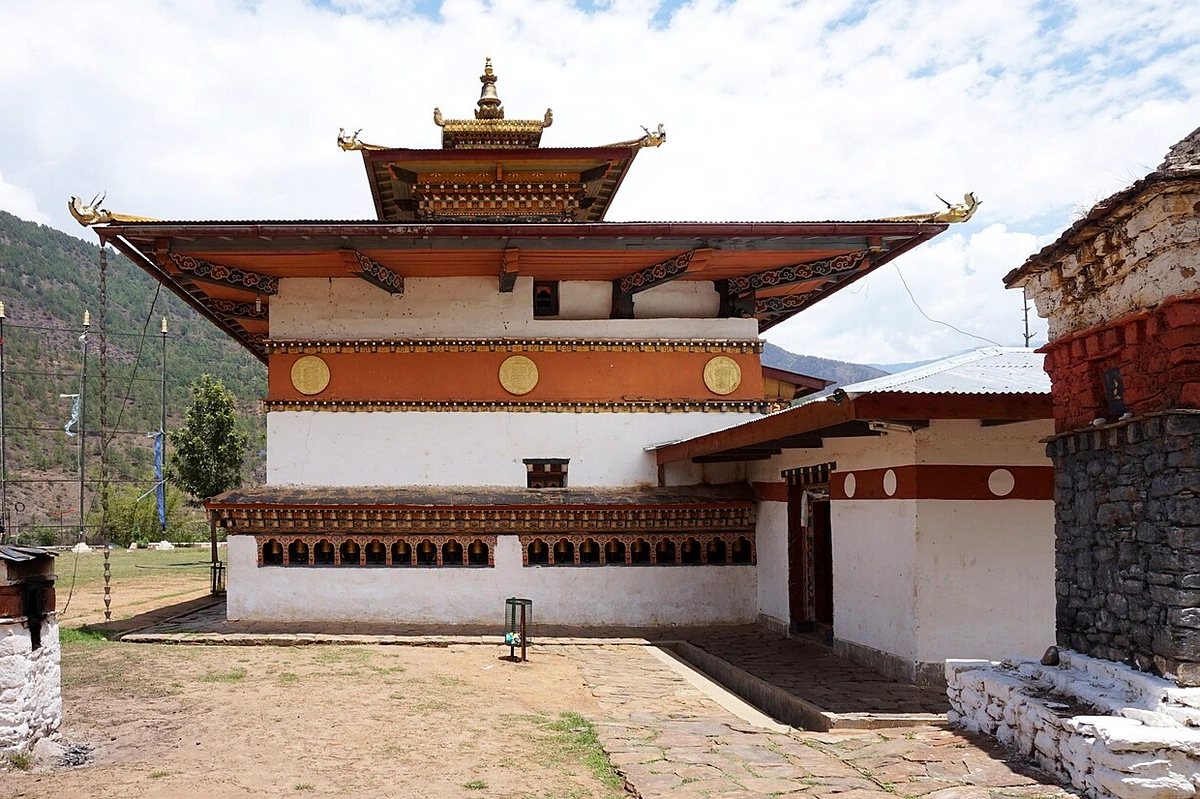
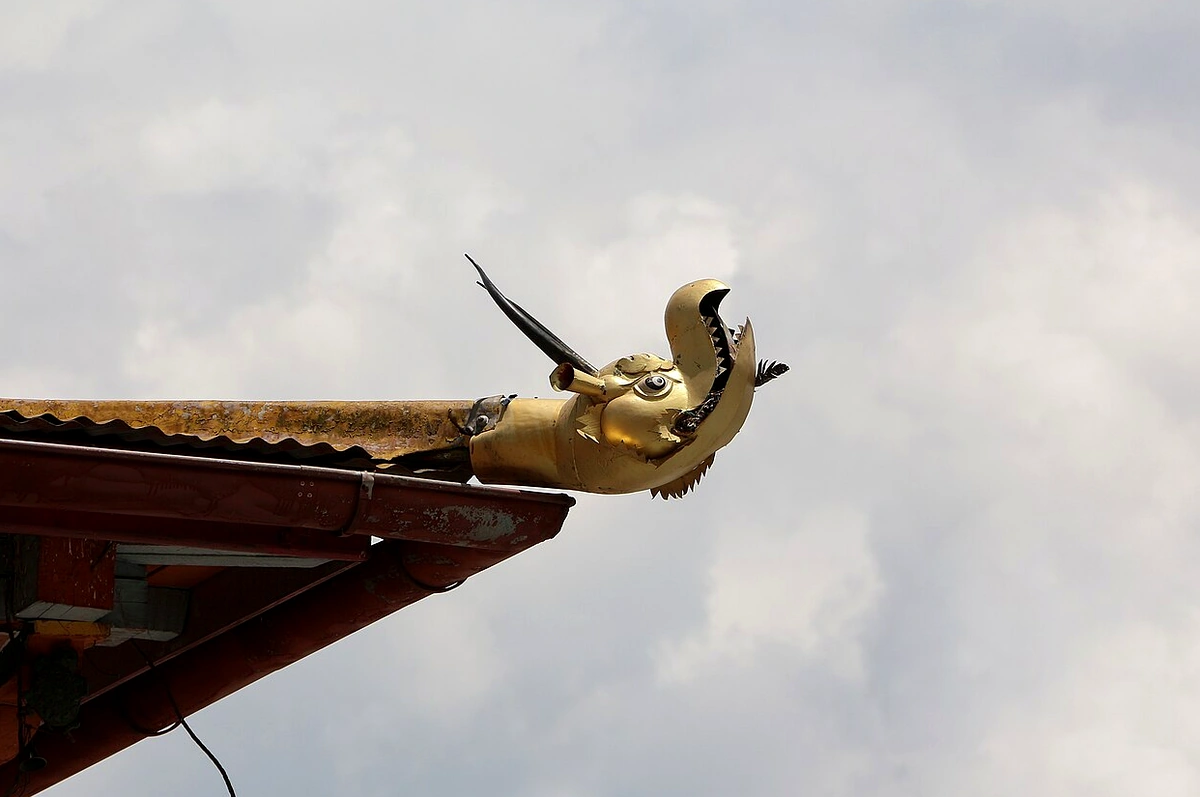
Looking closely at its spatial organization, the ground floor serves as a storehouse for grain and ritual implements alongside a solemn chapel dedicated to the Guardian Deities who protect the sanctuary. Ascending to the second floor, visitors enter the spiritual heart of the complex: the main prayer and assembly hall, where resonant chants for liberation mingle with the rhythmic clicking of monks’ prayer beads. The top third floor houses living and meditation quarters for resident monks, crowned by a gilded finial (*sertog*) gleaming in the highland sun to create an unmistakable landmark visible across the valley.
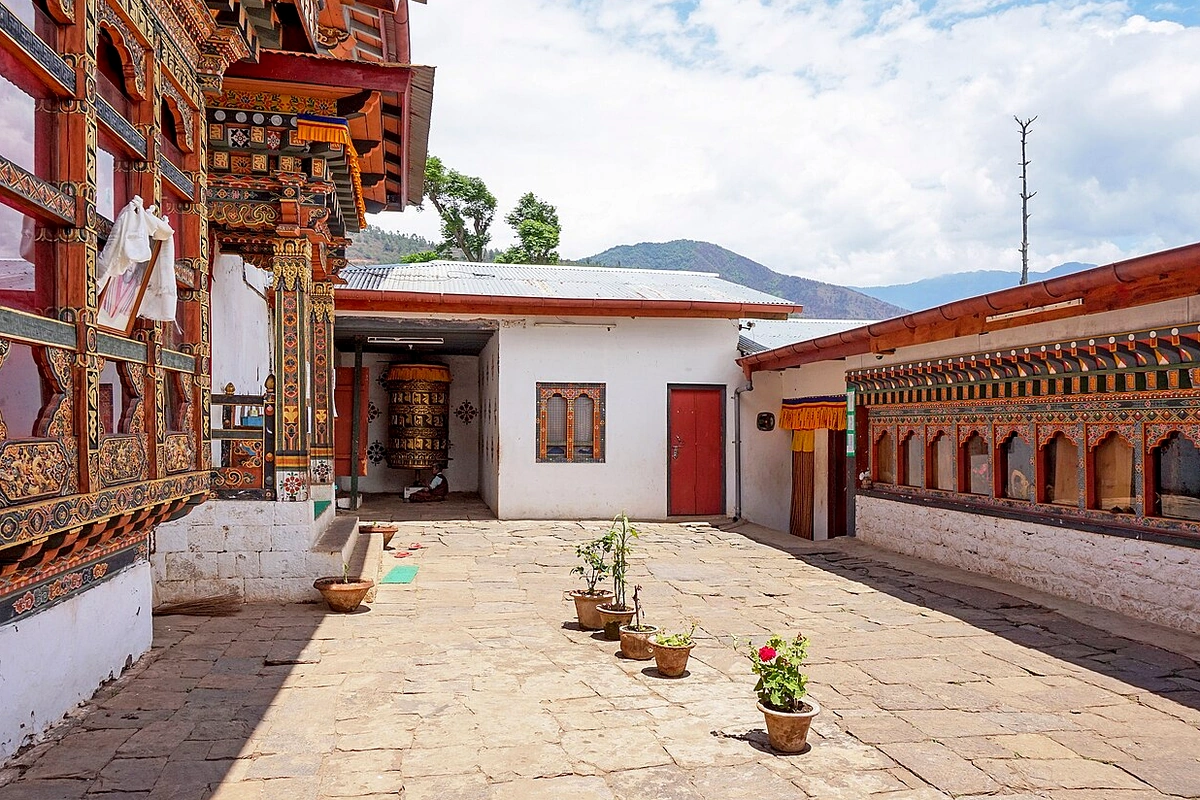
The structural engineering of Chimi Lhakhang showcases the extraordinary skill of historic Bhutanese and Tibetan master builders. Its outer walls are constructed using a traditional composite of rammed earth and slate stone measuring an impressive 80 to 100 centimeters thick. Built with a subtle inward batter—wider at the base and tapering toward the roof—the walls enhance seismic resilience in an active Himalayan fault zone while lending the building an anchored, dignified silhouette. Coated in crisp whitewash that stands out brilliantly against the mountain sky, the facade is encircled by a signature crimson ochre band (*kemar*) signifying sacred monastic authority and spiritual protection.
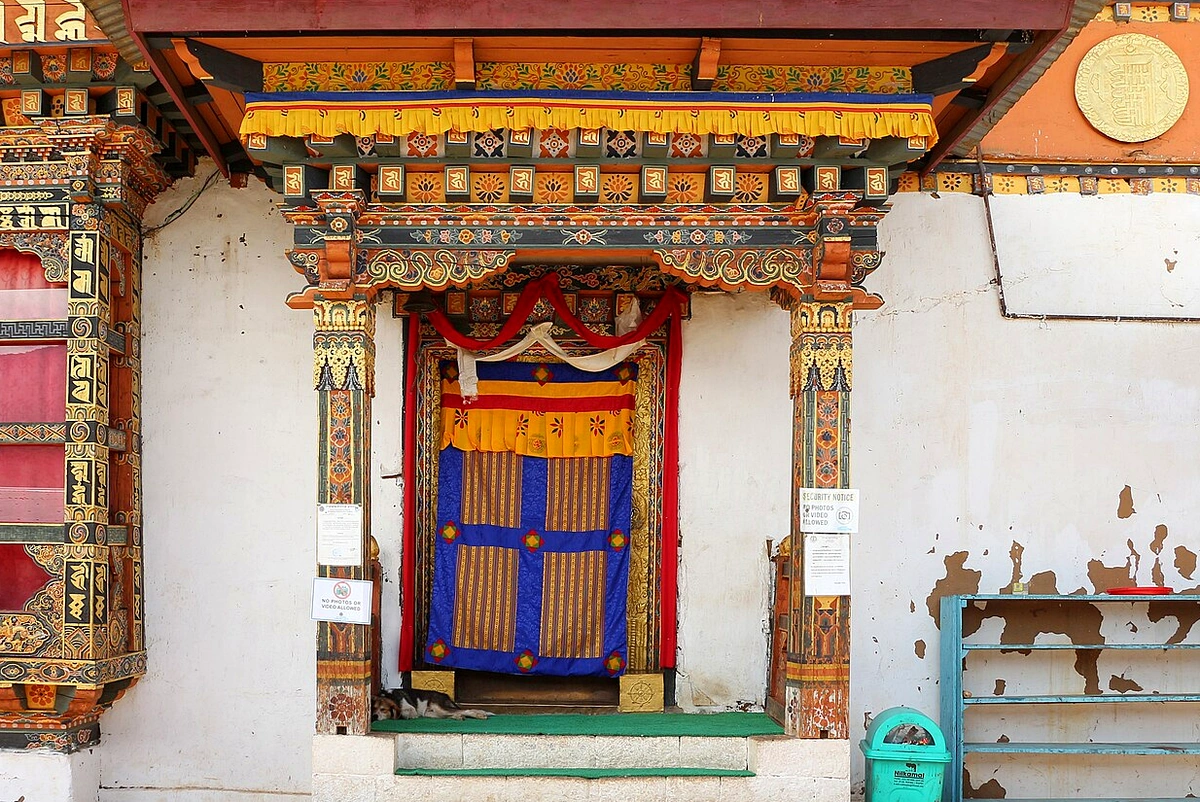
Stepping inside the upper levels and prayer halls, visitors are treated to traditional timber craftsmanship assembled entirely without iron nails. The entire structural framework of columns, beams, and rafters relies on intricate mortise-and-tenon joinery crafted from fragrant Himalayan pine and fir prized for centuries-long durability. Three-tiered projecting wooden windows in the classical *Rabsel* style feature finely carved lotus motifs and the *Ashtamangala* (Eight Auspicious Symbols), demonstrating painstaking devotion in every detail.
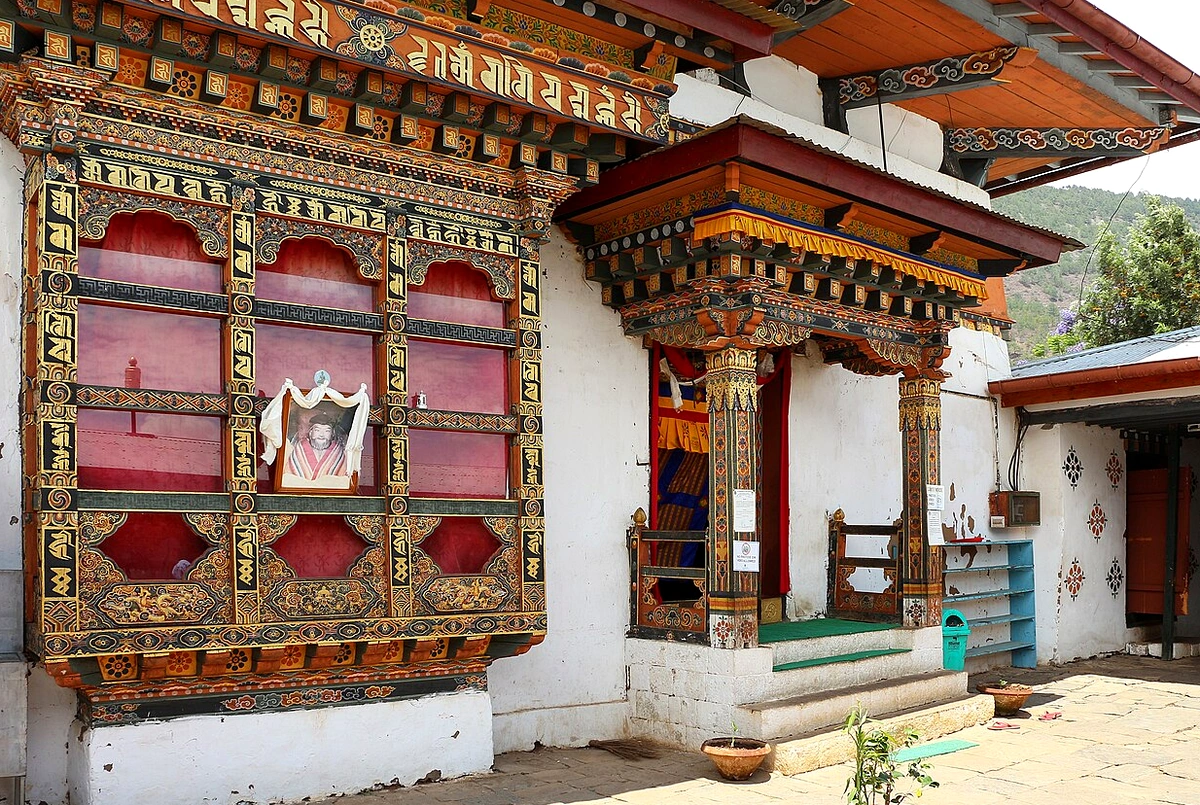
Inside, Chimi Lhakhang functions as a living gallery of Tantric sacred art blending ancient Tibetan traditions with artistic influences from the Ming and Qing eras. Interior timber beams and pillars are painted with rich natural mineral pigments depicting enlightened Buddha realms and lineage masters. In the innermost sanctum of the main hall rest the temple’s most treasured relics—foremost among them a wooden phallus ritual staff brought from Tibet by the Divine Madman Drukpa Kunley during his spiritual travels, alongside a bow-and-arrow set and an ivory-and-gold ritual implement. Together, these artifacts make Chimi Lhakhang an architectural and spiritual landmark famed for its distinctive phallic symbolism while remaining deeply rooted in the liberating wisdom of Bhutanese Buddhism.
When night falls over the Punakha valley, the atmosphere at Chimi Lhakhang Temple (切米拉康) shifts into a quiet, contemplative register that reflects Bhutan’s Gross National Happiness (GNH) philosophy and strict environmental stewardship. Far removed from the neon glare of modern cities or commercialized tourist hubs, the monastery precinct embraces an understated, minimalist approach to nocturnal lighting. Illumination adheres to a restrained low-key aesthetic, relying solely on warm golden wall sconces and subtle accent lights tucked discreetly behind stone walls.
Rather than overpowering the night, this gentle glow traces only the essential contours of the temple: whitewashed walls catching soft amber highlights beneath the vast mountain sky, the deep crimson band wrapping the upper facade, and the gilded roof pinnacle shimmering beneath the Himalayan Milky Way. The interplay of subtle architectural lighting and natural starlight creates a hushed, mystical ambiance that transports visitors far away from modern distractions into a timeless space of reflection.
As twilight fades behind the surrounding ridges, the village of Sopsokha at the foot of the hill begins to glow with the warm flicker of traditional butter lamps—a light of devotion kept alive for centuries. During major community festivals or special cultural evenings arranged for visiting pilgrimage groups, the village comes alive with authentic folk traditions. In the village courtyard, residents gather around crackling bonfires scented with mountain herbs, firelight dancing across hand-carved wooden masks depicting protective deities and mythical spirits.
Against the quiet night and the whisper of wind through old pines, traditional mask dances and ancient folk songs celebrate the life and teachings of Drukpa Kunley—revered affectionately by locals as the “Mad Saint.” Symbolic choreography reenacts his feats of subduing malevolent forces, bestowing blessings, and shattering rigid dogma through humor and boundless compassion. Far from a staged tourist show, this living intangible heritage dissolves the boundary between performer and observer, uniting light, nature, and devotion in an unforgettable nocturnal experience.
Stepping out from the temple’s serene courtyard lined with spinning prayer wheels, no visit to Chimi Lhakhang is complete without exploring the surrounding Punakha valley and historic Sopsokha village shaded by mature pines. Here, ancient fertility traditions and the distinctive terroir of the Himalayan foothills have shaped a bold, deeply rooted local culinary culture found nowhere else. In Sopsokha, food is more than daily nourishment—it is a living expression of how people in the Kingdom of the Thunder Dragon live in harmony with a rugged yet generous mountain environment.
Any culinary exploration here begins with Bhutan’s beloved national dish: *Ema Datshi*, famously known as chili cheese (辣椒起司). Rather than treating chili merely as a garnish or seasoning, cooks in the Punakha valley use fresh green horn chilies or sun-dried red chilies as the primary vegetable of the dish. Thickly sliced chilies are simmered with *datshi*—traditional homemade farmer’s cheese crafted from yak or cow milk—alongside generous amounts of onion, crushed garlic, and golden butter. Cooked slowly over a wood-fired stove until it reduces into a rich, velvety sauce, *Ema Datshi* delivers an exhilarating wave of heat and creamy depth that warms the body instantly in the crisp mountain air.
To balance the fiery kick and richness of *Ema Datshi*, Sopsokha locals invariably serve it alongside the pride of high-altitude terraced farming: Himalayan Red Rice. Cultivated on terraced slopes irrigated by pure glacial meltwater, this heirloom rice cooks to a delicate dusty-rose hue, offering a satisfyingly chewy texture and a subtle, nutty aroma reminiscent of roasted chestnuts. Completing a traditional meal is a warm cup of *Suja* (butter tea), brewed from compressed tea leaves boiled into a robust infusion and churned with fresh yak butter and a pinch of Himalayan salt—serving as both a comforting beverage and a natural restorative after mountain walks.
Stepping into cozy, family-run eateries lining the footpath to the temple—such as welcoming spots like Meds & Meals Cafe—visitors can often glimpse traditional wood-fired cooking in action, where fragrant woodsmoke mingles with the aroma of melted cheese and butter. Alongside local cuisine, Sopsokha’s folk artistry is vividly expressed in handcrafted souvenirs honoring the village’s fertility heritage, from intricately carved wooden talismans to playful phallus-shaped biscuits and painted motifs symbolizing protection and good fortune. Together, fiery local flavors, hearty red rice, and centuries-old traditions create a rich cultural tapestry that lingers in memory long after you leave.
Visiting Chimi Lhakhang Monastery (切米拉康), one of the most revered sanctuaries in the Land of the Thunder Dragon, is most rewarding when planned with a clear understanding of local schedules, routes, and temple etiquette. Knowing these practical details ahead of time ensures a smooth, respectful, and deeply meaningful encounter with Bhutan’s living Vajrayana Buddhist heritage.
Regarding opening hours, the temple welcomes visitors and pilgrims daily from 8:00 AM to 5:00 PM. Keep in mind that between 12:00 PM and 1:00 PM, resident monks break for lunch and midday practice, during which the main prayer hall temporarily closes. The finest times to visit are early morning, when mist still drifts across the terraced paddies, or late afternoon, when warm golden sunlight bathes the whitewashed walls and gilded roofs in a peaceful glow.
Getting to Chimi Lhakhang is a scenic highlight in itself. From Punakha Dzong, it is roughly a 20-minute drive along winding valley roads to the trailhead parking area near Sopsokha village. From there, vehicles go no further, and visitors set out on a pleasant 20- to 30-minute walk across emerald rice paddies and past traditional farmhouses adorned with colorful murals of protective phallic symbols. At an elevation of around 1,200 meters above sea level, the gentle stroll offers fresh mountain air and an unhurried glimpse into rural life in the Punakha valley.
In terms of fees and permits, there is no separate admission ticket required at the temple gate for regular travelers. However, all international visitors to Bhutan must comply with the kingdom’s tourism policy by paying the daily Sustainable Development Fee (SDF)—currently fixed at 100 USD per person per night—arranged through a licensed tour operator. Academic researchers wishing to conduct specialized archival or architectural surveys inside the monastery must obtain advance clearance from Bhutan’s Ministry of Home and Cultural Affairs.
Strict dress codes and etiquette rules apply upon entering Chimi Lhakhang’s sacred precinct. Bhutanese citizens wear traditional national dress—the *Gho* for men and *Kira* for women—with a ceremonial white scarf (*Kabney* or *Rachu*), while international visitors must dress conservatively in long-sleeved tops and full-length trousers or ankle-length skirts. Temple guardians strictly prohibit shorts, sleeveless or off-the-shoulder tops, flip-flops, hats, and sunglasses inside the sanctuary, and photography or filming inside the main prayer hall and relic shrines is strictly forbidden.
When encountering the phallic murals and carvings displayed throughout Sopsokha village and the temple grounds, international visitors are encouraged to set aside Western assumptions and appreciate them through the lens of Tibetan Tantric Buddhism. Far from vulgarity, these symbols represent spiritual vitality, fertility, good fortune, and the power to ward off negative forces—rooted directly in the teachings and legend of the Divine Madman, Drukpa Kunley. Because the Punakha valley enjoys a mild climate that can bring strong high-altitude sunshine, be sure to pack sunscreen, insect repellent, and an open, respectful curiosity. To plan a seamless journey into this serene Himalayan kingdom, explore our curated Bhutan tour itinerary with expert guidance from seasoned travel specialists.