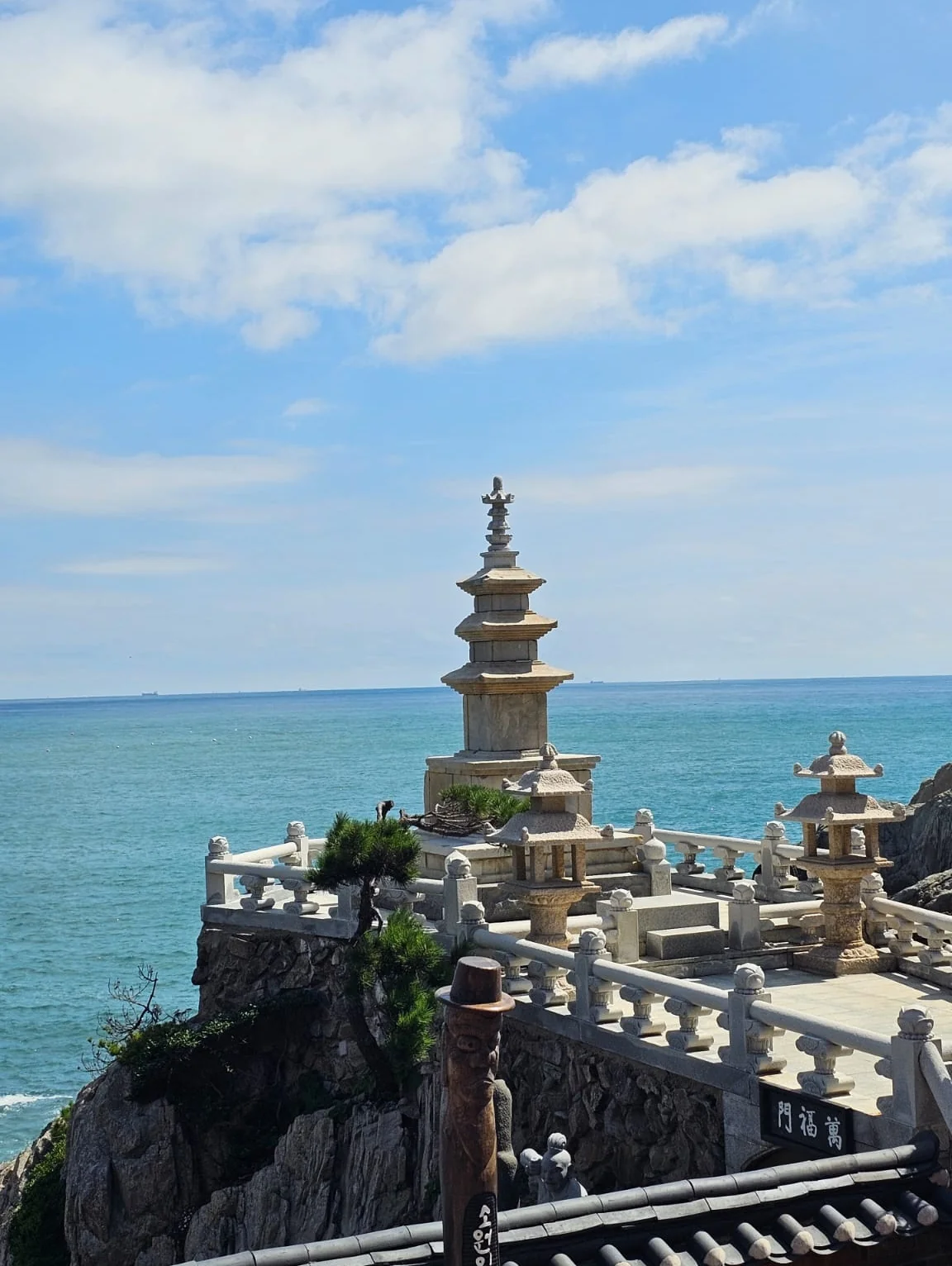
Stretching along the northeastern edge of the port metropolis of Busan on the Korean Peninsula, the coastal topography of Gijang-gun forms a distinct tectonic landscape featuring steep sedimentary cliffs plunging straight into the deep waters of the East Sea, where cold currents meet warm streams to foster a harmonious atmosphere year-round. Located at the terminal boundary of this stretch of land is the sacred space of Haedong Yonggungsa Temple, one of the very few Buddhist monasteries in Korea built directly on rock formations at the water’s edge rather than hidden deep within treacherous mountain valleys in accordance with traditional feng shui conventions. Geographically, the temple faces entirely southeast, welcoming the first rays of dawn as they illuminate curved eaves and moss-covered ancient stone statues. This setting places Haedong Yonggungsa in direct interaction with natural hydrological phenomena, where the roaring sound of waves crashing against rocky shores blends with the echoing peals of the great bronze bell, creating auditory and visual dimensions deeply symbolic of eternity and the transformative power of Mahayana Buddhist cosmology. Over centuries, tidal amplitudes and the fury of maritime storms have continually tested the foundation of this monastery while forging a spiritual culture of immense resilience, enduringly withstanding the harsh erosion of saltwater and sea breezes.
The historical origins of Haedong Yonggungsa Temple are closely tied to writings and legends recorded from the late Goryeo dynasty, an era when Buddhism served as the state religion and profoundly influenced every facet of political and social life on the peninsula. In 1376, during the reign of King U of Goryeo, the renowned Master Naong Hwa-sang—who had spent a long period studying under the Yuan dynasty and served as a spiritual advisor to the royal court—arrived in the Gijang region amidst a terrible severe drought and famine devastating the peasantry. According to ancient archives preserved here, in a dream, Master Naong Hwa-sang encountered the Dragon King of the East Sea, a water deity who promised to bring favorable weather and prosperity to the kingdom if a temple was established right on this coastal crag. Fulfilling this prophecy and the aspiration to save sentient beings, the master initiated the construction of the initial monastery under the name Goumusa, laying the foundation for a unique ocean-facing devotional center unprecedented in traditional Korean religious architecture. Through subsequent historical periods, the temple witnessed the rise and fall of feudal dynasties, ideological shifts from Buddhism to Confucianism under the Joseon dynasty, and the fierce turbulence of modern wars, particularly the Japanese invasions of the late 16th century.
The greatest crisis threatening the survival of Haedong Yonggungsa occurred during the Imjin War in 1592, when Toyotomi Hideyoshi’s militarist forces landed on the southern coast and systematically devastated religious and cultural institutions across the Korean Peninsula. Most of the temple’s original wooden structures were completely reduced to ashes in the fires of war, leaving a multi-century historical vacuum as the area fell into desolation under the anti-Buddhist policies enforced by the Joseon court to promote orthodox Neo-Confucianism. It was not until the early 1930s, when a monk named Un-dam from the Jogye Order of Korean Buddhism recognized the historical importance and special spiritual potency of this site, that restoration efforts officially commenced on a modest scale using available local raw materials. However, the turning point defining the modern appearance of Haedong Yonggungsa truly began in 1974 under the abbotship of Ho-am, who undertook a comprehensive renovation with the vision of preserving ancient values while incorporating contemporary Buddhist plastic arts. During this very period in 1974, the temple’s official name was changed to Haedong Yonggungsa, directly reflecting the legendary bond between the seaside monastery and the protective Dragon King and marking the powerful revival of a large-scale pilgrimage center attracting tens of thousands of Buddhists and travelers from all directions.
The spatial structure and architectural artistry of Haedong Yonggungsa clearly reflect Buddhist cosmological principles adapted to harsh coastal terrain. To reach the main hall, visitors and pilgrims must traverse a long stone pathway consisting of one hundred eighty steep steps chiseled deep into the hillside, with each step symbolizing a human mental affliction (klesha) that must be cleansed before entering the Buddha’s presence. Along this pathway stand highly symbolic structures such as a three-story stone pagoda guarded by four stone lion statues representing the majesty of the Dharma, a triple gate (samgwan) styled after late Joseon architecture, and ancient stone lanterns illuminated on moonlit ocean nights. In the main courtyard, the main hall (Daeungjeon) features traditional curved tiled roofs and wooden pillars intricately carved with swirling dragon and phoenix motifs, symbolizing the protective power of the Dragon King and the purity of the Buddha realm. To the left of the main hall lies the natural Buddhist grotto of Haesu Gwaneum Daebul, enshrining a colossal open-air Guanyin Bodhisattva (Avalokiteshvara) statue facing the open sea, regarded as the supreme symbol of compassion and salvation for fishermen braving the waves and all sentient beings suffering in the cycle of birth and death.
The national symbolic status of Haedong Yonggungsa Temple transcends ordinary religious boundaries to become one of the most representative cultural heritage sites of Busan and modern South Korea. While most other famous monasteries in the country are nestled within the solemn serenity of major mountain ranges such as Jirisan or Seoraksan, Haedong Yonggungsa asserts its uniqueness through the interplay between artificial architecture and the wild energy of the ocean, forging an indigenous Buddhist aesthetic school. The site has become a venue for major national prayer rituals, especially New Year’s dawn festivals drawing hundreds of thousands gathering from midnight to welcome the sunrise over the East Sea, offering prayers for peace, health, and personal prosperity. The combination of 14th-century historical value, the trials of feudal warfare, and centuries-spanning architectural preservation efforts has turned Haedong Yonggungsa into an invaluable asset within human heritage. Through this academic overview, the temple emerges not merely as a testament to the resilience of Korean Buddhist culture against time and nature, but as an eternal symbol of harmony among humanity, deities, and the boundless ocean.
The spiritual architectural complex of Haedong Yonggungsa, situated along the northeastern coastal cliffs of Busan, South Korea, represents a rare symbol of the fusion between Mahayana Buddhist philosophy and harsh maritime terrain. Unlike most traditional monasteries on the Korean Peninsula, which are typically planned deep within mountain valleys or high slopes of major mountain systems, Haedong Yonggungsa faces directly toward the East Sea, where Pacific waves crash day and night against Jurassic granite boulders. Geologically, the temple’s foundation is formed by hundreds-of-millions-of-years-old intrusive magmatic rock layers subjected to natural weathering, creating rugged yet sturdy rock ledges resilient against tidal forces. Choosing a geographical space with a steep gradient and direct exposure to saltwater required ancient planners to possess profound engineering knowledge of coastal structures, thereby shaping a uniquely structured spatial layout in the history of regional religious architecture across Northeast Asia.
Originally named Gunsam Temple, this monastery was founded in 1376 during the Goryeo dynasty by Master Naong Wandang, a famous preceptor who had studied under the Yuan dynasty. According to historical records preserved in local gazetteers, the decision to build a hermitage on this coastline stemmed from a spiritual revelation aimed at pacifying political instability and rampant droughts of the era by combining the energy of the ocean Dragon King with the compassionate teachings of Avalokiteshvara Bodhisattva. Through historical upheavals, particularly severe destruction during the Imjin War in the late 16th century, the original structure was completely burned down. It was not until 1935 that large-scale restoration was undertaken by the monk Ungam, who rehabilitated the entire shrine system and renamed it Haedong Yonggungsa in 1974 to clearly assert the spiritual connection between the temple and the Eastern sea deity.
Spatially, Haedong Yonggungsa breaks away from the traditional axial symmetry layout commonly found in plain or continental continental temples. Because the building plot is constrained by sheer cliffs and a rugged coastline, ancient architects applied vertical and horizontal terracing following topographical contour lines. Pilgrims approach the temple via a steep pathway paved with natural stone slabs, passing through a small pine grove before entering a triple gate styled after royal court architecture. Along this pathway, a flight of 180 stone steps leads downward, expertly arranged to regulate walking pace while offering continuously shifting perspectives from woodland scenery to the vast open expanse of the sea. This visual transition plays a crucial role in cultivating a tranquil mindset for worshippers before stepping into the sacred inner precinct.
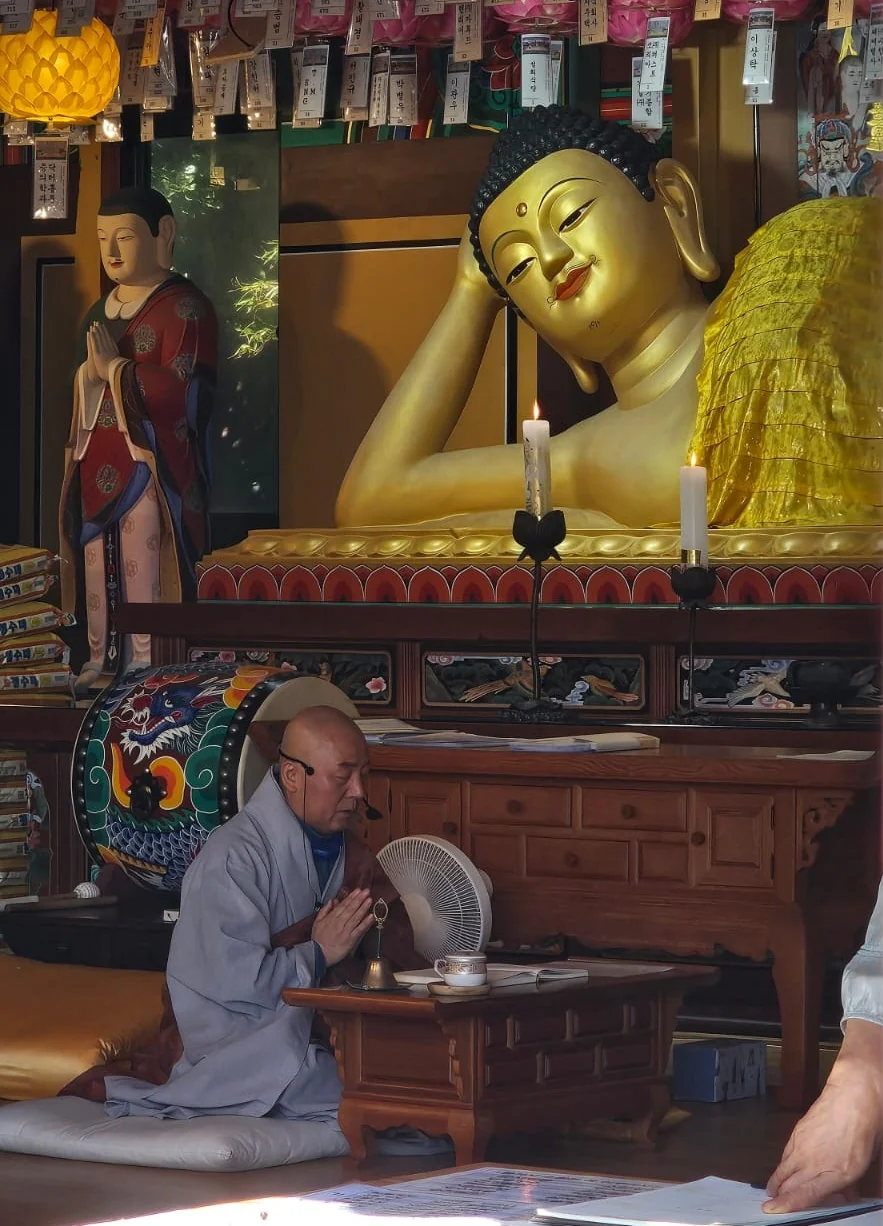
At the heart of the complex stands the Daeungjeon main hall, a traditional wooden structure featuring curved eaves characteristic of the Dancheong style, highlighted by hand-crafted decorative motifs using natural mineral pigments including emerald green, cinnabar red, and ivory white. To withstand year-round saltwater humidity and storms, the main hall’s load-bearing wooden components were selected from aged pine timber with high resin content, combined with traditional mortise-and-tenon joinery without iron nails, endowing the building with slight elastic flexibility against seismic tremors or heavy sea winds. The roof of Daeungjeon is tiled with high-temperature-fired dual tiles, providing insulation and waterproofing, while extended eaves protect underlying wooden walls from erosion by rainwater laden with salt spray.
Beyond the main hall, Haedong Yonggungsa’s master plan includes numerous satellite structures distributed across sea-jutting crags. Prominent among them is a ten-meter-tall white granite statue of Guanyin Bodhisattva positioned facing the open sea to protect fishermen and passing vessels. At the foot of the statue, stone stairs lead directly down into a small natural grotto housing an underground shrine named Haesu Gwaneum Dae-bul, creating an enclosed, mystical spatial experience. Ancient stone bridges spanning narrow channels where ocean tides rush in to form swirling eddies connect the temple’s various zones into a unified, seamless entity exuding solemnity against wild nature.
The primary building material combines local natural granite with meticulously treated red pine timber to optimize durability against marine environmental corrosion. Construction required extreme precision as workers and artisans transported heavy materials by water or via treacherous mountain paths before manually finishing stone-carved details. Retaining stone walls not only demarcate spatial boundaries but also function as robust breakwaters protecting core buildings from storm-driven tidal devastation. Minimal intervention in natural topography allows the structure to organically blend into its surroundings, turning geographical disadvantages into unique aesthetic highlights of the entire complex.
Regarding visitor capacity, Haedong Yonggungsa welcomes millions of tourists and Buddhists annually, ranking among the highest-traffic religious destinations on the southern coast of the Korean Peninsula. Pathways, public restrooms, and scenic viewpoints have been scientifically planned by local authorities and temple management to minimize ecological pressure on sensitive cliffs. Paved courtyards before the main hall and three-story pagoda are carefully calculated for capacity to smoothly host major rituals such as the Lotus Lantern Festival celebrating Buddha’s Birthday, when thousands of paper lanterns illuminate the nighttime sea.
In sum, Haedong Yonggungsa’s spatial creation and architectural planning demonstrate ancient adaptive design ingenuity facing harsh natural conditions. By respecting and maximizing Busan’s coastal geological morphology, generations of architects and monks have forged a timeless religious masterpiece where the boundaries between human structures and the oceanic natural world dissolve in eternal waves.
Spanning rugged cliffs in Gijang-gun, Busan, on the southeastern Korean Peninsula, Haedong Yonggungsa presents a unique case study in Buddhist architectural adaptation to harsh coastal topography. Established in the late 14th century during the Goryeo dynasty by the esteemed monk Naong Wandang, this structure departs from conventional Buddhist planning traditions that favor secluded deep valleys or high mountain slopes. Instead, the temple reaches out to the saltwater edge of the East Sea, where heavy waves beat day and night against granite foundations. This location selection carries strategic feng shui significance and reflects a profound humanistic philosophy placing humanity in direct dialogue with the grandeur, fury, and tranquility of oceanic nature. From an architectural history perspective, the complex endured multiple destructions through warfare and underwent large-scale restoration in the early 1970s, thus preserving and fully recreating classical Joseon-era artistic spirit through carved details, wooden bracket systems, and traditional Dancheong color-painting techniques.
The journey approaching this sacred space begins at the hilltop entrance gate, where travelers step onto a steep trail surrounded by pine forests and dozens of stone Arhat statues exhibiting vivid facial expressions. Along this path, a towering three-story stone pagoda marks the transitional boundary from the secular world to the serene realm of the Dharma. Moving deeper downward past the traditional triple gate with its curved tiled roof, a flight of 180 stone steps emerges, winding closely along sheer cliffs. The experience of descending these steps…
In the late 14th century during the Goryeo dynasty, when the great monk Naonghwasang erected a monastic hermitage on sheer cliffs bordering South Korea’s East Sea, he likely could not foresee the enduring evolution of this spiritual space across centuries. Haedong Yonggungsa Temple, located in Gijang-gun within the port city of Busan, does not follow Korean Buddhist traditions favoring secluded tranquility in deep mountain valleys. Conversely, it directly confronts the fury and boundlessness of the ocean, where indigenous daily rhythms blend uniquely with the salty breath of sea breezes, creating a singular coastal Buddhist cultural ecosystem. Studying the rhythms of life at this ancient monastery requires a multidimensional perspective, delving into daily temporal cycles where wood, stone, and wave architectures interact continuously with people, from monastics to tens of thousands of travelers seeking a contemplative haven.
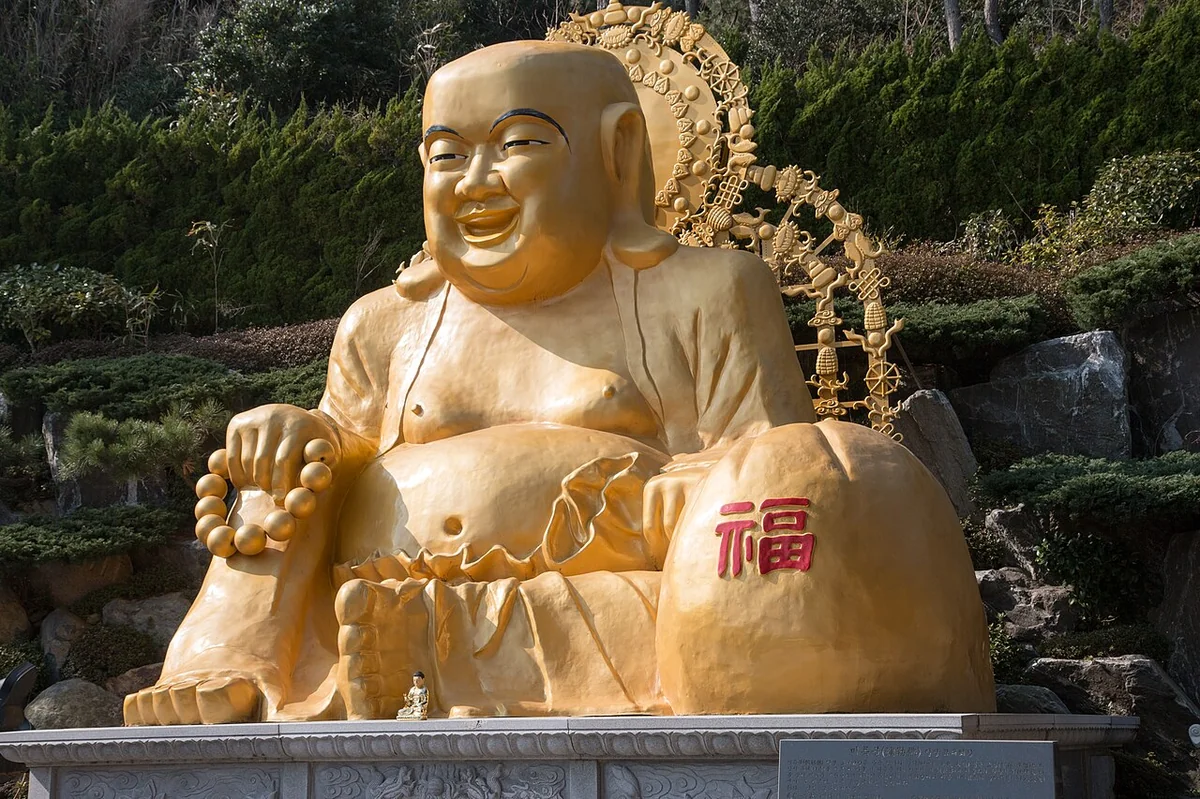
The dawn cycle at Haedong Yonggungsa begins while deep-sea darkness still blankets all things, as the great bronze bell rings out from the three-story bell pavilion, cutting through salt mist. The first sunrise over Busan’s eastern waters does not cast light upon a flat, tranquil earth, but strikes dark granite cliffs, dyeing the glazed tiles of the main hall and granite Guardian statues in brilliant orange-red. Nuns and monks commence morning chanting amidst the crashing of waves against the foundations—a deep yet intense sound serving as a natural rhythm accompanying Sanskrit sutras. The first footsteps of locals onto the winding stone bridge leading into the grounds typically occur at first light, bearing reverent prayers for family peace. Carrying incense and small paper lanterns, they cross the 180-step stone gate representing human afflictions, shedding all worries before the smiling Maitreya Buddha greeting the rising sun over the oceanic horizon.
As the sun climbs overhead, the space transforms into a vivid tableau of popular culture and bustling pilgrimage flows. Harsh golden sunlight streams down onto clear waters below, where schools of fish swim around submerged rocky crags, creating a landscape uniting natural life and compassionate faith. Along the pathway to the main hall, rhythmic wooden moktak beats blend with whispered prayers of pilgrims from around the world. Korean mothers in traditional hanbok or solemn modern attire guide their children to burn incense before the Guanyin Bodhisattva at Daeungjeon, praying for academic success and health. Meanwhile, folk artisans and local vendors display coastal-themed goods near the entrance, from herbal teas harvested on Gijang hillsides to hand-carved wooden amulets depicting sea dragons and waves. This bustle does not diminish the temple’s solemnity; rather, it exposes an authentic facet of how Mahayana Buddhism roots deeply into daily life in the Land of the Morning Calm, fusing the sacred and secular.
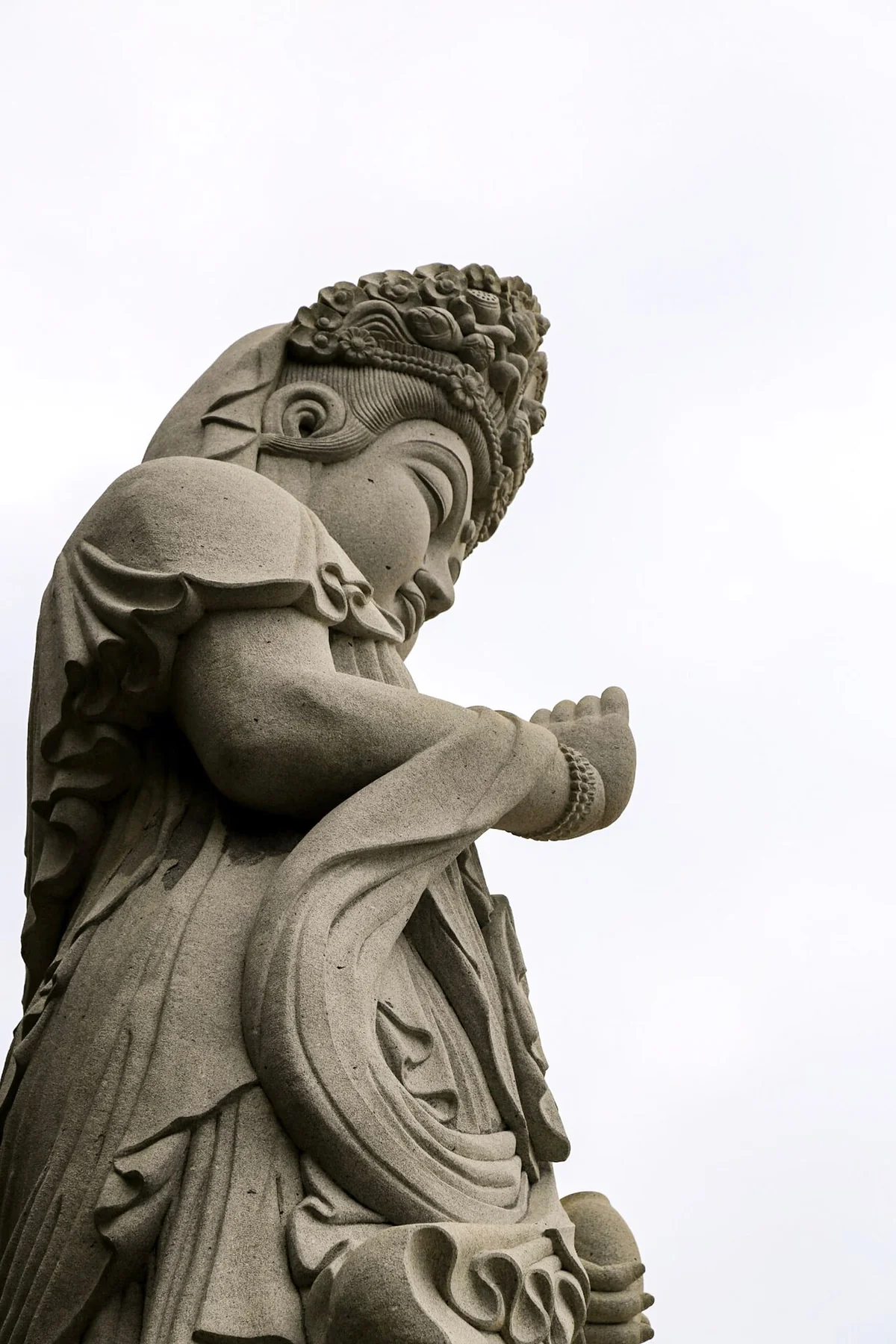
Late afternoon delivers a completely distinct visual and psychological experience as sunlight angles westward, casting late rays through aged pine branches and ancient stone statues along the coast. This is prime time to stand at the observatory platform before the Sea-God Guanyin statue, offering panoramic views encompassing the entire cliff-hanging temple architecture. Viewed thus, Haedong Yonggungsa’s architecture emerges as a grand sculpture shaped by humans yet granted a stage entirely by nature. Curved eaves facing the open sea and mossy stone lanterns along rock ridges stand firm against foaming tides, creating perfect proportions between artificial forms and the wild ocean. Photography enthusiasts and cultural researchers utilize this window to capture Busan skies shifting from deep ocean blue to pinkish-purple twilight, reflecting in mirror-like tidal pools.
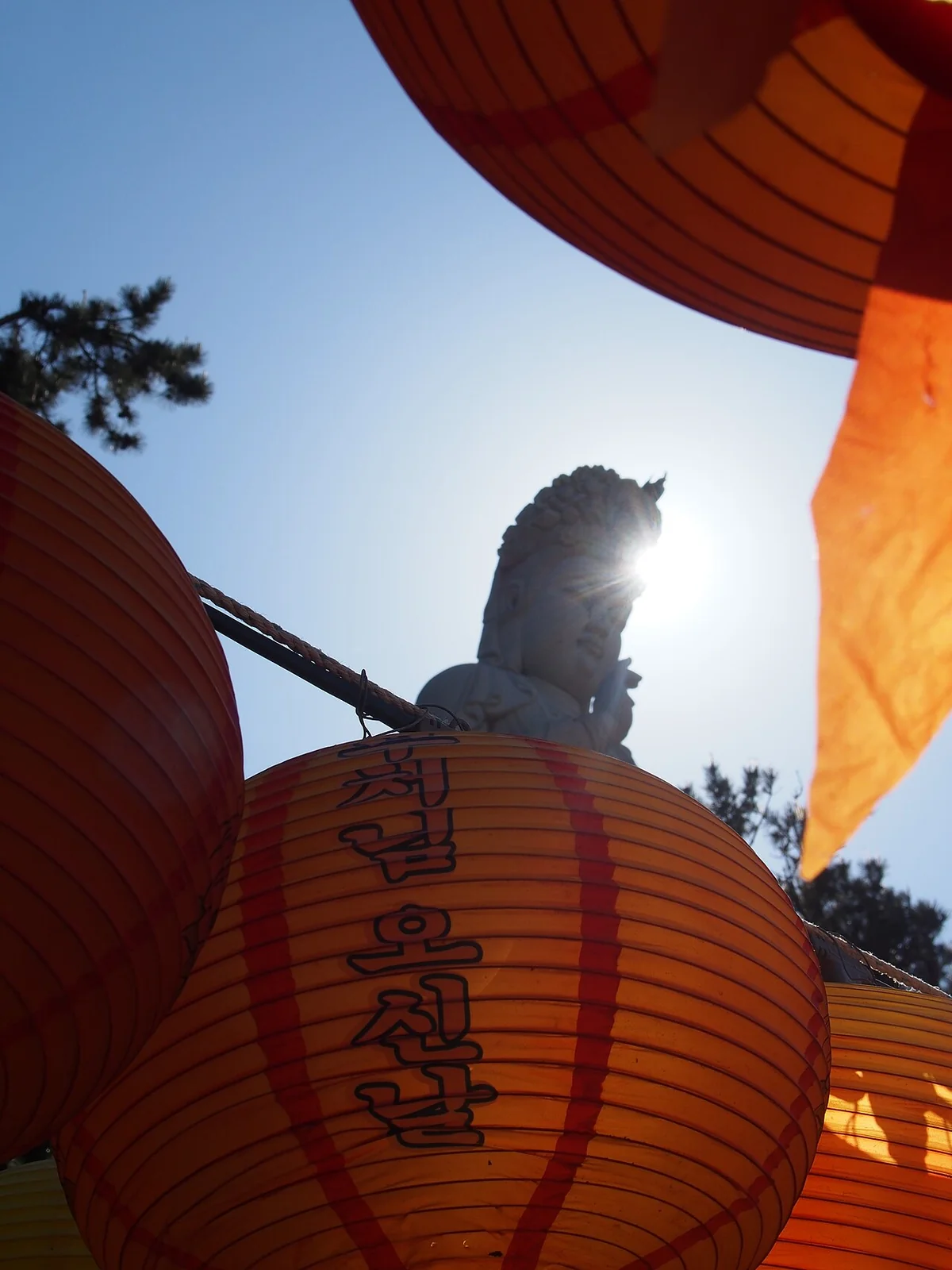
When night falls, Haedong Yonggungsa assumes a mystical, magnificent guise thanks to sophisticated artistic lighting along walkways and roof structures. Hundreds of paper lanterns and warm yellow electric lamps illuminate, casting shimmering light onto dark nocturnal ocean waters, generating an ethereal, mythic Eastern atmosphere. Activities quiet down, yielding to more forceful nighttime waves crashing against stone bases, echoing the deep resonance of the sea. During major annual festivals, such as Buddha’s Birthday or spring lantern celebrations, the nocturnal space bursts into brilliance with tens of thousands of candles and lotus lanterns set adrift or lit across stone steps. Locals and visitors join evening prayers under moonlight, holding small lanterns inscribed with wishes for prosperous, peaceful futures, forging strong bonds between past and present, individual and cosmos. Thus, Haedong Yonggungsa persists not merely as a silent historical monument, but continues pulsating with the life of time, ocean, and millions seeking inner peace.
The northeastern coastal region of Busan, where Haedong Yonggungsa proudly turns its majestic facade toward white-capped East Sea waves, has long nurtured a distinctive culinary culture closely intertwined with marine ecology and ancient Buddhist heritage. Unlike bustling commercial districts in downtown Busan, the culinary system surrounding this coastal temple carries the salty breath of the ocean combined with local Gyeongsang dietary philosophies of moderation and yin-yang harmony. The intersection of spiritual faith and traditional fishing lifestyles has forged a unique flavor map where diners can trace ingredient origins from steep reefs to bustling ports welcoming fishing boats at dawn.
Foremost among ingredients defining Haedong Yonggungsa’s culinary identity is fresh seafood harvested straight from offshore nutrient-rich cold currents. Blue crabs, sea urchins, abalones, and rare seaweeds clinging to underwater reefs surrounding the temple base supply abundant provisions for eateries along the pilgrimage road. Traditional processing techniques demand absolute respect for raw ingredients’ natural flavors, minimizing pungent spices to preserve natural ocean sweetness. Seaweed soup cooked with beef or sea urchin, known as miyeok-guk, appears across both humble and royal menus, reflecting philosophies of vitality and ancestral respect in religious rites.
Alongside seafood dishes, the area surrounding the ancient temple is renowned for Korean Buddhist temple cuisine, or Sachal Eumsik, passed down through generations in monastic kitchens. Unlike standard vegetarian food, temple food strictly adheres to the rule of avoiding the five pungent vegetables—onions, garlic, chives, shallots, and wild leeks—to keep monastics’ minds pure and focused on meditation. Primary ingredients rely on wild mushrooms, medicinal roots, hand-crafted tofu, and wild hill greens. Fermentation plays a core role in imparting flavor depth, with bean paste, chili paste, and kimchi aged in earthenware jars sun-dried for years in monastic backyards.
Venturing into nearby residential zones and coastal commercial streets serving pilgrims, culinary styles blend tradition with modern vibrancy. Traditional markets like Gijang Market nearby are famous for salted anchovies and Busan fish cakes crafted via heritage recipes refined over generations for ideal chewiness. Seafood scallion pancakes, or pajeon, crafted from scallions grown in mineral-rich sandy soil paired with fresh squid and shrimp, yield crispy outer layers while retaining tender, fragrant interiors. Locals enjoy these pancakes with makgeolli, a naturally fermented rice wine, offering warming sensory relief against chilly Pacific sea breezes.
Tea appreciation customs in hermitages and cultural spaces around Haedong Yonggungsa exhibit unique Eastern philosophical beauty. Korean tea ceremony, or darye, here transcends drinking water, rising to a mental cultivation ritual tied to breaking waves and evening temple bells. Premium green teas harvested from southern peninsula hillsides are hand-roasted in cast-iron pans under precise sensorial heat control. Brewing demands careful warming, steeping, and pouring into rustic ceramic cups, symbolizing harmony among humans, earth, and nature.
Uncovering local flavors requires understanding fishing communities and monastic rhythms. During major Buddhist festivals, food stalls feature diverse traditional cakes crafted from glutinous rice flour and honey, embossed with auspicious patterns invoking blessings and longevity. Veteran pastry makers preserve heavy granite mortar pounding techniques, securing elasticity absent in mass-produced goods. Clinging to traditional processing methods helps Busan’s coastal temple cuisine maintain enduring vitality against globalization and urbanization.
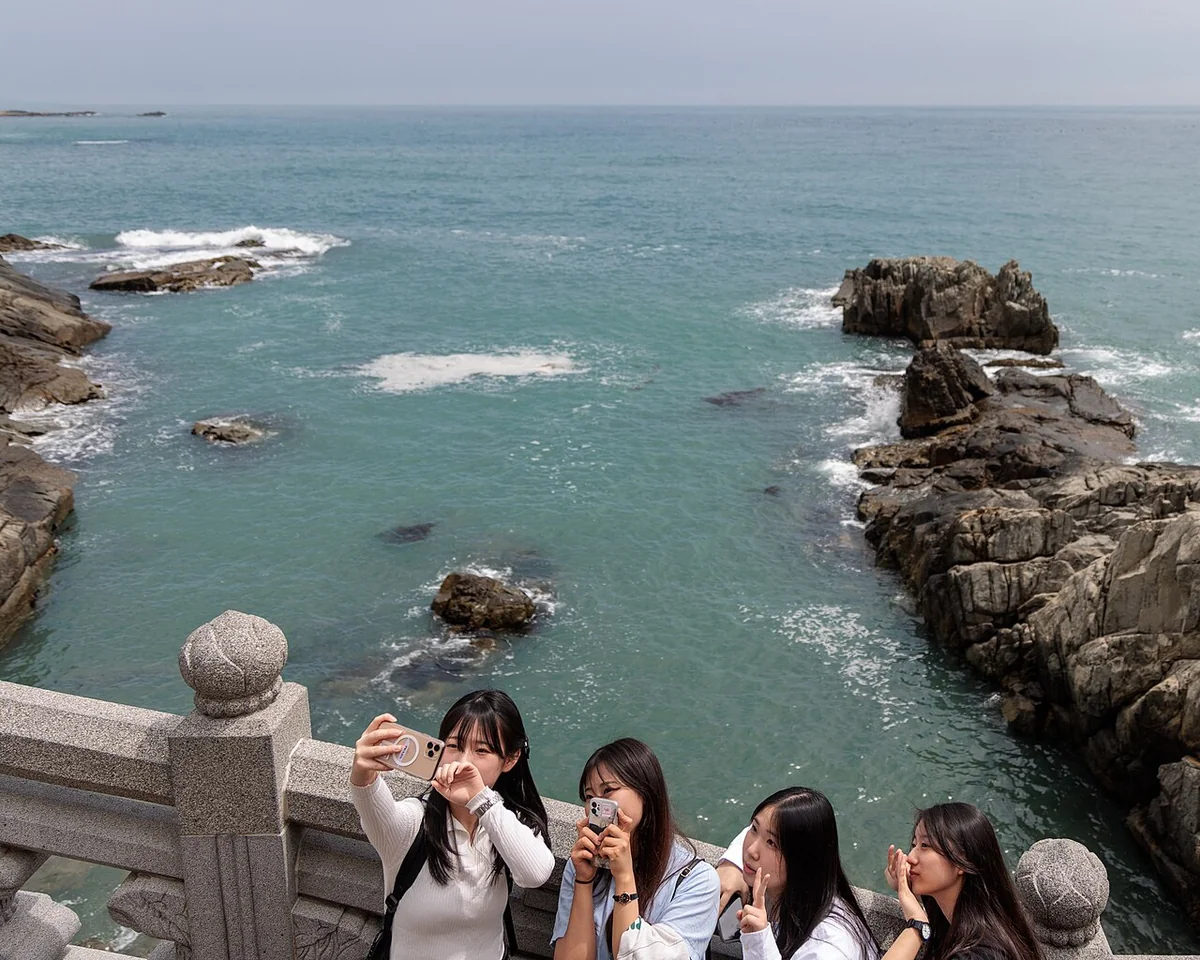
Overall, Haedong Yonggungsa’s gastronomy and tea customs vividly mirror marine island culture merged with Mahayana Buddhist thought. Every dish, from spicy raw seafood salad to pure vegan soup of pine mushrooms and tender tofu, narrates tales of pioneering frontier life. Comprehending and tasting these flavors transcends gustatory activities, becoming an anthropological journey into the soul and spiritual life of Koreans along a wind-and-wave-swept southern coast.
The Buddhist architectural complex of Haedong Yonggungsa, situated in Busan’s extreme northeast and reaching out to rugged coastal cliffs, demands thorough preparation in logistics and cultural awareness from distant travelers. Unlike most Korean monasteries nestled in mountain serenity, this site experiences a temperate yet volatile subtropical marine ecosystem. Understanding seasonal climatic rhythms is key to shaping viewing and devotional experiences. Spring from March to May offers crisp air with temperatures between 10°C and 20°C, when sea breezes carry a cool nip but skies remain cloudless blue, highlighting red and yellow wooden structures. Summer from June to August brings rising humidity and temperatures exceeding 30°C alongside East Asian monsoon rains. Nonetheless, this season compensates with lush coastal vegetation and rolling wave sounds against basalt cliffs. Autumn, spanning September to November, is rated by travel researchers as prime time due to dry weather, golden sunlight, and comfortable diurnal temperature ranges ideal for coastal hikes. Winter from December to February brings biting continental gales dropping temperatures below freezing, though fierce white-capped waves crashing against stone breakwaters generate epic scenes.
Busan’s public transit is modern and integrated, but accessing this coastal temple requires combining subways with buses or local taxis due to its suburban location. Popular departure points are Seomyeon station or Haeundae. Line 2 (Green Line) takes passengers eastward along the coast to Jangsan or Haeundae terminals. From there, transfer to bus number 181 or local bus 131 heading directly to the Yonggungsa National Fisheries Science Institute stop. Walking from this bus stop to the triple gate takes 15 to 20 minutes past local seafood markets and pine-scented hills. For groups or time-sensitive travelers, ride-hailing apps or taxis from Haeundae station are efficient. Taxi fares from famous Haeundae Beach to the temple gate range from 15,000 to 20,000 won, with travel times shortened to 15–20 minutes depending on peak traffic.
The most sacred, valuable moment to visit Haedong Yonggungsa is dawn. The temple enjoys a rare direct eastern sea view, allowing worshippers to witness a red sun rising slowly over vast ocean waters, casting golden rays through Arhat-carved stone pillars and illuminating the sea-facing Guanyin statue. Arriving before 7:00 AM avoids daytime crowds clogging the narrow stone bridge between 10:00 AM and 3:00 PM while providing absolute tranquility to absorb temple bell rings mixed with crashing waves. Regarding attire, because the complex sits on saltwater edges and steep stone paths, visitors must wear high-traction, slip-resistant walking shoes. Clothing should remain modest and respectful, while windbreakers or thermal wear are necessary in autumn and winter when freezing sea spray drops body temperatures rapidly.
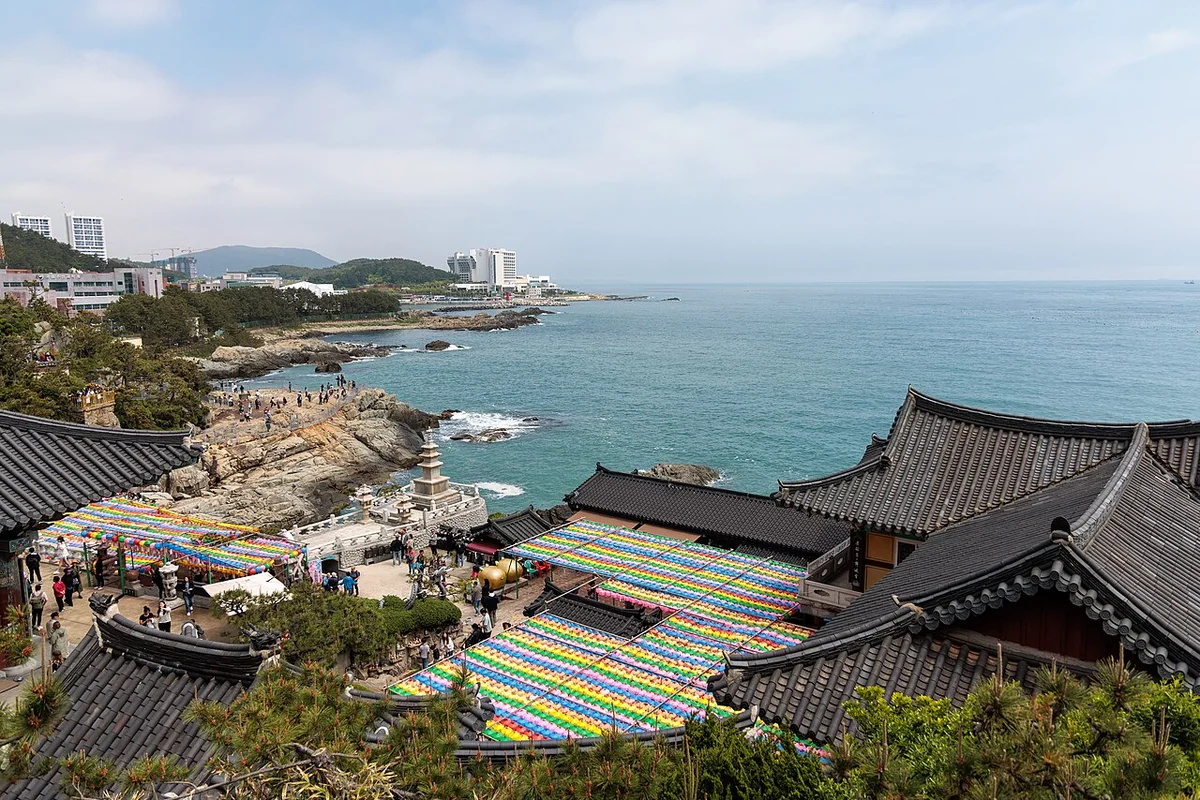
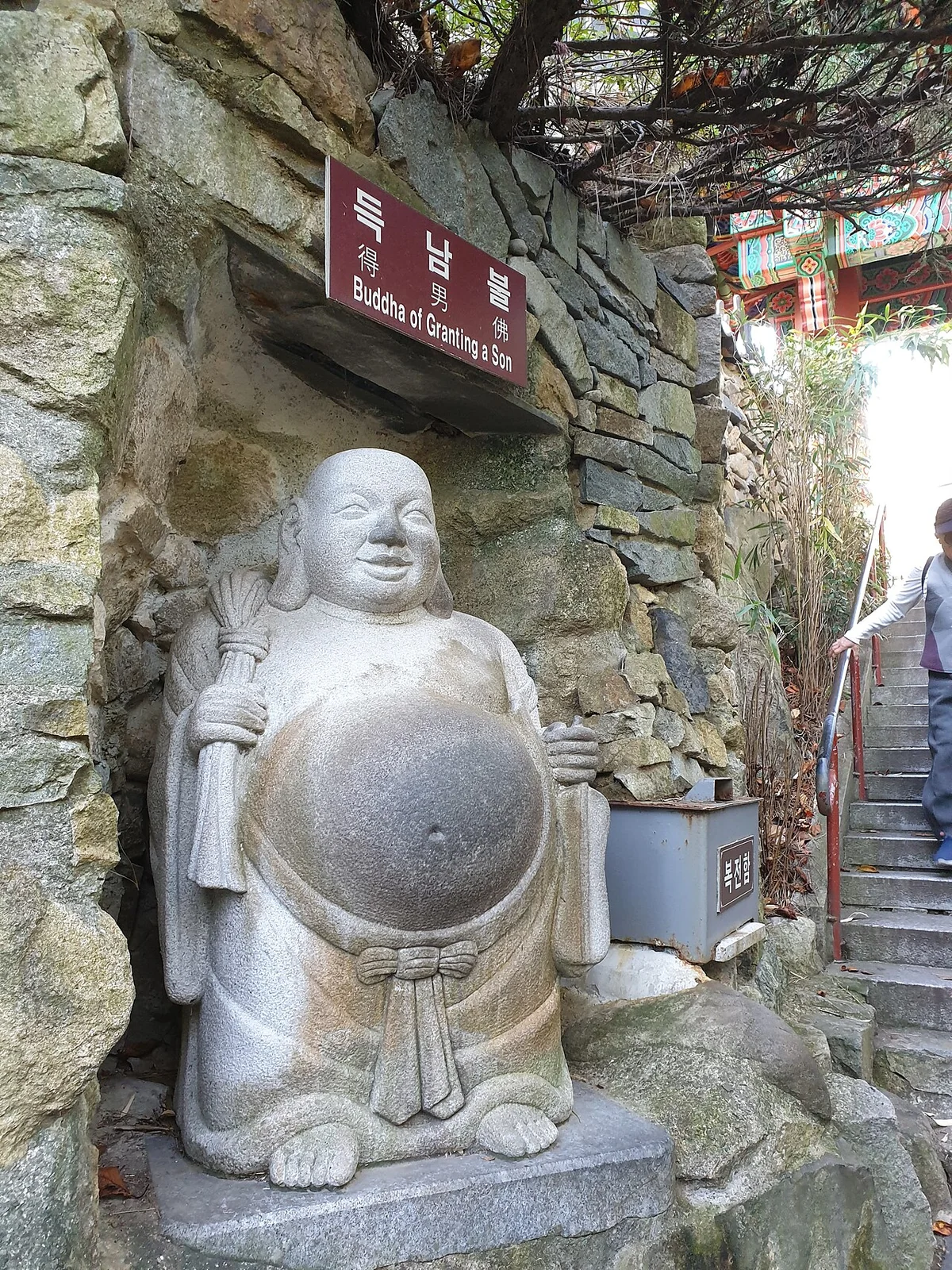
Cultural etiquette and compliance with religious rules at Haedong Yonggungsa require sensitivity toward Korean traditions. Entering via the stone triple gate, visitors should avoid stepping on the central threshold, traditionally reserved for deities and senior monks; instead, walk along side paths. Maintaining quiet voices and silencing electronic devices is mandatory in main halls like Daeungjeon or ancestral shrines. During offerings, incense burning, or coin tossing into wealth ponds near laughing Buddha statues and stone pagodas, approach with solemn reverence and refrain from touching ancient artifacts, bronze statues, or historic murals. Admission to Haedong Yonggungsa is entirely free for all visitors regardless of nationality or religion, reflecting an open propagation philosophy. However, visitors should carry small cash bills or coins for incense, prayer slips, or donations at shrine boxes. Careful preparation of transit, schedules, clothing, and cultural awareness transforms exploration of Busan’s wave-lashed ancient temple into a profound intellectual and spiritual journey preserving East Asian Buddhist heritage.
To fully experience this journey alongside local guides, you can explore Busan – Gyeongju – Seoul – Nami 6D5N Tour Package with pre-arranged itineraries.