Cheomseongdae Observatory, located in the Gyeongju historic district of Gyeongsangbuk-do province, South Korea, holds the position of the oldest surviving ancient scientific architectural structure in East Asia and is one of the oldest astronomical observatories in the world. Situated on a low-lying alluvial terrain within the Hyeongsan River basin, the structure possesses geographical coordinates of approximately 35 degrees 50 minutes North latitude and 129 degrees 12 minutes East longitude, featuring a flat, open topography with sweeping panoramic views toward all four horizons. Enrounding this area is a system of low hills belonging to the Taebaek mountain range, forming a natural geographical barrier against wind and storms while providing a clear night sky with stable atmospheric conditions—an element of utmost importance for ancient astrologers when conducting observations of both periodic and anomalous astronomical phenomena.
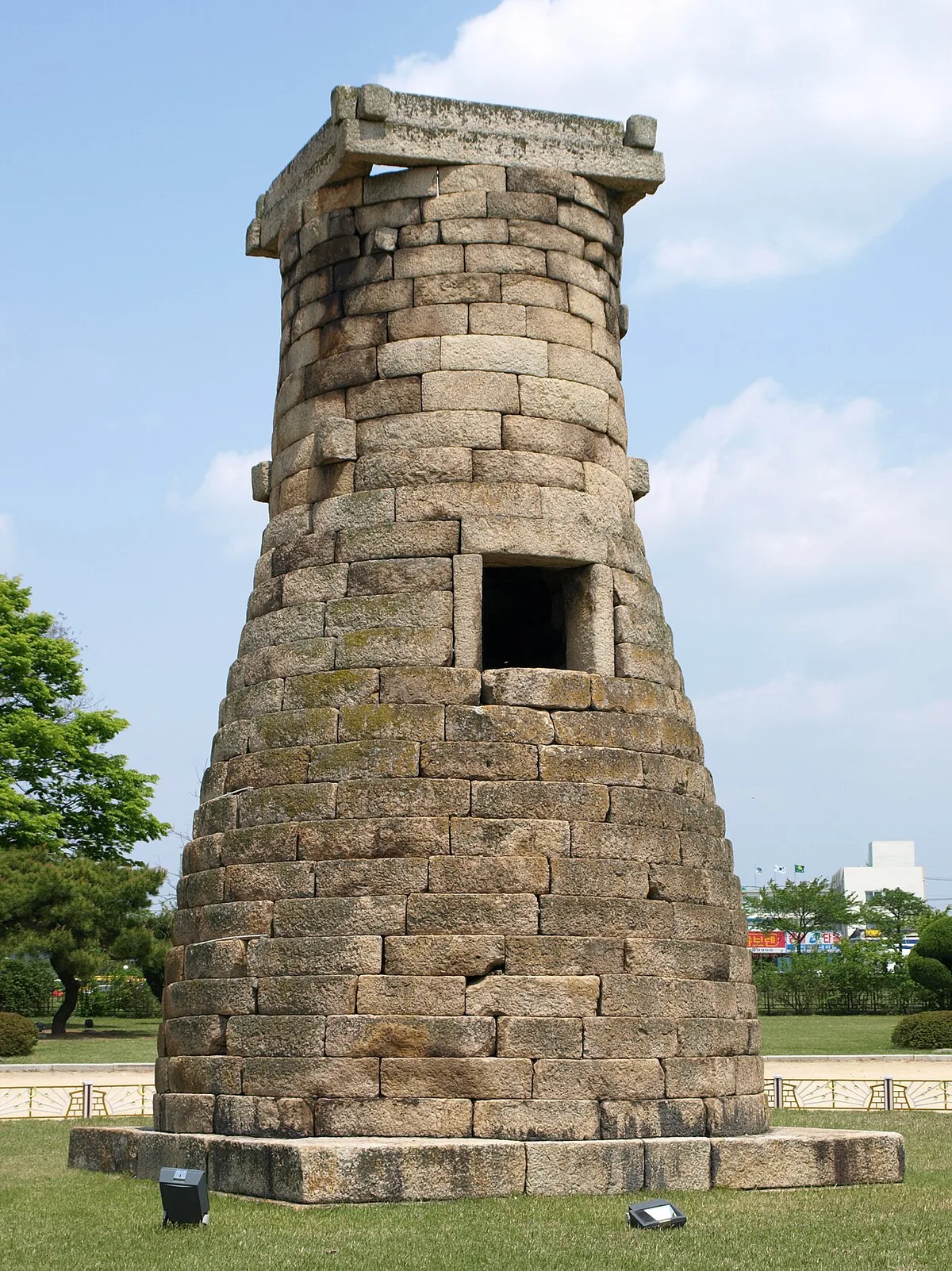
Regarding dimensions and physical structure, Cheomseongdae reaches an overall height of approximately nine meters and one hundred seventy millimeters, and was commenced and completed during the reign of Queen Seondeok, the twenty-seventh monarch of the Silla kingdom, between 632 and 647 AD. The foundation of the structure is shaped by two layers of stone blocks stacked squarely along the main directions of the compass, with corners pointing precisely toward the South, North, East, and West, demonstrating the ancients’ profound understanding of spatial geometry and astronomical orientation. The tower body features a cylindrical shape tapering gradually toward the top, constructed from three hundred sixty-two meticulously carved granite blocks arranged in twenty-seven concentric circular tiers, directly reflecting the number of days in a standardized lunar year according to traditional agricultural calendar knowledge systems.
The architecture of Cheomseongdae contains multiple layers of symbolic meaning tied to Eastern philosophy and Buddhist ideology combined with Shamanic mindset of the ancient Silla period. The square window opening located at the nineteenth tier divides the tower body into two distinct sections, symbolizing the harmony between yin and yang, between the round heaven and square earth according to traditional cosmological concepts. Twelve stone tiers from the ground up to the window correspond to the twelve months of a year, while the total number of stone tiers from base to summit, combined with the foundation tiers and the upper summit structure, are frequently referenced by architectural history researchers regarding celestial movement cycles and agricultural time-calculation systems. The volume of stone materials used along with clay-mortar filling techniques combined with mortise-and-tenon locking joints among the stone slabs has enabled the structure to withstand major earthquakes, storms, and geological fluctuations of the Korean Peninsula resiliently over centuries.
Having endured more than fourteen centuries of existence, Cheomseongdae has witnessed numerous historical vicissitudes of the Korean Peninsula, from the peak prosperity of Unified Silla, the Later Three Kingdoms fragmented era, the Goryeo dynasty, up to the Joseon period and the violent upheavals of modern warfare. Although the upper summit structure of the tower underwent several minor restoration periods across successive feudal dynasties to remedy weathering wear, the primitive shape of the structure has been preserved astonishingly almost intact. Ancient chronicles such as Samguk Sagi and Samguk Yusa recorded multiple astronomical observations performed from this observatory, including records of lunar eclipses, solar eclipses, the appearance of comets, and atmospheric anomalies, thereby providing invaluable historical material for modern scientists researching climate change and celestial orbits over the past millennium.
The national symbolic status of Cheomseongdae was established early on by the South Korean government through ranking this structure as National Treasure No. 31 in 1962, placing it under the strict protection of national cultural heritage laws. The structure not only serves as an archaeological document proving the advanced science and technology level of Silla civilization but also stands as a typical model for the harmonious combination of stone sculpture art and ancient applied mathematics. The enduring presence of the tower amidst Gyeongju’s archaeological space recalls the golden age when Silla rose to become the maritime trade and cultural center of East Asia, connecting knowledge from Tang China, Japan, and merchants along the maritime Silk Road.
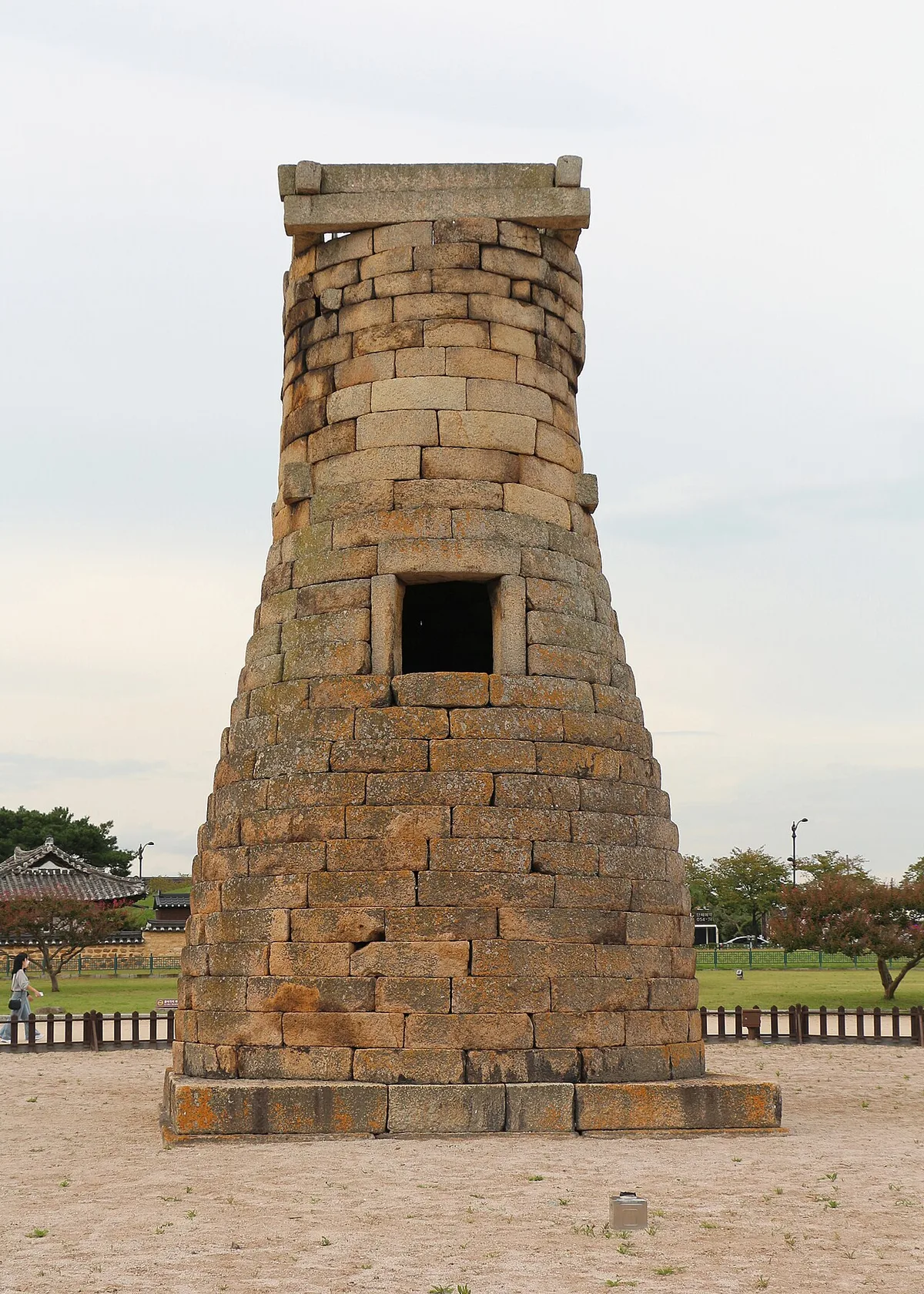
The cultural influence of Cheomseongdae Observatory spreads widely throughout contemporary spiritual life, education, and figurative arts of the Korean people, becoming a familiar symbolic image in history textbooks, scientific research publications, and popular cultural tourism icons. Each blooming season of yellow rapeseed flowers across fields surrounding the heritage site, the structure attracts researchers, scholars, and the public to contemplate the connection between humans and the universe, between the flow of human history and the eternity of stars in Gyeongju’s night sky. Preserving and studying Cheomseongdae today does not merely stop at maintaining an ancient physical structure but is also a process of decoding the legacies of scientific thinking left behind by predecessors for future generations.
Cheomseongdae Observatory, located in the Ancient Capital of Gyeongju in the Republic of South Korea, represents one of the oldest surviving ancient scientific architectural structures on Earth, erected around the mid-7th century during the Silla dynasty, specifically during the reigning period of Queen Seondeok from 632 to 647. The formation of this structure reflects a crucial turning point in East Asian civilization history, where astronomical knowledge, royal astrology, and Eastern philosophical thought merged into a symbol of state power and divine protection over national crops. Gyeongju at that time, as the capital named Seorabeol of the unified Silla kingdom, was one of the busiest trading centers along the maritime Silk Road, absorbing cultural essences from Tang China, the Indian subcontinent, and the Central Asian world, thereby creating premises for bold experiments in construction engineering and royal urban spatial planning. The structure is not merely an observatory for stars serving agricultural work but also a stone manifesto on the cosmological worldview of the Silla people, where architectural forms contain highly symbolic calendar numbers, directly reflecting the movement cycles of the sun, moon, and key constellations within traditional wet-rice agricultural ecosystems.
Regarding overall spatial planning, Cheomseongdae is positioned on a flat land area within the Gyeongju basin, not far from the royal tomb complex and Wolseong palace, forming a sacred spatial axis connecting earthly power with eternal celestial order. The foundation area of the structure is not overly large, with a basic square shape having side lengths of approximately five meters and ten centimeters, yet it creates a firm grip down onto the sedimentary geological layers of the Hyeongsan River basin. The overall height of the architecture reaches about nine meters and seventeen centimeters, soaring amidst the clear open space of Gyeongju’s plain, allowing observers from the tower summit to enjoy an unobstructed 360-degree panoramic view of surrounding horizons. The zoning diagram of the area surrounding the observatory strictly adheres to principles of symmetry and harmony with surrounding natural landscapes, free from cumbersome auxiliary structures to ensure atmospheric flow and astronomical visibility achieve maximum transparency and purity. Visitor reception and heritage access scale today is planned at an outer ring with strict safety distances to preserve the fragile structure of ancient granite, allowing visitors from all over the world to admire the structure from paved stone pathways and meticulously trimmed lawns, partially recreating the solemn and quiet atmosphere of the ancient Silla court space.
The primary material used to construct the body of the Cheomseongdae tower is gray granite, an intrusive igneous rock material with extremely high mechanical durability, good weathering resistance against harsh climatic conditions and large seasonal temperature fluctuations on the Korean Peninsula. A total of approximately three hundred sixty-two granite blocks were meticulously carved with astonishing precision, arranged into twenty-seven circular cylindrical tiers atop a square base. The choice of three hundred sixty-two stone blocks is not a random whim but carries deep calendar-mathematical imprints, corresponding to the number of days in a traditional lunar year, while the total number of tower tiers including the pedestal and upper structure reflects lunar month cycles and seasonal solar terms in agricultural calendars. The unique construction technique of Silla craftsmen is clearly demonstrated through dry-stacking methods without adhesive mortar, relying entirely on gravity, surface friction among stones, and meticulous calculations of mass center to maintain sturdy stability across millennia, overcoming numerous large and minor earthquakes that once devastated central and southeastern regions of the Korean Peninsula.
The architectural form of Cheomseongdae is a sophisticated combination of square shape at the base and circular shape at the tower body, symbolizing ancient Eastern philosophy regarding “round heaven and square earth” (cheon-won-ji-bang). The square base comprises two tiers of stones stacked on top of each other, pointing directly toward the four cardinal directions accurately according to Earth’s magnetic compass, creating an absolute spatial positioning landmark for the entire structure. From the third tier upward, the tower body transitions smoothly into a circular cylinder tapering gradually toward the top, creating an elegant yet extremely sturdy curve resisting strong winds blowing across open plains. Right at the center of the tower body, facing south, is a relatively large square window frame, designed not merely for light and ventilation but also serving as an entryway for observers to climb up to the tower summit via an internal wooden ladder system. The position of this window frame is carefully calculated so sunlight shines directly onto the bottom interior tier on the spring and autumn equinoxes, while sunlight shines into the middle of the tower body on the summer and winter solstices, turning the structure into a giant sundial and a living calendar instrument.
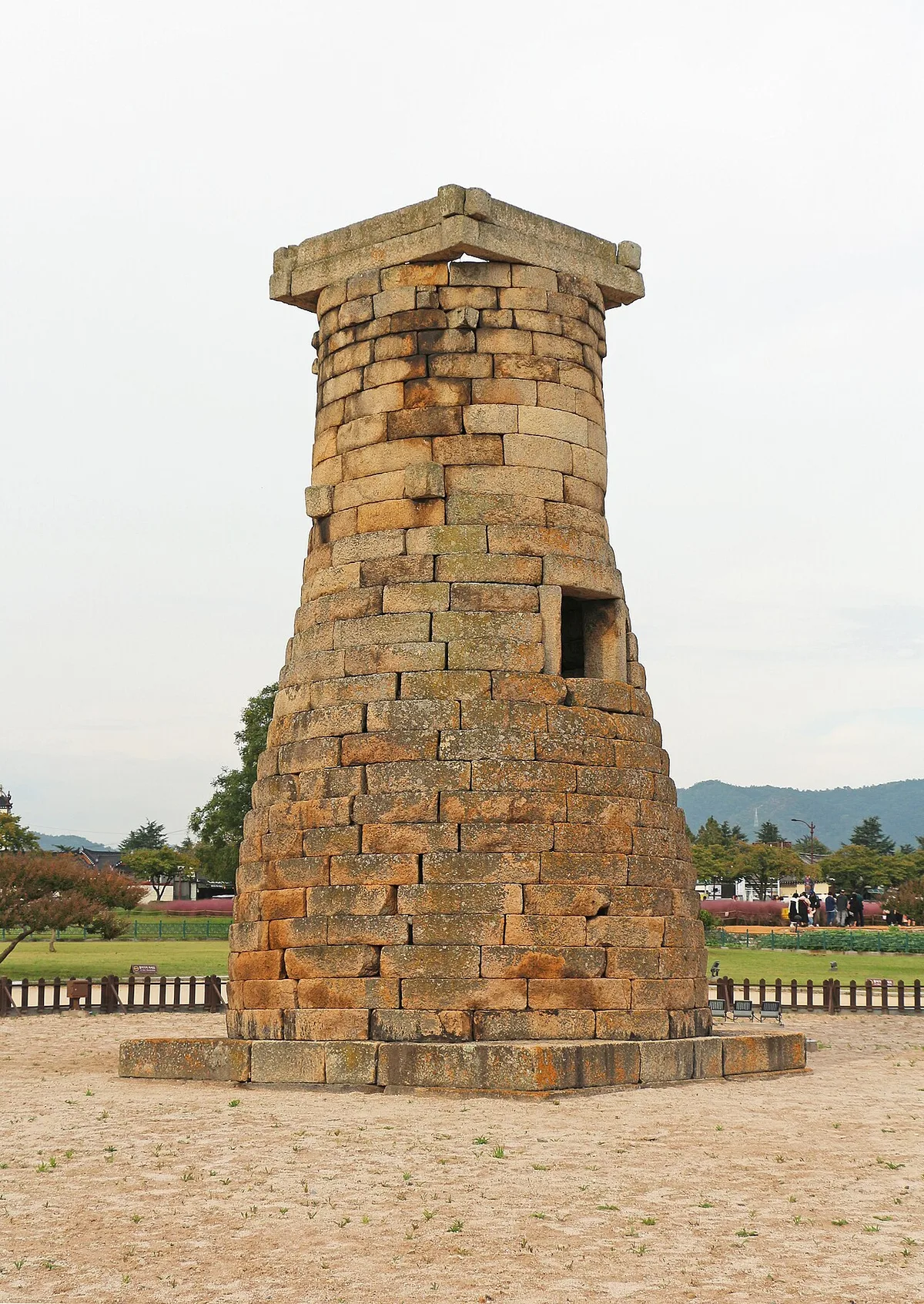
The summit of the observatory is locked by two layers of granite slabs arranged in a cross or overlapping pattern, forming a flat square platform with corners pointing outward, formerly serving as the placement spot for astronomical measuring instruments such as star sights, celestial altitude measuring boards, or copper bowls containing water reflecting starlight. The tower core is hollow from the window tier downward, filled with crushed stone and fine gravel up to a certain height to enhance counterweight mass, helping the structure maintain perfect balance under strong external forces. Avoiding any complex carved decorations has allowed Cheomseongdae to retain its primitive, pure beauty of minimalist architectural forms, where every line and corner directly serves scientific functions and royal religious ideology. The sustainable survival of the structure through more than fourteen centuries of history turns it into an eloquent testament to the mastery of mathematical thinking, spatial geometry, and premium stone material craftsmanship of the Silla civilization, while leaving an invaluable legacy for global human science and technology history.
Cheomseongdae Observatory, located in the Ancient Capital of Gyeongju in the Republic of Korea, stands as a monumental testament to the pinnacle of astronomical wisdom and monolithic stone architectural art of the unified Silla dynasty from the seventh century. Positioned on breezy plains within the Gyeongju historic district, this structure was commenced by the Silla dynasty during the reign of Queen Seondeok, the twenty-seventh queen reigning from 632 to 647 AD. With a modest height of about nine meters and ninety-five centimeters, Cheomseongdae does not impress with massive volumetric scale like Egyptian pyramids or Mesopotamian temples, but instead, the unique value of this heritage lies in the flawless fusion of mathematical thinking, ancient Eastern philosophy, and sophisticated granite block arrangement techniques to an astonishing degree. Enduring over a millennium and a half of weathering, witnessing the rise and fall of countless dynasties, the cylindrical structure tapering toward the top of the observatory still stands resiliently against all fluctuations of time and natural disasters, becoming a sacred symbol of the ancients’ aspiration to reach the vast universe.
Examining the physical structure of Cheomseongdae requires a thorough understanding of stone carving and arrangement techniques from the Three Kingdoms period of Korea. The tower body was created from three hundred sixty-two meticulously carved granite blocks, stacked across twenty-seven concentric circular tiers, forming a hollow cylinder with a slight inward inclination to reinforce load-bearing capacity and earthquake resistance. The number of three hundred sixty-two stones is not a random whim, but harbors profound mathematical and astronomical intent, corresponding to the number of days in a traditional lunar year. The surfaces of the stones were carefully polished to fit together perfectly without using any artificial adhesive mortar, demonstrating the pinnacle structural mechanics level of Silla architects. The tower base is designed with a sturdy square shape, comprising two stacked stone tiers, symbolizing the earth according to traditional cosmological concepts of “round heaven and square earth” of ancient Eastern peoples. From that square foundation, the tower body soars with graceful rotational symmetry, creating a delicate spatial transformation from the finite plane of the mortal world reaching toward the infinity of the vast dome of heaven.
Notably, the interior structure of Cheomseongdae is designed with a hollow space extending from the foundation up to the middle tier, featuring a square window opening facing south serving astronomical observation and sunlight reception. This window divides the tower body into two distinct sections, with twelve stone tiers below and twelve stone tiers above, totaling twenty-four stone tiers surrounding the central space, symbolizing the twelve months of the year and twenty-four solar terms of traditional agricultural cycles. Architectural history researchers have pointed out that this hollow structure was once used by Silla scholars to climb up via wooden ladders placed inside, thereby accessing the tower summit to conduct activities measuring star positions, tracking movements of the moon, sun, and key constellations serving weather forecasting work, deciding agricultural farming seasons as well as decoding auspicious or ominous omens for the Gyeongju court at that time. The tower summit is structured by two stone tiers stacked in a cross shape, forming a sturdy support platform for ancient astronomical observation devices once placed here, although over time, original metal or wooden instruments have been completely lost.
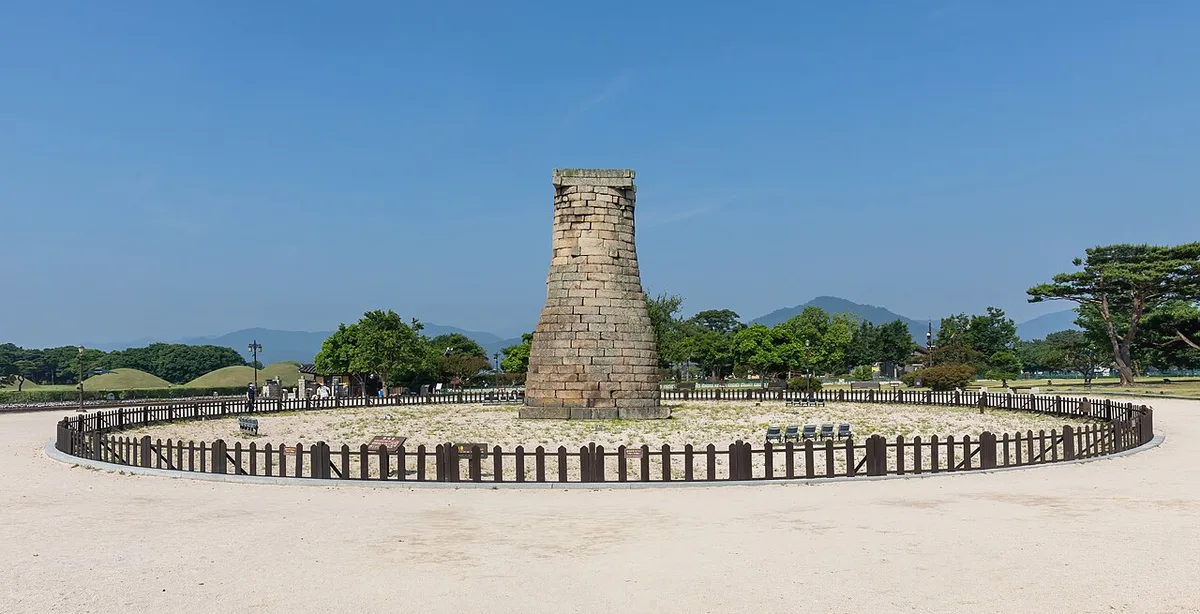
Viewed from philosophical and spiritual perspectives, Cheomseongdae reflects the primitive yet immensely wise worldview of the Silla kingdom, where Taoism, Buddhism, and Confucianism deeply blended into the spiritual life of the community. The overall shape of the observatory simulates a bottle-shaped water container, a familiar everyday item elevated into a symbol of purity and container of cosmic essence. The number of twenty-seven tower tiers is also linked to Queen Seondeok, who reigned under the sheltering thought of Mahayana Buddhism, regarding her dynasty as a pure land on earth. Astronomical observation for the Silla people was not merely dry experimental science, but a sacred method of communication between humans and deities governing the sky, thereby praying for peace, favorable weather, and societal prosperity. Each movement of celestial bodies recorded here was carefully examined under royal astrological lenses, directly influencing political decisions, diplomacy, and military strategies of the Gyeongju court back then.
The architectural art of Cheomseongdae achieves sophistication through minimalism yet power in using local granite materials. Free from ostentatious carved patterns, free from complex dragon and phoenix reliefs commonly seen in contemporary palaces or Buddhist temples, this observatory impresses strongly through the beauty of pure forms and precise geometric proportions down to the centimeter. Sunlight shining on individual granite blocks at different times of day creates rich color transitions, from subdued gray tones in misty early mornings to amber-golden hues under sunset glows of the ancient capital region. The contrast between angular lines of the square base and soft, flowing shapes of the cylindrical tower body creates a perfect outdoor sculpture masterpiece, demonstrating timeless aesthetic capacity of Silla artisans. This structure has become a classic model for stone construction art on the Korean Peninsula, profoundly influencing tombs, reliquary pagodas, and observatories of succeeding dynasties.
Enduring vicissitudes of modern history and destructive wars, Cheomseongdae stands firm as an indomitable symbol of Korean culture, ranked as National Treasure No. 31 by the South Korean government since 1961. Preservation work for this heritage is always carried out with absolute caution, utilizing modern scientific methods to measure inclinations, survey stone shifts, and monitor environmental impacts without harming historical status quo. The area around the tower base is planned into a sprawling green space with meticulously manicured lawns and seasonal flower fields, creating contrasting yet harmonious scenery between ancient historical witnesses and modern urban life. Researching, preserving, and honoring Cheomseongdae does not purely bear significance of preserving isolated architectural structures, but is simultaneously a journey safeguarding roots of knowledge, cultural identity, and national pride of an entire civilization once brilliant along the East Asian coast.
Cheomseongdae Observatory, the ancient astronomical scientific architecture built in the 7th century under the Silla dynasty in Gyeongju, South Korea, does not merely exist as a silent archaeological relic but also serves as the center of local indigenous living rhythms deeply imbued with traditional identity. As the first rays of new dawn cross Mount Tohamsan, illuminating the Gyeongju valley, the area around Cheomseongdae awakens in a peaceful and solemn atmosphere. Completely different from the hustle and bustle of modern cities, mornings here offer vibrant exploration experiences via footsteps of local elders in traditional hanbok attire, practicing qigong wellness exercises across vast lawns surrounding the heritage site. Sunrise moments vividly portray the unique bottle-shaped structure of Cheomseongdae with three hundred sixty-two meticulously polished granite blocks, symbolizing the number of days in lunar years according to ancient concepts. Photographers and cultural researchers often choose this hour to capture color shifts on ancient stone surfaces, transitioning from initial cold gray tones to amber gold under solar warmth. Early morning stillness creates profound contemplative spaces where observers can directly connect with astronomical mindsets of Silla people, who once stood at these exact coordinates to interpret celestial movements, forecast weather, and plan crops for the entire kingdom.
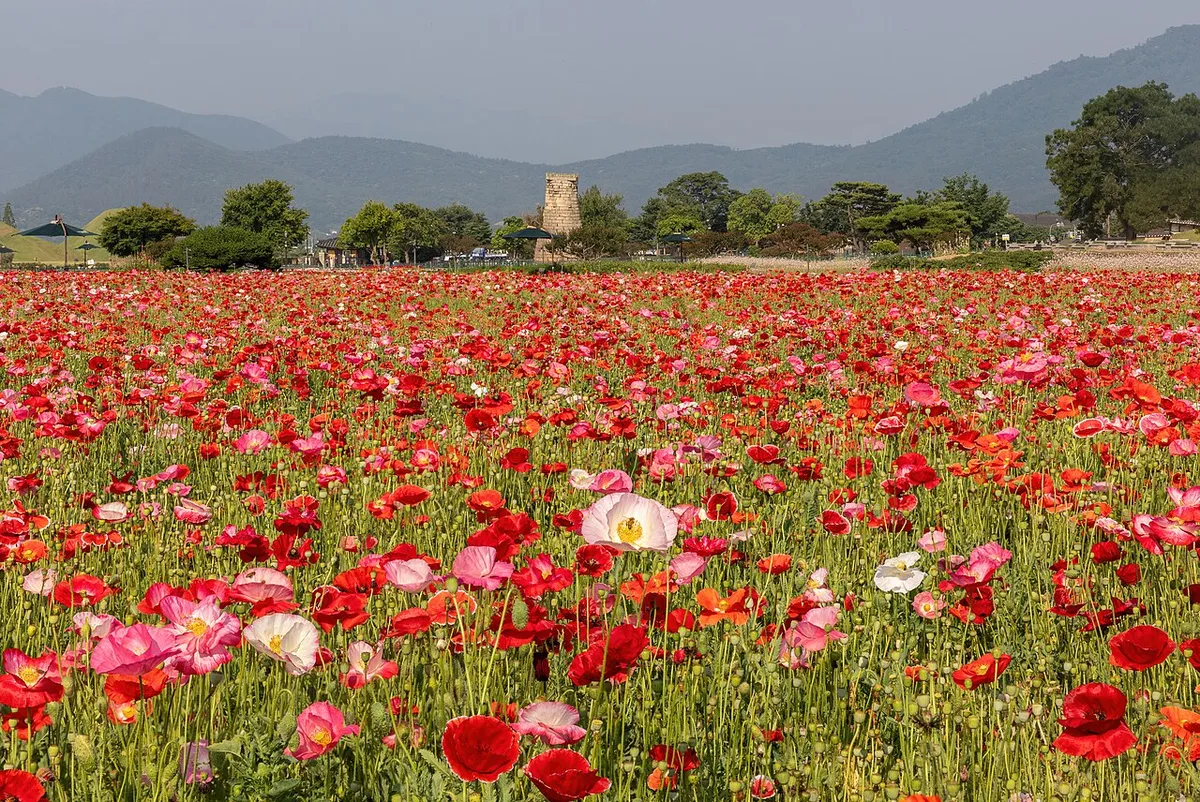
As the sun approaches zenith, rhythms around Cheomseongdae shift into vibrancy of community cultural activities and academic tour flows. Local tour guides begin leading scholar groups, students, and international tourists into the Gyerim heritage site and adjacent Wolseong palace complex, creating uninterrupted exploration experiences. Around the observatory, sprawling seasonal flower fields play ecological backdrops shifting continuously, from brilliant yellow rapeseed flowers in spring to deep red rose patches and lush green barley grass in summer, or pale pink cosmos blossoms when autumn knocks. Gyeongju residents utilize this space to organize outdoor heritage education events, where the younger generation directly practices crafting miniature astronomical measuring tools, learns about ancient calendar systems, and participates in thematic seminars on Silla architectural history. Daytime air brims with student laughter combined with resonant sounds of traditional instruments like gayageum emanating from nearby cultural centers, creating indigenous living pictures combining academic qualities with close ties to everyday life.
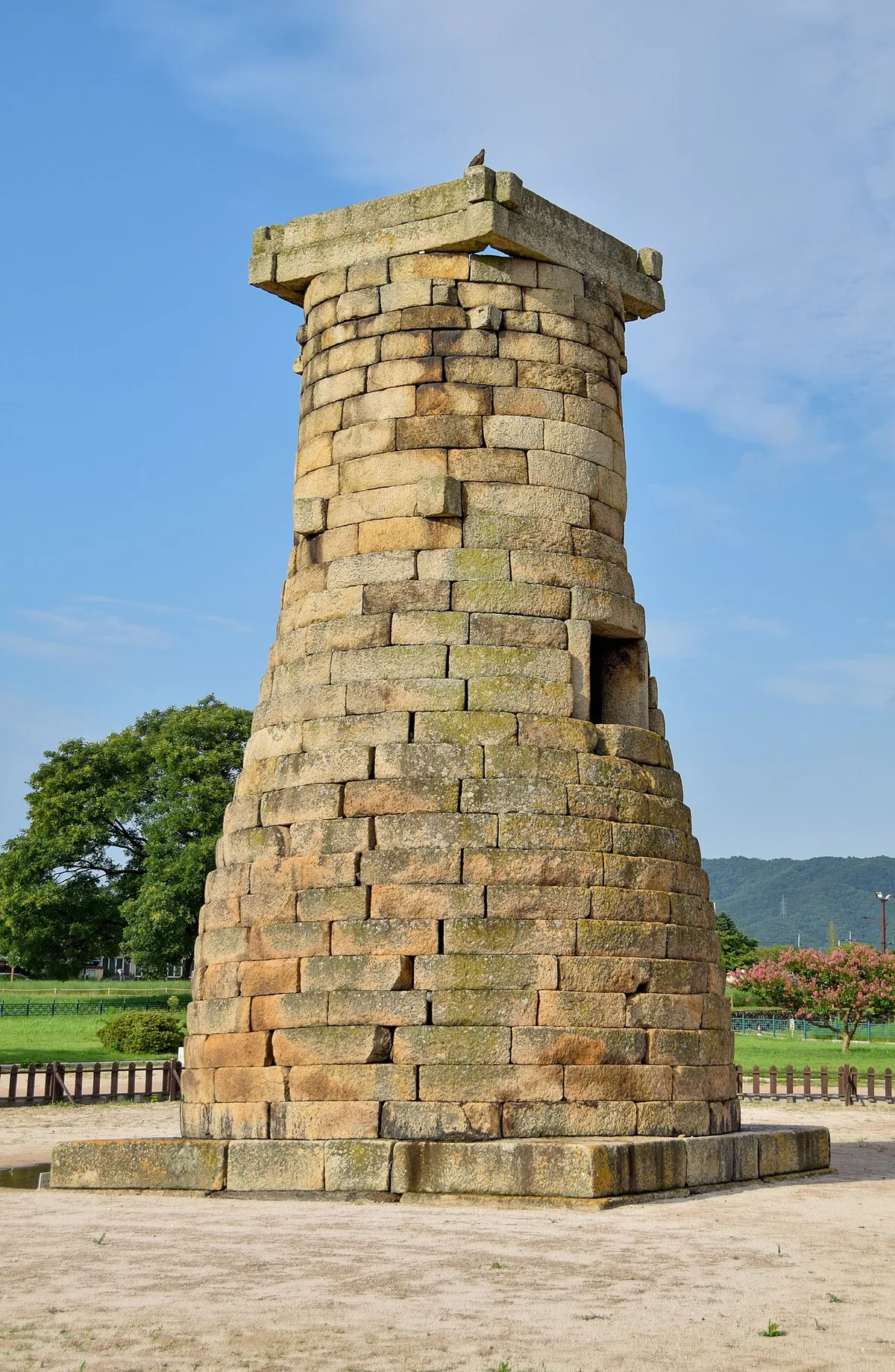
Sunset moments descending over Gyeongju’s sky deliver spectacular visual experiences, turning Cheomseongdae into a symbol of harmony between past and present. When twilight dyes spaces red, shadows of ancient stone structures imprint onto skies, creating sharp and majestic sculptural forms. This represents ideal timing for photography researchers seeking high-value panoramic angles from tops of Daereungwon ancient tombs looking afar, embracing Cheomseongdae amidst open spaces of historical parks. Daytime tour crowds thin out, giving way to enveloping stillness, facilitating those seeking personal contemplation regarding time’s eternity. Heritage keepers begin preparing nighttime artistic lighting systems, carefully calculated processes honoring architectural lines of structures without harming original fabrics of ancient stones surviving over a millennium.
When night falls completely, Cheomseongdae dons vibrant yet solemn appearances thanks to smart lighting systems arranged underground. Warm yellow light casts upward from tower bases, highlighting circular cylindrical structures and square summits symbolizing round heaven and square earth philosophies of ancient Eastern peoples. Nights here host contemporary traditional performing arts programs where Gugak court music resonates melodiously in open spaces, recreating ancient Silla court ceremonies. Locals and tourists stroll along paths lit by traditional lanterns, enjoying specialty herbal teas of Gyeongju and discussing stars glittering above clear night skies. The sight of shimmering constellations directly above ancient tower summits creates vivid, magical links between original functional purposes and modern observer experiences.
Besides daily time cycles, indigenous living rhythms at Cheomseongdae are profoundly shaped by major traditional festivals recurring year-round in Gyeongju. Among them, the annual Silla Cultural Festival stands out as the largest scale event, transforming areas surrounding the observatory into giant stages for royal costume parades, Hwarang traditional martial arts performances, and elaborate astronomical deity worship rituals reconstructed from ancient texts. Local artisans directly display traditional handicraft products from Silla celadon ceramics to wood-carved calligraphy works, allowing visitors to experience firsthand crafting processes passed down across generations. Active participation by Gyeongju residents in these events demonstrates deep pride in ancestral heritage, transforming dry archaeological sites into living cultural spaces where past and present merge into breathing pulses of heritage urban life.
Discovering Cheomseongdae thus transcends boundaries of ordinary sightseeing tours to become multi-dimensional cultural exploration journeys, demanding delicate observation and profound empathy toward human civilization history. Panoramic angles from summit tombs, light transitions across hours, alongside slow yet resilient living rhythms of indigenous Gyeongju people create harmonious, sustainable wholes. Through every moment, Cheomseongdae continues fulfilling historical missions, no longer by measuring stars in night skies, but by measuring and connecting hearts of global heritage lovers stepping foot onto this sacred land.
Gyeongju, the former capital of the ancient Silla kingdom, preserves an invaluable intangible cultural heritage system, where flavor-defining identities cluster around geographical spaces enclosing Cheomseongdae Observatory. Built in the 7th century under Queen Seondeok, this oldest surviving astronomical heritage site in East Asia is not purely a historical science and Eastern philosophy witness, but simultaneously the epicenter of culinary cultural ecosystems bearing strong court and traditional agricultural imprints. Sub-zones surrounding Cheomseongdae, from ancient stone-paved roads heading toward Daereungwon tomb complexes to Gyochon traditional village along the Woljeong River, form complex taste maps where sophisticated cooking techniques have been preserved across centuries. Local culinary foundations directly reflect Silla yin-yang balancing philosophies, tied to agricultural calendar cycles, deity worship rituals, and soil characteristics of the Hyeongsan River basin, creating highly symbolic culinary systems for the Yeongnam region.
Speaking of signature traditional dishes surrounding Cheomseongdae, Gyeongju Hwangnam Bread cannot be omitted—a traditional baked pastry formed fifty years ago on old Hwangnam-dong streets. This pastry embodies manual baking techniques demanding absolute patience, featuring thin wheat flour crusts wrapping red bean fillings simmered long with sugar according to strict ratios, baked on traditional cast-iron trays to create characteristic amber-golden colors and rich aromas of sweet baked beans. This technique passed through multi-generational families, becoming inseparable culinary symbols when discussing cultural experiences in Gyeongju. Furthermore, Silla court cuisine recreated via Gapbu Gukbap meals or premium Hanwoo beef dishes in Gyochon also demonstrates rich local ingredients, where fresh foods combine with long-fermented condiments like ganjang soybean paste and gochujang chili paste made via traditional manual methods.
Delving into esoteric processing techniques of this land, local culinary artisans consistently maintain principles of respecting original ingredient flavors via fermentation, stewing, and double-boiling methods. Typifying this technique are Yeollipbap lotus-leaf-wrapped rice meals and jangajji pickled vegetable dishes using greens gathered around nearby Namsan mountain valleys. Vegetables are carefully preprocessed, soaked in ancestral soy sauce mixtures brewed with local herbs and roots, then buried underground in earthenware jars for natural fermentation spanning months. This process not only preserves food under harsh four-season climates of the Korean Peninsula but also generates chewy textures paired with savory-sweet profiles, powerfully stimulating palates when paired with white rice harvested from nearby plains. Traditional manual tofu-making techniques (dubu) also hold core roles, utilizing natural sea salt as coagulant instead of industrial chemicals, delivering rich creaminess and robust aromas of native soybeans farmed organically.
Dining spaces surrounding Cheomseongdae Observatory also couple with traditional tea-drinking rituals and customs, reflecting Buddhist and Confucian thoughts once flourishing under Silla unification. Gyochon traditional village, home to the famous wealthy Choi family known for humane behavioral codes and helping the poor across twelve generations, serves as cradle for brewing and tasting green tea combined with Gyochon Beopju ancestral wine. Tea-drinking customs here obey strict standards regarding water temperatures, brewing durations for green tea leaves harvested from misty hillsides around Mount Namsan, and lifting cups with both hands showing reverence to heaven, earth, and humans. Tea ceremonies usually occur inside rustic wooden hanok houses, where diners listen to winds rustling through ancient pine trees and observe Cheomseongdae’s astronomical structures from afar, creating magical harmony between biological body rhythms and vast cosmic orders.
Urban space systems around Cheomseongdae are planned into thematic culinary street routes, exemplifying Hwangridan-gil old street districts where intersections between traditional architecture and contemporary styles forge distinct cultural profiles. Along mossy tiled narrow alleys, family eateries, herbal tea shops, and traditional bakeries cluster while fully retaining original hanok architectural spirits. Here, visitors observe direct workflows of kneading tteok rice cake dough, techniques of simmering beef bone broths for twelve hours producing clear yet richly sweet broths, or tasting traditional makkoli rice wines hand-fermented via centuries-old ancestral recipes. The survival of these culinary spaces right next to monumental archaeological sites testifies to Gyeongju material culture’s durable vitality, where past and present blend via flavors and tasting customs transmitted from generation to generation.
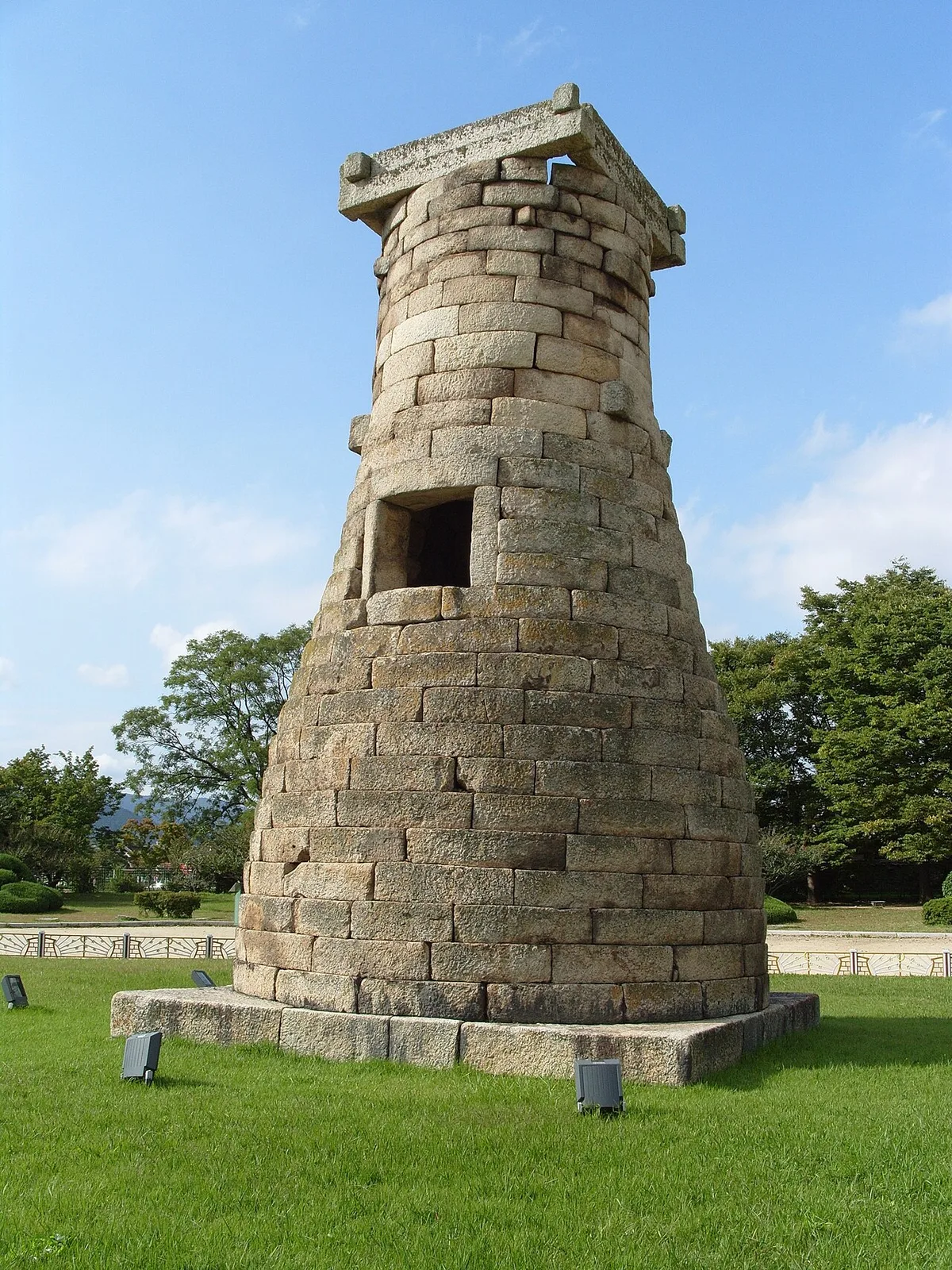
Cheomseongdae Observatory, located in the Gyeongju historic monument complex, Gyeongsangbuk-do province, South Korea, represents one of the oldest surviving ancient astronomical architectural structures in East Asia. Built under the Silla dynasty in the 7th century during Queen Seondeok’s reign, this structure is not merely a grand scientific symbol but also a destination attracting scholars, researchers, and international tourists. Planning access to this heritage demands profound understanding of seasonal climatic conditions, public transport networks, and local cultural behavioral codes to ensure complete exploration journeys respecting Silla’s ancient historical values.
Gyeongju’s climate system bears distinct continental temperate climate traits with four deeply differentiated seasons, each bringing entirely different appearances and experiences to surroundings of the observatory. Spring spans from March to May, bringing mild temperatures, clear blue skies, and blooming yellow rapeseed flowers and cherry blossoms across ancient royal gardens, forming magnificent visual backdrops for photography and fieldwork research. Summer lasts from June to August, typically bringing hot humid weather with heavy rainfall concentrated during July monsoon seasons, requiring visitors to prepare lightweight clothing, rain umbrellas, and adequate sunscreen when moving outdoors. Autumn runs from September to November, evaluated by tourism and research professionals as the ideal time of year thanks to dry weather, wide skies, and foliage turning brilliant golden-red hues, framing Cheomseongdae’s ancient stone structures in moody, nostalgic spaces. Winter extends from December to February, bringing biting cold winds sweeping from Siberian high-pressure zones, occasionally depositing thick white snow over the bottle-shaped tower, turning it into tranquil ink-wash paintings while demanding meticulous preparation regarding thermal clothing.
Transportation means to Gyeongju and Cheomseongdae are highly convenient thanks to modern South Korean infrastructure. For travelers departing from Seoul or Busan, KTX high-speed trains represent optimal choices for time and comfort. KTX trains drop passengers at SinGyeongju station in suburban areas, from which public bus lines 50, 51, or 70 directly connect to Gyeongju city center within thirty to forty minutes. For intercity express bus travel, continuous departures from express terminals in Seoul or Busan arrive at Gyeongju intercity bus terminals, located within fifteen to twenty minutes of leisurely walking from Cheomseongdae through streets imbued with traditional architectural impressions. Upon arriving in central Gyeongju, city bus networks covering heritage attractions serve as economical and efficient transport means, while local taxis remain available at main traffic nodes for those prioritizing speed and personal convenience. Notably, thanks to relatively flat terrains and concentrated heritage scales, renting public bicycles or walking to explore nearby attractions like Donggung Palace and Wolji Pond, or Daereungwon royal tomb complexes from Cheomseongdae are strongly encouraged experiences.
Prime daily times for observing and capturing beautiful moments of Cheomseongdae are sunset and twilight periods. When golden late-day sunlight illuminates meticulously stacked granite blocks structured according to lunar calendar and ancient astronomy principles, structures emerge with timeless majestic and mysterious beauty. Right after sunset, skillfully designed artistic lighting systems activate, honoring ancient architectural lines amidst expansive lawns, delivering completely distinct perspectives compared to daytime. Regarding visiting regulations and admission tickets, archaeological park areas housing Cheomseongdae open free of charge to the public for exterior viewing without entrance fees, reflecting open policies of local governments in popularizing world cultural heritage to all domestic and international visitors. However, intensive preservation areas or nearby archaeological exhibition halls may apply symbolic admission fees, making carrying small local currency cash or transport cards integrated with payment functions necessary to proactively handle arising situations.
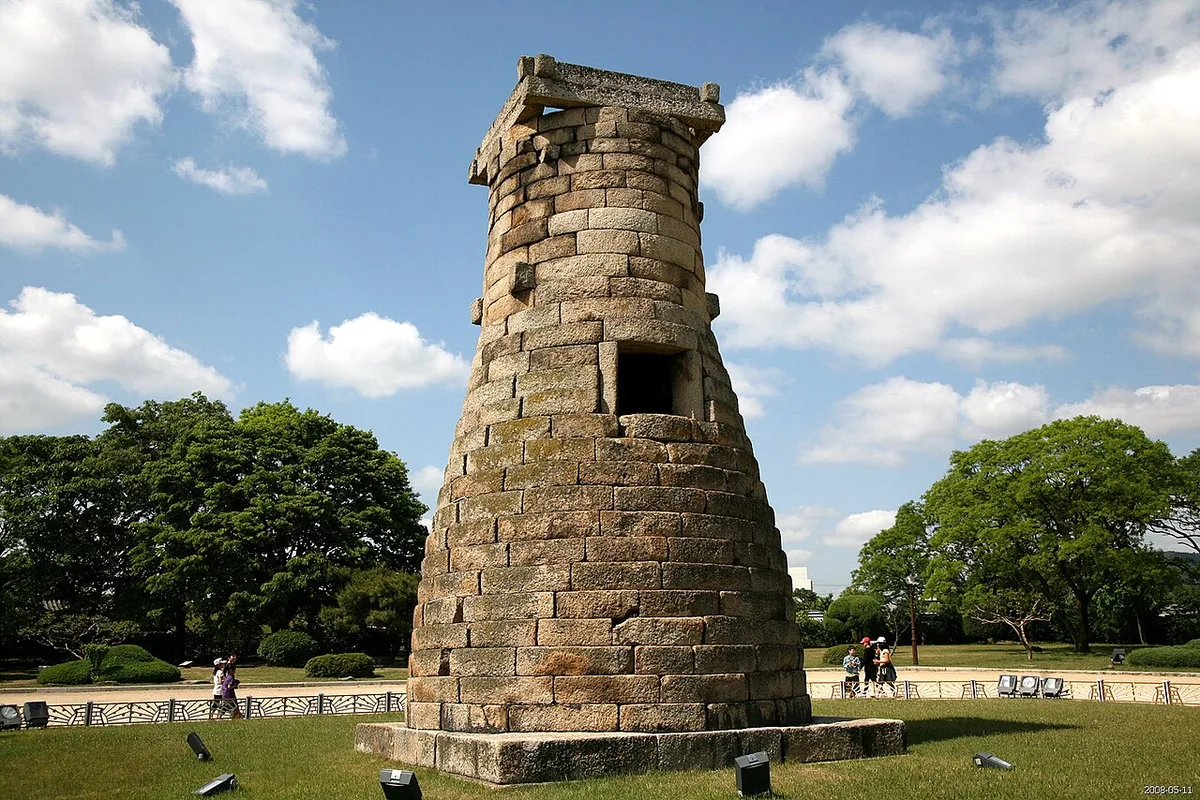
Clothing preparation and adherence to cultural standards, taboos play core roles in ensuring smooth, civilized trips. Because Cheomseongdae’s grounds comprise open outdoor spaces directly exposed to weather elements like scorching summer suns or biting winter gales, visitors should prioritize multi-layered clothing, specialized flat walking shoes for dirt paths and wide lawns. In spring and autumn, light jackets and scarves not only keep warm at dusk but also serve as elegant accessories matching solemn historical spaces. When entering religious heritage sites, royal tombs, or approaching Cheomseongdae’s ancient stone structures closely, standard behavioral rules must be strictly obeyed, such as refraining from climbing, avoiding touching millennial stone blocks directly to prevent sweat and body oils from eroding heritage materials. Maintaining general hygiene, disposing of garbage properly in public bins, keeping quiet, and respecting sacred spaces of Silla memorial zones are minimal cultural expressions every international visitor must remember. Through thoughtful transport preparation, profound understandings of climatic rhythms alongside standard behavioral attitudes, exploration journeys to Cheomseongdae will transform into deep intellectual experiences, directly connecting modern souls with brilliant astronomical heritage of ancient Eastern civilizations.
To fully experience this journey with a local guide, you can refer to the Busan – Gyeongju – Seoul – Nami 6 Days 5 Nights Tour with a pre-arranged itinerary.