Nestled against the imposing slopes of Mount Bugaksan and overlooking a capital steeped in centuries of heritage, Gyeongbokgung Palace stands as the grandest monument to the rise of the Joseon Dynasty, an era spanning more than five centuries from 1392 to 1910. Immediately after overthrowing Goryeo and founding the new dynasty, King Taejo Yi Seong-gye decided to move the capital from Gaegyeong to Hanyang, a site blessed with some of the finest feng shui on the Korean Peninsula. In 1394, the foundational stones of the principal royal palace were laid under the master planning of founding statesman, scholar, and chief architect Jeong Do-jeon. Bearing the mission of symbolizing royal authority and exemplary Confucian order, the palace was named Gyeongbok—drawn from a classical verse rich with hopes for prosperity in the Book of Songs: “Having drunk their fill of wine and been satiated with goodness, may the gentlemen live forever and be granted abundant blessings,” wishing that the monarch and enduring dynasty would ever bask in grace and boundless fortune.
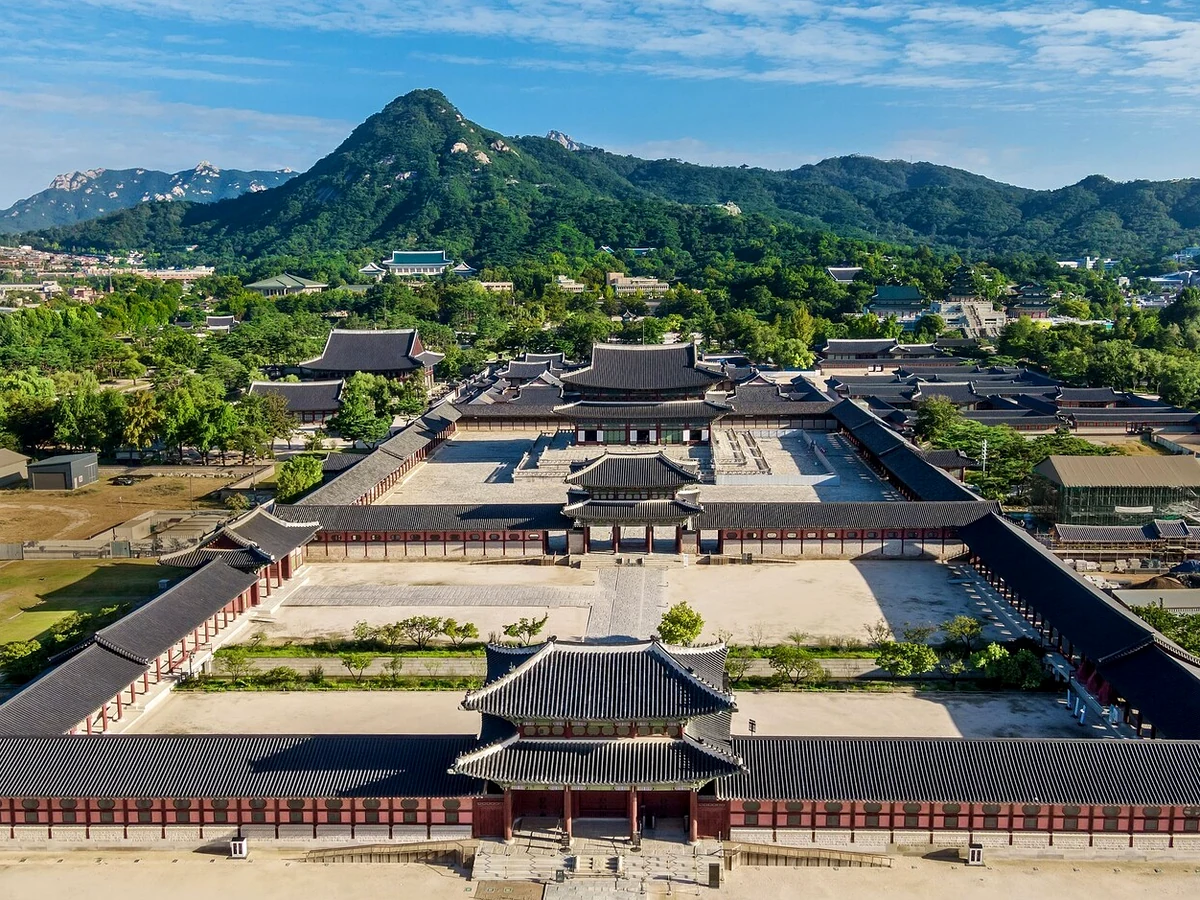
Under Jeong Do-jeon’s direction, Gyeongbokgung’s entire layout was built upon yin-yang balance and the supreme solemnity of East Asian court institutions. At the heart of the palace stands Geunjeongjeon Hall, the ceremonial throne hall framed by marble balustrade posts carved with the Four Guardian Spirits and the twelve zodiac animals, and linked to Gyeonghoeru Pavilion rising proudly from a wide man-made lotus pond where state banquets once hosted foreign envoys. Yet its early splendor was short-lived as historical upheavals dealt severe blows to the royal court. In 1592, the Imjin War broke out as invading Japanese forces swept across the peninsula, reducing the grand halls to ashes. The devastation was so severe that the royal house could not immediately bear the cost of reconstruction, forcing monarchs to reside at Changdeokgung Palace and leaving Gyeongbokgung a neglected ruin for 273 long years.
It was not until 1867, during the reign of King Gojong, that Gyeongbokgung’s majestic silhouette truly rose from the ashes through the iron resolve of the powerful regent Heungseon Daewongun. An unprecedented nationwide rebuilding campaign mobilized tens of thousands of master stonemasons and carpenters along with vast quantities of timber from across the realm, restoring more than 500 halls and pavilions across over 400,000 square meters. Even so, the palace’s turbulent fate continued. Colonial upheaval in the first half of the twentieth century once again turned the site into a casualty of political calculation: a gray concrete Japanese Governor-General building was erected directly in front of the palace facade, while many auxiliary structures were dismantled or auctioned off, deeply wounding the historic capital’s visage.
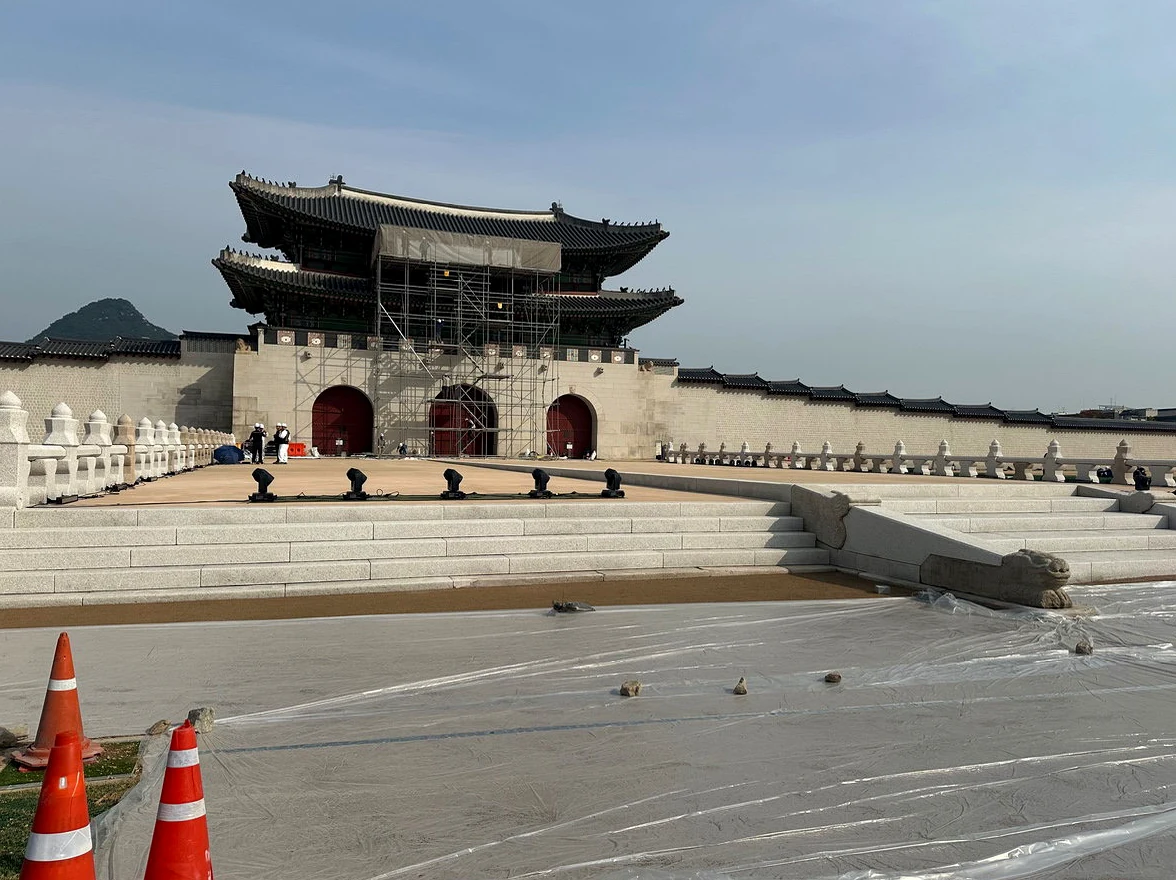
Only in the final decades of the last century did a multi-decade national cultural restoration program begin returning Gyeongbokgung to its original form, gradually stripping away foreign intrusions and reconstructing gates, royal walkways, and destroyed inner halls. That deep historical sediment across centuries of rise and fall has turned Gyeongbokgung into a living open-air museum, where every paving stone and painted timber beam carries the breath of hundreds of years past. Stepping into flowing traditional Hanbok and walking through the towering Gwanghwamun Gate, a traveler does more than tour an architectural landmark—they seem to touch the flow of time itself, hearing echoes of Joseon kings, queens, and scholars moving through the mist of history.
Viewed through the lens of East Asian feng shui geography, establishing the capital in Hanyang under King Taejo Yi Seong-gye with the counsel of founding statesman Jeong Do-jeon in the late fourteenth century placed Gyeongbokgung along an ideal dragon vein. The entire palace complex follows the principle of Baesan Imsu—backed by mountains and facing water—bringing natural terrain and human design into complete harmony. Behind the palace, Mount Bugaksan stands guard in the north like the Black Tortoise, sheltering the grounds from harsh cold winds; out front opens a broad vista looking toward Mount Namsan as the southern Vermilion Bird; to the left curves Mount Naksan as the Azure Dragon, while Mount Inwangsan rises on the right as the steadfast White Tiger. Cheonggyecheon Stream and the great Hangang River beyond form an endless circulation of vital energy, reflecting orthodox Confucian ideals of harmony among sovereign authority, humanity, and the cosmos.
The ground plan strictly follows a north-south symmetrical axis, guiding visitors through ceremonial layers of space. Starting at the main gate Gwanghwamun, the royal path leads through Heungnyemun Gate and into Geunjeongjeon Hall—the seat of power during the Joseon Dynasty. The courtyard before Geunjeongjeon is paved with coarse granite to reduce glare and prevent slipping, lined on both sides with rank stones (poomgyeseok) that ordered civil and military officials by status. Surrounding covered corridors (hoirang) frame symmetrical perspectives, offering a solemn architectural backdrop where traditional attire brings out the dignity of the old court.
Leaving the formal state court behind, the palace scenery shifts toward the poetic grace of royal garden craft. Its crowning highlight is Gyeonghoeru Pavilion—an imposing two-story hall set above a rectangular man-made pond and supported by forty-eight stone pillars carved with dragon-and-cloud motifs, once used for state banquets welcoming diplomatic envoys and for rain-praying rites. Farther north lies Hyangwonjeong, a graceful two-story hexagonal pavilion on a circular islet in a lotus pond, reached from shore by the wooden Chwihyanggyo bridge. Still water, drooping willows, and shifting seasonal colors create layered visual depth that draws visitors into a vivid natural tableau.
To enter this historical role-play journey seamlessly, travelers usually start with modern transit before reaching back into the past. Right at a bustling central intersection, the subway brings visitors to Gyeongbokgung Station on Line 3 (Orange Line). Taking Exit 3 or Exit 4 leads directly onto historic streets bordering the palace’s western side. This area adjoins Seochon—once home to middle-class officials, royal physicians, and Joseon court painters—and sits not far from Bukchon Hanok Village to the east, forming a traditional cultural belt packed with Hanbok rental shops.
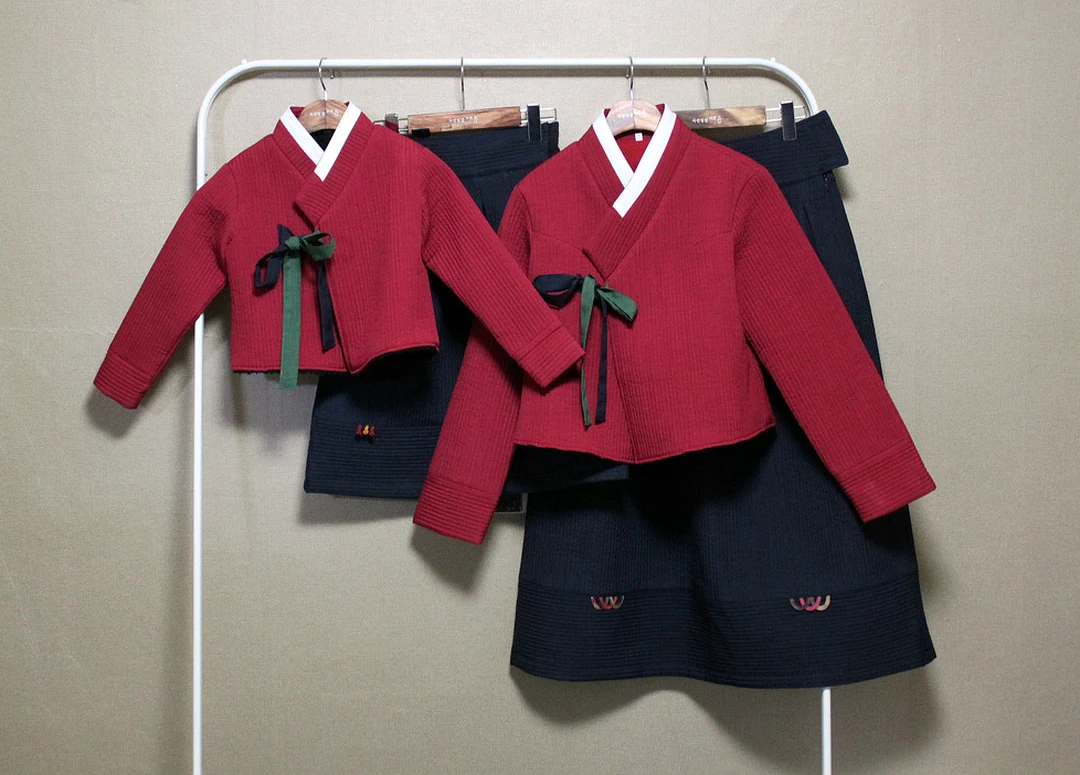
Getting dressed here follows a careful, structured routine so the silhouette looks authentic before entering the palace grounds. Visitors receive guidance choosing between court-style Hanbok and classic traditional Hanbok, starting with securing layered petticoats (sokchima) to give the outer chima skirt its signature fullness. The cropped jacket (jeogori) is neatly adjusted with its otgoreum ribbon tied in the traditional manner. Hair is smoothed, braided neatly, and accented with a silk daenggi ribbon and traditional baessidanggi hairpin. Once floral shoes step onto the old granite tiles of the palace gate, the boundary of time seems to melt away.
In the heart of the modern capital, Gyeongbokgung Palace opens a calm, contemplative expanse covering nearly 580,000 square meters, which once held over 330 stately buildings laid out in the balanced symmetry of East Asian feng shui. Set in a commanding position beside Mount Bugaksan and facing a wide boulevard, the grandest palace complex of the Joseon Dynasty blends understated natural stonework with vibrant dancheong polychrome paintwork. Wearing a traditional Hanbok, each step feels like turning a page of golden history, where every curved roof tile and granite step holds the pulse of a storied dynasty.
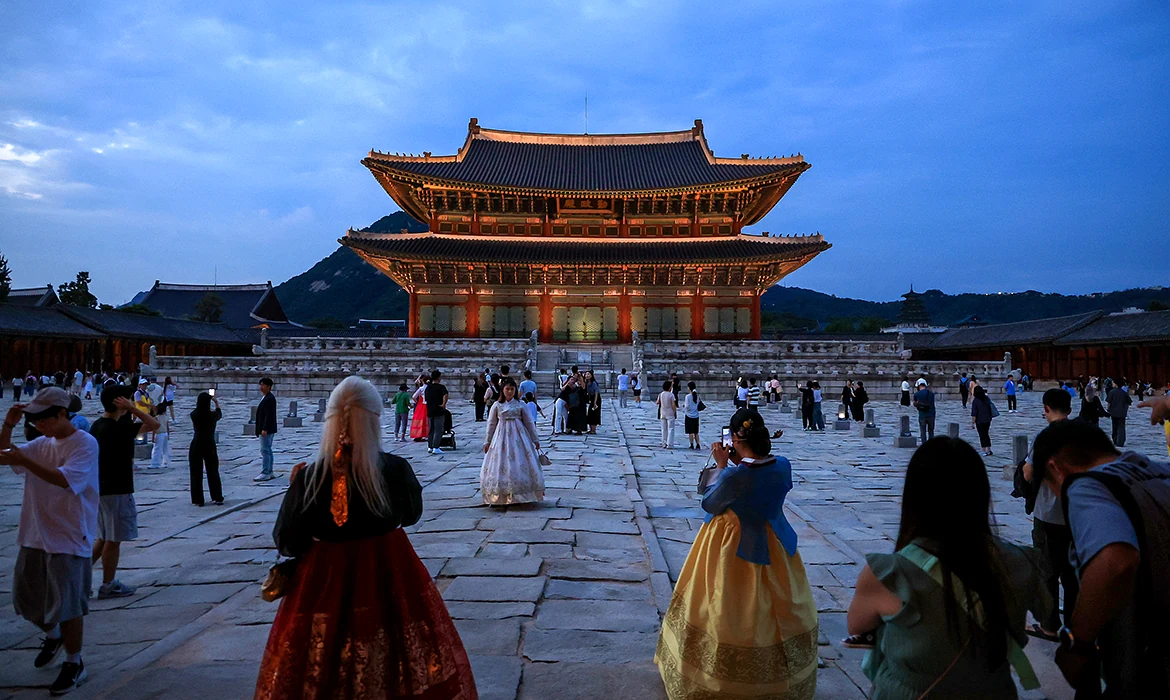
The focal point of royal authority across the entire palace is Geunjeongjeon Hall, a grand two-tiered timber structure set atop a sturdy two-level granite terrace called a woldae. Along the white granite balustrades, past artisans carved the Four Guardian Spirits along with the twelve zodiac figures and the mythical haechi, symbolizing justice and protection against fire and evil spirits. Inside the hall, the royal throne stands before the Irworobongdo folding screen depicting the sun, moon, and five sacred peaks, testifying to supreme sovereignty and harmony between heaven, earth, and the people. Standing in the rough gray-silver granite courtyard where civil and military officials once gathered by rank, the sweep of a chima skirt against symmetrical architecture creates an unforgettable historic scene.
Stepping away from the solemn outer court, the setting opens into refined leisure at Gyeonghoeru Pavilion, a royal banquet masterpiece rising from a broad man-made lotus pond. This splendid two-story hall rests on forty-eight solid stone columns, with inner round pillars symbolizing Heaven and outer square pillars representing Earth, embodying yin-yang and five-element philosophy. It once hosted grand banquets for foreign envoys and sacred rain-praying ceremonies. Beneath weeping willows along the pond, five-colored Hanbok reflections on the mirror-like water capture the poise and quietude of a golden past.
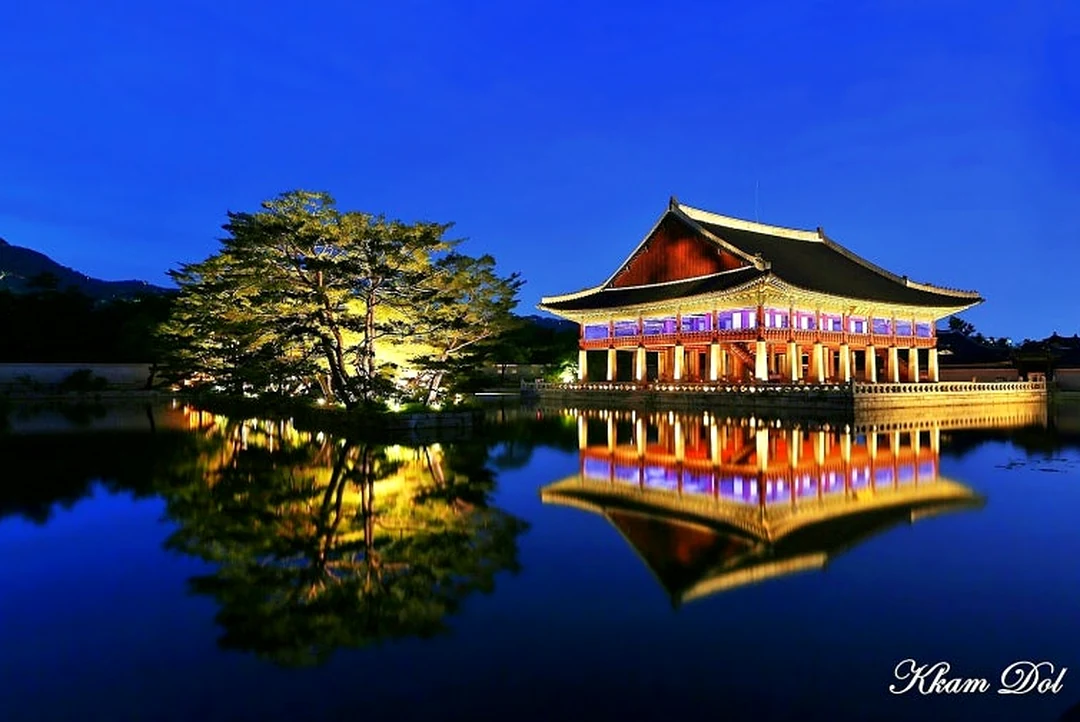
Farther north within the inner palace, Hyangwonjeong appears gracefully on a small islet in a fragrant, clear pond. This slender two-story hexagonal pavilion connects to the shore via the wooden Chwihyanggyo bridge—meaning “bridge intoxicated by fragrance.” Unlike the solemnity of the main hall, Hyangwonjeong carries a deeply poetic romance where monarchs once lingered with nature across all four seasons, from spring cherry blossoms to golden ginkgo leaves in autumn.
The depth of court craftsmanship also lingers around Jagyeongjeon and Jipwondang, home to traditional ondol underfloor heating and intricate tapsim patterned brick walls. These terracotta walls do more than divide space; they form living artworks pieced together with plum blossoms, chrysanthemums, bamboo, and longevity motifs wishing for long life and peace. Warm terracotta patterns paired with aged gray roof tiles create a fitting backdrop that highlights every stitch and otgoreum ribbon of the national dress, weaving a timeless bond between people and heritage.
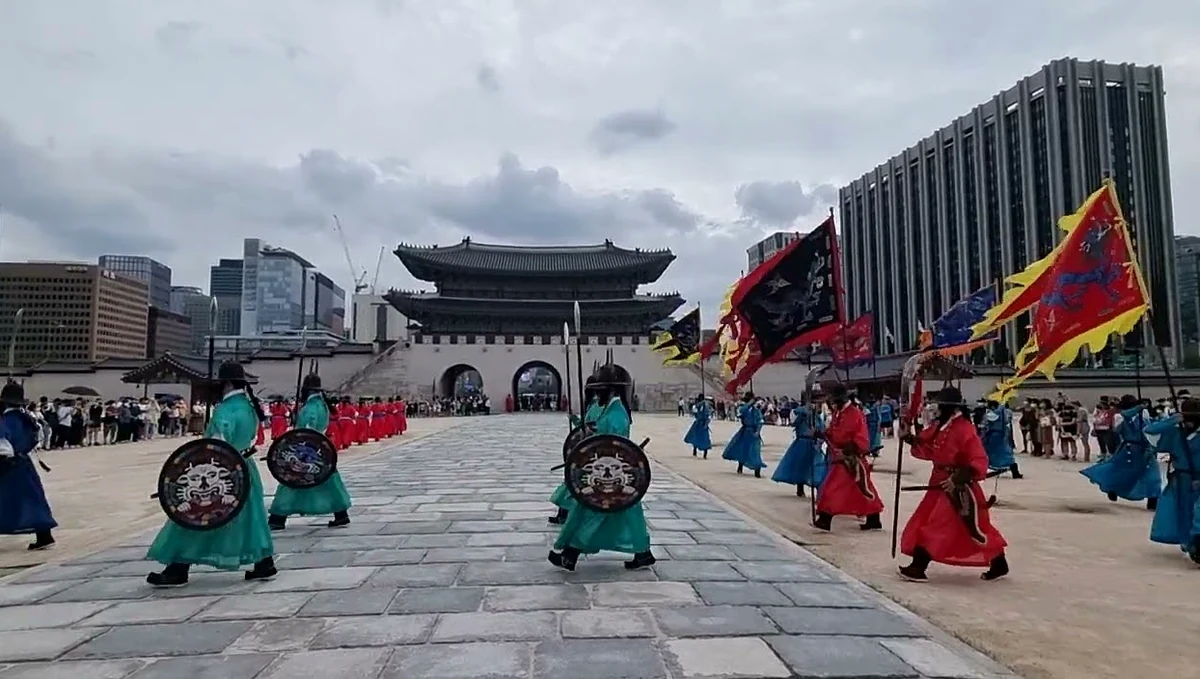
Gyeongbokgung comes alive at its most spirited when signal drums echo across Gwanghwamun Square, announcing the Royal Guard Changing Ceremony (Sumunjang) faithfully reconstructed from fifteenth-century early Joseon records. Held regularly at 10:00 AM and 2:00 PM each day, the ceremony unfolds like a live historical film carrying visitors back in time. Palace guards in crisp blue, red, and yellow uniforms march beneath fluttering banners to the solemn call of nabal horns and the piercing notes of the taepyeongso. Travelers in dignified Hanbok standing beside the granite walls or the base of the woldae become more than passive onlookers—they feel like witnesses woven into a solemn court ritual amid the modern city.
Visual appeal reaches an extraordinary peak when someone wearing traditional attire catches shifts in natural light during Golden Hour. From 9:30 AM to 11:00 AM, clear morning light angles across curved roof tiles and shines directly onto five-color dancheong patterns along the rafters of Geunjeongjeon Hall, creating a crisp optical backdrop that catches the folds of a chima skirt and the white dongjeong collar trim. Later, from 4:00 PM to 5:30 PM, warm amber sunset light settles from the ridge of Mount Bugaksan and shimmers across the quiet lotus pond around Gyeonghoeru Pavilion. In that light, silk threads embroidered with gold catch soft diagonal rays, turning subtle movements of a jeogori into nostalgic photographs with no artificial touch-ups needed.
As night falls and the last rays fade behind old pine trees, the palace takes on a quiet, mystical aura during special night openings (Yagan Gaejang). Unlike daytime bustle, twilight and evening hours are guided by subtle indirect lighting, with traditional red-and-blue silk cheongsachorong lanterns swaying gently along stone corridors. Lights from the water cast a soft glow upward onto Gyeonghoeru’s two-tiered roofs, turning the cypress-wood pavilion into a luminous lotus floating in the dark. Walking in Hanbok through that dreamlike setting—with a hem brushing softly over old granite tiles—easily evokes memories of royal evening banquets and poets composing verse beneath a full moon.
The interplay of light, shadow, and traditional dress at Gyeongbokgung creates both artistic views and a reflective cultural space. From the gentle scent of incense drifting from tea pavilions modeled on the Suragan royal kitchens to the clear pluck of a gayageum carried on the night breeze, every detail shapes a complete mood. Wearing Hanbok here is not just about taking keepsake photos; it is about breathing alongside centuries of royal history and watching classical East Asian architecture converse with Seoul’s glowing nightscape.
After hours spent strolling in soft Hanbok past ancient palace walls, exploring Joseon cultural depth becomes truly complete in the quiet dining scenes surrounding Gyeongbokgung. Flavors here form a striking contrast between humble street food and refined royal cuisine, where family recipes passed down across generations stay vibrant along century-old stone lanes.
Just west of Gwanghwamun Gate along historic Jahamun-ro in Seochon, the traditional hanok restaurant Tosokchon Samgyetang has long been a ritual stop for local and international food lovers. Renowned for its heritage ginseng chicken soup, it distills centuries of Korean nourishing wisdom rooted in fighting heat with heat. At the heart of each steaming earthenware pot is a carefully selected young chicken stuffed with glutinous rice, chestnuts, Gyeongsan jujubes, ginkgo nuts, and four-year-old fresh ginseng from famed growing regions. Tosokchon’s broth has a rich, creamy ivory hue, simmered for hours with ten secret ground grains—including pine nuts, black sesame, and sunflower seeds—for a clean richness and lasting depth. Sipping a warm glass of insamju ginseng liquor before pulling apart tender, melting chicken is a restorative reward after walking the palace grounds.
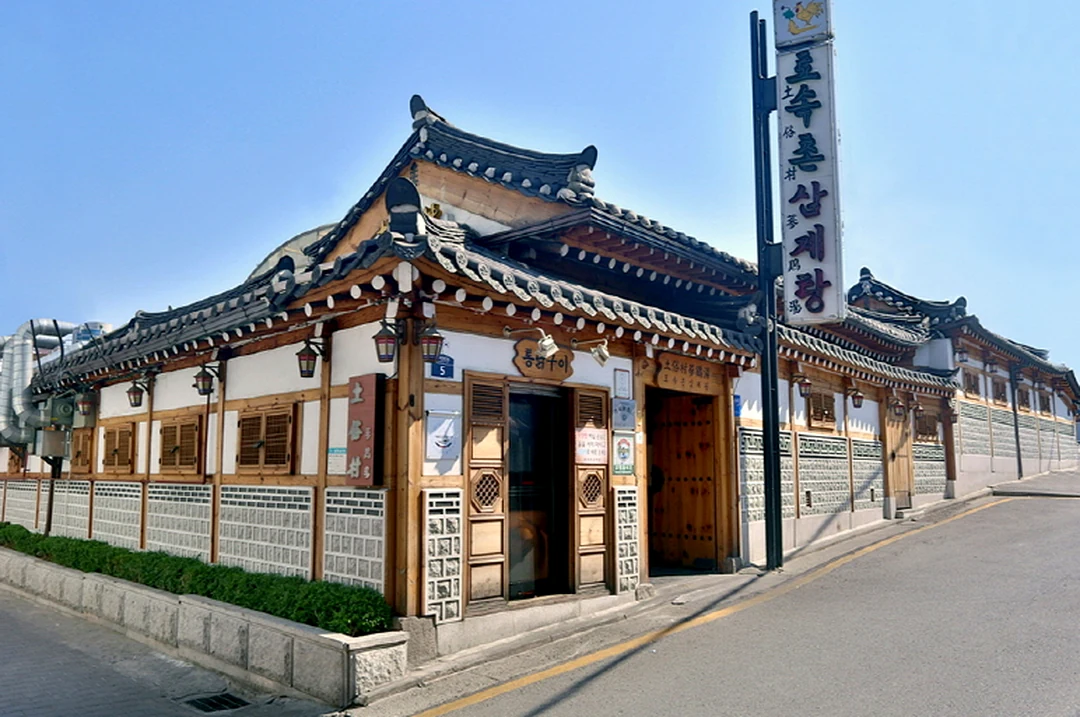
Not far away, lively everyday street life opens up at Tongin Traditional Market, home to the singular Yeopjeon Dosirak lunchbox experience with vintage brass coins. Founded in the mid-twentieth century, Tongin revives Joseon trading memories by letting diners exchange modern cash for bundles of square-holed brass coins tied on hemp string. Carrying a divided black plastic tray, visitors stroll past lively stalls to build their own meal. A standout favorite at the market is Gireum Tteokbokki (oil tteokbokki)—an original style made without thick sauce, pan-fried continuously on a hot cast-iron griddle with sesame oil and fine chili powder for a crisp, lightly charred exterior and chewy center. Compartments fill up with golden mung-bean pancakes (bindae-tteok), steaming fish-cake skewers (eomuk) in sweet radish broth, and savory seaweed egg rolls (gyeran-mari), bringing back the warmth of everyday meals in old Hanyang.
As dusk settles, dining near the palace takes on royal elegance at Michelin-starred restaurants tucked along the slopes of Samcheong-dong and Bukchon. There, master chefs reimagine Joseon court banquets into Modern Hanjeongsik. Inspired by the twelve-dish Surasang royal meal once reserved for the monarch, menus read like a tribute to the five elements and changing seasons. Highlights include Sinseollo—an ornate traditional brass hot pot layered with peeled shrimp, prime beef, pine mushrooms, and diced root vegetables around a central heat tube—and Gujeolpan, a nine-compartment wooden platter symbolizing yin-yang harmony. Served on Joseon white porcelain (Baekja) or handcrafted Bangjja Yugi brassware with modern culinary precision, each course offers an unhurried, dignified taste of the capital’s heritage.
To make a journey back into Joseon history as smooth and graceful as possible, knowing Gyeongbokgung’s operating hours is essential first preparation. The palace opens at 9:00 AM every day of the week except Tuesday, when it closes regularly for heritage conservation. Closing times shift across the four seasons: winter months usually close at 5:00 PM, spring and autumn extend to 6:00 PM, while sunny summer days let visitors linger until 6:30 PM. One ceremonial highlight not to miss is the Sumunjang Royal Guard Changing Ceremony held solemnly before Gwanghwamun Gate at 10:00 AM and 2:00 PM daily, vividly recreating fifteenth-century guard discipline—so it helps to arrive early for a good viewing spot.
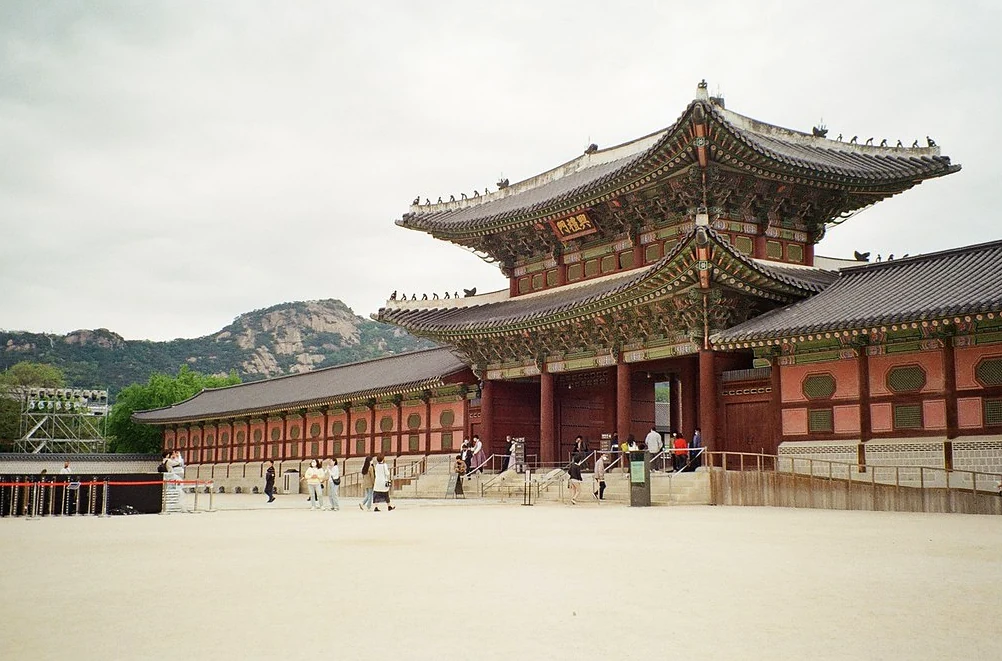
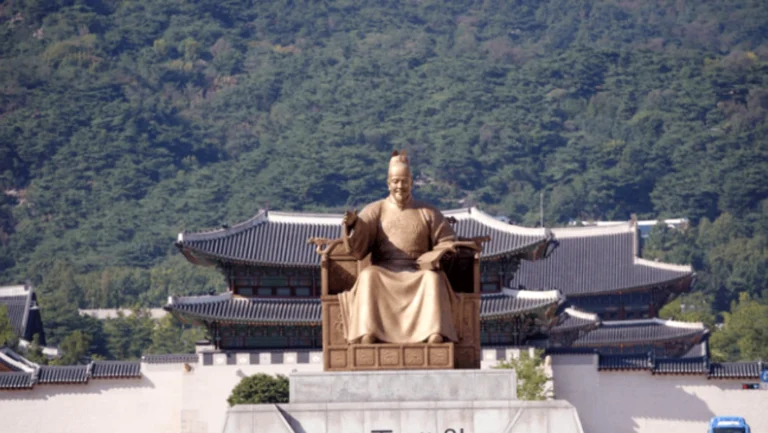
Seoul’s modern public transit network makes reaching the royal heart of the city effortless. Travelers simply need a T-money transit card to ride subways and city buses with ease. The most convenient subway option is Line 3 (Orange Line) to Gyeongbokgung Station; from Exit 5, an atmospheric underground passage leads straight into a shaded courtyard right beside the National Palace Museum. Alternatively, taking Line 5 (Purple Line) to Gwanghwamun Station and strolling across the breezy square past the statue of King Sejong before reaching the main gate makes for a memorable approach.
On cost, standard admission is a modest 3,000 KRW for adults. However, the Cultural Heritage Administration of Korea offers a generous cultural incentive: any visitor wearing a properly styled traditional Hanbok receives free admission. Around neighboring historic districts like Sajik-dong, Samcheong-dong, and Bukchon, many rental shops offer two- to four-hour packages typically ranging from 15,000 to 35,000 KRW, including essentials such as a binyeo hairpin, a silk bokjumeoni pouch, and traditional braiding.
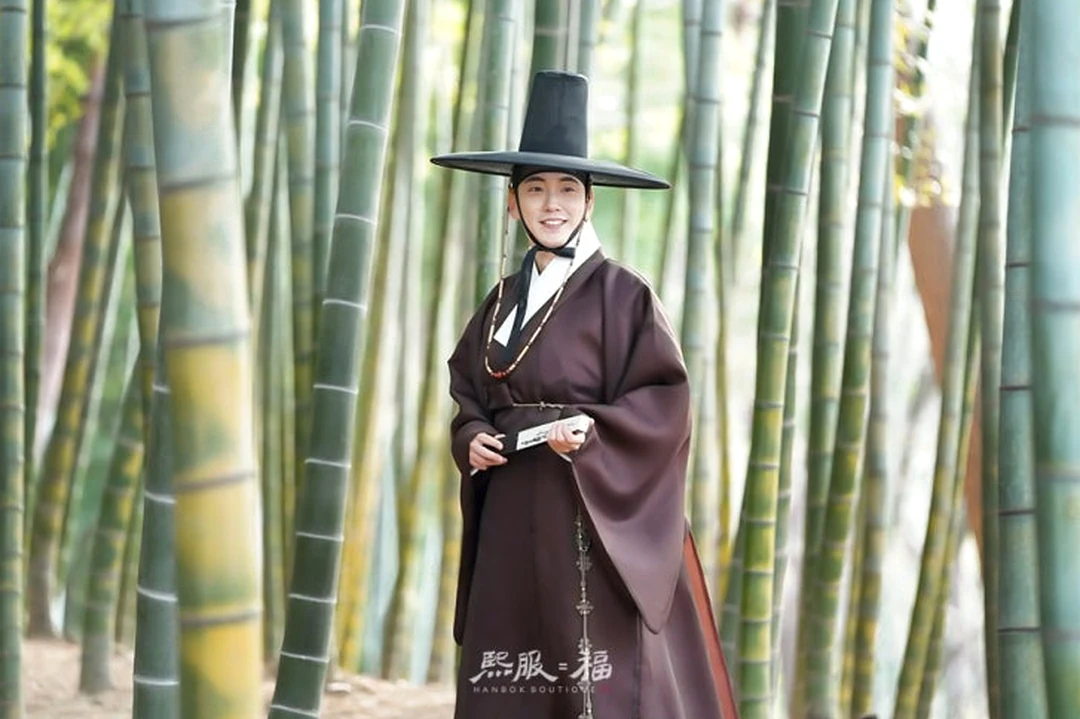
To enjoy free admission and capture authentic photos, it helps to keep court dress conventions in mind. For men, a complete outfit pairs a short jeogori jacket with loose baji trousers, layered with a flowing scholar’s dopo robe or a martial officer’s cheollik coat and topped with a black horsehair gat hat. For women, an elegant ensemble combines a short jeogori with a wide floor-length chima skirt. Bright, refined tones like peach pink, jade green, or apricot gold stand out beautifully against dark gray granite and colorful painted brickwork around Geunjeongjeon Hall and Gyeonghoeru Pavilion.
Practical advice for culturally minded travelers is to steer clear of unusually cheap tours built around mandatory shopping stops at outlying centers, which cut deeply into time for centuries-old heritage. Instead, choosing thoughtful, low-pressure cultural itineraries gives you the unhurried calm to wander beneath mossy eaves. For a well-paced trip across South Korea covering transport, lodging, and authentic Hanbok experiences without hassle, travelers can consider booking a dedicated all-inclusive South Korea tour package designed around rich cultural depth.