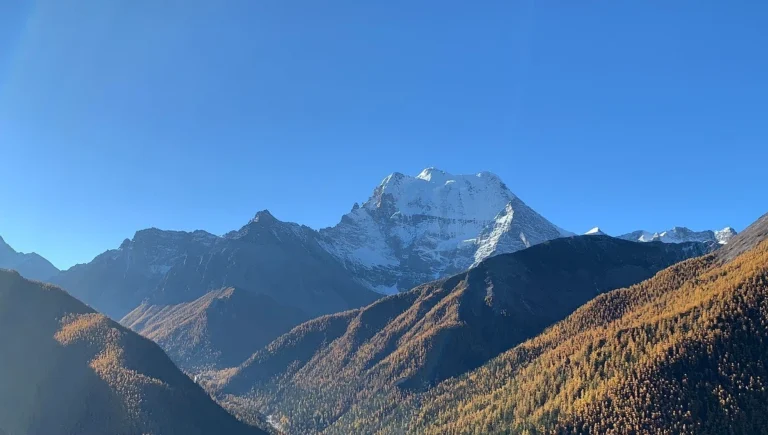
Tracing the river of time back to the western borderlands of Sichuan province, where the majestic Minshan mountain range reaches up to touch the clouds, the Aba Jiuzhaigou Wetland Park (Chinese: 阿坝九寨沟国家公园) emerges not merely as a breathtaking natural wonder but also as a realm brimming with deep historical strata and long-standing historical transformations. The name Jiuzhaigou (九寨沟) in Chinese carries profound meaning, originating from nine traditional Tibetan villages nestled and hiding within this deep valley, including the hamlets of Shuzheng, Heye, Zezha, Hejiatou, Yanzha, Panxin, Pengbu, Jianpan, and Rexi. According to precious records in the “County Chronicle of Songpan” and ancient Tibetan historical texts, this region was originally the survival space of the ancient Qiang people—one of the minority ethnic groups with the longest-standing history in southwest China. Through historical periods from the Tang to the Song dynasty, this valley once served as a strategic choke point, acting as a sensitive and bustling intersection between the powerful Tubo empire and the imperial court of the Central Plains. Historical records further recount that during the Zhenguan era of the Tang dynasty, when Princess Wencheng was ordered by her imperial father to embark on a journey to Tibet to wed Songtsen Gampo, the Tang embassy chose to traverse this treacherous route, leaving behind shimmering magical legends associated with sacred lakes. By the Song dynasty, recognizing the strategic importance of border defense routes, the imperial court established a system of sturdy defensive outposts to control moving traffic. Residents living here through generations are descendants of the ancient Di-Qiang people, practicing a unique belief system blending primitive Bonism and Tibetan Buddhism, living an isolated, self-sufficient life through hillside slash-and-burn farming and foraging for wild treasures from the deep mountain forests.
Through numerous feudal and modern historical upheavals, the first major turning point shaping Jiuzhaigou’s modern appearance was tied to economic and environmental shifts in the 20th century. In the 1970s, this valley area stood on the brink of an ecological disaster when it was designated as a primary logging zone for the Nanping State-owned Forestry Bureau, now under the jurisdiction of Jiuzhaigou County. Millennia-old virgin forests faced the threat of merciless destruction by the scream of chainsaws and axes wielded for industrialization during that era. Confronting the urgent threat of destroying a unique ecosystem, in 1978, the State Council of the People’s Republic of China issued a historic directive mandating strict protection of the natural ecosystem here and immediately halting all logging activities. This bold and timely decision saved the valley’s spiritual soul, laying a solid foundation for long-term preservation. Recognizing the timeless value of the local landscape, by 1982, the State Council further approved Jiuzhaigou, officially placing it on the first batch of National Scenic Areas, opening a new chapter for heritage management and conservation. Jiuzhaigou’s stature quickly surpassed national borders when in 1992, UNESCO officially inscribed this location onto the “World Natural Heritage List,” affirming its global value in geomorphology, hydrology, and biodiversity. Following that honor, in 1997, it joined the World Network of Biosphere Reserves, and by 2007 it proudly attained the 5A National Tourist Attraction standard, the highest rating in China’s tourism evaluation system.
Yet, the developmental journey of this land was never a flat straight line but always intertwined between sublimation and fierce challenges from nature. On August 8, 2017, a violent earthquake reaching magnitude 7.0 struck this area, causing unprecedented severe damage to landscapes, tourism infrastructure, and characteristic lakes. That natural disaster seemingly knocked down the fairyland realm entirely, but under the resolute leadership of the government and the resilience of the local community, a large-scale ecological restoration and geological disaster management campaign was immediately deployed. Geologists, ecologists, and forestry experts worked tirelessly to heal nature’s wounds, restore groundwater sources, reinforce landslide slopes, and regenerate native vegetation. Thanks to those extraordinary efforts, in September 2021, Jiuzhaigou officially reopened fully to operations, welcoming visitors with a refreshed appearance while preserving its wild, majestic beauty intact. This reopening marked an important transition toward a modern national park management model where scientific knowledge of disaster risk reduction is closely integrated with rigorous upgrades to ecological carrying capacity. Today, looking back at the long journey from isolated Tibetan villages in ancient times, through anxious logging years, to the stature of a global natural heritage, Jiuzhaigou stands proud as a glowing symbol of harmony among humanity, history, and nature, bearing witness to the resilient vitality of a sacred wetland on the plateau’s edge.
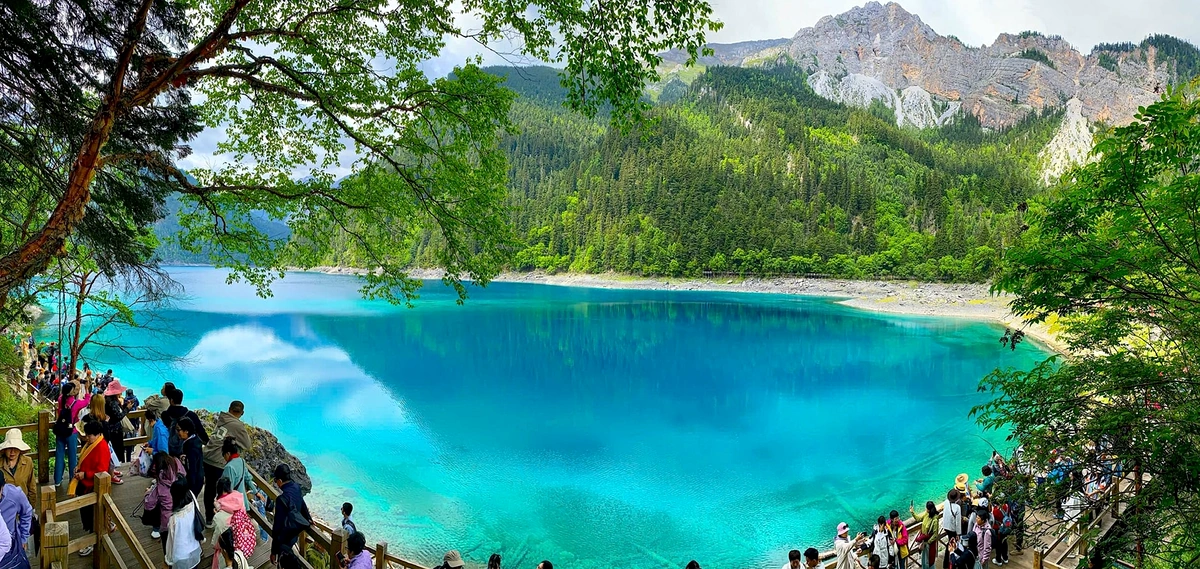
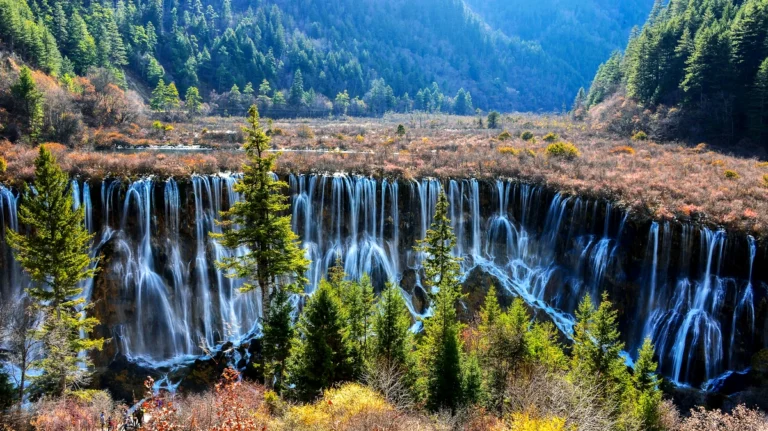
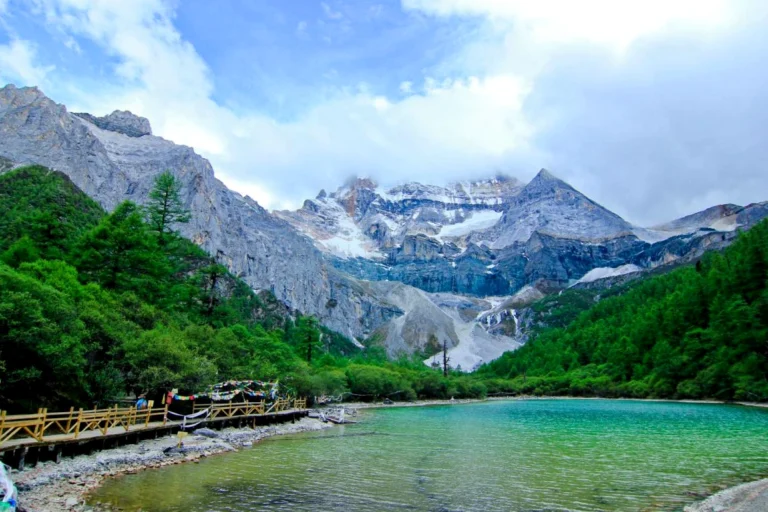
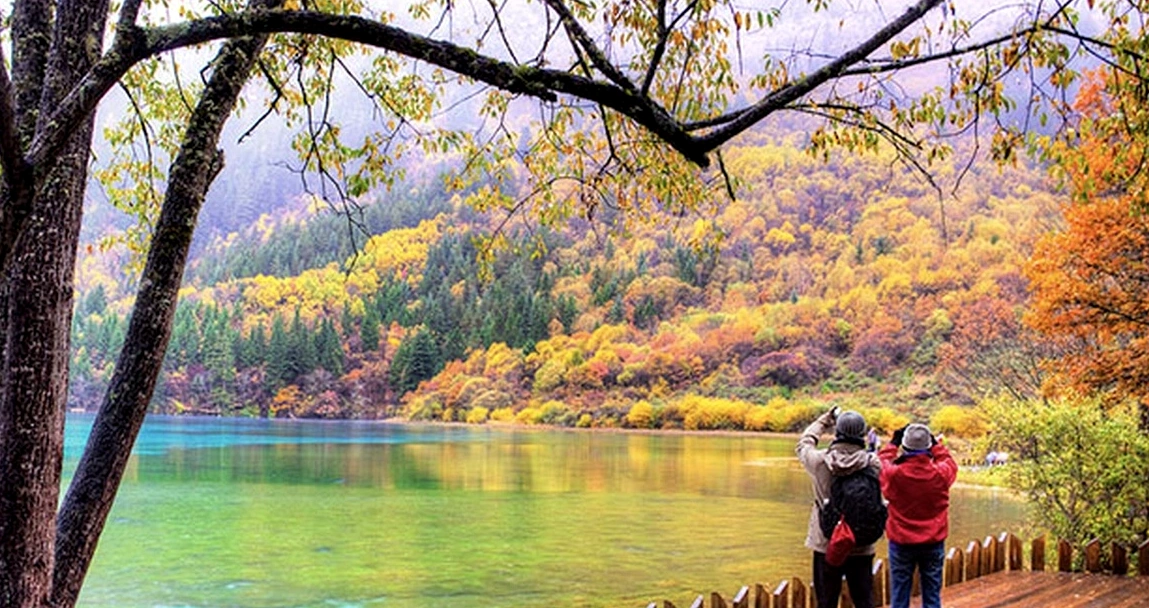
Tracing back through geological history and cultural space, the Aba Jiuzhaigou Wetland Park emerges as a unique geomorphological wonder located on the eastern edge of the Qinghai-Tibet Plateau, spanning the southern section of the Minshan mountain range within Jiuzhaigou County, Aba Tibetan and Qiang Autonomous Prefecture, Sichuan province. Regarding feng shui and grand forest spatial structures, this is an extremely rugged yet magnificent transitional zone between the Sichuan Basin and the roof of the world. The valley’s terrain features high-mountain deep karst valley geomorphology, where topographical relief shifts abruptly and breathtakingly, soaring from an elevation of roughly 2,000 meters in lower valleys to over 4,500 meters at snow-capped peaks year-round. This altitude differential creates a natural screen isolating the external world while shaping a complex hydrological structure shaped like a giant Y, embracing three main valley branches comprising Rize Valley, Zezha Valley, and Shuzheng Valley with a total journey length exceeding 50 km. Along these Y-shaped valleys, nature has sculpted a magnificent hydrological system featuring 108 high-altitude lakes that local Tibetan residents respectfully call “Haizi”—meaning “children of the sea,” accompanied by hundreds of multi-tiered waterfalls plunging turbulently day and night across moss-covered mineral strata.
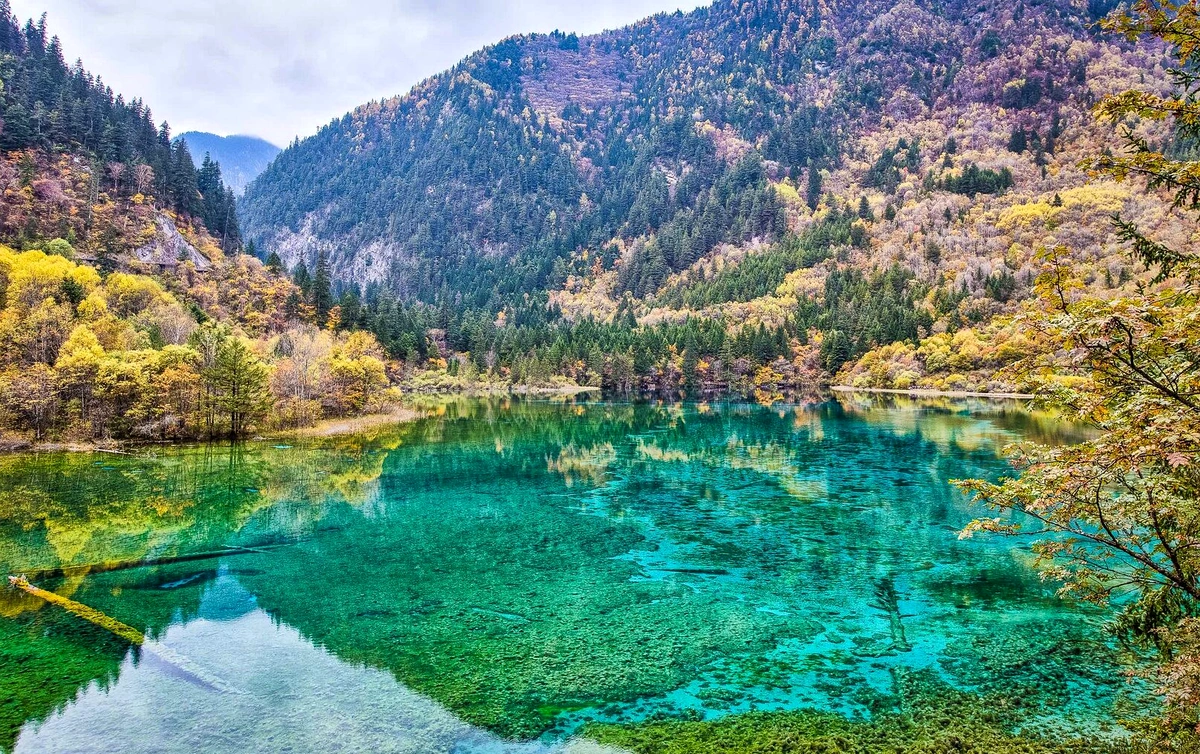
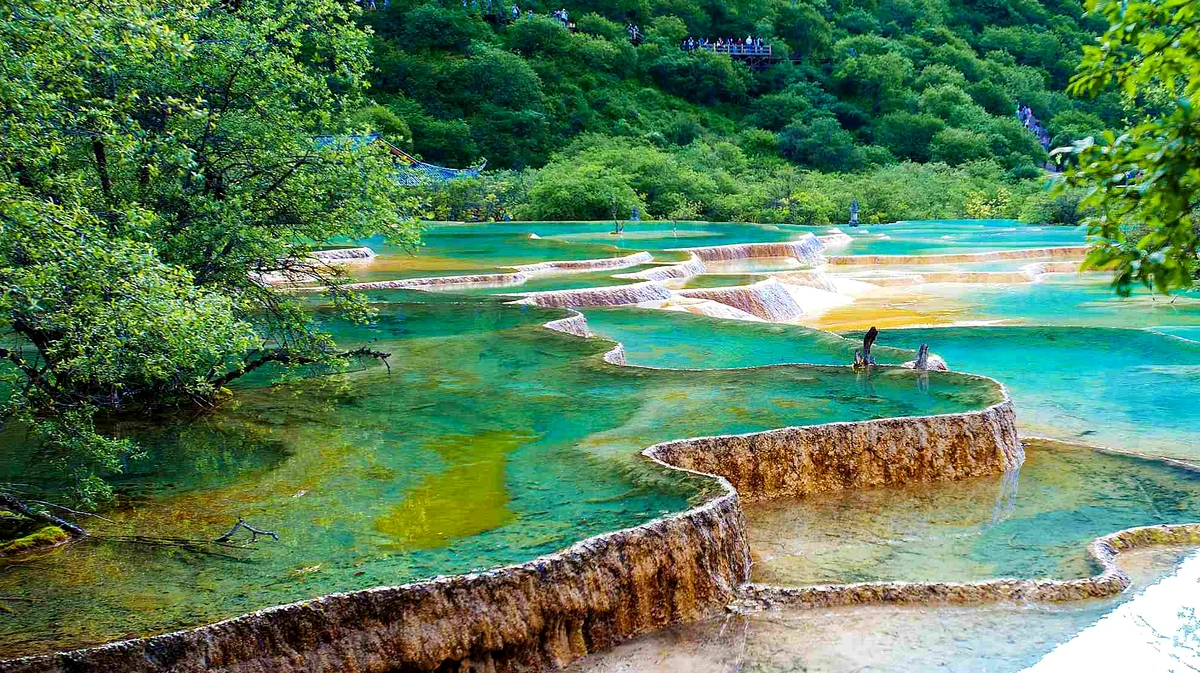
Exploring deeper into landscape creation engineering processes, hidden behind the romantic beauty of crystal waters shifting colors under sunlight is an intricate chain of chemical and biological reactions unfolding over tens of thousands of years. Structurally, the parent rock throughout the Jiuzhaigou basin primarily consists of Triassic carbonate rock strata, serving as a colossal repository of mineral compounds. As groundwater and rainwater dissolve these rocks, massive amounts of calcium bicarbonate ions are released, transforming currents into a nutrient-rich solution. Under the synergistic, flawless coordination of rapid water flow across topographical steps and the robust growth of endemic aquatic vegetation like moss mats, algae, and reeds, a wondrous biogeochemical process is triggered. When currents strike these vegetative obstacles, CO2 gas rapidly escapes into the air, altering pH concentrations and causing calcium carbonate to crystallize and deposit at astonishing speeds. This process builds extremely sturdy natural “travertine dams,” blocking flows to create breathtaking stepped lakes and unique travertine shoals. The ivory-white calcium sediment layers at lake bottoms, combined with suspended minerals and surrounding ecosystem reflections, refract light to gift the Haizi a vibrant multi-colored palette, alternating between deep turquoise, amber gold, and magical cobalt blue.
Accompanying the hydrological and karst geological wonders is a rich virgin forest ecosystem distinctly layered according to mountain slopes’ elevations, turning Jiuzhaigou into an invaluable natural biological museum of the Asian ecological transition zone. Vegetation blankets stretch from low to high elevations, beginning with broadleaf evergreen and deciduous forests at lower hills, ascending into temperate mixed forests overflowing with maple and birch hues, gradually transitioning into majestic subalpine coniferous forests featuring towering spruce and fir stands, and culminating on windswept high mountain slopes with alpine scrub and meadows stretching like giant carpets. This flawless ecological stratification provides abundant food sources and ideal sheltering habitats for countless rare wildlife species among the planet’s most endangered. This core survival zone shelters nationally protected mascots such as giant pandas sporting distinctive black and white coats, Sichuan snub-nosed monkeys with peculiar faces and lustrous fur, and massive takins moving silently through deep forest belts. All elements—from the Y-shaped feng shui terrain, rugged karst topography, magical calcium deposition mechanisms, to rich biodiversity—collaborate to sculpt a Jiuzhaigou that is not only visually stunning but also a living encyclopedic masterpiece of Earth sciences and landscape ecology.
Passing through wispy mists blending with the turquoise hues of paradise lakes, the Aba Jiuzhaigou Wetland Park (阿坝九寨沟国家公园) unveils another deep dimension: the humanistic cultural dimension, where traditional Tibetan architecture stands tall and proud across centuries as living evidence of survival artistry and absolute reverence for majestic nature. Far more than mere shelters against freezing winters, each dwelling, prayer flag, or Mani stone here resembles a page of history inscribed in precious timber, rammed earth, and mythology-imbued spirituality of the highland people in the Minshan region.
Delving into folk architectural spaces, structural systems and building materials hold the key to uncovering the unique mechanical and aesthetic mindset of Tibetans, epitomized by the log cabin structure known in Tibetan as Jiabang. Capitalizing on abundant virgin forest resources featuring endless spruce and fir forests, local craftsmen meticulously hand-carved mortise joints, interlacing them horizontally and vertically before stacking round log trunks to form sturdy load-bearing walls. The marvel of this Log Cabin Structure lies not only in exceptional thermal insulation against freezing high-mountain cold, but also encapsulates a modern engineering principle: immense toughness that effectively neutralizes and resolves seismic shear wave stresses whenever earthquakes unexpectedly shake this tectonic fault zone.
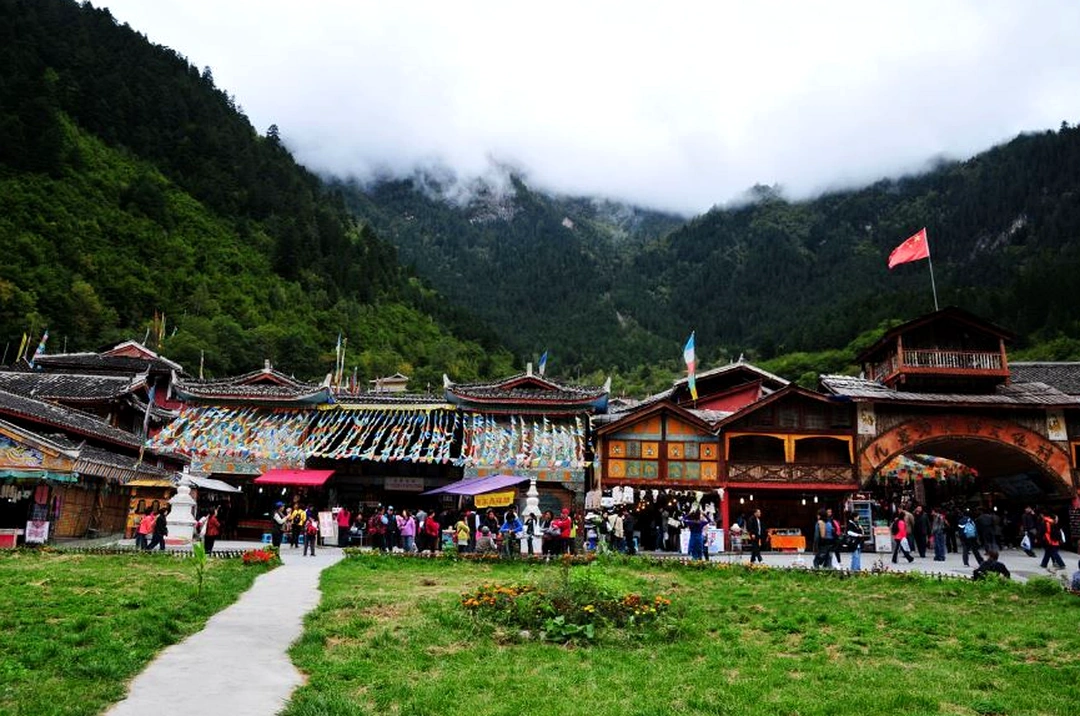
Alongside timber-building artistry, stone watchtowers soaring among residential clusters recall a turbulent historical epoch where military architecture and religious belief merged into one. These watchtowers typically utilized dry-stacked slate or bonded with thick yellow mud, designed with clear tapering from base to summit, creating a geometric mass possessing absolute mechanical stability against storm winds and geological tremors. To reinforce wall durability, Tibetans applied rammed earth wall-building techniques with cores packed with stone debris and clay, coated externally with smooth white lime or fine yellow clay. This protective cloak not only delivers pristine aesthetic beauty contrasting sharply with green forests and vibrant red decorative motifs, but also serves as a flawless thermal insulation membrane while effectively preventing fires for households.
The beauty of Aba Jiuzhaigou’s architecture is further sublimated through interior-exterior decorative arts and exquisite wood carving techniques, transforming door frames and beams into spiritual artworks imbued with Tibetan Buddhist imprints. On rustic timber bases, artisans meticulously carved traditional auspicious motifs familiar to Tibetans, highlighted by the Eight Auspicious Symbols including the Dharma Wheel, Treasure Umbrella, Golden Fish, Treasure Vase, Lotus, White Conch, Endless Knot, and Victory Banner. To adorn these patterns, they persistently utilized natural raw mineral pigments like cinnabar red, dark indigo, pristine white, turmeric, and emerald green, creating striking visual contrasts that harmonize seamlessly with natural mountain forest lighting, conveying prayers for peace, prosperity, and divine protection.
Completing this cultural landscape picture is layered belief imbued with distinct identity woven across all residential entranceways, where five-color prayer flags flutter in winds and white mantra-inscribed Mani stone piles sit quietly beside streams. According to traditional belief, every wind blowing through prayer flags or every step circumambulating Mani stone piles represents prayers delivered to heaven and earth, marking the flawless, enduring synthesis of primitive nature worship from antiquity and the compassionate spirit of Tibetan Buddhism. Standing amidst this space, visitors not only admire pure architecture but touch the heartbeat of a culture mastering how to lean upon nature, turning topographical harshness into an iconic identity masterpiece for a sacred heritage land.
When night falls over the legendary valley, draping the Aba Jiuzhaigou Wetland Park in ethereal high-altitude mists, local nightlife does not plunge into silence but transforms into an enchanting artistic realm. Unlike mass tourist destinations extending noise deep into heritage cores, managers and local authorities established strict ecological boundaries adhering unconditionally to World Natural Heritage preservation standards. All cultural consumer activities, nighttime artistic performances, and urban tourism life are centralized within Zhangzha town situated outside the valley gates. This spatial delimitation creates a refined ecological red line, ensuring fragile wildlife and ecosystems inside valleys remain undisturbed by light pollution or commercial noise, while opening a vibrant, modern cultural enjoyment coordinate for visitors leaving jade lakes behind at day’s end.
The heart of that nighttime artistic space is the grand cultural performance complex named Jiuzhaigou Eternal Love Scenic Area, where live-action art reaches peak visual technology. Stepping into this modern theater, audiences enter a heroic historical and cultural current through the masterpiece 《Jiuzhaigou Eternal Love》. The production merges multidimensional surround sound, spatial laser lighting, advanced hologram projection, and large-scale mechanical staging capable of astonishing transformations. From the opening chapter titled “Tibetan and Qiang Mythology,” viewers travel back to primeval creation times, witnessing deep roots and mysterious religious legends shaping minority identities in the Aba plateau. Enthusiastic dances, resonant long horns, and vibrant costumes vividly recreate a world view tied to nature, where deities reign over permanent snow peaks and gem-like glacial streams.
The flow of time sweeps audiences across historical ups and downs of Chinese feudalism and borderlands via the chapter “Great Tang War God.” This segment heroically portrays Princess Wencheng’s journey into Tibet, an arduous yet great historical endeavor where the Tang princess crossed innumerable perils to wed Songtsen Gampo, laying solid foundations for cultural, economic, and political exchange along the legendary Ancient Tea-Horse Road. Graceful sword dances, grand battle effects combined with peak lighting techniques authentically depict ethnic harmony spirits. Furthermore, “Legendary Years” immerses viewers in romantic yet tragic tales of merchants braving the Tea-Horse Road, carrying tea bricks, mineral salt, and silk across sheer cliffs in exchange for warhorses, bearing testament to the indomitable willpower of ethnic groups coexisting along the Hengduan mountain range.
The emotional climax converges in the chapter “Earth-shattering Tremor,” a theatrical wonder employing mechanical engineering and high-tech effects to recreate supreme universal love amidst adversity. Stages rumble and grounds fracture beneath audience feet, reenacting memories of the terrifying 2008 Wenchuan earthquake and the 2017 Jiuzhaigou event. Through light, shocking sound, and powerful performances by hundreds of actors, the show portrays fragile boundaries between life and death while honoring noble humanism, extraordinary courage, and miraculous life resurrection from ruins. Closing this emotional sequence is “Tibetan Jubilation,” a colorful performance featuring traditional Guzhuang dances where visitors and artists merge into unity circles, raising barley wine toasts, savoring fragrant butter tea, and immersing in authentic folk culture within Zhangzha town at night.
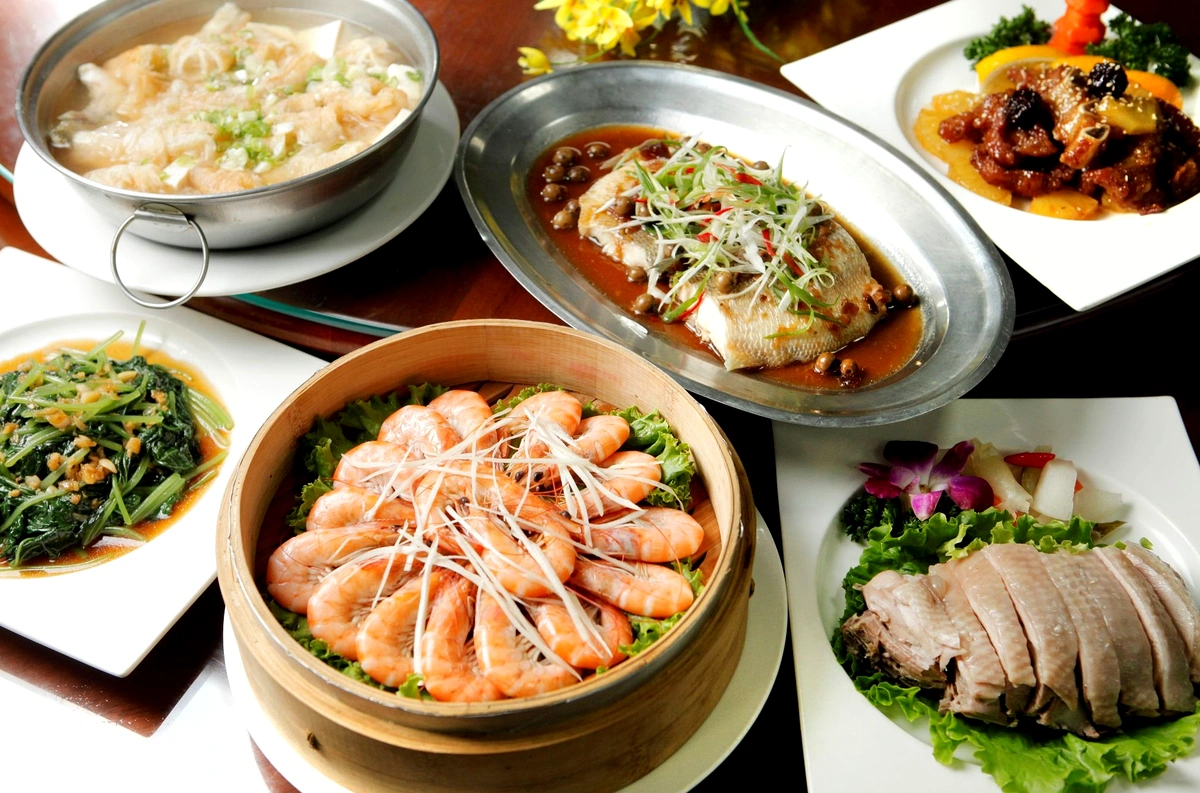
When silver mists drift softly across shaded pine branches in the Aba Jiuzhaigou Wetland Park, evening hearth smoke from Tibetan villages blends with rich aromas of primitive spices, opening a unique culinary world—a flawless intersection between downstream Sichuan’s renowned numbing-spicy style and the profound, contemplative Tibetan-Qiang highland food culture. Exploring this culinary treasury satisfies urban travelers’ palates while offering respectful entry into an enduring survival culture condensed across generations amidst biting high-mountain cold. Amidst such open spaces, combining Sichuan basin cooking refinement with bold nomadic highland spirit crafts a multi-colored flavor tapestry, awakening senses for every traveler setting foot here.
Reigning in the most revered position in the culinary life of Tibetans on the Aba plateau is Tsampa, also familiarly called Mamba (糌粑 – Tsampa) by locals—a traditional dry ration that has sustained countless generations through harsh weather extremes. The art of crafting Tsampa demands meticulousness and reverence right from selecting ingredients: premium highland barley grains or plump peas are roasted to perfection over a cast-iron skillet until releasing a rich aroma, then hand-ground into a fine powder. When dining amidst the bone-chilling cold of towering altitudes, one scoops a suitable portion of flour into a wooden bowl, mixes it with fragrant butter tea, a touch of tangy dried yogurt cheese, and white sugar, then skillfully kneads the mixture by hand into bite-sized balls to eat. This rustic delicacy is not only rich in energy to keep the body warm, but also serves as a natural remedy helping travelers effectively dispel symptoms of altitude sickness, allowing them to press onward into the magnificent wilderness.
Harmonizing seamlessly with the nutty richness of Tsampa is an indispensable bowl of golden butter tea (酥油茶), a beverage warming both the soul and body of the entire community. To create a standard batch of butter tea, locals boil aged brick tea leaves to extract a robust tea base, then blend it with pure fresh butter churned directly from Tibetan yak milk alongside an appropriate amount of rock salt. This mixture is poured into a specialized long wooden churn and vigorously beaten continuously with a bamboo plunger to emulsify, binding the butter and tea into a thick, creamy drink with a signature savory-rich flavor. Sipping a piping hot mouthful of butter tea in the crisp air of Jiuzhaigou sends a rich warmth spreading from the palate down the esophagus, awakening every shivering cell and providing abundant vitality for those who have spent a long day exploring the turquoise lakes.

Additionally, the local culinary canvas is adorned with humble dishes harboring refined culinary craftsmanship, epitomized by Jiuzhai Potato Ciba (九寨洋芋糍粑). Locals select potatoes with the highest starch content nourished by pure highland glacial meltwater, steaming them until tender before peeling away their thin skins. The essence of the dish lies in the pounding stage: the potatoes are placed into a large stone mortar and continuously pounded with a wooden pestle until achieving ideal elasticity and chewiness, then cut into bite-sized squares and pan-fried until crispy outside while remaining chewy inside, or dropped into a pot of sweet brown sugar syrup. Every fragrant, nutty piece of Ciba leaves an unforgettable aftertaste for first-time tasters.
The culinary experience in this land also guides the palate toward the delicate yet bold flavors of Tibetan-style yogurt. Fermented entirely naturally from pure fresh Tibetan yak milk, local yogurt boasts a thick, cream-like texture topped with a shimmering golden milk skin, delivering a rich, tangy aroma entirely distinct from conventional commercial yogurts. When eating, people typically sprinkle a bit of white sugar on top or drizzle pure wild forest honey to balance the flavors. Highland cuisine is also closely linked with hand-held Tibetan yak beef, selected from yaks grazing freely on lush green pastures at elevations above 3,500 meters and simmered pure in cool mountain spring water with wild peppercorns and aged ginger. The firm, chewy beef bursting with natural flavor is not only the pinnacle of highland culinary art, but also a symbol of hospitality and the enduring bond between humanity and the majestic heavens and earth here.
Exploring the natural masterpiece of Aba Jiuzhaigou Wetland Park requires thorough preparation to savor every single moment. To step into this earthly paradise, one must master the operating hours set by the scenic area management to optimize time. Specifically, during peak season running from April 1 to November 15 annually, the scenic area gates open to visitors from 08:30 to 17:00. Meanwhile, during low season beginning November 16 through March 31 of the following year, opening hours shift slightly later, operating from 09:00 to 17:00 daily. A crucial point to remember is that the scenic area strictly enforces a network-wide real-name online reservation and ticketing system, selling zero physical tickets directly at the gate. Under flow-control policies designed to protect the fragile ecosystem, daily visitor capacity is strictly capped between 30,000 and 40,000 entries. Therefore, it is mandatory to proactively book tickets in advance via official channels such as the official website or the WeChat account of the Jiuzhaigou Scenic Area. Ticket packages combine admission with eco-electric shuttle bus fares, as the valley’s vast expanse requires internal transit via centrally dispatched public vehicles to minimize emissions and noise impacts on the natural environment.
Regarding transportation connections to the Tibetan region of Aba, travelers can flexibly choose between air travel or modern railway and highway networks departing from central Chengdu. If flying, flights land at Jiuzhai Huanglong Airport, impressively perched beside Chuanzhusi Town at an elevation of 3,448 meters above sea level; from there, visitors catch an airport shuttle bus or private charter vehicle for approximately 1.5 to 2 hours to reach the valley entrance. For those preferring overland journeys and watching shifting landscapes along the route, high-quality long-distance coaches from Chengdu East Bus Station or Xinnanmen Bus Station run regularly to Jiuzhaigou. Notably, the launch of the Chengdu-Lanzhou Railway—with the segment connecting Chengdu to Huanglong now partially operational—allows travelers to take high-speed trains to Huanglongjiuzhai Station before transferring to dedicated direct shuttle buses heading straight to the scenic spot, significantly saving time and energy.
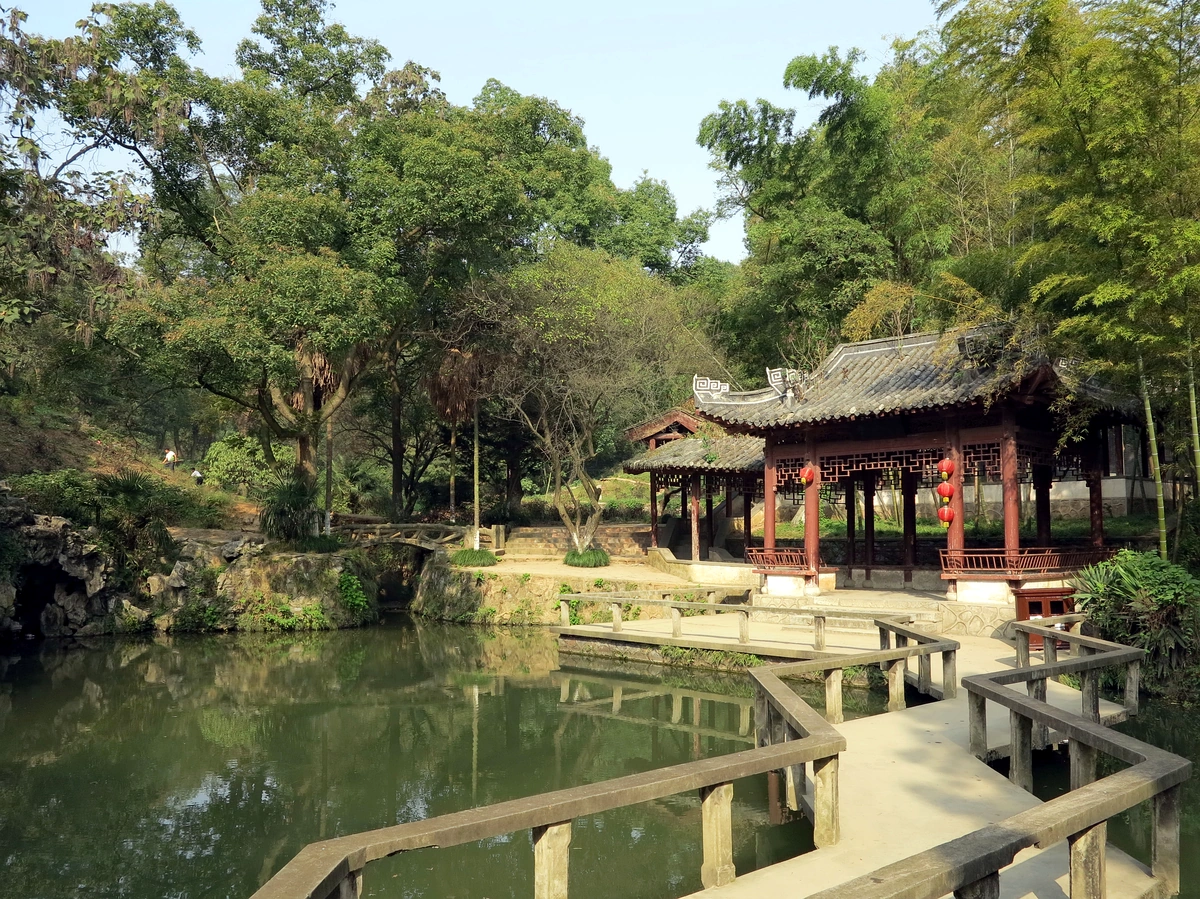
Once inside the scenic area, planning your sightseeing route plays a decisive role in fully appreciating the valley’s unique Y-shaped layout. Veteran exploration experts advise taking the very first morning shuttle bus upon entering straight up the right branch, Rize Valley, to admire solemn virgin forests, the magical shifting colors of Five Flower Lake, and the foaming white cascades of Pearl Shoal Waterfall. Around midday, shift your journey toward the left branch, Zezha Valley, home to the mirror-still Long Lake and the vibrantly colored sacred Five-Color Pond. Afternoon is the ideal time to leisurely explore the main axis, Shuzheng Valley, pausing beside the majestic Nuorilang Waterfall and admiring the Shuzheng Lakes cluster winding past traditional villages. Alongside bus transit, a meticulously maintained system of wooden boardwalks stretching along the lakes opens wonderful opportunities for walking exploration. For instance, the stretch from Mirror Lake to Nuorilang Waterfall is ideal for unhurried footsteps, allowing visitors to escape crowds while closely observing every detail of the hydrological ecosystem and lush flora.

However, the harshness and wonder of highland terrain also require travelers to equip themselves thoroughly with proper attire and acclimatization methods. Due to high-mountain geography, day-and-night temperature swings in Jiuzhaigou are extreme; even during summer months, morning sun can be intense, yet early mornings and evenings still call for thick jackets or lightweight down coats, whereas spring, autumn, and winter strictly demand heavy cold-weather parkas, windproof hats, and warm wool gloves. Furthermore, ultraviolet radiation on the plateau is intense, making UV-blocking sunglasses, high-SPF sunscreen, and wide-brimmed hats indispensable items. Regarding altitude sickness, with scenic elevations ranging from 2,000 to 3,100 meters above sea level, the vast majority of visitors adapt well, though a small number may experience mild dizziness; the key is strictly avoiding running or strenuous exertion while keeping glucose drinks or personal portable oxygen canisters on hand when needed. Finally, when visiting Tibetan villages scattered throughout the valley, travelers must show deep respect for indigenous religious beliefs and local customs, refraining from touching prayer wheels or sacred Mani stone piles without permission. Simultaneously, strict regulations banning smoking and littering throughout the entire scenic area must be observed unconditionally, upholding the “Leave No Trace” environmental principle to preserve this World Natural Heritage intact for future generations. To prepare thoroughly for exploring this wonder with professional support from guides deeply versed in local culture, you may explore detailed all-inclusive tour packages for an elevated and completely worry-free experience.