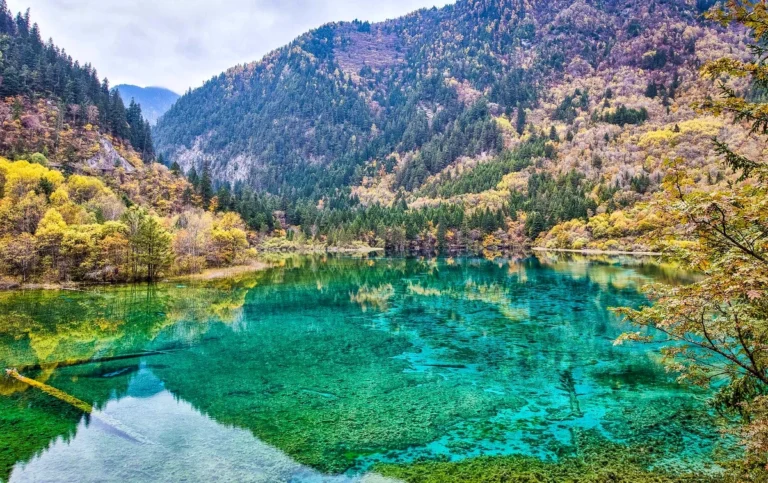
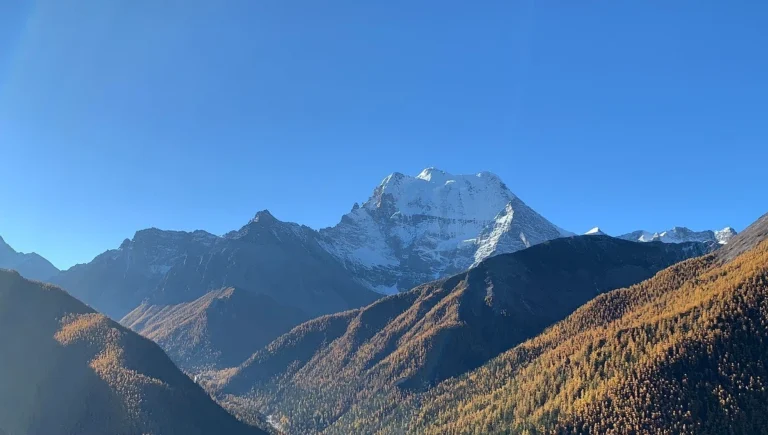
Going back in time to the deep origins of the great forests of Western Sichuan, the encyclopedic guide cordially invites readers to embark on a journey to decode the majestic historical and cultural strata of Wuhua Lake—the multi-colored jade gem located at the epicenter of the Jiuzhaigou scenic area. In terms of geological evolution, the natural origin of this extraordinary lake dates back to the magnificent epoch of the Late Quaternary period, tens of thousands to millions of years ago. In a breathtaking natural tectonic formation, the combination of limestone dissolution via Karst phenomena (karst limestone systems) alongside the sedimentary flow of overlapping waterfall tiers molded a colossal natural dam, creating a classic blocked-valley lake. Through the lens of ancient Tibetan literature as well as local historical records, this legendary body of water has for generations been commemorated with legendary honorary titles such as “Gongga Tso” (贡嘎错)—signifying the holy lake of the snow realm—or the poetic moniker “Colorful Sea” (Banlan Hai) to praise the sparkling water surface glistening with myriad magical hues akin to embroidered brocade.

Stepping past the Chinese imperial feudal era, particularly under the governance of the Ming and Qing Dynasties, the Jiuzhaigou basin in general and the Wuhua Lake territory in particular witnessed the formation and sustainable development of indigenous Tibetan communities. According to historical records, this region was once demarcated into nine traditional Tibetan villages (including Shuzheng, Hanye, Zezawa, Hejiaozhai, Pantin, Bangya, Yangna, Xiabaona, and Jianban), collectively managed by the imperial court and local authorities under the designation “Zharu Prosperous Administrative District” (扎如代管區). Unlike the bustling commotion of lowland metropolises, for centuries Wuhua Lake completely concealed itself beneath the shade of dense primitive forests, serving as a spiritual mountain trail and vital forest route for indigenous Tibetans during traditional nomadic livestock-grazing journeys, as well as their livelihood pursuits of foraging and harvesting rare medicinal herbs from the snow-capped highlands. Here, every inch of land and every ancient tree trunk along the lakeside is saturated with reverberating Mani chants and the nature-worshipping breath of Tibetan generations bound by flesh and blood to the motherland of Jiuzhaigou.
The vicissitudes of time and the currents of modern history have brought milestones that completely shaped the appearance of this natural masterpiece on the map of tourism and human heritage. Unlike the period of being forgotten in the misty haze of deep mountains, intensive scientific explorations and surveys began rolling out vigorously in the 1970s, bringing a pristine land out into the light of modern human civilization. Marking the greatest historical turning point was in 1992, when the ecological, geological, and scenic values of Wuhua Lake alongside the entire Jiuzhaigou system were officially recognized by the international community and inscribed on the UNESCO World Heritage Natural List. Continuing that glory, in 1997, it was further inducted into the World Network of Biosphere Reserves, affirming the stature of a paramount primitive forest-water ecosystem that required rigorous conservation against global climate fluctuations. By 2007, the journey affirming the peak stature of this scenic spot was perfected upon its official recognition as a China National 5A Tourist Scenic Area. Through countless temporal changes, from a pool formed by Karst sediment in primeval times through the ups and downs of feudal dynasties and shifts in the era of global heritage conservation, Wuhua Lake of Jiuzhaigou has now become an immortal symbol of the exquisite harmonization between geological history, anthropological culture, and the enduring spirit of nature protection across the ages.
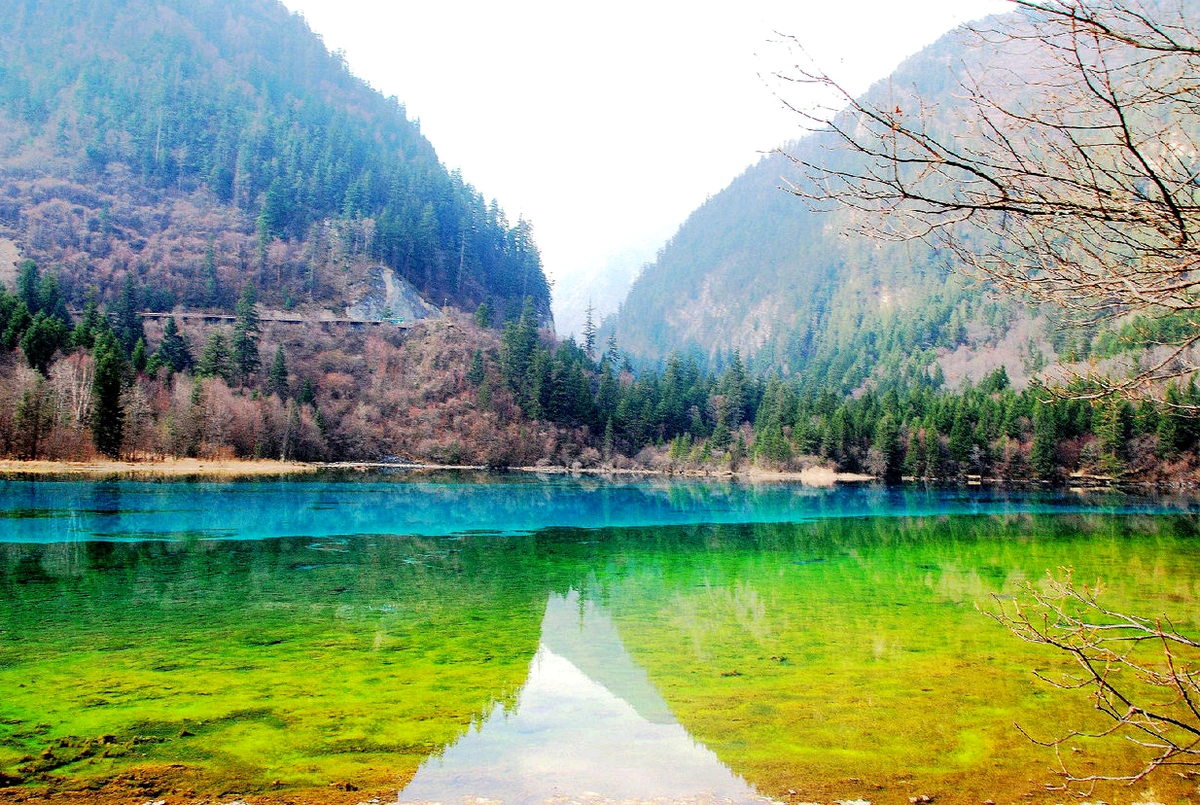
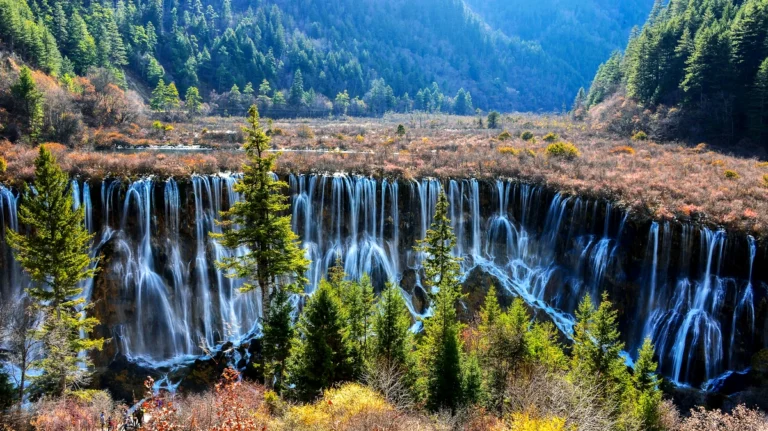
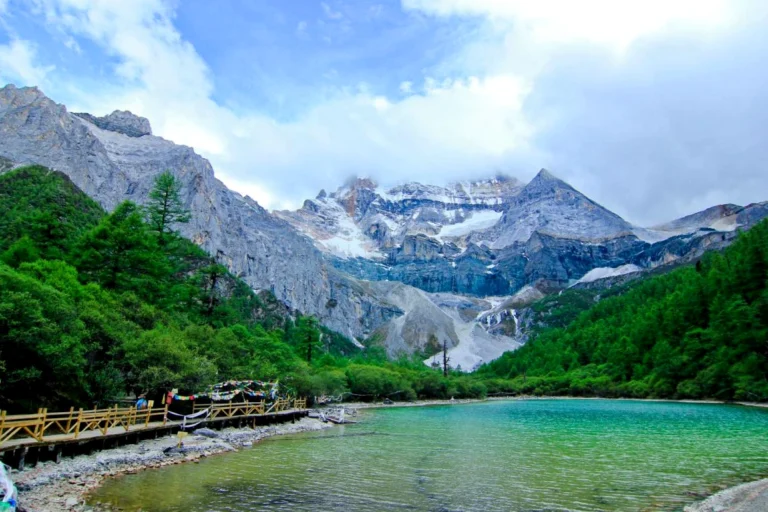
Stepping into the dreamlike realm of Jiuzhaigou, travelers seem to cross the boundary of the real world to encounter a grand natural tectonic masterpiece named Wuhua Hai, also known as Wuhua Lake. Presenting impressively at an altitude of approximately 2,472 meters above sea level and spreading across an area of about 90,000 square meters, this extraordinary scenic spot rests peacefully in the middle section of Rize Valley, serving a profoundly miraculous hydrological transit role. In terms of spatial structure and hydraulic process, Wuhua Lake receives pristine water from the upstream Kongque River (Peacock River), from which waters continue to roll and cascade downstream, forming the renowned Pearl Shoal Waterfall. This interconnected flow not only creates a dynamic aquatic ecosystem but establishes a continuous landscape axis, fully shaping the geological and aesthetic value for an entire heritage valley.
Viewed from the perspective of cultural anthropology and the indigenous planning mindset of the Tibetan people, the Feng Shui terrain of Wuhua Lake is positioned as a most sacred acupoint within the entire mountain-water system of the holy land. In Tibetan highland Feng Shui traditions, high-altitude lakes have never been mere geographical entities, but are always revered as the dwelling places of Dragon deities or the origins of mountain mother goddesses. Converging in a depression embraced by high mountain ranges, Wuhua Lake perfectly possesses the “relying on mountains and facing water” topographical structure—a classic “sit on the mountain, face the water” site layout that helps accumulate vital energy and nourish the cosmic energy flow. Thanks to the shelter of surrounding mountain ranges, this location is wind-sheltered and qi-accumulating, forging a distinctive microclimate that transforms the lake surface into a sacred space possessing both the kinetic energy of water and the tranquil, steadfast stillness of the great forest, consequently revered across generations of indigenous residents as an inviolable holy lake.
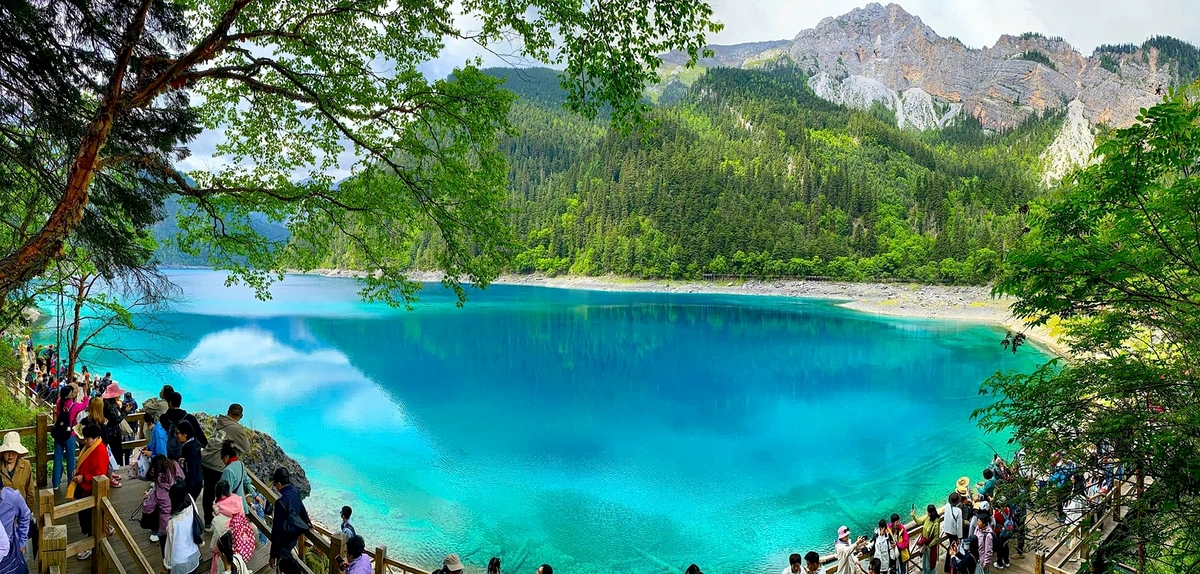
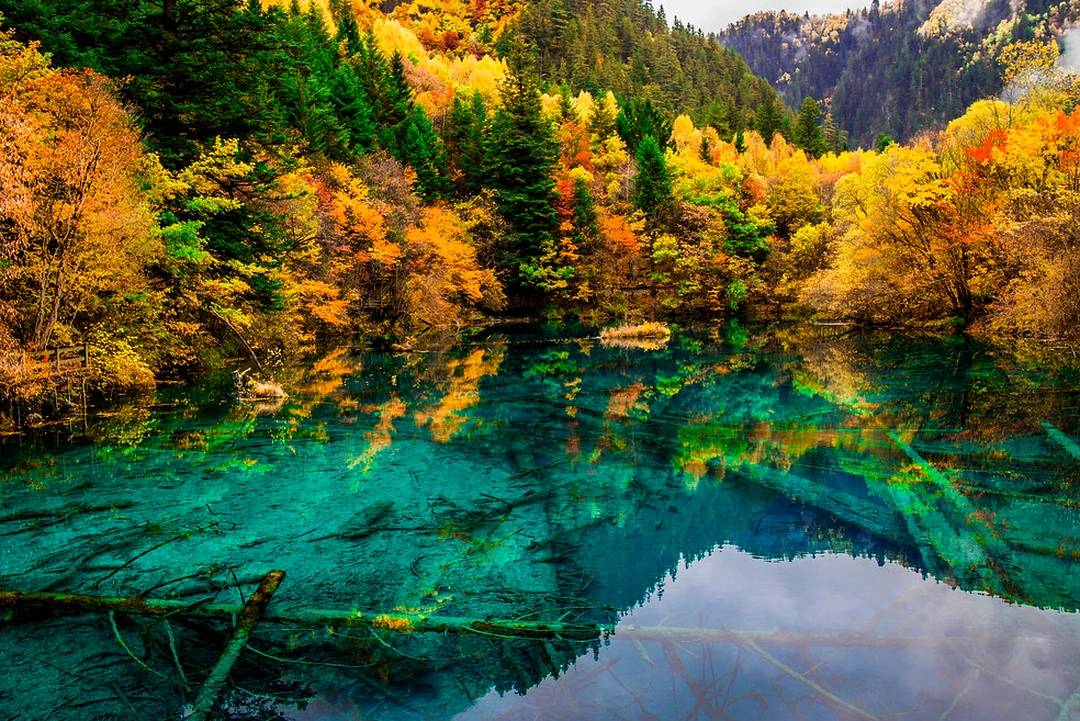
Behind that legendary spiritual facade lies an extraordinarily sophisticated and grand natural technical process operated by geochemical and biological laws spanning tens of thousands of years. The core element creating Wuhua Lake’s unique, peerless nature is its extremely transparent water body laden with abundant inorganic mineral content, notably dissolved calcium carbonate. As pristine water flows through geological strata, the presence of endemic aquatic vegetation—most notably freshwater algae species such as Chara (stoneworts)—acts as powerful biological catalysts accelerating the precipitation rate of calcium carbonate. This biochemical process occurs continuously, generating calcified sedimentary layers tightly enveloping fallen trees and dry branches lying at the lake bottom. Centuries pass, yet those submerged logs do not rot; instead, they are cloaked in a crystalline quartz-like mantle, solidifying into brightly colored paleontological relics shimmering beneath crystal-clear, mirror-like waters.
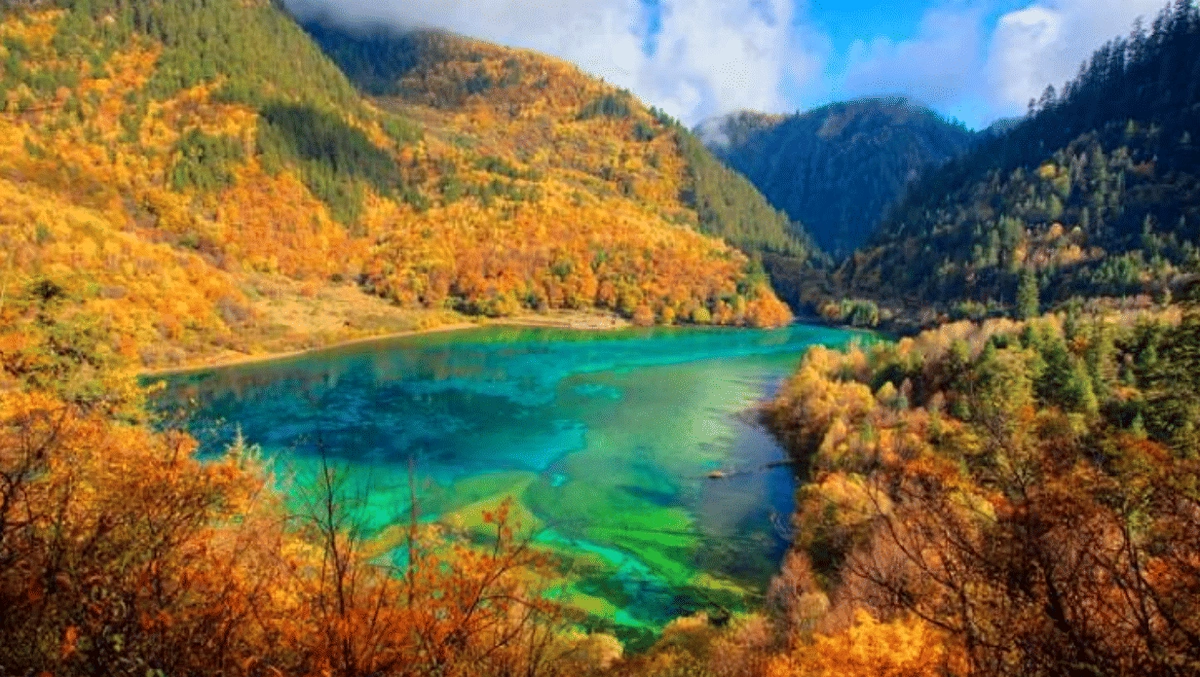
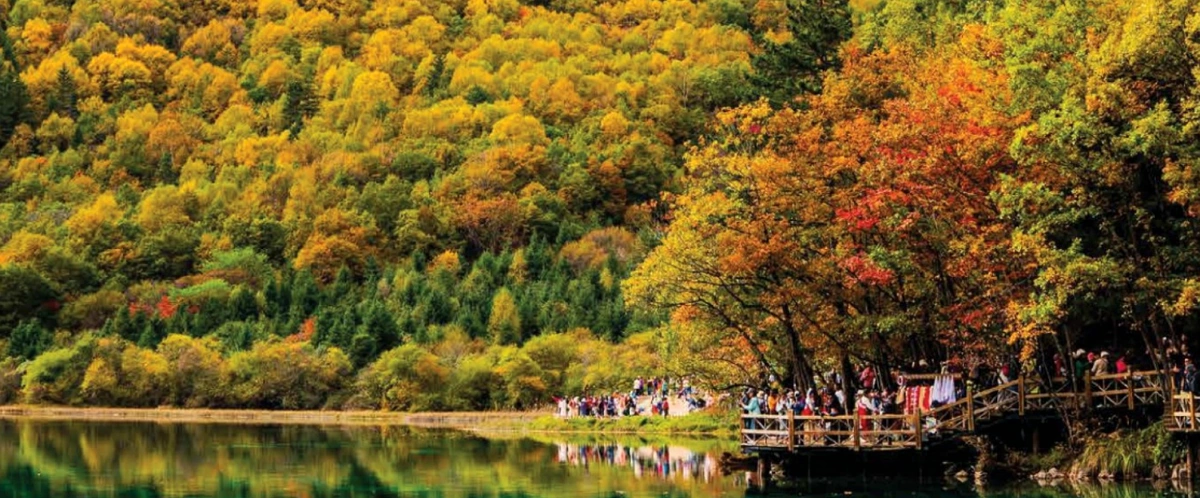
Beyond the water surface, Wuhua Lake’s landscape painting is perfected by the spectacular vertical vegetation zoning of surrounding mountain slopes. Surrounding the lake, the forest ecosystem serves as a colossal green crown, distinguished by the rich interweaving of temperate deciduous mixed forest tree species, dominated absolutely by populations of Betula ermanii (red birch) and Abies (fir/spruce). This altitudinal zonation creates a remarkably rhythmic color transition across temporal cycles, reaching its zenith precisely upon autumn’s arrival. When chilly early-season winds sweep through the valley, forest groves around the lake simultaneously transform, painting a picturesque landscape with vibrant hues ranging from art yellow, deep orange to crimson red and the dark green of conifers, reflecting upon mineral-rich waters to turn Wuhua Lake into a massively shifting palette—a testament to nature’s eternal tectonic power.
Stepping into the deep spaces of Jiuzhaigou, where Wuhua Lake emerges as a most magnificent wonder, what prompts cultural researchers and modern landscape engineers to doff their hats in admiration is not merely the pristine beauty bestowed by creation, but also the philosophy of minimal human intervention in this natural entity. Unlike conventional artificial structures shaped by bricks, cement, and the violent strokes of human hands, Wuhua Lake’s greatest grand “architect” is nature itself, where time, mineral flows, and the primeval ecosystem spontaneously delineate a flawless artistic space. However, to enable millions of travelers to admire this masterpiece without jeopardizing landscape fragility, a special infrastructural engineering project was born, crystallizing advanced ecological planning mindsets.
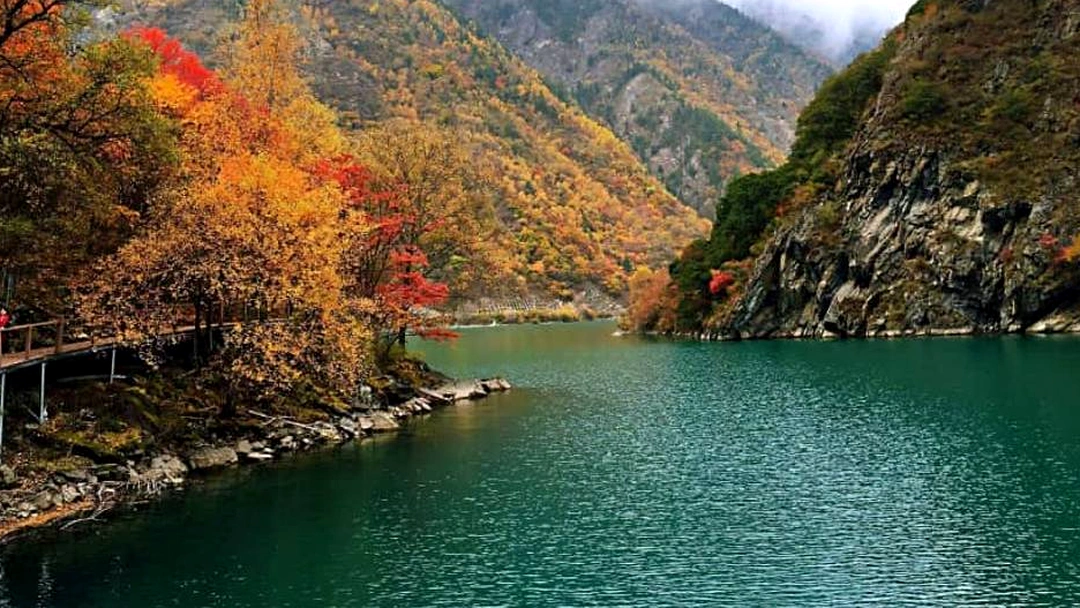
The wooden boardwalk and ecological trail system embracing Wuhua Lake stand as eloquent proof of the craftsmanship and practical scale of spatial conservation work here, where modern technology was duly restrained to serve nature’s sanctity. Instead of heavy, sturdy reinforced concrete structures that could permanently fracture geological structures, planners applied construction solutions utilizing lightweight steel structural technology as a solid foundational layer combined with high-grade anti-corrosive wooden plank surfaces. This entire walkway system is designed with a suspended elevation, maintaining a distance of thirty to fifty centimeters above land and water surfaces. This sophisticated design plays a decisive role in decisively preventing traditional compressive pressure transmission onto the extremely fragile and brittle calc-sinter (tufa) sedimentary layer, while keeping subterranean flows and mineral deposition processes entirely uninterrupted and natural.
Regarding practical spatial structure, these pathways do not run bluntly straight; instead, they meander softly, adhering to every natural curve of the shoreline and valley bends. Spatial shifts open up multifaceted vistas for travelers, ranging from elevated vantage points encompassing the entire magically color-shifting water surface to close-up lake-edge curves where one can gaze upon individual ancient tree trunks submerged beneath mirror-clear waters. At vital strategic viewing bends, specialized observation platforms such as the renowned Tiger Mouth area have been carefully designed and arranged to optimize visual experiences without disturbing surrounding wild spaces. Every minute detail, from safety railing heights to warm faux-wood paint tones, was thoroughly studied to blend entirely into surrounding pine and ancient beech forest backdrops, generating a flawless resonance between artificial landscape architecture and the primeval ecosystem.
The methodology behind this construction scale embodies the living incarnation of modern landscape art, where humans accept stepping back to yield space to nature’s grandeur via sustainable symbiotic principles. Strictly controlling pedestrian traffic and mitigating soil erosion along lake slopes not only safeguards the integrity of millennia-old geomorphological structures but preserves Wuhua Lake’s extraordinary aesthetic value. Every step across those suspended wooden planks serves as a refined reminder of heritage preservation responsibilities, transforming experiences into quiet, solemn, and reverent dialogues between contemporary humans and the Earth’s primeval roots.
When night falls over Jiuzhaigou valley, casting a thin mist-drenched silk veil of absolute tranquility over Wuhua Lake’s magical waters, the natural world enters an entirely distinct biological rhythm wherein humans must retreat to yield room to wildlife survival. Unlike mass tourism philosophies that frequently transform natural wonders into dazzling nighttime light stages, Jiuzhaigou National Nature Reserve—especially the core area surrounding Wuhua Lake—strictly enforces closed management regulations after sunset and abides unconditionally by ecological carrying capacity red lines. Here, all nocturnal live-art development projects, artistic lighting installations, or night-market cultures are thoroughly prohibited. This strategic decision is not merely a visual landscape conservation measure, but an unshakeable fortress protecting habitats for the world’s most endangered wildlife species such as giant pandas, Sichuan snub-nosed monkeys, and takins during their golden foraging and breeding hours.
Furthermore, maintaining primeval darkness at Wuhua Lake holds vital survival significance for the lake’s delicate aquatic ecosystem. Ecologists have demonstrated that high-intensity artificial light at night severely disrupts the natural photosynthesis of benthic algae, abruptly alters underground flora growth cycles, and triggers chain reactions degrading the pristine water sources serving as the valley’s soul. That thorough respect for natural rhythms has helped Wuhua Lake preserve its pristine, immaculate beauty across millennia without being defiled by the bustling artificial lights of modern civilization. However, that does not imply travelers must completely forgo vibrant cultural experiences when setting foot in this sacred land, for nightlife and art appreciation spaces have been artfully planned to relocate outside the heritage core zone, positioning themselves squarely at Jiuzhaigou’s gateway town of Zhangzha.
In this specialized cultural buffer zone, nocturnal life unfolds vividly and identifiably through national-scale live-action shows such as the primitive Tibetan-Qiang song-and-dance epic “Jiuzhaigou Eternal Love” or the legendary drama “Tibetan Mystery.” These peak artistic programs utilize cutting-edge digital sound and lighting systems to grandly recreate valley formation histories, protective deity legends, alongside spiritual lives and nature-worshiping beliefs of Tibetan and Qiang peoples across centuries. Art appreciation spaces here blend smoothly with traditional culinary districts, where travelers immerse themselves in aromatic fragrances of warm yak butter tea, herbal grilled mutton, and jaw-harp and skin-drum melodies echoing amidst plateau forests, generating a sophisticated, harmonious contrast: daytime immersion in Wuhua Lake’s tranquil, pristine solar beauty, and nighttime elevation alongside fiery indigenous cultures at the gateway.
Amidst the biting cold of the borderlands between Sichuan, where rugged terrain once isolated primitive valleys from modern civilization, culinary cultures within Tibetan and Qiang villages bordering Wuhua Lake and Jiuzhaigou are not merely biological fulfillment, but have risen to an extraordinary intangible heritage system. Miraculous adaptation to harsh mountain ecological conditions forged a unique culinary school, synthesized from nature’s pure ingredients and heirloom preparation techniques passed down centuries. As twilight descends over snow-draped peaks, hearth smoke billowing from rammed-earth and pine-wood dwellings summons travelers into nostalgic gastronomic journeys wherein each dish recounts tales of settlement history and ancient cross-cultural synthesis between Tibetan and Qiang peoples.
Presiding centrally over winter banquets or sacred indigenous festivals is Tibetan Earthen Hot Pot, also known as Tibetan Earthen Hot Pot (藏式土火鍋). Unlike modern commercial hot pots, this vessel is cast from traditional terracotta featuring central chimneys stoked with glowing charcoal, generating comforting warmth permeating entire rooms. The dish’s soul lies in its broth, meticulously simmered for many hours from premium Yak bones—the proud beasts of the highlands—combined with natural mountain-slope herbs like dangshen (Codonopsis pilosula), Xinjiang red dates, and goji berries. When broths transform into deep amber and steam vigorously, thinly sliced yak meat resembling silk, wild foraged mushrooms from Jiuzhaigou primeval forests, and rich tofu absorbing dairy-butter flavors are added. The deep sweet richness of yak meat coupled with wild mushroom freshness and herbal warmth orchestrates a sensory symphony awakening all senses, banishing highland mountain cold.
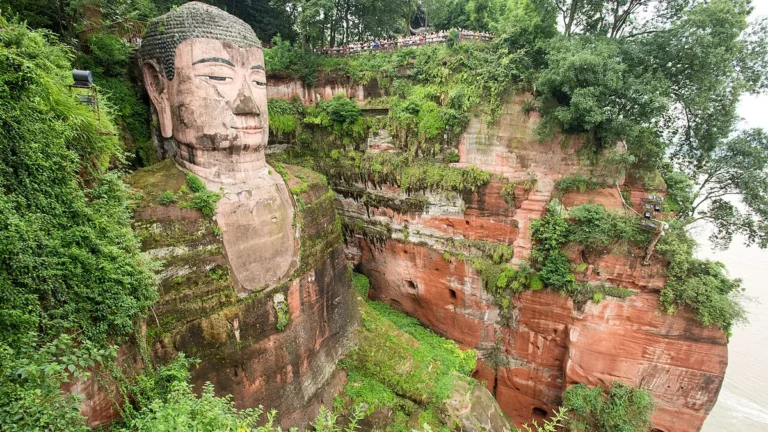
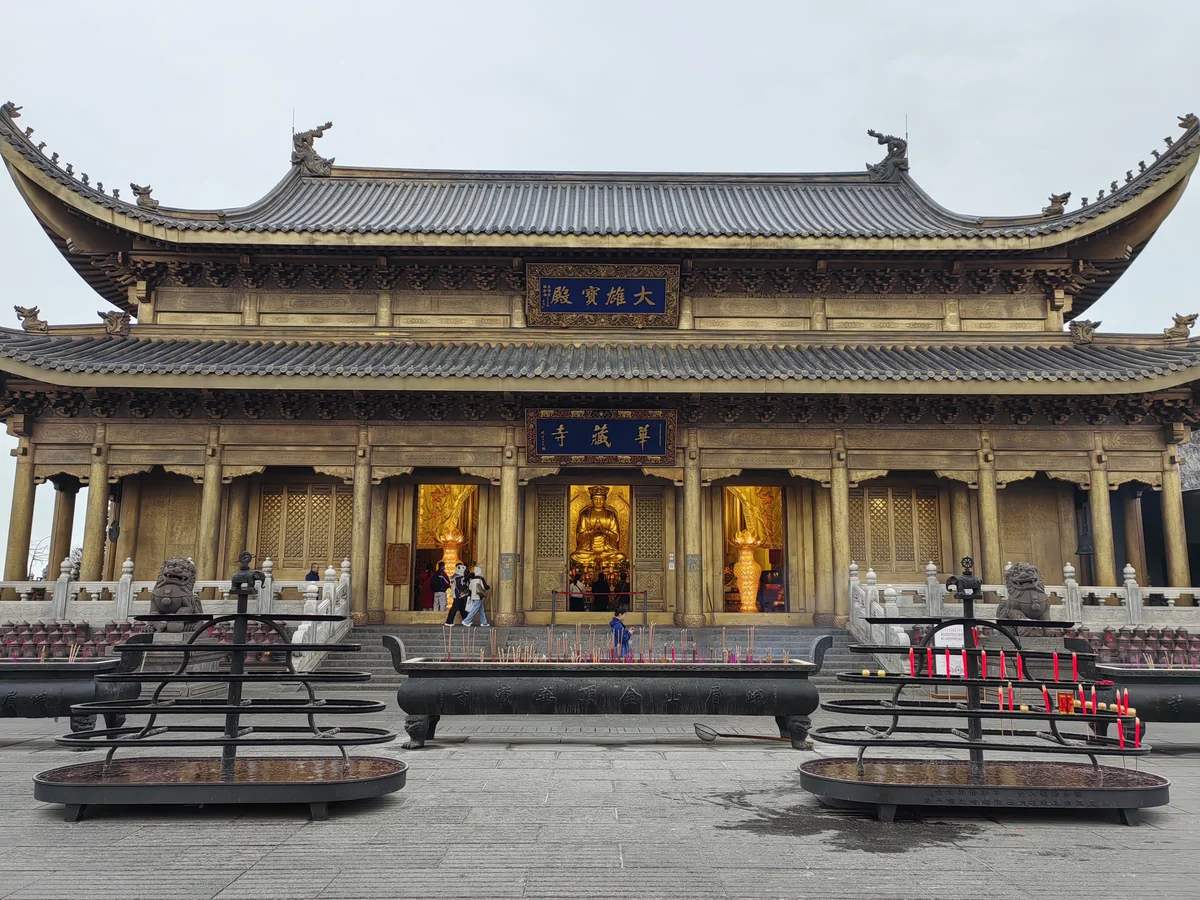
The journey exploring world heritages in ancient Shu lands becomes more fulfilling when combining lake and waterfall beauty with a pilgrimage to the grand statue of Samantabhadra Bodhisattva at Mount Emei and Sichuan’s Golden Summit.
Alongside steaming hot pots, indigenous tables cannot omit nomadic beverages and staple foods. To initiate mornings or welcome esteemed guests, Tibetan hosts invariably present steaming hot bowls of tea prepared via traditional methods. This beverage stems from rhythmic, continuous churning between premium dark brick tea boiled stoutly with fresh yak milk and churned fresh butter (酥油茶 – tsampa tea), forging thick, light-brown liquids combining tea’s mild astringency with mountain butter’s rich fragrance. Accompanying tsampa tea are tsamba cakes (糌粑 – tsampa), traditional staples made from roasted highland barley flour (Hordeum vulgare var. coeleste) kneaded directly by hand within bowls alongside butter tea and dried cheese scrapings (奶渣), delivering enduring energy for nomads traveling horseback all day. During family gatherings or major festivals, naturally fermented highland barley wine (青稞酒) with mild ABV, gentle sweetness, and signature barley aromas bridges human emotions with untamed nature.
Indigenous culinary heritage extends further to rustic yet meticulous creations, exemplified by mashed potato cakes (洋芋糍粑 – yangyu ciba). Small potatoes thriving on plateau terraced fields, though modest in scale, possess distinctive starch content and robust nuttiness thanks to high-altitude soils. Potatoes are boiled until tender, then pounded and churned continuously in large wooden mortars until achieving sticky, glossy, elastic consistency like glue. Upon consumption, chewy potato slices are cut using string or spoons, served with specialized dipping sauce comprising crushed roasted walnuts or spicy stir-fried sour mustard pickles (酸菜辣椒醬). Potato chewiness blending with walnut richness and spicy pickle tanginess crafts unforgettable casual delicacies for anyone tasting them. Through such inherited flavors, Jiuzhaigou emerges not merely as a natural wonder featuring brilliant multi-colored lakes, but preserves a living, profound, and humanistic culinary heritage.
Exploring Wuhua Lake of Jiuzhaigou demands not only aesthetic sensitivity toward magical landscapes but practical, thorough preparation and mastery of strict heritage management regulations. To safeguard the fragile yet proud valley ecosystem, the entire scenic area enforces China’s strictest management mechanisms, starting with entry time controls. Conservation gates open for visitors at 07:30 AM and initiate campus clearances around 17:00 PM daily, requiring highly scientific scheduling to avoid missing any lighting interplay moments across multi-colored waters.
A decisive success factor is the ticketing procedure. All ticketing applies large-scale online real-name systems coupled with daily visitor caps to mitigate ecological pressures, peaking at roughly 41,000 visitors daily. Consequently, sell-outs occur constantly with zero direct gate sales, forcing travelers to finalize bookings via official channels weeks or months prior. Upon reaching tourist checkpoints, human-vehicle separation rules and public green-bus transit modes are strictly enforced; all private self-driving vehicles must remain in valley gateway parking lots, yielding space to green-energy bus fleets shuttling visitors across stream branches.
Drawing from veteran travelers’ experiences and local researchers, the golden hour to fully appreciate Wuhua Lake’s magical beauty involves utilizing morning hours—beginning with direct buses running to Rize Valley’s highest point, then leisurely walking downstream across landscape tiers. 10:00 AM to 14:00 PM represents the most miraculous timeframe when overhead sunlight pierces crystal-clear waters, awakening thousands of minerals and lake-bottom algae, generating dazzling light refraction with interwoven bands of sapphire, jade, amber yellow, and ruby resembling colossal brocade carpets. However, with average altitudes reaching 2,472 meters, diurnal temperature amplitudes are massive, bringing biting morning and evening cold, requiring spring and autumn visitors to pack thermal fleece jackets along with waterproof, high-traction hiking boots for wet trails.
Reverence for pristine nature manifests via iron-clad disciplinary rules safeguarding heritage for posterity. Management strictly prohibits crossing safety barriers, touching, wading, or stepping upon tufa shoals—rare geological formations taking millennia to form. Furthermore, the entire reserve is designated a smoke-free zone, while waste sorting is enforced with strict penalties to ensure zero debris pollutes the pristine water systems of highland lakes. To prepare for comprehensive expeditions ensuring safety and thorough historical-cultural understanding, travelers can reference our all-inclusive tour packages custom-designed by experienced expert teams.