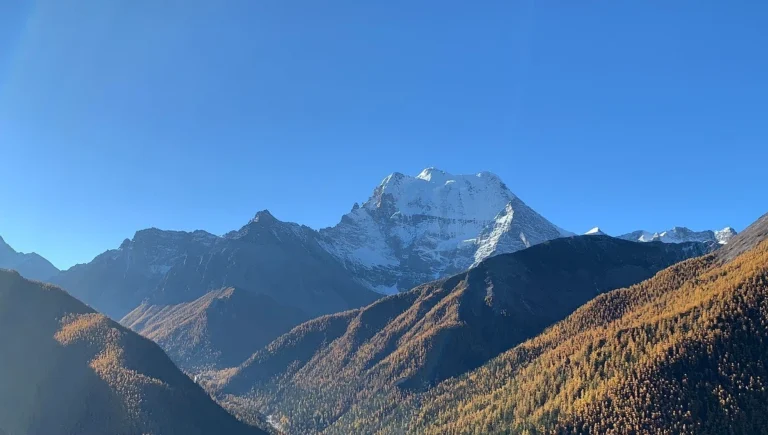
Tracing the river of time back to the primordial eras of the Qinghai-Tibet Plateau, the sacred realm of the Three Sacred Mountains of Yading—comprising the three majestic snow-capped peaks of Xiannairi, Yangmaiyong, and Xianuoduoji—is not merely a masterpiece of natural geological creation, but also a dense spiritual and cultural space that preserves the profound upheavals of religious and political history in the Kham region. Before the Tubo dynasty expanded its power and shaped the political map of Tibet, this entire region was completely under the embrace and dominance of the indigenous Bonism religious system. In that ancient worldview, the three snow-capped peaks standing majestically amidst the sea of clouds did not bear Buddhist names as they do today, but were revered as Yul-lha—supreme patron deities and powerful guardians protecting the lives, fields, and herds of the nomadic tribes living along the freezing glacial streams. Their presence was intertwined with the animist realm, where mountain rocks, pine forests, and water sources all harbored inviolable supernatural powers.
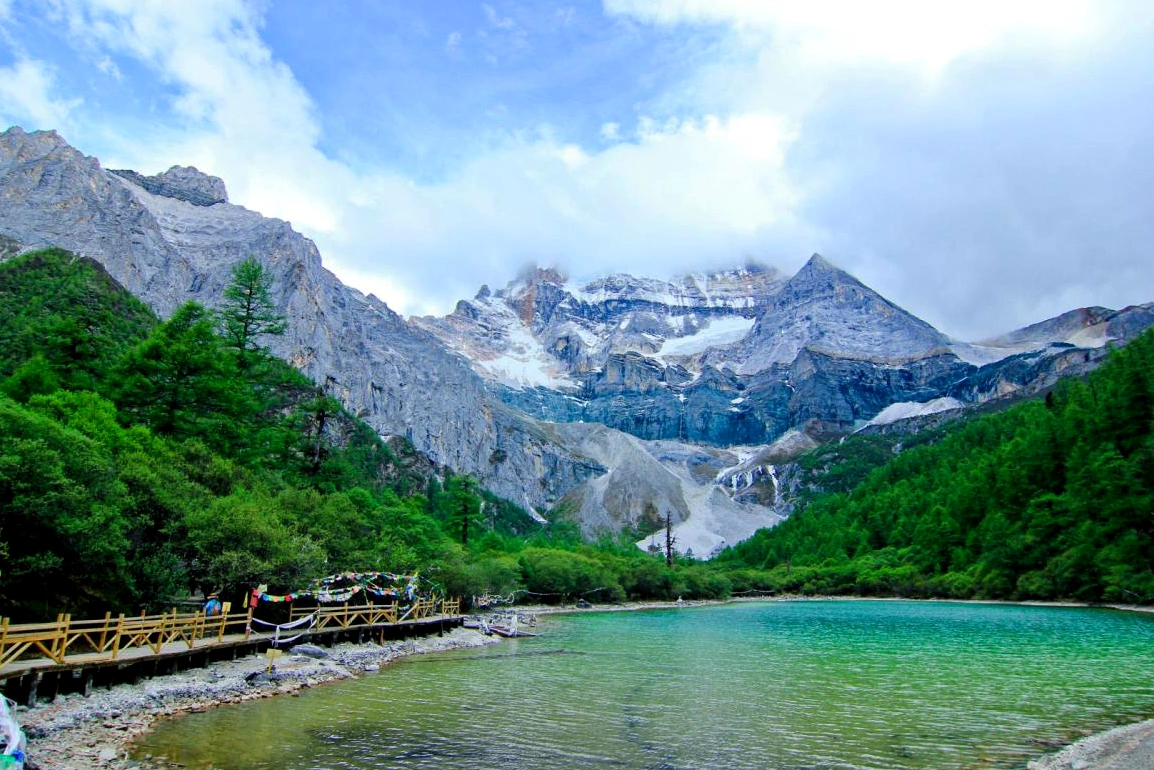
A major turning point in the spiritual history of Yading took place in the 13th century during the Yuan dynasty, when high monks of the Sakya and Karma Kagyu sects crossed high passes and deep chasms to come to Daocheng (then known as Daoba) to propagate the Buddhist Dharma. Amidst this fervent missionary current, the great master Karmapa Rangjung Dorje, also known in Tibetan historical records by the honorific title Karmapa Xirang Sengge, personally set foot here, conducting special incantation and blessing rituals for the three snow-capped peaks, officially fusing the indigenous mythological space into the profound Mandala system of Vajrayana. From the ruins of Bonism, the three mountains were revered as the Three Lords of the Snow Mountains (Gangs-ri gSum-mgon-po), symbolizing three great Bodhisattvas: Avalokiteshvara (Chenrezig), Manjushri, and Vajrapani. This transformation not only marked an ideological revolution but also turned Yading into a supreme pilgrimage center of the Tibetan Buddhist world.
By the 17th century, during the golden age of the 5th Dalai Lama, the prosperity of the Gelug sect breathed new life into the deep valleys of Daocheng. Monastic systems and meditation outposts began to spring up everywhere, notably the construction of Zhaguangpeng Monastery and the Yading Village meditation site, creating a solid spiritual network connecting the local resident community with major religious power centers in central Tibet. Ascetics and practitioners chose the perilous rock caves along the snowy cliffs to practice meditation, leaving behind an invaluable intangible cultural heritage including scriptures, rock-carved inscriptions, and classical historical records, most notably the work “Chronicles of the Three Lords of the Snow Mountains” (三怙主雪山志). This historical text details the profound merits of performing ritual circumambulation (Kora) around the three sacred mountains, affirming that completing the circumambulatory circuit around the Three Sacred Mountains brings consummate merit equivalent to a lifetime of devout pilgrimage to the Jokhang Temple in Lhasa and the sacred Mount Kailash.
The 20th century witnessed a globally transformative milestone as Yading stepped out of the fog of geographical isolation to enter the modern world through the lens of the talented Austro-American explorer Joseph Rock. Between 1928 and 1930, serving as an explorer and photographer for the National Geographic Society of the United States, Joseph Rock undertook multiple expeditions penetrating the Tibet-Sichuan borderlands, witnessing firsthand the pristine, unravaged majestic beauty of the Gongga Risonggongbu mountain cluster (貢嘎日松貢布). In January 1931, an article titled “Contributions to the Geography of Western China,” accompanied by an emotionally rich feature report and a series of earth-shattering black-and-white photographs, was published in National Geographic magazine, officially introducing the Three Sacred Mountains of Yading to the Western public. His mesmerizing writings about towering snow peaks, valleys overflowing with wild flowers, and the nature-revering lifestyle of the local Tibetans directly inspired profound artistic creation for British novelist James Hilton to compose the classic novel “Lost Horizon” (coining the place name “Shangri-La”), turning Yading into the primal prototype and the eternal dream of an earthly “True, Good, and Beautiful” that millions of travelers from afar continue to seek out to this day.
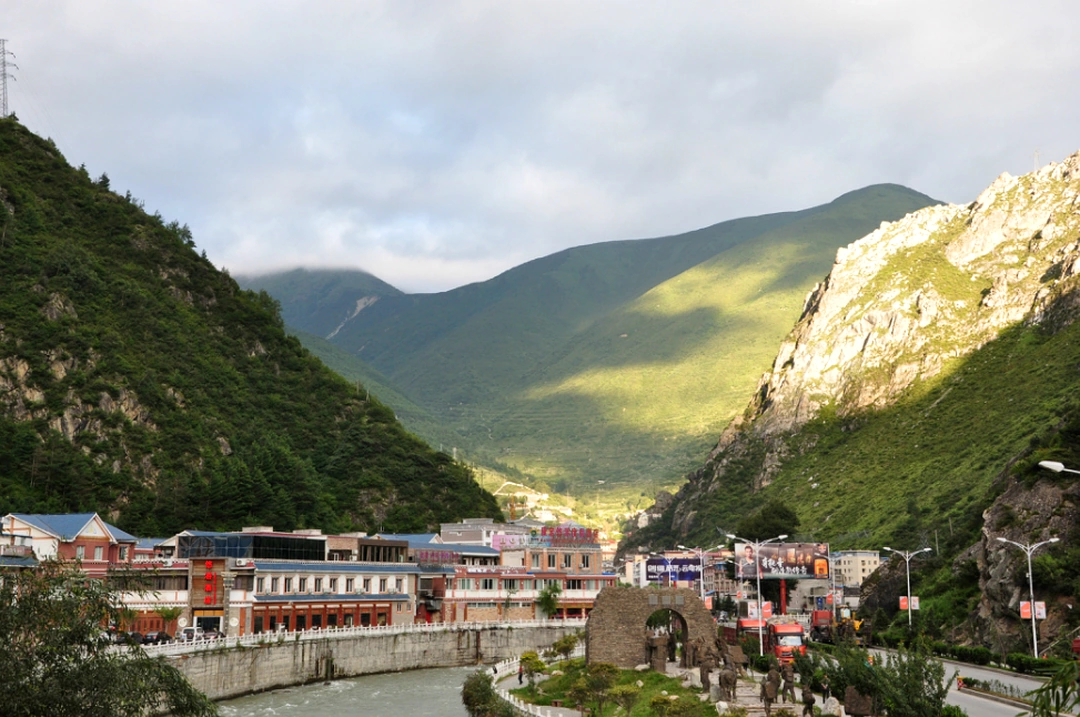
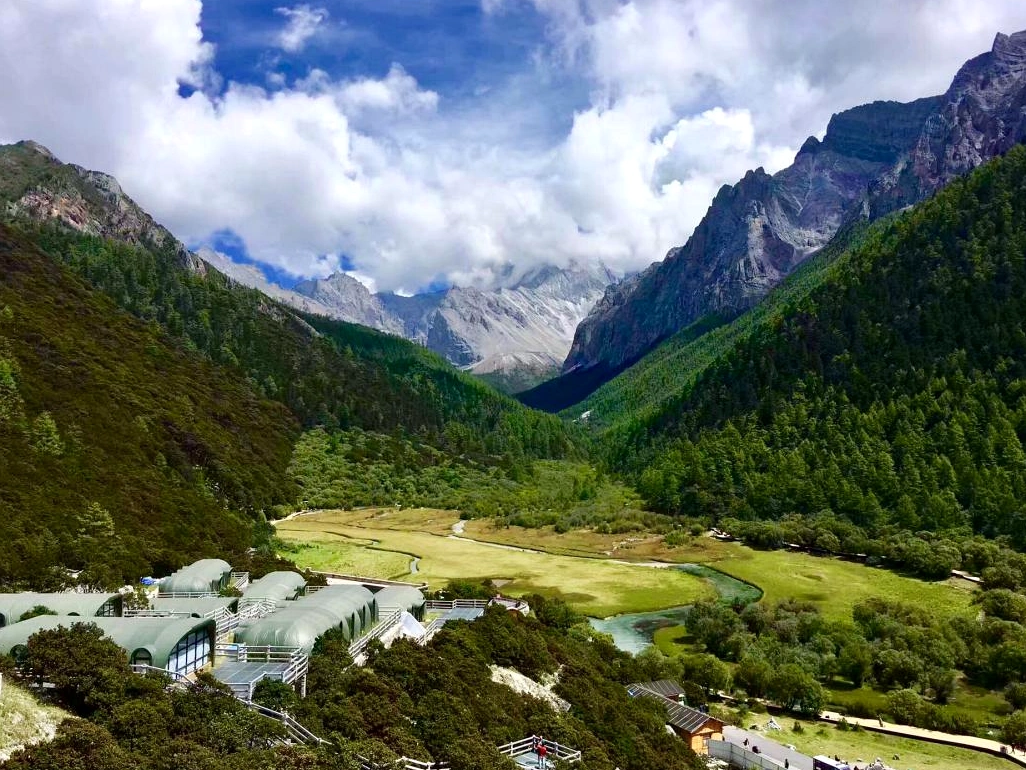
Stretching along the southern flank of the Hengduan Mountains and the southern section of the Shaluli Mountain system, the Three Sacred Mountains of Yading emerge as a grand geological wonder sculpted by nature with an extremely harsh altitudinal amplitude, soaring from 2,900 meters up to a dazzling peak of 6,032 meters above sea level. This topographical foundation not only shapes a distinctive alpine microclimate but also paints a spectacular landscape picture, where rugged geomorphological structures blend with Tibetan Buddhist spiritual systems to form one of the most sacred spatial institutions on the Qinghai-Tibet Plateau. The focal point of this geographical space is the “Three Lords of the Snow Mountains” – the cluster of three sacred mountains, Ritting Gompob, regarded as the manifestations of the three great Bodhisattvas, reigning majestically between heaven and earth and governing the entire landscape structure and lifeline of the entire Yading valley.
Reigning at the center of this sacred realm is the towering Xiannairi peak at an elevation of 6,032 meters, identified as the manifestation of Avalokiteshvara Bodhisattva of great compassion and mercy, distinguished by the geological morphology of a glacial horn peak and colossal hanging glaciers that day and night replenish water sources for the hydrological system below. Standing imposing beside it is Yangmaiyong peak at an elevation of 5,958 meters, symbolizing Manjushri Bodhisattva – the embodiment of supreme wisdom, bearing the sharp silhouette of a pyramid or a precious sword reaching straight up into the silver clouds. Completing this sacred triad is Xianuoduoji peak, also soaring to 5,958 meters, representing Vajrapani Bodhisattva, appearing with the majestic, steadfast demeanor of a diamond stupa possessing the power to subdue all obstacles. The convergence of these three colossal ice towers in a concentrated area creates a supreme feng shui land formation according to Tantric tradition, where the entire surrounding space is naturally mapped out according to the “Diamond Mandala” diagram, with closed peripheral mountain ranges acting as an eternal boundary layer protecting the pristine purity of the Buddha realm amidst the mortal world.
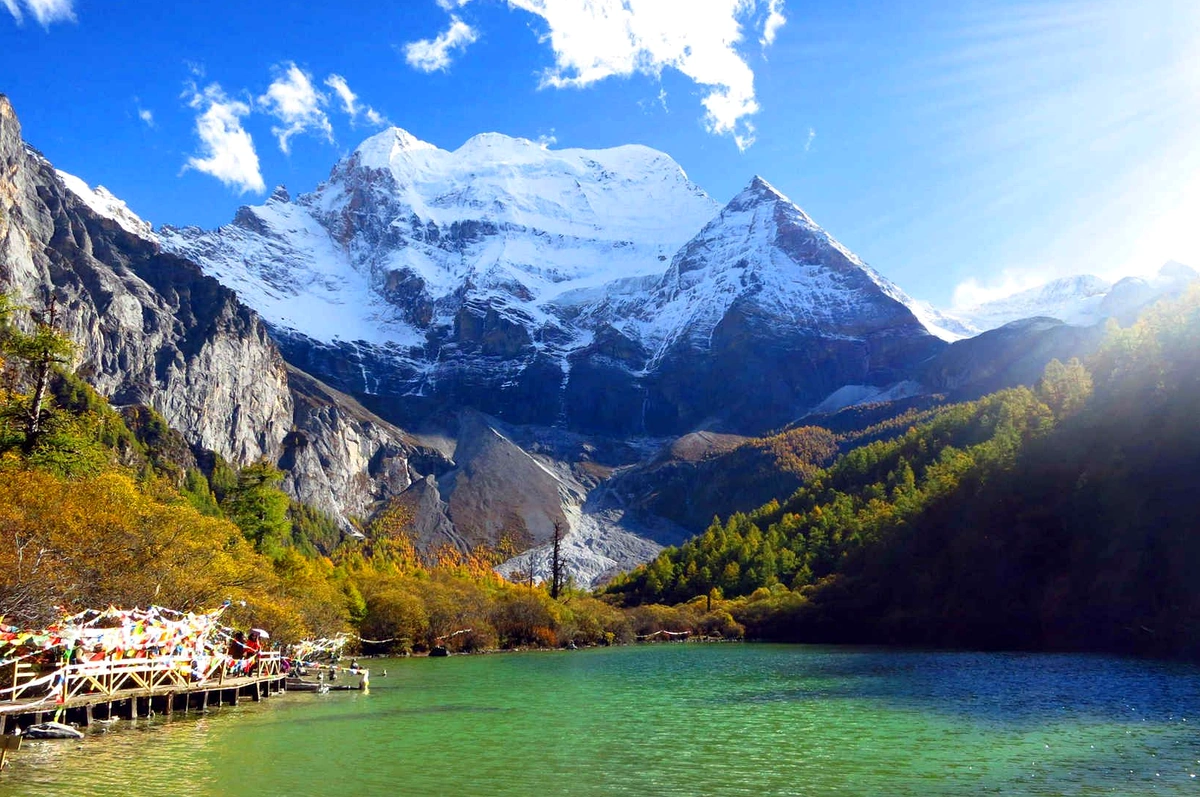
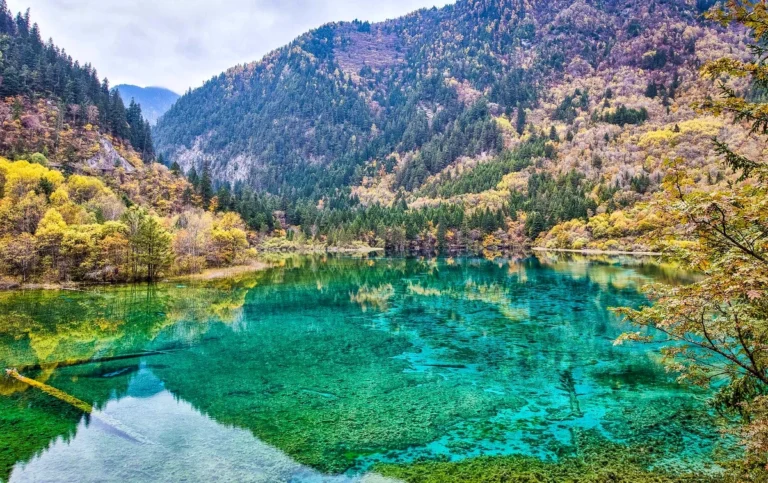
Under the shelter of the majestic mountain terrain, the hydrological system here plays the role of core feng shui lifelines, completing the doctrine of perfect energy convergence for the valley. Glacial meltwater from the snow-capped peaks over tens of thousands of years has accumulated and flowed into sacred lakes located at various elevations, creating a breathtaking ink-wash landscape sequence comprising Pearl Lake (Drolma Lhatso), Milk Sea (Rongniu Tso), and Five-Color Sea (Mude Tso). In the indigenous feng shui perspective, this chain of lakes is not merely glacial deposit pools but sacred entities representing mirrors reflecting the soul, treasure-gathering jade belts, and oceans of wisdom, forming the “jade belt embracing the waist” formation – a jade ribbon encircling the mountain basin, helping accumulate favorable energy and regulate vital breath for the entire region. Water from the sacred lakes trickles through ancient rock layers, cascading down into deep valleys and nourishing vegetation that transitions from temperate virgin forests to barren yet remarkably resilient alpine tundra.
Adapting directly to this unique topographical structure and exclusive feng shui terrain, the ancient village of Yading is planned by leaning against nature according to the classical “backing the mountain and facing the water” principle of Eastern geography. Yading Village firmly leans against the secondary branches of Mount Xianuoduoji, facing the windy deep valley basin where winding glacial streams flow through. The selection of altitude and house orientation by indigenous residents here is a process distilled from millennia of adaptive experience with the harsh high-altitude environment, intense solar radiation, and fierce valley gales. The sturdy mountain stone rammed-earth houses and wind-resistant wooden roofs not only solve survival challenges against the subpolar climate but also strictly adhere to airflow orientation principles, helping receive pure energy radiating from the Three Sacred Mountains, transforming Yading into a settlement in absolute harmony between humans, deities, and the cosmos.
Exploring the Three Sacred Mountains of Yading is not only a journey to admire the magnificent natural landscape of the Buddhist paradise but also an opportunity to immerse oneself in an architectural and cultural space densely imbued with traditional Tibetan identity. Along the deep valleys, man-made spatial structures organically blend into the rugged terrain, demonstrating humanity’s peak adaptive thinking before the harsh conditions of the plateau. Architectural systems here are concentrated mainly in traditional villages, the Yading residential clusters, and sacred heritage sites such as Zhaguangpeng Monastery and Chonggu Temple, creating a somber yet enduring humanistic portrait across the ages.
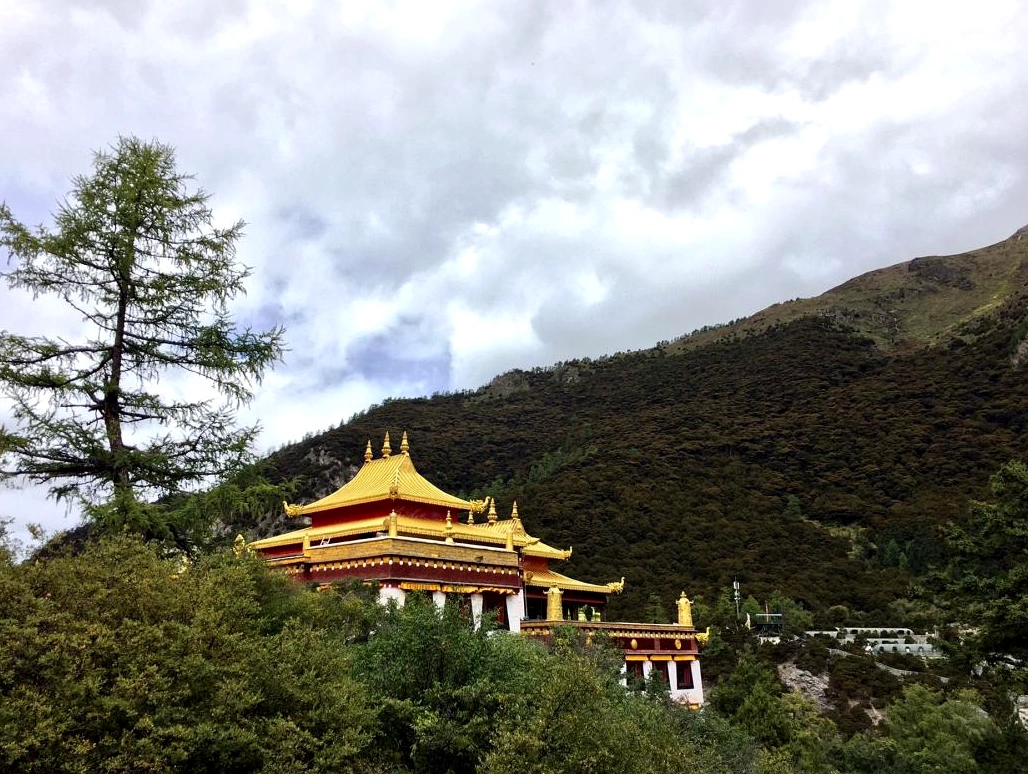
The core highlight in folk construction art here is the traditional house type named “Bong-ba” (崩科), a structural form perfectly combining wood and stone. The foundation and lower perimeter walls are constructed with extraordinary sturdiness using unpolished dry-stone masonry techniques, with an astounding thickness ranging from 60 to 80 centimeters. Local craftsmen skillfully selected individual blocks of gneiss (片麻岩) and granite (花崗岩) to stack upon one another completely without mortar or adhesive cement. The bonding strength of the wall relies entirely on the tightness of stone grain joints, gravity, and diagonal interlocking techniques, creating a solid fortress layer that possesses both exceptional earthquake resistance and effective thermal insulation against the biting cold of the plateau winter.
Contrasting with the heavy stone base, the upper space and interior of the “Bong-ba” house utilize a system of columns, beams, rafters, and crossbars made from pine or spruce wood processed with extreme precision. Right at the wall corners, traditional carpenters also skillfully built defensive watchtowers to protect families against historical political upheavals. In particular, woodworking art here reached a high degree of sophistication as master carpenters skillfully applied mortise and tenon joinery techniques (榫卯結構) at the intersection points between beams and columns. Thanks to this flexible structure, the house can expand, absorb, and neutralize large mechanical vibrations when day-and-night temperatures fluctuate abruptly or when geological tremors occur.
The roofs of houses in the Yading region are designed in a characteristic flat roof style, directly reflecting living needs tied to climatic conditions. On top of densely placed parallel wooden rafters, layers of yellow soil mixed with mud are applied and thoroughly compacted, topped with a thin layer of slate to withstand fierce gales and high-intensity ultraviolet radiation from sunlight. Beyond rain and wind protection, this flat roof space is fully utilized as a drying yard for highland barley (青稞) – the core food source sustaining generations of Tibetan residents through the ages.
Completing this architectural picture is exterior decorative art deeply imprinted with spiritual marks and Tantric Buddhist beliefs. Characteristic trapezoidal windows are adorned with vibrant five-color fabric strips comprising blue, white, red, yellow, and green, symbolizing the Five Dhyani Buddhas and the Five Elements in traditional cosmology. Above the tops of window frames, talented wood-carving artisans meticulously engrave the Eight Auspicious Symbols (吉祥八寶) with smooth, graceful curving lines, conveying prayers for peace, good fortune, and consummate blessings for the household. Each house and ancient monastery here is thus not merely a shelter for the body against wild nature, but a living work of art crystallized from the sweat, wisdom, and spirituality of generations whose destinies are tightly bound to this sacred land.
When night falls over the Kangding plateau and drapes across the deep valleys of the Three Sacred Mountains of Yading, this space does not plunge into silent darkness but transitions into another mystical dimension, where the boundary between reality and mythology seems to blur. Contrary to the noisy pace of modern tourist metropolises, Yading chooses for itself an extremely strict and absolutely respectful philosophy of conduct toward Mother Nature. Nestled within the strict protection zone of the National Nature Reserve featuring an invaluable virgin forest flora and fauna ecosystem, the core zone of the scenic area at elevations above 3,800 meters strictly prohibits large-scale commercial development, permanent lighting systems, or outdoor live-action shows brightly lit by floodlights. This regulation not only preserves the pristine nature of the three sacred peaks Xiannairi, Yangmaiyong, and Xianuoduoji but also protects the natural living habitat of endangered rare animals such as snow leopards, musk deer, and Himalayan blue sheep.
Nightlife in Yading carries a somber, delicate beauty deeply rooted in local community spirit. At the visitor center and Shangri-La town (also known as Riva Town), the lighting system is elaborately designed yet restrained with warm-toned, low-intensity LED strips, just enough to showcase the traditional architectural lines of Tibetan dwellings with their flat roofs, thick stone walls, and intricately carved wooden window frames, creating a nostalgic, cozy atmosphere amidst the plateau’s freezing weather. Strict control over artificial lighting here provides a privilege for nature and astronomy lovers: the night sky in Yading possesses perfect transparency without light pollution, opening up a breathtaking view of the Milky Way where millions of stars shine brightly as if one could touch them right above the heads of the sacred mountains.
Venturing deeper into the scenic area, along the wooden trekking boardwalks connecting Chonggu Temple toward Pearl Lake, human presence is marked by utmost humility. Here, there are no bulky high-voltage lampposts; instead, management arranges low ground-level solar LED lights that are carefully shielded, just bright enough to illuminate paths for travelers stepping out early to catch the dawn or returning as night mists fall, while minimizing impact, noise, and light that causes panic among wildlife. This meticulous investment demonstrates a commitment to sustainable ecotourism, prioritizing ecosystem respect over short-term commercial gains, helping Yading maintain its title as one of the most pristine natural sanctuaries in the Tibetan Kham region.
Alongside the quiet mountain nights, the socio-cultural artistic life of the local community shines brightly at the Yading Shangri-La Performing Arts Center located right in the central town. This venue serves as the rendezvous for a magnificent live-action spectacle titled “Shangri-La Yading,” a comprehensive artistic work distilled from the millennia-old folklore of Tibetans in Sichuan. The stage vividly recreates mythological epics about the three guardian bodhisattvas of the land, interspersed with resounding drums and horns, deep resonant tones of copper bells, and traditional dances imbued with spiritual marks. Furthermore, in surrounding valley villages, visitors have opportunities to immerse themselves in intangible cultural heritage bonfire nights, where village elders and youth in brightly colored traditional attire join hands to enter the vigorous, graceful Guzhuang dance or solemn string dances, singing praises to heaven, earth, deities, and romance amid crackling fires in the vast wilderness.
Amidst the biting cold of the snow-covered plateau of the Three Sacred Mountains of Yading, where the boundary between the mortal world and the Buddha realm seems to blur due to thousands of meters of altitude, local cuisine is not merely a survival method but a living cultural heritage passed down through generations. Deeply influenced by the harsh conditions of the high-altitude agropastoral transition zone, the culinary treasure here embodies Tibetan health-preservation philosophy: high energy, rich protein, and optimized capabilities to expel wind, ward off cold, and combat severe altitude sickness. When cold winds sweep through gray stone valleys, nothing soothes a traveler’s body better than the rich aroma of a piping hot bowl of butter tea, a soul drink brewed with utmost reverence and traditional craftsmanship by locals.
Honored in nomadic life as an indispensable beverage named Mar-ja, Daocheng butter tea is a delicate combination of pure Tibetan yak butter, local black tea bricks, and a pinch of Himalayan pink salt, continuously churned in traditional long bamboo tubes called Ja-dong. This elaborate emulsification process creates a rich, fatty surface layer blending with mild astringency and saltiness, providing instant body warmth and abundant energy to face the bone-chilling cold of the frontier. Enjoying butter tea properly always goes hand in hand with Tsampa, a traditional pastry made from roasted highland barley flour (tsangpo) kneaded directly in a bowl with a bit of butter tea, some dried yogurt cheese (nyaza), and white sugar. Pinching firm morsels of dough to the mouth, diners fully experience the rustic, nutty, and fragrant flavors of plateau grains, the steadfast energy sustaining generations of Tibetans through harsh winters atop the world.
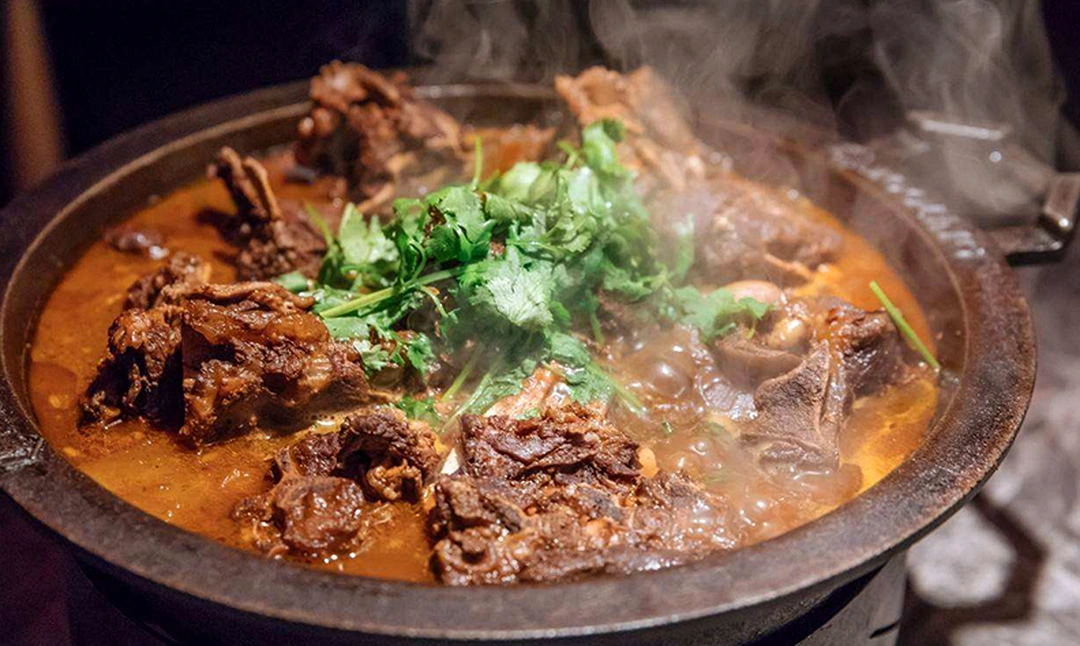
Besides dairy and grain gifts, the dining table of Yading residents also boasts the famous Tibetan Yak Hotpot, a symbol of hospitality and abundance in the wilderness. Free-roaming Tibetan yaks grazing on alpine meadows above four thousand meters yield firm, dark red meat with superior nutritional and mineral content. The beef is sliced thin and dipped into a meticulously simmered broth made from marrow bones, combined with rare naturally occurring mushrooms growing at the foot of the three sacred mountains such as Matsutake mushrooms, morels (羊肚菌), and Tibetan medicinal herbs. Steaming smoke mingled with the rich aroma of forest mushrooms and deep sweetness from pure beef stimulates all senses while awakening powerful vitality, completely dispelling fatigue after long miles of trekking across sacred glacial lakes.
Mentioning renowned local specialties, one cannot overlook Daocheng potatoes and rainy-season Matsutake mushrooms, two agricultural treasures growing thanks to extreme day-night temperature swings and pure melted glacial water. Mineral-rich soils sculpt potatoes with golden-yellow flesh, smooth texture, and exceptionally high starch content, traditionally baked directly over glowing coals or steamed with fresh butter to preserve their original sweetness. In mid-summer when early rains drench primeval coniferous forests, locals eagerly forage for Matsutake mushrooms, nature’s prized delicacy with a uniquely captivating aroma. Under the skilled hands of local chefs, Matsutake can be sliced and pan-fried to a golden crisp in fragrant Tibetan butter or simmered delicately in double-boiled black chicken soup, delivering a deep, lingering, ethereal aftertaste on the palate, creating a distinct hallmark of culinary culture in the Three Sacred Mountains of Yading.
The journey to conquer the snow-mountain kingdom of the Three Sacred Mountains of Yading (Xiannairi, Yangmaiyong, Xianuoduoji), also known as the Auspicious Buddha Realm in the heart of Sichuan, demands rigorous preparation from every traveler in terms of physical fitness, mindset, and thorough practical guidance. To begin this voyage touching the eternal realm, choosing the right departure time plays a decisive role in visual and emotional experiences. According to veteran explorers, autumn – lasting from late September to mid-October – is the golden hour when Yading dons its most vibrant cloak with carpets of yellow and red foliage interspersed with the turquoise hues of alpine lakes, creating an idyllic landscape painting that stuns everyone. Additionally, late spring and early summer (from May to June) is wonderful for visiting when wild rhododendrons bloom across mountain slopes, blending with pure melted glacial snow water from sacred peaks. Conversely, travelers should strictly avoid winter lasting from December to March, as blizzards rage, freezing ice covers mountain passes, and many sightseeing routes must close for safety reasons.
The approach journey to the sanctuary begins by flying into Daocheng Yading Airport (稻城亞丁機場) – one of the highest commercial airports in the world at an altitude of 4,411 meters above sea level, where thin air and low pressure require the body to acclimate. From the airport, travelers continue by car across winding Provincial Route S217 to reach Xianggelila Town (Riva Town), housing the scenic area visitor service center. Here, ticket booking procedures must be conducted online in advance using personal identification documents, strictly complying with visitor capacity management regulations. From the tourist center, shuttle buses take visitors on a winding pass drive of about an hour to Zhaguangpeng, the starting point for all Yading exploration routes. Depending on time, health, and trip goals, visitors can choose two main routes planned systematically offering completely different experiences.
For those seeking a relaxed, gentle pilgrimage journey, the short route from Zhaguangpeng via ancient Chonggu Temple to Pearl Lake beneath sacred Mount Xiannairi is ideal with a round-trip time of only two to three hours. Here, travelers leisurely walk beneath ancient fir tree canopies, listening to stream murmurs and admiring magical water color changes reflecting towering rock walls of the glacial deity. Conversely, for explorers and researchers with robust stamina, the long route featuring a round-trip distance of ten to twelve kilometers and cumulative elevation gain reaching eight hundred meters poses a formidable yet immensely rewarding challenge. Starting from Chonggu Temple, the trek crosses Luorong Pasture – where yak herds graze in cold alpine air beneath Mount Yangmaiyong – before continuing steep gravel-road ascents to reach Milk Sea and Five-Color Sea hidden at nearly five thousand meters elevation.
To face the harsh altitude and unpredictable weather challenges in the Kham plateau, thoroughly equipping survival items is paramount. Onion-layer dressing with gore-tex wind- and water-resistant jackets, thermal fleece tops, waterproof high-top hiking boots, and polarized sunglasses protecting eyes from high-intensity UV rays are mandatory backpack gear. On the first day setting foot on this plateau, travelers must strictly avoid bathing, strenuous exercise, or running to prevent high altitude sickness, while carrying personal oxygen canisters for timely use when feeling dizzy or short of breath. Furthermore, entering this sacred land requires utmost respect for local Tibetan religious beliefs: walk clockwise past mani stone piles, never trespass or climb the three sacred peaks of the Three Sacred Mountains, and strictly enforce the “Leave No Trace” principle to preserve the fragile ecosystem of this breathtaking scenic area. For a complete, safe exploration journey handled from flights and transport to professional guides, check out details in the all-inclusive tour packages for a flawless experience on your trip of a lifetime.