Standing proudly at the rugged crossroads linking Sichuan, Gansu, and Qinghai, Songpan Ancient Town has occupied a pivotal strategic position since antiquity, revered by chroniclers as the military and economic throat of China’s entire northwestern frontier. This mountain-ringed valley basin was originally the ancestral homeland of the ancient Qiang people, resilient pastoralists deeply bound to high steppes and precipitous peaks. Its earliest formal military-administrative milestone was recorded during the Spring and Autumn and Warring States periods—specifically in 316 BC—when the mighty State of Qin conquered the Shu region and incorporated this territory into its administrative system as Jian County. From that moment onward, Songpan entered the grand historical current of imperial Chinese dynasties, serving both as a vital border garrison outpost and an essential gateway linking fertile lowland plains with vast snow-covered plateaus.
During the height of the Tang Dynasty, Songpan witnessed diplomatic and military milestones that shaped the cultural destiny of the entire region. In 640 AD, the fourteenth year of the Zhenguan reign, this frontier stronghold stood witness to a historic turning point in Han–Tibetan relations. Under imperial orders from Emperor Taizong of Tang, General Li Daozong, Prince of Jiangxia, led a grand ceremonial escort accompanying Princess Wencheng deep into the Tibetan Plateau to wed King Songtsen Gampo. This landmark royal marriage alliance not only pacified fierce border conflicts, but also transformed Songpan into a vital transit station opening avenues of economic, spiritual, and intellectual exchange between the Central Plains civilization and the mystical realm of Tibetan Tantric Buddhism.
Songpan’s imposing ramparts and fortified silhouette truly took shape during the Ming Dynasty, when the imperial court recognized the critical urgency of securing its western borderlands. In 1379 AD, the twelfth year of the Hongwu reign, founding Emperor Zhu Yuanzhang issued an imperial decree ordering the construction of an unprecedented defensive fortress complex atop the ancient foundations. This historic undertaking was entrusted to Regional Military Commissioner Ding He, who personally supervised construction on site. Under Ding He’s rigorous command, tens of thousands of soldiers and master masons quarried local bluestone and fired oversized bricks bonded with a specialized slaked-lime and sticky-rice mortar to raise thick, resilient walls built to defy the ages. Upon completion, the stronghold not only deterred military incursions, but also functioned as the premier checkpoint regulating the famed Tea Horse Road—where compressed tea bricks from Sichuan were traded for sturdy warhorses bred by Tibetan and Qiang herders.
Building upon those formidable defensive foundations, the Qing Dynasty maintained and elevated the town’s strategic standing by establishing Songpan Garrison, transforming it into a senior military and civil administrative headquarters commanded directly by a Brigade General. Throughout the late imperial centuries, Songpan served as a vital anchor coordinating frontier security, regulating merchant caravans, and balancing intricate relationships among the Han, Hui, Tibetan, and Qiang communities sharing the Min River valley.
Beyond its medieval prominence, Songpan also occupies a dramatic chapter in twentieth-century history. In June 1935, during one of the most perilous phases of the Long March, main columns of the Chinese Red Army entered the Songpan valley. Here, the historic Songpan Conference was convened urgently to deliberate life-or-death strategic decisions on unifying military forces, fortifying morale, and charting a survival route across the treacherous, mire-choked Songpan Grasslands ahead. Across millennia of upheaval—from Qin and Han spears and Ming–Qing tea caravans to the epic footsteps of the Long March—Songpan Ancient Town endures like a living stone epic carved into the mountains.
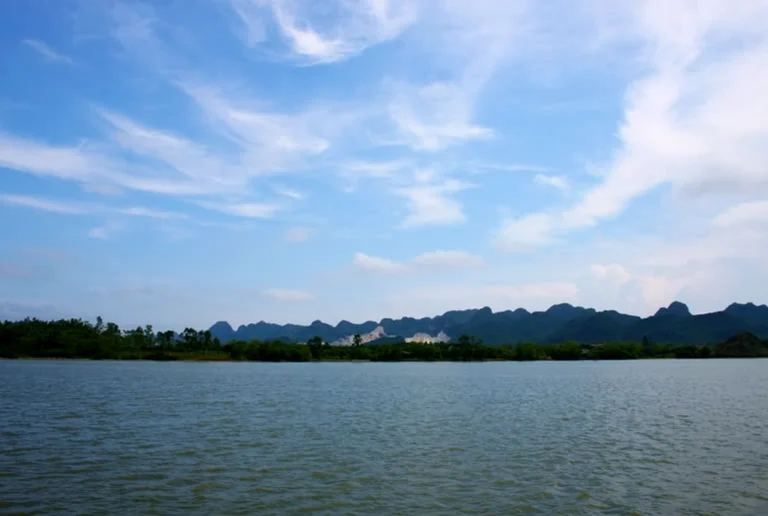
Located in the Ngawa (Aba) Tibetan and Qiang Autonomous Prefecture in northwestern Sichuan Province, Songpan Ancient Town sits at an elevation of roughly 2,850 meters above sea level, poised where the boundless expanse of the Qinghai–Tibet Plateau meets the rugged ridges of the Sichuan Basin. Viewed through classical East Asian geomancy, the ancient walled town embodies the textbook “mountain-backed, water-facing” configuration sculpted in complete harmony with natural topography. Its rear wall rests firmly against the towering, cloud-wrapped Min Mountains acting as a natural screen against freezing northern winds, while its front opens onto a gentle valley embracing the silt-rich upper reaches of the Min River. Beyond serving as an impregnable natural moat, the winding river channels continuous vitality deep into the town, nurturing a fertile, wind-sheltered oasis amidst snow-crowned peaks.
Guided by this natural alignment of mountains and rivers, military strategists and geographers of old named Songpan the “Throat of Sichuan, Gansu, and Qinghai.” Positioned right at the tri-provincial frontier junction, the fortress held decisive control over routes ascending from prosperous lowlands into remote highlands. Surrounded by steep gorges, Songpan functioned as an indispensable military bulwark from the Tang through the Ming and Qing dynasties. Simultaneously, its natural valley corridor made the town a crucial hub along the legendary Tea Horse Road—where caravans hauling tea bricks from Lushan and Ya’an over treacherous passes traded for hardy warhorses, pelts, and prized medicinal herbs brought by Tibetan, Hui, and Qiang nomads, etching centuries of commerce into thousand-year-old bluestone paving slabs.
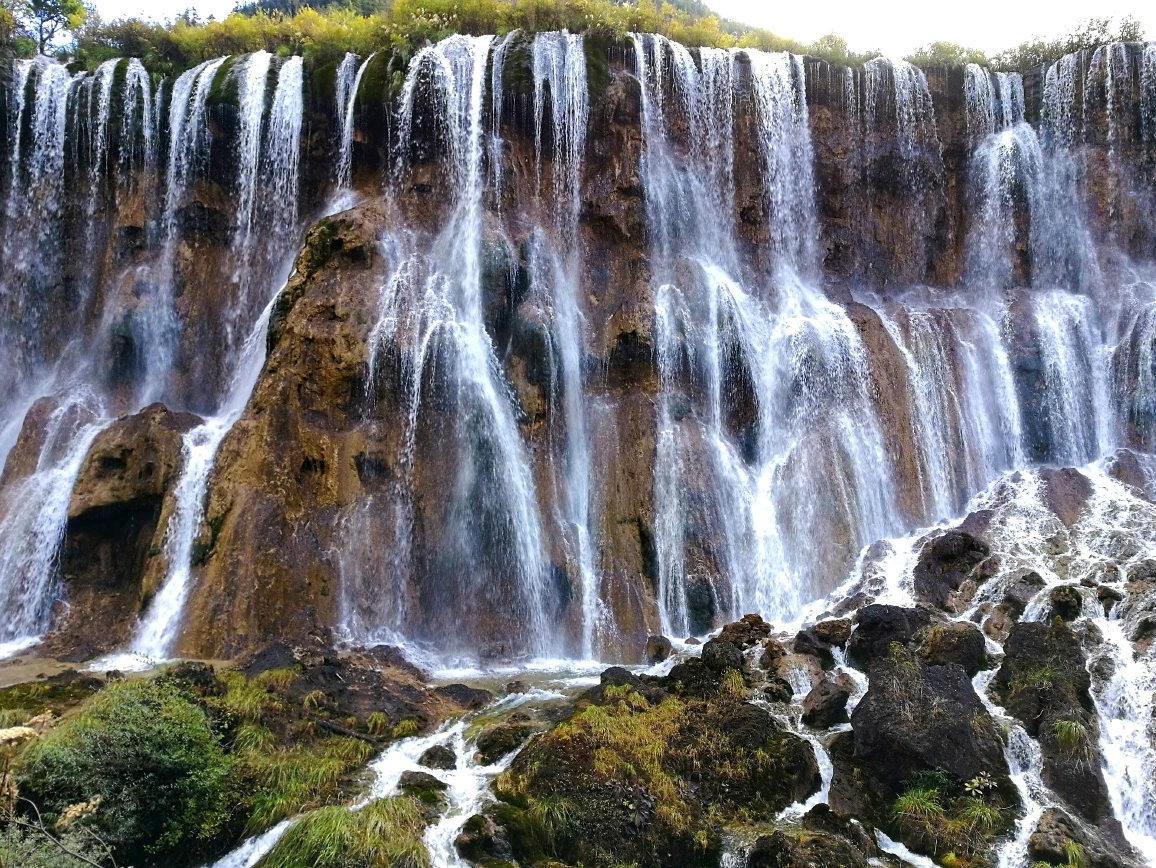
The natural scenery encircling Songpan reflects a transitional alpine-plateau ecosystem where high-altitude temperate climates paint dramatic seasonal transformations. In spring, melting snow gives way to wild peach blossoms and rhododendrons blooming across gray granite cliffs; summer brings crisp, refreshing air and endless emerald meadows; autumn sets conifer and sweetgum forests ablaze in gold and crimson reflected in the turquoise waters of the Min River; and winter blankets fish-scale tiled roofs and solemn watchtowers in pure white snow. This majestic natural amphitheater not only sheltered daily life within the town, but also established Songpan as an ecological jewel harmonizing frontier ruggedness with Sichuan’s poetic mountain-and-water beauty.
Within modern travel geography, Songpan’s historic strategic location has evolved once again into the essential transit hub along the golden route linking Chengdu with the UNESCO World Natural Heritage wonders of Jiuzhaigou Valley and Huanglong. Once-arduous mountain distances have been dramatically shortened by the Chengdu–Lanzhou High-Speed Railway, bringing passengers to Songpan Station just fifteen to twenty minutes from the ancient city gates. Coupled with the Wenchuan–Jiuzhaigou Expressway winding through dramatic river gorges, modern infrastructure has thrown open the doors to a thousand-year-old cultural oasis where breathtaking nature and living heritage unite in the heart of Aba.
Stepping into the Min River valley, travelers are immediately awestruck by the monumental scale of a Ming-dynasty military stronghold still standing proud across Sichuan’s northwestern frontier. Far more than a simple trading post along the Ancient Tea Horse Road, Songpan Ancient Town was engineered as an impregnable strategic fortress. Its sturdy stone-and-brick ramparts snake across rugged contours along a total perimeter of 6.2 kilometers, rising to an average height of 10 meters with an astonishing wall thickness of 12 meters. The broad walkway atop the ramparts easily accommodated armored cavalry riding abreast or mobile batteries of catapults and cannons—exemplifying the zenith of Ming defensive engineering turning a narrow alpine valley into a rock-solid shield protecting the fertile Sichuan Basin.
The fortress’s resilience across centuries of warfare and frequent seismic tremors along active mountain fault lines stems from the extraordinary brick-making and mortar craftsmanship of its builders. The entire exterior facade is clad in massive kiln-fired blue-gray bricks weighing between 20 and 30 kilograms each, compressed from dense clay and fired so thoroughly that they ring like metal when struck. Even more remarkable is the mortar binding them: a traditional formula combining aged slaked lime kneaded thoroughly with thick glutinous rice porridge. The organic amylopectin in sticky rice reacted chemically with calcium carbonate in the lime to form an ultra-dense organic-mineral matrix—impervious to winter frost yet flexible enough to absorb seismic shockwaves, welding tens of thousands of heavy bricks into a single monolithic rampart.
Defensively, the fortress walls were anchored by seven fortified gates guarding key approaches. Among them, the North Gate (Yanjian Gate) and West Gate (Weiyuan Gate) remain extraordinarily well preserved, showcasing classic semicircular stone-arch engineering. Precision-dressed ashlar blocks interlock tightly under pure gravitational compression without any central supporting pillar. This arched vaulting not only bore the heavy weight of multi-story wooden gatehouses above, but paired with semicircular barbican enclosures (*wengcheng*) to create a deadly ambush trap for any enemy force attempting to breach the gates.
Beyond the stern geometry of stone fortifications, the center of the ancient town opens onto a spacious plaza where martial history yields to an anthem of inter-ethnic harmony. Rising at the center of the square stands a magnificent sculptural monument depicting Princess Wencheng and Tibetan King Songtsen Gampo. Far more than a striking public artwork, the monument commemorates the pivotal Tang-era Battle of Songzhou between Tang forces and the Tibetan Empire—a conflict whose resolution paved the way for one of East Asia’s greatest royal marriage alliances, uniting Han literature, agriculture, and medicine with Tibetan spiritual life. Standing beneath the historic shadow of Yanjian Gate, the sculpture serves as a timeless reminder that Songpan’s true legacy was forged not only from stone and sticky-rice mortar, but from enduring harmony among great civilizations meeting at the crossroads.
As crimson sunset settles over the upper Min River gorge, Songpan Ancient Town sheds the weathered austerity of a millennial military garrison to enter an enchanting nocturnal transformation. Rather than becoming a static museum frozen in time, Songpan embraces a “Living Heritage City” philosophy where contemporary vitality and historical memory converge in a multi-sensory experience. The entire perimeter of Hongwu-era gray-brick walls—forged from lime, tung oil, and sticky rice—awakens under sophisticated architectural lighting. Guided by visual designers, towering ten-meter ramparts turn into dramatic illuminated canvases accentuating projecting *mamian* bastions and stately watchtowers silhouetted against the crisp highland night sky.
A captivating highlight of Songpan after dark is the integration of augmented reality (AR) and virtual reality (VR) experiences along the sturdy battlements. Standing atop the breezy West Gate, visitors can use optical devices to watch centuries peel away before their eyes: mule-and-horse caravans of the Ancient Tea Horse Road trudge through swirling mountain snow, bronze horse bells chiming alongside the rhythmic footsteps of porters hauling tens of thousands of Sichuan tea bricks toward distant Tibetan grasslands. Vibrant Ming and Qing tea-horse trading fairs and the historic arrival of Princess Wencheng’s royal escort at the frontier come vividly to life through crisp 3D projection mapping—turning every stroll along moss-flecked stones into a journey through layers of time.
Descending from the illuminated battlements, footsteps lead into winding bluestone alleys inside the old town. Nighttime in Songpan is never loud or chaotic; instead, it pulses with the warm hospitality of the Han, Tibetan, Hui, and Qiang communities who have shared this valley for centuries. Along snowmelt streams channeled cleanly through the town, rows of crimson lanterns hanging beneath carved wooden eaves cast shimmering reflections across rippling water. In the central plaza before the city gate, blazing bonfires signal the start of traditional Tibetan *Guozhuang* circle dances—colorful wool robes swishing to rhythmic footsteps while soulful Qiang flutes echo into the night air, dissolving every boundary between locals and travelers.
Songpan’s living spirit shines equally inside historic quarters home to unique boutique guesthouses built and operated by local Qiang and Tibetan families. Housed within sturdy multi-story timber-and-stone structures inspired by traditional *Diaolou* watchtower architecture, these stays offer intimate cultural immersion. As crisp breezes sweep down from surrounding 3,000-meter snow peaks, evenings grow cozy around glowing charcoal braziers where guests gather to savor hearty highland yak hot pot simmered with black cardamom and wild Tibetan mushrooms, golden-baked Qiang flatbreads, and warming *qingke* barley wine—while rich butter tea and fragrant pinewood walls bring a storied frontier evening to a peaceful close.
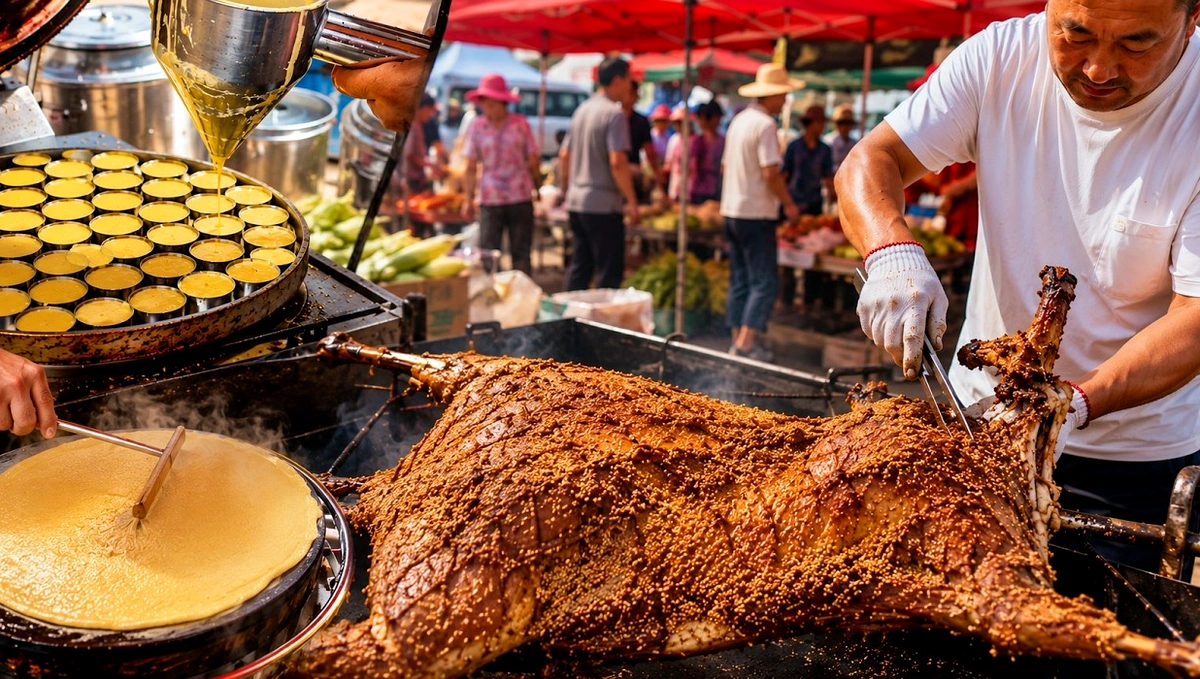
Perched at nearly 3,000 meters above sea level at a centuries-old crossroads of Han, Tibetan, Qiang, and Hui cultures, Songpan’s culinary landscape goes far beyond everyday nourishment—it is a resilient song of survival forged against the bracing climate of the Min Mountains. Across generations of merchants traveling the Ancient Tea Horse Road, local kitchens blended the bold, numbing-spicy complexity of Sichuan cuisine with the hearty, high-energy traditions of highland pastoralists. Every historic timber home along the babbling Min River keeps charcoal embers glowing day and night, filling the air with delicate mountain herbs, rich beef tallow, and aromatic Sichuan peppercorns.
Crowning the regional culinary repertoire is Tibetan Yak Hot Pot, known locally as *Zangshi Maoniurou Huoguo*. The yak beef is sourced exclusively from free-ranging herds grazing on pristine cloud-kissed alpine meadows above 3,000 meters, where herb-rich pastures yield deep crimson, lean, firm meat brimming with clean, rich flavor free of heaviness. Inside glowing charcoal-heated copper pots, marrow bones simmer for hours with crimson goji berries, sweet Xinjiang red dates, fresh ginger, and high-altitude tonic roots. Thick slices of yak shank and tender-crisp tendon dipped briefly into the bubbling aromatic broth release a deep, natural sweetness that stimulates circulation and instantly banishes the biting chill of western Sichuan’s mountains.
Strolling along bluestone alleys near Guoxun Gate, few travelers can resist the mouthwatering aroma wafting from traditional clay ovens baking Tibetan Stuffed Flatbread—a distinctive regional adaptation of *Guokui*. Inheriting vaulted-oven baking techniques from Hui master bakers combined with highland ingredients, naturally leavened wheat dough is slapped directly onto the blazing inner walls of red-hot clay ovens until puffed, golden-brown, and shatteringly crisp. Tucked inside that flaky crust is a savory filling of minced yak meat seasoned with sweet onions, rich suet, and tingling Qiang mountain peppercorns. Biting into a piping-hot flatbread in crisp mountain air—hearing the crust crackle as savory juices burst forth—delivers a rustic, deeply satisfying taste of frontier expeditions past.
Alongside protein-rich specialties, daily life in the ancient town has revolved for centuries around Tibetan Butter Tea (*Suyoucha*)—revered as the lifeblood and protective shield of communities living thousands of meters above sea level. To prepare an authentic batch, local cooks boil compressed dark brick tea into a potent infusion, then pour it into a tall wooden churn with rich yak butter and coarse mineral salt. Hundreds of rhythmic plunges emulsify the butter completely into the tea, creating a velvety amber liquid topped with thick, creamy foam. Sipping steaming butter tea allows the crisp astringency of dark tea to balance rich butterfat, leaving a warm, savory finish that soothes wind-chapped lips, restores immediate energy, and helps counter altitude fatigue.
Songpan’s gastronomic map is complete only with a cup of Highland Barley Wine (*Qingkejiu*), fermented artfully from hardy barley grains thriving in rocky alpine soil. Clear pale gold with a faint greenish tint, this low-alcohol brew offers gentle sweetness and the clean aroma of sun-dried grain. Before raising their cups, locals observe a time-honored toast: dipping the ring finger into the wine and flicking three drops skyward in gratitude to Heaven, Earth, and Ancestors. Sitting beside a crackling charcoal brazier on a crisp evening in millennial Songpan, nibbling shredded air-dried yak jerky with warming *qingke* wine lets travelers taste the generous, free-spirited soul of the windswept borderlands.
Journeying into history along the upper Min River rewards a clear understanding of seasonal rhythms across the Aba highlands. The ideal window to visit Songpan Ancient Town runs from May through October, when harsh winter freezes give way to crisp, invigorating mountain air. Even more spectacular is September through October, when autumn paints hillside maple and larch forests in brilliant gold and crimson against the pure white snow peaks of the Min Mountains beneath crystal-clear skies—ideal conditions for strolling thousand-year-old stone battlements and taking in sweeping frontier vistas.
Sitting at an elevation of 2,850 meters above sea level, Songpan serves as an essential physiological acclimatization waypoint before ascending higher into 3,000-meter-plus valleys such as Jiuzhaigou and Huanglong. At this altitude, lower atmospheric pressure and thinner oxygen levels require giving your body time to adjust naturally. The golden rule is to avoid strenuous physical exertion during your first 24 hours in town, skip alcohol, and avoid overly hot showers—opting instead for steady hydration with warm water and unhurried rest. Local pharmacies and convenience stores along main streets readily sell portable handheld oxygen canisters at regulated prices of 30 to 50 RMB each, offering reassuring support if mild altitude headaches or shortness of breath occur.
Because mountain monsoon continental weather brings dramatic day-night temperature swings—even during midsummer when the Sichuan Basin below swelters—outdoor temperatures drop sharply once the sun dips behind western ridges. Pack adaptable clothing layers including a windproof, waterproof shell, a lightweight down jacket, and supportive hiking shoes with high-traction soles for uneven stone steps at Lin’yuan Gate. High-altitude ultraviolet radiation is also intense, making polarized sunglasses, a wide-brimmed hat, and broad-spectrum sunscreen indispensable daypack essentials.
In terms of access and visitor guidelines, Songpan is seamlessly connected today via the modern Sichuan–Qinghai High-Speed Railway and scenic highways threading the Min River gorge. The old town’s pedestrian streets remain open day and night, while stairways leading onto the gray-brick ramparts and historic watchtowers operate during posted daytime hours. International travelers should always carry their original passport for identity verification at lodging checkpoints and standard local registration procedures.
One of the most refreshing hallmarks preserving Songpan’s serene authenticity is its firm commitment to sustainable, transparent tourism. Local authorities enforce a strict “No Shopping” policy banning aggressive commercial touting. Every establishment—from traditional Tibetan butter-tea parlors and family-run yak jerky shops to Hui Muslim eateries—is integrated into a smart price-monitoring system requiring clearly displayed prices alongside QR codes allowing visitors to verify product origins and contact market inspectors directly, ensuring total peace of mind.
The fusion of thousand-year-old frontier spirit, vibrant Tibetan, Qiang, Hui, and Han heritage, and transparent hospitality makes Songpan both deeply historic and warmly welcoming. To admire its imposing stone ramparts at an unhurried pace without worrying about transit connections or altitude logistics, booking a professionally curated all-inclusive China tour package offers the ideal gateway to a safe, deeply enriching borderland adventure.