Beneath the morning mist drifting over the bend of the Han River in Noryangjin-dong, Dongjak-gu, Seoul’s Noryangjin Fisheries Wholesale Market stands as a living chronicle of modern and contemporary history in the Land of Morning Calm. Tracing its origins back to the beginning, this bustling hub of marine protein on the Korean Peninsula started out as Uihwando Fish Market, established in 1927 while the Korean Peninsula was under Japanese imperial rule. In its early days, the waterside market relied primarily on natural riverine transport, with simple sailboats carrying seafood caught in the Yellow Sea down the Han River onto the southern bank to supply fresh food for city residents.
By 1932, pressed by the need to expand supply chains through mechanized transport, the fish market relocated entirely to the area near Yongsan Station—then the premier rail hub of Gyeongseong. At this new geographical coordinate, shipments of shrimp and fish from distant coastal ports like Busan, Mokpo, and Incheon began arriving aboard overnight trains. When the Korean War erupted between 1950 and 1953, reducing the Seoul basin to shattered ruins, the country fell into severe famine and acute food shortages. Through those turbulent years of displacement, the Yongsan fish market stood firm as a vital “lifeline of nourishment,” tirelessly distributing dried fish and salted seafood baskets to help millions of city dwellers rebuild their strength through the dark post-war era.
Entering the era of economic revival alongside the “Miracle on the Han River,” rapid urbanization soon strained the cramped grounds around Yongsan Station. In 1971, municipal authorities carried out a major relocation back across the river to the south bank, anchoring the market firmly in Noryangjin-dong under the official name Seoul Fisheries Wholesale Market. That move marked a turning point, transforming a riverside stretch into a top national center for industrial-scale seafood distribution. In 2002, the market’s governance entered a new chapter when management and operations passed fully to Suhyup—the National Federation of Fisheries Cooperatives. Standardized as Noryangjin Fisheries Wholesale Market, it officially assumed the role of coordinating and handling nearly half of all seafood consumed across the greater Seoul capital area.
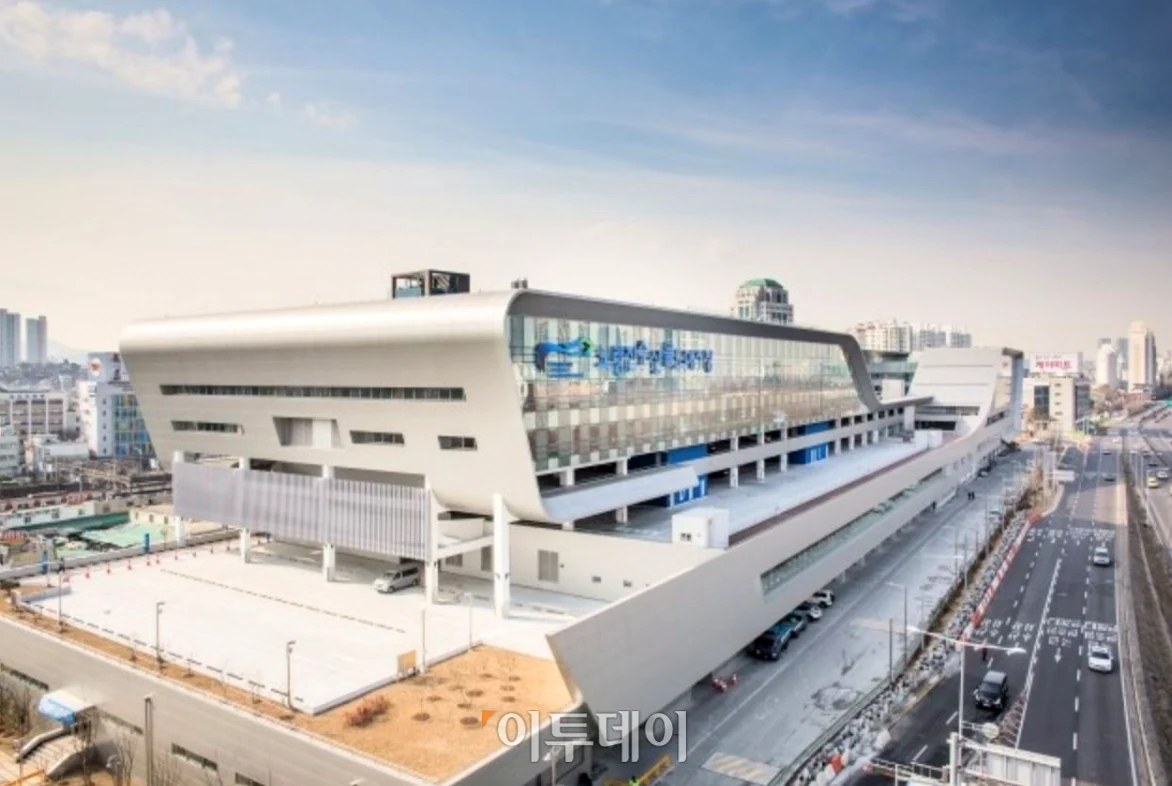
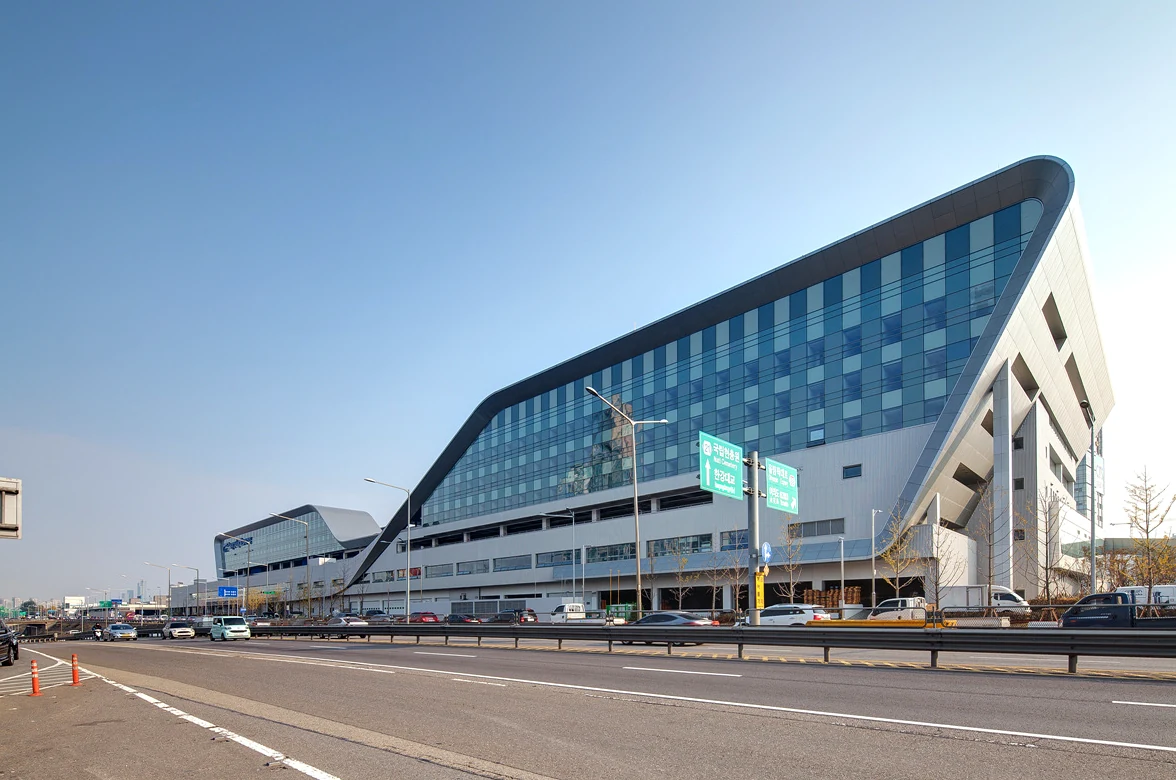
The march of time brought another dramatic shift in March 2016, when a modern eight-story complex opened right beside the traditional market grounds. This imposing new structure integrates centrally temperature-controlled clean seawater tanks, state-of-the-art electronic auction floors, and an enclosed dining zone, raising hygiene and sanitation standards fundamentally. The interplay between sleek modernity and the original nostalgia of weathered cement stalls created a distinctive dual-market dynamic, where the pioneering memories of long-time vendors blend seamlessly with the vibrant pulse of a global metropolis.
Viewed through geomancy and urban history, the Noryangjin seafood district in Noryangjin-dong, Dongjak-gu, commands a rare prime location on the south bank of the Han River. The name Noryangjin derives from the Hanja “Noryangjin” (露梁津), meaning “White Dew Ferry,” an important land-and-river trade artery since the Joseon period connecting historic Hanyang with the southern provinces. Set in a classic “mountain at the back, water in front” layout—backed by the rolling hills of Dongjak and facing the broad river—this ancient ferry landing once served as a transit point for grain, salt, and seafood bound for the capital. In the modern era, that river-gathered geomantic setting has evolved into an irreplaceable economic and cultural link where thousand-year natural currents meet Seoul’s surging commercial heartbeat.
Noryangjin’s edge is reinforced by one of Asia’s best-planned public transit networks, cementing its gateway role in urban growth. The market links directly to Noryangjin Station via a skywalk connecting Exits 1 and 2, where two major lines converge: Seoul Subway Line 1—the city’s oldest rail line, steeped in history—and Line 9, a modern express subway running straight from Gimpo International Airport through the Yeouido financial district to affluent Gangnam. Paired with more than 15 dense overnight bus routes, Noryangjin sits squarely inside the Golden Tourist Corridor, letting travelers reach famed shopping and entertainment hubs like Hongdae, Myeongdong, or the lively south bank of the Han River in just ten to fifteen minutes.
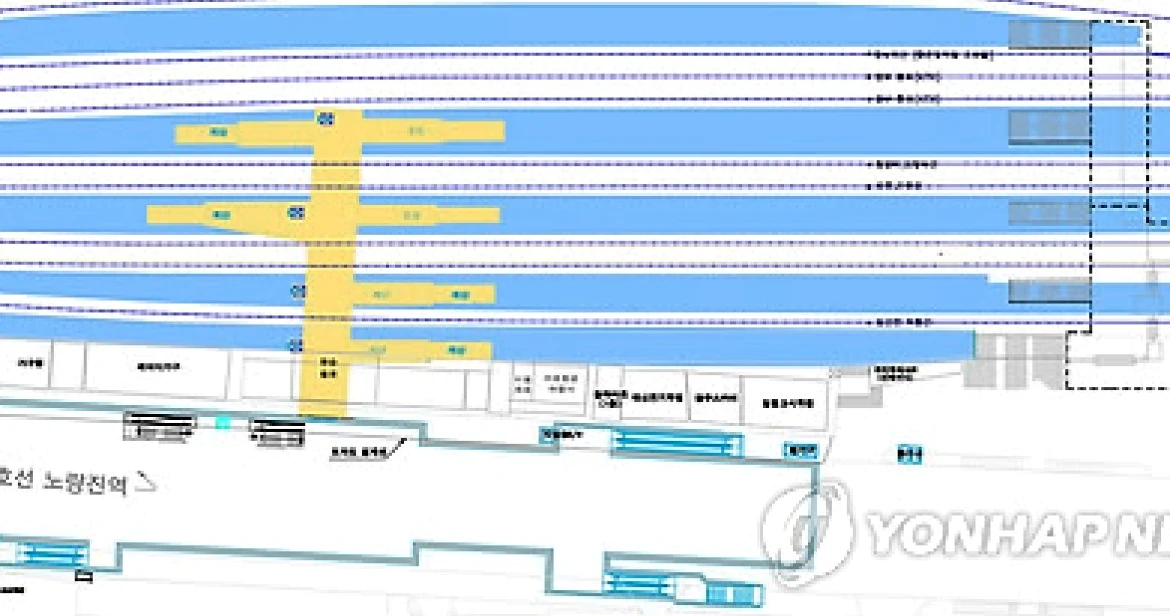
In infrastructure planning and technical operations, Noryangjin’s new face is a landmark modernization of a traditional market, built across subterranean levels and an above-ground complex. At its core is a central sterile seawater distribution system governed by underground temperature sensors, delivering natural seawater at precise salinity to thousands of tempered-glass holding tanks across the stalls. Strict quarantine and temperature controls keep top marine catches in peak condition—from giant king crab from the icy Sea of Okhotsk and snow crab from the eastern coast to flatfish (gwang-eo), sea bream, geoduck, and live octopus (san-nakji). Cool, damp air carrying a briny sea breeze mingles with standardized anti-glare LED lighting to create a scene as orderly as a marine biology lab yet as lively as everyday street life.
The spatial layout is zoned scientifically, guiding visitors through escalating visual and culinary impressions. The ground floor opens into a vibrant miniature ocean of hundreds of live seafood stalls with non-slip stone flooring washed continuously by smart drainage to eliminate the heavy fishy odors common in traditional fish markets. The second floor introduces chojang-jip—family-run restaurants that cook catches bought downstairs, whether steamed simply, stir-fried spicy, or simmered into aromatic spicy fish stew (maeun-tang). Best of all, the rooftop terrace offers a sweeping lookout over the Han River reflecting Yeouido’s financial towers and the iconic 63 Building, framing a dramatic contrast between culinary heritage and the dazzling lights of a city that never sleeps.
Shaking off the damp, cramped feel of earlier riverside quays, the modern Noryangjin seafood complex rises like a futuristic miniature seaport in central Seoul. The building blends high-end industrial architecture with marine service planning across eight grand above-ground stories and two sturdy technical basements. Its facade echoes rolling waves, pairing structural steel with salt-resistant tempered glass curtain walls to underscore its role as a strategic seafood hub for the entire capital region.
The operational lifeblood of the complex lies beneath two basement levels, B1 and B2, housing cold-chain logistics built to strict international standards. This underground zone functions as a self-contained hub with deep-freeze storage, dedicated refrigerated truck bays, and large-scale prep and packing facilities. A standout technological feature is the biological wastewater plant and multi-stage recirculating seawater filtration system. Using high-pressure filters and advanced ozone deodorization, thousands of cubic meters of daily tank seawater are thoroughly treated, removing strong fishy odors and preventing organic pollution before entering city drains.
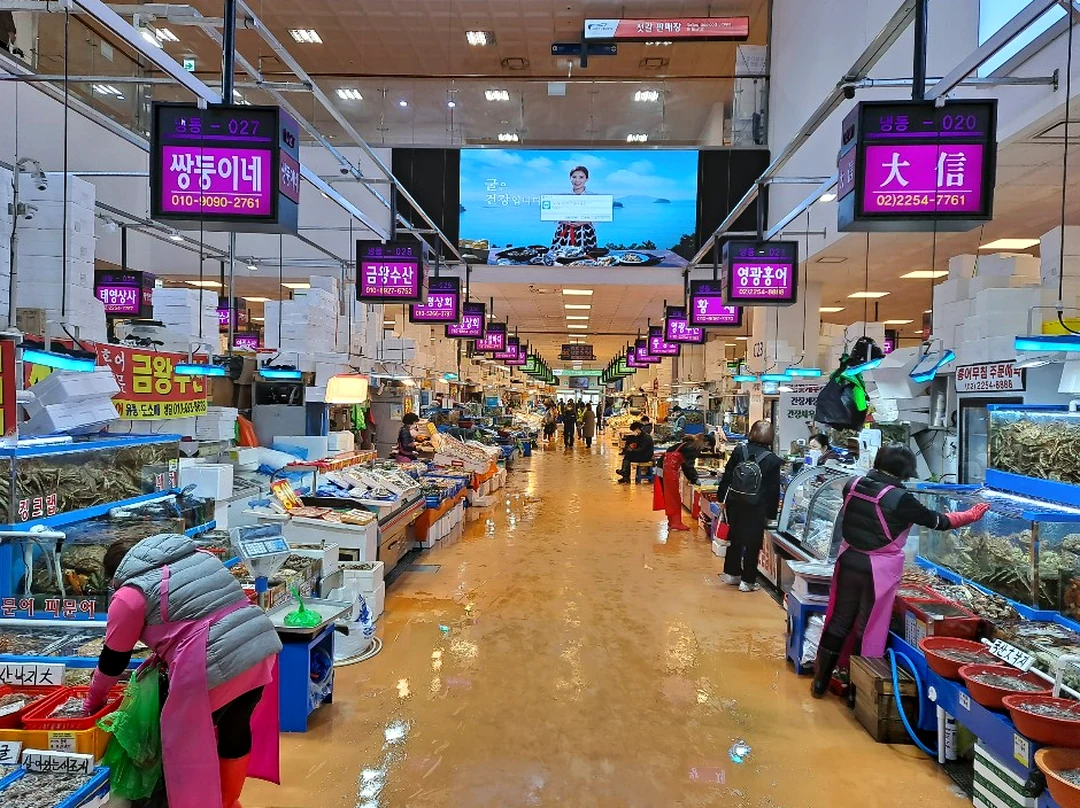
Stepping onto the first floor, visitors are immediately struck by a bustling arena of live marine life where wholesale and retail trade hums day and night. The floor is laid out on a smart grid of hundreds of independent stalls equipped with multi-tier aerated glass tanks. Zones are clearly separated by ecology: crustacean stalls brim with giant king crab from the Okhotsk Sea, sleek snow crab, and roe-packed blue crab; finfish stalls feature Jeju flatfish, red sea bream, and sea bass splashing white foam; while mollusk stalls draw eyes with baskets of famed Wando abalone, sea cucumbers, deep-sea whelks, and wriggling live octopus. Textured non-slip tiles and under-stall drainage channels keep floors remarkably dry, clean, and modern.
The second floor opens a distinct culinary window onto local culture, anchored by on-site preparation restaurants commonly called sikdang. Designed with open sightlines down to the busy market floor through airy atrium voids, it showcases the craft of turning raw ingredients into delicacies: diners pick live seafood downstairs and bring it straight up for chefs to cook to order. From high-pressure steamers preserving the delicate sweetness of king crab meat, to swift knife-work slicing salmon and flatfish into gossamer hoe (raw fish), to cast-iron pots bubbling with fiery maeuntang seasoned with pepper and gochugaru chili powder, every detail delights the senses.
From the third to the eighth floor sits the administrative nerve center and smart support facilities. Here operate the headquarters of the National Federation of Fisheries Cooperatives (Suhyup), complete with molecular-biology food safety testing labs, seafood market research centers, and international trade promotion offices. To ease urban traffic for tens of thousands of daily visitors, upper levels also feature automated elevated parking linked directly to ring roads and subway lines via dedicated overpasses, completing a seamless, convenient, and enduring architectural loop.
As night falls and Seoul’s daytime rush eases, Noryangjin Fisheries Wholesale Market comes alive in a very different rhythm—like a vast live stage running 24 hours a day. The wide-open space of the new market feels like a micro-port framed in contemporary architecture, where day and night blur amid handcart hums, styrofoam crates being tapped, and the briny scent of ocean catches rushed in from fishing grounds in Sokcho, Pohang, or Jeju Island.
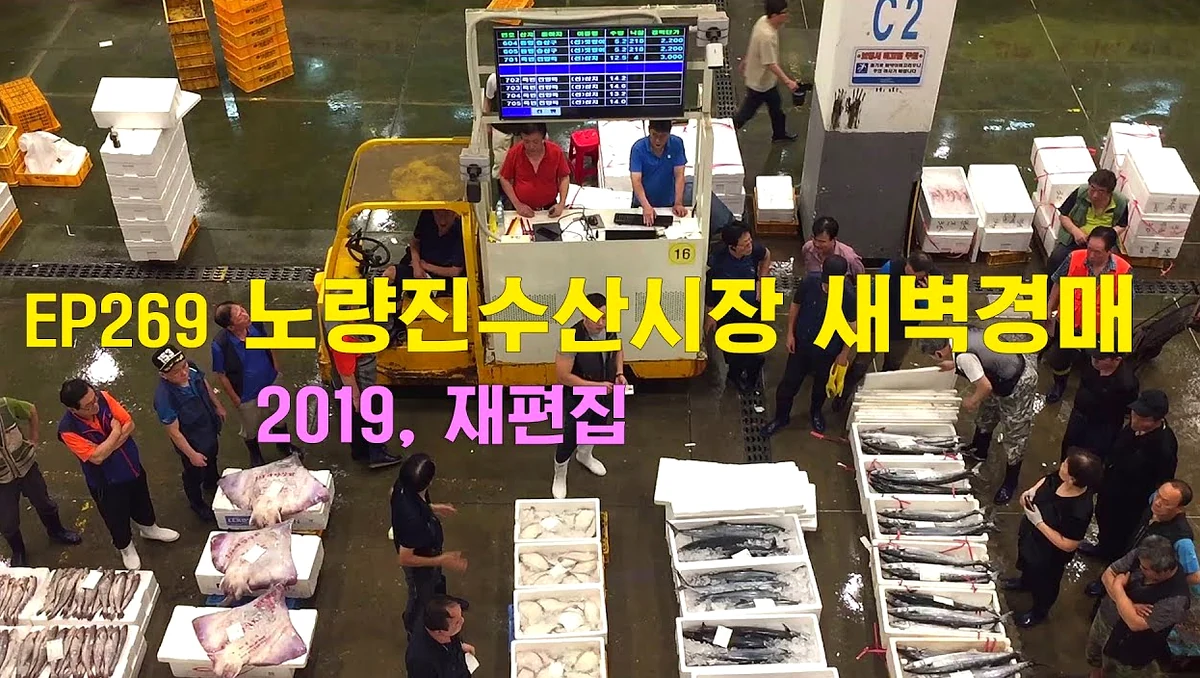
The most dramatic scene in Noryangjin’s night blend is the wholesale auction between roughly 1:00 AM and 4:00 AM. Under bright lights glinting off silver scales, veteran auctioneers chant in a rapid, rhythmic cadence almost like a traditional song, paired with swift hand signals. Hundreds of buyers gather around ice-packed wooden crates of northern king crab, Yeongdeok snow crab, starry flounder, and glistening fresh squid. The taut precision of split-second winning bids creates an electric atmosphere where ocean harvests are honored through decades-honed trade customs.
Lighting at Noryangjin acts as a compelling visual storyteller. Unlike the cluttered look of the old market, today’s modern complex is wrapped in tempered glass that lets in daylight and glows at night with sleek LED displays. Real-time price shifts dance across cool blue light, reflecting off damp, glossy concrete to weave glowing streaks among bright red lobster, dark grey Wando abalone, and golden-orange crab shells bubbling in pressurized tanks.
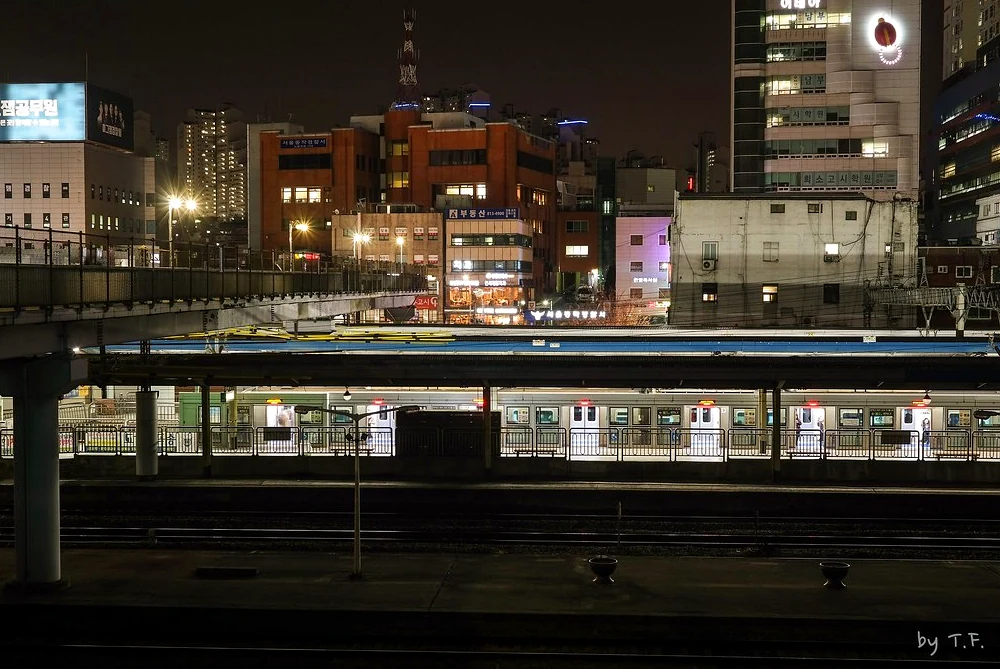
Taking the escalator up to the second floor brings a quieter, more refined late-night dining setting. Tucked peacefully along the south bank of the Han River, the dining rooms feature floor-to-ceiling glass overlooking the storied river and the curving Olympic Expressway. From here, diners can watch the wholesale market move below while taking in illuminated subway trains crossing the Han River rail bridge and streams of headlights tracing glowing ribbons through Seoul’s night.
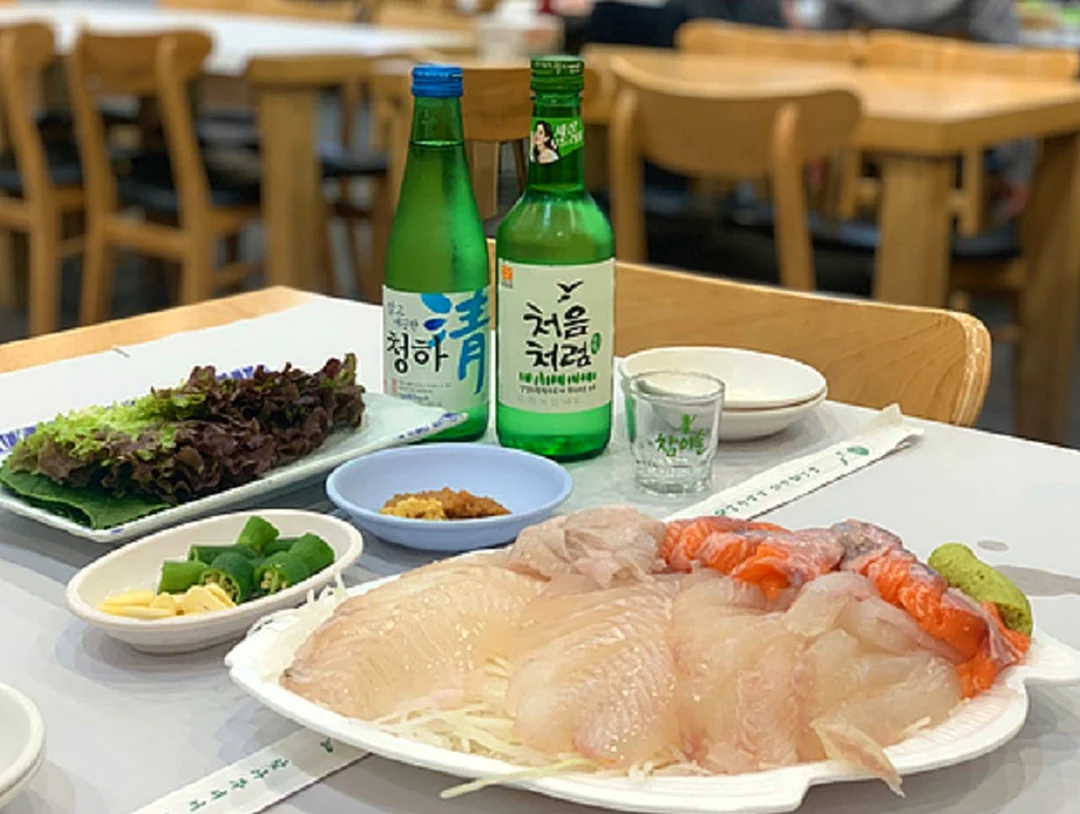
In that warm setting, late-night dining feels almost poetic with steaming plates of king crab, spicy maeuntang bubbling over a portable burner, and clear glasses of soju. Warm golden glow from stylized lanterns inside meets the deep blue river outside, weaving a multi-layered sensory experience. It is more than a late supper—it is a moment touching the soul of a sleepless Seoul, where raw ocean vitality meets the polish of a modern metropolis.
The Noryangjin experience is truly complete only when you step into chojangjip—the distinctive family-style preparation restaurants on the market’s upper floors. Here, the line between a wholesale market and a grand feast seems to vanish. After picking live seafood from aerated tanks downstairs, buyers hand their catch over to seasoned cooks. Using bright flames and recipes passed down through generations, they turn gifts of the sea into a memorable tasting progression that keeps local freshness intact while honoring the culinary philosophy of Korea.
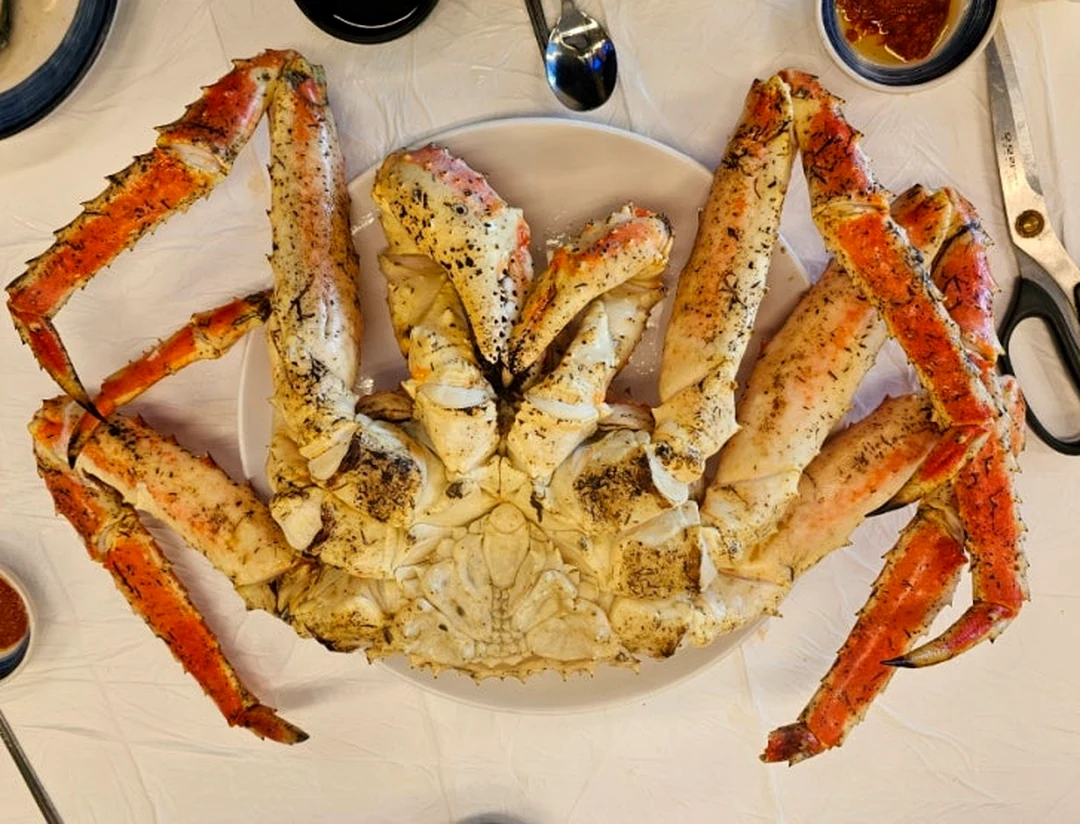
The undisputed star at a Noryangjin table is steamed king crab. Giant spiny red crabs emerging from steaming steel baskets are skillfully cracked open right at the table. Snow-white, firm, juicy crab meat carries the pure, clean sweetness of cold deep waters, needing little more than a light dip to shine. Once the crab meat plate runs low, the culinary climax arrives with bokkeumbap (crab-tomalley fried rice). Rich, creamy tomalley gathered from the shell goes back to the kitchen and is quickly stir-fried in a hot cast-iron pan with fluffy white rice, crisp shredded gim seaweed, scallions, and a few drops of fragrant cold-pressed sesame oil. Neatly packed into the textured crab shell itself, it balances richness, herbal aroma, and a lingering savory finish.
Alongside the regal appeal of king crab, Noryangjin’s food map captivates diners with the art of eating raw seafood at its purest. Thick, crisp slices of fresh gwang-eo (flatfish) and yeon-eo (salmon) showcase snappy bounce and clean sweetness, often wrapped in kkaennip (perilla leaf) with a slice of raw garlic and dipped generously in tangy-spicy chogochujang. Meanwhile, sannakji—chopped live octopus—always draws adventurous eaters. Wriggling segments glistening with pure sesame oil and toasted sesame seeds create a thrilling, playful suction sensation on the palate, waking up every sense with crisp chewiness and the natural sweetness of seafood fresh from the water.
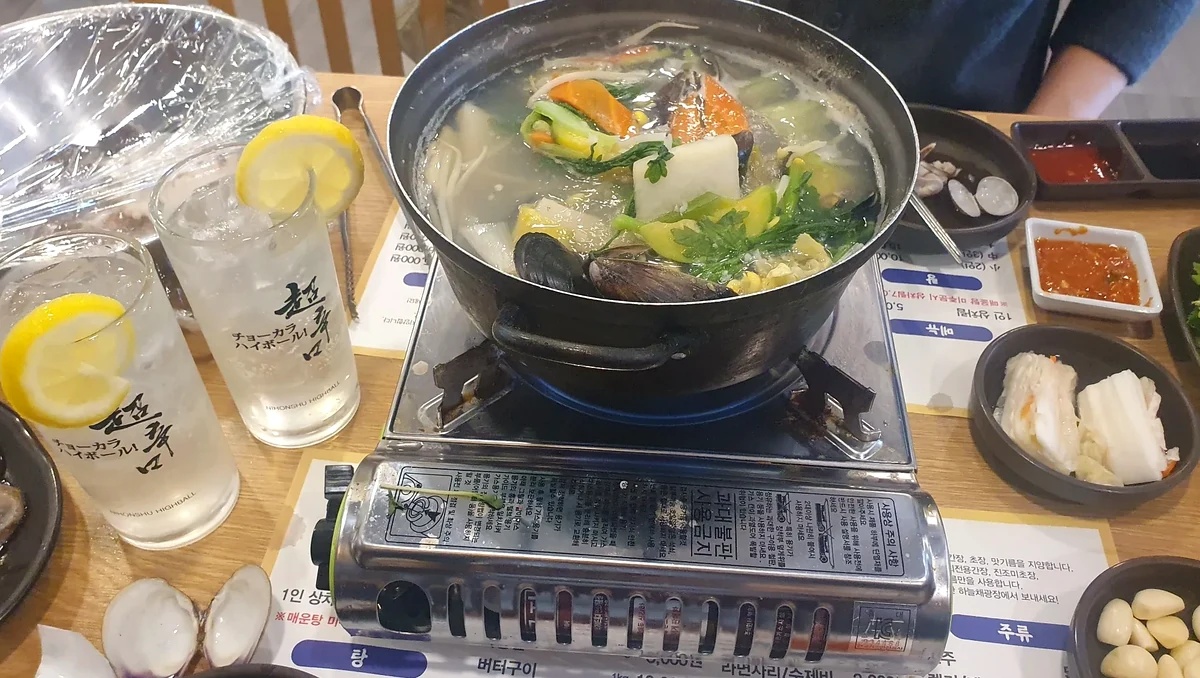
The ocean feast at Noryangjin continues with indulgences like garlic-butter grilled lobster, thinly sliced raw abalone with crisp, delicate sweetness, and golden sea urchin that melts like fresh butter. To round out the spread, nothing beats gathering around a bubbling, steaming pot of spicy maeuntang. Fresh fish heads and bones simmer with white radish, bean sprouts, famed gochugaru chili powder, and tender crown daisy (ssukgat) into a fiery red broth that drives away damp coastal chill. Sipping hot broth, picking sweet meat from the bones, and clinking glasses of crisp, cold soju lets travelers feel the warm, down-to-earth yet deeply resonant spirit of Seoul’s night market life.
Set right on the historic south bank of the Han River, reaching Noryangjin’s seafood hub is effortless thanks to Seoul’s world-class public transit. Travelers simply take Subway Line 1 or Line 9 to Noryangjin Station and follow Exit 1 or Exit 2. A sturdy pedestrian overpass leads straight into the bright, welcoming new market building open around the clock. While high-energy wholesale auctions take place in the early hours roughly between 1:00 AM and 3:00 AM, the retail floor stays open nearly continuously. Even so, late afternoon through late night is often ideal for strolling at ease and enjoying a seafood feast, once the day’s catch has arrived in full and kitchens upstairs are steaming.
Dining at Noryangjin unfolds like a self-contained four-step ritual that rewards a little local know-how. It starts by walking along the packed first-floor stalls to check going prices and inspect tanks brimming with marine life. Among spiky king crab, slender daege (snow crab), live abalone, or wriggling sannakji tentacles, a smart rule of thumb is to stop at stalls where locals are actively buying. Once you pick your seafood, step two is transparent weighing. Although most vendors use calibrated digital scales, seasoned Korean food lovers still use a handy trick: politely ask the seller to tear or snip a corner at the bottom of the plastic bag before weighing so trapped seawater drains out, ensuring every gram you pay for reflects the actual crab or fish.
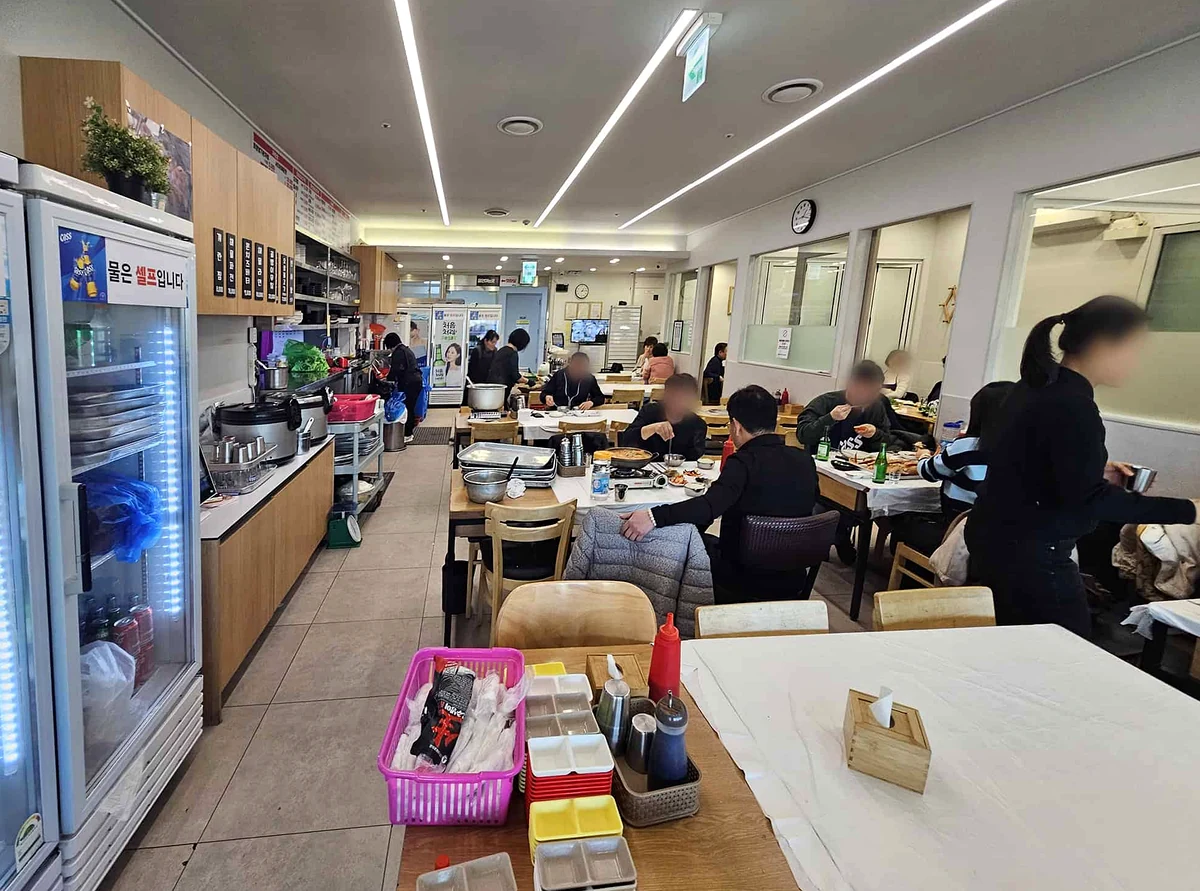
With fresh ingredients chosen downstairs, step three is carrying your basket up to the second floor, where dozens of service restaurants are ready to cook. Here, long-standing chojangjip etiquette keeps costs clear. Each diner pays a basic table/setting fee (chojang-jip fee) typically around 5,000 to 6,000 won, covering seating, leafy wraps, ssamjang dipping sauce, garlic and chili, and refreshing banchan side dishes. Cooking fees are charged separately by weight and style: king crab is usually steamed to preserve its natural sweetness, fresh fish is sliced thin for crisp hoe, and fish bones and heads are simmered into spicy maeuntang with gochugaru chili powder. Confirming cooking methods and prices upfront lets you relax and enjoy your meal without worrying about surprise extras.
Step four—and the most rewarding moment of all—is gathering around the table, cracking open meaty white crab claws, dipping them into rich crab tomalley, and sipping crisp soju amid lively chatter from fellow diners. Far more than a plain food market, Noryangjin offers a genuine slice of the lively, generous spirit of Seoul across generations. To keep your trip to Korea stress-free—free from language hurdles or unexpected costs at bustling spots—booking a professional all-inclusive tour package in advance is an ideal way to savor local culinary highlights at your ease.