







While Zhangjiajie’s chronicles may not bustle like China’s millennial imperial capitals, they carry a serene, enigmatic beauty. Since antiquity, these mountains have been home to indigenous ethnic minorities—principally the Tujia, Miao, and Bai peoples—communities living in harmony with rugged terrain while nurturing vibrant, distinctive cultural traditions. In ancient historical records, Zhangjiajie was known as “Dayong,” a remote, rugged frontier seldom visited by outsiders. That very isolation preserved both the untamed grandeur of its peaks and the authentic lifestyles of its inhabitants. Across successive dynasties from Qin and Han through Tang, Song, Ming, and Qing, the region remained largely wild—serving at times as a refuge for local uprisings and at others as a secluded mountain sanctuary for Daoist hermits cultivating immortality. Only in the late twentieth century did Zhangjiajie’s breathtaking splendor capture global acclaim, earning designation as China’s first National Forest Park in 1982 and inscription as a UNESCO World Natural Heritage Site in 1992, opening a brilliant new chapter in its storied history. For VDS Travel, visiting Zhangjiajie is not merely admiring scenery, but contemplating the journey of a hidden wonderland finally unveiled to the world.
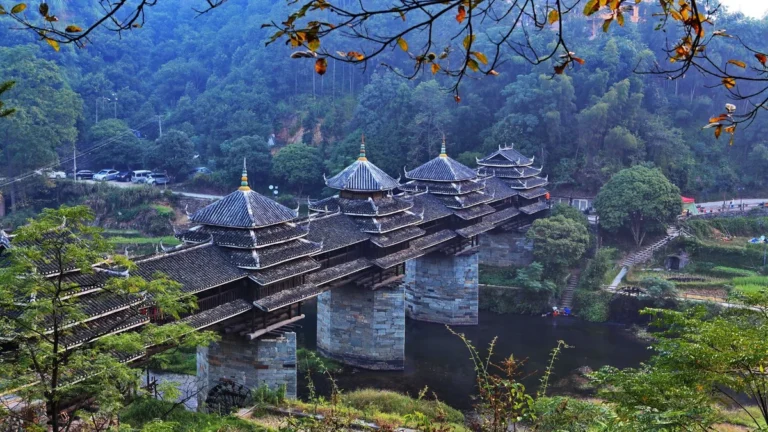
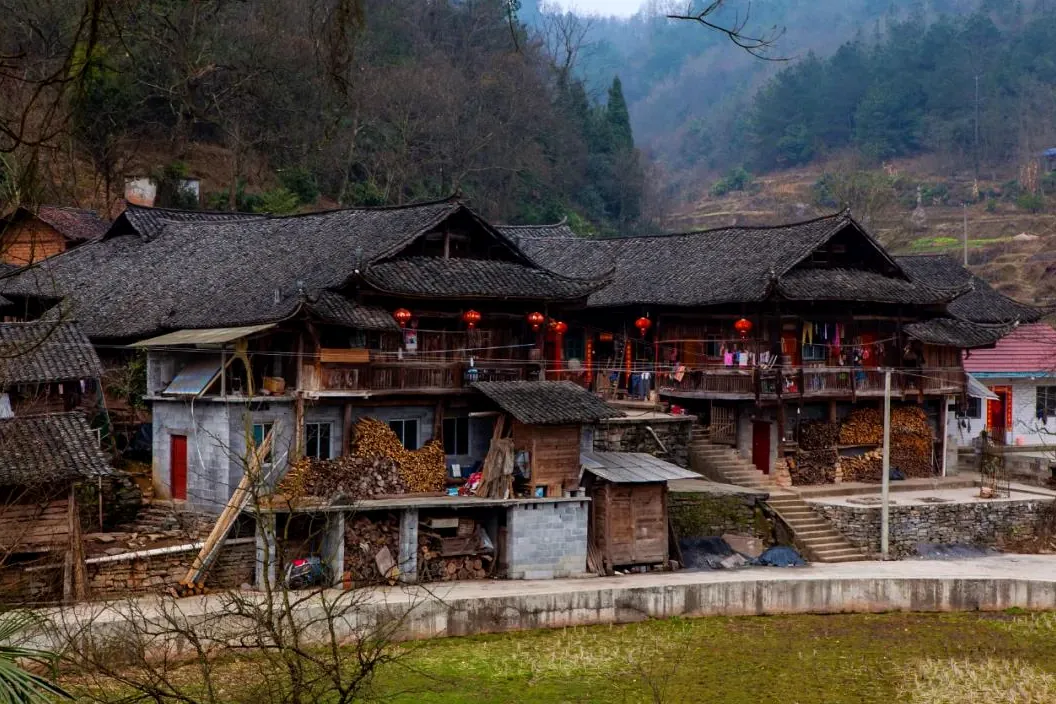
Although mountain peaks command center stage, traditional architecture provides gentle, evocative brushstrokes enriching Zhangjiajie’s cultural canvas. Surrounding the natural core, nearby villages preserve distinctive Tujia vernacular heritage featuring historic wooden stilt houses (*diaojiaolou*) with upturned tiled eaves perched gracefully along hillsides and riverbanks. Far more than dwellings, these timber homes symbolize harmony between humanity and nature, reflecting indigenous philosophy. Local ethnic customs are remarkably vibrant: the Tujia people are celebrated for their spirited *Baishou* Hand-Waving Dance, echoing mountain folk ballads, and colorful harvest and blessing festivals; the Miao are renowned for gleaming silver ornaments and soulful songs; and the Bai uphold distinctive wedding and ceremonial traditions. VDS Travel encourages travelers to immerse themselves in these living cultural expressions so they not only see Zhangjiajie, but feel its beating heart.
As a UNESCO World Heritage treasure, Zhangjiajie National Forest Park forms part of the Wulingyuan Scenic and Historic Interest Area, recognized not only for its extraordinary geological formations, but also for its ecological richness and intangible cultural heritage. Serving as a living museum of biodiversity sheltering rare flora and fauna, Zhangjiajie invites travelers to admire nature’s finest stone sculptures while stepping into a world of legends passed down through generations. This union of monumental stone peaks and the warm, sincere hospitality of local residents creates an unforgettable heritage travel experience that VDS Travel is proud to share with our guests.
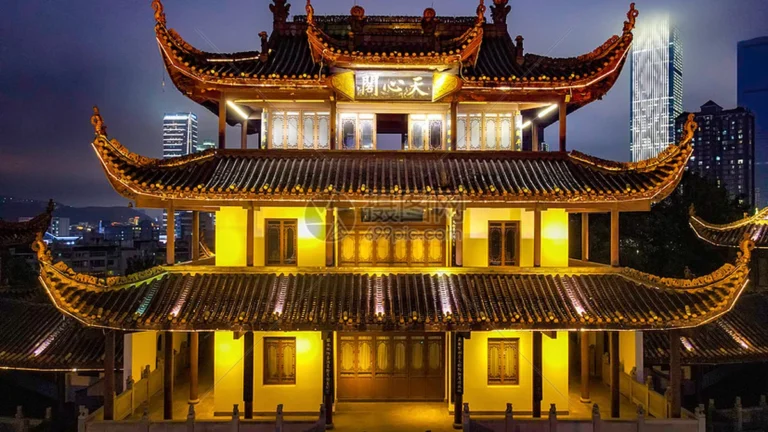
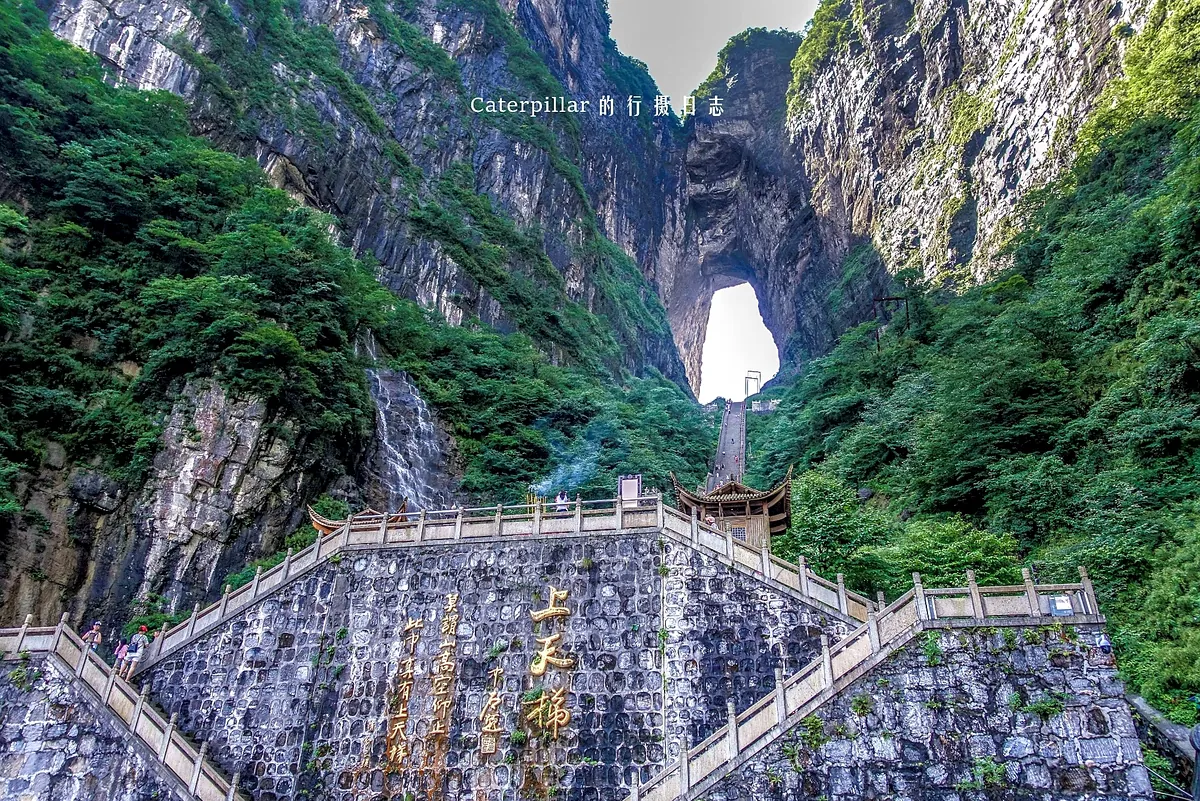
Zhangjiajie’s world-renowned scenic landmarks form the soul of the journey, where every turn reveals an ethereal vista beyond imagination. Foremost among them is Tianmen Mountain (天门山), hailed as Zhangjiajie’s “Heaven’s Gate,” rising to a summit of 1,518 meters. Conquering Tianmen Mountain begins aboard one of the world’s longest passenger cableways—stretching more than 7.4 kilometers—gliding high above emerald valleys, sheer cliff faces, and drifting cloud layers. Suspended in midair as the cityscape of Zhangjiajie shrinks far below, travelers experience an unforgettable sense of connection between humanity and the cosmos.
As the cable car ascends the mountainside, the winding mountain highway with its 99 dramatic hairpin bends unfolds beneath your gaze. Nicknamed the “Avenue Toward Heaven,” this daring feat of road engineering snakes like a silk ribbon draped across sheer rock faces, with each switchback unveiling a fresh perspective as you approach the heart of Tianmen Mountain. At the end of the road awaits its grandest spectacle: Tianmen Cave (Heaven’s Gate). Formed by the collapse of an ancient limestone cavern, this colossal natural arch pierces straight through the mountain wall, measuring 131 meters high, 57 meters wide, and 60 meters deep. To reach the archway, visitors climb 999 steep stone steps known as the “Stairway to Heaven.” Whether shrouded in swirling mist or bathed in brilliant sunshine, Heaven’s Gate radiates sacred grandeur like a portal opening into an immortal realm—a mystique deepened by centuries-old legends of mountain immortals.
Equally unmissable is the transparent Glass Skywalk, one of the boldest thrills atop Tianmen Mountain. Paved with crystal-clear tempered glass and clinging directly to sheer vertical cliffs, this cliffside walkway creates the sensation of strolling on thin air thousands of meters above a dizzying abyss. The rush of adrenaline paired with sweeping views of jagged peaks and clouds drifting beneath your feet offers an exhilarating test of courage rewarded by boundless natural beauty—an experience VDS Travel enthusiastically recommends for immersing yourself in Zhangjiajie’s majesty.
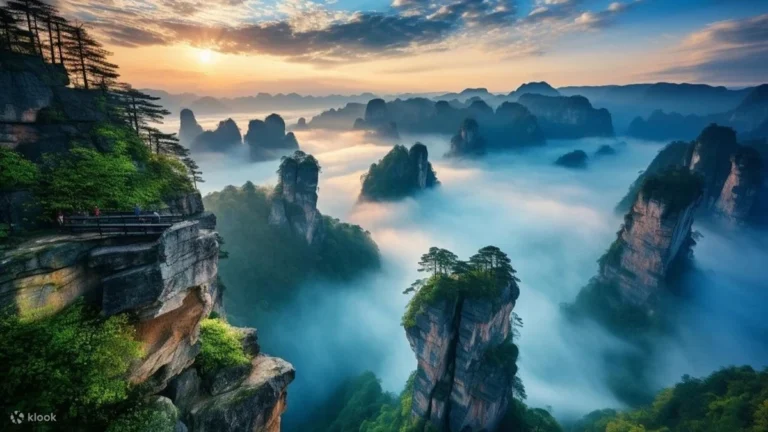
Leaving Tianmen Mountain behind, travelers enter an entirely different realm where thousands of quartz-sandstone spires pierce the sky in a colossal forest of stone: Wulingyuan (武陵源), the core UNESCO World Natural Heritage zone of Zhangjiajie. Home to more than 3,000 sandstone pillars—each sculpted uniquely by nature into dramatic silhouettes resembling ancient stone sentinels guarding sacred ground—its crown jewel is Yuanjiajie (袁家界), famous for sweeping vistas and the iconic “Avatar Hallelujah Mountain.” Originally named the “Southern Sky Pillar,” this soaring spire gained worldwide fame after inspiring the floating Hallelujah Mountains in James Cameron’s blockbuster film *Avatar*. Standing before this sky-scraping monolith surrounded by sheer precipices, deep ravines, crystal streams, and lush greenery feels like stepping straight into a living fantasy world.
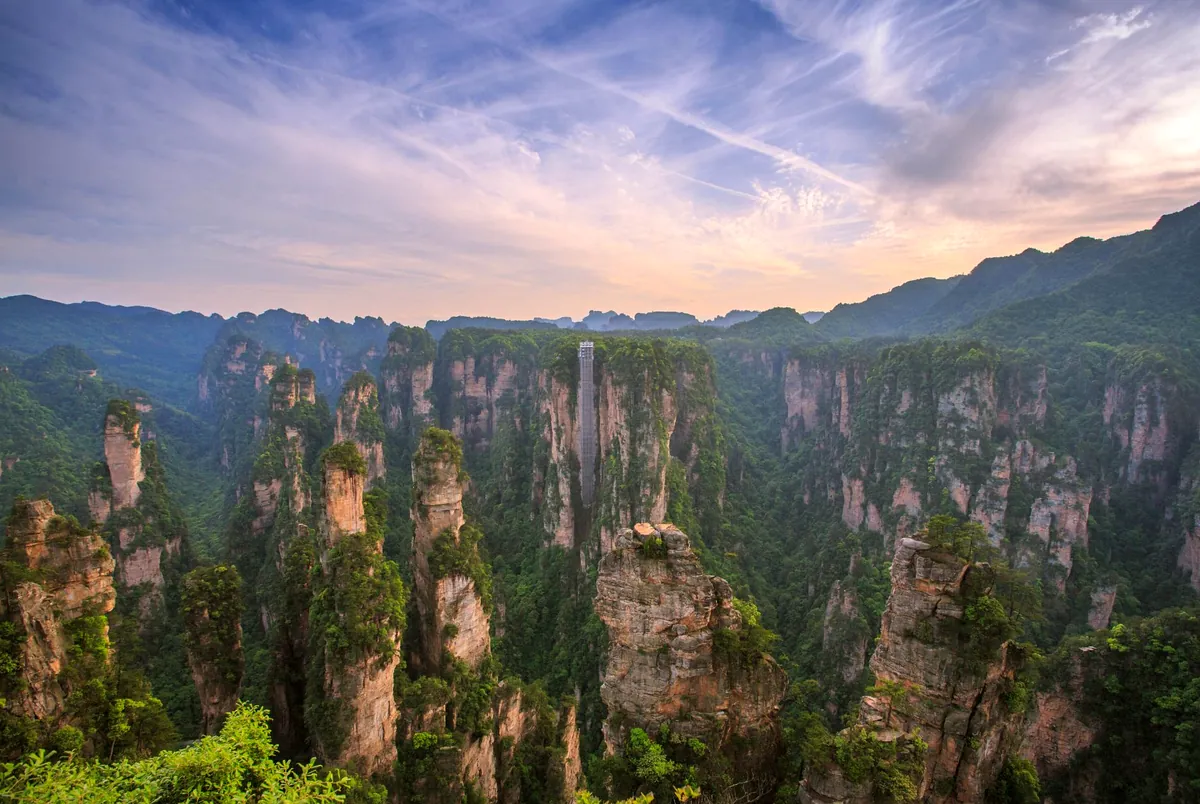
To ascend Yuanjiajie effortlessly, visitors can ride the Bailong Elevator (百龙电梯), an engineering marvel recognized as the world’s tallest outdoor glass elevator. Built directly into a sheer cliff face to a height of 326 meters, it whisks passengers to the summit in under two minutes, unveiling a breathtaking panorama of mist-veiled sandstone spires rising before your eyes. From the top of Yuanjiajie, scenic trails lead to natural wonders such as the First Bridge Under Heaven, the Enchanting Terrace (*Mihuntai*), and the Back Garden—each offering distinct angles and stories waiting to be discovered.
Alongside these headline landmarks, VDS Travel highlights other treasures across Wulingyuan, including Golden Whip Stream (*Jinbianxi*)—a tranquil, crystal-clear brook winding through a shaded canyon ideal for unhurried walking—and Ten-Mile Gallery (*Shili Hualang*), a scenic valley lined with imaginative rock formations resembling an open-air gallery of natural stone sculptures. Every corner of Zhangjiajie tells a living story of geology and culture, and VDS Travel crafts thoughtfully paced itineraries ensuring you experience both exhilarating vistas and peaceful moments amidst majestic peaks.
Zhangjiajie’s distinctive culinary culture is an indispensable part of any heritage journey, showcasing regional specialties and welcoming hospitality. Hunan cuisine—and Zhangjiajie cooking in particular—is celebrated for bold, fiery flavors powered by chilies, peppercorns, and aromatic mountain herbs suited to the humid highland climate and vigorous local lifestyle. Here, travelers savor authentic Tujia and Miao delicacies, led by iconic La Rou (Tujia hearth-smoked pork)—prime cuts of pork cured and smoked slowly over fragrant pine or cypress wood, then stir-fried, braised, or roasted to unite rich savory depth with aromatic woodsmoke.
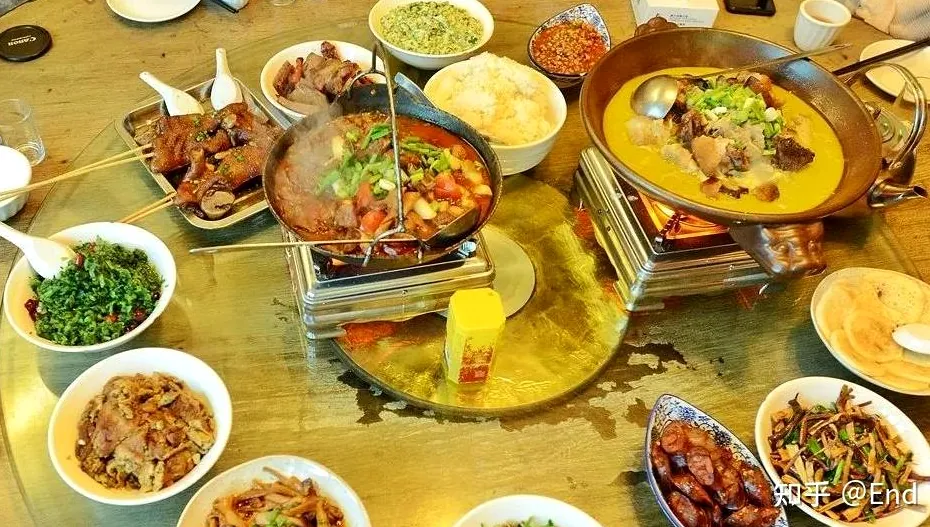
Another unmissable specialty is Sanxiaguo (三下锅), often called “Three-Ingredient Dry Pot.” This hearty communal dish brings together three signature ingredients—typically smoked pork belly, tofu, and local vegetables such as radish or bamboo shoots—simmered together in a single bubbling pot infused with fiery chilies and numbing Sichuan peppercorns, delivering comforting warmth ideal for crisp mountain air. Spicy tofu, fresh wild forest mushrooms, foraged mountain greens, and Zhangjiajie rice noodles further enrich the table, celebrating communal bonding and simple mountain ingredients transformed into vibrant dishes.
Tea culture in Zhangjiajie carries its own quiet charm. Its misty mountain slopes cultivate prized green and black teas, and locals cherish morning tea as a daily ritual to awaken body and spirit. In family homes and traditional eateries, guests are warmly welcomed with fragrant cups of tea and stories of local heritage, while festive banquets showcase elaborate spreads reflecting abundance and sincere hospitality. VDS Travel believes that savoring local gastronomy deepens your connection to the history, culture, and people of this heritage land.
Modern transportation infrastructure has expanded dramatically in recent years, making reaching Zhangjiajie smoother than ever for travelers worldwide. Zhangjiajie Hehua International Airport (DYG) serves as the main aviation gateway, offering direct flights to major Chinese hubs including Beijing, Shanghai, Guangzhou, and Chengdu alongside select international routes, significantly reducing travel times.
Complementing air travel, China’s CRH high-speed rail network connects Zhangjiajie directly to the national high-speed grid via Zhangjiajie West Railway Station, providing a fast, comfortable, and scenic overland option from major cities. Within the scenic areas, dedicated eco-shuttle buses, modern cableways, and the Bailong Elevator ensure seamless movement between headline viewpoints. VDS Travel monitors transport schedules closely to design the most efficient, comfortable routing for every traveler.
Choosing the ideal season plays a key role in shaping your Zhangjiajie experience, though each of the four seasons possesses distinct magic. Spring (April–May) brings budding greenery, crisp air, and ethereal mist draping the sandstone peaks—ideal for scenic walks. Summer (June–August) features lush emerald foliage and warm temperatures; occasional brief rain showers conjure dramatic cloud seas and rainbows, though this is also peak holiday season. Autumn (September–November) is widely considered the golden window, offering clear blue skies, gentle sunshine, cool air, and hillsides ablaze in gold and crimson foliage. Winter (December–March) transforms the peaks into a serene, snow-dusted fairytale realm with far fewer crowds, offering a peaceful, unforgettable perspective. VDS Travel’s experienced specialists help tailor your departure to match your ideal seasonal scenery.
Finally, a few practical field tips ensure Vietnamese travelers enjoy a smooth, worry-free trip. First, regarding visas, Vietnamese citizens require a valid Chinese visa prior to entry; VDS Travel provides full guidance and assistance to streamline your application early. Second, for currency and payments, while the Chinese Yuan (CNY) is the official currency, China operates largely as a cashless society led by Alipay and WeChat Pay. VDS Travel recommends installing and linking your international credit or debit card to both apps before departure for effortless payments at shops, restaurants, and local services, while keeping a modest amount of cash on hand as backup.
For internet connectivity, activating a China travel eSIM prior to departure gives you immediate 4G/5G mobile data upon arrival for maps, translation, and sharing photos. Regarding attire, rugged mountain terrain and shifting elevation call for comfortable, non-slip walking shoes and adaptable clothing layers—paired with a windproof jacket and compact rain gear in spring and summer, heavy warm layers, gloves, and a knit hat in winter, and sunscreen, sunglasses, and a sun hat for bright mountain UV rays.
Traveling with VDS Travel goes far beyond logistics and bookings. Knowing that exploring a new destination can bring unfamiliar details, our dedicated team supports you from visa preparation, payment app setup, and packing advice to expert bilingual guides deeply versed in local culture—ensuring every moment is safe, seamless, and deeply meaningful.
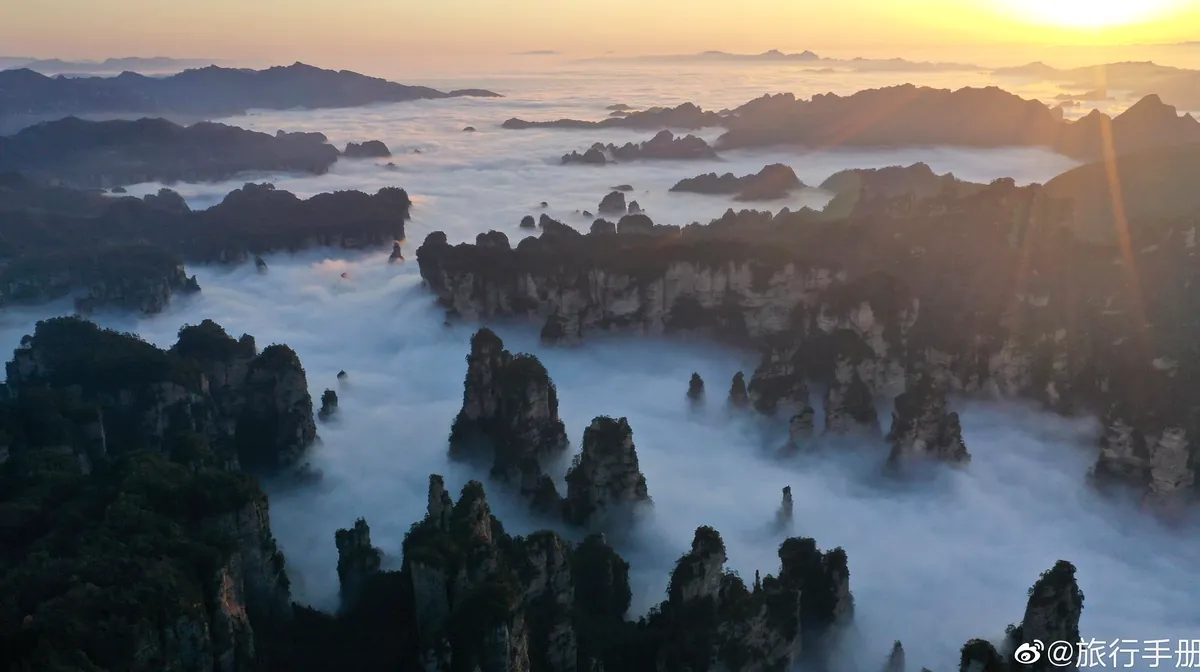
Zhangjiajie is far more than a scenic destination—it is a monumental work of natural art where myth and reality converge, awakening both inner serenity and breathless wonder before nature’s grandeur. From sky-piercing sandstone pillars and majestic Heaven’s Gate to winding mountain roads and the soaring Bailong Elevator, every angle tells an unforgettable story. Let VDS Travel be your trusted companion guiding you through this legendary land, where every sense awakens and every moment becomes a treasured memory of a lifetime.
