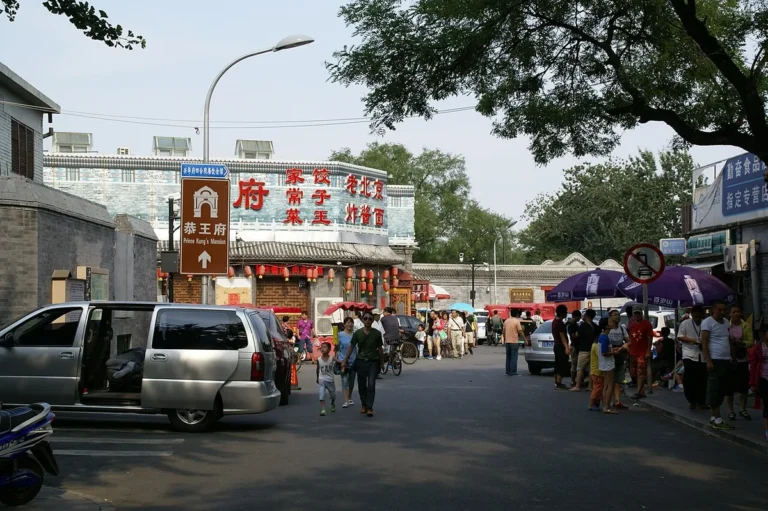
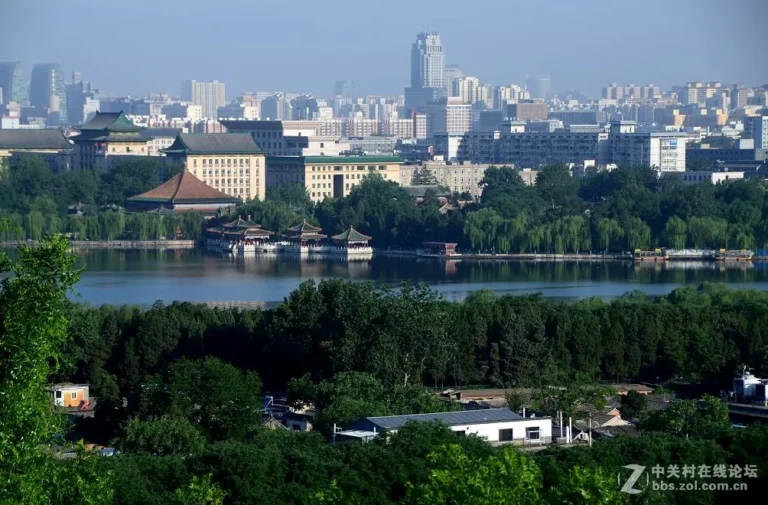
Situated in the historic heart of Beijing along the Dashilan thoroughfare and not far from the majestic Forbidden City, Tong Ren Tang Pharmacy occupies a geographical position deeply marked by the strategic urban planning of feudal China. For centuries, these coordinates have rested on the North China Plain at a modest elevation above sea level, where flat terrain facilitated vital commercial arteries connecting distant provinces to the imperial capital. In terms of spatial positioning, this establishment was never merely an ordinary medicinal herb shop; rather, it early on became an integral component of the imperial court’s political and cultural landscape, concentrating the pinnacle of Traditional Chinese Medicine across both feudal and modern eras. Its presence at the core of the ancient metropolis reflects the vision of dynastic administrators in regulating, advancing, and preserving Eastern medical heritage, transforming the institution into an inseparable cornerstone of Beijing’s developmental history.
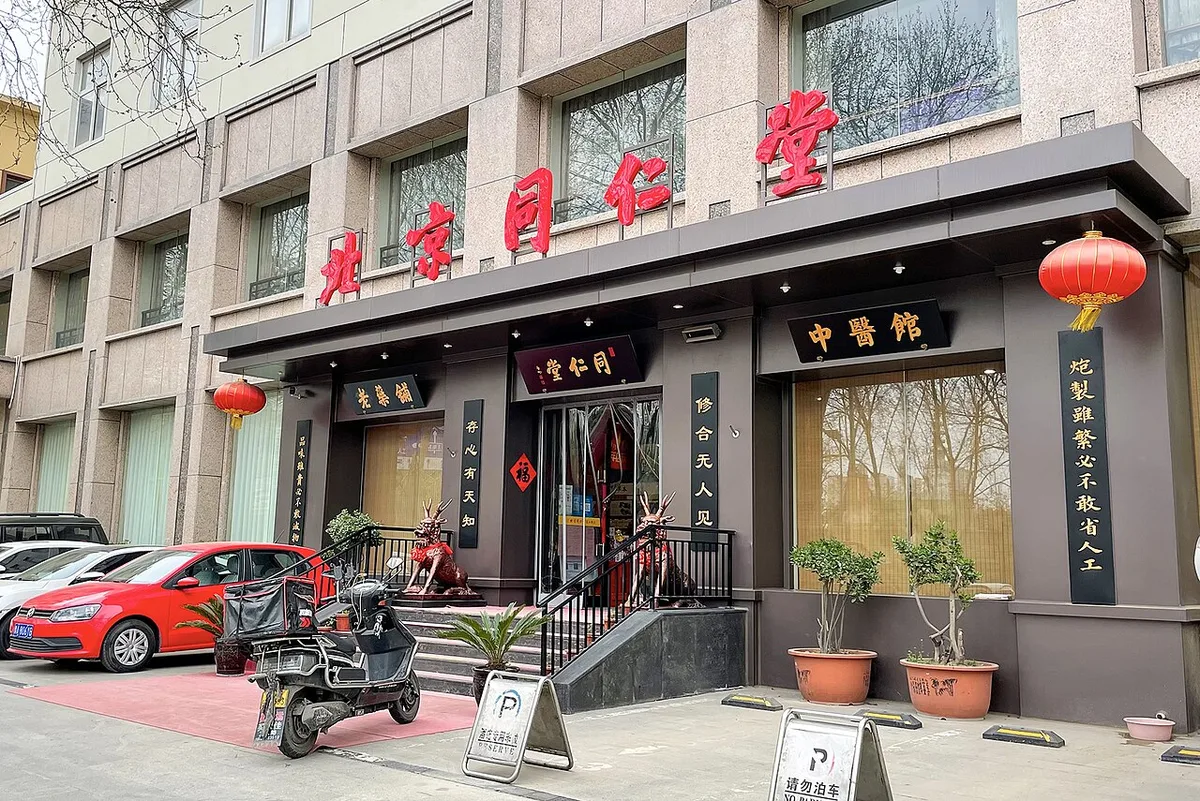
The historical journey of Tong Ren Tang began in the eighth year of Emperor Kangxi’s reign during the Qing Dynasty—the year 1669—founded by the renowned physician and imperial medical official Yue Xianyang (Yue Zunfeng). Initially just a modest apothecary, its extraordinary skill in compounding medicinal ingredients and strict ethical code quickly earned steadfast trust among the nobility and imperial household. By 1723, the first year of the Yongzheng reign, Tong Ren Tang was officially granted an imperial decree by the Qing court to exclusively supply medicines to the Imperial Academy of Medicine, directly serving the Emperor, the Empress Dowager, and high-ranking palace officials. This milestone marked a pivotal historical turning point, elevating a private pharmacy to an unrivaled position within the national medical system under the direct patronage of supreme feudal authority, while establishing rigorous quality benchmarks for the entire pharmaceutical discipline of that era.
Over hundreds of years of vicissitudes, the institution has witnessed tumultuous chapters of modern Chinese history—from foreign imperialist wars and the collapse of the feudal Qing Dynasty to world wars and the profound social transformations of the twentieth century. During those turbulent periods, countless traditional commercial and cultural establishments faded or collapsed; yet Tong Ren Tang persevered thanks to its centuries-old reputation, superior product quality, and deep roots in daily civic life. Its physicians and master artisans repeatedly risked everything to safeguard ancestral compounding formulas, priceless medical treatises, and traditional processing implements from destruction or loss, thereby preserving the lifeblood of traditional medicine across eras of historical rupture.
The pharmacy’s stature as a national symbol was built upon strict business ethics laid down by the Yue family from its very inception, immortalized in the famous maxim: “No matter how complex the preparation process, we dare not skimp on labor; no matter how costly the medicinal ingredients, we dare not cut back on materials.” This philosophy turned the brand into the gold standard of integrity, meticulousness, and moral duty within Eastern medical ethics. Under feudal rule, supplying medicine to the imperial court served as the ultimate guarantee of quality; in the modern era, this iconic status was further affirmed when the state recognized Tong Ren Tang as a vital National Intangible Cultural Heritage to be safeguarded and passed down to future generations.
The cultural influence of this institution extends far beyond national borders, reaching global prominence through signature preparation methods such as decoction boiling, pill rolling, powder milling, herbal liquor infusion, and the subtle pairing of rare botanicals with natural minerals. Iconic remedies originating here—including Niuhuang Jiedu Wan (Bezoar Detoxifying Pills), Liuwei Dihuang Wan (Six-Ingredient Rehmannia Pills), and Angong Niuhuang Wan—have become subjects of modern medical research and are trusted by millions worldwide. Harmoniously blending time-honored artisanal production with rigorous scientific quality control has forged a unique model of living heritage preservation, where past and present converge to contribute to global healthcare while reinforcing the enduring prestige of Eastern pharmaceutical culture on the international stage.
Tong Ren Tang in Beijing, established in the eighth year of the Kangxi reign of the Qing Dynasty (1669), represents one of the pinnacles of commercial spatial planning merged with Traditional Chinese Medicine. Over more than three and a half centuries of continuous operation along the historic axis of the former imperial capital, this flagship establishment has transcended a mere apothecary to become an anthropological architectural heritage site of national stature. From the standpoint of feudal urban planning, the pharmacy was positioned at a strategic node in today’s Xicheng District, tightly linked to the busiest commercial thoroughfares of old Beijing. Its spatial design strictly adhered to traditional feng shui principles while faithfully reflecting rigid social hierarchy, the solemnity of the imperial dispensary, and the eternal aspiration for longevity and healing humanity. Viewed through the lens of architectural history, Tong Ren Tang is a vivid testament to longitudinal depth-based spatial organization, where layers of space unfold sequentially from exterior to interior—creating an enclosed, serene sanctuary completely insulated from street bustle yet deeply woven into the medical life of the community.
The overall layout of the Tong Ren Tang complex follows the traditional northern Chinese siheyuan (courtyard house) model, adapted and expanded in scale to suit the specialized functions of an imperial and commercial pharmaceutical workshop. Its expansive footprint, shaped across multiple historical restorations, is divided into intersecting longitudinal and transverse halls linked by airy interior courtyards. Building heights were regulated according to feudal sumptuary laws governing merchants and commoners, typically rising one to two stories and supported by traditional load-bearing timber frames with intricately carved beam-and-column trusses. Primary construction materials include signature Beijing gray bricks, ash-gray glazed tiles or traditional yin-yang roof tiles, and seasoned red pine and fir treated to resist termites and withstand the harsh climate of the North China Plain. Ingenious craftsmanship is showcased through the seamless integration of nail-free mortise-and-tenon joinery alongside passive thermal insulation and natural ventilation systems, protecting thousands of rare medicinal ingredients from moisture and seasonal temperature swings.
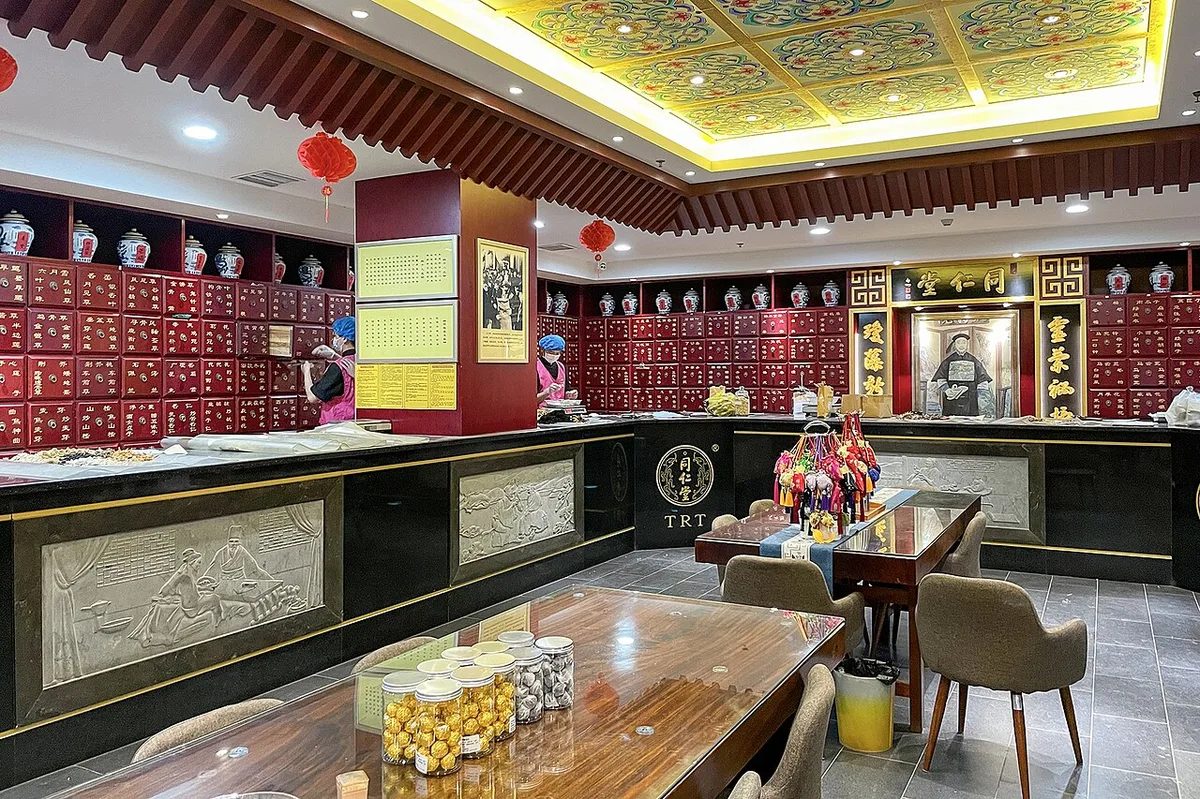
The functional zoning inside Tong Ren Tang is divided into clear, logical sectors tailored precisely to a closed-loop workflow spanning patient reception, pulse diagnosis, prescription compounding, preparation, and storage. Facing the main street at the front is the grand reception and prescription-dispensing hall, immediately captivating visitors with vermilion-lacquered, gold-gilded horizontal plaques and couplets inscribed by renowned imperial court calligraphers. Precious hardwood apothecary cabinets lined with hundreds of small drawers are systematically arranged by the name and pharmacological properties of each ingredient—from ginseng and deer velvet antler to cordyceps and medicinal minerals. Passing deeper through inner courtyards leads to the consultation chambers where imperial physicians and senior doctors diagnose patients and write prescriptions in an atmosphere of absolute tranquility designed to reassure the ailing. At the far rear and in auxiliary wings sit the traditional compounding workshops housing alchemical furnaces, pure bronze medicinal mortars, and specialized storage cellars safeguarding the Yue family’s proprietary ointments, elixirs, pills, and powders.
Decorative and sculptural artistry within Tong Ren Tang’s architecture strongly reflects Confucian and Taoist philosophies, woven subtly into every carving across wooden pillars, crossbeams, and door frames. Dominant motifs feature the “Four Gentlemen”—pine, chrysanthemum, bamboo, and plum blossom—symbolizing resilience and longevity, alongside auspicious mythical creatures believed to bestow fortune and peace. Natural daylight is maximized through central skywell courtyards, illuminating workspaces without compromising temperature stability in herb storage areas. The interior palette pairs the warm, muted tones of natural timber with vermilion lacquer and gold leaf on ceremonial plaques, evoking the dignified, antique, and sacred aura of a centuries-old healing hall. Every architectural detail was carefully engineered to satisfy both feudal aesthetic canons and strict hygienic preservation standards across centuries of continuous operation under dynastic oversight.
Tong Ren Tang’s visitor capacity and service scale have undergone monumental evolution across history, growing from a modest apothecary serving the imperial aristocracy into a global destination for medical culture. During the height of the Qing Dynasty, the establishment welcomed hundreds of officials, merchants, and citizens daily seeking medical remedies, requiring highly methodical spatial organization to prevent congestion and maintain order. Today, daily foot traffic reaches thousands of visitors, encompassing patients seeking clinical consultations, scholars researching traditional medicine, and international travelers admiring its architectural heritage. To accommodate this massive influx without harming the original fabric of the historic monument, management has implemented refined one-way internal circulation routes guiding guests smoothly through heritage galleries, specialist clinics, and medicinal culture experience zones.
The scholarly value of Beijing’s Tong Ren Tang lies not merely in its centuries-old lineage or grand architectural scale, but equally in its ability to preserve a living medical-cultural space intact at the heart of a modern metropolis. The complex stands as proof of the seamless harmony between traditional Chinese timber architecture and the practical demands of a major pharmaceutical enterprise spanning turbulent historical eras. Through every grain of wood, every gray brick, and every thoughtfully ordered functional hall, the pharmacy continues to tell the story of imperial medical majesty, ancient engineering mastery, and a business philosophy anchored in medical ethics for over three hundred and fifty years. Studying its architectural planning offers profound insight into how ancient builders crafted symbolic environments where architecture directly served human health and spiritual well-being across generations.
Founded in the eighth year of Emperor Kangxi’s reign during the Qing Dynasty (1669), Tong Ren Tang in Beijing is far more than a traditional pharmaceutical establishment; it is a cultural institution imbued with Eastern philosophy and imperial court architecture. Having weathered over three centuries of prosperity alongside the upheavals of modern Chinese history, Tong Ren Tang’s architectural grounds have become a living museum of spatial artistry—where master carpentry, classical feng shui principles, and profound traditional medical philosophy converge. Its presence in the heart of Beijing faithfully mirrors traditional social order and the synthesis of Confucian, Taoist, and Buddhist thought, materialized through historic wooden structures, inscribed plaques and couplets, and priceless medicinal treasures passed down through generations of imperial court physicians.
Examining the overall structure of this heritage complex reveals strict adherence to traditional Beijing urban planning and siheyuan courtyard architecture, deeply influenced by the building codes of high-ranking Qing official residences. The main entrance faces south to welcome vital life energy (qi) in accordance with classical cosmology, fitted with precious hardwood paneled doors intricately carved with auspicious motifs such as the Four Gentlemen, the Eight Treasures, and symbols of longevity. The facade commands attention with vermilion-lacquered, gold-leaf plaques bearing authoritative regular-script Chinese characters commemorating the imperial decree granting exclusive supply rights to the Imperial Academy of Medicine. Heavy post-and-lintel timber trusses joined through signature northern Chinese mortise-and-tenon techniques have enabled the building to withstand major earthquakes and extreme weather fluctuations over centuries without structural compromise.
Stepping across the front hall threshold into the inner courtyard immediately transforms the atmosphere from bustling street commerce into the hushed, contemplative, and sacred ambiance of traditional medicine. At the center of the inner courtyard stands the ancestral shrine honoring legendary founding sages of Chinese medicine, prominently featuring Shennong (the Divine Farmer), Bian Que, and Hua Tuo. Built in miniature palace style with yellow or dark gray glazed tubular roof tiles and gracefully upturned eaves carved with dragons, phoenixes, and swirling clouds, the main sanctuary houses a red sandalwood altar carved with dragon pillars holding vermilion-and-gold spirit tablets inscribed with the names of pioneering physicians. Lighting inside the shrine is deliberately subdued, filtering through perforated wooden lattice windows to cast a soft, ethereal glow across rising tendrils of sandalwood incense, deepening the sense of reverence toward the founders of Eastern pharmacology.
Surrounding the central shrine are treasure exhibition rooms, rare herb vaults, and traditional compounding halls where every artisanal step is preserved or reenacted just as it was during its golden age under Emperor Qianlong and Empress Dowager Cixi. Here, every artifact carries a historical narrative and singular artistic merit. Solid brass medicinal mortars hollowed at their centers by tens of thousands of hours of manual pounding, alongside delicate ivory-and-brass steelyard scales used to weigh precious ingredients like millennium ginseng, rhinoceros horn, musk, and cordyceps, stand as masterpieces of historic metalwork. Rosewood apothecary cabinets fitted with hundreds of small drawers are systematically categorized according to Yin-Yang and Five Elements pharmacology, each drawer front inscribed in graceful cursive Chinese calligraphy with ink, demonstrating absolute precision in managing imperial medicinal stocks.
Delving deeper into the philosophical underpinnings of this space reveals the pervasive influence of Yin-Yang and Five Elements theory across interior ornamentation and functional layout. The interior color scheme balances and harmonizes deep vermilion lacquer, gleaming gold leaf, and the rich, warm hues of precious timbers like huanghuali and nanmu—representing the Fire and Wood elements, which symbolize growth, vitality, and healing energy. Couplets flanking the grand hall’s columns quote classical medical maxims from the Huangdi Neijing (Yellow Emperor’s Inner Canon), reminding practitioners to uphold pure medical ethics, hold human life sacred, and regard healing the sick as the highest calling of a virtuous person. Calligraphy on these plaques—executed in regular, running, and cursive scripts by celebrated Qing Dynasty calligraphers—infuses the entire architectural complex with scholarly literary depth.
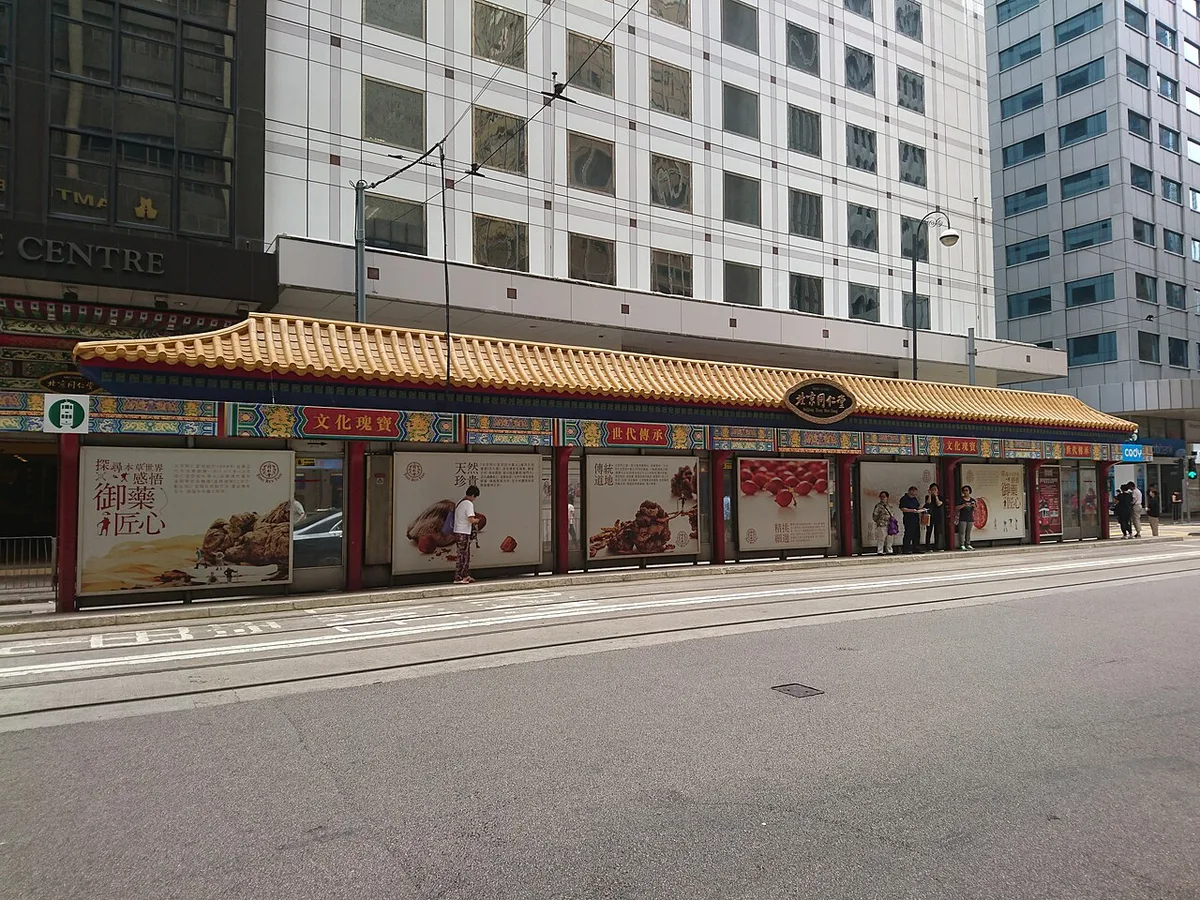
Treasures currently preserved and exhibited on-site include ancient medical manuscripts, Ming and Qing woodblock-printed pharmacopeias, and centuries-old imperial decoction vessels. Particularly noteworthy are bronze molding dies used to shape prized medicinal boluses such as Niuhuang Jiedu Wan and Da Zijin Dan, engraved with intricate patterns of remarkable mechanical precision from an era prior to modern machinery. Blue-and-white and polychrome porcelain medicine jars hand-painted with five-clawed imperial dragons—once an exclusive privilege of the Forbidden City—attest to the intimate bond between this compounding house and supreme dynastic authority. Every artifact possesses not only practical utility, but also stands as evidence of the supreme craftsmanship of historic Beijing artisans who seamlessly united strict pharmaceutical functionality with refined court aesthetics.
Viewed holistically, the enduring survival of Beijing’s Tong Ren Tang through the violent historical upheavals of the twentieth century offers compelling proof of the vitality of tangible and intangible heritage nurtured through generations of wisdom and diligence. Its singular architectural artistry fused with profound Eastern philosophy transcends the boundaries of an ordinary commercial or medical enterprise, standing as a priceless human heritage safeguarding the memory, knowledge, and soul of traditional Eastern medicine. Exploring, preserving, and understanding this space requires a multidisciplinary perspective capable of peering through layers of time to touch the essence of the art of living, healing, and cosmological thought that shaped traditional Chinese civilization.
The passage of time at Tong Ren Tang, the illustrious medicinal establishment located along Beijing’s Dashilan thoroughfare, adheres strictly to the Eastern medical philosophy of harmony between heaven and humanity. As dawn’s first light filters through thin morning mist onto antique glazed roof tiles, daily life here stirs awake with the unmistakable sounds of medicinal herbs and traditional compounding tools. Skilled artisans and physicians enter the halls early, opening the day by checking the temperatures of elixir furnaces and sorting hundreds of rare botanicals shipped from every corner of the former empire. The morning air carries a dense, complex bouquet blending the earthy bitterness of fine ginseng, the warm pungency of musk and camphor, and the tranquil scent of sandalwood emanating from aged huanghuali apothecary cabinets. The day’s first herbal prescriptions are measured out according to the classical “monarch, minister, assistant, and envoy” formulation principle under the watchful eyes of senior managers, creating a solemn atmosphere steeped in history and reverence for medical wisdom accumulated over more than three centuries since the eighth year of Emperor Kangxi’s reign.
As the sun climbs toward noon and commercial activity along old Beijing’s historic lanes reaches full swing, the interior of Tong Ren Tang transforms into a vibrant stage of human life and traditional healing science. Visitors from near and far—from scholars versed in classical texts to Western travelers seeking time-honored wellness practices—gather here to experience the pulse-diagnosis artistry of renowned physicians. The rhythmic thud of brass mortars echoes from the ointment and hand-rolled pill workshops, mingling with quiet consultations between doctors and patients regarding Yin-Yang balance and bodily constitution. Inside sleek tempered-glass display cases thoughtfully integrated within the traditional courtyard architecture, boxes of prized remedies bearing the labels Angong Niuhuang Wan and Da Huoluo Dan rest beneath warm golden lighting. Visitors can watch master artisans hand-apply ultra-thin gold leaf onto individual medicinal boluses—a delicate craft demanding intense concentration and decades of practice to achieve milligram-level precision.
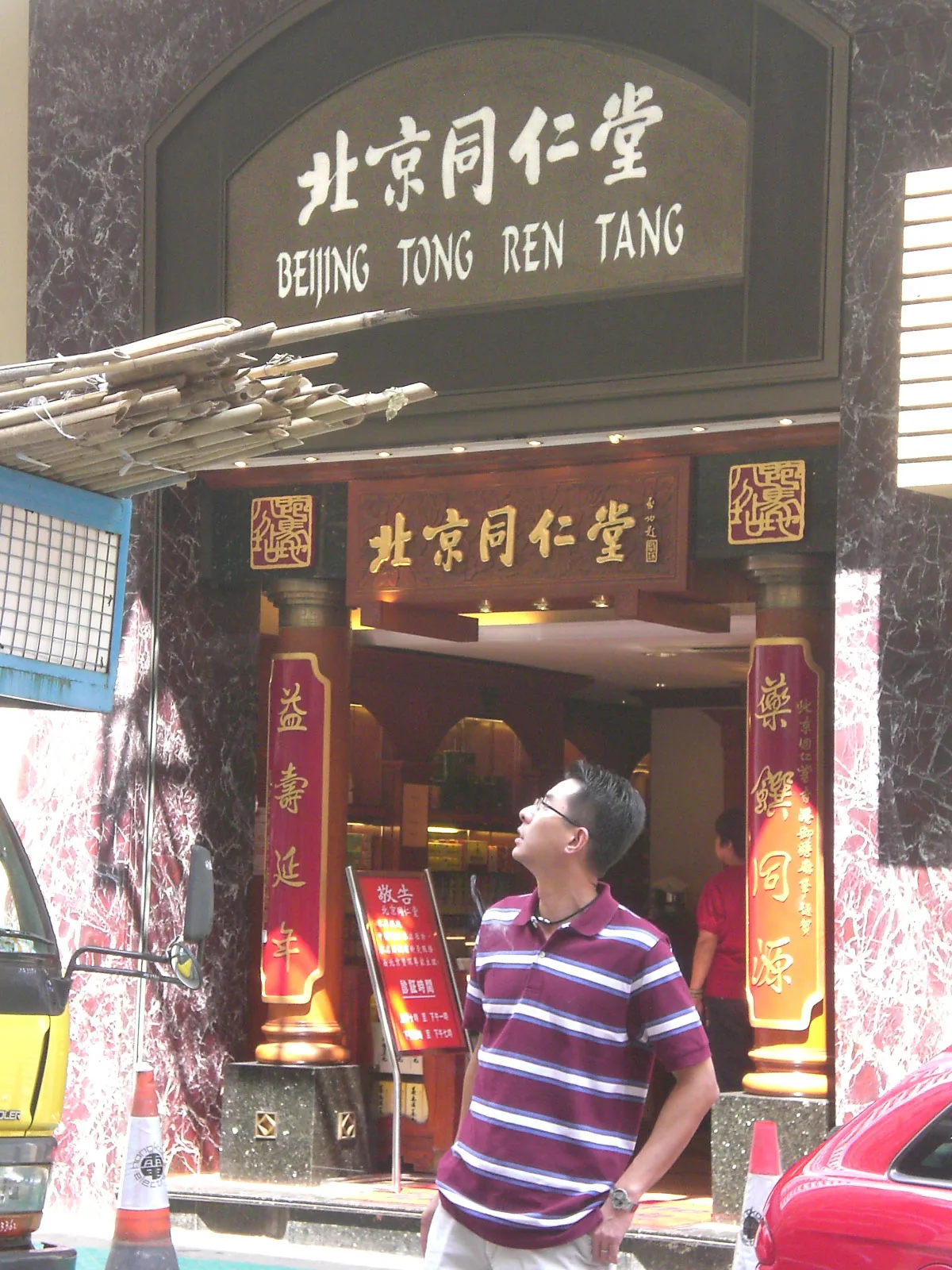
As dusk settles and amber twilight bathes the gray brick walls and vermilion-and-gold plaques, Tong Ren Tang transitions into a quieter, more nostalgic mood. Daytime shoppers gradually thin out, making way for visitors eager to delve deeper into the history of feudal Chinese pharmacology through the curated private museum housed within the complex. Handwritten traditional Chinese medical manuscripts on Xuan paper, celadon porcelain decoction sets from the Ming and Qing dynasties, and imperial commendation edicts honoring the pharmacy’s service to the royal household are illuminated by focused spotlights. Docents well versed in medical history guide visitors from room to room, recounting stories of how imperial court physicians once visited these very halls to inspect herbs before presenting them to the throne.
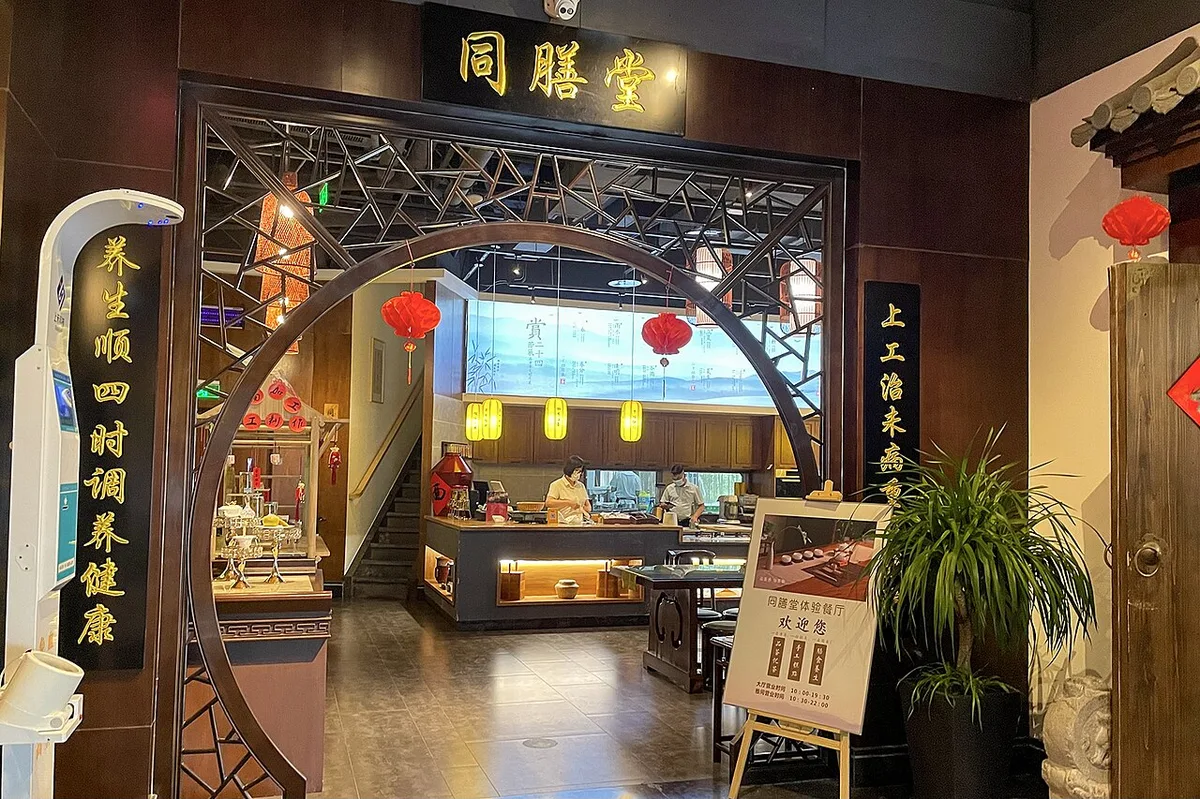
When night falls and traditional red lanterns glow along the sweeping eaves of the historic building, Tong Ren Tang rises radiantly and majestically amid modern Beijing’s illuminated cityscape. The interplay between the warm golden glow of classical architecture and surrounding commercial lights creates a striking visual dialogue between a gilded past and the contemporary present. In the herbal tea and wellness dining lounges, guests can sip botanical infusions brewed according to imperial recipes grounded in Five Elements balance while listening to live performances of guzheng zither and xiao bamboo flute. These gentle melodies, paired with the faint aroma of herbs smoldering in antique bronze censers, deliver a multi-sensory experience that brings deep stillness to travelers after hours of exploring the bustling capital.
The finest vantage points here are found on the upper wooden gallery of the main building, where balconies overlook the lively pedestrian flow of Dashilan Street below. From this elevation, observers can take in a sweeping panorama of urban architectural history, where gray yin-yang tiled roofs contrast and harmonize dramatically with modern street life. During major traditional festivals such as Chinese New Year or the Mid-Autumn Festival, the plaza outside Tong Ren Tang comes alive with lion and dragon dances alongside Tai Chi wellness demonstrations—recreating the vibrant communal spirit of Beijing citizens from centuries past. These cultural performances are far more than superficial reenactments; they sustain an enduring current of intangible heritage where medicine, performing arts, and folk customs unite in deeply humanistic tradition.
Exploring this historic medicinal institution thus transcends an ordinary sightseeing stop, evolving into an immersive journey into the philosophical depths of ancient Eastern civilization. Every hour of the day—from the rhythmic pounding of mortars at dawn to the glow of red lanterns after dark—serves as an essential brushstroke in a vivid portrait of local life and survival through medical wisdom. Visitors see far more than herbal pills and antique cabinets; they feel the living pulse of a cultural entity that continues to breathe, evolve, and adapt dynamically to the modern world without ever losing the core identity forged across centuries of imperial history.
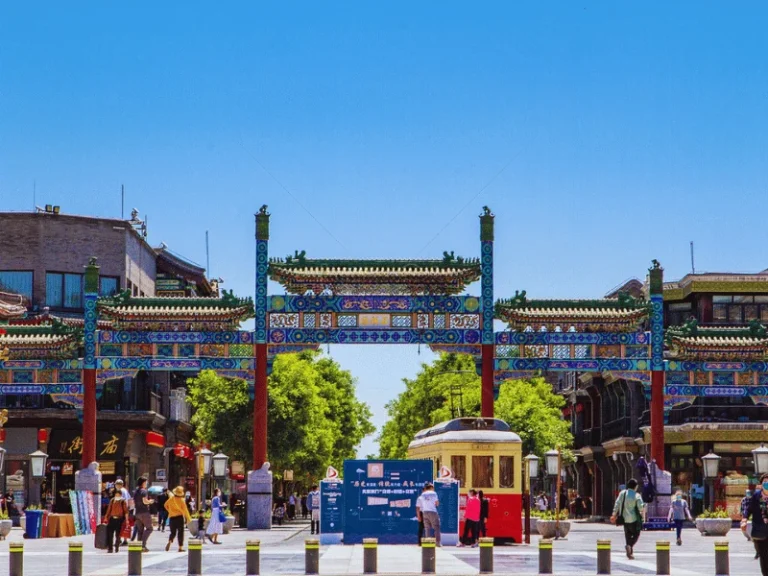
Dashilan Boulevard, located in Beijing’s Xicheng District, rose during the seventeenth century to become a vital commercial artery concentrating the economic and cultural essence of the Qing Dynasty. Closely intertwined with the prosperity of this historic commercial hub is the illustrious presence of Tong Ren Tang Pharmacy, the imperial apothecary founded in the early Kangxi reign. The presence of an imperial medical institution not only shaped Chinese medical knowledge, but also profoundly influenced the surrounding culinary ecosystem. Within a historic district enriched by centuries of trade, local food culture carries an unmistakable character where the boundary between medicine and food virtually dissolves in accordance with Eastern wellness philosophy. The winding alleyways surrounding this area preserve recipes handed down across generations, reflecting a culinary tradition that honors natural seasonal rhythms and Yin-Yang equilibrium within the human body.
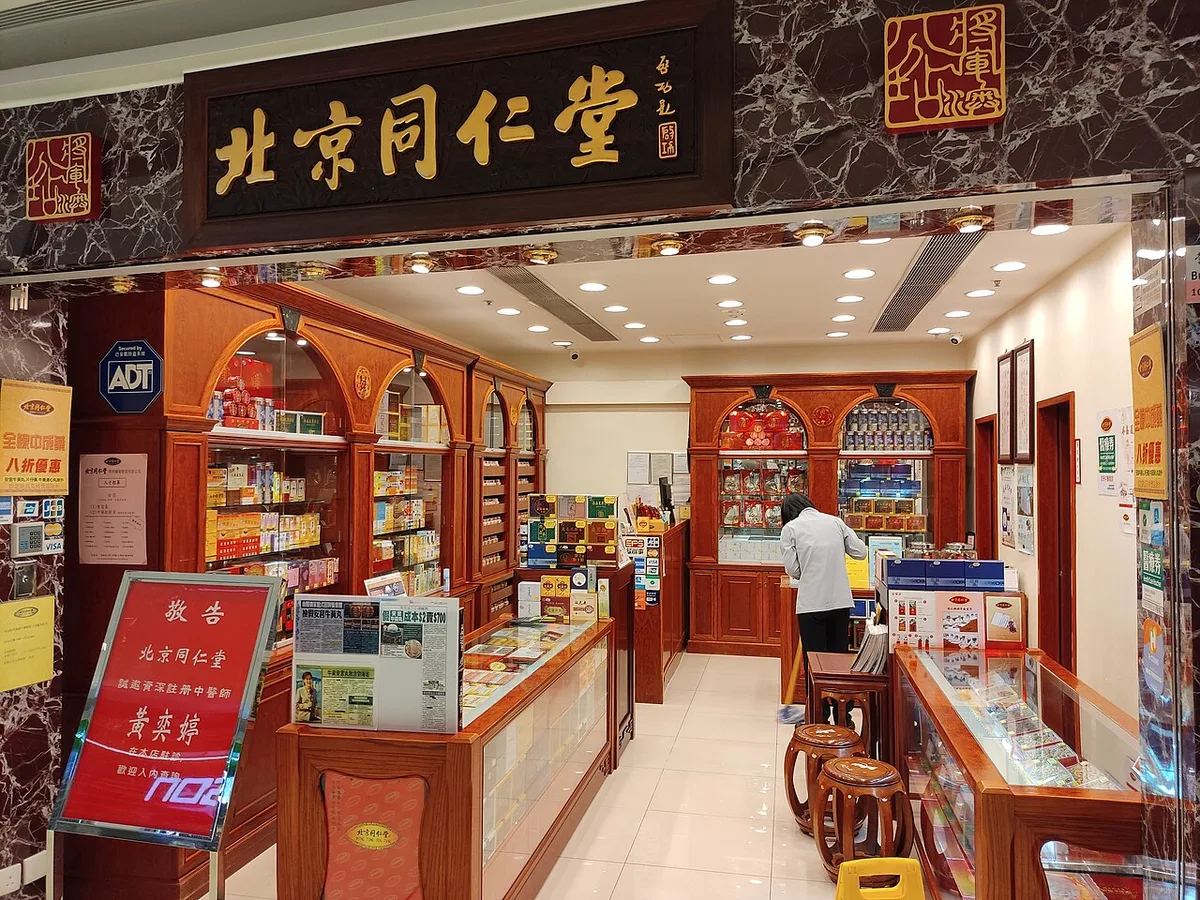
The signature cuisine surrounding Tong Ren Tang’s historic quarters blends imperial court gastronomy with traditional Beijing folk cooking. Directly influenced by palace physicians and the health regimens of the former nobility, local chefs developed a culinary school focused intently on nourishing vital energy (qi). Iconic dishes such as Peking Roast Duck with its shatteringly crisp skin and succulent meat, alongside slow-braised deer tendon, squab soup, and prized herbal broths, strictly observe principles harmonizing flavor with medicinal properties. Preparation here demands masterly control over flame and simmering duration, with many dishes slow-cooked for dozens of hours in specialized clay pots to extract the purest essence of natural ingredients without diminishing their authentic flavors.
The intersection of medicine and gastronomy in this neighborhood shines clearest through the concept of yaoshan (medicinal cuisine)—a culinary tradition treating daily food as preventative medicine. Veteran chefs at heritage eateries around the old quarter routinely incorporate goji berries, Chinese yam, ginseng, angelica root, and reishi mushrooms directly into morning congees, stir-fries, and double-boiled soups. Rather than a modern trend, these recipes represent a direct continuation of wellness menus once served inside the Forbidden City before spreading to famous restaurants around Dashilan and Qianmen Street. Savoring a steaming bowl of medicinal broth during Beijing’s freezing winter months is far more than a culinary delight; it is a restorative ritual designed to dispel the biting cold of the North China Plain in strict accordance with classical medical texts.
Alongside nourishing savory dishes, local tea-drinking customs and traditional pastries hold an indispensable place in the area’s centuries-old cultural life. Historic teahouses nearby serve not merely as spots for refreshment, but as social salons for scholars, merchants, and literati. Popular selections include aged Pu-erh tea, premium oolong, and chrysanthemum tea infused with goji berries, brewed in heat-retaining Yixing purple-clay teapots to unlock their fullest fragrance and mellow astringency. Accompanying these rich brews are traditional delicacies such as imperial mung bean cakes, flaky rose-petal pastries, and walnut cakes—handcrafted with restrained sweetness so as never to overpower the tea’s subtlety while aiding digestion after rich meals.
The urban fabric surrounding this historic pharmacy forms a rich tapestry of street food stalls and heritage restaurants, anchored by historic arteries such as Dashilan West Street and Liulichang Cultural Street. Strolling down these lanes, visitors encounter centuries-old snack shops selling traditional maltose-glazed tanghulu (candied hawthorn skewers), savory mung bean pancakes, and Beijing-style fermented tofu. Each family-run shop guards its own heirloom recipe, from spice ratios to sourcing the freshest produce from local wholesale markets. The resilient survival of these family establishments amid a modern metropolis creates a living cultural stratum where the gilded heritage of the imperial era remains palpable in every familiar flavor.
Local dining customs are also bound to time-honored table etiquette cherished by Beijing residents. A traditional meal typically begins by appreciating a dish’s color, aroma, and warmth before taking the first bite—expressing gratitude for the chef’s craft and nature’s bounty. Dishes are served in a methodical sequence, progressing from cooling appetizers that awaken the palate to nutrient-rich main courses, and concluding with light soups or herbal teas to restore bodily equilibrium. Such meticulous attention to detail elevates dining here beyond mere sustenance into a refined art of living preserved across generations.
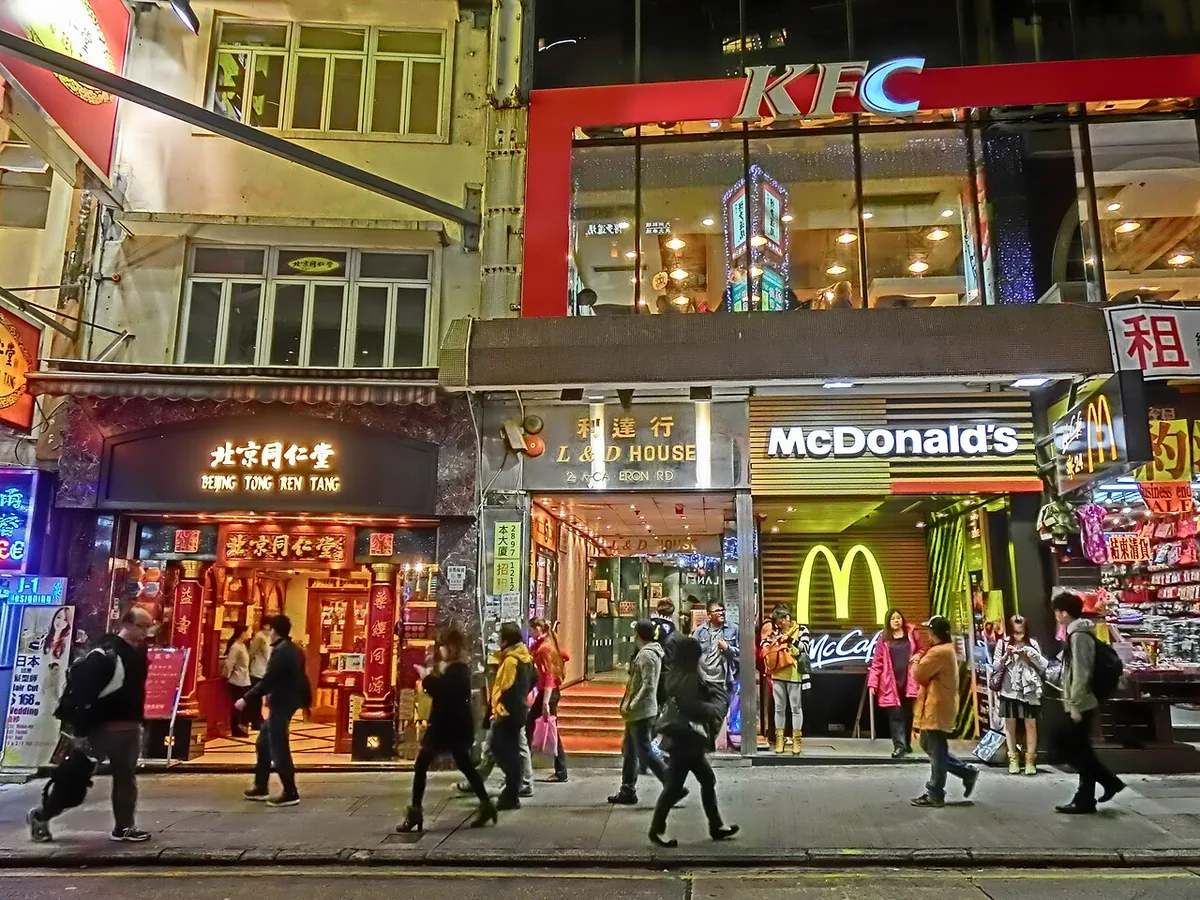
Across the trials of modern history, the culinary ecosystem around this renowned pharmacy has preserved its authentic roots thanks to the devotion of local residents and veteran culinary artisans. They remain custodians of nearly lost techniques—from selecting specific cuts of beef to balancing medicinal herbs in slow-simmered bone broths. When diners pause at these historic eateries to enjoy a meal prepared in harmony with Eastern wellness philosophy, they experience a living slice of Beijing history—a world where medicine and gastronomy unite into an invaluable intangible cultural heritage that continues to nourish both body and soul.
Planning a visit to explore the historic Tong Ren Tang Traditional Chinese Medicine complex in Beijing calls for thoughtful preparation regarding urban transit and local cultural etiquette. Located in the Dashilan neighborhood of Xicheng District—one of the busiest commercial hubs since the Qing Dynasty—this landmark is not merely a tourist stop, but a living museum of Eastern wellness philosophy. Navigating Beijing’s extensive public transit network smoothly allows scholars and international travelers to reach this heritage site with ease. The city’s subway system serves as the backbone of local travel, with Line 2 acting as a primary artery. Passengers should alight at Qianmen Station or Hepingmen Station, followed by a brief walk through historic hutong alleys lined with traditional courtyard residences to reach the original flagship pharmacy. For those traveling by public bus, routes running along the southern perimeter of Tiananmen Square stop just a few hundred meters from the historic quarter. Taxis and ride-hailing apps widely used across mainland China are also convenient, though heavy traffic congestion in central Beijing during morning and evening rush hours makes the underground metro the fastest, most reliable option.
Beijing’s humid continental climate, marked by four distinct seasons, creates dramatically different sightseeing experiences throughout the calendar year. Spring, lasting from March through May, brings dry weather occasionally punctuated by northern dust winds, making face masks and protective eyewear advisable while strolling open streets. Summer, from June through August, brings high heat and humidity alongside sudden afternoon thunderstorms, so carrying an umbrella and wearing breathable natural cotton clothing is essential. Autumn, spanning September through November, is universally regarded by travel experts and cultural researchers as the finest season of the year for visiting. Clear blue skies, pleasant temperatures ranging from 15°C to 25°C, and golden maple and ginkgo foliage lining the historic streets create an idyllic backdrop for architectural photography and exploration. Winter, from December through February, ushers in biting cold with temperatures frequently dropping below freezing and occasional snowfalls blanketing antique tiled roofs—creating a deeply evocative atmosphere that requires heavy winter coats, gloves, and thermal accessories.
The best time of day to explore Tong Ren Tang is during the morning hours right after opening, from roughly 8:30 AM to 11:00 AM. During this window, the interior retains the tranquil solemnity befitting a historic healing sanctuary, before large tour groups arrive in the afternoon. Moreover, morning sunlight streaming through intricately carved wooden window lattices illuminates traditional decorative motifs, vermilion-and-gold plaques, and antique hardwood apothecary cabinets stocked with hundreds of herbs. Attire should reflect polite respect for traditional cultural spaces: visitors should dress modestly and comfortably for walking across historic stone pavements and original wooden floors. Soft-soled sneakers or supportive walking shoes are essential, as exploring the full complex involves moving across multiple exhibition halls, traditional compounding rooms, and specialist consultation wings.
Cultural etiquette and local customs here call for attentiveness and genuine respect from every visitor. Tong Ren Tang is not merely a commercial shop or historic monument, but the supreme symbol of Traditional Chinese Medicine preserving centuries of therapeutic heritage. When viewing displays of rare medicinal treasures—such as millennium ginseng, antique rhinoceros horn, or specimen herbs preserved in glass jars—visitors must never touch artifacts, glass cases, or historic compounding tools, as skin oils and moisture can damage delicate heritage items. Photography is generally permitted in public corridors and general exhibition halls, but flash photography is strictly prohibited when photographing proprietary herbal formulas, handwritten ancient medical texts, or active clinical consultations in order to protect patient privacy. Visitors should also refrain from loud conversation, boisterous laughter, or behavior disrespectful of the strict professional medical decorum upheld on-site.
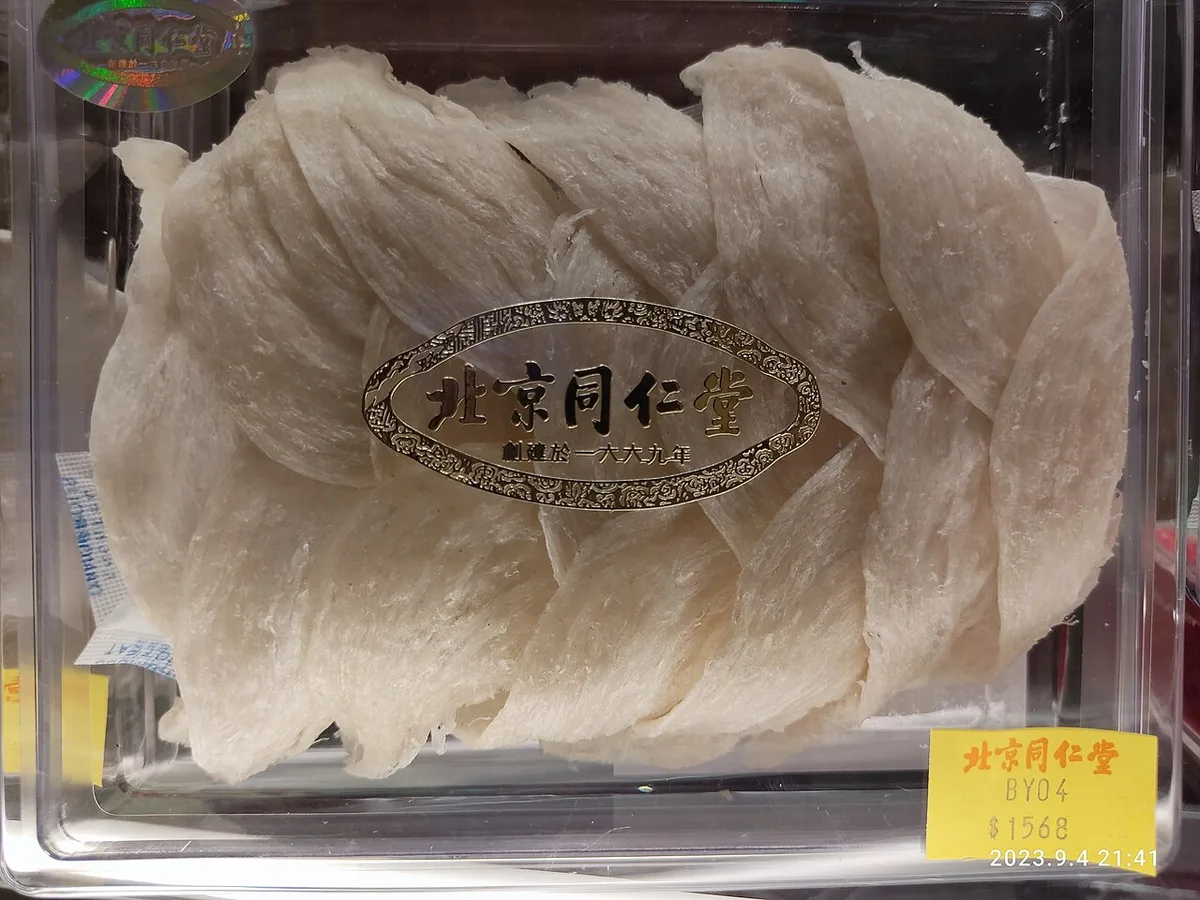
Ticketing and visitor services at this historic flagship operate through a blend of modern convenience and traditional administration that travelers should keep in mind. General entry to the historic exhibition halls and traditional retail dispensary is typically free of charge, welcoming the public to admire and learn about its heritage. However, accessing specialized areas—such as the miniature Traditional Chinese Medicine museum, imperial artifact galleries, or scheduling a pulse diagnosis and consultation with a senior master physician—requires advance online booking or direct registration at the service desk. International visitors should carry their original physical passport for registration at specialized service counters, particularly when purchasing rare herbal extracts, premium ginseng, or proprietary wellness products. Payment systems are fully digitized via popular local mobile payment platforms while also accepting RMB cash and international credit cards at main cashier counters, ensuring smooth and transparent transactions.
To experience this journey seamlessly alongside a local guide, you can explore our Beijing – Suzhou – Hangzhou – Wuzhen – Shanghai tour with a pre-arranged itinerary.