The Beijing National Stadium, widely known internationally as the Bird’s Nest Stadium, is located at the geographical coordinates of 39°59’30” North latitude and 116°23’26” East longitude, in the heart of the Olympic Park in Chaoyang District, Beijing, China. This structure was built on flat terrain with an average elevation of approximately 45 meters above sea level, situated in the Beijing plain which boasts a long history of alluvial soil deposition from northern river systems. Choosing this location was not merely a random urban planning decision but part of a strategic initiative to expand the city’s cultural and sports space northward, transforming what was once a peripheral area into the epicenter of 21st-century modern infrastructure development.
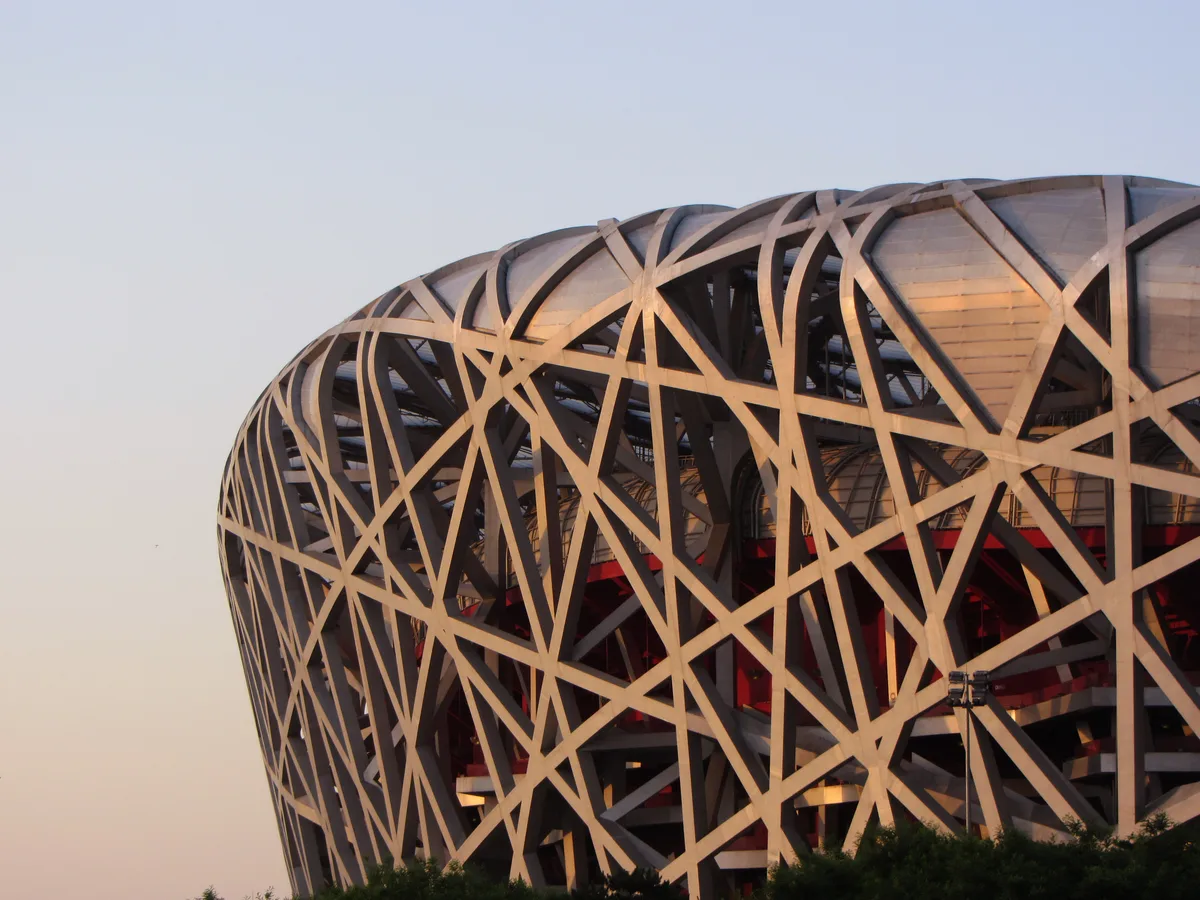
The genesis of the project stemmed from China’s successful bid to host the 2008 Summer Olympic Games. In March 2003, an international design competition was launched, attracting participation from globally renowned architects. A consortium comprising the Swiss architectural firm Herzog & de Meuron, the engineering firm Arup, and the China Architecture Design and Research Group won the competition with a structurally groundbreaking proposal. Construction officially commenced on December 24, 2003. Throughout nearly five years of construction, thousands of engineers and workers tackled unprecedented technical challenges, particularly the installation of a massive steel frame system weighing up to 42,000 tons. The completion and inauguration of the stadium in March 2008 marked a significant milestone in contemporary architectural history, as it was the first time such a complex grid-steel structure was applied on a large scale to create an asymmetrical form that nevertheless maintained absolute equilibrium.
Technically, the Bird’s Nest Stadium measures 330 meters in length, 220 meters in width, and reaches a height of 69.2 meters. Its structure consists of two independent systems: an outer steel frame enclosing the inner concrete spectator stands, creating a safety buffer that enables the structure to withstand earthquakes up to magnitude 8 on the Richter scale. The complexity of the interlaced steel bars not only achieves visual aesthetics but also serves as an optimal engineering solution for load distribution, allowing the roof to shelter the majority of the seating bowl without the need for densely packed supporting columns. The use of Q460, a high-strength steel manufactured specifically for this project, demonstrated China’s industrial capacity and mastery of material technology in the early 21st century.
The symbolic value of this structure is closely tied to the nation’s transformation amid globalization. Throughout the 2008 Olympic Games, the stadium served as the focal point of international media, hosting the breathtaking opening and closing ceremonies as well as premier track and field events. It is not merely sports infrastructure, but a testament to the ambition of asserting superpower status on the world map. The combination of modern architectural massing and Eastern philosophical thinking regarding harmony generated a unique design language. The imagery of intersecting steel bars evokes the structure of a bird’s nest, symbolizing nurture and new beginnings, while also reflecting the subtlety of combining Western engineering with traditional Chinese aesthetic sensibilities.
Following the conclusion of the 2008 Olympics, the stadium navigated fluctuating operational uses. Maintaining a structure of such massive scale posed a major economic challenge for the Beijing municipal government. In subsequent years, the venue was flexibly repurposed to host various events ranging from international sports competitions and large-scale concerts to cultural exhibitions. Notably, the 2022 Winter Olympic Games once again placed the stadium at center stage as it hosted the opening and closing ceremonies, making Beijing the first city in the world to host both the Summer and Winter Olympic Games. This event further cemented the monument’s iconic status, confirming the durability and adaptability of its architecture in serving long-term political and cultural objectives.
The cultural impact of the Bird’s Nest Stadium extends far beyond the boundaries of a sports venue. It has become an inseparable part of Beijing citizens’ collective memory and a destination attracting millions of visitors annually. For architects, it serves as a textbook case study on the intersection of plastic arts and structural engineering. Debates concerning construction costs, energy efficiency, and the environmental impact of the structure have helped shape new standards for designing large-scale public buildings in the future. Its presence in northern Beijing has catalyzed urbanization, laying the groundwork for surrounding commercial districts, offices, and public spaces, thereby transforming the economic landscape of the entire region.
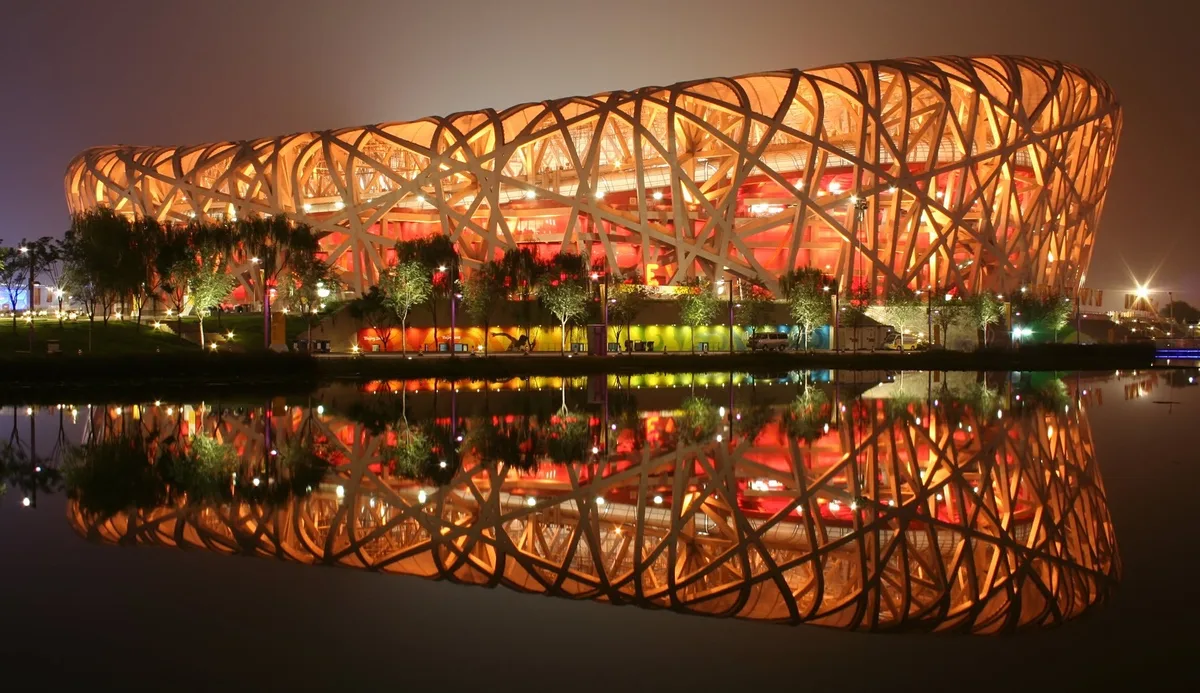
Historically, the Bird’s Nest Stadium represents an era when China concentrated its resources on modernizing urban infrastructure at a breakneck pace. The fluctuating fortunes of the structure, from the glamour of its initial inauguration to the challenges of sustainable commercial exploitation, faithfully reflect the developmental path of a rapidly transforming economy. Today, the preservation and operation of the stadium are not merely technical matters but represent an effort to sustain a national symbol that preserves historical moments of world sports. Modern lighting systems installed subsequently have transformed the structure into a nocturnal light art piece, creating a striking visual landmark within the capital’s urban fabric.
Delving deeper into social structures, the stadium also acts as a spatial dialogue between the past and the future. While historical monuments such as the Forbidden City and other traditional structures represent the depth of feudal history, the Bird’s Nest Stadium represents the forward-looking aspirations of a modern China. The coexistence of these values establishes a balance in Beijing’s urban structure, where history is not erased but continued through new symbols. Cultural researchers frequently cite this structure as a prime example of utilizing architecture to forge national identity in the era of globalization, where a nation’s image is defined through monumental symbols capable of deeply impressing the international community.
Ultimately, the standing of the Bird’s Nest Stadium transcends physical scale to encompass its capacity to inspire generations of architects and planners. The lessons learned from designing, constructing, and managing this building have become valuable references for numerous other major infrastructure projects worldwide. Regardless of the passage of time, its architectural morphology retains its freshness and contemporary relevance, continuing to serve as a vital milestone in 21st-century architectural history. The combination of steel, concrete, and bold design thinking has generated a cultural entity with enduring vitality, further contributing to the development of Beijing and cementing its status as one of humanity’s most notable architectural achievements in the modern era.
The Beijing National Stadium, or morphologically designated by international professionals as the Bird’s Nest Stadium, represents a turning point in contemporary architectural design thinking in East Asia at the dawn of the 21st century. Construction of this project commenced in December 2003 and concluded in March 2008, primarily serving the 2008 Summer Olympic Games. Geographically, the structure occupies a vital portion of the Beijing Olympic Park within Chaoyang District. The formation of this structure was not merely the creation of a sports competition space, but the result of cross-border collaboration among architects from the Swiss firm Herzog & de Meuron, the engineering firm Arup, and the China Architecture Design Group. Spatial planning here was grounded in the principle of maximum integration between the aesthetics of exposed steel construction and the functionality of a large-scale multi-purpose arena.
From a construction engineering standpoint, the Bird’s Nest Stadium is built upon a complex steel frame system forming a massive ellipsoidal mass measuring 330 meters long, 220 meters wide, and 69.2 meters high. The total gross floor area reaches 258,000 square meters, covering a land plot of approximately 20.4 hectares. The structure’s defining characteristic lies in its system of steel beams intersecting outside conventional geometric patterns, generating a remarkably sturdy self-supporting load-bearing network. The total mass of steel utilized for the primary frame reached 42,000 tons, a record figure at the time. Engineers had to resolve thermal expansion challenges of metal by designing flexible joints that allow the steel structure to expand and contract with fluctuations in Beijing’s harsh ambient temperatures, where seasonal differentials between winter and summer can be immense. The combination of high-strength steel and transparent or translucent ETFE (Ethylene Tetrafluoroethylene) membrane roofing panels produced an envelope that both withstands weather elements and permits natural sunlight penetration, minimizing daytime artificial lighting requirements.
The stadium’s zoning layout is organized concentrically, with the playing field positioned centrally and surrounded by spectator stands divided into clearly defined tiers. This design ensures optimal sightlines from every seat while streamlining circulation for tens of thousands of spectators during major events. The stadium originally accommodated 91,000 seats during the Olympics, which was subsequently adjusted to around 80,000 seats to suit long-term operational activities. The stands were engineered with meticulously calculated slopes to ensure safety and convenience during emergency evacuation. Service areas, functional rooms, athlete quarters, and media spaces are cleverly arranged beneath the spectator tiers, completely separated from public circulation routes to establish a seamless and professional operational workflow.
The unique construction technique of this monument lies in the erection method of its colossal steel members. Because the structure lacks traditional vertical columns, the entire weight of the dome and stands is transferred to the reinforced concrete foundation via intersecting primary steel trusses. During construction, engineers deployed dozens of heavy-duty cranes to secure steel segments prior to final welding. Precision control across every weld was critical, as minor discrepancies could unbalance the load distribution across the entire structure. The interplay between steel components produces a robust visual effect where interwoven lines convey movement and organic qualities, despite the material being entirely rigid metal.
In terms of urban spatial planning, the Bird’s Nest Stadium acts as a focal anchor within the landscape axis of the Olympic Park. The placement of the structure is integrated with its surroundings via expansive plazas, elevated pedestrian walkways, and subterranean public transit networks. Open spaces surrounding the stadium are designed to absorb large crowds during festivals, with thoughtfully distributed greenery and water bodies serving to moderate the microclimate. The presence of this project substantially transformed the cityscape of northern Beijing, converting a suburban periphery into an international hub for culture, entertainment, and sports.
Another crucial aspect of the stadium’s design is its adaptability to local climatic conditions. Natural ventilation is integrated through apertures in the steel structure, facilitating continuous airflow across the seating bowl and mitigating heat accumulation on sweltering summer days. Simultaneously, rainwater collection and treatment systems were engineered for landscape irrigation and public sanitation, exemplifying sustainable thinking in large-scale architectural planning. Utilizing steel not only provides high mechanical durability but also allows the structure to endure over time, transforming it into an architectural heritage capable of programmatic conversion from a sports arena into an international venue for cultural events, concerts, and exhibitions.
Analyzing the load-bearing structure in greater detail, emphasis must be placed on horizontal and vertical load distribution. Primary steel members are arranged along varied vectors to neutralize wind loads and minor seismic shocks. Although Beijing lies within a seismically active zone, the structure was engineered with a high safety factor, ensuring structural integrity even under extreme scenarios. The synthesis of reinforced concrete for the base and steel for the shell creates a material contrast paired with functional unity, resulting in high structural stability. Interior spaces are optimized for diverse uses, ranging from track-and-field and football matches to large-scale artistic performances, enabled by field convertibility and modern acoustic-lighting systems.
The project’s success is not purely a function of massive scale or striking appearance, but also of rigorous project management and strict technical standards applied throughout construction. Thousands of workers and engineers labored continuously for years to translate paper blueprints into a tangible reality. Material management, spanning factory steel production to site assembly, adhered to rigorous quality control procedures. Every steel member possessed a unique identifier for traceability of origin and technical specifications, ensuring transparency and absolute safety. This serves as proof of China’s technical capability and execution prowess for complex infrastructure projects in the early 21st century.
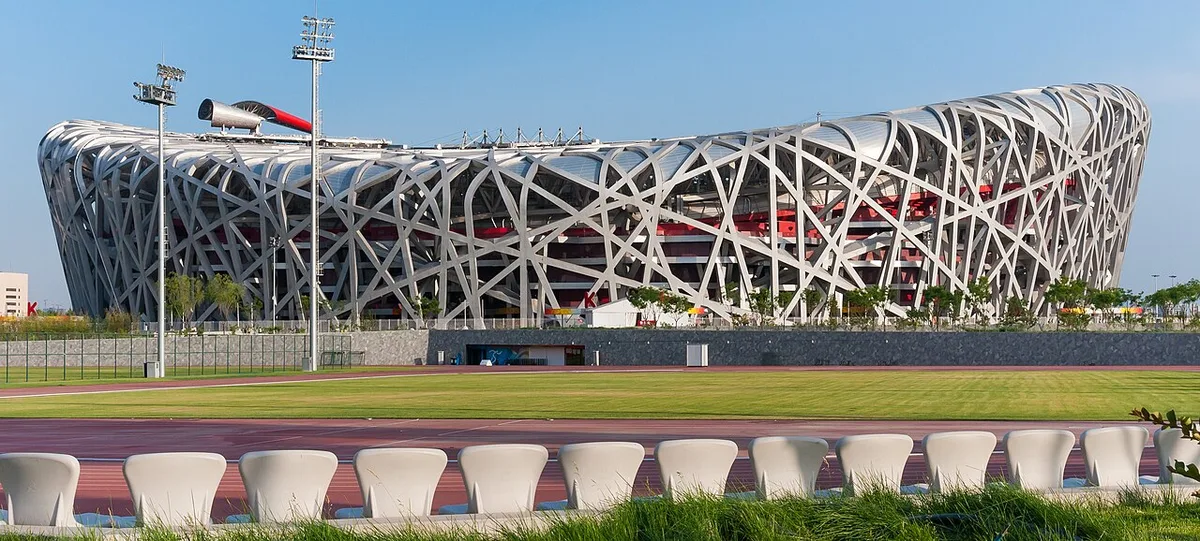
Overall, the Beijing National Stadium stands as a stellar example of the intersection between architectural art and civil engineering. The project reflects not only advancements in material technology but also strategic spatial planning aimed at generating enduring utility for the community. Its presence within Beijing’s urban context is both a historical milestone and a valuable lesson for planners and architects worldwide regarding the creation of iconic structures capable of sustainable existence and development within a volatile modern urban environment. Every detail, from interlaced steel structures to tiered seating systems, was carefully considered to achieve the ultimate goal of connecting people through cultural and sporting activities, cementing the monument’s standing in global architectural history.
Throughout its post-Olympic operational phase, the stadium demonstrated flexibility by continuously adapting its functions to meet emerging demands. Maintaining such a large-scale facility demands advanced management systems, ranging from steel structural maintenance to updates in electronic, telecommunication, and security infrastructure. Periodic inspections regarding weld durability and foundation stability are conducted regularly to ensure readiness for major events. The resilience of steel materials, paired with professional maintenance, has preserved the stadium’s original architectural beauty across years of exploitation. This stands as clear evidence of superior design and construction quality, affirming the stature of a global architectural icon.
The Beijing National Stadium, recognized internationally as the Bird’s Nest, represents a revolutionary turning point in Chinese contemporary architectural language, signaling a shift from traditional massing styles to futuristic symbolic structural thinking. This monument originated from concepts conceived by architects Herzog & de Meuron, in collaboration with contemporary artist Ai Weiwei and engineers from the China Architecture Design and Research Group, aimed at creating a sports space that transcends pure functionality to emerge as a colossal sculptural entity in the heart of the capital. Technically, the steel framing system comprises tens of thousands of tons of intentionally interlaced steel, establishing a complex load-bearing web that mimics natural bird nests, where calculated chaos forms the foundation for stability and unique visual aesthetics.
The philosophy underlying the architectural morphology of this structure stems from ancient Chinese cosmological concepts, wherein circles and squares exist in a complementary balance. The stadium was designed with an oval contour, signifying inclusivity and integrity, while external curved steel lines recall sweeping calligraphic brushstrokes, generating interaction between rigid matter and the fluid movement of space. Utilizing steel as the primary material is not merely a technical choice to optimize load-bearing capacity for the massive dome, but symbolizes the rise of modern industrialization, wherein humanity controls natural forms through mathematical rigor and precise construction engineering down to the millimeter.
Examining internal spatial details reveals spatial distributions calculated to maximize audience visual experiences. Stands are arranged in a bowl configuration, creating absolute focus toward the grass pitch where cultural and sports activities unfold. This zoning is not simply a matter of seating allocation, but an expression of social order and spatial hierarchy in modern architecture, where every position guarantees optimal sightlines toward the center. Passageways, corridors, and escalator systems are cleverly integrated into the steel structure, rendering the circulation of tens of thousands smooth and systematic, reflecting China’s large-scale urban planning mindset in the 21st century.
Aesthetically, the Bird’s Nest exterior eschews traditional decorative motifs such as dragons, phoenixes, or swirling cloud patterns typical of classical heritage buildings. Instead, the interlaced steel structure itself serves as the sole and most powerful decorative motif. As sunlight illuminates the structure, the steel elements cast shifting shadow patterns across the day, transforming the building into a living entity whose appearance shifts from dawn to dusk. By night, lighting systems designed to highlight curved steel contours render the structure lighter, akin to a glowing entity suspended in expansive urban space. This represents a bold departure, discarding superfluous ornamentation to celebrate pure structural honesty—a modern aesthetic stance valuing material authenticity.
The cultural depth of the stadium is further manifested through its connection to Beijing’s historical axis. Although modern, the Bird’s Nest is positioned within a master plan that engages with older architectural legacies. The contrast between the rigid, rigorous straight lines of surrounding heritage buildings and the free, flowing morphology of the stadium engenders a dialogue between past and future. Incorporating brick-red hues as accents within interior functional zones represents a subtle nod to imperial palace traditional colors, spinning an invisible thread connecting national spirit with global aspirations.
During operations and preservation, managers have prioritized transforming the venue into a living museum of architecture and sports. Exhibits inside comprise not only memorabilia from major athletic events, but also scaled models, detailed engineering drawings, and sample steel sections cut during construction. These artifacts function as historical evidence recording the arduous journey of thousands of engineers and workers in realizing seemingly impossible blueprints. Every minor detail, from steel joint assembly to dome drainage systems, is preserved and interpreted as scientific achievements, helping visitors comprehend the synthesis of artistic thought and peak engineering capability.
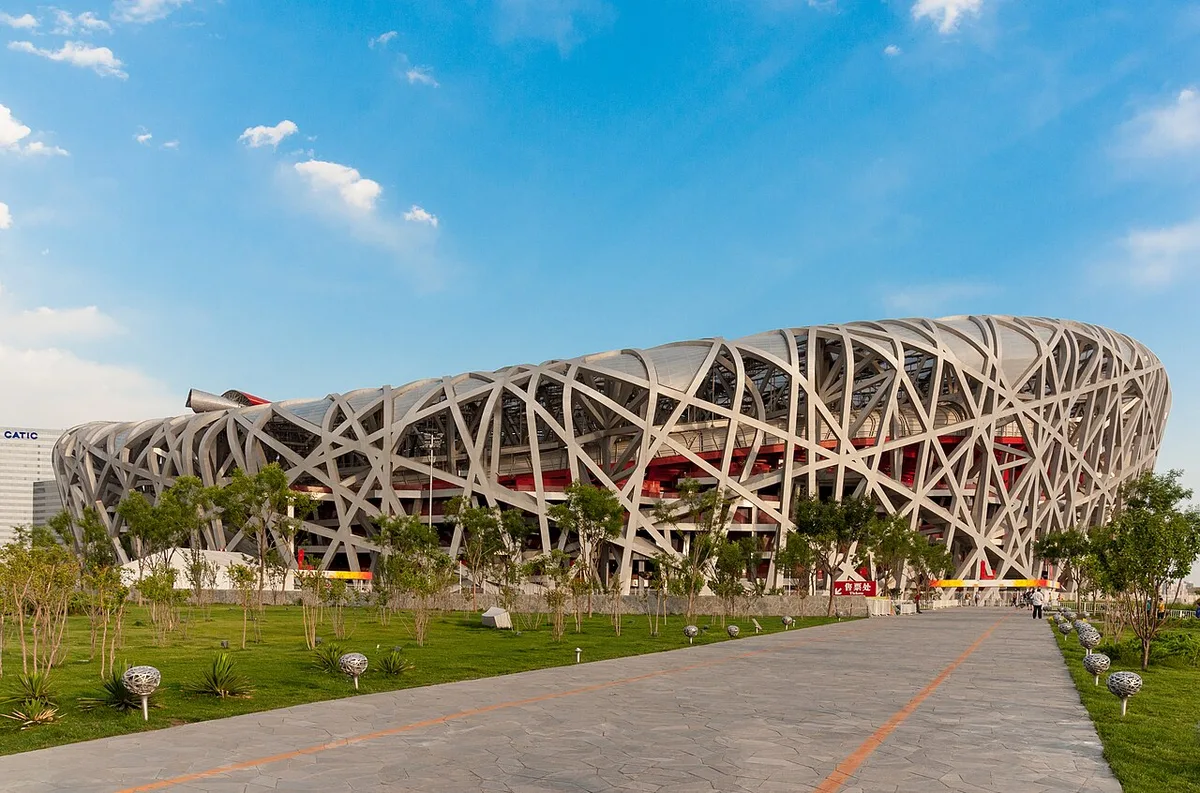
Sustainability philosophy is also integrated into the structure via eco-friendly materials and modern rainwater harvesting systems. This reflects a shift in contemporary architectural thought, wherein structures must transcend beauty and monumentality to assume responsibility for surrounding ecosystems. The synthesis of steel, concrete, and novel composites creates centuries-long durability while mitigating negative urban ecological impacts. This serves as a lesson in heritage governance, ensuring structures are not abandoned post-event, but repurposed for cultural, artistic, and educational pursuits to sustain the vitality of a national symbol.
From a spiritual and sensory perspective, the Bird’s Nest instills a sense of awe regarding human insignificance relative to the scale of the structure. Standing beneath the massive steel vault, the interaction between light and shadow, open and enclosed space, generates a solemn, almost ritualistic atmosphere. This is not merely a stadium, but a communal space where tens of thousands share collective emotions, forging powerful collective energy. This energy converts inanimate steel into an ensouled entity—a cultural symbol representing human solidarity and perseverance against immense technical challenges.
Decorative patterns, although not manually carved, emerge through calculated arrangements of intersecting steel bars. Viewed aerially, the structure unfolds as a sophisticated network reminiscent of ancient ceramic motifs or natural forms like spiderwebs and cellular structures. This subtlety demonstrates profound architectural study of natural morphology applied to structures, generating organic beauty within artificial constructs. This intersection of science and art leverages physical laws to produce mesmerizing visual effects, riveting viewer attention upon powerful undulating curves.
Ultimately, the heritage value of the Bird’s Nest resides not in its chronological age, but in its influence on global architectural history. The project established a benchmark for creativity, proving architecture need not adhere to archaic rules to achieve greatness. By challenging material and formal boundaries, the stadium emerged as a milestone and reference point for future architectural generations. Preserving and promoting this asset transcends maintaining steel or seating bowls; it safeguards the spirit of innovation and aspirations to conquer new heights. Thus, the Bird’s Nest stands as a living testament to an era of global connectivity and boundless thinking, recounting narratives of a nation continuously evolving within contemporary history.
The Beijing National Stadium, universally identified by its distinct architectural morphology as the Bird’s Nest, is situated in the center of the Olympic Park within Chaoyang District, Beijing, China. This building is the product of collaboration between architects Herzog & de Meuron and artist Ai Weiwei, completed to serve the 2008 Summer Olympic Games. Featuring a complex interwoven giant steel-frame structure, the building is not merely a sports venue but has evolved into a cultural entity where urban residents’ routines and international tourist flows merge organically. Its presence within Beijing’s urban landscape exerts strong visual gravity, reshaping how citizens interact with large-scale public space in the modern era.
As dawn breaks across northern Beijing, the space surrounding the Bird’s Nest transitions from stillness to gentle movement. This period sees elderly locals performing health exercises, Tai Chi, or fan dances across the expansive plazas enveloping the structure. This rhythm mirrors a characteristic cultural trait of Beijing citizens, wherein monumental architecture is detached from daily life, serving instead as a backdrop for personal wellness routines. Morning light pierces structural apertures, casting sharp geometric shadows on the ground to transform the stadium into a colossal sundial. Joggers emerge along surrounding paths, leveraging the expansive open space to complete morning training routes, generating an interesting contrast between monumental architectural scale and human scale amid the flow of time.
When the sun reaches its zenith, activities transition toward intensive exploration and tourism. Global travelers converge, establishing a multicultural current beneath undulating steel members. Accessing the stadium at this hour reveals the intricacy of construction engineering. Elevated walkways guide visitors across varied structural strata, from ground level to upper stands offering panoramic views of the entire Olympic complex. Exploration experiences extend beyond external appreciation to comprehending how engineers resolved load-bearing and aesthetic challenges. Internal exhibition spaces frequently host displays on sports history, contemporary art collections, or high-tech presentations, rendering the venue a multi-purpose cultural center rather than a simple stadium.
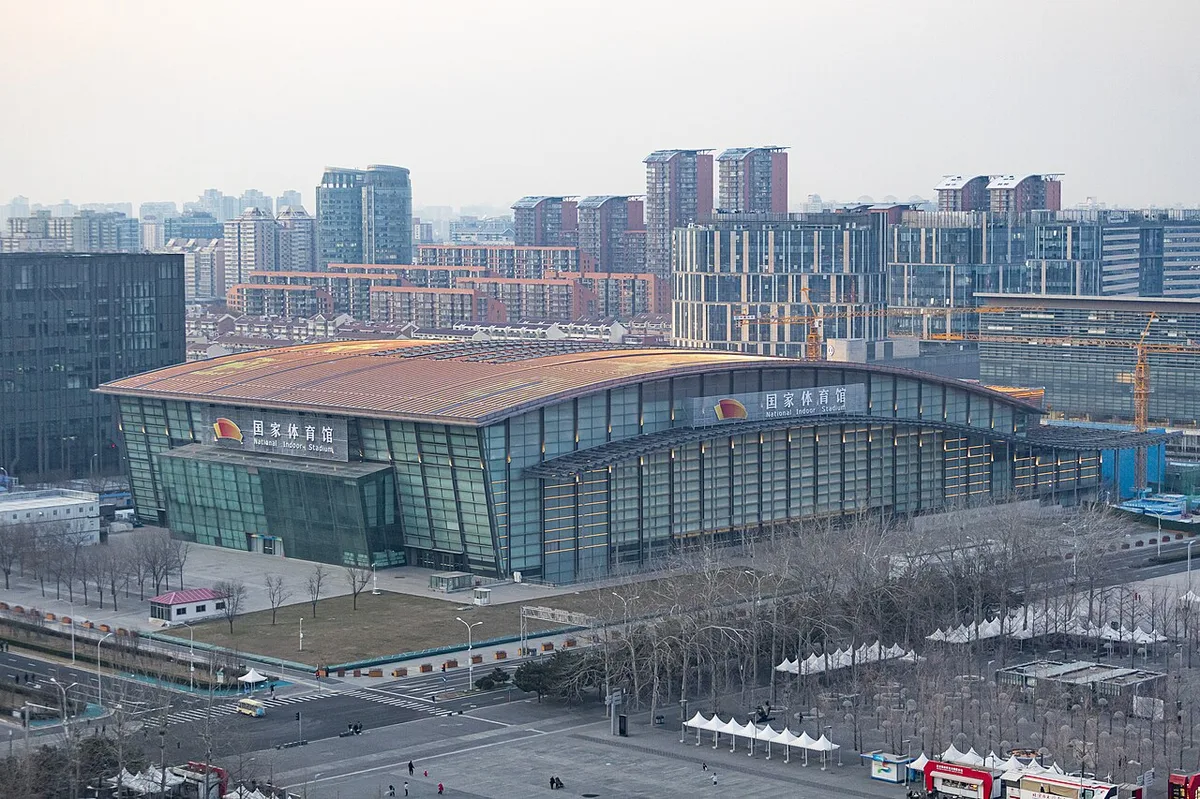
At dusk, as lighting shifts to warm amber tones, the Bird’s Nest assumes an entirely distinct appearance. This represents an ideal window for observing shifting steel facade colors under sunset illumination. Local families introduce young children to the front plaza to fly kites or engage in outdoor leisure. The pace slows, carrying the relaxation of a metropolis resting after demanding workdays. Photographers capture prized compositions where stadium steel structures intersect sunset skies, generating symmetrical artistic frames. Vantage points from the Olympic Park central axis directed toward the stadium allow viewers to perceive equilibrium between artificial architecture and open space, a vital trait in Beijing’s urban planning.
After nightfall, the Bird’s Nest awakens via modern lighting systems, transforming into a glowing entity illuminating the city. Artificial illumination programs accentuate curved steel lines, rendering the overall structure like moving blocks of energy. Artistic performances, large-scale concerts, or evening athletic events occur during this window, drawing tens of thousands. Atmosphere turns energetic, charged with arena sound systems and crowd excitement. Night exploration offers awe, blurring boundaries between architecture and light. Observing the stadium from neighboring skyscrapers or high-level park vantage points underscores its dominance over Beijing’s nocturnal landscape.
Cultural festivals and annual events hosted here sustain venue vitality. During major holidays, areas surrounding the stadium blossom with lantern systems, handicraft booths, and folk art performance stages, granting international visitors proximity to native culture while observing how modern architecture accommodates traditional values. This synthesis of old and new, international and local, underpins the Bird’s Nest’s sustainable appeal. Visitors seek not just architecture, but pulsebeats of modern Beijing, where past and future run parallel.
Securing a fulfilling exploratory experience hinges on vantage point selection. Beyond primary walkways, peripheral park zones featuring artificial water bodies offer reflections of the stadium upon water surfaces, particularly on calm windless nights. These reflections yield dual visual effects, multiplying monumental scale while softening rigid steel via gentle ripples. For inquisitive minds, guided tours led by specialized professionals decode complex technical elements, spanning steel member installations to retractable roof mechanics, enriching visitor appreciation for architectonic visions uniting athletic function with China’s engineering leaps in early 21st-century construction.
Local rhythms near the Bird’s Nest prove successful Olympic venue reuse. Rather than falling into dereliction, the stadium integrates into urban life, functioning as indispensable community space. Beijing residents view this as open territory for relaxation, fitness, or breathing fresh air within densely populated cities. Stadium presence catalyses surrounding services, ranging from cafes and souvenir shops to art exhibition spaces, creating robust service ecosystems generating economic dividends while cementing district status as premier cultural and entertainment capitals.
Architecturally, the Bird’s Nest signifies a turning point in Chinese design philosophy, accepting bold experimentation at scale. Sustained operation over years displays modern architectural flexibility. Every hourly phase, from dawn to late night, yields distinct spatial and lighting perceptions, rendering return visits novel. For cultural scholars and global tourists, the stadium transcends tourism maps, functioning as open manuals on urban development, human-architectural synergy, and national symbols integrating into daily lives of millions.
Ultimately, the Bird’s Nest’s appeal rests upon dynamic self-renewal across events and seasons. Defying scorching summer suns or freezing Beijing winters, the structure retains majesty and magnetism. Attendees capture more than photographs; they sense pulses of a dynamic city. Observing local engagement, spanning morning workouts to late-night strolls, conveys authentic urban life in Beijing. This remains foundational value yielded by monumental architecture for communities, eclipsing technical metrics or past architectural accolades.
The Beijing National Stadium, featuring complex interwoven steel structures resembling a colossal bird’s nest, represents modern architectural engineering pinnacles in the Olympic Green alongside focal cultural and culinary zones blending imperial heritage with contemporary urban life. Within multi-kilometer radiuses around this facility, culinary maps inherit Qing dynasty imperial cuisines refined via distinctive Beijing street foods. Situated along northern central axes, culinary currents from Chaoyang and Haidian converge, establishing diverse gastronomic arrays where diners trace historical multi-century roots.
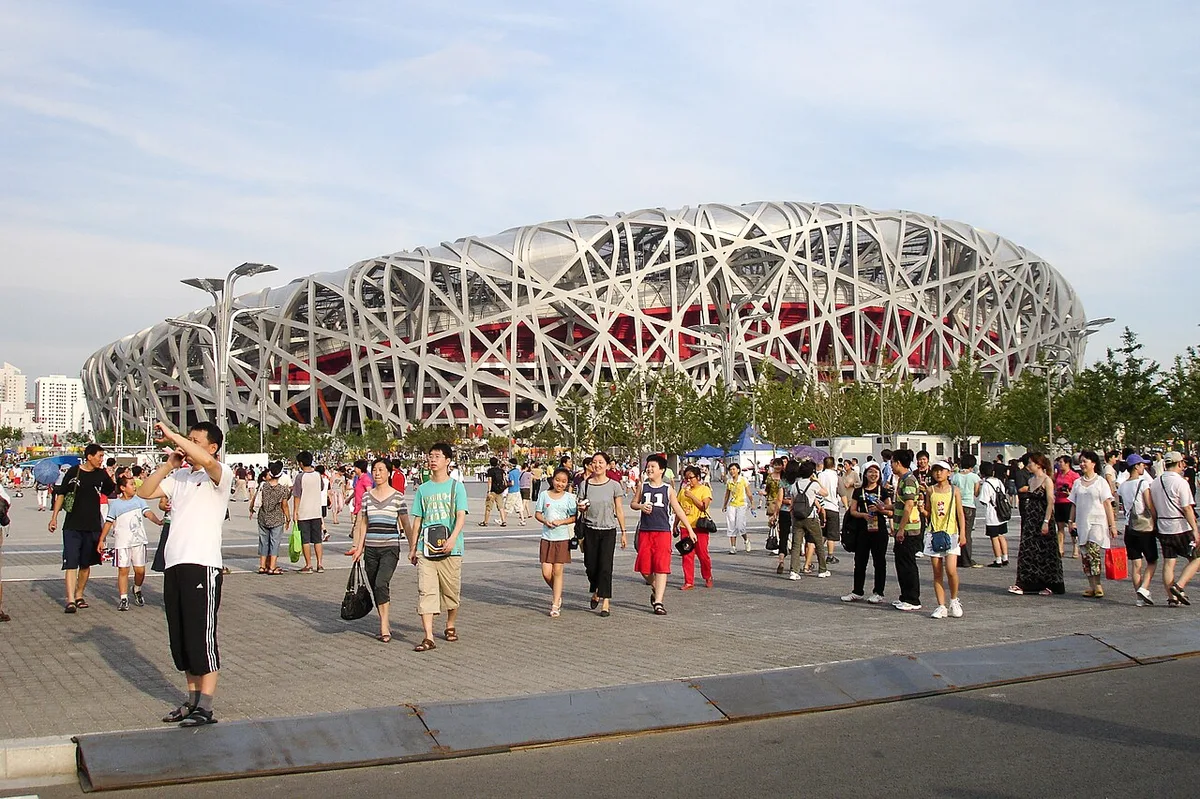
Peking duck, capital culinary apexes, represents unmissable starting points. Preparation techniques in prestigious stadium-adjacent restaurants adhere strictly to hanging-oven roasting methods using fruitwoods like apple or pear, yielding crispy amber skins and succulent meat. Consumption protocols constitute cultural rituals requiring coordination between slicing skin and meat uniformly, pairing with thin pancakes, scallions, cucumbers, and sweet bean sauces. Refined consumption balances duck fat richness with vegetable crispness, actualizing yin-yang harmonization philosophies formalized under Yuan and finalized during Qing dynasties.
Beyond roast duck, adjacent zones preserve labor-intensive rustic fares like traditional mutton hotpot. Differing from modern variants, Beijing mutton hotpot deploys traditional copper vessels featuring central chimneys fueled by charcoal to sustain stable heat. Mutton is paper-thin sliced, dipped into minimalist broths comprising water, ginger, scallions, and herbal aromatics to preserve natural sweetness and tender textures. Dipping sauces dictate success, blending sesame paste, fermented bean curd, salted chives, and chili oil. Winter hotpot traditions in Beijing transcend dining, functioning as communal activities where locals gather around steaming pots, sharing everyday stories in cozy atmospheres mirroring northern generosity.
Street foods surrounding the stadium mirror diverse migrant demographic influxes across decades. Snacks like steamed buns, crispy jianbing pancakes, and hand-pulled noodles sold in nearby food alleys bear North China imprints. Particularly, Zha Jiang Mian (noodles with soybean paste) exemplifies starch-seasonal vegetable synergies. Noodles feature premium wheat flour doughs exhibiting elasticity, mixed with rich dark bean paste, minced meat, and shredded vegetables like bean sprouts, cucumbers, and radishes. This reflects pragmatic yet nutritious northern mentalities, balancing flavors and textures.
Tea consumption customs display distinctive regional traits, shaped by traditional Chinese tea arts adapted for urban life. Jasmine tea, Beijing’s most popular tea since the Qing dynasty, is brewed in porcelain or glass pots enabling drinkers to observe floral blossoming in hot water. Tea drinking functions as contemplative meditation, quieting minds amid modern urban cacophony. Teahouses surrounding the stadium host tea ceremony performances showcasing fluid pouring maneuvers, displaying respect for ingredients and guests. This links past and present, preserving ancient cultural values within future-facing architecture.
Venturing deep into food streets near the stadium introduces iconic snacks like red bean cakes, roasted chestnut pastries, and candied hawthorn skewers (tanghulu). Roasted chestnut pastries, roasted in hot sand and maltose, yield crispy exterior shells with sweet nutty interiors, essential snacks for afternoon strolls across Olympic zones. Artisans deploy seasoned temperature control methods preventing burning while preserving natural moisture. These snacks satisfy palates while comprising collective memories bound to major cultural-athletic events.
The intersection of imperial and folk cuisines manifests via table arrangements and service styles. Numerous regional restaurants integrate modern architecture with traditional elements like lanterns, ink-wash paintings, and fine porcelain tableware. This yields multi-sensory culinary experiences, where patrons taste flavors while sensing historical depths. Seasonal ingredient sourcing remains core, reflecting respect for natural cycles and Chinese herbal dietary philosophies. Vegetables and herbs undergo rigorous selection, guaranteeing freshness and nutrition.
Amid globalization, stadium-adjacent cuisines evolved, embracing international trends while retaining core identities. Modern restaurants test Western cooking techniques fused with traditional Beijing ingredients, yielding breakthrough dishes preserving local soul. Yet, core values like flavor subtlety, manual preparation, and communal dining persist. This underpins Beijing culinary resilience—continuously evolving systems oriented toward origins.
Summarizing, the culinary landscape around the Bird’s Nest Stadium forms polychromatic canvases where every dish narrates historical, geographical, and human tales of Beijing. From elaborate aristocratic courses to rustic street foods, all forge profound cultural encounters. Exploring these dishes transcends gustatory quests, unlocking souls and identities across ancient metropolises. Monumental architecture paired with rich culinary heritage establishes this district as unmissable destinations for anyone seeking contemporary Chinese culture.
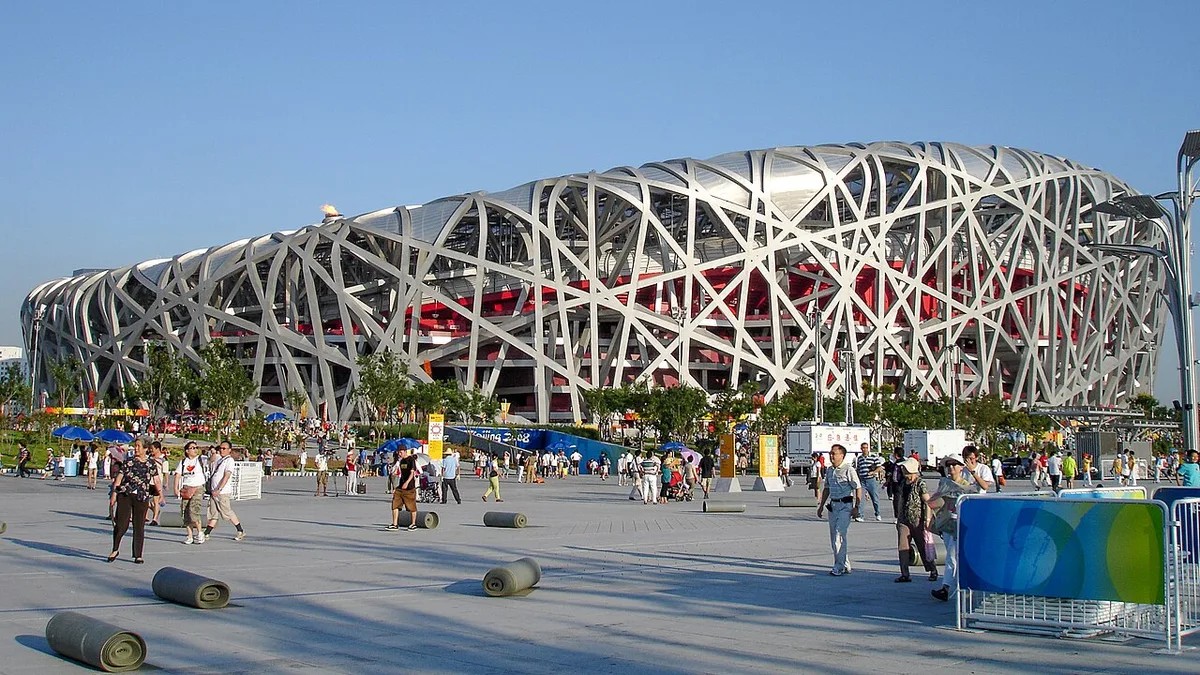
Arriving visitors should prioritize savoring deliberate pacing—tea and dining styles cultivated across generations. Observing local ingredient sourcing across traditional markets, meticulous preparation steps, and familial meal reverence yields authentic cultural insights. No universal formulas dictate Beijing dining enjoyment, as individuals harbor distinct perceptions based on personal experience and knowledge. Respecting traditions while remaining open to innovations unlocks unique regional flavors. The Bird’s Nest Stadium, acting as architectural icons, serves as sturdy foundations supporting surrounding culinary cultures to expand, resonate, and engrave lasting impressions on global cultural-gastronomic enthusiasts.
The Beijing National Stadium, universally recognized as the Bird’s Nest Stadium, is situated within the southern sector of the Olympic Park in Chaoyang District, Beijing, China. Designed by architects Herzog & de Meuron alongside associates at the China Architecture Design and Research Group, the venue features complex interwoven steel structures mimicking a giant bird’s nest. Accessing this monument necessitates deep familiarity with Beijing’s massive public transit network, as this district boasts hyper-dense infrastructure development nationwide. Subway systems provide optimal, efficient transit options, with Line 8 acting as arterial routes leading directly to Olympic Green or Olympic Sports Center stations. Passengers utilizing subways should note high operational frequencies; however, morning peak hours from 7:00 AM to 9:00 AM and evening peaks from 5:00 PM to 7:00 PM generate extreme passenger volumes yielding inconveniences. Owning Yikatong cards or leveraging mobile QR-payment apps integrated into smartphones is mandatory for optimizing travel times across Beijing complex networks.
Regarding buses, public transit networks around the stadium integrate dozens of routes passing through stops like Beichen East Road or National Stadium East. While buses offer broader urban landscape views, commuters must anticipate frequent traffic congestion along major Beijing arteries. Taxis and ride-hailing services remain viable alternatives; however, direct curbside drop-offs outside primary stadium gates face strict security restrictions. Travelers should direct drivers toward peripheral drop zones designated across Olympic Park margins, walking short distances inward. Mastering key Chinese terms or high-precision digital maps is a prerequisite to prevent misunderstandings with drivers, particularly amid lingering language barriers for international tourists.
Beijing climates exhibit temperate continental traits featuring four distinct seasons, directly impacting stadium touring experiences. Spring spanning March through May frequently brings strong winds and occasional northern dust storms; consequently, visitors require masks and protective eyewear under forecast warnings. Summer spanning June through July and August brings humid heat surpassing 35°C, demanding breathable attire, sunscreen, and hydration. Autumn spanning September through November is deemed ideal, delivering crisp, dry weather with clear blue skies, optimizing architectural photography. Winter spanning December through February delivers harsh cold with sub-zero temperatures, necessitating thermal gear like thick down jackets, gloves, and woolen beanies. Timing visits across daily windows is critical, with late afternoons between 4:00 PM and 6:00 PM yielding golden illumination accentuating steel frames while facilitating nocturnal lighting views.
Concerning admission tickets, the Bird’s Nest Stadium enforces strict digital ticketing management. Visitors should pre-book tickets via official online portals or purchase directly at gate ticket counters, though online acquisition prevents long queues or sell-outs during holidays. Passports are mandatory personal identification documents required for security checkpoint validation. Strict regulations govern prohibited items, banning explosives, sharp implements, drones, and oversized bags. Security checks mirror airport procedures, prompting visitors to allocate 30 to 45 minutes prior to scheduled entry.
Adhering to public etiquette in China prioritizes order compliance. Despite modern architecture, respecting shared spaces and local norms remains vital. Littering, excessive noise, or disrespectful acts toward national symbols risk entanglements with security forces. Visitors should maintain polite demeanors, avoid crowd shoving, and obey directional signage. Photography is permitted across most public zones; however, restricted technical zones forbid photography explicitly, warranting strict compliance to avert equipment seizure or ejection.
Apparel choices should emphasize comfort and utility. Given expansive Olympic Park acreage, walking is unavoidable, rendering supportive athletic footwear non-negotiable. While dress codes lack rigid constraints, modest, respectful clothing demonstrates appreciation for local culture. Summer heat notwithstanding, sleeveless tops or overly short shorts invite impropriety perceptions within national monuments; thin jackets or wraps serve as effective remedies. Crossbody bags securing passports, phones, and wallets enhance mobility during tours.
Smart technology integration represents another vital consideration. Beijing operates as a high-digitalization smart city; hence, installing domestic mapping apps like Baidu Maps or Amap is crucial since Google Maps often fails to display accurate transit information locally. Carrying high-capacity portable power banks is mandatory, as continuous mobile navigation, photography, and payments drain battery reserves rapidly. International tourists benefit from local SIM card acquisitions or large-data roaming packages to sustain connectivity, preventing disruptions when seeking alternative transit routes during sudden traffic disruptions.
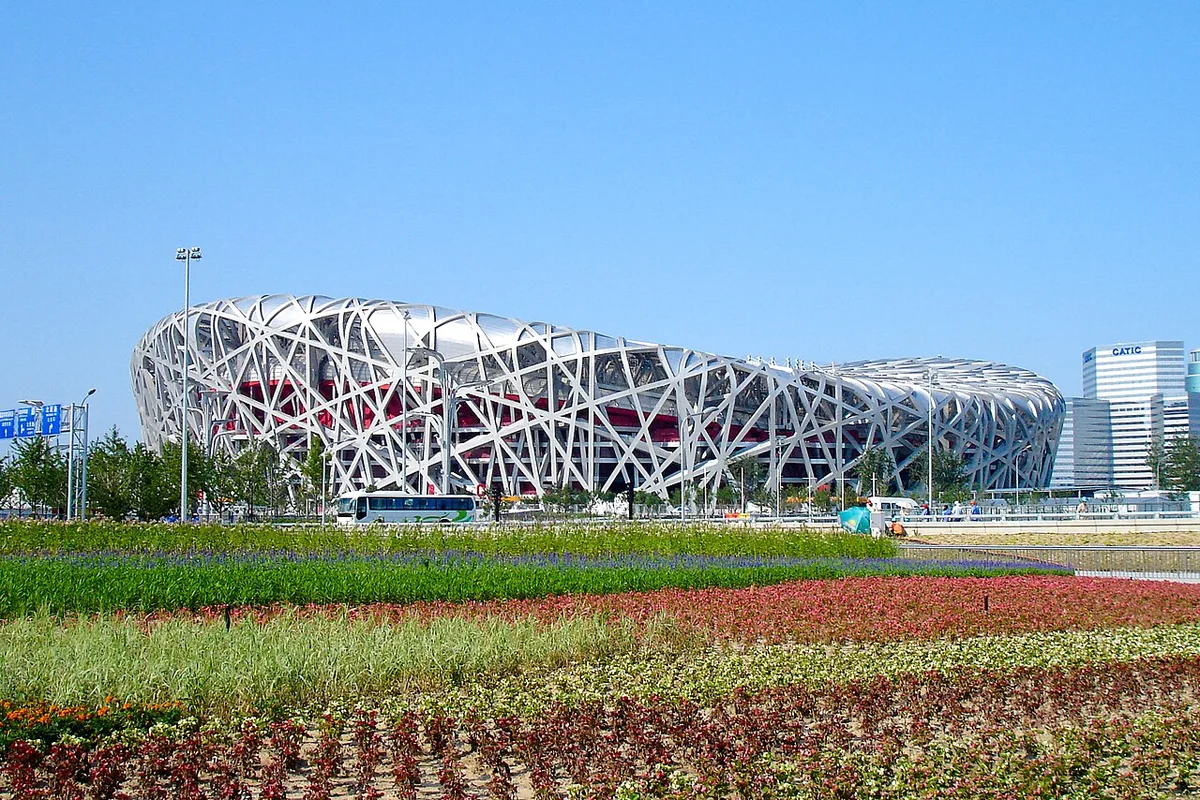
Finally, mastering historical and architectural backgrounds prior to arrival enriches personal experiences. The Bird’s Nest transcends sports arenas, embodying national resurgence and engineering capability in the 21st century. Observing structural steel interweaving provides insights into modern design thinking. Upon departure, travelers should note evening peak congestion inundating subway stations, motivating earlier departures 30 minutes prior to closing or alternative transit like public bicycles to bypass queues. Thorough preparation across information, logistics, and mindset guarantees fulfilling, safe tours across Beijing’s iconic landmarks.
To experience this journey seamlessly with a local guide, you can refer to the Beijing – Suzhou – Hangzhou – Wuzhen – Shanghai Tour with its pre-arranged itinerary.