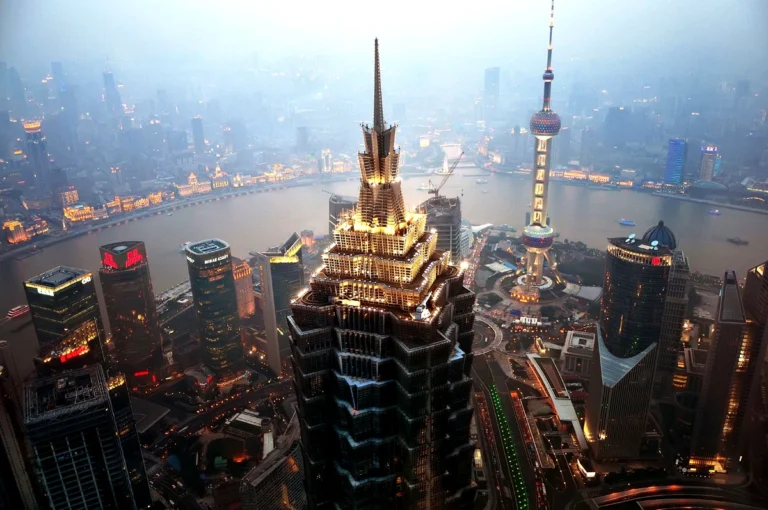
Spanning the churning waters of the Huangpu River in the mega-city of Shanghai, the Nanpu Bridge represents one of the greatest achievements in China’s urban infrastructure engineering during the late twentieth century. Located at a strategic geographical coordinate directly connecting Huangpu District within the traditional Puxi old town with the newly developed Pudong area, this structure was tasked with resolving the intractable traffic dilemma between the two river banks, which had relied solely on overloaded public ferry systems for decades. The topography of the bridge construction area exhibits characteristics of the Yangtze River delta plain with soft, sedimentary geological strata, requiring engineers to apply deep pile foundation solutions and advanced steel structure technology to withstand rapid currents as well as harsh marine weather conditions. The appearance of this great bridge not only improved road traffic infrastructure but also marked a milestone turning point in Shanghai’s urban spatial planning mindset, as the city officially reached out strongly to the world through its Pudong area development strategy.
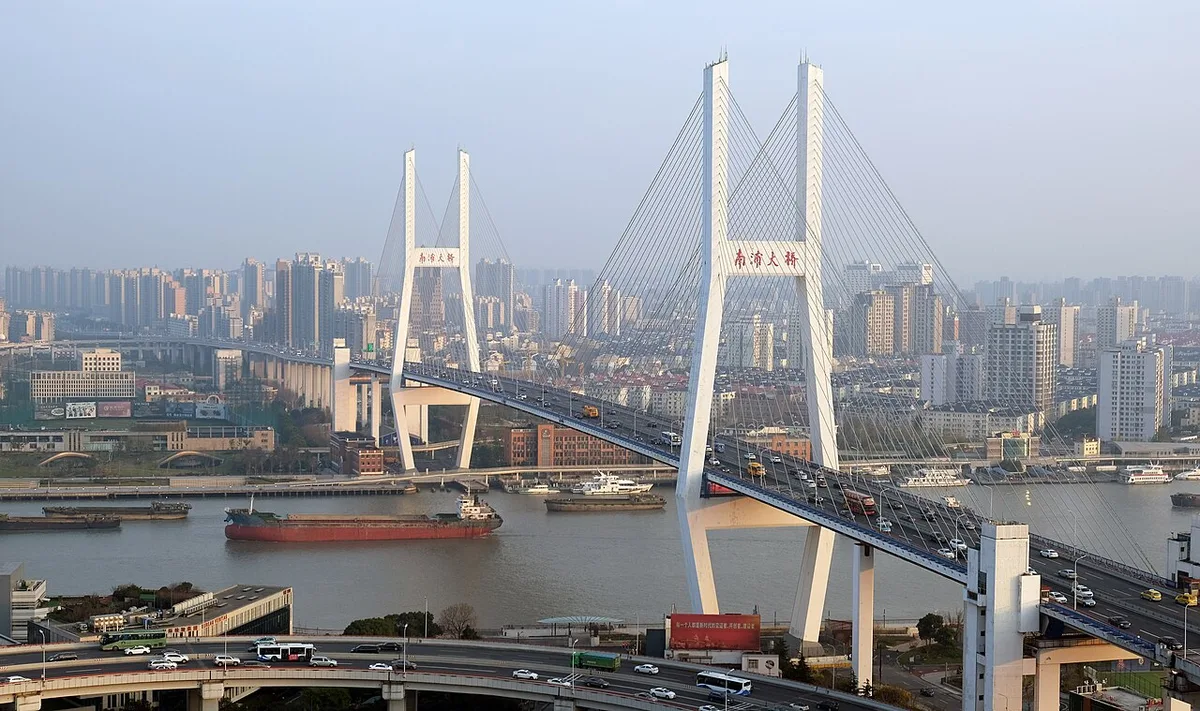
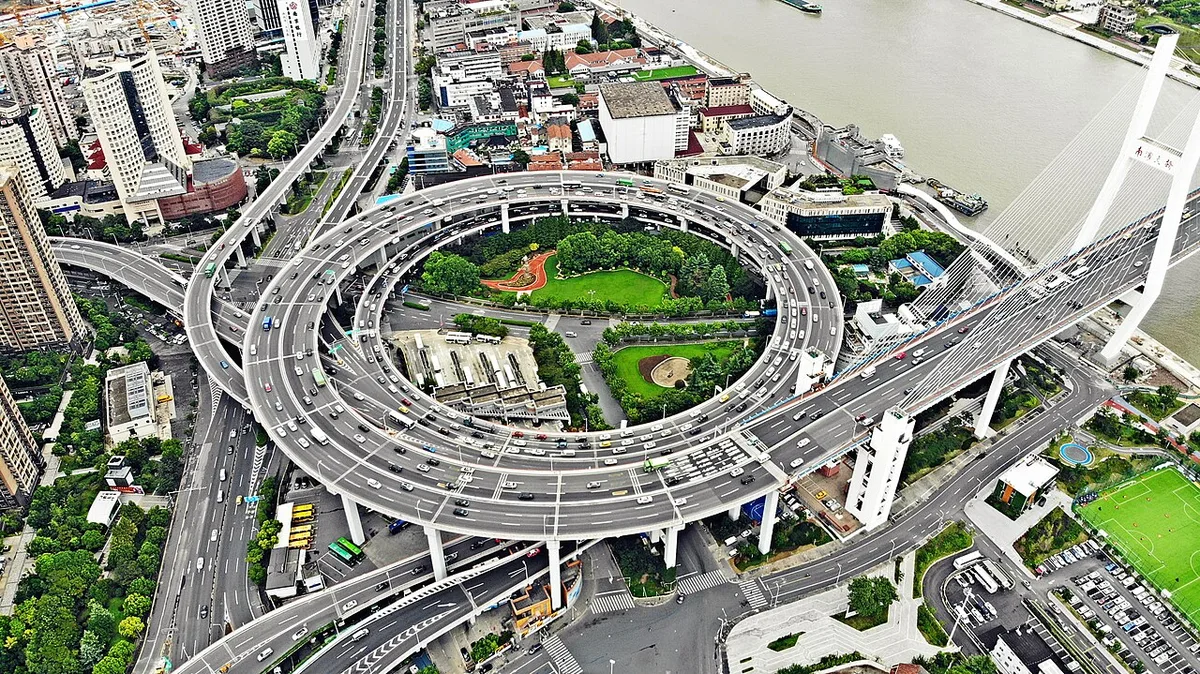
Looking back at the historical background of its creation, the decision to build the Nanpu Bridge was made during a period when Shanghai yearned for economic innovation yet was restrained by backward transport infrastructure severed by the Huangpu River. The milestones of the project’s implementation bear deep marks of political determination and national technical capacity as the project officially commenced in December nineteen hundred and eighty-eight and was completed ahead of schedule in August nineteen hundred and ninety-one. With a total length exceeding eight thousand three hundred meters, including the main cable-stayed river-crossing bridge and a complex approach road system, this structure broke the monopoly of traditional water transport. The classic technical highlight of the Nanpu Bridge is its unique spiral approach road design on the Puxi bank—an expedient yet remarkably clever solution to thoroughly overcome extremely limited land clearance space within densely populated residential neighborhoods, allowing vehicles to change elevation smoothly before merging into the traffic flow on the main bridge deck.
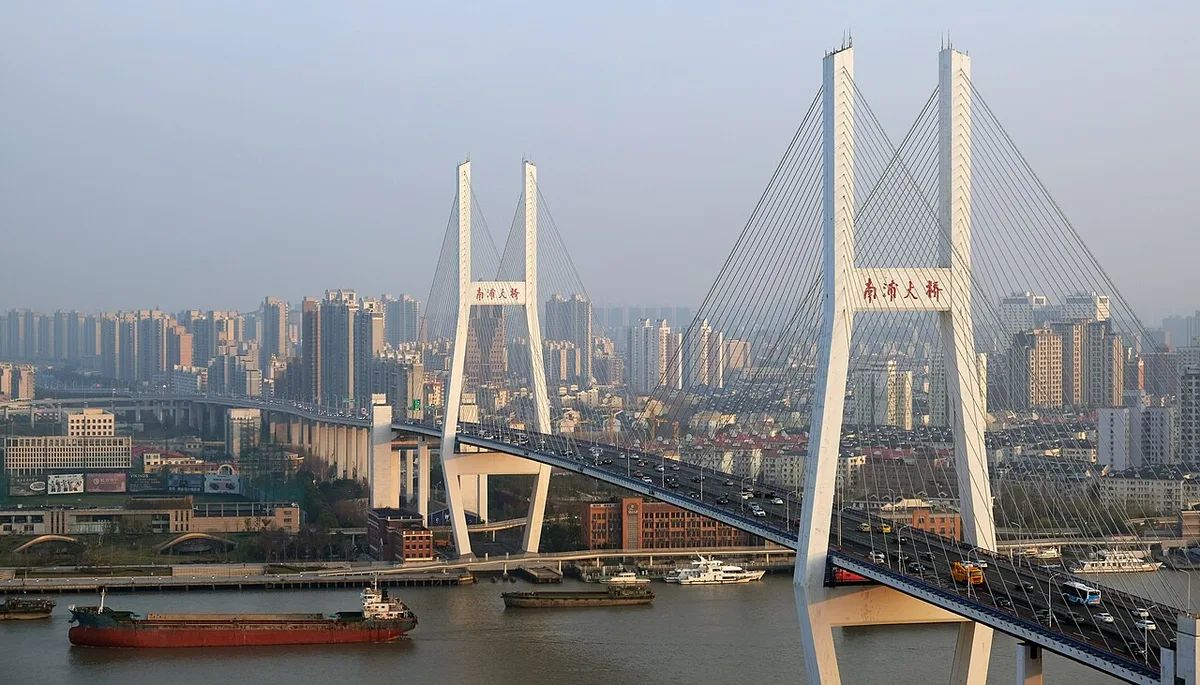
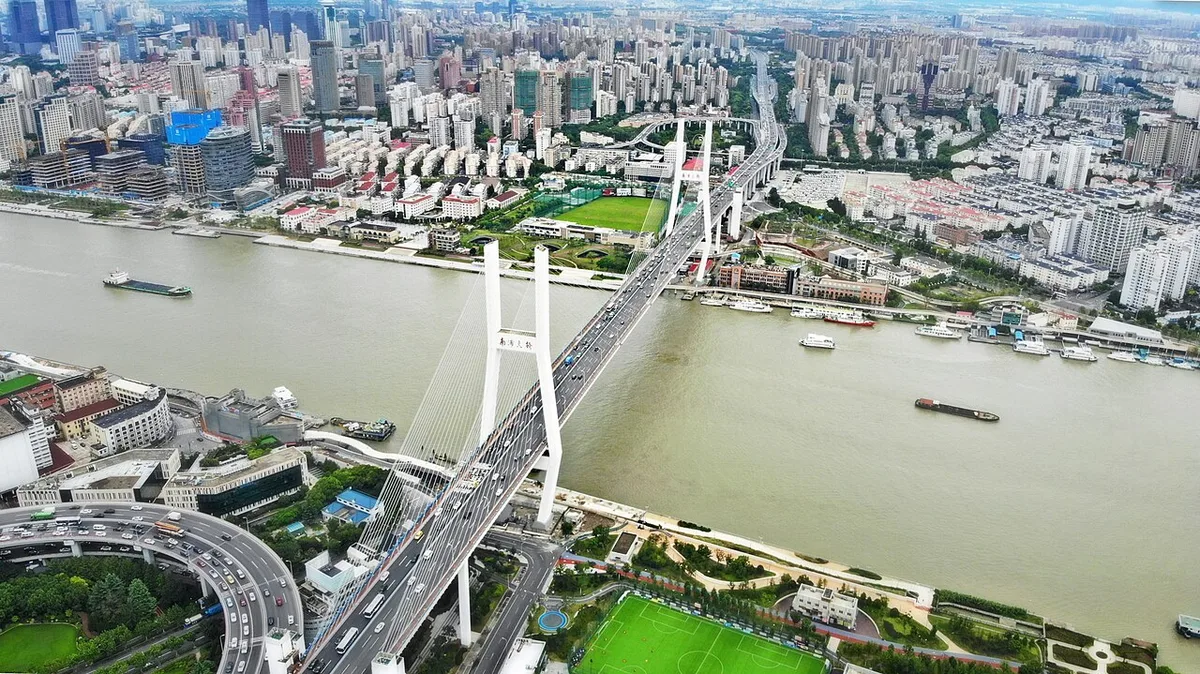
The main span structure of the great bridge is a symmetrical cable-stayed bridge featuring two sturdy reinforced concrete H-shaped towers soaring into the Shanghai sky, with each tower reaching a height of one hundred and fifty meters. From these two central tower piers, a high-strength steel cable system radiates to anchor the bridge deck, creating an image reminiscent of wind-filled sails tacking out to sea—a highly symbolic image representing the port city’s striving spirit. The four-hundred-and-twenty-three-meter-long main river-crossing span allows large cargo vessels to navigate smoothly underneath without any clearance obstacles, achieving a navigational clearance height of over forty meters from the highest tidal water level. The application of cable-stayed technology combined with composite steel box girders at that time affirmed the self-reliance and top-tier bridge-building design proficiency of Chinese engineers, who had to solve construction challenges under extremely dense and complex water traffic conditions on the Huangpu River.
Through the ups and downs of contemporary history, the Nanpu Bridge has witnessed Shanghai’s entire spectacular economic metamorphosis from a traditional port city into a global financial and commercial center. During the early nineteen nineties, when the Pudong area was still vegetable fields and old factories, this bridge served as the sole lifeline bearing the mission of transporting construction materials, machinery, and manpower to forge today’s Lujiazui financial district. Economic fluctuations and the dizzying increase in private motor vehicles over the years have required the bridge to continuously undergo strict maintenance, technical inspections, and the modernization of intelligent traffic management systems to maintain optimal operational capacity, meeting the volume of tens of thousands of vehicles passing daily without structural congestion.
Regarding its national symbolic value, the Nanpu Bridge is recognized as a monument of the reform and opening-up era, a living testimony to the aspiration for national modernization under the guidance of macro-policies. Unlike ancient structures bearing feudal imprints or foreign concession architecture scattered across the city, this bridge represents a brand-new Shanghai: dynamic, scientific, decisive, and relentlessly forward-looking. Its appearance in international media publications since the nineties reshaped global perspectives on Asia’s urban infrastructure construction capabilities, placing Shanghai on the map of mega-cities possessing transport structures of modern wonder proportions.
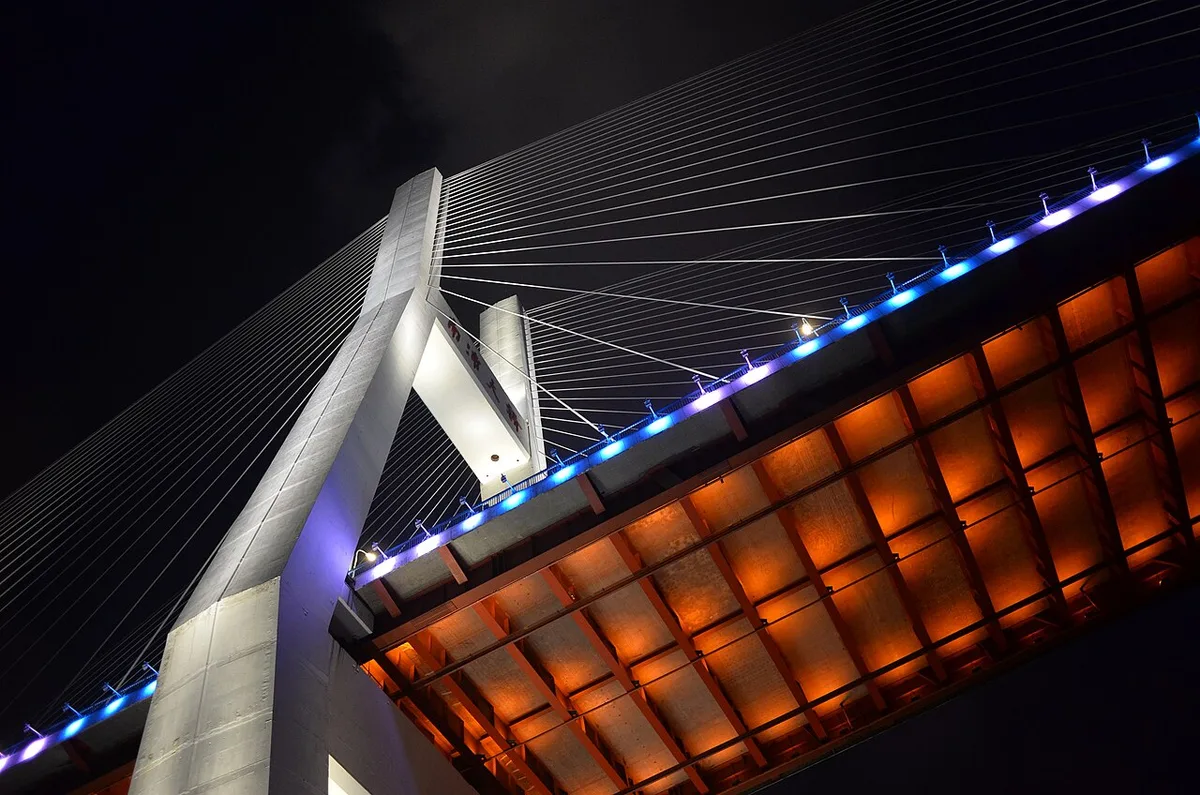
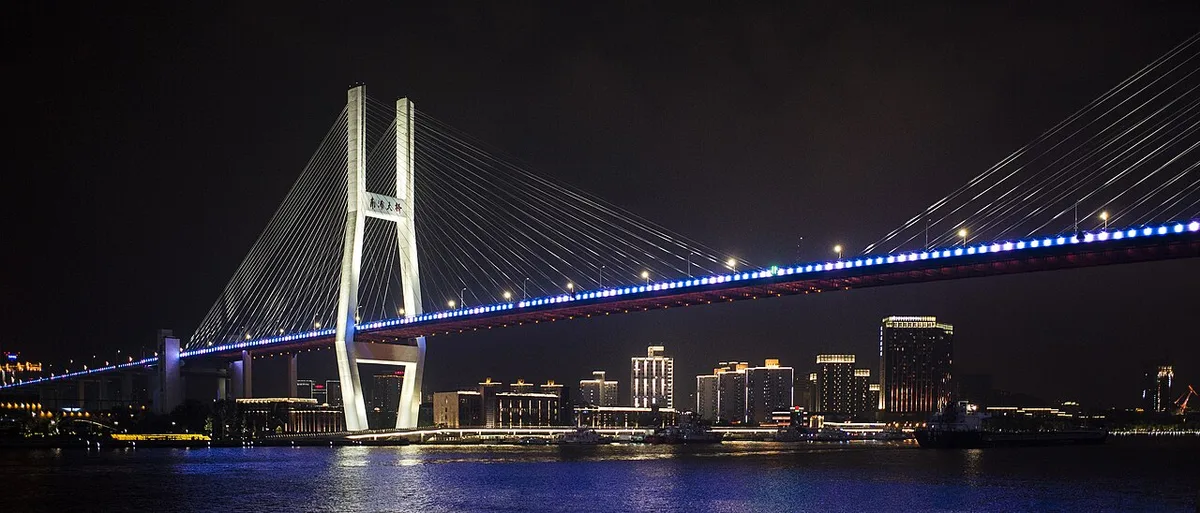
The cultural impact of the Nanpu Bridge transcends pure engineering functions to become an endless source of inspiration in contemporary Chinese poetry, photography, film, and plastic arts. Filmmakers frequently choose overhead angles capturing the bridge’s unique spiral approach roads as a backdrop for scenes reflecting the bustling, frantic, and somewhat overwhelming pace of life among the new urban populace. By night, an artistic lighting system installed along the bridge body and cable network transforms the structure into a brilliant ribbon of light wrapping around the Huangpu River, creating a formidable visual focal point within the overall lighting architectural landscape of both the East and West banks of Shanghai.
Viewed through the lens of architectural history research, the Nanpu Bridge also serves as a hinge milestone driving the development of a series of subsequent large-scale river-crossing transport projects such as the Yangpu Bridge, the Xupu Bridge, and complex cross-river tunnel systems, shaping an extremely complete multi-dimensional transport network for modern Shanghai. This project represents the perfect synthesis of urban spatial sculptural art and construction structural science, where humanity conquers nature through intellect and perseverance. The bridge’s symbolic status thus retains its full value across space and time, continuing to stand firm as a historical witness to the golden age of industrialization and urban modernization in this nation with its long-standing cultural depth.
The Shanghai Nanpu Bridge initiated the strategic transformation phase of eastern China’s mega-city in the late twentieth century, when cross-river traffic pressure across the Huangpu River exceeded the endurance limits of traditional ferry systems. Construction of this project commenced on December fifteenth, nineteen hundred and eighty-eight, and it was officially inaugurated on December first, nineteen hundred and ninety-one, marking a historical milestone in the era of high-rise urban development and large-scale transport infrastructure connectivity for the city. Prior to this, natural separation by the swift tidal currents of the Huangpu River created a major barrier between the then-pristine Pudong area and the tradition-rich Puxi center. The shaping of the bridge’s architectural space did not merely solve the traffic volume equation, but also carried a symbolic mission for sea-oriented urban planning visions and the comprehensive modernization of the national economy.
Regarding spatial planning and construction technical characteristics, the Shanghai Nanpu Bridge is one of world bridge engineering’s greatest achievements with a hybrid steel and prestressed reinforced concrete cable-stayed bridge structure. The total length of the entire route reaches eight thousand three hundred and forty meters, of which the main river-crossing bridge section spans eight hundred and forty-six meters, allowing ten-thousand-ton ocean-going vessels to navigate safely underneath thanks to a navigational clearance height of forty-six meters from the highest tidal water level. The bridge’s main span features a continuous steel box girder structure with two H-shaped main tower piers one hundred and fifty meters tall, cast from sturdy reinforced concrete. From these tower summits, high-strength steel cable systems are arranged in double fan patterns radiating down to support the deck, helping evenly distribute dead load and traffic live load while optimizing resistance against marine typhoons and strong gusts frequently appearing in the eastern coastal plain region.
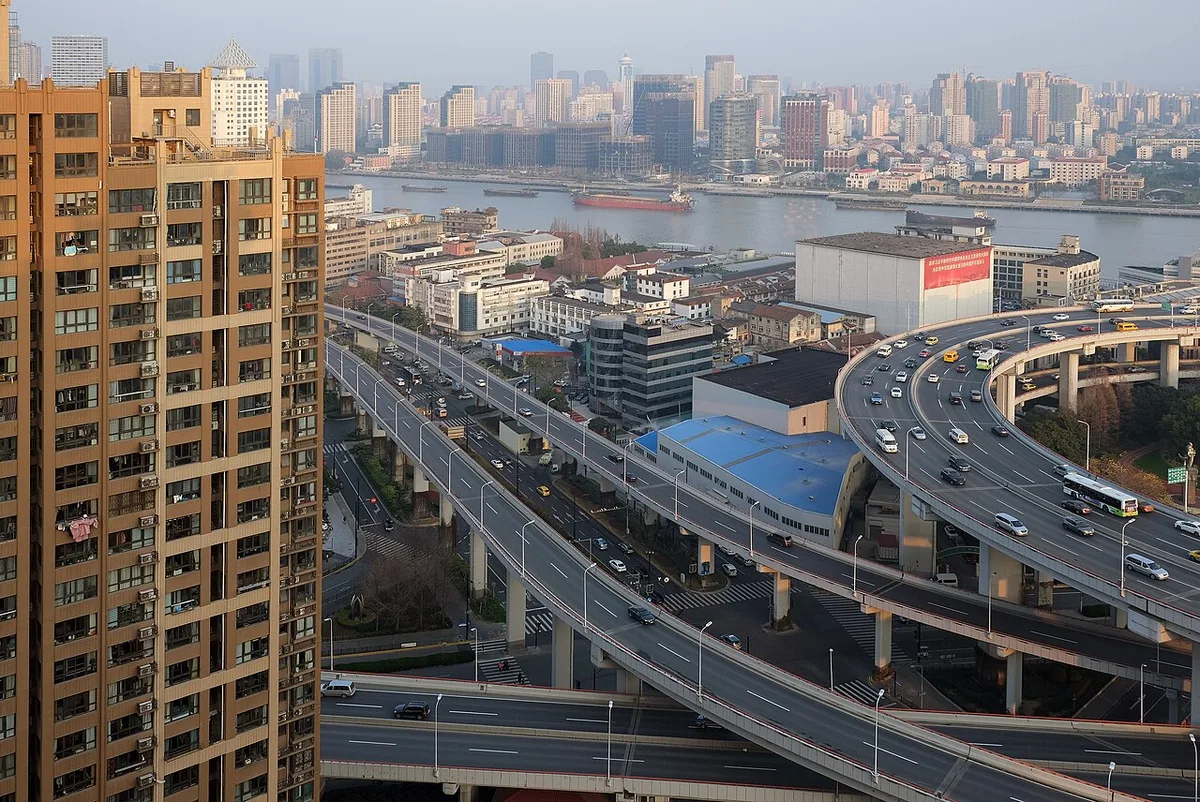
The greatest challenge in the architectural planning and construction of the Shanghai Nanpu Bridge lay in the limited ground footprint at both bridgeheads due to densely populated residential neighborhoods and historical port facilities developed beforehand. To resolve the elevation difference equation between the river-crossing deck and ground-level transport without occupying colossal urban land areas for straight approach roads stretching over kilometers, chief engineers and architects pioneered a unique spiral approach road design scheme. The Puxi approach road zoning layout was designed with a three-and-a-half-tier spiral vortex structure, forming a closed curved road section of large diameter, allowing vehicles to decelerate safely when descending from above to ground level or accelerate gradually when climbing the slope onto the bridge. This geometric solution not only conserved precious urban land resources but also created a striking visual wonder, turning a purely functional transport structure into a highly symbolic urban sculpture.
Building materials selected for the Shanghai Nanpu Bridge had to meet the strictest standards for mechanical durability, corrosion resistance in brackish water environments, and load-bearing under large temperature fluctuation amplitudes of the monsoon temperate climate region. Tens of thousands of tons of imported high-strength steel combined with high-grade concrete were mobilized to cast box girders and deep bored pile foundations sinking into stable geological strata deep beneath the bed of the Huangpu River. Bridge pier foundations were constructed using pneumatic caisson technology and large-diameter bored piles to pierce through thick layers of weak clayey silt characteristic of the Yangtze River delta basin. Every single cable in the cable-stayed system is composed of hundreds of galvanized high-strength steel wires, externally wrapped in high-density polyethylene layers and injected with moisture-proof protective grout, helping eliminate chemical corrosion from wind-blown ocean salinity.
The cross-section of the main bridge is planned at thirty-one meters wide, divided into six two-way motor vehicle lanes with a designed speed of sixty kilometers per hour, meeting a colossal traffic throughput capacity of tens of thousands of converted vehicle trips per day and night. Solid pedestrian walkways over two meters wide are arranged on both sides of the bridge body for sightseers and pedestrians wishing to view panoramic scenery of both banks of the Huangpu River from above. Architectural lighting systems equipped on the bridge utilize advanced LED technology, allowing flexible color switching according to major city events, transforming this massive steel structure into a glowing ribbon stretching across the Shanghai night sky. The reception scale for pedestrian sightseers crossing the bridge averages thousands of visitors daily, turning this location into a strategic vantage point to admire the powerful transformation of the Lujiazui financial district and the colonial-heritage architectural strip on the opposite riverbank.
Maintenance and spatial architecture operation of the Shanghai Nanpu Bridge demand rigorous technical management processes with geotechnical sensors and structural systems attached directly to tower piers and cables. Supervising engineers continuously monitor stay-cable tension, steel girder deflection, and reinforced concrete stress states via real-time data collection systems. Steel surface maintenance requires professional painting crews to perform periodic upkeep manually and via aerial suspended automated equipment to combat acid rain impacts and urban industrial pollution. The perfect synthesis of visionary transport planning, advanced 1990s cable-stayed bridge construction engineering, and urban spatial sculpting art has enabled the Nanpu Bridge to maintain its solid footing within critical infrastructure systems while serving as a living document on the history of modern Asian bridge engineering development.
The Nanpu Bridge, spanning the Huangpu River section flowing through the mega-city of Shanghai, People’s Republic of China, represents a civil engineering wonder and simultaneously an urban sculpture imbued with unique architectural art during the reform era. Commenced in December 1988 and completed in November 1991, this structure did not merely solve the lifeline transport equation connecting historic Huangpu District with the rapidly developing Pudong area, but also established a new benchmark for cable-stayed bridge art combined with a unique spiral approach road system. Through the lens of historical and art-historical research, the bridge reflects a profound intersection between modern Western technical logic and traditional Eastern spatial philosophy, where every cable span, tower pier, or concrete spiral carries deep layers of cultural and aesthetic meaning.
Examining the overall bridge structure, the subdivision delivering the strongest visual and technical impact is the gigantic spiral annular approach road system on the Pudong bank. Because spatial footprints were strictly limited by dense residential neighborhoods and bustling port facilities along the Huangpu River banks, architects and chief engineers devised a daring solution unprecedented in China at that time: designing a concentric circular overpass with multiple continuous spirals to eliminate steep gradients, helping vehicles descend safely and smoothly from the main bridge deck to ground level. Observed from above, this solution emerges as a softly winding ribbon of silk, recalling fluid calligraphy or a dragon winding itself toward water streams. In terms of spatial philosophy, the closed circle of the spiral reflects traditional cosmological philosophy regarding eternity, circulation, and integrity, creating an intriguing counterpoint with the angular straight lines of surrounding skyscrapers.
Turning to the main river-crossing span subdivision, the Nanpu Bridge employs a cable-stayed structure combining steel girders and prestressed reinforced concrete with a main span reaching eight hundred and forty-six meters, where navigational clearance achieves four hundred and twenty meters, allowing large ocean-going vessels to navigate easily back and forth. The bridge’s two main tower piers are designed as inverted H-shapes, soaring one hundred and fifty meters into the Shanghai sky, evoking the image of a grand ceremonial gateway opening a new era for the port city. The stay-cable system is arranged in a double-harp configuration with elegant colors, tensioned evenly on both sides like giant load-bearing bowstrings, ensuring absolute structural stability against typhoons and tidal surges while creating a remarkably expansive visual rhythm. As twilight falls, artistic lighting installed along tower bodies and stay-cables transforms the bridge into a giant musical instrument emitting light melodies in the heart of the metropolis, celebrating industrial material beauty through contemporary artistic lenses.
Cultural and spiritual significance tied to the Nanpu Bridge also lies in its name, stemming from the linking of two historical landmarks: the old Nanshi district and the Pudong area. Nanshi was once a bustling commercial hub with ancient trade relics, while Pudong represents the future and aspirations to reach global scale. The bridge thus acts as a time bridge, connecting the glorious past of a riverside trading port with the brilliant present of a world financial center. Minimalist decorative details on bridge railings, and technical joints intricately processed from cast iron and steel, all adhere to the yin-yang balance principles of urban feng shui, where water flows below bring fortune and prosperity, while vehicle movement above symbolizes inexhaustible urban community vitality.
Amidst research into Asian modern architectural heritage, the Nanpu Bridge is evaluated by art historians as a milestone marking the remarkable maturation of China’s bridge engineering industry during the late twentieth century. Rather than mechanically copying Western models, engineers and designers successfully combined high technical practicality with East Asian spatial aesthetic thinking. The project’s success paved the way for a series of subsequent large-scale river-crossing projects in Shanghai such as the Yangpu Bridge and Lupu Bridge, turning the Huangpu River into East Asia’s greatest outdoor suspension bridge architectural museum. Deep study of the Nanpu Bridge helps us better understand how a purely technical entity can be elevated into material cultural heritage, reflecting human aspirations, intellect, and zeitgeist before majestic natural spaces.
The Nanpu Bridge, crossing the Huangpu River connecting Huangpu District and Pudong New Area in Shanghai, People’s Republic of China, is not merely a milestone transport infrastructure solution initiated in the late last century, but also a living architectural entity shaping the rhythms of daily life and distinct cultural spaces of China’s largest metropolis. When studying urban structure and community life here, history researchers and urban anthropologists frequently note how this structure interacts with natural time flows and human hurried paces. Unlike quiet historical relics preserving feudal pasts, the Nanpu Bridge moves with the heartbeat of the present, where advanced cable-stayed bridge engineering combines harmoniously with everyday urbanite life, creating a multi-dimensional urban cultural ecosystem rich in visual and spiritual appeal.
The moment of dawn in the Nanpu Bridge area begins with a tranquil atmosphere carrying heavy transitional character. As first sunlight pierces thin mist rising from Huangpu River waters, the massive bridge structure materializes as a brawny landmark sharply dividing traditional port pasts from modern financial futures. Unique spiral approach spans, designed to solve narrow spatial problems at both bridgeheads, begin welcoming the day’s first traffic streams. At the bridge’s foot on the Huangpu bank, local seniors gather early to practice Tai Chi and qigong. Paper fans swishing through air, rhythmic footsteps on riverside grass, and muffled engine sounds of cargo barges gliding gently past giant bridge piers beneath riverwaters reflect a resilient indigenous culture where people find calm balance right at the epicenter of a highly industrialized mega-city.
As the sun shifts overhead, living rhythms transition to a more urgent, dynamic state. Harsh midday sunlight reflects off reinforced concrete and giant stay-cables, turning the Nanpu Bridge into a brilliant industrial monument beneath deep blue skies. Operating engineers and traffic patrol forces begin periodic inspection rounds across highway lanes, ensuring this transport lifeline maintains transport capacities of hundreds of thousands of daily vehicle trips. Within spaces beneath bridge decks, small-scale commercial activities and community life unfold briskly. Migrant laborers, petty traders from neighboring provinces, and locals trade goods, creating a diverse social tapestry of demographics. This is when the Nanpu Bridge executes its core economic function, connecting riverbanks to sustain uninterrupted commercial flows across the entire Yangtze River delta basin.
Sunset over the Huangpu River delivers one of the most spectacular visual experiences for observers of the Nanpu Bridge structure. As daylight shifts from amber-orange to deep red and dark purple hues, the Shanghai sky resembles a giant canvas embellished by the bridge’s massive geometric forms. Pedestrians on specialized walkways or observers from nearby skyscrapers can admire magical lighting phase transitions. Tourist boats navigating riverwaters illuminate lights gliding beneath bridge arches, creating glittering light trails on rippling river surfaces. Sunset landscapes carry aesthetic values while prompting reflections on historical continuity, as the bridge’s modern structure stands majestically opposite colonial architectural heritage along the distant Bund, forming a silent dialogue between urban tectonic eras.
When night fully falls, the Nanpu Bridge metamorphoses into a grandiose lighting structure symbolizing technological strength and contemporary Shanghai prosperity. LED systems and high-pressure floodlights activate, highlighting curves of H-shaped stay-cable structures and gracefully winding spiral approaches like giant silk ribbons spanning night skies. Warm yellow lighting combined with multi-colored neon glows from the opposing Pudong district creates overwhelming visual spaces. Beneath bridge bases, nighttime local activities occur in relaxed atmospheres. Street artists and traditional instrument musicians playing pipas or erhus frequently choose open riverside spaces near bridge feet to perform, attracting crowds stopping to listen.
Major annual festivals like Lunar New Year, Mid-Autumn Festival, or China’s National Day transform the Nanpu Bridge area into focal points for community art performances and large-scale lighting technologies. During these occasions, bridge lighting synchronizes with artistic fireworks displays launched from Huangpu River banks. Tens of thousands of residents and tourists gather along riverside parks to admire majestic scenery. Booming fireworks sounds and cheering crowds blending with ship horns create enthusiastic yet dignified festival atmospheres of a global-scale metropolis.
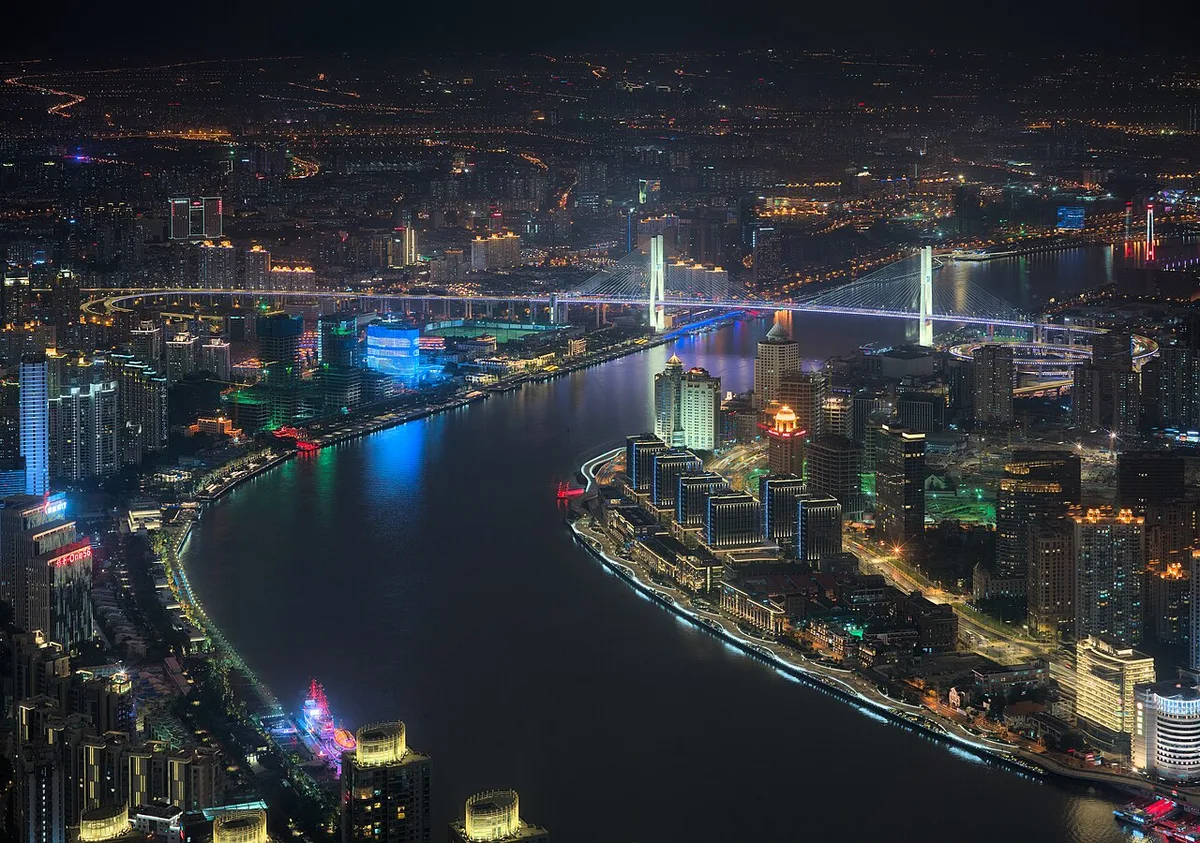
For photographers, urban planning researchers, and travelers seeking deep exploration, finding premium panoramic viewpoints of the Nanpu Bridge requires thorough understanding of urban terrain. One classic vantage point sits atop high-rise observation decks in Pudong skyscrapers, where observers capture unique spiral approach road structures, seeing clearly how the bridge resolves elevation differences between ground levels and river navigational channels. High-altitude perspectives offer comprehensive views of large-scale transport infrastructure planning, showcasing 1990s civil engineering mastery.
Conversely, water-level perspectives via public ferries or tourist boats cruising the Huangpu River deliver impressive close-up experiences of architectural proportions. As boats approach main supporting bridge piers, humans fully grasp the structure’s magnitude against modest human statures. Howling river winds and elevated roadway vehicle sounds create characteristic urban soundscapes unmatched elsewhere. This establishes visceral connections between individual observers and Shanghai mega-city dynamism.
Research into the Nanpu Bridge through lenses of indigenous daily rhythms and spatial experiences reveals it is not merely a transport construction. It is a social entity where commercial port pasts intersect digital technology futures, where everyday labor lives coexist with modern architectural grandeur. Temporal shifts from dawn serenity, midday hustle, twilight solemnity, to nighttime brilliance build rich cultural flows, affirming the Nanpu Bridge’s enduring status in Shanghai collective memory and international urban studies maps.
Territories surrounding the Nanpu Bridge foot in Shanghai, People’s Republic of China, represent culinary cultural spaces deeply intersecting ancient Jiangnan schools with contemporary urban life. Shaped by historical flows of Huangpu District and Pudong, this area is not merely a transport nodal point crossing the Huangpu River but a convergence coordinate of long-standing traditional culinary arts. When studying culinary structures here, cultural researchers often start from seasonal taste transformations, reflecting human-nature harmony philosophies in Chinese cuisine. Historical street food stalls along old Pudong waterfronts have yielded to ancestral restaurants, century-old eateries, and specialized food streets, building rich, complex regional flavor maps.
Characteristic culinary systems belong to the Shanghai school, or Benbang cuisine, combining stellar attributes of neighboring provinces like Jiangsu and Zhejiang. Core flavor traits emphasize raw ingredient freshness, skilled sugar and dark soy sauce applications yielding glossy coatings termed nongyou chixiang. Classic dishes feature sweet-savory combinations forged during 19th-century port development eras. Dishes like Shanghai braised pork belly, carp in soy sauce, or shelled shrimp stirred with Longjing tea demonstrate fine heat and seasoning modulation. Local chefs adhere to yin-yang balance principles, employing warming spices like ginger, scallions, and star anise to neutralize cooling properties of aquatic catches from the Huangpu River and East China Sea.
Mentioning culinary heritage around the Nanpu Bridge invokes artful dim sum and snack processing, led by soup dumpling variants like Xiaolongbao and pan-fried pork buns (Shengjian mantou). Crafting thin yet resilient wrappers holding hot broths is daunting. Fillings mix minced pork, congealed pork skin gelatin, scallions, ginger, and crab meat in autumn. Steaming demands precision so wrappers remain intact and internal soups achieve deep sweetness. Red bean paste rice cakes, fried radish cakes, and wontons in dried shrimp broth enrich street food culture.
Local dining customs link to long-standing tea drinking cultures and social etiquette. Teaware, water temperatures, and steeping times rival main dish qualities. Following oily local meals, locals sip Longjing green tea or Pu-erh tea to cleanse palates and aid digestion. Tea rituals in antique teahouses near Pudong and Puxi reflect respect for time and slow-living arts amid fast-paced mega-cities. Teahouse atmospheres feature guzheng melodies and chatty laughter, creating distinct cultural vibes.
Food streets surrounding the bridge foot preserve historical strata through ancestral multi-generational shops. Along winding pathways under bridges, diners find seasonal specialty eateries, such as Shanghai hairy crabs in harvest seasons or fresh bamboo shoot soups in spring. Traditional preservation techniques like pickling, smoking, and drying create side dishes for family meals. Traditional food markets beside modern skyscrapers form striking contrasts, where past and present harmonize across flavors.
Seafood processing technologies achieve sophistication thanks to Yangtze River estuary supplies. Stewed sardines, salt-fried river shrimp, and garlic-fried eels bear Jiangnan cooking styles, honoring ingredient sweetness via fast heating. Veteran chefs pass down secret sauce recipes, from sweet soy sauces to ginger-infused red vinegar, elevating main course flavors. Fusing traditional ingredients with imported spices from open-port eras forged open yet authentic culinary schools.
Overall, culinary systems around the Shanghai Nanpu Bridge serve as living museums on living cultures and cooking arts of Yangtze River delta populations. Across centuries, despite urban landscape changes and elevated highways masking old spaces, traditional flavors persist via dedicated culinary artisans. Studying local flavors decodes intangible cultural heritage, where dishes and tea cups contain histories of humanity’s greatest metropolises.
The Nanpu Bridge, crossing the Huangpu River connecting Huangpu District and Pudong New Area in Shanghai, People’s Republic of China, has long stood as a symbol of late-20th-century Asian industrial transformation and urban construction engineering. To plan survey and sightseeing journeys comprehensively, travelers must understand specific weather structures of the Yangtze River delta, where monsoon subtropical climates govern outdoor activities. Shanghai experiences four distinct seasons directly impacting visibility and visual experiences when viewing this unique spiral cable-stayed bridge. Spring, spanning March to May, brings mild weather, gentle air, and drizzle characteristic of southern China, creating misty, mystical aesthetics as morning haze blankets giant tower piers and steel cable networks. However, spring brings high humidity, reducing visibility from nearby viewpoints. Conversely, summer from June to August features high temperatures, sudden thunderstorms, or East China Sea tropical cyclones. Yet summer delivers brilliant sunsets with orange-red hues across the Huangpu River, highlighting artistic curves of spiral approach roads.
The ideal annual window for capturing footage and documentary photos of the Nanpu Bridge is autumn, from September to November. Continental dry air brings blue skies, white clouds, and optimal visibility, helping observers discern complex architectural details between Pudong and Puxi urban spaces. Winter, from December to February, drops temperatures below freezing on windy northern Siberian days. Despite harsh cold, winter skies are clear on sunny days, while nighttime artistic bridge lighting operates at peak efficiency to celebrate geometric beauty in darkness. Daily, twilight until 19:00 city lighting is most precious. Traffic streams form continuous light trails through giant spirals, blending with glowing skyscraper lights to build dynamic contemporary urban scenes.
Shanghai’s public transit infrastructure is ultra-advanced, offering accurate, convenient access to the Nanpu Bridge. Optimal for time and congestion avoidance is the urban subway network, specifically Line 4, bringing passengers directly to Nanpu Bridge Station right beside bridge feet on the Puxi bank. Subway networks require Shanghai public transit cards or electronic payment apps like Alipay or WeChat Pay for automated ticket gates. Beyond subways, public buses connect destinations via approach road routes. Buses offer advantages for observing everyday urban life and multi-tiered infrastructure. For travelers with heavy luggage or bespoke schedules, traditional taxis or ride-hailing apps are viable. When traveling by car or taxi, note high traffic congestion during morning and evening rush hours, making early departures mandatory to catch peak lighting windows.
Attire for visiting and surveying the Nanpu Bridge requires adaptive preparation for outdoor weather and windy riverside environments. Because bridges span major waterways, spaces above Huangpu River surfaces experience high winds, yielding lower sensible temperatures than urban centers. In spring and autumn, layered light jackets, windproof outerwear, and non-slip walking shoes suit continuous stair climbing or sightseeing. Summer demands breathable cotton clothing, wide-brimmed hats, sunglasses, and sunscreen. Winter requires warm coats, thick scarves, gloves, and beanies against river winds. Carrying compact camera bags, lenses, and spare power banks is essential, as low winter temperatures quickly deplete battery life.
Accessing and experiencing spaces around the Nanpu Bridge requires mastering cultural etiquette, local taboos, and legal regulations on critical transport infrastructure. Main bridge decks are vital transport arteries with high-speed cars and buses; pedestrian walking directly on main roadways is strictly prohibited for safety. Visitors observe and photograph structures from public zones at bridge bases, nearby skyscrapers, or river cruise decks. When deploying professional tripods in crowded public zones, avoid blocking local walkways and obey restricted photography signage. In communication around Huangpu and Pudong districts, maintaining polite attitudes, avoiding loud talking, and obeying queueing norms are basic civilized standards. Regarding admission tickets, the Nanpu Bridge is an outdoor public transport structure with free viewing and photography below. However, observation decks on nearby high-rises or Huangpu River cruises require advance bookings via official channels or mobile apps during weekends or international peak tourism seasons.
To experience this journey fully with a local guide, you may refer to the Beijing – Suzhou – Hangzhou – Wuzhen – Shanghai Tour with a pre-arranged itinerary.