The history of Peking Roast Duck (北京烤鸭 – Beijing Kaoya) is far more than a humble culinary journey; it is the distillation of imperial gastronomy spanning the rise and fall of China’s feudal dynasties. The earliest origins of this renowned dish trace back to the Yuan Dynasty (1271–1368), when the capital of Dadu gathered culinary treasures from across the vast Mongol Empire. In 1330, imperial physician and court nutritionist Hu Sihui formally codified the preparation of roast duck in the classic treatise Yinshan Zhengyao (饮膳正要, Principles of Correct Diet). In this ancient woodblock text, the duck was seasoned with imperial herbs and roasted over enclosed heat for the emperor’s banquet table, marking the earliest written milestone affirming the premier status of this waterfowl in imperial cuisine.
Entering the Ming Dynasty (1368–1644), the character of the capital’s roast duck truly took systematic shape alongside monumental shifts in supreme power. When the Yongle Emperor, Zhu Di, moved the capital north from Nanjing, he brought not only tens of thousands of skilled artisans but also his entire contingent of imperial chefs and the prized poultry-roasting traditions of the Jiangnan region. Under the patronage of the Yanjing court, the closed-oven technique (焖炉 – menlu) was honed and perfected to absolute precision. This craft requires the chef to heat a solid-brick oven chamber until it reaches optimal temperature, extinguish all open flames completely, place the duck inside, and seal the oven door tightly so smoldering radiant and convective heat slowly cooks every fiber of meat without scorching its delicate skin.
Built upon that very imperial closed-oven foundation, Beijing’s oldest roast duck house, Bianyifang (Chinese: 便宜坊), officially stepped onto the stage of history in 1416 along bustling Mishi Hutong (米市胡同). Embodying the core ideals of convenience, harmony, and heartfelt hospitality toward guests, Bianyifang flourished over the ensuing centuries—especially during the Jiajing reign—to become the undisputed standard-bearer of closed-oven roast duck. The hallmark of this method is that the duck never touches an open flame, allowing subcutaneous fat to render gently while locking in clean, sweet moisture, tender juiciness, and a smooth, glossy chestnut-brown skin that endured through every dynastic transition from the Ming to the Qing.
Yet the capital’s culinary landscape only witnessed a true counterbalancing revolution in the nineteenth century. In 1864, during the third year of the Tongzhi reign in the twilight of the Qing Dynasty, an impoverished poultry merchant from Hebei named Yang Quanren pooled his savings to found Quanjude (Chinese: 全聚德) in the bustling Qianmen market district just outside the imperial city. With keen foresight, Yang recruited former palace chefs who had recently left the Forbidden City, bringing the closely guarded imperial open-oven roasting technique (挂炉 – gualu) out to serve merchants and townsfolk alike. Quanjude uses an open-mouthed arched oven where ducks are suspended from hooks and roasted directly over blazing flames fueled by aged fruitwood such as jujube and pear wood, yielding glass-crisp skin and an unmistakable, delicate aroma.
The historical parallel between Bianyifang’s serene closed-oven craft born in the Ming era and Quanjude’s dramatic open-flame style forged in the mid-Qing period has shaped a cultural dialogue spanning more than six hundred years. It is far more than a rivalry between two ancient culinary titans; it is a living chronicle of how closely guarded palace delicacies gradually broke past forbidden walls, merged with the everyday pulse of Beijing’s hutong alleyways, and became a pinnacle world heritage emblem of Chinese civilization.
Rising impressively along the fertile lower reaches of the North China Plain, the millennial capital of Beijing sits nestled against the sweeping Yanshan mountain range while looking out toward the vast Bohai Bay. This auspicious feng shui setting—known for “sheltering wind and gathering vital energy”—not only shaped a seat of imperial majesty but also gave birth to timeless heights of palace gastronomy. Spatially, both culinary pillars of roast duck, Bianyifang and Quanjude, originated and anchored their gastronomic souls along the Beijing Central Axis. Today, this heritage artery is seamlessly connected by one of the world’s most advanced transport networks, whisking travelers from Beijing Capital (PEK) or Daxing (PKX) international airports along high-speed Gaotie rail corridors running at 300 to 350 km/h before immersing them in the unhurried pace of ancient hutong labyrinths around Shichahai or gray-tiled Qianmen Avenue.
At Bianyifang, whose lineage reaches back to the early Ming Dynasty under the Yongle Emperor, craftsmanship centers on Menlu kaoya (焖炉烤鸭)—roasting inside a completely sealed oven. The oven chamber is solidly constructed from thick local clay bricks engineered to maximize heat retention and thermal regulation. Artisans fire the interior using sorghum stalks or reed charcoal until the chamber reaches peak temperature, then sweep out every trace of ash and embers, leaving pure radiant heat behind before placing the prepared ducks inside and sealing the door shut. This process requires master roasters to rely on decades of honed intuition to judge timing so that subcutaneous fat melts back into the meat fibers while the exterior skin puffs crisp and free of excess grease—achieving skin as delicate as honeycomb and meat brimming with sweet juices.
Standing in contrast to the closed oven is the Gualu kaoya (挂炉烤鸭) school established by Quanjude in the late Qing Dynasty under Emperor Tongzhi, inherited directly from the secret techniques of Forbidden City palace kitchens. Quanjude’s hanging oven is a doorless arched structure heated directly by burning aged fruitwood, most famously wild jujube wood from Shandong and mature pear wood. Fruitwood burns cleanly without dark smoke, releasing natural essential oils that impart a subtle floral-fruity fragrance. Carefully selected ducks undergo specialized air inflation to separate the skin completely from the underlying fat layer, followed by blanching in boiling water, ladling with maltose syrup glaze, and air-drying in strictly climate-controlled rooms. Once hung on iron hooks inside the vaulted oven, the master roaster uses a long pole to continuously rotate each duck in the heat, turning excess fat into aromatic vapor and tinting the skin a luminous amber-chestnut hue.
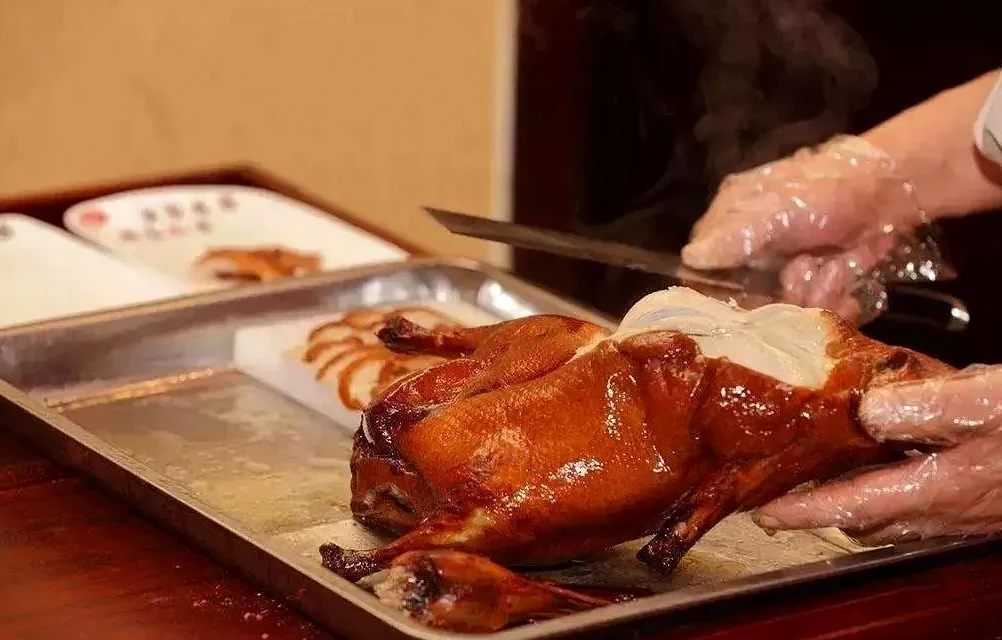
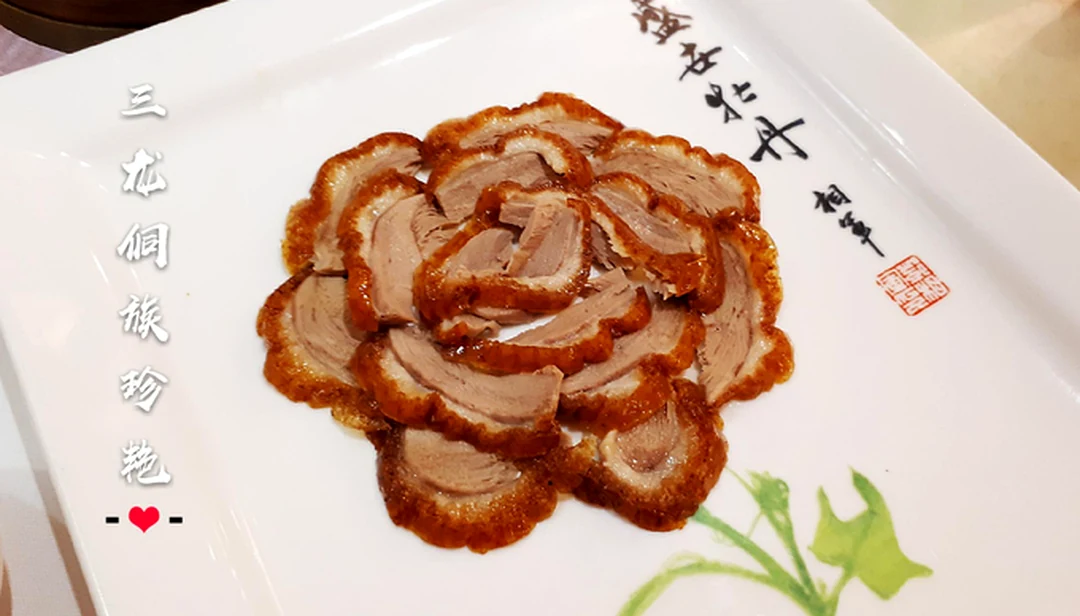
The dining ritual culminates in the tableside carving art of Pianya (片鸭). With surgical precision, the chef glides a razor-sharp blade across the piping-hot duck to produce exactly 108 thin, uniform slices—each balancing crisp, rich skin with tender, fragrant meat—arranged deftly on a porcelain platter to resemble a blooming peony blossom. Wrapping each slice inside a paper-thin Tangbing pancake with slivers of Shandong scallion, julienned cucumber, and a brushstroke of famed Liubiju sweet bean sauce inside a tranquil Siheyuan courtyard shaded by orchids, travelers experience the sublime harmony of imperial urban planning, profound culinary artistry, and the enduring spirit of North China’s thousand-year heritage.
Stepping across the threshold of Quanjude’s flagship restaurant on Qianmen Street feels like entering a miniature Qing imperial garden, where traditional courtyard architecture blends seamlessly with regal capital grandeur. The grand foyer opens beneath imposing red-lacquered, gold-gilded timber columns supporting ceilings adorned with intricate Eight Treasures motifs. Openwork rosewood screens carved with scrolling clouds and pine-and-crane longevity emblems subtly divide the space while lending deep nostalgic perspective. A signature architectural highlight here is the series of private banquet halls named after China’s illustrious dynasties—from the resplendent Tang Hall and refined Song Hall to the aristocratic Qing Hall—where every piece of Jingdezhen blue-and-white porcelain tableware and silver-tipped ivory chopsticks is faithfully modeled after the imperial dining rooms of the Forbidden City.
The beating heart behind Quanjude’s century-spanning reputation is its open-view roasting station built around the famed Gualu hearth. Unlike hidden commercial kitchens, guests here can watch plump ducks suspended from sturdy iron racks right before an arched open hearth of traditional firebrick. Master roasters wield long pearwood poles to turn each duck gracefully beside glowing embers. The secret behind the luminous amber-mahogany skin and pure aroma lies in the fuel: the kitchen insists exclusively on aged fruitwood, primarily jujube and wild pear timber from Beijing’s outskirts. Jujube wood smoke carries delicate natural oils that never overpower, instead infusing the fat layer, eliminating any gamey notes, and transforming the outer skin into crackly, glass-thin perfection.
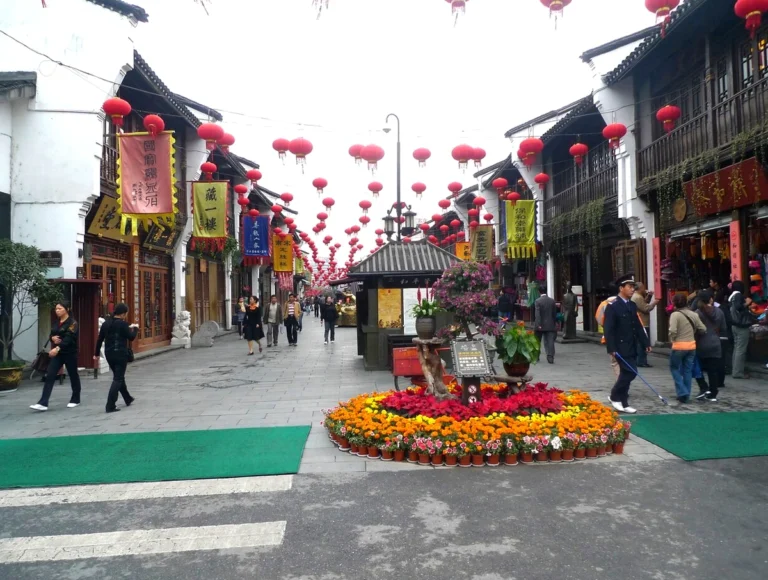
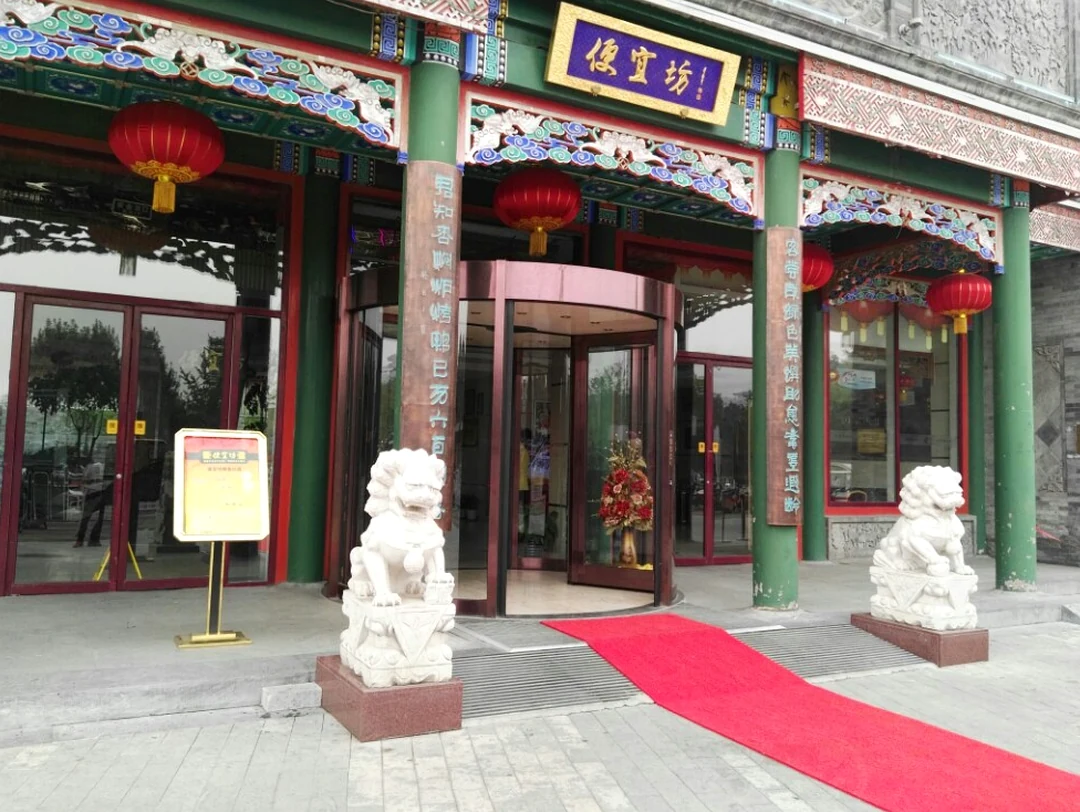
Counterbalancing that imperial opulence is the quiet, time-weathered dignity of Bianyifang on Mishi Alley—a cradle preserving Beijing’s character since the Yongle Emperor established the capital in the fifteenth century. The architecture reflects classic Xiguan-inspired courtyard aesthetics with weathered gray brick walls curving beneath glazed turquoise and deep-gold roof tiles. Beneath rows of red oil-paper lanterns hanging along moss-shaded eaves, the setting evokes a storied tavern from the prosperous Yongle era. Tables and chairs crafted entirely from aged rosewood and mahogany gleam with the patina of time, filled with the delicate scent of jasmine tea and the gentle clink of chopsticks inside private chambers veiled by handwoven silk curtains.
The crowning achievement defining both the architecture and flavor of Bianyifang is its Menlu closed-oven craft, officially inscribed as a National Intangible Cultural Heritage. The oven interior is an enclosed vaulted chamber constructed from ancient clay blended with straw and mineral salts; artisans heat the chamber using rice husks and dried stalks until intense warmth penetrates deep into the thick brick walls, then sweep away every ember before placing the ducks inside and sealing the door. The ducks cook entirely through gentle convective heat radiating from the earthen walls without ever touching smoke or open flame. Mastering this craft demands an extraordinary command of fire—judging internal heat shifts simply by pressing a palm against the outer brick wall. As a result, the roasted duck emerges extraordinarily juicy and butter-tender, with crisp, airy skin that retains an irresistible, succulent moisture.
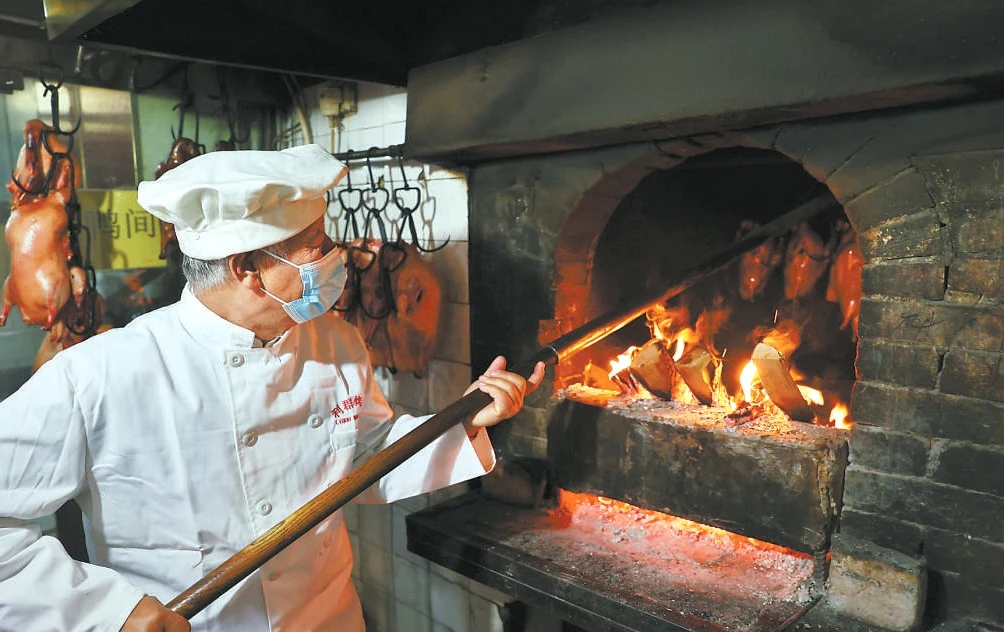 An artisan using a long pole to guide ducks into the glowing brick oven chamber
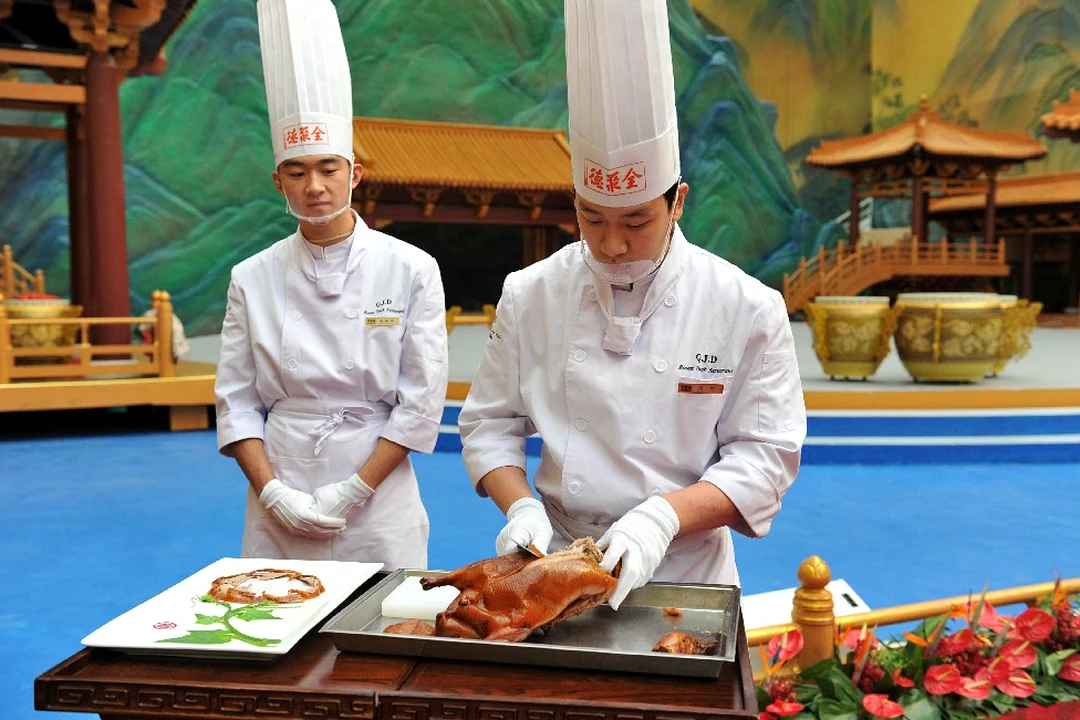
The dining spectacle is brought to perfection through the tableside carving ritual right beside the guests’ table. Dressed in crisp white jackets and silk gloves, master carvers demonstrate blade artistry with the precision of a sculptor. Using a single razor-thin knife, exactly one hundred and eight uniform slices are carved within a few brief minutes. Each wafer-thin piece—pairing crisp skin with tender lean meat as delicate as a cicada’s wing—is arranged gracefully into a dewy peony blossom on white jade porcelain, standing as proof of the supreme union between architecture, artisanal skill, and capital gastronomic aesthetics.
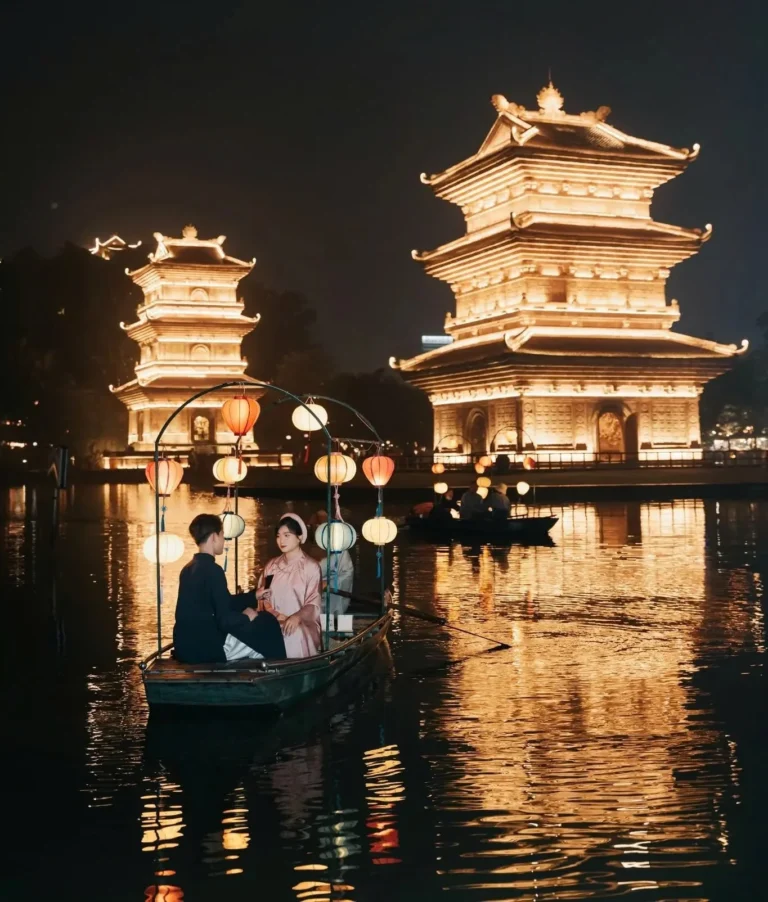
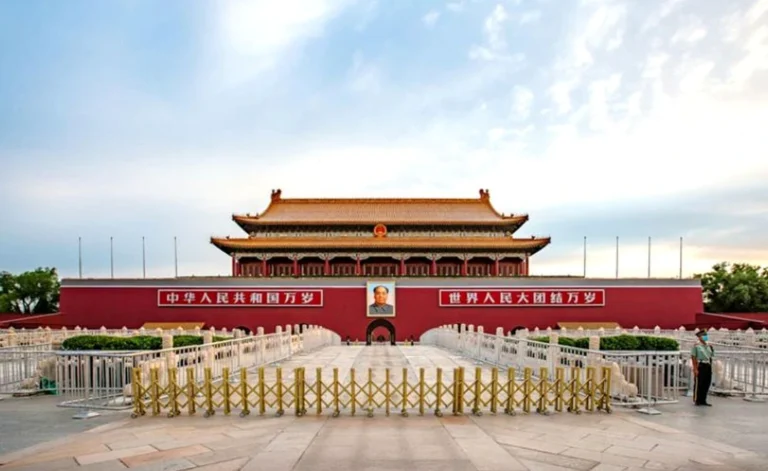
As dusk settles over the imperial processional axis, historic Qianmen Street and Wangfujing Avenue dress themselves in splendor woven from thousands of golden lights and crimson silk lanterns. Beneath the looming silhouette of Zhengyangmen Gate, Beijing’s nightlife never fades; instead, it transforms into an enchanting cultural promenade where the world-famous culinary traditions of Quanjude and Bianyifang anchor a royal evening banquet. Soft light from paper lanterns mingles with architectural illumination highlighting curved glazed tiles and carved reliefs of peonies and dragons across ancient courtyard pavilions, turning every stroll into a journey back to the golden age of the Kangxi and Qianlong emperors.
Stepping over the time-polished ironwood threshold of Quanjude Qianmen, diners are immediately enveloped in living culinary theater where palace artistry becomes a captivating performance. Beneath the warm glow of Qing-inspired palace chandeliers, neatly attired master chefs begin their tableside carving choreography. A keen blade glides effortlessly over a plump, amber-glazed duck fresh from the Shandong jujube-wood hanging oven. Willow-leaf slices—juicy and crowned with crackly skin—are laid out precisely into 108 pieces on Jingdezhen blue-and-white porcelain. The crisp crackle of shattering skin, wisps of fragrant steam drifting through golden light, and rhythmic knife strokes unfold like a classical dance, elevating dinner beyond mere dining into a feast for the eyes and ears.
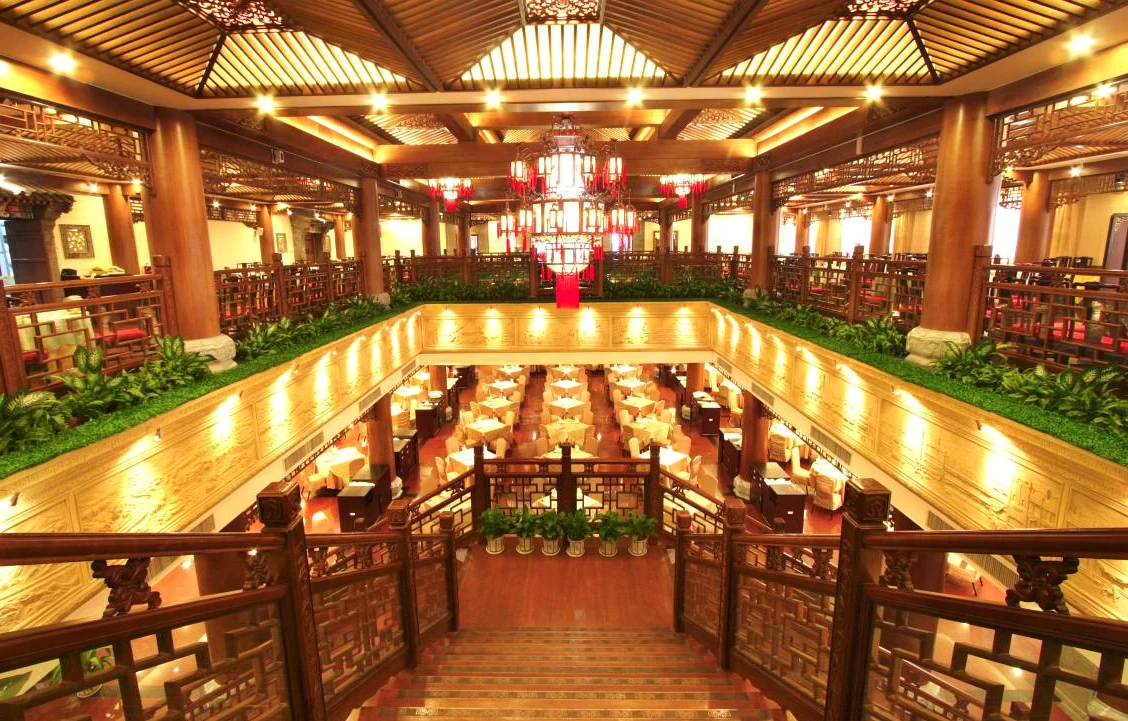 Serene traditional architecture illuminated by red lanterns and a classic wooden staircase
Not far away, following the quiet atmosphere of historic Chongwenmen and the misty waters of Shichahai, Bianyifang’s six-hundred-year-old closed-oven tradition opens a serene, refined dimension of evening dining. The interior recreates a Ming princely mansion where warm red lantern light glints off mother-of-pearl inlaid screens and red-and-gold lacquered plaques. Dinner at Bianyifang often unfolds to the crystalline plucking of a guzheng zither, resonant clapper beats of classic Peking Opera excerpts, or shadow puppetry dancing gracefully behind white silk screens. Gentle warmth from traditional straw-fired closed roasting keeps the meat supremely succulent, melding seamlessly with pungent scallions and signature Tianmianjiang sweet bean sauce to create a multisensory experience steeped in old aristocratic elegance.
Beijing’s evening magic reaches new heights when upper-story viewing pavilions throw open their windows toward lantern-lit lakes or moss-grown gray roof tiles along winding hutongs. Under subtle lighting design, lacquerware boxes holding lotus-leaf pancakes as thin as cicada wings and silver-inlaid chopsticks gleam with noble refinement. Evening dining in these heritage banquet halls thus becomes far more than a late-night indulgence—it is a grand symphony uniting folk performance art, memories of palace luxury, and the endless vitality of a thousand-year-old imperial capital.
Viewed through the lens of local terroir and capital dining culture, Beijing’s culinary map has for centuries been defined by two contrasting yet complementary schools of duck roasting, setting the ultimate imperial benchmark for China’s signature dish. Originating in Ming royal kitchens before reaching perfection under the Qing, Peking duck is never merely a nourishing meal; it is a masterwork uniting heat control, firewood lore, and profound tasting etiquette. The clear distinction between the two storied houses—Bianyifang, founded in the fourteenth year of the Ming Yongle reign (1416), and Quanjude, established in the third year of the Qing Tongzhi reign (1864) by merchant Yang Quanren—divides the diner’s journey into two captivating poles of flavor.
At Bianyifang, traditional closed-oven roasting, known as Menlu kaoya (焖炉烤鸭), is revered as a pinnacle of intangible cultural heritage. The roasting chamber is a sturdy vaulted brick kiln preheated with sorghum stalks or charcoal until its thick walls absorb tremendous thermal energy. Once ideal heat is reached, all embers and ashes are swept clean and the heavy door is sealed shut, cooking the duck purely through radiant heat and gentle internal convection. Ancient masters summarized this philosophy in a famous maxim: “The duck never sees the flame; the flame never touches the skin.” Because the bird never meets open fire and retains its internal moisture, subcutaneous fat melts slowly back into the meat fibers, giving the exterior a naturally crisp, airy crunch while keeping every bite inside remarkably juicy, tender, and pure in natural sweetness.
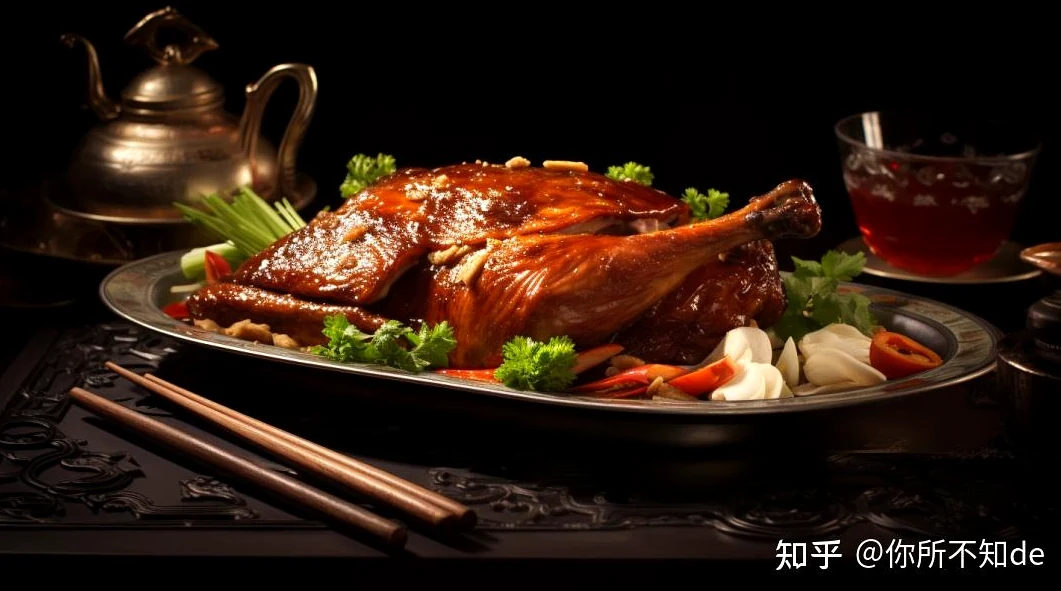
In stark contrast to the quiet serenity of the closed oven, Quanjude elevates open-oven roasting—Gualu kaoya (挂炉烤鸭)—into a vibrant dance of fire. Inside doorless arched hearths, ducks hang on specialized hooks suspended directly beside blazing flames fed by carefully selected aged fruitwood such as jujube, pear, or peach timber. Fragrant natural essential oils released by burning fruitwood envelop the duck, transforming its taut skin into a luminous amber-mahogany glaze reminiscent of imperial porcelain. The pitmaster uses a long pole to continuously turn every angle of the duck before the lively fire. The finished bird boasts skin so crisp it shatters delicately at the touch of teeth, carrying a refined, warming woodsmoke aroma that no modern heating method can ever replicate.
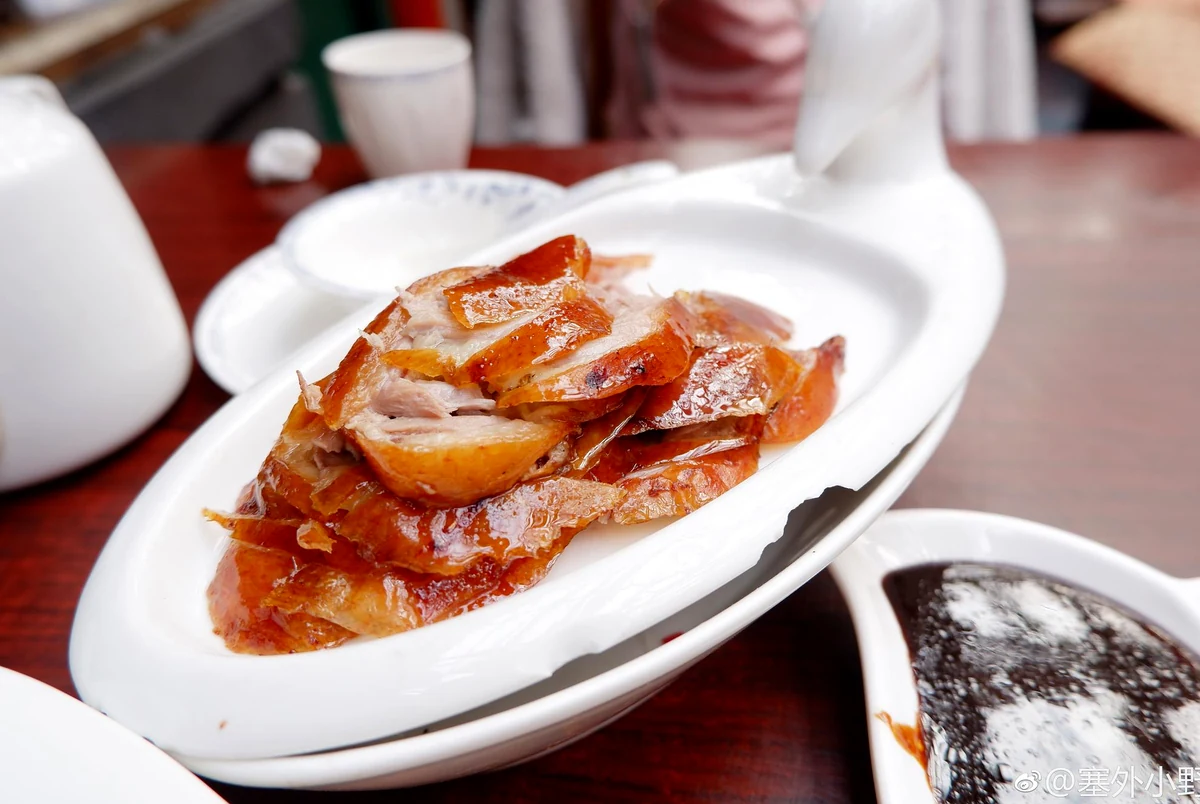
The tasting ritual begins the very moment the duck leaves the oven and is wheeled tableside on a carving trolley, where the carving master displays fluid blade work before eager diners. With crisp, decisive strokes, the chef must complete carving exactly 108 slices within just a few minutes before the duck cools—a deeply symbolic number corresponding to the 108 celestial stars and signifying complete perfection. Each wafer-thin slice is layered artfully onto blue-and-white porcelain, neatly separating glistening, crackly skin from tender lean meat edged with delicate fat.
Enjoying Peking Roast Duck is a classic three-course culinary symphony passed down across generations. First, connoisseurs pick up a piece of pure, crispy skin from the breast—the choicest cut of the bird—and dip it lightly into fine white granulated sugar. Warmed by the hot skin, the sugar crystals melt into the rich rendered fat, dissolving effortlessly on the tongue in a clean, delicate sweetness without a hint of heaviness. Next comes the classic wrap: lay down a warm, supple Chunbing (春饼) pancake, brush on a streak of savory-sweet fermented wheat paste (Tianmianjiang, 甜面酱), add several slices of duck, crisp chrysanthemum-cut scallion stalks, and cool cucumber batons. Rolled neatly, each bite bursts with contrasting textures—crunchy, tender, rich, and refreshing. The heritage feast concludes gracefully when the remaining duck frame is simmered with silken tofu and napa cabbage into a rich, milky-white broth that soothes away every trace of travel fatigue.
To reach the pinnacle of the ancient capital’s gastronomy, pinpointing the right historic branches is essential for any discerning food lover. For Quanjude’s hanging-oven school, the monumental Hepingmen flagship spanning over 15,000 square meters or the original branch on Qianmen Pedestrian Street—crowned with its red-and-gold plaque dating to the Tongzhi reign—are the gold-standard destinations. Both locations are easily reached via Subway Line 2 by alighting at Hepingmen or Qianmen Station and walking just a few minutes. Meanwhile, Bianyifang’s closed-oven legacy reigns proudly at its Hada branch in Chongwenmen, right at the interchange of Lines 2 and 5. Standard dining hours for both institutions run across two fixed shifts: lunch from 11:00 AM to 2:00 PM and dinner from 5:00 PM to 9:00 PM. On weekends and holidays, waiting lobbies fill rapidly, so arriving at least thirty minutes before opening or booking ahead via local reservation apps will spare you hours in line.
In terms of budget and dining format, a whole roast duck at either heritage house typically costs between 268 and 350 RMB. This price includes the tableside carving performance and the classic “one duck, three ways” presentation: crispy skin dipped in fine white sugar, sliced duck wrapped in thin pancakes with scallions, cucumber, and secret sweet bean sauce, and the remaining carcass simmered into a milky cabbage soup or stir-fried crisp with salt and pepper. Adding signature appetizers such as mustard duck liver or Sichuan-pepper braised duck tongues brings the average budget for a royal banquet to roughly 200 to 350 RMB per person. At Quanjude, each diner also receives a commemorative postcard stamped with a unique serial number recording the exact duck served since the restaurant’s founding—turning the meal into a tangible piece of personal culinary history.
Alongside culinary planning, understanding visa and financial policies ensures a smooth, rewarding gastronomic trip to Beijing. International visitors can take advantage of China’s 144-hour visa-free transit policy at Beijing Capital or Daxing International Airport for a short cultural getaway exploring the Forbidden City and savoring legendary roast duck. Shoppers can also stretch their budgets through VAT tax refunds of 9% to 11% on purchases totaling 500 RMB or more at accredited department stores displaying official customs tax-free signs. At the same time, travelers should stay vigilant against “zero-dollar tours” or suspiciously cheap packages that steer visitors toward low-grade vacuum-packed duck factories on the outskirts and pressure them into hours-long stops at overpriced jade and silk shops.
To safeguard both your heritage experience and your palate, pure cultural itineraries free from mandatory shopping stops have become the benchmark for thoughtful travelers—giving you unhurried time to savor centuries-old stories beside glowing hearths and taste roast duck at the height of Chinese culinary art. If you wish to immerse yourself in the full depth of Beijing’s imperial food culture without worrying about language barriers, restaurant reservations, or transit logistics, joining a curated all-inclusive Beijing tour offers a seamless, dignified, and deeply inspiring journey.