In the chronicles of humanity’s greatest metropolises, Beijing stands as a symbol of supreme power, the intersection of traditional cosmology, and profound historical transformations. Situated right at the heart of this northern megacity, Qianmen Ancient Street is far more than a mere commercial thoroughfare or urban transit corridor; it is simultaneously a living monument, a chronicle carved in brick and stone, and a pulse of everyday human life where the essence of Chinese culture has converged over centuries. To fully grasp the value of Qianmen, one must place this space within a multidimensional analytical framework combining landscape geography, urban archaeology, Eastern feng shui philosophy, and global diplomatic history. Qianmen—originally and officially named Zhengyangmen—stands tall as a sacred hyphen linking the forbidden imperial realm with the common commercial world, vividly reflecting the stratified social structure and cosmic urban planning philosophy of China’s most flourishing feudal dynasties.
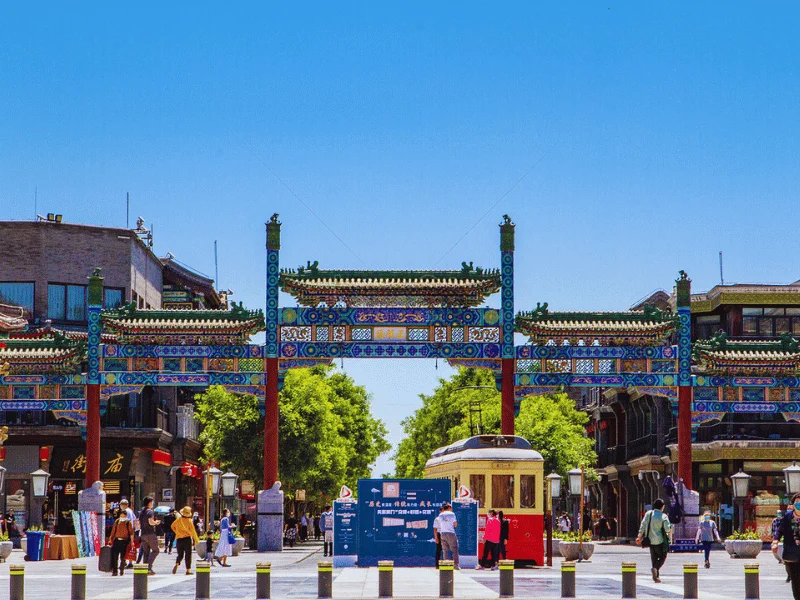
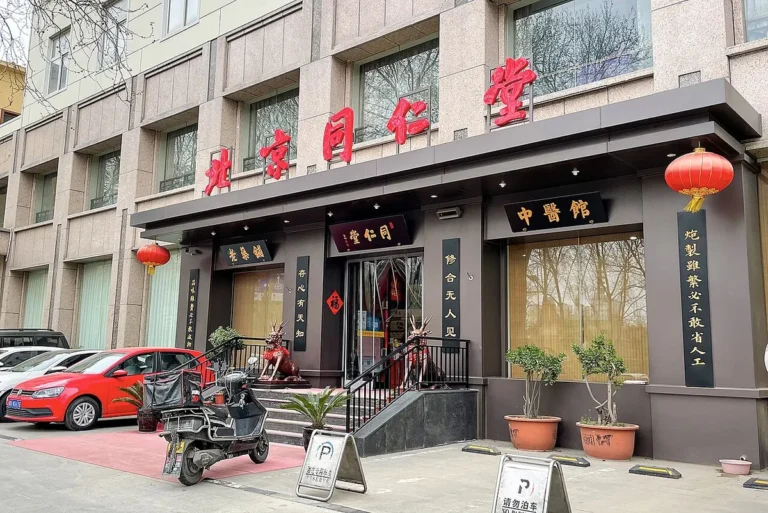
Antique scenery and characteristic appearance at Qianmen Ancient Street in Beijing.
In terms of geographic coordinates and topographical morphology, Qianmen Ancient Street stretches along the legendary North–South axis of Beijing, resting directly on the city’s central meridian, which passes through Tiananmen Square and extends straight into the Forbidden City. The exact coordinates of this area lie around latitude 39°53′ North and longitude 116°23′ East, within the expansive Beijing Plain, a transitional zone between the northwestern mountain ranges and the fertile North China Alluvial Plain. The average elevation here ranges from 40 to 50 meters above sea level; the terrain is relatively flat yet bears the imprint of large-scale human intervention designed to strictly adhere to traditional geomantic and feng shui principles. The Yongding River and an ancient canal system once served as vital waterways connecting Qianmen to the vast hydraulic network of the Grand Canal, facilitating the transport of grain, building materials, and luxury goods from the prosperous south to the arid north. This geographic landscape not only determined the survival of a water-scarce northern capital like Beijing, but also cemented Qianmen’s unrivaled status as an irreplaceable logistics and commercial hub for hundreds of years.
The historical emergence of Qianmen Ancient Street is closely tied to the grand relocation of the capital and reconstruction during the Ming Dynasty, particularly in the fourth year of the Yongle reign (1406), when Emperor Zhu Di decided to move the center of power from Nanjing to Beiping (modern-day Beijing) to fortify the northern frontier and counter threats from steppe nomads. Initially, this area functioned solely as the main gateway between Beijing’s Outer City and Inner City, regulating the flow of people entering and exiting the capital. The original structure of Zhengyangmen comprised two formidable defensive edifices: the main gate tower and the arrow tower (Jianlou), constructed from precious timber, handmade fired bricks, and granite on a monumental scale to project imperial authority. However, the area surrounding the gate rapidly transformed from a purely military zone into a thriving economic epicenter. Because strict imperial decrees barred commoners from residing inside the Inner City (the domain of the Forbidden City and government ministries), tens of thousands of merchants, artisans, porters, and laborers settled just south of Zhengyangmen. This organic population boom laid the foundation for the formation of narrow alleys (hutongs), folk courtyard residences (siheyuan), and numerous merchant guilds, creating an urban microcosm in stark contrast to the solemn, tranquil majesty of the Imperial City to the north.
Across the Ming and Qing dynasties, Qianmen Ancient Street witnessed turbulent historical upheavals alongside profound transformations in social structure. During the Qing Dynasty, after the Manchus established their rule over all of China, the Qianmen district continued to solidify its role as the commercial heart of the capital. Class and ethnic divisions between the Han and the Manchus turned the Outer City south of Qianmen into the most open space for cultural exchange, where diplomatic missions, foreign merchants, folk performers, and everyday intellectuals converged. This was the golden age of traditional apothecaries (such as Tong Ren Tang), restaurants blending imperial cuisine with folk culinary traditions, exquisite handicraft workshops, and renowned Peking opera theaters. Yet Qianmen’s history was not defined solely by commercial splendor; it also bore the scars of modern foreign invasions. In the late 19th and early 20th centuries, the district suffered devastating losses during the intervention of the Eight-Nation Alliance (1900), when many historic structures were reduced to ashes in the fires of war. In the ensuing decades, amid the decline of the feudal monarchy and the upheavals of the Republican era, Qianmen resiliently maintained its status as Beijing’s economic soul, witnessing the birth of revolutionary movements, shifting political regimes, and China’s earliest urban modernization efforts.
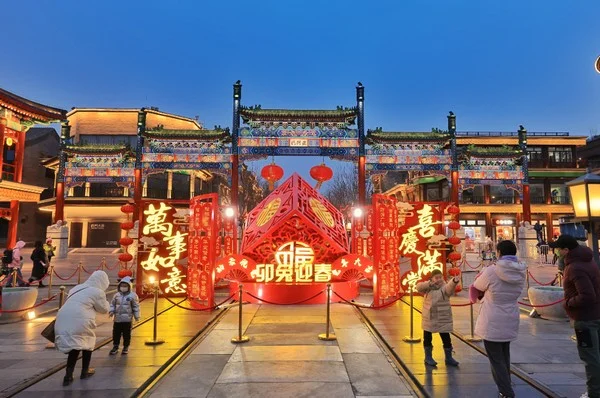
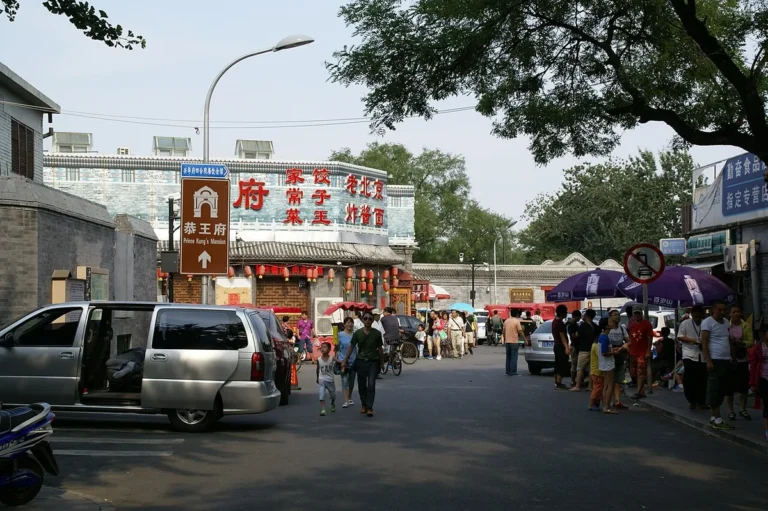
Harmonious spatial structure and urban planning lines of Qianmen Ancient Street in Beijing.
The national symbolic value of Qianmen Ancient Street extends far beyond the boundaries of an ordinary historic landmark; it embodies collective memory and Chinese national pride. In the consciousness of Beijing residents, walking through Qianmen means stepping into the very center of history, where the heartbeat of the past blends seamlessly with the breath of the present. The street’s architectural fabric—with its moss-covered yin-yang tiled roofs, intricately carved red-lacquered and gilded wooden shop signs, and vintage trams clattering along narrow tracks—has become a classic icon of an ancient, profound, yet vibrantly alive Beijing. Moreover, Qianmen serves as a living museum of intangible cultural heritage, preserving time-honored traditional arts such as crosstalk monologue storytelling (Xiangsheng), acrobatics, nostalgic gastronomy, and folk rituals passed down across generations. This symbolic stature carries significance not only on a national scale but also resonates globally, drawing anthropologists, urban architects, and international travelers eager to decode the anatomy of a quintessential Eastern feudal urban space.
Qianmen Ancient Street’s global influence was reinforced through East–West cultural exchanges spanning from the era when Jesuit missionaries first arrived in China to the modern age of globalization. As a gateway welcoming new currents of thought, goods, and technologies flowing from the West into the capital, Qianmen functioned as a subtle yet remarkably potent arena for cultural dialogue. International scholars studying historical urban morphology frequently cite Qianmen as a prime case study to analyze how a traditional public space can adapt to capitalist economic shifts while safeguarding its core identity. In contemporary restoration and urban planning projects, the conservation experience of Qianmen Ancient Street has become an invaluable reference for historic cities worldwide grappling with the dilemma between modern economic development and cultural heritage preservation. By harmoniously combining the authentic restoration of historic architecture with the integration of advanced commercial and cultural tourism amenities, Qianmen has proven that legacies of the past are never obsolete; rather, they possess a fierce vitality capable of anchoring a nation’s soul amid the powerful currents of international integration.
In summary, viewed through the lenses of archaeology, history, and cultural anthropology, Qianmen Ancient Street in Beijing emerges as a monumental masterpiece of human ingenuity and time. From its strategic geographic coordinates along the capital’s sacred central axis, through the rise and fall of feudal dynasties, to its status as a national symbol in the modern era, Qianmen has consistently served as a bridge linking a glorious past with a dynamic present. This district preserves not only the tangible treasures of ancient architecture, but also the indomitable spirit, refined way of life, and pinnacle aesthetic sensibilities of the Chinese people across generations. Exploring Qianmen is ultimately a journey to decode the cultural DNA of one of humanity’s oldest civilizations, while reaffirming the eternal value of urban heritage in the unfolding of world history.
Positioned along the central nerve axis of Beijing, Qianmen Ancient Street is not merely a bustling commercial avenue, but a living architectural museum preserving the golden imprints of the Ming and Qing dynasties. Looking back at the evolution of urban space, this district represents the pinnacle of ancient Chinese city planning, where feng shui philosophy, Confucian social order, and traditional construction techniques merged seamlessly. Qianmen’s main thoroughfare runs along the capital’s historic North–South axis, originating at Zhengyangmen Gate (commonly referred to by locals and historians alike as Qianmen) and extending southward toward the Tianqiao area. The formation of this neighborhood is intertwined with the Ming Dynasty’s expansion and fortification of the capital in the 15th century, when the Yongle Emperor resolved to relocate the seat of power to Beijing. To protect the southern outer districts—home to vital imperial altars such as the Altar of Agriculture (Xiannongtan) and the Altar of Heaven—the imperial court constructed the Outer City wall in the 32nd year of the Jiajing reign (1553). Out of this military and administrative defensive framework, a spontaneous trading hub outside the palace gates took shape, gradually evolving into a meticulously planned network of market streets, pawnshops, teahouses, and imperial pharmacies serving both the aristocracy and commoners.
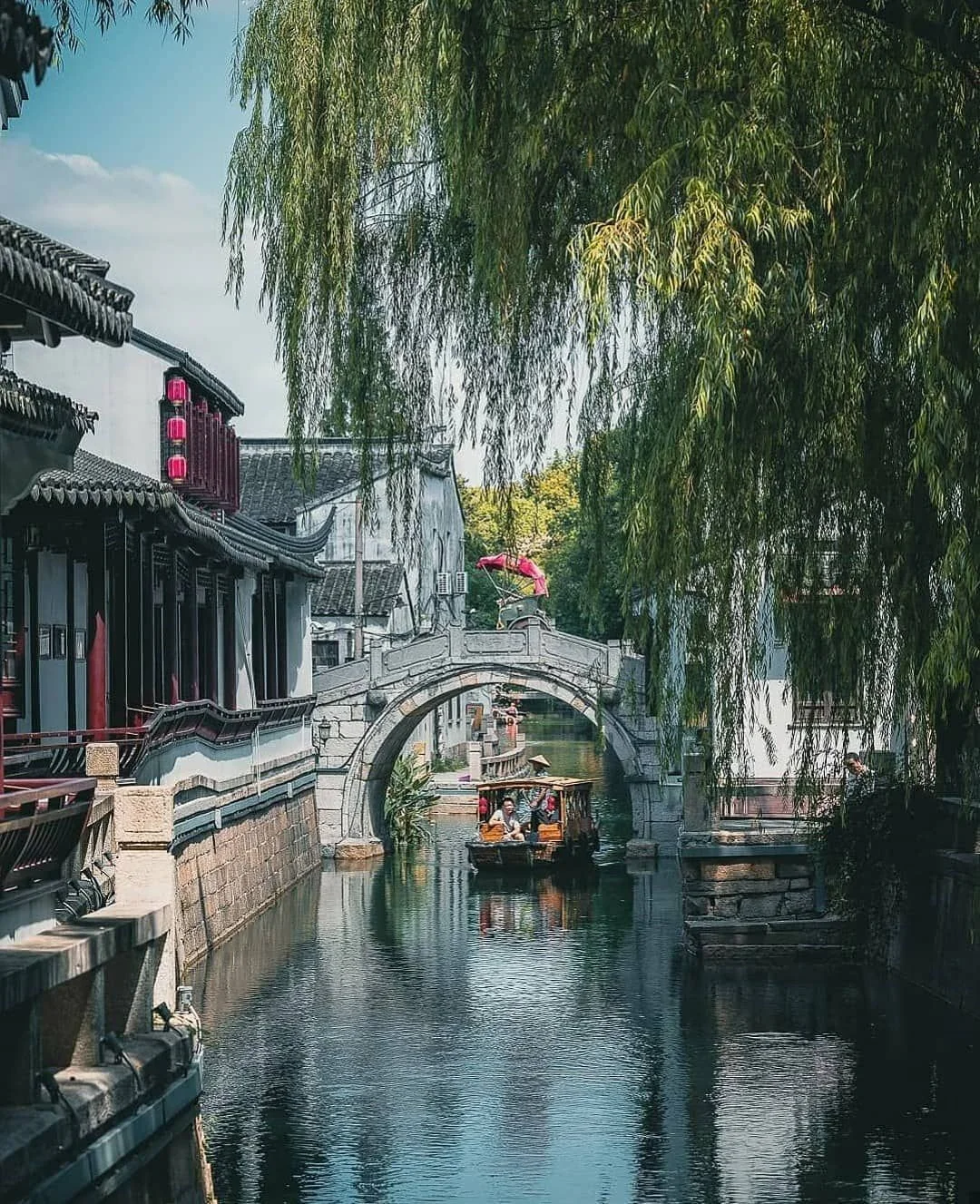
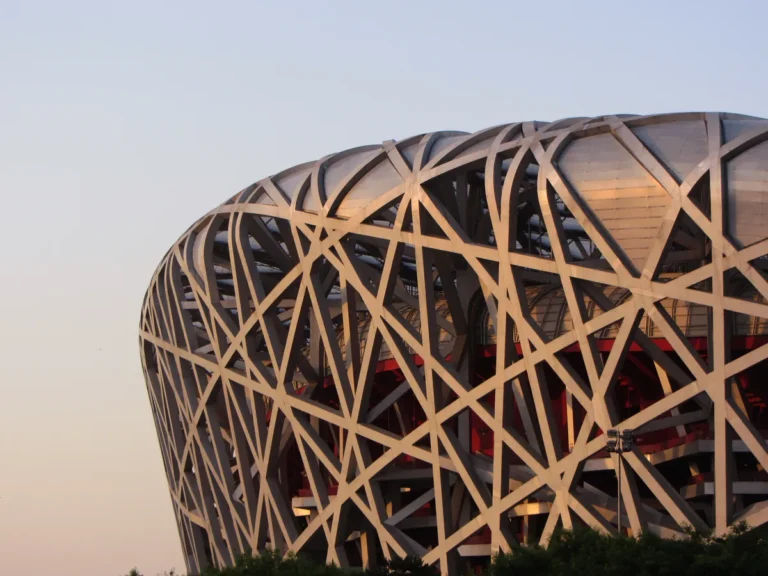
Artistic detailing and cultural depth at Qianmen Ancient Street in Beijing.
In terms of architectural planning and spatial zoning, Qianmen strictly observes the traditional principles of symmetry and spatial hierarchy characteristic of imperial architecture, yet adopts greater flexibility to accommodate commercial functions. The entire core zone of Qianmen Ancient Street spans hundreds of hectares in total planned area, with the main pedestrian street stretching approximately 840 meters in length and 20 to 29 meters in width, creating a grand boulevard that still retains the intimate charm of an ancient market town. Branching off both sides of this main artery like fishbones is an intricate web of narrow alleys known as hutongs, most notably Dashilar (Dazhalan), Xiaozhalan, and Xianyukou Street. This spatial layout vividly mirrors a microcosm of old Beijing society, where prominent merchant families, fine handicraft workshops, and long-established theatrical troupes coexisted within a network of traditional courtyard residences known as siheyuan. Buildings here typically stand at a modest one to two stories, strictly adhering to feudal regulations prohibiting structures from exceeding the height of the imperial palace—creating a low-slung skyline that harmonizes with the vast northern Chinese sky while accentuating the supreme majesty of Zhengyangmen to the north.
Construction techniques and load-bearing structures at Qianmen Ancient Street stand as a testament to the supreme ingenuity of traditional Chinese carpenters and masons, highlighted by timber load-bearing frames joined with mortise-and-tenon joints without using a single iron nail. The storefront structures here primarily use high-quality pine or fir columns and beams, paired with dougong—interlocking square wooden brackets stacked to distribute weight from the roof down to the main load-bearing columns. Roofs are tiled with traditional yin-yang tiles or gray-ash glazed tiles, featuring a steep pitch to quickly shed rainwater during sweltering summers and bear the weight of winter snow. Building foundations are thoroughly reinforced with compacted earth combined with monolithic stone footings to prevent dampness and settlement, a vital engineering solution on the ancient alluvial geology of the Yongding River basin. Walls surrounding shops and residences are built with signature Beijing gray brick, fired from local clay under strict temperature control to deliver high mechanical durability and strong thermal insulation against the wide winter-to-summer temperature swings of the capital region.
Craftsmanship and decorative carving on the architecture at Qianmen reach master-level refinement, expressed through sculpted details in wood, stone, and brick. Strolling along the street, observers easily become captivated by shop signs made of precious timber carved in relief and gilded in shimmering gold, steeped in the traditional calligraphy of master
Standing tall at the southern tip of historic Beijing’s central axis, Qianmen Ancient Street—also formally known as Zhengyangmen—is not merely a bustling commercial hub across multiple dynasties, but a masterpiece of feudal Eastern urban planning where architectural artistry, philosophical thought, and the profound spiritual depth of the Chinese empire converge. Through the sweeping changes of time, from the Ming and Qing dynasties to the modern era, this space still preserves an intact atmosphere of nostalgia and solemnity, infused with the echoes of imperial feng shui philosophy and the most sophisticated manual craftsmanship. Every inch of earth, every glazed tile, every grain of timber, and every carved line across Qianmen’s architecture reflects a tightly knit cosmological worldview in which humanity, royal authority, and nature unite according to the supreme order of the Mandate of Heaven.
Examining the spatial layout of the Qianmen area, one cannot help but marvel at its strict adherence to urban planning principles recorded in the Rites of Zhou, specifically the layout of court in front and market behind, ancestral temple on the left and altars of state on the right, placing the main north-south axis as the sacred spine of the entire capital. The main architectural complex of Qianmen comprises the Zhengyangmen Gate Tower, the Arrow Tower (Jianlou), and the barbican wall connecting the two structures, forming a sturdy defense system as well as a grand gateway welcoming vital energy flowing in from the south. According to the feng shui beliefs of imperial astrologers, south is the direction of fire, growth, and flourishing yang energy, so Qianmen was designed like a giant funnel drawing cosmic vitality to nourish the Forbidden City to the north. This spatial arrangement carried not only military strategy, but also an enduring aspiration for a peaceful and prosperous dynasty in which the emperor served as Son of Heaven, directly linking yin and yang, heaven and earth, and all the common people.
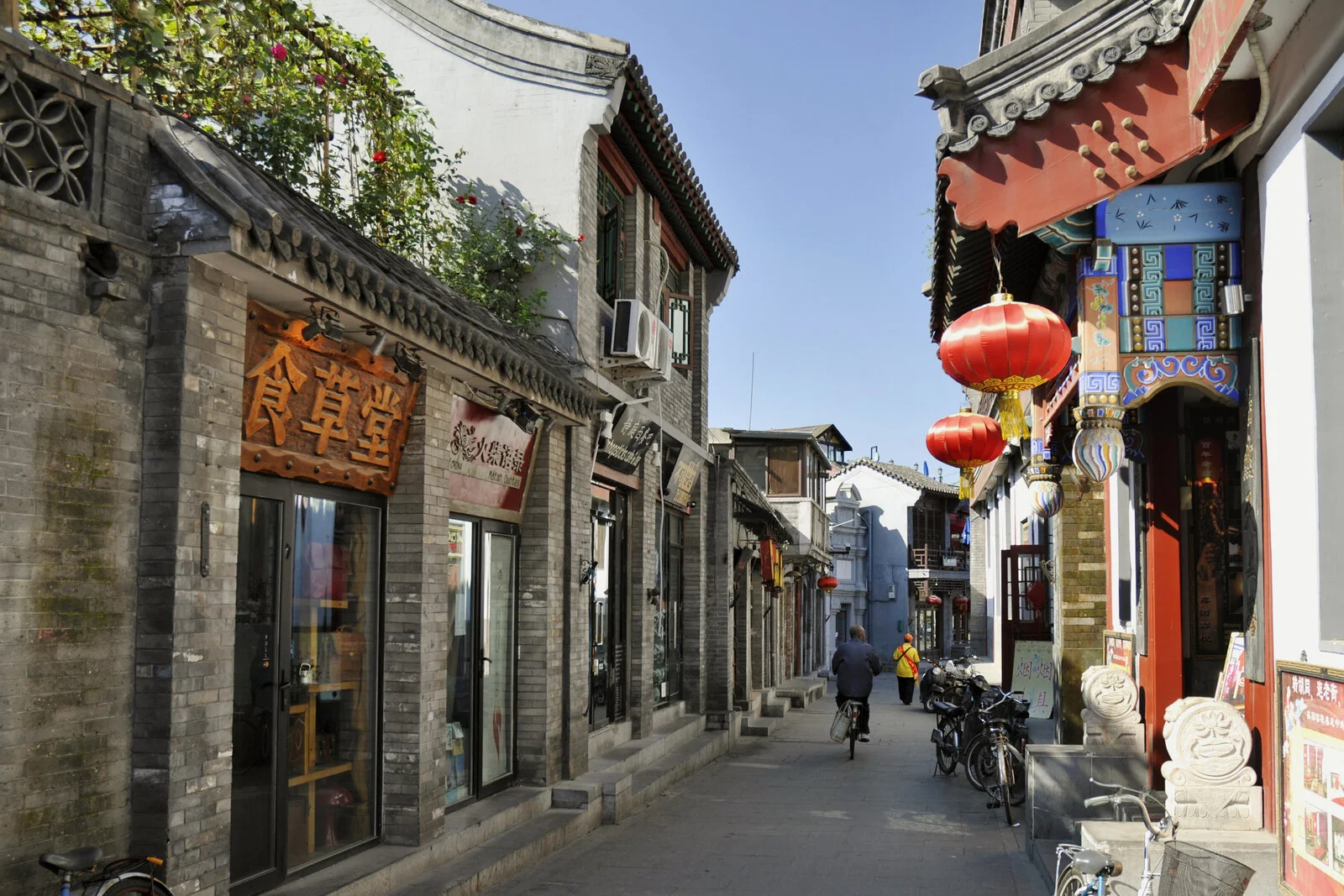
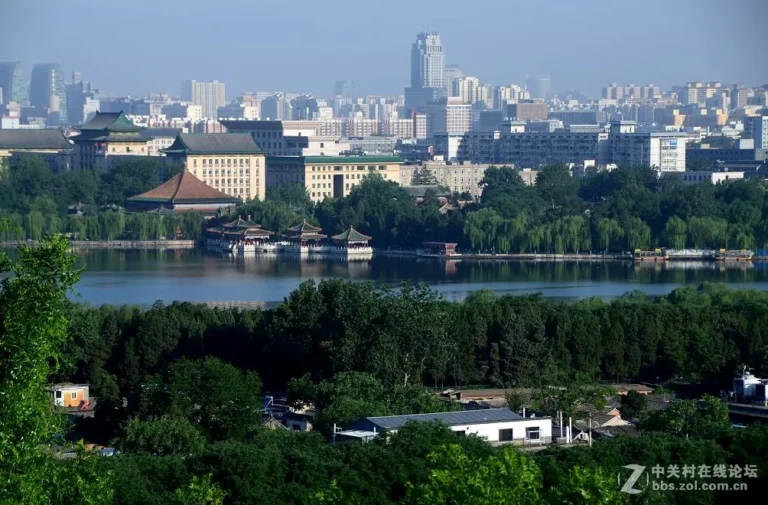
Close-up view of the heritage structural system on Qianmen Ancient Street in Beijing.
Delving into architectural details and carving art, Qianmen truly serves as an open-air museum of traditional Han and Manchu woodworking and stone sculpture. On the load-bearing wooden elements of the gate tower, past artisans applied highly skilled relief and openwork carving to create motifs rich in imperial symbolism, such as five-clawed dragons winding amidst churning clouds, phoenixes spreading their wings to represent the empress and peace, alongside lotus blossoms, the Eight Treasures, and auspicious clouds. In particular, granite and white marble details carved along the plinths and balustrades reflect the style of Ming-dynasty stone carving, with strong, decisive lines yet graceful fluidity. Large stone blocks are smoothly polished and carved with twin dragons contesting a pearl or surging waves, symbolizing the wish to subdue water, prevent fire, and protect the capital from natural calamities.
The gleaming golden glazed roof tiles at Qianmen are the clearest proof of imperial privilege. In the Five Elements, yellow represents Earth and the center, serving as the exclusive symbol of the emperor. High-fired with a glossy glaze, these tiles not only help the buildings withstand harsh northern Chinese weather, but also catch the sunlight to cast a radiant, majestic aura from afar. Beneath the eaves lies the intricate dougong bracket system, a marvel of traditional woodworking that uses no iron nails and relies entirely on millimeter-accurate joinery between wooden pieces. Beyond distributing the heavy weight of
Located along the central axis south of the Forbidden City, Qianmen Ancient Street in Beijing emerges as an enduring historical witness where the pulse of the imperial past blends harmoniously with the contemporary breath of a global metropolis. Across more than six centuries of formation and development, this space has never lost its intrinsic soul; instead, it shifts gracefully through every hour of the day, offering kindred travelers priceless sensory experiences. From quiet early mornings when thin mist still lingers over glazed roof tiles until nightfall brings the dazzling glow of digital light and red lanterns, Qianmen is a blend of sound, aroma, color, and light that vividly recreates the essence of Chinese urban folk culture across eras.
As the first rays of dawn cast warm golden light across the ancient city gates, Qianmen wakes to a slow, peaceful rhythm rich with local character. At this hour, the old street belongs almost entirely to longtime locals who maintain traditional ways of life from generation to generation. Unhurried footsteps over smoothed granite slabs and the rustle of brooms sweeping leaves mingle with birdsong in the branches, creating a remarkably tranquil soundscape. In corners of the neighborhood, the rich aroma of fried dough sticks just lifted from bubbling oil, the creamy richness of fresh soy milk, or rising steam from baskets of traditional buns begins to awaken every sense. Older residents practice Tai Chi at ease in spacious courtyards and sip hot chrysanthemum tea at small roadside tea stalls, painting a simple, authentic picture of everyday life completely apart from the bustle of a modern megacity of tens of millions.
As the sun climbs high overhead, life at Qianmen shifts energetically into a vibrant, colorful phase of commerce and culture. Century-old establishments—from renowned traditional Chinese medicine pharmacies like Tongrentang to famous tea houses and roast duck restaurants—open wide their doors to welcoming crowds. The air fills with lively hawking calls, traditional folk instruments playing from souvenir shops, and the cheerful chatter of travelers from afar. Visitors’ noses are continually drawn to complex scents of herbs, agarwood, leather, and especially the signature fragrance of former imperial dishes now made accessible to everyday diners. The sensory experience here goes beyond sight and hearing, paired with a tactile connection to history as travelers touch moss-lined gray brick walls, admire fine carvings on lacquered and gilded wooden signs, or savor the rich, nuanced flavors of traditional Beijing cuisine prepared with recipes passed down for ages.
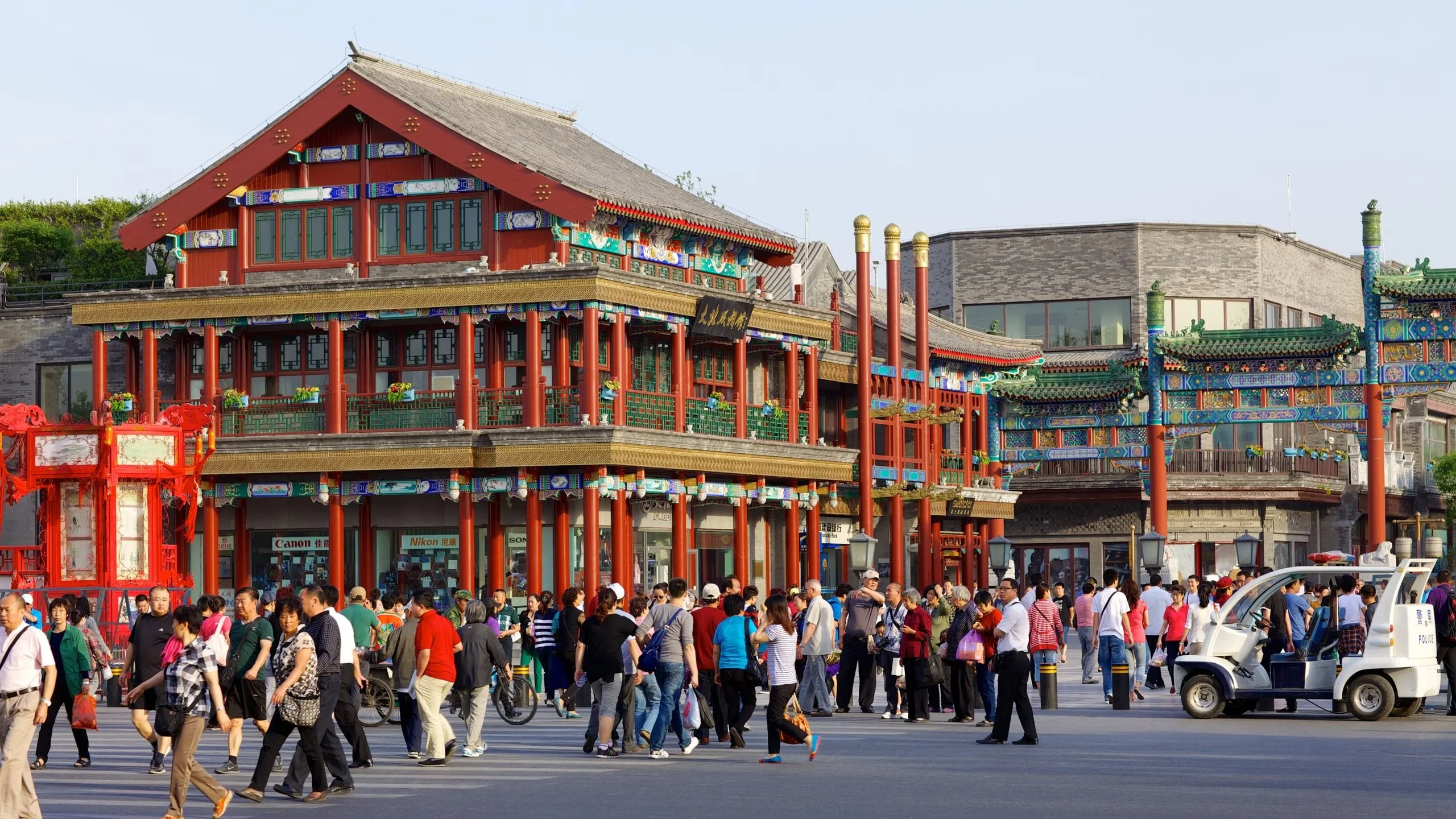
Flow of cultural life and daily rhythms around Qianmen Ancient Street in Beijing.
The moment dusk settles over Qianmen Ancient Street brings a nostalgic, contemplative, and deeply romantic beauty. Late-day golden sunlight reddens the city walls and casts long shadows across blue-stone pedestrian lanes. Vintage-style streetcars (locally called Dingdingche) roll slowly back and forth along the tracks, ringing soft bells that evoke Beijing in the early twentieth century. As darkness replaces daylight, all of Qianmen puts on a dazzling cloak of light. Thousands of traditional red lanterns glow along the streets, blending harmoniously with modern lighting systems to highlight the distinctive architectural lines of the historic buildings. The interplay between the warm golden glow of lanterns and bright neon lights from international fashion brands nestled within the old street creates a striking visual effect, proving a seamless fusion of past and present.
Nightfall also marks the peak of artistic performances and light shows at Qianmen. Inside traditional theaters tucked behind large wooden doors, the fluid, clear melodies of Peking Opera ring out enchantingly. Performers in elaborate makeup and sparkling sequined costumes stage classic excerpts of Chinese theater, taking audiences back in time to the Qing dynasty. Moreover, public spaces and facades of landmark buildings serve as canvases for advanced digital light displays. Historical stories, images of rare flowers, birds and beasts, and past customs are brought to life through modern 3D mapping projection, turning rough brick walls into vivid, colorful moving scenes that amaze anyone who witnesses them.
To take in the most breathtaking and sweeping views of Qianmen, travelers should seek out prime vantage points shaped by the area’s own geography and history. The first standout viewpoint is the viewing deck on the Bell and Drum Towers along the northern axis looking back toward Qianmen, or standing right at Tiananmen Square looking straight south to see the majestic Qianmen tower rising amid open space. From these spots, the entire layout of Beijing’s central ritual axis stands out clearly, where the grandeur of feudal architecture meets the brisk flow of modern city life. In addition, pausing on the balcony of a rooftop cafe or upscale restaurant along Qianmen Avenue at sunset offers an unmatched visual experience. From here, visitors can gaze over the strolling crowds below and watch undulating roofs rise and fall toward the horizon as city lights flick on, forming a panorama that is at once ancient and profound, modern and resplendent.
Experiencing Qianmen Ancient Street therefore goes beyond the limits of an ordinary sightseeing trip, becoming a deep journey of the spirit into the cultural roots of a land with thousands of years of heritage. Every moment passing here—from streetcar bells at dawn to glowing lanterns late at night—helps weave a rich, lasting tapestry of memory in each traveler’s heart. Qianmen exists not merely as a preserved monument, but truly as a living space where history breathes, culture speaks, and the rhythm of human life continues endlessly across space and time.
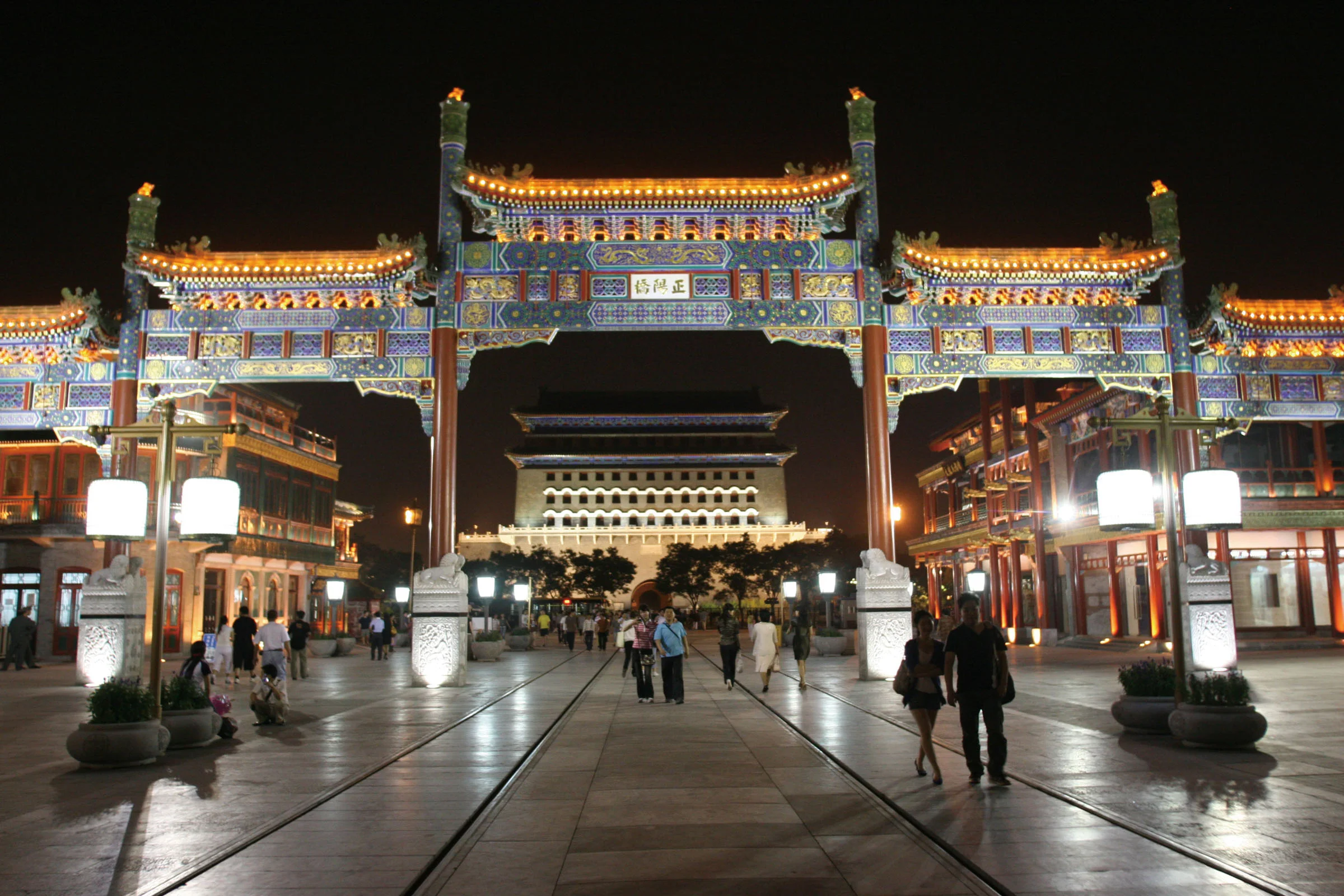
Traditional cultural experience space connected with Qianmen Ancient Street in Beijing.
Located immediately south of Tiananmen Square, the historic Qianmen district has long been established by history as a bustling commercial hub, where the cultural and culinary quintessence of the entire Chinese empire converged across numerous dynasties. Spanning over six centuries of formation and development, this space not only preserves ancient architectural imprints with rows of yin-yang tiled roofs and deep, winding hutong alleyways, but also serves as a living museum of imperial culinary arts blended with distinctive street-food flavors. The culinary landscape surrounding Qianmen vividly reflects the generous, refined, yet deeply pragmatic character of Beijingers, where every dish carries a long tale of history, the philosophy of Yin-Yang and the Five Elements, and culinary craftsmanship elevated to supreme sophistication. From old-world street vendors to time-honored restaurants bearing imperial legacies, Qianmen’s cuisine has transcended the boundaries of a mere biological necessity to become an intangible cultural icon, drawing diners and scholars from around the globe to contemplate and savor.
When speaking of the renowned local flavors in the Qianmen area, one cannot overlook the art of preparing Peking roast duck, a dish that has reached the pinnacle of intricacy and imperial standards. Traditional roasting ovens burn fruitwood such as pear or jujube wood to produce a steady, smokeless crimson flame, turning the duck’s skin taut, amber-gold, and shatteringly crisp to the touch, while keeping the meat inside succulent and naturally sweet. The art of carving the duck demands masterful dexterity from the chef, who slices precisely one hundred and eight pieces from a single bird so that every slice features an ideal balance of crispy skin and fragrant lean meat. Diners enjoy this delicacy following a strict traditional ritual: laying a paper-thin pancake flat on the palm, spreading a layer of savory-sweet fermented bean sauce, topping it with pungent scallion slivers, crisp cucumber strips, and slices of duck glistening with aromatic fat, then rolling it all up for an explosion of flavor. Beyond roast duck, the district is also famous for dishes steeped in Shandong and Islamic culinary traditions brought by merchants and imperial chefs of yesteryear, weaving a rich and captivating multi-layered gastronomic tapestry.
The network of food streets around Qianmen, notably Qianmen Main Street and Dashilan Snack Street, forms a labyrinth of aromas and colors preserving secret culinary techniques passed down through generations. Here, iconic Beijing snacks abound with unmistakable flavors. Steamed buns (Mantou), crisp fried dough sticks seasoned with sea salt, and especially fermented tofu and fermented mung bean porridge (Douzhi) alongside Lu Zhu Huo Shao have captivated countless generations of diners. Fermented mung bean porridge offers a tangy, subtly pungent profile, typically paired with crispy fried dough twists and sweet-and-sour pickled vegetables, serving as the ultimate cooling refreshment during Beijing’s sweltering summer days. Meanwhile, Lu Zhu (braised pork offal stew)—featuring meticulously cleaned offal simmered for hours with dozens of secret herbs and spices alongside tofu and chopped baked flatbread—delivers a hearty, deeply savory warmth that faithfully reflects the humble yet refined culinary traditions of the capital’s working class across historical eras.
Food preparation craftsmanship in Qianmen does not stop at fresh ingredients or unique spices; it lies equally in the meticulous control of heat and timing—a mastery traditional chefs refer to as “huo hou” (fire control). The culinary art here prioritizes balance between “cooling” and “warming” properties, consistently incorporating Traditional Chinese Medicine herbs into broths and stir-fries to nourish the body in accordance with ancient Chinese wellness philosophy. For instance, lamb stews simmered with goji berries, Chinese yam, and red dates do more than ward off the bone-chilling cold of Beijing’s harsh winters; they serve as potent tonics for restoring vitality. Seasoning adjustments are measured by decades of accumulated intuition among fourth- and fifth-generation heirs at family-run eateries, where secret recipes have never been divulged outside the clan, yielding exclusive flavors that no modern restaurant can ever fully replicate.
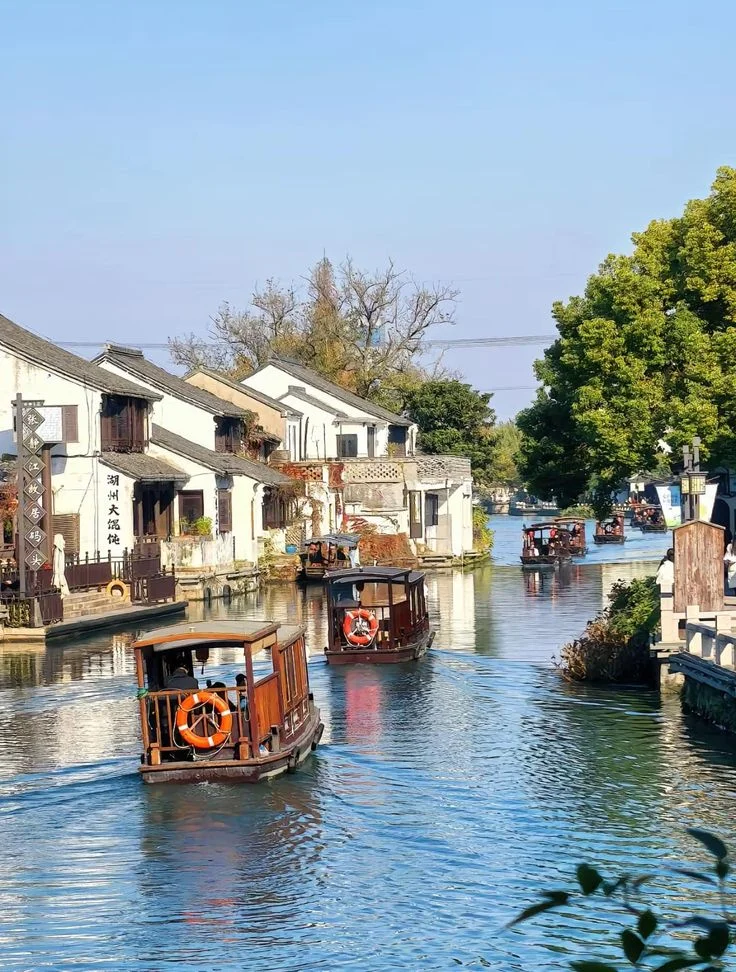
An expansive panoramic view overlooking the Qianmen Ancient Street heritage complex in Beijing.
Alongside savory dishes, the custom of enjoying tea and traditional pastries in the Qianmen area opens up an elegant cultural realm steeped in Zen tranquility and the profound contemplation of ancient literati. Historic teahouses tucked along narrow alleyways are not merely places to savor premier teas—such as Beijing jasmine tea, aged Pu-erh, or West Lake Longjing—but also vibrant cultural salons where patrons discuss current affairs and enjoy traditional music or folk storytelling performances. The etiquette of pouring tea demands reverence and grace: elders are always served first, and the manner of holding a teacup follows strict conventions demonstrating respect toward honored guests and nature’s gifts alike. Accompanying the tea are always traditional pastries such as osmanthus mung bean cakes, jujube-paste pastries, or rose-petal cakes, whose delicate sweetness and melt-in-the-mouth texture harmonize effortlessly with the gentle astringency and lingering sweet aftertaste of hot tea.
The enduring allure of Qianmen’s culinary scene also lies in how historical surroundings blend seamlessly into every sensory experience, with every street corner and moss-covered eave breathing the aura of an imperial past. As night falls, red lanterns illuminate the pedestrian thoroughfares, casting a warm glow across ancient blue-gray bricks and creating an enchanting tableau that transports diners back through the centuries to old Beijing. Here, enjoying a meal is far more than physical sustenance; it is a spiritual and cultural pilgrimage where visitors touch living heritage and listen to the pulse of time through urban rhythms and fragrant wisps drifting from centuries-old kitchens. This steadfast preservation of traditional values—from service etiquette and culinary mastery to dining rituals—has secured Qianmen cuisine’s standing at the summit of northern Chinese gastronomy, leaving an unforgettable nostalgia in all who set foot in this sacred and storied quarter.
Situated along the central historical axis of China’s capital, Qianmen Ancient Street stands as a living testament to the remarkable intersection between millennia-old feudal heritage and the contemporary pulse of modern China’s economy. To fully absorb the serene beauty of its time-worn rows of Ming- and Qing-style architecture, preparing a thorough field-research guide is an essential prerequisite for any traveler from afar. Stretching southward from Tiananmen Square, this space is far more than an ordinary sightseeing stop; it is a living museum of urban anthropology preserving intangible cultural treasures, from imperial culinary arts to traditional artisan guilds shaped over centuries of triumph and transformation.
In terms of climate and the ideal time to visit, Beijing exhibits distinct characteristics of a temperate continental monsoon climate with four sharply contrasting seasons, requiring strategic consideration when planning your trip. Autumn, spanning September through November, is unanimously hailed by scholars and seasoned explorers as the golden window of the year to visit Qianmen. During this season, Beijing’s skies are a deep, cloudless blue, the crisp air is invigorating, and rows of ginkgo trees lining the ancient lanes turn a brilliant gold, creating a picturesque, deeply nostalgic landscape. Conversely, spring from March to May brings nature’s awakening yet is frequently affected by dust-laden winds sweeping in from the northwest, requiring high-grade medical masks and protective eyewear. Winter in Beijing is severely cold, with temperatures routinely plunging below freezing alongside blankets of white snow covering glazed roof tiles—offering a tranquil, austere beauty while limiting outdoor strolling time. Meanwhile, summer from June to August brings sweltering heat and sudden thunderstorms typical of the North China Plain, making outdoor exploration more exhausting, though it remains an ideal season to sip traditional cooling herbal teas inside historic teahouses.

Actual on-site appearance and visitor reception infrastructure at Qianmen Ancient Street, Beijing.
Beijing’s modern urban transit infrastructure provides remarkably convenient and smart access to the Qianmen historic district, helping travelers effortlessly overcome challenges of distance and heavy traffic density. The municipal subway network—specifically Line 2—serves as a vital artery, with Qianmen Station positioned right beside the northern entrance of the ancient street, allowing passengers to travel from any central hub with minute-by-minute precision. Equipping yourself with a smart public transit card or mobile payment apps integrated with QR codes is essential for passing smoothly through automated fare gates at subway stations and public buses. The city’s bus network, with dozens of routes passing around Qianmen, also offers a fascinating cultural ride, carrying visitors along grand boulevards before stepping into the quiet pedestrian sanctuary of the old quarter. For taxis or ride-hailing apps, travelers should note that central Qianmen enforces motor-vehicle restrictions during peak hours or full-time to protect heritage structures and prioritize pedestrians; therefore, being dropped off at designated outer-ring points for a short walk inside is completely standard.
Choosing the right time of day to experience Qianmen Ancient Street directly shapes the emotional resonance and depth of your cultural journey. Dawn—when the first rays of sunlight filter across moss-draped roofs and street vendors prepare to welcome early patrons—offers an unvarnished glimpse into the unhurried daily rhythm of longtime Beijing locals. Midday and early afternoon mark the district’s liveliest hours, as throngs of visitors stream into heritage restaurants, traditional bakeries, and artisan souvenir shops, painting a vibrant market scene reminiscent of imperial-era chronicles of folk customs. Yet the most magnificent and eagerly awaited moment arrives at dusk and nightfall, when rows of traditional red lanterns along the streets are lit in unison, casting a shimmering radiance across ancient stone pavers and fully reviving the captivating, mysterious atmosphere of old Beijing.
Attire and aesthetic considerations when visiting Qianmen call for a harmonious balance between practical comfort for extended walking and respect for a centuries-old cultural and historical environment. Because the entire Qianmen historic quarter and its surrounding lanes are paved with original stone slabs or antique bricks, wearing dedicated, cushioned, slip-resistant walking shoes is a non-negotiable golden rule. Clothing should follow a layered approach so you can easily add or remove pieces according to daily temperature fluctuations and physical exertion. In winter, knee-length down coats, thick wool gloves, windproof hats, and adhesive heat packs are indispensable survival essentials. In summer, lightweight, breathable outfits crafted from natural fabrics like linen or cotton, paired with a sun umbrella and sunglasses, will protect your health against northern China’s intense sun. Although there is no strict dress code comparable to major religious sanctuaries, dressing neatly and tastefully is always encouraged as a gesture of respect toward this national heritage space.
The financial aspects and admission regulations at Qianmen offer great convenience for international visitors, as the main pedestrian street itself is an open public space with free admission. However, the wisdom of a savvy traveler lies in knowing how to allocate a budget for in-depth experiences within the area. This includes tickets to private thematic museums, imperial tea-ceremony appreciation, or traditional theatrical performances at faithfully restored historic theaters. Financial transactions here now revolve entirely around electronic payment systems through popular mobile applications like WeChat Pay or Alipay. Meanwhile, traditional cash may occasionally face change shortages or lack acceptance at small retail shops, making it essential for travelers to prepare digital payment solutions before departure.
Cultural etiquette and social taboos at Qianmen serve as a universal key to winning the goodwill of local residents and long-standing small business owners. In traditional Beijing etiquette, courtesy, soft-spoken manners, and utmost respect for the elderly are always prioritized. When visiting heritage family-run shops or interacting with artisanal craftsmen, asking permission before taking close-up photographs of artworks or personal workspaces is a polite gesture that demonstrates high cultural awareness. Visitors should strictly avoid boisterous laughter, littering in public spaces, or intruding into private living quarters tucked deep inside traditional courtyard houses (siheyuan) without an official invitation or guidance from the host. Understanding and adhering to these unwritten rules not only protects a traveler’s personal reputation but also helps preserve the peace and sanctity inherent in one of the world’s greatest urban heritages.
Finally, practical field-tested tips from cultural researchers and seasoned travelers provide the finishing touch to this comprehensive guide for exploring Beijing’s Qianmen Street. Visitors should always carry an offline pre-downloaded digital map combined with a high-capacity power bank, as constant internet connectivity is essential for looking up historical information, language translation, and executing digital payments. Tasting traditional snacks such as candied hawthorn skewers (tanghulu), imperial mung bean cakes, or authentic traditional Peking duck should be done at reputable, long-standing establishments to guarantee food safety standards and authentic original flavors. Dedicate at least a full afternoon just to purposely get lost in the small alleys surrounding Qianmen—where the imprints of time still whisper through every grey brick and the sound of morning birds chirping in bamboo cages—taking home not only million-dollar photos, but also an expansive horizon of knowledge and profound emotional resonance regarding the depth of Chinese culture.