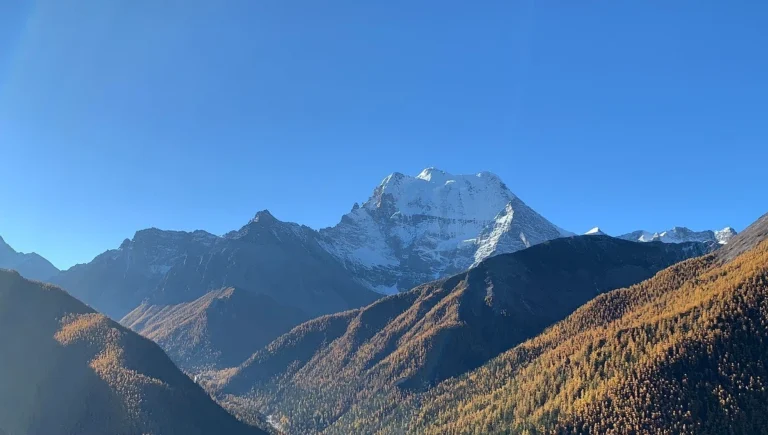
Located on the southwestern edge of the Sichuan Basin, where the fault-line topography abruptly rises from fertile alluvial fields to touch the majestic Qinghai-Tibet Plateau, Mount Emei emerges as a fairyland realm bridging earth, sky, and human consciousness. Situated at geographical coordinates approximately 29 degrees 35 minutes north latitude and 103 degrees 20 minutes east longitude, this mountain stands as one of China’s most renowned Four Great Buddhist Mountains, while also recognized as a Sichuan dual heritage site inscribed by UNESCO on the World Heritage list since the late 20th century. Viewed westward from the Chengdu Plain, the towering massif reaches its highest summit at the Golden Summit (Jinding), touching 3,099 meters above sea level and generating an extraordinarily spectacular vertical ecosystem. The topography of Mount Emei is a complex assembly of Cretaceous and Tertiary geological structures, eroded over millions of years by glacial torrents and subterranean river systems, carving out sheer cliffs thousands of meters high, profound gorges, and countless fantastical caves. The abrupt elevation transition from base to summit transforms this location into a living natural museum converging climates ranging from humid subtropical to cold temperate and sub-Arctic, creating a unique ecological environment that nurtures thousands of rare plant species alongside endemic fauna, most famously the Emei wild macaque imbued with deep local cultural imprints.
The journey transforming Mount Emei from a pristine mountainous expanse into a Buddhist sacred sanctuary is an epic spanning over two millennia, closely intertwined with the deep synthesis of primitive Daoism, Confucian culture, and Indian Buddhist thought upon its introduction to China. According to ancient texts, the mountain was initially regarded by Daoist recluses as a repository for elixir and immortality before eminent monks perceived its tranquil spiritual energy and began constructing hermitages and monasteries from the Eastern Han Dynasty onward. The historical progression of Mount Emei reached its zenith during the Tang and Song Dynasties, when Chan and Esoteric Buddhism experienced simultaneous robust growth, establishing the mountain as the official sacred domain of Samantabhadra Bodhisattva (Puxian Pusa), the embodiment of supreme practice and great vows. The temple architecture on the mountain stands as a supreme testament to construction art adapted to rugged terrain. Rather than leveling mountain slopes, ancient architects applied compositional principles of flowing with nature, utilizing traditional interlocking mortise-and-tenon joinery without nails to craft multi-story wooden temples clinging tightly to precipitous cliffs like gigantic sculptures blending into drifting clouds. Representative structures include the grand-scale Baoguo Temple at the foothills, the ancient Wannian Temple housing a cast-bronze statue of Samantabhadra riding an elephant standing seven meters tall dating back to the Song Dynasty, and Huayan Hall nestled beneath the shady canopy of primitive forests—all bearing witness to the exceptional genius of successive generations of Feng Shui masters and imperial Chinese architects.
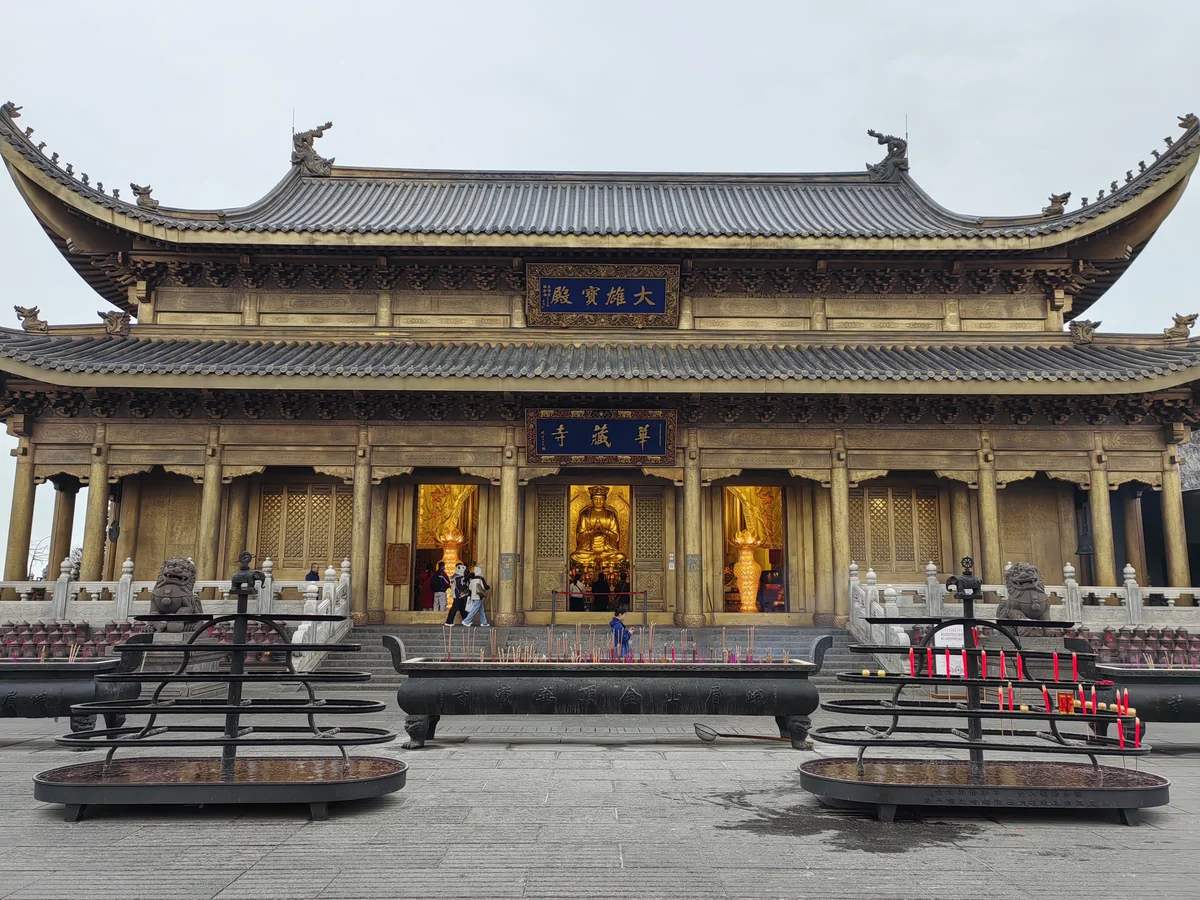
Panoramic view of the Golden Summit at an altitude of 3,099 meters immersed in a billowing sea of clouds across the Mount Emei range.
Within the Eastern ideological system, Mount Emei is not merely a towering peak but the ultimate symbol of steadfastness, compassion, and the vow to rescue all sentient beings associated with Samantabhadra Bodhisattva. Pilgrims stepping foot upon the highest summit experience an intense harmonization between Buddhist cosmology and the grandeur of untamed nature. The highest peak of Mount Emei, commonly called the Golden Summit, is a gilded architectural complex glowing brilliantly beneath sunlight, housing the ten-faced statue of Samantabhadra Bodhisattva facing the ten directions of existence, exuding majesty and boundless compassion across infinite space. This location is globally renowned for four rare and wondrous natural phenomena, including the Buddha’s Halo (Buddha’s Light), sea of clouds, brilliant sunrise, and holy lamps. The Buddha’s Halo is the optical phenomenon of sunlight refracting through microscopic water droplets within lower cloud layers, forming colorful rainbow halos surrounding the observer’s shadow, long regarded by devotees as the supreme auspicious omen verifying a sacred connection with the Buddhist realm. Emei’s sea of clouds billows like silver waves crashing against jagged rock spires protruding like islands amid an infinite ocean, while the holy lamp phenomenon featuring thousands of shimmering lights appearing on moonless nights within profound gorges remains an unresolved scientific mystery, further heightening the mystical, surreal allure of this sacred domain.
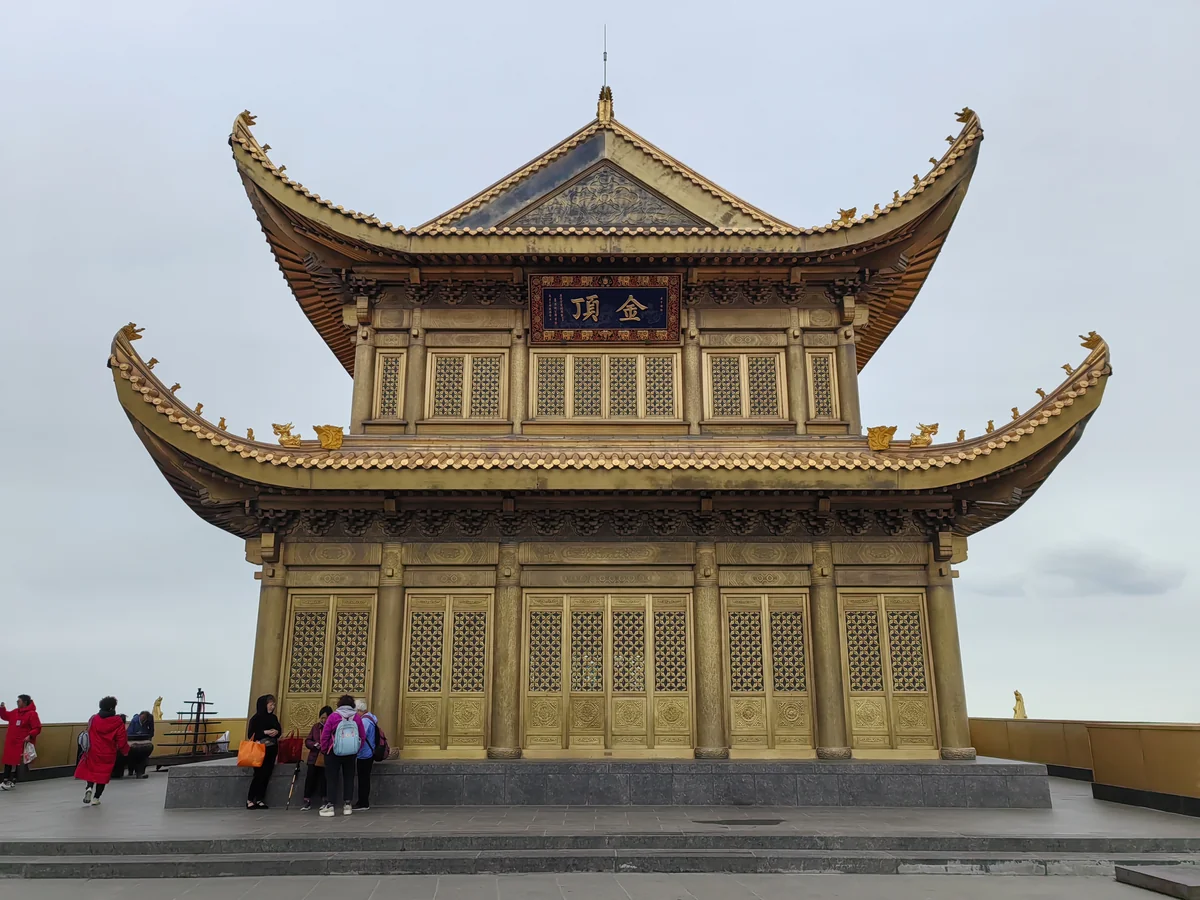
The majestic ten-faced gilded bronze statue of Samantabhadra Bodhisattva atop the Golden Summit.
Exploring Mount Emei requires meticulous preparation regarding timing and itineraries to fully experience the shifting beauty of landscapes across seasons. The period from May to October annually is considered the ideal window for visitors seeking clear skies, where bright blue weather renders sunrise viewing on the Golden Summit and seas of clouds utterly flawless, while high-altitude flora reaches its lush zenith with hundreds of wild rhododendron species blooming along mountain slopes. Conversely, winter from December to February presents an entirely contrasting persona, as all monasteries and high-altitude forests blanket in pristine white snow, transforming Mount Emei into a tranquil, sublime wonderland where travelers attain absolute serenity amidst bone-chilling mountain cold. The ascent to the summit now integrates modern cable car systems and ancient stone-paved trails winding through centuries-old pine and cypress forests. Opting for overnight stays in traditional guesthouses within monastery courtyards or luxury resorts directly adjacent to the Golden Summit serves as the golden key ensuring travelers never miss the sunrise breaking over the sea of clouds, when brilliant golden light illuminates the gilded Buddha statue to generate a magical radiance absent anywhere else on Earth.
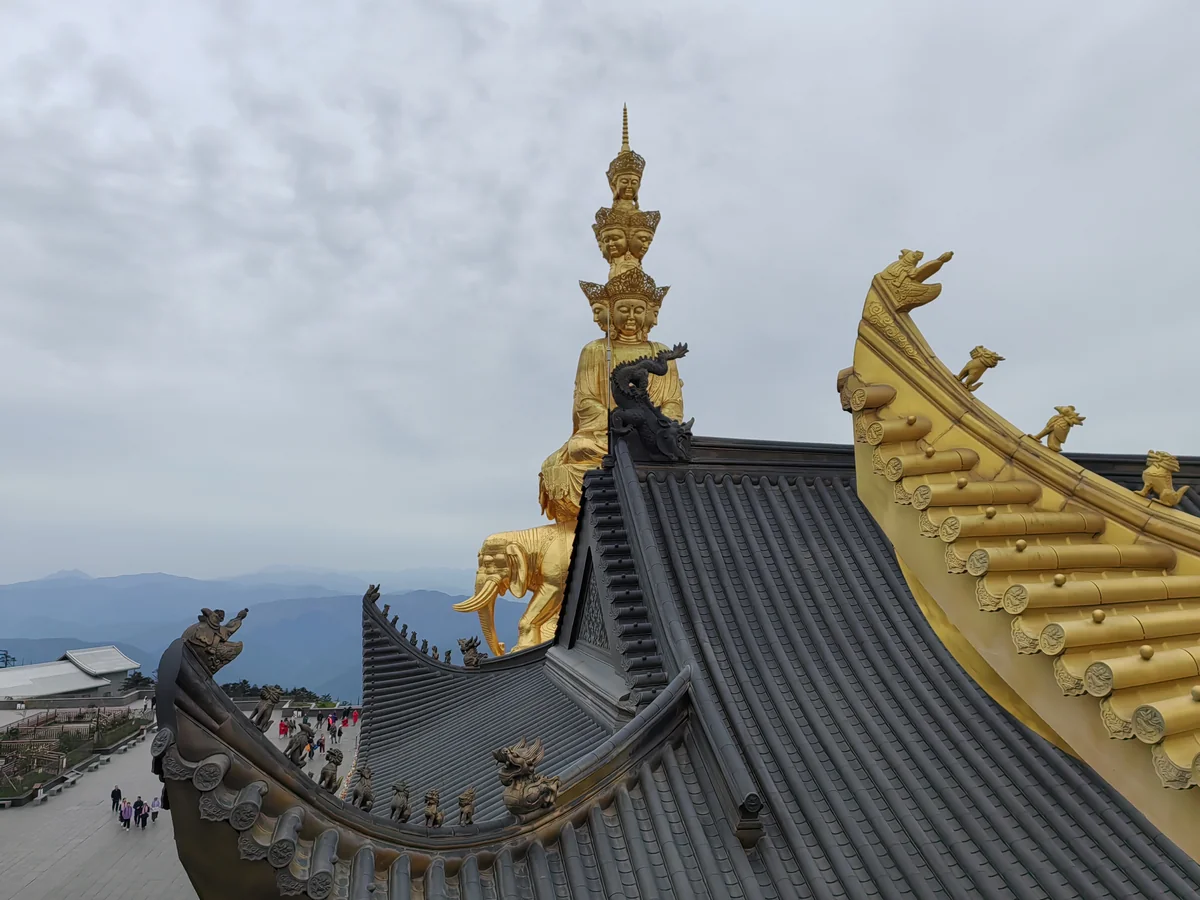
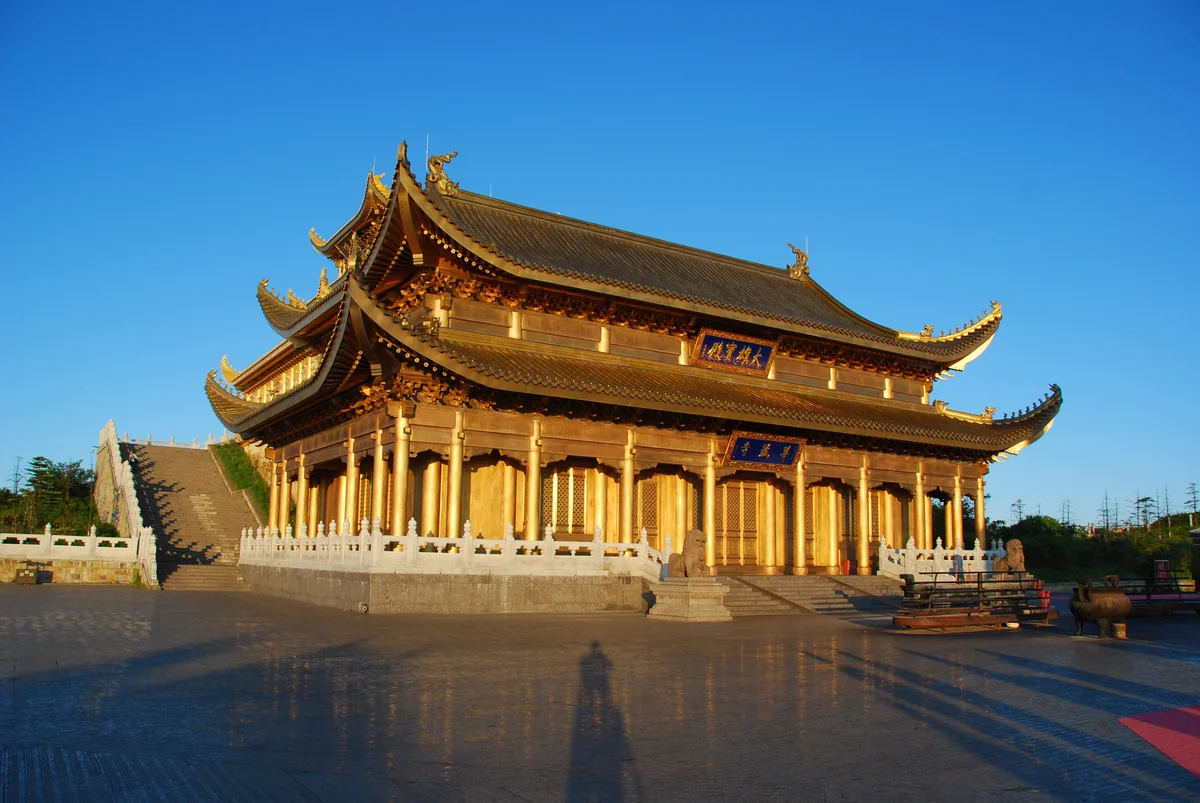
Bronze hall architecture and traditional curved tiled roofs glowing brilliantly under sunset light atop Mount Emei.
The gastronomy of the Mount Emei region carries strong traditional Sichuan flavors while being delicately refined to suit mountain climates and the spiritual lives of Buddhist monasteries. In residential settlements surrounding the foothills, street food culture and local restaurants are renowned for spicy dishes featuring signature Sichuan peppercorns, ranging from richly spiced mapo tofu to herbal hotpots warming bodies after exhausting mountain hikes. However, an unmissable culinary experience for discerning travelers is monastic vegetarian gastronomy served at major temples such as Baoguo Temple or Wannian Temple. Vegetarian dishes here eschew chemical additives or standard mock-meat substitutes, relying entirely upon temple chefs’ mastery in combining rare wild mushrooms foraged directly from Emei slopes, bamboo shoots sprouting after spring rains, velvety smooth tofu crafted from pristine mountain spring water, and natural herbs. Every dish is a balanced masterpiece of Yin and Yang, delivering refined, pristine flavors that purify bodies and quiet minds, reflecting Buddhist compassion and respect for all living creatures. Furthermore, Emei green tea, especially the esteemed Zhuchan Chan tea cultivated on mist-shrouded hillsides year-round, offers mild aromas and deep lingering sweetness, serving as an elegant gift every visitor should savor to fully appreciate the essence of Sichuan’s terrain.
Cliffside trails and ancient meditative spaces amidst boundless primitive forests.
Visiting an ancient Buddhist sanctuary and rigorous nature reserve like Mount Emei requires travelers to equip themselves with deep cultural etiquette knowledge while strictly adhering to religious and ecological regulations. Upon entering the sacred spaces of ancient monasteries, utmost respect must manifest through soft footsteps, maintained silence, and modest, conservative attire covering shoulders and knees to express reverence toward deities and monastics. Visitors must never photograph or film inside main halls displaying prohibition signs, nor touch sacred Buddha statues or centuries-old bronze and wooden artifacts. A crucial cautionary note for hikers navigating mountain trails is the presence of Emei wild macaques. Although they form a natural ecosystem component, visitors are strongly advised against holding food in hand, teasing, attempting contact, or haphazardly feeding them, as wild instincts may render them aggressive when defending territory or seeking nourishment. Physically, conquering altitudes exceeding 3,000 meters demands careful multi-layered clothing preparation to combat sudden day-night temperature swings, along with professional trekking poles and anti-slip hiking footwear protecting musculoskeletal systems on steep stone stairs. Thoughtful preparation combined with an open, reverent mindset transforms pilgrimage and touring journeys to Mount Emei into profound spiritual experiences touching the deepest realms of human emotion and intellect.
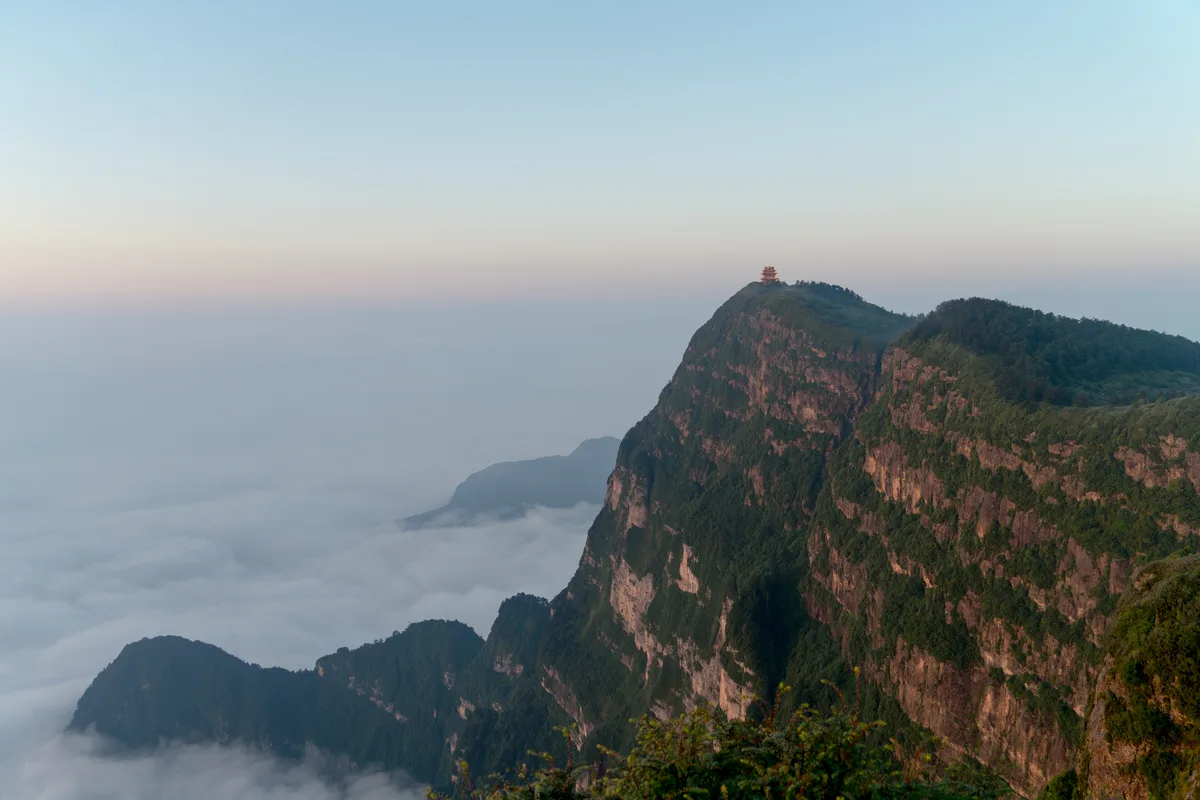
Billow seas of clouds blanketing majestic limestone peaks viewed from the Golden Summit observation deck.
As twilight descends over the billowing sea of clouds atop the Golden Summit, brilliant sunset rays gild the ten majestic faces of Samantabhadra Bodhisattva, making travelers distinctly perceive the absolute harmonization between the millennia-old spiritual aura of the Buddhist realm and the surreal beauty of Sichuan skies. The journey of pilgrimage to Mount Emei is not merely sightseeing across mountains and waters, but a soul-cleansing pilgrimage leaving profound, indelible resonance within every visitor’s heart.
To fully experience the culture and magnificent nature of southwestern China, travelers can combine experiences through the Sichuan – Jiuzhaigou – Chengdu Tour Package or explore comprehensive travel guides at the dedicated China Travel Guide portal.