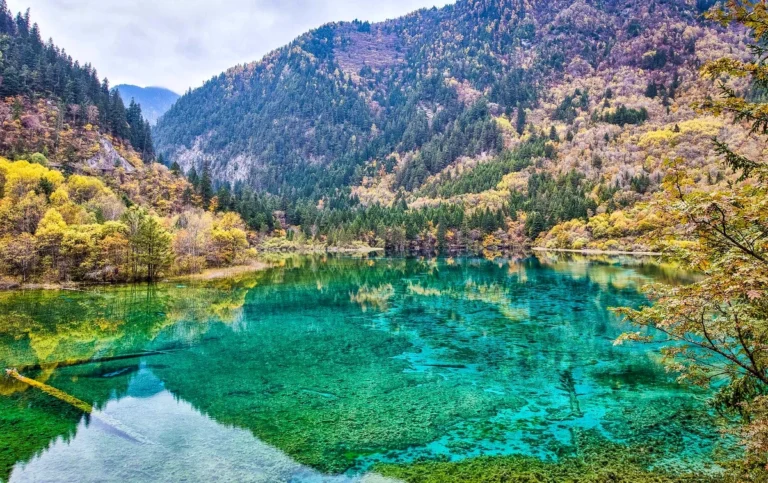
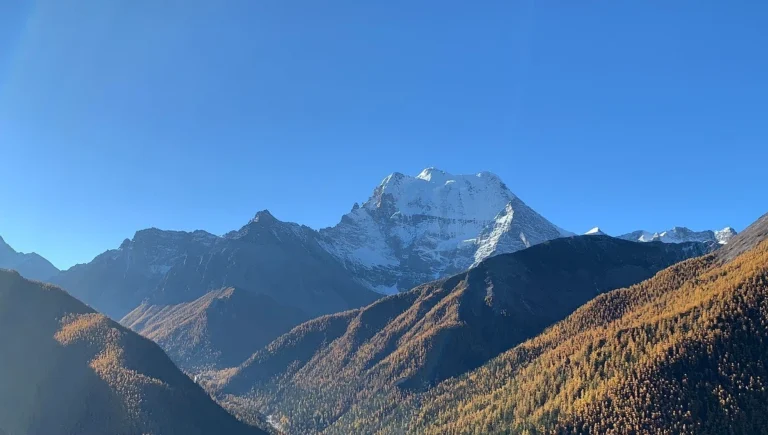
Tracing back into the frontier highlands of northwestern Sichuan Province, where the towering ranges of the Qinghai–Tibet Plateau descend abruptly toward the deep valleys of the basin, Nuorilang Falls in Jiuzhaigou emerges not only as an extraordinary natural wonder, but also as a historical and cultural entity steeped in layers of time. In the consciousness of indigenous Tibetan communities who have lived for generations beside the Baishui River, the name Nuorilang—derived from the original Tibetan ནོར་བོ་རླུང་, transliterated as Nor-bo rlung—carries a sacred resonance holding a deep system of animistic belief. According to linguistic and ethnological studies, the name bears two powerful layers of meaning: on one hand, it translates to “Magnificent Male Deity” (雄偉壯觀的男神), symbolizing the protective, majestic masculine strength of a spirit reigning atop the mountain; on the other hand, it is defined as “A Place Lofty and Grand Like a Precious Jewel” (如寶珠般高聳宏偉之地), evoking a sacred sanctuary where the essence of heaven and earth gathers, shining brightly like an iconic heritage amid mist-shrouded forests. This reverence for nature is not merely a primitive religious belief; it has woven itself into daily customs, oral folk songs, and the respectful way Tibetans treat every inch of soil, blade of grass, and stream here across the ages.
Viewed from the perspective of administrative history and shifts among imperial Chinese dynasties, the Jiuzhaigou region in general—and the Nuorilang Falls basin in particular—experienced complex, eventful periods of cultural and political intersection. During the Tang and Song dynasties, as central imperial power expanded or contracted along the borderlands, this area sat along the outer edge of a strategic contact zone—a sensitive buffer between the military reach of Chinese dynasties and the powerful Tubo (Tibetan) empire on the plateau. Cultural exchange unfolded quietly along faint trade routes winding through rugged valleys traversed by merchants and envoys. In later periods under the Ming and Qing dynasties through the Republican era, local administration took shape under the frontier Tusi (native chieftain) system, falling directly or indirectly under the jurisdiction of Songpan Ting and Diexi. Yet under whichever administrative system it fell, rugged terrain and isolation from the outside world kept the area largely untouched, set apart from fierce warfare and sudden upheavals in the plains and river deltas.
For a very long time, compared with official dynastic chronicles, the name Nuorilang was virtually absent from large-scale administrative maps of imperial China. Its modest presence appeared only in scattered, plain entries within old local gazetteers such as the Songpan Tingzhi (Gazetteer of Songpan Subprefecture). Across those time-worn pages, Jiuzhaigou Valley and the Baishui River were mentioned merely as wild, treacherous headwater stretches where rapids and cascades plunged through deep mountain gorges, accompanied only by mountain winds and the roar of floodwaters echoing on their own. Until before the 1970s, the outside world remained largely unaware of a grand wonder hidden deep inside this valley of nine Tibetan villages. That near-total isolation inadvertently acted as armor preserving the local ecosystem and landscape from human destruction during wars and early industrialization.
The true historical turning point arrived in the late 1970s, when state logging crews pushed deep into the Minshan mountains in search of timber resources. Amid biting mountain cold and the drone of chainsaws echoing through the forest, they stood stunned before a natural wonder never described in any modern book: a vast, sweeping curtain of water pouring down natural travertine steps, throwing up white spray that caught the sunlight in brilliant ribbons of rainbow. That chance yet seismic discovery awakened a land long slumbering across millennia. Recognizing the site’s priceless ecological and aesthetic value, by 1984 the State Council of the People’s Republic of China officially approved establishing Jiuzhaigou as a national-level scenic area. From that pivotal moment onward, Nuorilang Falls and its unique ecosystem stepped onto the world’s geographic and travel map—transforming from a mist-shrouded legend of indigenous Tibetans into a global natural heritage site drawing millions of travelers from afar to behold it and listen to the majestic pulse of time.
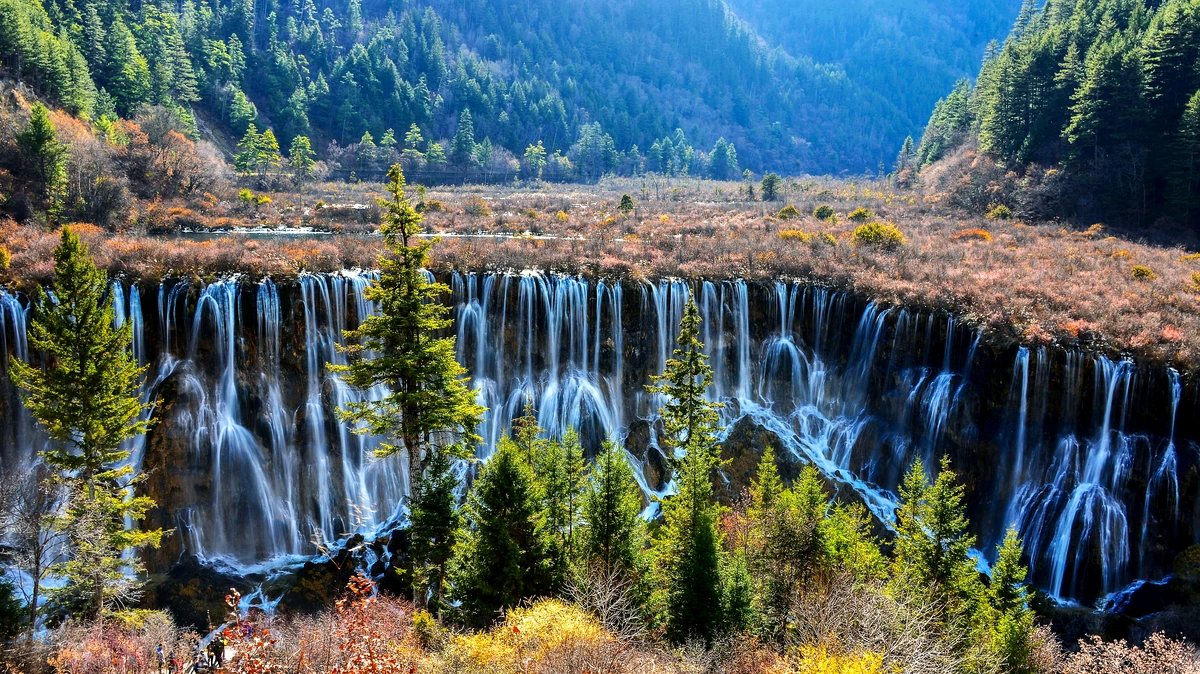
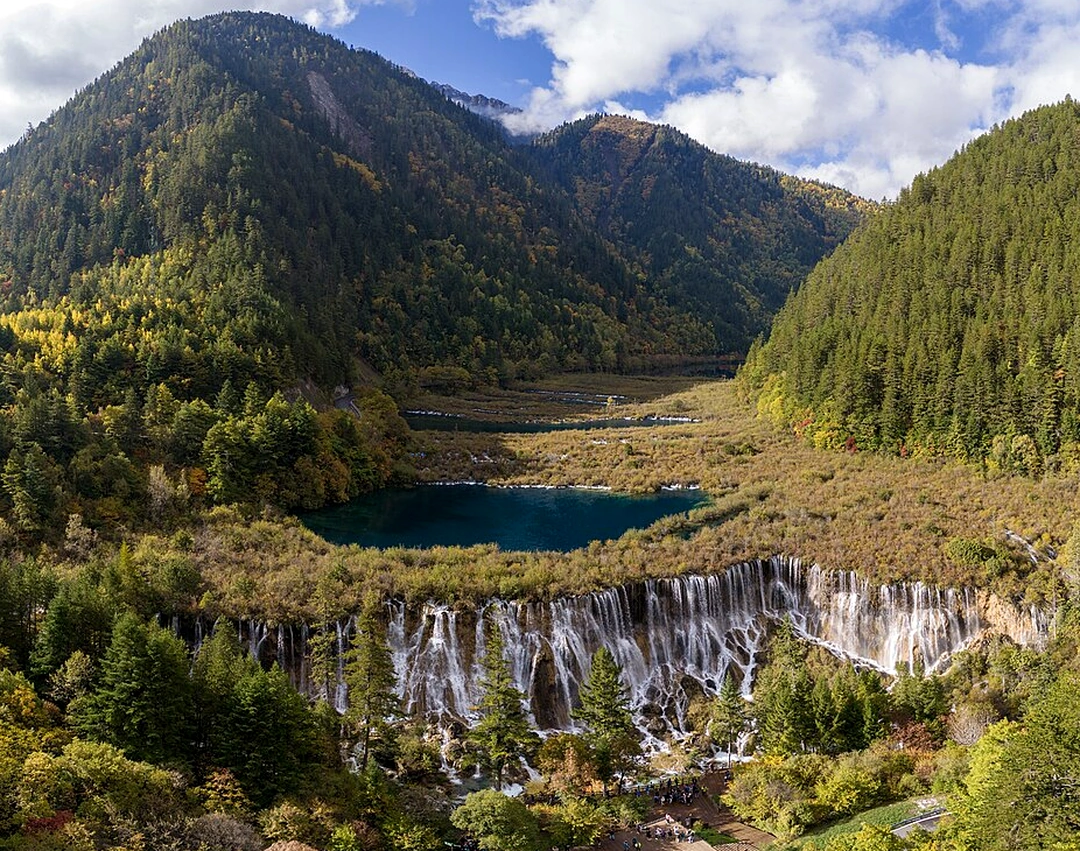
Stepping into Jiuzhaigou Valley, Nuorilang opens like a profound dialogue between geological creation and the primal spiritual rhythm of Tibetan communities. Positioned grandly at the vital junction of the scenic area’s Y-shaped main axis at roughly 2,365 meters above sea level, the waterfall not only holds the record as one of China’s largest calcified (travertine) waterfalls, but also earned selection among China’s six most beautiful waterfalls by leading geography and travel specialists. From an Earth-science standpoint, Nuorilang sits along a distinctive transitional fault zone marking the geomorphological boundary between the eastern rim of the Qinghai–Tibet Plateau and the Sichuan Basin. Its bedrock consists chiefly of Triassic carbonate formations—rich in limestone and dolomite layers—providing an ideal natural stage for mineral transformation processes spanning tens of thousands of years.
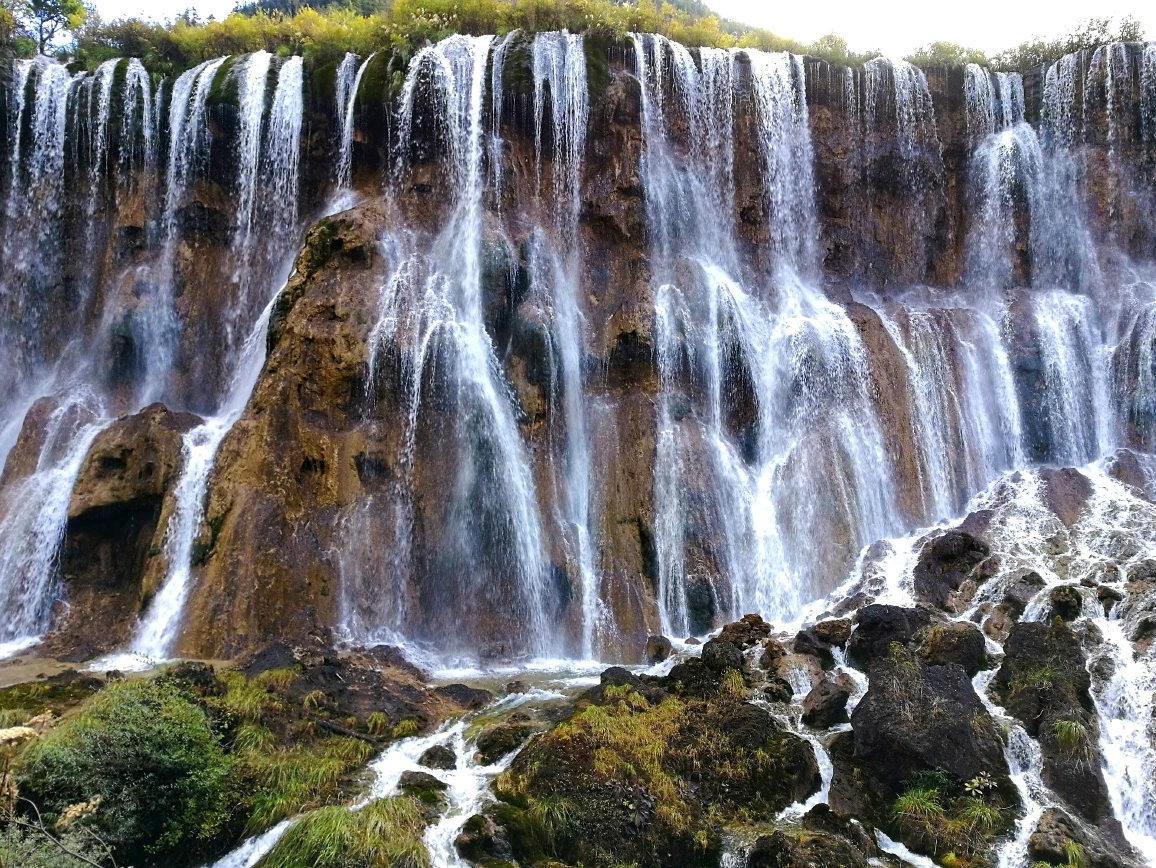
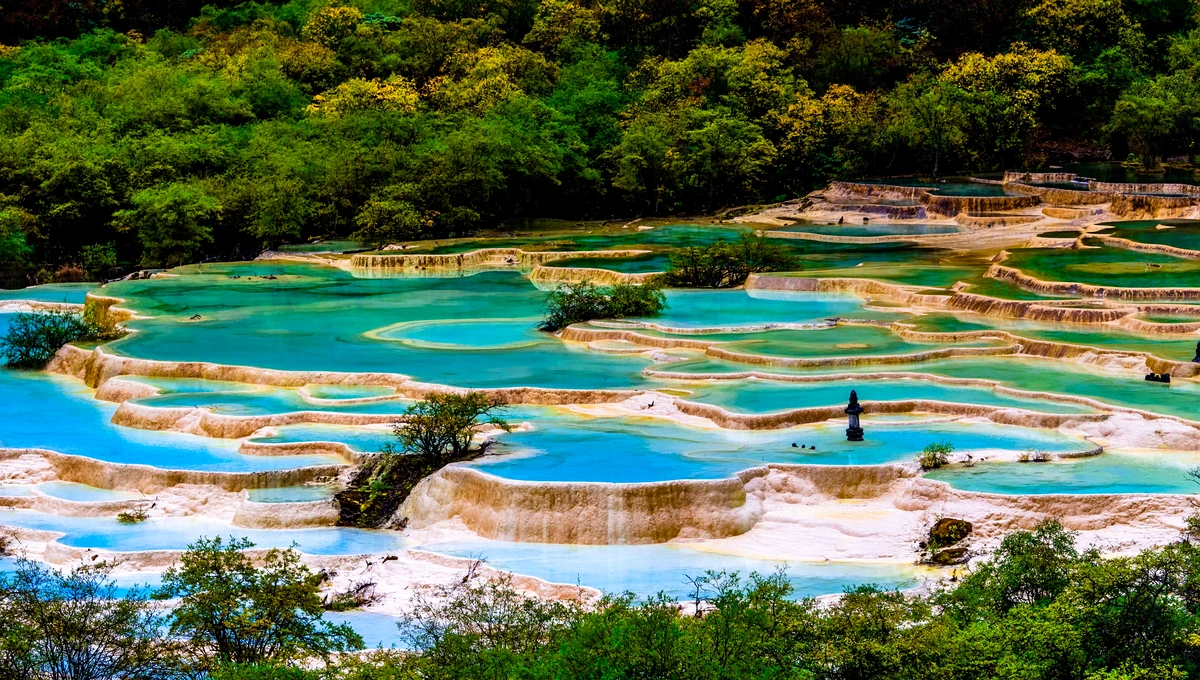
The formation of Nuorilang is vivid proof of nature’s remarkable biochemical deposition phenomenon. Driven by continuous flow, groundwater and surface water here carry abundant calcium bicarbonate ions. As water courses over uneven terrain, the combined effect of three key factors—dropping hydraulic pressure, rising ambient temperature, and photosynthesis by aquatic flora—drives CO2 gas to degas rapidly into the air. A natural consequence of this chemical shift is widespread precipitation of calcium carbonate, forming pure mineral deposits that cling tightly to the streambed. Over millennia of steady accumulation, those deposits built a massive calcified dam and layered calcified shoals that cradle rushing water into white silk ribbons across the Tibetan highlands.
In spatial structure and natural terrain layout, Nuorilang possesses an astonishingly grand scale that no human engineer could replicate. The crest of the falls stretches across an expansive 270 meters, paired with a vertical drop of roughly 20 meters to form a majestic multi-tiered curtain of water. As flow tumbles over calcified ledges, thousands of smaller streams interlace into a chorus that resounds across the valley, sending up misty spray in the morning light. Surrounding the falls is a dense primeval plant layer where conifers and red-leaved maples intertwine into a finely tuned dynamic ecosystem that helps regulate water flow and keep delicate yet sturdy calcified barriers intact through shifting weather.
In traditional feng shui perspective and the indigenous Tibetan worldview, the coordinates of Nuorilang Falls are regarded as a premier sacred nexus where vital dragon veins (“long mai”) converge from all directions. Locals believe this is a sacred abode of water spirits (Lu)—supreme beings protecting the waters, life, and prosperity of the entire valley. The interplay of majestic dragon-vein topography, deep primeval forest ecology, and one-of-a-kind calcified stone structures turns Nuorilang into a living landscape entity—not merely a breathtaking stop on a nature journey, but an open-air geological museum holding the Earth’s formative secrets across millions of years.
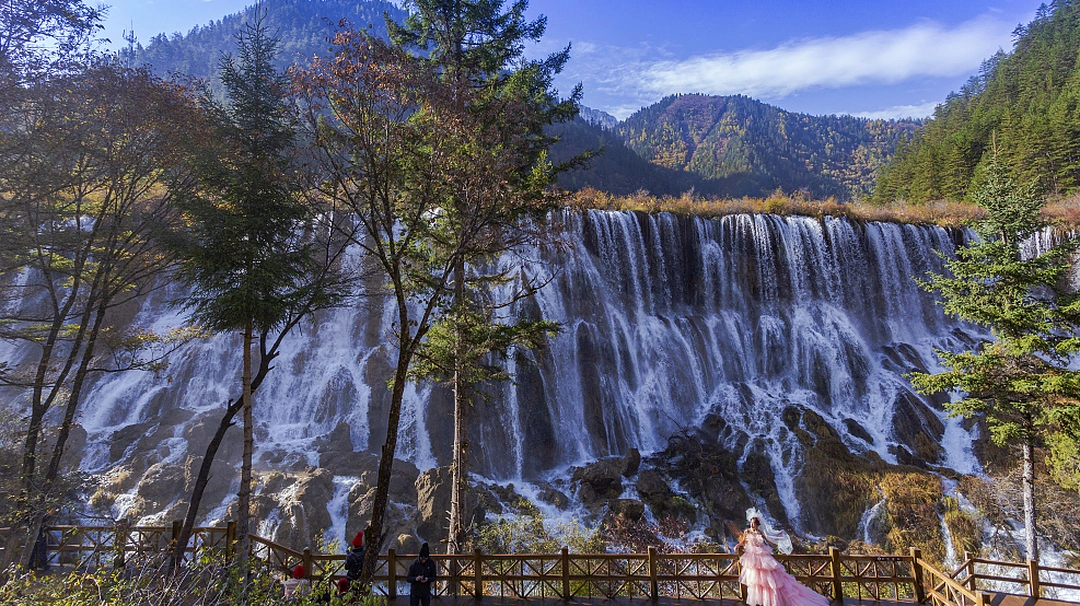
Entering the pure realm of Nuorilang Falls in Jiuzhaigou, any cultural researcher or landscape architect immediately recognizes a supreme design philosophy: sometimes the greatest beauty lies in absolute humility before nature. As a primal natural landform, Nuorilang has no grand imperial palace complexes or traditional temples typical of Eastern royal architecture. There are no sweeping eaves of pavilions or towers, nor moss-covered brick ramparts bearing marks of feudal wars. Instead, the entire space is shaped by tens of thousands of years of karst geology, where flowing water has carved a living topographic wonder. Still, to support sightseeing, scientific research, and above all the protection of the valley’s fragile ecosystem, surrounding areas have undergone landscape planning and ecological engineering strictly following modern landscape architecture’s “minimal impact” principle—making the site a living museum of harmony between human handiwork and wilderness.
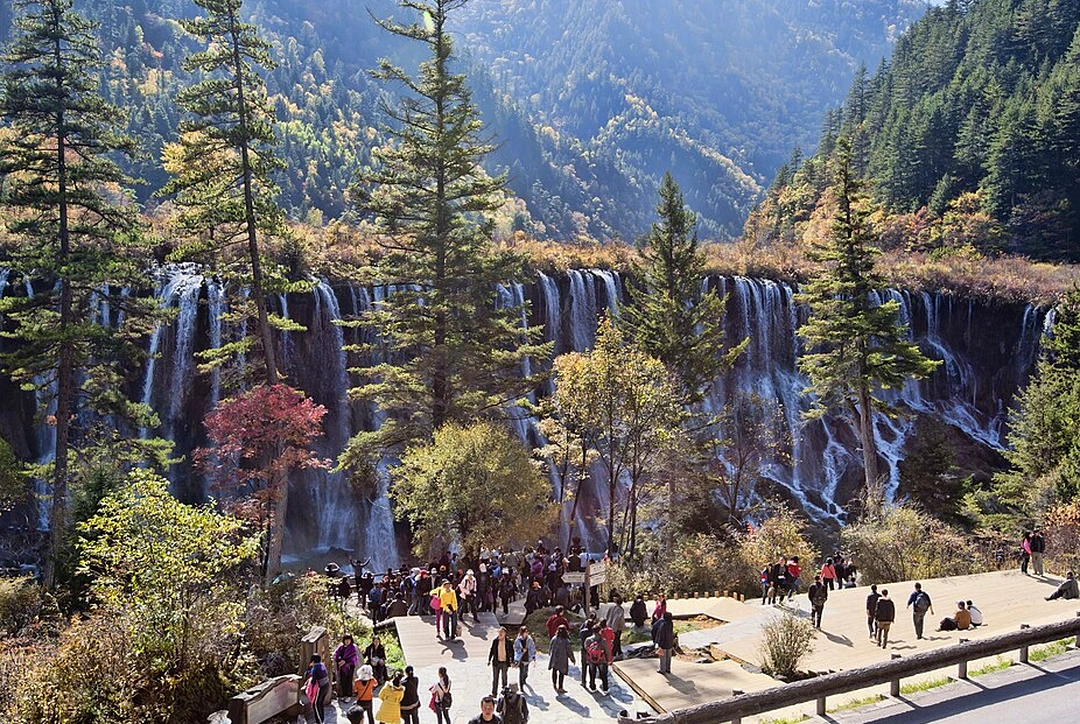
To solve the challenge of welcoming massive visitor numbers while keeping the native ecological shell intact, viewing platforms and wooden boardwalks (棧道) facing the falls were engineered using advanced materials. Walkways winding along the valley slope use specialized rot-resistant timber—including high-grade Finnish wood or heavy-duty compressed bamboo—paired cleanly with reinforced concrete footings cleverly concealed beneath vegetation cover. To address the fragility of high-plateau karst geology, where travertine limestone deposits are easily damaged by weight and vibration, engineers applied a revolutionary “point-support” design. This method distributes loads evenly without sealing off large surface areas, keeping surface runoff and underground water veins flowing freely so the ecological pulse of the falls and nearby lakes remains as intact as at its origin.
Expanding outward from the immediate waterfall zone, the Nuorilang tourist center once served as a large-scale integrated facility acting as the service and public-space hub for the entire scenic area. Its architectural style blends traditional Tibetan–Qiang watchtower motifs—a proud symbol of defense and spirituality among highland Tibetans—with modern timber-structure aesthetics. Looking at the building as a whole, one admires how architects used local slate stone to clad walls, echoing ancient stone fortresses braving millennium winds and storms. Sturdy round timber colonnades support broad eaves, paired with signature Tibetan black-and-white window frames to create a strong visual language that feels close to local traditions while carrying international public-building stature—balancing practical function with anthropological depth.
When night falls over Jiuzhaigou Valley, a profound stillness and natural darkness settle over Nuorilang Falls, worlds apart from the bustle of modern tourist cities. Guided by the national nature reserve’s strict ecological red line, the Nuorilang Falls zone and the entire valley interior strictly prohibit large-scale night lighting installations, permanent night markets, or live outdoor shows that could harm the pristine landscape. This landmark policy was set by authorities and park management to protect the nocturnal habits of rare wildlife living here—such as giant pandas and golden snub-nosed monkeys—while safeguarding natural photoperiod cycles of rich flora along the broad waterfall slope.
In keeping with sustainable eco-tourism principles, Nuorilang Falls installs no high-intensity floodlights or flashy laser displays at night. Instead, visitors must follow a strict “rest at sunset, exit the valley by nightfall” rule, ensuring that once dusk slips behind ancient pines and cypresses, nature regains full peace and safe shelter for wildlife. Forgoing nightlife inside the heritage core is a vital key to preserving Jiuzhaigou’s unique freshwater ecology and calcified plant formations across centuries, sustaining its encyclopedic conservation value for future generations.
Even so, the region’s evening energy and arts scene does not vanish; rather, it is thoughtfully shifted to peripheral areas outside the ecological core. Right outside the scenic area gate—most notably in bustling Zhangzha Town—nighttime cultural life lights up with vibrant Tibetan–Qiang night streets. Here, visitors can join the lively rhythm of local Tibetan and Qiang communities, listen to melodic bamboo flutes, immerse themselves in traditional Guozhuang dances around flickering bonfires, and sample heirloom flavors like rich yak butter tea, cured Tibetan highland beef, or wild forest mushroom hotpot beneath breezy plateau skies.
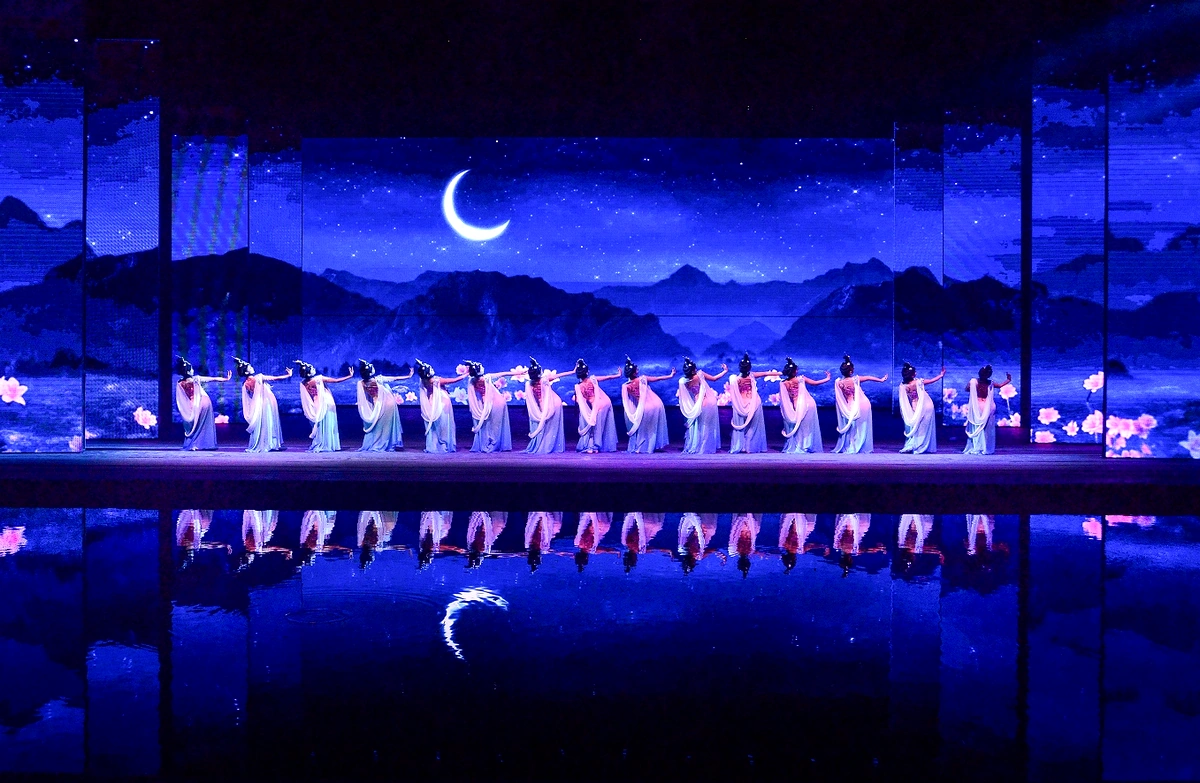
Alongside food and traditional night streets, visitors’ demand for top-tier light-and-sound stage artistry is met through elaborate indoor live shows located outside the conservation core, led by the grand production “Romance of Jiuzhai” (“Jiuzhai Qian Gu Qing”). Using cutting-edge lighting, sound, 3D visual effects, and stage mechanics, the show vividly and movingly brings to life historical myths, legends of Jiuzhaigou’s creation, and centuries of heroic exploits and dynastic events tied to deep Sichuan. This harmonious pairing—preserving absolute stillness and natural darkness at the Nuorilang Falls core while concentrating cultural vibrancy and lights in outer zones—creates a humanistic eco-cultural tourism model that respects nature’s laws while fulfilling millions of travelers’ desire to explore.
Stepping away from the silver tiers of Nuorilang Falls roaring with the song of the high mountains, exploring Jiuzhaigou Valley would feel incomplete without its vibrant culinary chapter—a one-of-a-kind taste harmony born from cultural exchange between the high Tibetan plateau and fertile Qiang farming lands, blended with Sichuan’s famous numbing-spicy character. Amid the thin, crisp air of a plateau over 3,000 meters above sea level, hunger and thirst after mountain miles seem to ease at once at the sight of cooking smoke rising from traditional mountain villages tucked beside streams, where age-old family recipes are kept intact. Local cuisine does far more than meet basic energy needs against freezing winter snow; it is a living intangible heritage reflecting worldview, belief, and human adaptability in harsh wilderness.
Holding a place of honor among timeless Tibetan delicacies on the Jiuzhaigou plateau is yang yu ci ba (洋芋糍粑), popularly known as pounded potato cake. To make a truly refined portion, local cooks carefully select highland potatoes grown naturally in clean, unpolluted air, nourished by pure glacial meltwater and mineral-rich soil. After being steamed thoroughly over glowing embers, the hot potatoes go straight into a massive hand-carved wooden mortar hollowed from a single log. There, through the supple hands and steady strength of skilled makers, a specialized wooden pestle pounds hundreds of times until potato starch binds tightly into a silky, elastic dough that pulls into smooth strands like silk. When eating, diners dip each chewy piece into a bowl of tangy pickled mustard-green broth, or customize it to taste by dipping generously into thick, golden wild mountain honey topped with crushed roasted peanuts—creating a subtle burst of flavor combining nutty potato richness, bright pickled-vegetable tang, and fragrant highland honey.
Alongside rich pounded potato cake, Tibetan food culture in the Nuorilang valley is deeply shaped by two iconic survival staples: butter tea and tsampa, indispensable companions in every nomadic household. Butter tea here is not brewed from ordinary tea leaves; it requires care in selecting firm compressed brick tea, simmering it thoroughly into a rich, reddish-brown decoction. That infusion is poured into a traditional tall wooden churn along with pure Tibetan cow butter churned from free-grazing grassland herds and a pinch of mountain pink salt. With rhythmic strokes of the churn, butterfat and bold tea tannins emulsify into a smooth, aromatic emulsion that warms the body fast and supplies abundant energy against bone-chilling cold. It is commonly paired with tsampa—roasted highland barley flour toasted in an iron pan until fragrant with grain aroma. Locals pour warm butter tea directly into a bowl of tsampa and knead it by hand into bite-sized, chewy dough balls, savoring the savory richness of butter and dairy alongside the natural nutty sweetness of highland barley.
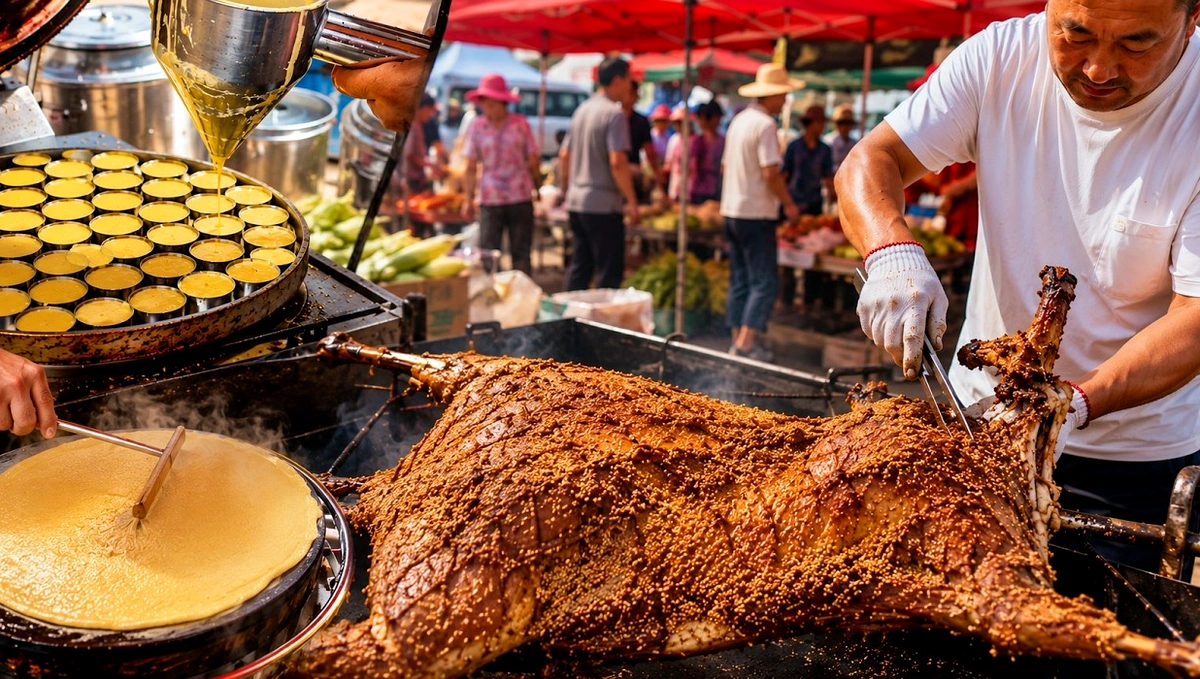
Rounding out the culinary journey in this legendary land are festive, communal dishes such as whole roasted lamb or a traditional Tibetan brass hotpot, often served during major festivals or to honor esteemed guests from afar. Lamb chosen for roasting comes from young sheep grazed naturally on upper Minjiang grasslands, where feeding on rare herbs gives firm meat free of gamey odor with a distinctive natural sweetness. Roasting calls for care as the cook brushes on a thin layer of fat and secret spices—including southern chili powder, numbing Sichuan peppercorns, and wild cumin—turning steadily over glowing embers until the skin turns crisp and amber-brown and fat sizzles to awaken every sense. Meanwhile, the traditional brass hotpot offers a warmer family-table experience: crafted from solid brass with a central chimney flue fed by glowing wood charcoal to keep broth bubbling steadily. Its broth distills hours of simmering yak bones with Chinese herbs and highland botanicals such as Matsutake (pine mushroom), Angelica sinensis (danggui), and Codonopsis (dangshen); dipping paper-thin slices of yak beef or Jiuzhaigou wild mushrooms creates a deeply sweet, richly aromatic hotpot that lingers in memory amid the misty heritage valley.
Exploring and admiring the natural wonder of Nuorilang Falls in Jiuzhaigou calls for thoughtful preparation and a clear understanding of the heritage valley’s biological rhythm and operating rules. To ensure a smooth trip, knowing the scenic area’s operating seasons is the first essential step for every traveler. Jiuzhaigou management sets two distinct operating seasons each year: peak season from April 1 through November 15, and off-peak season from November 16 through March 31 of the following year. Valley gates open to visitors at 7:30 AM daily, though for cultural researchers or serious photographers, the golden window to stand before Nuorilang Falls is before 9:00 AM. At that hour, morning sunlight angles directly onto the vast water curtain, creating a magical optical display as millions of sparkling droplets refract vivid rainbows while letting visitors beat midday crowds. Under strict conservation rules protecting the valley’s delicate ecosystem, management caps daily visitor numbers, requiring guests to complete real-name advance ticket booking via the scenic area’s official online platform rather than buying tickets spontaneously at the gate.
Getting to Jiuzhaigou Valley also requires careful planning on transport options and highland approach routes. International and domestic travelers have two main ways to cross the rugged terrain of western Sichuan. The first is booking a direct flight to Jiuhuang Airport (Jiuzhaigou Huanglong), perched at a dizzying elevation of about 3,448 meters above sea level, followed by a road transfer deeper into the valley. The second—more like a classic road-trip travelogue—is departing from Chengdu City along the Duwen Expressway through historic Wenchuan and past the Chuanzhusi stopover, reaching the valley entrance after roughly seven to eight hours by road along winding mountain passes. Once inside the scenic area, all private vehicles are strictly barred to prevent exhaust and noise from harming the pristine ecosystem. Management coordinates visitors via eco-friendly green shuttle buses operating on a strict order: buses run straight up to the upper Rize Ditch reach to explore high-altitude lakes, then loop back down to stop at the Nuorilang hub around midday—giving visitors an ideal chance to enjoy local food in the service zone and take their time admiring the grand waterfall.
Alongside travel schedules and timing, packing appropriate clothing and preventive health measures is an essential health shield for anyone ascending the Jiuzhaigou plateau. Because rugged mountain terrain brings wide day-to-night temperature swings, chill can set in suddenly even during peak summer months, so travelers should always carry a sturdy windproof jacket or lightweight down layer to stay warm. Valley terrain—with damp travertine ledges and stone paths around lakes—calls for sturdy hiking shoes with strong traction, paired with sunglasses and broad-spectrum sunscreen against intense high-altitude UV radiation. In particular, altitude sickness (hypobaropathy) is a real challenge many travelers face; to acclimatize safely, medical specialists advise avoiding strenuous exertion or running on your first day up, while preparing circulation-supporting remedies such as Rhodiola rosea (hongjingtian) or carrying a personal mini oxygen canister. Alongside physical care, respecting local Tibetan cultural beliefs is a vital moral standard every traveler must keep in mind. When visiting sacred spots around the falls and valley, never step over or tread upon prayer wheels or wind-horse prayer flags (lungta) fluttering in the breeze, and always spin prayer wheels clockwise to show reverence toward the spirits watching over this legendary land. To bring your plan to explore this natural and cultural wonder to life smoothly, safely, and professionally, you can explore all-inclusive tour packages designed with optimized itineraries and high-standard services.