Tracing time back to distant centuries when the Kham plateau was still shrouded in the legendary mists of gods and tribes, the majestic expanse of the Daocheng Yading Scenic Area early on became a sacred realm converging the currents of faith and the shifting fortunes of both Chinese feudal history and Tibetan spiritual heritage. To fully understand the origins of this land—hailed as the final Buddhist pure land on Earth—we must begin with its name, deeply marked by geography and time. In the Tibetan tongue, the name “Yading” resounds like a reverent whisper of the indigenous people toward nature, carrying the meaning of “the land facing the sun”—where the first rays of dawn dispel the gloomy darkness of limestone cat-ear valleys and eternal glaciers. In bygone eras, this territory fell under the direct jurisdiction of the Gongialing Tusi chieftains, where feudal secular law entwined with theocratic Gelugpa monastic rule to forge a closed, fortified, and profoundly mystical social structure for centuries.
Threading across dynastic eras, Daocheng’s name and administrative boundaries experienced turbulent historical shifts. Returning to the early 20th century amid profound political changes during the twilight of the Qing Dynasty—when the imperial court sought to consolidate control over Tibetan borderlands—imperial commissioner and provincial governor Zhao Erfeng launched decisive administrative reforms aimed at “Sinicizing” autonomous chieftain regions. Amidst this turbulent backdrop of political turmoil and intersecting powers, in the 34th year of Guangxu (corresponding to 1908), the Qing court officially established Daocheng County. The name “Daocheng” actually derives from the ancient folk moniker “Daoba,” which referred to expansive plains situated right at the mouths of rugged valleys. The birth of Daocheng County marked a vital legal milestone, laying the groundwork for modern administrative governance in this remote highland region while bearing witness to the sweeping changes from the late Qing period to the nation’s later modernization.
Running parallel to this administrative history is a profound spiritual current originating in the 8th century, when the great master Padmasambhava—the founding pillar of Tibetan Esoteric Buddhism—set foot in this land, bestowing blessings and officially consecrating the three sacred peaks of Chenrezig, Jampelyang, and Chanadorje. These three majestic snow-capped mountains towering between earth and sky serve not only as symbols of compassion, wisdom, and courage, but also transform Yading into the largest natural Mandala pure land in the mortal world. The imprints of time are clearly etched into the ruins of Chonggu Temple, a sacred ancient monastery founded by high monk Shijia Rongbu during the 13th and 14th centuries under the Yuan Dynasty. Surviving over 700 years of historical vicissitudes, this ancient temple nestled against the cliffside has witnessed countless shifts of fortune, enduring both natural extremes and dramatic warfare.
The historical and cultural significance of Daocheng Yading extends far beyond dynastic chronicles, capturing global attention in the first half of the 20th century. In 1928, Austrian-American explorer and botanist Joseph Rock undertook an arduous field survey across this terrain, capturing breathtaking photographs and vivid diary entries published in the famed National Geographic magazine. Joseph Rock’s invaluable accounts became the endless inspiration for novelist James Hilton to pen his classic masterpiece Lost Horizon, thereby etching into humanity’s consciousness the image of a mystical Shangri-La valley in real life. Today, traces of the past remain vibrantly alive through ancient stelae, cliffside rock carvings, and countless Mani stones inscribed with the six-syllable great mantra (Om Mani Padme Hum) scattered thickly around the back hills of Chonggu Temple as well as across the boundless meadows of Lourong Pasture, whispering tales to posterity of a culture tightly binding humanity, deities, and natural creation.
Nestled in the middle of the Hengduan mountain range, the Daocheng Yading Scenic Area (稻城亚丁景区) not only unfolds the magnificent geography of the Qinghai-Tibet Plateau, but also faithfully mirrors the structure of a spiritual microcosm through the lens of traditional feng shui. Regarding topography and natural architecture, the entire space operates according to the classic Mandala cosmological order of Tibetan Buddhism, where terrain, mountain ranges, and hydrological systems are arranged not by chance, but according to a supreme sacred diagram. At the heart of this miniature world is the sacred cluster of three peaks known as Yansong Gonpo, standing loftily between heaven and earth like three guardian bodhisattvas protecting sentient beings from earthly suffering.
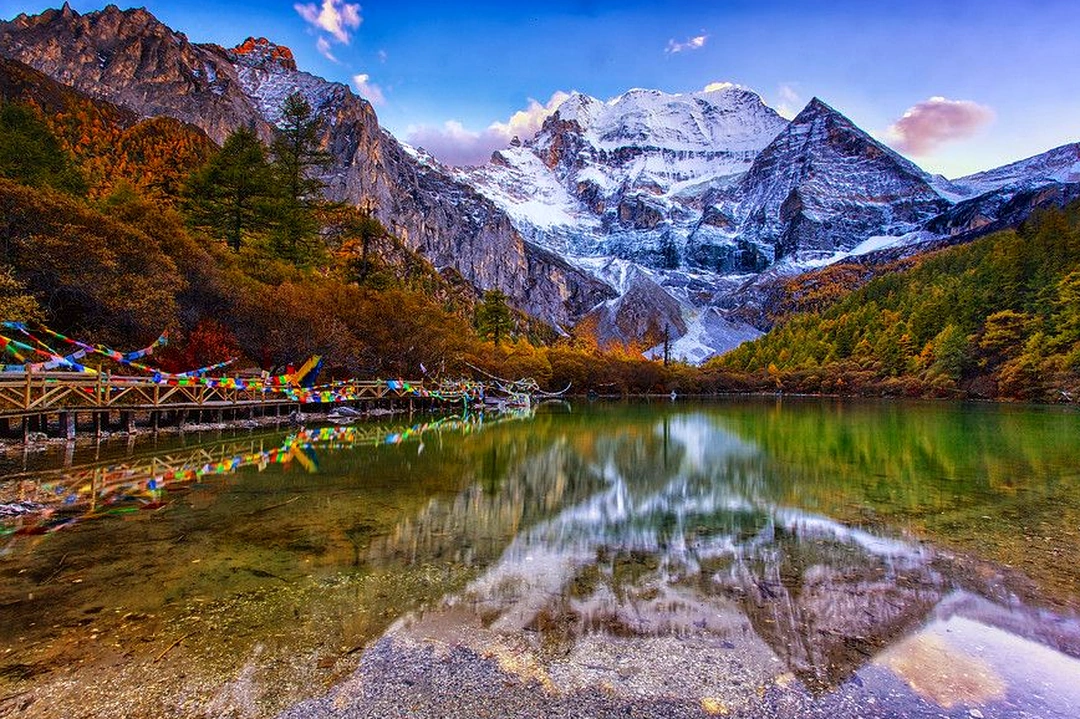
Guarding the northern direction is Chenrezig, the sacred symbol of Avalokitesvara Bodhisattva, reaching an absolute elevation of 6,032 meters and piercing the clouds like a towering pillar supporting the frozen firmament. To the south, the majestic Jampelyang (Manjushri), standing at 5,958 meters, embodies the bodhisattva of transcendent wisdom and the flashing sword that severs ignorance. Balanced to the east is Chanadorje (Vajrapani), also standing at 5,958 meters, clad in armor of ice and snow to represent the fierce power vanquishing demonic forces. This tripod formation not only creates a sturdy natural defense against bitter northern gales, but also shapes a highly auspicious feng shui energy axis that gathers the vital essence of the ancient Kham region.
Under the sheltering shadow of these sacred peaks, Yading’s landscape structure unfolds a breathtaking ecological transition zone, vertically zoned from deep valleys up to the summit of eternal snows. Millions of years of natural weathering and ancient glacial accumulation have sculpted a distinctly layered ecosystem, beginning with boundless temperate conifer forests where towering pines shade rich understory vegetation. Ascending higher, the ecosystem yields to alpine tundra, where resilient alpine wildflowers cling to harsh rocky soil to burst into brilliant colors during the plateau’s brief summer.
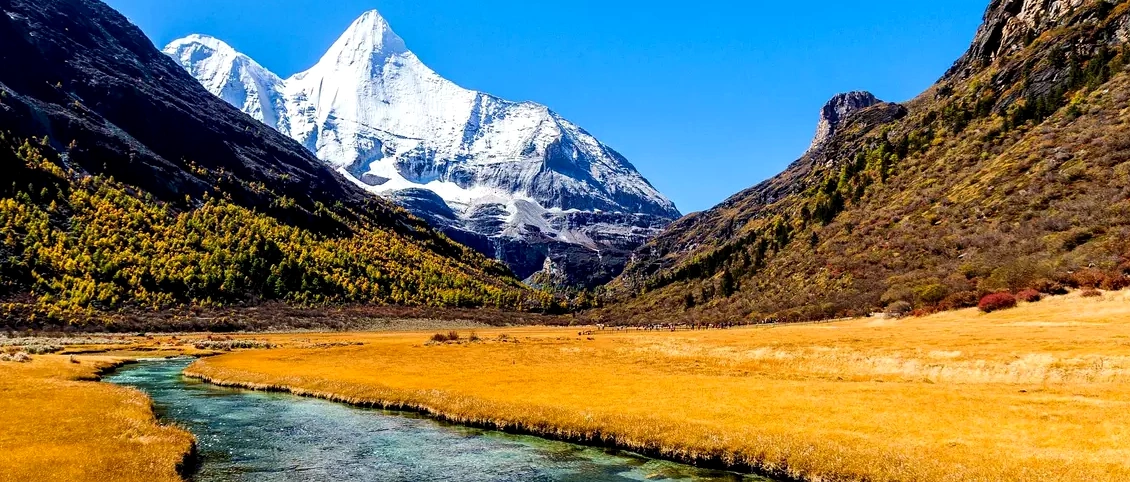
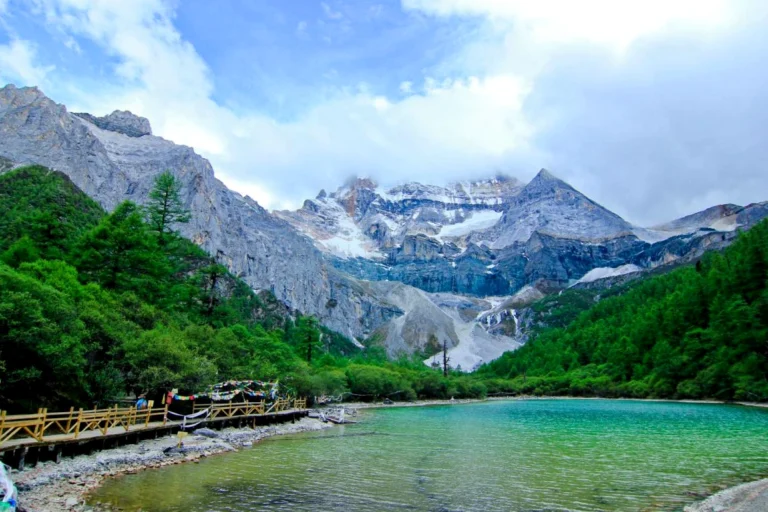
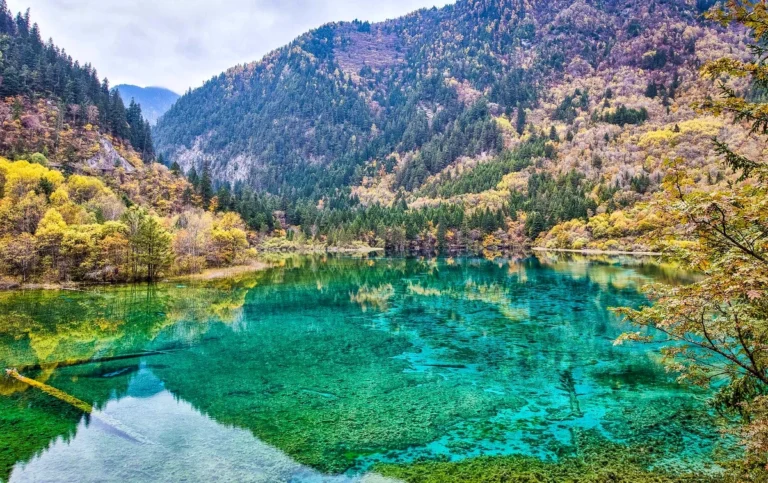
The heart of the valley ecosystem is Lourong Pasture, a lush green meadow winding beneath Jampelyang’s slopes, where a meandering glacial stream ripples across fertile soils nourished by melting ice sheets. Since ancient times, this space has served as traditional Tibetan grazing grounds and an ideal vantage point to observe the seamless union of earth, sky, and wildlife. The defining highlight granting Yading’s landscape its unique value is its high-altitude glacial lakes, reverently called sacred seas by locals—most notably Milk Lake with its pure turquoise waters ringed by white granite stones, Five-Color Lake shimmering in shifting hues under sunlight due to lakebed sediment reflection, and Pearl Lake resting quietly at the foot of Chenrezig, smooth as a giant mirror reflecting the majestic silhouette of the guardian bodhisattva.
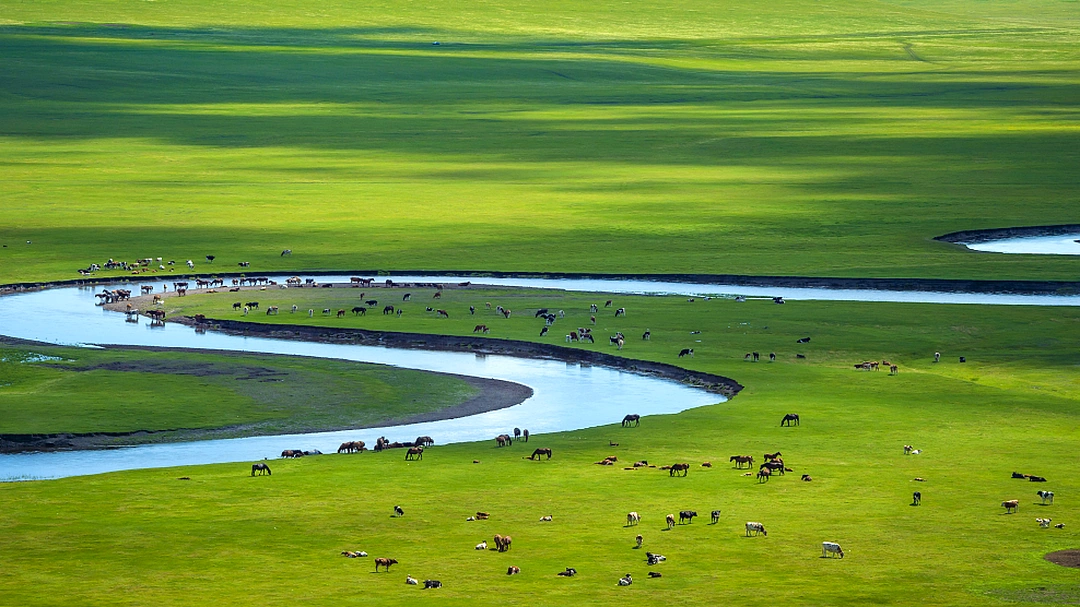
The landscape formation process here is a sequence of complex geological upheavals, where tectonic plate collision between the Indian Ocean and Eurasian continent pushed the Hengdan massif skyward, combining with Quaternary glacial erosion to carve deep U-shaped valleys and alpine tarns. The flawless integration of rugged terrain, abundant hydrology, and Mandala feng shui planning has transformed Daocheng Yading into a rare geomorphological masterpiece where every stone, blade of grass, and droplet of water carries a legendary tale enduring through time.
Stepping into the spiritual cultural realm of the Daocheng Yading Scenic Area, visitors are not only captivated by the magnificent landscape of sacred snow peaks, but also strongly drawn to the traditional craftsmanship and architectural mastery of Tibetan communities. Enduring centuries of harsh highland climates, local architecture—from ancient monasteries like Chonggu to pristine indigenous settlements—demonstrates a brilliant synthesis of religious aesthetics and supreme survival engineering. Yading’s architectural space is far more than shelter or worship venues; it is a philosophical structure deeply reflecting Tibetan Buddhist cosmology, where humans find harmonious, humble resonance amidst vast wilderness.
The core of construction and spatial structure here is the unique composite stone-and-timber wall system, refined across generations to withstand fault-line terrain and potential earthquakes on the edge of the Qinghai-Tibet Plateau. Specifically, traditional buildings utilize trapezoidal load-bearing batter walls with impressive thicknesses ranging from 0.8 to 1.2 meters, meticulously stacked with local granite without mortar using traditional gravity stacking methods, made sturdy through careful calculation of weight and gradient. The gradual narrowing of wall cross-sections from bottom to top not only yields a sturdy, majestic visual impression, but also helps the structure dissipate seismic shockwaves, keeping buildings standing firm against plateau gales.
Resting atop this sturdy stone foundation are timber framing and roof purlin systems crafted from ancient durable woods such as red pine and Chinese juniper harvested from surrounding primary forests. A striking aspect of traditional Tibetan carpentry in Yading is that entire framework, columns, and beams are interconnected entirely through intricate mortise-and-tenon joinery following Yin-Yang principles, using zero iron nails. This timber joinery technique grants buildings high elasticity and flexibility, automatically absorbing and neutralizing longitudinal bending forces during earthquakes or mountain gales sweeping valleys. Atop the structure lies a flat roof system tamped with multiple layers of clay, gravel, and carefully mixed mud, providing perfect thermal insulation during freezing winters while serving as a sturdy shield against intense ultraviolet radiation at elevations exceeding 4,000 meters.
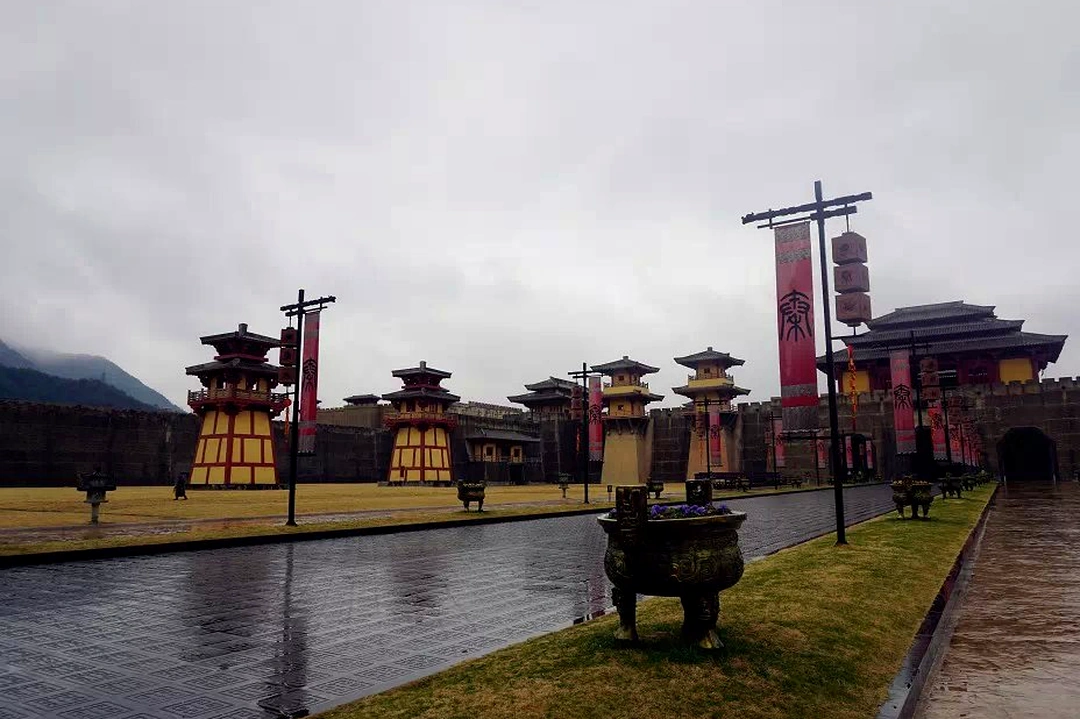
Alongside sturdy load-bearing structures, decorative and interior craftsmanship in Daocheng Yading reaches the heights of highland religious fine arts. Against rustic architectural backdrops, ancient artisans skillfully adorned horizontal beams, door frames, and Eight Auspicious or eight-auspicious motifs with vivid relief carvings. Notably, color palettes on these motifs exclusively utilize rare natural minerals ground into fine powders—such as cinnabar for authoritative red, azurite for the deep blue of sacred skies, malachite green for meadow hues, and genuine handcrafted gold leaf to create radiant metallic halos under highland sunlight. These natural materials not only keep patterns colorfast for centuries against weathering, but also carry profound spiritual meaning, recreating a serene nirvana and praying for peace and prosperity for descendants living beneath Yading’s forests.
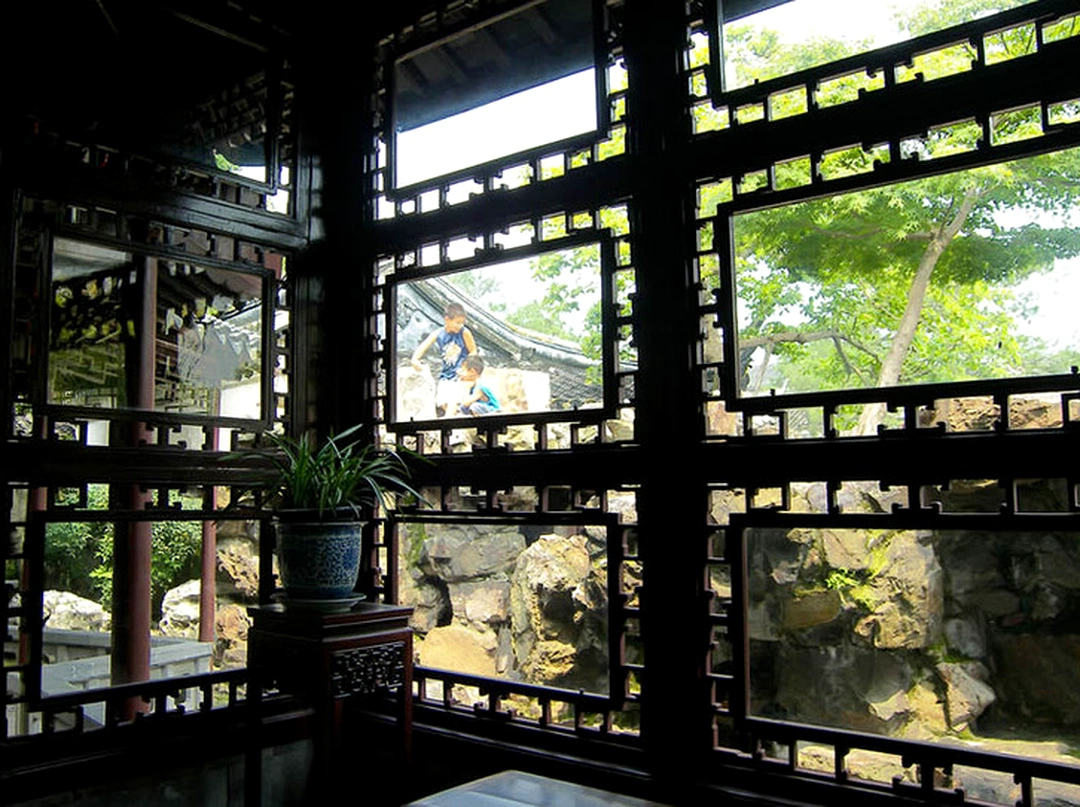
When night falls over the eternal snow peaks of the Daocheng Yading Scenic Area, the biting plateau cold ushers in an entirely different dimension where tourism rhythms lack the loud spectacle of grandiose live shows or glittering commercial neon lights typical of major metropolises. Unlike mass tourism development, Yading strictly adheres to national ecological protection boundaries to safeguard the precious wild flora and fauna of Tibet’s core zone, completely eliminating industrial artificial lighting or large-scale sound and light shows that disrupt natural habitats. This deliberate “absence” offers a priceless privilege for travelers seeking cultural depth and soul quiet, turning Yading’s night into a mystical nature museum where humans and the cosmos harmonize in a pristine order maintained for millennia.
At the center of Yading’s night picture is Dark Sky Tourism, flourishing vigorously across two privileged coordinates: Yading Village and Zhabageng. Benefiting from ideal elevation and crystal-clear air untainted by light pollution or industrial smog, this region opens up a magnificent nocturnal dome where millions of stars shine bright like giant diamonds stretching across the glittering Milky Way. For astrophotographers and astronomy lovers, standing in the freezing valley, gazing at the deep, boundless night sky of the Tibetan plateau is a sacred experience, awakening pristine awe before nature’s grandeur. Here, the only nurtured light is silvery moonlight reflecting off glacial streams and glowing hearth fires inside traditional village homes.
Leaving the starry firmament to step into the cozy interiors of traditional guesthouses, the nighttime life of the Kham ethnic community unfolds vividly through communal gatherings rich in nomadic identity. Beneath sturdy timber roofs radiating the earthy scent of dry firewood and herbs, travelers gather around warm hearths to sip hot, rich butter tea—a traditional drink dispelling the biting plateau cold. Within this welcoming, hospitable atmosphere, traditional dances preserved across generations are faithfully recreated. The majestic, powerful Drogwa dance with vigorous steps keeping time to sheepskin drumbeats, paired with the graceful ribbon dances of Tibetan maidens in intricately embroidered attire, create an authentic folk art feast that transports travelers back in time to the proud, sacred nomadic roots of Kham.
Stepping onto the Daocheng Yading plateau at elevations exceeding 3,000 meters above sea level, travelers are not only overwhelmed by snow peaks touching the sky and jade-like glacial lakes, but also have every sense awakened by a uniquely distinct high-altitude culinary world. Amidst harsh highland weather, locals have distilled across centuries a culinary culture blending nomadic heritage with valley agriculture, where each dish is more than survival energy on the windy plateau, but the crystallization of a philosophy of deep harmony with nature. A steaming cup of hot butter tea by a crackling hearth or the nutty richness of finely ground roasted barley is the sincerest welcome this sacred land offers weary travelers completing long journeys.
These native flavors begin with Tsampa, an ancient traditional dish considered the staple food of local residents. To craft authentic Tsampa, locals carefully select plump highland barley grains grown on high mountain slopes, roast them to perfection in large iron woks until fragrant with fresh grain aromas, and mill them into fine flour. When consumed, Tsampa is kneaded directly in a signature wooden bowl with aromatic Tibetan butter and homemade dry cheese, shaped by hand into bite-sized morsels. The nutty, savory, slightly astringent flavor blended with rich yak butter delivers abundant nourishment, helping bodies quickly recover vitality and combat the piercing plateau cold.
Alongside Tsampa, Tibetan butter tea (酥油茶) offers a different taste language—both familiar and challenging for first-time tasters. Elaborately brewed from signature border brick tea leaves simmered thoroughly into a dark, concentrated broth, then churned with fresh butter extracted from yak milk and a pinch of highland rock salt inside a traditional churn, this beverage delivers a highly complex flavor profile. Initial saltiness quickly yields to a lingering rich, fragrant aftertaste coating the palate, serving as a magical elixir warming the body, stimulating digestion, and balancing blood pressure for anyone facing oxygen scarcity in thin air.
Moving beyond grain and dairy gifts, the world of yak meat and rare mushrooms in Daocheng Yading introduces diners to genuine wilderness dining. Plateau yaks graze naturally on lush green meadows year-round, breathing pristine air and drinking primordial glacial meltwater, resulting in firm, deep-red meat packed with natural sweetness and zero greasiness. Locals prepare this into piping-hot yak meat hot pot, simmered for hours with local herbs, or thinly slice and air-dry it to produce renowned wind-dried yak jerky that keeps for months. Notably, yak meat hot pot becomes truly complete with the presence of premium wild forest mushrooms harvested beneath old pine trees, notably matsutake and morel mushrooms.
Daocheng Yading has long been hailed as the capital of premium matsutake mushrooms (松茸)—a precious gift bestowed by nature thanks to exceptional soils and unique local climates. Matsutake mushrooms hide beneath layers of fallen pine needles, absorbing earthy essences and appearing briefly during the rainy season, carrying the distinct earthy fragrance of primeval forests. To fully savor this mushroom’s refined flavor, local chefs thinly slice it for raw sashimi tasting with a touch of wasabi, or quickly pan-sear it in pure golden butter over high heat. The mushrooms taste crunchy, melting in the mouth with the intoxicating aroma of pine resin and deep earthy sweetness, encapsulating the pristine, generous soul of the Yading plateau in an endless culinary experience.
Concluding the pilgrimage to this earthly Buddhist pure land, careful field preparation is the key deciding the success and safety of every traveler visiting Tibetan sacred territory. Unlike conventional tourist cities, the Daocheng Yading Scenic Area demands absolute respect regarding physical endurance, topographical familiarity, and steady composure against harsh nature. The ideal window to open the door to this fairyland is from mid-September to late October, when autumn foliage turns poplar forests gold and mountain slopes are lightly powdered with snow gleaming under golden sunlight, or May through June when thousands of native rhododendrons bloom brilliantly along stream valleys. For smooth journeys, travelers should proactively book real-name tickets in advance, covering entry combined with eco-bus transport at a reference cost around 266 RMB per person. Careful time and ID management saves travelers tiring wait times at highland security checkpoints.
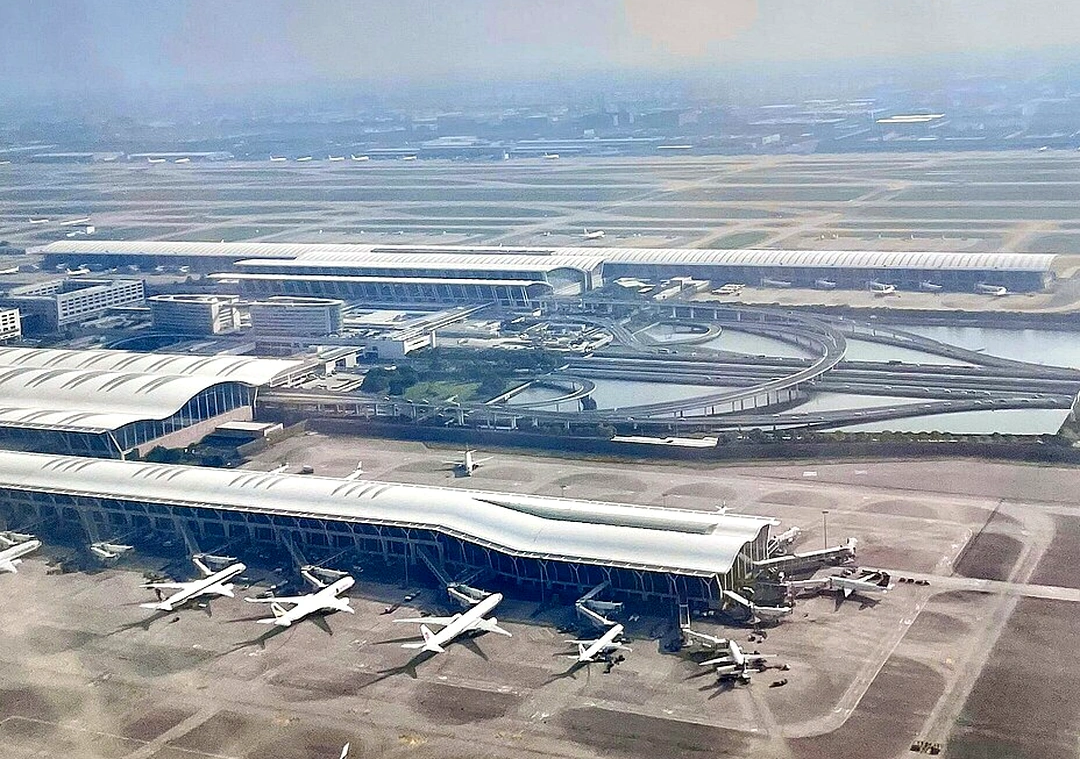
Approaching the scenic area is tied to the specialized transport network of the East Tibetan plateau, where winding roads cross cloud-swept skies. Travelers can choose air travel, landing at Daocheng Yading Airport located at an elevation of 4,411 meters above sea level—recorded as the world’s highest civil airport, situated roughly 50 kilometers from Xianggelila Town. For adventure lovers wishing to savor the majestic scenery of Western Sichuan, the legendary G318 National Highway serves as the arterial road carrying caravans across towering mountain passes into the gateway of sacred territory. Upon reaching the tourist center, internal sightseeing is organized into a seamless journey starting from the Tourist Center, moving through Zhabageng, visiting ancient Chonggu Temple, pausing at Lourong Pasture before challenging personal limits along the hiking trail climbing from 4,150 meters to the 4,700-meter threshold to worship mystical Milk Lake and Five-Color Lake.
Conquering Yading’s high altitudes means facing altitude sickness (acute mountain sickness) head-on. To protect health, dressing in layers following the onion principle is essential, flexibly combining thermal base layers, windproof and waterproof jackets, and polarized sunglasses protecting eyes against intense UV radiation reflecting off snow patches. Travelers must strictly avoid strenuous exertion, running, or over-climbing, while proactively carrying personal oxygen canisters and taking Rhodiola rosea supplements before and during the trip. In severe altitude sickness cases, the supreme survival rule is immediate emergency descent back to Xianggelila Town at a safer elevation around 2,900 meters for prompt recovery. Furthermore, local cultural and religious factors demand strict adherence from visitors; when moving around Mani stones or sacred sites, travelers must walk clockwise, refrain from climbing sacred rock faces, or littering and polluting pure water sources of holy lakes. For a complete, safe journey deeply empathetic to local culture, travelers can explore all-inclusive tour packages designed specifically by seasoned experts.