Welcome to the most comprehensive and in-depth encyclopedia guide on the Blue House (Cheongwadae)—the former Presidential Residence of South Korea—compiled by VDS Travel’s team of international tourism experts and cultural writers. Included in classic South Korea tour itineraries combining Seoul, Nami Island, and Everland amusement park, the Blue House is not merely a paramount political monument but also one of the land of the morning calm’s most unique cultural, historical, and artistic spaces. After decades of being closed off under the strict protection of security forces, the doors of the Blue House officially swung open to welcome the public in May 2022, transforming this location into one of the planet’s most fascinating sightseeing coordinates.
The Blue House complex spans a total area of approximately 250,000 square meters (several times larger than the White House of the United States), encompassing numerous buildings reflecting diverse architectural styles ranging from traditional Korean palaces to modern structures, alongside gardens, lawns, artificial streams, and primeval forests. The overall layout of the area is divided into distinct functional zones, connected via shaded, verdant pathways.
The main building of Cheongwadae is the most famous structure and an iconic symbol appearing on millions of postcards and South Korea travel publications. Completed in 1991 during the presidency of Roh Tae-woo, this building represents a flawless synthesis of modern construction engineering and traditional Korean palatial architectural style.
Through this article, VDS Travel will guide you deep into every corner of this former seat of power, covering geographical coordinates, historical contexts, architectural masterpieces, million-view check-in spots, down to detailed practical handbooks ensuring your journey is completely seamless and unforgettable.
The Blue House (also known as Cheongwadae, meaning Pavilion of Blue Tiles in Sino-Vietnamese) is located at 1 Cheongwadae-ro, Jongno-gu, Seoul, South Korea. This architectural complex occupies an exceptionally prime location, situated right at the foot of the majestic Bugaksan Mountain and facing south, overlooking the Cheonggyecheon stream and downtown Seoul.
Under traditional Eastern Asian feng shui perspectives, the Blue House’s terrain is regarded as a flawless “blessed land” featuring the “backing against mountains and facing water” configuration. Bugaksan Mountain serves as a steadfast anchor shielding against cold northern winds, while natural waterways and open front spaces gather vital breath, prosperity, wealth, and national flourishing. This exact positioning generates a pristine atmosphere completely isolated from the hustle and bustle of modern urban life despite sitting right in the heart of the capital.
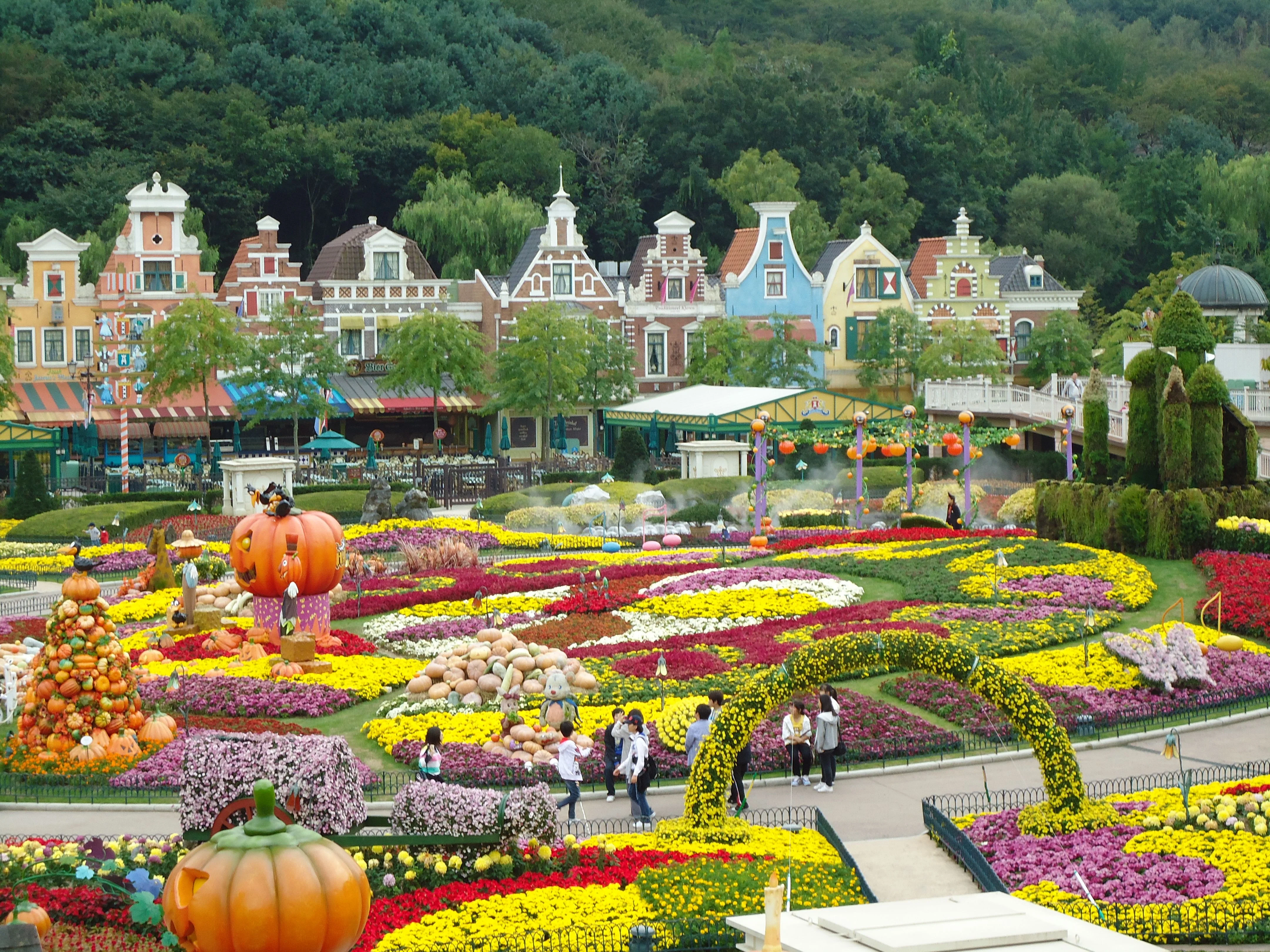
Vibrant flower gardens and European architecture at Everland Park, South Korea.
The history of the Cheongwadae area is tied to the turbulent historical fluctuations of the Korean Peninsula across centuries. Its origins trace back to the Goryeo Dynasty in the 11th century, when the royal court constructed a secondary palace here. By the Joseon Dynasty (1392 – 1910), when King Taejo relocated the capital to Hanyang (now Seoul) and constructed Gyeongbokgung Palace nearby, the present-day Blue House area became a vast royal back garden (huawon) where monarchs hosted royal agricultural rituals or practiced martial arts.
Entering the Japanese colonial period (1910 – 1945), the area’s destiny changed drastically. The Japanese colonial administration demolished numerous traditional structures within to construct a residence for the Japanese Governor-General of Korea. Following South Korea’s liberation in 1945, the provisional government and subsequently President Syngman Rhee selected this site as their office and official residence, renaming it Gyeongmudae. By 1960, under President Yun Posun, the name Cheongwadae was officially born, inspired by the characteristic blue tile roofs of the buildings.
Through subsequent presidential administrations, the Blue House was continuously expanded and renovated, becoming the supreme symbol of political power in South Korea. Until May 2022, fulfilling President Yoon Suk-yeol’s campaign pledge to bring the administration closer to the people, the presidential office relocated to Yongsan District, and the entire Blue House complex was officially returned to the citizenry, marking a new chapter filled with openness and pride.
For South Korean citizens, the Blue House is not merely a high-ranking executive body but a symbol of transformation, national sovereignty, and powerful upward aspirations. It has witnessed countless milestone historical decisions, high-level diplomatic encounters among world heads of state, alongside moments of national crisis and glory.
The opening of the Blue House to visitors has torn down the invisible wall between state and citizen, transforming what was once dubbed a “forbidden zone” into a public space of profound educational and cultural significance. Arriving at the Blue House with VDS Travel, visitors not only admire an architectural heritage but touch the living pages of the Republic of Korea’s history.
The highlight capturing every gaze is the roof tiled with approximately 150,000 characteristic blue tiles (cheongwa). These tiles were fired at extraordinarily high temperatures for timeless durability, capable of withstanding harsh weather conditions and retaining their glossy blue hue across decades. The roof is designed in traditional Korean palatial vault style, conveying majestic dignity while retaining fluid grace.
Vibrant flower gardens and European architectural buildings at Everland Amusement Park, South Korea.
Inside the main building lies the Cabinet Meeting Room where national policies are passed, the official Reception Hall (Chunghwadae) hosting foreign heads of state featuring brilliant red rose carpets and magnificent crystal chandeliers, alongside the President’s Official Office.
Situated in the western sector of the complex is Yeongbin-gwan (National Guest House), hosting major events, state banquets, and traditional cultural performances for foreign delegations. Viewed from afar, this building evokes ancient Greek Parthenon architecture featuring giant granite columns supporting roof structures, harmonized with traditional Korean tile-roof decorations. The building accommodates hundreds of guests, reflecting the dignity and hospitality of South Korea’s head of state toward international friends.
Nokjiwon is the most renowned traditional garden within the Blue House grounds, cultivating thousands of rare plant species, including trees planted by successive presidents to commemorate inaugurations or welcome international VIP guests. A majestic 150-year-old ancient pine tree stands here. In spring, cherry blossoms bloom in profusion, while in autumn, fiery red and yellow maple leaves transform Nokjiwon into a breathtakingly romantic natural tableau.
Additionally, Chunghwajeong is a small wooden pavilion built in traditional architecture situated beside a peaceful small lake. This is where leaders frequently pause to relax, sightsee, and seek tranquility amidst demanding affairs of state.
Stepping inside the Blue House with VDS Travel’s professional guide, you will have opportunities to witness firsthand the actual working spaces of supreme leaders. Visitors are permitted to walk through corridors displaying portrait oil paintings of all South Korean presidents, learning about their lives, hobbies, and imprints left during their terms.
Particularly, entering the Cabinet Meeting Room or grand Reception Hall delivers awe before colossal scales and exquisite details across interior designs—from carpets and curtains to contemporary and traditional artworks displayed ceremoniously on walls.
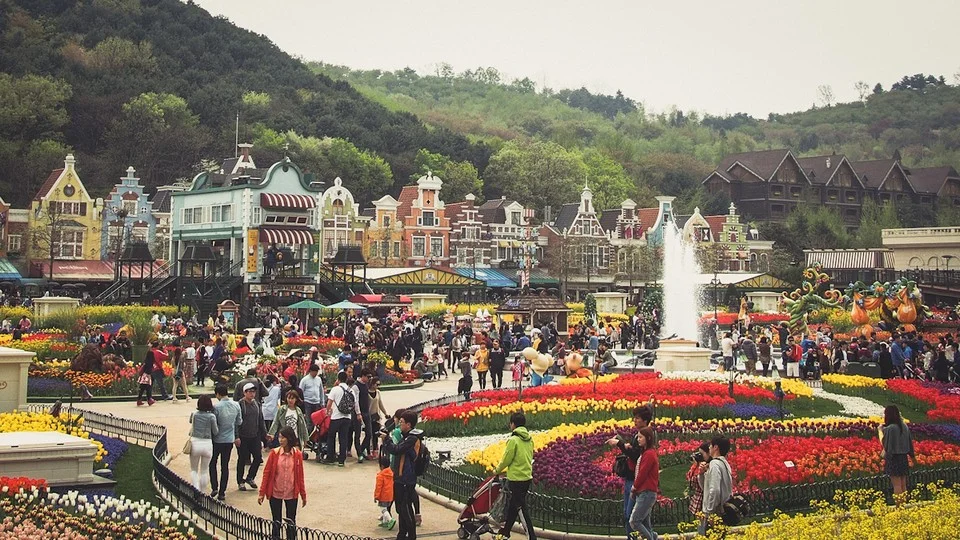
Crowded scenery of tourists visiting Everland Amusement Park featuring European-style houses and brilliant tulip gardens.
The Blue House (Cheongwadae) grounds possess expansive open spaces with numerous impressive sightseeing and photo-op angles. Standing from the spacious front courtyard, visitors frame the main building featuring characteristic blue-tiled roofs comprising over 150,000 hand-fired tiles standing out against the sky. Strolling into the flower-filled Nokjiwon garden, visitors walk beneath centuries-old ancient trees, highlighted by historic pine trees tied to multiple national leadership generations. Furthermore, the central fountain plaza featuring the majestic gold-plated Phoenix monument is a favored stop for crowds to capture solemn keepsake moments. Gazing into the distance behind the mansion, majestic Bugaksan Mountain framing the grounds creates a picturesque, scenic tableau balancing modern palatial architecture with majestic nature.
Transcending a political monument, the Blue House currently operates as a premier national art museum. Exhibition halls inside the complex regularly host precious fine art exhibitions, displaying hundreds of paintings and sculptures by renowned South Korean and international artists collected across presidential terms. This represents a wonderful opportunity for art lovers to immerse in peak creative spaces.
After thoroughly exploring the expansive Blue House architectural complex, your travel journey cannot be complete without savoring distinctive culinary experiences in surrounding areas. Situated right beside Cheongwadae are historic neighborhoods like Samcheong-dong and Bukchon Hanok Village, concentrating countless traditional restaurants serving dishes steeped in South Korean identity.
Samgyetang (Ginseng Chicken Soup): A premier nourishing dish located right near the Blue House, featuring young chicken stuffed with glutinous rice, fresh ginseng, red dates, lotus seeds, and herbs simmered for hours, yielding irresistible aromas and exceptional health benefits. Hanjeongsik (Korean Royal Court Cuisine): Savor miniature royal meals featuring dozens of refined side dishes (banchan) from grilled meats, steamed fish, seaweed soup, traditional kimchi to pickled vegetables, prepared and presented exquisitely. Coffee and traditional pastries at Hanok Cafes: Pause at cafes converted from traditional hanok houses in Samcheong-dong, savoring warm grain tea with tteok rice cakes or green tea pastries amidst nostalgic atmospheres.
When visiting the Blue House, visitors can drop into official souvenir shops inside or nearby to select items carrying South Korean cultural imprints for loved ones and friends:
Traditional pottery (Celadon and Buncheong): Exquisite handmade ceramic products bearing characteristic jade-green hues of Goryeo Dynasty ceramic art. Handicrafts depicting Phoenix symbols: Pens, keychains, notebooks, silk scarves printed with palace floral motifs and luxurious Cheongwadae blue-tile imagery. Herbal teas and premium ginseng: Refined boxes of ginseng tea, chrysanthemum tea, or ginger tea, making sophisticated luxury gifts post-trip.
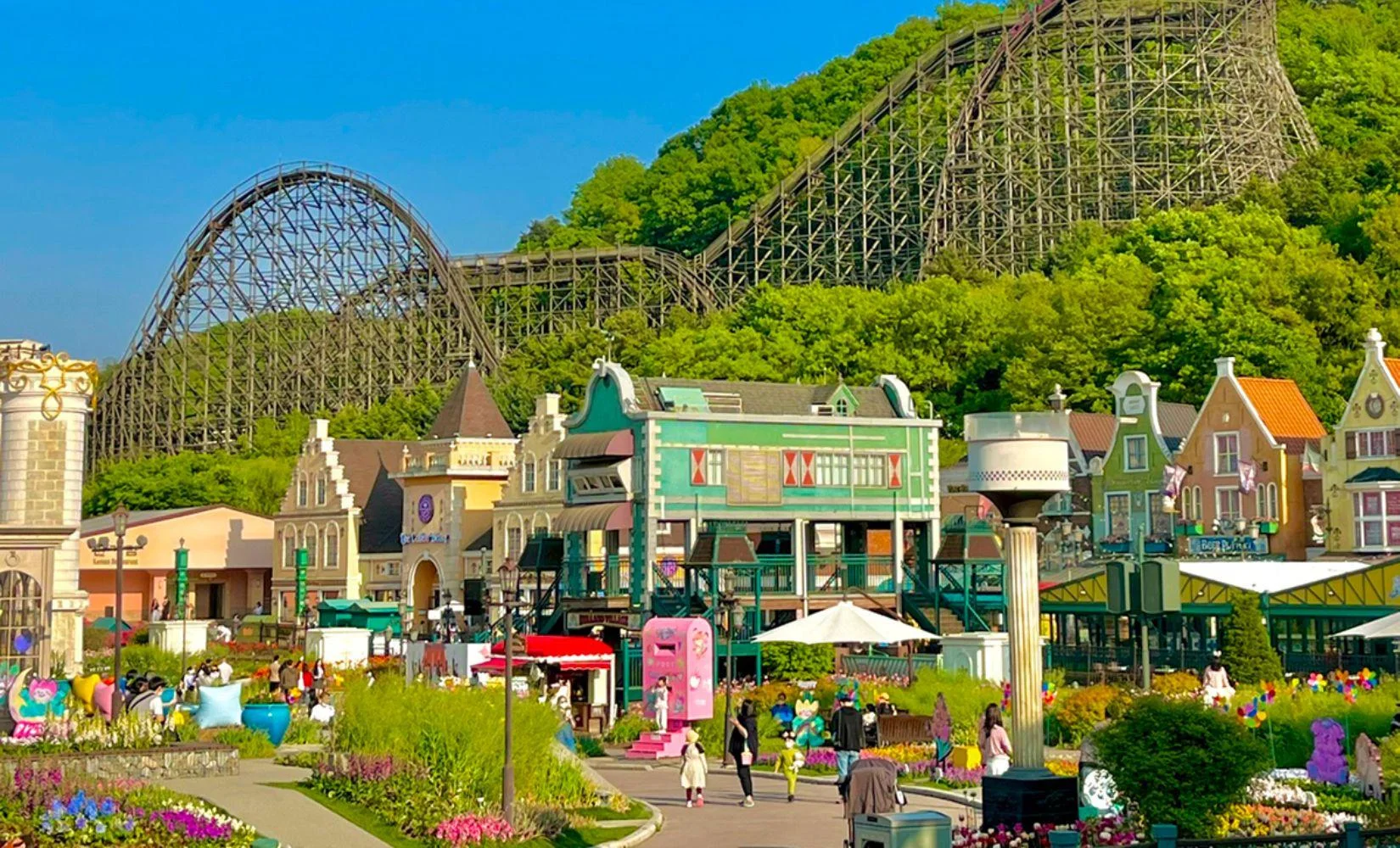
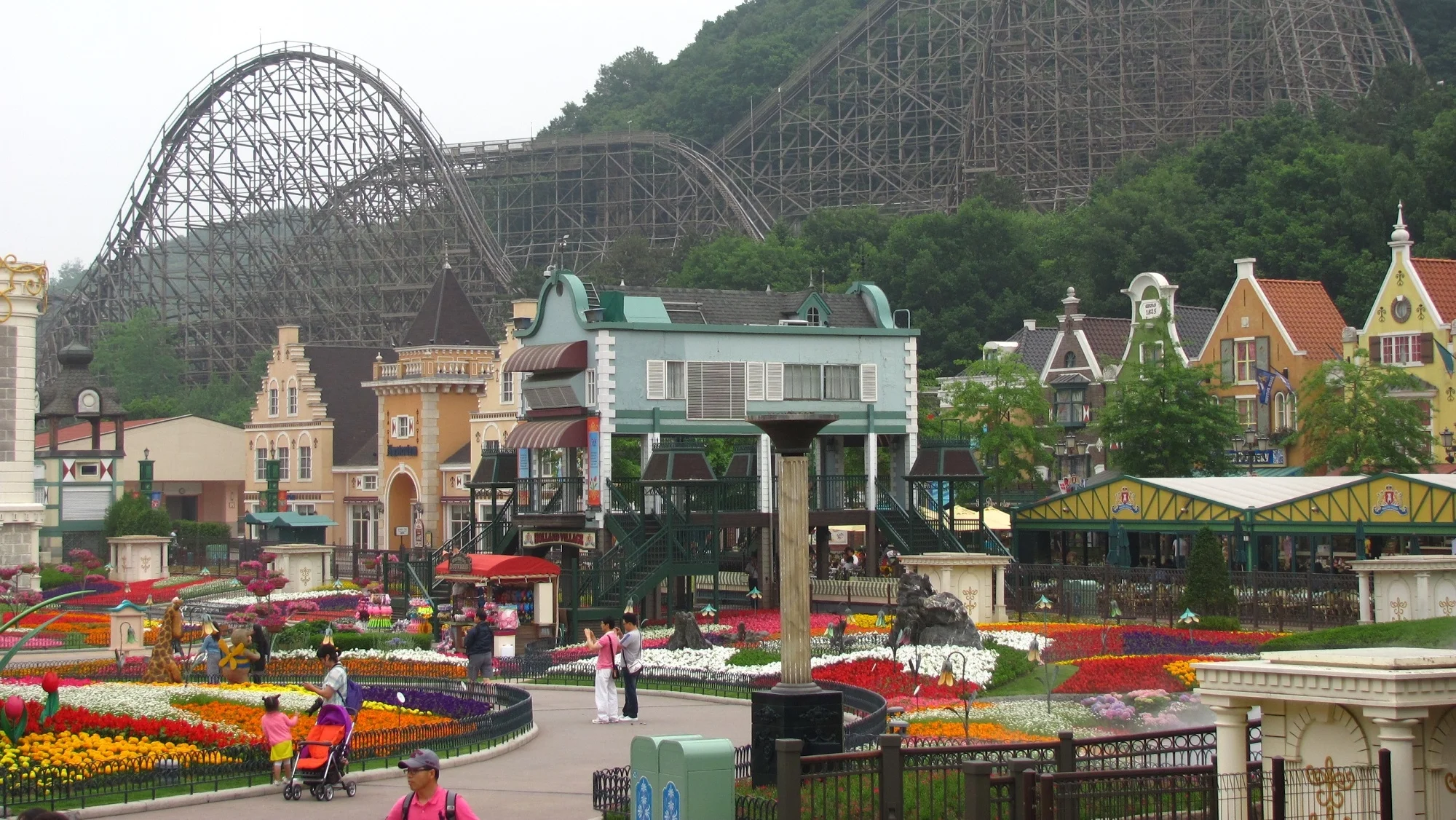
Everland Amusement Park with colorful European architecture and a large wooden roller coaster behind.
South Korea features four distinct seasons, and each season at the Blue House adopts a distinct beauty captivating any travel enthusiast:
Spring (March – May): Warm weather, blooming flowers. Notably, Blue House grounds overflow with pinkish-white cherry blossoms and brilliant azaleas, representing ideal timing for photography enthusiasts. Autumn (September – November): Vibrant red and yellow maple foliage. Cool air and cloudless blue skies forge stunning natural tableaus surrounding ancient architecture. Summer (June – August): Lush greenery, vibrant spaces, though weather can be humid with heavy rainfall spells. Winter (December – February): White snow blanketing Cheongwadae’s legendary blue roofs, offering tranquil, pure, and romantic cinematic beauty.
Situated right in the center of Seoul, traveling to the Blue House is extremely convenient via public transport or through VDS Travel’s all-inclusive tours:
Subway: Take Line 3 and alight at Gyeongbokgung Station (Exit 5), then walk roughly 10-15 minutes via Gyeongbokgung Palace or catch a short village bus. Alternatively, alight at Anguk Station (Line 3) to combine visits with Bukchon Hanok Village. Public Bus: Bus routes 1020, 7025, or Jongno 11 village bus feature stops right near Cheongwadae’s main gate. All-inclusive tours with VDS Travel: To save time, route-finding efforts, and enjoy detailed historical explanations from professional guides, selecting VDS Travel’s South Korea tour routes (Seoul – Nami Island – Everland) featuring door-to-door transfers is optimal.
Wonderful joyful news for global travelers is that the Blue House is COMPLETELY FREE OF CHARGE for all visitors. Nevertheless, given massive visitor inflows daily, independent travelers typically must pre-book tickets online via Cheongwadae’s official website or queue for on-site tickets (with limited daily quotas). Traveling via VDS Travel’s professional tours ensures booking procedures and itineraries are prepared thoughtfully, guaranteeing seamless experiences without waiting lines.
Despite becoming public tourist sites, the Blue House remains a monument of paramount national significance. When visiting, you must strictly comply with these rules:
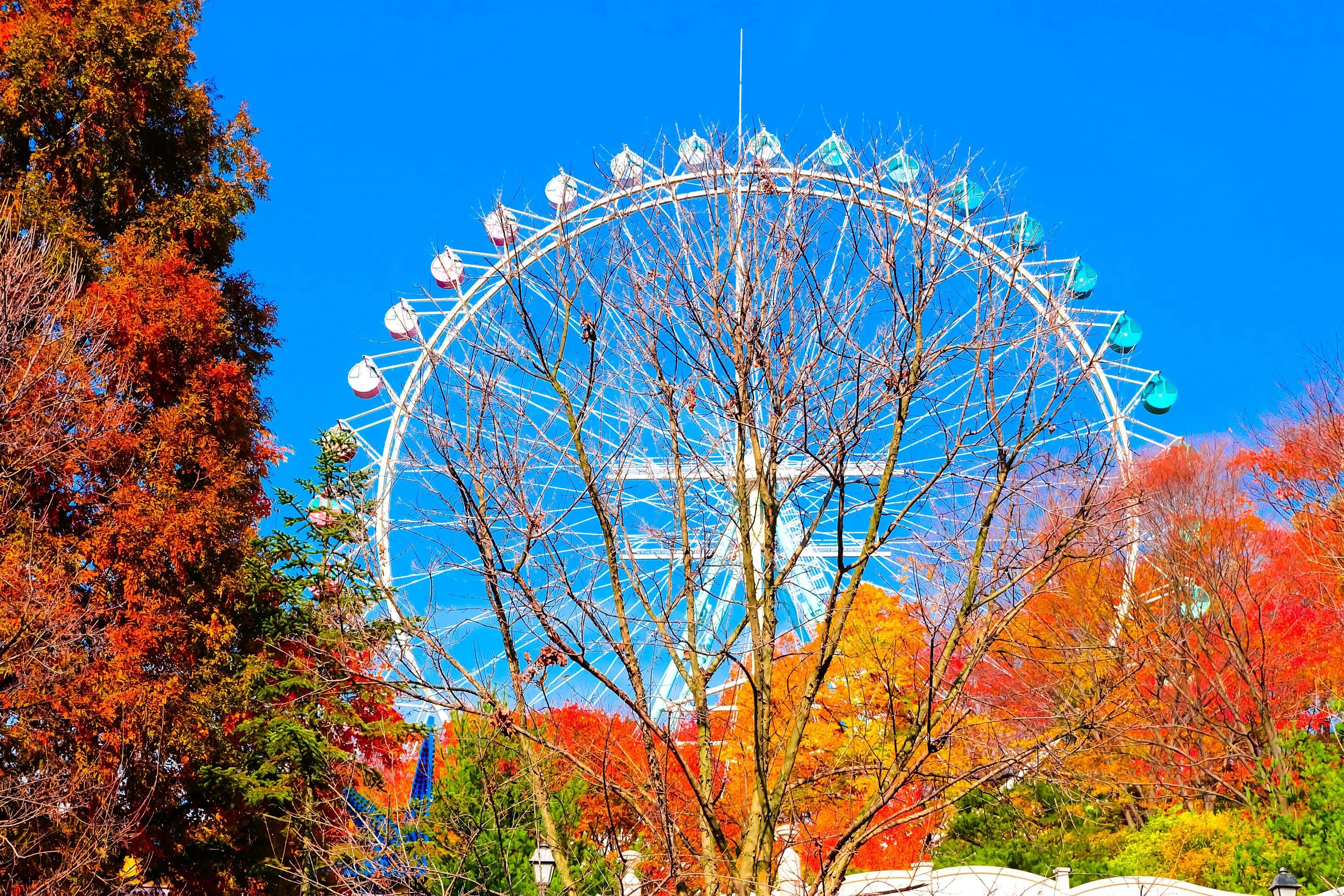
Giant Ferris wheel at Everland Park, South Korea during brilliant autumn foliage season.
Polite attire: Wear neat, modest, polite clothing, avoiding overly short or inappropriate apparel when entering main exhibition halls. Restricted zone compliance: Move solely along designated pathways, avoiding unauthorized entry into barrier zones or restricted rooms. Cleanliness and order: Avoid littering, smoking on grounds, and maintain moderate noise levels to respect shared spaces. Recording equipment regulations: Souvenir photography is permitted across most outdoor zones and select indoor areas per instructions, whereas drones or commercial filming without permits are strictly prohibited.
The Blue House welcomes visitors most days of the week, typically closing on a fixed weekly day (usually Tuesdays) for maintenance and grounds cleaning. Daily opening hours span from 9:00 AM to 6:00 PM (hours may vary seasonally). Verify schedules carefully with VDS Travel prior to departure.
To thoroughly explore primary buildings, national guest houses, Nokjiwon garden, and indoor art exhibitions, allocate roughly 2 to 3 hours. This is ideal timing for strolling, sightseeing, and check-in photography without feeling rushed.
For foreign independent tourists, online booking systems occasionally pose hurdles due to South Korean phone verification requirements or system overloads. Registering for VDS Travel’s all-inclusive South Korea tours is optimal for securing admission quotas without procedural obstacles.
No. To protect natural landscapes and preserve historical site cleanliness, management strictly prohibits bringing pungent food and beverages inside (only bottled water permitted), pets, and smoking across the entire campus.
The Blue House highlights unique cultural and historical highlights featured within the Golden South Korea Tour Route (Seoul – Nami Island – Everland) exclusively designed by VDS Travel. This journey harmonizes Seoul’s modern pulse, Nami Island’s romantic nature, Everland’s peak entertainment world, and Cheongwadae’s historical and cultural depth.
Contact VDS Travel today for detailed schedule consultations, flight promotions, and 5-star international travel services!