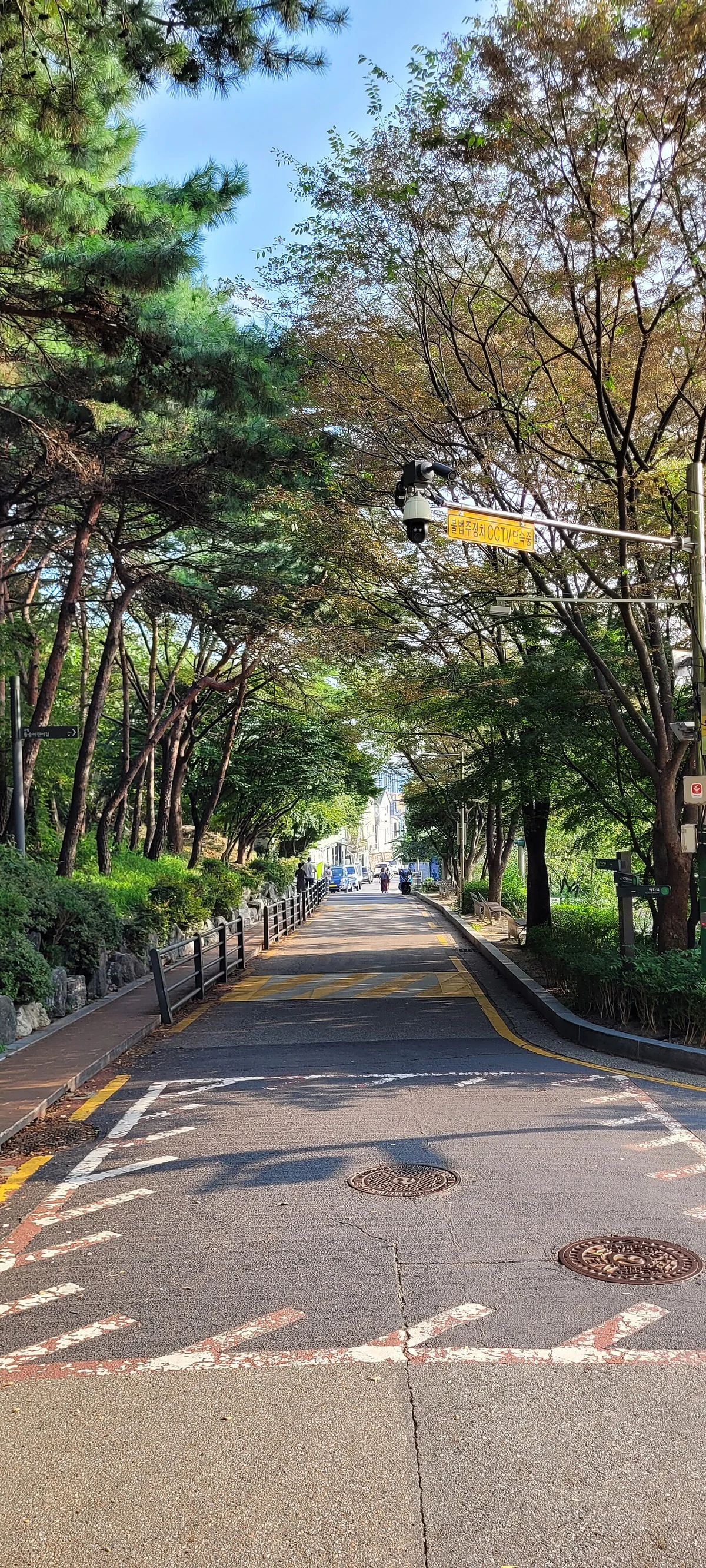
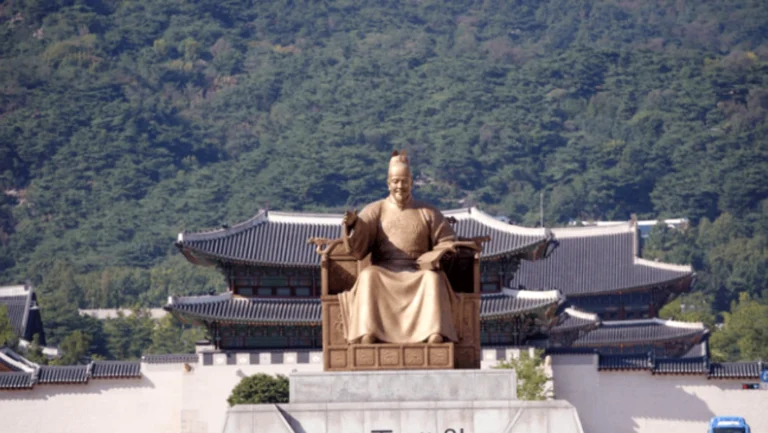
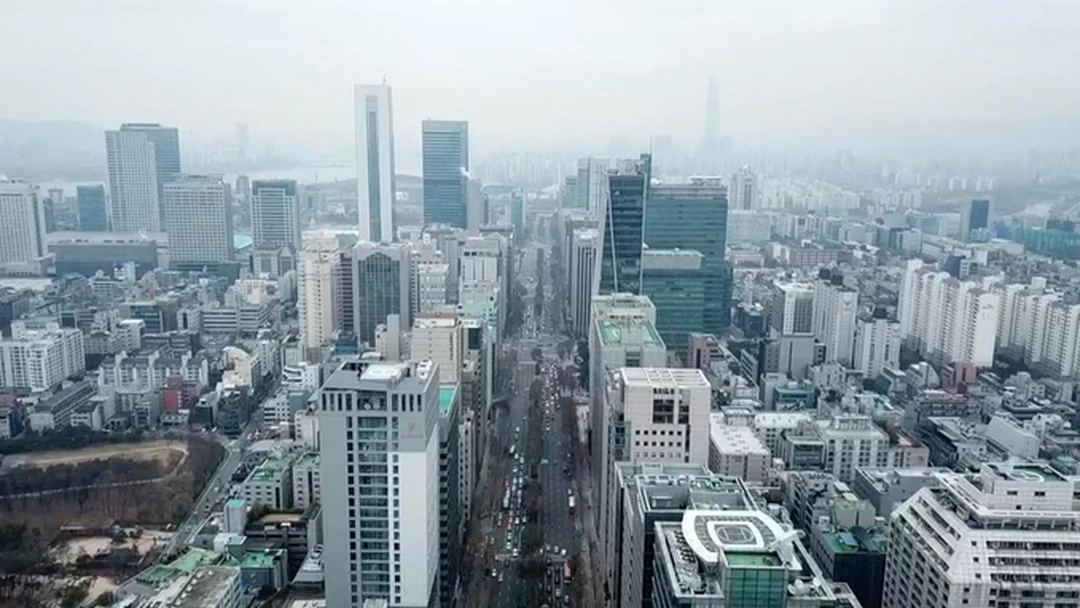
Located right in the bustling heart of Seoul’s Gangnam District, Starfield Library (Korean: 별마당 도서관; Hanja: 星空图书馆 – Starfield Library) stands today as a dazzling modern cultural icon, yet the geographical foundation of this land conceals layers of history stretching back centuries. Viewed through the lens of long-term historical geography (Longue Durée), before becoming a subterranean capital of retail and knowledge in the basement of COEX Mall in Samseong-dong, this stretch of land was originally a tranquil suburban area during the Joseon Dynasty. At that time, the region belonged to Gwangju County, Gyeonggi Province, specifically falling within the boundaries of Eonju Township (Eonju-myeon) and Samseong Village (Samseong-ri). The name “Samseong”—meaning “Three Stars”—originated from the historic merger of three natural ancient villages: Dadochon (島島村), Wolsong (月松), and Heukseok (黑石). Nestled alongside the surging waters of the Han River (한강), this ancient alluvial plain consisted solely of fertile riverbanks throughout the feudal centuries, where local residents spent their lives cultivating wet rice and practicing sericulture.
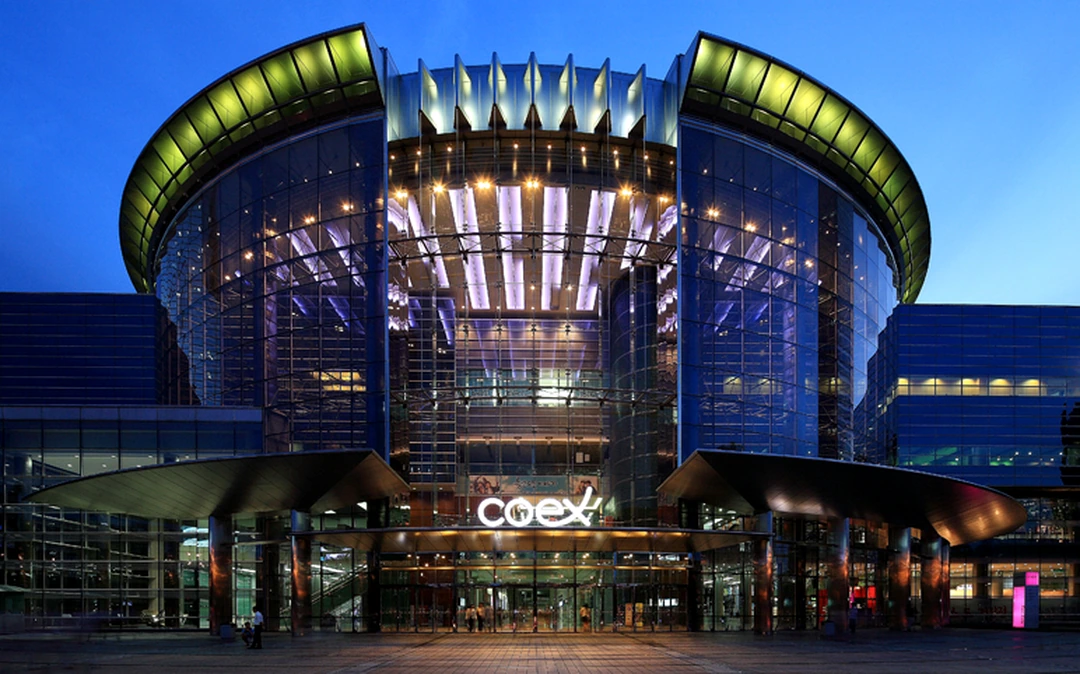
Entering the 20th century, tumultuous historical shifts and rapid urban planning completely erased the pristine agricultural appearance of old Samseong-ri. The grand development of the Gangnam region south of the Han River during the final decades of the 20th century transformed ancient mulberry fields into the premier hub of urban growth on the Korean Peninsula. The first major historical milestone marking the rise of this area was the inauguration of the Korea World Trade Center (KWTC) in 1988. This event not only signaled Seoul’s deep integration into the global economy on the occasion of the Olympic Games, but also turned Samseong-dong from a riverside floodplain into an epicenter of finance, international trade, and high-level diplomatic conferences.
Continuing that momentum into the new millennium in 2000, the subterranean COEX Mall project officially opened to the public, ushering in a new chapter in South Korea’s infrastructural architecture. The arrival of COEX Mall modernized the entire geospatial structure beneath Gangnam, creating the largest “underground city” in Asia at the time. However, during its first decade of operation, the space remained purely commercial and retail-driven, packed with fashion boutiques, dining chains, and entertainment venues, yet lacking a spatial breathing room that offered spiritual and cultural nourishment to the urban community.
Recognizing this cultural void in the midst of a hyper-consumerist metropolis, Shinsegae Group made a historic turning point in 2017 by investing substantial capital to restructure the entire vast central plaza of COEX Mall. The monotonous commercial shopping space was boldly transformed into Starfield Library—a completely open and free “urban cultural living room” for the public. The birth of Starfield Library was not merely an architectural triumph, but also a testament to a paradigm shift: turning an underground shopping mall into a 21st-century symbol of knowledge. From a stretch of alluvial land dedicated to mulberry farming under the Joseon Dynasty to a radiant “galaxy of knowledge” in the heart of Gangnam, the evolutionary history of this place is a seamless epic bridging a peaceful agrarian past with the pinnacle of modern civilization.
From the perspective of human geography and capital-city geomancy (Feng Shui), the imposing architectural space of Starfield Library (星空图书馆) in Gangnam District is no random arrangement of modern design, but rather a direct heir to the millennial energy veins of ancient Hanyang. Looking at the macro-topography of Seoul, the capital is sheltered by the majestic ancestral peak of Bukhansan to the north, extending its dragon veins down toward the Han River as it surges from east to west. This gently curving waterway forms the auspicious “jade belt encircling the waist” configuration, embracing the entire landmass south of the Han River. Within this layout, Samseong-dong—where COEX Mall rests serenely—sits right along the concave bank welcoming the incoming current, creating a highly favorable “curving embrace gathering energy” formation. The bright hall (Ming Tang) in front of COEX spreads across a flat alluvial terrace, generating an expansive, tranquil energy field capable of absorbing continuously circulating vital energy while directly accumulating human vitality and prosperity for the entire complex.
Alongside the static geomancy of mountains and rivers, the library’s urban layout also draws upon the powerful Metal-element momentum of Teheran-ro—the bustling arterial avenue that serves as Gangnam’s strongest commercial lever. Starfield Library sits precisely at the eastern head of this transit axis, acting as an energy convergence point where the entire flow of commerce and the rapid urban pulse of Seoul’s tech valley are concentrated and transmuted. Placing a cultural sanctuary housing tens of thousands of books at this golden intersection is an architectural planning solution steeped in profound philosophy: using the serene, scholarly energy of the Wood and Water elements to temper and harmonize the fiery haste of industrial life governed by Metal and Fire, fostering absolute mental equilibrium for visitors amidst a thriving megacity.
In terms of structural engineering and subterranean spatial geomancy, the greatest challenge architects faced when creating Starfield was its location 13 meters below ground level inside the massive COEX Mall. In applied Feng Shui, spaces buried deep underground are prone to accumulating stagnant Yin energy due to the absence of sunlight and trapped airflow. To resolve this spatial blind spot, the design team executed an extraordinary engineering solution: constructing a colossal glass dome roof that functions as a celestial skylight welcoming cosmic energy. This complex glass-and-steel dome structure not only creates a spectacular landmark from the exterior, but also allows natural daylight to pour down to the 13-meter-deep floor. Abundant Yang energy from the sun pierces through the expansive atrium, completely dispelling the gloomy claustrophobia of underground architecture, neutralizing stagnant energy, and activating free-flowing air circulation throughout the partition-free layout.
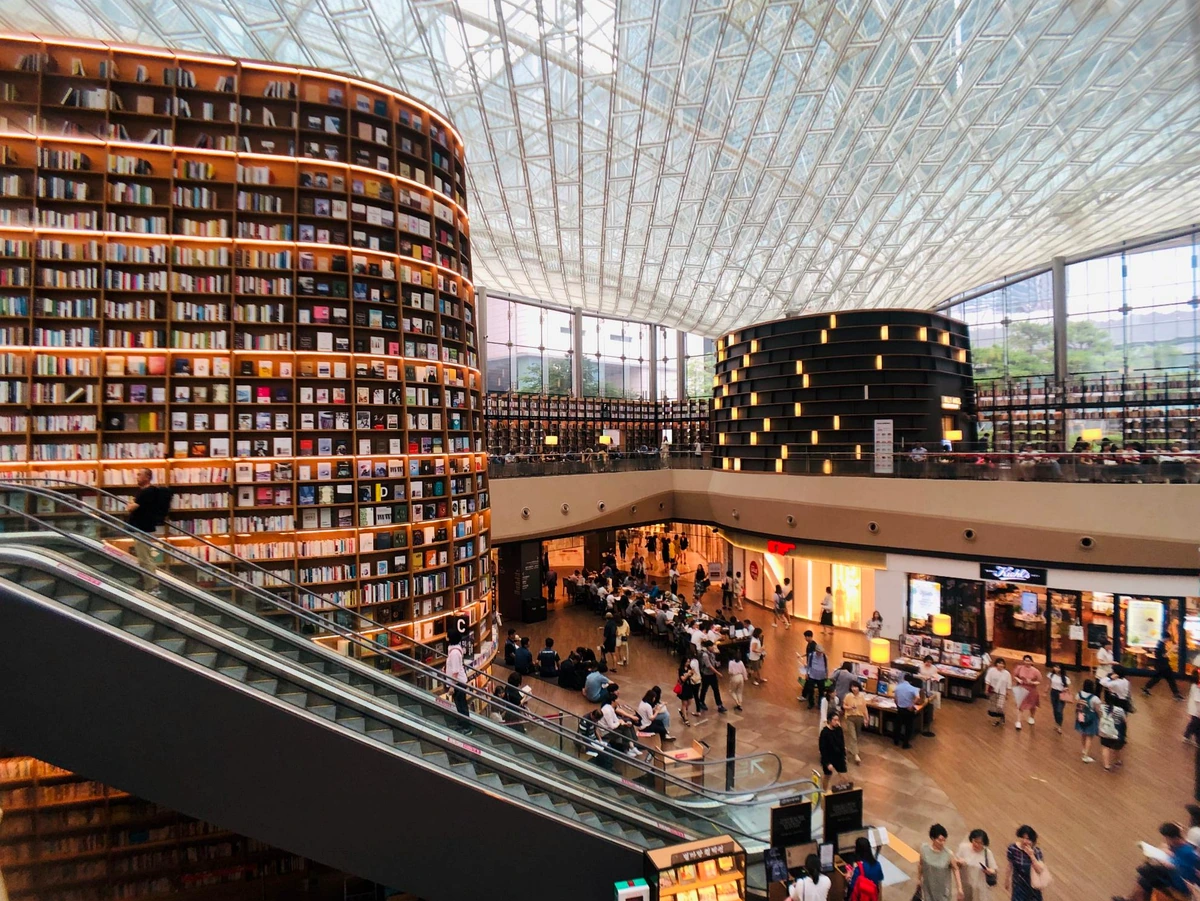
Born from the union of cutting-edge engineering and harmonious geomantic philosophy, Starfield’s signature landscape emerges like an illuminated oasis of knowledge beneath the earth. Its strongest visual focal point consists of three giant bookshelves soaring 13 meters high like wooden pillars supporting the sky, serving both as artistic structural elements and visual anchors for the light cascading down from the dome. Every detail of the interior landscape was meticulously calculated—from light reflection angles and natural air movement through hidden ventilation systems to the interspersed placement of seating lounges. As a result, visitors stepping inside experience none of the suffocation of an enclosed concrete basement; instead, they feel as though they are wandering through a magnificent valley of knowledge where Yin and Yang harmonize and heaven meets earth right in the center of Seoul.
Rising proudly inside the busiest underground hub of the Seoul metropolitan area, Starfield Library at COEX Mall—also celebrated by its poetic Hanja name 星空图书馆—stands as an iconic masterpiece of contemporary architecture. The venue spans a total floor area of 2,800 square meters, equivalent to roughly 847 pyeong in traditional Korean measurement. The moment visitors cross the threshold, they are immediately captivated by a soaring two-story open atrium where the boundaries between human knowledge and fine art seem to dissolve completely. The collection inside is equally staggering, housing over 70,000 books, magazines, and multilingual publications arranged with precision, transforming the venue into a true open-air grand library at the heart of a modern metropolis.
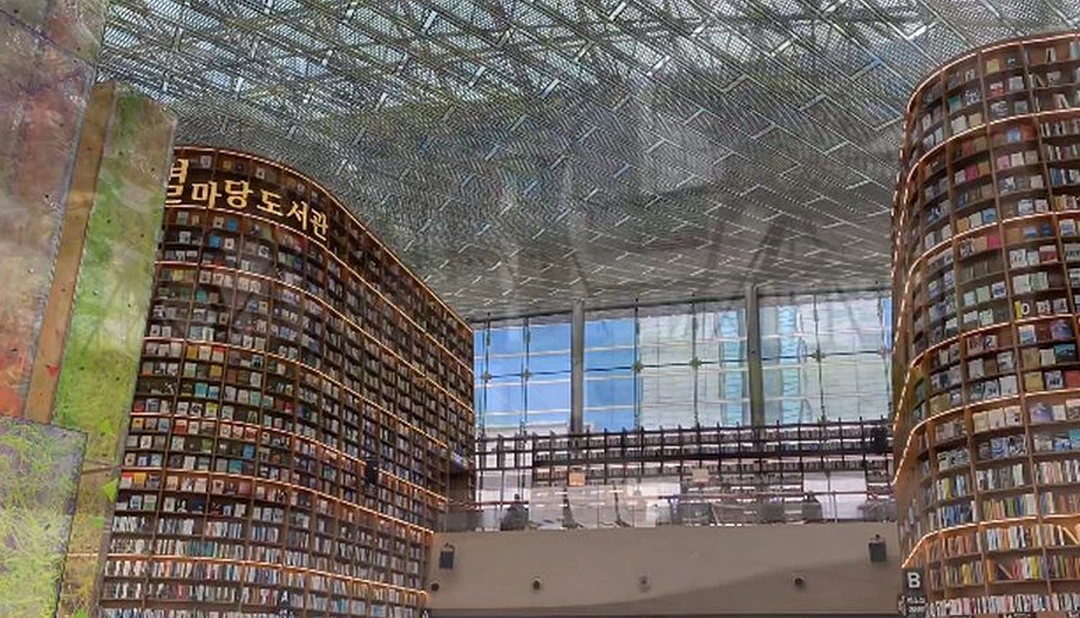
From a structural engineering and modern construction standpoint, the building represents a supreme synthesis of spatial artistry and advanced material technology. The entire exterior envelope utilizes a premium Steel and Glass Curtain Wall Structure, allowing natural light to flood every level while ensuring enduring structural integrity. Meticulous load-distribution calculations keep the edifice rock-solid, forming a transparent glass enclosure that opens up sweeping panoramic vistas. The interplay between slender steel members and tempered glass not only creates visual weightlessness, but also solves the structural challenge of supporting an oversized, column-free void.
The most awe-inspiring and solemn visual centerpiece inside Starfield Library is its trio of colossal wooden bookshelves reaching a record height of 13 meters—equivalent to a sturdy four-story building. Concealed behind the rustic, inviting warmth of their natural wood finish lies an intricate engineering feat: the entire architectural core relies on a fireproof high-load steel frame, meticulously clad on the exterior with specialized timber panels treated for superior heat and fire resistance. This combination not only satisfies Seoul’s stringent municipal fire-safety regulations, but also conveys a sense of warmth and approachability that softens the cool precision of metal and glass.
To maintain and manage the immense volume of books perched at dizzying heights, architects seamlessly integrated an ingenious network of internal maintenance walkways and ultralight cantilevered metal ladders into the structure. Tucked discreetly into the overall framework, these technical features assist librarians in their daily duties while doubling as modern geometric accents. The sight of soaring ladders suspended in midair alongside endless tiers of books evokes the concept of the Sublime aesthetic—an emotional state in which human beings feel small yet deeply inspired by the sheer grandeur of knowledge and artistic space.
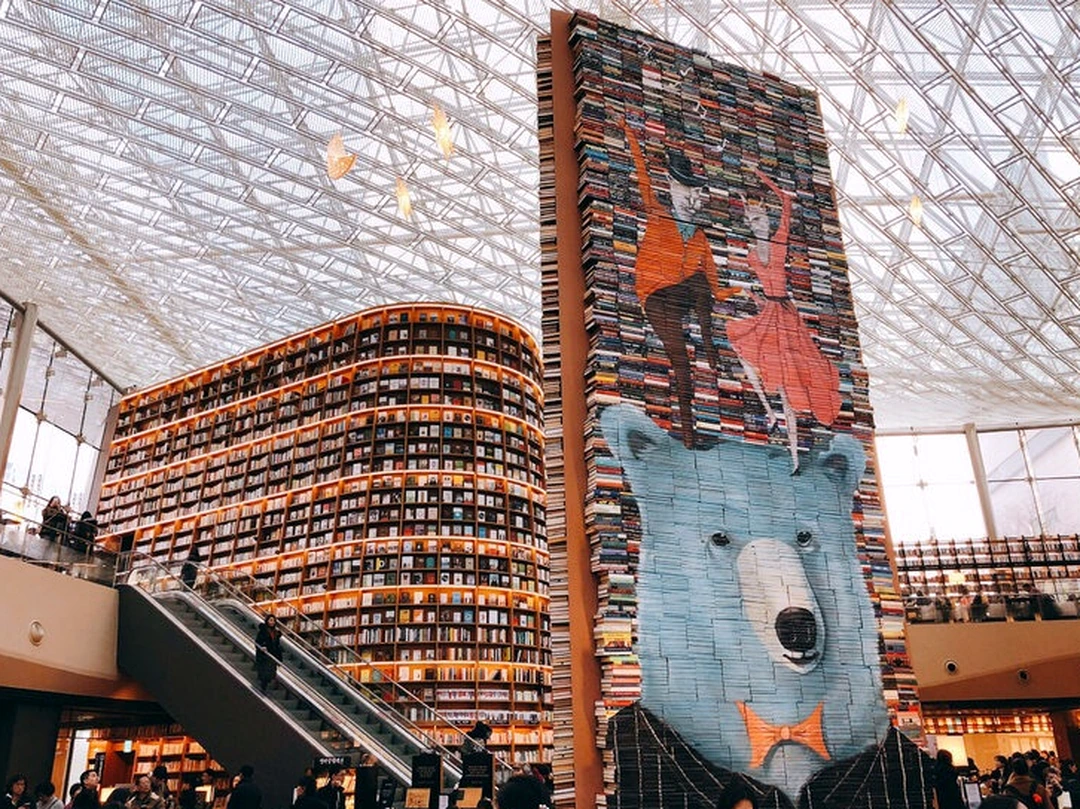
Crowning this sanctuary of knowledge is an enormous Space Frame dome roof crafted from an intricate network of reinforced steel trusses. Spanning the dome are multi-layered tempered glass panels engineered with high-grade thermal insulation and complete ultraviolet (UV) protection. This architectural solution not only shields tens of thousands of delicate paper volumes from sun damage, but also forms a resilient barrier protecting the library against Seoul’s extreme seasonal weather—from freezing winter snowstorms to intense summer downpours. Sunlight filtering through the dome diffuses softly, cascading across the bookshelves like trails of shooting stars and bringing to life the true spirit of a library beneath a starry sky.
As dusk begins to fall over bustling Gangnam District, Starfield Library (星空图书馆) undergoes a magical metamorphosis of light and emotion, shedding its daytime serenity to drape itself in an enchanting, luminous glow. Whereas during bright daylight hours, natural light pours down from the vast glass dome like a crystal waterfall—tracing the sun’s arc across rows of books on towering walls to cultivate a pure, scholarly atmosphere—nightfall awakens an entirely different vitality. This transition from day to night is far more than a simple passing of hours; it is a carefully choreographed visual performance that transports visitors from a hectic reality into a mythical realm of stories.
The secret behind this visual enchantment lies in tens of thousands of LED lights cleverly concealed within the shelving architecture. Emitting a warm color temperature ranging between 2700K and 3000K, the gentle golden glow spreads evenly across thousands of book spines, transforming the 13-meter book towers into a floating “city of stars.” The name Starfield truly comes into its own after dark, when twinkling reflections dance across architectural surfaces like a miniature Milky Way right in downtown Seoul. Even more remarkably, despite sitting at the very core of COEX Mall—one of Asia’s busiest underground shopping centers—the library interior maintains an astonishingly peaceful hush. This miraculous contrast is achieved through high-density acoustic carpeting paired with specialized micro-porous sound-absorbing panels along the walls and ceiling vault, neutralizing ambient footsteps and chatter to preserve a tranquil haven for the soul.
Evening life at Starfield Library extends far beyond solitary reading, evolving into a vibrant cultural stage. Once warm lighting envelops the hall, the venue frequently transforms into an intimate, site-specific performing arts theater. Visitors may chance upon soulful poetry readings by celebrated Korean poets, classical chamber concerts where violin melodies mingle with the scent of aged paper, or candid philosophical talks between renowned authors and readers. Furthermore, the fusion of digital Media Art with the surrounding architecture breathes contemporary energy into traditional reading culture. Fluid digital projections ripple across the towering walls of books, turning static structures into expressive moving canvases that immerse onlookers in a mesmerizing multi-sensory experience.
Experiencing Starfield after dark invites a slower pace, allowing visitors to claim a cozy corner on the second floor, sip a fragrant cup of coffee, and take in the majestic panorama below. Bathed in soft 2700K light, Seoul’s frenetic rhythm seems to drop an octave, giving way to the gentle rustle of turning pages, soothing instrumental music, and soft footsteps on woven carpets. Through multi-layered acoustic design and luminous artistry, Starfield Library has become an unmissable sanctuary for anyone seeking inner stillness in a modern metropolis—a living testament to the seamless harmony between commercial architecture and genuine artistic soul.
After hours spent immersed among countless volumes beneath the radiant glass dome of Starfield Library, your Seoul journey becomes all the more fulfilling as you step into the multi-layered culinary scene of Samseong-dong and the COEX complex. Beyond being Gangnam’s premier modern crossroads, this neighborhood preserves the essence of Korean Royal Court cuisine, where innovative culinary craftsmanship meets centuries-old gastronomic philosophy. Dining around Starfield goes far beyond satisfying hunger; it is a multi-sensory voyage guiding travelers through the storied flavors of the Land of Kimchi.
The soul of the culinary map surrounding Starfield Library lies in restaurants serving Hanjeongsik (한정식)—the traditional Korean full-course banquet meticulously preserved since the Joseon Dynasty. Each Hanjeongsik table is a work of edible art adhering strictly to the philosophy of “Obangsaek” (Five Cardinal Colors), harmonizing five foundational hues symbolizing the Five Elements: green/blue (Wood), red (Fire), yellow (Earth), white (Metal), and black (Water). Served on traditional Yugi bronzeware, this color harmony not only creates stunning visual balance, but also ensures Yin-Yang equilibrium and medicinal nourishment rooted in Eastern medicine. From delicate appetizer porridges and sesame-dressed wild mountain greens (Namul) to tender boiled pork wraps (Bossam) and charcoal-grilled yellow croaker, every dish highlights peak seasonal ingredients.
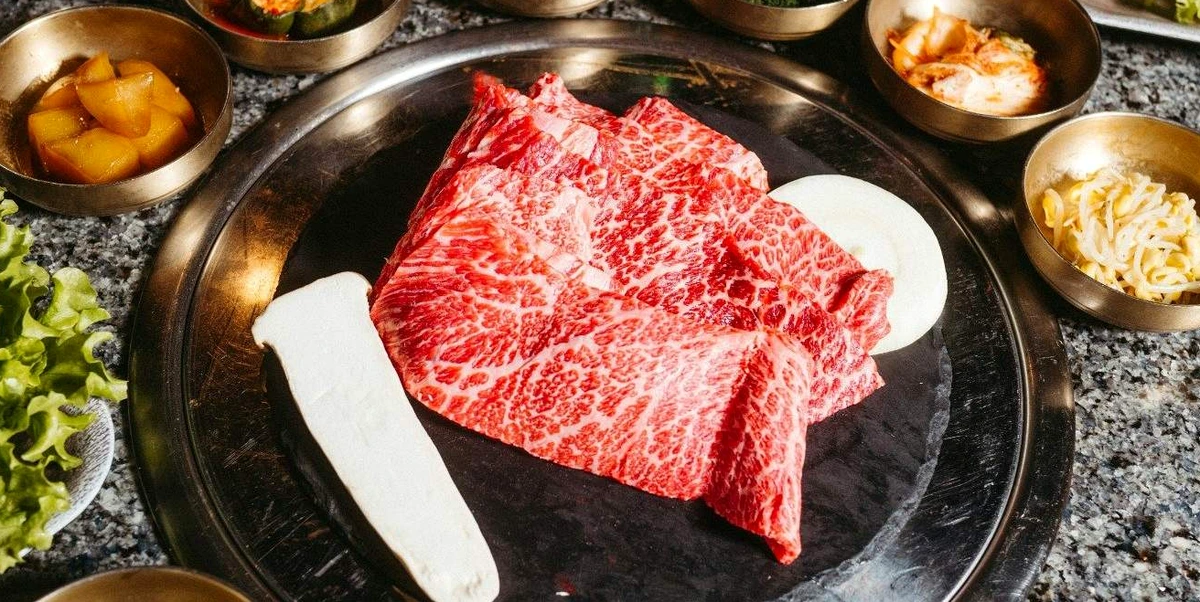
In particular, Gangnam’s dining avenues encircling COEX are celebrated as a paradise for Grade 1++ Hanwoo beef (한우)—South Korea’s most prized and luxurious beef. Prepared by master chefs, cuts of Hanwoo beef boasting intricate snowflake marbling undergo a strict multi-week dry-aging process to concentrate tenderness and natural sweetness. Seared over glowing charcoal embers, its rich, buttery aroma mingles with aged fermented soybean paste (Doenjang) matured in traditional Onggi earthenware crocks and handcrafted kimchi, delivering an unforgettable gastronomic experience for every visitor.
Tucked beside sleek glass skyscrapers lie quiet side alleys safeguarding multi-generational family eateries. Standing out among them is traditional Kalguksu (칼국수), or hand-cut knife noodles. Freshly kneaded and sliced by hand on the spot, the noodles are simmered in a clear, naturally sweet broth brewed for hours from deep-sea anchovies and premium Dasima kelp. Served steaming hot with freshly fermented spicy kimchi on the side, a bowl of Kalguksu captures the warmth and understated refinement of everyday Korean comfort food.
To bring your culinary and intellectual excursion at Starfield Library to a serene close, be sure to visit one of the Zen-inspired traditional teahouses nearby. Here, tea drinking is elevated into a restorative ritual featuring celebrated herbal infusions such as Omija-cha (five-flavor berry tea) uniting sour, sweet, bitter, pungent, and salty notes; warming honey-steeped ginger tea; or fragrant Seolhwa green tea. Accompanied by red-bean-stuffed Tteok rice cakes, honey-glazed Yakgwa pastries adorned with gold leaf, or soybean-dusted Injeolmi, every soothing sip and delicate bite awakens the senses and leaves a lingering impression of a Seoul that seamlessly bridges ultra-modernity and timeless cultural heritage.
Starfield Library at COEX Mall welcomes visitors completely free of charge every day of the week, including public holidays, from 10:00 AM to 9:00 PM. For travelers hoping to capture crisp, unobstructed architectural photographs without heavy crowds, the window between 10:00 AM and 11:30 AM is ideal. During these morning hours, natural daylight pours through the giant glass dome onto the 13-meter bookshelves, bathing the space in bright yet gentle illumination while visitor numbers remain light. Conversely, if you wish to admire a shimmering “sea of stars” true to its Hanja name 星空图书馆, plan to visit after 6:00 PM. Once night falls over Seoul, built-in architectural lighting casts a warm golden glow across tens of thousands of book spines, transforming the entire atrium into a mystical galaxy in the heart of the city.
South Korea’s world-class public transit system makes reaching this sanctuary of knowledge effortless. The most convenient option for international travelers is Seoul Subway Line 2—the vital circular line linking Seoul’s major districts. Simply ride to Samseong Station (Station Code 219) and head toward Exit 5 or Exit 6. From there, clear bilingual English-Korean signage marked “COEX Mall / Starfield Library” guides you through a direct underground passageway straight into the mall without ever stepping outdoors—an especially welcome perk during snowy Seoul winters or rainy summer days.
One of Starfield Library’s defining charms is its completely open-door policy with zero admission fees. Visitors do not need advance reservations or registration procedures to enter this architectural wonderland. For those looking to settle in to read or work on a laptop, the second-floor mezzanine gallery offers an ideal vantage point, outfitted with long communal tables equipped with built-in power outlets and complimentary high-speed Wi-Fi. Because seating is limited and popular with local students and remote workers, arriving right at opening time gives you the best chance of securing a prime spot. Alongside this open access comes an unspoken code of etiquette respected by all visitors: keep voices low, switch mobile phones to silent mode, and minimize noise out of consideration for fellow readers.
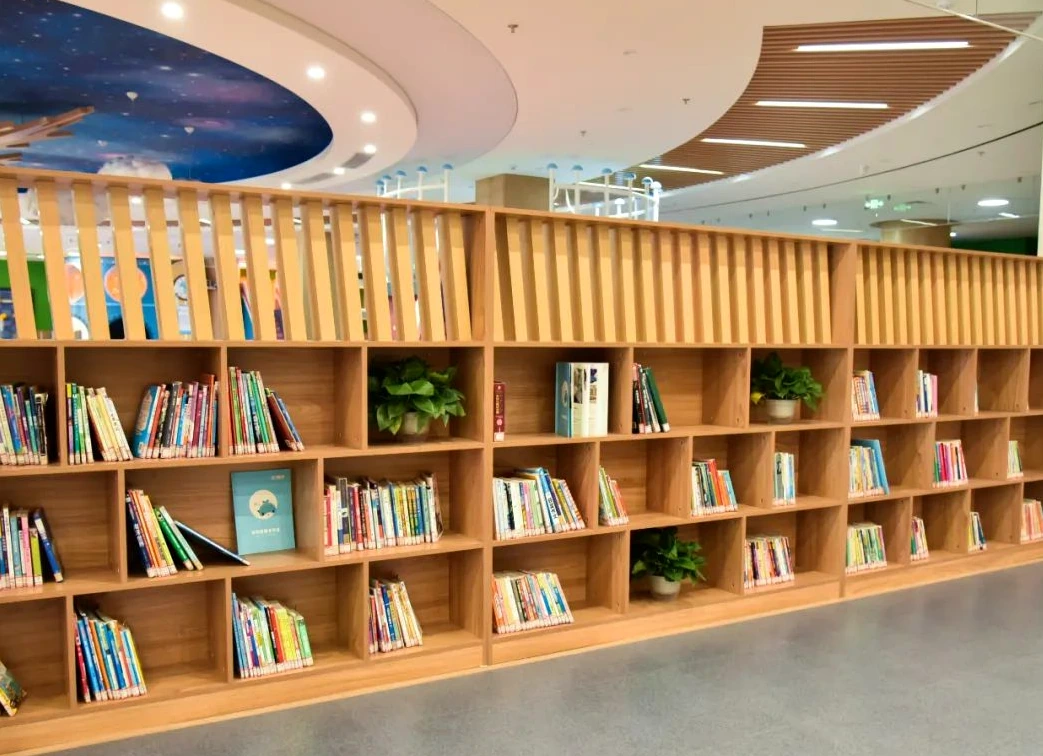
When it comes to photography and sightseeing etiquette, please note that the library strictly prohibits large tripods and flash photography to ensure pedestrian safety and preserve the peaceful ambiance. Fortunately, stunning angles abound without extra gear: start on the ground floor at the central intersection between the book towers and tilt your lens upward toward the glass dome to capture the dizzying verticality of the shelves. Afterward, take the escalator up to the curved second-floor balcony, where a symmetrical panorama unfolds across the entire hall—vividly showcasing the intersection of modern urban rhythm and East Asian reverence for knowledge. To plan a seamless South Korean getaway and explore iconic landmarks like Starfield Library with ease, you can browse all-inclusive South Korea tour packages thoughtfully designed for optimal pacing and real-world travel convenience.