Bathhouse and thermal-sauna culture on the Korean Peninsula did not originate merely from routine bodily hygiene; rather, it is deeply rooted in a profound wellness philosophy where traditional Eastern medicine intertwines seamlessly with Buddhist and Taoist views of human life. Throughout the history of the Joseon Dynasty, physical purification was closely bound to cleansing the mind and harmonizing the flow of vital energy. The seminal textual milestone documenting this therapeutic practice appears in the monumental Donguibogam (Principles and Practice of Eastern Medicine), painstakingly compiled by Royal Physician Heo Jun, completed in 1610, and officially woodblock-printed and published in 1613. In this exemplary medical canon, Heo Jun expounded in depth on Hŭng (heat therapy) combined with Oncheon-yok (natural hot-spring bathing) as a core method for balancing the two poles of Yin and Yang within the body, unblocking stagnant meridians, and promoting the expulsion of deep-seated toxins through sweat glands. Heat radiating from stones, baked clay, and medicinal herbs was regarded as a bridge guiding natural primordial energy into the internal organs, laying the first medical-theoretical foundation for traditional thermal-steaming rituals.
Entering the second half of the twentieth century, the landscape of folk bathing customs began undergoing fundamental transformations in step with the pulse of the times. Rapid industrialization and the massive wave of rural-to-urban migration under President Park Chung-hee during the 1960s and 1970s completely reshaped residential structures. Amid cramped communal housing lacking private hot-water plumbing, affordable neighborhood public bathhouses known as mok-yok-tang flourished across alleyways from Seoul to Daegu, becoming indispensable community hubs for the working class after exhausting workdays. By the 1980s, rising urban living standards spurred the emergence of gamdama or buldeung—dry sauna chambers heated by traditional wood-fired kilns built of fired clay and high-heat-retaining granite, replicating ancient charcoal-kiln sweating methods to soothe chronic musculoskeletal aches of modern society.
The pivotal moment defining the modern term jjimjilbang unfolded between 1994 and 1996, originating from the first high-temperature sauna concepts in the port city of Busan before spreading rapidly to Seoul and across the nation. By combining the mimetic root jjimjil—referring to the folk therapeutic practice of hot poultices and warm compresses—with bang, meaning “room,” the concept of jjimjilbang officially named an entirely new kind of public wellness sanctuary. Yet the historical turning point that transformed the jjimjilbang from a leisure service into a distinctive sociocultural phenomenon was inextricably tied to the Asian Financial Crisis (the IMF Crisis) of 1997–1998. This severe economic upheaval drove countless businesses into bankruptcy and plunged innumerable families into hardship, forcing them to slash everyday living expenses to the bare minimum.
Amid the dire circumstances of the late-nineties financial crisis, jjimjilbang complexes suddenly became warm, safe, and remarkably inexpensive refuges for the unemployed, bankrupt merchants who had lost their homes, and migrant workers needing overnight shelter. For a modest admission fee, anyone could find a thin sleeping mat, a warm corner on traditional ondol underfloor heating, hot soaking tubs to wash away the dust of the world, and a simple, nourishing meal. Transcending pure physical recovery, the post-crisis jjimjilbang emerged as a living symbol of communal solidarity, erasing all class boundaries as everyone donned the same simple cotton uniform and shared an egalitarian living space. Moving into the 2000s, riding the wave of South Korea’s information technology and telecommunications boom, the jjimjilbang continued its remarkable evolution—integrating digital entertainment zones, pure Himalayan salt rooms, and signature culinary courts—completing the portrait of a one-of-a-kind communal relaxation heritage inherited directly from ancient medical wisdom.
Viewed through the lens of urban spatial planning and modern geomancy, jjimjilbang culture does not exist in isolation amid untamed wilderness; rather, it is deeply anchored in South Korea’s human-geographic network. The flourishing of this communal retreat model is closely bound to arterial transportation infrastructure, where flows of commuters and travelers act like vital lifelines nourishing large-scale sauna complexes. Since the KTX high-speed rail line officially launched in April 2004 at an impressive speed of up to 305 km/h—shrinking the geographic distance between capital Seoul and port city Busan to a mere 2 hours and 15 minutes—alongside the expansion of the SRT high-speed network, interregional leisure boundaries have effectively vanished. Within major metropolises, the Seoul Subway system with its nine core lines connects bustling districts such as Myeongdong, Gangnam, and Hongdae, forming a strategic spatial grid: nearly all renowned jjimjilbang complexes are situated within a 500-meter radius of central stations, allowing visitors to transition effortlessly from a frenetic urban pace into deep stillness within just a few steps.
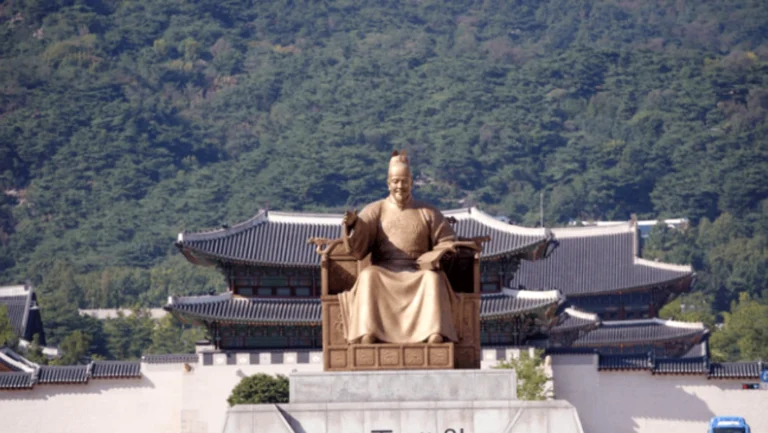
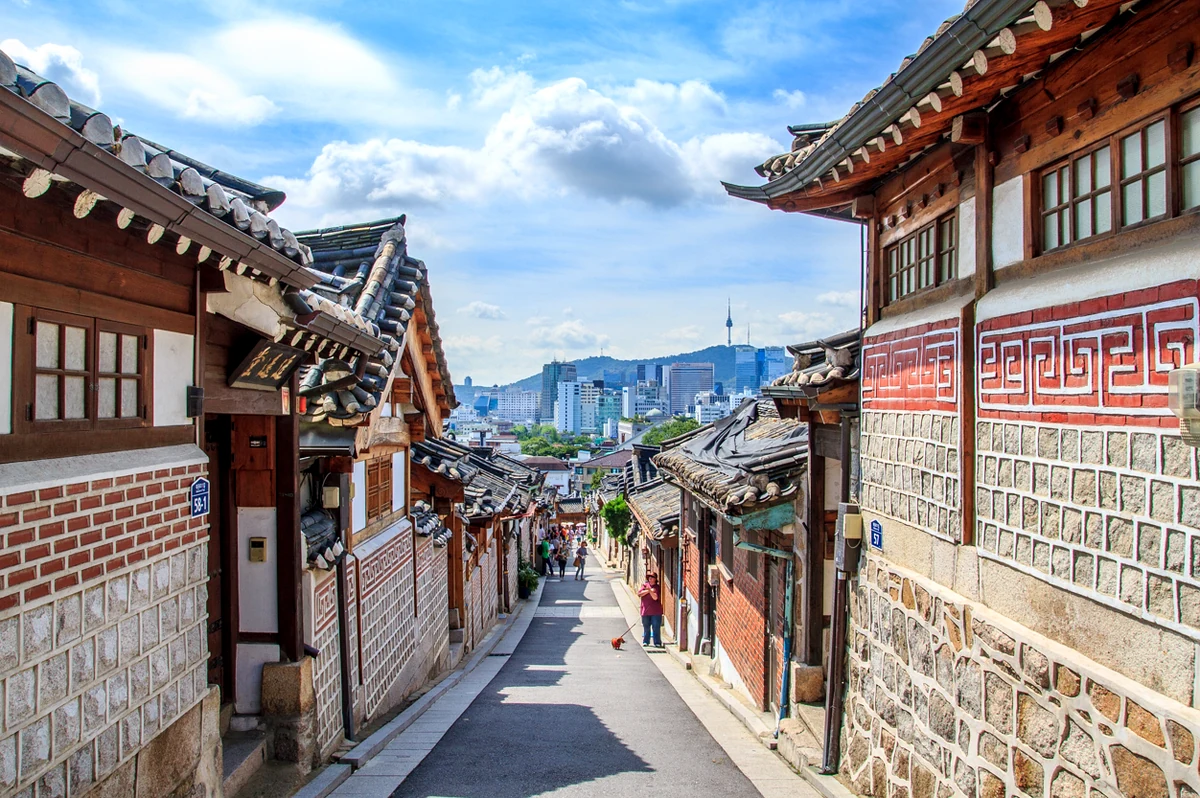
The geographic distribution of these thermal bathhouses forms two signature cultural corridors that shape iconic travel itineraries across the Korean Peninsula. Foremost is the Royal Culture and Urban Relaxation Corridor in central Seoul—a tightly woven route departing from the tranquil grounds of Gyeongbokgung Palace, winding past the dark-tiled roofs of Bukchon Hanok Village, soaking in the traditional artistic atmosphere of Insadong, and opening onto modern thermal sanctuaries such as Dragon Hill Spa or Aquafield complexes. Within this spatial layout, jjimjilbang architecture makes full use of subterranean levels and enclosed upper floors, pairing negative-pressure air-filtration technology with fragrant hinoki cypress wood to recreate a pristine forest oasis right in the heart of a steel-and-concrete metropolis.
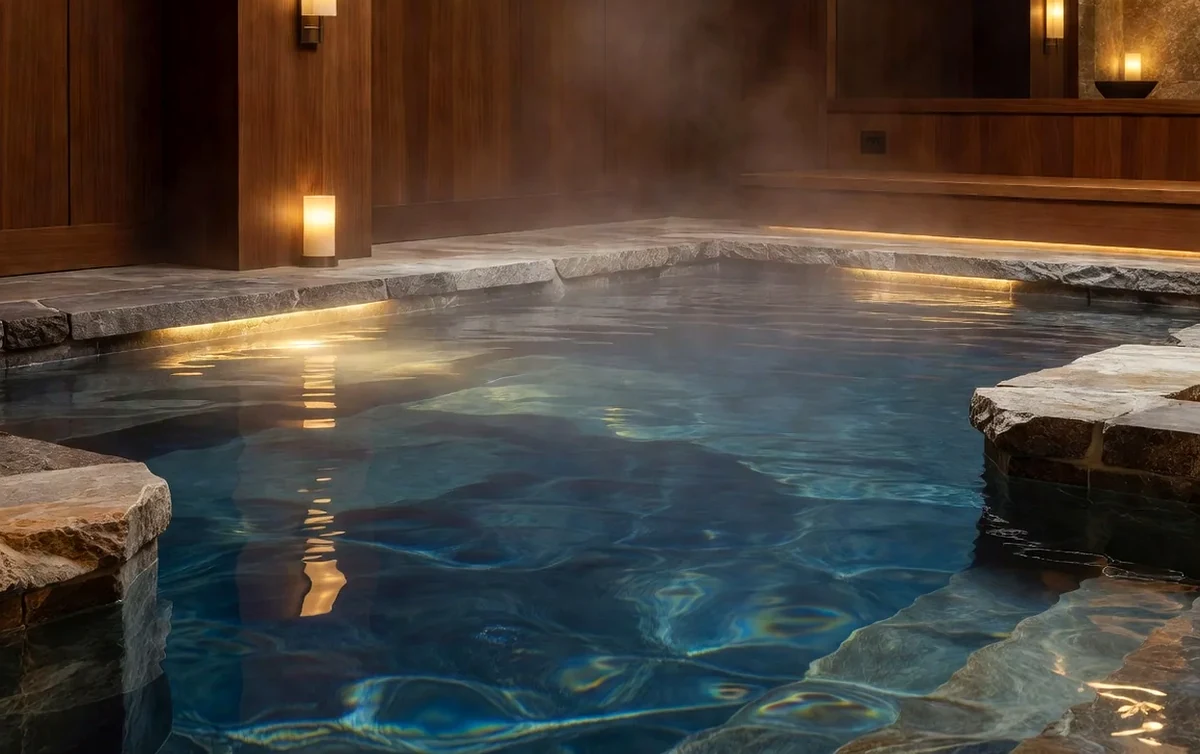
In the opposite direction, the Southeastern Coastal Corridor fosters an expansive dialogue between hydrothermal therapy and seaside nature along the Busan shoreline. Starting from the golden sands of Haeundae Beach, the journey leads into the sleek district of Centum City—home to Spa Land Centum City, one of Asia’s most luxurious jjimjilbang masterpieces. Geologically, this complex taps directly into two distinct subterranean aquifers of natural hot spring water rising from hundreds of meters underground: one rich in sodium bicarbonate to soften the skin, and another high in mineral salts to relieve muscular and joint soreness. Architects have harmoniously applied the generative principles of the Five Elements to the landscape design, interweaving red yellow-earth clay saunas, monolithic Himalayan salt rooms, and ice chambers with open-air garden decks bathed in sea breezes—creating a holistic body-and-mind purification cycle grounded in cutting-edge microclimate pressurization engineering.
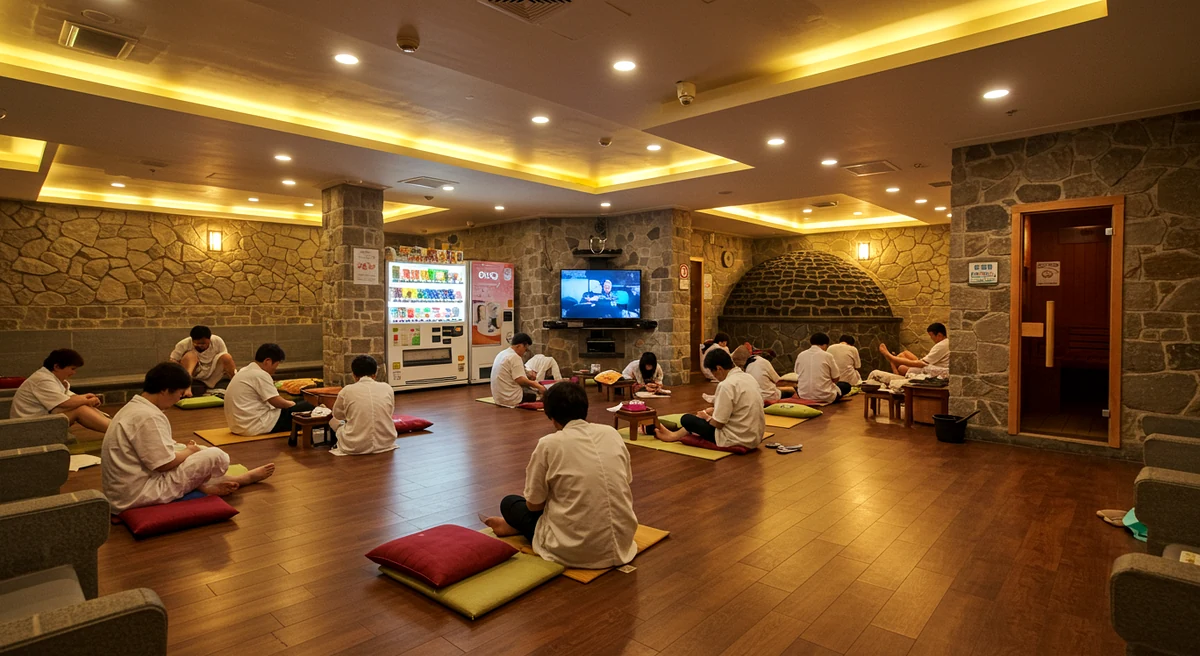
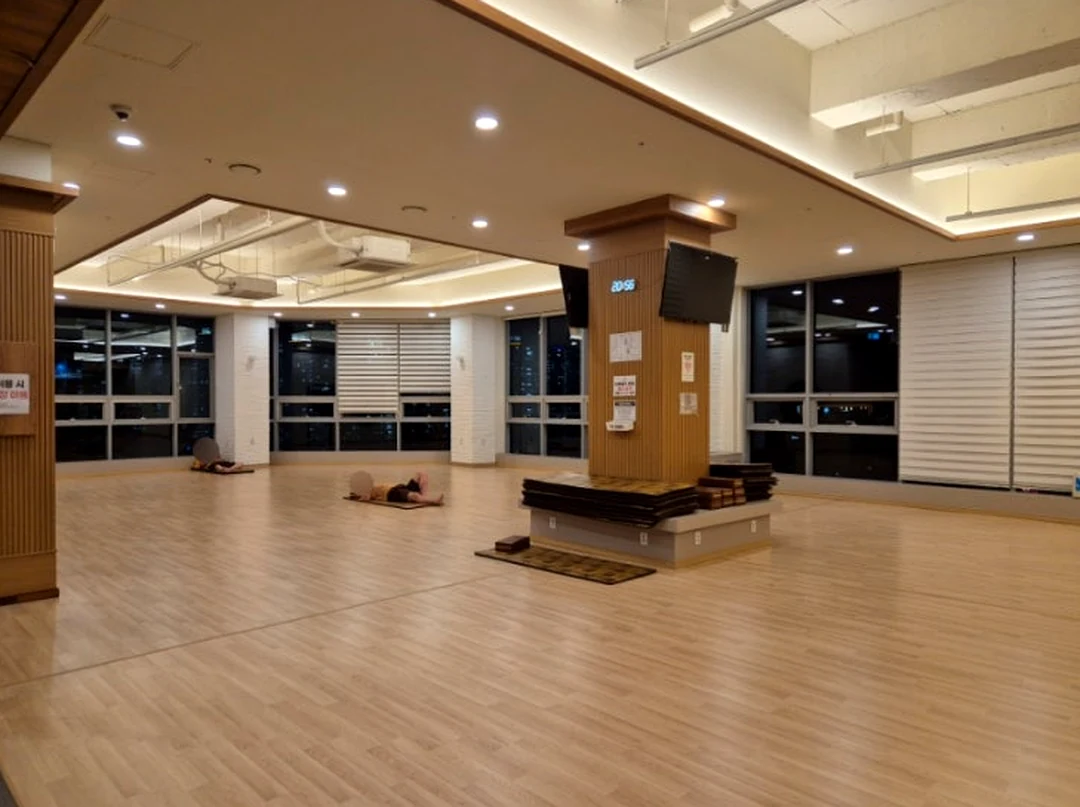
The defining hallmark of every jjimjilbang’s interior landscape lies in a functional floor plan engineered for high social cohesion. After completing a rigorous cleansing ritual in gender-segregated soaking pools graded by temperature from 38°C to 45°C, all guests step into a vast, warmly lit communal hall where social stratification dissolves beneath identical cotton uniforms and playful yangmeori “ram’s-horn” folded towels. Traditional ondol heated floors radiate gentle warmth throughout the hall, inviting visitors to crack open glossy brown sauna-roasted eggs slow-baked for hours and sip chilled, delicately sweet sikhye rice punch—completing a vibrant, unpretentious tableau of communal life steeped in millennia of Korean cultural identity.
From the perspective of functional planning and spatial organization, modern Korean jjimjilbang resorts have far outgrown the definition of a simple public bathhouse to become monumental architectural complexes. From veteran mega-saunas like Siloam Sauna and Dragon Hill Spa in the heart of Seoul to contemporary aesthetic icons such as Aquafield in Hanam or Spa Land inside Busan’s colossal Centum City mall, every square meter is calibrated according to Yin-Yang, Five Elements philosophy, and biotherapeutic principles. Jjimjilbang architecture divides cleanly into three primary spatial axes: the wet bathing zone strictly separated by gender, an ecosystem of temperature-graded sauna rooms, and a grand communal lounge infused with vernacular architectural character.
The oldest and most commanding energy core in any traditional jjimjilbang model is the bulgama—a yellow-ochre clay kiln maintained at intense temperatures between 75°C and 90°C. The structure of a bulgama directly emulates ancient pottery kilns, featuring a parabolic domed ceiling engineered to focus and reflect radiant heat evenly onto the space below. Constructing the kiln chamber demands painstaking artisanal masonry, blending pure mineral-rich silicate yellow clay (hwangto), sturdy marble, and chopped rice straw serving as a resilient natural binder. Under the steady, smoldering heat generated by pine firewood or subterranean burners, the earthen walls emit far-infrared radiation that penetrates deep into bodily tissues, stimulating cerebral blood circulation, releasing stagnant meridians, and leaving bathers feeling remarkably weightless after a purifying sweat.
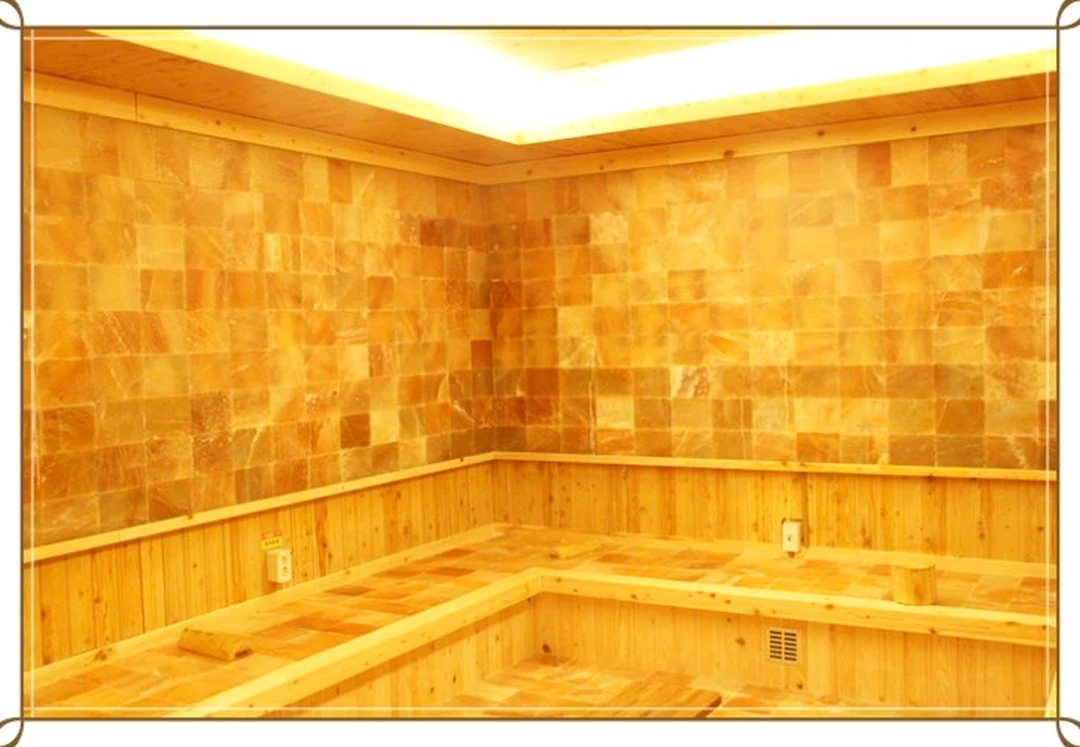
Transitioning smoothly from the intense warmth of mother earth to crystalline stillness is the Himalayan salt room, where ceilings and walls are clad in thousands of fossilized salt bricks glowing in natural pinkish-orange hues. Operating at a gentle 55°C to 65°C, this chamber functions as an enclosed microclimatic therapy room: when heated, salt crystals containing up to 84 trace minerals continuously release negative ions into the air, neutralizing free radicals and remarkably clearing the upper respiratory tract. Immediately following this heat-absorption cycle, bathers typically step straight into the ice room, maintained between -5°C and 0°C. Frost-covered white walls deliver an intentional thermal shock that triggers sudden vasoconstriction, tightens pores across the entire body, strengthens immune response, and restores epidermal elasticity through hot-cold contrast therapy.
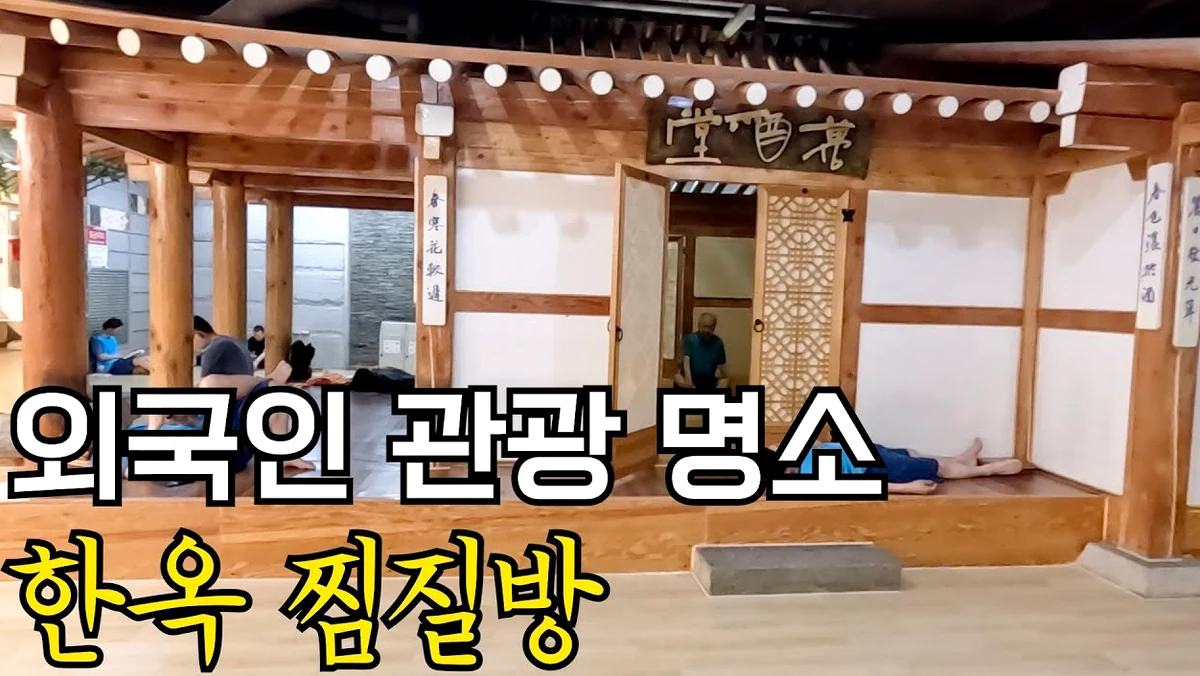
At the heart of the architectural complex lies the communal living hall, designed after the main wooden hall (daecheongmaru) of a traditional Hanok house, where families and groups of friends gather to lounge upon warm ondol heated floors. Subtly punctuating the quiet perimeter corridors are rows of individual sleeping alcoves known locally as gul-tul. Inspired by natural stone caves and ancient brick arches, each alcove is sized for a single sleeper with calibrated depth and a gently curved vaulted ceiling, built with sound-insulating fired brick to carve out absolute personal privacy within a wide-open communal space. This rhythmic interplay between the earthy rawness of yellow clay, the luminous glow of mineral salt, the crisp chill of ice chambers, and the quiet sanctuary of vaulted sleeping nooks elevates the jjimjilbang into an unrivaled restorative architectural masterpiece of Korean culture.
As twilight fades over the skyscrapers of Seoul or the breezy shoreline of Busan Bay, jjimjilbang complexes enter their brightest, most vibrant cycle of life—resembling a living stage of contemporary urban society. Far exceeding the boundaries of a traditional public bathhouse, these spaces have long been hailed by locals as the “second living room” of Korean society, a peaceful sanctuary where class distinctions fade away. Dressed in unpretentious cotton uniforms and whimsical ram’s-horn towel wraps, hundreds of people gather beneath the expansive roof of the main hall, creating a singular tapestry of communal life stretching from dusk until dawn.
The visual artistry of modern jjimjilbang interiors is crafted through a refined dialogue between traditional Hanok architectural philosophy and contemporary interior design. In the central hall, indirect lighting in warm amber tones washes softly across pine timber beams, raw basalt flagstones, and radiant ondol floors. Illumination is never harsh; instead, it is deliberately tempered, filtering through stylized hanji mulberry-paper lattice screens, glancing off textured yellow-clay walls, or shimmering through translucent blocks of pinkish-orange Himalayan salt. This gentle modulation of light produces an immediate soothing effect on the optic nerves, lifting visitors out of the industrial rush and everyday pressures of modern life.
Nightlife here flows like a multi-layered cultural current in which every individual effortlessly finds their own rhythm within a shared open space. On the heated floors, multigenerational families gather around trays of nutty brown stone-roasted eggs and frosty bowls of sweet sikhye rice punch, snacking while watching national variety shows on big screens. In another corner, young adults chat lively at minimalist cafés, test their skills at well-equipped PC bang gaming zones, or slip into quiet cinema lounges outfitted with plush leather recliners. The acoustic blend of soft laughter, the crisp crack of roasted eggshells, and gentle meditative melodies drifting from the sauna chambers weaves an enchanting urban symphony.
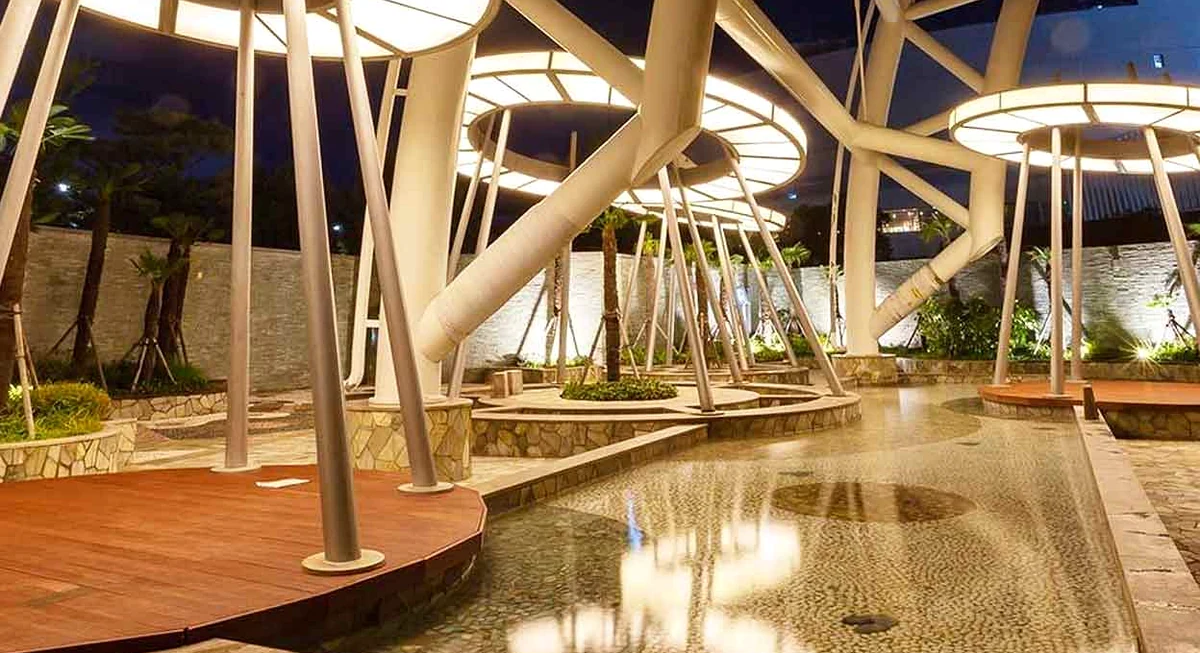
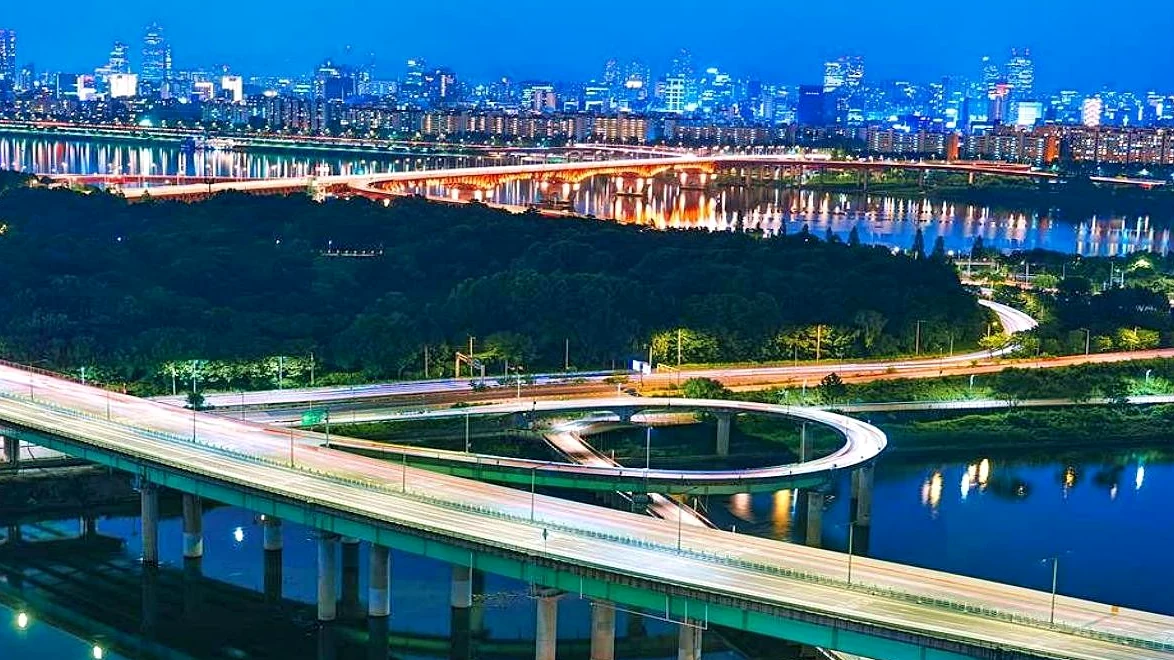
At flagship destination complexes such as Spa Land Centum City in Busan or Aquafield in Hanam, the nighttime experience rises to a breathtaking visual spectacle seamlessly integrated with surrounding scenery. Behind floor-to-ceiling glass walls, guests soak their feet in open-air outdoor mineral footbaths, gazing out at the illuminated arches of Gwangan Bridge spanning Haeundae’s waters or admiring the shimmering city lights reflected along the Han River from high above. As late night deepens, the atmosphere shifts automatically into tranquil quietude: lighting dims to a soft glow, giving way to cozy honeycomb-style sleeping pods and padded mats spread across heated wooden floors, ushering in restful sleep in the heart of a city that never sleeps.
The communal lounge of an authentic jjimjilbang is not merely a place to stretch out on woven reed mats or heated ondol wooden floors; it is also a miniature culinary plaza where the wellness philosophy of Yin-Yang balance is expressed in full through humble, soulful fare. After sweating out toxins under the intense heat of clay kilns or salt chambers, a bather’s five senses feel freshly awakened and acutely receptive to every nuance of aroma and flavor. That is the exact moment when the bathhouse’s signature culinary repertoire beckons, turning post-sauna dining into an indispensable living heritage of Korean urban life.
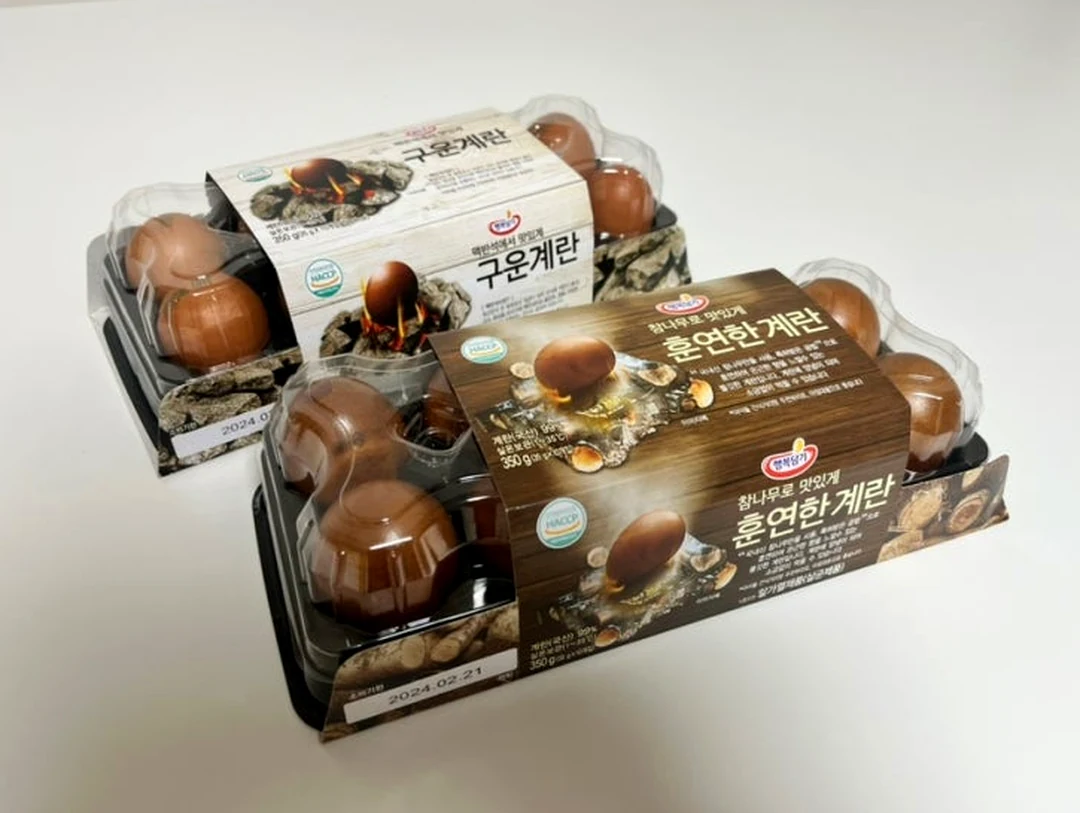
Reigning as the undisputed soul of jjimjilbang cuisine is kiln-roasted eggs, known locally as maekbanseok gyeran. Far removed from ordinary boiling in water, whole fresh chicken eggs are arranged carefully atop mineral-rich germanium stones or placed deep inside high-heat clay ovens for a slow roasting process lasting three to seven hours. Under gradual dry heat, a delicate Maillard reaction turns the shells a warm chestnut brown, firming the egg whites into a pleasantly chewy, springy texture while condensing the yolks into rich, creamy morsels infused with a subtle earthy smokiness. The playful ritual of gently tapping an eggshell against a companion’s forehead to crack it before peeling, dabbing a pinch of finely ground roasted salt onto each bite, and savoring it unhurriedly has long stood as a classic emblem of camaraderie and hearty laughter in shared public spaces.
Pairing naturally with every nutty roasted egg is sikhye, the beloved thirst-quenching rice beverage hailed as a cool mountain stream washing away post-sauna heat. Originating in the Joseon Dynasty as a refined royal court dessert, sikhye is crafted through a patient process of steeping cooked non-glutinous rice in barley-malt water for several hours at a precise temperature, allowing natural enzymes to convert starches into gentle maltose sweetness without relying on heavy refined sugar. Once tender grains of rice float lightly to the surface, the brew is brought to a brisk boil with slices of mature ginger, cooled, and deeply chilled with ice. Sipping sikhye from its signature plastic cup and straw sends a wave of crisp, refreshing sweetness across the palate as soft rice grains melt on the tongue—instantly replenishing depleted minerals and blood sugar while striking a harmonious counterpoint to lingering warmth within the body.
To complete a comprehensive physical recovery cycle, the in-house dining hall stands ready with hearty, restorative meals rich in nourishing properties. Foremost among them is a steaming bowl of miyeok-guk (seaweed soup), a dish deeply symbolic of rebirth and gratitude in Korean culture. Prepared by lightly sautéing nutrient-dense coastal brown seaweed in fragrant sesame oil before simmering it slowly with tender beef or fresh clams, miyeok-guk delivers abundant iodine, iron, and calcium to stimulate circulation and replenish relaxed muscles. Meanwhile, for those craving a crisp jolt to awaken the palate, a bowl of naengmyeon—chewy buckwheat noodles submerged in an icy, tangy-savory broth topped with slushy ice—or a plate of mak-guksu tossed generously in sweet-spicy gochujang chili paste delivers a burst of flavor, bringing the body-and-mind wellness journey to a triumphant culinary finale.
Most major jjimjilbang complexes in leading cities such as Seoul, Busan, and Incheon operate around the clock, 24 hours a day, seven days a week, serving as welcoming sanctuaries day and night for locals and international travelers alike. South Korea’s highly developed public transit network makes reaching these thermal havens remarkably effortless. Visitors can hop onto urban subway lines, alight at central hubs such as Yongsan, Dongdaemun, or Haeundae, and walk just a few minutes through direct underground passages straight to the entrances of multi-story relaxation complexes. Daytime hours from early morning through late afternoon offer the ideal window for unhurried pampering, whereas after 9:00 PM, the venue transforms into a cozy communal lodging space for anyone who has missed the last train or wishes to experience an authentic local overnight stay on warm ondol floors.
Admission fees vary depending on the time of day and the tier of each facility. Daytime entry typically ranges from 12,000 to 16,000 KRW, while overnight stays generally add a surcharge of 3,000 to 5,000 KRW to cover sleeping-mat and overnight amenities. This base fee includes full access to mineral soaking baths and themed sauna rooms, along with a loose-fitting cotton uniform and two soft bath towels. All incidental purchases inside—whether cracking into nutty maekbanseok roasted eggs, sipping chilled sikhye, or booking a traditional seshin full-body exfoliating scrub—are seamlessly logged onto an RFID-chipped electronic wristband, allowing guests to unwind completely without carrying cash or payment cards throughout their visit.
Enjoying an authentic jjimjilbang experience calls for following time-honored etiquette steps deeply ingrained in local daily life. Right at the entrance lobby, guests remove their shoes and store them in an assigned shinbaljang shoe locker, then use the electronic key to open their personal wardrobe locker inside. Beyond that point, spaces divide strictly by gender inside the mok-yok-tang wet bathhouse zone. Here, material barriers disappear completely as bathers disrobe entirely, thoroughly wash and scrub themselves at individual seated shower stations, and only then step into hydrotherapy soaking pools ranging from brisk 17°C cold plunges to soothing 42°C mugwort herbal baths. Only after completing this full bodily purification do guests put on their issued short-sleeved cotton uniform and enter the expansive co-ed communal area, where friends and family reunite to unwind together inside Himalayan salt caves or warm hwangto yellow-clay domes.
Hand in hand with convenience come paramount unwritten codes of conduct designed to safeguard communal dignity and privacy. Photography or video recording of any kind is strictly prohibited inside the mok-yok-tang bathing areas; violating this rule not only results in immediate intervention by staff but can also carry severe legal penalties under local law. Inside communal sleeping halls and low-temperature relaxation rooms, visitors should tread softly, switch mobile phones to silent or vibrate mode, and keep conversations to a whisper so as not to disturb resting neighbors. Furthermore, bringing outside food or beverages onto the premises is considered poor etiquette, as in-house snack bars and restaurants serve freshly prepared, hygienic traditional specialties right inside.
To enjoy a full four to six hours of physical and mental rejuvenation at premier thermal complexes—without having your schedule cut short or interrupted by mandatory shopping stops common in budget itineraries—choosing a thoughtfully curated, high-quality journey is essential. Travelers eager to immerse themselves in this authentic cultural tradition can explore carefully paced stops seamlessly woven into an all-inclusive South Korea tour package to savor the finest culinary specialties, natural hot springs, and time-honored sauna rituals of the Land of Morning Calm.