

The memories of the first generation of travelers visiting the Yangtze River delta are typically tied to the tranquil scenery of ancient water towns in Jiangnan. Here, ancient stone bridges with proud arch spans stretch across calm canals, mirroring traditional wooden boats gliding gently beneath mossy arches. When autumn arrives, the morning sunlight slants through each bridge span, dyeing the azure water gold and blending with the vibrant orange and red hues of ancient maple groves along the banks. This breathtaking and vivid natural scenery not only represents a profound, ancient China but has also become a classic visual symbol, inspiring hundreds of thousands of Vietnamese travelers to set out on discoveries for decades.
The period from 2011 to 2019 witnessed unprecedented expansion driven by the massive participation of low-cost carriers and the opening of direct flight routes, causing average airfare costs to drop by up to thirty-five percent. The phenomenon of Zhangjiajie and Fenghuang Ancient Town in Hunan province became an unprecedented public sensation as charter flights landed back-to-back at Changsha Huanghua and Zhangjiajie Hehua airports, driving Vietnamese visitor numbers to this region up by over four hundred percent between 2017 and 2019. Total outbound traveler volume to China skyrocketed from 1,220,000 trips in 2015 to 1,710,000 trips in 2017, before hitting an absolute record in 2019 with 4,540,000 total entry and exit movements. Among them, up to 920,000 were pure leisure tourists staying for over three nights, propelling Vietnam to third place in Southeast Asia as a source market for visitors. However, this era also exposed the negative undercurrents of cheap tour models or zero-dollar tours, which heavily relied on compulsory shopping stops.

After three years of complete freeze due to the epidemiological barriers of the Dynamic Zero-COVID policy from early 2020 through the end of 2022, the market established an entirely new operational order starting March 15, 2023, when Vietnam was officially included in the second batch of pilot destinations for receiving and sending tour groups. Closing out the transitional year with approximately 280,000 pure leisure visitors, the recovery wave accelerated spectacularly to reach an estimated 1,250,000 tourists in 2024, recording a growth rate of over one hundred and ten percent year-on-year. The driving force of this restructuring phase no longer relies purely on quantity but strongly shifts toward experiential quality, highlighted by the introduction of modern cross-border high-speed rail routes and the inevitable rise of shopping-free tour product lines, completely redefining the profile of the modern Vietnamese traveler.
The rise of the Chinese tourism market for Vietnamese travelers stems from a multimodal transport infrastructure revolution, completely erasing millennia of treacherous geographical barriers. The northern cross-border corridor is now firmly supported by three vital gateways. At the Lao Cai International Border Gate to Hekou North, the modern Kunming-Yuxi-Hekou railway operating at speeds from 160 to 200 km/h has shortened the travel time from the border region to the provincial capital of Kunming from seven hours down to a mere three hours and twenty minutes. Bordering Lang Son province, the influx of travelers through the Friendship Pass International Border Gate seamlessly connects from the Hanoi-Lang Son expressway into the Nanyou expressway network heading towards Nanning, while paving the way for the Nanning-Pingxiang high-speed railway project designed for a speed of 250 km/h. In the coastal region, the inauguration of the Fangchenggang-Dongxing railway connecting directly from the Mong Cai International Border Gate into the national high-speed rail network has compressed distances, bringing travelers to the center of Guangxi in just seventy-three minutes.
Outstanding transport infrastructure has empowered a matrix of five legendary routes, creating distinctive cultural and natural journeys. The “Yunnan Wonders” route takes travelers through Kunming, Dali, Lijiang to Shangri-La via a flexible combination of high-speed rail and road, allowing visitors to adapt smoothly as the altitude gradually increases from 1,890 meters to 3,160 meters above sea level. To the east, “Mysterious Hunan” wins hearts with the record-breaking 7,455-meter-long Tianmen Mountain cable car featuring a sheer 38.6-degree gradient alongside the 326-meter-high Bailong Elevator hugging the sandstone cliffs of Zhangjiajie before letting visitors unwind by the serene Tuojiang River in Fenghuang Ancient Town. Meanwhile, the “Sichuan Earthly Paradise” route witnessed a milestone when the Sichuan-Qinghai railway began operations, helping to narrow the nine-hour journey across winding and treacherous mountain passes from Chengdu to the jade valleys of Jiuzhaigou and Huanglong down to just one hour and thirty minutes. Furthest away is the “Silk Road Western Regions” route traversing Urumqi, Kashgar, and Turpan, an inland journey stretching across a radius of over 3,500 kilometers with daily and nightly temperature fluctuations reaching a dramatic 20 degrees Celsius.
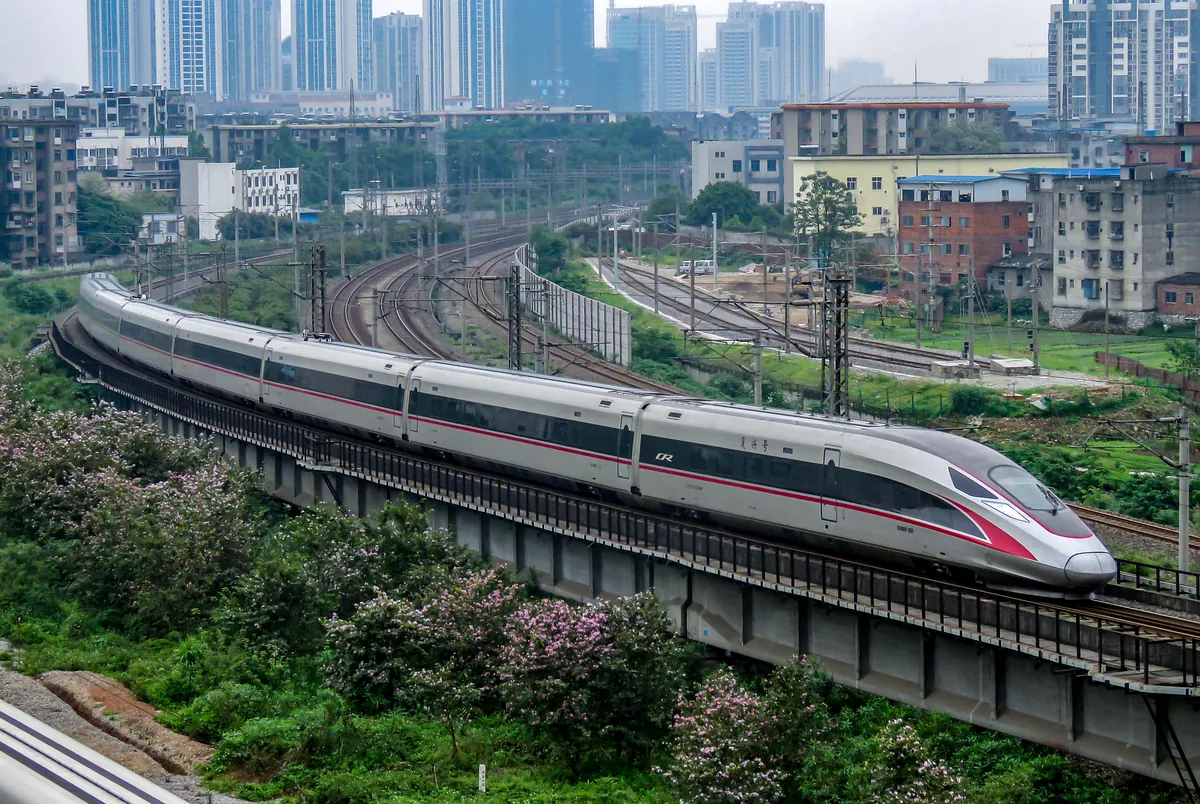
Running parallel to these majestic natural routes is the “Classic Heritage Axis” connecting Beijing, Shanghai, Hangzhou, and Suzhou. The combination of trunk airline routes and Fuxing CR400 high-speed trains gliding at 350 km/h makes the journey from the millennia-old capital to the modern financial center take only four hours and eighteen minutes. Every stop along this heritage route is optimized with a strict digital landmark management and identification system, allowing visitors to fully appreciate magnificent architectural works from the majestic Forbidden City to the endless expanse of the Great Wall.
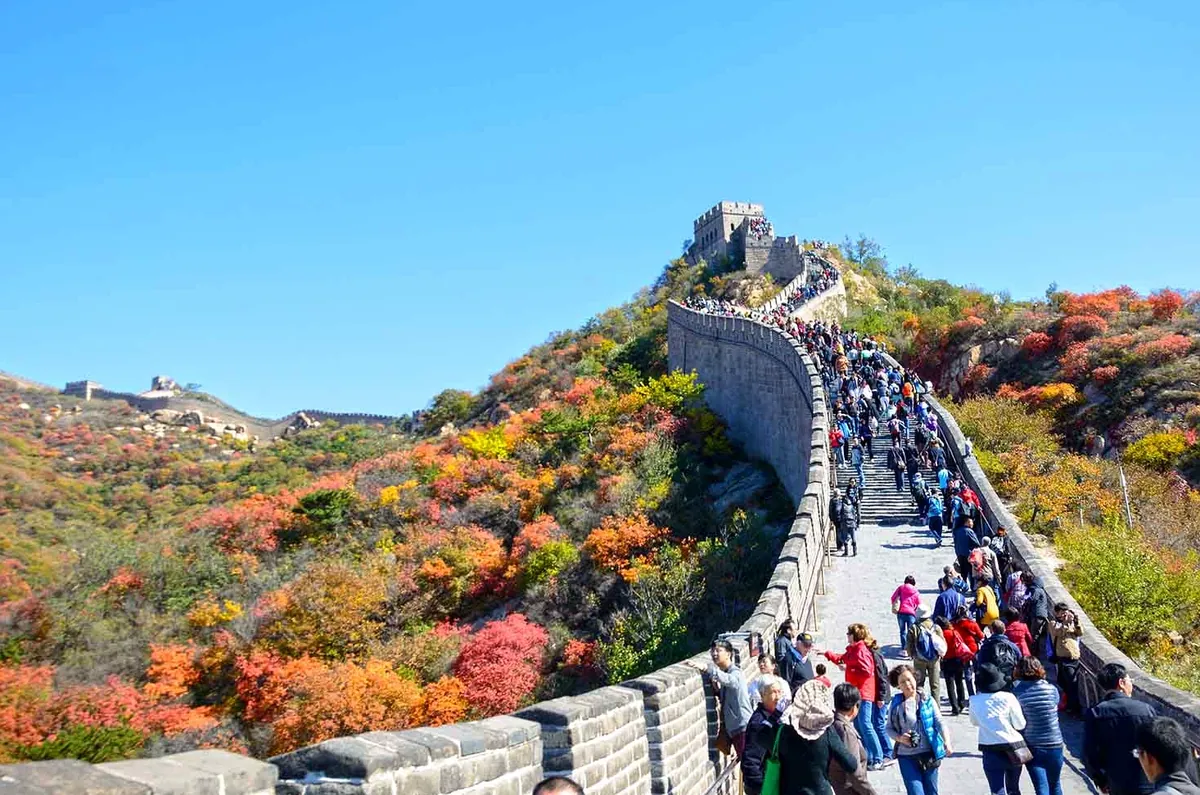
Amidst the vibrant canvas of northern landscapes as autumn sets in, a section of the Great Wall appears as majestic as a stone ribbon undulating across rolling hillsides. The forests on both sides of the slopes simultaneously change their attire, donning vibrant shades of deep red, warm orange, and rich yellow intertwined beneath a cloudless blue sky. Groups of travelers leisurely stroll across ancient, time-weathered stone surfaces, gazing towards the towering watchtowers on distant mountain peaks, which bear witness to the millennia-long defense of the realm by majestic feudal dynasties.
The fusion of next-generation mega transport projects and millennia-old cultural values has reshaped the entire mindset of modern tourism. Travelers no longer need to spend weeks on arduous transfers; instead, they can now effortlessly reach historical and natural masterpieces in the blink of an eye. This advanced travel logistics system not only ensures physical safety for tourists when traversing complex terrains, but also ushers in a golden age for in-depth East Asian cultural exploration journeys.
The boom of the Chinese tourism market in Vietnam is clearly defined through a structure of four budget segments with completely distinct operational characteristics. At the bottom tier of the market, border micro-tours costing only from one to three million VND open up an easy overseas getaway lasting one to three days using border pass documents through Hekou, Pingbian, Mengzi, or Dongxing. Moving up to the mid-range are four- to six-day journeys priced from four to nine million VND, fully leveraging high-speed rail systems or night charter flights to Lijiang and Zhangjiajie. This product group relies almost entirely on commercial subsidies, where designated shopping stops offset about 25% to 30% of ground costs to lower the retail price to an unbelievably low level.
Conversely, the middle and upper-class customer segments choose peace of mind through regular business-class flights priced between ten and twenty-five million VND, staying in four- to five-star hotels, and cutting out almost all shopping stops to focus on national standard scenic spots in Beijing or Jiuzhaigou. The pinnacle of the pyramid belongs to the purely non-shopping product line with budgets ranging from thirty to over eighty million VND. Ranging from eight to twelve days across magnificent geographical spaces such as Xinjiang, Tibet, Harbin Snow Town, or the legendary Silk Road, this segment invests up to 48% of its total budget in international resort systems and privileged sightseeing tickets, dedicating 32% to an extensive domestic airline network.
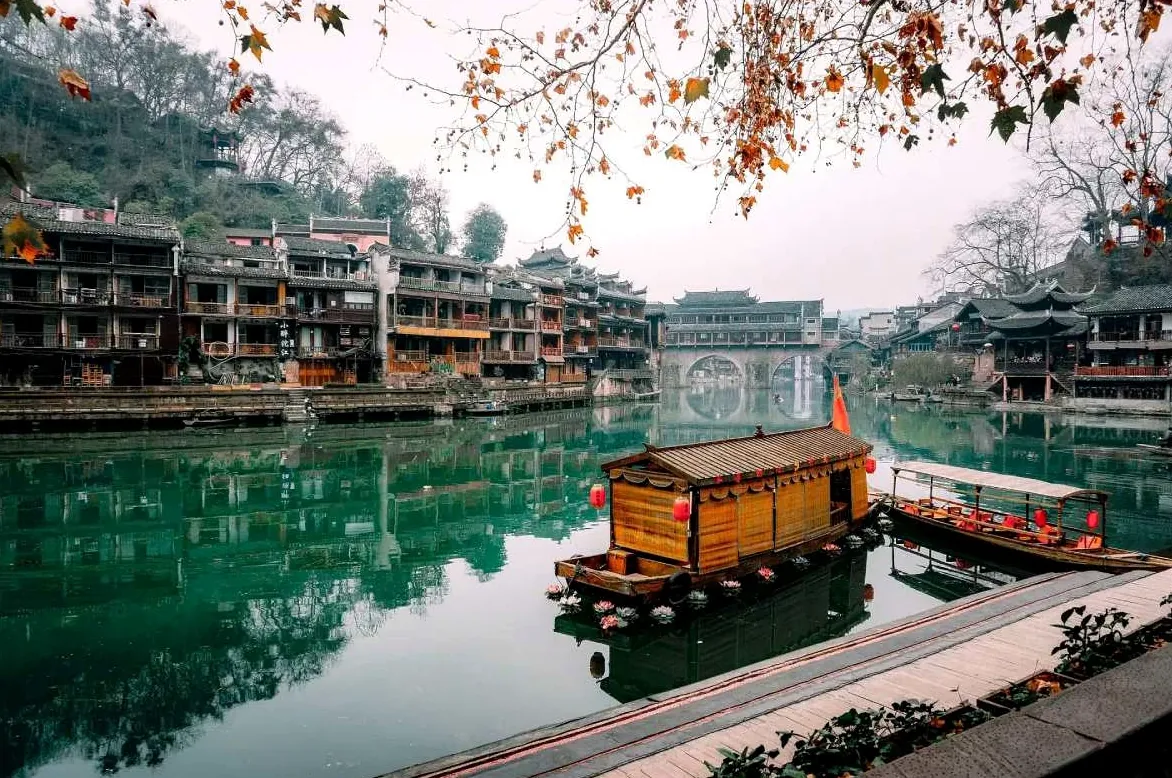
The pristine charm of these heritage sea routes is vividly crystallized in the scenery of ancient towns nestled against the serene jade-green river. The blue waters reflect multi-tiered mossy wooden houses, opening up a view toward a graceful arched stone bridge with its ancient covered roof in the distance. Along the dock, two traditional wooden boats lie quietly, highlighted by arched canopies draped with vibrant red lanterns along their modest hulls, contrasting with the brilliant yellow drooping branches of the changing leaves, painting a nostalgic atmosphere characteristic of China’s millennia-old water towns.
However, the hidden side behind the astronomical growth of cheap tour lines is the zero-dollar tour model, also known as negative land-cost tours. Here, travel agencies send tour groups below actual costs to local suppliers with deficits reaching tens of USD per person. To break even and make a profit, the hosting unit is forced to herd tourists into enclosed shopping spaces for 90 to 120 minutes, completely isolated from the outside world. Inside, sophisticated psychological manipulation scripts are perfectly staged, ranging from claiming to share a hometown to deeply discounting precious jade from twenty thousand yuan down to two thousand, to staging traditional Chinese medicine practitioners taking pulses and prescribing herbal remedies worth tens of millions of VND.
When the revenue quota of one thousand five hundred to two thousand five hundred yuan per tourist is not met, a cold attitude and forms of psychological pressure will immediately appear. The massive profit-sharing mechanism, with 40% to 60% commissions flowing to the local organizing unit, 10% to 15% for the local tour guide, and 5% to 7% for the tour leader, is the driving force maintaining this negative cycle for a long time. It is not until consumers begin to deeply realize and boycott these commercial traps that the wave of experiential product standardization truly creates a turning point.
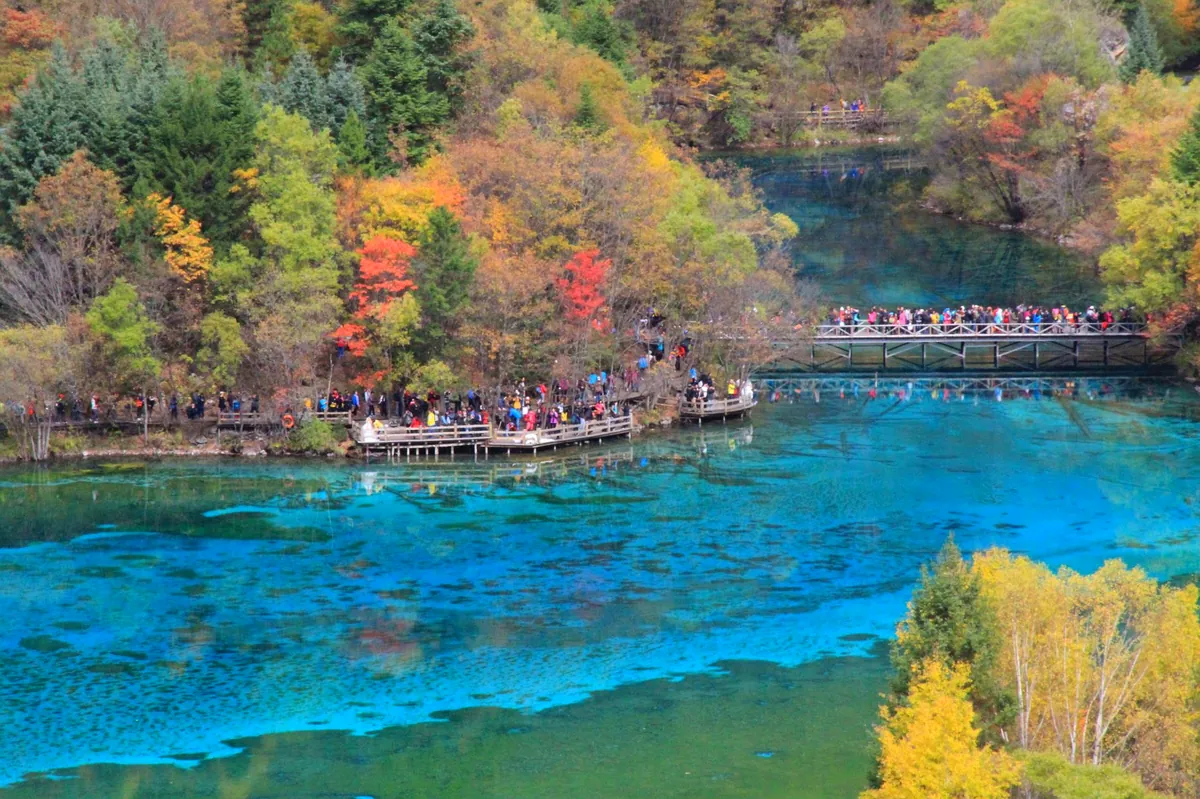
The market is currently witnessing a strong resurgence of clear written commitments, in which organizers accept refund penalties ranging from two thousand to five thousand yuan per tourist if they violate the inclusion of out-of-schedule shopping stops. Although service unit prices are 35% to 55% higher than traditional tour standards, this transparent product line has quickly captured nearly forty percent of total Chinese tour revenue in core urban areas, marking an inevitable shift from mass quantity tourism to high-quality experiential tourism.
The shift in consumer behavior among tourists in recent years reflects an increasingly sophisticated and profound taste for Chinese exploration journeys. Faraway travelers no longer stop at superficial check-ins but actively seek out interactive experiences with historical sediments and local spatial aesthetics. The most powerful attraction shaping the tour matrix is three classic architectural schools stretching from North to South. In northern metropolises like Beijing, the Imperial Architecture school at the Forbidden City or the Summer Palace captivates hearts with its majestic imperial aura. The peak of engineering lies in the Dougong (斗拱) structure, a load-bearing wooden bracket system interlocking layer upon layer entirely without the use of a single metal nail. The density and reach of the bow-shaped Gong arms supporting the sturdy Dou block beneath massive eaves not only solve the problem of gravity distribution but also serve as the ultimate measure of the Son of Heaven’s power along the legendary North-South axis.
Journeying back to the South, travelers’ tastes are captivated by the nostalgic and tranquil charm of Hui-style architecture dominating the water towns of Wuzhen, Xitang, or Hongcun. White-washed walls contrast strongly with dark gray tiles, punctuated by exquisite Three Carvings techniques on brick, stone, and raw wood. Notably, the undulating horse-head gable walls not only materialize the feng shui philosophy of “the unity of heaven and man” but also act as firewalls preventing the spread of fires between closely packed wooden houses along canal banks. Meanwhile, in the southwestern mountainous regions, the Diaojiaolou (吊脚楼) stilt houses of the Miao and Tujia people along the Tuojiang River (凤凰古城) and the traditional wooden Siheyuan courtyards of the Naxi people in Lijiang demonstrate exceptional adaptation to rugged terrain. The system of wooden columns deeply embedded into limestone cliffs supports house floors extending over the riverbed, transforming perilous terrain into precarious yet graceful settlement wonders.
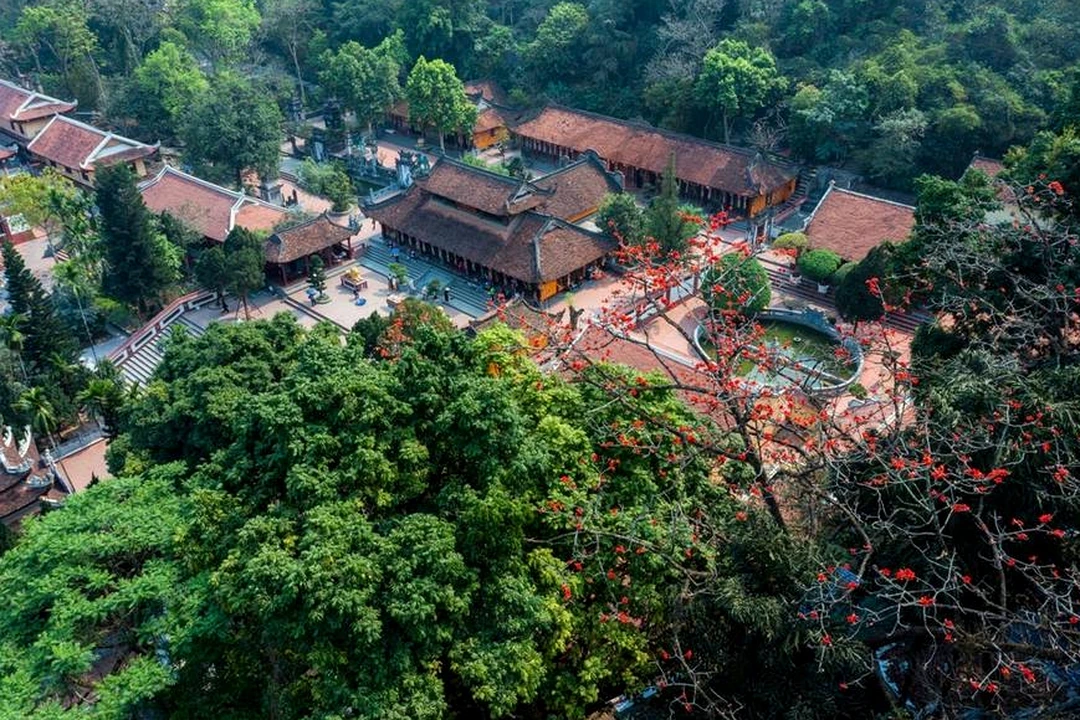
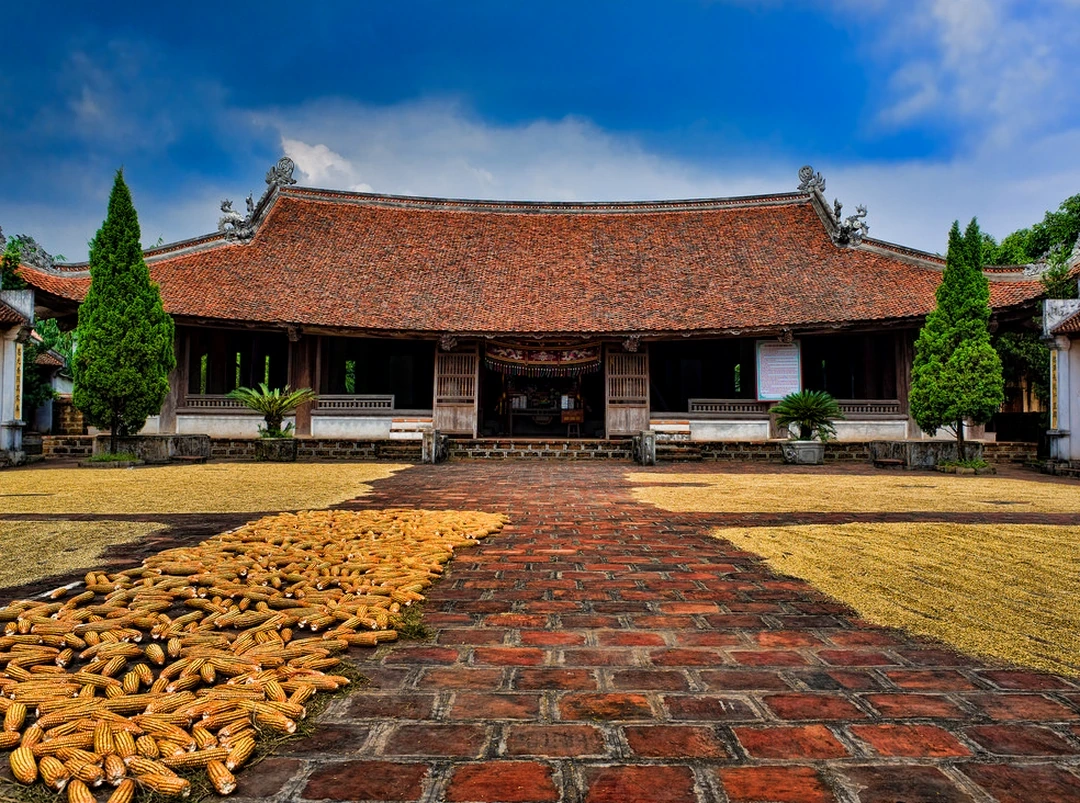
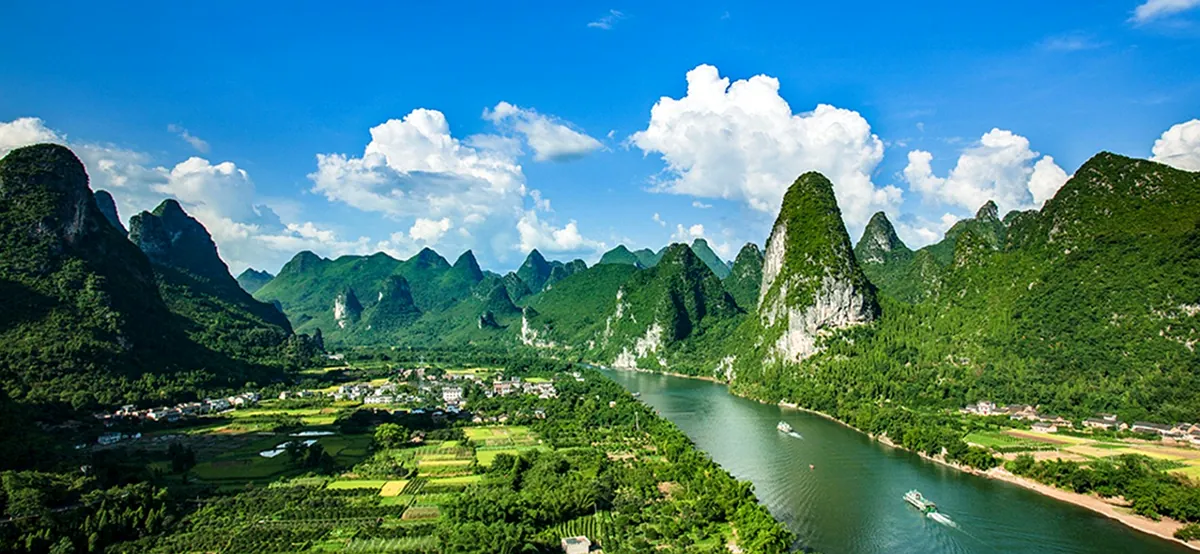
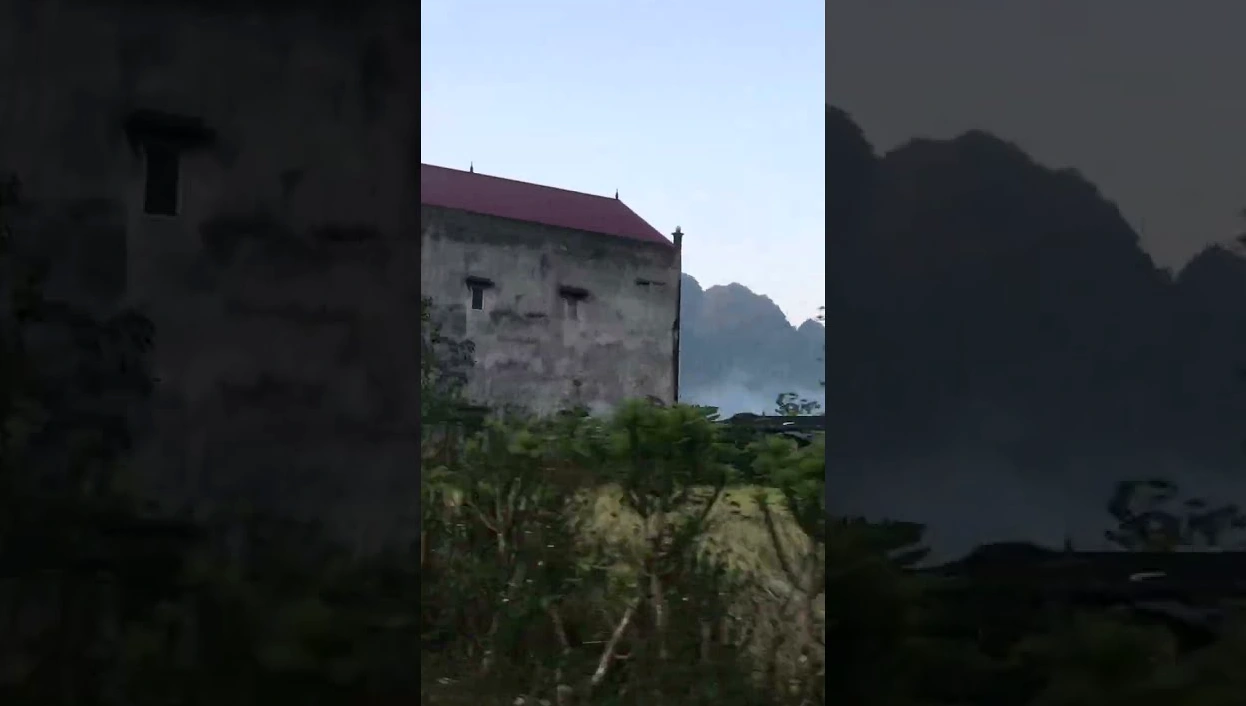
The combination of human craftsmanship and majestic natural terrain is vividly depicted through an old building with subdued red tiled roofs and weathered gray walls, highlighted by two rustic T-shaped windows nestled among lush green foliage. Behind the structure, massive limestone mountains rise straight into the blue sky, with mystical wisps of mist lingering at their base, creating a tranquil and breathtaking natural scene that transports visitors into a space of absolute harmony between profound architecture and magnificent nature.
Alongside the passion for heritage spaces, there is a booming wave of night economies and costume tourism services, creating significant shifts in travelers’ actual spending patterns. As dusk falls, the magnificent scenery along the Tuojiang River or the myriad of bright red lanterns in Sifang Street of Lijiang Ancient Town become the perfect backdrop for the trend of traditional costume role-playing. Modern travelers readily spend anywhere from 500 to 1,500 Chinese Yuan per person for an all-inclusive Hanfu photoshoot package, which includes traditional costume rentals, dynasty-standard makeup artists, and local photographers guiding them through every mossy alleyway. This consumer behavior demonstrates a clear shift from pure sightseeing to personalized experiences, where emotional value and the need to preserve aesthetic identity become the primary driving forces of expenditure on every journey.
The revolution to eliminate the stigma of monotonous industrial meals in traditional tour itineraries has ushered in a fundamental turning point for professionalized travel products, where cuisine is recognized as an inseparable cultural heritage element. Instead of rudimentary meals at enclosed restaurant chains tied to shopping stops, tour operators have redesigned their itineraries based on a geographical flavor map, delicately balancing the authenticity of the Eight Great Culinary Traditions with the specific palates of Vietnamese travelers. A deep understanding of local flavors not only elevates the enjoyment quality but also marks a remarkable maturation in ground service standards.
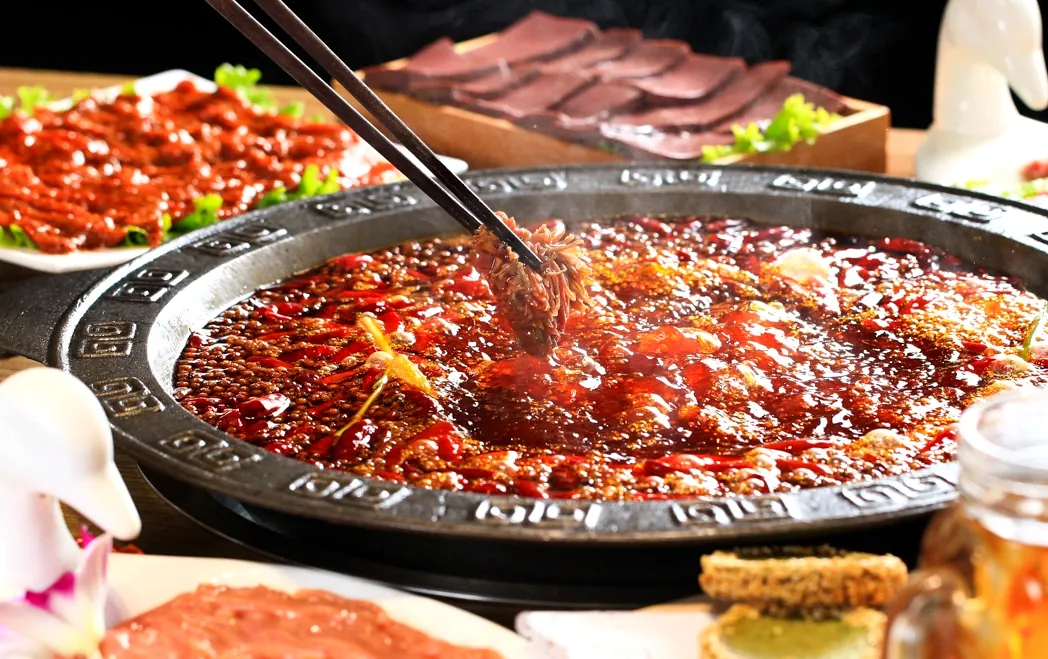
Leading in sensory stimulation is the Sichuan cuisine (川菜) of the fertile Sichuan Basin, where the culinary soul crystallizes in its famous Mala (麻辣 – Numbing and Spicy) characteristic, created by the harmonious blend of the fiery heat of chili oil and the tongue-tingling sensation of Sichuan peppercorns. Steaming Chengdu hot pots, soft and savory Mapo Tofu, or aromatic Water Yu fish are intensely alluring yet always require precise seasoning adjustments to avoid digestive upsets for unaccustomed diners. In stark contrast to the intensity of Sichuan is the Cantonese cuisine (粤菜) of Guangdong province, which emphasizes a wellness philosophy with light, fresh preparation styles designed to preserve the purest flavors of the ingredients. Elaborately crafted dim sum, nourishing herbal double-boiled soups, and glossy roast goose with crispy skin are always the perfect choice, naturally compatible with family groups and elderly travelers.
Moving toward the Jiangnan basin and the northern coastal plains, the Huaiyang (苏菜) and Lu (鲁菜) culinary traditions offer vastly different experiences. Jiangsu cuisine leaves its mark with a subtly sweet taste, elegant presentation, and masterful braising techniques, epitomized by the meltingly tender Dongpo Pork (东坡肉), West Lake sweet and sour fish, or Xiao Long Bao (小笼包) soup dumplings bursting with flavorful broth, though sometimes they can feel a bit heavy if consumed continuously. Meanwhile, Shandong cuisine is bold and savory, cleverly utilizing scallions, garlic, and fresh seafood, and stands as the birthplace of the legendary Beijing Roast Duck (北京烤鸭). The masterful carving art yielding precisely 108 crispy-skinned slices, served with fine white sugar or wrapped in thin pancakes with rich sweet bean sauce, always creates a profound resonance with the culinary habits of the majority of northern Vietnamese travelers.
Along deep-exploration routes to the borderlands, culinary flavors transform into enchanting cultural tales. In Yunnan, travelers can savor a piping-hot bowl of Mengzi Crossing-the-Bridge Rice Noodles (过桥米线) kept warm by a shimmering layer of chicken fat, enjoy a sweet and light wild mushroom chicken hot pot amid the high-altitude crisp air of Lijiang, or nibble on freshly baked, fragrant Kaiyuan rose pastries. Stepping into the Buddhist land of Tibet, survival adaptation in the harsh plateau opens up primitive taste experiences through a warm, rich cup of Yak butter tea (Suyoucha) to ward off the cold, savory pieces of dried yak meat, and traditional chewy Tsampa barley flour dough balls.
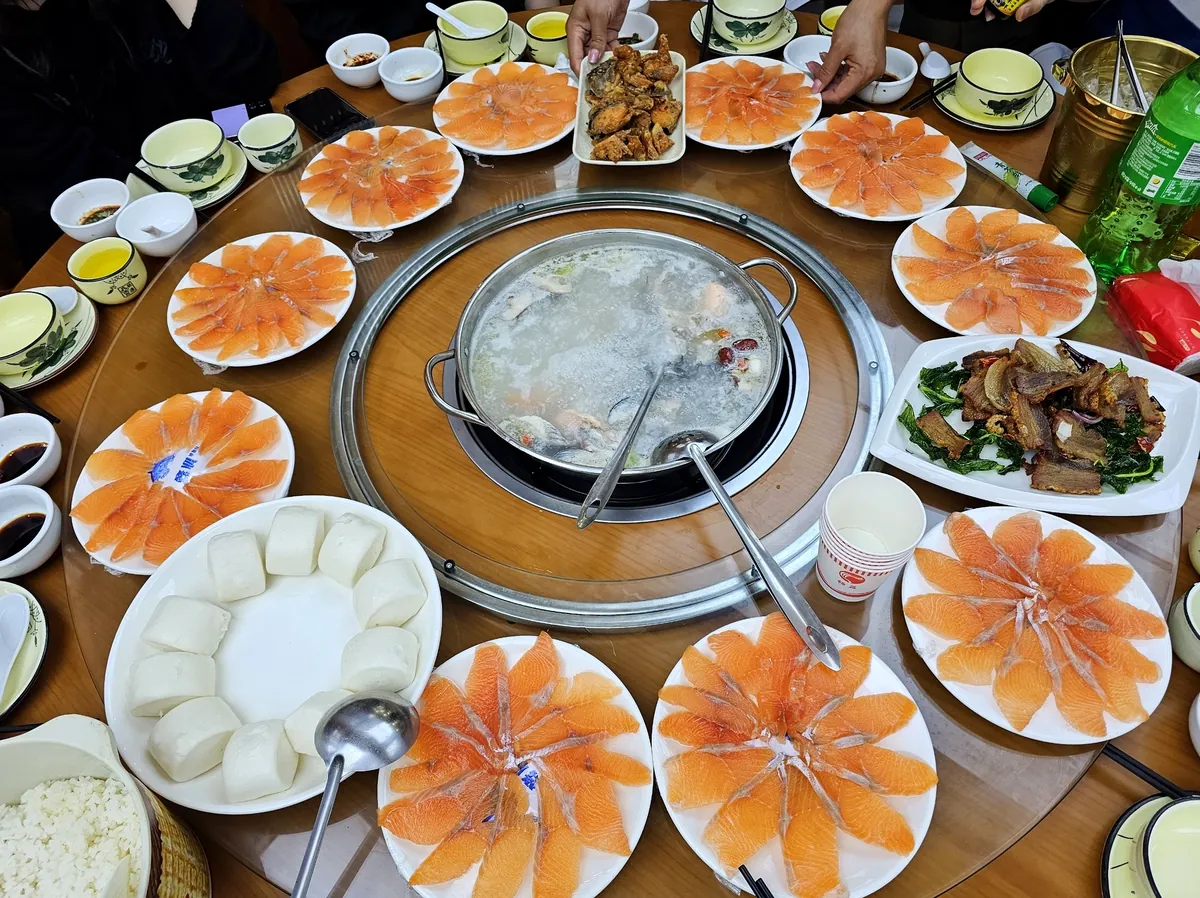
Vividly present on the traditional lazy Susan is a rich and abundant culinary space, bringing together the full essence of a high-standard meal. Right at the center, a steaming hot pot emits a warm, cozy vapor, surrounded by meticulously arranged thin slices of fresh salmon, next to steaming white steamed buns and a variety of glossy, aromatic stir-fried dishes. Every meticulously mixed condiment bowl and chilled beverage is elegantly arranged, creating a vibrant and convivial culinary picture.
The meticulousness in presenting each portion and the avoidance of forced, rigid meals bring true value to the culinary enjoyment experience. When the dining table is restored to its proper role as a space for cultural exchange and energy rejuvenation, the perception of the vast geographical beauty of the new land truly reaches perfection in both visual and taste terms.
The journey to deeply immerse and fully appreciate the Chinese cultural space always begins with a thorough understanding of immigration legal barriers. Depending on the purpose and approach, the current visa system is divided into three distinct methods. For short-term cross-border trips lasting one to three days in border areas, the border pass only requires a citizen ID card with a quick processing time of 24 to 48 hours. However, capturing up to 78% of the entire all-inclusive tour market today is the group visa (Tuanqian – 团签), a form of collective list issuance on a separate A4 paper not attached directly to the passport, requiring a minimum of two to five applicants to enter and exit simultaneously under the strict legal sponsorship of a local partner unit. Meanwhile, independent travelers or those heading towards complex remote routes are required to submit applications for individual L-type sticker visas through the Chinese Visa Application Service Center (CVAC), requiring proof of a minimum financial balance of 50,000,000 VND or 5,000 USD along with transparent employment records, with a processing time ranging from 4 to 7 working days.
Once past the border gate, visitors immediately face a closed digital ecosystem completely isolated from the rest of the world. Payment technology barriers require each individual to proactively install and link an international Visa or Mastercard to two domestic super-apps: Alipay (支付宝) and WeChat Pay (微信支付). Nevertheless, keeping a reserve of Chinese Yuan (RMB) in popular denominations of 20, 50, and 100 notes remains the ultimate safety principle, supporting payments at remote scenic ticket counters or emergency medical expenses in accordance with the currency circulation laws of the People’s Bank of China (PBoC). To maintain communication across the Great Firewall (GFW), which heavily censors familiar international platforms, the most fundamental solution is to proactively purchase an eSIM or an international roaming data package routed through servers in Hong Kong or Singapore, or to pre-install paid Virtual Private Network (VPN) applications before departure. At the same time, installing Amap (高徳地图) or Baidu Maps is mandatory to completely overcome the satellite coordinate deviation phenomenon of Western apps, combined with the live translation image scanning feature of WeChat or Baidu Translate to decode train station signs and Chinese menus.
Besides digital infrastructure, recognizing and avoiding closed commercial traps is a survival skill that cannot be taken lightly on cross-continental journeys. Travelers need to maintain alertness against sophisticated psychological scenarios, such as salespeople in jade and gemstone centers claiming to be overseas compatriots connecting over shared roots to build trust and slash prices on counterfeit goods, or the pulse-checking prescription scams by “quack doctors” in isolated traditional medicine establishments aiming to profit exorbitant prices from unknown herbal remedies.
The picture of travel to the territory of China is witnessing profound structural shifts. Independent travel combined with the high-speed railway (HSR) system is projected to maintain an impressive compound growth rate of approximately 28% annually thanks to the ultimate convenience of transportation infrastructure and cashless payments. The travel map is also gradually popularizing once-distant legendary lands like the Silk Road, the endless grasslands of Xinjiang, or the mystical Tibetan Plateau, alongside the boom of specialized thematic tour lines such as snow-hunting in Harbin or dressing in traditional Hanfu amidst ancient capitals. Under the strict control of the tourism and cultural management agencies of both countries, unrealistic cheap tour models are gradually being thoroughly eliminated, making way for deep, transparent, and sustainable cultural experiences. To ensure a safe, relaxing journey that still optimizes cost and time, considering participation in a well-organized all-inclusive tour package is the key to helping travelers unlock the door to discovering the scenery and millennia-old depth of the nation of billions of people.
