The legacy of Yunnan’s rose flower cake—celebrated in classical texts and folklore alike as Xianhua Bing (鲜花饼)—dates back more than three centuries to the golden age of the Qing dynasty during the 18th-century reign of the Qianlong Emperor. According to imperial culinary chronicles recorded in the Yandu Weikou He alongside Manchu court gastronomic annals, the predecessor of this delicate pastry was an inspired creation of the palace’s royal chefs. Seeking to delight an emperor famed for his refined palate and passion for delicate floral flavors, cooks in the imperial kitchen gathered fresh rose petals glistening with morning dew, crushed them with prized wild honey and finely milled wheat flour, and baked them into flaky, multi-layered pastries brimming with fragrance. This graceful royal delicacy swiftly won the Qianlong Emperor’s favor, becoming a regular fixture at imperial garden rituals as well as lavish banquets hosted for princes and nobility.
Yet the true golden chapter of this regal pastry only blossomed when its recipe traveled down ancient overland routes to China’s remote southwest—Yunnan Province. Long hailed as the “Kingdom of Plants” thanks to its dramatic basin-and-plateau topography, fertile red soil, and spring-like climate year-round, Yunnan offered ideal natural conditions for boundless fields of blooming roses. Here, the northern imperial recipe underwent a profound local transformation as it met abundant native ingredients, most notably ancient Damask roses introduced along the Tea Horse Road and purebred Kunming red roses cultivated specifically for culinary craft. Unlike in northern China, where the pastry could only be enjoyed during fleeting harvest windows, Yunnan’s nation-leading production of edible roses turned flower cakes into an everyday culinary tradition—spreading from modest homes around Dianchi Lake through Dali Old Town to every moss-lined cobblestone lane of Lijiang beneath Jade Dragon Snow Mountain.
Across centuries of historical upheaval and shifting social tides, rose-cake craftsmanship long remained confined to family-run seasonal bakeries entirely dependent on spring and summer blooming cycles. Then came 1988—a watershed year marked by the founding of Jiahua Food (云南嘉华食品). This milestone sparked a comprehensive modernization of the craft, elevating small-scale artisanal baking into Yunnan’s largest and most influential culinary heritage industry. By standardizing pre-dawn harvesting of fresh blooms alongside time-honored filling fermentation techniques, Lijiang—and Yunnan—rose cakes transcended the status of a local snack to become an enduring cultural emblem distilling the colors of nature and the historical soul of China’s southwest.
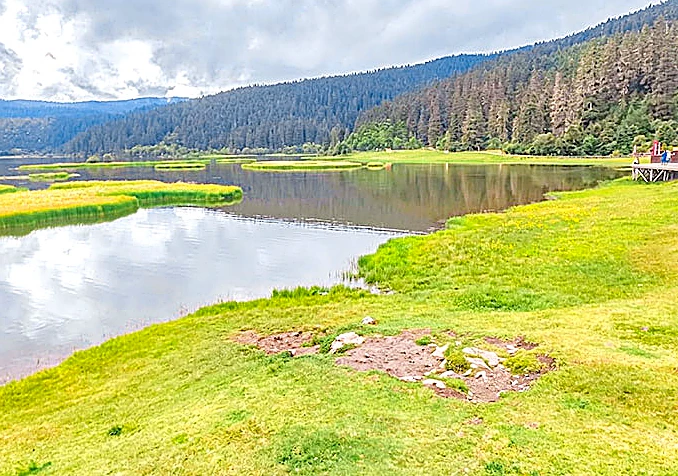
Stretching across a rugged yet abundant southwestern plateau, Yunnan has long earned its title as the “Kingdom of Plants” through nature’s extraordinary generosity. Its complex fault-block geography shifts dramatically in elevation, rising from warm subtropical valleys to towering peaks crowned with eternal snow. Distinct climatic stratification, wide diurnal temperature swings, and abundant year-round sunshine create ideal terroir for nurturing prized rose varieties—especially native Dianhong roses and edible heirloom blooms prized for their exceptionally concentrated essential oils. Pure meltwater descending from the glaciers of majestic Jade Dragon Snow Mountain filters through weathered limestone strata to enrich fertile red basaltic soil with trace minerals, imbuing every petal with a crisp, gentle natural sweetness few regions on Earth can replicate.
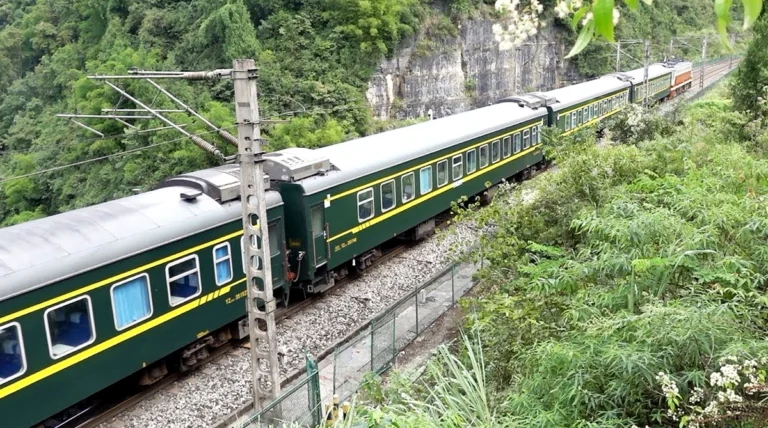
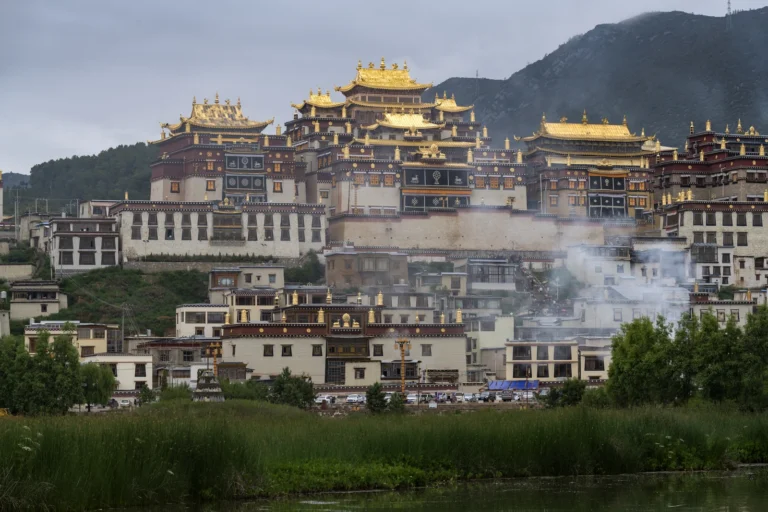
The birthplace of this floral delicacy lies directly along the legendary Tea Horse Road, where mule caravans of merchant guilds once clattered across flagstone mountain passes. Today, that cultural artery has been revived and extended through modern infrastructure, led by the Kunming–Dali–Lijiang High-Speed Railway and the international China–Laos rail corridor. This scenic route unfolds like a sweeping geographic panorama: beginning in Kunming, the “Spring City”, gliding past the thousand-year-old karst labyrinth of the Stone Forest, skirting the sapphire waters of Erhai Lake beneath cloud-draped Cangshan Mountain in Dali, before ascending to the heritage haven of Lijiang Old Town and continuing straight on to the highland paradise of Shangri-La in Diqing Prefecture. Every stop along the way reflects not only dramatic shifts in altitude and temperate flora, but also centuries of culinary cross-pollination among Yunnan’s diverse ethnic minority communities.

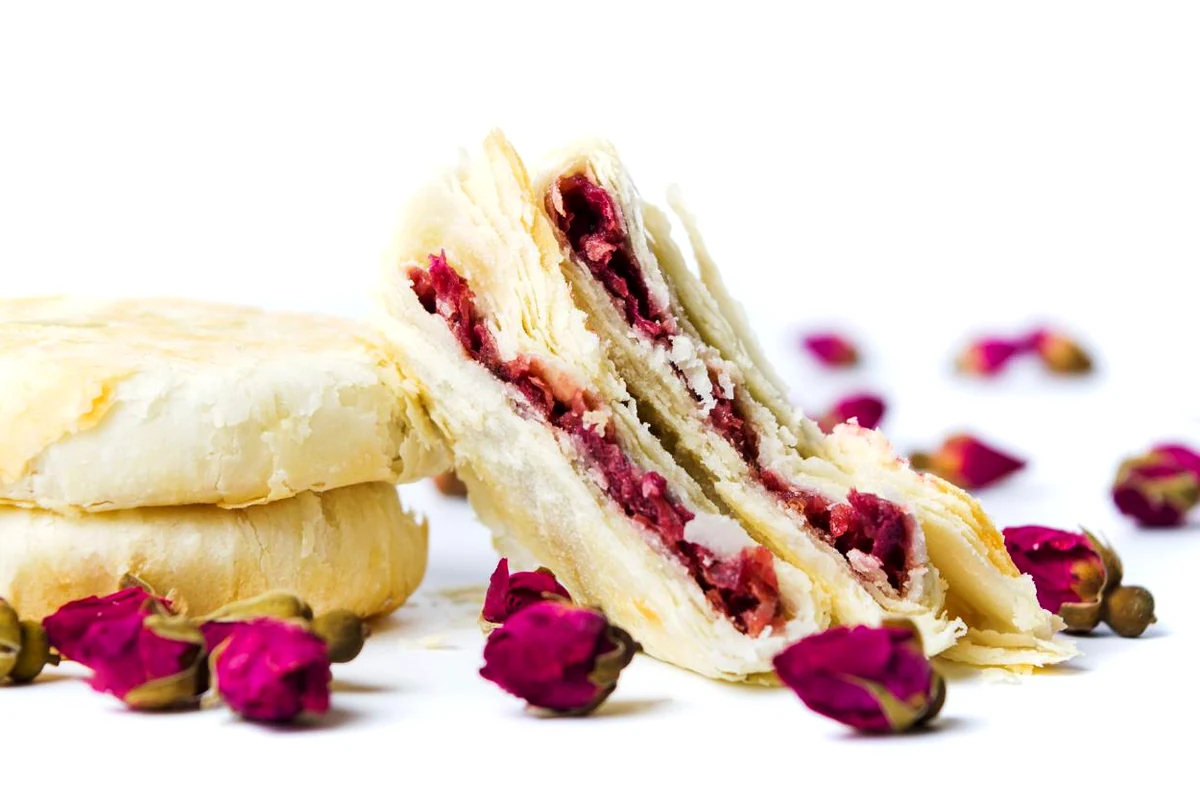
Crafting an authentic Lijiang rose cake demands deep sensitivity to nature’s growing cycles alongside unwavering precision in every inherited step. Harvesting must take place at daybreak, between roughly 4:00 and 7:00 AM, while morning dew still clings to the petals and harsh sunlight has yet to evaporate the precious essential oils locked deep within the blossoms. After meticulous hand-sorting, fresh petals are cured with pure wildflower honey and refined rock sugar in exact proportions—removing any grassy astringency from chlorophyll while preserving vibrant crimson color and a pleasantly crisp bite. The pastry crust represents the pinnacle of traditional laminated dough craftsmanship, artfully combining water dough (shuiyoupi) and oil dough (yousu) through repeated rolling and folding. Baked under tightly controlled heat, the exterior puffs into gossamer-thin, flaky layers delicate as cicada wings, sealing in a fragrant, gently sweet floral heart.
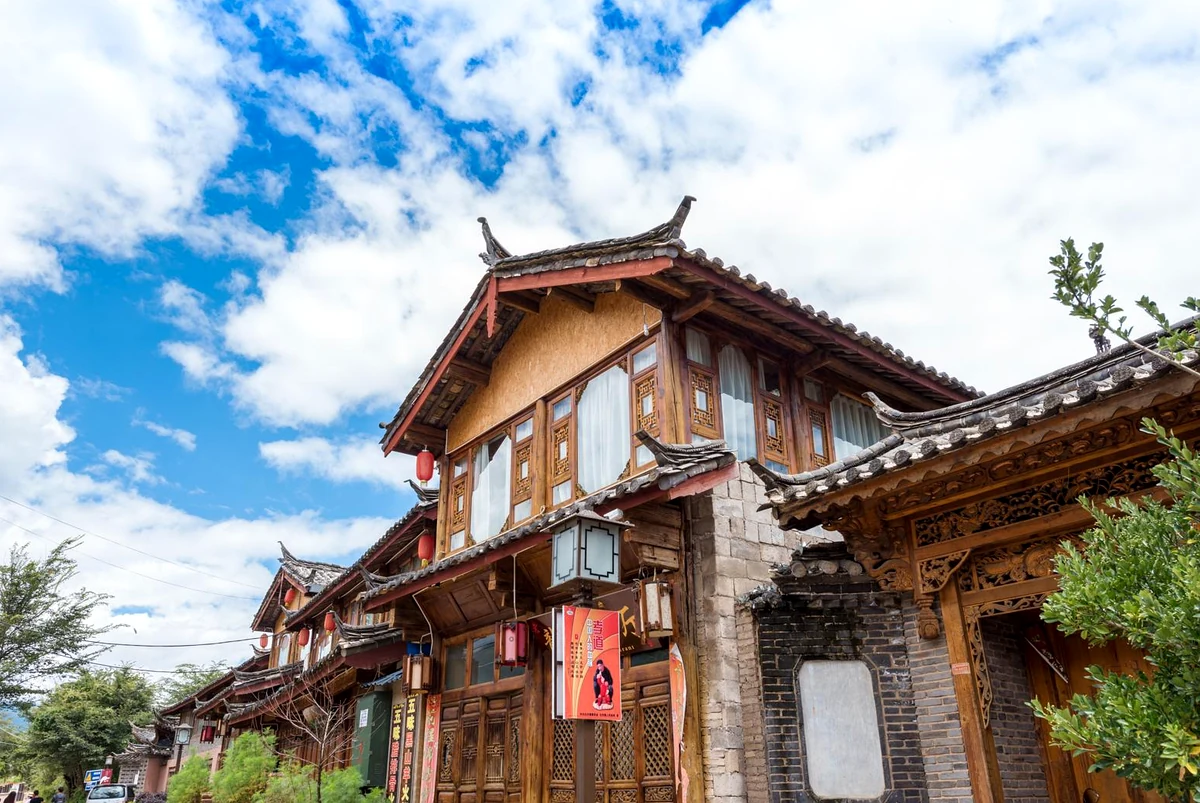
Savoring a still-warm rose cake beneath the eaves of a moss-covered, yin-yang-tiled Naxi wooden house—watching clear canals mirror snow-capped peaks against a crisp blue sky—allows travelers to taste the pure essence of Yunnan on their tongue. Towering mountains, drifting twilight hearth smoke, and echoes of ancient caravan bells blend seamlessly into the pastry’s sweet floral aroma, elevating this treat far beyond ordinary baked goods into a living heritage emblem of highland botanical life and southwestern culture.
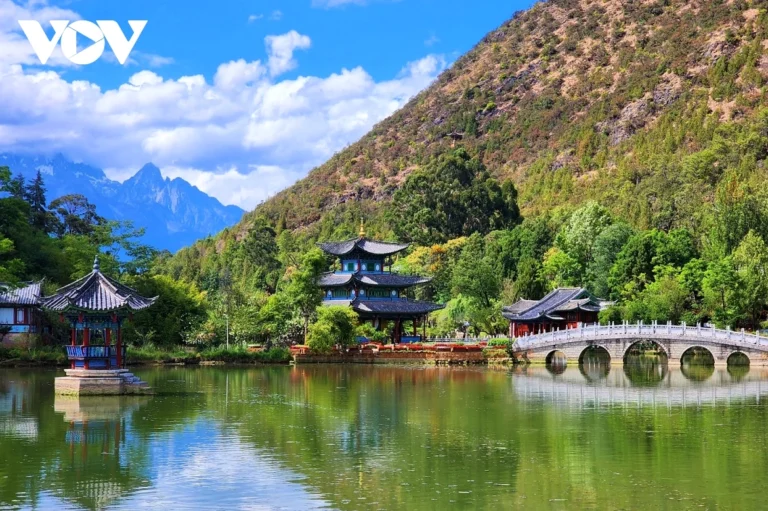
The atmosphere and origins of the rose flower cake are intimately intertwined with the distinctive architecture of Dayan Ancient Town—better known as the Old Town of Lijiang, ancestral home of the Naxi people. Nestled at the foot of snow-crowned Jade Dragon Snow Mountain, the old town lacks the fortified defensive walls typical of traditional Chinese cities—a deliberate choice rooted in the feng shui beliefs of the hereditary Mu chieftains, whose surname character (木, “wood”) enclosed within four walls forms the character 困 (“trapped” or “besieged”), an omen of decline. In place of stone ramparts lies an ingenious hydraulic network fed by crystal-clear snowmelt from the Yuhe River, branching into three main waterways that wind beneath more than 300 arched stone bridges and along lanes paved with famous five-colored flagstones. Traditional timber-frame residences here harmoniously unite intricate Han woodcarving, sturdy Tibetan highland construction, and refined Bai decorative aesthetics, crowned by undulating yin-yang tiled roofs draped in weathered moss that follow the town’s gentle slopes.
Heading south along the Tea Horse Road, the architectural landscape shifts toward the stately grandeur of Dali Ancient City, completing western Yunnan’s cohesive culinary and cultural corridor. Whereas Lijiang curves organically with its waterways, Dali follows a disciplined checkerboard layout established during the Nanzhao and Dali kingdoms and fortified in the Ming dynasty with massive stone walls and four imposing cardinal gates. Inside the ramparts stand traditional Bai courtyard residences built in classic “Three-Winged Courtyard with a Screen Wall” (Sanfang Yizhaobi) or “Four Courtyards with Five Skywells” layouts. Whitewashed screen walls catching sun and moon opposite main entrances—paired with celadon ceramic motifs and mother-of-pearl floral inlays along four-season wooden lattice doors—provide a serene architectural backdrop honoring the delicate craft of fresh-petal pastry making.
The art of making rose flower cakes—Xianhua Bing—demands strict adherence to timing and traditional techniques honed over centuries. It begins at dawn in valleys rising over 2,000 meters above sea level, harvesting freshly opening buds of Dianhong or Damask roses while dew still lingers on the petals and essential oil content peaks. Carefully separated petals are macerated with Yunnan wild honey and refined rock sugar, then sealed inside traditional earthenware jars to mature into a glossy, aromatic filling that retains its natural crimson hue without a trace of bitterness. The pastry shell showcases multi-layered lamination, alternately kneading and folding water dough with pure lard pastry until paper-thin sheets form—baking into crisp, delicate layers that shatter gently at the touch of your lips.
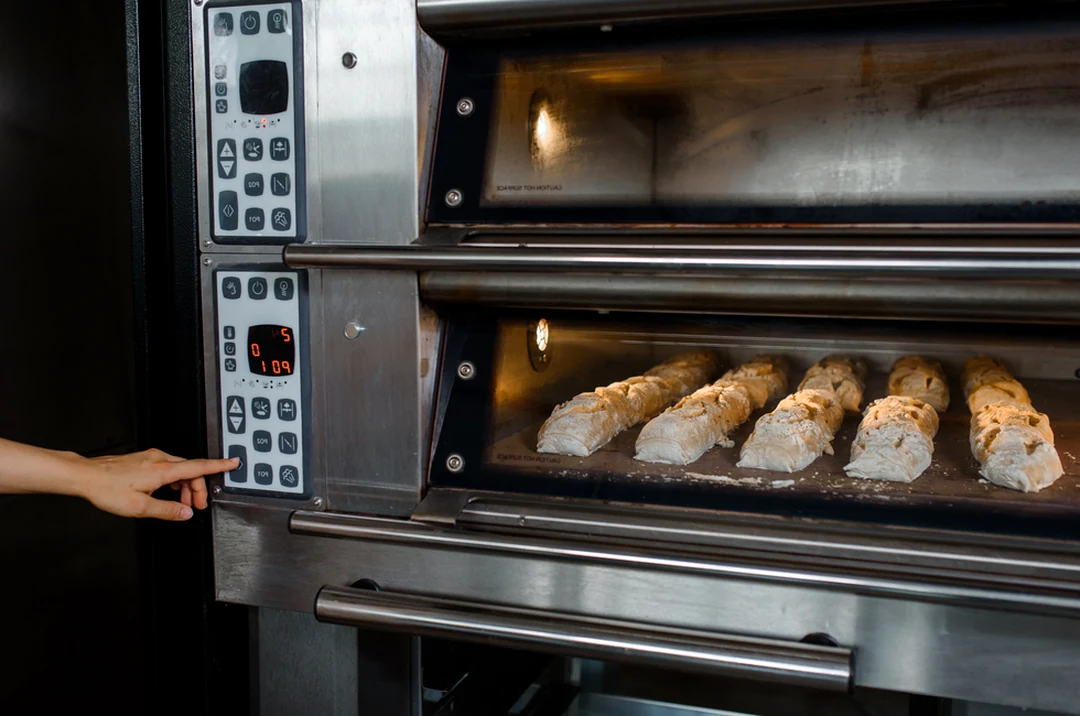
In both family workshops and renowned bakeries such as Jiahua, baking relies on exact synchronization of heat and timing. Once each round pastry is stamped with an auspicious red seal, trays are loaded into ovens held steady at 180°C to 200°C. Under balanced heat, the dough puffs into dozens of crisp, flaky layers while the floral filling gently warms, releasing fragrant honeyed syrup that keeps the interior tender and moist. The heady scent of warm roses mingled with rich baked pastry drifts through timber-framed courtyards and blends with the murmur of snowmelt streams flowing past doorsteps—uniting heritage architecture with the singular culinary artistry of China’s southern cloudland.
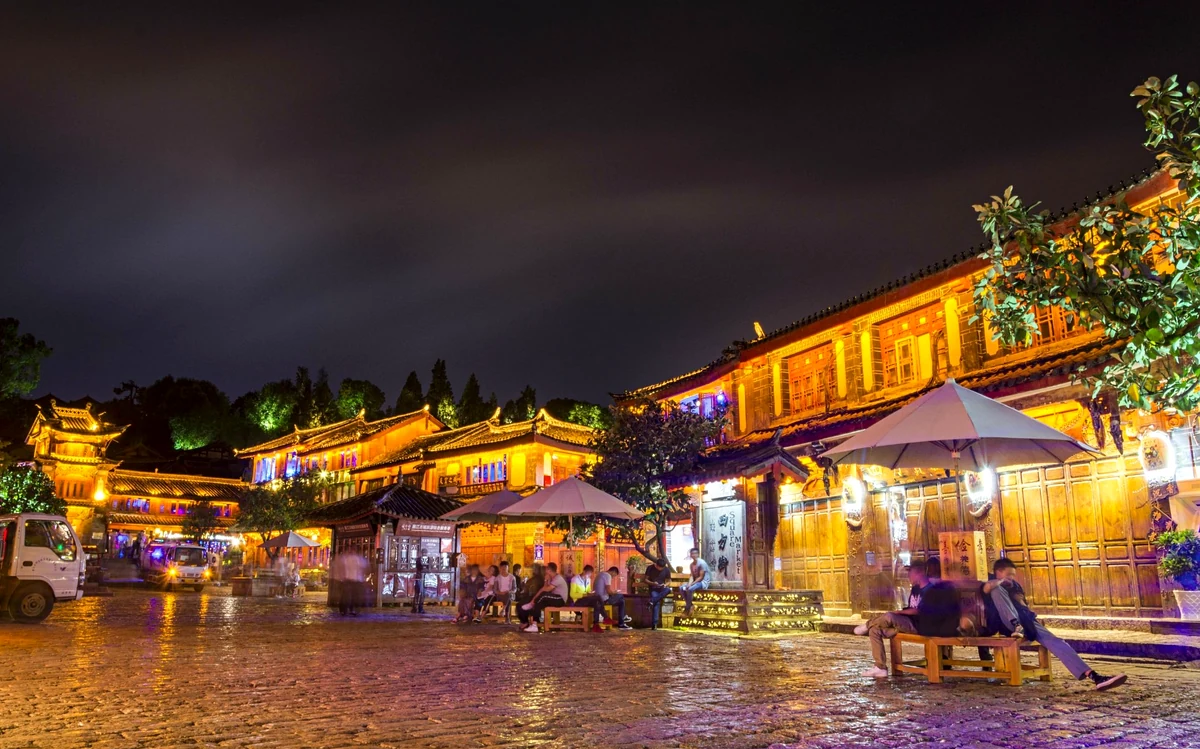
As sunset fades behind the towering silhouette of Jade Dragon Snow Mountain, the timeless rhythm of Lijiang awakens into an entirely different atmosphere. Thousands of crimson lanterns glow to life along the intricate web of canals fed by Black Dragon Pool, casting shimmering reflections over rushing waters and five-colored flagstones worn smooth by centuries of travelers’ footsteps. Amid this enchanting nocturnal glow, Sifang Street (Square Street) becomes the vibrant heart where light, music, and traditional gastronomy converge—and where the warm, intoxicating aroma of freshly baked rose cakes weaves through the crisp highland night mist.
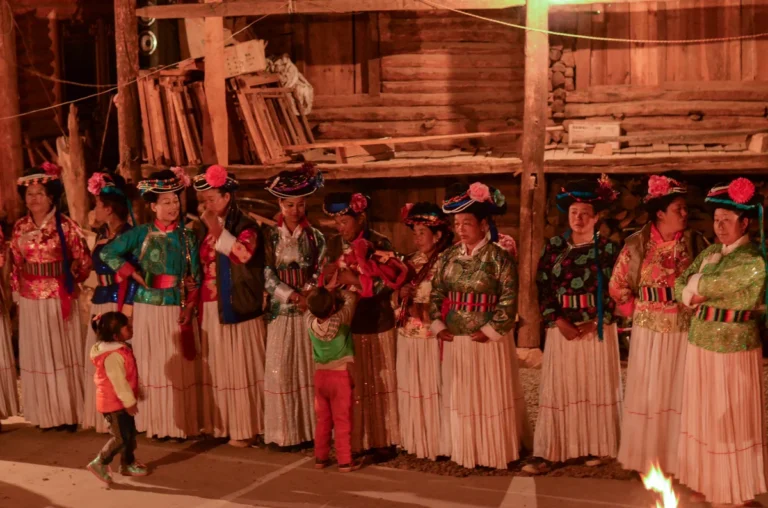
Lijiang after dark captivates not only through folk lantern displays, but also through rich acoustic traditions rooted in Naxi Dongba heritage. Beneath curved eaves of intricately carved wooden pavilions, the resonant melodies of ancient instruments—the pipa, erhu, and bamboo flutes of Naxi Ancient Music—echo through the lanes, preserving Tang and Song dynasty court compositions largely unchanged over a millennium. Strolling along the Yuhe Canal, visitors frequently encounter traditional circle dances where locals draped in Seven-Star Sheepskin capes join hands with travelers to step in rhythm around flickering bonfires, blurring every boundary between performance and everyday community life.
Within this multi-sensory tableau, stepping into a traditional Jiahua storefront or artisanal bakery for a freshly baked rose cake becomes a quintessential evening ritual. Open-front ovens glowing along the lanes turn out tray after tray of piping-hot Xianhua Bing. Shaped by the nimble hands of veteran bakers, flaky laminated crusts cradle deep-crimson rose jam naturally fermented from fresh velvet-red petals harvested across western Yunnan’s mountain slopes. Breaking open a warm pastry releases a burst of pure floral fragrance that forms an unforgettable contrast against the brisk highland night air.
The ultimate nocturnal ritual in Lijiang pairs the gentle sweetness and delicate richness of a warm rose pastry with the smooth astringency and deep, lingering sweetness of aged ripe Pu-erh tea. Seated on the upper wooden balcony of a cozy canalside teahouse, sipping rich reddish-brown tea harvested from ancient tea trees along the Tea Horse Road between bites of honeyed rose pastry, you feel the very vitality of Yunnan’s mountains melt across your palate. The scene turns even more poetic as lotus-shaped river lanterns carrying wishes for peace are lit and set adrift across the water, twinkling alongside overhead lanterns to weave an unforgettable evening memory.
Exploring the culinary map of southwestern Yunnan’s highlands is an immersive journey into local terroir, where gastronomy is deeply shaped by indigenous traditions and crisp year-round mountain air. Leading this tasting tour is the iconic rose flower cake (鲜花饼 — Xiānhuā bǐng), an heirloom delicacy that has captivated southern Yunnan palates for centuries. Dozens of tissue-thin dough layers are hand-laminated with rendered lard so that when baked over carefully calibrated heat, the crust puffs into delicate, snow-light flakes that melt effortlessly on the tongue. Concealed inside lies a tender, jewel-toned filling crafted from fresh crimson rose petals handpicked at dawn across valley slopes beneath Jade Dragon Snow Mountain. Master bakers select only newly opening buds heavy with morning dew, slow-curing them with pure rock sugar and wildflower honey to preserve natural floral oils—yielding a clean, soothing, botanical sweetness completely free of cloying artificial extracts.
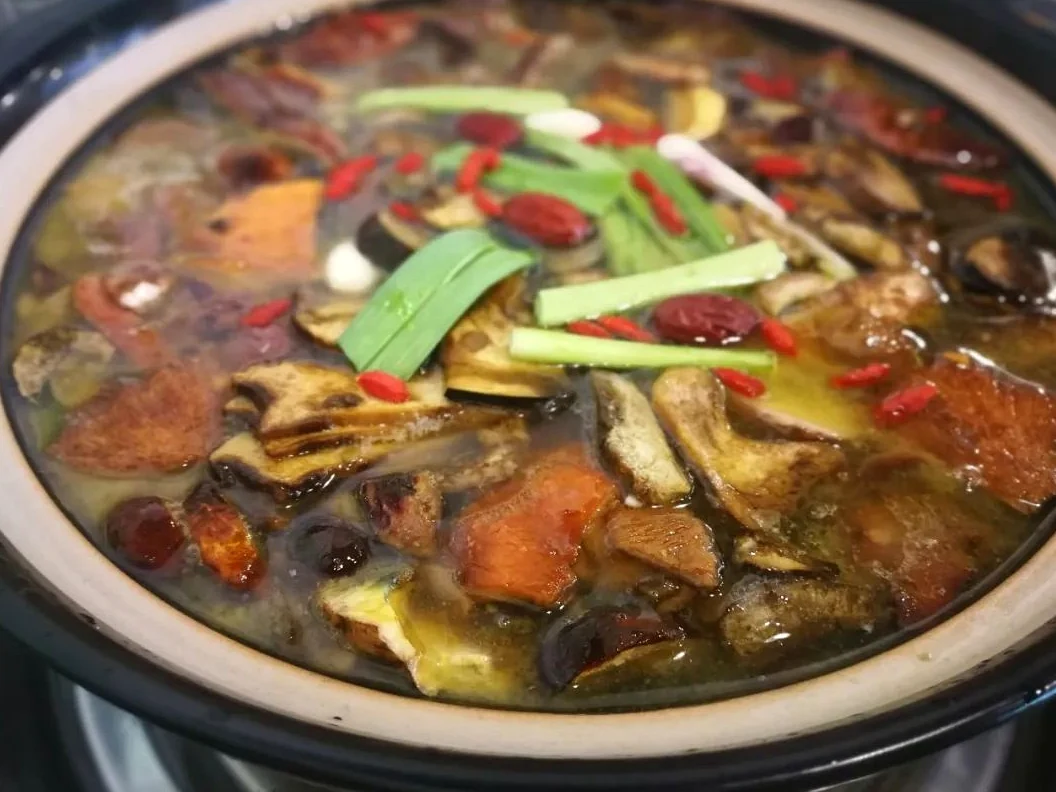
Alongside delicate floral pastries, Lijiang’s culinary memory is warmed by its celebrated wild mushroom and black-bone chicken hotpot—a comforting staple designed to chase away the chill of old-town evenings after dusk. Native black-bone chickens raised free-range along the rocky slopes of Jade Dragon Snow Mountain yield firm, nutrient-rich, deeply flavorful meat, chopped into bite-sized pieces and simmered slowly in clay pots with pure glacial spring water. The soul of the broth lies in its marriage with prized wild forest mushrooms foraged after early-season rains—including matsutake, porcini, tiger-paw fungus, and earthy termite mushrooms. As the pot bubbles gently beneath a golden sheen of natural chicken oil, warm herbal aromas and profound umami sweetness unfold with every spoonful.
Continuing along Yunnan’s culinary heritage trail, Crossing-the-Bridge Rice Noodles (过桥米线 — Guòqiáo mǐxiàn) brings to life a beloved Qing-dynasty legend of spousal devotion originating beside Nanhu Lake in Mengzi. The dish unfolds like culinary theater, centered around an oversized porcelain bowl brimming with rich broth simmered for hours from aged hen, pork marrow bones, and plump duck, sealed beneath a shimmering layer of golden chicken fat that traps scalding heat inside. Surrounding the steaming bowl are dozens of small porcelain saucers arranged with paper-thin slices of pork tenderloin, chicken breast, fresh fish fillet, kidney, quail eggs, shredded wild mushrooms, tender tofu skin, and vibrant green chives. Diners add the raw meats first, followed by vegetables and smooth, springy white rice noodles—watching ingredients poach within seconds before enjoying a remarkably clean yet deeply savory broth perfected over generations.
Rounding out Lijiang’s signature flavors is a stroll down Dayan’s five-colored flagstone alleys to enjoy warm Naxi Baba (纳西粑粑 — Nàxī bābā) straight off a charcoal-heated cast-iron griddle. Originally devised as durable trail rations for horse caravans traversing the perilous Tea Horse Road, these traditional wheat flatbreads have evolved into a beloved symbol of highland hospitality. Naxi Baba comes in two classic styles: savory versions enriched with fragrant lard, fresh scallions, and diced Xuanwei ham, and sweet versions filled with ground toasted sesame seeds, crushed peanuts, and rich brown cane sugar. Biting through the crisp, amber-gold crust into the chewy, wheat-fragrant interior alongside a cup of robust Pu-erh tea captures the warm, enduring spirit of Lijiang.
As the first rays of morning sunlight pierce the peaks of Jade Dragon Snow Mountain and illuminate Dayan’s five-colored flagstones, rose-cake kitchens lining Sifang Street stoke their ovens to life. Traditional bakeries and specialty shops across Lijiang Old Town typically welcome visitors from around 8:30 AM until 10:30 PM, when lantern-lit crowds begin to thin. Wandering through the labyrinth of bluestone lanes, travelers can hardly resist the warm wafts of honey, butter, and freshly baked rose petals drifting from trays just pulled from the oven. Because motorized vehicles are strictly prohibited inside the old town to preserve its historic streetscape, the most rewarding way to explore is on foot—strolling leisurely beside murmuring canals toward Sifang Street, home to Yunnan’s most celebrated rose-cake ovens.
To pick out genuinely authentic rose flower cakes amid rows of competing storefronts, savvy travelers look for a few telltale sensory cues. First and foremost is shelf life: pure artisanal pastries made without chemical preservatives retain peak freshness and aroma for just 15 to 30 days. In texture, a top-tier laminated crust should be as delicate as cicada wings, flaking cleanly at the first bite to reveal a richly colored floral center. Unlike mass-produced imitations, premium fillings showcase whole, deep-crimson Dianhong rose petals cured with rock sugar and local honey—retaining a subtle, natural chew and delivering a clean, soothing floral finish rather than harsh sweetness or synthetic rose essence.
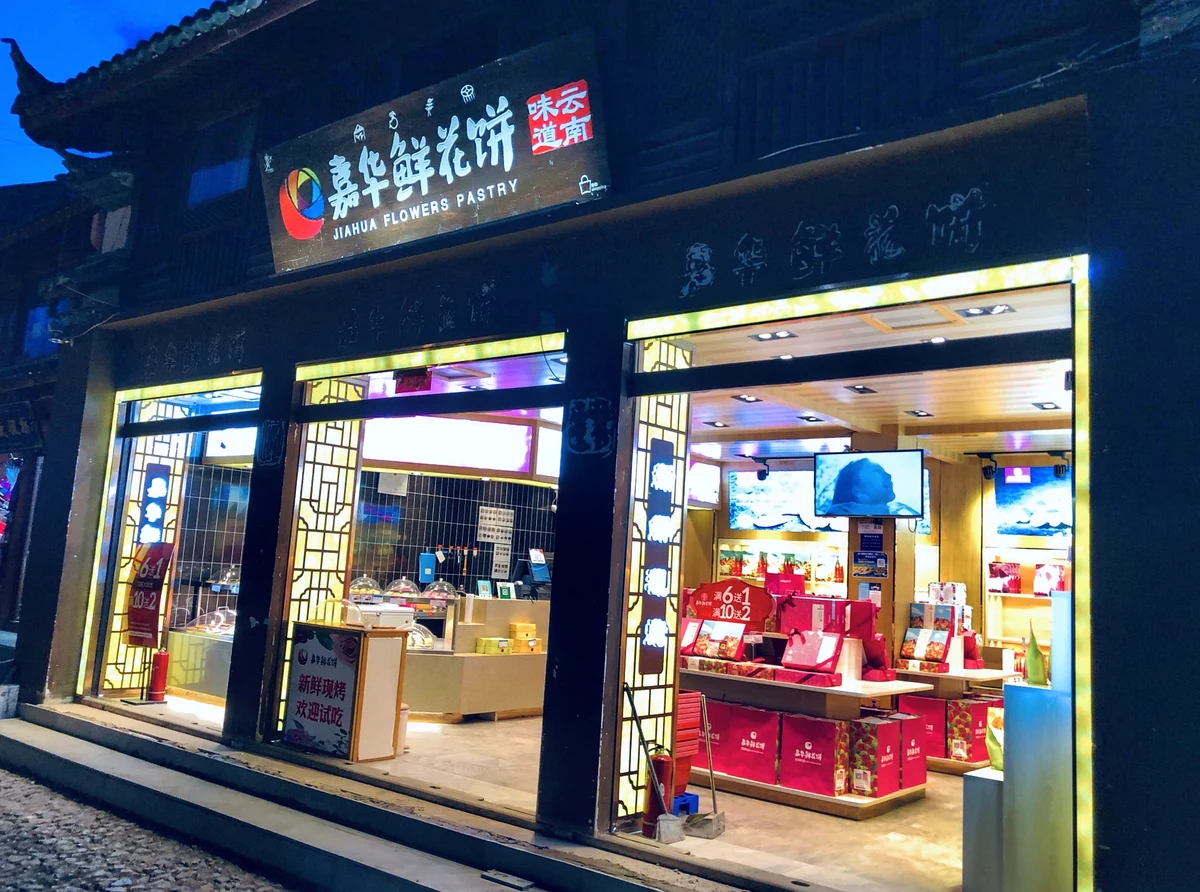
For reliable shopping, Jiahua Bakery (嘉华饼屋) has long set the gold standard across Yunnan with strict quality control and elegant gift-ready packaging. Meanwhile, long-standing family-run ovens tucked around Sifang Street remain unbeatable for enjoying a piping-hot pastry straight from the tray in the crisp mountain air. Standard retail prices typically range from 35 to 60 RMB per box of 8 to 12 pastries, depending on early-harvest petal grades and specialty variations incorporating pine nuts, cheese, or prized matsutake mushrooms.
One crucial travel tip is to stay alert against suspiciously cheap package tours that recoup margins by funneling travelers into subpar processing workshops selling overpriced pastries with artificially extended shelf lives. Opting for transparent, strictly no-shopping itineraries is the best way to protect both your wallet and food quality. Because laminated rose-cake crusts are remarkably fragile and crumble easily under pressure, keep boxes in your carry-on luggage or ask specialty shops to pack them in protective foam cartons before your flight home. To savor every flavor beneath these timeless snow peaks without worrying about transit logistics or travel hassles, consider booking a curated all-inclusive Lijiang tour package, where every heritage route and culinary gem is thoughtfully arranged from start to finish.