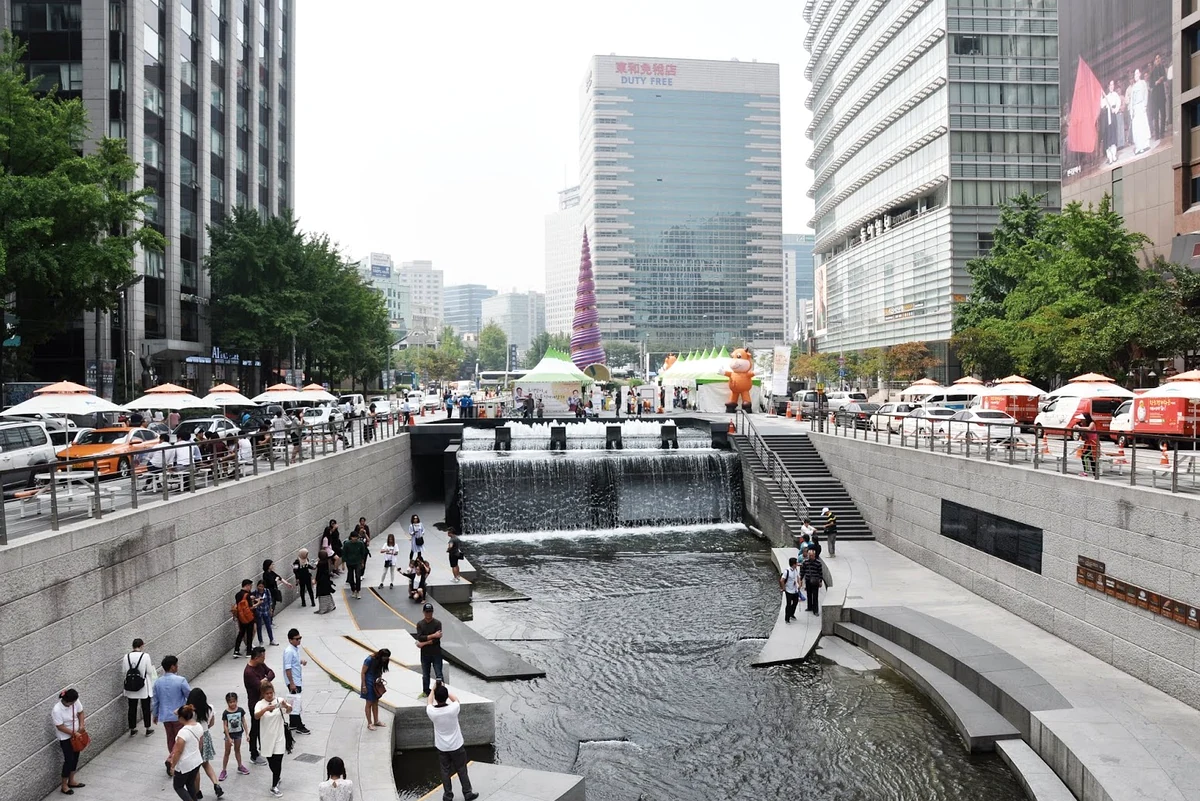
Nestled beside the historic Cheonggyecheon Stream in the heart of modern Seoul, Gwangjang Market is far more than a bustling commercial hub—it is a living monument that encapsulates the rise and fall of the Korean Peninsula across more than a turbulent century. The origins of this cultural space are tied to the twilight of the Joseon Dynasty (1392–1910) and the brief, stormy transition into the Korean Empire (1897–1910). In July 1905, as the dark shadow of the Eulsa Treaty began to fall over national independence, the indigenous economic lifeblood of the capital city Hanseong faced the threat of total takeover by foreign capital powers, particularly Japanese merchant syndicates. Amid that existential crisis, a class of patriotic merchants resolved to rise up and safeguard the commercial lifeline of the Korean people.
Spearheaded by pioneers in the local business community—most notably Lee Seung-sun and his dedicated associates—an unprecedented capital-raising campaign was launched among Seoul’s merchant community. Together, this group pooled their financial resources to directly purchase vacant land under the jurisdiction of the Korean royal court, stretching between the famed Baeogae Pass and Changgyeongmun Gate. On this strategic plot, the Gwangjang Company was officially established, laying the foundation for the first privately owned permanent market operating seven days a week across Korea. This was a revolutionary breakthrough against the trading customs of the era, completely breaking away from the traditional five-day periodic market model that had been deeply rooted for centuries in agrarian society, while erecting an economic bulwark to protect the interests of domestic small traders.
In terms of semantics and cultural positioning, the name “Gwangjang” (written in Hanja as 廣藏, carrying the meaning of vast breadth and the gathering of essences from all directions) was originally formed by combining ancient place names between Gwanggyo Bridge and Janggyo Bridge. Over time, however, fueled by civic pride, the name gradually came to be understood as an expansive “square” where all things converge before radiating vibrant prosperity outward in every direction. The market’s spatial layout in its early days was methodically planned with a grid network of covered walkways, enabling agricultural produce, silks, and medicinal herbs from all eight provinces of the country to be traded smoothly regardless of rain, shine, or the fierce political upheavals outside the market gates.
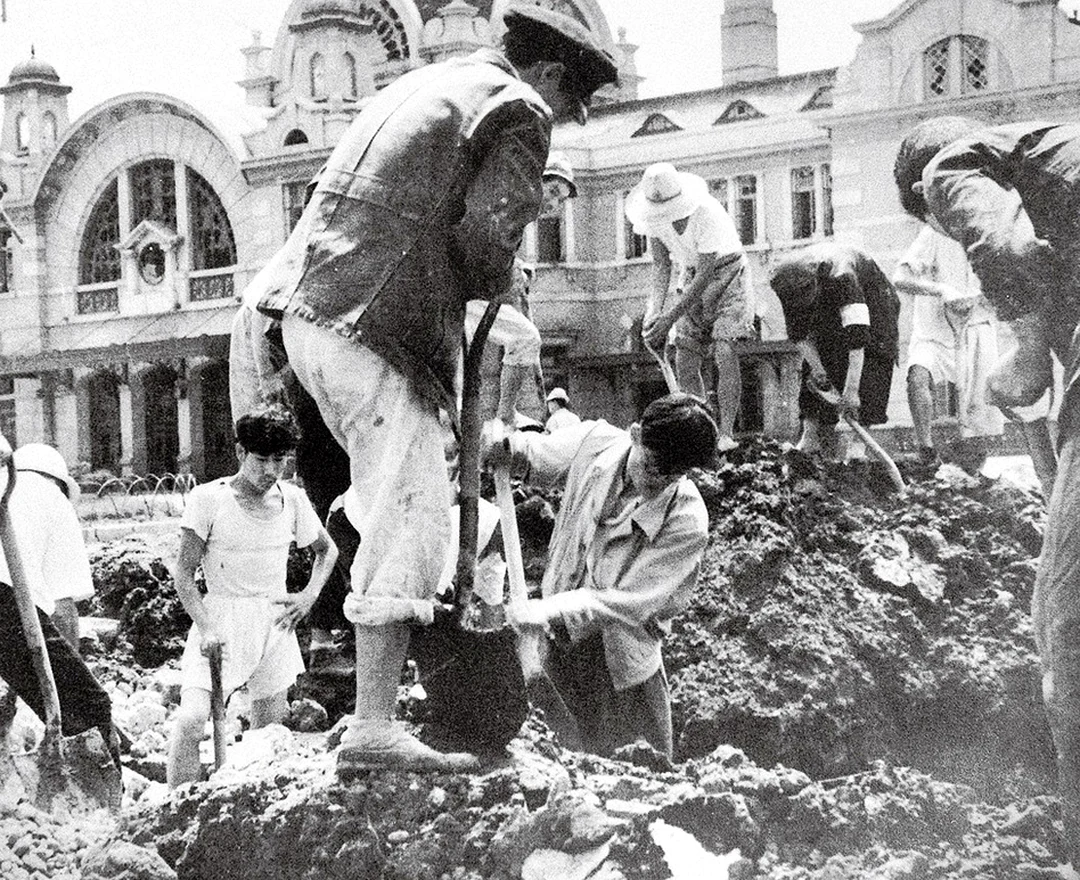
Yet Gwangjang’s historical journey was far from smooth, torn apart by the devastating Korean War between 1950 and 1953. Wartime bombing and artillery fire obliterated nearly the entire original structure of halls and stalls, reducing the once-thriving marketplace to a pile of smoldering ruins. Refusing to surrender to adversity, the moment the armistice agreement was signed, resilient merchants immediately returned to the very same grounds to rebuild each stall out of timber and corrugated iron. Moving into the 1960s and 1970s, alongside the Miracle on the Han River and the nation’s economic transformation, Gwangjang rose to become the largest nationwide wholesale and retail hub for textiles, fabrics, silk, and traditional Hanbok attire, serving as the backbone supplying garment materials for the entire postwar capital.
As the wheel of history rolled across the threshold of the 21st century, Gwangjang Market once again witnessed a spectacular transformation from a pure textile center into a premier folk culture and culinary complex. Rows of steaming food stalls filled with the crackle of oil frying crispy mung bean pancakes (Bindaetteok) and trays of fresh live octopus (Sannakji) blended seamlessly with the time-honored silk shops of old. The intersection of the unyielding spirit of the Korean Empire era, the enduring post-war revival, and the vibrant pulse of contemporary gastronomy has turned Gwangjang into a living museum, where every traveler’s footstep touches deep layers of over a century of enduring history.
Located in the historic core of Jongno District—the prosperous heart of the capital since the Hanyang era of the Joseon Dynasty—Gwangjang Market commands a feng shui terrain endowed with rare, lasting vitality. According to traditional East Asian human geography, the flow of underground water veins, rivers, and lakes acts as dragon veins channeling wealth and fortune, and Gwangjang is fortunate to hug the northern bank of the historic Cheonggyecheon Stream. This proximity to a major waterway not only creates an auspicious configuration where “water gathers to generate prosperity,” fueling bustling trade for over a century, but also acts as a natural microclimate regulator that softens the stifling heat of the surrounding urban concrete. The market serves as a pivotal hinge along the “Royal Heritage and Contemporary Corridor” landscape axis, shaping Seoul’s most prestigious cultural walking route: beginning at majestic palaces like Gyeongbokgung, winding past the moss-covered tiled roofs of Bukchon Hanok Village, continuing into the energetic grassroots vitality of Gwangjang, before expanding the visual horizon to the futuristic beauty of the Dongdaemun Design Plaza art sanctuary in less than a five-minute stroll.
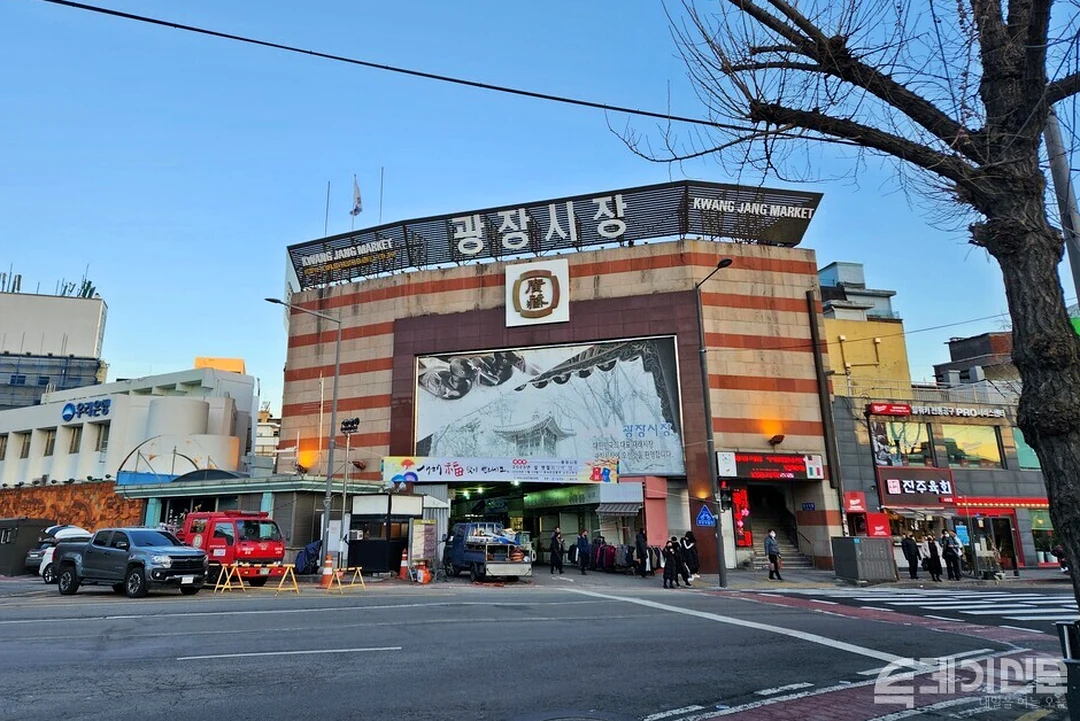
The public transit network serving Gwangjang Market is engineered with extraordinary precision and convenience, reflecting the exemplary infrastructure management of one of Asia’s leading megacities. Upon landing at Incheon International Airport, international travelers simply board the AREX express railway straight to Seoul Station, then make a single short transfer onto Subway Line 1 to head directly to Jongno 5-ga Station. From Exit 8 of this station, a mere 100-meter walk taking under two minutes brings pedestrians right to the clamorous threshold of the market. For passengers approaching from the south via the financial and design corridors, Subway Lines 2 and 5 intersect at Euljiro 4-ga Station, where Exit 4 opens onto a gentle 150-meter stroll to the market gates. Multilingual signage and sturdy, completely level stone-paved sidewalks make every journey to this cradle of folk cuisine seamless and effortless.
In terms of spatial planning engineering, Gwangjang Market showcases a classic grid-pattern complex architecture, where main thoroughfares and narrow alleys interweave tightly to form an irresistible culinary labyrinth. The entire market is sheltered beneath a sturdy arched canopy crafted from modern translucent materials that both block the harsh winter rain and snow of Korea and allow natural daylight to diffuse softly onto the floor throughout the day. Air convection engineering here is cleverly calculated through high vents at the crown of the arches, releasing the immense heat radiating from cast-iron skillets brimming with oil frying crispy Bindaetteok mung bean pancakes, while maintaining essential ventilation for the oxygenated tanks keeping live San-nakji octopus fresh right along the walkways. Food stalls are designed in U-shaped layouts or low circular bar counters where chefs stand at the center working with practiced dexterity while diners gather around on long benches fitted with warm heated cushions—creating a human landscape that is both lively and intimate, preserving the authentic rhythm of traditional market life right in the heart of modern Seoul.
Tucked within the thriving center of Jongno District, Gwangjang Traditional Food Market stands like a living grand maze of the urban folk culture of the Land of Kimchi, sprawling across a monumental footprint exceeding 42,000 square meters. This vast expanse brings together more than 5,000 large and small vendor stalls, forming one of the largest and most tightly interconnected commercial ecosystems on the Korean Peninsula. The market’s overall floor plan is laid out in the classic grid structure of ancient East Asian cities, with main avenues and side alleys intersecting at right angles to create smooth traffic flows for tens of thousands of shoppers daily. The clear zoning between the fabric, silk, and traditional hanbok sections and the central food axis reflects not only methodical commercial planning but also preserves an age-old trading rhythm in the heart of the modern capital.
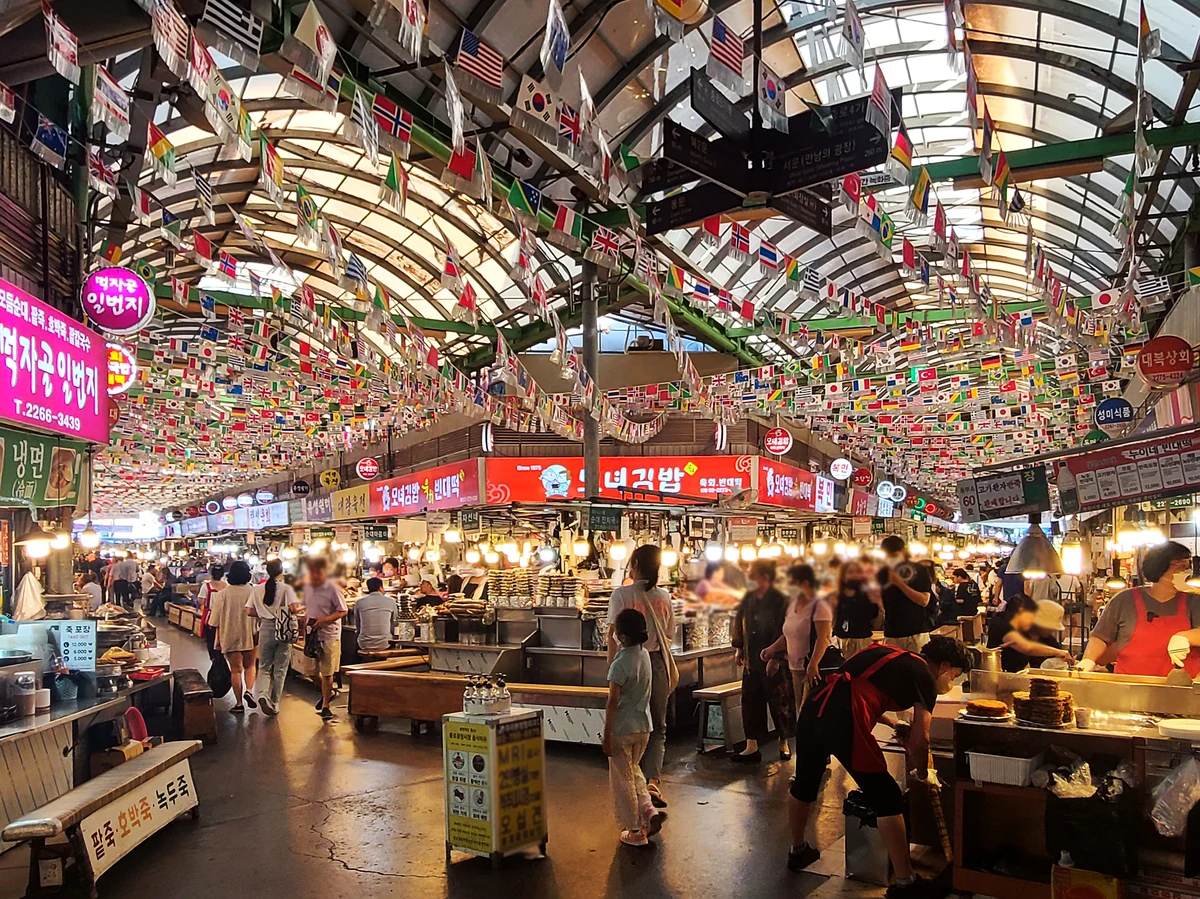
A striking highlight of Gwangjang’s pragmatic architectural language is its soaring, continuous arched roof system running along all major alleyways. Built with smart light-transmitting materials, this modern canopy simultaneously reflects summer solar radiation and shields against biting winds and fierce northern winter blizzards. This airy vaulted enclosure liberates the market from harsh weather, transforming the vast commercial complex into a semi-open-air structure capable of operating smoothly 365 days a year. Beneath natural daylight softly diffused through polycarbonate panels, the stalls remain filled with warm vitality, sheltering bustling livelihoods without interruption from any shift in nature.
Venturing deeper into the heart of the market, the central food street unfolds like an open-air theater stage featuring a one-of-a-kind open-kitchen layout. Here, each stall functions as a self-contained miniature architectural unit that interacts completely with the community. At the center of each stall sits a gleaming stainless-steel cooking station, encircled by low dining counters and padded round stools characteristic of street-side pocha culture. The boundary between diner and culinary artisan seems to vanish; guests can feel the heat radiating off sizzling cast-iron skillets, hear the crisp rhythmic clatter of knives on chopping boards, and witness every deft culinary motion just inches away.
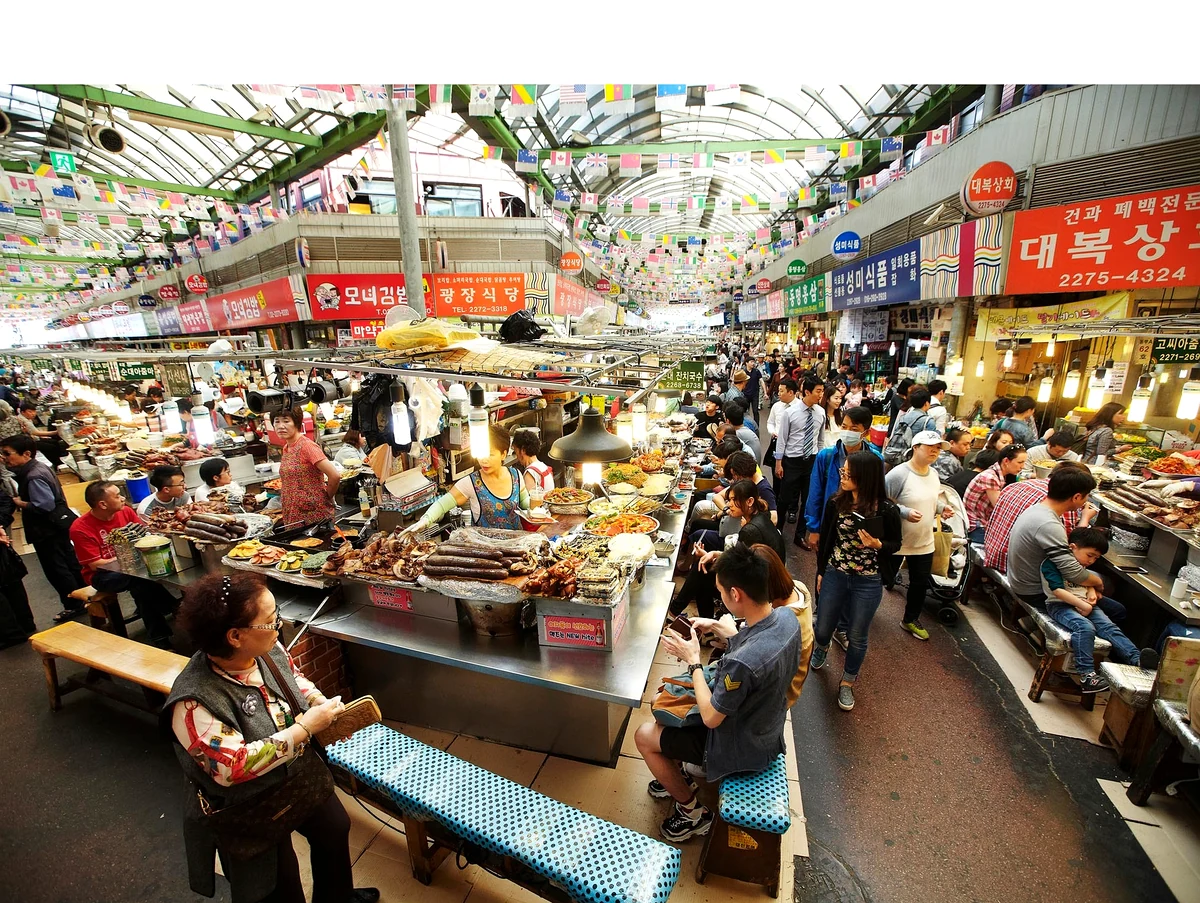
This open culinary architecture also serves as fertile ground preserving traditional artisanal techniques passed down from the 1970s and 1980s. Visitors easily spot heavy granite millstones turning at a steady rhythm, diligently grinding soaked mung beans into a silky, viscous batter for crispy, oil-kissed Bindaetteok, alongside bubbling glass aquariums housing fresh live octopus ready for the famed San-nakji knife craft. Long benches warmed during cold months by traditional heated-pipe systems, paired with tier upon tier of stacked bowls and condiment jars, faithfully recreate an earthy, warmhearted Seoul steeped in civic camaraderie.
It is precisely this harmonious fusion of sturdy urban grid planning, weather-shielding vaulted canopies, and the soul of traditional open-kitchen dining that turns Gwangjang into a living architectural heritage site. This place is measured not merely by square footage or dry stall counts, but by the dense warmth of human life—where every market corner, bench, and wisp of evening cooking smoke becomes a living anthropological museum chronicling the everyday lives of Seoulites across shifting eras.
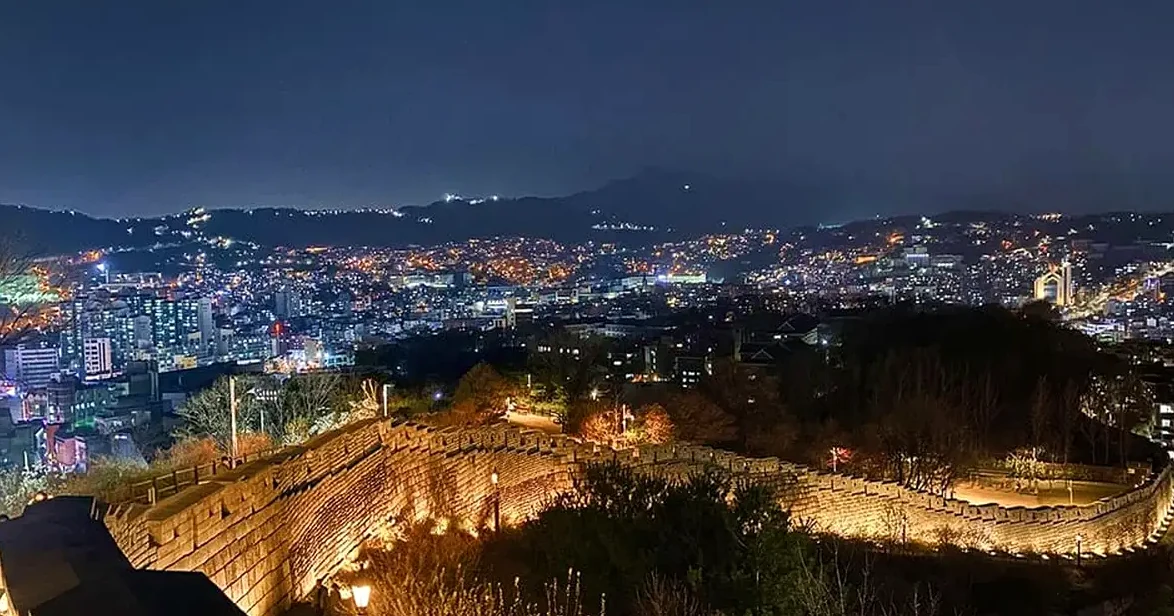
As twilight gradually descends upon the modern high-rises of Jongno District, Gwangjang Market sheds its daytime composure to step into one of Seoul’s most vibrant live-action culinary performances. The hours between 5:00 PM and 9:00 PM are regarded as the golden window, when the entire market awakens beneath hundreds of incandescent bulbs casting a warm amber glow, strung thickly like floating festive lanterns beneath the sturdy steel arches. This golden-orange light not only dispels the characteristic chill of Korean winter nights but also gleams brilliantly across giant cast-iron skillets brimming with oil, creating an enchanting visual backdrop that draws diners into a grassroots food culture elevated to the pinnacle of street performance art.
At the market’s central cross-shaped intersection, nightlife unfolds as a grand symphony of sound, color, and aroma. The crisp sizzle of mung bean pancakes (Bindaetteok) hitting bubbling oil acts as the opening drumbeat for the evening feast. Middle-aged women affectionately addressed as “Imo” (Auntie) work their hands swiftly beside stone mills grinding soaked mung beans into thick ivory batter, effortlessly flipping golden-brown pancakes fragrant with pork fat and bean sprouts. Billowing kitchen smoke mingles with rising steam from colossal pots boiling blood sausage (Sundae), forming ethereal veils of mist drifting from stall to stall. Under the practiced hands of these folk culinary artisans, food preparation ceases to be mere daily labor and ascends into a rhythmic visual choreography, where every slice of raw beef (Yukhoe) or swift, precise chop preparing live octopus (San-nakji) is executed down to the millisecond.
Dining at Gwangjang by night erases all social, cultural, and linguistic boundaries. Guests sit shoulder-to-shoulder on heated cushioned wooden benches facing directly into the open kitchens, soaking in the piping heat of the food while watching every step of preparation unfold before their eyes. Office workers in sharp suits unwinding after work rub elbows with backpackers from halfway across the globe, all sharing a tight yet remarkably cozy space. Across gleaming metal tabletops, brass bowls filled with milky, lightly effervescent Makgeolli rice wine are raised repeatedly amid lively toasts. The delicate sweet-and-tangy smoothness of traditional rice wine fermented with nuruk starter pairs seamlessly with the rich, crispy crunch of mung bean pancakes dipped in chili-vinegar onion soy sauce, awakening every sense.
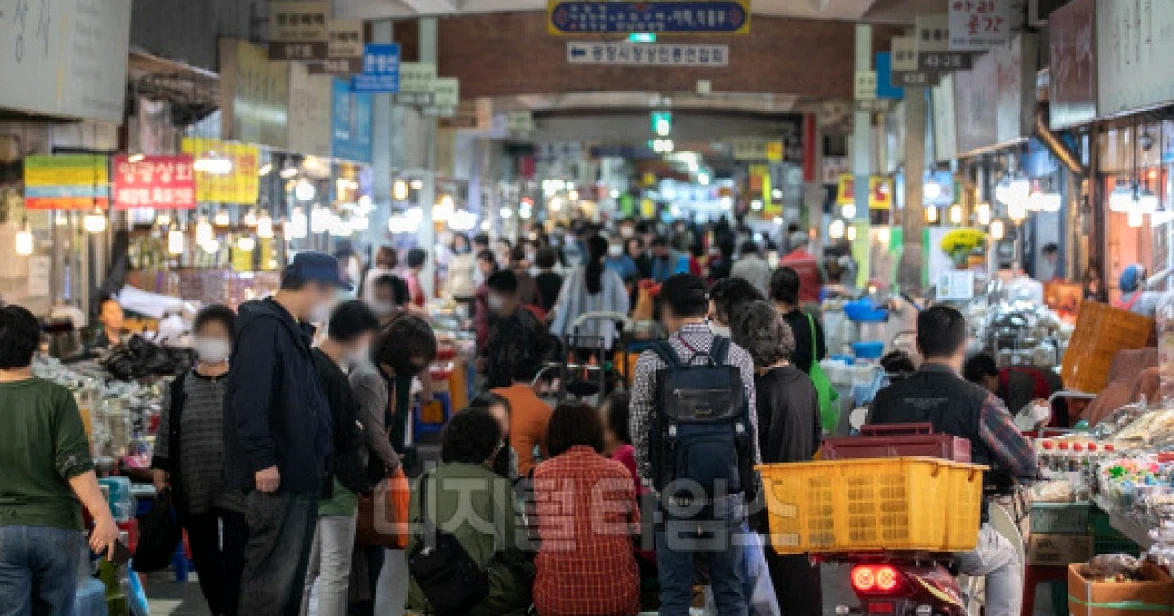
As the night deepens, the natural illumination from open flames and heat-radiating pendant bulbs thickens the atmosphere with everyday poetry. Hand-lettered signs brushed in black ink on yellow cardstock and platters of bite-sized Mayak gimbap glistening with sesame oil and toasted sesame seeds under direct spotlights turn each stall into a self-contained miniature stage. Without thumping electronic music or expensive visual effects, Gwangjang’s nocturnal allure stems purely from the authentic pulse of working-class urban life: the clinking of bowls and chopsticks, murmurs of laughter, and warm waves of cooking smoke. It is a vivid realist portrait of Seoul after dark, where culinary heritage is never frozen behind museum glass, but breathes, stirs, and radiates enduring energy across generations.
Stepping beneath the historic canopies of Gwangjang Market, a traveler’s senses of smell and hearing are immediately swept up in the lively chorus of sizzling cast-iron skillets and the rich aroma of toasted sesame oil woven into warm wisps of smoke. Standing proudly at the heart of Seoul’s traditional culinary map, the market is not merely a place to buy goods—it is a living treasury of flavor heritage where decades-old family recipes are preserved virtually intact amidst the fast pace of modern life.
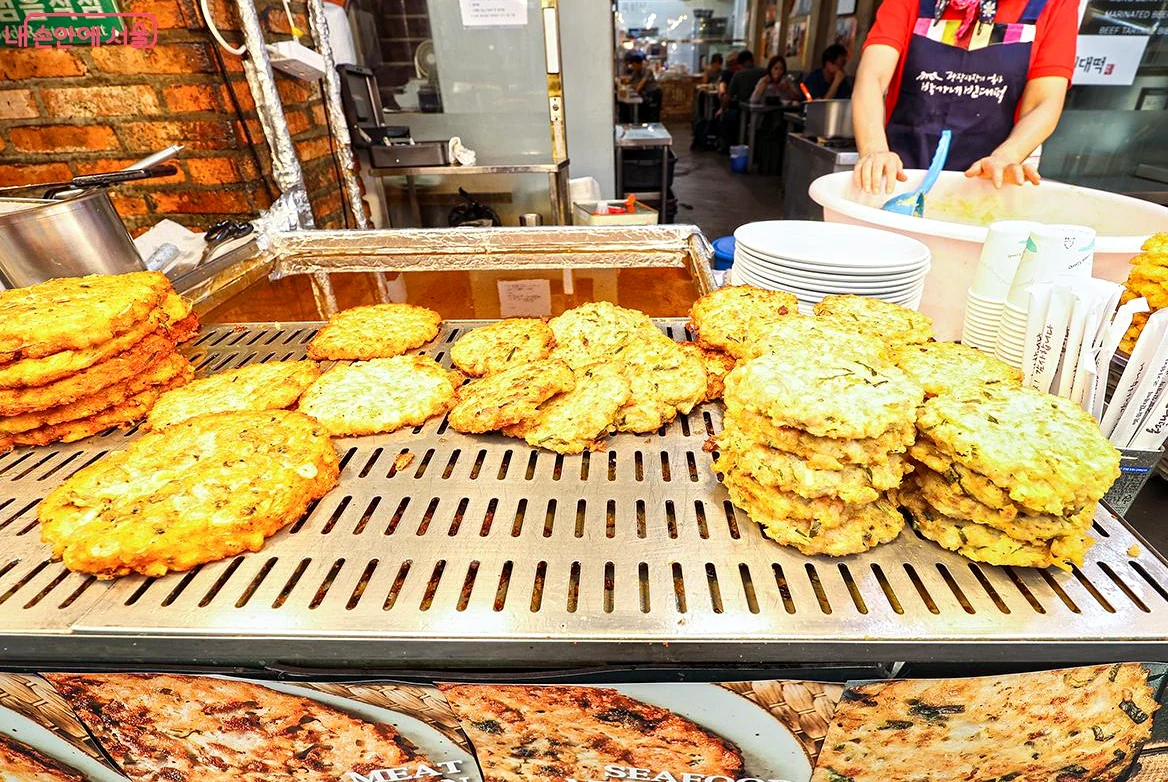
Reigning supreme across every intersecting lane of the market is the celebrated mung bean pancake, bindaetteok. Setting themselves completely apart from industrialized versions, Gwangjang’s culinary masters steadfastly uphold time-honored artisanal methods by using traditional stone mills to freshly grind soaked, hulled mung beans right at their stalls. Pure fresh mung beans are ground into a smooth, velvety batter with zero commercial dry flour additives, preserving their natural nuttiness and tender, airy texture. The batter is generously folded with crisp bean sprouts, chopped scallions, properly fermented sour kimchi, and richly seasoned minced pork. When each ladleful of silky batter hits a flat cast-iron griddle brimming with a blend of soybean oil and pure sesame oil, the roaring heat immediately sears a golden, shatteringly crisp crust free of greasiness while locking moisture and succulence inside. Enjoying a piping-hot piece of bindaetteok dipped generously into tangy soy sauce studded with crisp pickled onions, followed by a sip of chilled makgeolli rice wine from a humble aluminum bowl, lets diners fully experience Korea’s street food soul through over four decades of continuous fire at legendary family stalls like Sun-hee Bindaetteok.
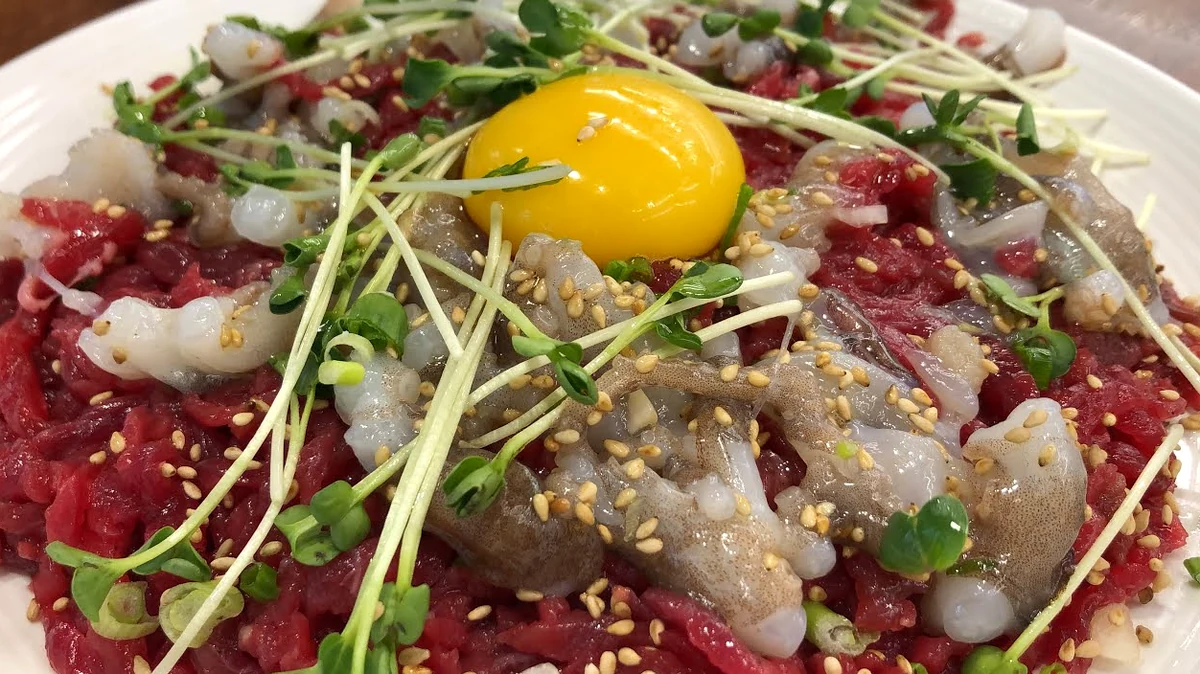
Alongside the comforting warmth of mung bean pancakes, Gwangjang invites diners on a thrilling culinary adventure with live octopus, sannakji—the ultimate emblem of Korean fresh seafood artistry. Small octopuses are kept in continuously oxygenated glass tanks to guarantee peak freshness and are scooped out only when ordered. Under the swift, practiced hands of the chef, the octopus is cleaned and chopped into bite-sized segments right on a wooden cutting board before the admiring eyes of guests. When the plate arrives at the table, the tentacle segments still writhe vigorously—a striking biological reflex that creates a one-of-a-kind visual spectacle. The dish is finished with a drizzle of fragrant premium sesame oil, a pinch of pure sea salt, and a generous scattering of golden toasted sesame seeds.
The moment a chopstickful of sannakji enters the mouth delivers peak sensory stimulation. Tiny suction cups along the tentacles remain active, clinging gently to the palate and inner cheeks to create a thrilling, tingly sensation. As you chew thoroughly, the clean, oceanic sweetness and snappy, crunchy texture burst forth, harmonizing with the nutty richness of sesame oil and delicate bursts of sea salt. Far more than a dish testing the courage of international foodies, sannakji stands as a vivid testament to a culinary philosophy that reveres pure, untamed freshness, turning every table corner in this century-old market into a cultural stage unmatched anywhere else in the world.
To experience the authentic vitality of Gwangjang’s culinary paradise to the fullest, timing your visit around the market’s daily rhythm is essential. The market pulses like a living organism with two distinct peak waves. The midday rush from 11:00 AM to 2:00 PM is ideal for immersing yourself in the bustling daytime crowd, as Jongno office workers, local merchants, and travelers from around the world fill the wooden benches to the lively sizzle of golden bindaetteok frying in oil. Meanwhile, the evening window from 5:00 PM to 9:00 PM unveils the most vibrant and atmospheric chapter of a traditional night market. As warm golden lights illuminate every lane, clouds of fragrant steam rise from steamers of sundae blood sausage, mingling with the rich aroma of seasoned raw beef tartare (yukhoe) and the cheerful clink of makgeolli bowls for an authentic sensory feast of Seoul’s folk life.
Seoul’s renowned public transit system offers effortless access to this culinary mecca. The fastest and most direct route is via the modern subway network. Travelers can board Subway Line 1 to Jongno 5-ga Station; stepping out of Exit 8 places the bustling entrance of the food market right in front of you within a few steps. Another pleasant option is taking Subway Line 2 or Line 5 to Euljiro 4-ga Station, walking out Exit 4, and enjoying a leisurely stroll across the serene Cheonggyecheon Stream into the market’s southern alleys. This seamless infrastructure ensures reaching Gwangjang remains relaxed and straightforward in any weather.
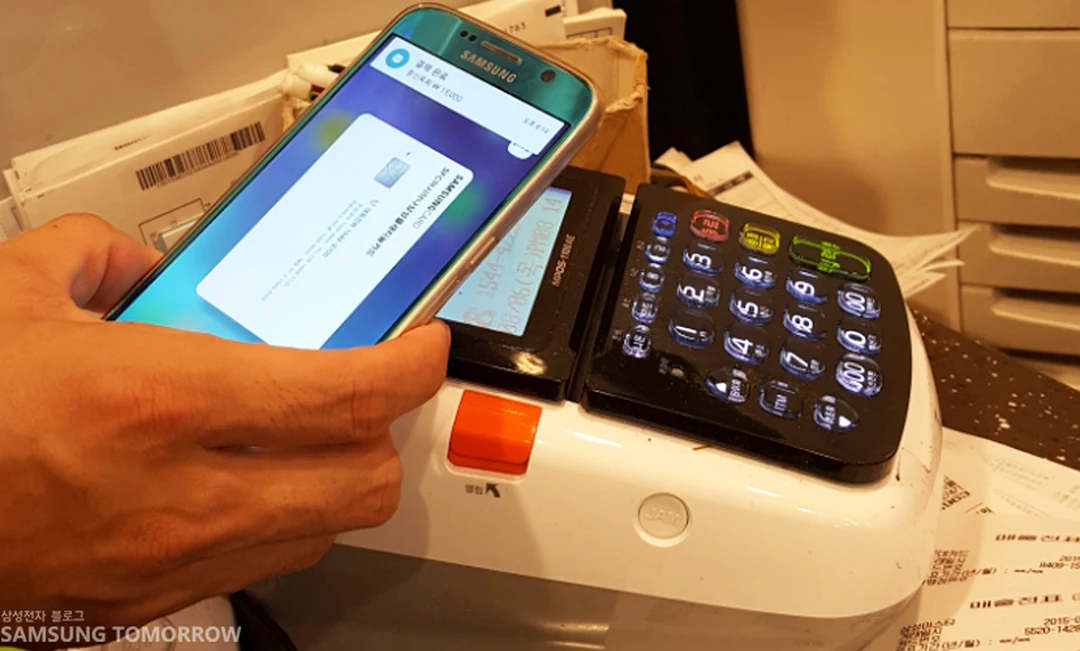
While preserving the rustic soul of an early 20th-century historic marketplace, modern-day Gwangjang has undergone smart modernization to welcome international visitors seamlessly. Breaking away from the cash-only barrier common at many Asian street markets, over 95% of permanent food stalls here are equipped with electronic payment terminals accepting international Visa and Mastercard credit cards, convenient contactless tap options like Apple Pay and Samsung Pay, as well as domestic QR ecosystems like Zero Pay and T-money transit cards. This upgrade not only provides remarkable spending flexibility for travelers but also reflects the forward-thinking adaptability of the artisans keeping traditional cuisine alive.
Alongside convenient payment infrastructure, visitor protection and cultural hospitality are prioritized at the highest level through close coordination between the Seoul Metropolitan Government and the Korea Tourism Organization (KTO). One hundred percent of food stalls inside the market have standardized publicly displayed menus featuring transparent Korean, English, and Chinese pricing to eliminate any concerns over hidden charges or overpricing. Practical pocket tips for visitors include carrying personal wet wipes, opting for stalls with heated benches during winter, and willingly sharing bench space with fellow strangers to experience the warm, open-hearted camaraderie of traditional market culture. To ensure a pure, worry-free exploration free from forced shopping stops, considering a curated all-inclusive tour package designed strictly to no-shopping standards offers a wonderful guarantee for a journey rich in authentic cultural value.