The history of golden Gouda and Edam cheese wheels does not originate from a random culinary recipe, but is deeply rooted in the resilient flood control and taming of nature across the low-lying alluvial plains of Northwestern Europe. Turning the clock back to the 12th century, under the rule of the Counts of Holland, fertile meadows reclaimed through rudimentary dike systems began producing abundant bovine milk far exceeding daily fresh consumption needs. To cope with the spoilage of rich milk in humid coastal climates, local agricultural settlers soon pioneered specialized curdling and pressing techniques, laying the first foundation stones for the renowned Gouda cheese style. Back then, the town of Gouda was not merely a handicraft production site, but quickly transformed into a vital waterway gateway that consolidated produce from surrounding farms to organize rigorous quality appraisal, weighing, and certification processes before distribution throughout the lower Rhine basin.
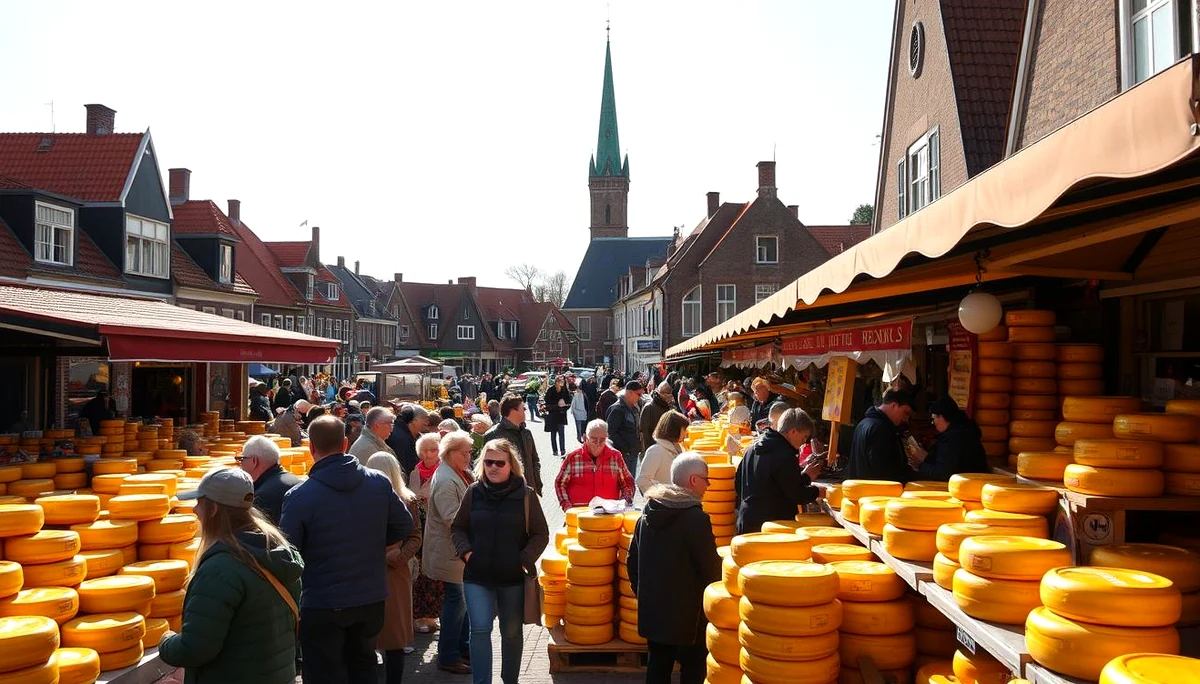
The turning point cementing Gouda cheese’s hegemony in the Northern European market was marked on April 20, 1395, when Albert, Duke of Bavaria and Count of Holland, issued a supreme royal decree authorizing the town of Gouda to organize periodic weekly cheese markets. This institutional decision liberated milk trading from feudal fragmentation barriers, turning Gouda’s central square into the largest trading and distribution center for cheese in Medieval Northern Europe. Astute merchants belonging to the Hanseatic League quickly seized this commercial opportunity, turning Gouda’s flat disk-shaped cheeses into critical export commodities along shipping routes across the North Sea and the Baltic Sea. It was also during this period that long-standing cheesemaking family lineages, such as the van der Lee family, began establishing generational fermentation secrets and humidity control techniques within ancient brick-built aging cellars, maintaining exceptional stability for local products.
Running parallel to Gouda’s reputation, Edam cheese carried a historical mission intimately tied to ocean-faring sails and the brilliant golden age of the Dutch Republic lasting from the 14th to the 17th centuries. Originating from lands abutting the windy Zuiderzee bay, Edam early on affirmed its role as a prosperous shipbuilding and fishing port. By 1520, another significant royal milestone was established when Holy Roman Emperor Charles V officially approved a law granting Edam ownership of a public weighing house along with the perpetual privilege of opening a cheese market. Under this imperial patronage, this tiny coastal town rapidly rose to become one of the busiest agricultural transit points, welcoming tens of thousands of flawless spherical cheese wheels arriving weekly for quality inspection.
The twists and turns of history and the rigorous demands of the Age of Discovery directly shaped the appearance and distinct physical properties of Edam cheese. Recognizing clearly that mold and decay were public enemy number one for provisions on long sea voyages, Edam master cheesemakers developed a solid spherical structure with an extremely low moisture ratio, while tightly sealing the surface with a characteristic red wax coating made from natural beeswax and paraffin. This sturdy protective membrane acted as a biological armor, completely isolating the cheese interior from the humid, salty sea air and bacterial invasion. Thanks to its durable preservation properties without spoiling over years, Edam cheese quickly became an irreplaceable strategic food source aboard warships of the Dutch East India Company, while serving as a powerful hard currency used to trade for rare silk, peppercorns, and spices at distant Asian and African ports.

Through hundreds of years of fierce upheaval in European history—from the jurisdiction of medieval Bavarian dukes and Habsburg dynastic rule to the heyday of commercial maritime capitalism—Gouda and Edam cheeses transcended the framework of everyday food to become living witnesses to history. The endurance of the Kaasmarkt markets and the generational crafts of the van der Lee family across generations stand as vivid proof of the discipline, commercial acumen, and profound culinary knowledge of a people who transformed every drop of milk from marshy pastures into a globally celebrated cultural symbol.
Nestled right at the heart of the affluent Randstad urban metropolis, the birthplace of the renowned Gouda and Edam cheese varieties spans two of the wind-mill nation’s most representative landscape subregions: the waterlogged low-lying Krimpenerwaard region in South Holland province and the watery Waterland region in North Holland province. The terrain here is an artificial geographical masterpiece crafted through hundreds of years of water management, shaped by the classic polder structure—low-lying floodplain strips below sea level enclosed by sturdy dikes. The intricate network of canals serves simultaneously as vital transportation arteries and perfect drainage funnels, tightly linked with robust flood embankments built solidly since the 16th century. Under the moderating influence of a maritime temperate climate that is cool and humid year-round, the nutrient-rich peat soil layer soaked in morning dew and sea breezes nurtures lush natural grasslands packed with minerals and a uniquely singular local microbiome.
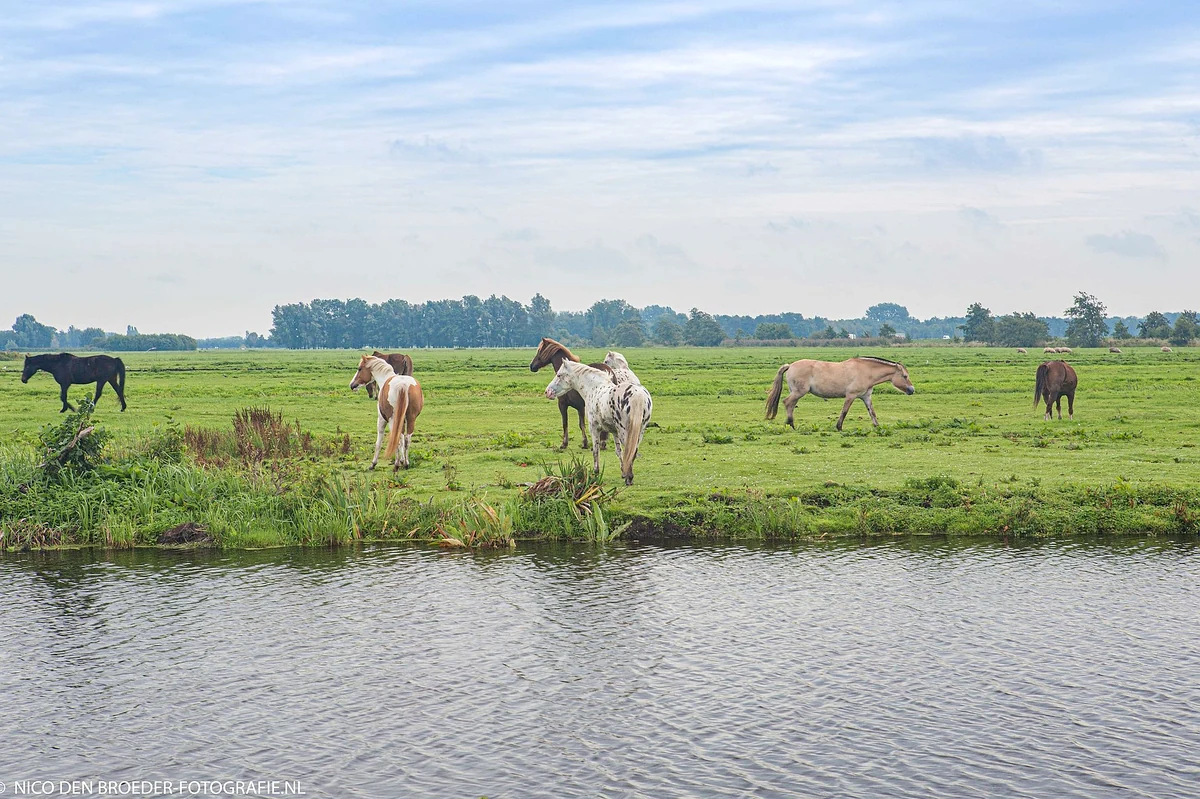
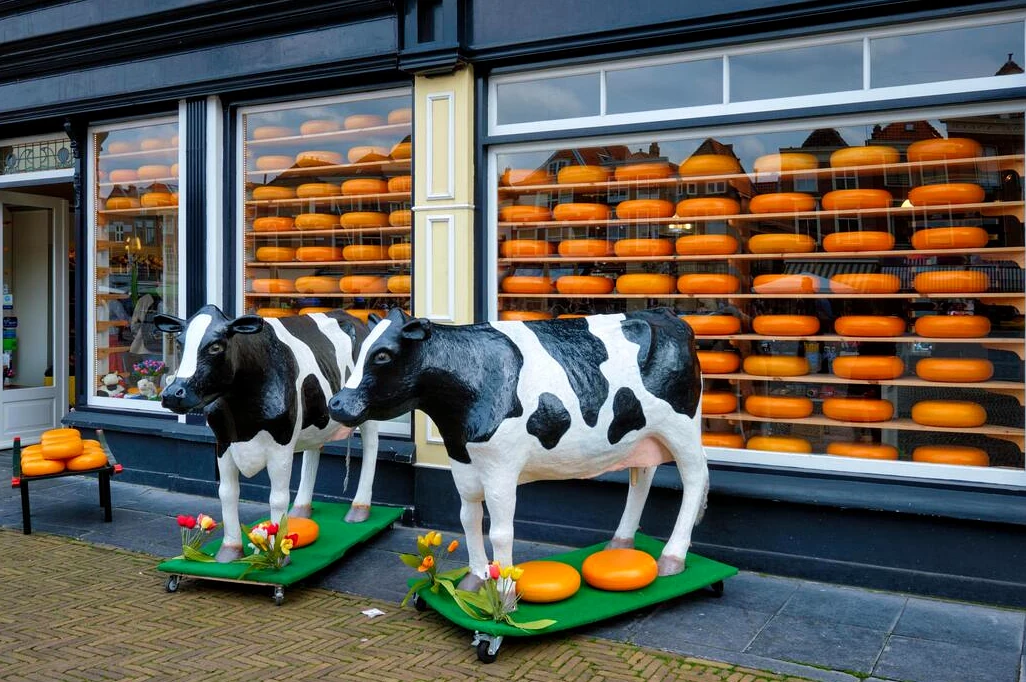
This bountiful soil is the pristine domain nurturing Holstein-Friesian dairy cows with their characteristic black and white coats, the eternal symbol of Dutch livestock farming. Allowed to graze freely across gentle dikes and boundless floodplains, the herd distills the essence of coastal herbs to yield sweet whole milk with an ideally balanced butterfat and protein ratio. The scenery here bears a strong geomantic imprint of harmony between land and water, where open agricultural space extends infinitely, gently divided only by reed-fringed drainage ditches. Standing out against a sky of low-hanging silver-grey clouds are ancient drainage windmills, hydraulic engineering structures moving their wind-powered wheels day and night to drain excess water, keeping the turf dry and supplying absolutely pure raw materials for craft farm cheese cellars handed down through generations.
The technical cheesemaking process in Krimpenerwaard and Waterland is an intangible heritage tightly combining biochemical precision with traditional craft intuition. Fresh raw milk, still retaining its natural warmth after milking, is immediately introduced into stirring vats, gently heated, and inoculated with probiotic cultures and natural rennet coagulant to transform into smooth, soft curds. Cheesemakers use specialized knives to cut the curd into small pieces to thoroughly separate the whey, then wash it with warm water to reduce acidity, creating a characteristic mellow buttery sweetness before pressing it firmly into molds. While Edam cheese is pressed into flawless spherical blocks symbolizing the full moon, convenient for rolling on ship decks during long voyages, Gouda is shaped into wide flat wheels with gently curved edges. Afterward, the cheese block is continuously immersed for many days in concentrated sea salt brine baths to promote biological rind formation, enhance firmness, and preserve its original flavor.
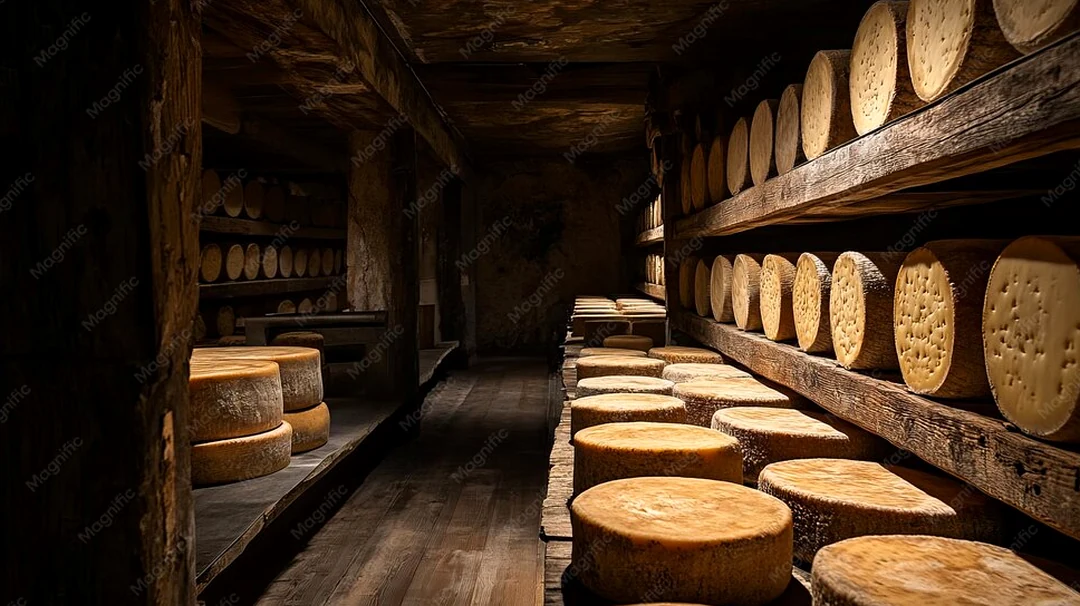
The finishing stage takes place in airy aging rooms where cheese blocks are arranged neatly on wide, raw pine planks untreated by chemical agents. Humid salty air blowing steadily from river branches stimulates enzyme activity to develop slowly, transforming every fat molecule. According to ancient custom, finished Edam cheese destined for export is typically coated with a dark red paraffin wax layer to prevent bacteria and retain absolute moisture during long sea journeys, while traditional farm Gouda retains its natural golden rind, periodically brushed with a thin layer of vegetable oil. Depending on aging durations ranging from a few weeks for young, soft types hinting of fresh butter to an entire year for aged, crumbly varieties glittering with mineral salt crystals, each golden cheese wheel resembles a work of art condensing the entire terroir of a resilient low-lying land.
The cultural space associated with traditional Gouda and Edam cheeses is not merely confined to boundless farms in the low-lying plains, but exists as an architectural epic spanning from the Middle Ages to the modern era of the tulip country. The focal point of this spatial canvas is the Netherlands’ largest cheese market square in Gouda, proudly presided over by the Gouda Town Hall (Stadhuis van Gouda). Commenced in 1450 and completed in 1459 after a massive fire consumed most of the town, this masterpiece represents the pinnacle of late Gothic style built of solid sandstone. Every line of the soaring sharp spire, elaborately carved balconies, and resounding chime system formed a perfect centrifugal planning axis, where round, plump, golden-hued cheese carpets were neatly arranged like giant gold coins basking in northern sunlight.
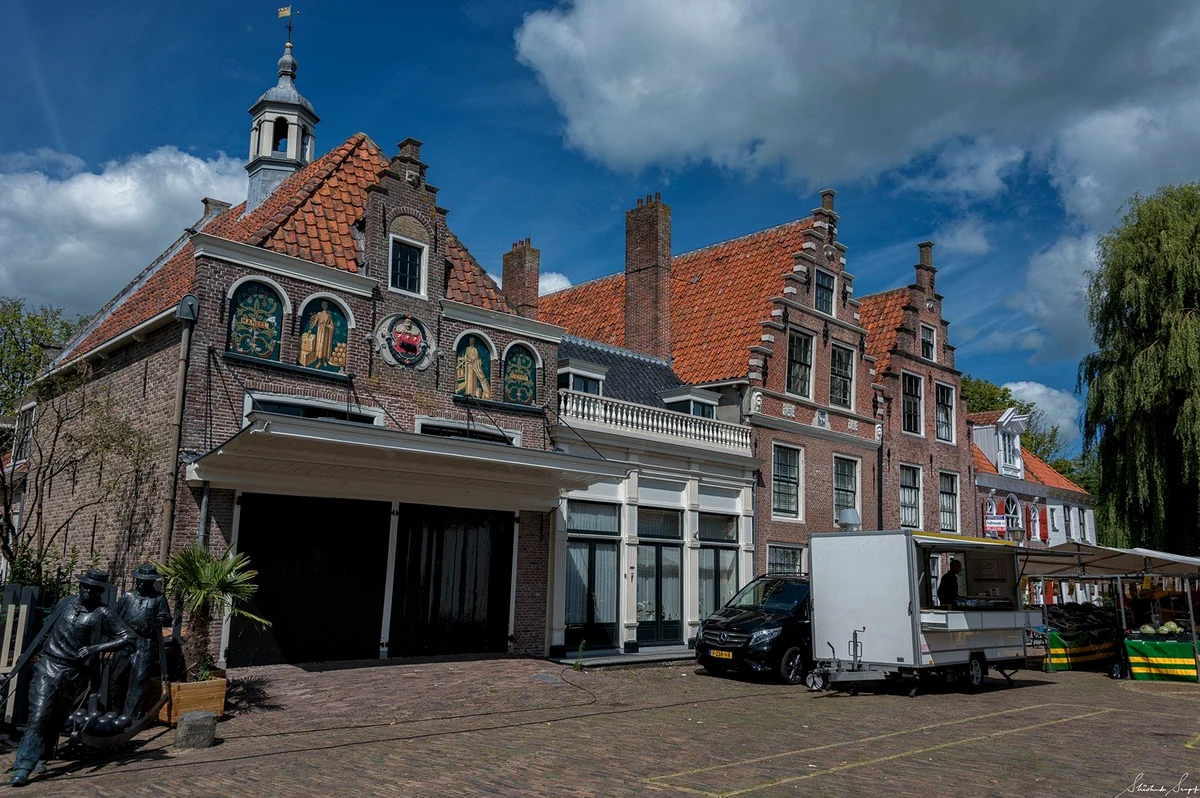
Leaving Gouda heading north, medieval commercial inspection marks are fully crystallized in the town of Edam through the Edam Weigh House (Kaaswaag). Rebuilt in 1778 right upon the solid foundations of an older inspection station dating back to the 14th century, the structure carries the elegant breath of the Renaissance combined with late Baroque, featuring deep red brick facades and solid arched gateways. It once served a vital role as an official weight inspection and notarization agency under royal commission, ensuring all exported cheese via maritime routes met strict standards for size and density. Inside the weighing building, time-worn oak beam balance scales and hand-forged iron hanging rigs still stand tall, recalling the famous “handjeklap” bargaining ritual—where farmers and merchants rhythmically slapped hands to settle prices without written contracts.
The prosperity of Dutch cheesemaking technology cannot be separated from the pre-industrial technical ecosystem preserved intact at the Zaanse Schans windmill village. This 17th and 18th-century heritage complex reflects the locals’ extraordinary mastery of nature in draining marshlands and creating fertile pastures for the famous Friesian dairy cows. Giant windmills such as De Kat, specialized in grinding natural mineral pigments to create brilliant paints, or De Heusder, specialized in pressing vegetable oils, painted a panoramic picture of early industrial society. North Sea wind power not only operated grinding machinery but supported auxiliary supply chains, from sawing timber planks for aging shelves to grinding oak bark to produce tanning agents for milk container barrels, creating a closed loop between livestock farming and cottage industry infrastructure.
The practical scale of traditional Gouda and Edam cheesemaking art lies in the absolute precision of ancestral craftsmanship passed down through centuries. Starting from unpasteurized whole raw milk from independent farms, artisans precipitate milk protein using natural rennet, use wire knives to cut the curds into uniformly tiny milk grains, and drain the liquid whey before gentle heating. This mixture is then tightly compressed into traditional round wooden molds under mechanical pressure to squeeze out the final drops of moisture, shaping a dense cheese structure. After undergoing immersion in saturated saltwater tanks for many days to form a natural rind and enhance rich flavors, each cheese block is transferred to dark aging cellars, placed ceremoniously on rustic, chemically untreated old pine boards. Here, through daily flipping by skilled aging masters and a thin protective wax layer featuring Edam’s signature deep red hue or aged Gouda’s amber gold, the cheese gradually reaches perfect maturity with layered flavors that are rich, nutty, and steeped in the essence of northern lands.
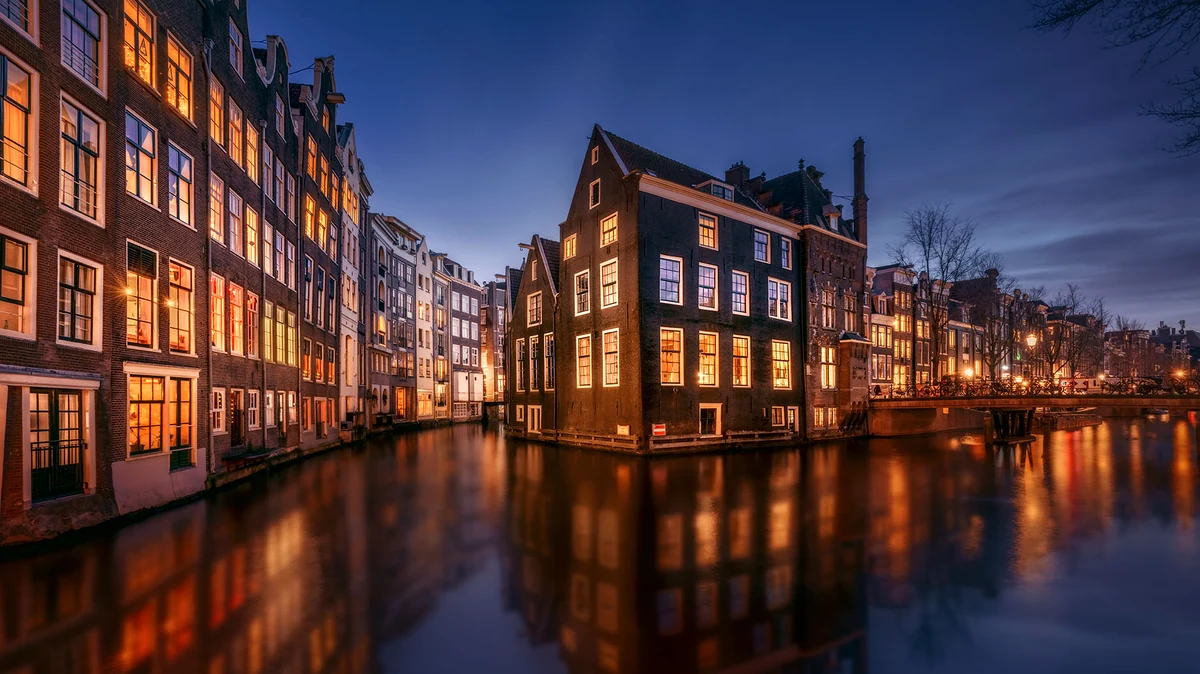
As the sunset gradually fades across the tranquil canals of the low-lying plains, life in Gouda and Edam shifts into a completely different melody—subdued, dignified, and imbued with medieval European flavor. Devoid of any semblance of bustling nightlife or thumping modern clubs like downtown Amsterdam, the nighttime atmosphere here is illuminated by warm landscape lighting art, skillfully honoring every detail of centuries-old brick architecture. At Gouda’s expansive central Markt square, the ancient 15th-century Town Hall built in the late Gothic style glows under soft orange-yellow light strings, highlighting slender spires and solemn Burgundian noble reliefs casting shadows on dew-kissed cobblestones. Right next to it, the Cheese Weigh House (Goudse Waag), bearing deep imprints of Dutch Renaissance architecture by architect Pieter Post, stands tall, recalling the golden age of maritime trade and the continent’s busiest cheese transactions.
Leaving Gouda heading north to the town of Edam, nightfall sketches a tranquil scene straight out of timeless paintings by Johannes Vermeer or Rembrandt. White-painted wooden drawbridges crossing the Damplein canal are illuminated by classical-style lanterns, casting shimmering light streaks onto mirror-flat, motionless water surfaces. Edam’s ancient Kaaswaag weighing building, with its dark oak measuring tool rooms dating from the late 16th century, nestles under shady trees, exuding the pristine beauty of a trading port once famous worldwide for its red wax-coated round cheese wheels surviving journeys across oceans aboard fleets. Nighttime rhythms in Edam are not rushed but cycle to every resounding bronze chime from the ancient Speeltoren bell tower, every melodic rhythmic knock echoing through cobblestone alleys and charming stepped-gable houses.
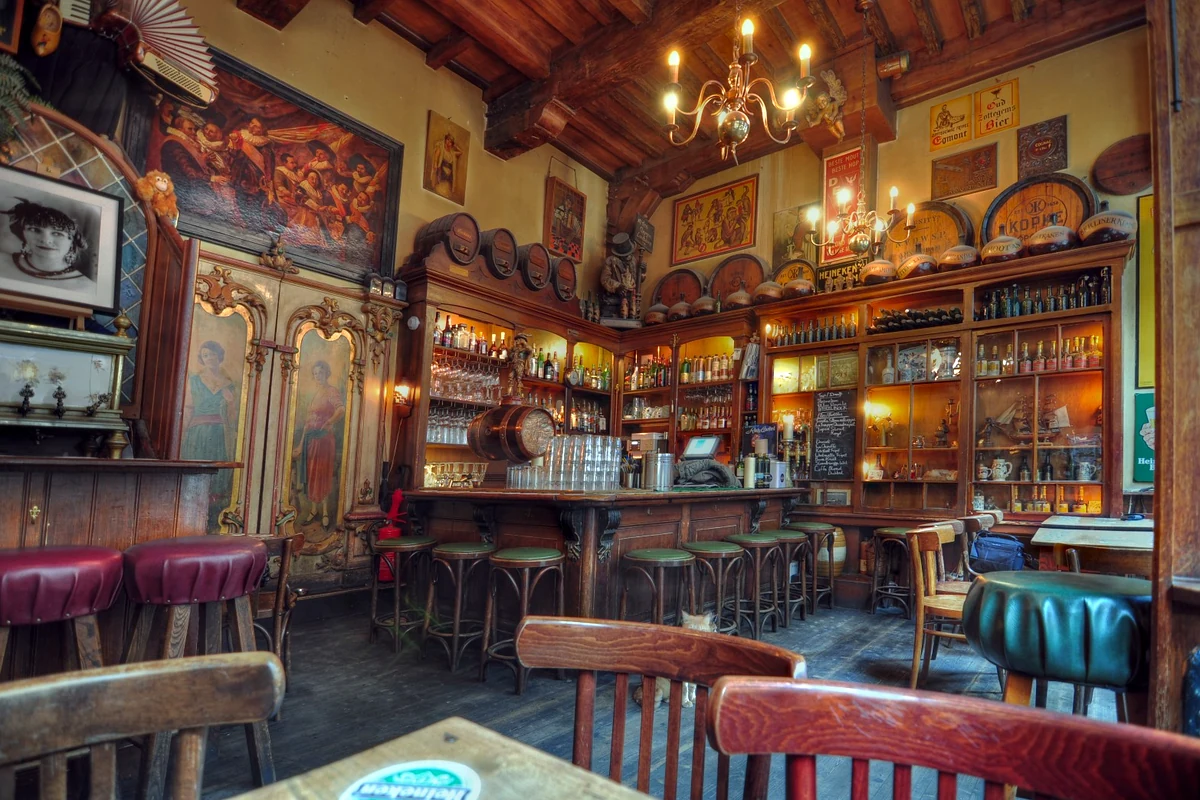
The soul of nightlife in traditional cheese country is fully crystallized in long-standing family pubs affectionately called “bruin café” by locals. Under time-stained oak ceilings and nostalgic stained-glass windows, the concept of “gezelligheid”—the uniquely warm and intimate Dutch cultural trait—is clearly felt through every fireside chat by candlelight. At rustic pubs nestled along canal banks, the focal point of every table spread is always a plate of premium Oude Kaas aged continuously from one to three years. Through prolonged natural fermentation, the cheese crystallizes tiny, crunchy calcium mineral salt grains, creating a robust structure alongside a rich aroma intertwined with the salty finish of roasted caramel, which when dipped in a touch of coarse-grained honey mustard awakens the entire rich sensory profile of pasture-fed cow’s milk.
To complete the late-night tasting experience, connoisseurs invariably pair the aged cheese plate with traditional Trappist monastery beers such as Dubbel, brimming with burnt malt aromas, or Tripel, glowing with a golden hue and deep alcohol content. Beers brewed according to strict centuries-old standards of ancient monasteries blend perfectly with Oude Kaas’s bold richness, creating an unforgettable sensory fusion in the heart of ancient Europe. As the midnight hour strikes on antique clocks, local life seems frozen in serene stillness, transforming Gouda and Edam into a magical live-action stage where lighting art, heritage architecture, and artisan culinary excellence blend into a ballad of the night that touches hearts.
Exploring the two renowned cheese cradles of Gouda and Edam opens up a refined flavor map where culinary arts are tightly bound to the soils of fertile reclaimed plains. At the pinnacle of local gourmet experiences is Boerenkaas, traditional craft farm cheese made entirely from unpasteurized raw milk yielded by cows leisurely grazing on dew-soaked polders. This protein- and fat-rich milk preserves the full fragrance of meadow herbs, reflecting both rusticity and meticulousness in every traditional aging batch, laying the groundwork for cheese masterpieces celebrated across the old continent for centuries.
The peak of flavor transcendence in Gouda converges fully in Goudse Oude, meaning aged Gouda cheese. Having undergone a quiet sleeping cycle spanning one to five years on thick-sawn pine planks in ancient cellars, the cheese gradually sheds moisture to condense into a firm, deep golden structure. When slicing a thin piece, diners immediately notice tiny, pristine white calcium lactate crystals distributed sporadically, creating a mesmerizing crunchy sensation when chewed. Goudse Oude bursts in the palate with a complex aroma profile of burnt hazelnut, the deep lingering sweetness of butterscotch, and notably a distinct, bold, umami depth. Knowledgeable Dutch locals typically enjoy this aged cheese slice alongside a smooth Merlot red wine with rounded tannins, or sip it with a high-alcohol Trappist monastery beer shimmering in golden yeast, where sharp beer foam cleanly cuts through the richness, leaving a lingering aftertaste.
Heading north, the town of Edam charms travelers with a fresher flavor polarity via Edammer Kruidenkaas, or spiced Edam cheese. Unlike Gouda’s deep richness, Edam’s cheese texture is inherently light, supple, and lower in fat, providing a perfect pairing base with exotic oceanic spices dating from the heyday of Dutch trading fleets. Most intriguing is the Komijnekaas variant blended with mildly spicy Egyptian cumin seeds, or batches dotted with whole black peppercorns and wild stinging nettles plucked from canal banks. The resonance between the pure richness of semi-skimmed milk and fresh, gently pungent herbal notes stimulates the palate intensely, turning each red-waxed cheese slice into a perfect highlight for light meals on tavern porches overlooking tranquil canals.
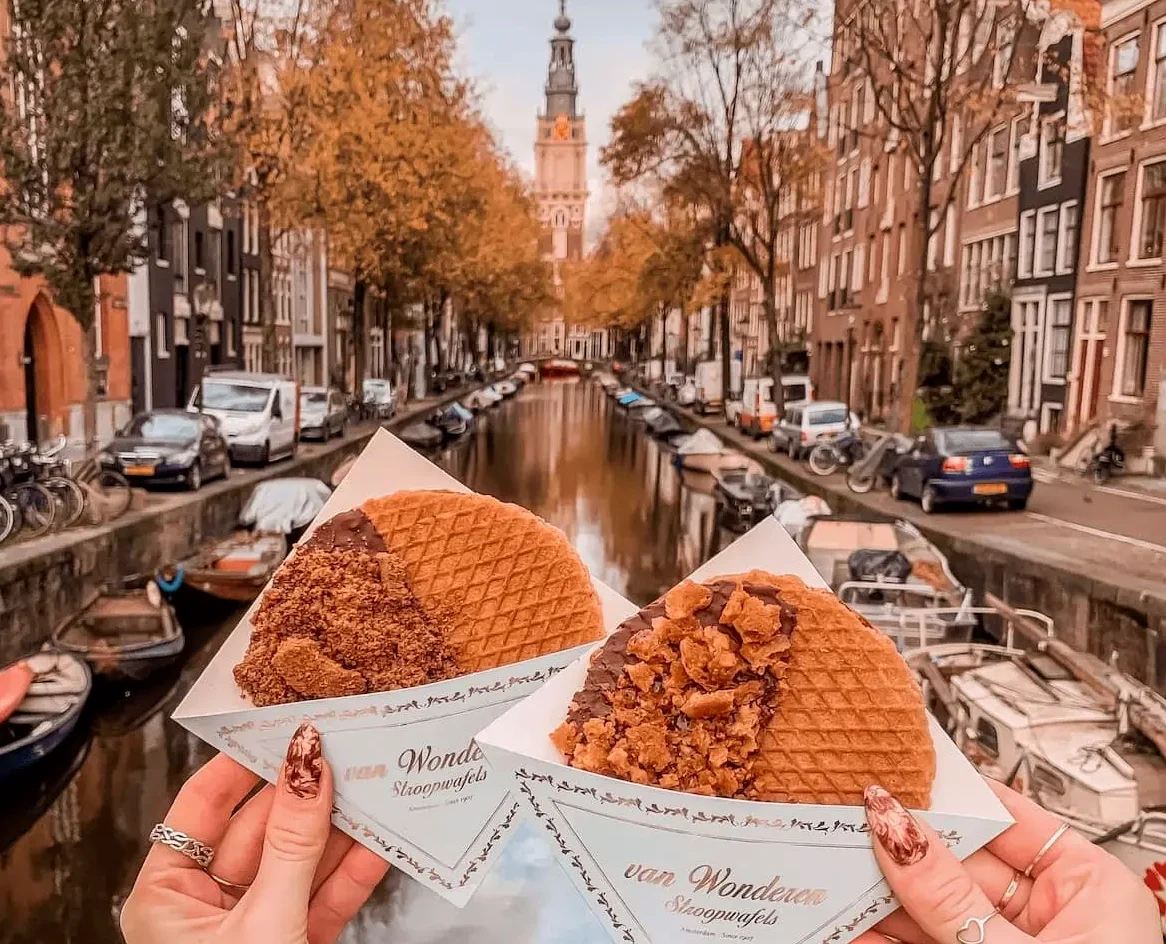
Alongside golden cheese wheels, the soul of street food at Gouda’s market square belongs to the hot caramel waffle Stroopwafel. Born around 1784 right in this town, the pastry began as an economical invention of poor bakers utilizing leftover dough scraps pressed flat on heated iron grids, then spreading a warm brown sugar syrup layer between two paper-thin waffle sheets. Standing amidst a chilly early market, holding a freshly lifted Stroopwafel from the fiery cast-iron mold, listening to the syrup bubble softly and feeling the stretchy, chewy caramel filling, travelers truly grasp the depth of a rustic yet warm-hearted traditional culinary culture of the windmill nation.
The journey back to the cradle of the golden cheese blocks Gouda and Edam opens up with immense convenience thanks to the windmill nation’s world-class public transport infrastructure. Departing from Amsterdam Centraal station, travelers spend a mere 51 minutes on a direct regional train to step down onto the ancient square of Gouda town. If you wish to immerse yourself in Edam’s tranquil ink-wash aesthetic, express bus line EBS number 314 or 316 departing from the bus station behind Amsterdam central station will carry you across lush green grasslands in about 25 minutes. Additionally, with just a 17-minute train ride heading north, visitors can easily visit the heritage village of Zaanse Schans—home to centuries-old windmills and the famous Catharina Hoeve cheese factory, creating a perfect golden triangle for exploring Dutch culinary treasures.
To fully experience traditional commercial rhythms, timing your visit to historic cheese markets is a critical factor for a successful trip. Gouda’s annual cheese market runs only from April through August, packed into Thursday mornings within a fixed window from 9:00 to 12:30. Here, the brick courtyard before the magnificent Gothic town hall transforms into a giant stage where local cheesemakers and merchants recreate bargaining with resounding handslaps. Meanwhile, Edam’s cheese market buzzes every Saturday morning from 10:30 to 12:30, transporting viewers back to the 17th century with the ritual of carrying cheese on curved wooden stretchers past calm canals. Visitors should arrange to arrive at the square at least thirty minutes before opening time to secure an ideal viewing spot, avoiding congestion when international tour groups arrive en masse.
Besides the bustling festival atmosphere, discerning travelers should stay alert against increasingly disguised commercial traps at transit points. Local culture researchers routinely warn tourists against vague budget tour programs or zero-dollar tours, which typically lure visitors into closed commission-sharing shops. At these locations, mass-produced industrial cheese blocks are often marked up three to four times their true value, accompanied by mass-machined wooden clogs lacking artisan precision. To enjoy authentic creamy Gouda Boerenkaas or traditional Edam, actively look for European Union Protected Designation of Origin (PDO/PGI) or Traditional Speciality Guaranteed (STG/TSG) certification seals embossed on the wax coating. Purchasing directly from farm owners at official market trading floors, or visiting iconic farmsteads like the Catharina Hoeve workshop, is always the gold standard guaranteeing authentic items at transparent listed prices.
Visa and personal expense preparations also play a pivotal role in ensuring a smooth, memorable excursion. Travelers must ensure passports hold valid Schengen visas while proactively updating ETIAS electronic travel authorization rules ahead of departure per new EU regulations. Although most shops and cheese stalls in the Netherlands accept international card payments seamlessly, carrying small-denomination Euro cash remains essential for paying for tasting portions or public facility fees at the square. After selecting your desired cheese blocks, ask local craftsmen for specialized vacuum sealing to preserve rich flavors throughout your long flight home. To experience this culinary pinnacle within a cohesive picture of Western Europe’s most vibrant cultures, you can consult deeply curated itineraries via the France – Belgium – Netherlands – Switzerland – Germany 11D10N tour for a leisurely, deeply inspiring trip.
In the geographical chronicles of humanity, New Zealand stands out as a majestic, isolated sanctuary adrift in the vast Pacific Ocean, while holding the record as the last major habitable landmass on Earth to be settled by humans. While most Eurasian civilizations had already lived through millennia of rising and falling dynasties, this archipelago remained completely wrapped in the primeval slumber of ancient podocarp forests, sweeping glaciers, and giant Moa birds ruling the land. That thousand-year stillness was truly broken only around 1280, opening the dramatic first chapter of the country’s grand historical epic.
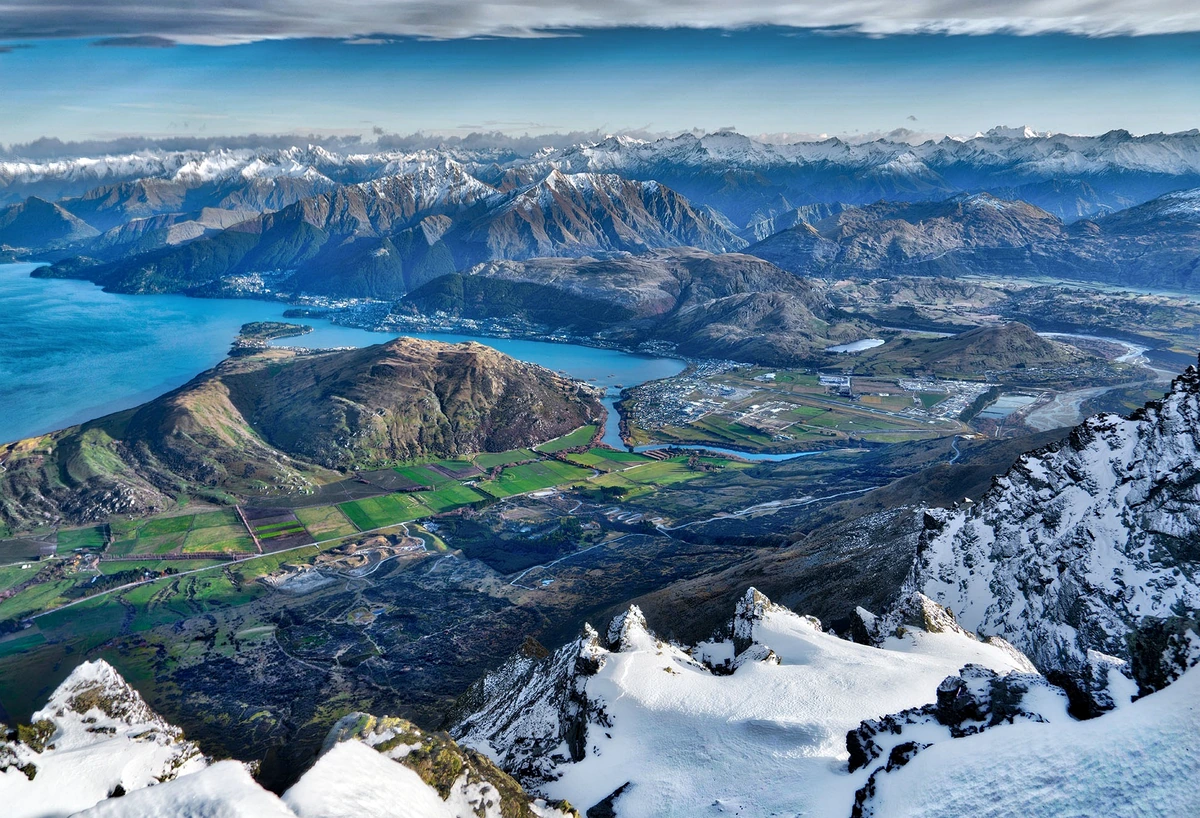
Guided by ancient celestial navigation charts, seasonal winds, and the flight patterns of migratory birds, intrepid Polynesian explorers crossed thousands of nautical miles aboard double-hulled waka hourua canoes through the swells of the Pacific. As their prows touched shore, what met their eyes were not only towering snow-capped peaks, but also thick, billowing layers of white cloud blanket-draped across the horizon. That awe-inspiring sight gave birth to the country’s original name: Aotearoa — \”Land of the Long White Cloud.\” Those earliest voyagers were the ancestors of today’s Māori, bringing their life force, language, customs, and Polynesian cultural fire into the demanding temperate climate of the far south.
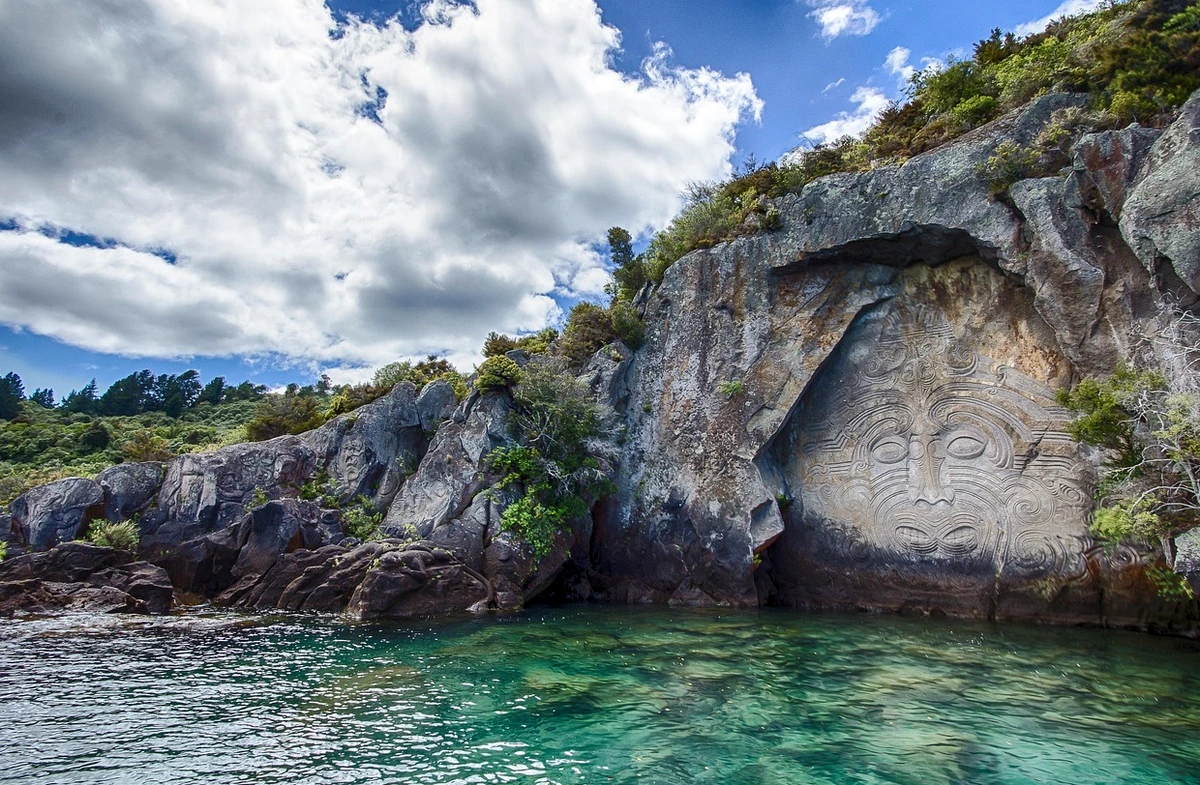
Over centuries of adaptation, the Māori developed a closely knit kinship social structure built around tribes (iwi) and sub-tribes (hapū), bound together by a deep reverence for nature expressed through the concept of kaitiakitanga — the duty of guardianship over Mother Earth. Communal life centered around the marae meeting grounds and intricately carved whakairo woodwork recounting legends of the sky father Ranginui and earth mother Papatūānuku. This isolated culture retained its vibrant form until the first Western mariners, from Abel Tasman in 1642 to Captain James Cook in 1769, brought European sails to the coastline, ushering in turbulent cultural encounters alongside firearms and colonial trade.
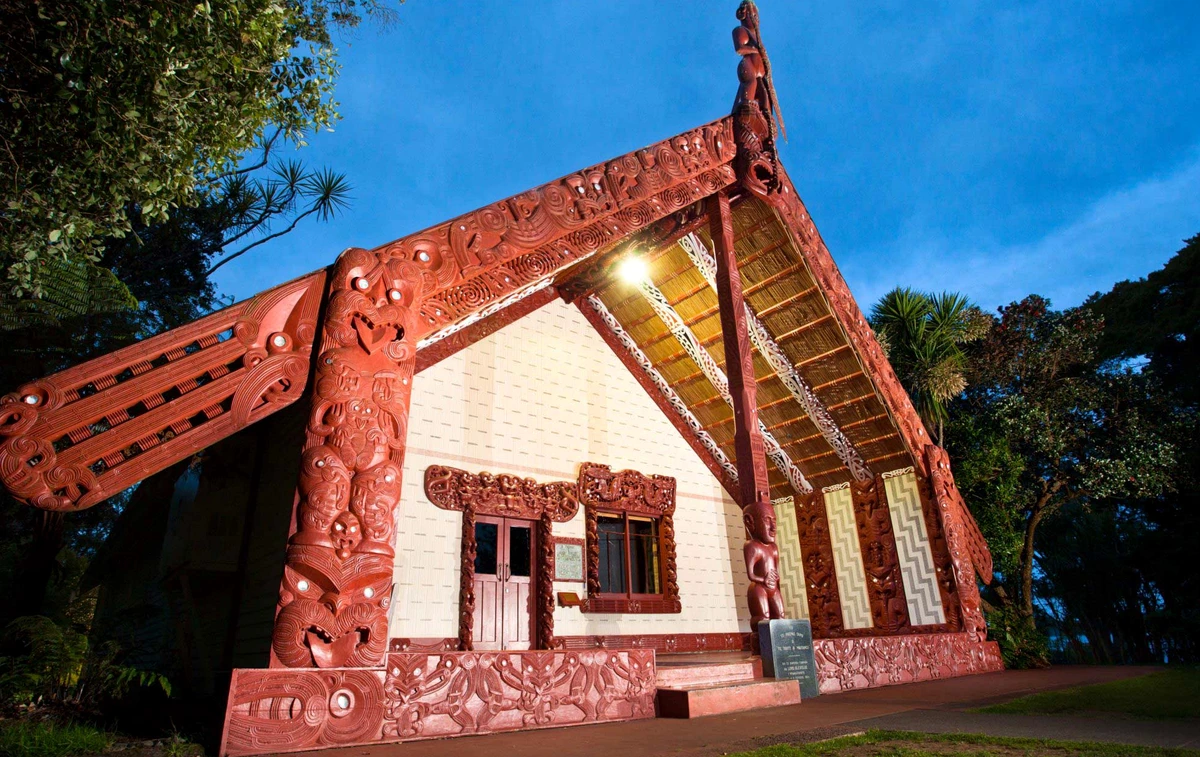
The watershed event shaping the nation’s political order took place on February 6, 1840, in the Bay of Islands. There, British Crown representative Governor William Hobson and more than 500 prominent Māori chiefs (rangatira) signed the Treaty of Waitangi (Te Tiriti o Waitangi). This historic document established the supreme foundation for British Crown sovereignty over the islands, while solemnly recognizing the rangatira’s ongoing authority and tino rangatiratanga (self-determination) over their lands, villages, coastal waters, and treasured heritage. Subtle interpretations and linguistic differences between the English and Māori texts opened a complex subsequent chapter — at once a source of colonial land conflicts and a guiding benchmark for modern race relations.
After decades of infrastructure building, gold rush booms, and shifts in sheep farming agriculture, New Zealand’s profile grew steadily stronger. By 1907, it formally transitioned from a self-governing colony into a Dominion within the British Empire, marking major strides in diplomacy and constitutional autonomy. Centuries of history — from early waka canoes to a modern parliamentary democracy — shaped a distinctive New Zealand identity where Māori traditions and Western heritage coexist within the land itself, place names, and cultural soul of the island nation.
Viewed through geology and the natural landscape of the planet, New Zealand resembles a rare tectonic masterpiece sculpted by the intense collision of two massive lithospheric plates: the Indo-Australian Plate and the Pacific Plate. Since rifting away from the ancient supercontinent Gondwana roughly eighty million years ago, the archipelago has drifted in isolation across the southwestern Pacific, storing abundant crustal energy to forge a geography that is both grand and richly contrasting. Its overall layout feels like twins carrying opposing energies: the North Island ablaze with geothermal heat from deep below, while the South Island stands serene and solemn beneath a mantle of glacial ice and turquoise waters.
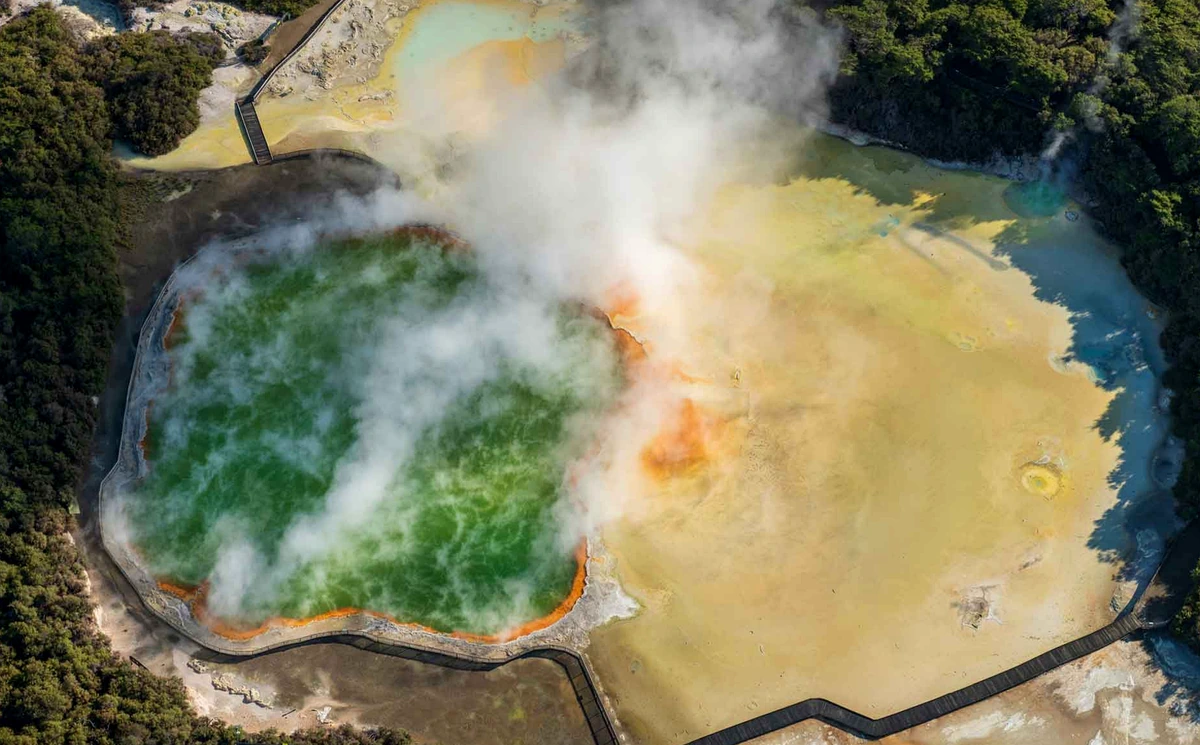
In the north lies the island known in Māori as Te Ika-a-Māui, tied to the legend of the demigod Māui hauling a giant fish up from the ocean floor using an ancestral jawbone hook. Structurally, this region sits along the Pacific Ring of Fire with the famed Taupō Volcanic Zone at its heart. Anchoring the North Island is the Taupō supervolcano caldera, witness in deep prehistory to the colossal Oruanui and Hatepe eruptions that lofted hundreds of cubic kilometers of ash and altered global skies. That primeval heat still circulates just beneath Earth’s crust, surfacing in bubbling mud pools, geysers shooting tens of meters high in Rotorua, and the steaming Wai-O-Tapu valley painted with golden sulfur, cinnabar reds, and copper-sulfate greens. Here, the land acts like a natural alchemical forge, creating ever-shifting geothermal scenery.
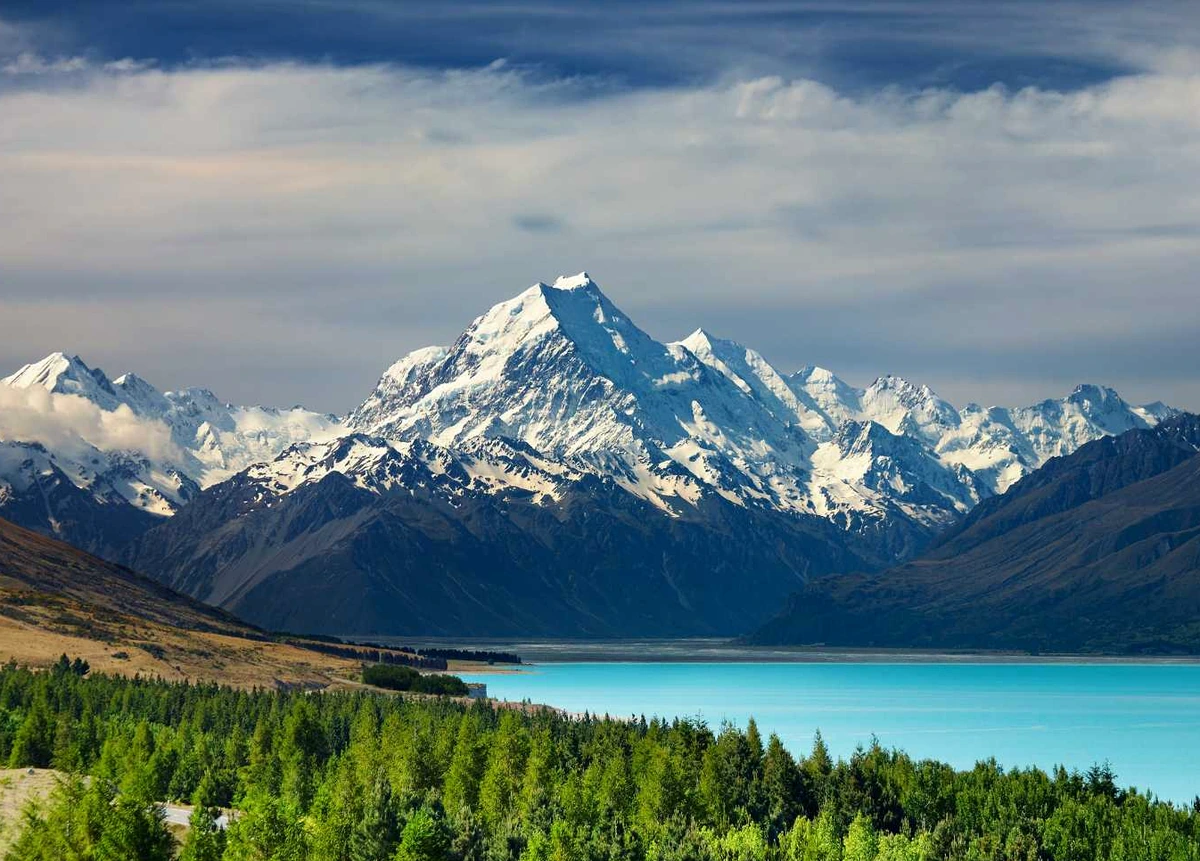
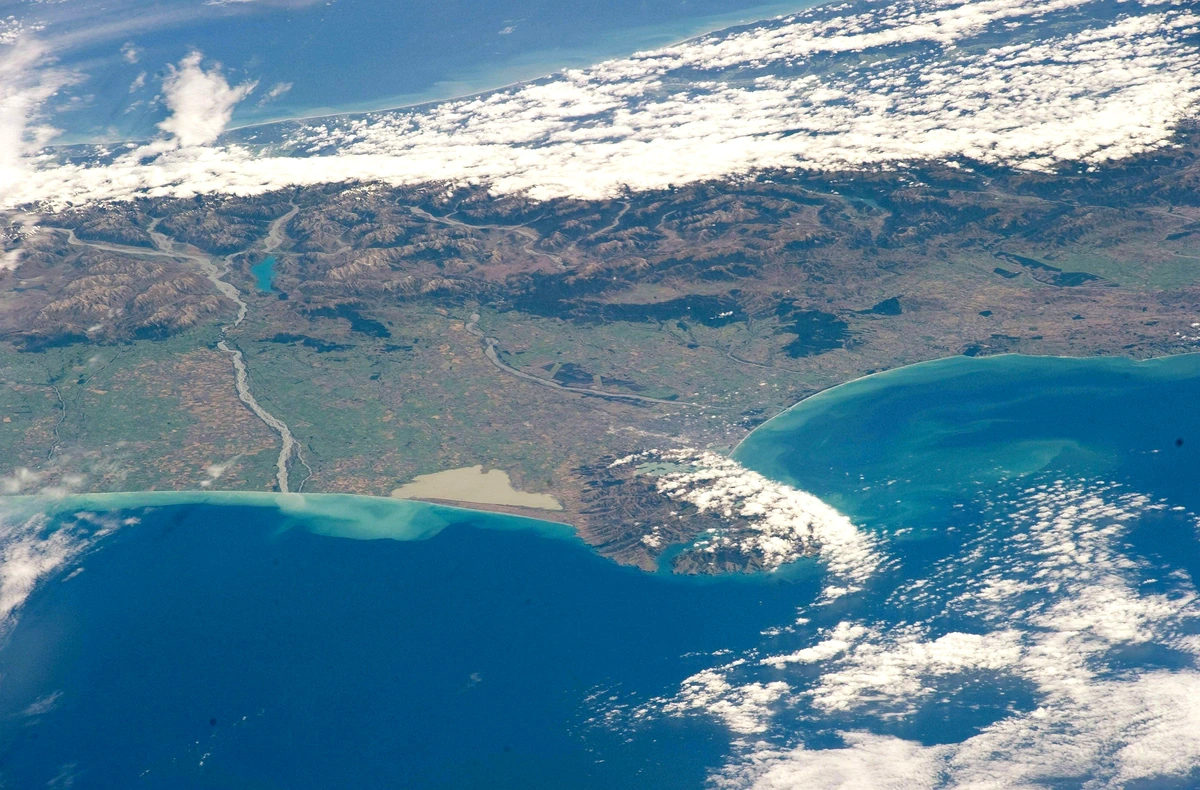
In contrast to the bustling geothermal activity of the north, the South Island — Te Waipounamu, meaning “The Waters of Greenstone” — projects the commanding presence of the Southern Alps, called Kā Tiritiri o te Moana in Māori. This spine of quartz and schist stretches more than 500 kilometers along the Alpine Fault, rising to Aoraki / Mount Cook piercing the clouds above 3,700 meters. The South Island’s natural layout was carved over millions of years by Ice Age glaciers, leaving deep U-shaped valleys and milky turquoise glacial lakes such as Lake Tekapo and Lake Pukaki. Pushing toward the wild southwest, the mountains plunge straight into the Tasman Sea, opening into the labyrinth of Fiordland crowned by Milford Sound, known locally as Piopiotahi in memory of the extinct piopio bird. Inside the fiord, near-vertical granite walls rising close to a thousand meters drop sheer into dark water, fed by countless silver waterfalls misting through lush temperate rainforest.
Millions of years of oceanic isolation turned New Zealand’s landscape into a one-of-a-kind ecological sanctuary. Before humans arrived, the islands had no terrestrial mammalian predators, leaving the ground to ancient flora and unusual birdlife. Moss-draped rainforests of thousand-year-old kauri trees and ponga silver tree ferns sheltered flightless species that evolved without the need for wings. The ultimate emblem of this quiet land is the endemic kiwi, a nocturnal bird with hair-like feathers and a long bill using scent to probe forest leaf litter. The interplay of volcanic geology, sweeping glacial ranges, and an ancient biosphere weaves a setting that feels both otherworldly and enduring.
New Zealand’s spatial character unfolds through a deep dialogue between indigenous spirituality and imported Western architecture. The heart of Māori spatial philosophy comes alive in the wharenui, the meeting house standing at the center of a marae. More than simple shelter from rain and sun, each wharenui is regarded as the physical embodiment of an ancestor. The ridgepole forms the tāhuhu (backbone) running straight and strong, the bargeboards maihi open like arms welcoming descendants, the front gable figure tekoteko represents the ancestor’s head, and the central pillar poutokomanawa acts as the vital heart supporting the family line. Whakairo wood carving on aged tōtara timber displays fine craftsmanship through spiral pitau motifs, where ancestral eyes are inlaid with shimmering iridescent pāua shell. Woven between wall posts are tukutuku panels crafted from harakeke flax and pingao sedge, turning geometric patterns like roimata toroa and poutama into a visual chronicle preserving whakapapa genealogy across generations.
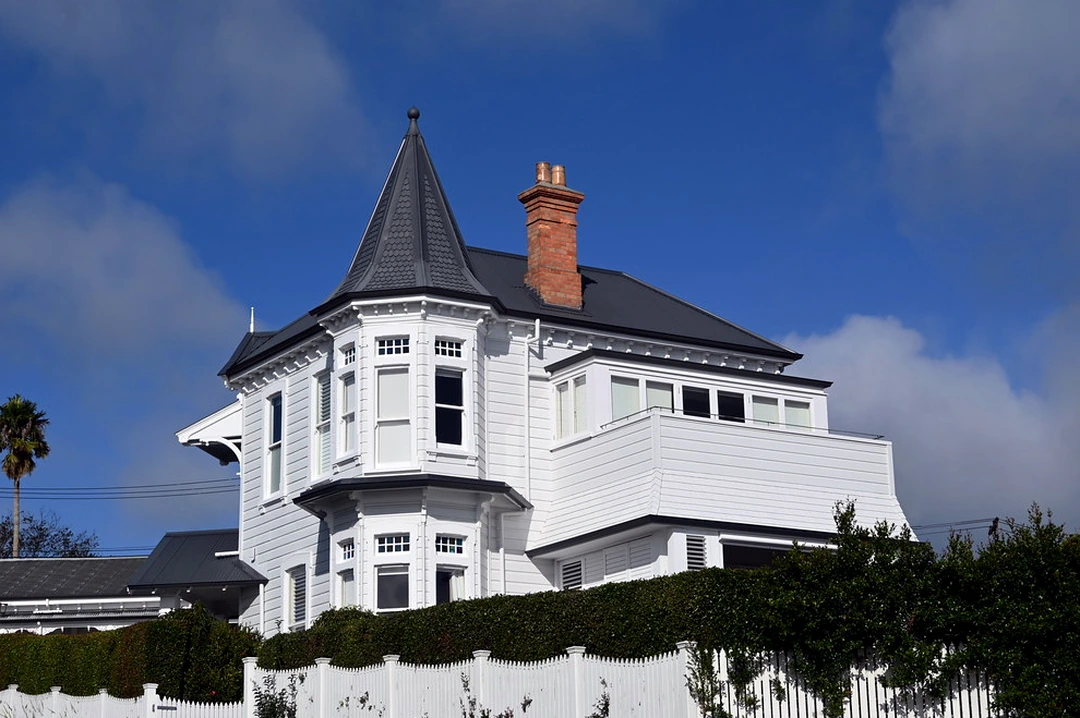
Leaving the quiet cadence of Māori settlements for the North Island metropolis of Auckland, architectural layers shift toward Victorian and Gothic Revival influences. Nineteenth-century buildings crafted from creamy Oamaru limestone and dark basalt feature pointed arches, rose windows, and slender spires. These classic facades stand beside sleek glass and structural steel towers framing the Waitematā Harbour, creating a smooth visual bridge between early maritime history and the energy of a busy international port city.
If city architecture highlights refined detail, engineering feats in the South Island’s far west show grit against harsh mountain terrain. Foremost is the Homer Tunnel, a vital link cutting through the Darran Mountains at 945 meters above sea level to provide the main road gateway from the Hollyford Valley into Fiordland. Begun during the Great Depression amid snow, ice, and avalanche risks, early crews used pneumatic drills and blasting charges to bore more than 1,200 meters through solid granite. The tunnel climbs at a notable 1-in-10 gradient with raw, naturally seeping rock walls, feeling like a passage into ancient earth before opening onto the dramatic, mist-wrapped Cleddau Valley leading to Milford Sound.
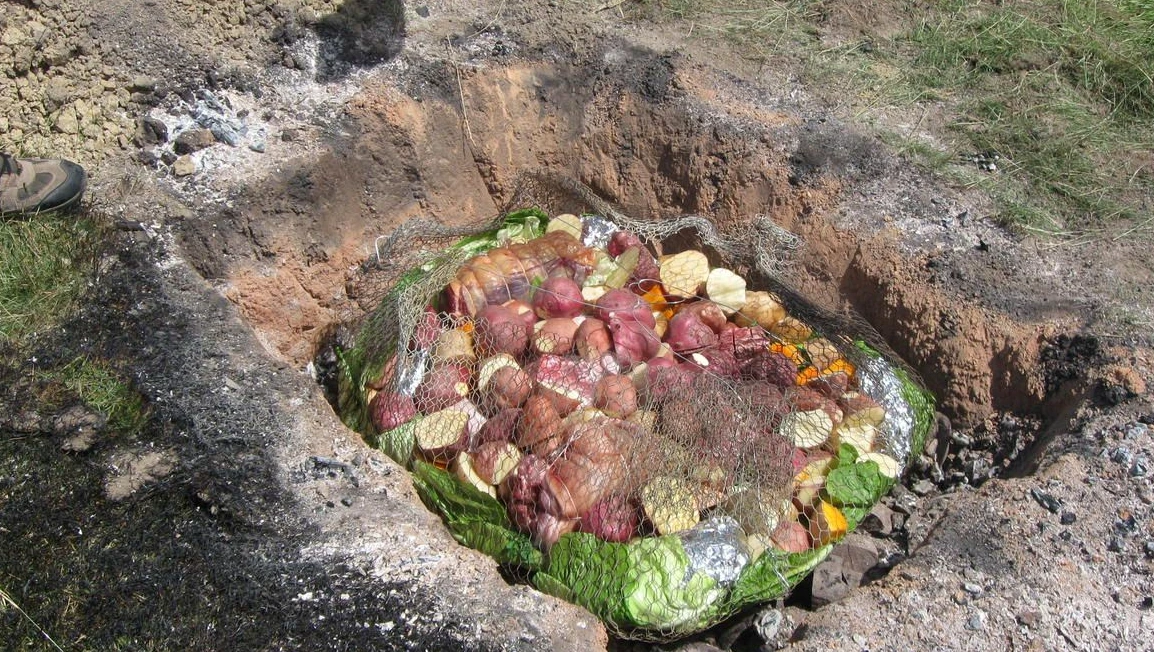
As dusk settles over Aotearoa’s layered ridges, the pace of New Zealand shifts into a different register, where wild landscapes and Māori heritage come together in living cultural performance. In Rotorua’s geothermal district on the North Island, evening begins not with bright neon signs, but with the deep call of a pūtātara shell trumpet cutting through sulfur-scented mist. This marks the start of a traditional pōwhiri welcome outside a wharenui. By flickering firelight illuminating whakairo-carved ancestral posts, visitors experience a time-honored ceremonial encounter. Foot stamping, wide-eyed intensity, and the resonant chant of a haka blend with the lyrical lines of a waiata song. Surrounded by the aroma of a hāngī feast slow-cooked for hours over heated volcanic stones in the ground, the line between performers and guests softens into quiet respect for North Island traditions.
Away from the North Island’s thermal basins, the South Island’s night sky turns into an expansive astronomical canvas. Spanning more than 4,300 square kilometers, the Aoraki Mackenzie International Dark Sky Reserve stands among the clearest stargazing sanctuaries in the world. Framed by the snow-dusted Southern Alps and turquoise Lake Tekapo, the area enforces strict light-pollution controls to protect night-sky visibility. Beside the stone Church of the Good Shepherd, travelers can look up at the southern Milky Way arching over Aoraki. There, the Matariki star cluster shines across the dark sky, marking seasonal cycles and timekeeping rooted in traditional Māori astronomy. Together with the Large and Small Magellanic Clouds, Mackenzie’s night sky offers a quiet, expansive view of the cosmos.
From the quiet of the night sky, travelers can head to Arrowtown, a historic gold-mining settlement beside the Arrow River in Otago. In April as autumn arrives, Arrowtown turns rich gold, burnt orange, and deep crimson across groves of deciduous oak, poplar, and ash trees. After dark, dark grey schist hills frame the valley as autumn foliage glows beneath moonlight. Evening feels nostalgic with warm lanterns along nineteenth-century miner cottages, old stone walls, and small timber houses. Sipping a Central Otago Pinot Noir in a rustic historic pub while listening to the stream and rustling leaves in crisp evening air captures a quintessential South Island autumn moment.
New Zealand cuisine draws on coastal waters and fertile land, rooted in the traditional Māori hāngī that reflects a close relationship with Papatūānuku, the Earth Mother. More than a cooking method, a hāngī is a communal gathering where a pit is dug into the earth and hardwood fires heat dense volcanic basalt stones. Once the stones hold strong heat, baskets of lamb, pork, chicken, and root vegetables — especially sweet kūmara — are placed inside. Dampened sacking and foliage cover the food before soil seals the pit, turning it into a natural steam oven for four to six hours. The slow steam and ground heat leave the meat tender and juicy with a subtle earthy smokiness.
Alongside dishes cooked in the earth is kaimoana — seafood harvested from the surrounding ocean, a long-standing staple for coastal Māori communities. Cold, clear waters around the islands support pāua (abalone), prized for its iridescent shell and firm dark meat, often pan-seared with garlic butter or made into savory pāua fritters. Around rocky reefs, kōura (spiny rock lobster) offers firm, sweet white meat as a prized seafood treat. Farther south, blustery Foveaux Strait produces famous Bluff oysters. Harvested during colder months, Bluff oysters are plump and juicy with a briny mineral finish and lingering richness.
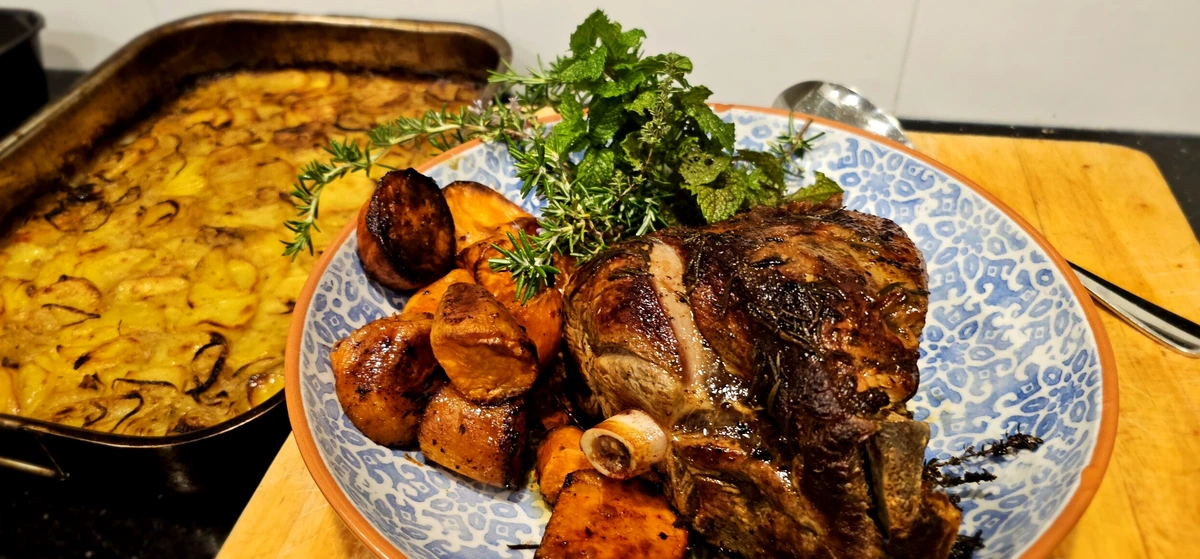
Inland on the South Island, where the Southern Alps frame Queenstown and the Wakatipu basin, high-country ingredients take center stage. New Zealand lamb is widely known for pasture grazing across tussock hills and herbs, yielding tender pink meat with a clean flavor that pairs well with slow roasting and rosemary. Free-range venison is another standout, offering lean, fine-textured meat often served with native berry reductions.
Rounding out high-country dining is wine from Central Otago. Sitting around 45 degrees south, it features one of New Zealand’s most continental climates, with wide day-to-night temperature swings over weathered grey schist and alluvial gravel soils. These conditions produce thick-skinned Pinot Noir grapes with concentrated fruit and structured tannins. A glass of Central Otago Pinot Noir brings ruby color, aromas of dark cherry, ripe plum, forest floor, and subtle spice, pairing naturally with roast lamb or seared venison in cool mountain air.
A trip to Aotearoa begins with careful entry preparation and strict biosecurity awareness. Before flying into international gateways such as Auckland or Christchurch, travelers from visa-waiver countries must obtain a New Zealand Electronic Travel Authority (NZeTA) online and pay the International Visitor Conservation and Tourism Levy (IVL). Just as important is following New Zealand’s Biosecurity Act 1993. Because long isolation has left native ecosystems vulnerable to pests and diseases, every plant seed, piece of fresh fruit, honey product, or even dried mud on hiking boots must be declared at border control; failing to declare items can bring on-the-spot fines of hundreds of dollars and immediate refusal of entry.
Seasonally, New Zealand shines during its shoulder seasons — March to May in autumn and September to November in spring. Traveling in these windows avoids peak summer domestic crowds while offering clear light for photography and sightseeing. Autumn brings golden tones to oak and poplar groves in Arrowtown and vineyards across Central Otago, while spring brings purple lupins beside turquoise Lake Tekapo against crisp mountain and glacial air.
Roads such as State Highway 1 link major North and South Island routes, yet mountain terrain calls for careful driving. On South Island alpine passes — including Arthur’s Pass, Lindis Pass, and Crown Range Road, the highest sealed highway in the country — a 4WD vehicle is a smart safety choice during seasonal weather shifts. Black ice and sudden snow can make winding roads challenging without adequate tire traction or snow chains when required. Remember to drive on the left, and top up fuel in larger towns since distances between fuel stops in remote areas like Fiordland or the West Coast can stretch for hundreds of kilometers.
When visiting natural landmarks and Māori cultural sites, kaitiakitanga — caring for and respecting the land rather than taking it for granted — matters deeply. That care connects with tapu, a concept signifying sacredness or restriction that requires respectful conduct. At places like the Tongariro volcanic peaks, Mount Taranaki, or ancient kauri groves in Waipoua Forest, packing out all rubbish, staying on marked tracks and boardwalks, and not touching carved ancestral figures show everyday respect for living heritage.
Daily life in New Zealand tends to be unhurried, with many retail shops and local museums closing around 5:00 PM, so starting early helps make the most of daylight hours. Payments are largely cashless, with international bank cards widely accepted from everyday supermarkets to remote cafés. If you would like a smoother trip without sorting through visa steps or alpine driving logistics on your own, you can explore a complete New Zealand tour package to experience the country comfortably from start to finish.
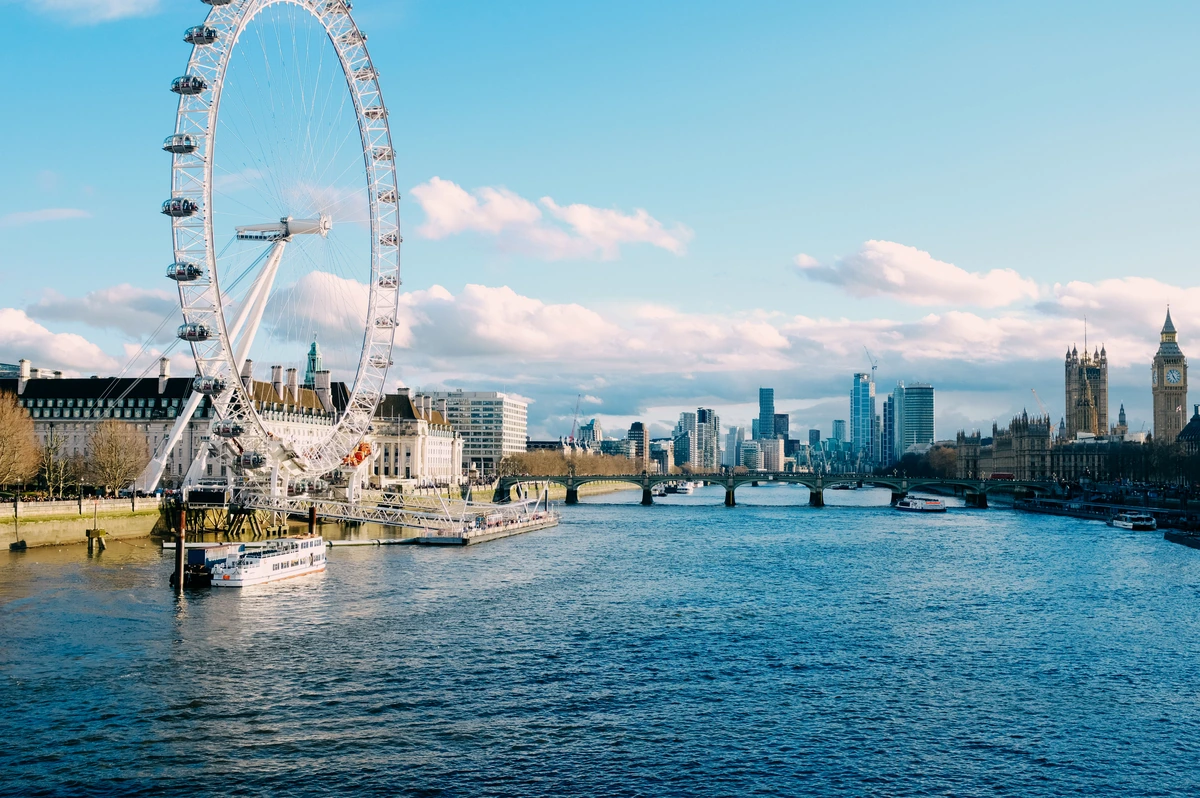
Beneath the misty veil shrouding the solemn River Thames, the history of the misty island begins to stir from the deep sediments of millennia past. Originating in 43 AD when Roman expeditionary forces laid the first brick to establish the outpost of Londinium, this marshy lowland rapidly transformed into one of the most bustling commercial trading ports on the western edge of the empire. Through the ups and downs of the Anglo-Saxon era following the Roman withdrawal, London grew into an inviolable political, cultural, and economic heart across illustrious dynasties. Under the reign of the Plantagenet dynasty, the silhouette of feudal power was carved into the historic Magna Carta before entering the golden yet tumultuous era of the Tudor dynasty. The fierce religious purges under Henry VIII, the brilliant flourishing of poetry and drama under Elizabeth I, followed by the violent upheavals of the Stuart dynasty with the bloody Civil War and the Great Fire that consumed the capital, forged a resilient London where every inch of the ancient City of London holds memories of royal authority and extraordinary renaissance.
Traveling westward up the Thames, Windsor Castle stands proudly on a foundation of white chalk cliffs like an indestructible monument to the monarchy. Initiated around 1070 by William the Conqueror following his resounding victory at the Battle of Hastings, Windsor was originally a wooden fortress built on a motte-and-bailey model with deep defensive ditches to guard the western gateway of the capital. Over the centuries, successive monarchs reinforced this military stronghold with rugged stone, expanding it into the oldest continuously occupied royal palace complex in all of Europe. Here, King Edward III founded the illustrious Order of the Garter in the 14th century, turning Windsor into a sanctuary of medieval chivalry, before the magnificent Gothic architecture of St George’s Chapel was completed, becoming the eternal resting place of great monarchs and home to some of the world’s most solemn royal ceremonies.
Not far away to the northwest, the ancient city of Oxford represents a different kind of power: the power of supreme knowledge and academia. Beginning in the 10th century as a humble river ford for herds crossing the River Isis, Oxford quickly transformed into a major intellectual hub when King Henry II issued a decree banning English scholars and monks from studying at the University of Paris in 1167. The return wave of elite intellectuals turned local monasteries and churches into the cradle of the University of Oxford—the oldest university in the English-speaking world. Prestigious colleges such as University College, Balliol, and Merton sprang up in succession, creating a unique collegiate residential education model where pointed towers casting reflections upon serene rivers have nurtured dozens of prime ministers, Nobel laureates, and literary giants who changed the course of human civilization.
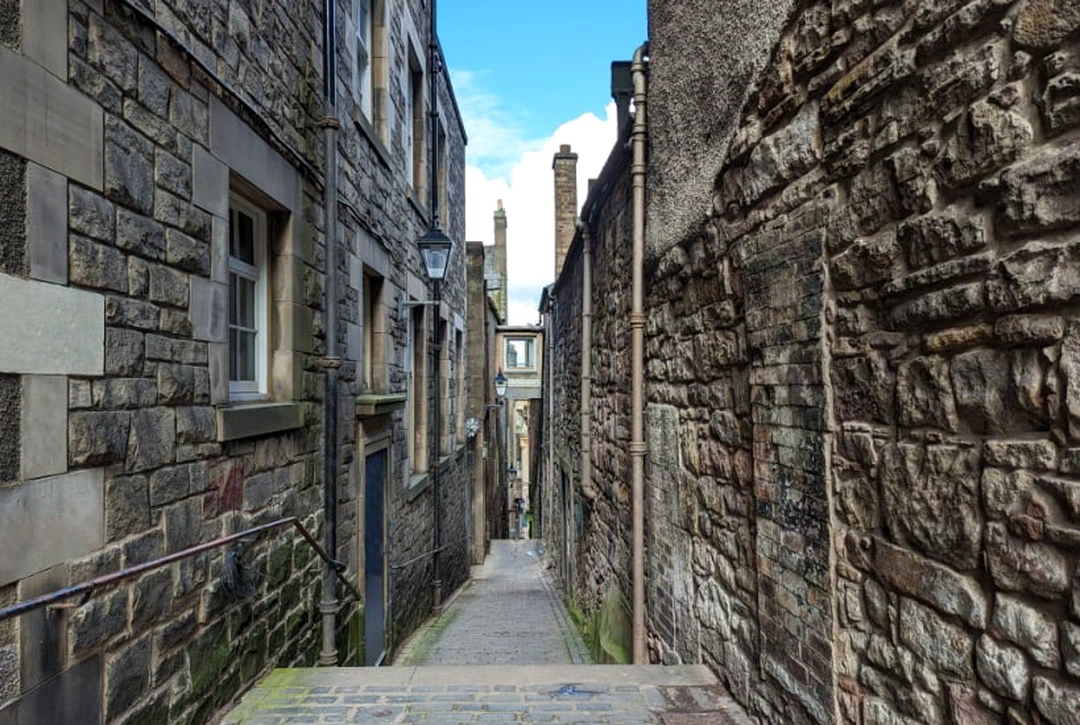
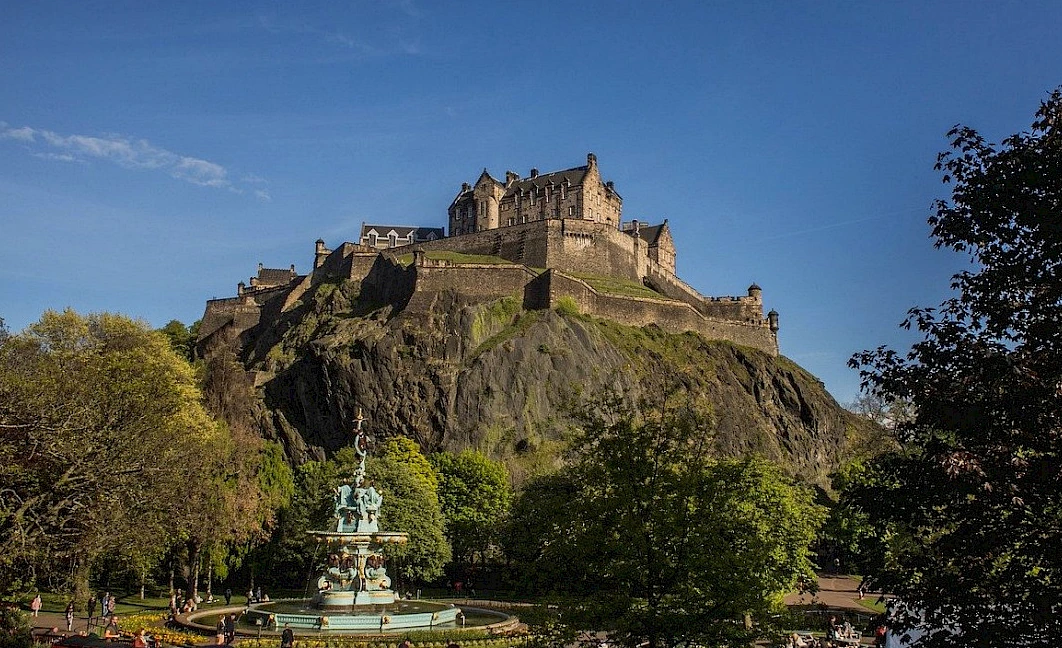
Leaving the southern plains to head north toward the wild heather-clad highlands, the capital of Edinburgh emerges like a poignant epic carved into the volcanic rock face of Castle Rock, which dates back millions of years. Once the unbroken capital of the independent Kingdom of Scotland, this ancient city has long been hailed by intellectuals as the “Athens of the North” due to the brilliant flowering of philosophical and literary ideas. Throughout the Middle Ages, life in Edinburgh was densely compressed within the walls of the Old Town, where the Royal Mile axis connecting Edinburgh Castle to Holyroodhouse Palace was packed with towering stone tenements and steep, quiet alleyways known as wynds. Witnessing the bloody clashes among Highland clans, the fiery Protestant Reformation of John Knox, and court intrigues surrounding Mary, Queen of Scots, Edinburgh was once one of the fiercest ideological battlegrounds on the northern frontier.
The great turning point that transformed Edinburgh’s appearance occurred after the Acts of Union in 1707, paving the way for the political blending of England and Scotland under a single crown. The cramped, confined space of the Old Town prompted city authorities to launch a historic urban planning competition. In 1767, the classic design by young architect James Craig gave birth to the New Town in the standardized Neoclassical Georgian style, featuring a grid network of perfect symmetry, wide avenues, and leafy squares. The dramatic contrast between the somber, haunting medieval Old Town and the orderly, spacious New Town not only reflects the explosive Scottish Enlightenment alongside great minds like David Hume and Adam Smith, but also completes an enduring heritage panorama, seamlessly connecting thousands of years of history from the southern borders to the legendary highland territory.
Viewed through the lens of human geography and urban morphology, the journey connecting London through Oxford to Edinburgh opens up a spectacular dialogue between human design and hundreds of millions of years of geological evolution. London shaped the identity of an imperial metropolis originating from the basin of the River Thames, where low-lying terrain accumulated smooth alluvial sediments and the famous dense clay layer known as London Clay. In ancient times, the Romans cleverly chose the narrowest stretch of the river where a bridge could be built while remaining deep enough for sailing ships to brave the North Sea and travel upstream to dock, thus giving birth to the stronghold of Londinium. The S-shaped winding currents of the Thames act like a soft silk ribbon carrying endless vitality, creating a feng shui alignment that gathers water and accumulates wealth, nurturing a prosperous banking and financial center in the Western Hemisphere.
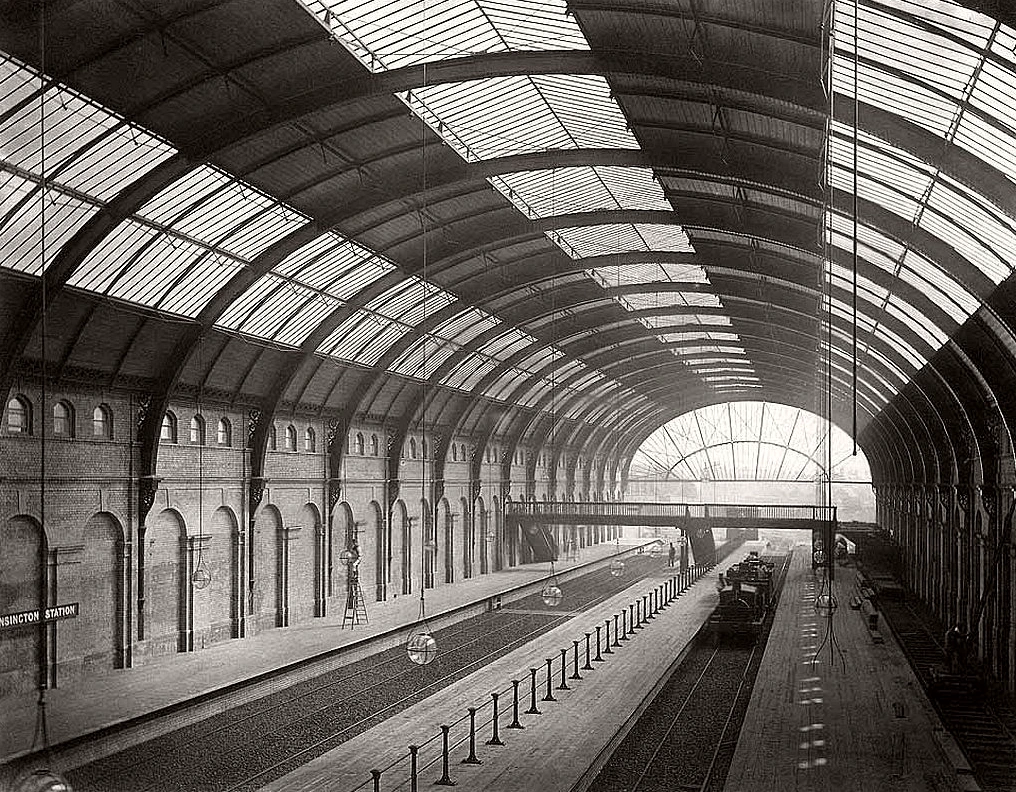
The dense, impermeable London Clay geological stratum with its durable mechanical cohesion became an invaluable technical premise for the 19th-century underground transportation revolution. Rather than digging up and disrupting the ancient surface structure, Victorian engineers invented the cylindrical tunneling shield to bore deep into the clay, creating the world’s first underground railway system, The Tube. Thanks to this flexible yet stable geological cushion, London was able to raise towering skyscrapers along the northern bank while perfectly preserving the intricate subterranean transport network, showcasing a rare multi-layered three-dimensional spatial planning blending past and present.
Heading northwest, the university town of Oxford nestles within a completely different soil context, where a tranquil harmony unfolds between the poetic River Cherwell and the River Thames—the section flowing through here is reverently called the River Isis by locals. Oxford’s terrain is a fertile flood basin, surrounded by pristine water meadows such as Port Meadow, a natural grazing strip unchanged for a thousand years. The abundant water source from the two rivers not only served as a natural defensive moat protecting medieval monasteries and colleges, but also deposited exquisite honey-colored Jurassic limestone layers quarried from the nearby Cotswolds hills. These mineral-rich limestone blocks built masterpieces such as the Radcliffe Camera library and Christ Church college chapel, absorbing the misty island sunlight to radiate a mesmerizing, warm golden hue.
Leaving the low-lying plains of England to enter the territory of Scotland, the capital of Edinburgh immediately overwhelms visitors with a magnificent volcanic terrain forged through ice ages more than three hundred million years ago. The landscape here is a classic testimony to the crag-and-tail geomorphological phenomenon, formed when massive glaciers swept across and were blocked by hard basaltic lava plugs. The sturdy basalt volcanic rock crag of Castle Rock rises over one hundred and thirty meters above sea level, serving as an inviolable defensive stronghold protecting Edinburgh Conservancy, while the gently sloping sedimentary tail toward the east forms the natural ice tail acting as the arterial Royal Mile leading down to Holyroodhouse Palace. In the distance, the extinct volcano Arthur’s Seat stands like a moss-covered stone lion guarding the entire Firth of Forth.
This rugged and treacherous terrain drove Edinburgh to develop a unique vertical multi-tiered urban layout. In the Old Town, because defensive space on the ridge was restricted by the Flodden Wall, residents centuries ago were forced to build ten- to fourteen-story sandstone tenement buildings interwoven with a network of steep, deep, narrow alleyways known as closes. By the time of the Enlightenment, civil engineering techniques like the George IV Bridge and South Bridge spanned deep valleys, turning the spaces beneath the bridges into mysterious underground labyrinths while paving the way to connect with the New Town, which was planned with a standardized neoclassical symmetrical grid, completing the marvelous contrast between geological wilderness and the pinnacle of human intellect.
The spatial appearance of the misty island is a grand harmony carved from stone, where majestic Gothic architecture harmonizes closely with the disciplined, symmetrical beauty of Neoclassicalism. Along the geographical flow from southern England up to the Scottish Highlands, each city shapes its own unique visual language, reflecting the philosophies of religion, academia, and royal power across each prosperous era. The symbolic anchor for English Gothic spirit converges fully at Westminster Abbey in London. This massive structure boasts the Western world’s most magnificent fan-vaulted ceiling system at Henry VII’s Chapel, where meticulously carved limestone blocks interlace like lace thread, skillfully distributing weight across slender column bays and exterior flying buttresses. The height of the cathedral vault soaring straight into the air not only serves to support the massive volume of the central nave, but also creates a sacred visual effect, guiding human gaze and consciousness toward eternity.
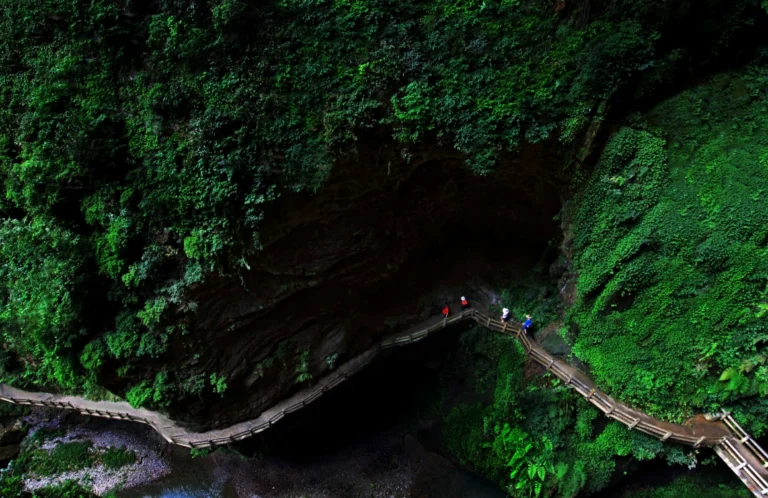
The ticket system at Wulong is divided into multiple independent zones with extremely strict management mechanisms, requiring visitors to clearly understand the information to avoid confusion. Core destinations include the Tian Sheng Shang Qiao Scenic Area combined with the Longshuixia Gorge, the Fairy Mountain National Forest Park, and the Furong Cave Geological Park. Each location charges a separate admission fee alongside costs for mandatory auxiliary transportation such as shuttle buses or elevators down into the gorges. Due to the massive influx of tourists, especially during major Chinese holidays such as National Day or Golden Week, booking tickets online in advance through official electronic service systems or authorized distribution channels is of paramount importance. Visitors should note to carry their original passports at all times, as this is a mandatory identification document required to scan recognition codes at automatic ticket gates as well as to undergo security checks at key transportation hubs in the area.
Alongside logistical factors, understanding and respecting local cultural codes of conduct will grant travelers deeper experiences and prevent unpleasant situations. Wulong is the long-standing home of ethnic minority groups such as the Tujia and Miao; therefore, all traditional customs and practices related to the worship of mountain spirits, water deities, or community rituals should be observed with an attitude of absolute respect. Do not arbitrarily intrude upon sacred spaces or touch ritual offerings without permission. Maintaining environmental cleanliness is a top strict rule; absolutely do not litter indiscriminately into natural sinkholes or crystal-clear streams, as the local Karst ecosystem is extremely fragile and sensitive to the impact of plastic waste. When communicating with locals or small vendors at traditional markets, a polite attitude and the use of a few basic greeting words in Mandarin Chinese will create great goodwill. Furthermore, bargaining when purchasing handicraft products should be conducted in a cheerful, harmonious atmosphere rather than a tense one.
The final practical hands-on tip for first-time visitors to Wulong is managing physical stamina and thoroughly preparing basic personal survival items in your backpack. Because the terrain of the attractions primarily involves walking down into deep gorges and then climbing back up via winding stone steps or moving through damp caves, the body can easily become overworked if physical effort is not distributed reasonably. Bringing trekking poles, electrolyte drinks, and a few high-energy snacks such as chocolate or mixed nuts is an absolute lifesaver. Additionally, mobile phone signals in some deep areas within the sinkholes or inside caves may be interrupted or lost completely; therefore, downloading offline maps in advance, storing digital copies of identification documents, and pre-arranging meeting points with companions are practical safety measures. Finally, keep an open mind and a contemplative perspective toward the grandeur of nature, ensuring that every step on Wulong’s land becomes a brilliant and deeply reverent chapter in your travel diary of exploring the world.