Along a quiet bend of the River Thames, where each tide carries the breath of the North Sea into the heart of the British capital, stands an architectural complex steeped in nearly a millennium of royal triumphs and upheavals: the Tower of London and Tower Bridge. The origins of this dramatic chronicle trace back to the fateful winter of 1066, when William the Conqueror, the celebrated Duke of Normandy, claimed victory at Hastings and was crowned King of England. To subdue rebellious native Anglo-Saxon nobles and project the supreme authority of the Norman dynasty, a makeshift timber-and-earth fortification was hastily thrown up against a corner of the ancient Roman city wall. In 1078, the king ordered the construction of the imposing White Tower under the technical supervision of Gundulf, Bishop of Rochester. Built solidly from pale Caen limestone shipped across the English Channel from northern France alongside Kentish ragstone and Thames mudstone, the White Tower rose high as a seemingly impregnable fortress, laying a sturdy cornerstone for the royal complex over the centuries that followed.
Through the flourishing reigns of the Plantagenets, Tudors, and far into the Stuarts, the fortress expanded continuously with concentric curtain walls, a deep moat, and stout defensive towers. Far more than a mere military outpost, the Tower of London served some of the most varied roles in the Western world across the ages. It acted as a royal palace where monarchs stayed ahead of their coronations, a storehouse for the Royal Armouries, the secret Royal Mint, and the national treasury. Even as far back as the thirteenth century under King Henry III, it became a remarkable Royal Menagerie housing exotic creatures such as lions, leopards, and a polar bear permitted to swim and catch fish right beneath the fortress walls. Yet royal splendor often cast a tragic shadow when the complex became a notorious prison for high-profile political captives. Its cold stone walls witnessed dark chapters in English history, from the mysterious disappearance of the two young sons of King Edward IV in the Bloody Tower to the executions on Tower Hill and Tower Green of Queen Anne Boleyn, Queen Catherine Howard, and the famed scholar Thomas More.
Amid layers of prison lore and state power, the Tower of London is also the sanctuary of the monarchy’s most dazzling treasures: the British Royal Crown Jewels. Once kept at Westminster Abbey before being moved permanently to the fortified complex after a fourteenth-century theft, this royal treasury has been preserved and displayed in the Waterloo Block since 1994. Once a large Victorian military barracks, the Waterloo Block now safeguards sacred regalia used in coronation ceremonies, highlighted by the Sovereign’s Sceptre set with the sparkling 530.2-carat Cullinan I diamond, the Imperial State Crown studded with thousands of priceless gems, and the fabled Koh-i-Noor diamond—testaments to the endurance and sovereign majesty of the crown across centuries.
Entering the second half of the nineteenth century, London grew into a global center of finance and commerce under Queen Victoria. Rapid population growth and industrial trade in the East End led to severe road congestion between the two banks of the Thames. There was an urgent need for a new bridge, yet it could not obstruct tall-masted merchant ships sailing upriver into the Pool of London. A bold design by architect Sir Horace Jones in collaboration with civil engineer Sir John Wolfe Barry beat out more than 50 competing proposals to win approval. Work began in 1886 and took eight years of grueling labor by over 430 workers, sinking two massive piers weighing more than 70,000 tons into the riverbed and raising an 11,000-ton structural steel frame. To harmonize gracefully with the historic look of the neighboring Tower of London, the steel skeleton was clad in Cornish granite and crisp Portland stone in a grand Victorian Gothic style.
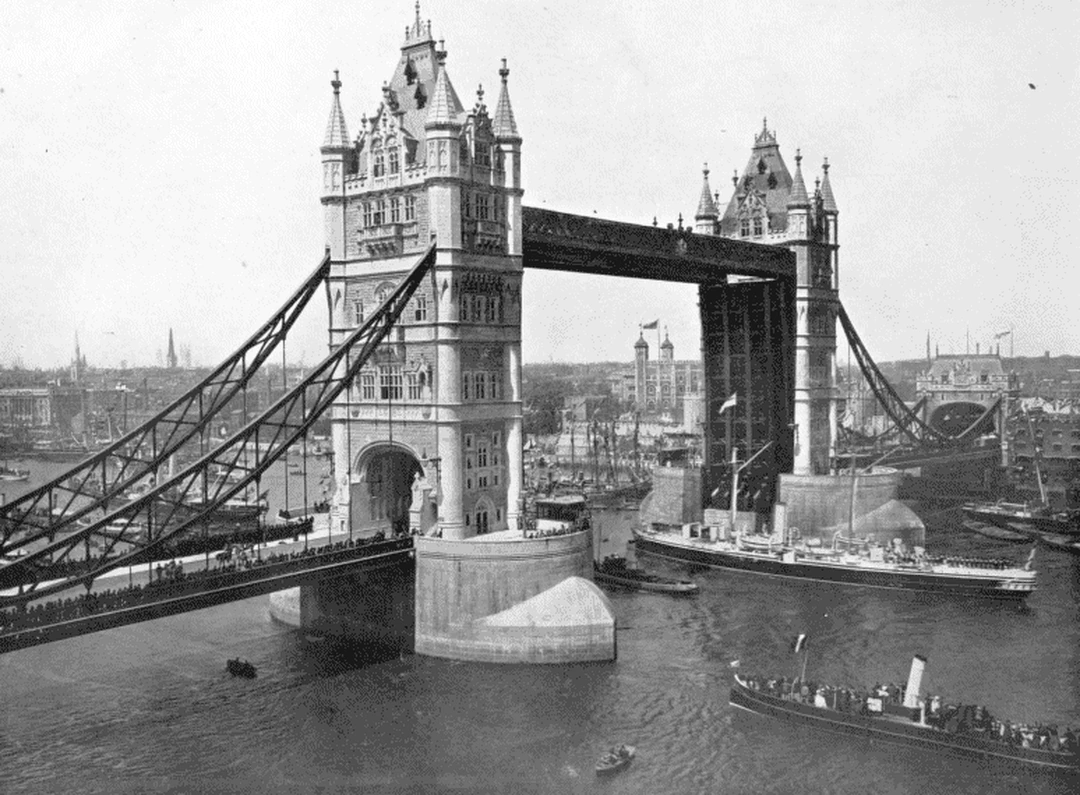
On June 30, 1894, Tower Bridge was officially opened by the Prince of Wales (later King Edward VII), ushering in a transport milestone with a bascule mechanism powered by steam engines and cutting-edge hydraulic pressure of its day. The striking pairing of a thousand-year-old Norman fortress and a graceful nineteenth-century tower bridge over the River Thames captures a sweeping historical arc: where medieval conquest meets industrial-age engineering brilliance, turning this stretch of river into an enduring emblem of Britain.
Viewed through the lens of military geography and classical landscape planning, the commanding site of the Tower of London showcases William the Conqueror’s strategic foresight in the eleventh century. The complex sits prominently on a sturdy natural Quaternary gravel terrace sloping gently above the north bank of a key bend in the River Thames. This geological base of compacted gravel and sand—settled over millennia—offered tremendous load-bearing strength for tens of thousands of tons of pale Caen limestone brought from the Normandy coast, while lifting the fortress above low-lying marshland prone to flooding. The sweeping curve of the river at this point acted as a natural moat along the southern flank, placing merchant vessels and warships advancing inland from the sea under royal firepower.
The interplay between terrain layout and local hydrology created an unusual dynamic defense system. Flowing through this plain, the Thames is strongly tidal with North Sea tides, where the water level range between low and high tide can exceed six meters at times. Drawing on those natural conditions, medieval engineers under King Richard the Lionheart and King Henry III dug out a surrounding moat, turning tidal flow into an automatic water-level regulator. Most notable in the waterside layout is Traitors’ Gate beneath St Thomas’s Tower, where dark high-tide waters rose to admit boats carrying political prisoners under cover of gloom, before ebbing to expose muddy flats that turned escape attempts into a trap.
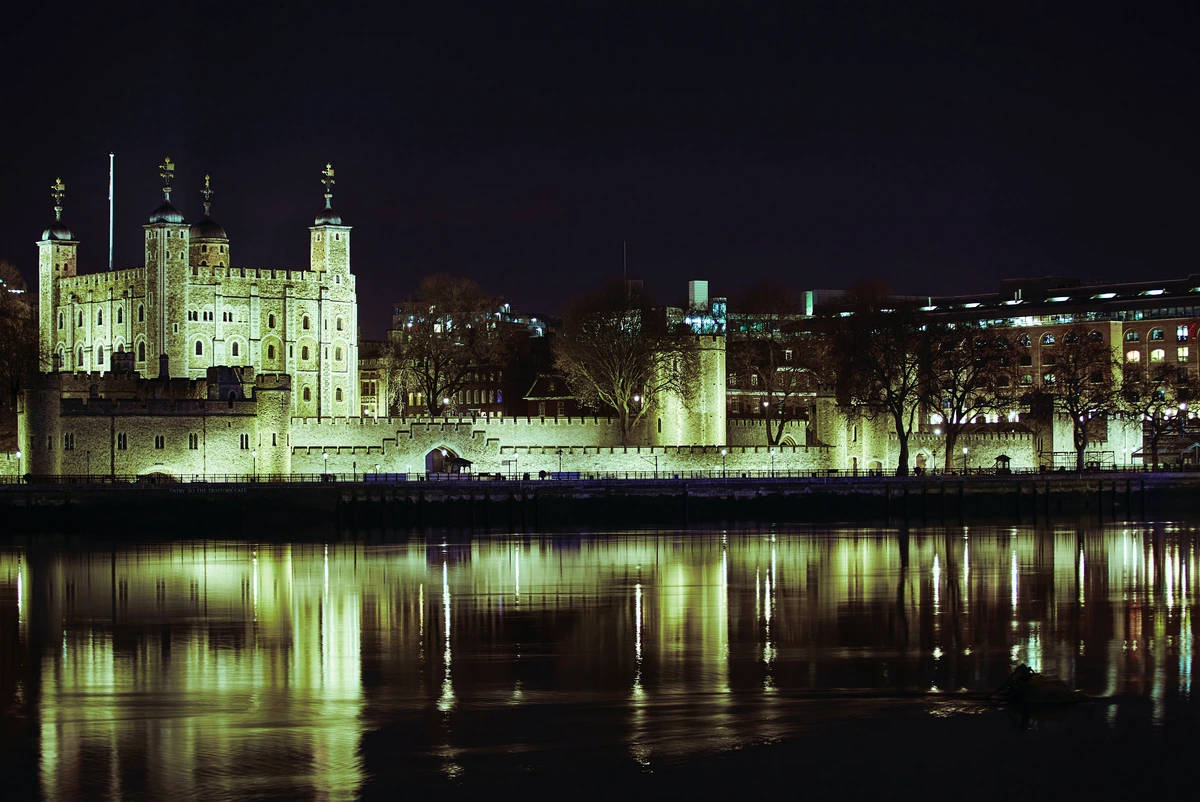
Extending beyond that fortified precinct stands Tower Bridge, a mechanical feat planned to ease trade bottlenecks between the riverbanks without cutting off maritime traffic in the Pool of London. The bridge acts as a link connecting bustling Tower Hamlets on the north bank with industrializing Southwark on the south. To hold firm in a stretch of fast currents and soft silt, Victorian engineers sank two massive caisson piers using compressed air down into firm London clay, each pier taking over seventy thousand tons of concrete and rubble to anchor the heavy load-bearing structure of the twin bascule leaves.
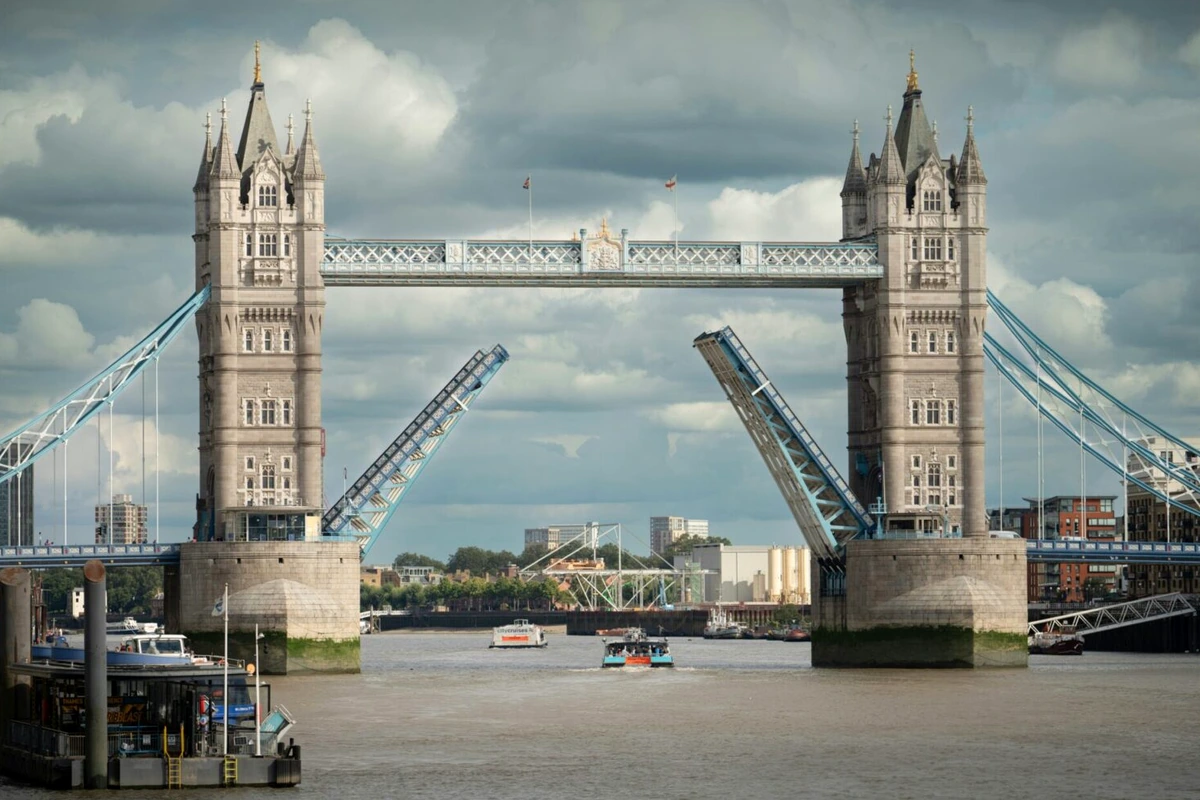
So that nineteenth-century engineering would not detract from the solemn, brooding presence of the millennia-old Tower of London next door, engineer John Wolfe Barry and architect Horace Jones clothed the modern rolled-steel frame in cool gray Cornish granite and bright Portland stone sculpted in elaborate Victorian Gothic detail. Inside the two grand towers sit hydraulic lifting mechanisms—originally powered by coal-fired steam engines—generating immense force to raise both bridge leaves, each weighing over a thousand tons, in less than two minutes. The blend of a resilient gravel-terrace stronghold, swirling Thames tides, and proud bascule towers forms a rare geo-engineering landscape where royal history and peak industrial mechanics meet amid early morning mist.
Seen from the south bank of the Thames, the Tower of London reads like a vast chronicle carved in stone, reflecting the height of medieval military architecture through a multi-layered concentric fortress plan. At the heart of the complex stands the White Tower, a square keep initiated by William the Conqueror with walls nearly four meters thick at the base to withstand the siege weapons of the era. Much of its character comes from luxury medieval building materials: creamy Caen limestone quarried in famous Normandy pits, carried across the Channel and up the Thames to the royal worksite, paired with rugged local Kentish ragstone. Around the central keep rise two lines of fortified walls added across successive reigns, punctuated by thirteen satellite towers—such as Wakefield, Beauchamp, and Bloody Tower—forming an interlocking line of defense with no blind spots, ready to bar approaches by both river and land.
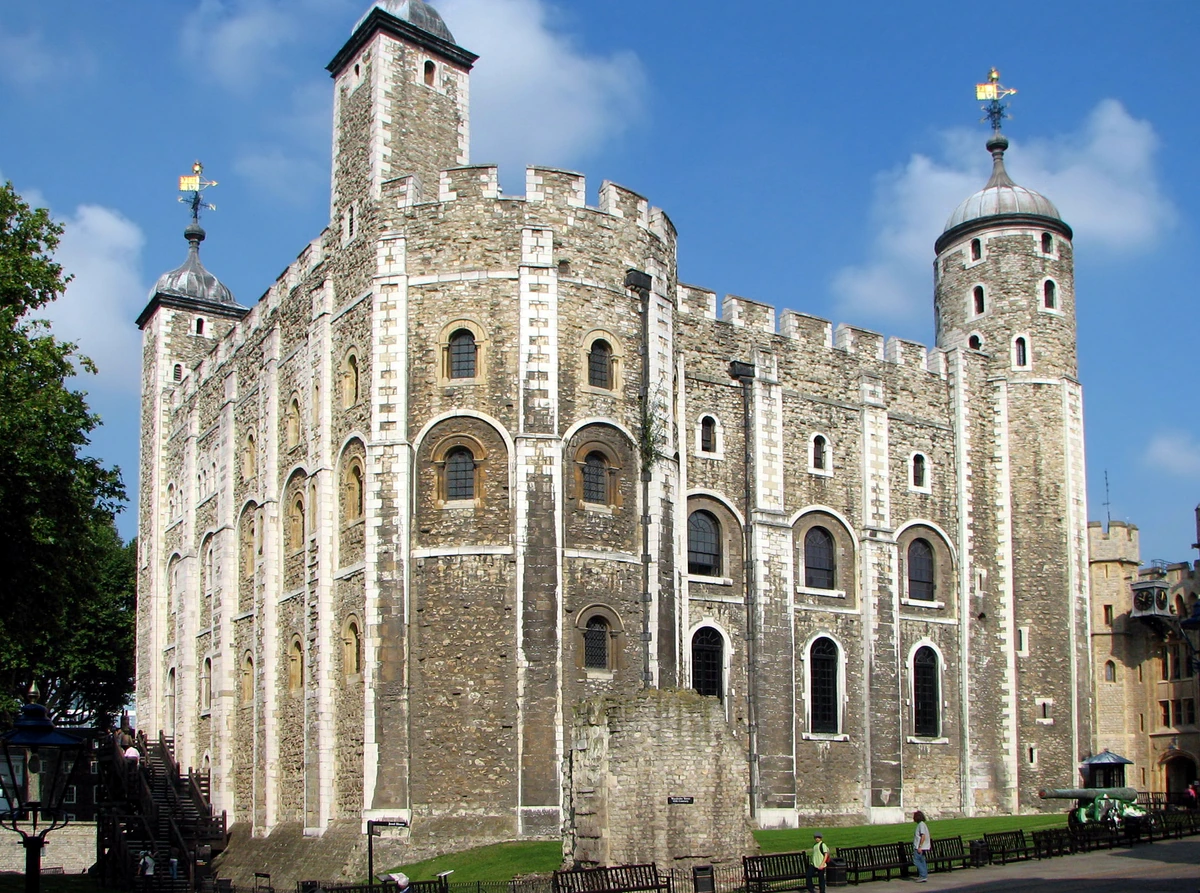
Standing right beside the ancient fortress is Tower Bridge, an iconic marvel of mechanical engineering and architecture from the height of the Industrial Revolution that reflects a masterly harmony between cutting-edge functionality and traditional aesthetics. To avoid clashing with the solemn landscape of the thousand-year-old stronghold, the design by architect Horace Jones and engineer John Wolfe Barry cleverly clad its load-bearing steel skeleton—weighing over eleven thousand tons—in a magnificent Gothic Revival facade. The submerged piers anchored deep in the riverbed are faced with dark gray Cornish granite from Cornwall, renowned for its extraordinary resistance to erosion against rushing currents, while the upper towers use light-colored Portland limestone to create a graceful visual symmetry. Spanning an overall length of 244 meters with twin towers rising 65 meters into the sky, the structure ingeniously combines two graceful suspension spans at either end with a central double-leaf bascule drawbridge.
The operational heart of Tower Bridge lies in its extraordinary hydraulic bascule system, a feat of precision engineering that astonished the global technical community in the nineteenth century. The two colossal bascule leaves, each weighing over a thousand tons, were calculated and fitted with counterweights so precisely balanced that mechanical resistance during lifting is minimized. Originally, the operating power was generated by massive coal-fired boilers heating water to feed extreme pressure into hydraulic accumulators, which in turn drove the lifting gears. This technological triumph allowed the two massive leaves to swing open to a maximum angle of eighty-six degrees in roughly one minute, swiftly clearing the navigable channel for tall-masted ocean-going merchant vessels sailing straight into the bustling Pool of London. The high-level walkways linking the tops of the two towers also serve as giant tension ties, keeping the entire structure rock-solid against fierce lateral wind loads.
The striking yet harmonious contrast between the rugged Caen limestone of the feudal White Tower and the Portland-stone-clad steel alloy frame of the Victorian Tower Bridge creates an architectural symphony unlike any other. Every molding, pointed-arch window, intricately carved pinnacle, and sleek metal tie rod attests to the virtuosity of the finest metalsmiths, stonemasons, and mechanical engineers across the centuries. This space is far more than an assemblage of concrete, steel, and stone; it is a living museum of defensive architecture and urban transport infrastructure, preserving the master craftsmanship of an empire that once ruled the waves.
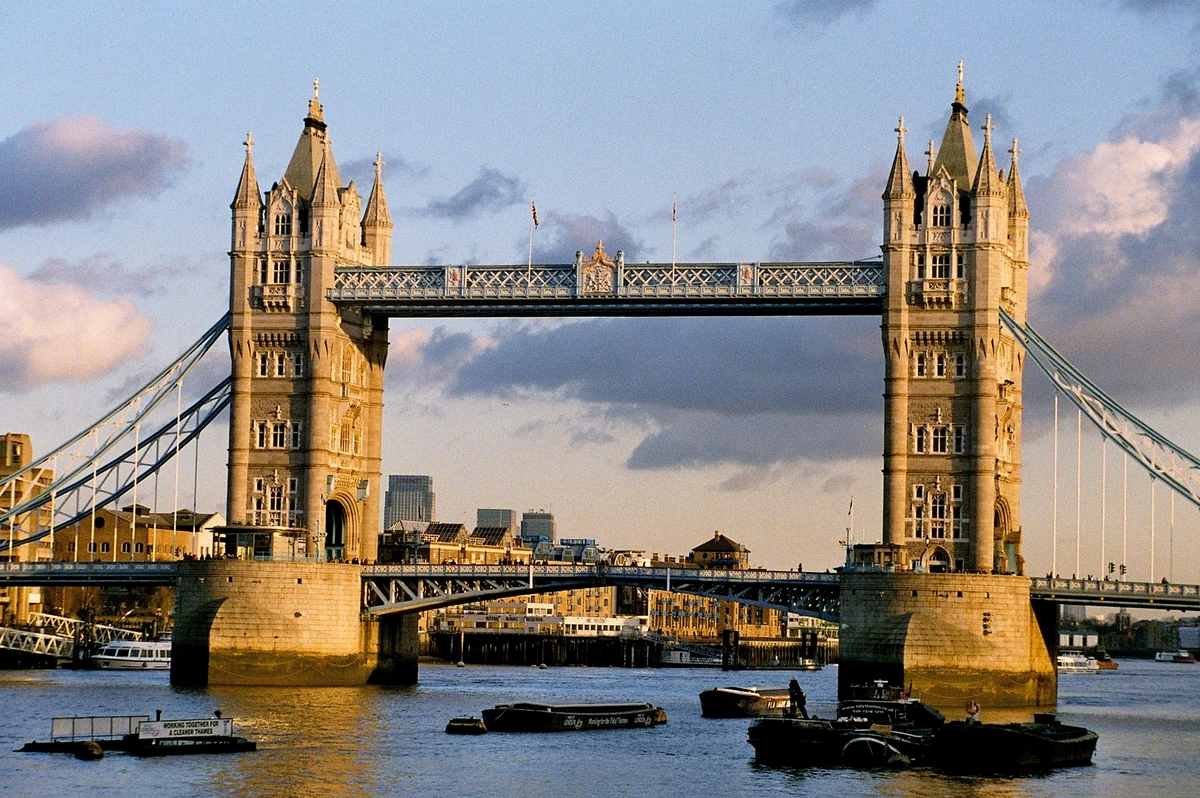
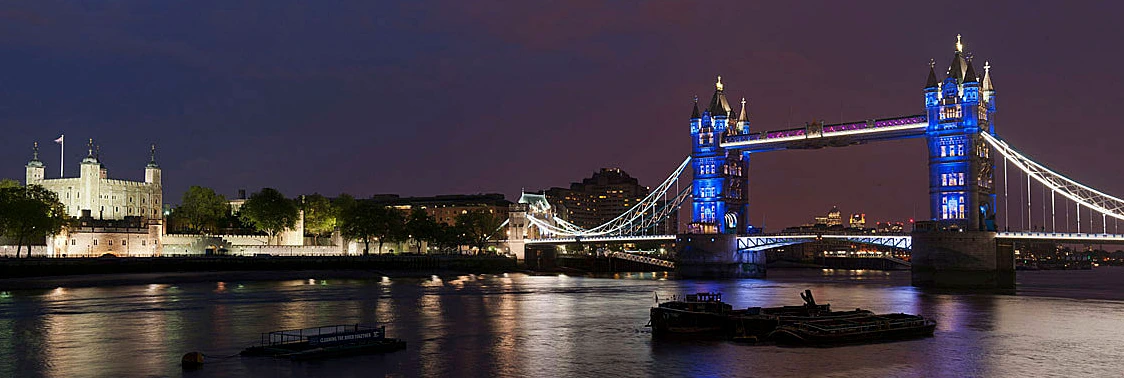
As dusk settles over the River Thames and a velvet shroud of night blankets London, a breathtaking visual spectacle awakens along the historic riverbanks. The centerpiece of this enchanting nocturnal panorama is Tower Bridge, illuminated by the sophisticated “Connected Light” system unveiled for the 2012 sporting festivities. Thousands of energy-efficient LED fixtures boasting a vibrant color spectrum are strung along the steel trusses and Gothic arches, weaving a luminous ribbon across the water. This precisely programmed lighting not only accentuates every Victorian molding and spire, but also casts a vivid interplay of deep midnight blue and regal gold across the rippling river, transforming the bridge into a luminous sculpture at the heart of the metropolis.
In stark contrast to the modern splendor of the suspension bridge stands the brooding, majestic presence of the Tower of London guarding the north bank. Under the cover of darkness, the entire ancient fortress complex is bathed in high-intensity floodlights that cast crisp beams across its rough-hewn limestone walls. This dramatic illumination highlights the imposing silhouette of the White Tower—the thousand-year-old keep founded by King William the Conqueror in the eleventh century. In the quiet of night, the towering stone ramparts that once witnessed countless courtly intrigues, imprisoned royal figures, and safeguarded the British Crown Jewels emerge as an impregnable citadel, standing worlds apart from the bustling, brightly lit financial district of the City of London just a short distance away.
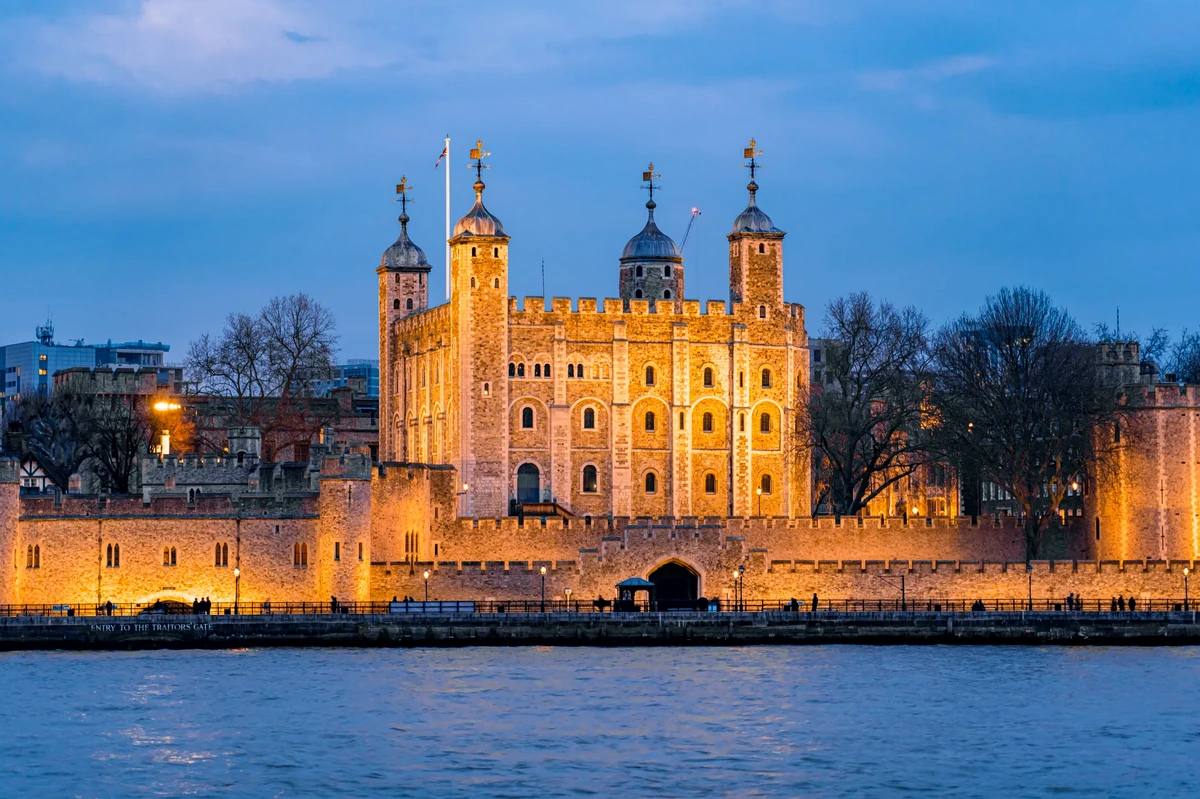
The pinnacle of the nocturnal experience at the fortress comes not from lavish visual technology, but from a living ritual that has endured the passage of time: the “Ceremony of the Keys.” Recognized as the oldest continuous military ceremony in the world, with an unbroken tradition spanning more than seven centuries, this ritual takes place at precisely 9:53 PM every night to lock the sturdy fortress gates. Amid a stillness so profound time seems to stand still, the Chief Yeoman Warder—dressed in traditional Tudor watchcoat, carrying an antique candle-lit lantern and the Sovereign’s keys—strides slowly forward alongside an armed escort from the Foot Guards. The rhythmic clatter of hobnailed boots against moss-grown cobblestones pierces the silent night.
The most suspenseful moment of the ceremony unfolds when the sentry challenges the approaching party in the dark with a deep cry of “Halt! Who comes there?” and receives the resounding reply, “The keys.” The challenge continues: “Whose keys?”—prompting the proud answer that echoes across the cobbled courtyard: “King Charles’s keys.” Once the heavy gates are bolted shut at precisely 10:00 PM, the haunting notes of the bugle sounding the “Last Post” ring out to stir the soul, bringing a long day to a close with absolute solemnity. Outside the fortress walls, visitors can stroll along the tranquil St Katharine Docks marina and duck into centuries-old riverside pubs to enjoy a foaming pint of ale or crispy battered cod, watching life drift gently by beneath the quiet glow of history.
Stepping away from the regal aura of the Crown Jewels inside the fortress and the Victorian Gothic grandeur of Tower Bridge, diners encounter an entirely different cultural stratum: the gritty, unpretentious pulse of East End working-class cuisine. Along the churning banks of the Thames, London’s culinary memory did not begin at opulent banquet tables draped in white silk, but rather amid coal smoke, the briny tang of sea air, and the calloused hands of nineteenth-century dockworkers. The gastronomic heritage surrounding this granite landmark is a captivating journey of flavors, where a hardworking past blends seamlessly with fierce local pride.

The enduring culinary icon of East London’s working class is traditional pie and mashed potatoes, affectionately known simply as Pie and Mash. During the Victorian era, when the River Thames was a vital commercial artery thick with coal fog, laborers sought hearty, warming sustenance from small baked pies filled with richly seasoned minced beef, encased in a suet pastry crust that was crisp on top and chewy underneath. Each plate is served with a scoop of creamy mashed potatoes and generously ladled with a signature emerald-green sauce called liquor. Contrary to what its name might suggest, this velvety sauce is painstakingly simmered from the stock of stewed eels combined with generous amounts of fresh chopped parsley and ground pepper. Inside historic tiled shops lined with gleaming white ceramics, tucking into a plate of Pie and Mash dashed with chili vinegar is the most authentic way to connect with the soul of old London, where every spoonful is steeped in stories of survival along the docks.
Another proud heritage thriving near the foot of the bridge is the craft of London Cure smoked salmon, a culinary treasure born at the historic Billingsgate Fish Market. Once nestled right beside the Tower of London before relocating, Billingsgate was one of the world’s busiest seafood trading hubs, where the freshest catches from Scotland and the North Sea landed at dawn each day. Jewish immigrants settling in the East End in the late nineteenth century pioneered the London Cure smoking technique to preserve the fish’s pure, natural freshness: curing it lightly with dry rock salt just enough to draw out moisture, followed by gentle cold-smoking over lightly kilned oak shavings. Unlike heavy, overpowering smoke that masks the fish, silky-thin slices of London Cure salmon boast a lustrous pinkish-orange hue, a rich melt-in-the-mouth texture, and a clean, refined finish so distinguished it has been granted protected geographical indication status in the foggy capital.
Exploring the flavors around Tower Bridge would be incomplete without experiencing the centuries-old riverside pub culture weathered by wind and tide. Strolling east into historic Wapping, The Prospect of Whitby stands right at the water’s edge, dating back to the Tudor era. Its worn flagstone floors and oak beams salvaged from old shipwrecks once welcomed seafaring explorers, smugglers, and even the notorious “Hanging Judge” George Jeffreys during the Stuart period. Sitting beside an antique window, sipping a dark, finely carbonated ale while breathing in the earthy scent of Thames mudflats exposed at low tide, one can almost hear the echoes of global voyages from centuries past.
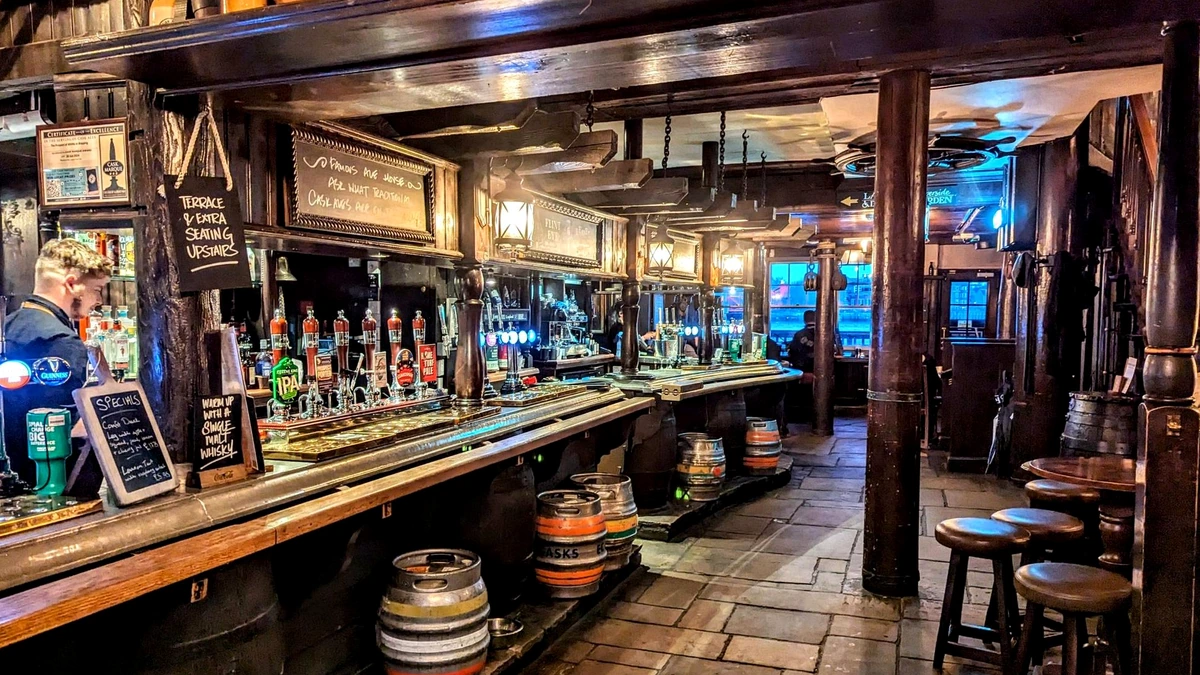
Crossing over to the south bank and winding through the quiet alleyways of Southwark, The George Inn opens up an entirely different realm of nostalgia. As London’s sole surviving galleried coaching inn, it offers a faithful window into seventeenth-century life. This historic courtyard once welcomed literary giant Charles Dickens and is widely believed to have inspired the immortal works of William Shakespeare. Beneath the shade of time-worn wooden galleries, savoring rich traditional grilled sausages with fiery English mustard amid the hearty laughter of locals, you realize that dining around Tower Bridge is far more than mere sustenance—it is a living, enduring ritual of cultural appreciation.
Understanding local etiquette and transit options is key when visiting this famed pair of architectural landmarks along the River Thames. The most convenient and popular hub in the area is Tower Hill Underground station, a vital stop on both the Circle Line and District Line of London’s rapid transit network. As soon as you step up from the station exit, the sturdy Kentish ragstone walls of the Tower of London come into view, while the proud silhouette of Tower Bridge rises just a few minutes’ stroll away along the breezy embankment.
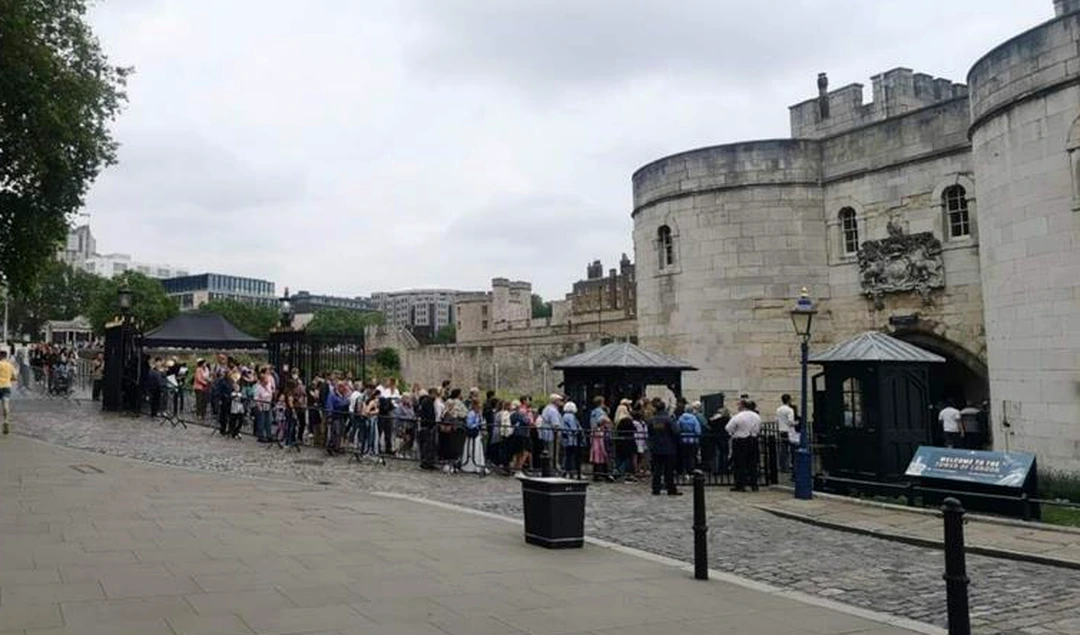
For the Tower of London, a golden tip for history lovers is to book timed-entry tickets in advance through the ticketing system of the charity Historic Royal Palaces. Doing so not only saves you from standing in long queues stretching along the outer walls, but also secures a prime 9:00 AM entry slot. Arriving early in the day lets you join the first tours led by the Yeoman Warders—affectionately known as Beefeaters. Dressed in traditional Tudor uniforms trimmed in red and gold, these ceremonial guards guide visitors through centuries of historical drama with a hearty, witty, yet dignified delivery befitting those who stand watch over the fortress.
When stepping into the Jewel House—home to the British Crown Jewels inside the fortress grounds—visitors must strictly follow the ban on all photography and filming to ensure top-level security and reverence. Moving slowly along the moving walkway, travelers get an up-close look at St Edward’s Crown used in coronation ceremonies, along with the Imperial State Crown sparkling with the Cullinan II diamond weighing over three hundred carats and the legendary Black Prince’s Ruby that once accompanied King Henry V into the fierce Battle of Agincourt in 1415.
Leaving the fortress for Tower Bridge, a sightseer’s ticket opens the way up to the High-level Walkways suspended forty-two meters above the River Thames. Here, load-bearing glass floors let visitors look down at bustling traffic in miniature and take in a sweeping panorama of the capital, from the historic dome of St Paul’s Cathedral to the pointed spire of the modern The Shard. The ticket also includes access to the Victorian Engine Rooms at the base of the south tower. This space still preserves the massive cast-iron steam engines, valves, and hydraulic accumulators that operated the thousand-ton bascule leaves from 1894 until electrification replaced them in the 1970s.
An unforgettable sight is watching the two bascule leaves lift up to an eighty-six-degree angle to let tall vessels pass up and down the Thames. Bridge lift times shift with the tide and real-world river traffic, so spectators should check the schedule published on Tower Bridge’s official website to pick a good vantage point along the riverbank. After admiring the structure, strolling over to neighboring St Katharine Docks and enjoying crispy battered cod with hearty traditional chips and a fragrant cup of black tea in the river breeze is the ideal way to soak up the signature atmosphere of the land of fog.
The harmonious pairing of a thousand-year-old stone fortress and a nineteenth-century mechanical bascule bridge always makes a fitting curtain-raiser for any trip to the United Kingdom; for a thoughtfully linked itinerary blending deep heritage with refined service, you can explore our all-inclusive England–Scotland tour package crafted specifically for lovers of history and authentic culture.