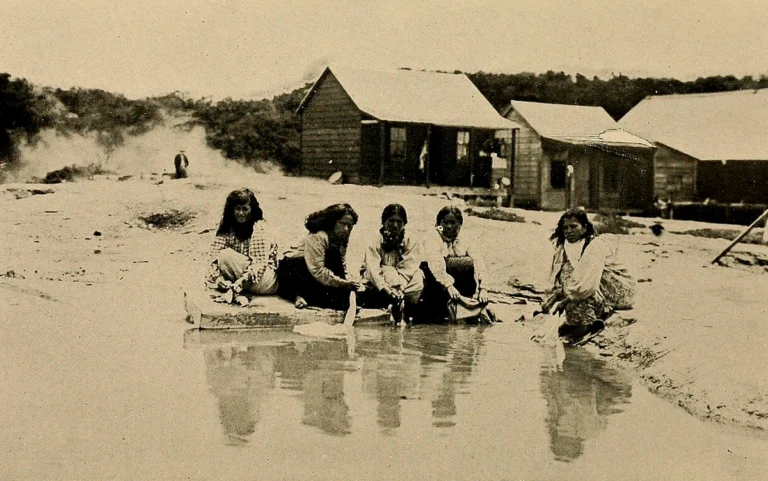
Nestled at the heart of the expansive Mackenzie Basin in the Canterbury region of New Zealand’s South Island, Lake Tekapo is far more than a glacial geological wonder—it is also a repository of dramatic chapters from the exploration of the Southern Hemisphere frontier. Since ancient times, this land served as a stopping point on hunting expeditions and searches for pounamu (greenstone) by the indigenous Māori, bearing the traditional name Takapō, meaning “to leave in the cold night.” Even so, the modern settlement history of the basin only truly transformed in the mid-19th century, tied to the legend of James Mackenzie. A Scottish shepherd with a free-spirited and somewhat audacious streak, Mackenzie and his loyal sheepdog Friday crossed rugged mountain passes never before mapped to drive stolen flocks into the vast tussock plains. The thrilling pursuit that followed turned him into a semi-official figure of folk legend, while throwing open the doors for European pioneers to push deeper into this magnificent wilderness.
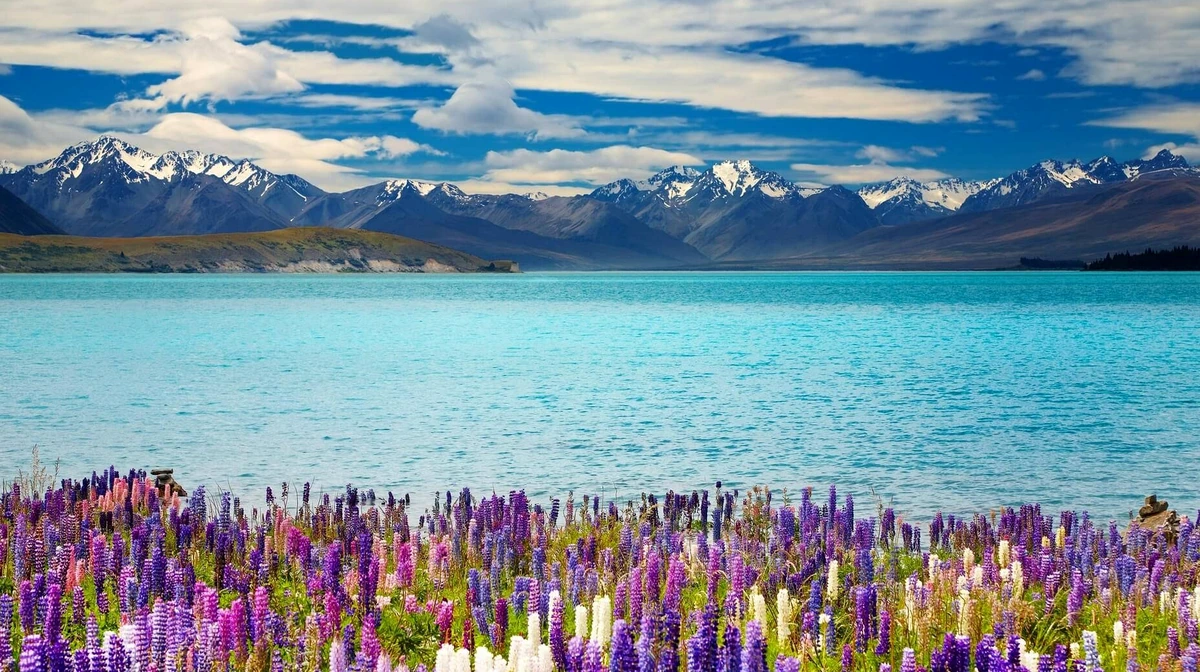
The arrival of white settlers quickly shaped the economic face of the entire Mackenzie Basin. Mountain slopes blanketed in golden snow tussock gradually became the kingdom of renowned Merino wool sheep farming. Pioneer runholders faced an intensely harsh climate, where bone-chilling winds from the Southern Alps swept across the turquoise glacial lake and icy winters could bury thousands of livestock beneath deep snow. Amid the profound solitude of the sweeping high country, the bond of survival linking people, sky, and flock forged a one-of-a-kind local culture. The spiritual life and steadfastness of these early settlers inspired the local community to build an iconic landmark so future generations would forever remember their forebears’ sacrifices.
That vision crystallized into the Church of the Good Shepherd, construction of which officially broke ground on January 15, 1935, right along the lapping waters of Tekapo. Renowned architect Richard Strachan De Renzy Harman was entrusted with drafting plans for this distinctive sanctuary. Harman approached the project with complete humility before nature: he stipulated that grey boulders used for the walls be gathered directly within a few miles of the lakefront, preserving their weathered moss and strictly forbidding hammers from chipping or altering the stones’ natural shapes. The name “Good Shepherd” is not merely a biblical allusion to Psalm 23, but a deeply grounded tribute to the earthly shepherds and hardworking sheepdogs whose sweat and toil wrote the region’s story of prosperity.
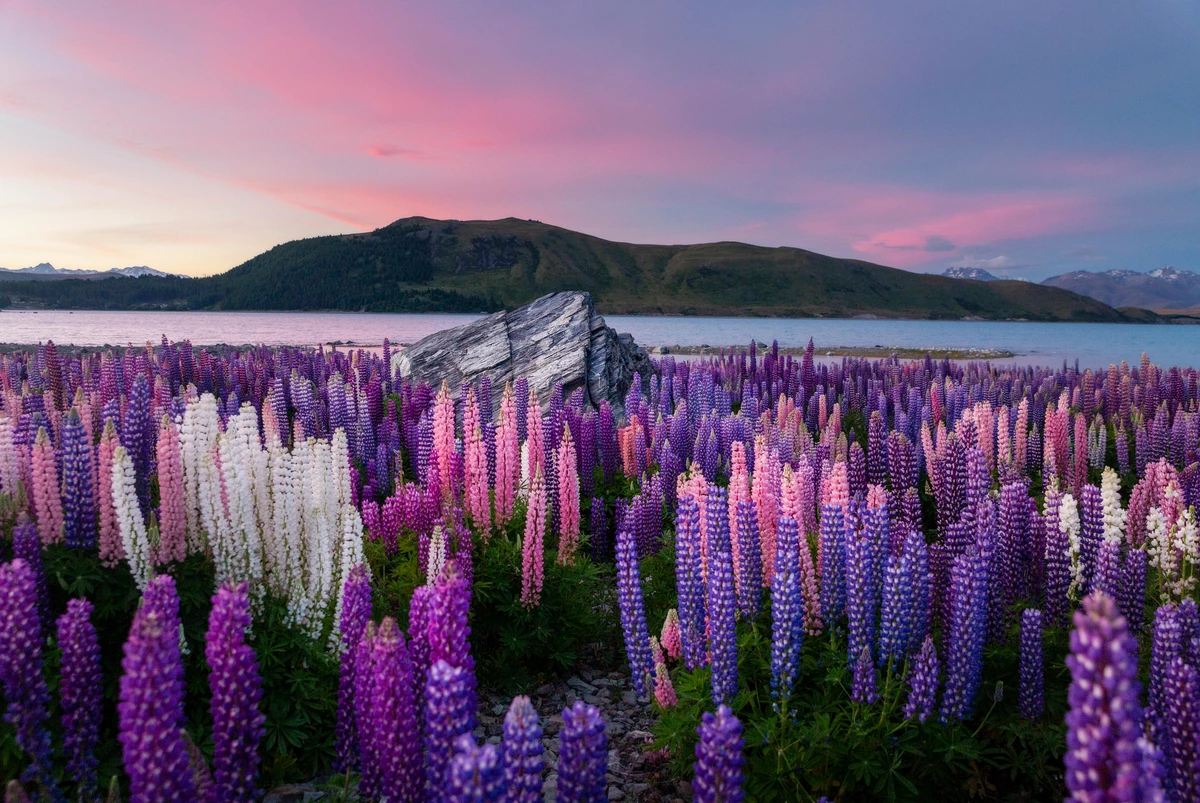
The historical canvas of the Mackenzie Basin completed a striking visual shift in the 1950s thanks to the personal touch of Connie Scott, wife of the neighboring Godley Peaks station owner. Enchanted by the vivid beauty of Russell lupins native to North America, she quietly bought packets of seeds and scattered them along gravel roadsides and riverbeds around Lake Tekapo. Over decades of adapting to nutrient-poor stony ground, the flowers flourished into sweeping carpets of deep violet, periwinkle blue, soft pink, and ivory white. Through the lens of modern ecology, lupins are an invasive plant that competes with the habitat of native wading birds, yet from a cultural and scenic perspective, they have become inseparably woven with the church’s rugged stonework and turquoise waters, an enduring icon in the hearts of travelers from afar.
Sitting at 710 meters above sea level within the vast Mackenzie Basin, Lake Tekapo has the structure of a natural glacial moraine lake shaped by intense tectonic and glacial shifts of the Ice Age. In the language of the indigenous Ngāi Tahu people, the place was traditionally known as Takapō, evoking stillness and a place of rest beneath an expansive night sky. Seen from geomorphology and natural topography, the Tekapo basin possesses a compact, grand landscape layout, with its entire western and northwestern flanks sheltered by the natural rampart of the Southern Alps, sacredly named Kā Tiritiri o te Moana in Māori. These towering snowy peaks act as a windbreak, gathering the vitality of earth and sky while channeling the purest meltwater and minerals from glaciers into the main artery of the Godley River before converging into Lake Tekapo.
What gives the Tekapo landscape its visual soul is its milky turquoise hue—an optical masterpiece born of millennia of geological grinding. As massive ice sheets slid from the Southern Alps down into the valley, millions of tons of weight pulverized grey sandstone rock into ultra-fine mineral dust known to scientists as glacial flour. The Godley River then carries this talcum-fine sediment straight into Lake Tekapo. Because of their microscopic size, the glacial flour particles do not sink to the bottom, instead remaining evenly suspended in the surface water. Under the refraction of sunlight, longer red and yellow wavelengths are absorbed, while shorter blue and turquoise wavelengths scatter back to the observer’s eye, creating a vivid yet serene band of turquoise that shifts magically with every angle of daylight.
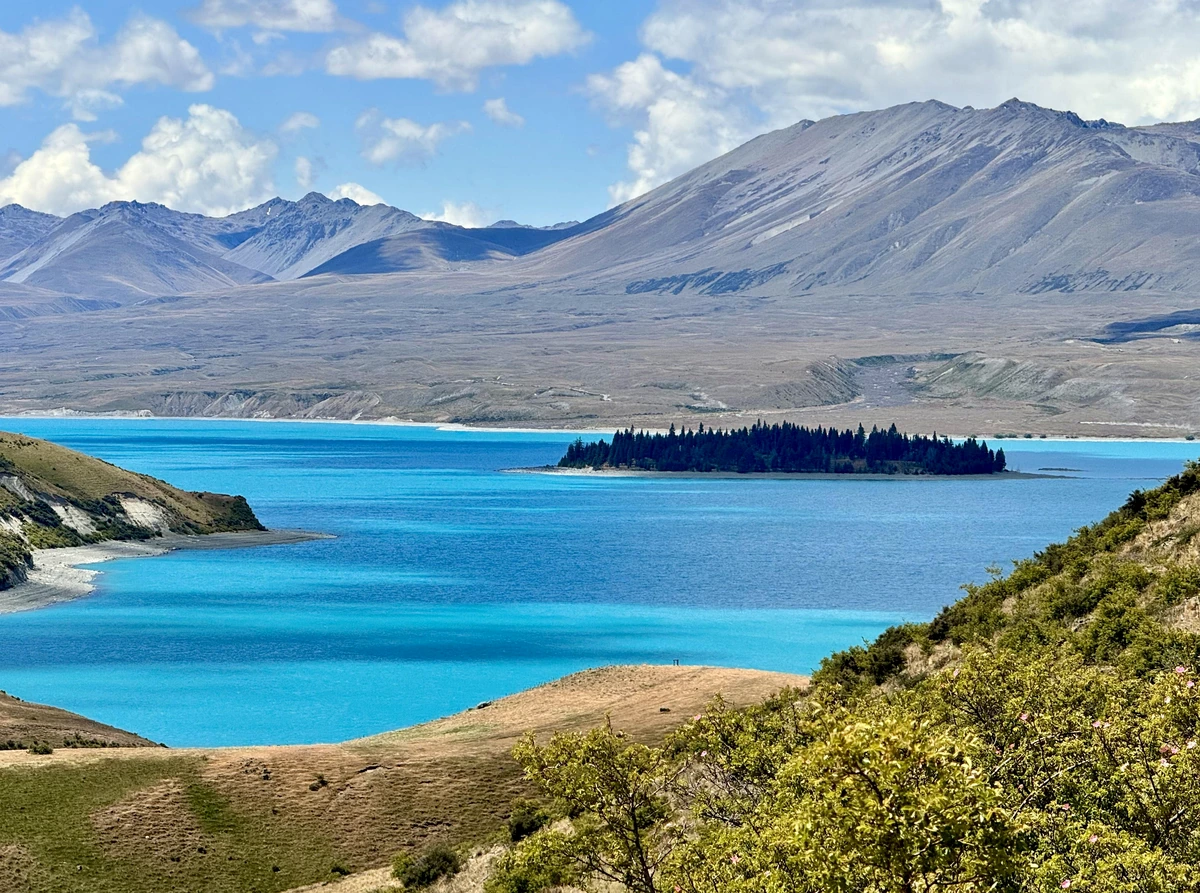
The Tekapo area is also strongly governed by the rain shadow effect created by the Southern Alps. Abundant moisture blowing inland from the Tasman Sea condenses and falls heavily across the western slopes as rain and snow, leaving the eastern side where Lake Tekapo sits in a distinctive semi-arid climate. Temperature swings here are stark between day and night, with freezing sub-zero winters and dry, bright, sun-drenched summers. The lakeshore soil is not rich loam, but a scatter of river cobbles, coarse sand, and barren glacial till low in organic nutrients.
That very harshness of terrain and soil becomes an ideal symbiotic home for multi-colored lupins to take root and thrive. With deep taproots piercing through stony layers and root nodules that fix atmospheric nitrogen, lupins turn rugged moraine slopes along the lake into rolling seas of color. Proud flower spikes rise in shades from deep blue and royal purple to ruby pink and apricot yellow, contrasting sharply yet harmoniously against turquoise water and distant snow peaks. The Mackenzie Basin’s setting both holds ancient glacial water and preserves crystal-clear, remarkably dry air, turning Tekapo into a primeval geological tableau where the quiet of stone, the splendor of water, and the resilience of blossoms meet as one.
Resting quietly on the uneven ground of the Mackenzie Basin, the Church of the Good Shepherd is more than a religious building—it is a landmark statement of organic architecture harmonized with local land. Born from the expressive sketches of artist Esther Hope—a resident deeply connected to this untamed country—the formal design was brought to life by Christchurch architect Richard Strachan De Renzy Harman. The church’s essence lies in rejecting the imposing grandeur typical of Western cathedrals in order to honor the rawness of earth and sky. Its entire outer shell is built from greywacke—the grey sedimentary sandstone characteristic of Canterbury—alongside countless smooth stones gathered along the Lake Tekapo shore and glacial moraines. Remarkable in its craftsmanship was the strict ban on chiseling or dressing the stone faces, leaving silver-grey lichen intact on every block so the church appears like a natural outcrop risen from the earth after millions of years of geology.
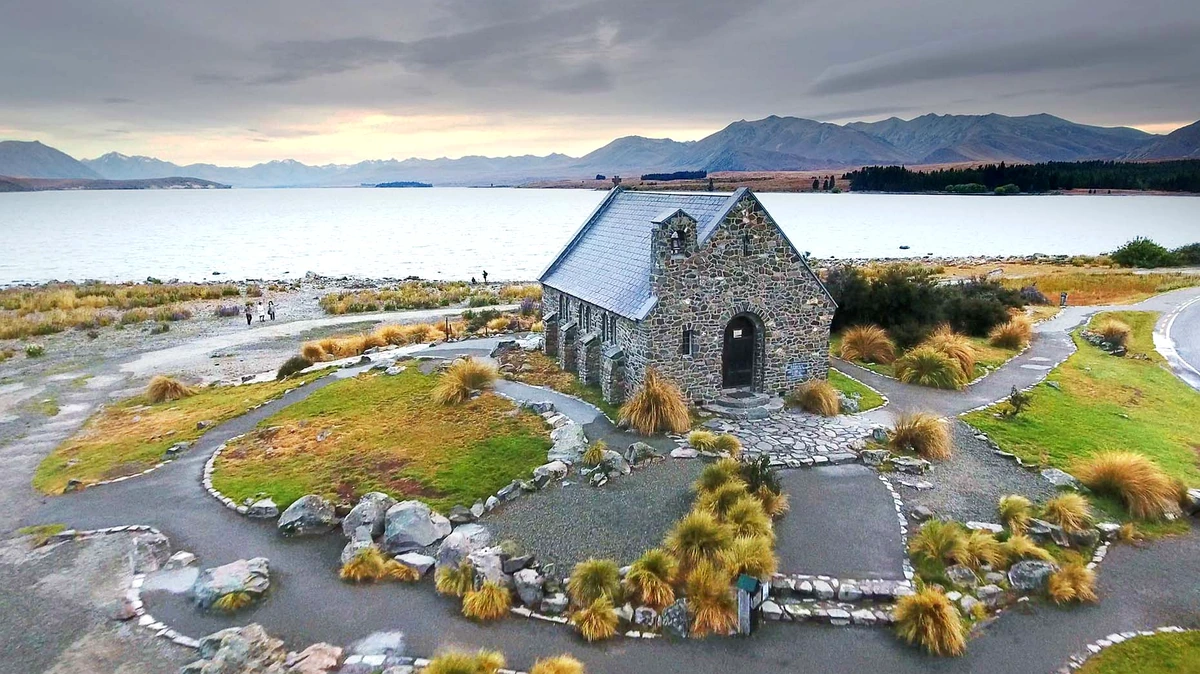
The church’s scale reflects a rare, modest geometry, measuring only about twelve meters long by five meters wide, seating a few dozen worshippers in quiet intimacy. Its simple rectangular form and steep roof built to shed winter snow are supported by rustic timber trusses and clad in slate-grey stone shingles that blend seamlessly into the misty tones of the Southern Alps. Thick, rough-hewn stone walls—set with recessed mortar joints rather than flashy plaster—read like a miniature stronghold standing firm against icy gales sweeping across the stony high country. A small bellcote on the gable holds a single slender bronze bell, whose chime rings out into the stillness, blending naturally with wind through tussock scrub and gentle waves lapping the shore.
Stepping through the narrow timber door, the interior reveals complete minimalism, free of ornate murals, gilded vaults, or elaborate sculptures. Instead, visual and spiritual focus converges on the north wall, home to an extraordinary architectural feature: a clear glass window set directly behind the altar. Breaking with classic Catholic and Anglican church art that favored leaded stained glass to tell biblical stories, the architect boldly used plain, untinted glass to frame the vast landscape outside. Through this living window, the milky turquoise waters of Lake Tekapo and the snow-capped peaks of the Southern Alps become the grandest altar, elevating nature itself into a supreme sacred symbol.
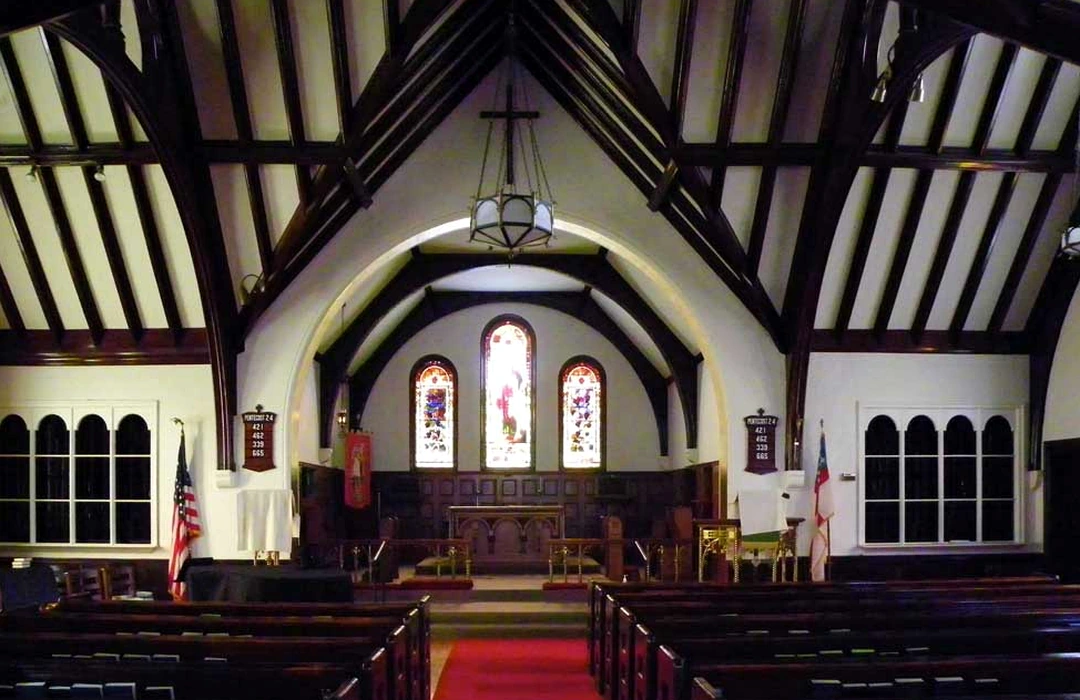
The simple interior—with long benches of native timber and a clean grey stone altar—mirrors the spirit of the pioneers who broke new ground: resilient shepherds who laid the foundations for life in this unforgiving wilderness. A slender bronze cross sits right at the focal point of the window, where bright daytime light streams through and mysterious night skies fill with the glittering Milky Way above an International Dark Sky Reserve. Here, the boundary between human architecture and the boundlessness of the cosmos seems to dissolve. The church’s rawness and intimate scale amplify the awe of the surrounding landscape, making every visitor who pauses at the threshold feel their smallness before the timeless beauty of New Zealand’s earth and sky.
As the last turquoise twilight fades behind the Southern Alps, the Mackenzie Basin does not simply drift into ordinary sleep—it steps onto one of the planet’s most extraordinary visual stages. Here, light art is not made by artificial lasers or cutting-edge projection mapping, but by a primeval natural spectacle in which pure darkness serves as a velvet curtain for millions of celestial bodies to perform their spectral dance. Since 2012, the more than 4,300-square-kilometer Aoraki Mackenzie region has held Gold Tier status as an Aoraki Mackenzie International Dark Sky Reserve, recognized by DarkSky International for exceptional atmospheric clarity and near-zero light pollution.
To protect this priceless wonder, the Tekapo community has upheld strict public lighting ordinances for decades. Streetlights have been upgraded with low-pressure sodium fixtures and strict downward shielding, preventing upward light spill and eliminating disruptive blue light. Thanks to this quiet sacrifice of bright modern convenience, Tekapo nights reach a rare, deep darkness that turns the entire glacial basin into a giant natural observatory. Anyone standing by the lake after dark can admire Southern Hemisphere wonders with the naked eye: the swirling luminous clouds of the Large and Small Magellanic Clouds wheeling around the south celestial pole, the Southern Cross shining overhead, and the Milky Way arching like a river of starlight from snowy peaks across the calm water.
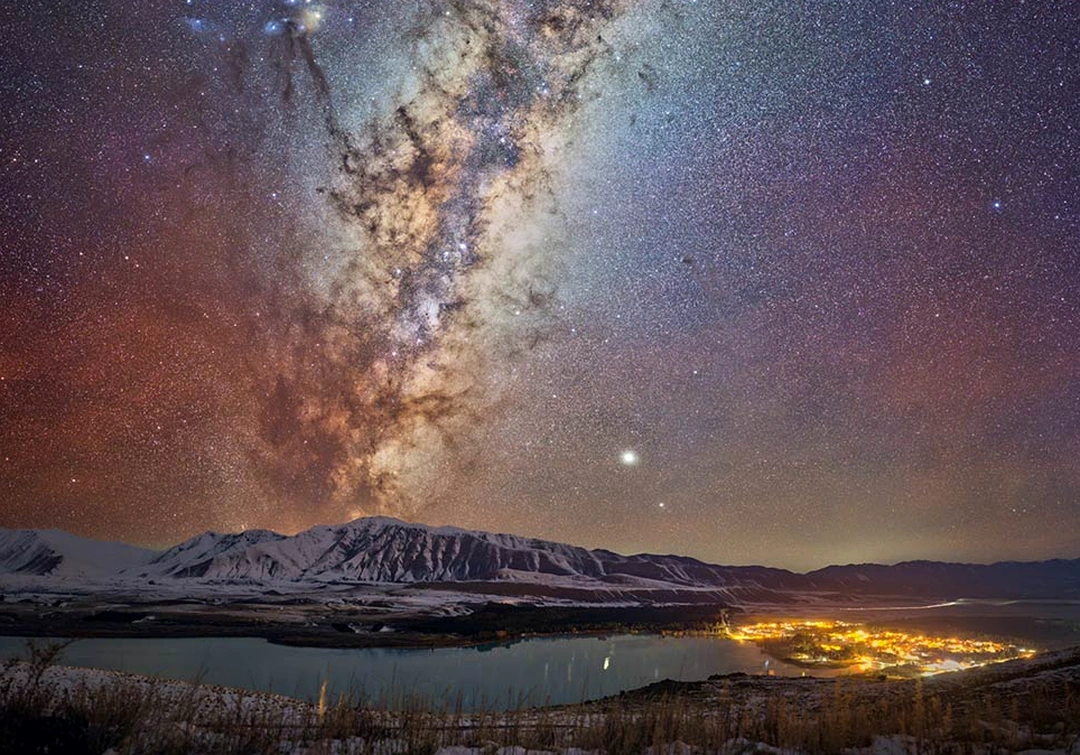
The most dramatic focal point of this nightscape is the Church of the Good Shepherd. Once darkness falls, the church’s rough ashen-grey stonework no longer reflects bright sunlight, becoming a quiet, mysterious silhouette set against millions of pinprick stars and the swirling Milky Way right above its historic bellcote. The visual contrast between a small, weathered human stone structure and the infinite expanse of the universe creates a surreal scene that draws astrophotographers from every continent. Below the church, lupin spikes that folded their petals at day’s end rest in faint starlight, releasing a subtle herbal fragrance into the quiet mountain air.
Nighttime life around Lake Tekapo therefore moves at a remarkably calm and refined pace. Instead of loud bars or bustling nightlife, visitors find space for deep reflection. Travelers can head up Mount John to the University of Canterbury’s Mount John Observatory to peer through large optical telescopes at lunar craters or nebulae millions of light-years away. Another peaceful experience is soaking in the open-air hot pools at Tekapo Springs nestled amid cool pine mist, perhaps with a glass of celebrated Central Otago Pinot Noir, letting geothermal warmth soothe the body while eyes take in the timeless light of the heavens.
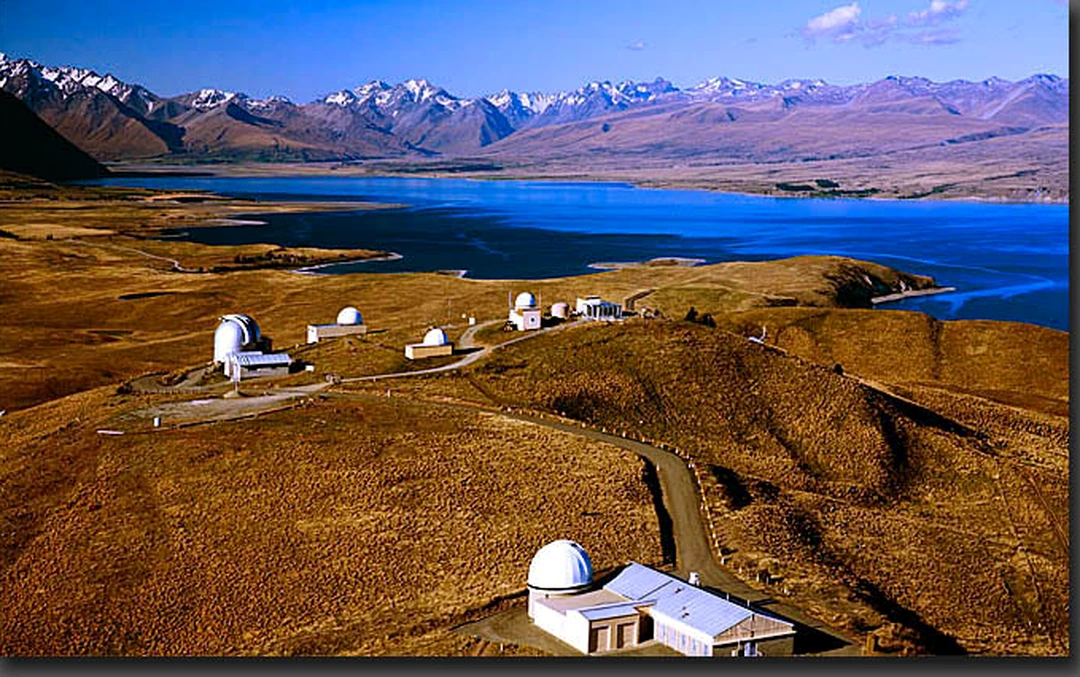
Cuisine in the Mackenzie Basin is more than a pairing of local ingredients—it is a distillation of resilient mountain living, where a demanding continental climate shapes a distinctive “High Country” flavor unique to New Zealand’s South Island. Framed by snow-capped Southern Alps and Lake Tekapo’s turquoise mirror, the local food culture carries the unmistakable mark of early settlers, shepherds, and rugged hunters. At the heart of the high-country table is renowned Merino lamb. Merino flocks grazing freely on golden tussock and wild herbs across breezy hills around the lake develop a remarkably clean natural flavor, with firm meat and delicate marbling that stays tender and juicy when cooked.
Mackenzie cooking reaches a pure high point when lamb is slow-roasted in a traditional round cast-iron “camp oven.” A heavy iron pot holding a leg of lamb rubbed with wild herbs is buried beneath glowing mānuka embers for hours. Mānuka wood—a native shrub with shaggy bark and aromatic, peppery oils—smolders with a sweet, fragrant smoke that infuses every fiber, yielding crisp amber skin outside and butter-soft meat within, touched by hints of forest and mountain mist. Alongside lamb, wild venison from remote valleys is prized, often pan-seared medium-rare to preserve its rich sweetness and served with a reduced sauce of stone fruit from nearby orchards—such as sweet apricots, plums, and peaches ripened under intense high-country summer sun.
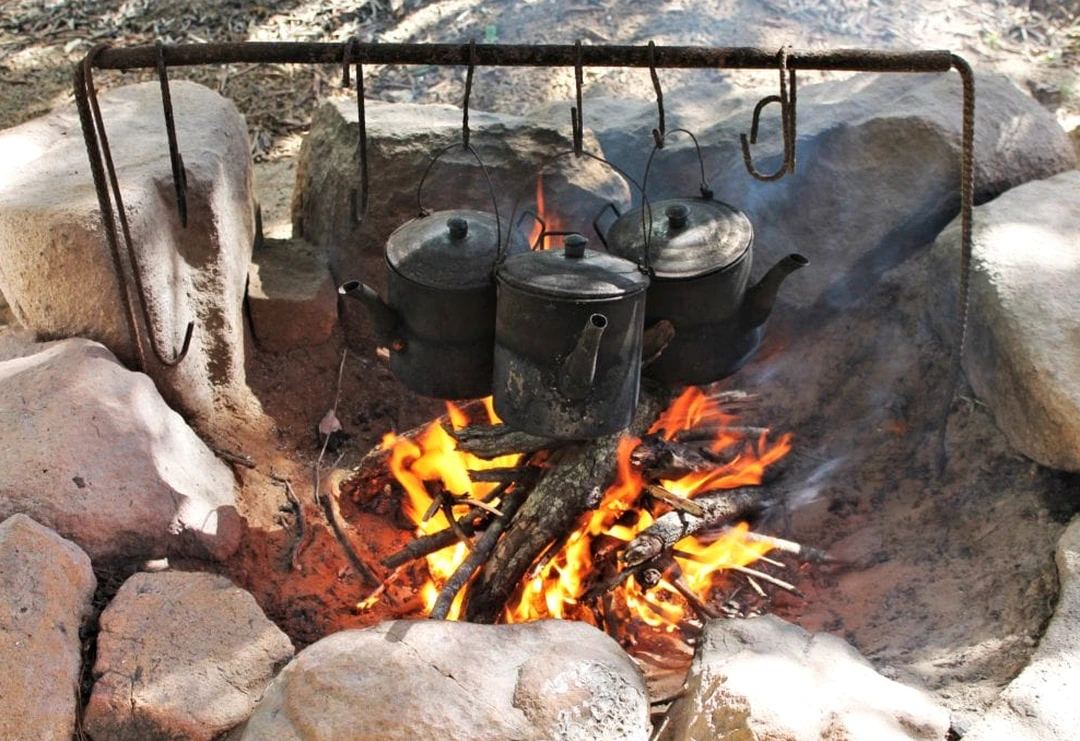
Beyond hearty game and roast fare, food traditions here are deeply shaped by “smoko”—the iconic mid-shift break of shearers and stockmen since settlement days. When the bell signals a pause out in the breezy paddock, everyone gathers around a tin “billy tea” boiling merrily over an open fire. Alongside mugs of strong, slightly astringent black tea come round, fluffy traditional pikelets, still warm in hand and generously spread with whipped cream and tart-sweet berry jam. The aroma of fresh dairy and butter mixed with rich sweetness makes for a comforting recharge beneath wide open skies.
Another sweet staple inseparable from Mackenzie food memories is classic “ginger crunch,” baked golden according to recipes passed down through generations of farm women. It features a crisp oat-and-butter shortbread base topped with a chewy, spicy-rich brown sugar ginger icing. The warming heat of fresh ginger pairs wonderfully with the crisp chill of winds sweeping from glaciers toward Lake Tekapo, waking up the senses and taking the edge off winter cold. Enjoying a piece of ginger crunch with a hot cup of tea while watching colorful lupins sway beside deep turquoise water is one of the best ways to connect with the warm, unpretentious spirit of this historic sheep country.
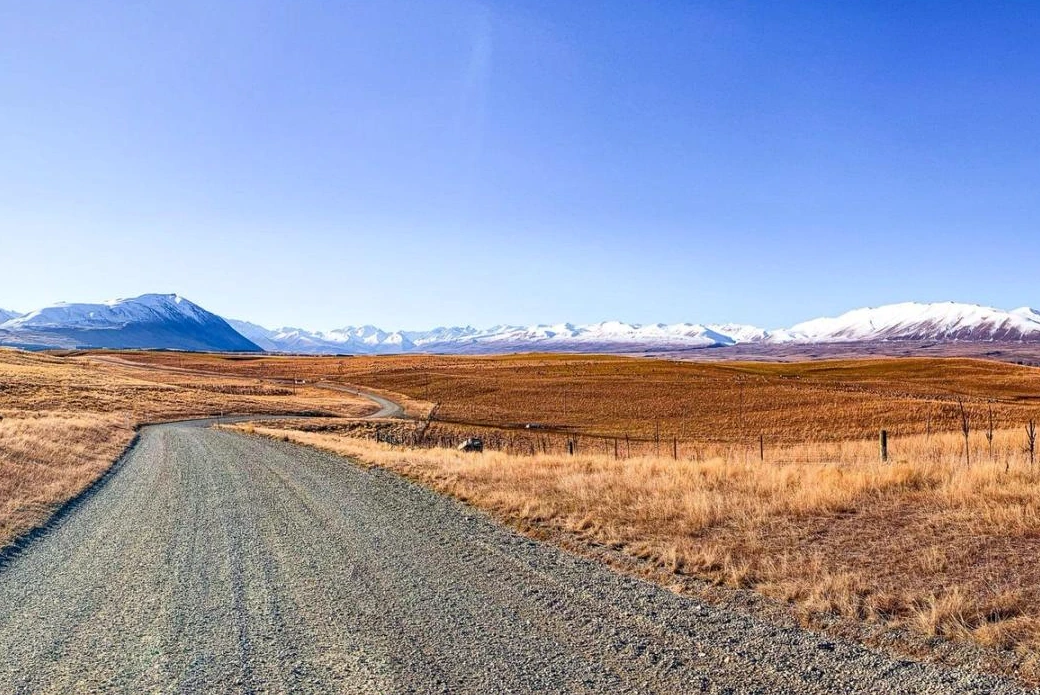
Sitting along State Highway 8 across the scenic Mackenzie Basin, Lake Tekapo serves as a seamless bridge between the garden city of Christchurch and adventure capital Queenstown. Covering roughly 250 kilometers from either major center typically takes around three and a half hours by car, winding past sweeping golden tussock plains and the imposing peaks of the Southern Alps. For travelers not driving themselves, intercity coaches run daily, dropping visitors right near the turquoise lake without complicated navigation.
Along the lakeshore, the Church of the Good Shepherd welcomes visitors daily from 9:00 AM to 5:00 PM. Entry is free with no set admission fee, though a small donation box near the entrance invites voluntary contributions from visitors to help fund ongoing conservation of the nearly century-old sandstone structure. Once across the heavy timber threshold, visitors must observe a firm rule: photography, video recording, and livestreaming are strictly prohibited inside the church. That quiet reverence is carefully protected to honor worshippers’ private moments of prayer and allow every visitor to take in the grand view of the Southern Alps through the altar window with the naked eye.
Lupin season—peaking from late November into early January—draws the largest crowds of the year. To experience the church’s serene beauty without rushing past crowds, the best time to walk the lakeshore is at dawn, roughly between 5:00 AM and 6:30 AM. As early morning light tints distant snowfields pink and delicate mist lingers over mirror-still water, you can capture luminous shots as colors shift across the scene. By contrast, midday to early afternoon often brings large tour coaches, making rocky shoreline spots busier and harder to photograph quietly.
While admiring the vivid flowerbeds, understanding and following Leave No Trace principles is vital to protecting this fragile ecosystem. Although Russell lupins look breathtaking, they are an aggressive non-native plant that competes fiercely with native golden tussock grasslands where rare birds such as the black stilt (kakī) nest. Visitors must never trample flower patches, pick stems or blooms, or stray off designated gravel paths. Careless foot traffic not only damages root systems, but also compacts loose gravelly soil and breaks up natural ground cover that prevents erosion along the windy shore.
High-country geography near the mountains means temperature swings and weather conditions at Tekapo can shift unpredictably, even on bright summer days. A clear, sunny morning can give way within a few hours to a biting wind blowing off the Southern Alps. Travelers are advised to install and regularly check forecasts from national weather service MetService before setting out. Packing adaptable warm layers, a windproof and water-resistant jacket, and sturdy walking shoes with good grip will keep your outing safe and comfortable. For those dreaming of taking in flower-lined glacial waters without worrying about routes or weather logistics, joining a complete New Zealand tour package offers an easy way to enjoy every memorable moment in the Land of the Long White Cloud.